Archive
02/08/2011 – Ephemeris – Where are the bright planets?
Ephemeris for Wednesday, February 8th. The sun will rise at 7:53. It’ll be up for 10 hours and 7 minutes, setting at 6:00. The moon, 1 day past full, will rise at 7:24 this evening.
Let’s see what’s happening with the bright planets for this week. Venus is brilliant in the southwestern sky after sunset and will set at 9:35 in the west. Jupiter the second brightest planet after Venus. It’s located high in the southwest as it gets dark and is seen against the stars of the constellation Aries. It will set at 12:25 a.m.. Mars is the up and coming planet. It will rise at 8:31 p.m in the east and is below the hind end of the constellation Leo the lion. It is 69.2 million miles away and closing and is getting brighter. It’s now as bright as most first magnitude stars. Mars will pass due south at 3:01 a.m. Saturn will rise at 11:54 p.m. just to the left of the bright star Spica in the east southeast.
* Times are for the Traverse City/Interlochen area of Michigan. They may be different for your location.
Addendum
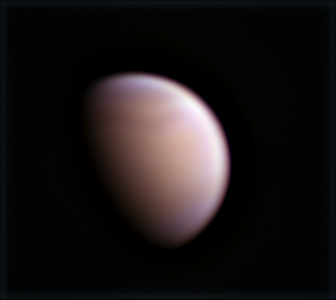
Venus by Scott Anttila. Taken Monday evening February 6, 2012
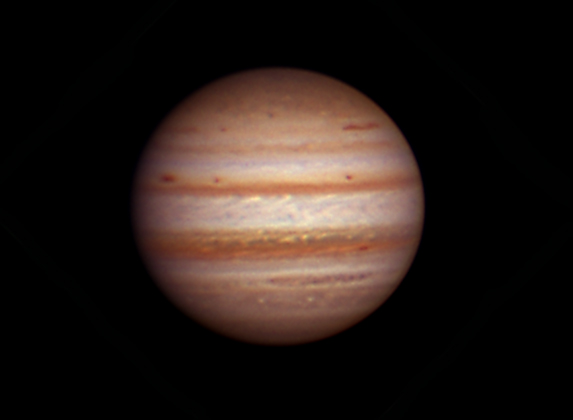
Jupiter by Scott Anttila. Taken Monday evening February 6, 2012
02/01/2012 – Ephemeris – Where are the bright planets this week?
Ephemeris for Wednesday, February 1st. The sun will rise at 8:01. It’ll be up for 9 hours and 48 minutes, setting at 5:50. The moon, 2 days past first quarter, will set at 3:46 tomorrow morning.
Let’s see what’s happening with the bright planets for this week. Venus is brilliant in the southwestern sky after sunset and will set at 9:19 in the west. Jupiter is the most prominent planet of the evening sky, once Venus sets. It’s located high in the southwest as it gets dark and is seen against the stars of the constellation Aries. It will set at 12:48 a.m.. Mars is the up and coming planet. It will rise at 9:05 p.m in the east and is below the hind end of the constellation Leo the lion. It is 73 million miles away and closing and is getting brighter. It’s now as bright as most first magnitude stars. Mars will pass due south at 3:33 a.m. Saturn will rise at 12:22 a.m. just to the left of the bright star Spica in the east southeast.
* Times, as always are for the Traverse City/Interlochen area of Michigan.
01/25/2012 – Ephemeris – Where are the planets this week?
Ephemeris for Wednesday, January 25th. The sun will rise at 8:08. It’ll be up for 9 hours and 31 minutes, setting at 5:40. The moon, 2 days past new, will set at 8:42 this evening.
It’s time again to take a look at the whereabouts of the bright planets. Venus is brilliant in the southwestern sky after sunset and will set at 9:01 in the west. Jupiter is the most prominent planet of the evening sky, once Venus sets. It’s located high in the south southeast as it gets dark and is seen against the stars of the constellation Aries. It will pass due south at 6:21 p.m. and it will set at 1:08 a.m.. Mars will rise at 9:36 p.m in the east northeast and is below the hind end of the constellation Leo the lion. It is 76.7 million miles away and closing and has been getting brighter. It’s now as bright as most first magnitude stars. Mars will pass due south at 4:02 a.m. Saturn will rise at 12:49 a.m. just to the left of the bright star Spica in the east southeast.
* Times, as always are for the Traverse City/Interlochen area of Michigan.
Addendum
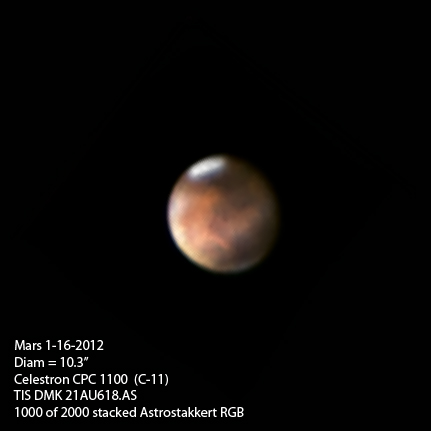
Mars 9 days ago. Photograph by Scott Anttila
Another gorgeous shot of Mars by Scott Anttila. At the time Mars appeared 10.3 seconds of arc in diameter. By comparison the moon and sun appear about 1,800 seconds of arc in diameter. Note that Mars appears slightly gibbous in shape. It will appear full on March 3rd. when it will be in opposition from the sun. It will be closest to us on March 5th. at about 62.6 million miles. At that time it will have an apparent diameter of 13.9 seconds of arc.
01/18/2012 – Ephemeris – Where are the bright planets this week
Ephemeris for Wednesday, January 18th. The sun will rise at 8:14. It’ll be up for 9 hours and 17 minutes, setting at 5:31. The moon, 2 days past last quarter, will rise at 4:51 tomorrow morning.
It’s time again to take a look at the whereabouts of the bright planets. Venus is brilliant in the southwestern sky after sunset and will set at 8:44. Jupiter is the most prominent planet of the evening sky, once Venus sets. It’s located high in the south and is seen against the stars of the constellation Aries. It will pass due south at 6:49 p.m. It will set at 1:36 a.m. Mars will rise at 10:03 p.m in the east northeast and is below the hind end of the constellation Leo the lion. It is 82.4 million miles away and closing. Mars will pass due south at 4:29 a.m. Saturn will rise at 1:15 a.m. just to the left of the bright star Spica in the east southeast.
* Times, as always are for the Traverse City/Interlochen area of Michigan.
01/16/2012 – Ephemeris – The moon will appear below Saturn and Spica this morning
Ephemeris for Martin Luther King Day, Monday, January 16th. The sun will rise at 8:15. It’ll be up for 9 hours and 13 minutes, setting at 5:29. The moon, at last quarter today, will rise at 2:31 tomorrow morning. | This morning the crescent moon will appear below Saturn and the bright blue-white star Spica in the southeast before twilight brightens too much. When seen together Saturn and Spica really show the difference in their colors. Saturn reflects the light of our yellow sun, and that’s accentuated by it’s cream colored clouds. Only Saturn’s rings reflect the sun’s light pretty much unaltered because they’re made mostly of ice. Spica has the hottest surface temperature of any first magnitude star and shines with a blue tinge. This came home to me a long time ago, when I photographed a lunar eclipse with color film when the moon was next to Spica. Spica came out looking very blue indeed.
* Times, as always are for the Traverse City/Interlochen area of Michigan.
Addendum
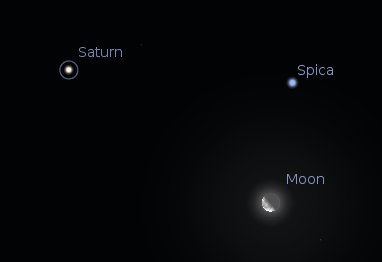
Saturn, Spica and the Moon on the morning of January 16, 2012. Created using Stellarium.
01/04/2012 – Ephemeris – The planets this week and the earth at perihelion
Wednesday, January 4th. The sun will rise at 8:19. It’ll be up for 8 hours and 56 minutes, setting at 5:15. The moon, 3 days past first quarter, will set at 5:03 tomorrow morning.
It’s the first Wednesday of 2012 and time again to take a look at the whereabouts of the bright planets. The planet Venus is brilliant in the southwestern sky after sunset setting at 8:07. Jupiter is the most prominent planet of the evening sky, once Venus sets. It’s located high in the south and is seen against the stars of the constellation Aries. It will pass due south at 7:41 p.m. It will set at 2:26 a.m.. Mars will rise at 10:52 p.m in the east northeast and is below the hind end of the constellation Leo the lion. It is 92.4 million miles away and closing. Saturn will rise at 2:07 a.m. just to the left of the bright star Spica in the east southeast. The sun is its closest to earth of the entire year today. Only 91.3 million miles away.
* Times, as always are for the Traverse City/Interlochen area of Michigan.
12/28/11 – Ephemeris – Where are the planets this week?
Wednesday, December 28th. The sun will rise at 8:18. It’ll be up for 8 hours and 50 minutes, setting at 5:09. The moon, half way from new to first quarter, will set at 9:56 this evening.
It’s Wednesday and time again to take a look at the whereabouts of the bright planets. The planet Venus is prominent in the southwestern twilit sky after sunset setting at 7:48 after the end of twilight. Jupiter is the most prominent planet of the evening sky, once Venus sets. It’s located high in the south and is seen against the stars of the constellation Aries. It will pass due south at 8:08 p.m. It will set at 2:53 a.m.. Mars will rise at 11:08 p.m in the east northeast and will be in the constellation Leo. Mars will be due south at 5:38 a.m. It is 98.4 million miles away and closing. Saturn will rise at 2:32 a.m. just to the left of the bright star Spica in the east southeast. Of all the planets, Jupiter and Saturn look best in that new Christmas telescope.
* Times, as always are for the Traverse City/Interlochen area of Michigan.
12/21/11 – Ephemeris – Where are the bright planets this week?
Wednesday, December 21st. The sun will rise at 8:16. It’ll be up for 8 hours and 48 minutes, setting at 5:04. The moon, 3 days before new, will rise at 5:58 tomorrow morning.
It’s Wednesday and time again to take a look at the whereabouts of the bright planets. The planet Venus is prominent in the southwestern twilit sky after sunset setting at 7:30. Jupiter is now the most prominent planet of the evening sky located in the high in the south and is seen against the stars of the constellation Aries. It will pass due south at 8:36 p.m. It will set at 3:20 a.m.. Mars will rise at 11:25 p.m in the east northeast and will be in the constellation Leo. Mars will be due south at 6:01 a.m. It is 105 million miles away and closing. Saturn will rise at 2:57 a.m. just to the left of the bright star Spica in the east southeast. Winter starts at 12:30 tomorrow morning. I’ll have more on that tomorrow.
* Times, as always are for the Traverse City/Interlochen area of Michigan.
12/14/11 – Ephemeris – Where are the bright planets this week?
Wednesday, December 14th. The sun will rise at 8:11. It’ll be up for 8 hours and 51 minutes, setting at 5:02. The moon, 3 days before last quarter, will rise at 9:29 this evening.
It’s Wednesday and time again to take a look at the whereabouts of the bright planets. The planet Venus is prominent in the southwestern twilit sky after sunset setting at 7:12[, and should be visible by 5:45]. Jupiter is now the most prominent planet of the evening sky located in the high in the southeast to south and is seen against the stars of the constellation Aries. It will pass due south at 9:04 p.m. It will set at 3:48 a.m.. Mars will rise at 11:41 p.m in the east northeast and will be in the constellation Leo. [Mars will be due south at 6:17 a.m.] It is 111 million miles away and closing. Saturn will rise at 3:22 a.m. just to the left of the bright star Spica in the east southeast. Remember Comet Lovejoy will enter SOHO’s LASCO C3 frame today.
* Times, as always are for the Traverse City/Interlochen area of Michigan. Text in brackets deleted from the program due to time constraints.
Update 6:16 a.m.
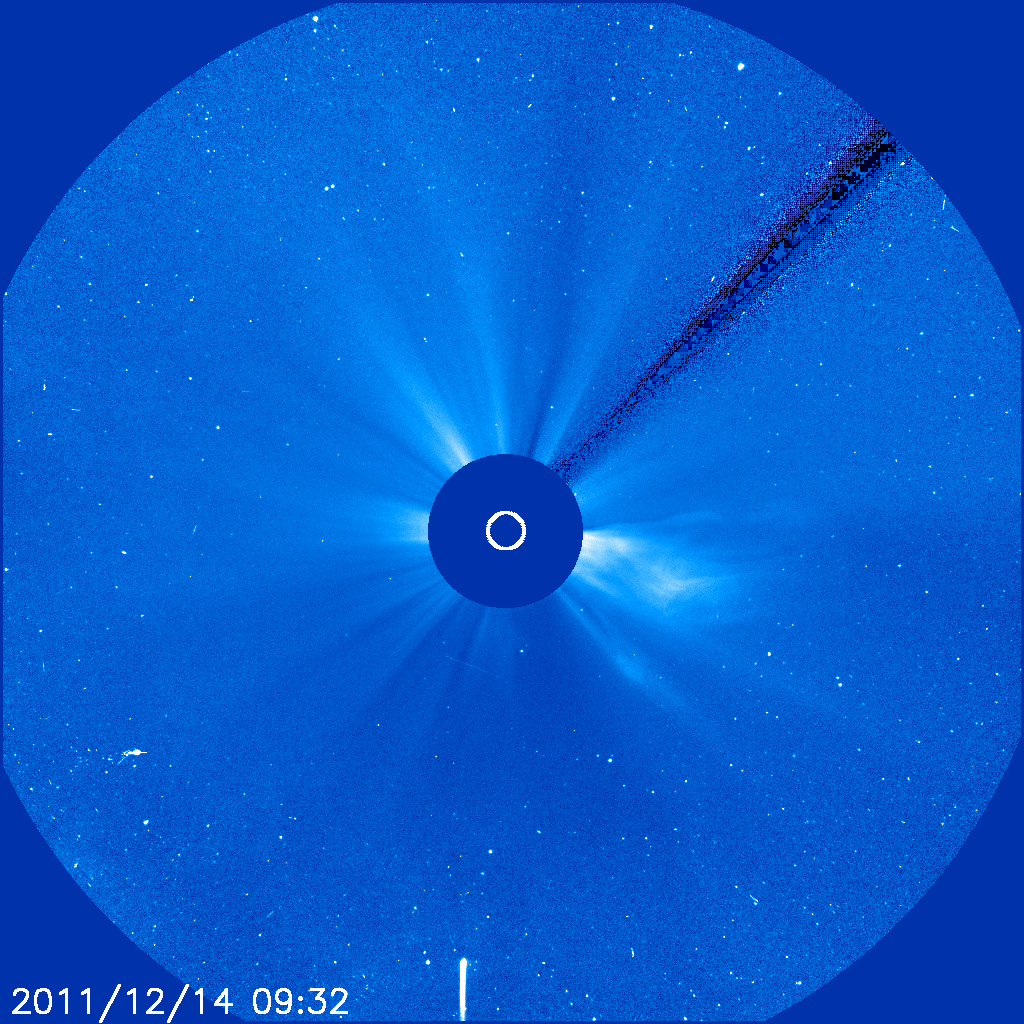
Comet Lovejoy entering at the bottom of the LASCO C3 frame. Courtesy SOHO, ESA, NASA. Timestamp on image.
Click to enlarge.
12/07/11 – Ephemeris – Where are the planets this week?
Wednesday, December 7th. The sun will rise at 8:05. It’ll be up for 8 hours and 57 minutes, setting at 5:02. The moon, 3 days before full, will set at 6:16 tomorrow morning.
It’s Wednesday and time again to take a look at the whereabouts of the bright planets. The planet Venus is low in the southwestern twilit sky sunset setting at 6:57, and should be visible by 5:45. Jupiter is now the most prominent planet of the evening sky located in the high in the southeast and is seen against the stars of the constellation Aries. It will pass due south at 9:33 p.m. In a telescope it will be accompanied by its 4 brightest moons. It will set at 4:18 a.m.. Mars will rise at 11:55 p.m in the east northeast and will be in the constellation Leo. Mars will be due south at 6:34 a.m. It is 117 million miles away and closing. Saturn will rise at 3:46 a.m. just to the left of the bright star Spica in the east southeast.
* Times, as always are for the Traverse City/Interlochen area of Michigan.

