Archive
Ephemeris: 11/06/2023 – The Pleiades or Seven Sisters
This is Ephemeris for Monday, November 6th. Today the Sun will be up for 9 hours and 57 minutes, setting at 5:25, and it will rise tomorrow at 7:28. The Moon, 1 day past last quarter, will rise at 1:18 tomorrow morning.
A marvelous member of the autumn skies can be found low in the east after 8 in the evening. It is the famous star cluster called the Pleiades or the Seven Sisters. I might also add the ‘Tiny Dipper’. Many people can spot a tiny dipper shape in its six or seven stars, and mistake it for the Little Dipper. With binoculars, one can see over a hundred stars appear, along with the dipper shape of the brightest. In photographs, the Pleiades actually contain wisps of the dust they are currently passing through. In Greek mythology, the sisters were daughters of the god Atlas and Pleione.
The astronomical event times given are for the Traverse City/Interlochen area of Michigan (EST, UT –5 hours). They may be different for your location.
Addendum
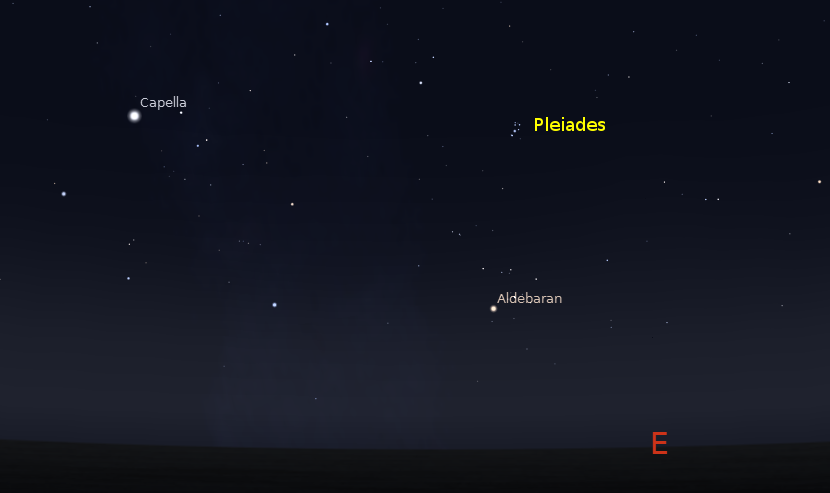
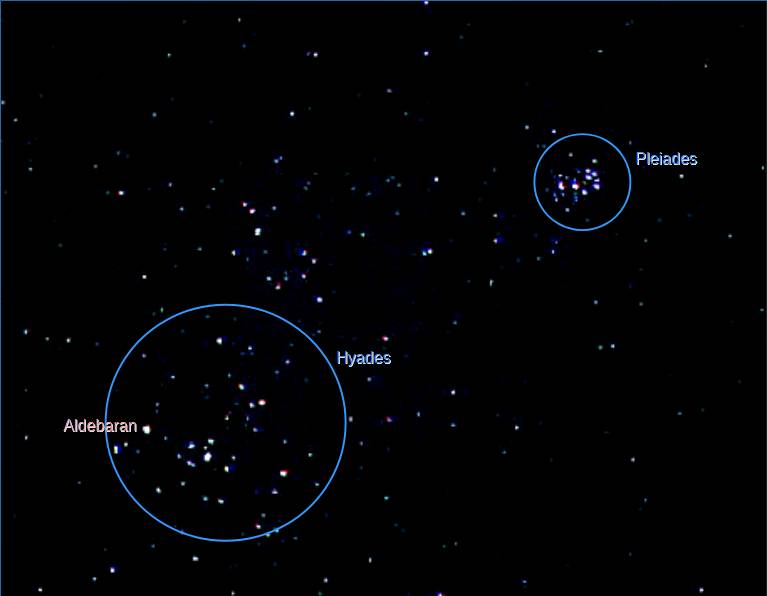
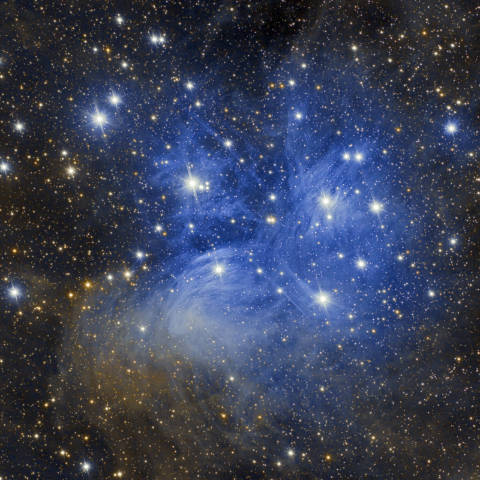
I’ll be coming back to the Pleiades from time to time over the autumn and winter months to cover, especially, the mythology of the Pleiades from different cultures.
01/10/2023 – Ephemeris – The constellation of Orion the hunter, unlucky in love
This is Bob Moler with Ephemeris for Tuesday, January 10th. Today the Sun will be up for 9 hours and 3 minutes, setting at 5:22, and it will rise tomorrow at 8:18. The Moon, halfway from full to last quarter, will rise at 9:01 this evening.
Before the Moon rises tonight, we will have two hours of darkness. Winter’s central constellation, Orion the hunter, doesn’t need the Moon to be absent to see its principal stars. He’s in the southeast before the Moon rises with red Betelgeuse in one shoulder and dimmer Bellatrix on the other, Saiph at one knee and bright blue-white Rigel at the other. Between his shoulders and knees runs his belt of three stars in a line. Above Betelgeuse, he is holding a club aloft and from Bellatrix he holds a lion skin shield to defend himself from the charge of Taurus the bull, above and right of him. I consider him a hard luck hero, with three different stories on how he died. Unlucky in love, he’s consigned to chase the Seven Sisters of the Pleiades throughout eternity.
The astronomical event times given are for the Traverse City/Interlochen area of Michigan (EST, UT –5 hours). They may be different for your location.
Addendum
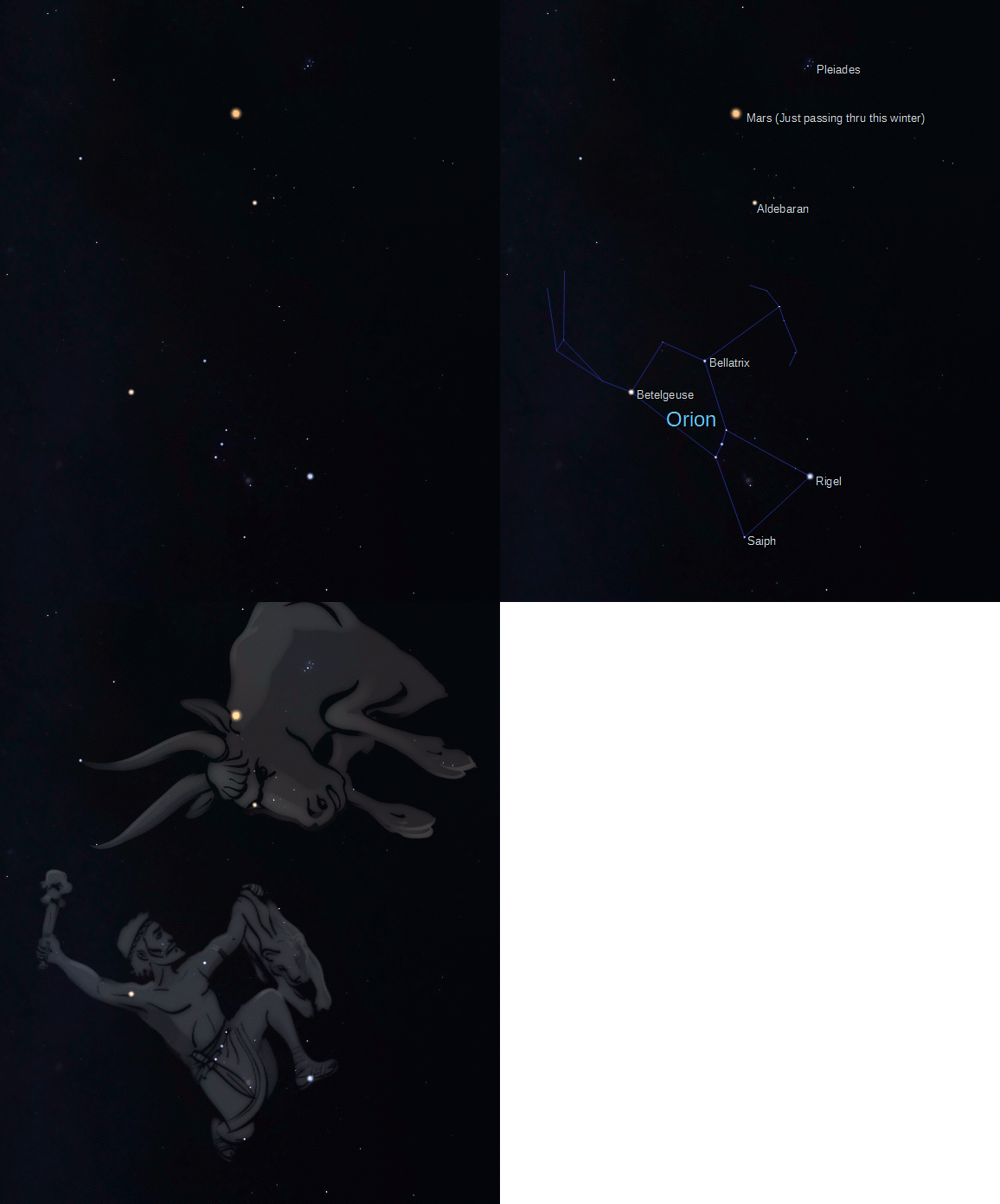
Orion finder animation with Mars. First, showing the unannotated sky looking southeast at Orion. Second, Orion with lines and labels of the stars at the corners of his body, and other bright stars in the view, plus the Pleiades and bright planet Mars, that’s just happening to be passing through this year. Third, the constellation art for Orion and Taurus the bull. Created using Stellarium, LibreOffice Draw and GIMP.
Here are the three stories of how Orion died: One: Orion raped the goddess Artemis, and so she killed him. Two: Orion was betrothed to Artemis, but her twin brother Apollo was jealous and caused her to kill him in a hunting “accident”. Three: Orion was killed by the sting of a scorpion, which is the reason Orion and Scorpius are never in the sky at the same time.
11/24/2022 – Ephemeris – Finding Auriga the charioteer
This is Bob Moler with Ephemeris for Thanksgiving Day, Thursday, November 24th. Today the Sun will be up for 9 hours and 15 minutes, setting at 5:07, and it will rise tomorrow at 7:52. The Moon, 1 day past new, will set at 5:31 this evening.
The constellation Auriga the charioteer is halfway up the sky in the east northeast at 9 p.m. It is a pentagon of stars, with the brilliant star Capella at the upper left of its corners. Capella represents a mama goat he’s carrying. A narrow triangle of stars just right of Capella are her kids, that is her baby goats. The Kids is an informal constellation or asterism. The Milky Way runs through Auriga, but it’s not very bright here. We are looking away from the center of the Milky Way to the more sparse outer parts of our galaxy. Within and near that pentagon, one can sweep with binoculars and low power telescopes to find several star clusters, groups of hundreds of stars born in the clump we still see them in. These star clusters will appear as fuzzy spots in binoculars.
The astronomical event times given are for the Traverse City/Interlochen area of Michigan (EST, UT –5 hours). They may be different for your location.
Addendum
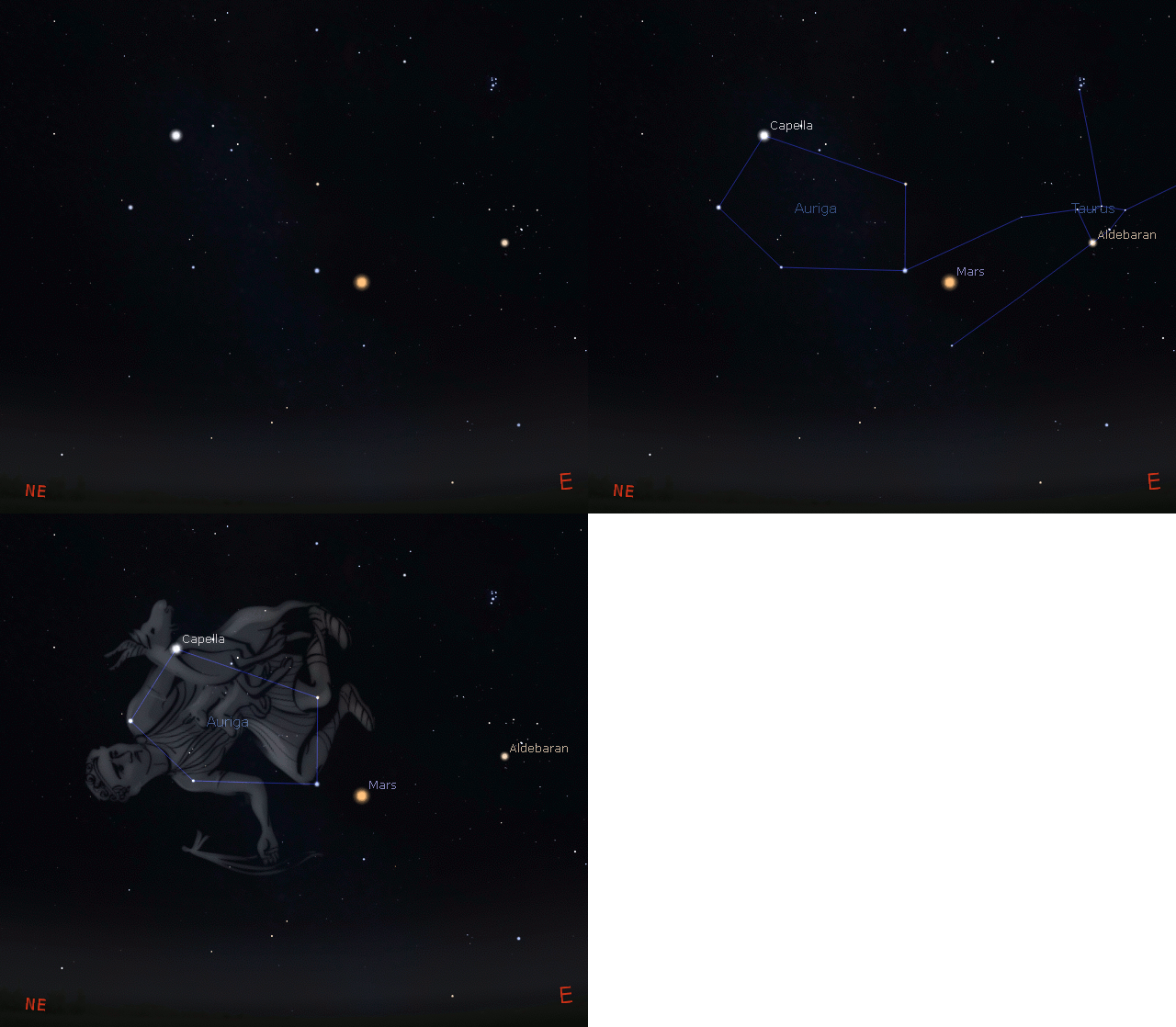
Auriga the charioteer finder animation. Mars is nearby between the horns of Taurus for the next week and a half as it works its way to the upper right. The Kids asterism is best seen in the frame without markings because the Capella label covers one of its stars. Created using Stellarium and GIMP.
11/22/2022 – Ephemeris – Finding Taurus the bull
This is Ephemeris for Tuesday, November 22nd. Today the Sun will be up for 9 hours and 19 minutes, setting at 5:08, and it will rise tomorrow at 7:50. The Moon, 1 day before new, will rise at 7:30 tomorrow morning.
Low in the east at 8 this evening and below the beautiful Pleiades star cluster is Taurus the bull. His face is a letter V shape of stars lying on its side, the star cluster Hyades, with the bright orange-red star Aldebaran at one tip of the V as its angry blood-shot eye, but actually about halfway between us and the cluster. The Pleiades star cluster is in his shoulder. Taurus is seen charging downward at that hour, the soon to rise constellation of Orion, with bright Mars near the horn tips. Taurus in Greek mythology was the form the god Zeus assumed when he carried off the maiden Europa. Europa’s still with him as the intriguing satellite completely covered by an ocean below its icy exterior, and orbiting Zeus’ Roman equivalent, the planet Jupiter.
The astronomical event times given are for the Traverse City/Interlochen area of Michigan (EST, UT -5 hours). They may be different for your location.
Addendum
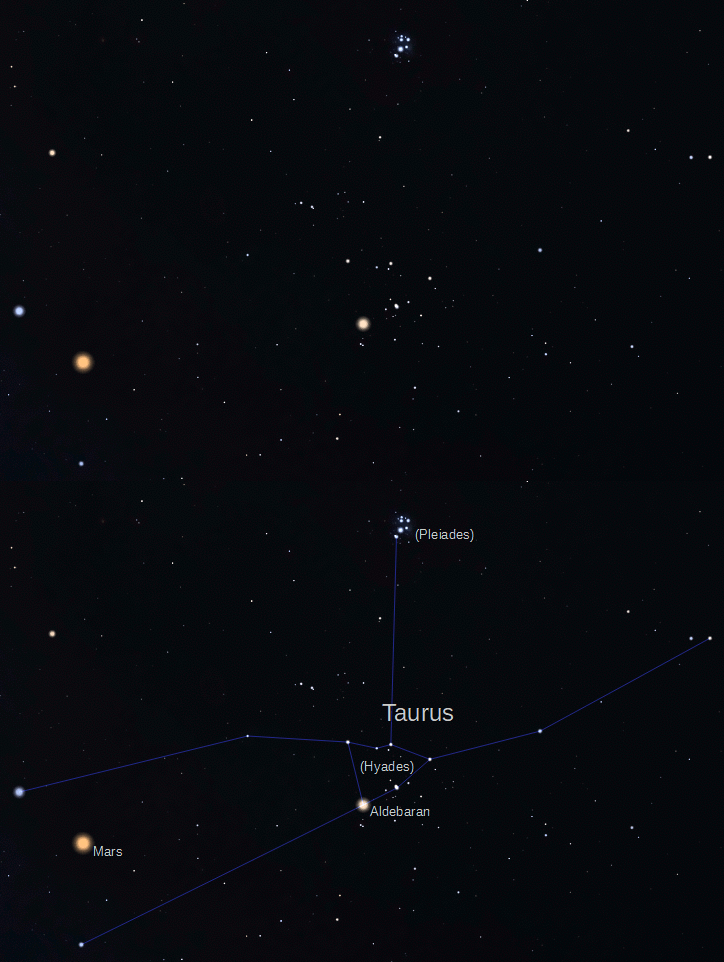
Taurus, Pleiades and Mars finder animation for 8:30 pm tonight, November 22, 2022. Mars is the interloper this year, seen between the horns of Taurus the Bull. The V of stars that make up the face of Taurus the bull is a star cluster of stars called the Hyades. In Greek mythology, they are the half-sisters of the Pleiades. Created using Stellarium, LibreOffice Draw, and GIMP.
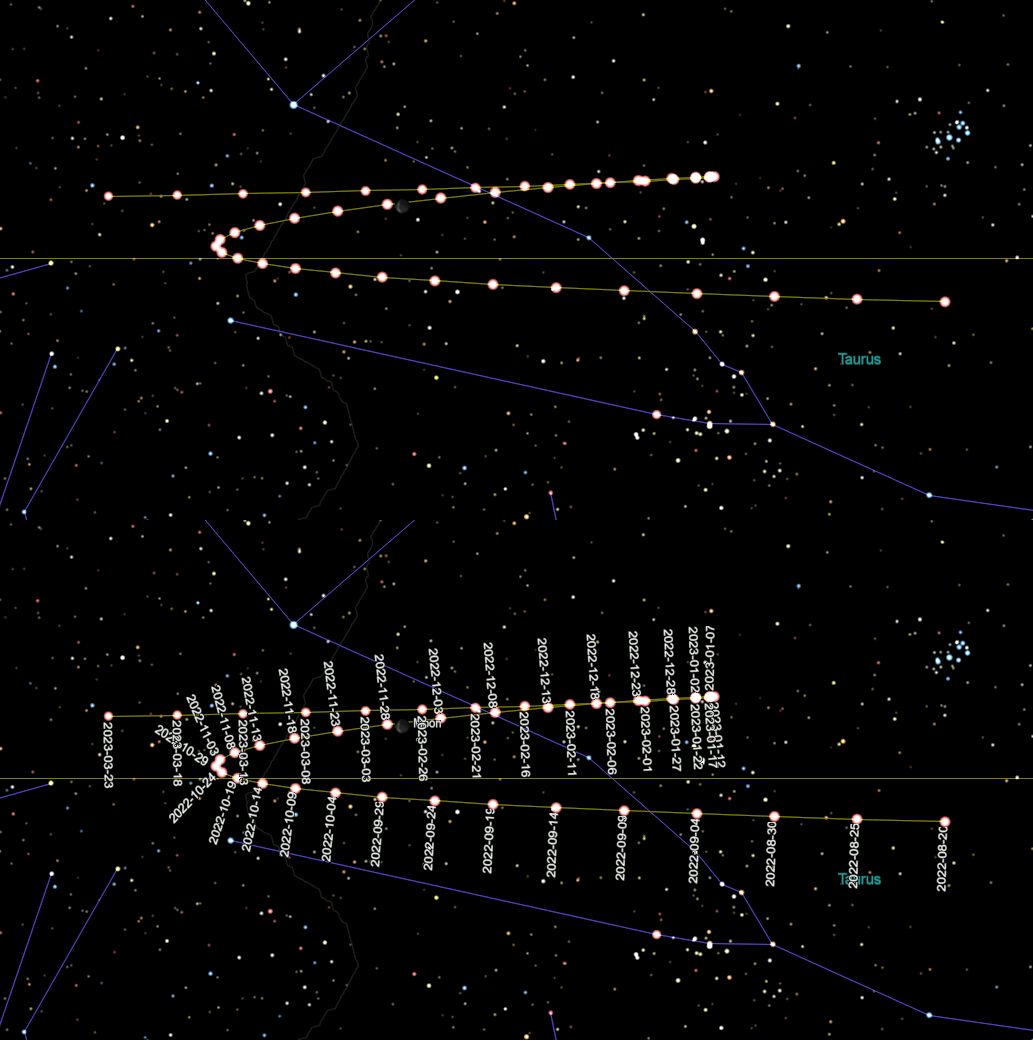
Mars retrograde path from October 29, 2022, to January 11, 2023, against the stars of Taurus the bull. It will be at opposition on December 7, and actually closest to the Earth on November 30 at 50.61 million miles or 81.45 million kilometers. In the upper right is the beautiful Pleiades star cluster, also known as the Seven Sisters. Below and right is the V shaped star cluster that represents the face of Taurus the bull, with the bright red star Aldebaran as the bull’s angry red eye. That V of stars is called the Hyades, who in mythology were the half sisters to the Pleiades. Created using Cartes du Ciel (Sky Charts) and GIMP.
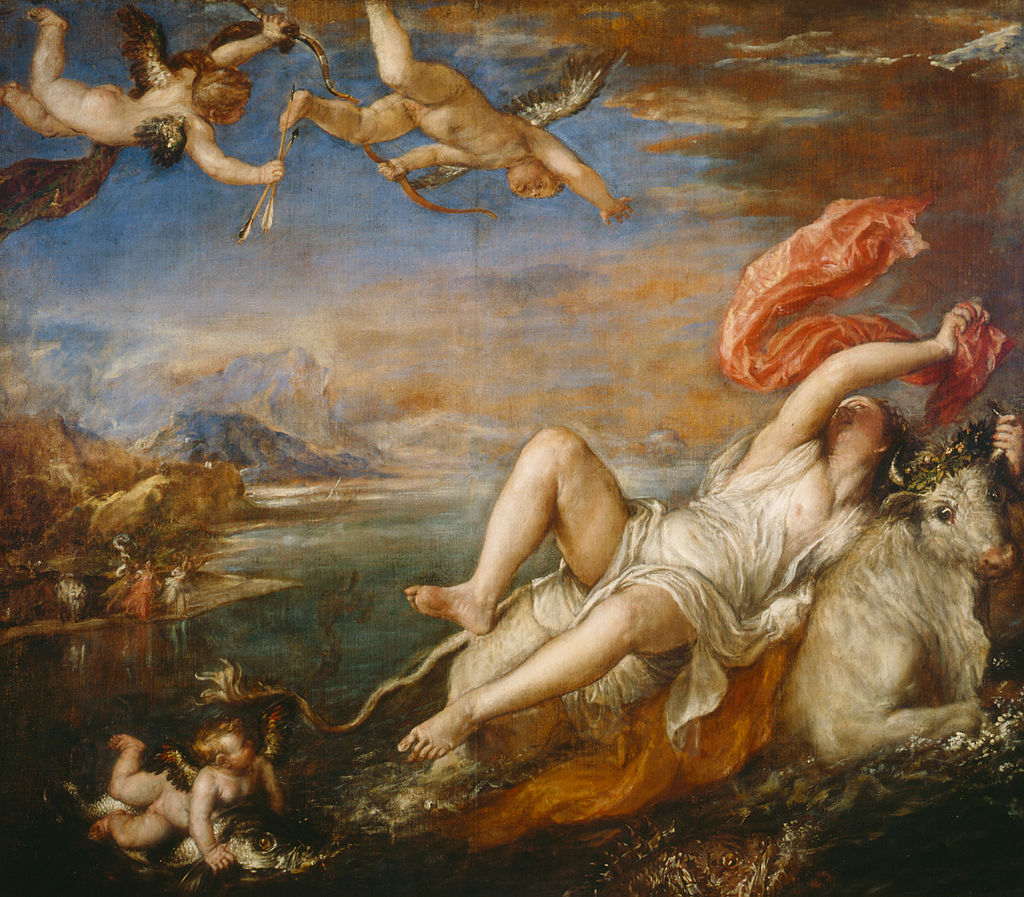
The Rape of Europa by Titian. According to the story, Zeus as a bull abducted Europa and swam to Crete, where she became the first queen of that island, and bore him three sons. Other paintings of this subject are by Rembrandt and de Troy. This painting belongs to the Isabella Stewart Gardener Museum in Boston, MA.
11/21/2022 – Ephemeris – The Pleiades or the Seven Sisters
This is Ephemeris for Monday, November 21st. Today the Sun will be up for 9 hours and 21 minutes, setting at 5:09, and it will rise tomorrow at 7:49. The Moon, 2 days before new, will rise at 6:10 tomorrow morning.
A marvelous member of the autumn skies can be found low in the east after 8 in the evening. It is the famous star cluster called the Pleiades or the Seven Sisters. I might also add the ‘Tiny Dipper’. Many people can spot a tiny dipper shape in its six or seven stars, and mistake it for the Little Dipper. With binoculars, one can see over a hundred stars appear, along with the dipper shape of the brightest. In photographs, the Pleiades actually contain wisps of the dust they are currently passing through. In Greek mythology, the sisters were daughters of the god Atlas. I’ll be revisiting the Pleiades several times this autumn, winter, and before they disappear in the west in evening twilight next spring.
The astronomical event times given are for the Traverse City/Interlochen area of Michigan (EST, UT – 5 hours). They may be different for your location.
Addendum
Pleiades finder animation for 8:30 pm tonight, November 21, 2022. Mars is the interloper this year, seen between the horns of Taurus the Bull. The V of stars that make up the face of Taurus the bull is a star cluster of stars called the Hyades. In Greek mythology, they are the half-sisters of the Pleiades. Created using Stellarium, LibreOffice Draw, and GIMP.
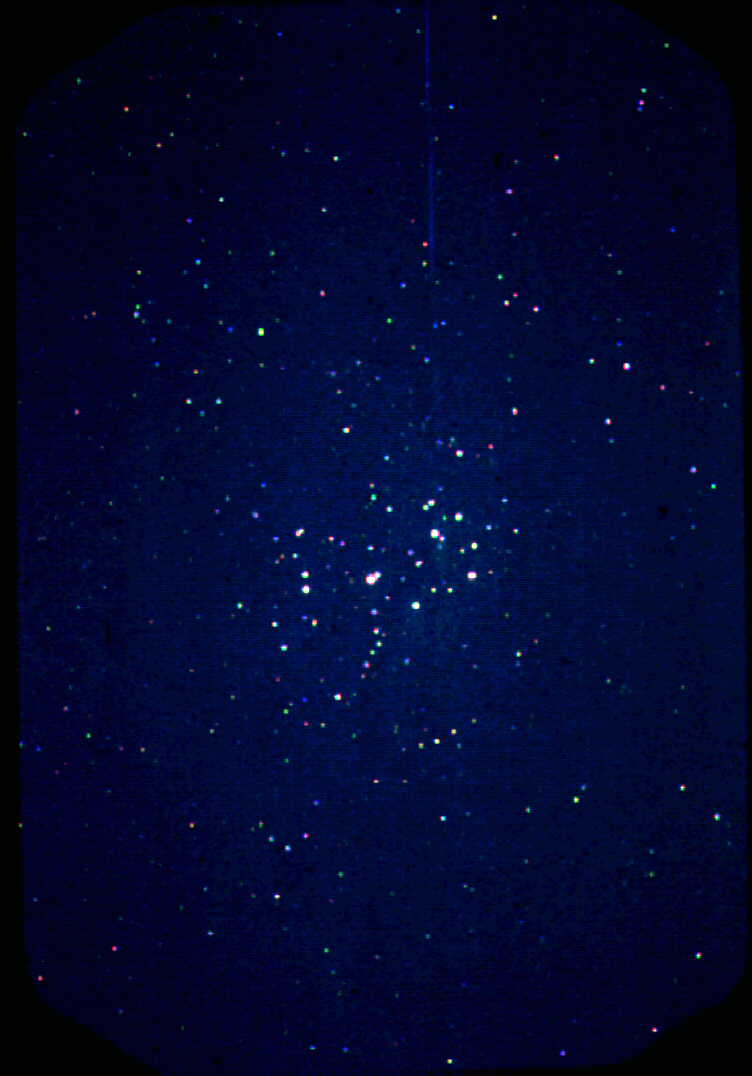
The Pleiades, about what you’d see in binoculars. To the naked eye, six or seven stars might be glimpsed. As star clusters go, it might seem small and unremarkable, but the Pleiades is nearby, and the brightest star cluster visible. Its stars are regarded by cultures around the world as female stars, generally sisters. Credit: Mine.
01/31/2022 – Ephemeris – The winter circle of bright stars
This is Ephemeris for Monday, January 31st. Today the Sun will be up for 9 hours and 47 minutes, setting at 5:50, and it will rise tomorrow at 8:01. The Moon, 1 day before new, will rise at 8:48 tomorrow morning.
The winter skies are blessed with more first magnitude stars than any other season. Six of these stars lie in a large circle centered on the seventh, It’s called the Winter Circle. This circle is up in the evening. Starting high overhead is yellow Capella in Auriga the charioteer. Moving down clockwise is orange Aldebaran in the face of Taurus the Bull. Then down to Orion’s knee, we find blue-white Rigel. Down and left is the brightest star of all the brilliant white Sirius the Dog Star in Canis Major, lowest of these stars in the south-southeast. Moving up and left is white Procyon in Canis Minor, Above Procyon is Pollux in Gemini, the twins. All these are not quite centered on Betelgeuse, the bright red star in Orion’s shoulder.
The astronomical event times given are for the Traverse City/Interlochen area of Michigan (EST, UT – 5 hours). They may be different for your location.
Addendum
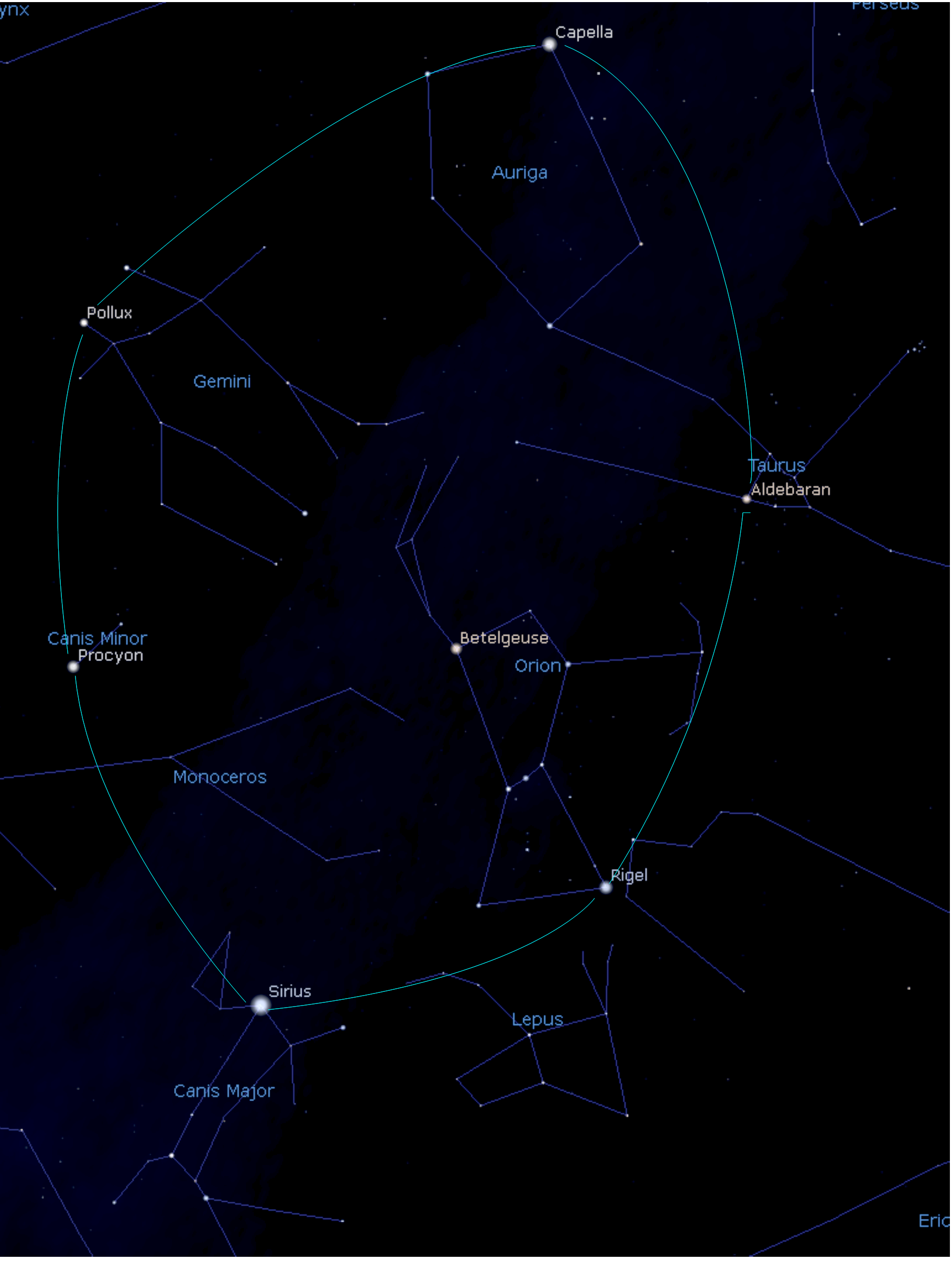
The bright stars of winter arrayed in a not so accurate circle. Some call it the Winter Hexagon. These stars are what make the winter sky so brilliant on the rare clear night in winter. Created using Stellarium.
01/20/2022 – Ephemeris – Taurus and the half sisters of the Pleiades
This is Bob Moler with Ephemeris for Thursday, January 20th. Today the Sun will be up for 9 hours and 21 minutes, setting at 5:34, and it will rise tomorrow at 8:12. The Moon, 3 days past full, will rise at 8:23 this evening.
High in the south-southeastern sky, and above-right of Orion, is the bright star Aldebaran. It’s at one tip of a letter V of fainter stars. The group of stars is the face of the constellation of Taurus the bull. Aldebaran is the angry bloodshot eye of the bull that’s charging Orion, whose defending himself with a lion skin shield and an upraised club. The stars in the V, and many more visible in binoculars, except for Aldebaran, belong to a star cluster called the Hyades. In Greek mythology, these are the half sisters of the Pleiades, visible as a tight group of stars above them. The V of stars is actually an upside down letter A, or Aleph, the first letter of the Hebrew and Mesopotamian alphabets. This was invented when Taurus, not Aries, was host to the Sun at the spring equinox.
The astronomical event times given are for the Traverse City/Interlochen area of Michigan (EST, UT – 5 hours). They may be different for your location.
Addendum
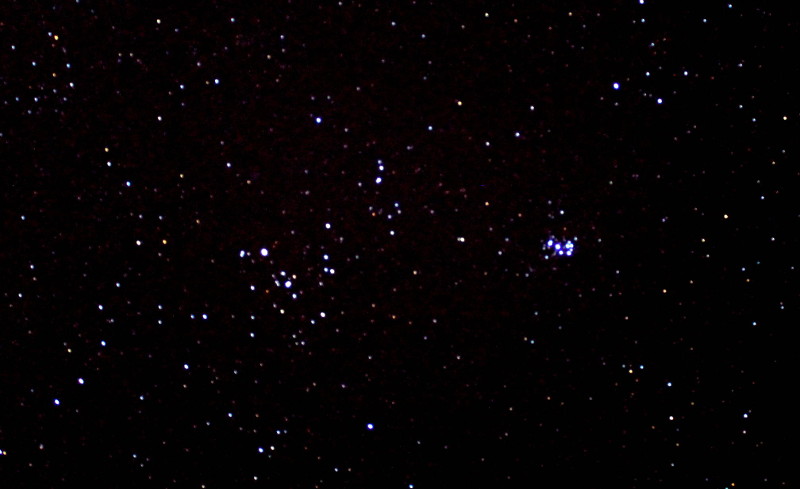
The Hyades (left) and the Pleiades (right) in this photograph I took January 4, 2016. Aldebaran is the bright star at the left tip of the Pleiades (right) of the Hyades.
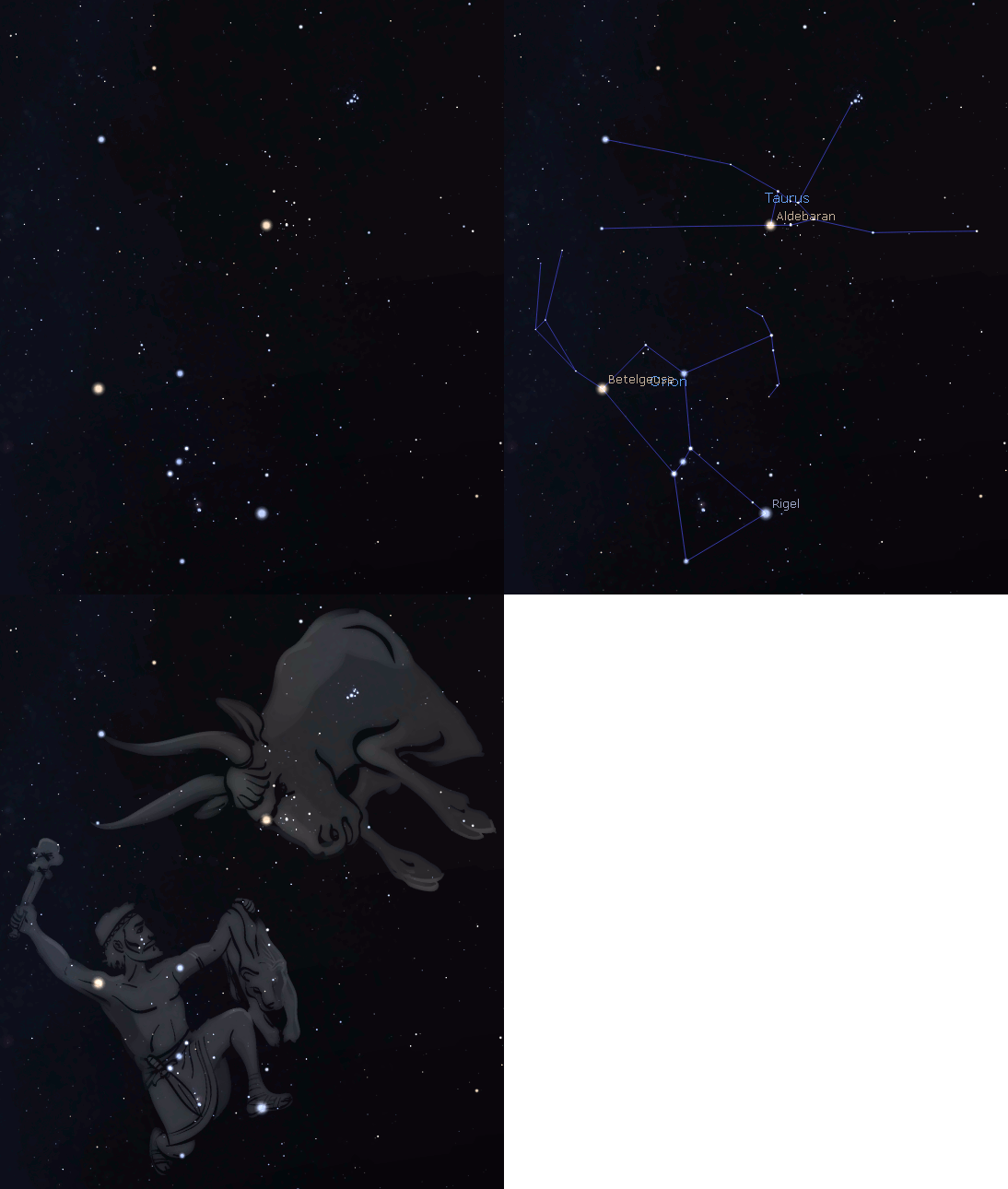
Orion and Taurus finder animation for mid-January. Created using Stellarium
01/15/2021 – Ephemeris – The constellation Lepus the hare
This is Bob Moler with Ephemeris for Friday, January 15th. Today the Sun will be up for 9 hours and 12 minutes, setting at 5:28, and it will rise tomorrow at 8:15. The Moon, 2 days past new, will set at 8:17 this evening.
Orion, the central winter constellation is seen in the southern sky this evening. He is a hunter, as artists depict him, he is preoccupied with the charge of Taurus the bull from the upper right. At Orion’s feet, and unnoticed by him is the small constellation of Lepus the hare. It’s very hard to see a rabbit in its eight dim stars: however, I can see a rabbit’s head ears and shoulders. A misshapen box is the head and face of this critter facing to the left. His ears extend upwards from the upper right star of the box, and the bend forward a bit. Two stars to the right of the box and a bit farther apart hint at the front part of the body. In Lepus telescopes can find M79, a distant globular star cluster, one of the few visible in the winter sky.
The event times given are for the Traverse City/Interlochen area of Michigan. They may be different for your location.
Addendum
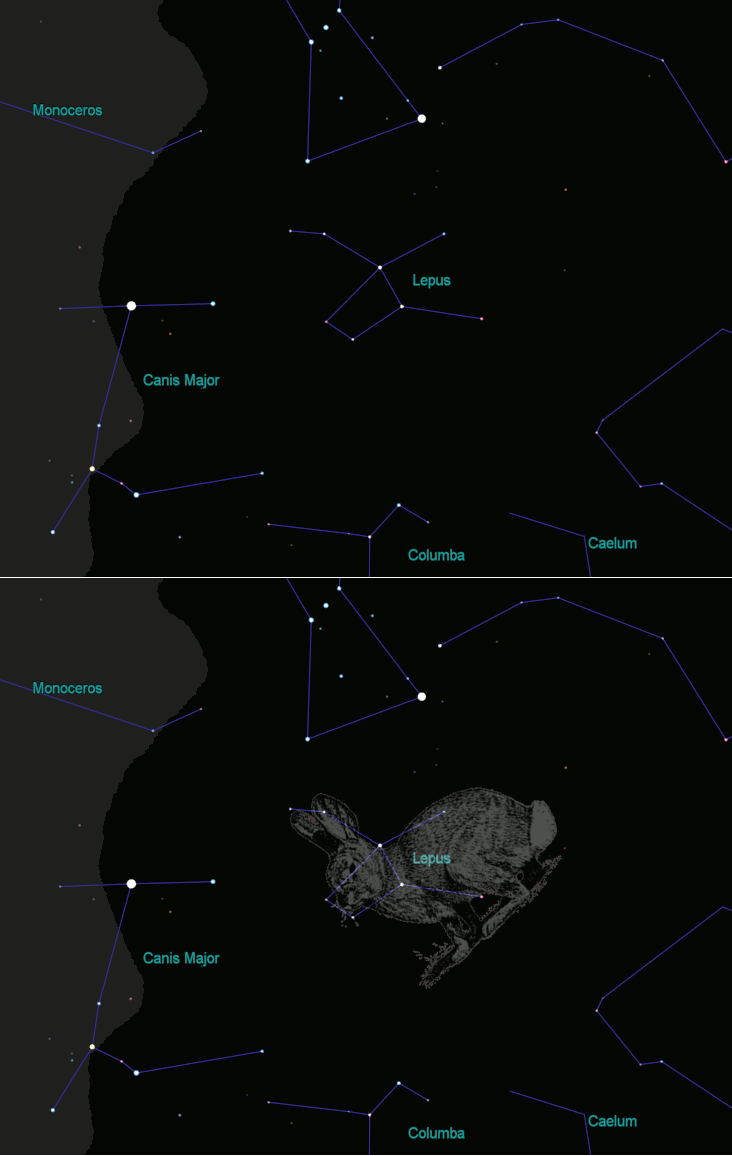
My view of Lepus the hare. Star field from Cartes du Ciel. Desert Cottontail drawing from Arizona-Senora Desert Museum website. Superimposed with GIMP.

An animation showing the stars, constellations and artwork of Lepus, Orion and Taurus from Stellarium. The constellation lines suggest a rabbit ears TV antenna. Created using Stellarium and GIMP.
01/07/2021 – Ephemeris – The constellations Orion and Taurus interact
This is Bob Moler with Ephemeris for Thursday, January 7th. Today the Sun will be up for 8 hours and 59 minutes, setting at 5:19, and it will rise tomorrow at 8:19. The Moon, 1 day past last quarter, will rise at 3:13 tomorrow morning.
There are several instances in the Greek heavens where constellations appear to interact with one another. This is true with Orion the hunter and Taurus the bull. Taurus, whose face is the letter V of stars with orangish Aldebaran as his angry bloodshot eye is charging down on Orion, who has raised a lion skin shield on one arm and an upraised club in the other, ready to strike. They have been frozen in this pose for millennia. Stars below and right of the letter V of the Bull’s face suggest the front part of his body and his front legs charging at Orion. Orion also has two hunting dogs, Canis Major and Canis Minor. Canis Major with its dazzling star Sirius will rise around 7:30 on a line extended down from Orion’s belt.
The event times given are for the Traverse City/Interlochen area of Michigan. They may be different for your location.
Addendum
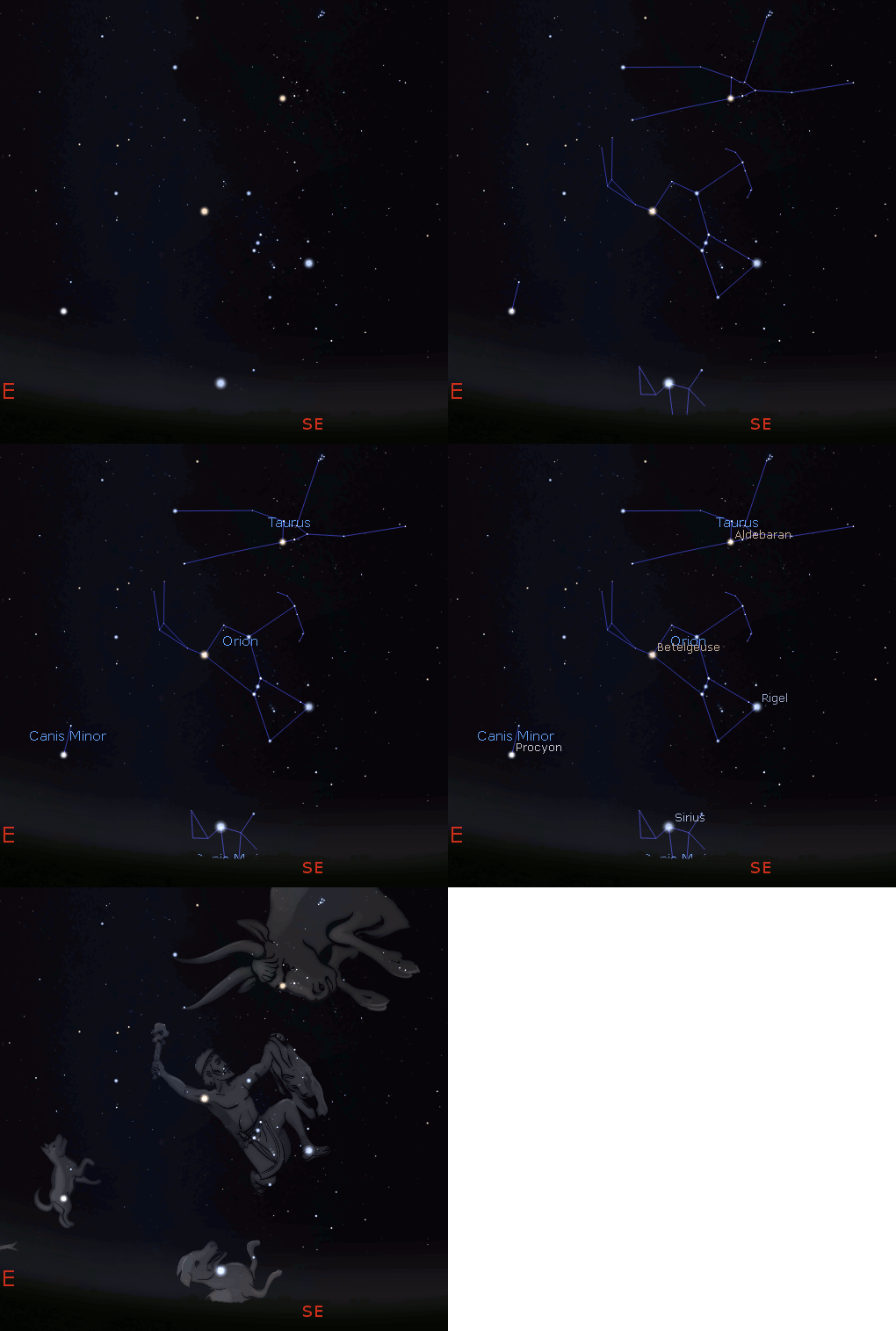
The Orion-Taurus Tableau. Seen around 8 pm, January 7, 2021. Created using Stellarium.
12/08/2020 – Ephemeris – Finding Taurus the bull
This is Ephemeris for Tuesday, December 8th. Today the Sun will be up for 8 hours and 54 minutes, setting at 5:02, and it will rise tomorrow at 8:08. The Moon, 1 day past last quarter, will rise at 1:39 tomorrow morning.
Orion is the big splashy constellation in the east southeast by 9 in the evening. Above it is another famous constellation Taurus the bull. Its face is a letter V shape of stars on its side with the open end of the V to the left. The bright star at the lower left end of the sideways V is the ruddy star Aldebaran, the Bull’s angry bloodshot eye. The bull is charging down at Orion. The Pleiades, also known as the seven sisters, is the cluster of stars in his shoulder, above the V. The stars in the face of Taurus, except for Aldebaran belong to a star cluster like the Pleiades, but closer and older, called the Hyades. In Greek mythology the Hyades are half sisters to the Pleiades, all fathered by the god Atlas.
The event times given are for the Traverse City/Interlochen area of Michigan. They may be different for your location.
Addendum
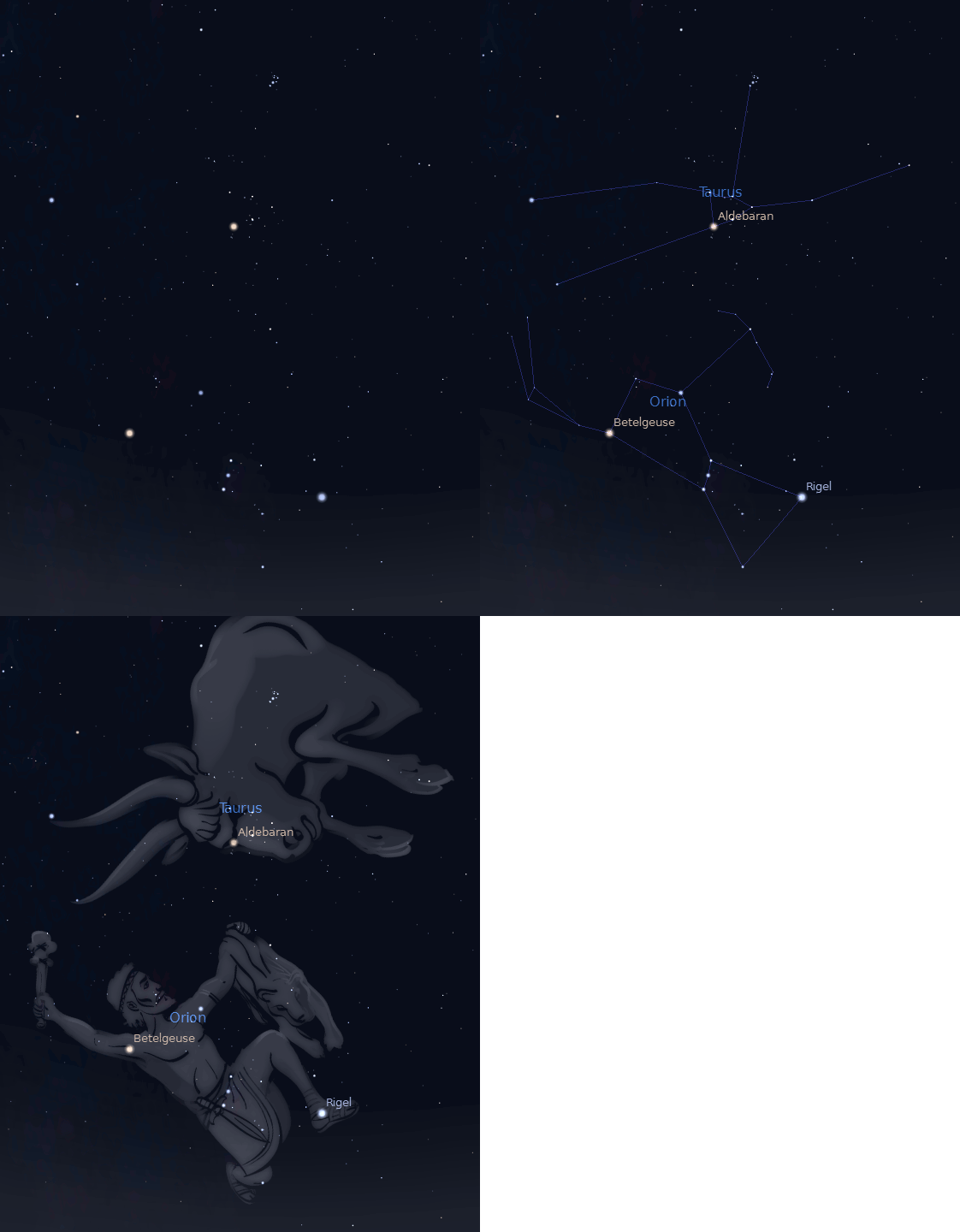
Three views of Taurus the bull and Orion the hunter for 9 p.m. on December 8th. Created using Stellarium and GIMP.
The Pleiades (right) and the Hyades (left) in this photograph I took January 4, 2016. The orientation is a bit different from how it appears in early December.
 Bob Moler's Ephemeris Blog