Archive
Ephemeris: 12/15/2023 – Jupiter is seen in Aries this year, also precession
This is Bob Moler with Ephemeris for Friday, December 15th. Today the Sun will be up for 8 hours and 49 minutes, setting at 5:02, and it will rise tomorrow at 8:13. The Moon, 3 days past new, will set at 7:50 this evening.
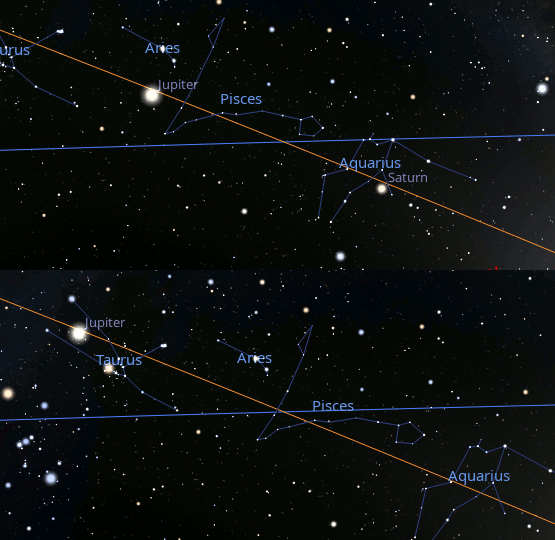
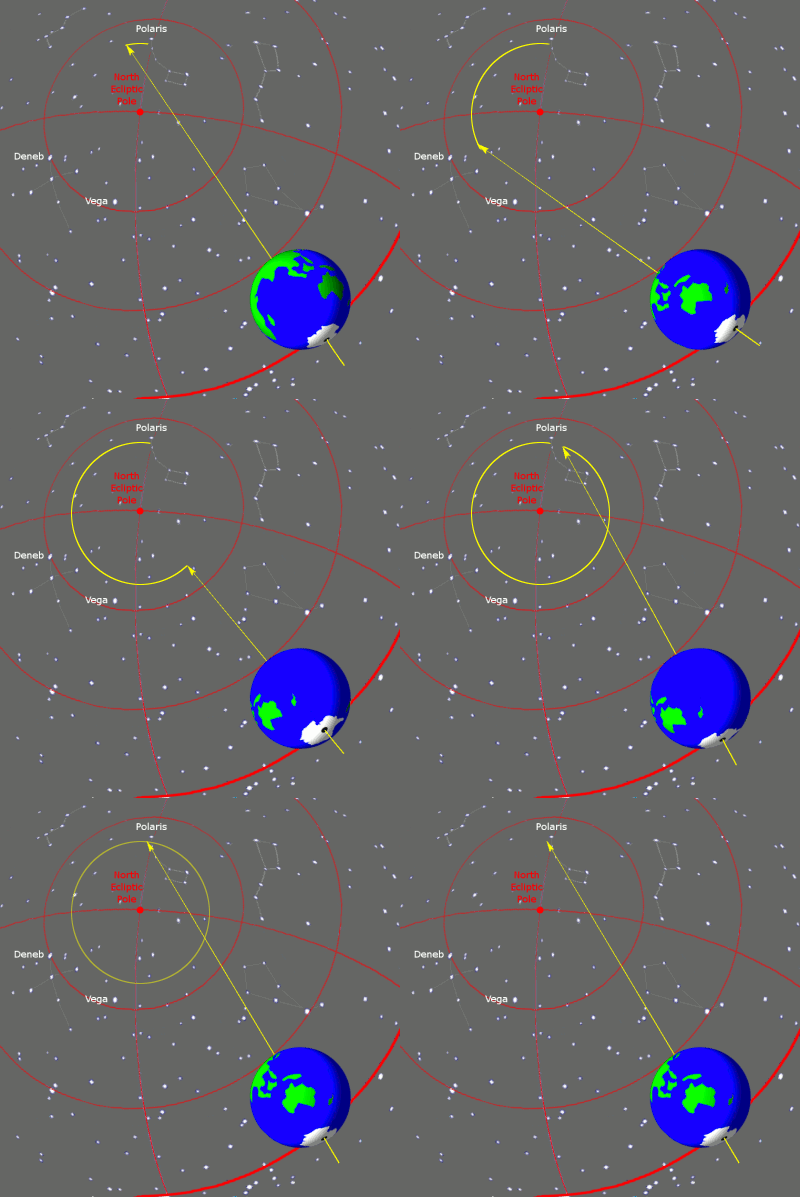
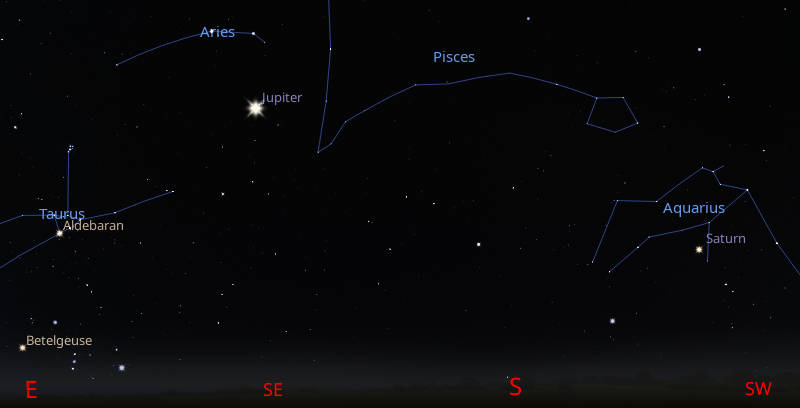
The planet Jupiter is seen against the stars of the constellation Aries the ram this year. The four stars of the constellation are seen above it, two of which are bright enough to be fairly easily seen. The other two are quite dim. The brightest is the star called Hamal. It is as bright as one of the stars of the Big Dipper. Aries used to be the constellation at the beginning of the Zodiac, where the Sun entered on the first day of spring. That honor has now moved westward to the western part of Pisces, the fish. The reason it has changed in the 1900 years since Ptolemy set up the Zodiac in the second century is that the Earth’s axis wobbles and the astrological signs of the Zodiac move with the seasons rather than the stars.
The astronomical event times given are for the Traverse City/Interlochen area of Michigan (EST, UT –5 hours). They may be different for your location.
Addendum
Ephemeris: 12/14/2023 – The Geminids will still be near peak tonight
This is Ephemeris for Thursday, December 14th. Today the Sun will be up for 8 hours and 50 minutes, setting at 5:02, and it will rise tomorrow at 8:13. The Moon, 2 days past new, will set at 6:31 this evening.
The Earth will pass through the heart of the Geminid meteoroid stream at about 2 this afternoon, so this evening is probably the best time to be able to see these meteors. They will appear to come from the northeastern to eastern sky in the evening. The Geminids are now the most active annual shower. This hasn’t always been the case, but the meteor rate has been increasing in recent years. Our problem with it is that it happens in December when, number one it’s cold, and number 2 it’s pretty cloudy. I must admit I’ve never seen a Geminid for those reasons. This year, it seems to have been clearer than previous years, so maybe we might get a glimpse at them. Stragglers of the Geminids can be seen until almost Christmas.
The astronomical event times given are for the Traverse City/Interlochen area of Michigan (EST, UT –5 hours). They may be different for your location.
Addendum
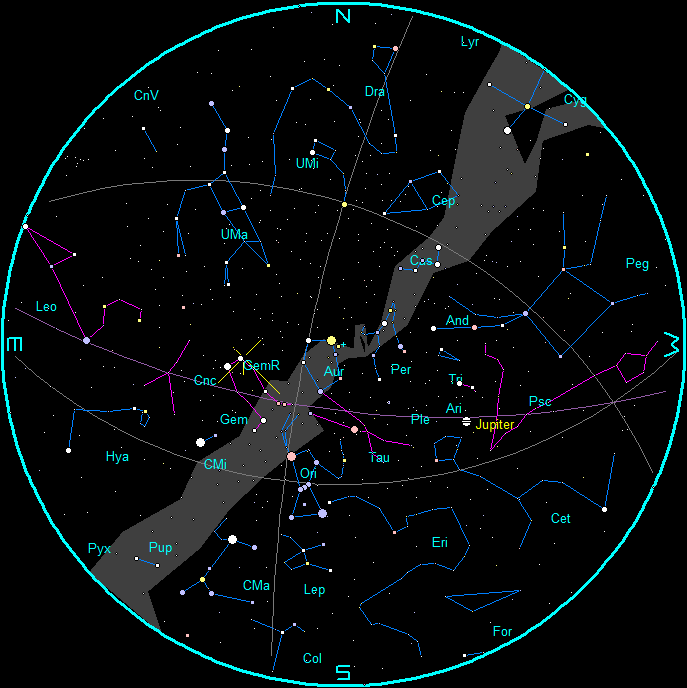
The Geminids are supposed to reach about 120 an hour at peak which would be at one or two in the morning which is about 12 hours after their actual peak. So that we won’t get the 120, but there’s an equal chance to spot them on the night of the 13/14th or 14/15th. Click or tap on the image to enlarge it. Image created using my Looking Up app.
Ephemeris: 12/13/2023 – Where are the naked eye planets this week?
This is Bob Moler with Ephemeris for Wednesday, December 13th. Today the Sun will be up for 8 hours and 50 minutes, setting at 5:02, and it will rise tomorrow at 8:12. The Moon, 1 day past new, will set at 5:22 this evening.
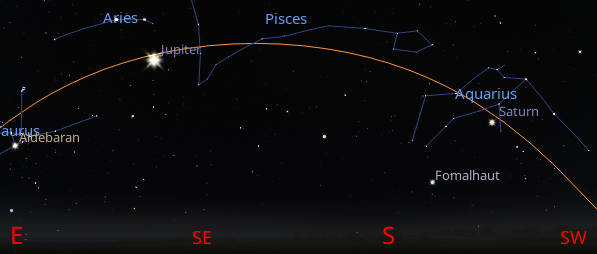
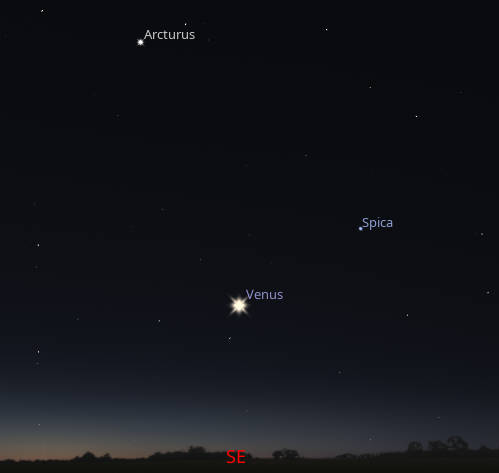
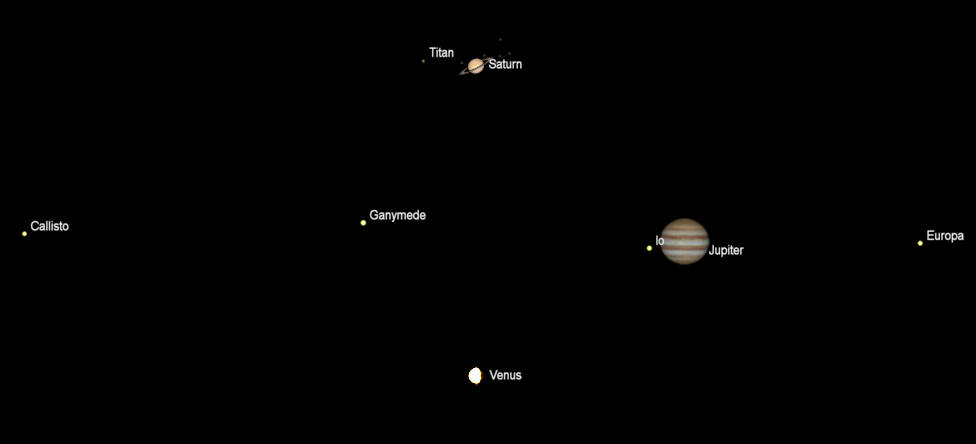
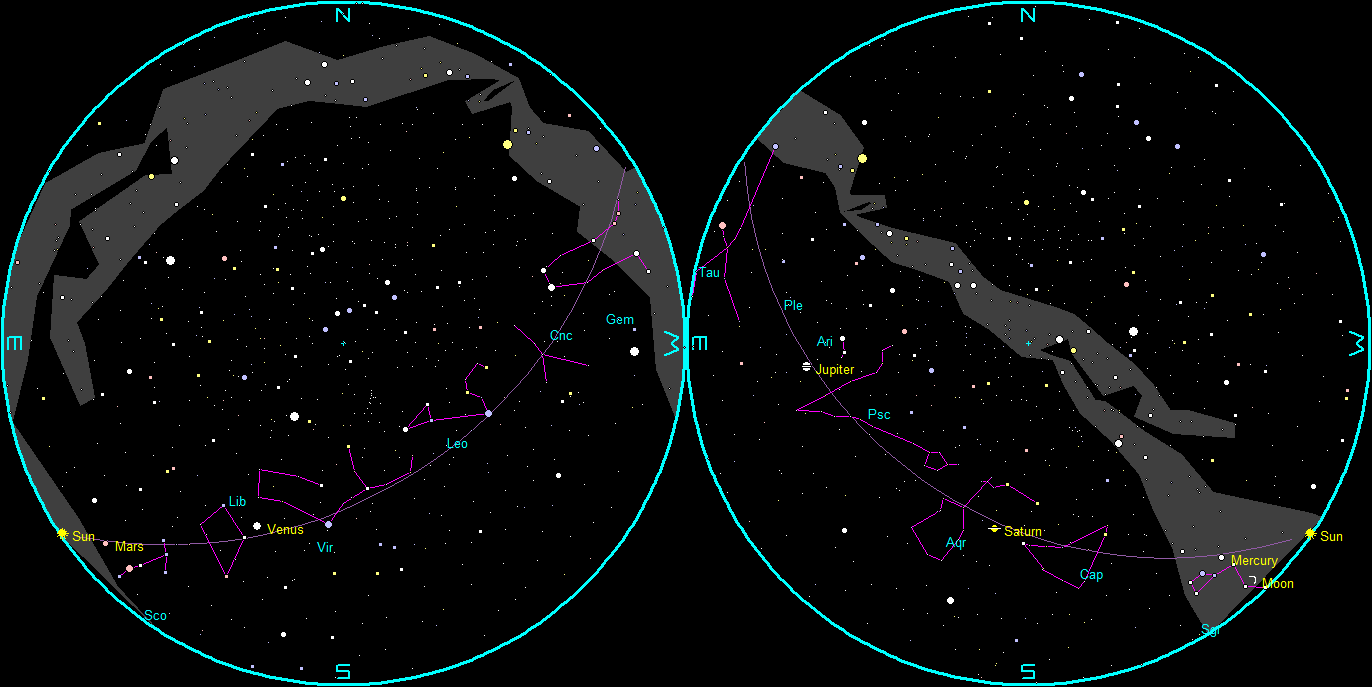
Let’s find out where the naked-eye planets have wandered off to this week. Three of those five planets are now visible, but Mercury sets too close to sunset to be seen. And Mars rises too close to sunrise. Saturn and Jupiter are the only evening planets visible. Saturn can be seen moving from low in the south-southwest to setting in the west-southwest at 10:44 pm. Jupiter will be moving from the high in the southeast to southwest, and will be up most of the night until 4:22 am. Venus, the brilliant morning star, will rise in the east-southeast at 4:40 am, and be a brilliant beacon in the morning, shining in the southeast by 7 am. Tonight is the first of two nights when the Geminid meteor shower will be at its peak.
The astronomical event times given are for the Traverse City/Interlochen area of Michigan (EST, UT –5 hours). They may be different for your location.
Addendum
Ephemeris: 12/12/2023 – The source of the Geminid meteor shower
This is Bob Moler with Ephemeris for Tuesday, December 12th. Today the Sun will be up for 8 hours and 51 minutes, setting at 5:02, and it will rise tomorrow at 8:11. The Moon is new today, and won’t be visible.
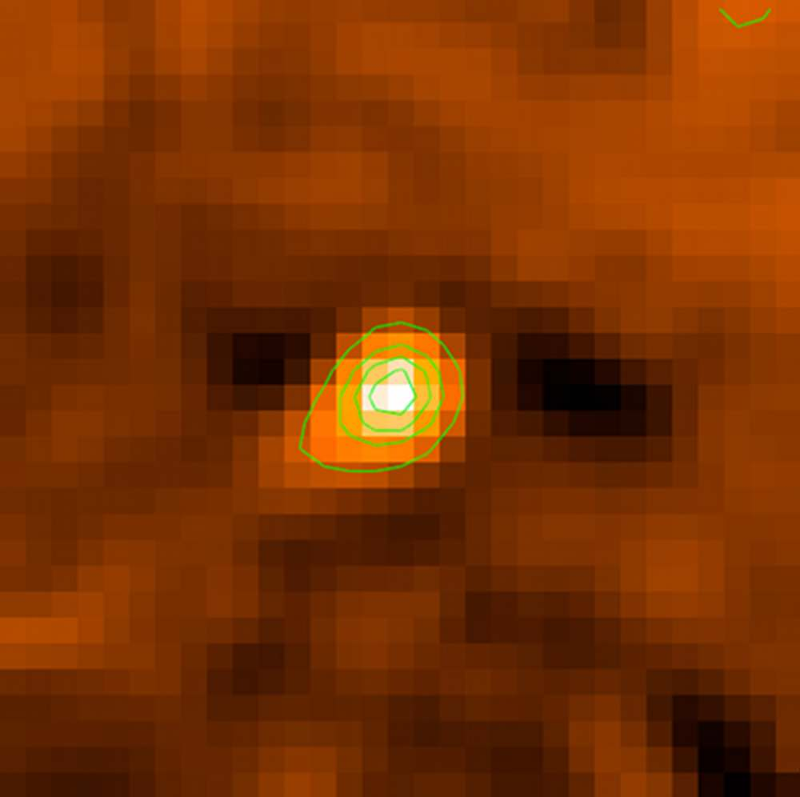
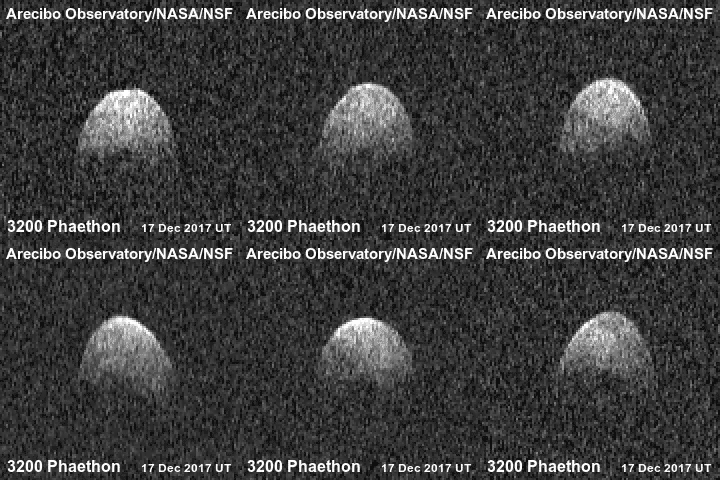
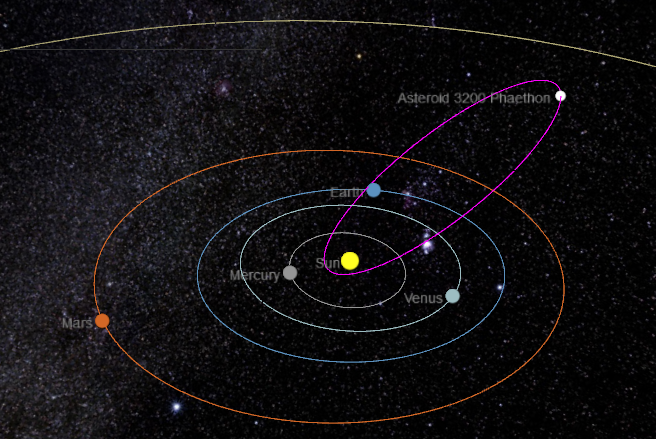
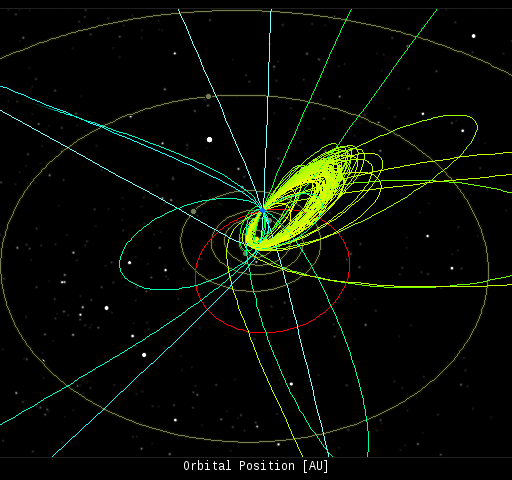
The Geminid meteor shower, which will peak this Thursday, is caused by a small body called 3200 Phaethon which looks like an asteroid but has the orbit of a comet, coming close to the Sun and back out to the asteroid belt. It’s probably a dead comet, with all the volatiles sublimated away leaving only the rocky bits. It is named Phaethon, because at the time it was the asteroid that came closest to the Sun. In Greek mythology Phaethon, the son of Helios the Sun god borrowed his father’s chariot that carried the Sun to take it out for a spin one day with disastrous results. The Geminid meteor shower was first recognized in 1862. The hourly rates of the Geminids have increased every year since then. The meteor stream has completely filled in the orbit of Phaethon, and they’re being pushed around by the gravitational effect of the planets and the pressure of sunlight.
The astronomical event times given are for the Traverse City/Interlochen area of Michigan (EST, UT –5 hours). They may be different for your location.
Addendum
Ephemeris: 12/11/2023 – This is the week of the Geminid meteor shower
This is Bob Moler with Ephemeris for Monday, December 11th. Today the Sun will be up for 8 hours and 52 minutes, setting at 5:02, and it will rise tomorrow at 8:10. The Moon, 1 day before new, will rise at 8:09 tomorrow morning.
The Geminid meteor shower will reach its peak this week, well Thursday afternoon, actually. I’m talking about this early hoping that we might get a clear night this week to see them. The Geminids are the most active annual meteor shower. Up to 120 meteors may be visible per hour at its peak when it’s the radiant in Gemini is directly overhead which would be on Wednesday or Thursday mornings this week. At those times it will be about half a day before or after the peak, but with such a high number of meteors it should be a spectacular show anyway. The Geminids are produced by a rock comet called Phaethon, which was discovered in 1983 by the Infrared Astronomy Satellite, the first to perform an infrared survey of the entire sky.
The astronomical event times given are for the Traverse City/Interlochen area of Michigan (EST, UT –5 hours). They may be different for your location.
Addendum
The Geminids are supposed to reach about 120 an hour at peak which would be at one or two in the morning which is about 12 hours after their actual peak. So that we won’t get the 120, but there’s an equal chance to spot them on the night of the 13/14th or 14/15th. Click or tap on the image to enlarge it. Image created using my Looking Up app.
Ephemeris: 12/08/2023 – Tomorrow has the earliest sunset of the year
This is Ephemeris for Friday, December 8th. Today the Sun will be up for 8 hours and 55 minutes, setting at 5:02, and it will rise tomorrow at 8:08. The Moon, 3 days past last quarter, will rise at 4:28 tomorrow morning.
Tomorrow is the date of the earliest sunset, in the middle of a 12-day stretch where the Sun sets within the same minute. We are still 13 days from the winter solstice, the day of the shortest daylight hours, on the 21st. The reason is twofold. The Sun is near its farthest position south of the equator, where the longitude lines are closer together, so it takes less time to cross them. 15 degrees in longitude equals one hour in Earth’s rotation. Add to that we are less than a month from Earth’s perihelion in its orbit of the Sun, that is at its closest, and is moving faster than average. The combined effects delay sunrise and sunset, from what they’d be if the Sun was on the equator and the Earth’s orbit was circular. We will have our latest sunrise on January 2nd.
The astronomical event times given are for the Traverse City/Interlochen area of Michigan (EST, UT –5 hours). They may be different for your location.
Addendum
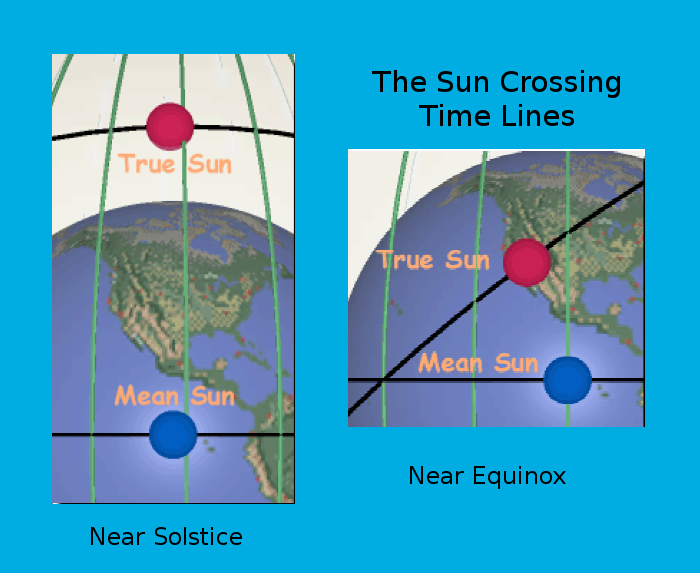
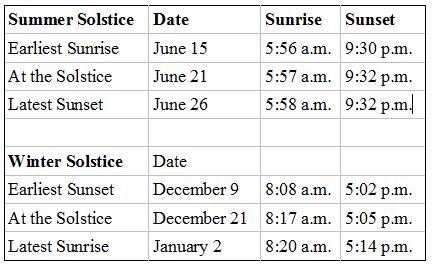
In December the Earth is approaching perihelion, its closest to the Sun, so it moves faster than average. This makes the Sun to appear to move faster eastward against the stars in our sky, and tends to make our sunrises, apparent local noons and sunsets later than they would otherwise be. Sunset bottoms out early and extends the date of the latest sunrise
For the June or summer solstice around here, the Earth is near aphelion, it’s farthest from the Sun where the Earth is at its slowest in its orbit. By reflection, the Sun appears to move its slowest against the stars in our sky. This effect works against the high latitude effect, making the effect smaller. Looking at the table above, the days between the earliest and latest times is shorter for the summer solstice than for the winter solstice.
Ephemeris: 12/07/2023 – Auriga, the charioteer
This is Ephemeris for Thursday, December 7th. Today the Sun will be up for 8 hours and 56 minutes, setting at 5:02, and it will rise tomorrow at 8:07. The Moon, 2 days past last quarter, will rise at 3:20 tomorrow morning.
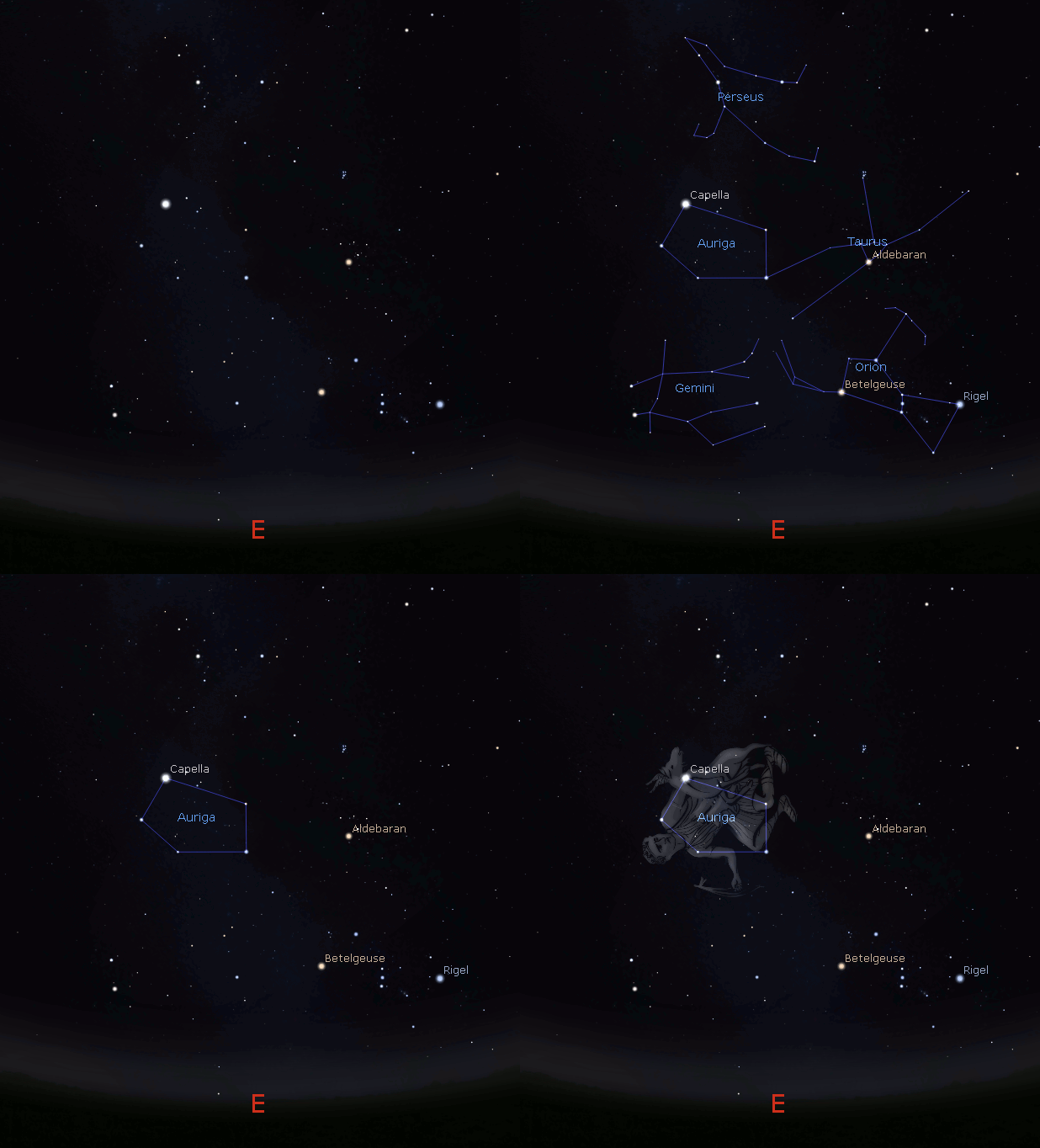
The first constellation of winter is in the northeastern sky, called Auriga the charioteer. It’s to the upper left of Orion and directly left of Taurus. Auriga actually never really quite leaves us, because its brightest star, Capella is the star that never leaves us even in the heat of summer, Though for most of us it’s in the trees in the north. Auriga is a pentagon of stars with the Capella on top. Just right of Capella is a thin triangle of three faint stars, an asterism or informal constellation called the Kids, baby goats. Capella is their mother. For some reason they are all held by a charioteer, who is without his chariot. And from all the Hollywood Biblical epic movies I’ve seen, it takes two hands to drive a chariot, and it doesn’t have a rumble seat.
The astronomical event times given are for the Traverse City/Interlochen area of Michigan (EST, UT –5 hours). They may be different for your location.
Addendum
Ephemeris: 12/06/2023 – Our weekly look at the naked-eye planets
This is Ephemeris for Wednesday, December 6th. Today the Sun will be up for 8 hours and 57 minutes, setting at 5:02, and it will rise tomorrow at 8:06. The Moon, 1 day past last quarter, will rise at 2:15 tomorrow morning.
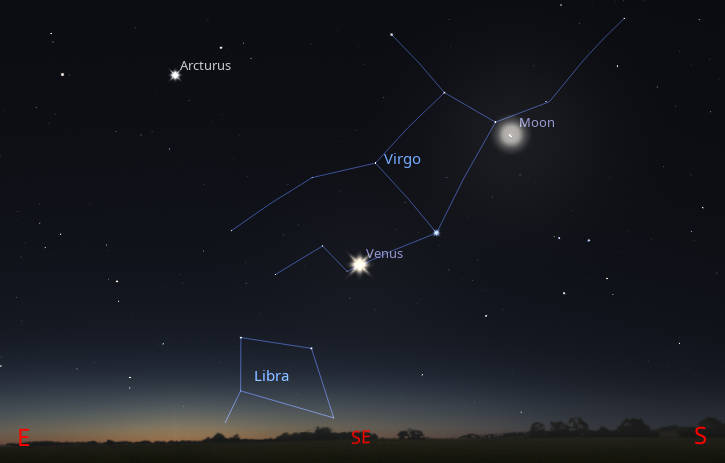
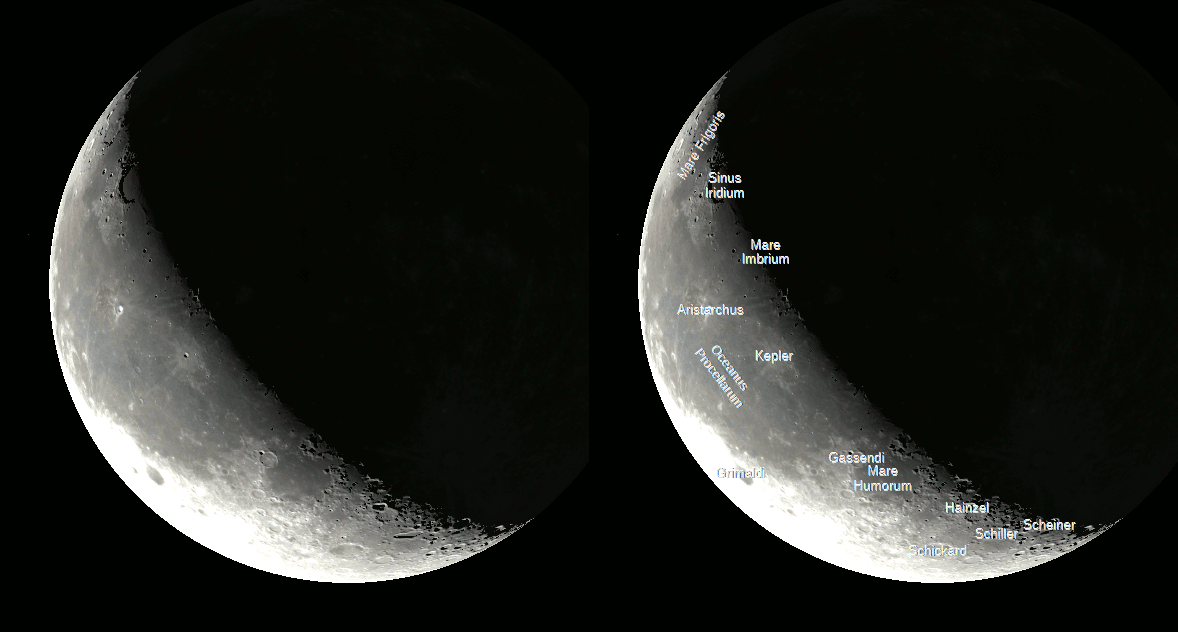
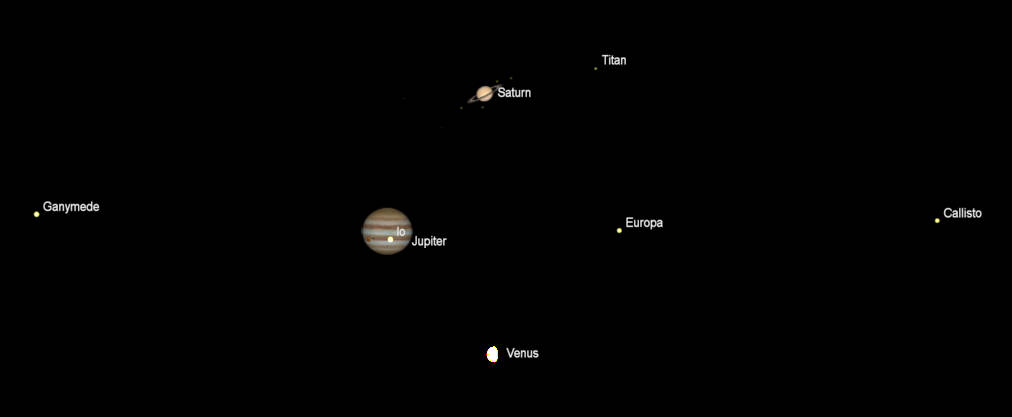
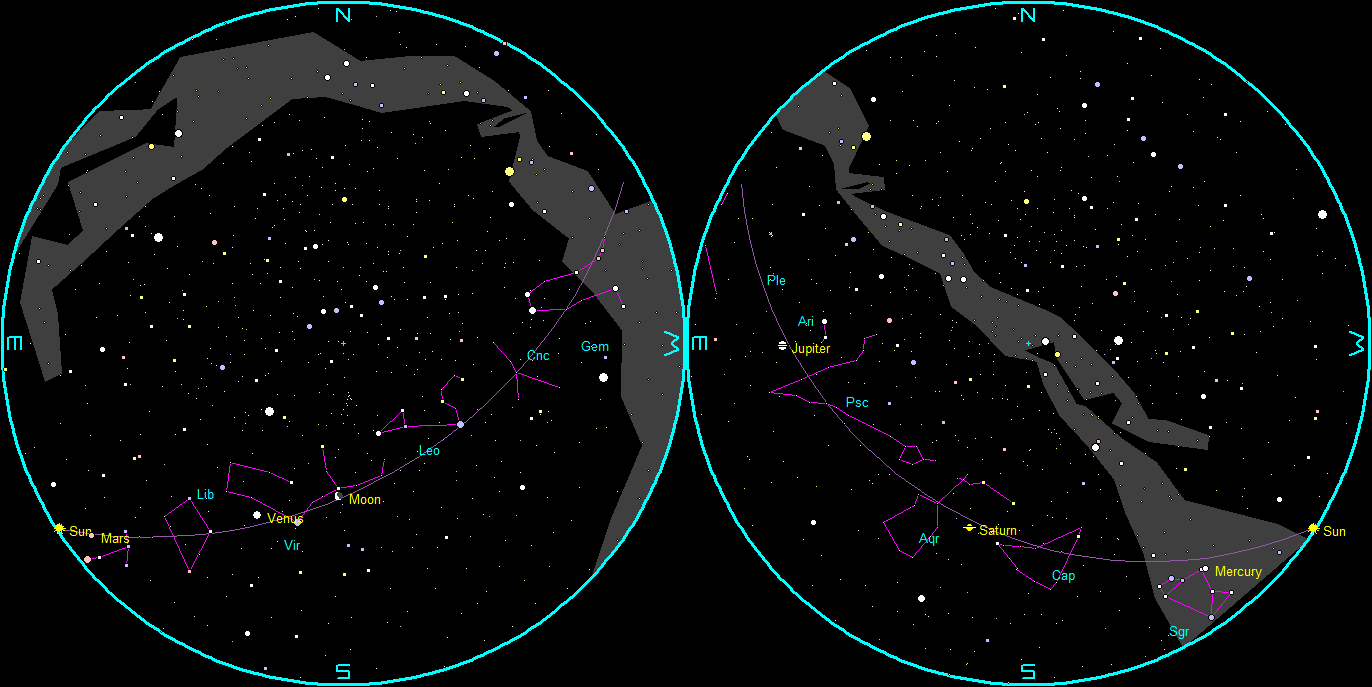
Let’s find out where the naked-eye planets have wandered off to this week. Three of those five planets are now visible, but Mercury sets too close to sunset to be seen. Mars rises too close to sunrise. Saturn and Jupiter are the only evening planets visible. Saturn can be seen moving from the south-southwest to setting in the west-southwest at 11:12 pm. Jupiter will be moving from the southeast to southwest and will be much higher in the sky during the evening hours than Saturn is, and will be up most of the night until 4:56 am. Venus, the brilliant morning star, will rise in the east-southeast at 4:22 am, and be a brilliant beacon in the morning. It will be far below and left of the fat crescent Moon.
The astronomical event times given are for the Traverse City/Interlochen area of Michigan (EST, UT –5 hours). They may be different for your location.
Ephemeris: 12/05/2023 – The Hyades, face of Taurus and an important star cluster
This is Bob Moler with Ephemeris for Tuesday, December 5th. Today the Sun will be up for 8 hours and 58 minutes, setting at 5:02, and it will rise tomorrow at 8:05. The Moon, at last quarter today, will rise at 1:11 tomorrow morning.
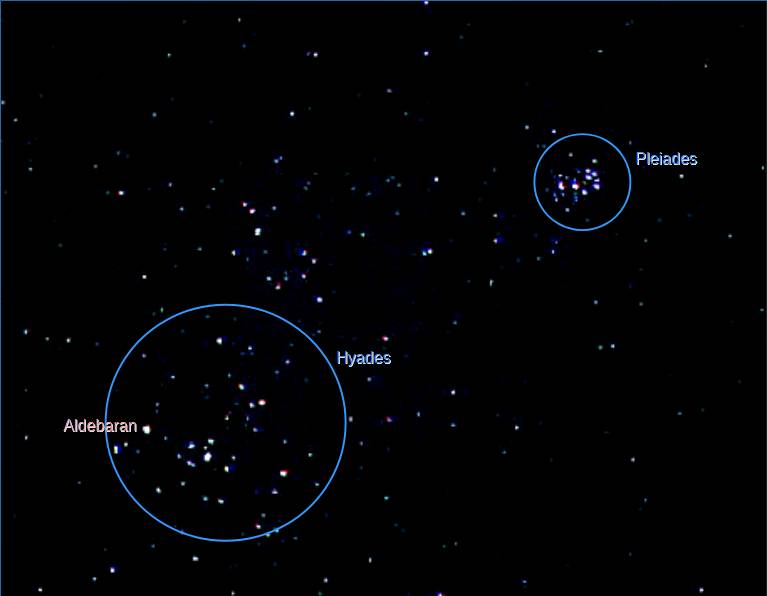
At 8 o’clock this evening the constellation of Orion the hunter is still in the act of rising with one leg still stuck in the snow. What is up above him is the constellation of Taurus the bull. His face is a letter V of stars or as a letter A, as I mentioned yesterday, is the star cluster called the Hyades. In Greek myth the stars are the half sisters of the Pleiades, which are right above them. The Hyades star cluster is very special. They don’t look as splashy as the Pleiades which are younger and still have their hot blue white stars. However, the Hyades are much closer in fact they’re close enough to be measured by trigonometry using the earth’s orbit as the base of a triangle, like surveyors would do on Earth.
The astronomical event times given are for the Traverse City/Interlochen area of Michigan (EST, UT –5 hours). They may be different for your location.
Addendum
Ephemeris: 12/04/2023 – Our Alphabet begins with Taurus, and that’s no Bull!
This is Ephemeris for Monday, December 4th. Today the Sun will be up for 8 hours and 59 minutes, setting at 5:02, and it will rise tomorrow at 8:04. The Moon, 1 day before last quarter, will rise at 12:08 tomorrow morning.
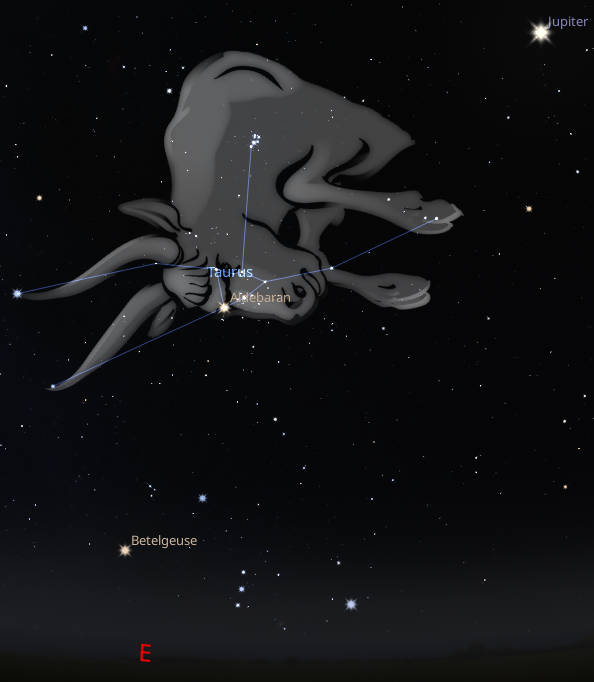
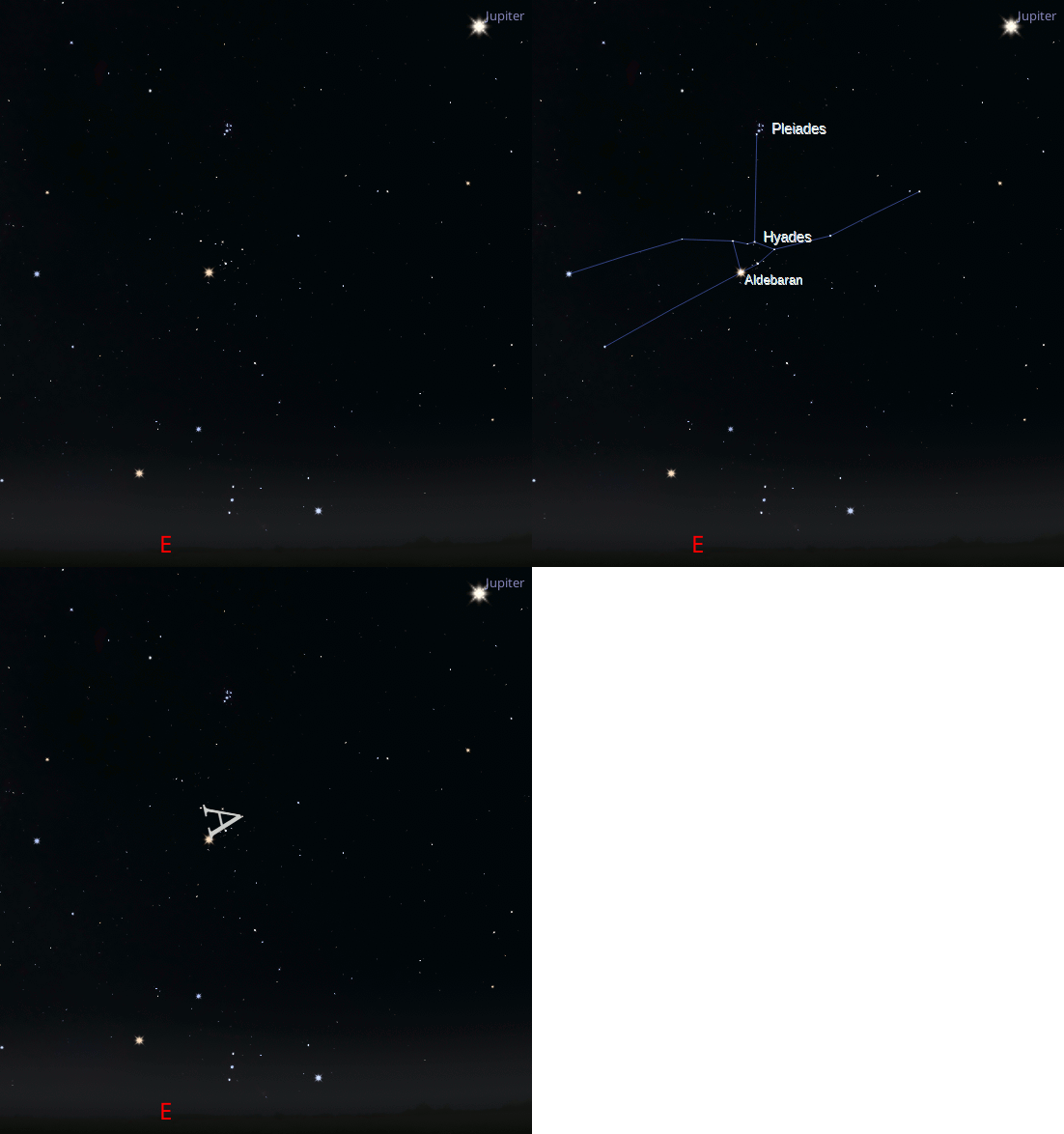
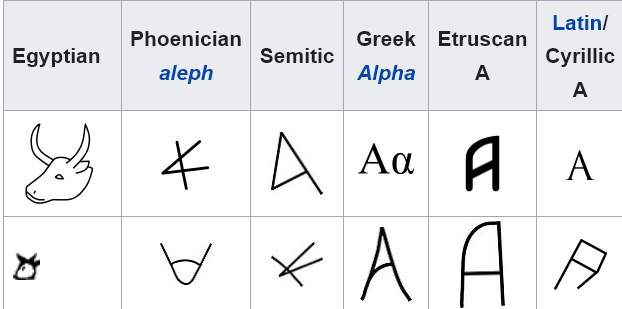
In the eastern part of the sky at 8 pm tonight, above the rising constellation of Orion the hunter, with its three belt stars nearly vertical and its two brightest stars Betelgeuse and Rigel, is an orange star called Aldebaran at one end of a letter V shape of stars which is the face of the constellation Taurus the bull. The V shape of stars is called the Hyades which were the half sisters of the Pleiades above them, according to Greek myth. Back 4,000 or so years ago when alphabets were being invented the vernal equinox or the beginning of spring where the sun was entering was Taurus, rather than Aries, or Pisces as it does today. The Mesopotamians took the shape of the head of Taurus to be the first letter of their alphabet, Aleph, which was an A lying on its side. In early Egyptian hieroglyphics it was the head of a bull. Over time the A got turned around so it was standing on its two legs with its apex on top and a bar across it to become the A we know today.
The astronomical event times given are for the Traverse City/Interlochen area of Michigan (EST, UT –5 hours). They may be different for your location.
Addendum
 Bob Moler's Ephemeris Blog