Archive
Ephemeris: 07/17/2024 – Where are the naked-eye planets this week?
This is Ephemeris for Wednesday, July 17th. Today the Sun will be up for 15 hours and 9 minutes, setting at 9:23, and it will rise tomorrow at 6:14. The Moon, halfway from first quarter to full, will set at 2:49 tomorrow morning.
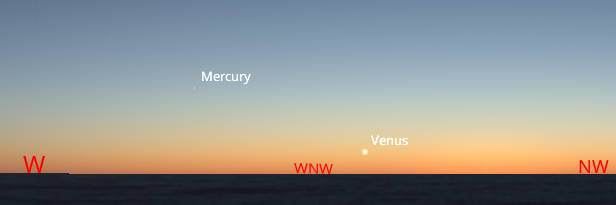
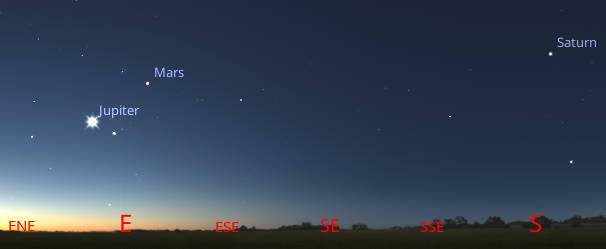
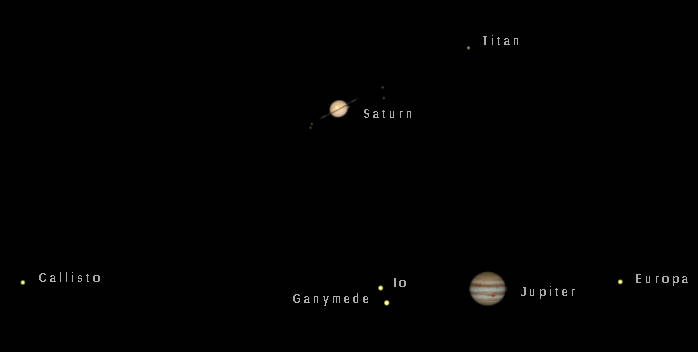
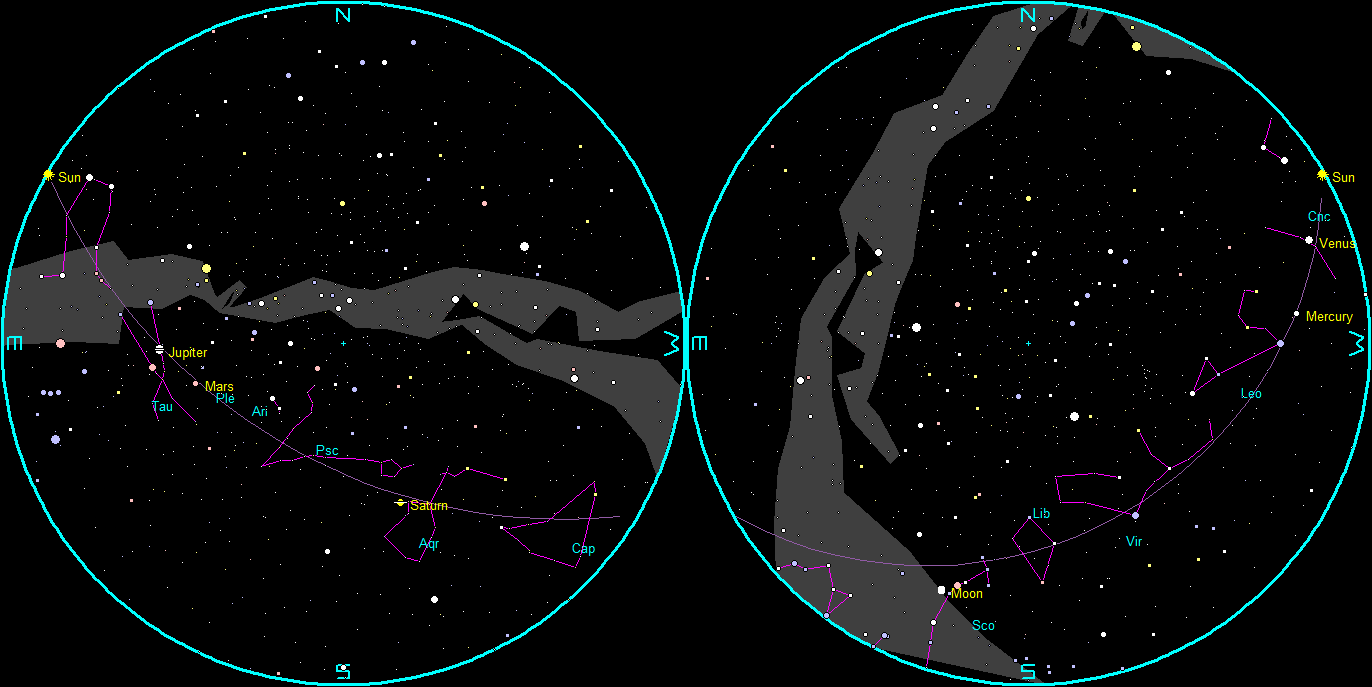
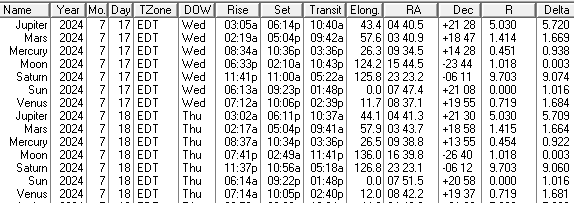
Let’s take our weekly look at the whereabouts of the naked-eye planets. Venus is still too close to the direction of the Sun to be easily seen, it will set at 10:04 pm in the west-northwest. It is below and right of Mercury. That elusive planet just might be seen very low in the west-northwest by 10 pm or so. By 5:30 tomorrow morning, or about 45 minutes before sunrise, Saturn will be in the south, Mars will be lower in the east, and Jupiter will below it in the east-northeast. Mars is closing in on Jupiter and will pass it on August 14th. Saturn may look disappointing in telescopes this year since the rings are nearly edge on and appear almost as a line through the planet. It will rise before midnight tonight, at 11:45 pm.
The astronomical event times given are for the Traverse City/Interlochen area of Michigan (EDT, UT–4 hours). They may be different for your location.
Addendum
Ephemeris: 07/16/2024 – Find the rabbit in the Moon
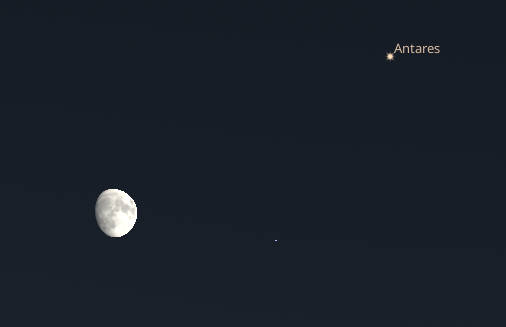
This is Ephemeris for Tuesday, July 16th. Today the Sun will be up for 15 hours and 11 minutes, setting at 9:24, and it will rise tomorrow at 6:13. The Moon, 3 days past first quarter, will set at 2:10 tomorrow morning.
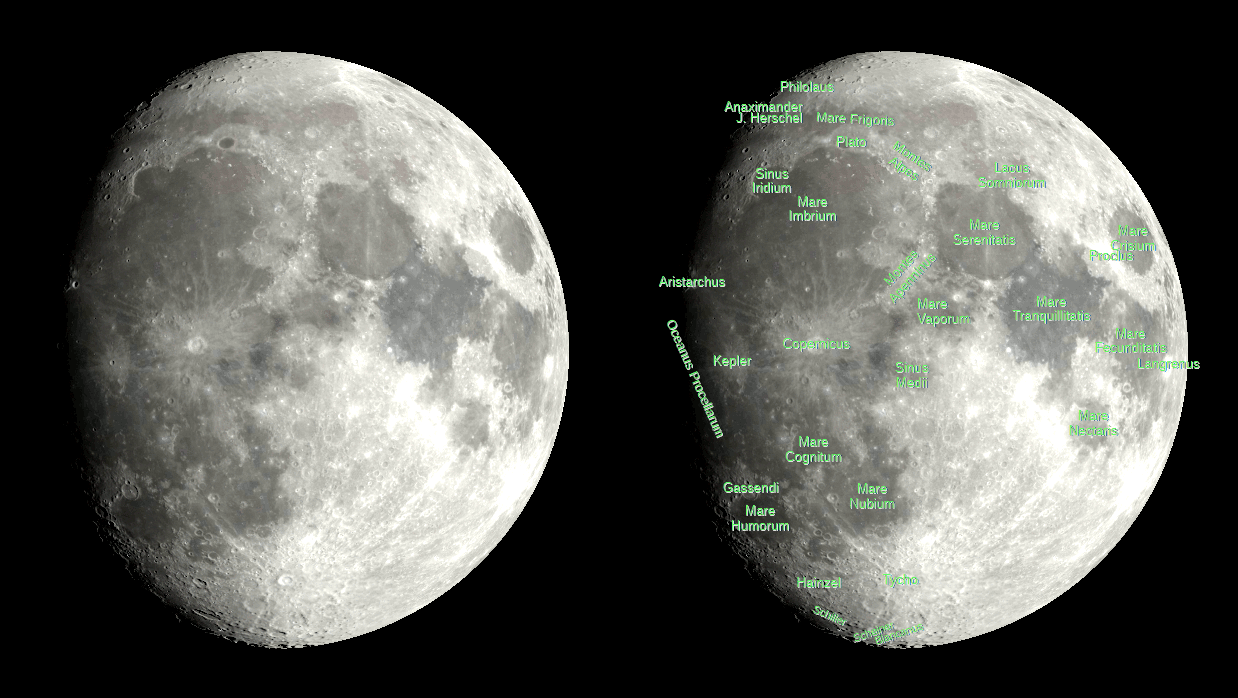
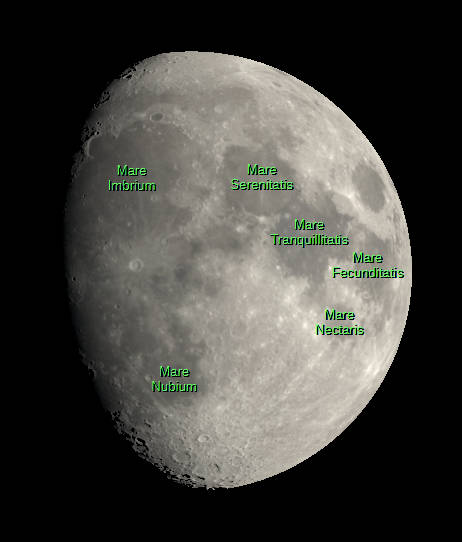
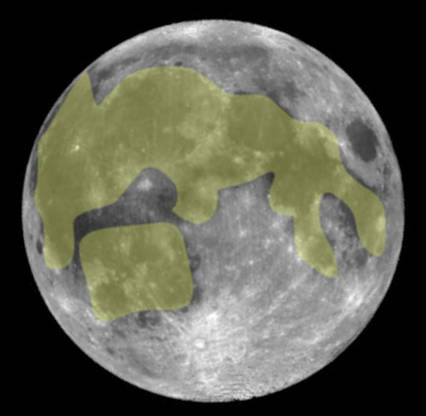
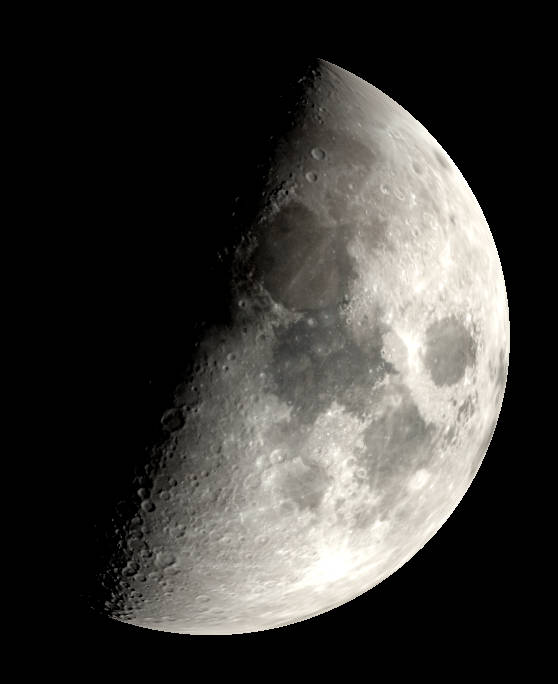
The Moon tonight is a gibbous phase which is between first quarter and full. The sunrise line we call the terminator is moving across the lunar sea Oceanus Procellarum, or Ocean of Storms. As I look at the Moon more and more, I’m beginning to appreciate what the Chinese saw in the pattern of the lunar seas, that of a rabbit. A very particular rabbit named Yutu, belonging to the moon goddess Ching’e. He’s curled up head down towards the right. His two rabbit ears, his head and part of his body is displayed in the five connected seas of Fecunditatis (Fruitfulness), Nectaris (Nectar), Tranquillitatis (Tranquility), Serenitatis (Serenity), and Imbrium (Showers). The rest of his body is slowly being revealed by the advancing terminator to the left. He is shown with a mortar, the sea Nubium (Clouds) and pestle pounding out medicine according to Chinese mythology.
The astronomical event times given are for the Traverse City/Interlochen area of Michigan (EDT, UT–4 hours). They may be different for your location.
Addendum
The Chinese lunar landers have been named Chang’e, and the rovers named Yutu.
Ephemeris: 07/15/2024 – When planets go rogue
This is Ephemeris for Monday, July 15th. Today the Sun will be up for 15 hours and 13 minutes, setting at 9:25, and it will rise tomorrow at 6:12. The Moon, 2 days past first quarter, will set at 1:40 tomorrow morning.
We all know that there are stars and there are planets and planets orbit stars, right? Well maybe not. Astronomers have recently discovered planets that don’t orbit stars. They float free in interstellar space. They are called rogue planets. There seems to be two ways to produce a rogue planet. The first way is to have the planet ejected from a star system through gravitational interaction with other planets especially big ones like Jupiter. Also, it appears that rogue planets can form like stars, and have protoplanetary discs. Or proto-moon disks? They can be discovered by the infrared light they give off, or by gravitational microlensing of a star that passes directly behind them.
The astronomical event times given are for the Traverse City/Interlochen area of Michigan (EDT, UT–4 hours). They may be different for your location.
Addendum

Ephemeris: 07/12/2024 – Star Party tomorrow night at Sleeping Bear Dunes National Lakeshore
This is Bob Moler with Ephemeris for Friday, July 12th. Today the Sun will be up for 15 hours and 17 minutes, setting at 9:27, and it will rise tomorrow at 6:10. The Moon, 1 day before first quarter, will set at 12:42 tomorrow morning.
Tomorrow night, Saturday, July 13th, the Sleeping Bear Dunes National Lakeshore will team up with the Grand Traverse Astronomical Society to host a star party at the Dune Climb from 9 to 11 PM or later. It won’t be a star party only, because the featured attraction will be the first quarter Moon. To my mind, this is the best time to view the Moon, showing its craters with deep shadows near the terminator or sunrise line which crosses the Moon slowly over the month. There are no planets out in the evening, but we do have some interesting stars to look at besides the Moon. And the bright International Space Station will be seen moving from west to northeast, passing through the bowl of the Big Dipper around 10:28 pm.
The astronomical event times given are for the Traverse City/Interlochen area of Michigan (EDT, UT–4 hours). They may be different for your location.
Addendum
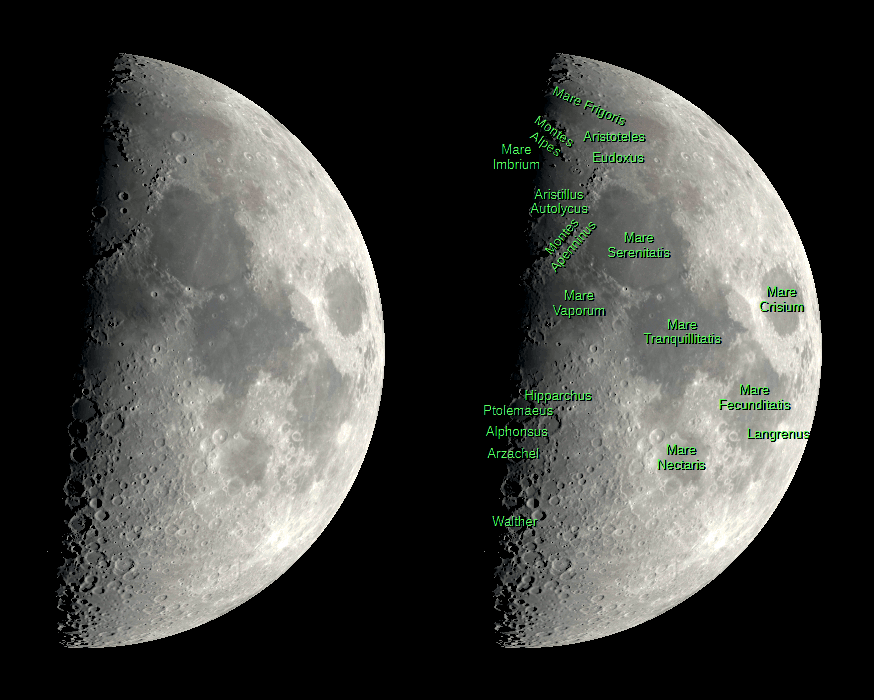
Translations of some lunar feature names according to Virtual Moon Atlas
Mare Crisium – Sea of Crises
Mare Fecunditatis – Sea of Fruitfulness
Mare Frigoris – Sea of Cold
Mare Imbrium – Sea of Showers
Mare Nectaris – Sea of Nectar
Mare Serenitatis – Sea of Serenity
Mare Tranquillitatis – Sea of Tranquility
Mare Vaporum – Sea of Vapors
Montes Alpes – Alps Mountains
Montes Apenninus – Apennines Mountains
Craters are named for persons, real or otherwise.
Ephemeris: 07/11/2024 – Low energy routes to get to the Moon
This is Ephemeris for Thursday, July 11th. Today the Sun will be up for 15 hours and 19 minutes, setting at 9:27, and it will rise tomorrow at 6:09. The Moon, 2 days before first quarter, will set at 12:26 tomorrow morning.
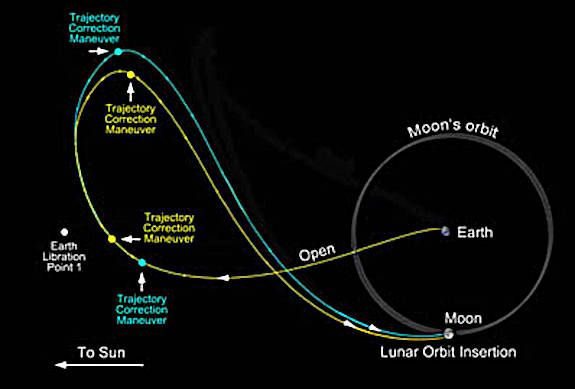
Back in the Apollo days when we sent people to the Moon, the trip out was only three days. The latest generation of unmanned probes to the Moon sent by the United States and other countries can take days, weeks, or even months to reach the Moon, so what’s going on? These are robot probes, needing little power. Humans however are high maintenance. Even when they’re doing nothing they are breathing, eating, and using resources. So when humans are aboard you have got to get there fast. Also, many of these probes are CubeSats, no bigger than a breadbox*. They must get into orbit of the Moon with very little thrust other than that of the rocket that launched them. They can go out as far as a million miles away before falling back to the Moon.
The astronomical event times given are for the Traverse City/Interlochen area of Michigan (EDT, UT–4 hours). They may be different for your location.
* OK, I’m an old guy, the modern size comparison would be a microwave.
Addendum
Ephemeris: 07/10/2024 – Where are the naked-eye planets this week?
This is Ephemeris for Wednesday, July 10th. Today the Sun will be up for 15 hours and 20 minutes, setting at 9:28, and it will rise tomorrow at 6:08. The Moon, 3 days before first quarter, will set at 12:10 tomorrow morning.
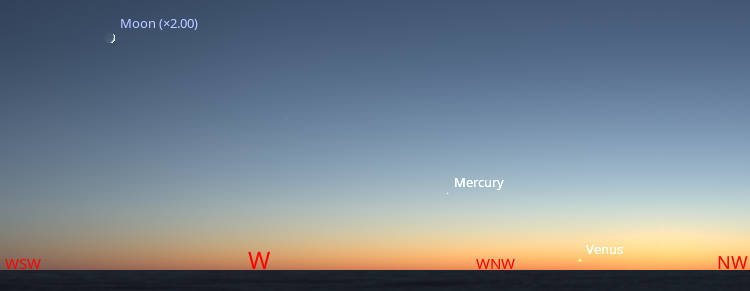
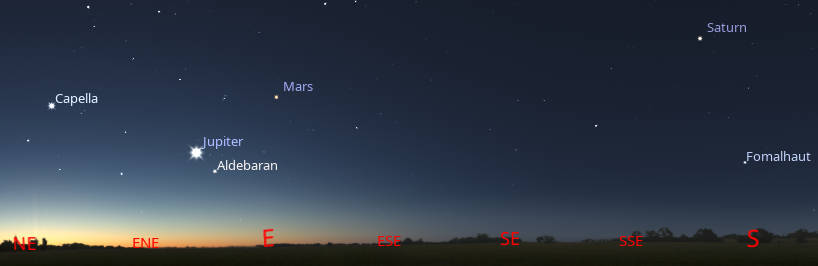
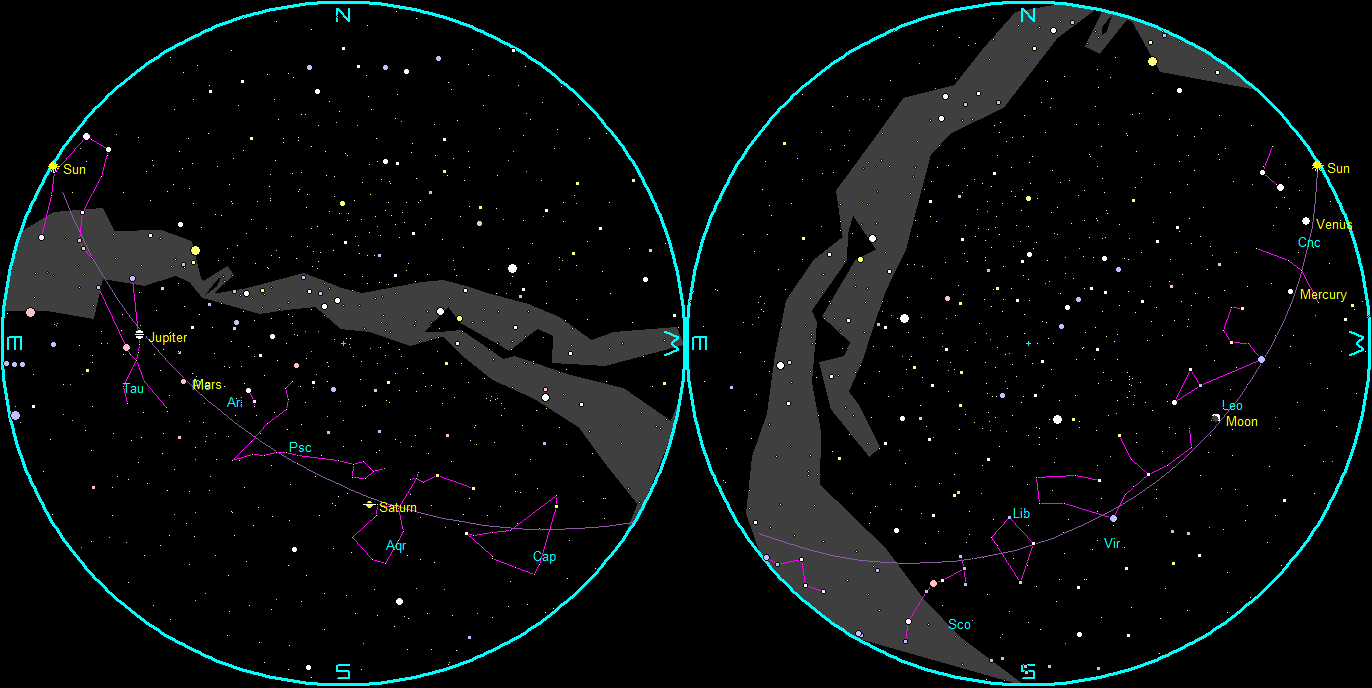
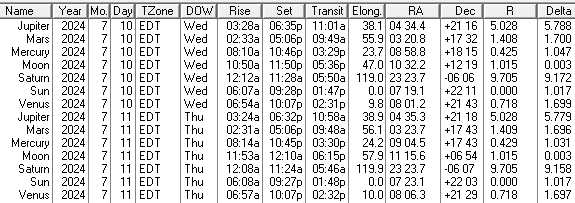
Let’s find out where the naked-eye planets have wandered off to this week. Venus is too close to the direction of the Sun to be easily seen, it will set at 10:07 pm in the west-northwest below and right of Mercury. That elusive planet just might be seen very low in the west-northwest by 10 pm or so. By 5:15 tomorrow morning, or about 50 minutes before sunrise, Saturn will be in the south, Mars will be lower in the east, and Jupiter will below it in the east-northeast. Mars is closing in on Jupiter and will pass it on August 14th. Saturn may look disappointing in telescopes this year since rings are nearly edge on and appear almost as a line through the planet. It will rise at 12:09 am, Mars at 2:34 am, and Jupiter at 3:28 am.
The astronomical event times given are for the Traverse City/Interlochen area of Michigan (EDT, UT–4 hours). They may be different for your location.
Addendum
Ephemeris: 07/09/2024 – The Moon Tonight – Mare Crisium
This is Ephemeris for Tuesday, July 9th. Today the Sun will be up for 15 hours and 22 minutes, setting at 9:29, and it will rise tomorrow at 6:07. The Moon, halfway from new to first quarter, will set at 11:53 this evening.
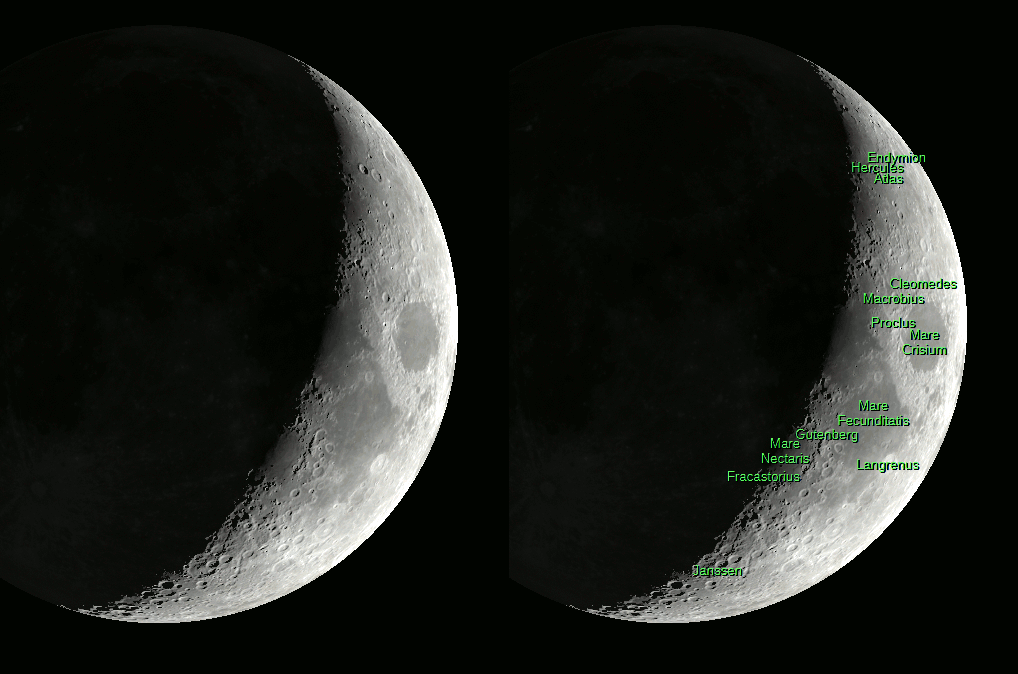
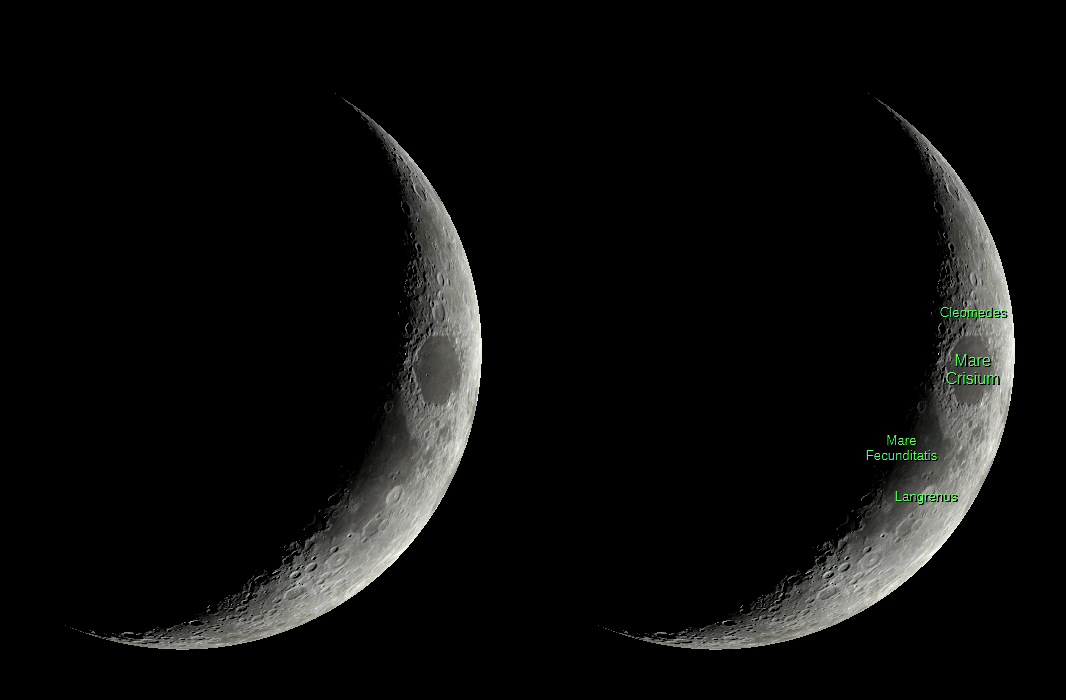
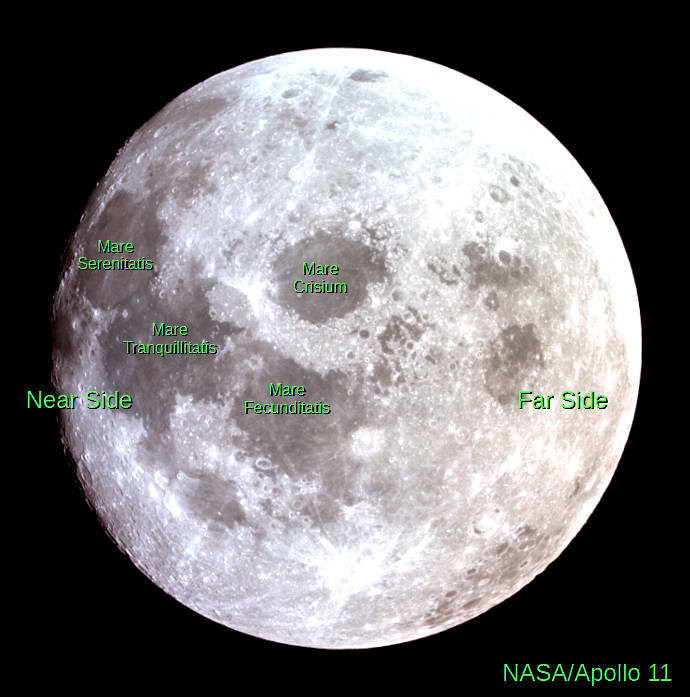
Tonight’s four-day old crescent Moon will be seen in the west at about 10:30 PM, though it’s visible much earlier than that. Binoculars will show a small gray round area near the right edge of the Moon which is seen in the full moon as the eye of the Man in the Moon. The feature is called Mare Crisium or the Sea of Crises. And is an Oval 385 by 354 miles in extent. However, it is elongated east to west rather than what it appears to be, north to south. That is due to foreshortening because it is near the limb of the Moon and thus curved away from us. So we are looking at it at an oblique angle. Mare Crisium is thought to be the result of an impact of an asteroid that occurred nearly 4 billion years ago during the Late Heavy Bombardment.
The astronomical event times given are for the Traverse City/Interlochen area of Michigan (EDT, UT–4 hours). They may be different for your location.
Addendum
Ephemeris: 07/08/2024 – The Summer Triangle dominates the eastern sky
This is Ephemeris for Monday, July 8th. Today the Sun will be up for 15 hours and 23 minutes, setting at 9:29, and it will rise tomorrow at 6:06. The Moon, 3 days past new, will set at 11:34 this evening.
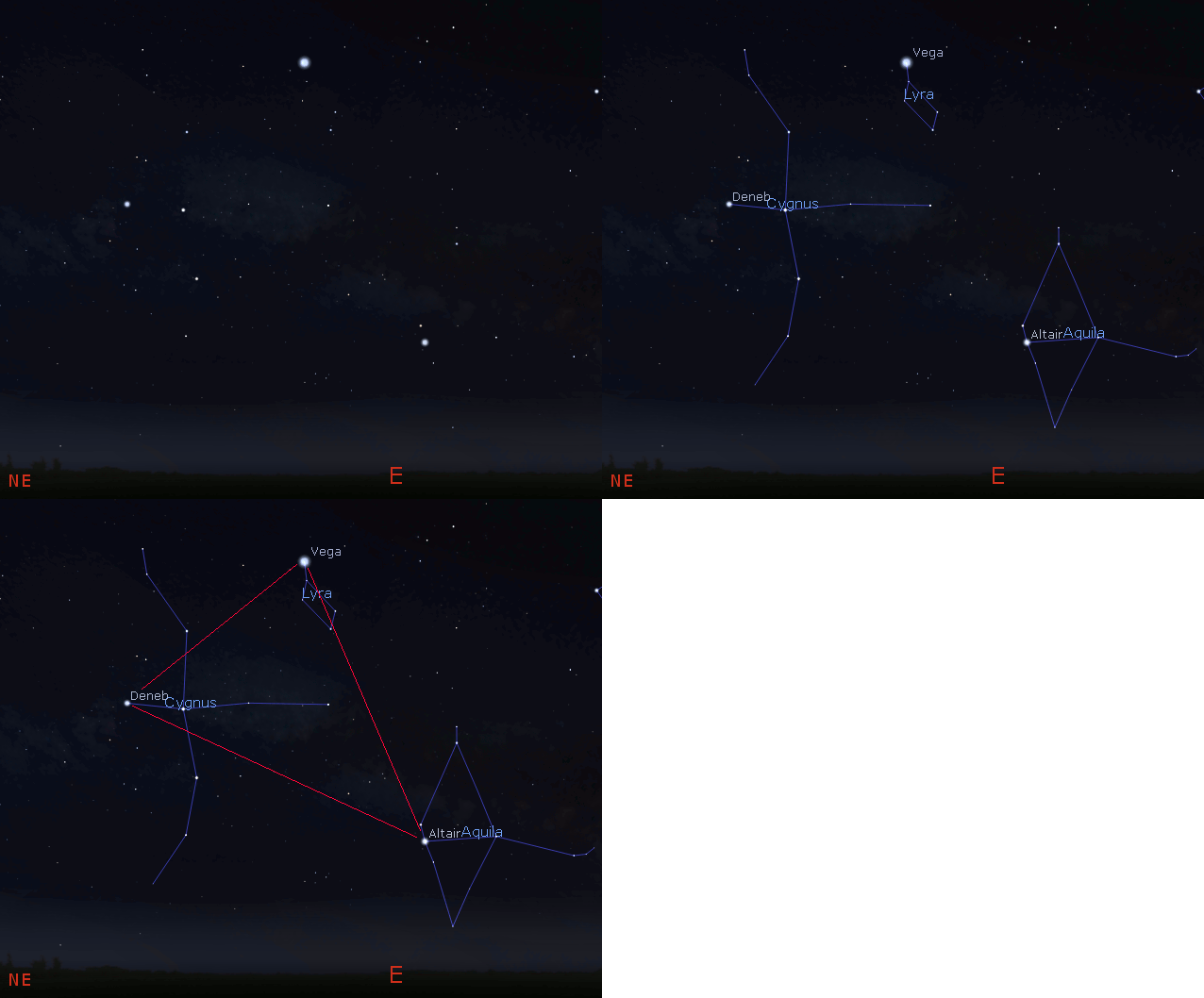
We’re two weeks into summer, and the asterism or informal constellation called the Summer Triangle can be seen in the eastern sky as it gets dark. The highest of the three bright stars is Vega in the constellation Lyra the harp, whose body is seen in a narrow parallelogram just below it. The second star of the triangle is Deneb, in Cygnus the swan, lower and left of Vega, It appears dimmer than Vega because it is by far the most distant of the three. The third star of the Summer Triangle is seen farther below and a right of Vega. It is Altair in Aquila the eagle, and the closest. Altair is 16.5 light years away, Vega is 27 light years, while Deneb may be a whopping 2,600 light years away. One light year by the way, is 6 trillion miles (9 trillion kilometers).
The astronomical event times given are for the Traverse City/Interlochen area of Michigan (EDT, UT–4 hours). They may be different for your location.
Addendum
Ephemeris: 07/05/2024 – GTAS meeting: processing astrophotographs
This is Ephemeris for Friday, July 5th. Today the Sun will be up for 15 hours and 26 minutes, setting at 9:30, and it will rise tomorrow at 6:04. The Moon is new today, and won’t be visible.
Tonight’s meeting of the Grand Traverse Astronomical Society at Northwestern Michigan College’s Rogers observatory, which starts at 9 PM tonight, will feature a talk by Dan Dall’Olmo, one of our successful astrophotographers in the society. He will discuss image processing. Taking the picture is only the beginning. He will show how to bring out and sharpen images taken with digital cameras. Back in my day processing photographs involved chemicals in the darkroom. “I love the smell of Hypo in the morning”. Now it involves computers and software. Afterward if it’s, clear we’ll be viewing the sky. Note the later start time for the meeting. We follow the later sunsets this time of year, so viewing starts after sunset. The observatory is located south of Traverse City on Birmley Rd. Between Garfield and Keystone roads.
The astronomical event times given are for the Traverse City/Interlochen area of Michigan (EDT, UT–4 hours). They may be different for your location.
Addendum
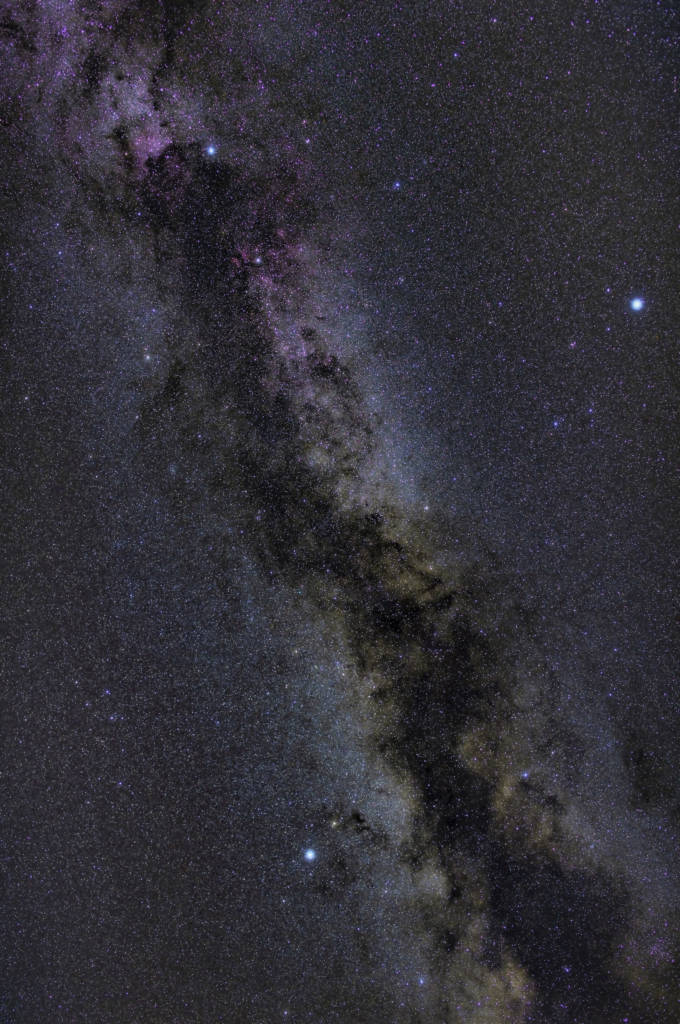
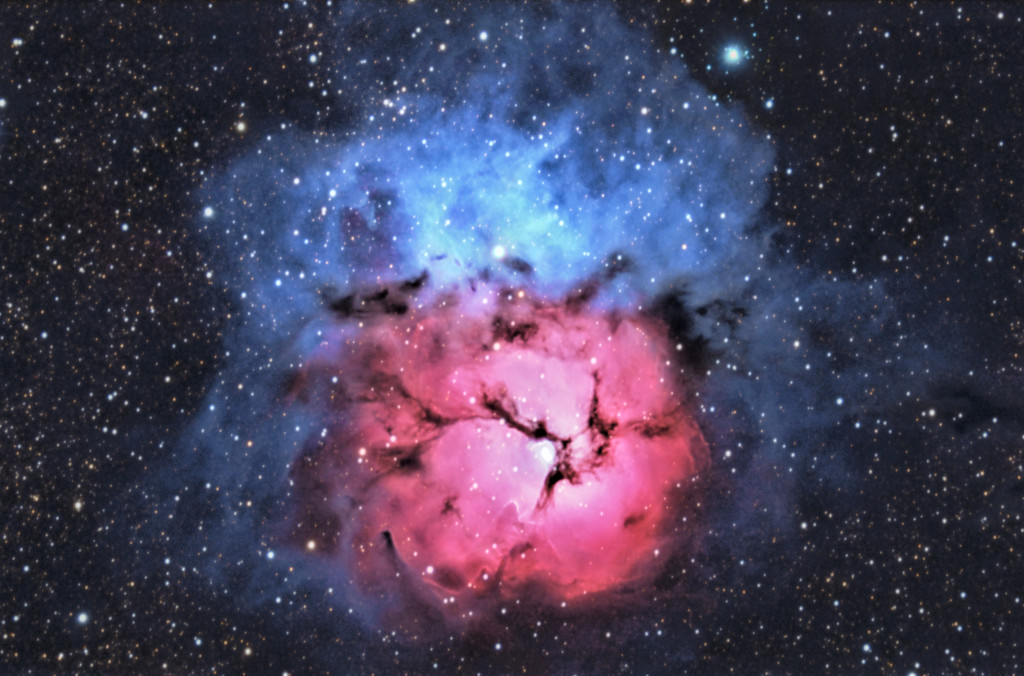
Here are a couple of Dan’s photographs of celestial objects visible this time of year. The eaw images do not look this good, hence the image processing to bring out the image brightness and detail.
Ephemeris: 07/04/2024 – The Earth at aphelion
This is Ephemeris for Independence Day, Thursday, July 4th. Today the Sun will be up for 15 hours and 27 minutes, setting at 9:31, and it will rise tomorrow at 6:03. The Moon, 1 day before new, will rise at 5:10 tomorrow morning.
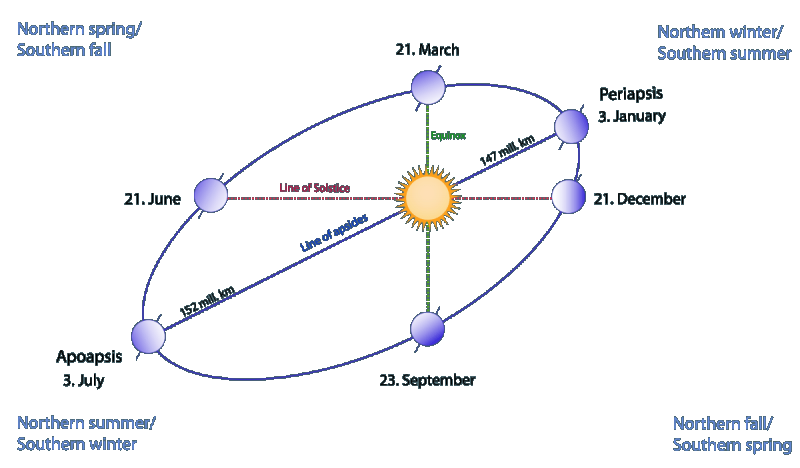
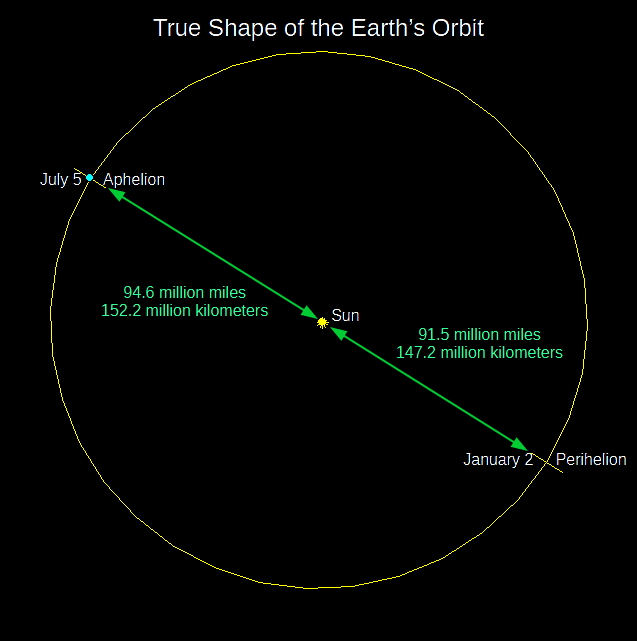
Tomorrow morning at 1:59 AM , actually overnight tonight, the Earth will reach aphelion from the Sun, the farthest it gets from it during the year. Earth will be 94 and a half million miles away from the Sun, a bit farther than our normal 93 million. In a planet’s orbit of the Sun, the Earth is no exception, it moves slowest when farthest from the Sun than when it’s nearest. It doesn’t make much difference in the amount of heat we get from the Sun being only 1 1/2% farther than average. But it makes summer the longest season at 94 days, versus winter’s 89 days. OK, I know it doesn’t feel like it here in Northern Michigan, but count the days between each solstice and the next equinox.
The astronomical event times given are for the Traverse City/Interlochen area of Michigan (EDT, UT–4 hours). They may be different for your location.
Addendum
 Bob Moler's Ephemeris Blog