Archive
Ephemeris: 09/16/2024 – Quadruple lunar events tomorrow night!
This is Ephemeris for Monday, September 16th. Today the Sun will be up for 12 hours and 26 minutes, setting at 7:50, and it will rise tomorrow at 7:24. The Moon, 1 day before full, will set at 6:34 tomorrow morning.
Tomorrow night there will be 4 lunar events occurring at the same time. Coincidence? I think not. The Moon will be full. The other events can only occur at full moon. It’s the Harvest Moon, the closest full moon to the autumnal equinox. It also happens to be a supermoon with the Moon reaching perigee, it’s closest to the Earth of the month a few hours later. Finally, the Moon will be partially eclipsed. By 9:45 PM the Moon may appear somewhat duller to the upper left than to the lower right. This is the Moon deep inside the Earth’s outer shadow called the penumbra. The actual partial phase of the eclipse will occur from 10:13 PM to 11:16 PM with the maximum occurring at 10:44 PM. With only 8 1/2 % of the Moon’s diameter covered.
The astronomical event times given are for the Traverse City/Interlochen area of Michigan (EDT, UT – 4 hours). Times will be different for other locations.
Addendum
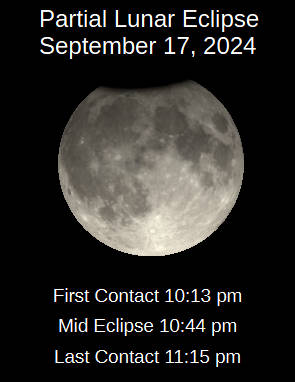
The eclipse will be visible in whole or in part for North America except for extreme western Alaska, also South America, Europe, Africa, and Western Asia. The times in Universal Time (UT): September 18, 2024, first contact 02:13, mid-eclipse 02:44, last contact 03:15.
Ephemeris: 09/13/2024 – International Observe the Moon Night tomorrow
This is Ephemeris for Friday, September 13th. Today the Sun will be up for 12 hours and 36 minutes, setting at 7:56, and it will rise tomorrow at 7:21. The Moon, 2 days past first quarter, will set at 2:25 tomorrow morning.
Tomorrow night, if it’s clear, will be the last star party of the year at the Sleeping Bear Dunes National Lakeshore starting at 9 PM if it is clear. It coincides with the International Observe the Moon Night, which is held annually in September or October near the first quarter moon, give or take a few days. Hosting the event will be the Park Rangers and the Grand Traverse Astronomical Society. Also featured will be the planet Saturn which is exhibiting some very thin rings this year. The 2020s appears to be the decade of the Moon with the United States and its European and Canadian partners, China, Russia, and even India interested in landing instruments and people on the Moon. So far this decade only China and India have had completely successful landings of spacecraft on the Moon.
The astronomical event times given are for the Traverse City/Interlochen area of Michigan (EDT, UT – 4 hours). Times will be different for other locations.
Ephemeris: 09/12/2024 – Does the Moon have a square crater?
This is Ephemeris for Thursday, September 12th. Today the Sun will be up for 12 hours and 39 minutes, setting at 7:58, and it will rise tomorrow at 7:19. The Moon, 1 day past first quarter, will set at 1:11 tomorrow morning.
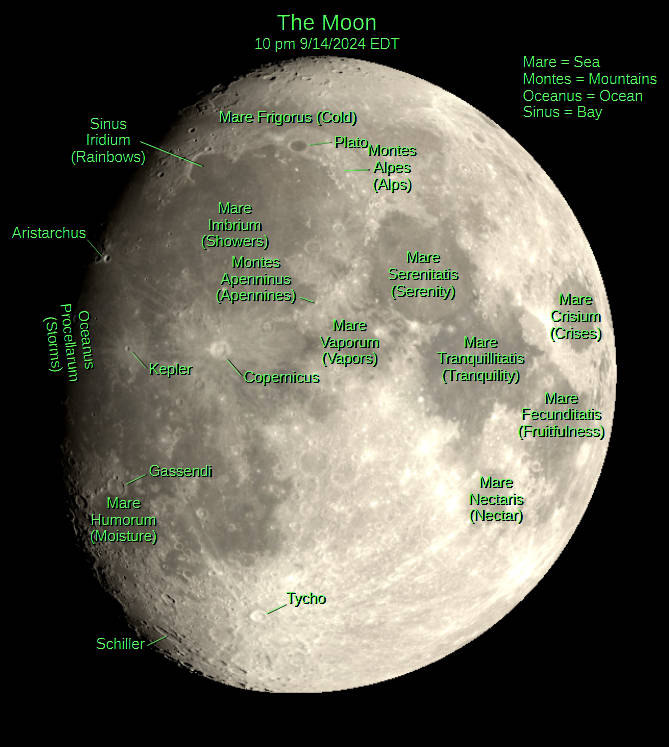
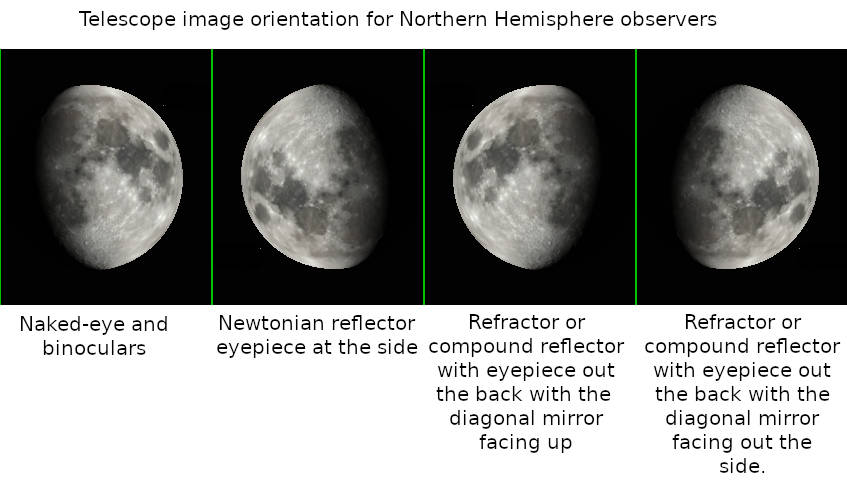
I built my first telescope in the mid 1950s from the kit. It had a 5-inch diameter mirror. Of course one of the first things I looked at was the Moon. And while familiarizing myself with the Moon’s features I noticed that around first quarter moon there was a funny little crater near the Moon’s North Pole that looked square. All the other craters were round. This one being near the North Pole was foreshortened a bit, so it’ll look rectangular. It sure had walls that looked like they were straight rather than curved. The crater’s name is Barrow. And the description I found of it said it had an interesting shape, though they didn’t mention it was square. Looking closely at it, it is squarish but in small telescopes it definitely looks like it’s a square crater. The best time to try to spot it is around first quarter moon or up to a couple of days later.
The astronomical event times given are for the Traverse City/Interlochen area of Michigan (EDT, UT – 4 hours). Times will be different for other locations.
Addendum
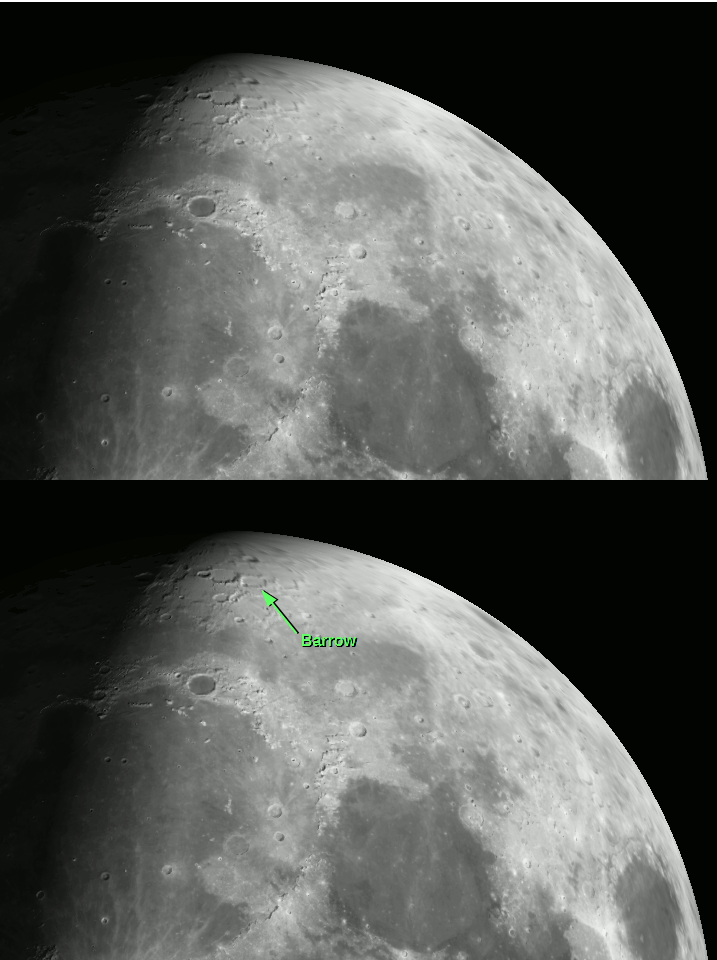
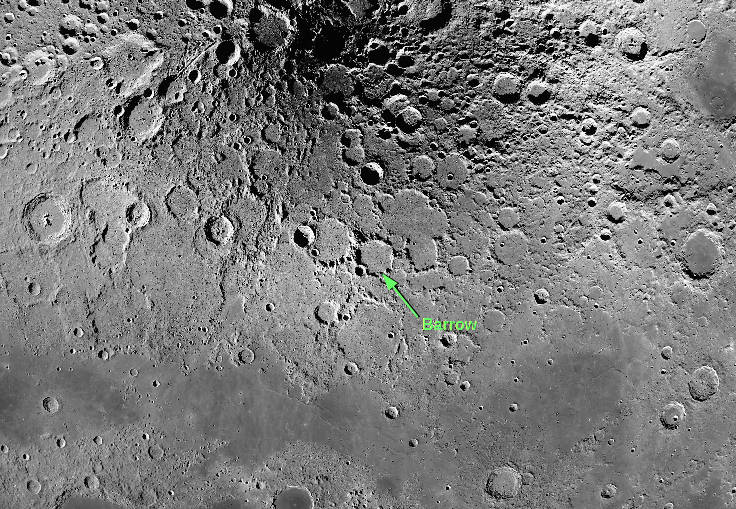
The base imagery used for the Virtual Moon Atlas, I believe, came from the Clementine spacecraft, a joint project of NASA and the Department of Defense, which orbited the Moon for 71 days in the mid 90s and then was sent out to an asteroid. However, on the way to the asteroid a problem occurred and Clementine was “lost and gone forever”.
Ephemeris: 09/11/2024 – Where are the naked-eye planets now?
This is Ephemeris for Wednesday, September 11th. Today the Sun will be up for 12 hours and 42 minutes, setting at 7:59, and it will rise tomorrow at 7:18. The Moon, at first quarter today, will set at 12:07 tomorrow morning.
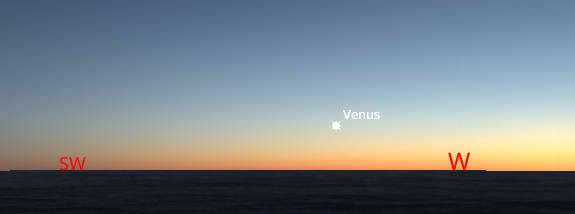
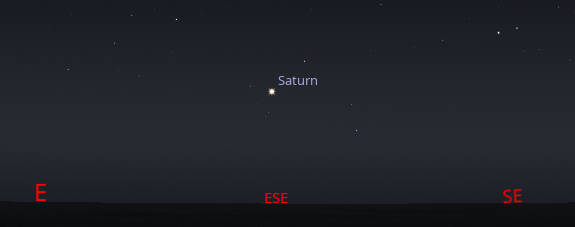
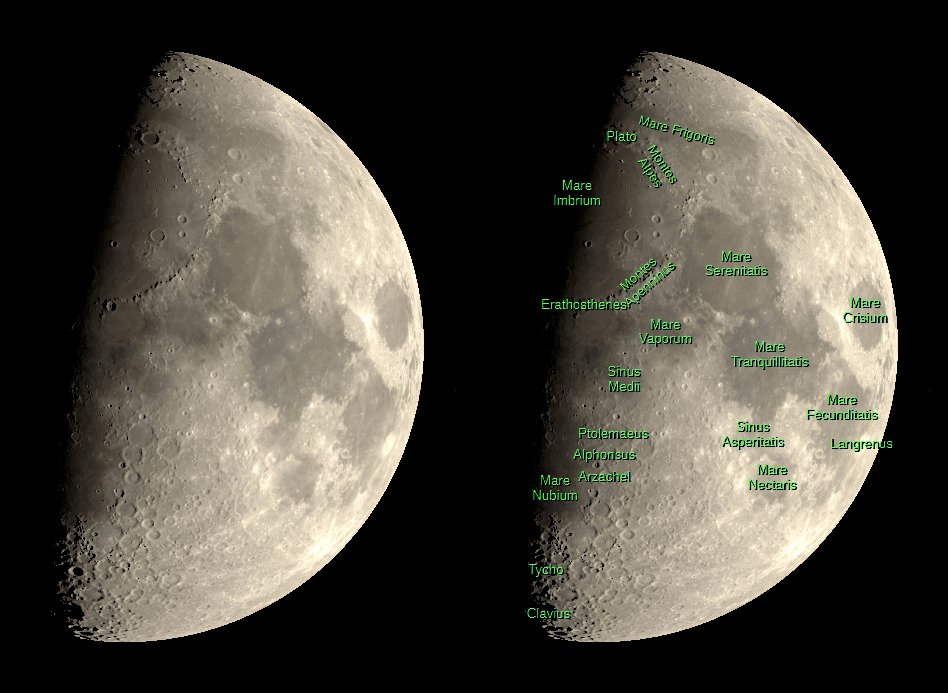
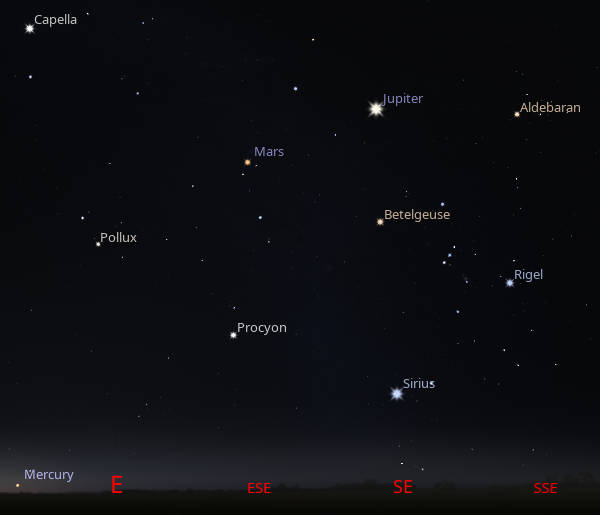
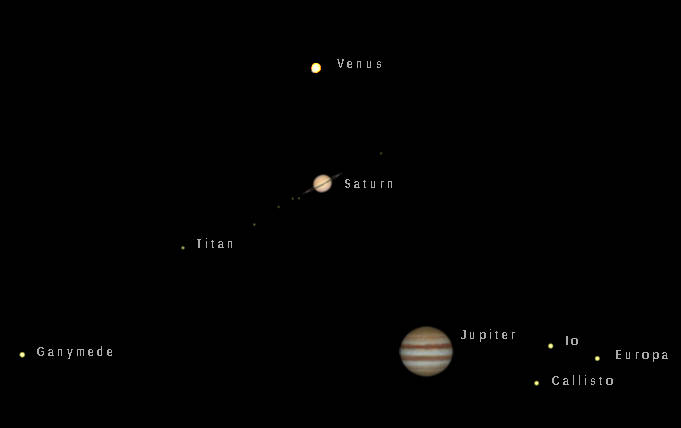
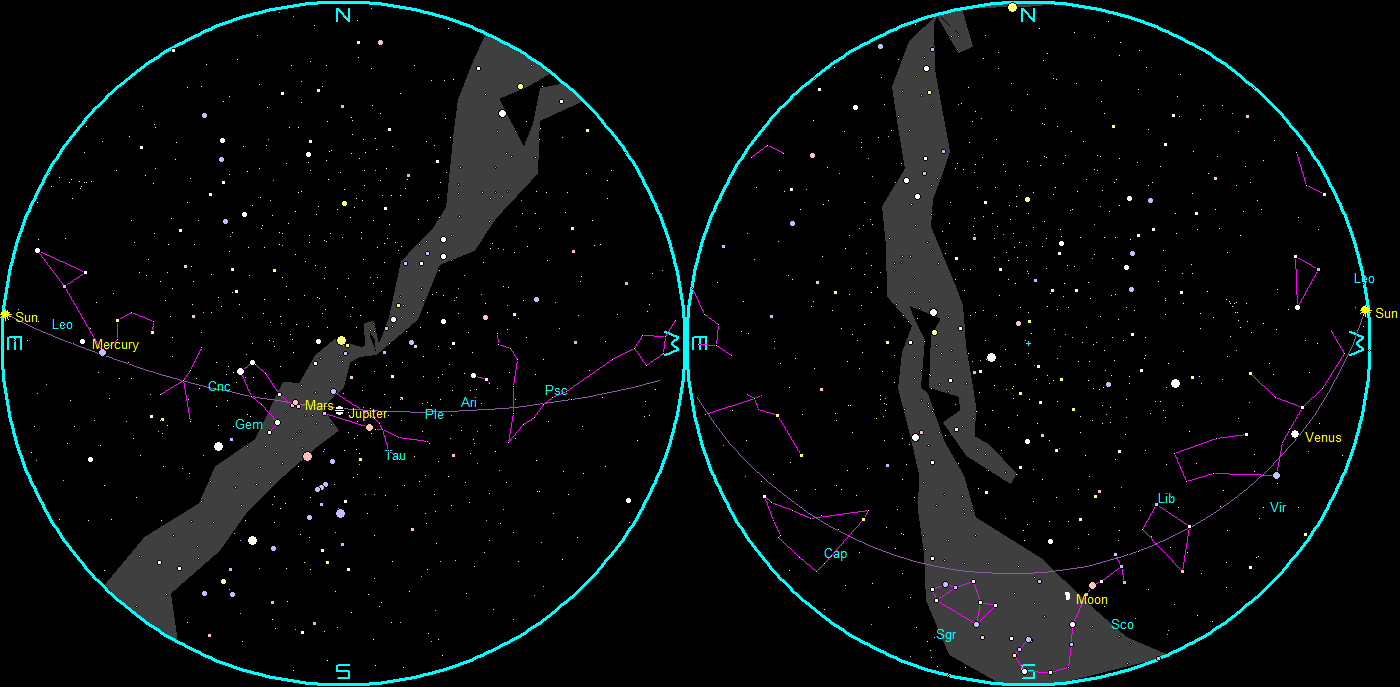
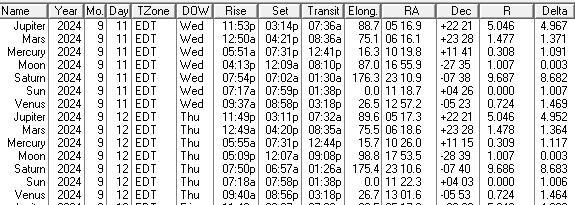
Let’s take our weekly look at the whereabouts of the naked-eye planets. Venus might be glimpsed low in the west around 8:20 PM. It will set at 8:56. It is best seen over a very low or lake horizon. By 9 PM the gibbous Moon will be low in the south. Saturn will be low in the east-southeast, pretty much by itself. Saturn may look disappointing in telescopes this year since its rings are nearly edge on and appearing as a line through the planet. Jupiter and Mars will be up in the east in the morning, and by 6:15 AM tomorrow, Jupiter will be the brightest starlike object in the sky among the winter stars in the southeast. Mars will be left and below Jupiter. Mercury might be spotted near the horizon in the east.
The astronomical event times given are for the Traverse City/Interlochen area of Michigan (EDT, UT – 4 hours). Times will be different for other locations.
Addendum
Ephemeris: 09/10/2024 – What last Saturday’s opposition from the Sun means
This is Ephemeris for Tuesday, September 10th. Today the Sun will be up for 12 hours and 45 minutes, setting at 8:01, and it will rise tomorrow at 7:17. The Moon, 1 day before first quarter, will set at 11:17 this evening.
Last Saturday the planet Saturn moved in opposition to the Sun. It’s not an insurrection or anything, but Saturn was opposite the Sun in the sky. At that time Saturn would be closest to the Earth of some 806 million miles (900 km). Saturn is 9 1/2 times the distance of the Earth to the Sun so over the year as Saturn moves from opposition through conjunction with the Sun to opposition again it does not vary in size very much, unlike Venus and Mars which are closer to us and vary a lot in size over their period around our sky. Saturn is now an evening planet and so will become a fixture in our evening skies for the next 4 or so months. It lies in a star poor part of the sky so it’s easy to find. Saturn’s rings are now nearly edge on to us so in a small telescope Saturn looks like a tiny disk stapled onto the sky with the staple being a bright line through the planet.
The astronomical event times given are for the Traverse City/Interlochen area of Michigan (EDT, UT – 4 hours). Times will be different for other locations.
Addendum
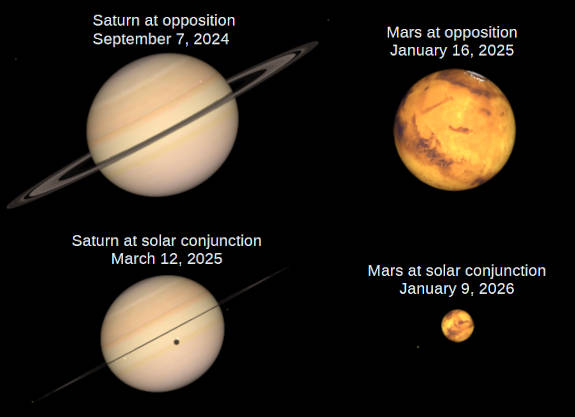
* Mars has a fairly elliptical orbit and next January’s opposition is almost at its farthest. In 2003 Mars was as close as that it has gotten in 50,000 years, or so they tell me. At that time Mars’ apparent size was 72% larger than it will be next January. Mars has its closest oppositions to the Earth every 15 or 17 years. The last time it occurred was in 2018, and the next time will be in 2035.
Ephemeris: 09/09/2024 – The Sun’s sibling star?
This is Ephemeris for Monday, September 9th. Today the Sun will be up for 12 hours and 48 minutes, setting at 8:03, and it will rise tomorrow at 7:16. The Moon, 2 days before first quarter, will set at 10:38 this evening.
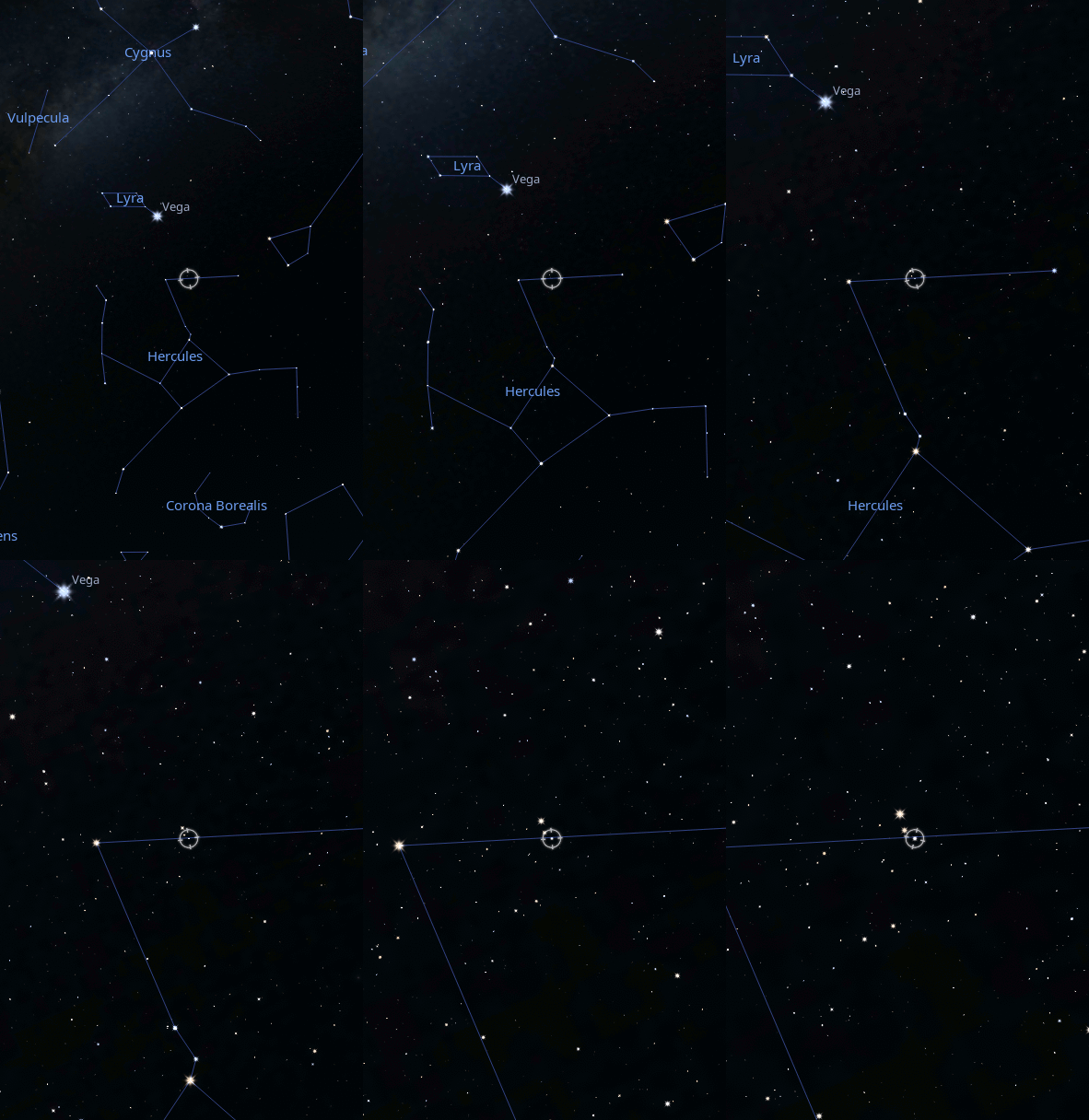
The Sun was born from a cloud, a nebula, of mostly hydrogen and helium with traces of heavier elements. Astronomers consider any element heaver than helium a metal. It was not born alone, but with many other stars in a star cluster, all at about the same time. The elements that are in the Sun’s atmosphere came from that nebula. Astronomers are wondering if there were any other stars they could see which were siblings of the Sun. Apparently they found one star that has the same metals in the same proportions as the Sun. That star is HD 162826, a dim star in the constellation Hercules, visible in binoculars. It’s a bit more massive than the Sun, and about 109 light years away. The Sun’s sibling stars have scattered far and wide.
The astronomical event times given are for the Traverse City/Interlochen area of Michigan (EDT, UT – 4 hours). Times will be different for other locations.
Addendum
Ephemeris: 09/06/2024 – Grand Traverse Astronomical Meeting Tonight
This is Bob Moler with Ephemeris for Friday, September 6th. Today the Sun will be up for 12 hours and 57 minutes, setting at 8:09, and it will rise tomorrow at 7:12. The Moon, 4 days past new, will set at 9:26 this evening.
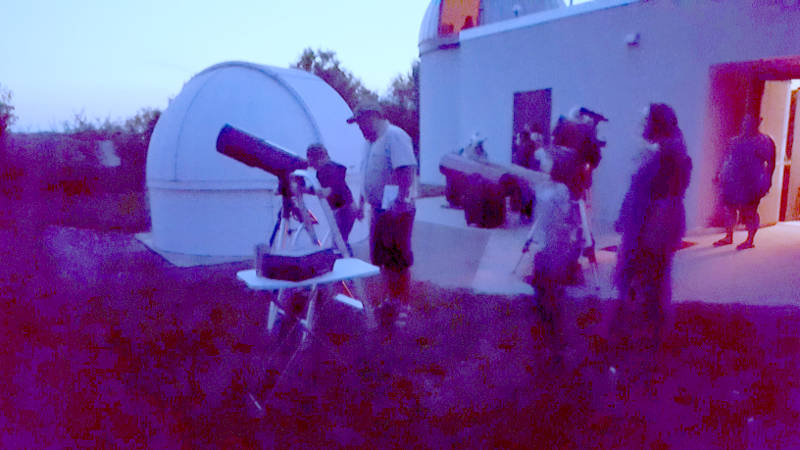
The Grand Traverse Astronomical Society will host its September meeting tonight at 8:00 PM at Northwestern Michigan College’s Joseph H Rogers Observatory, which is located on Birmley Rd. South of Traverse City between Garfield and Keystone roads. The program topic will be a surprise, at least to me. After the meeting about 9:00 PM if it’s clear there will be viewing of the heavens through the observatory’s telescopes, featuring possibly the Moon and Saturn, the first of which may be too low or be obstructed, and when it’s darker the wonders of the Milky Way will be visible including nebulae, open star clusters, and my favorite globular star clusters, spherical masses of hundreds of thousands of stars, as old as the Milky Way itself.
The astronomical event times given are for the Traverse City/Interlochen area of Michigan (EDT, UT–4 hours). Times will be different for other locations.
Addendum
Ephemeris: 09/05/2024 – Looking at the center of the Milky Way
This is Ephemeris for Thursday, September 5th. Today the Sun will be up for 13 hours even, setting at 8:11, and it will rise tomorrow at 7:11. The Moon, 3 days past new, will set at 9:09 this evening.
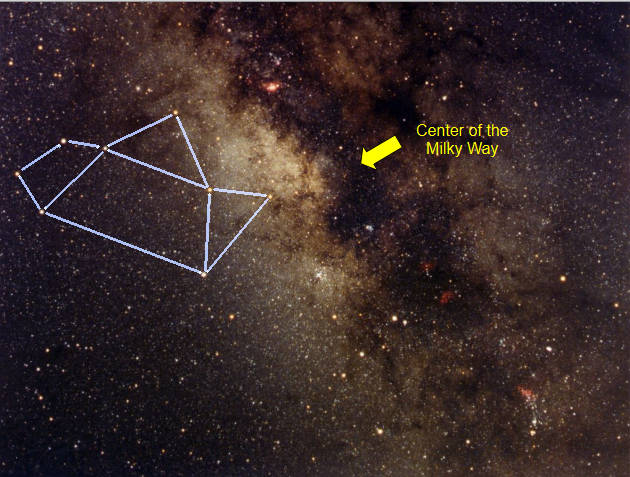
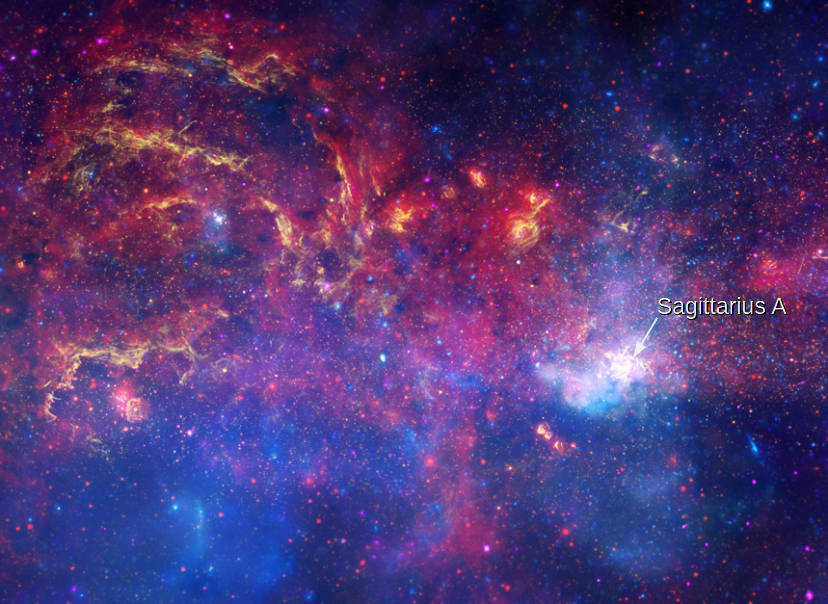
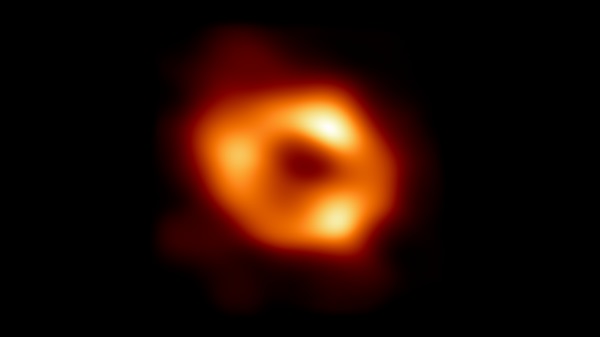
The moon sets in twilight so it will not bother viewing of the Milky Way when it gets dark. Looking to the south and little Teapot asterism of the constellation Sagittarius is the center of the Milky Way. It’s located just off the tip of the spout of that teapot. It’s about 25 to 27,000 light years away and is blocked from our view by clouds of gas and dust. In it lies the Milky Way’s central black hole. Astronomers have found that most galaxies have a black hole in their centers. Ours, it turns out, is a little smallish for our size of galaxy. It has the mass of four million times the mass of the Sun. Imaging of our black hole occurred at the same period of time that the data for the black hole in the galaxy M87. But its image took longer to produce due to the obstruction of that dust and gas.
The astronomical event times given are for the Traverse City/Interlochen area of Michigan (EDT, UT–4 hours). Times will be different for other locations.
Addendum
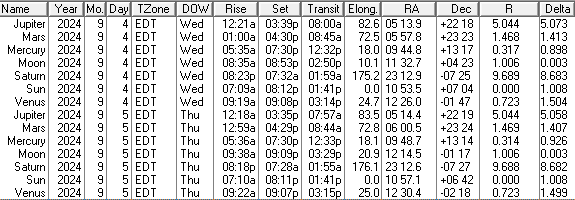
Ephemeris: 09/04/2024 – Where are the naked-eye planets this week?
This is Ephemeris for Wednesday, September 4th. Today the Sun will be up for 13 hours and 3 minutes, setting at 8:12, and it will rise tomorrow at 7:10. The Moon, 2 days past new, will set at 8:53 this evening.
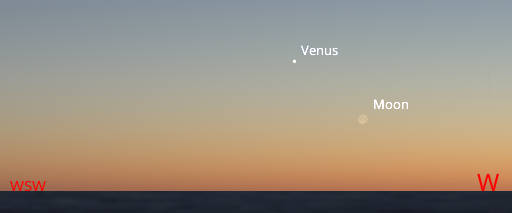
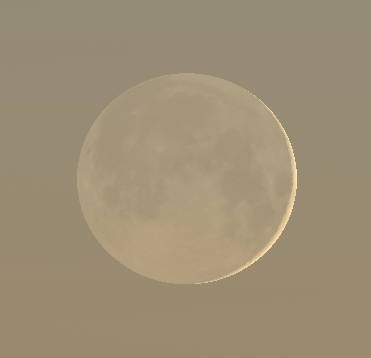
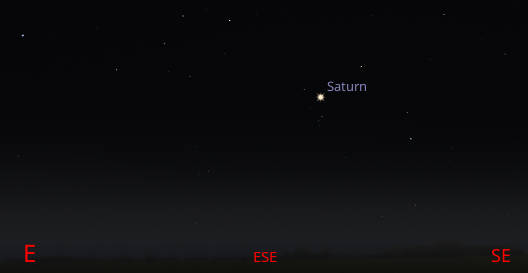
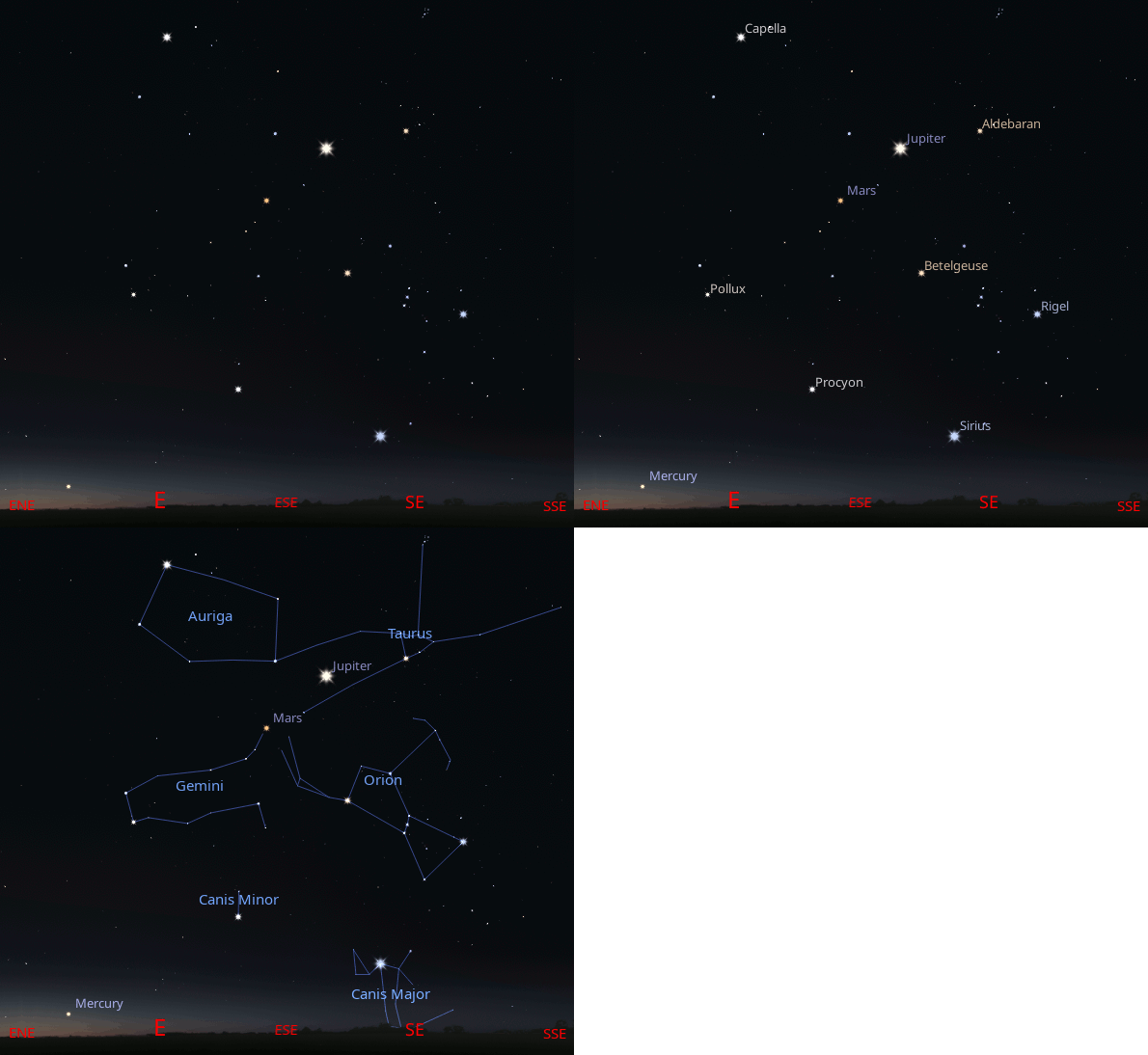
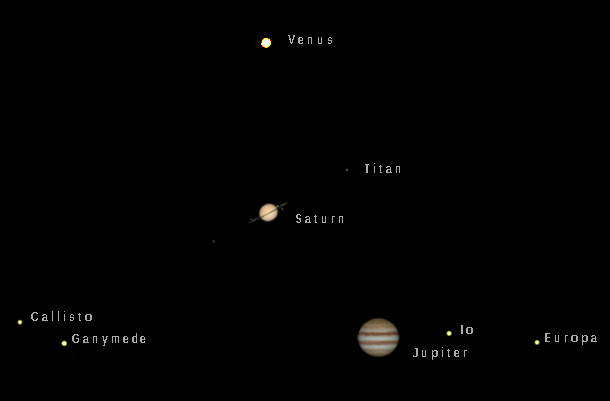
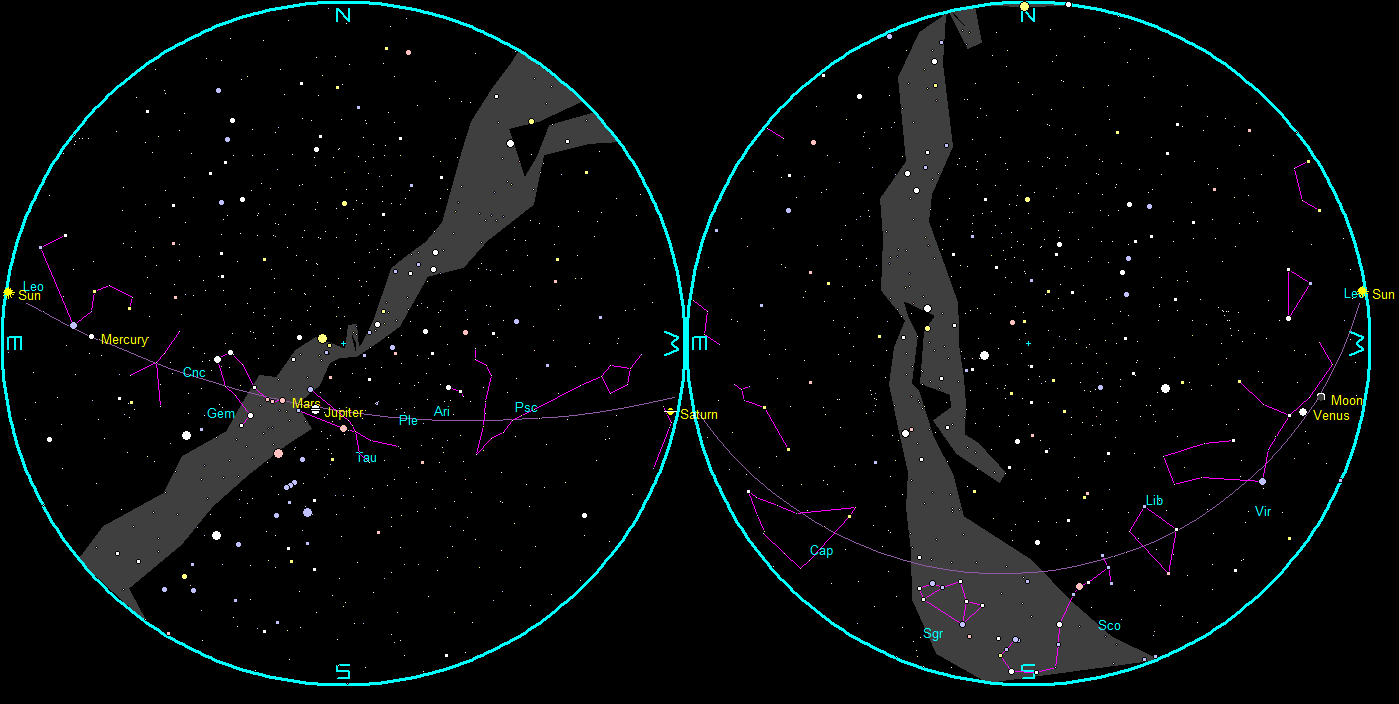
Let’s take our weekly look at the whereabouts of the naked-eye planets. Venus might be glimpsed low in the west around 8:30 PM. It will set at 9:08. It is best seen over a very low or lake horizon. The thin sliver of the Moon might be seen below and to the right. Saturn will rise shortly after sunset, and by 9 PM will be low in the east-southeast, pretty much by itself. Saturn may look disappointing in telescopes this year since its rings are nearly edge on and appearing as a line through the planet. Jupiter and Mars will be up in the east in the morning, and by 6 am tomorrow, Jupiter will be the brightest starlike object in the sky among the winter stars. Mars will be just below it to the left. Mercury might be spotted near the horizon in the east, now and for the next week.
The astronomical event times given are for the Traverse City/Interlochen area of Michigan (EDT, UT– 4 hours). Times will be different for other locations.
Addendum
Ephemeris: 09/03/2024 – The constellation of Scutum the shield
This is Ephemeris for Tuesday, September 3rd. Today the Sun will be up for 13 hours and 6 minutes, setting at 8:14, and it will rise tomorrow at 7:09. The Moon, 1 day past new, will set at 8:38 this evening.
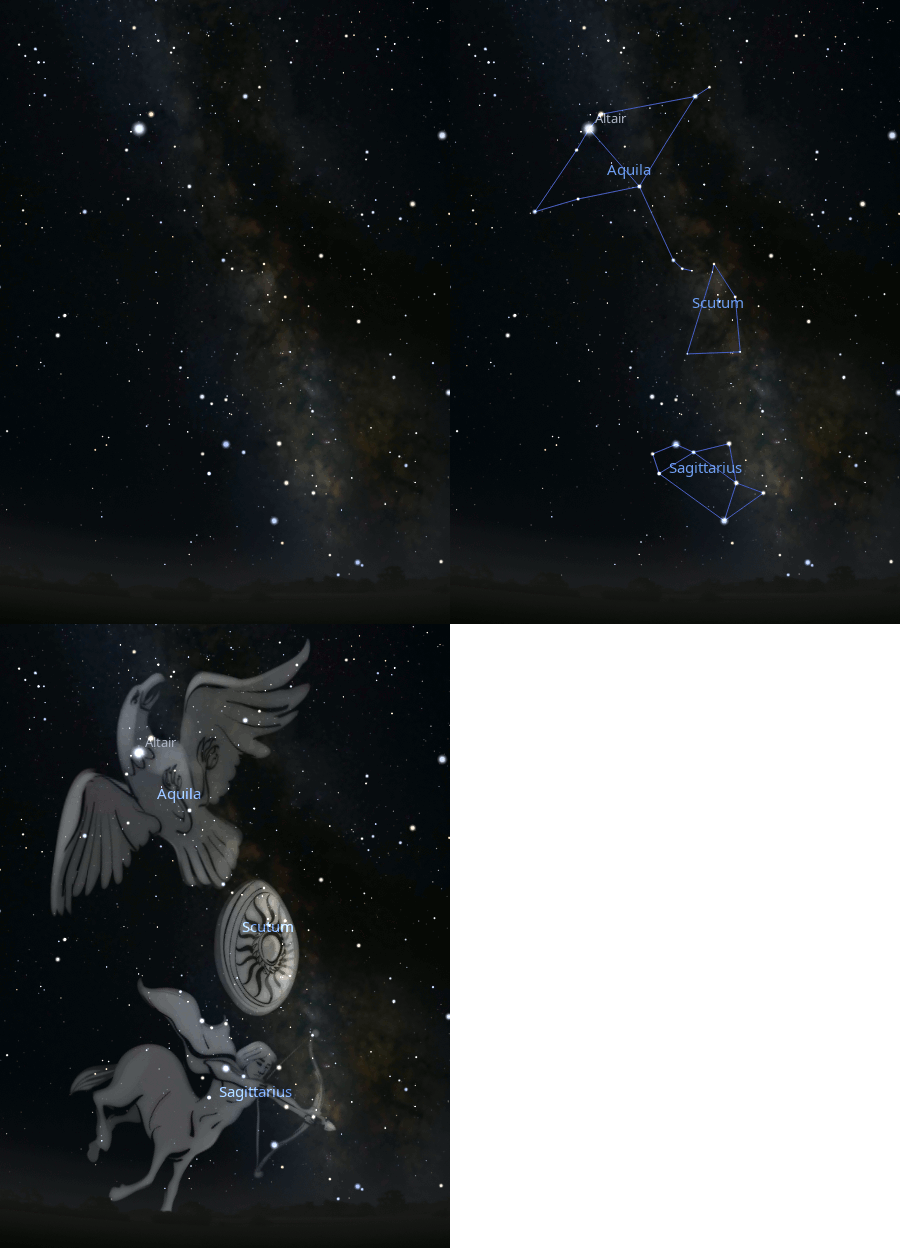
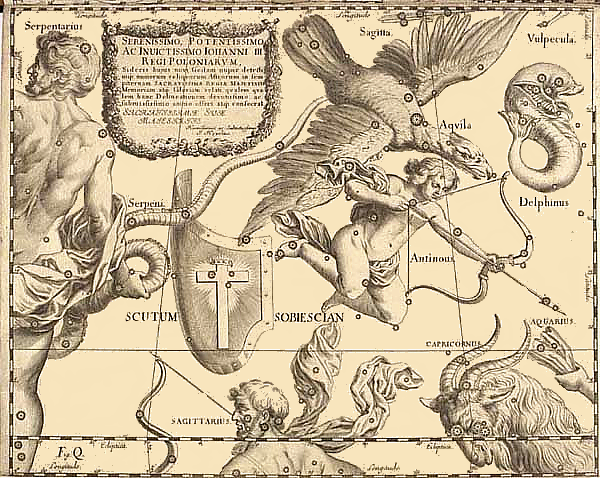
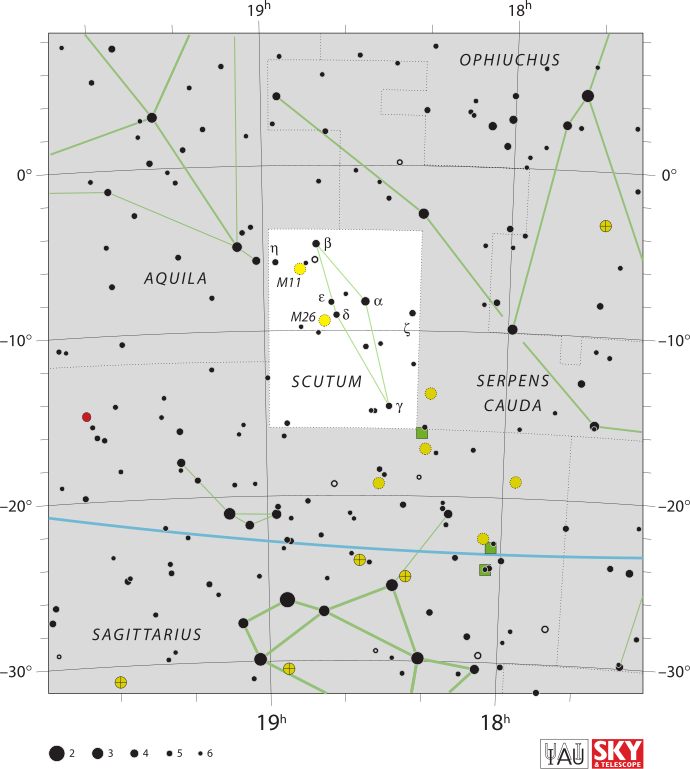
In the southern sky between the Teapot of Sagittarius below and Aquila the Eagle above, with Altair the southernmost star of the Summer Triangle, lies Scutum the shield of John Sobieski the Polish king who stopped the advance of the Turks at Kahlenberg, which lies on a hill overlooking Vienna, in 1683. The Polish half of me is very proud. Scutum is one of two official constellations which are related to real persons. The other one is Coma Berenices, a hank of Egyptian Queen Berenice’s hair. It’s recent as constellations go, to fill up a section of the sky that the ancients couldn’t make out anything, because the stars here are so dim and embedded in the glow of the Milky Way as to be nearly impossible to discern. Scutum lies in one of the richest portions of the Milky Way, wonderful to scan with binoculars and telescopes.
The astronomical event times given are for the Traverse City/Interlochen area of Michigan (EDT, UT–4 hours). Times will be different for other locations.
Addendum

 Bob Moler's Ephemeris Blog