Archive
Ephemeris: 08/15/2025 – The Milky Way on August evenings
This is Ephemeris for Friday, August 15th. Today the Sun will be up for 14 hours and 2 minutes, setting at 8:48, and it will rise tomorrow at 6:46. The Moon, 1 day before last quarter, will rise at 11:41 this evening.
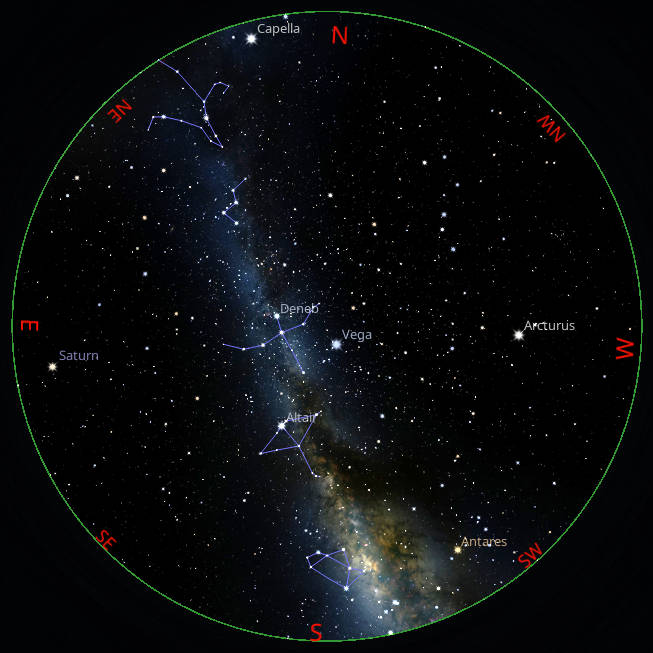
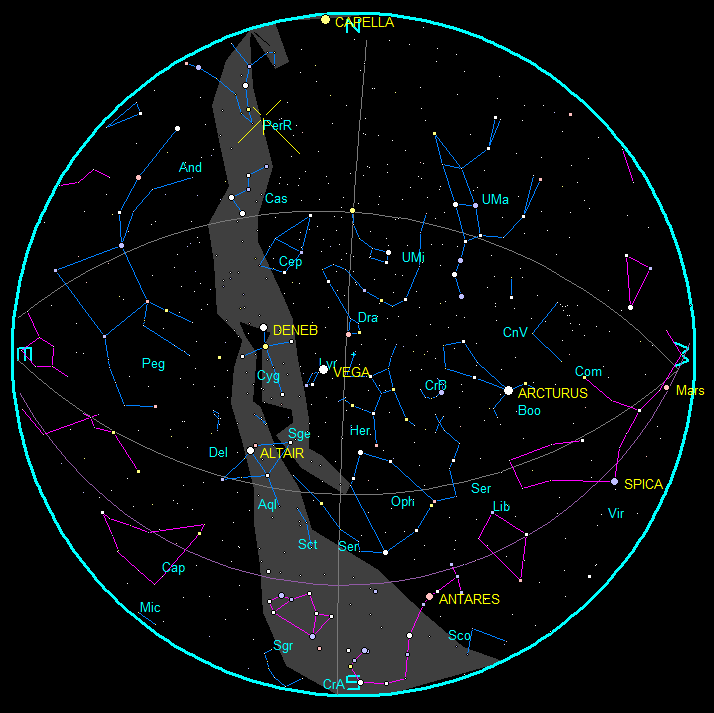
August is the best time to see the most southern part of the Milky Way. The constellation of Sagittarius the Archer or for us moderns a Teapot is due South at 10:30 this evening . The Milky Way runs up from the South moving high in the east and ends up in the northeast and the constellation of Cassiopeia the queen which looks like the letter W. We will have to wait several months or stay up for several hours tonight to see the Milky Way cross overhead, but by then the southern part of the Milky Way will have begun to set in the southwest. So this is the time to enjoy looking towards the center our Galaxy which is located right above the tip of the spout of Sagittarius, but behind a cloud of dust.
The astronomical event times given in this blog are for the Traverse City/Interlochen area of Michigan (Lat 44.7° N, Long 85.7° W; EDT, UT – 4 hours) unless stated otherwise. Times will be different for other locations.
Addendum
Ephemeris: 08/14/2025 – Centaur or Teapot, you decide
This is Bob Moler with Ephemeris for Thursday, August 14th. Today the Sun will be up for 14 hours and 5 minutes, setting at 8:49, and it will rise tomorrow at 6:45. The Moon, 2 days before last quarter, will rise at 11:11 this evening.
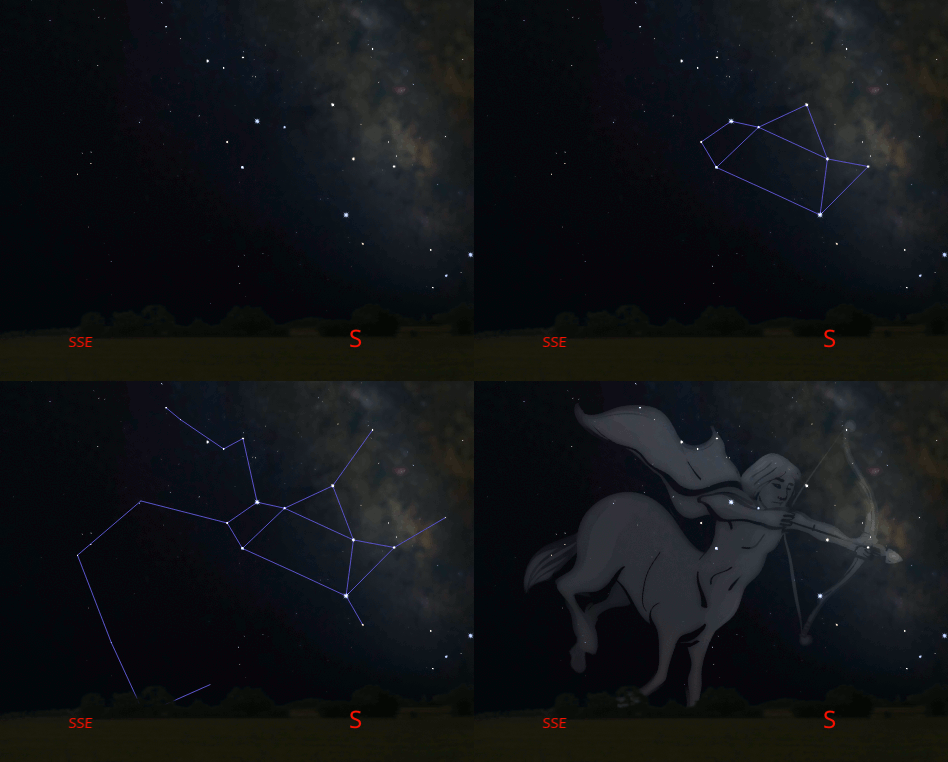
Low in the south at 10:30 PM shines the heart of summer Milky Way. The constellation that’s seen there is Sagittarius which is supposed to be a centaur with a bow and arrow. We modern folk haven’t seen a centaur outside a Harry Potter movie, so we see its stars looking like a teapot, a short and stout little teapot like in the children’s song. It is tipped to the West with the Milky Way like steam rising from its spout, which is about to pour its tea on the southwestern horizon later tonight. Sagittarius is just begging to be explored with binoculars or a very low power telescope to see its myriad of stars, star clusters and nebulae. As fabulous as all this appears, we cannot see into the heart of the Milky Way for all the clouds of dust in the way.
The astronomical event times given in this blog are for the Traverse City/Interlochen area of Michigan (Lat 44.7° N, Long 85.7° W; EDT, UT – 4 hours) unless stated otherwise. Times will be different for other locations.
Addendum
Ephemeris: 08/13/2025 – Taking our weekly look at the whereabouts of the naked-eye planets
This is Bob Moler with Ephemeris for International Left-handers Day, Wednesday, August 13th. Today the Sun will be up for 14 hours and 7 minutes, setting at 8:51, and it will rise tomorrow at 6:44. The Moon, 3 days before last quarter, will rise at 10:47 this evening.
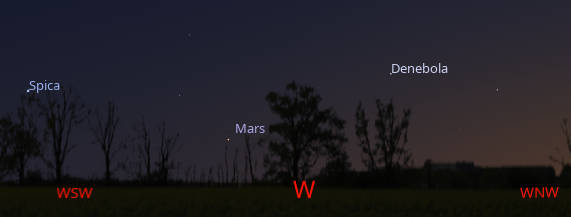
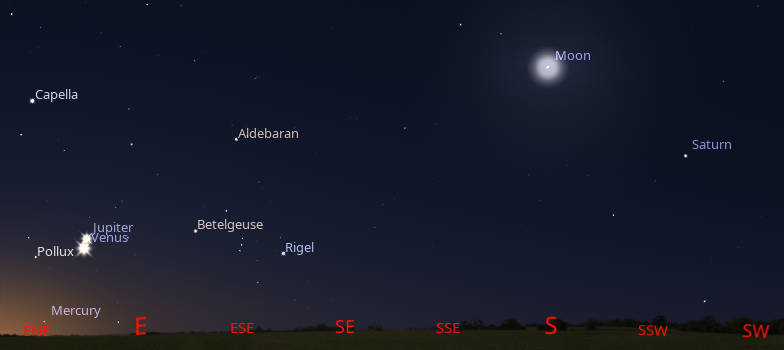
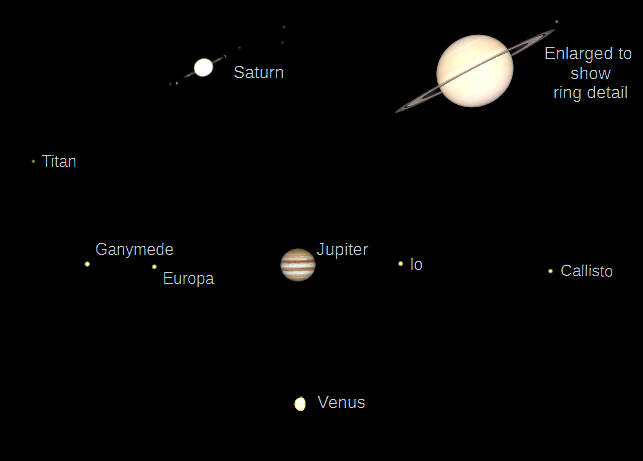
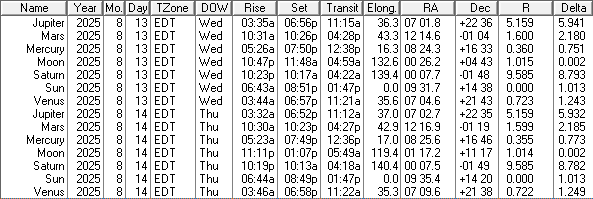
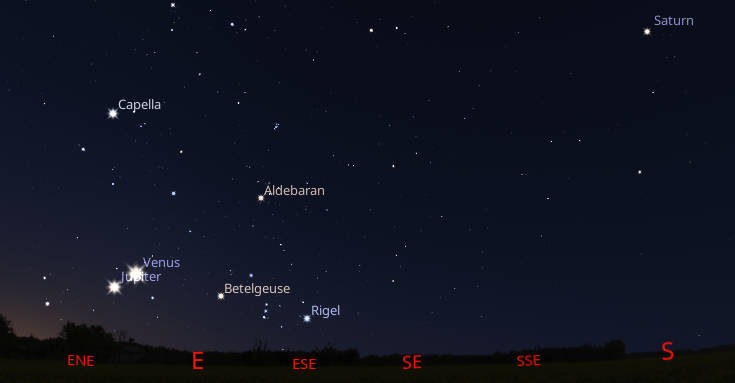
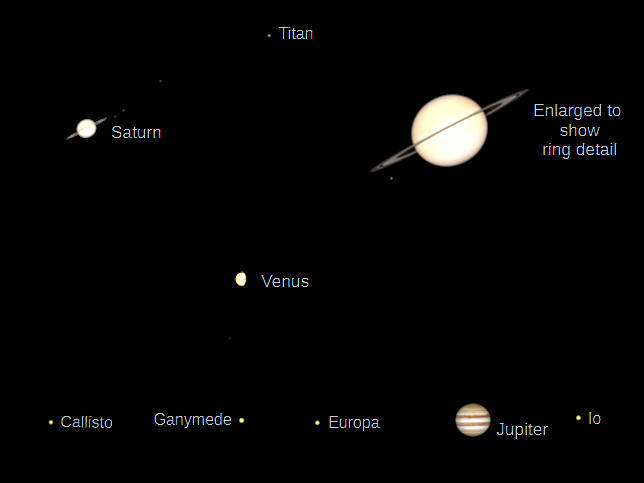
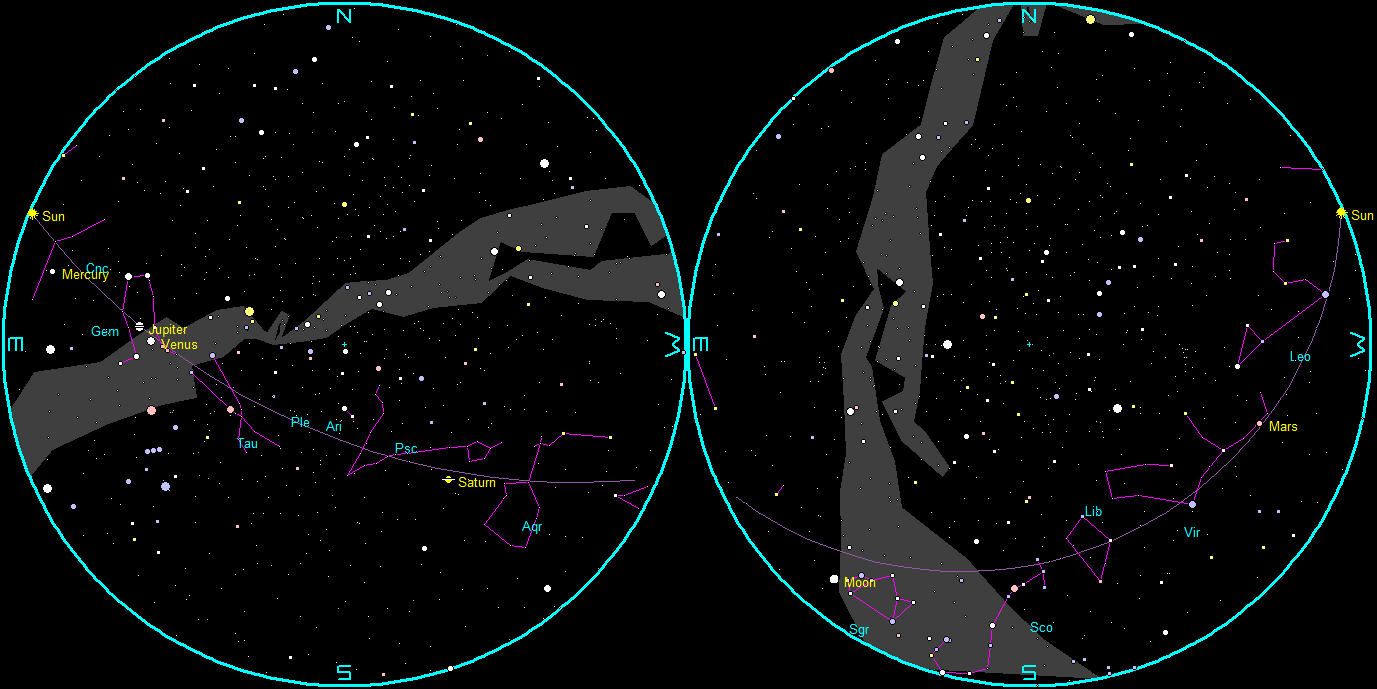
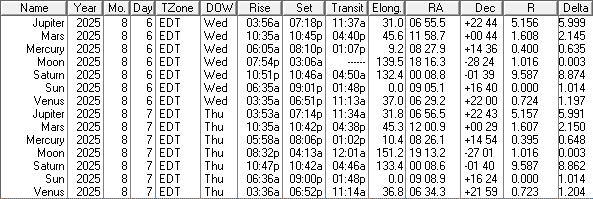
Let’s take our weekly look at the whereabouts of the naked-eye planets. The Red Planet Mars is getting so low in the western sky in evening twilight that I’ve given up on trying to spot it. This is the curse of trying to view evening planets, which are near the direction of the Sun in late summer and early fall, for us at higher latitudes. Mars won’t pass behind the Sun and enter the morning sky until January 9th. Saturn now rises at 10:23 PM in the east. In a telescope Saturn sports a very thin ring, less than 4° from being edge on. By 5:30 AM Saturn will be high in the south, when our winter pal Orion will be rising. Venus and Jupiter will appear very close. Venus is by far the brighter of the two.
The astronomical event times given in this blog are for the Traverse City/Interlochen area of Michigan (Lat 44.7° N, Long 85.7° W; EDT, UT – 4 hours) unless stated otherwise. Times will be different for other locations.
Addendum
Ephemeris: 08/12/2025 – A brief shot at viewing the Perseid meteors under darkened, but not dark skies
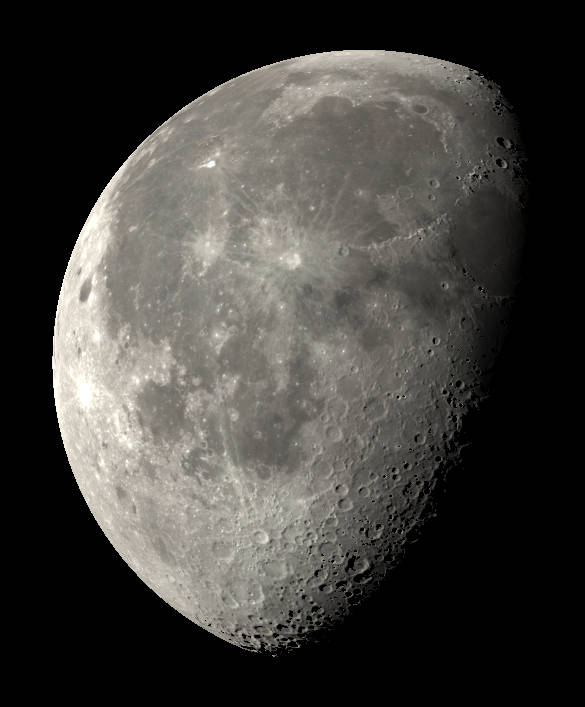
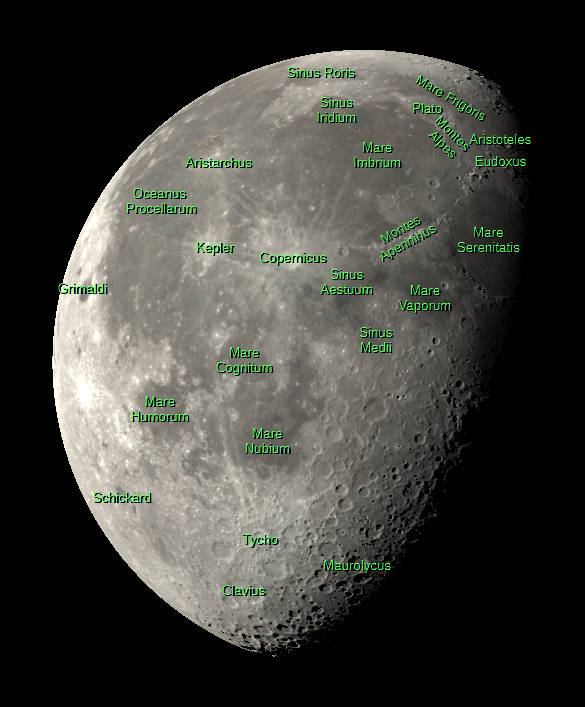
This is Ephemeris for Tuesday, August 12th. Today the Sun will be up for 14 hours and 10 minutes, setting at 8:52, and it will rise tomorrow at 6:43. The Moon, 3 days past full, will rise at 10:26 this evening.
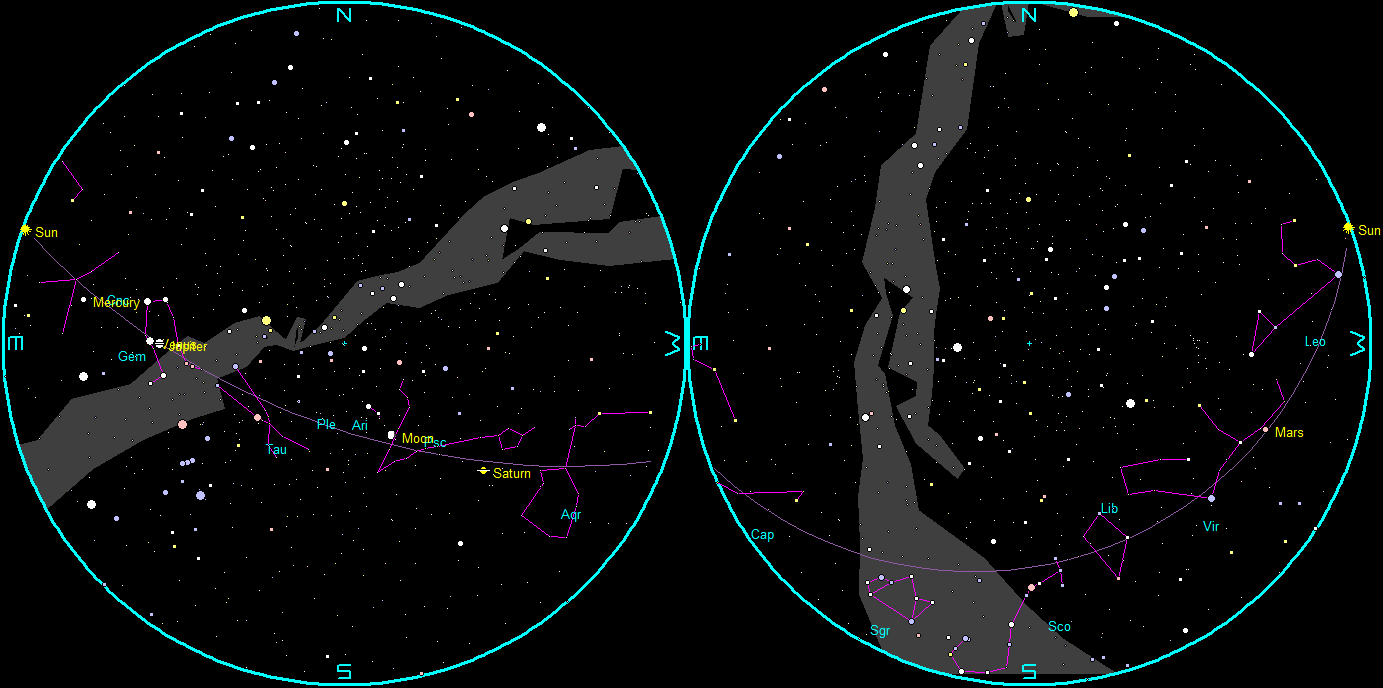
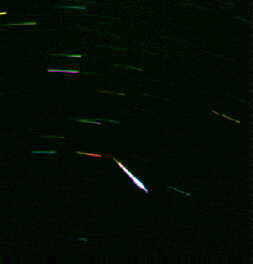
Tonight we get a second chance to see some of the Perseid meteor shower. As I said yesterday, the Moon is going to interfere with this year’s display. But, there is a small interval during twilight this evening, before the moon rises, where the sky could be dark enough to see more than a few Perseids. For nearly half an hour after 10 PM, it might be dark enough to see the Perseids under reasonably dark skies. The radiant where the meteors appear to come from will be low in the north northeast, about 17° above the horizon which means the expected number of meteors one would see in a half hour would be about 15 and with a not quite dark skies probably be a little less than that. But it is a chance to see the Perseids this year.
The astronomical event times given in this blog are for the Traverse City/Interlochen area of Michigan (Lat 44.7° N, Long 85.7° W; EDT, UT – 4 hours) unless stated otherwise. Times will be different for other locations.
Addendum
Ephemeris: 08/11/2025 – The best times to see the Perseid meteor shower
This is Ephemeris for Monday, August 11th. Today the Sun will be up for 14 hours and 13 minutes, setting at 8:54, and it will rise tomorrow at 6:42. The Moon, 2 days past full, will rise at 10:06 this evening.
Tonight’s most interesting astronomical events will occur tomorrow morning. The Perseid meteor shower will reach its peak tomorrow afternoon, so tomorrow morning and Wednesday morning will be about the best times to see the meteors, except that the bright Moon is going to interfere. So only the brightest meteors will be visible. Bonus: in morning twilight tomorrow the planets Venus and Jupiter will be in conjunction, meaning they’ll be at their closest appearance to each other by a little bit less than twice the width of the Moon apart. Early risers may have been noticing that Venus and Jupiter will have been slowly approaching each other, with Jupiter below and left of Venus. Tomorrow morning, Jupiter will pass just above Venus.
The astronomical event times given in this blog are for the Traverse City/Interlochen area of Michigan (Lat 44.7° N, Long 85.7° W; EDT, UT – 4 hours) unless stated otherwise. Times will be different for other locations.
Addendum
Ephemeris: 08/08/2025 – Mercury’s strange rotation
This is Ephemeris for Friday, August 8th. Today the Sun will be up for 14 hours and 21 minutes, setting at 8:58, and it will rise tomorrow at 6:38. The Moon, 1 day before full, will set at 6:42 tomorrow morning.
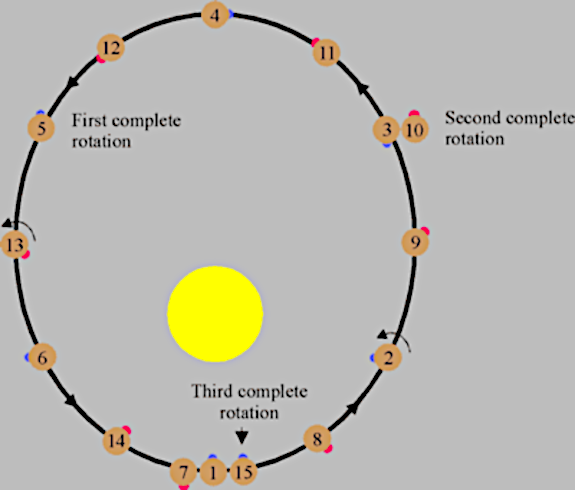
The planet Mercury is the closest planet to the Sun, and for a long time was thought to have synchronous rotation. That is it rotated in the same 88 days it took to orbit the Sun. However, in 1965 using radar from the Arecibo Observatory in Puerto Rico, astronomers learned that the rotation was exactly 2/3 of that 88 days. An interesting relationship of the sidereal rotation of 59 days against the stars, 2/3 of the Mercury’s year. Earth’s solar day, noon to noon is 3 minutes 56 seconds longer than the sidereal day. Mercury’s solar day turns out to be exactly 2 Mercurian years long.
The astronomical event times given in this blog are for the Traverse City/Interlochen area of Michigan (Lat 44.7° N, Long 85.7° W; EDT, UT – 4 hours) unless stated otherwise. Times will be different for other locations.
Addendum
Ephemeris: 08/07/2025 – Does the Moon rotate?
This is Ephemeris for Thursday, August 7th. Today the Sun will be up for 14 hours and 23 minutes, setting at 9:00, and it will rise tomorrow at 6:37. The Moon, 2 days before full, will set at 5:26 tomorrow morning.
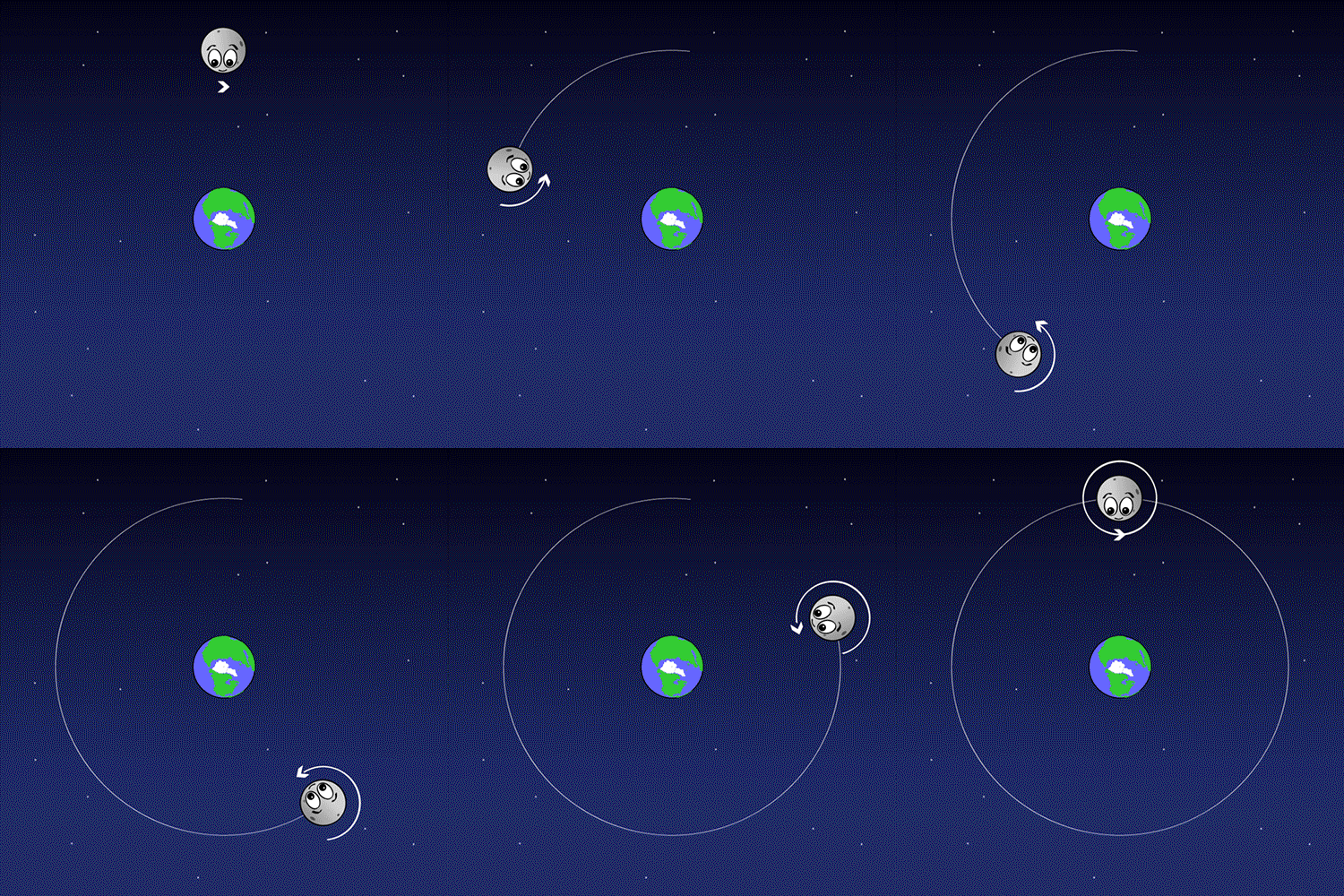
The moon exhibits the same face to the Earth throughout the month. That doesn’t mean the Moon doesn’t rotate. It means that the moon rotates in the same time it takes to orbit the Earth. This is called synchronous rotation. It is also known as tidal locking, caused by the difference in the gravitational attraction across the body of the Moon from the near side to the far side. The same thing happens with the Earth and is best seen by the ocean tides on the part of the Earth facing and away from the Moon. The reason the Earth is not tidally locked is that it is much more massive. But the Moon is slowing down the Earth’s rotation. But by doing that, it is moving further away, so it will never totally lock the Earth’s rotation with it.
The astronomical event times given in this blog are for the Traverse City/Interlochen area of Michigan (Lat 44.7° N, Long 85.7° W; EDT, UT – 4 hours) unless stated otherwise. Times will be different for other locations.
Addendum
Ephemeris: 08/06/2025 – Taking our weekly look at the whereabouts of the naked-eye planets
This is Ephemeris for Wednesday, August 6th. Today the Sun will be up for 14 hours and 26 minutes, setting at 9:01, and it will rise tomorrow at 6:36. The Moon, 3 days before full, will set at 4:13 tomorrow morning.
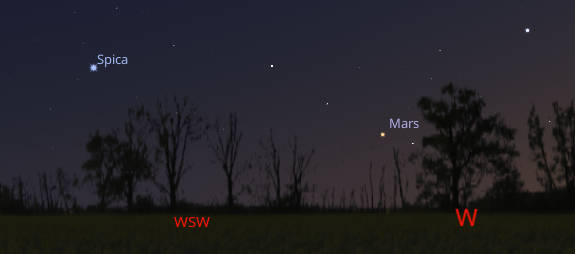
Let’s take our weekly look at the whereabouts of the naked-eye planets. The Red Planet Mars, May be seen very low in the western sky at 10 PM. Mars is moving toward Spica, a bit higher in the west-southwest. Mars will pass Spica on September 12th. By then they will be too low in the sky to be seen in twilight. Mars will leave the evening sky on January 9th. Saturn now rises at 10:50 PM in the east. In a telescope Saturn sports a very thin ring, less than 4° from being edge on. By 5:30 AM Saturn will be high in the south, when our winter pal Orion will be rising. Venus and Jupiter will appear very close. Venus is by far the brighter of the two. Their paths will cross on the morning of the 12th, where they will appear less than 2 moon-widths apart.
The astronomical event times given in this blog are for the Traverse City/Interlochen area of Michigan (Lat 44.7° N, Long 85.7° W; EDT, UT – 4 hours) unless stated otherwise. Times will be different for other locations.
Addendum
Ephemeris: 08/05/2025 – Why space faring nations are fixated on the Moon’s South Pole
This is Ephemeris for Tuesday, August 5th. Today the Sun will be up for 14 hours and 28 minutes, setting at 9:02, and it will rise tomorrow at 6:35. The Moon, halfway from first quarter to full, will set at 3:06 tomorrow morning.
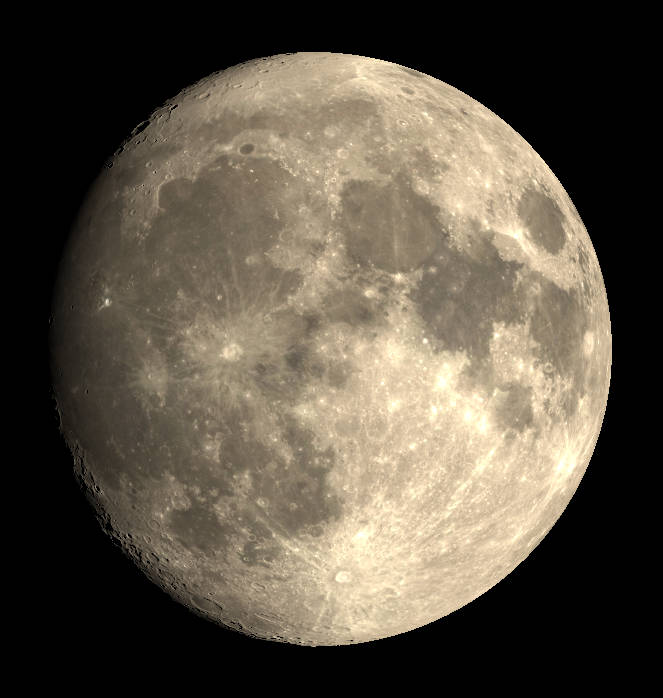
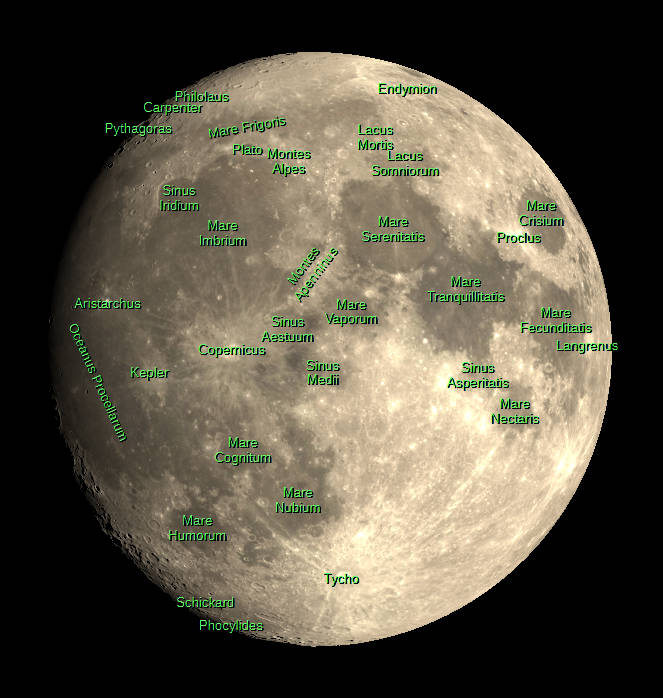
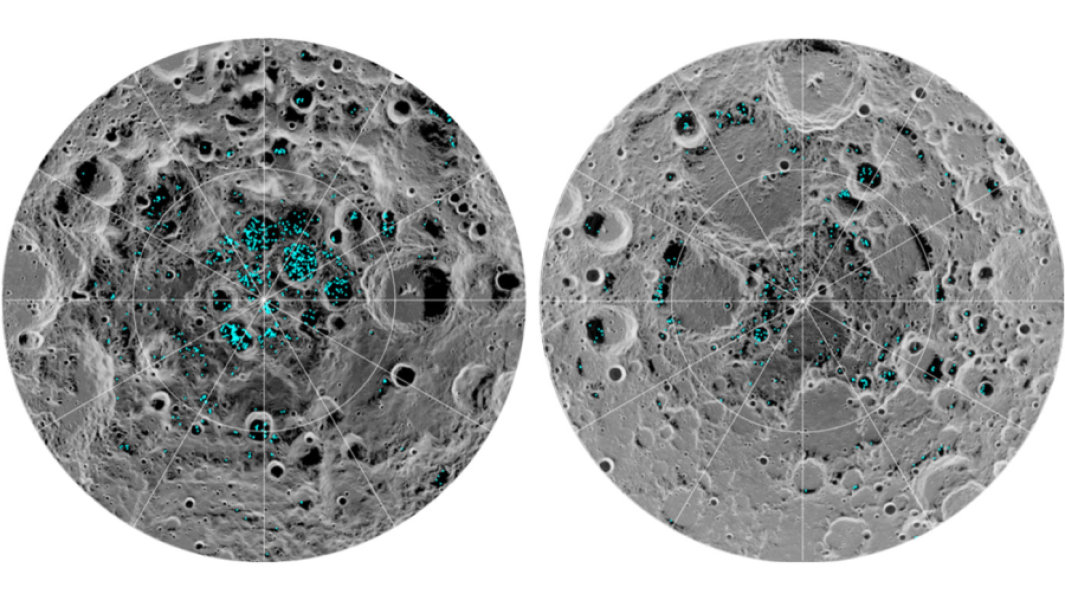
After more than 50 years since the Apollo landings on the Moon, space faring nations are beginning to be interested in one particular place on the Moon for further exploration. That is the lunar South Pole. The reason is the discovery of something more valuable than gold. That there may be water hidden in permanently shadowed craters there. The moon’s North Pole is not as rugged, so there’s probably not as much water there. Water can exist on the Moon but only in its frozen form, ice in permanently shadowed craters. The Moon’s axial tilt is only about 1 1/2° compared to the Earth’s 23 1/2°. The water molecule is the second most abundant in the universe after diatomic hydrogen, but normally cannot exist this close to the Sun.
The astronomical event times given in this blog are for the Traverse City/Interlochen area of Michigan (Lat 44.7° N, Long 85.7° W; EDT, UT – 4 hours) unless stated otherwise. Times will be different for other locations.
Addendum

Ephemeris: 08/04/2025 – Mars’ twin
This is Bob Moler with Ephemeris for Monday, August 4th. Today the Sun will be up for 14 hours and 31 minutes, setting at 9:04, and it will rise tomorrow at 6:33. The Moon, 3 days past first quarter, will set at 2:10 tomorrow morning.
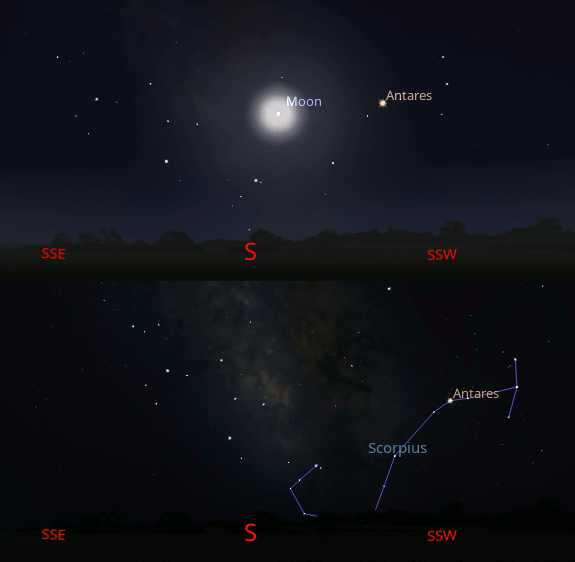
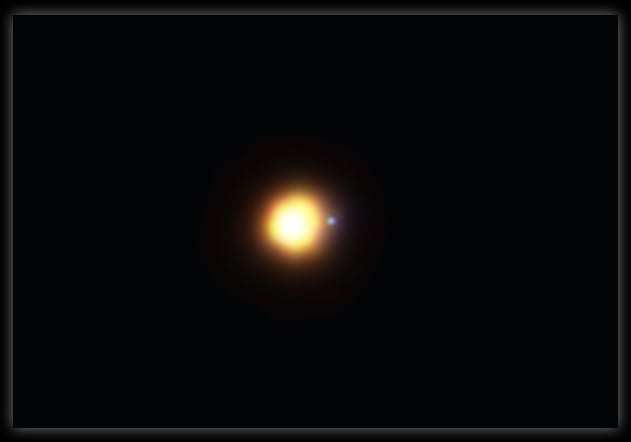
Low in the south as it gets dark is the red giant star Antares. It lies at the heart of Scorpius the scorpion. Its name means Rival of Mars, because it has the same hue as the red planet. In Mars case the color comes from iron oxide, rust. In Antares case it has a cool surface temperature, relatively speaking, of 7,000 degrees Fahrenheit (3,660 K). As a red giant star Antares is near the end of its life, though compared to the Sun it is young – possibly 12 million years old. At that age the Sun was just getting started. Antares, with around 13 to 16 times the Sun’s mass, has already run out of fusible hydrogen in its core and has bloated out to double Mars’ orbit in size. Antares is 550 light years away and has a companion star in its system that looks greenish in contrast to Antares red. But, when Antares A, the red giant’s light is blocked, the companion looks bluish.
The astronomical event times given in this blog are for the Traverse City/Interlochen area of Michigan (Lat 44.7° N, Long 85.7° W; EDT, UT – 4 hours) unless stated otherwise. Times will be different for other locations.
Addendum
 Bob Moler's Ephemeris Blog