Archive
Ephemeris: 12/31/2025 – A last look at the naked-eye planets for 2025
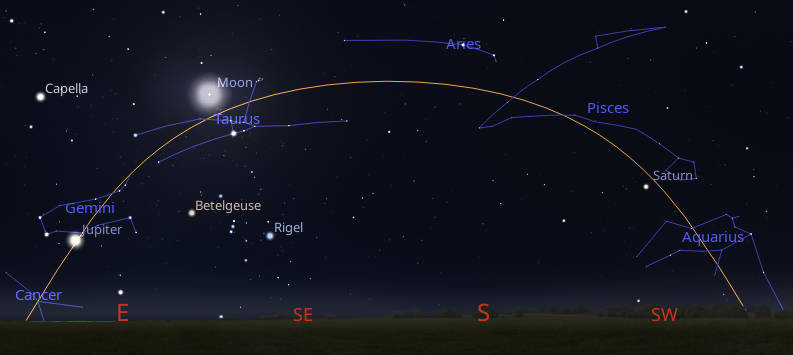
This is Ephemeris for New Year’s Eve, Wednesday, December 31st. The Sun will rise at 8:20. It’ll be up for 8 hours and 52 minutes, setting at 5:12. The Moon, 3 days before full, will set at 6:49 tomorrow morning.
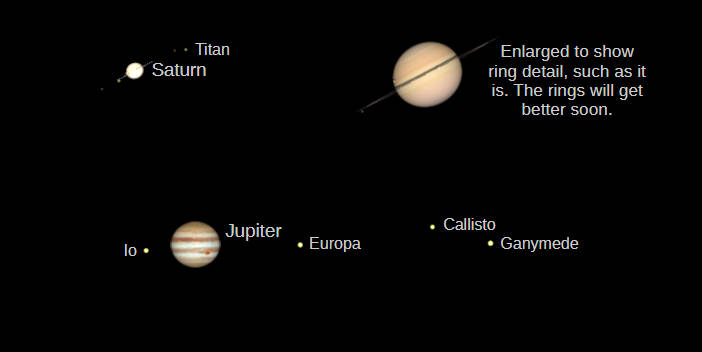
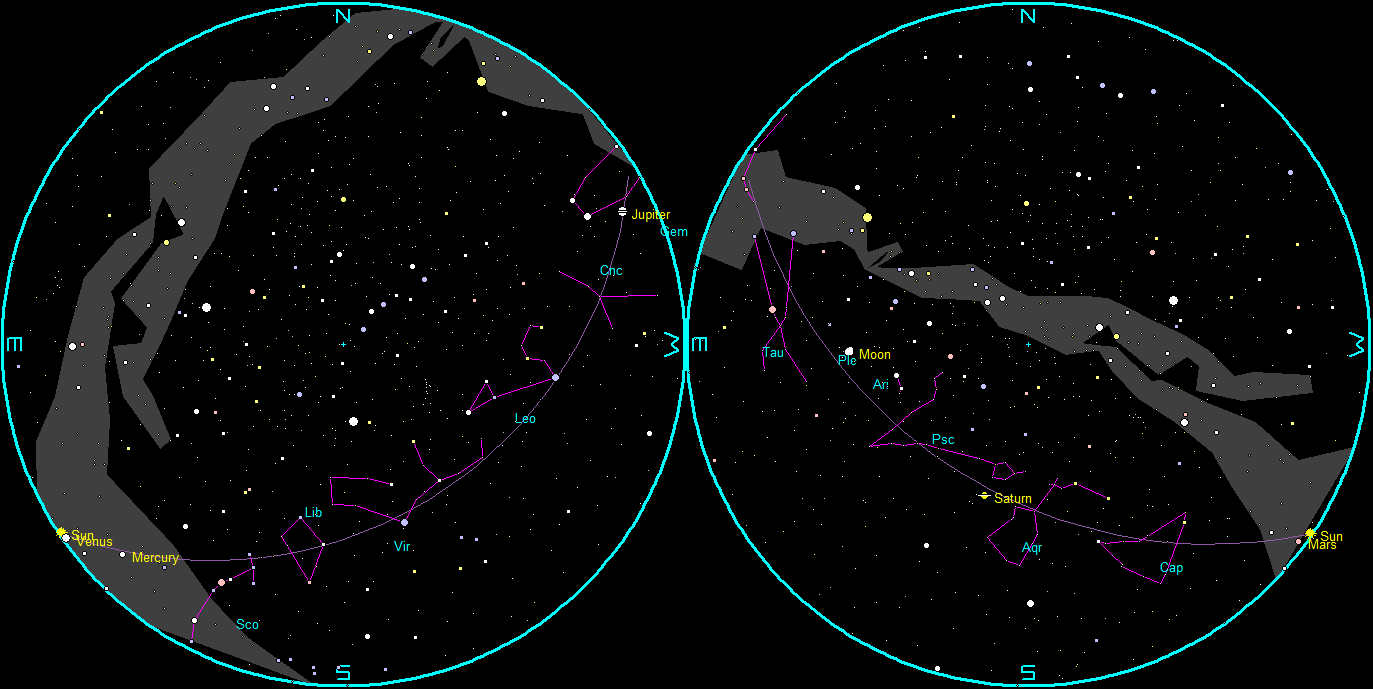
Let’s take our last weekly look at the whereabouts of the naked-eye planets for 2025. Saturn is the brightest star-like object in the southwestern sky as soon as it gets dark. In a telescope Saturn sports a very thin ring, one degree from being edge on and is slowly opening. Jupiter will rise at 5:54 PM in the east-northeast, below and right of Castor and Pollux, the bright stars of Gemini. The giant planet is slowly moving westward with its retrograde motion. Jupiter’s 4 brightest moons can be seen even in binoculars, and shift position night to night. In the morning sky, only Jupiter can be seen, descending in the western sky. It will leave the morning sky, officially on January 10th, as it reaches opposition with the Sun.
The astronomical event times given in this blog are for the Traverse City/Interlochen area of Michigan (Lat 44.7° N, Long 85.7° W; EST, UT – 5 hours) unless stated otherwise. Times will be different for other locations.
Addendum
Ephemeris: 12/30/2025 – 2026 a year of eclipses
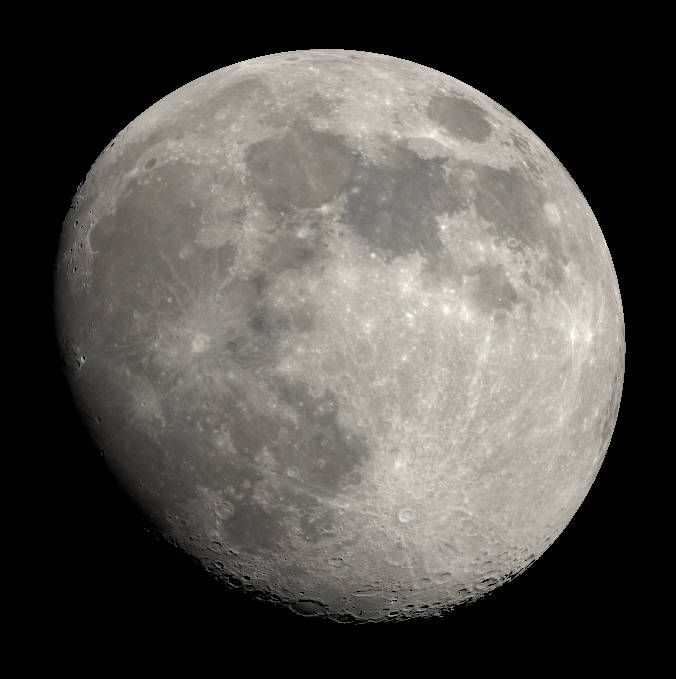
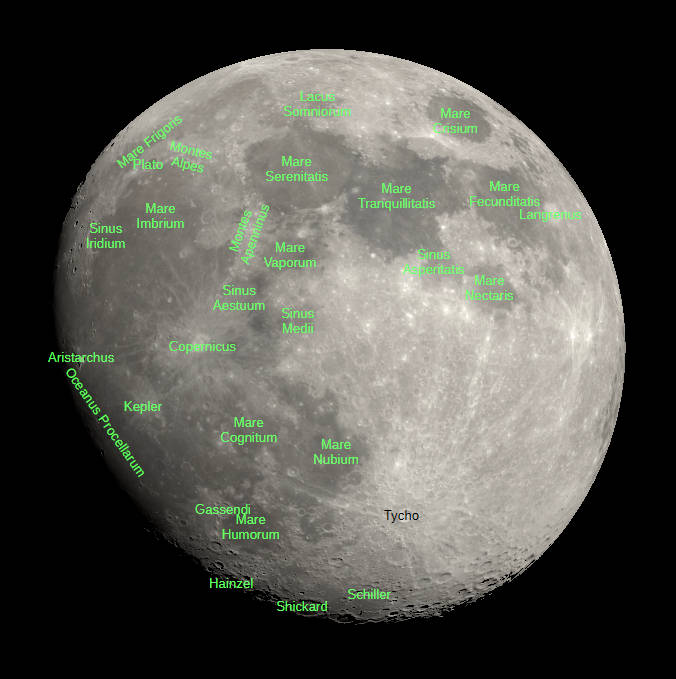
This is Bob Moler with Ephemeris for Tuesday, December 30th. Today the Sun will be up for 8 hours and 51 minutes, setting at 5:11, and it will rise tomorrow at 8:20. The Moon, 3 days past first quarter, will set at 5:28 tomorrow morning.
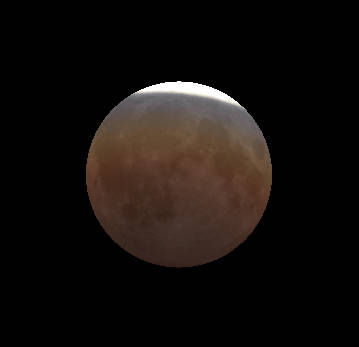
In each calendar year there are at least 4 eclipses. Two of the Sun and two of the moon. Usually we see one or maybe 2 or none. However, in 2026 we get to see three of the four eclipses, 2 lunar eclipses and a solar eclipse. The first eclipse is on March 3rd it is a total lunar eclipse, which we get to see most of. It actually ends in its final partial phase at sunrise. The next eclipse is a solar eclipse, The Moon just grazes the Sun. That will be on August 12th just before the peak of the Perseid meteor shower that night. Last on August 27th late that evening and morning of the 28th there will be a very deep partial eclipse of the Moon where 93% of its disk will be covered by the Earth’s inner shadow.
The astronomical event times given in this blog are for the Traverse City/Interlochen area of Michigan (Lat 44.7° N, Long 85.7° W; EST, UT – 5 hours) unless stated otherwise. Times will be different for other locations.
Addendum
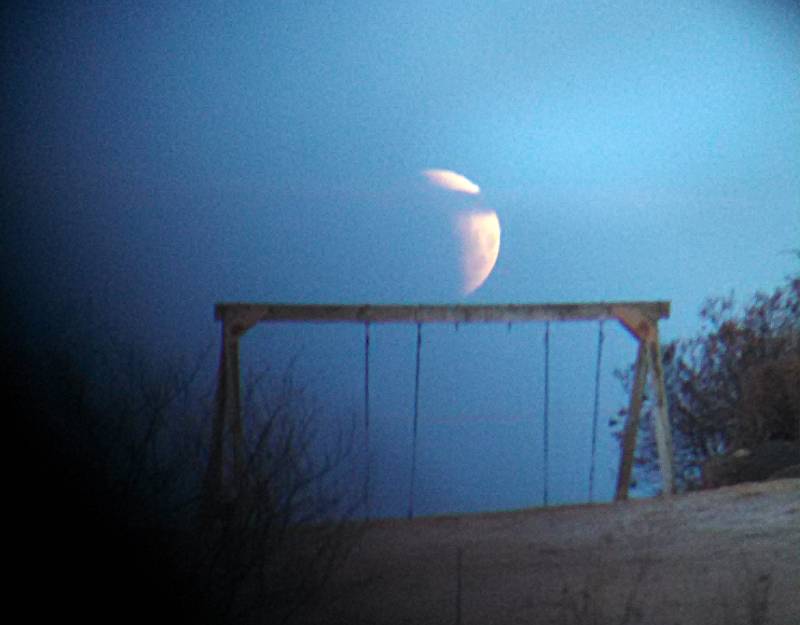
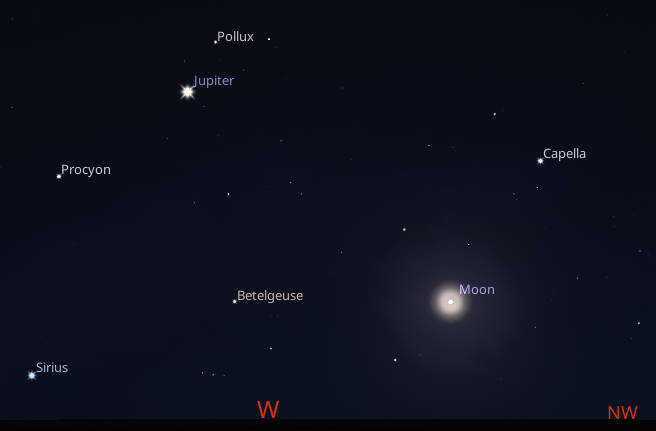
The end of the March 3rd eclipse will look something like this. The totally eclipsed Moon will disappear in twilight. Later the partially illuminated parts of the Moon will appear out of the blue before moonset.

Ephemeris: 12/29/2025 – 3I/ATLAS, Comet of the Year
This is Ephemeris for Monday, December 29th. Today the Sun will be up for 8 hours and 50 minutes, setting at 5:10, and it will rise tomorrow at 8:19. The Moon, 2 days past first quarter, will set at 4:04 tomorrow morning.
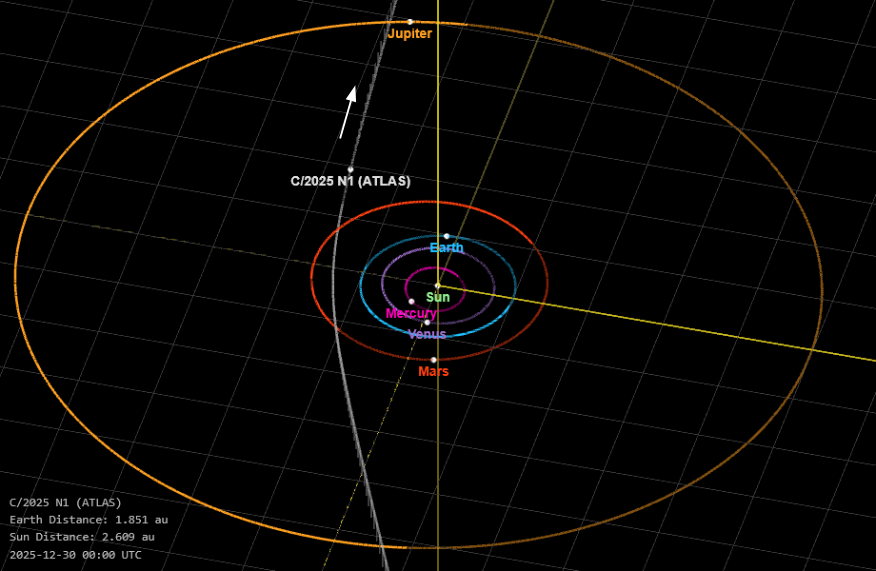
One of the more interesting events that occurred this year was the discovery at midyear of an interstellar visitor to the solar system, a comet called 3I/ATLAS. Last week as I heard in breathless news reports that the comet came its closest to the Earth. Well yeah, it was its closest to the Earth, but it wasn’t all that close. It was actually farther from us than the Sun is. We were nowhere close to the comet at anytime in its orbit, passing through the inner solar system. The closest it ever got to anything was to Mars, in October. Now as 3I/ATLAS is moving out of the inner solar system the Hubble and James Webb space telescopes can take a good look at it. Despite what the cranks say, it’s still just a comet, but from another solar system.
The astronomical event times given in this blog are for the Traverse City/Interlochen area of Michigan (Lat 44.7° N, Long 85.7° W; EST, UT – 5 hours) unless stated otherwise. Times will be different for other locations.
Addendum
Ephemeris: 12/26/2025 – Conjunctions, eclipses, transits and occultations, oh my!
This is Ephemeris for Friday, December 26th. Today the Sun will be up for 8 hours and 49 minutes, setting at 5:08, and it will rise tomorrow at 8:19. The Moon, 1 day before first quarter, will set at 12:13 tomorrow morning.
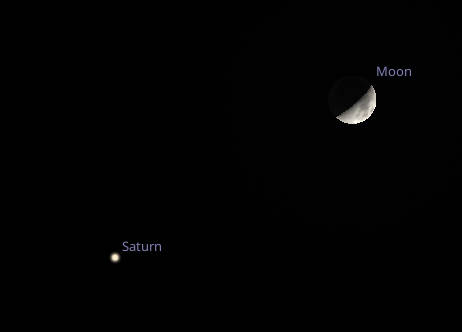
Tonight the Moon will pass north of the planet Saturn. That will mean in that location in the southwestern sky, the planet will appear just below and left of the Moon. When two solar system objects appear to pass each other, it’s called a conjunction. To astronomers, it’s no big deal unless one passes directly in front of the other. If a smaller appearing one crosses the disc of a larger one, it’s called a transit, If one is completely hidden by another it’s an occultation. Occultations and transits of Jupiter and its satellites are common. Also, Jupiter’s satellites are eclipsed by passing through the planet’s shadow. We are in a period now when Jupiter’s moons occult and eclipse each other occasionally.
The astronomical event times given in this blog are for the Traverse City/Interlochen area of Michigan (Lat 44.7° N, Long 85.7° W; EST, UT – 5 hours) unless stated otherwise. Times will be different for other locations.
Addendum
Ephemeris: 12/25/2025 – Christmas night stars
Merry Christmas! This is Ephemeris for Christmas Day, Thursday, December 25th. Today the Sun will be up for 8 hours and 48 minutes, setting at 5:07, and it will rise tomorrow at 8:19. The Moon, 2 days before first quarter, will set at 11:01 this evening.
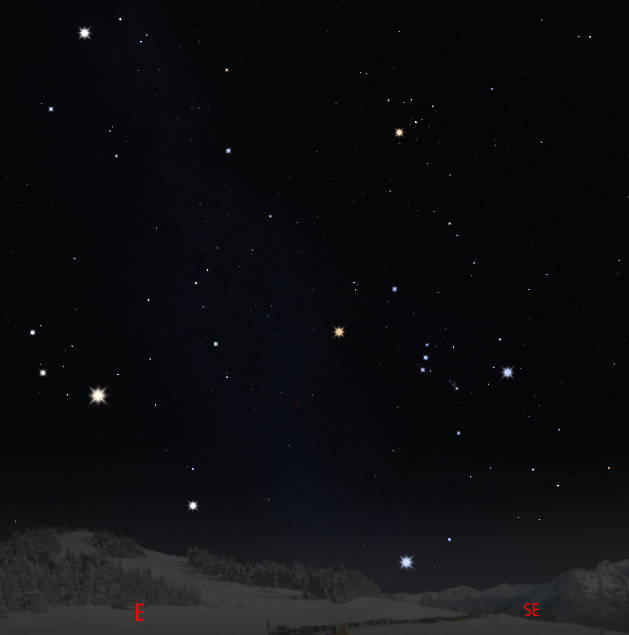
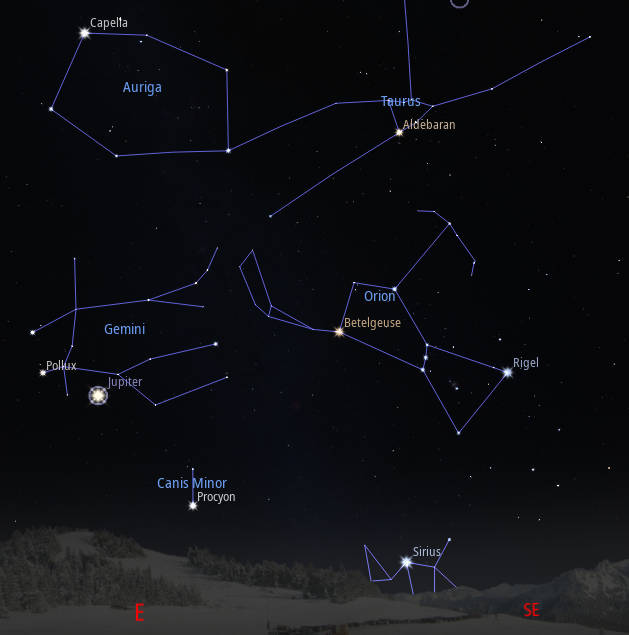
The real star of Bethlehem is probably not what is popularly depicted as a bright star in the sky, rather it was something subtle, only noticed by some astrologers. However, gracing our skies tonight we do have, in the evening, a brilliant star-like object, and our usual winter sprinkling of bright real stars in the southeastern sky. I call the one star-like because it’s a planet, Jupiter to be specific. The term “planet” we get from the Greeks, meaning wanderer. Planets don’t actually wander. Their paths can be determined, and are affected by the Sun, mainly and the other planet’s gravitational attraction. Perhaps the Magi, thought the cause was by divine action, to set them on their journey. Again have a Merry Christmas!
The astronomical event times given in this blog are for the Traverse City/Interlochen area of Michigan (Lat 44.7° N, Long 85.7° W; EST, UT – 5 hours) unless stated otherwise. Times will be different for other locations.
Addendum
Ephemeris: 12/24/2025 – Taking our weekly look at the whereabouts of the naked-eye planets
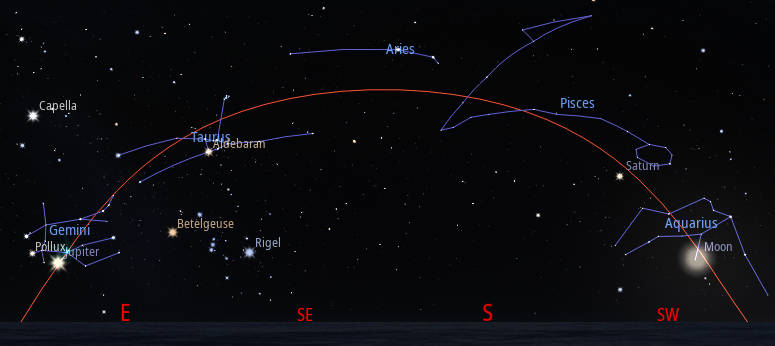
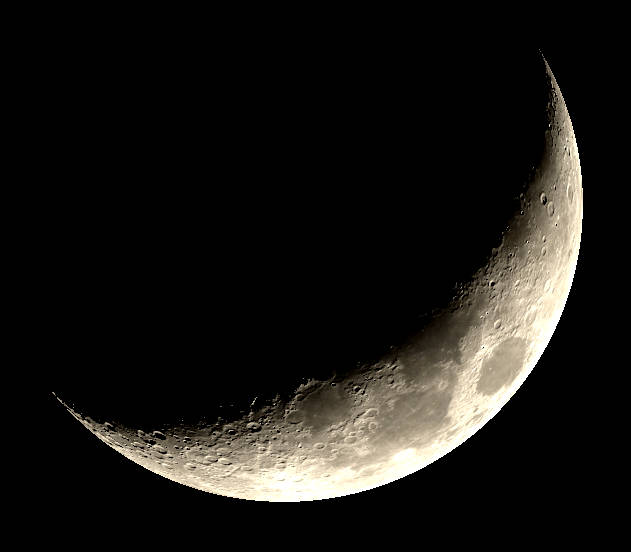
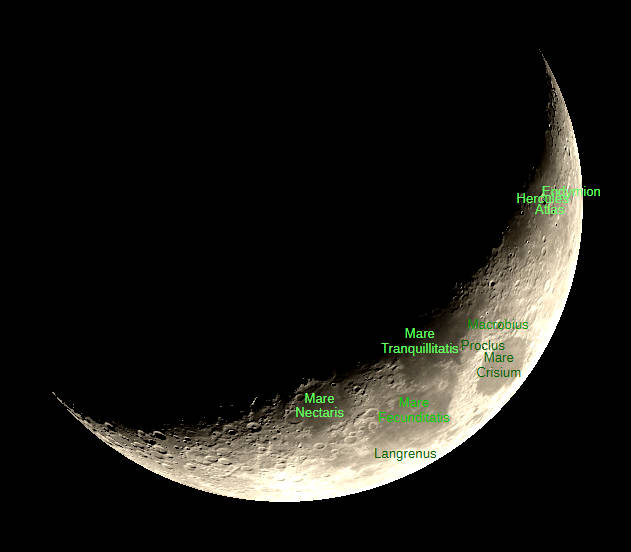
This is Ephemeris for Christmas Eve, Wednesday, December 24th. Today the Sun will be up for 8 hours and 48 minutes, setting at 5:06, and it will rise tomorrow at 8:18. The Moon, 3 days before first quarter, will set at 9:51 this evening.
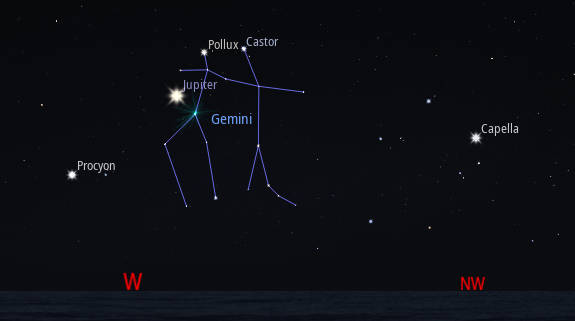
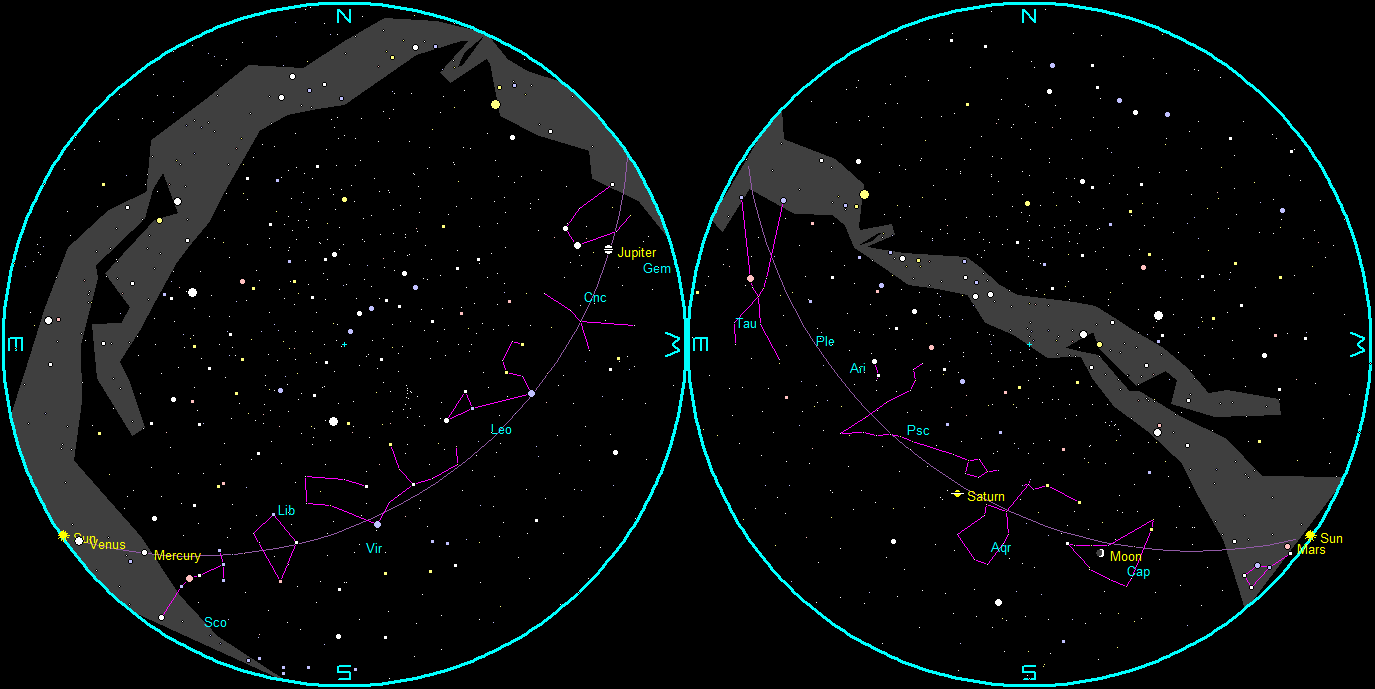
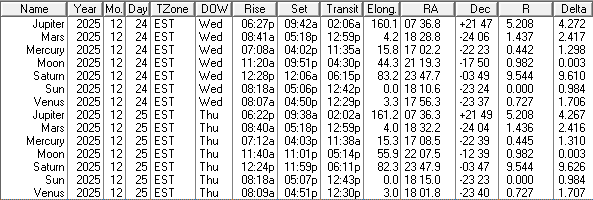
Let’s take our weekly look at the whereabouts of the naked-eye planets. Saturn is the brightest star-like object in the southwestern sky as soon as it gets dark. In a telescope Saturn sports a very thin ring, eight tenths of a degree from being edge on and slowly opening. Jupiter will rise at 6:26 PM in the east-northeast, below Castor and Pollux, the bright stars of Gemini. The giant planet is slowly moving westward with its retrograde motion. Jupiter’s 4 brightest moons can be seen even in binoculars, and shift position night to night. In the morning sky, only Jupiter can be seen, descending in the western sky. It will leave the morning sky, officially on January 10th, as it reaches opposition to the Sun.
The astronomical event times given in this blog are for the Traverse City/Interlochen area of Michigan (Lat 44.7° N, Long 85.7° W; EST, UT – 5 hours) unless stated otherwise. Times will be different for other locations.
Addendum
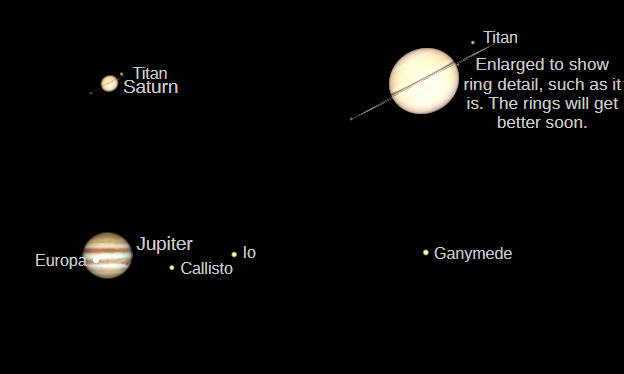
A note about transits of Jovian moons: A transiting moon is extremely difficult to pick up, however the moon’s shadow falling on the planet is much more easily spotted.
Ephemeris: 12/23/2025 – An alternate possibility of the Star of Bethlehem
This is Bob Moler with Ephemeris for Tuesday, December 23rd. Today the Sun will be up for 8 hours and 48 minutes, setting at 5:06, and it will rise tomorrow at 8:18. The Moon, halfway from new to first quarter, will set at 8:40 this evening.
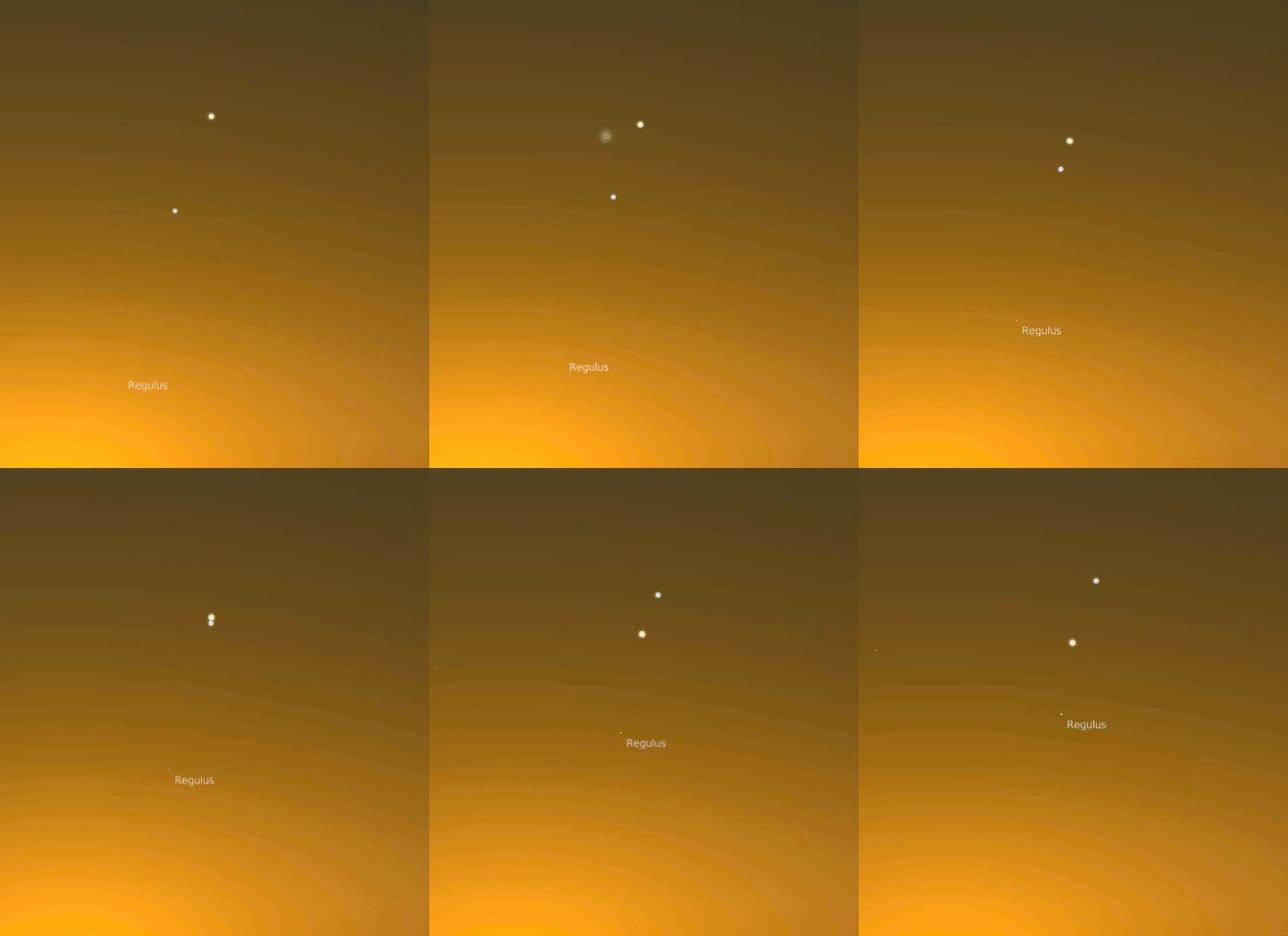
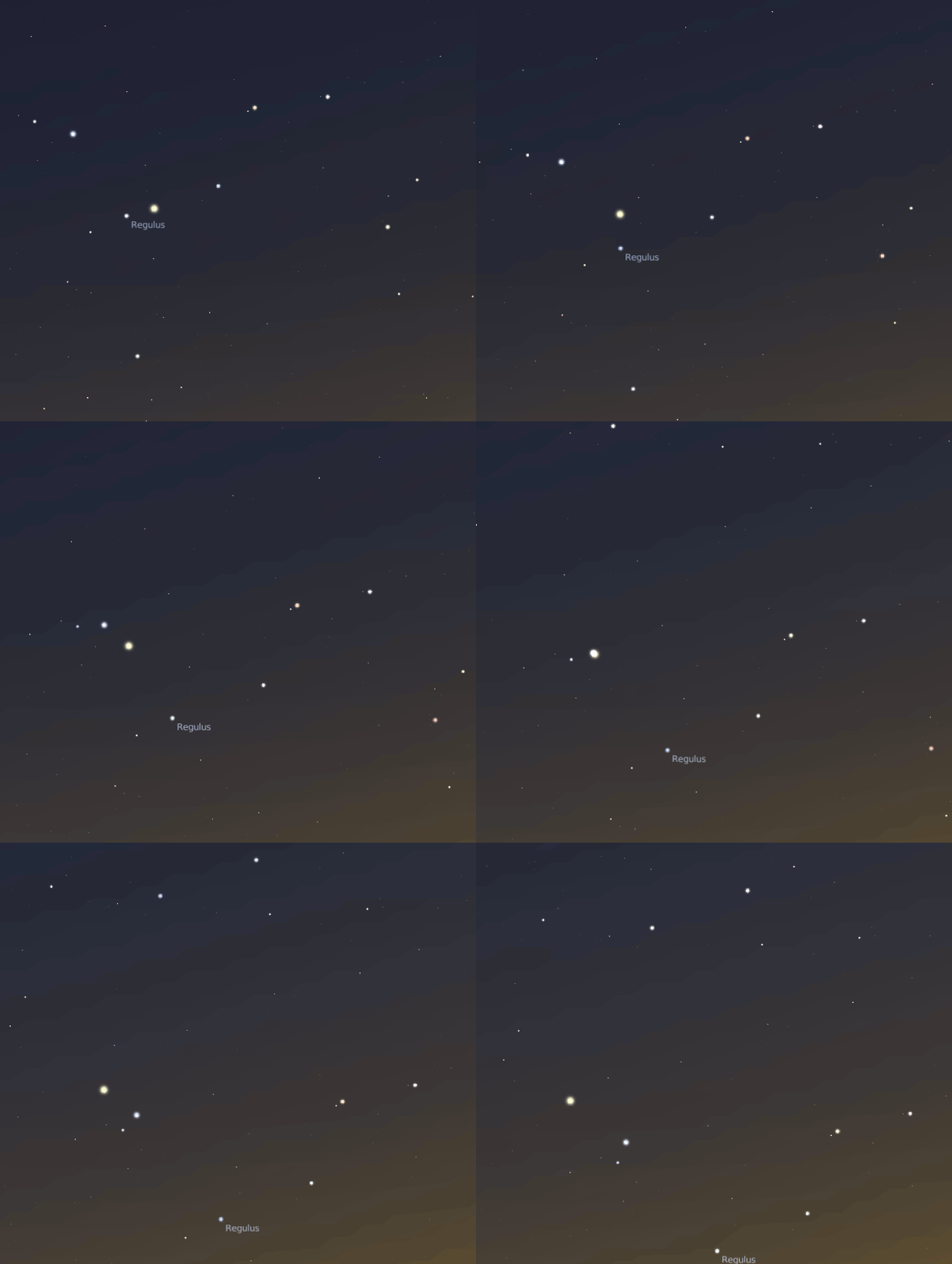
Many writers of the early church place Jesus’ birth around 2 BC, which had to be before Herod the Great’s death, which I suggest was in 1 BC marked by a total lunar eclipse, rather than the 4 BC partial lunar eclipse, normally accepted. In 3 and again in 2 BC there were star-like conjunctions or apparent joining of the planets Jupiter and Venus against the backdrop of the constellation of Leo the Lion. A lion is related to Judah, son of Jacob by a blessing the latter gave his sons in Genesis. The first conjunction occurred in the morning sky of August, 3 BC. In June the next year the two planets got together again, in the evening sky, just after Jesus would have been born in the lambing season, when shepherds would be guarding their flocks at night.
The astronomical event times given in this blog are for the Traverse City/Interlochen area of Michigan (Lat 44.7° N, Long 85.7° W; EST, UT – 5 hours) unless stated otherwise. Times will be different for other locations.
Addendum
Ephemeris: 12/22/2025 – The most popular astronomical explanation for the Star of Bethlehem
This is Ephemeris for Monday, December 22nd. Today the Sun will be up for 8 hours and 48 minutes, setting at 5:05, and it will rise tomorrow at 8:18. The Moon, 3 days past new, will set at 7:30 this evening.
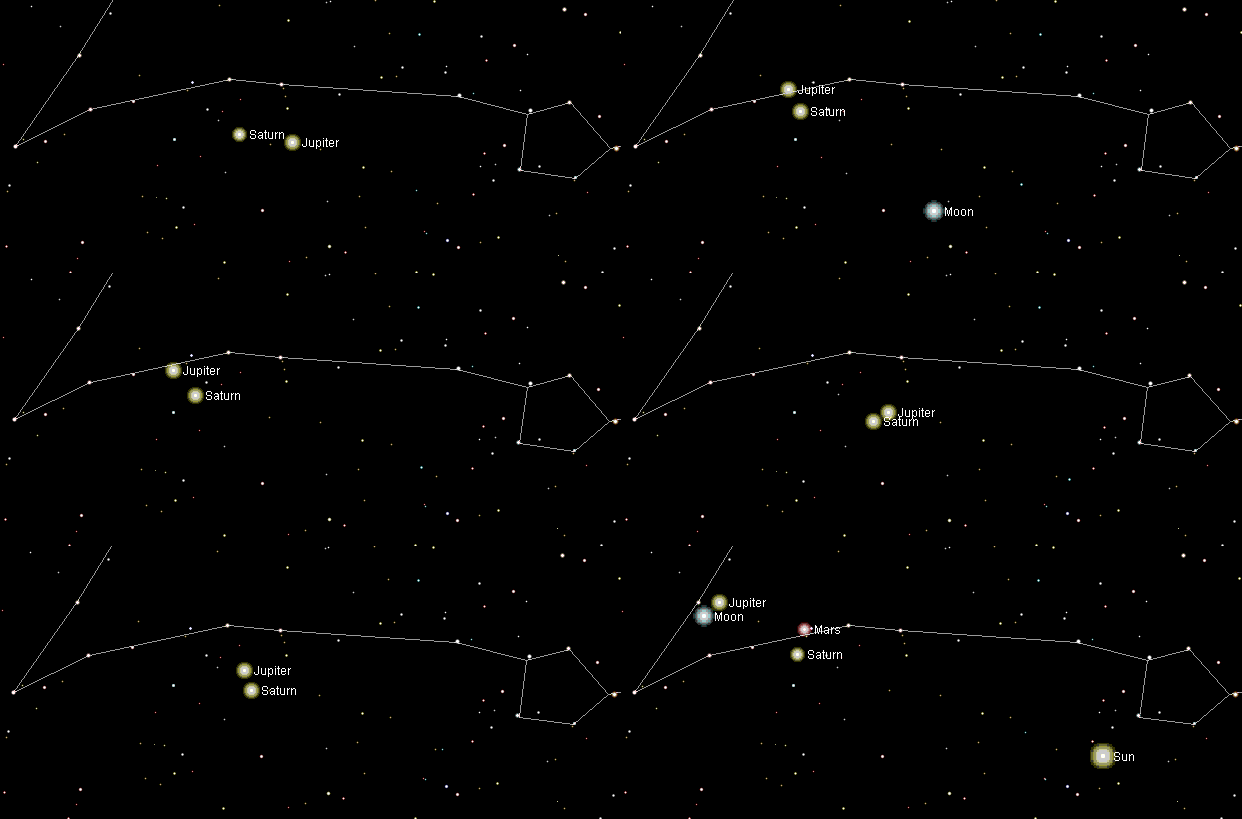
This year we have a bright evening Christmas star, Jupiter in the east. But what about the one described in the Bible, in the Gospel of Matthew? We will look today at the first of two events that may have been recorded as the Star of Bethlehem. In 7 BCE there was a rare event over 6 months when three times the planet Jupiter passed Saturn against the stars of the constellation Pisces. Could the Persian astrologer priests, called Magi, have read into the event enough significance to start the journey to Jerusalem in search of the newborn King of the Jews? It was the scribe’s readings that sent them to Bethlehem. Jupiter, Saturn and Pisces all may have had significance to the Magi.
The astronomical event times given in this blog are for the Traverse City/Interlochen area of Michigan (Lat 44.7° N, Long 85.7° W; EST, UT – 5 hours) unless stated otherwise. Times will be different for other locations.
Addendum
Ephemeris: 12/19/2025 – Winter begins Sunday
This is Ephemeris for Friday, December 19th. Today the Sun will be up for 8 hours and 48 minutes, setting at 5:04, and it will rise tomorrow at 8:16. The Moon is new today, and won’t be visible.
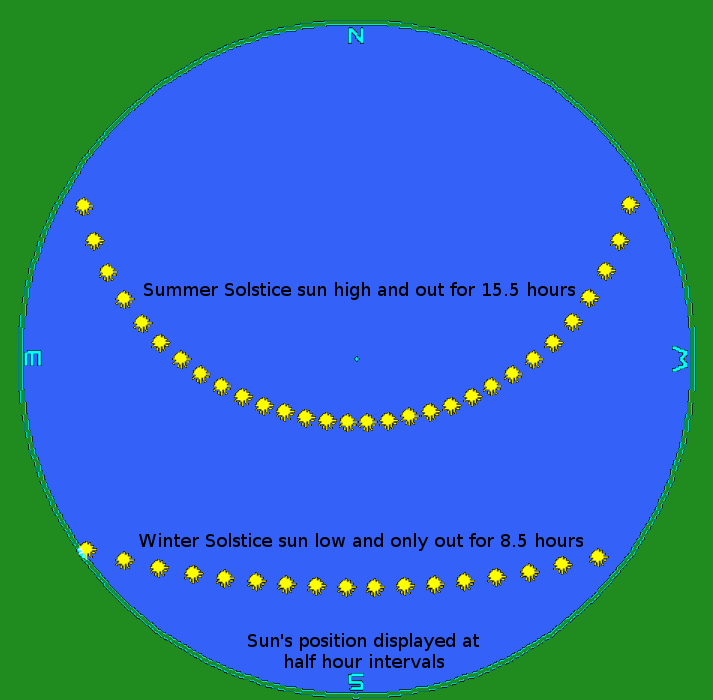
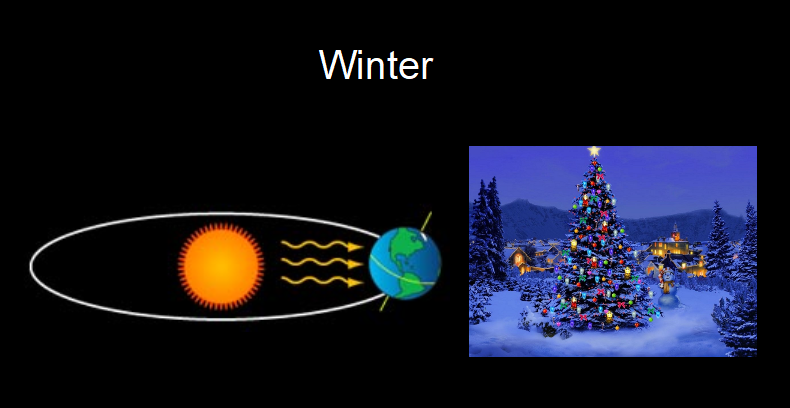
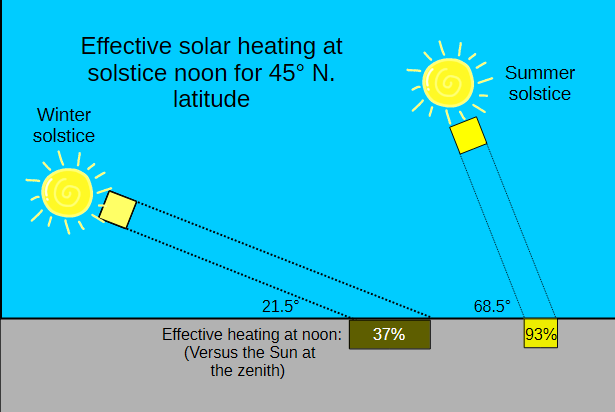
The thermometer and snowfall tell us that winter ought to be here. Well, it will be at 10:03 Sunday morning. At that point, the winter solstice, the Sun will be directly over the Tropic of Capricorn at 23 ½ degrees south latitude. It’s an odd name because 2,000 years ago the Sun was in indeed entering Capricornus. Now it will be entering Sagittarius, right above the spout of the teapot asterism we know so well in summer. From then on the Sun will be climbing up the sky each noon until June 21st next year when summer will start. To which I say: Go Sun Go! The Sun will almost make it up to 22 degrees above the southern horizon at local noon, which is 12:40 pm, in Interlochen and be out for only 8 hours and 48 minutes. If it stayed that low all year, we’d be in a deep freeze, possibly colder than Antarctica.
The astronomical event times given in this blog are for the Traverse City/Interlochen area of Michigan (Lat 44.7° N, Long 85.7° W; EST, UT – 5 hours) unless stated otherwise. Times will be different for other locations.
Addendum
Ephemeris: 12/18/2025 – Orion and Scorpius
This is Ephemeris for Thursday, December 18th. Today the Sun will be up for 8 hours and 48 minutes, setting at 5:03, and it will rise tomorrow at 8:16. The Moon, 1 day before new, will rise at 8:22 tomorrow morning.
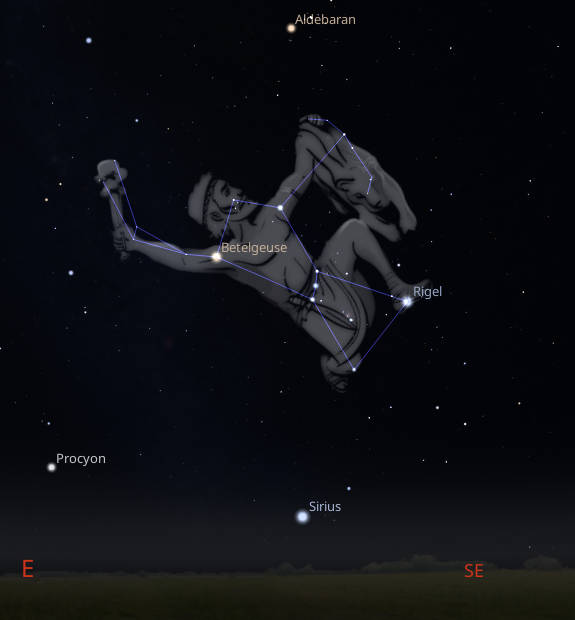
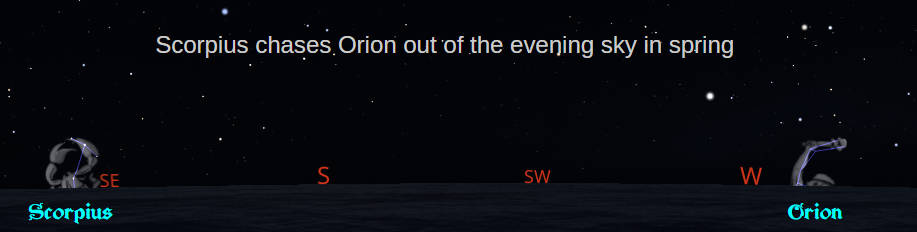
The wonderful constellation of Orion the hard luck hunter is seen rising in the east as twilight fades. According to one Greek myth he was killed by the sting of a giant scorpion, thus he can only rise after the summer constellation of Scorpius the scorpion sets in the southwest, and he must set as the scorpion rises on early spring evenings. By 9 pm, he is located in the southeast. His three belt stars are nearly vertically arranged in a line and equally spaced. They point down to the horizon, at the brightest nighttime star Sirius which rose 13 minutes before. The belt stars lie within a large rectangle of stars tilted to the left. His shoulders and knees. The top left star is the bright red Betelgeuse. The bottom right star is blue-white Rigel.
The astronomical event times given in this blog are for the Traverse City/Interlochen area of Michigan (Lat 44.7° N, Long 85.7° W; EST, UT – 5 hours) unless stated otherwise. Times will be different for other locations.
Addendum
 Bob Moler's Ephemeris Blog