Archive
Ephemeris: 05/12/2026 – Finding the constellations of Virgo and Libra
This is Ephemeris for Tuesday, May 12th. Today the Sun will be up for 14 hours and 43 minutes, setting at 9:01, and it will rise tomorrow at 6:16. The Moon, 3 days past last quarter, will rise at 4:16 tomorrow morning.
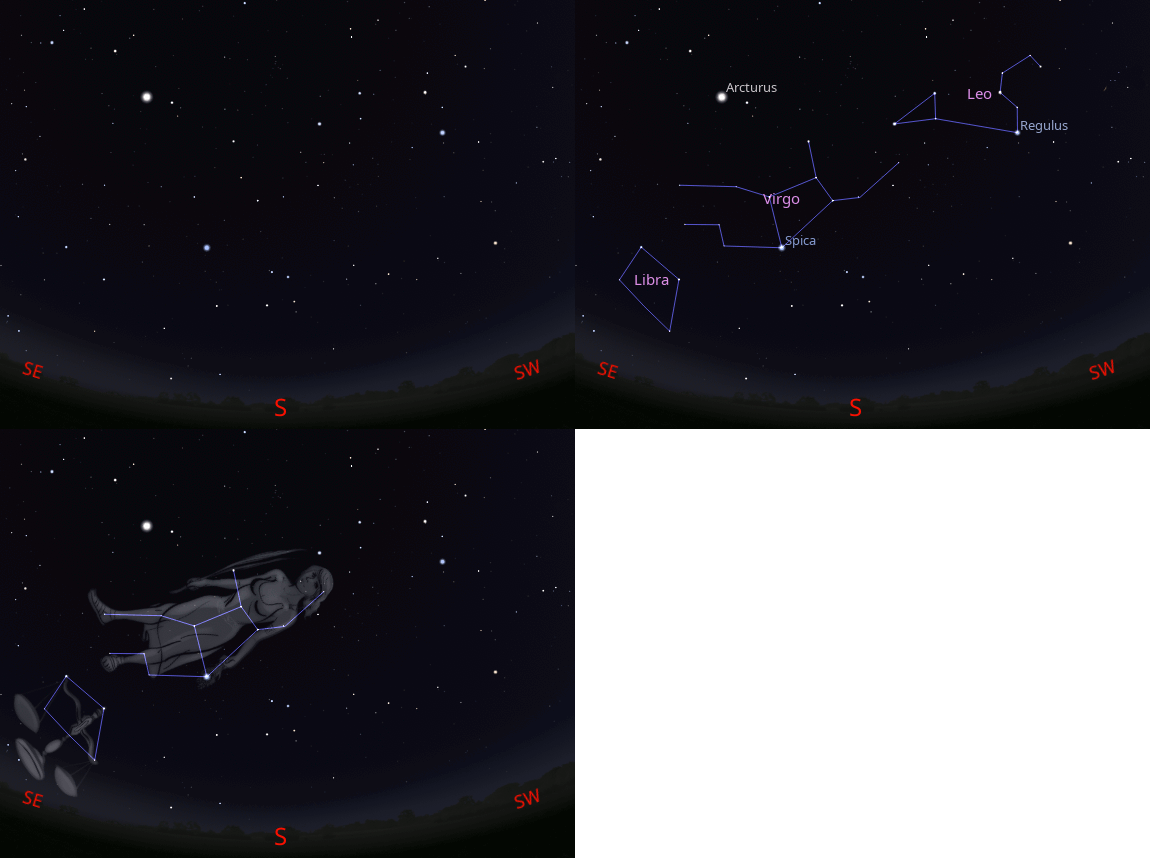
As skies darken look to the south, below the bright star Arcturus, high in the southeast, and left and below Leo the lion, in the southwest, to the constellation of Virgo the virgin with its bright star Spica in the south. Other than Spica, Virgo contains only dim stars. It’s quite large, extending to the upper right, and to the left of Spica. Virgo represents two goddesses. The Greek harvest goddess Persephone, whose Roman name is Ceres, which is the root of our word cereal, is one. The bright star Spica is the ear of wheat that she’s holding in her hand. Some see her standing at an odd angle, I see her reclining. Virgo also represents Astraea the goddess of Justice, with her scales, the constellation Libra, at her feet low in the southeast.
The astronomical event times given in this blog are for the Traverse City/Interlochen area of Michigan (Lat 44.7° N, Long 85.7° W; EDT, UT – 4 hours) unless stated otherwise. Times will be different for other locations.
Addendum
Ephemeris: 05/11/2026 – Finding the tiny but distinctive constellation of Corvus the crow
This is Ephemeris for Monday, May 11th. Today the Sun will be up for 14 hours and 40 minutes, setting at 8:59, and it will rise tomorrow at 6:17. The Moon, 2 days past last quarter, will rise at 3:57 tomorrow morning.
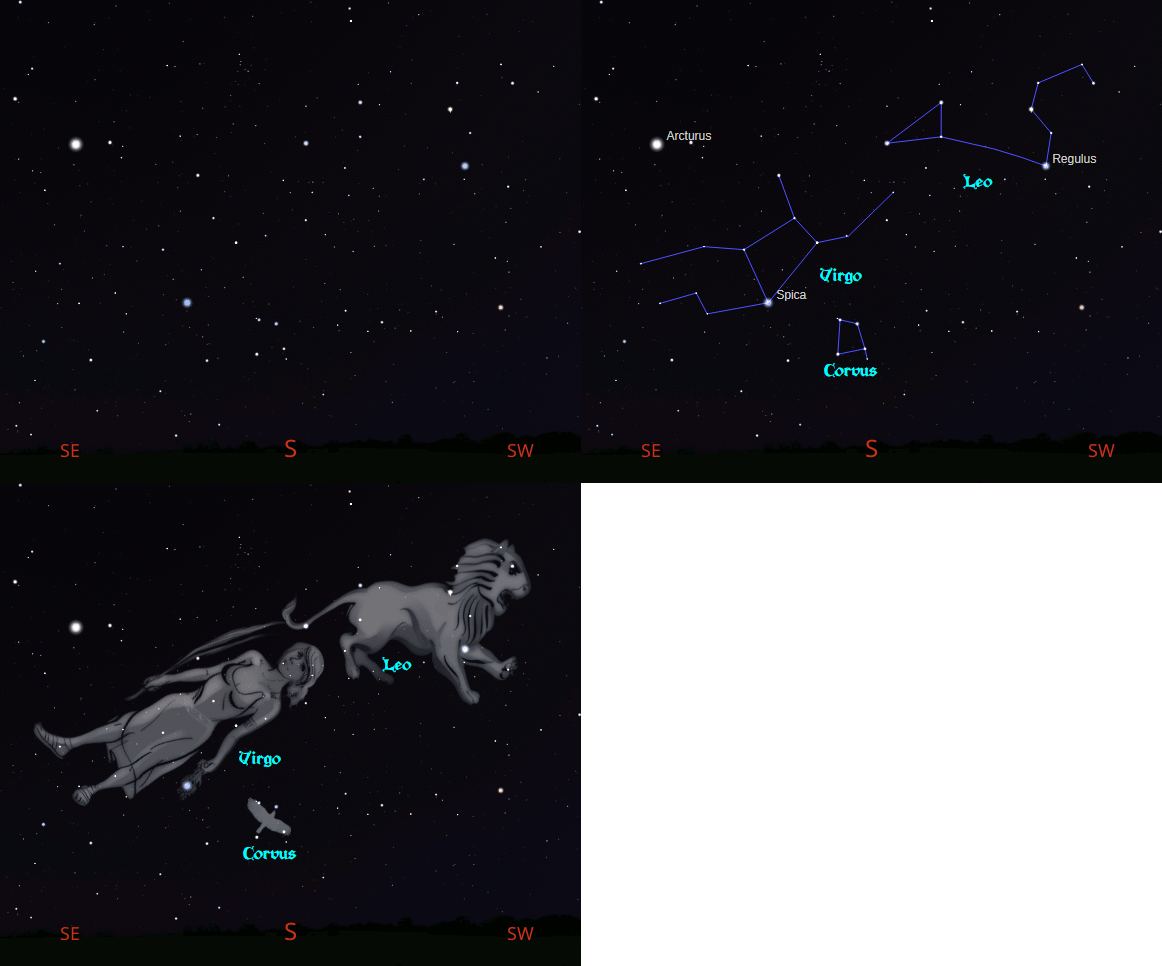
The small constellation of Corvus the crow is located low in the south at 10:30 this evening. It’s made of 6 dim stars, but the pattern is a distinctive but distorted box with two stars at the upper left marking that corner, and another two marking the lower right corner. I usually don’t notice the extra star at these corners, which denote the wings of this crow in flight to the upper right. To me the box is distinctive enough. It’s pretty much alone below Virgo and its bright star Spica, left an above it. I don’t see a crow here, but the box is distinctive in that no two sides are parallel. In the US we call the shape a trapezium, the British call it a trapezoid. Anyway it is a very memorable shape, at least to me.
The astronomical event times given in this blog are for the Traverse City/Interlochen area of Michigan (Lat 44.7° N, Long 85.7° W; EDT, UT – 4 hours) unless stated otherwise. Times will be different for other locations.
Addendum
Ephemeris: 05/08/2026 – The story of Boötes and Ursa Major
This is Ephemeris for Friday, May 8th. Today the Sun will be up for 14 hours and 33 minutes, setting at 8:56, and it will rise tomorrow at 6:21. The Moon, 1 day before last quarter, will rise at 2:55 tomorrow morning.
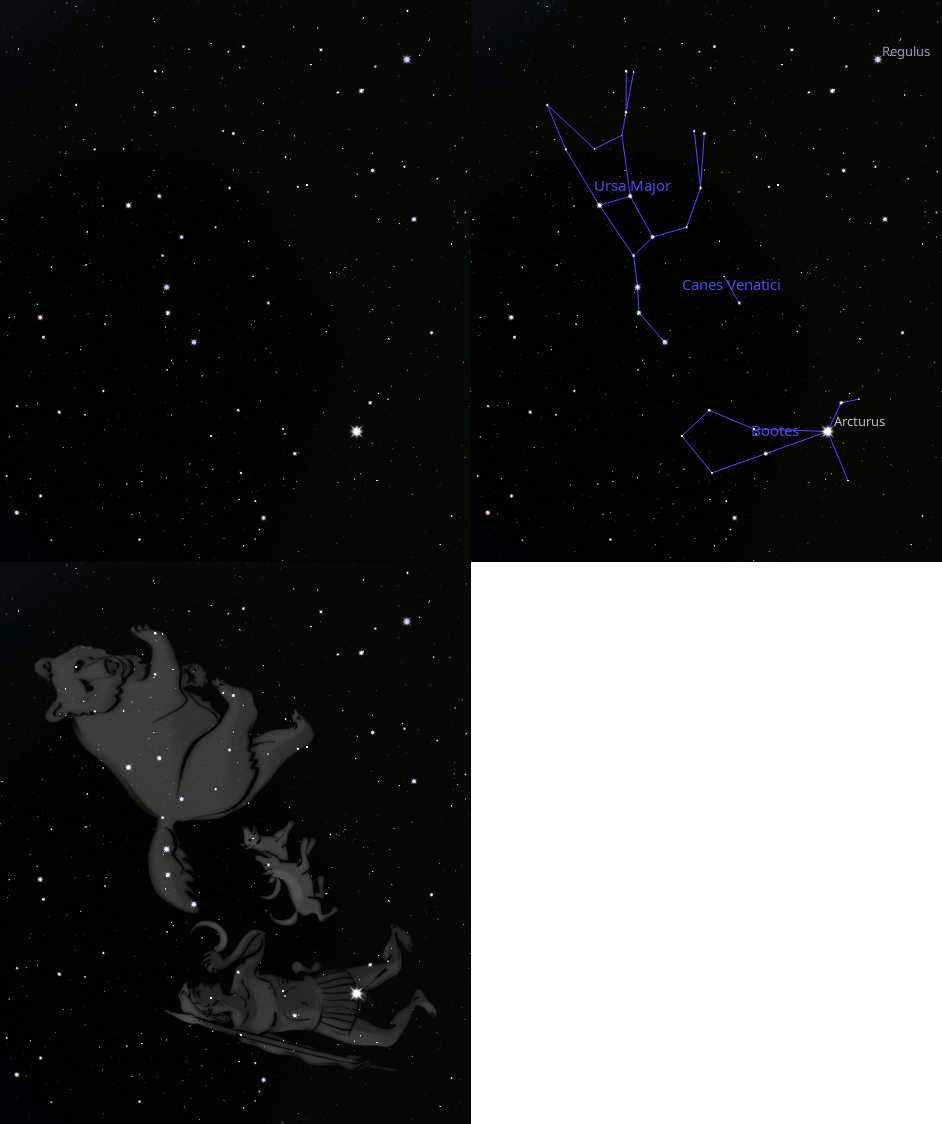
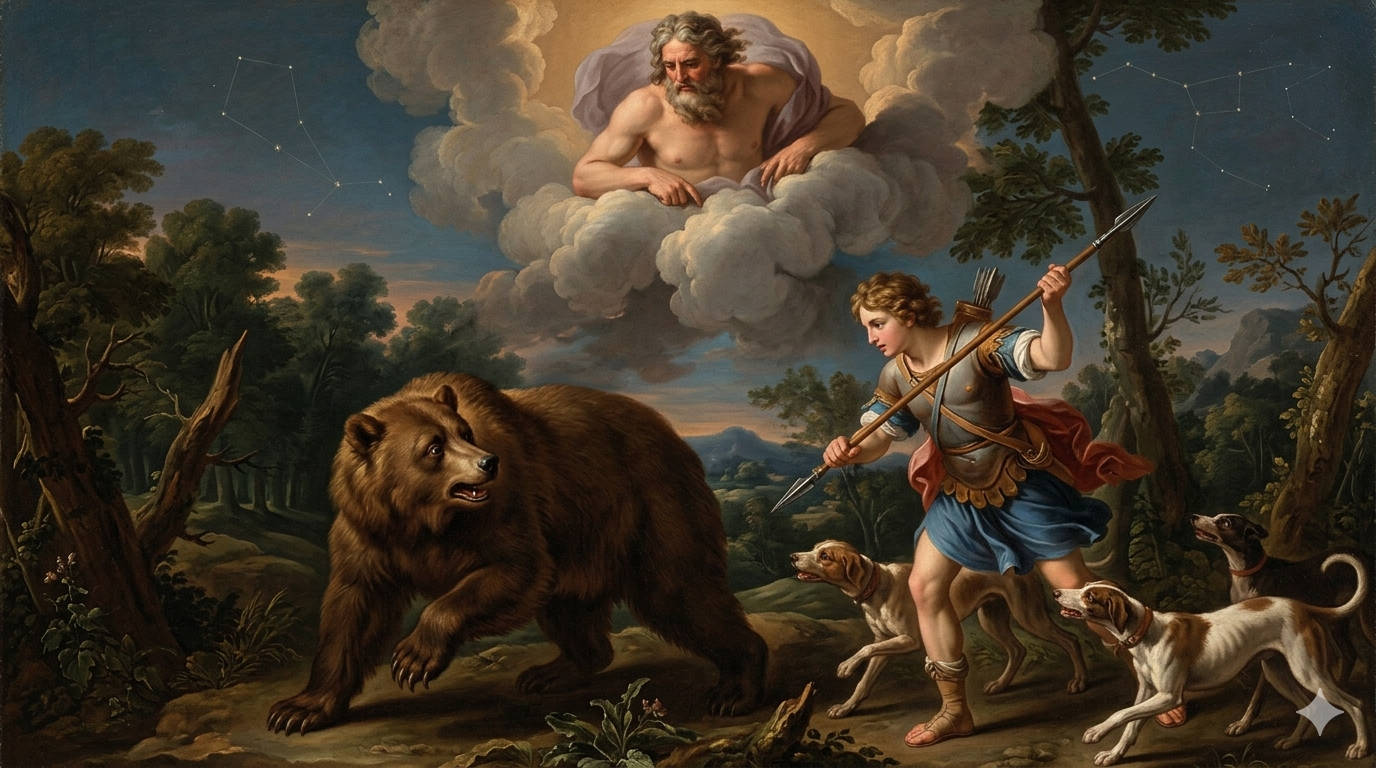
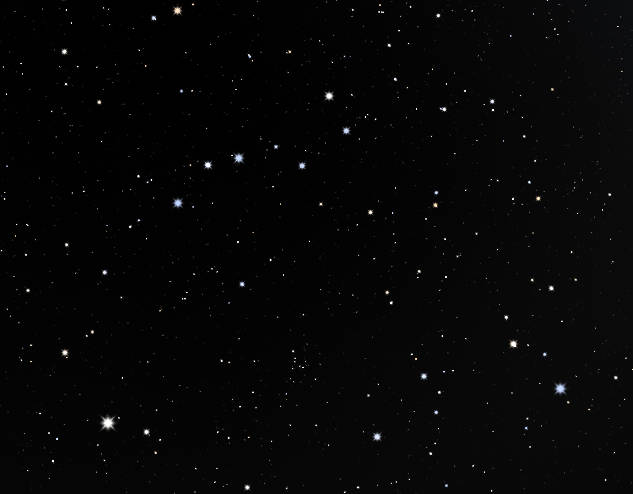
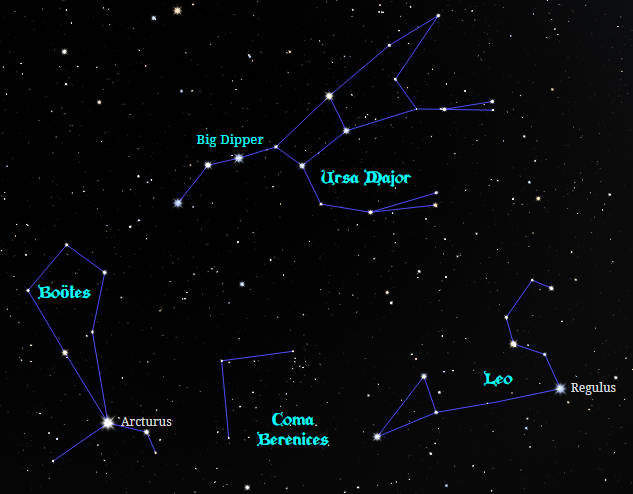
Appearing in the eastern sky at 10 p.m. tonight is the kite shaped constellation of Boötes the herdsman. The bright star Arcturus is at the bottom of the kite which is horizontal to the left, pointed to by the arc of the handle of the Big Dipper, higher in the east. The Big Dipper is the hind end of the constellation Ursa Major, the Great Bear. In one story, Boötes represents a young hunter named Arcas, son of Callisto, a beautiful young woman who had the misfortune of being loved by god Zeus. Zeus’ wife, Hera, found out about the affair, and since she couldn’t punish Zeus, turned the poor woman into a bear. Arcas, many years later, unaware of why his mother disappeared, was about to kill the bear when Zeus intervened and placed them both in the sky, where he continues to chase her across the sky nightly.
The astronomical event times given in this blog are for the Traverse City/Interlochen area of Michigan (Lat 44.7° N, Long 85.7° W; EDT, UT – 4 hours) unless stated otherwise. Times will be different for other locations.
Addendum
Ephemeris: 05/07/2026 – A constellation of a real person: Coma Berenices
This is Ephemeris for Thursday, May 7th. Today the Sun will be up for 14 hours and 30 minutes, setting at 8:55, and it will rise tomorrow at 6:22. The Moon, 2 days before last quarter, will rise at 2:28 tomorrow morning.
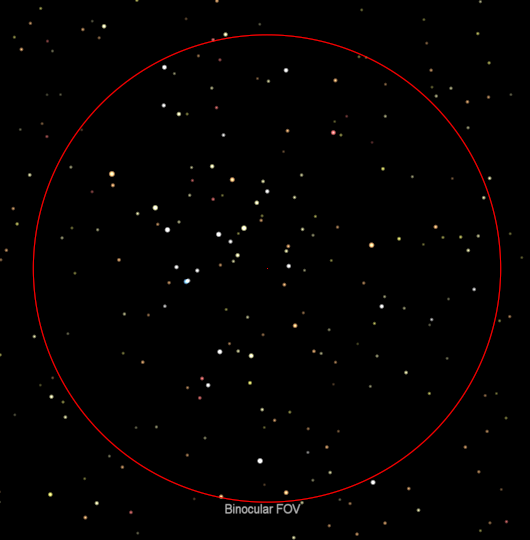
High in the south-southeast at 10:30 p.m. is a tiny and faint constellation of Coma Berenices, or Berenice’s Hair. In it are lots of faint stars arrayed to look like several strands of hair to the naked eye. The whole group will fit in the field of a pair of binoculars, which will also show many more stars. Berenice was a real queen, whose husband, the Pharaoh Ptolemy III, was away at war. Those were the days when the Greeks ruled Egypt. She offered her golden tresses to the gods for the king’s safe return. The hair, was placed in a temple. However, the offering disappeared when the king returned. Later, the constellation of Coma Berenices has been made to commemorate the queen’s sacrifice.
The astronomical event times given in this blog are for the Traverse City/Interlochen area of Michigan (Lat 44.7° N, Long 85.7° W; EDT, UT – 4 hours) unless stated otherwise. Times will be different for other locations.
Addendum
Ephemeris: 05/05/2026 – The constellation of Hydra the water snake slithers along the southern horizon
This is Bob Moler with Ephemeris for Cinco de Mayo, Tuesday, May 5th. Today the Sun will be up for 14 hours and 25 minutes, setting at 8:52, and it will rise tomorrow at 6:25. The Moon, halfway from full to last quarter, will rise at 1:15 tomorrow morning.
Low in the southwest to the southeastern sky in the evening one can spot the constellation of Hydra the water snake, the longest constellation of all. Unlike the monster of the same name, this Hydra has but one head, which is actually its most distinctive part. At 10 p.m. the head of Hydra is found below a line from brilliant Jupiter in the west and Leo the lion in the southwest. Hydra’s head is a small but distinctive group of 6 stars that make a drooping loop to the right. The rest of Hydra wends its way above the southern horizon below the bright blue star Spica in Virgo and Corvus the crow. Some delineations of Hydra have its tail tickling the constellation Libra, the balance, or scales, which has just risen in the southeast.
The astronomical event times given in this blog are for the Traverse City/Interlochen area of Michigan (Lat 44.7° N, Long 85.7° W; EDT, UT – 4 hours) unless stated otherwise. Times will be different for other locations.
Addendum
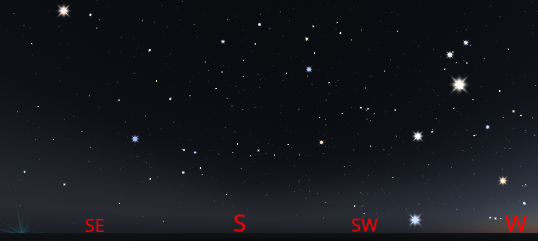
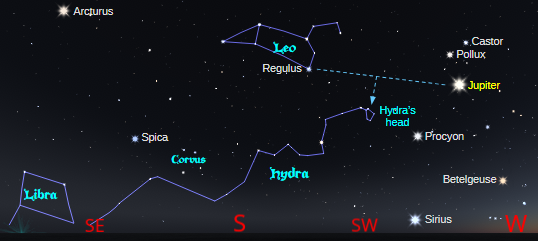
The head of Hydra and the front part of Leo are parts of a constellation of the original inhabitants of our area, the Anishinaabek peoples. The constellation is the Great Underwater Panther, and the front part of the Leo is its curly tail. For more information about it check my blog post here.
Ephemeris: 04/13/2026 – How the Greeks saw the constellation Leo
This is Bob Moler with Ephemeris for Monday, April 13th. Today the Sun will be up for 13 hours and 23 minutes, setting at 8:25, and it will rise tomorrow at 7:00. The Moon, 3 days past last quarter, will rise at 5:35 tomorrow morning.
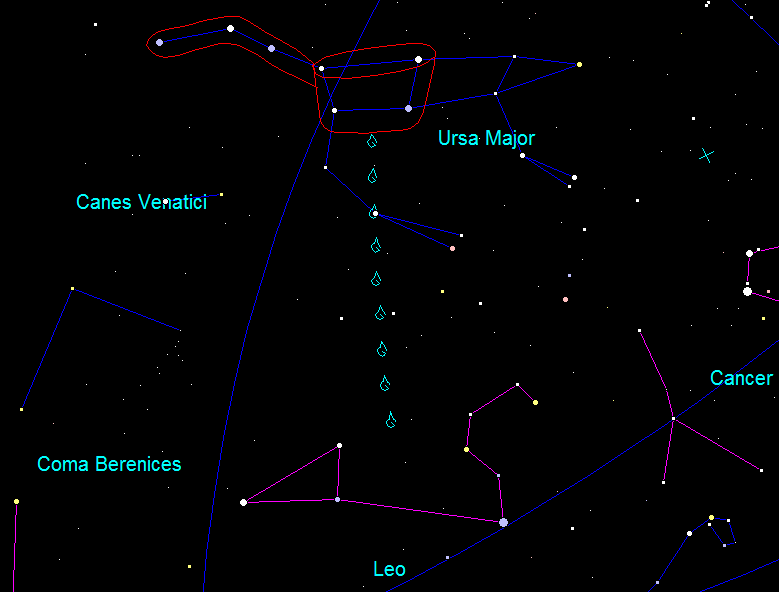
The constellations that we know are mostly those that come from the Sumerians and other civilizations who lived around what is now modern day Iraq. They were adopted and adapted by the ancient Greeks, and to us. Foremost of these was Leo the lion, seen high in the south-southeastern sky at 10 PM. It is easily found by imagining the bottom of the Big Dipper leaks. It will drip on the back of Leo, with its distinctive backward question mark as his front with his head and mane. To the Greeks he was the Nemean Lion, whose coat was impervious to arrows or spears. Heracles (Hercules) was able to kill it by first stunning it with a club then strangling it with his bare hands. It was the first of his Twelve Labors.
The astronomical event times given in this blog are for the Traverse City/Interlochen area of Michigan (Lat 44.7° N, Long 85.7° W; EST, UT – 5 hours) unless stated otherwise. Times will be different for other locations.
Addendum

Ephemeris: 04/10/2026 – The origin of the constellation Leo the lion.
This is Ephemeris for Friday, April 10th. Today the Sun will be up for 13 hours and 14 minutes, setting at 8:21, and it will rise tomorrow at 7:05. The Moon, at last quarter today, will rise at 4:29 tomorrow morning.
The constellation of Leo the lion was envisioned as far back as 4,000 BCE by the Sumerians. It was known as UR.GU.LA, the Great or Divine Lion. Back then it was in the same seasonal location where Gemini is today, the most northern of the constellations of the Zodiac, where the Sun was at the summer solstice. It was important for that reason. They showed him in their artwork as having wings, a sign of his divinity. The Sumerians gave Regulus, Leo’s brightest star, the name MUL.LUGAL, meaning the King Star, with MUL meaning or pertaining to “Star” and LUGAL meaning “King”. Regulus means the same thing. As empires and languages changed over the millennia, the star’s name always meant King.
The astronomical event times given in this blog are for the Traverse City/Interlochen area of Michigan (Lat 44.7° N, Long 85.7° W; EST, UT – 5 hours) unless stated otherwise. Times will be different for other locations.
Addendum
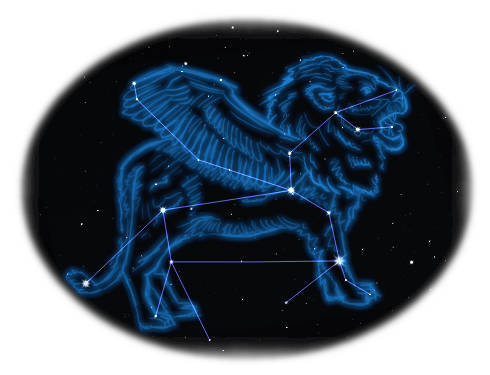
Leo as depicted by the Sumerians circa 4,000 BCE. Created with Stellarium using the Babylonian (Seleucid) Sky Culture.
Ephemeris: 04/09/2026 – Finding Leo the lion
This is Ephemeris for Thursday, April 9th. Today the Sun will be up for 13 hours and 11 minutes, setting at 8:20, and it will rise tomorrow at 7:07. The Moon, 1 day before last quarter, will rise at 3:58 tomorrow morning.
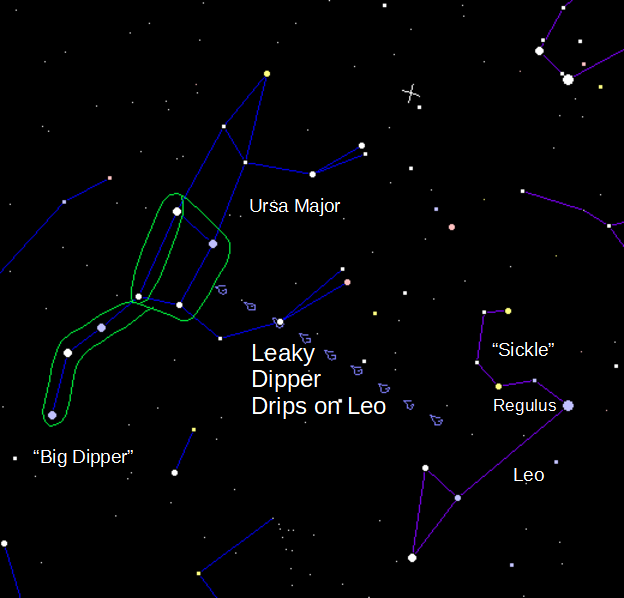
At 10 p.m. the spring constellation of Leo the lion will be high in the south-southeast. It can be found by locating the Big Dipper high in the northeast and imagining that a hole were drilled in the bowl to let the water leak out. It would drip on the back of this giant cat. The Lion is standing or lying facing westward. His head and mane are seen in the stars as a backwards question mark. This group of stars is also called the sickle. The bright star Regulus is at the bottom, the dot at the bottom of the question mark. A triangle of stars, to the left of Regulus, is the lion’s haunches. Leo contains some nice galaxies visible in moderate sized telescopes. The stars in Leo’s part of the sky are fewer than those in the winter sky.
The astronomical event times given in this blog are for the Traverse City/Interlochen area of Michigan (Lat 44.7° N, Long 85.7° W; EST, UT – 5 hours) unless stated otherwise. Times will be different for other locations.
Addendum
Ephemeris: 03/12/2026 – Cancer the crab used to welcome summer
This is Ephemeris for Thursday, March 12th. Today the Sun will be up for 11 hours and 44 minutes, setting at 7:45, and it will rise tomorrow at 7:58. The Moon, 1 day past last quarter, will rise at 5:25 tomorrow morning.
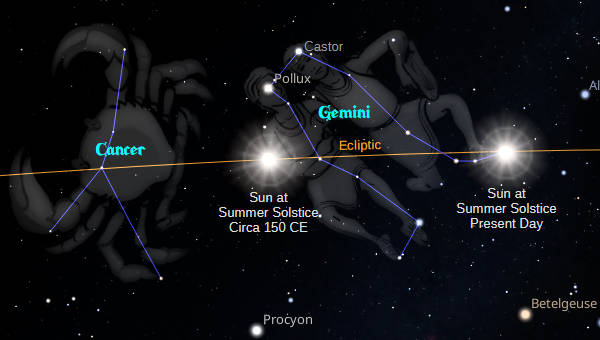
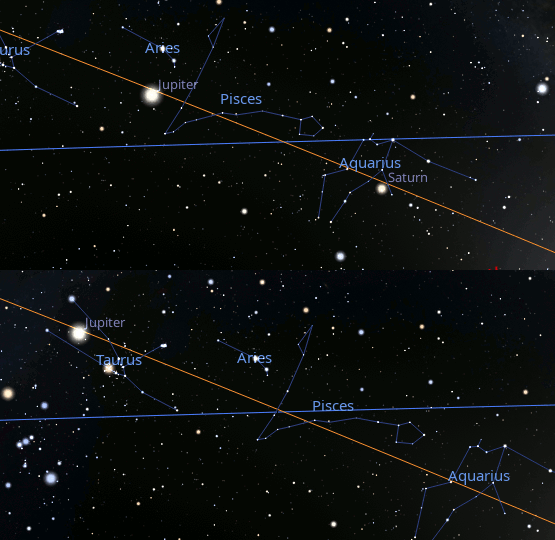
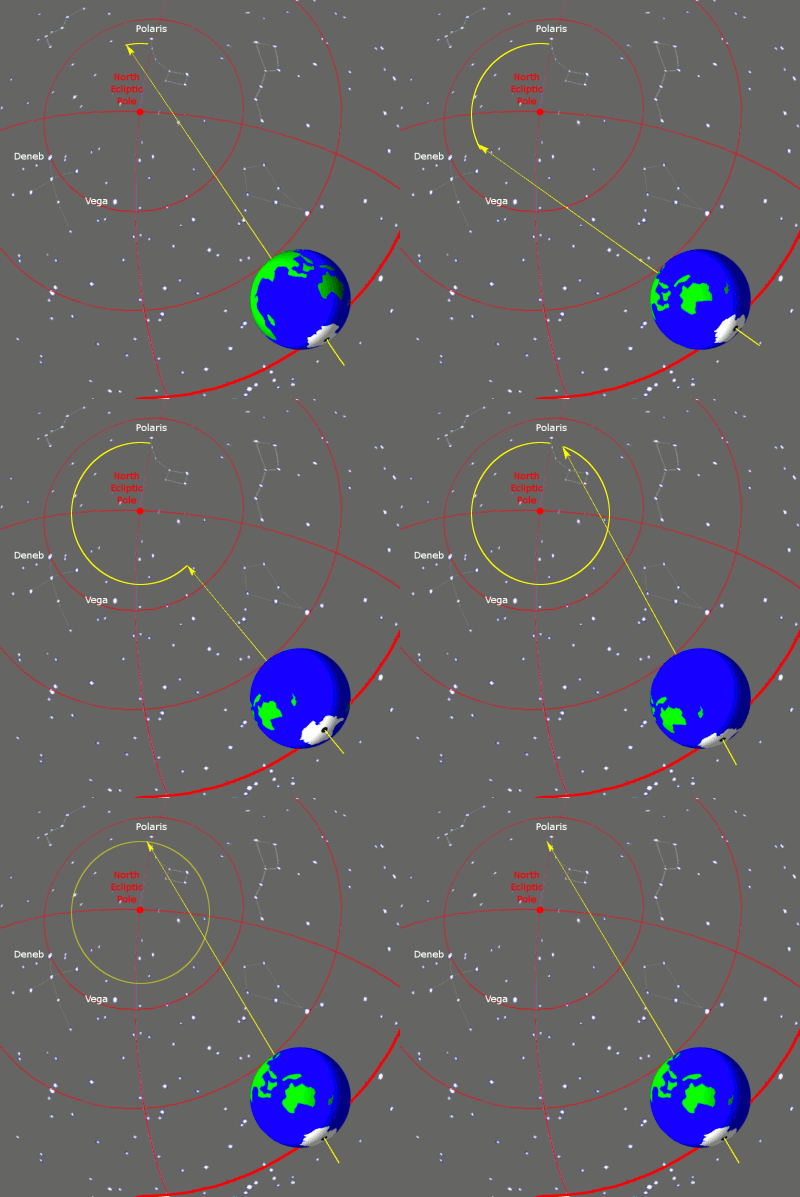
There’s a line on some globes and maps at approximately 23 1/2° north latitude called the Tropic of Cancer. It’s related to the constellation Cancer the crab. However, Cancer no longer fits that role that it was named to a couple of thousand years ago, when the sun entered the constellation of Cancer on the first day of summer. That’s the latitude on the Earth where the Sun was directly overhead on the first day of summer. Now that an honor goes to Gemini. The way we draw the figure of that constellation, the Sun is right near Castor’s big toe on the first day of summer. But I don’t think they’re going to change the name anytime soon. The reason for the change is that the Earth’s axis slowly wobbles like a top or gyroscope as they slow down. The effect is called precession.
The astronomical event times given in this blog are for the Traverse City/Interlochen area of Michigan (Lat 44.7° N, Long 85.7° W; EST, UT – 5 hours) unless stated otherwise. Times will be different for other locations.
Addendum
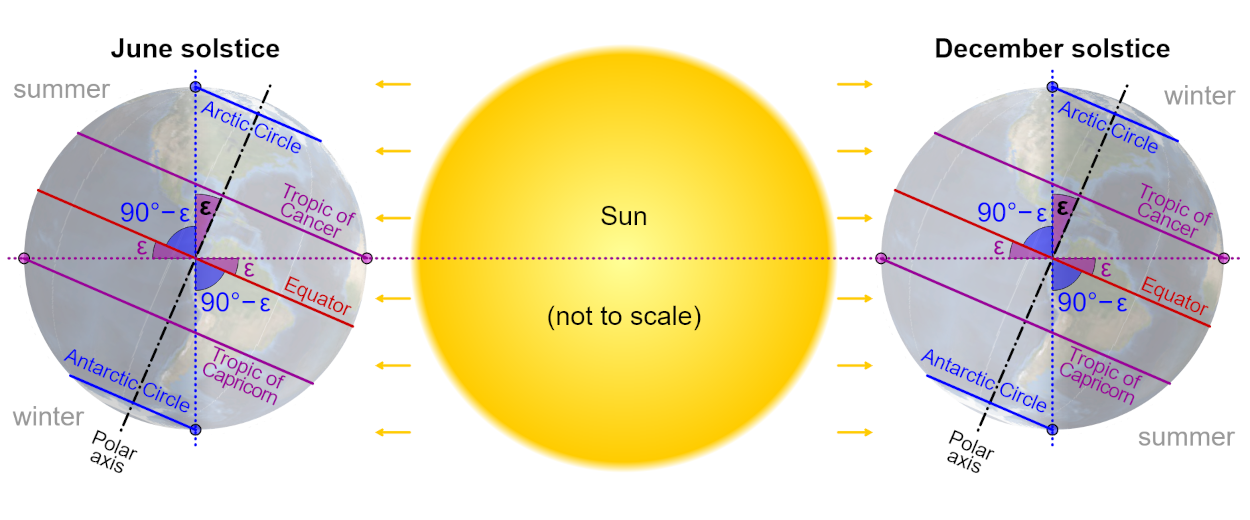
The Greek letter epsilon in the image above represents the tilt of the Earth’s axis of around 23.5°. Astronomers call it the obliquity of the ecliptic, the angle between the ecliptic and the celestial equator as seen in the illustration below.
Ephemeris: 03/10/2026 – Finding Cancer the crab
This is Ephemeris for Tuesday, March 10th. Today the Sun will be up for 11 hours and 38 minutes, setting at 7:42, and it will rise tomorrow at 8:02. The Moon, 1 day before last quarter, will rise at 3:50 tomorrow morning.
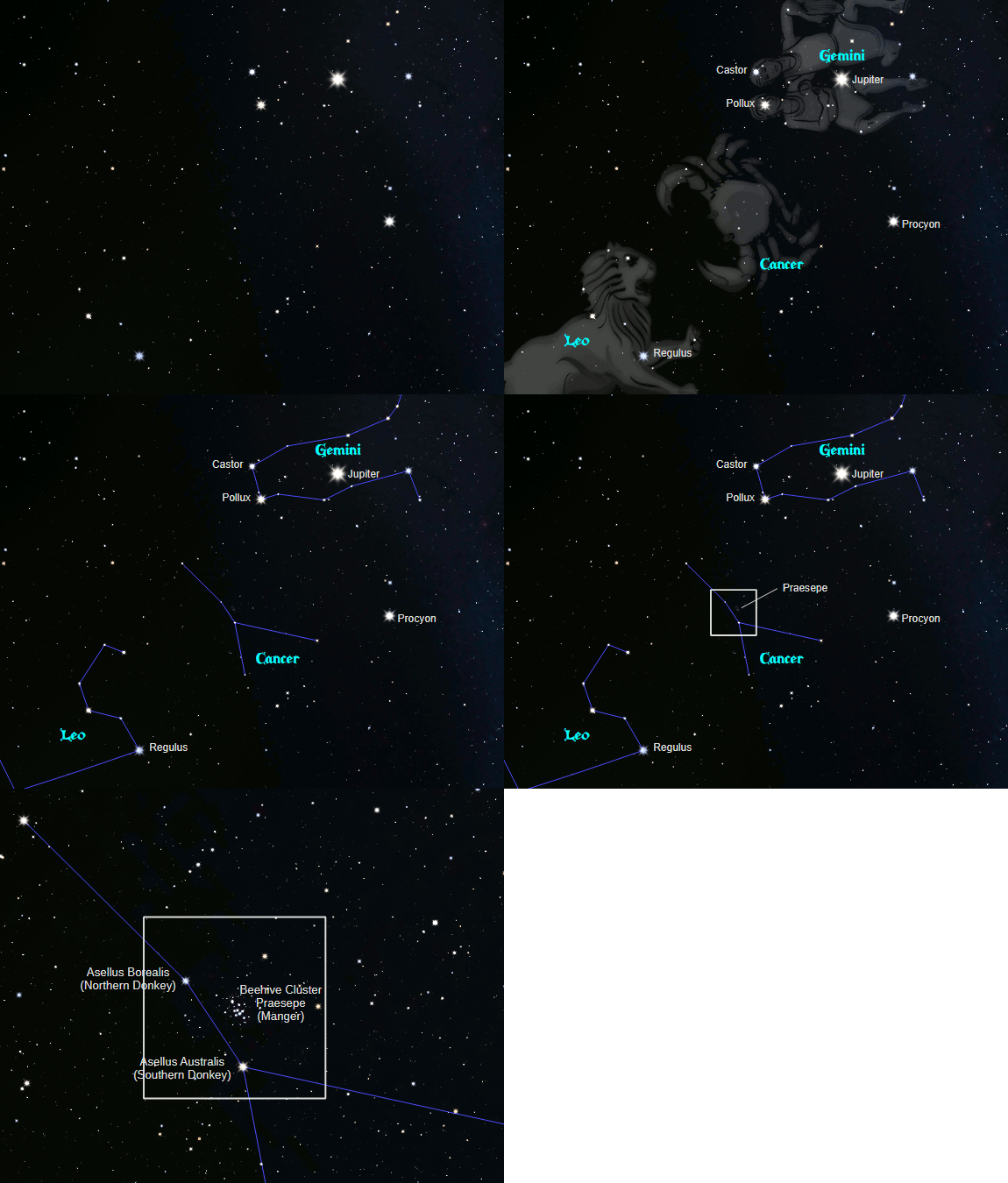
The constellation of Cancer the crab is made of dim stars, which are generally connected, in constellation charts, with lines that make either the letter K or an upside down Y. It lies directly between the star pair Castor and Pollux in Gemini and Regulus in Leo. In the center of the constellation is, what to the naked-eye is a fuzzy spot called Praesepe, or the manger. The two nearby stars, one above left, and one below left are Asellus Borealis, and Asellus Australis, the northern and southern donkey colts feeding out of the manger. Viewing that fuzzy spot with a pair of binoculars will reveal that it’s not fuzzy at all. It resolves into a cluster of stars, which astronomers, over the years, have called the Beehive cluster.
The astronomical event times given in this blog are for the Traverse City/Interlochen area of Michigan (Lat 44.7° N, Long 85.7° W; EST, UT – 5 hours) unless stated otherwise. Times will be different for other locations.
Addendum
 Bob Moler's Ephemeris Blog