Archive
11/24/2022 – Ephemeris – Finding Auriga the charioteer
This is Bob Moler with Ephemeris for Thanksgiving Day, Thursday, November 24th. Today the Sun will be up for 9 hours and 15 minutes, setting at 5:07, and it will rise tomorrow at 7:52. The Moon, 1 day past new, will set at 5:31 this evening.
The constellation Auriga the charioteer is halfway up the sky in the east northeast at 9 p.m. It is a pentagon of stars, with the brilliant star Capella at the upper left of its corners. Capella represents a mama goat he’s carrying. A narrow triangle of stars just right of Capella are her kids, that is her baby goats. The Kids is an informal constellation or asterism. The Milky Way runs through Auriga, but it’s not very bright here. We are looking away from the center of the Milky Way to the more sparse outer parts of our galaxy. Within and near that pentagon, one can sweep with binoculars and low power telescopes to find several star clusters, groups of hundreds of stars born in the clump we still see them in. These star clusters will appear as fuzzy spots in binoculars.
The astronomical event times given are for the Traverse City/Interlochen area of Michigan (EST, UT –5 hours). They may be different for your location.
Addendum
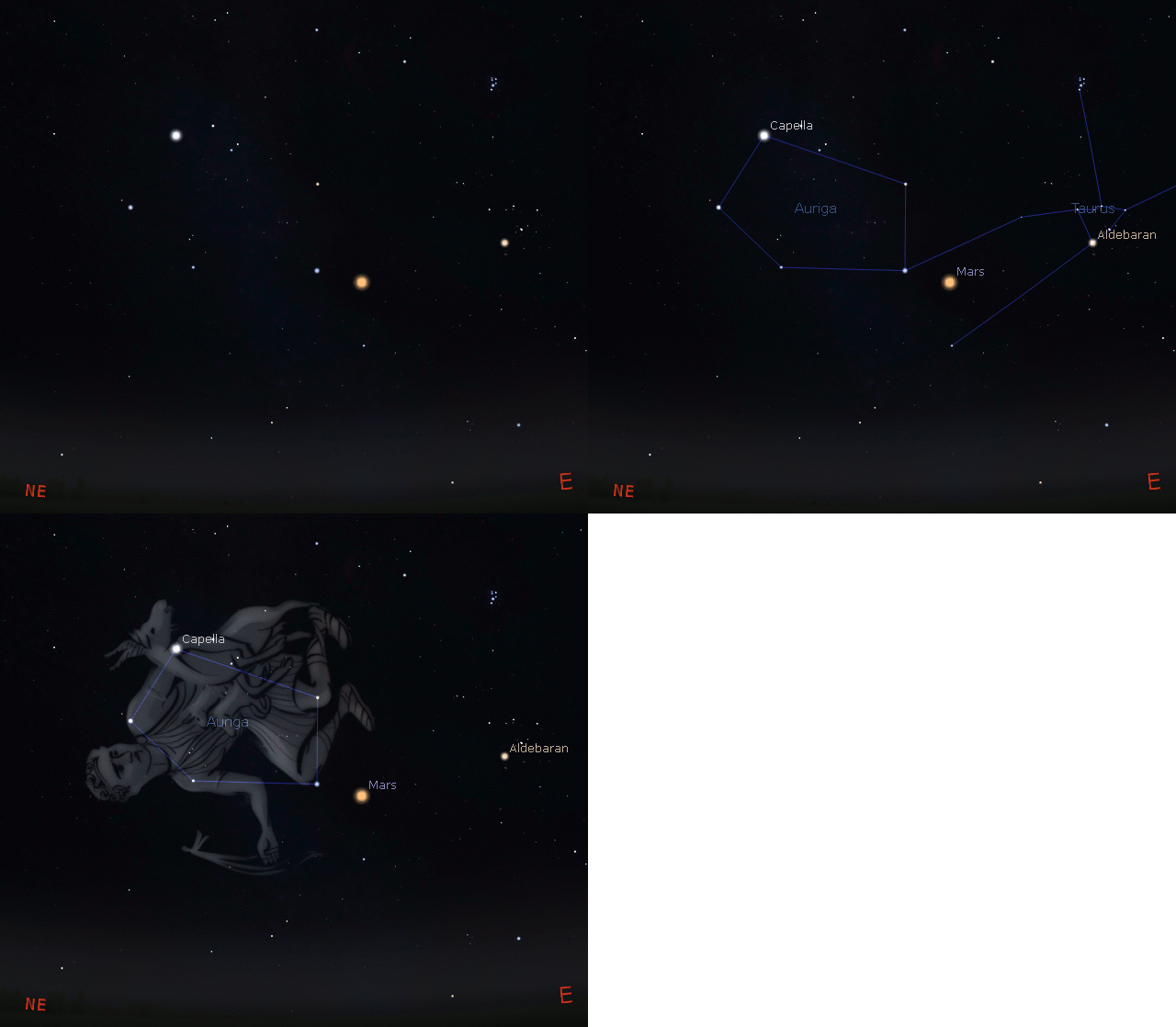
Auriga the charioteer finder animation. Mars is nearby between the horns of Taurus for the next week and a half as it works its way to the upper right. The Kids asterism is best seen in the frame without markings because the Capella label covers one of its stars. Created using Stellarium and GIMP.
11/22/2022 – Ephemeris – Finding Taurus the bull
This is Ephemeris for Tuesday, November 22nd. Today the Sun will be up for 9 hours and 19 minutes, setting at 5:08, and it will rise tomorrow at 7:50. The Moon, 1 day before new, will rise at 7:30 tomorrow morning.
Low in the east at 8 this evening and below the beautiful Pleiades star cluster is Taurus the bull. His face is a letter V shape of stars lying on its side, the star cluster Hyades, with the bright orange-red star Aldebaran at one tip of the V as its angry blood-shot eye, but actually about halfway between us and the cluster. The Pleiades star cluster is in his shoulder. Taurus is seen charging downward at that hour, the soon to rise constellation of Orion, with bright Mars near the horn tips. Taurus in Greek mythology was the form the god Zeus assumed when he carried off the maiden Europa. Europa’s still with him as the intriguing satellite completely covered by an ocean below its icy exterior, and orbiting Zeus’ Roman equivalent, the planet Jupiter.
The astronomical event times given are for the Traverse City/Interlochen area of Michigan (EST, UT -5 hours). They may be different for your location.
Addendum
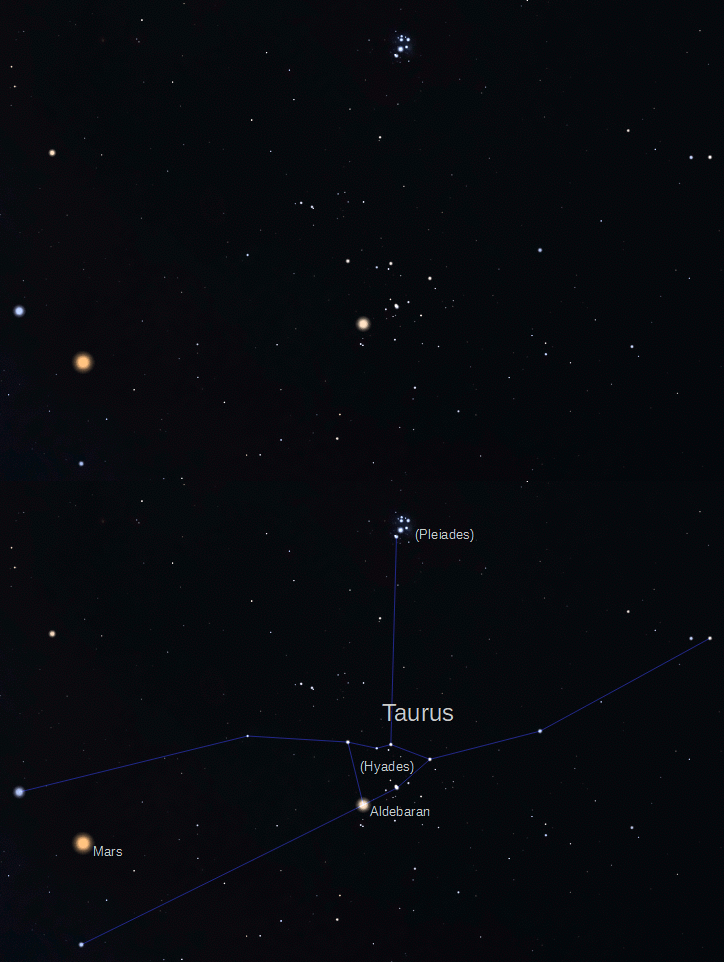
Taurus, Pleiades and Mars finder animation for 8:30 pm tonight, November 22, 2022. Mars is the interloper this year, seen between the horns of Taurus the Bull. The V of stars that make up the face of Taurus the bull is a star cluster of stars called the Hyades. In Greek mythology, they are the half-sisters of the Pleiades. Created using Stellarium, LibreOffice Draw, and GIMP.
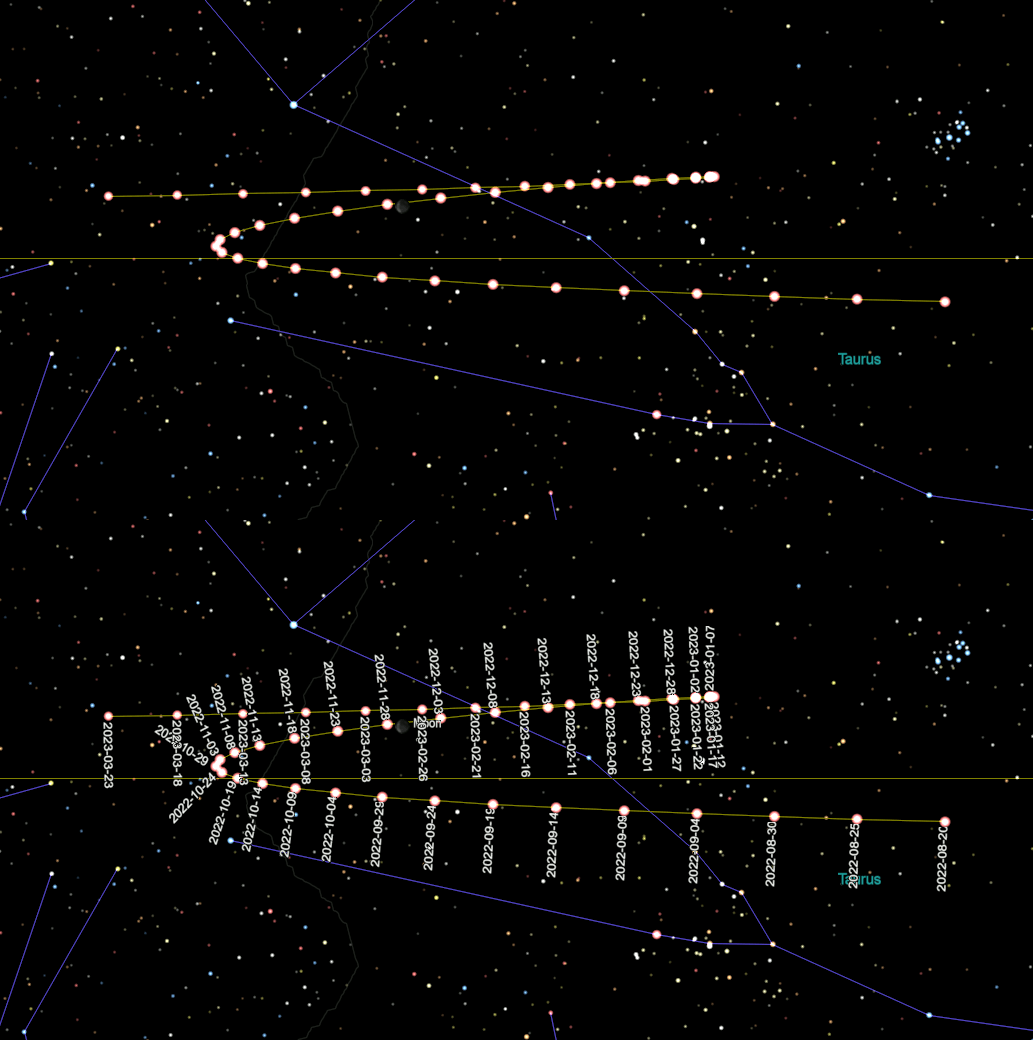
Mars retrograde path from October 29, 2022, to January 11, 2023, against the stars of Taurus the bull. It will be at opposition on December 7, and actually closest to the Earth on November 30 at 50.61 million miles or 81.45 million kilometers. In the upper right is the beautiful Pleiades star cluster, also known as the Seven Sisters. Below and right is the V shaped star cluster that represents the face of Taurus the bull, with the bright red star Aldebaran as the bull’s angry red eye. That V of stars is called the Hyades, who in mythology were the half sisters to the Pleiades. Created using Cartes du Ciel (Sky Charts) and GIMP.
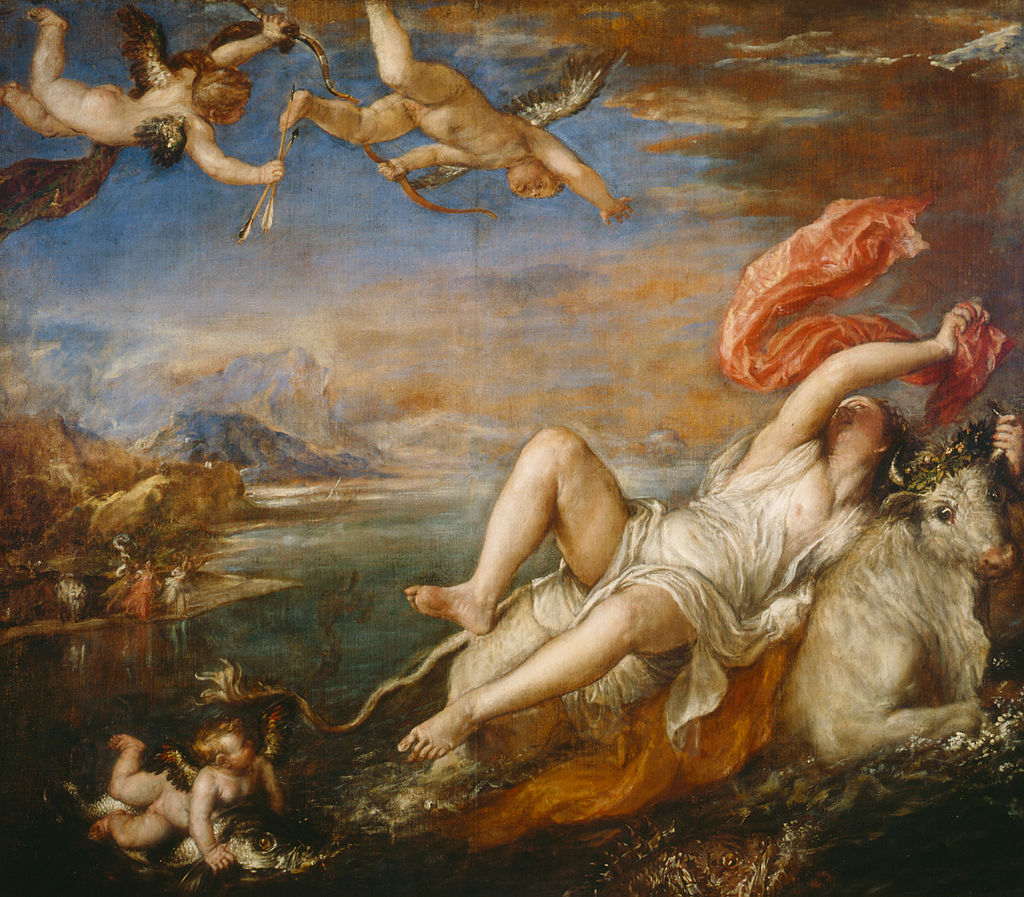
The Rape of Europa by Titian. According to the story, Zeus as a bull abducted Europa and swam to Crete, where she became the first queen of that island, and bore him three sons. Other paintings of this subject are by Rembrandt and de Troy. This painting belongs to the Isabella Stewart Gardener Museum in Boston, MA.
11/21/2022 – Ephemeris – The Pleiades or the Seven Sisters
This is Ephemeris for Monday, November 21st. Today the Sun will be up for 9 hours and 21 minutes, setting at 5:09, and it will rise tomorrow at 7:49. The Moon, 2 days before new, will rise at 6:10 tomorrow morning.
A marvelous member of the autumn skies can be found low in the east after 8 in the evening. It is the famous star cluster called the Pleiades or the Seven Sisters. I might also add the ‘Tiny Dipper’. Many people can spot a tiny dipper shape in its six or seven stars, and mistake it for the Little Dipper. With binoculars, one can see over a hundred stars appear, along with the dipper shape of the brightest. In photographs, the Pleiades actually contain wisps of the dust they are currently passing through. In Greek mythology, the sisters were daughters of the god Atlas. I’ll be revisiting the Pleiades several times this autumn, winter, and before they disappear in the west in evening twilight next spring.
The astronomical event times given are for the Traverse City/Interlochen area of Michigan (EST, UT – 5 hours). They may be different for your location.
Addendum
Pleiades finder animation for 8:30 pm tonight, November 21, 2022. Mars is the interloper this year, seen between the horns of Taurus the Bull. The V of stars that make up the face of Taurus the bull is a star cluster of stars called the Hyades. In Greek mythology, they are the half-sisters of the Pleiades. Created using Stellarium, LibreOffice Draw, and GIMP.
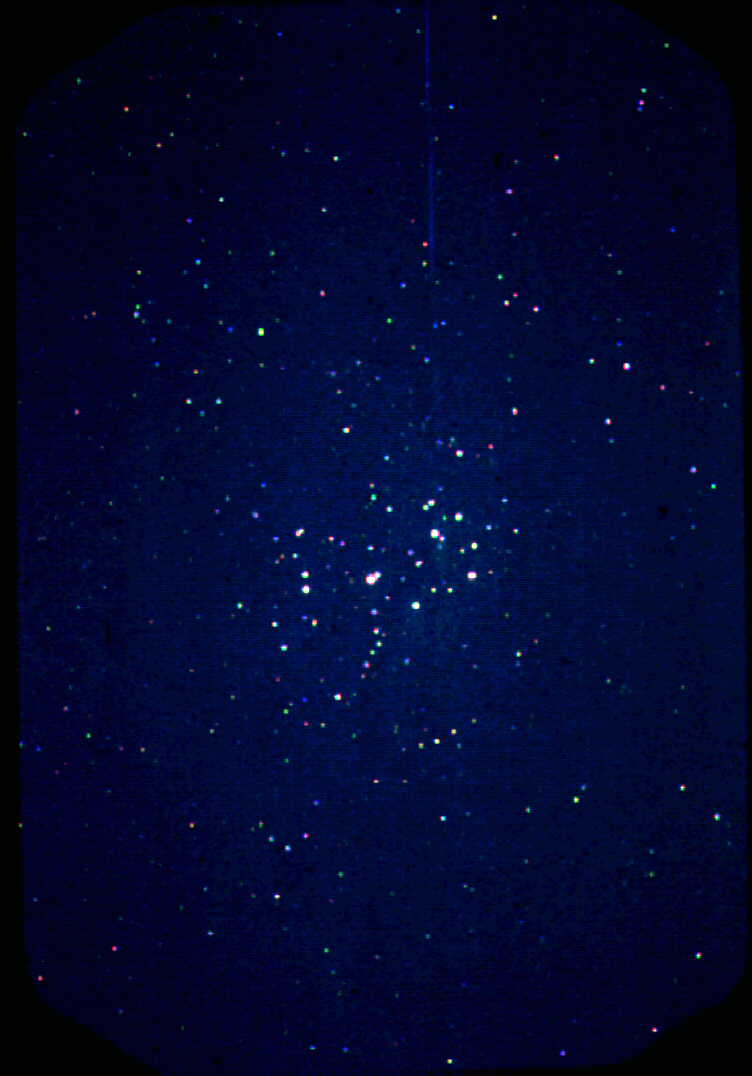
The Pleiades, about what you’d see in binoculars. To the naked eye, six or seven stars might be glimpsed. As star clusters go, it might seem small and unremarkable, but the Pleiades is nearby, and the brightest star cluster visible. Its stars are regarded by cultures around the world as female stars, generally sisters. Credit: Mine.
11/15/2022 – Ephemeris – Finding the constellation of Aquarius the water bearer
This is Ephemeris for Tuesday, November 15th. Today the Sun will be up for 9 hours and 34 minutes, setting at 5:14, and it will rise tomorrow at 7:41. The Moon, 1 day before last quarter, will rise at 11:13 this evening.
One of the constellations of the zodiac is in the southern sky at 8 in the evening, between Jupiter and Saturn. It’s the constellation of Aquarius, the water bearer. The image that is supposed to be depicted in the stars is that of a fellow spilling a stone jar of water. Aquarius is fairly hard to spot because it is made of faint stars. One part of him, though, is easy to spot. That is the Water Jar, an asterism or informal constellation. It is a distinctive small nearly equilateral triangle of stars with another star in the center. Stars extending to the right from the water jar are the yoke he’s holding the water jar with. The Water jar is above and centered on a line drawn between Jupiter and Saturn. The water is flowing down a line of stars to the lower left.
The astronomical event times given are for the Traverse City/Interlochen area of Michigan (EST, UT -5 hours). They may be different for your location.
Addendum
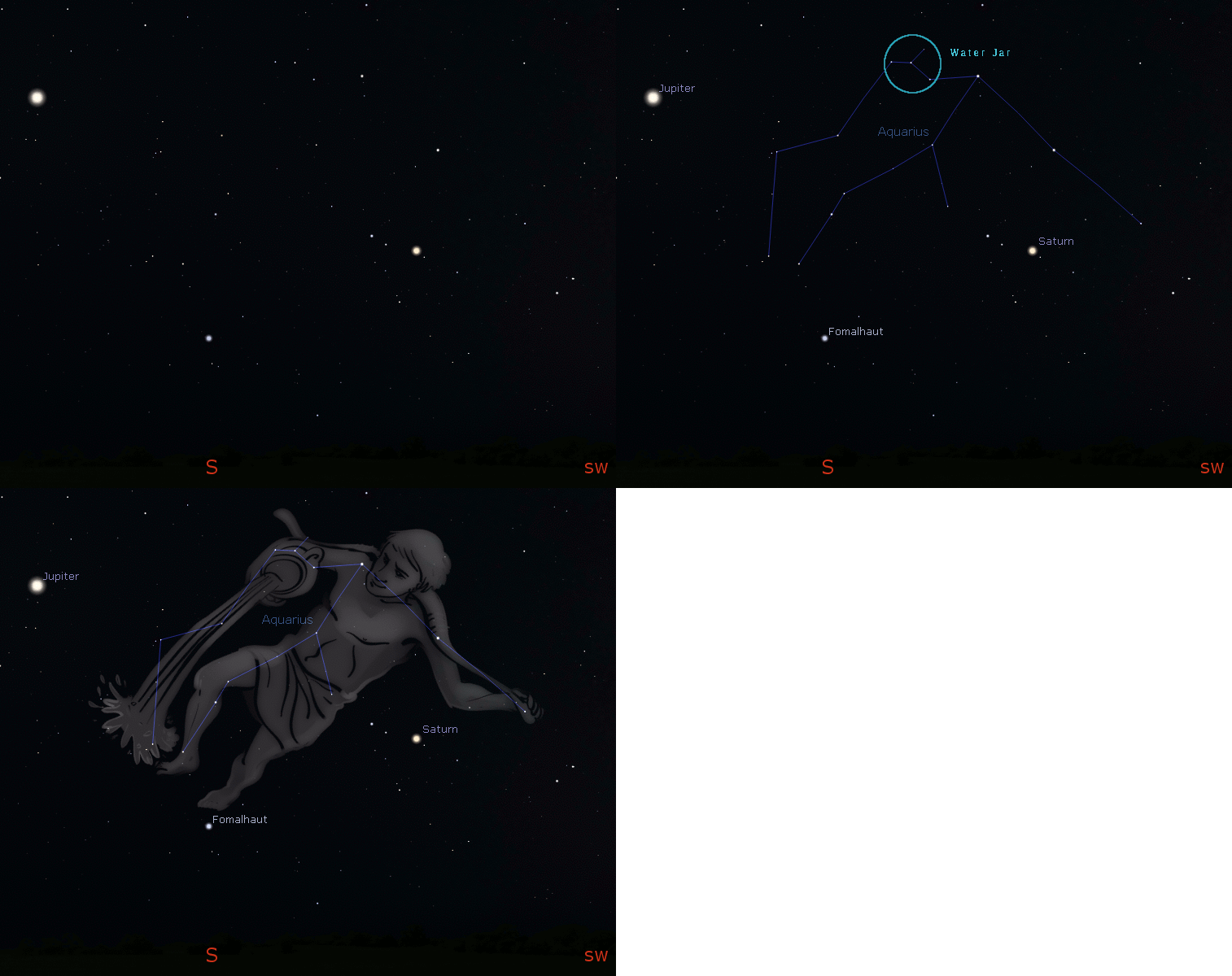
How to find Aquarius this autumn. It’s between Jupiter and Saturn. The image is set for 8 pm tonight, November 15, 2022. Created using Stellarium and GIMP.
11/04/2022 – Ephemeris – The GTAS meeting topic tonight is the history of the constellations
This is Ephemeris for Friday, November 4th. The Sun will rise at 8:24. It’ll be up for 10 hours and 2 minutes, setting at 6:27. The Moon, 3 days past first quarter, will set at 5:06 tomorrow morning.
Tonight at 8 pm, the Grand Traverse Astronomical Society (GTAS) will have their monthly meeting at Northwestern Michigan College’s Rogers Observatory. The meeting will also be available via Zoom. The program will be presented by Becky Shaw. Her presentation will be The History of the Constellations. From time immemorial, people have looked at the night sky and tried to give meaning to the random scattering of stars on the dome of the sky. The official constellations of the International Astronomical Union in most cases date back to the Babylonians, and Greeks. If it’s clear, there will be a star party following the meeting. The observatory is located south of Traverse City off Birmley Road, between Garfield and Keystone roads. A Zoom link will be available at gtastro.org before the meeting. All are welcome.
The astronomical event times given are for the Traverse City/Interlochen area of Michigan (EDT, UT – 4 hours). They may be different for your location.
Addendum
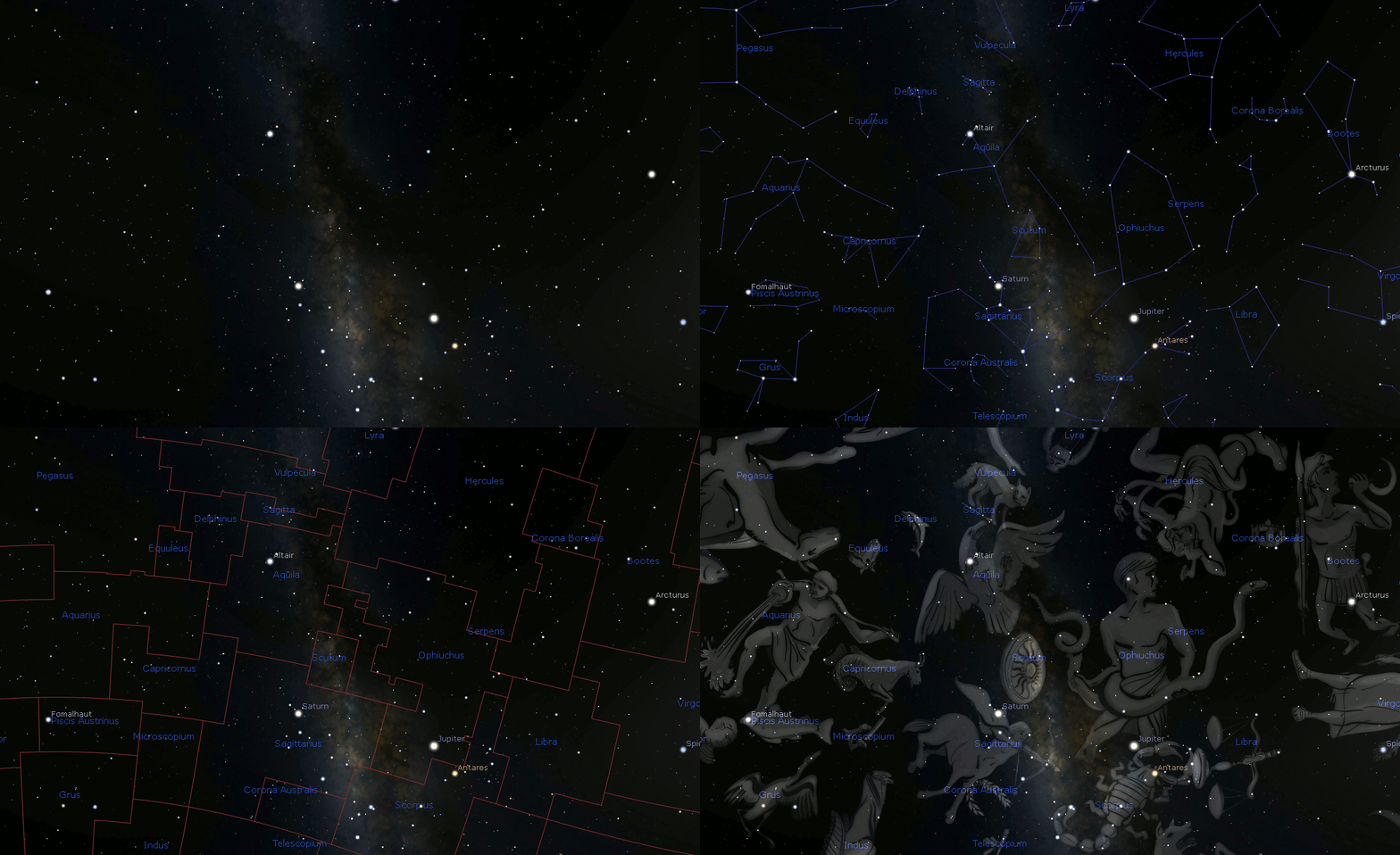
Summer Constellations showing stars, lines, boundaries, and figures in succession. Click on the image to enlarge it and be able to read the labels. This image shows the stars and planets three years ago in 2019, when Jupiter and Saturn were seen against the summer constellations. Slow poke Saturn has moved into eastern Capricornus. Jupiter is just off the left of the image in Pisces. The head of one of the fish is seen there. Created using Stellarium and GIMP.
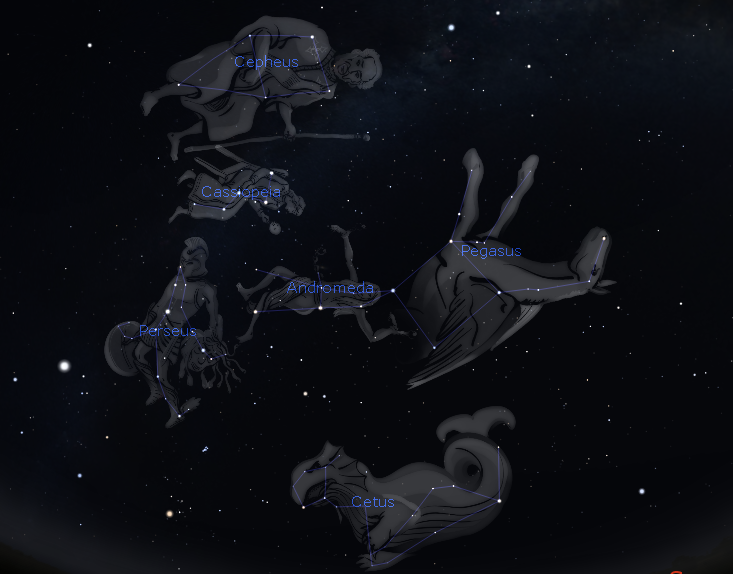
The constellations of the great star story of autumn. Looking southeast on October 31 at 10 p.m. Not all the constellations in this area are shown. Created using Stellarium.
10/24/2022 – Ephemeris – Finding Pisces the fish
This is Bob Moler with Ephemeris for Monday, October 24th. Today the Sun will be up for 10 hours and 33 minutes, setting at 6:43, and it will rise tomorrow at 8:11. The Moon, 1 day before new, will rise at 8:18 tomorrow morning.
High in the southeast at 9 p.m. are the four bright stars of the Great Square of Pegasus, the upside down flying horse. Lying along the left and bottom sides of the great square is the constellation of Pisces the fish, one of the constellations of the Zodiac that lie along the path of the Sun, Moon and planets. Even though the constellation is called the fish, the fish themselves are not well represented in the stars. What can be traced in the stars is the rope, that’s tied to their tails, anchored at the extreme southeastern part of the constellation. The right or western end of Pisces is the asterism, or informal constellation, of the Circlet. A loop of 5 stars, the rope around the tail of one of the fish, or the fish itself. Jupiter is seen against the stars of Pisces in the evening, the rest of this and early next year.
The astronomical event times given are for the Traverse City/Interlochen area of Michigan (EDT, UT – 4 hours). They may be different for your location.
Addendum
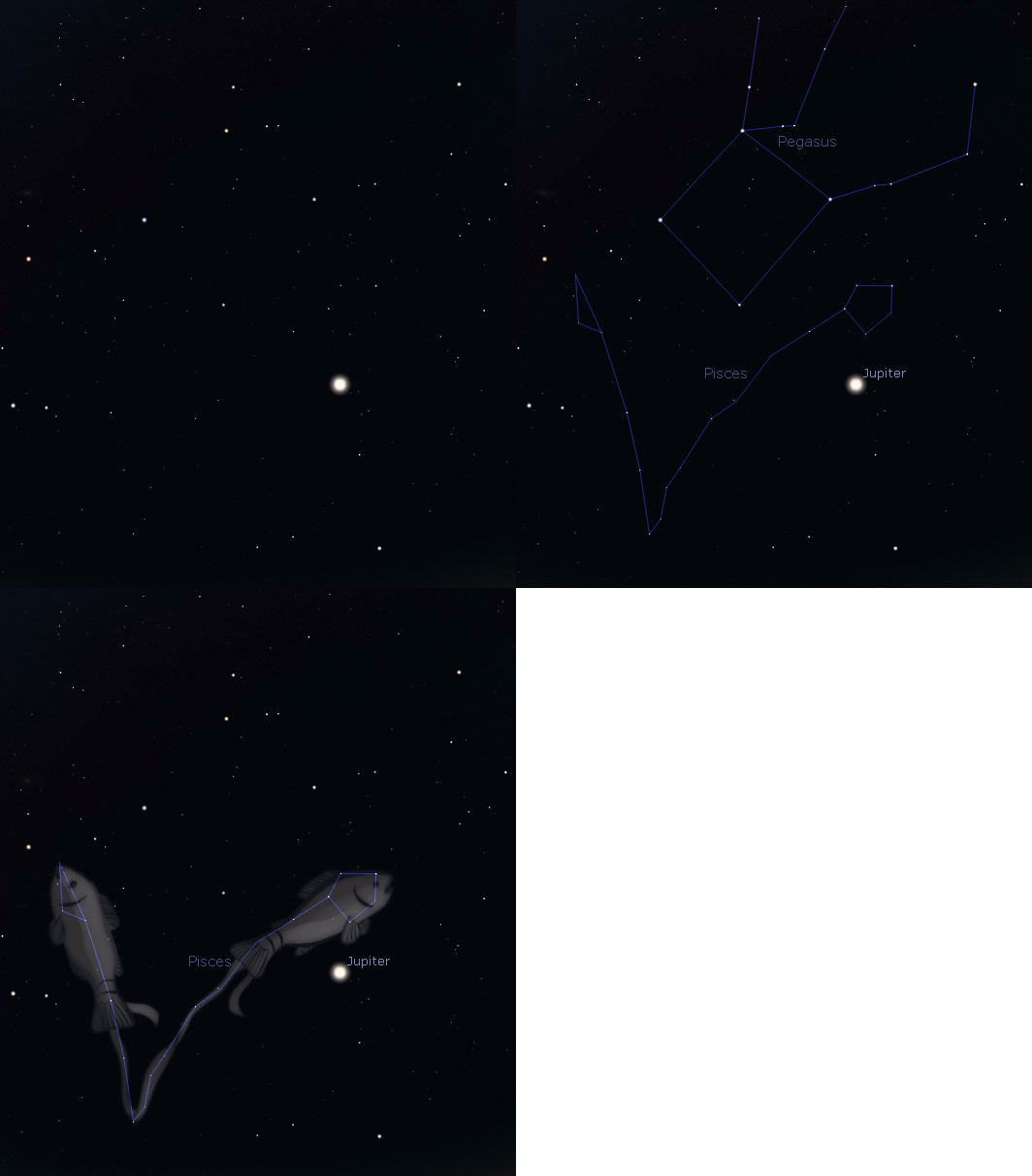
Pisces finder animation looking south-southeast with Jupiter at 9 pm tonight, October 24, 2022. Created using Stellarium and GIMP.
10/17/022 – Ephemeris – Andromeda, damsel in distress
This is Ephemeris for Monday, October 17th. Today the Sun will be up for 10 hours and 53 minutes, setting at 6:54, and it will rise tomorrow at 8:02. The Moon, at last quarter today, will rise at 12:18 tomorrow morning
In the east at 9 this evening can be found a large square of stars, the Great Square of Pegasus the upside down flying horse. The square is standing on one corner. What looks like its hind legs stretching to the left from the left corner star is another constellation, Andromeda the chained princess. She is seen in the sky as two nearly horizontal but diverging curved strings of stars that curve upward. She was doomed due to her mother, Queen Cassiopeia’s boasting, which angered the god Poseidon. She was rescued by the hero Perseus, a nearby constellation, riding his steed Pegasus. Andromeda’s claim to scientific fame is the large galaxy seen as a faint fuzzy spot with the naked-eye just above the upper line of stars. The Great Andromeda Galaxy is two and a half million light years away.
The astronomical event times given are for the Traverse City/Interlochen area of Michigan (EDT, UT – 4 hours). They may be different for your location.
Addendum
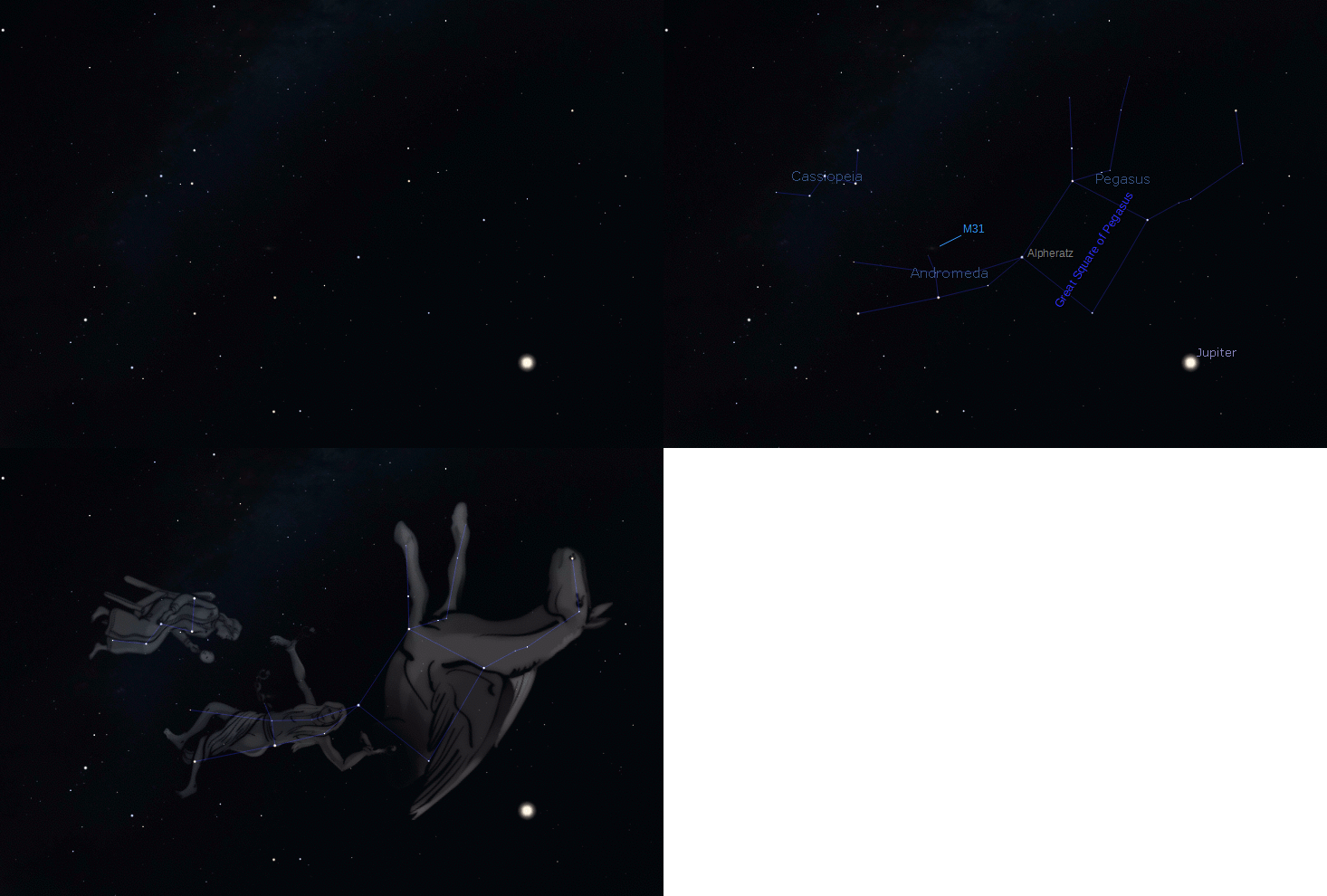
Andromeda finder animation looking east at 9 pm tonight, October 17, 2022. The left corner star of the Great Square of Pegasus is called Alpheratz, and actually belongs to Andromeda. The faint fuzzy spot labeled M31 is the Great Andromeda Galaxy, the Milky Way’s large neighbor. I’ll talk more about it tomorrow. Click on the image to enlarge it. Created using Stellarium and GIMP.
I’ve related Andromeda’s story in my post The Great Star Story of Autumn.
09/27/2022 – Ephemeris – Finding the constellation of Perseus the hero
This is Ephemeris for Tuesday, September 27th. Today the Sun will be up for 11 hours and 54 minutes, setting at 7:30, and it will rise tomorrow at 7:37. The Moon, 2 days past new, will set at 8:28 this evening.
Close to the horizon, but rising in the northeast in the evening, is the constellation of Perseus the Greek hero, holding as his prize the severed head of Medusa. To me, the stars don’t seem to match the figure in the stars. It’s either the Greek letter pi (π) tilted to the left or the cartoon roadrunner running up the sky. Perseus’ brightest star is Mirfak in the middle of the top of the letter π, or back of the roadrunner. Using a pair of binoculars to look towards Mirfak, one can see many more stars, just below naked eye visibility near it. It’s a very loose star cluster called the Alpha (α) Persei Association, α Persei being a catalog designation for Mirfak. And Mirfak is actually in the association. Unlike some bright stars, who are just foreground stars.
The astronomical event times given are for the Traverse City/Interlochen area of Michigan (EDT, UT – 4 hours). They may be different for your location.
Addendum
For my take on the mythology featuring Perseus, see The Great Star Story of Autumn. It’s way too long for my short radio program. For Hollywood’s treatment of the story, see Clash of the Titans.
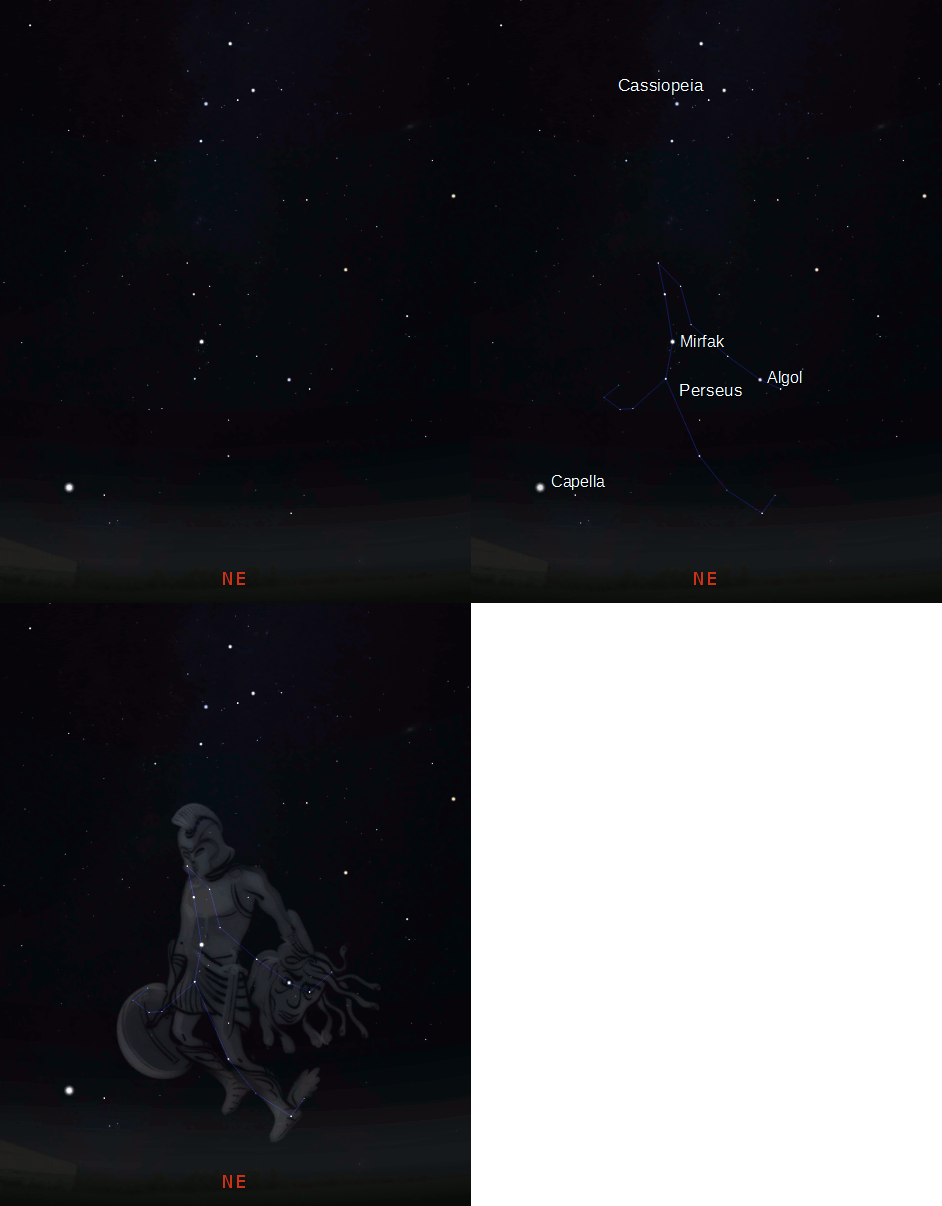
Perseus finder using the animated GIF to show the star field, constellation lines and names, and Perseus as art. Cassiopeia is included as a means to find the dimmer Perseus below it on autumn evenings. Algol, another important star and the second-brightest star of Perseus, is also labeled. I normally cover it around Halloween, but if you can’t wait, type Algol in the search box at the upper right. Created using Stellarium, LibreOffice Draw, and GIMP.
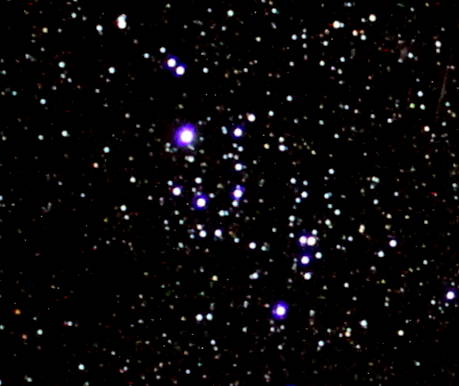
The Alpha Persei Association. The brightest star is Mirfak (Alpha Persei). This is a small section of a photograph taken February 18, 2017, Canon EOS Rebel T5, 121 seconds, f/3.5, 18 mm fl., ISO 3200. Credit Bob Moler.
09/20/2022 – Ephemeris – Finding the constellation of Pegasus the flying horse
This is Ephemeris for Tuesday, September 20th. Today the Sun will be up for 12 hours and 16 minutes, setting at 7:43, and it will rise tomorrow at 7:28. The Moon, 3 days past last quarter, will rise at 2:33 tomorrow morning.
Rising about a third of the way up the sky in the east as it gets dark around 9 pm can be found one of the great autumn constellations: Pegasus the flying horse of Greek myth. Its most visible feature is a large square of four stars, now standing on one corner. This feature, called the Great Square of Pegasus, represents the front part of the horse’s body. The horse is quite aerobatic, because it is seen flying upside down. Remembering that fact, the neck and head is a bent line of stars emanating from the right corner star of the square. Its front legs can be seen in a gallop extending to the upper right from the top star of the square. From the left star extend, not hind legs but the constellation of Andromeda, the princess rescued with the help of Pegasus.
The astronomical event times given are for the Traverse City/Interlochen area of Michigan (EDT, UT – 4 hours). They may be different for your location.
Addendum
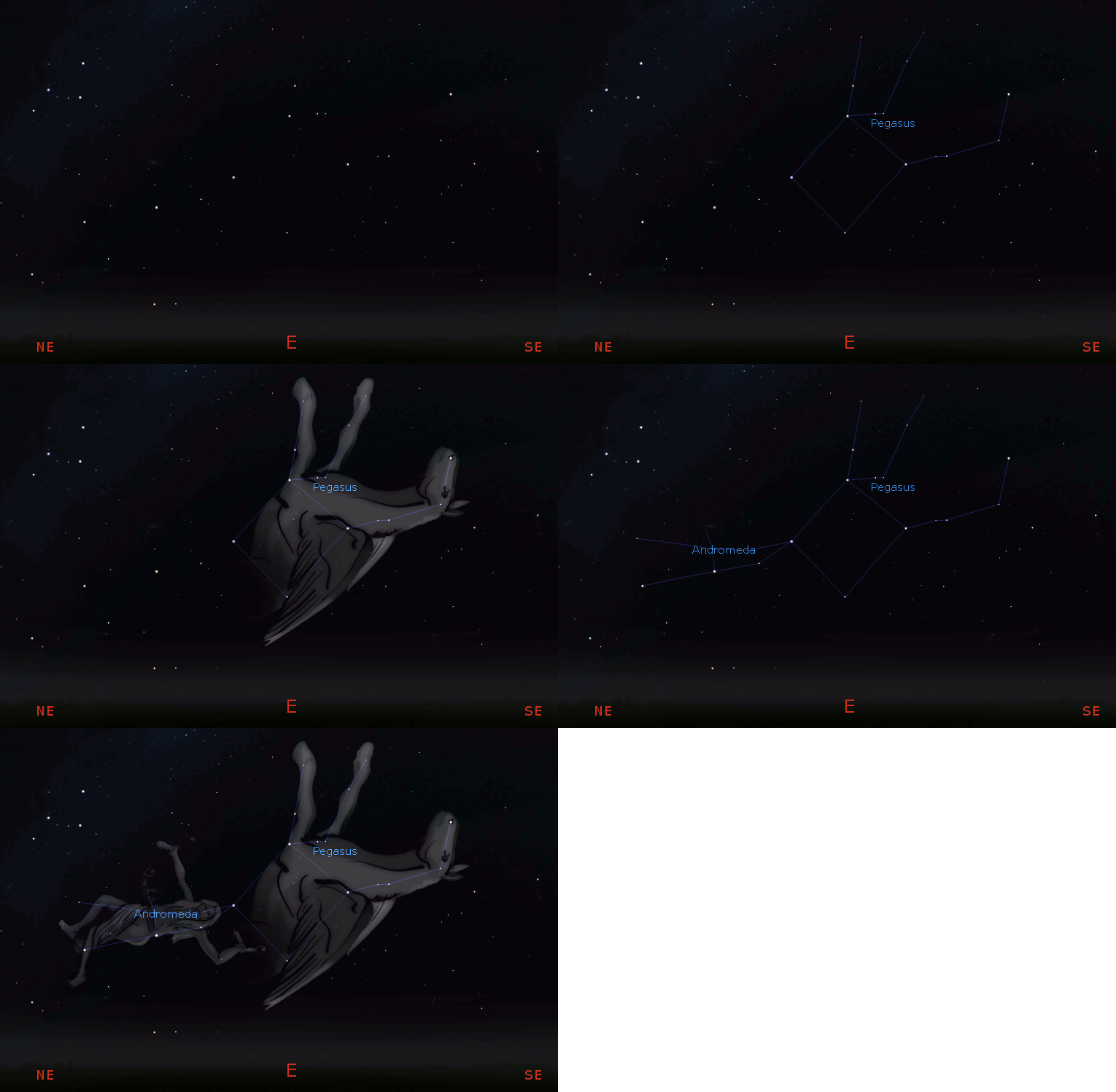
Pegasus & Andromeda animated finder chart for 9 pm in mid-September. To the upper left are most of the stars of the “W” shape of Cassiopeia the queen, Andromeda’s mother. Created using Stellarium and GIMP.
Pegasus, Andromeda and Cassiopeia plus other constellations are characters in the great star story of autumn which I relate here.
09/19/2022 – Ephemeris – Finding the constellation Cepheus
This is Ephemeris for Monday, September 19th. Today the Sun will be up for 12 hours and 19 minutes, setting at 7:45, and it will rise tomorrow at 7:27. The Moon, 2 days past last quarter, will rise at 1:30 tomorrow morning.
There’s a faint constellation in the northeast above the W shaped constellation of Cassiopeia. It’s a nearly upside down church steeple of a constellation called Cepheus the king, and husband of queen Cassiopeia. Cepheus’ claim to modern astronomical fame is that one of its stars, Delta (δ) Cephei, is the archetype for the important Cepheid variable stars. Delta is the bottom most of a trio of stars at the right corner of the constellation. In the early 20th century, Henrietta Leavitt discovered that Cepheids in the nearby galaxy the Large Magellanic Cloud varied in brightness with a period that was related to their average brightness. This meant that Cepheids could be used as standard candles to measure the great distances to other galaxies.
The astronomical event times given are for the Traverse City/Interlochen area of Michigan (EDT, UT – 4 hours). They may be different for your location.
Addendum
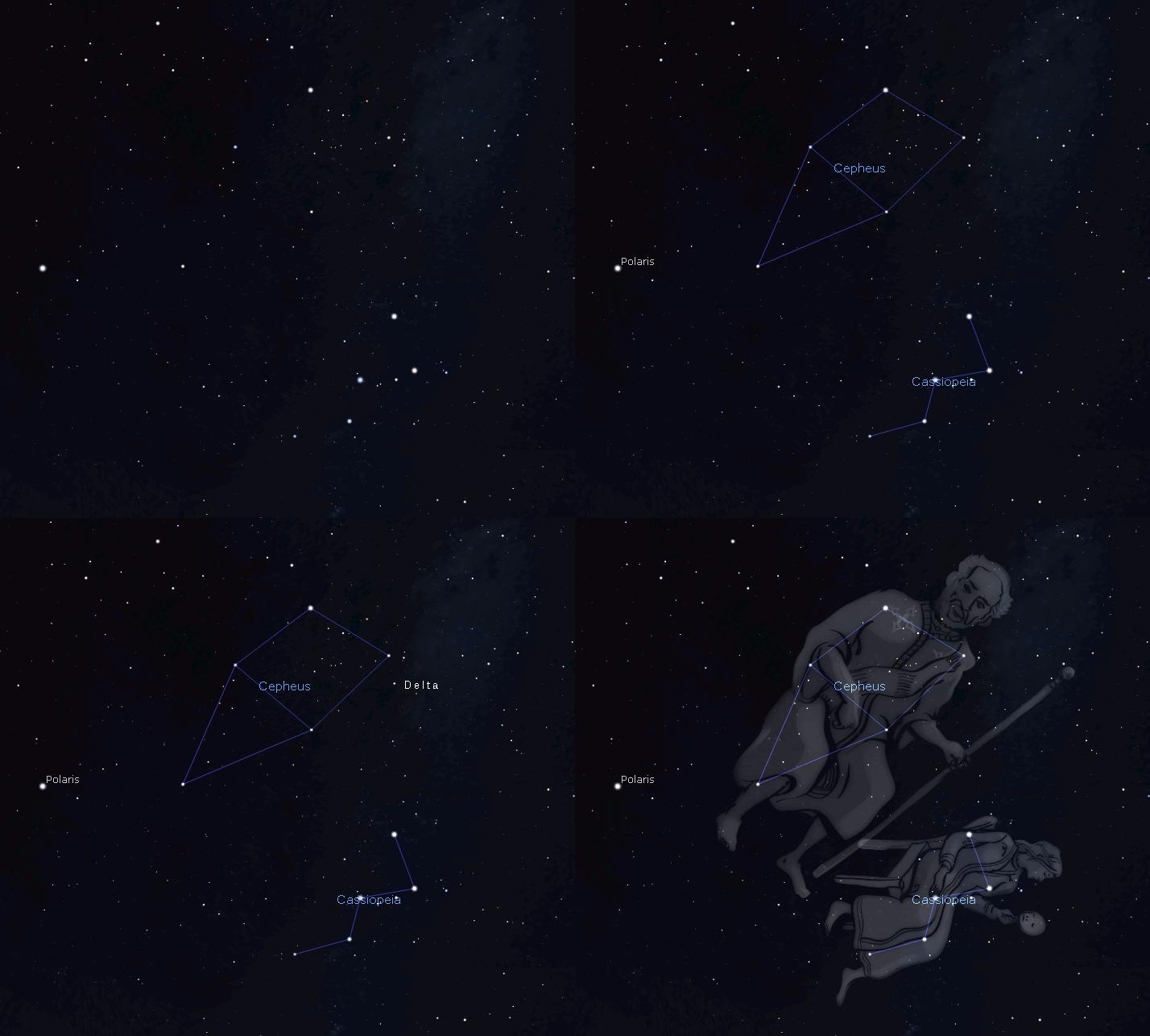
Cassiopeia and Cepheus finder animation looking in the northeast at 9 pm or about an hour after sunset in mid-September. Also labeled is Delta (δ) Cephei. Created using Stellarium and GIMP.
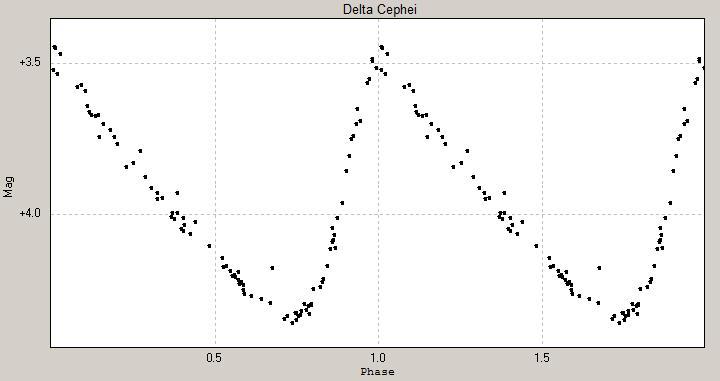
Light Curve of Delta Cephei. The pulsation period is 5.367 days. Note the Magnitude vertical axis, the lower the magnitude the brighter the star is. Blame that on the Greek astronomer Hipparchus, 2nd century BC. It’s like golf scores; the lower the score, the better the golfer, and for magnitudes, the brighter the star. Credit: Thomas K Vbg – Own work, CC BY-SA 3.0, https://commons.wikimedia.org/w/index.php?curid=13887639.
 Bob Moler's Ephemeris Blog