Archive
11/09/2017 – Ephemeris – Cassiopeia the queen and her husband
Ephemeris for Thursday, November 9th. The Sun will rise at 7:31. It’ll be up for 9 hours and 49 minutes, setting at 5:20. The Moon, 1 day before last quarter, will rise at 10:59 this evening.
The stars of the autumn skies hold forth now, but one prominent autumn constellation never leaves us, here in northern Michigan. Look high in the northeastern sky by 8 p.m. and you can find the W shaped constellation of Cassiopeia the queen. It is opposite the pole star Polaris from the Big Dipper, slinking low in the north-northwest. There’s a dim star that appears above the middle star of the W which turns the W into a very crooked backed chair. Above and left of Cassiopeia is a dim upside down church steeple shaped constellation of Cepheus the king. The Milky Way flows through a corner of Cepheus and Cassiopeia toward the northeastern horizon and through the constellation of Perseus the hero, and the bright star Capella in Auriga the Charioteer.
The times given are for the Traverse City/Interlochen area of Michigan. They may be different for your location.
Addendum
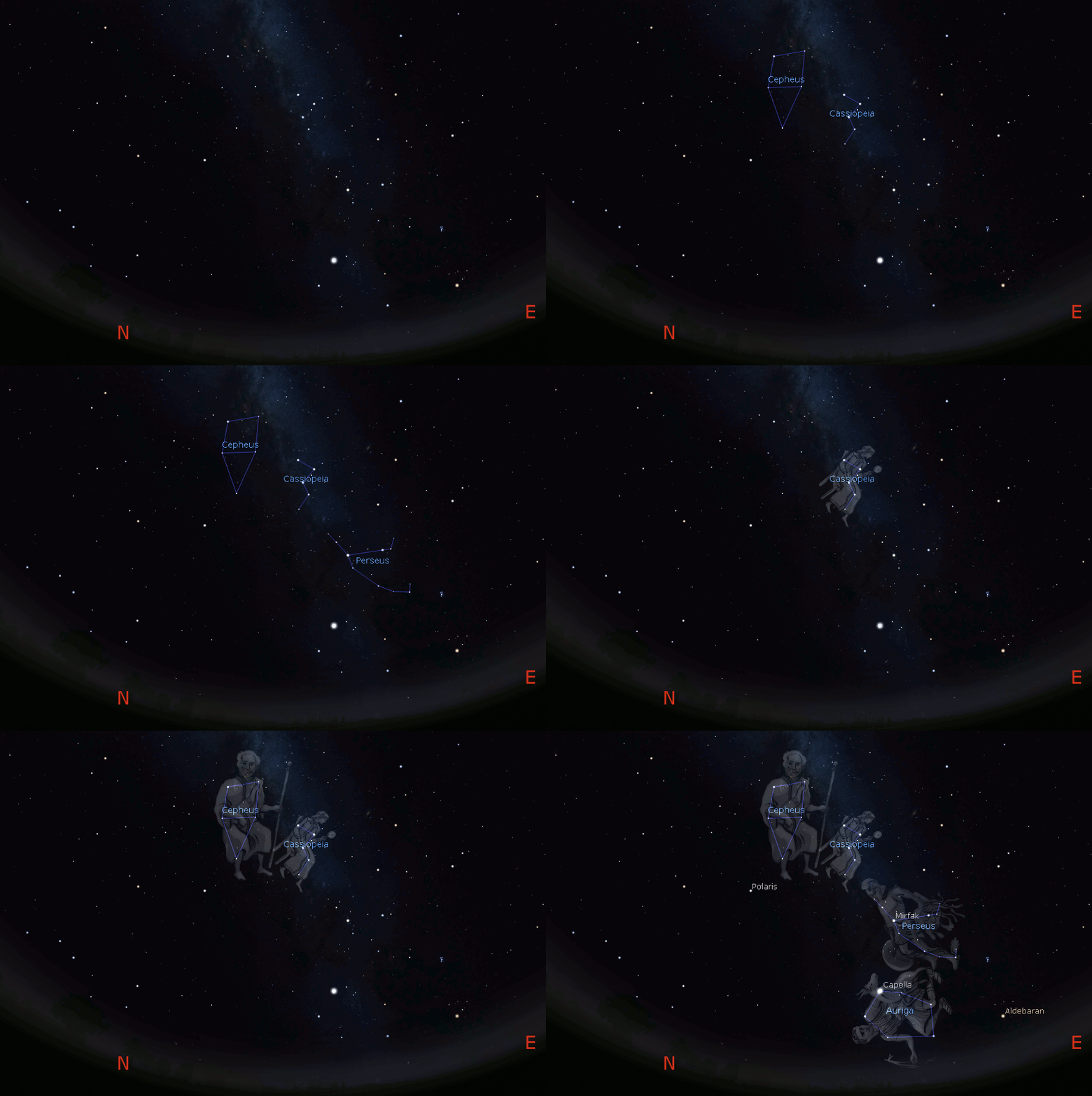
Cassiopeia and constellations along the Milky Way in the northeast these autumn evenings. (8 p.m. November 9, 2017). Click on image to enlarge. Created using Stellarium and GIMP.
11/07/2017 – Ephemeris – The autumn constellations are all visible in the early evening
Ephemeris for Election Day for some folks, Tuesday, November 7th. The Sun will rise at 7:28. It’ll be up for 9 hours and 54 minutes, setting at 5:23. The Moon, 3 days before last quarter, will rise at 8:49 this evening.
We’ll have about an hour and a half of reasonably dark skies between 6:30 and nearly 9 p.m. – At 8 p.m. all the autumn constellations are visible. The Zodiacal constellations from Capricornus in the southwest through Aquarius, Pisces and Aries, all relatively faint to Taurus rising in the east northeast. Pegasus the flying horse is seen in the high south-southeast. It and the connected constellation of Andromeda the chained princess are seen above Aquarius through Aries. The bright star Fomalhaut holds a lonely vigil low in the south, High in the northeast is the W shaped constellation of Cassiopeia the queen, under which is Perseus, her son-in-law and hero down to the bright star Capella.
The times given are for the Traverse City/Interlochen area of Michigan. They may be different for your location.
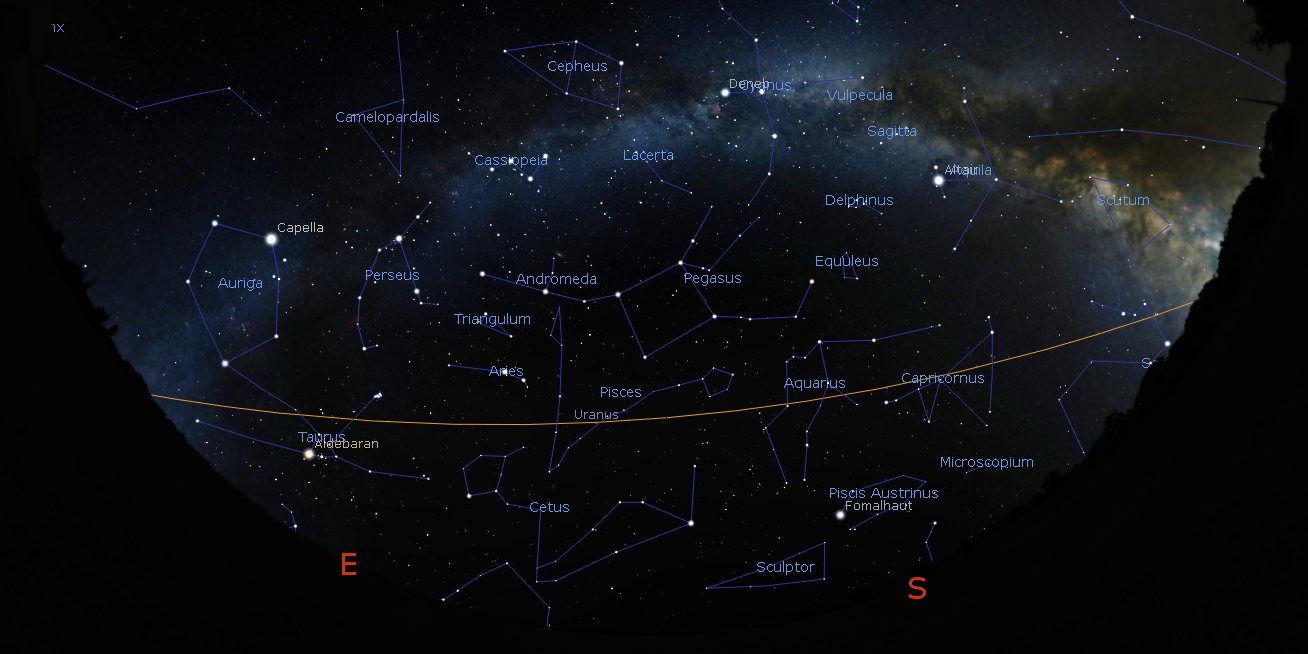
The sky at 8 p.m. November 7, 2017 showing the autumn constellations, centered on the southeastern sky. Click on the image to enlarge. The Milky Way has been brightened to show its passage through Perseus better. The red line is the ecliptic, the path of the Sun through the Zodiac. Created using Stellarium.
Addendum
11/06/2017 – Ephemeris – Taurus’ angry red eye, Aldebaran
Ephemeris for Monday, November 6th. The Sun will rise at 7:27. It’ll be up for 9 hours and 57 minutes, setting at 5:24. The Moon, 3 days past full, will rise at 7:52 this evening.
Last night the Moon passed in front of or occulted the bright star Aldebaran. Above right of Moon tonight is Aldebaran the bright orange star with a V shape of other stars in the face of Taurus the bull. Aldebaran appears at the lower left tip of that letter V laying on it’s side. With the bright Moon, it might take binoculars to pull out the faint stars of the V. Aldebaran isn’t actually part of the group, called the Hyades star cluster. The cluster is about 153 light years away, while Aldebaran is 65 light years away. The star has an orange hue because its surface is cooler than the Sun’s. However Aldebaran is 44 times larger in diameter, and shines 425 times brighter than the Sun. The name Aldebaran means “Follower” because it follows the Pleiades star cluster above it.
The times given are for the Traverse City/Interlochen area of Michigan. They may be different for your location.
Addendum
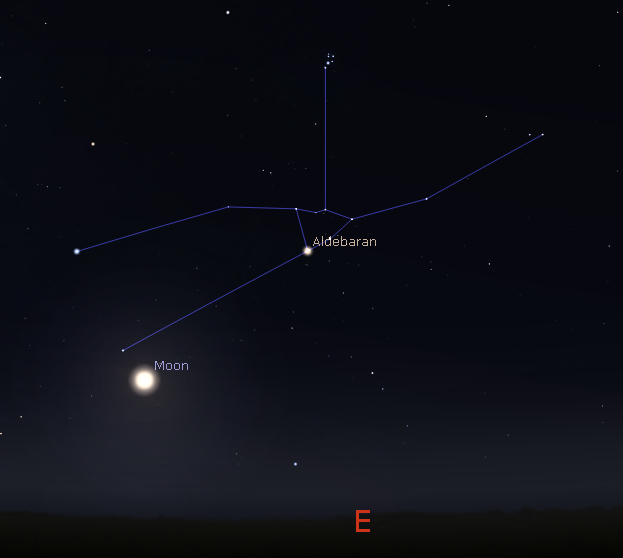
Aldebaran in the Hyades (unlabeled), with also the Pleiades, unlabeled, at the top and the Moon. at 9 p.m., November 6, 2017. Created using Stellarium.
10/30/2017 – Ephemeris – Halloween preview: The Ghoul Star
Ephemeris for Monday, October 30th. The Sun will rise at 8:17. It’ll be up for 10 hours and 15 minutes, setting at 6:33. The Moon, 3 days past first quarter, will set at 3:50 tomorrow morning.
Tomorrow night is the spookiest night of the year, so lets preview the spookiest star of all. It’s Algol, from Ghoul Star or Demon Star. The Chinese had a name for it that meant ‘piled up corpses’. It’s the second brightest star in the constellation Perseus the hero, rising in the northeast this evening. The star is located where artists have drawn the severed head of Medusa, whom he had slain. Medusa was so ugly that she turned all who gazed upon her to stone. Algol is her still glittering eye. Astronomers finally found out what was wrong with Algol. It does a slow 6 hour wink every two days 21 hours, because it is two stars that eclipse each other. It began to dip this morning just before sunrise and it will again centered on 11:41 p.m. Friday night.
The times given are for the Traverse City/Interlochen area of Michigan. They may be different for your location.
Addendum
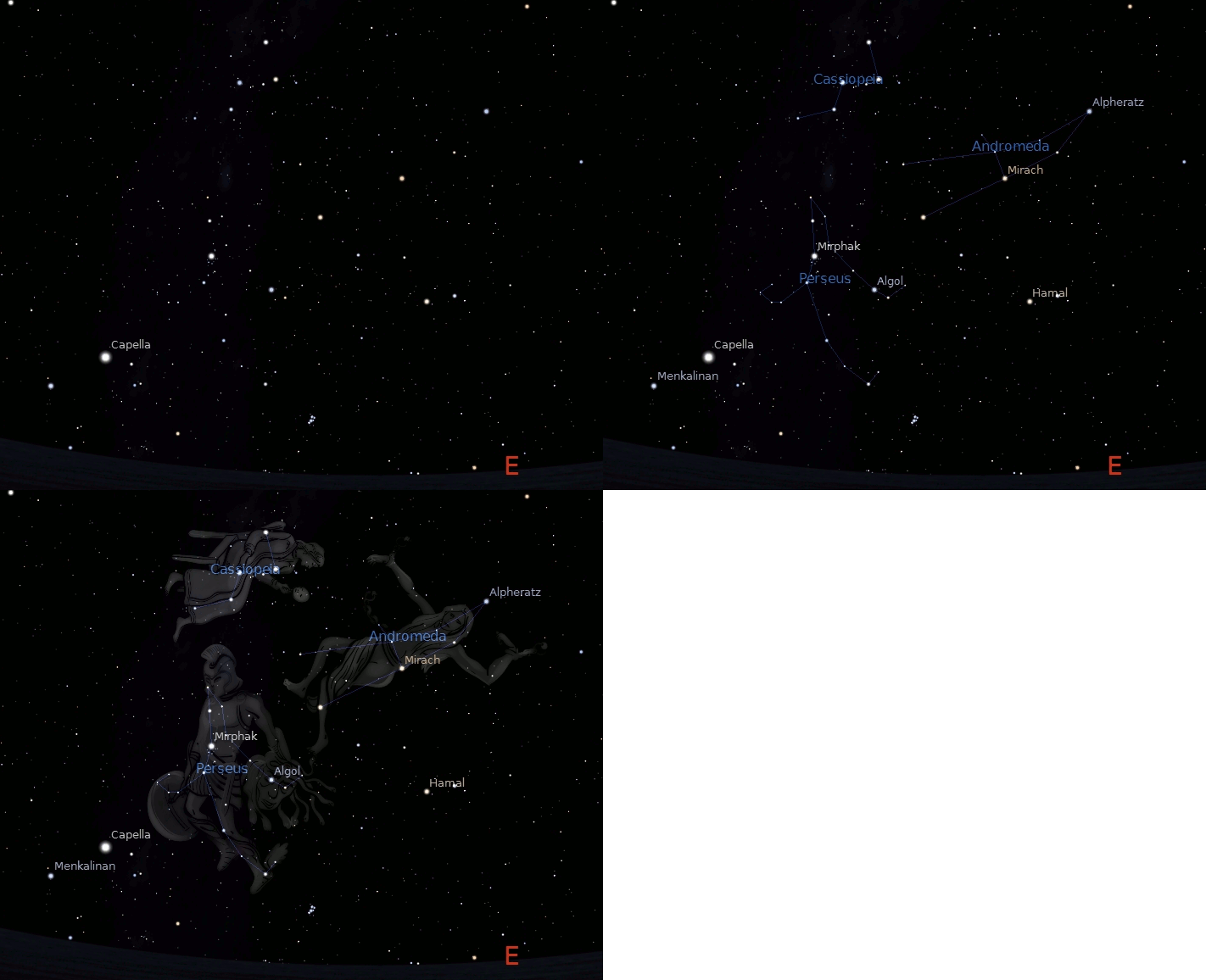
Perseus, Cassiopeia, Andromeda with Algol finder animation for Autumn evenings. Created using Stellarium and GIMP.
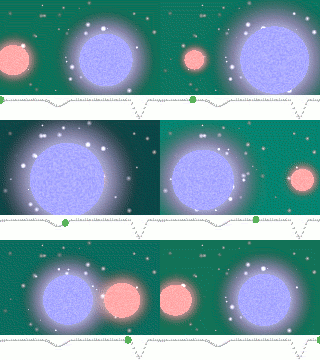
Animation of an eclipsing binary star like Algol. Credit: Wikimedia Commons h/t Earth and Sky
10/23/2017 – Ephemeris – The loneliest star in the sky
Ephemeris for Monday, October 23rd. The Sun will rise at 8:08. It’ll be up for 10 hours and 35 minutes, setting at 6:44. The Moon, half way from new to first quarter, will set at 9:27 this evening.
There’s a bright star that appears for only seven and a half hours on autumn evenings from northern Michigan. It’s appearance, low in the south at around 10:30 p.m. tonight, is a clear indication of the autumn season. The star’s name is Fomalhaut, which means fish’s mouth. That’s fitting because it’s in the constellation of Piscis Austrinus, the southern fish. At our latitude it’s kind of the fish that got away, because Fomalhaut appears to be quite alone low in the sky. The faintness of the constellation’s other stars and location close to the horizon make the dim stars hard to spot. The earth’s thick atmosphere near the horizon reduces their brightness by a factor of two or more, so Fomalhaut, one of the brightest stars in the sky, keeps a lonely vigil in the south.
The times given are for the Traverse City/Interlochen area of Michigan. They may be different for your location.
Addendum
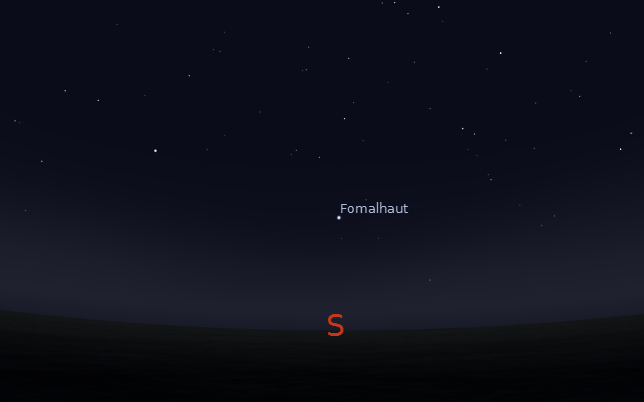
Fomalhaut in the south at 9:30 p.m. on October 23, 2017. Created using Stellarium.
10/17/2017 – Ephemeris – The Fisher paints the autumn leaves red
Ephemeris for Tuesday, October 17th. The Sun will rise at 8:00. It’ll be up for 10 hours and 53 minutes, setting at 6:54. The Moon, 2 days before new, will rise at 6:35 tomorrow morning.
This morning, if it’s clear the red planet Mars will appear just to the right of the thin crescent Moon. Mars isn’t the only thing that’s red now. So are the maple leaves as we advance into autumn. The native Anishinaabek peoples have a story about how that came to be. Of how a magical weasel-like creature called the Fisher or Ojiig brought summer to the Earth from Skyland. For his trouble he was shot with an arrow in his only vulnerable spot, the tip of his tail. As he fell to Earth the Great Spirit, Manitou caught him and placed him in the sky where we see the Great Bear (Ursa Major) and the Big Dipper. Every autumn we see his tail swoop down to the ground where his tail paints the leaves red with his blood.
The times given are for the Traverse City/Interlochen area of Michigan. They may be different for your location.
Addenda
The Moon and the morning planets this morning
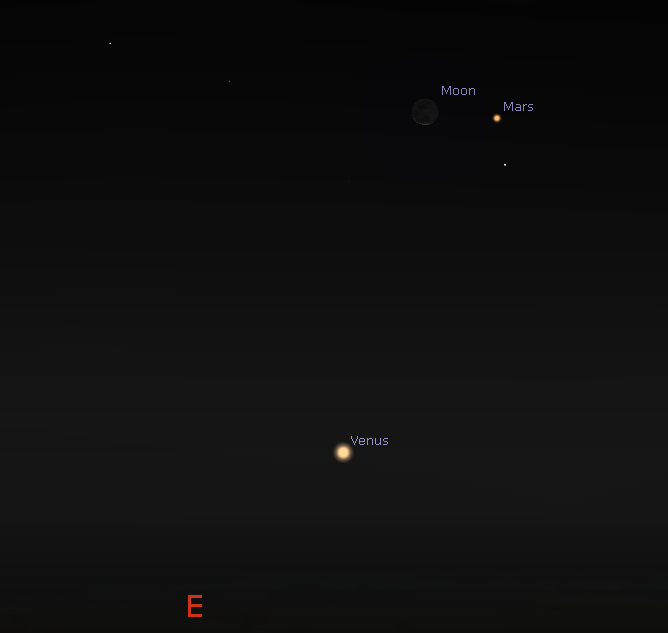
The Moon and Mars at 6:30 this morning October 17, 2017. Click on image to enlarge. Created using Stellarium.
At 00:21 UTC on the 18th Venus will be south of the Moon. It will be visible from Asia.
The Fisher (Ojiig) paints the trees with the autumn colors
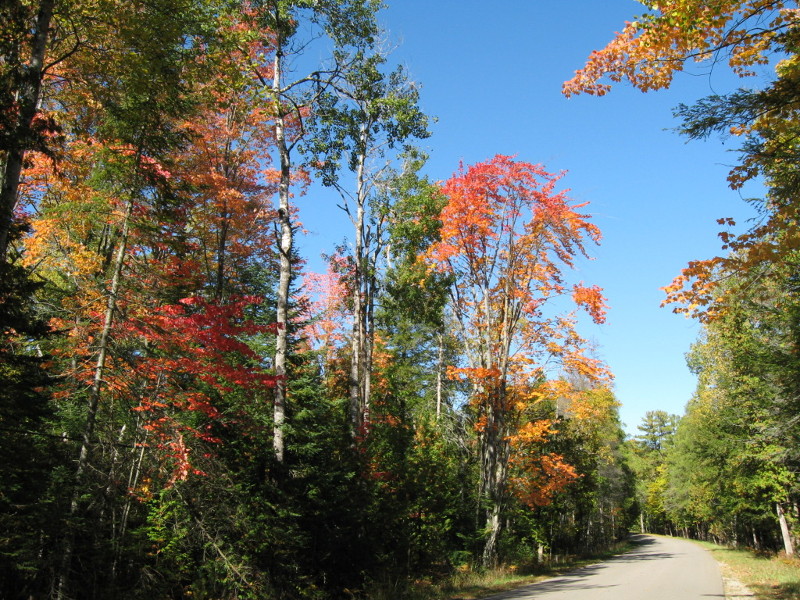
Autumn colors. My image.
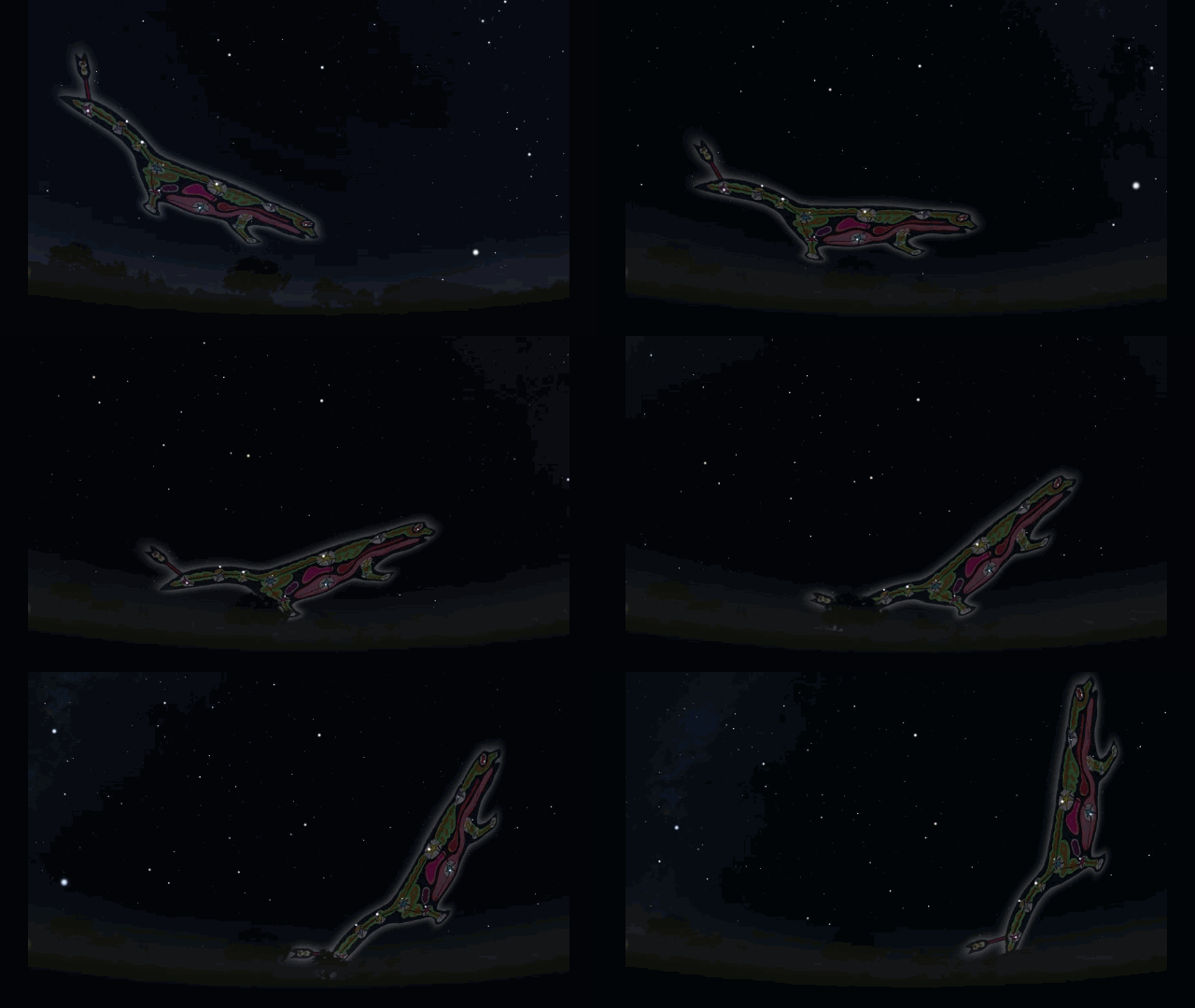
An animation of Fisher brushing his tail along the horizon on autumn nights. Click on image to enlarge. Created using Stellarium.
The constellation art is part of the latest versions of Stellarium. Ojibwe (Anishinaabek) constellation art by Annette S Lee and William Wilson from Ojibwe Sky Star Map Constellation Guide, ISBN 978-0-615-98678-4.
See the version of the story I learned: The story of the Fisher Star.
There are other variations of the story, and other adventures of the Fisher. Perform an Internet search for: Fisher or Fisher Star or Ojiig.
10/16/2017 – Ephemeris – Andromeda, the chained princess
Ephemeris for Monday, October 16th. The Sun will rise at 7:59. It’ll be up for 10 hours and 56 minutes, setting at 6:55. The Moon, 3 days before new, will rise at 5:29 tomorrow morning.
The stars of the constellations Andromeda the chained princess look like they’re supposed to be the hind legs of Pegasus the flying horse which is high in the southeast at 9 p.m. Andromeda is high in the east She is seen in the sky as two diverging curved strings of stars that curve to the left and up from the leftmost star of the Great Square of Pegasus. Her predicament was caused by her boastful mother Cassiopeia, and the wrath of the god Poseidon. She was rescued by the hero Perseus, a nearby constellation, riding his steed Pegasus. Andromeda’s claim to astronomical fame is the large galaxy barely visible to the unaided eye just above the upper line of stars, the Great Andromeda Galaxy 2.5 million light years away.
The times given are for the Traverse City/Interlochen area of Michigan. They may be different for your location.
Addendum
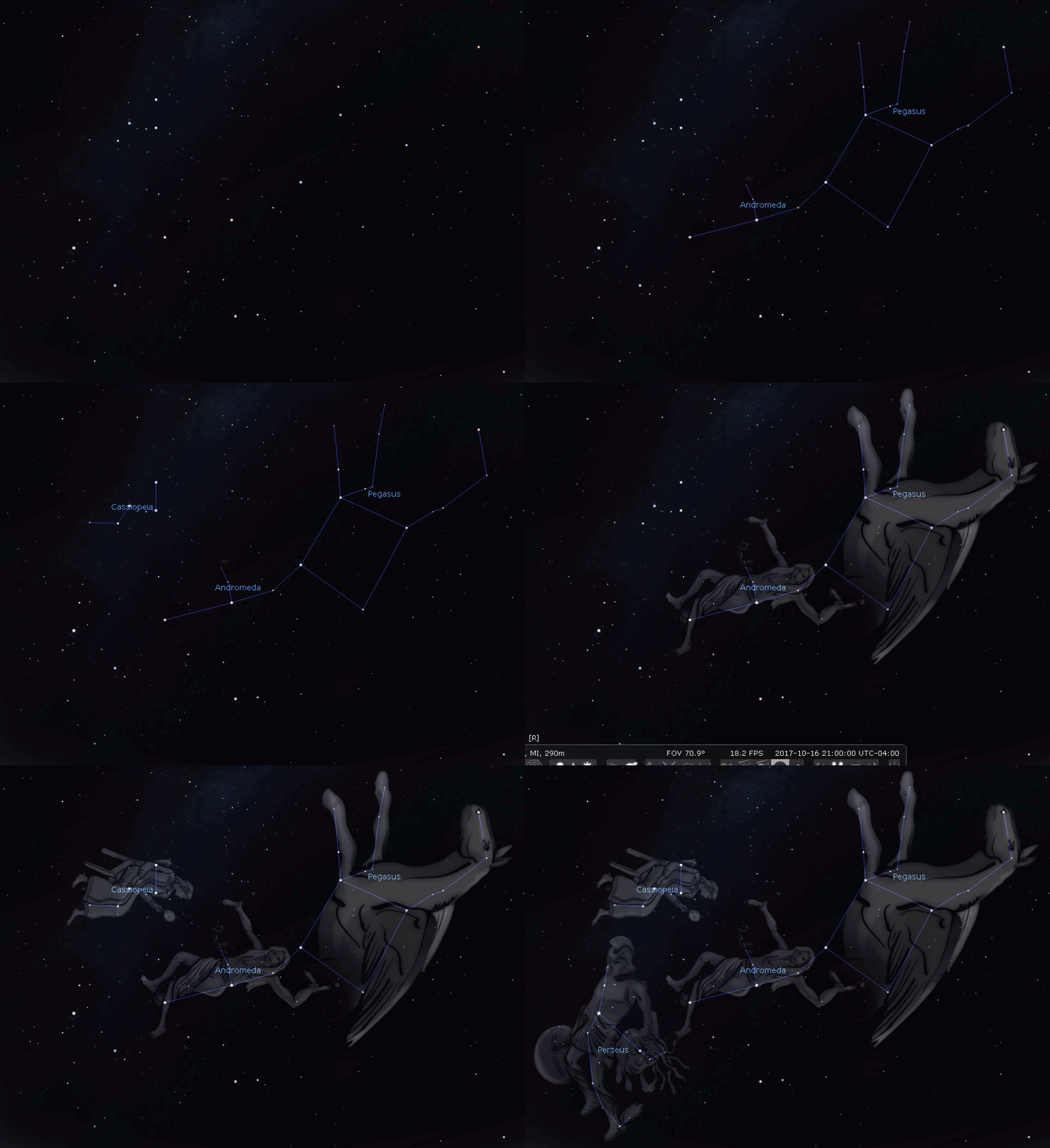
Andromeda and neighboring constellations that are related to her story. Created using Stellarium and GIMP.
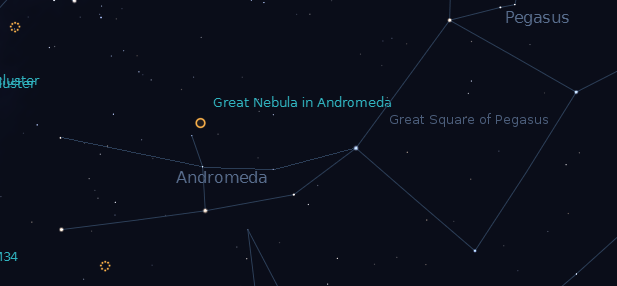
Andromeda at 9 p.m. with the Great Andromeda Galaxy. Created using Stellarium.
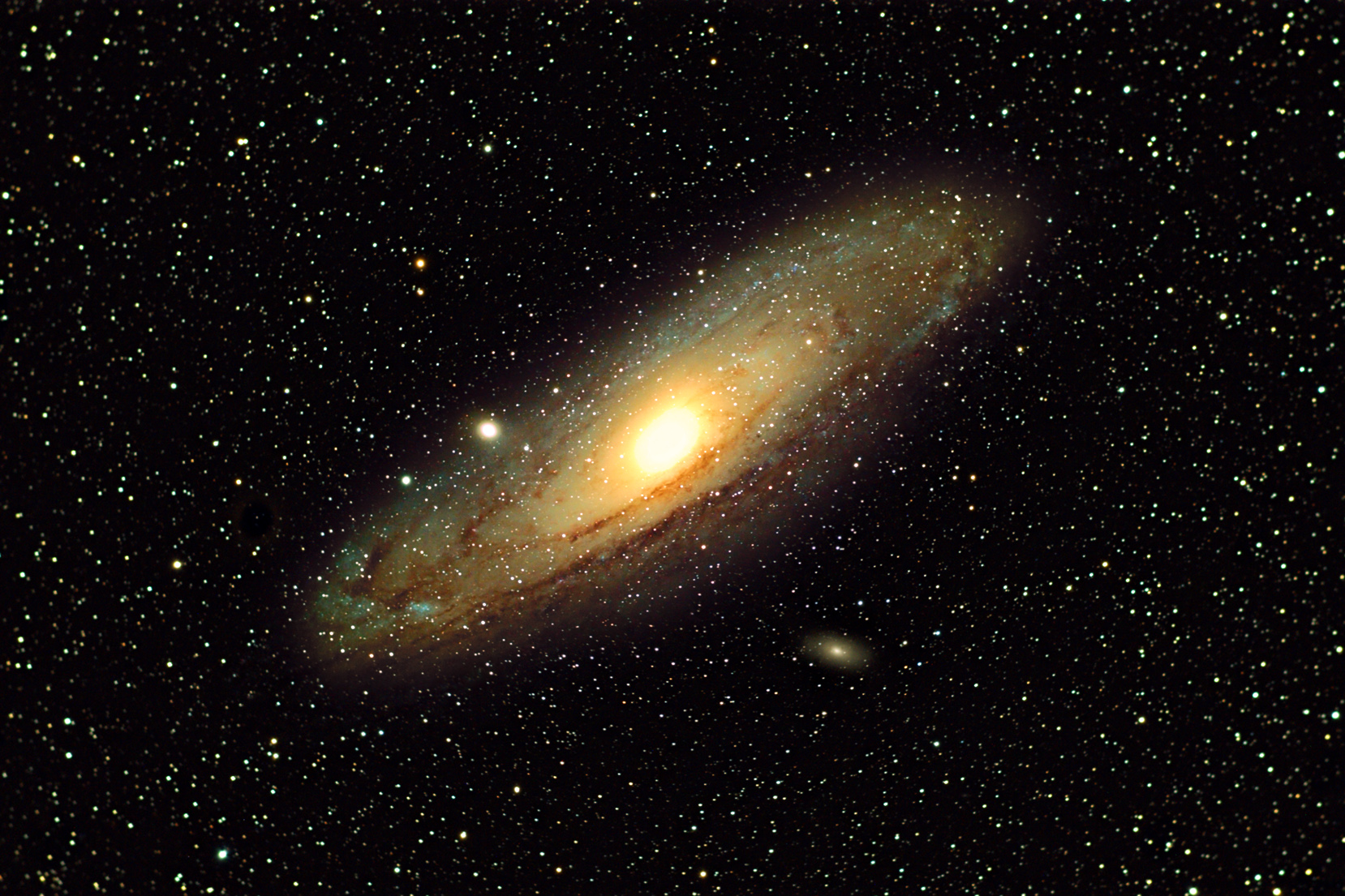
The Great Andromeda Galaxy (M31). Image taken by Scott Anttila. It appears here more extensive than it appears visually to the naked eye or in telescopes.
10/12/2017 – Ephemeris – Is it a flying horse or a moose?
Ephemeris for Thursday, October 12th. The Sun will rise at 7:54. It’ll be up for 11 hours and 8 minutes, setting at 7:02. The Moon, at last quarter today, will rise at 1:02 tomorrow morning.
A reminder that fall is here is located high in the southeast around 9 p.m. It’s one of the great autumn constellations: Pegasus the flying horse of Greek myth. Its most visible feature is a large square of four stars, now standing on one corner. This feature, called the Great Square of Pegasus, represents the front part of the horse’s body. The horse is quite aerobatic, because it is seen flying upside down. Remembering that fact, the neck and head is a bent line of stars emanating from the right corner star of the square. Its front legs can be seen in a gallop extending to the upper right from the top star of the square. To the Anishinaabek peoples in the Great Lakes region it is the Moose, body where the square is and head where the front legs of Pegasus are. It’s antlers use the stars of Lacerta the lizard.
The times given are for the Traverse City/Interlochen area of Michigan. They may be different for your location.
Addendum
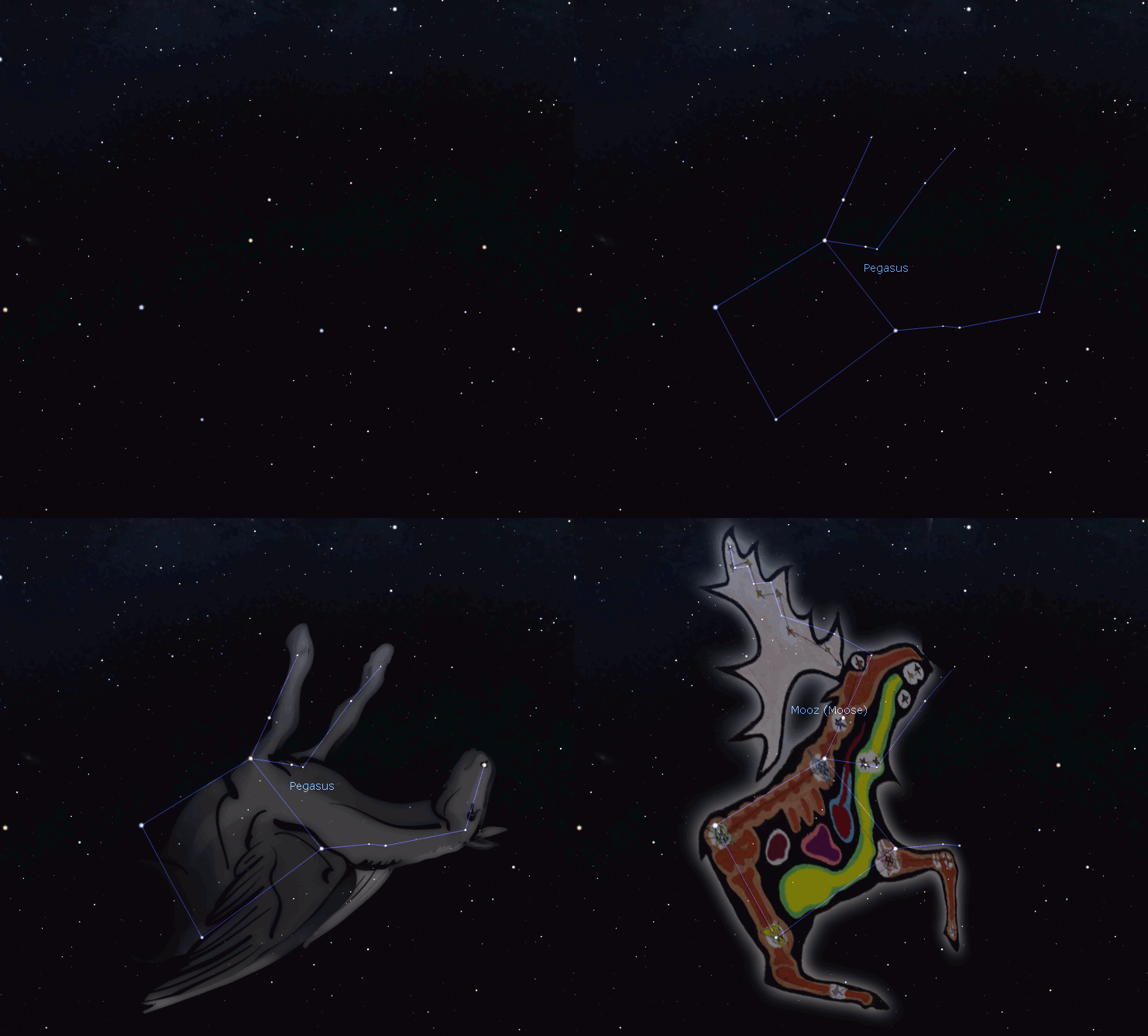
Pegasus-Moose animation. The Anishinaabek constellation moose’s antlers in this imagining uses the stars of the Western constellation of Lacerta the lizard. Click on image to enlarge Created using Stellarium and the GIMP.
The constellation art is part of the latest versions of Stellarium. Western constellation art by Johan Meuris. Ojibwe (Anishinaabek) constellation art by Annette S Lee and William Wilson from Ojibwe Sky Star Map Constellation Guide, ISBN 978-0-615-98678-4.
10/09/2017 – Ephemeris – Old World vs New World
Ephemeris for Columbus Day observed, Monday, October 9th. The Sun will rise at 7:50. It’ll be up for 11 hours and 17 minutes, setting at 7:07. The Moon, 3 days before last quarter, will rise at 10:09 this evening.
Today the United States celebrates Columbus Day , a Monday near the date Christopher Columbus landed on a Caribbean island, and found people who got there at least 15 thousand years earlier. Due to superior technology, and nothing else really, the Europeans conquered the peoples of the continents they called the Americas, deeming the indigenous peoples, incorrectly, as savages.
My astronomical journey started with learning the constellations and their stories from the ancient Greeks. About five years ago I began to investigate the constellations and stories of the Anishinaabek peoples whose ancient lands we live on, which turn out to be as rich and as meaningful as those I learned in my youth from the Old World.
The times given are for the Traverse City/Interlochen area of Michigan. They may be different for your location.
10/04/2017 – Ephemeris – Where are the bright planets tonight?
Ephemeris for Wednesday, October 4th. The Sun will rise at 7:44. It’ll be up for 11 hours and 32 minutes, setting at 7:17. The Moon, 1 day before full, will set at 7:21 tomorrow morning.
Let’s take our weekly look at the bright planets. Jupiter, for all intents and purposes is gone from the evening sky. It will cross into the morning sky later this month. Saturn too is sinking lower in the southwestern sky in the evening. Saturn’s rings are still spectacular in telescopes, but since Saturn is so low in the sky the turbulence of the thick atmosphere makes Saturn fuzzy and seemingly to go in and out of focus. Saturn will set at 10:43 p.m.
In the morning sky, brilliant Venus will rise at 5:11 a.m. in the east with much dimmer Mars below and right of it by half the width of the Moon. Mars is less than 100th the brightness of Venus, and will probably require binoculars to locate. (need a few words more)
The times given are for the Traverse City/Interlochen area of Michigan. They may be different for your location.
Addendum
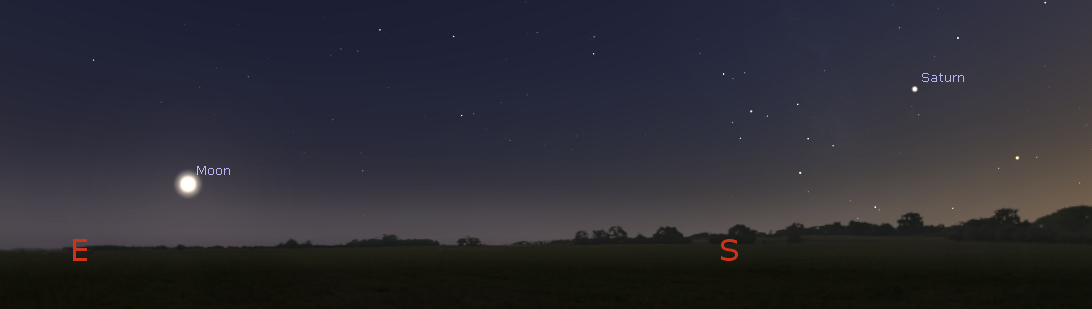
Saturn and the Moon in the evening at 8 p.m. October 4, 2017. Created using Stellarium.
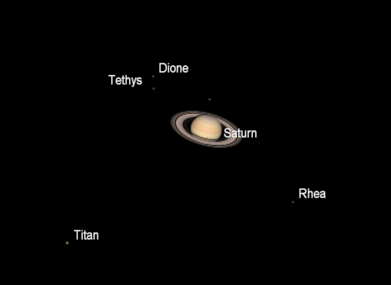
Saturn and its brightest moons overnight October 4/5, 2017. Created using Cartes du Ciel (Sky Charts).
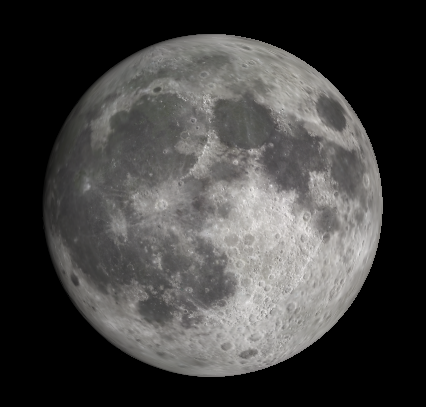
The Moon as it might be seen in binoculars, 8 p.m. October 4, 2017. Created using Stellarium.
Members of the Grand Traverse Astronomical Society and I are invited to the Chinese Mid-Autumn Festival being held for the Chinese exchange students in the Traverse City school system. Its held on the 15th day of the 8th month of the Chinese lunar calendar, the full moon, which works out to be October 4th this year. They will be having Chinese food and viewing the Moon afterward.
One of the legends celebrated then will be the Jade Rabbit pounding medicine. Jade Rabbit (Yutu) is the name of the Chinese rover that’s on the Moon. And the Jade Rabbit can actually be seen on the Moon:
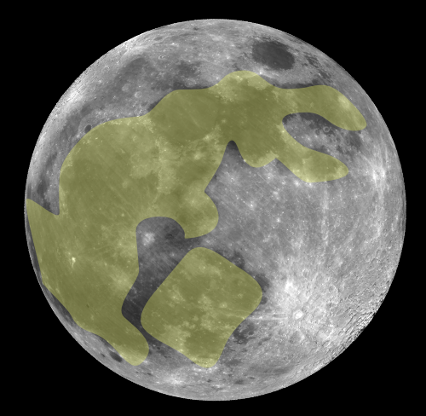
Jade Rabbit and Mortar on the Moon. Credit: Zeimusu, Creative Commons.
I hope they have Moon Cakes. They sound yummy.
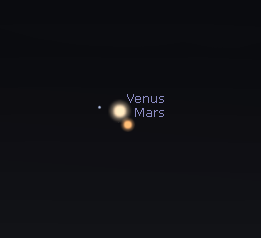
A closeup of Venus and Mars at 6:30 a.m. October 5, 2017. Created using Stellarium.
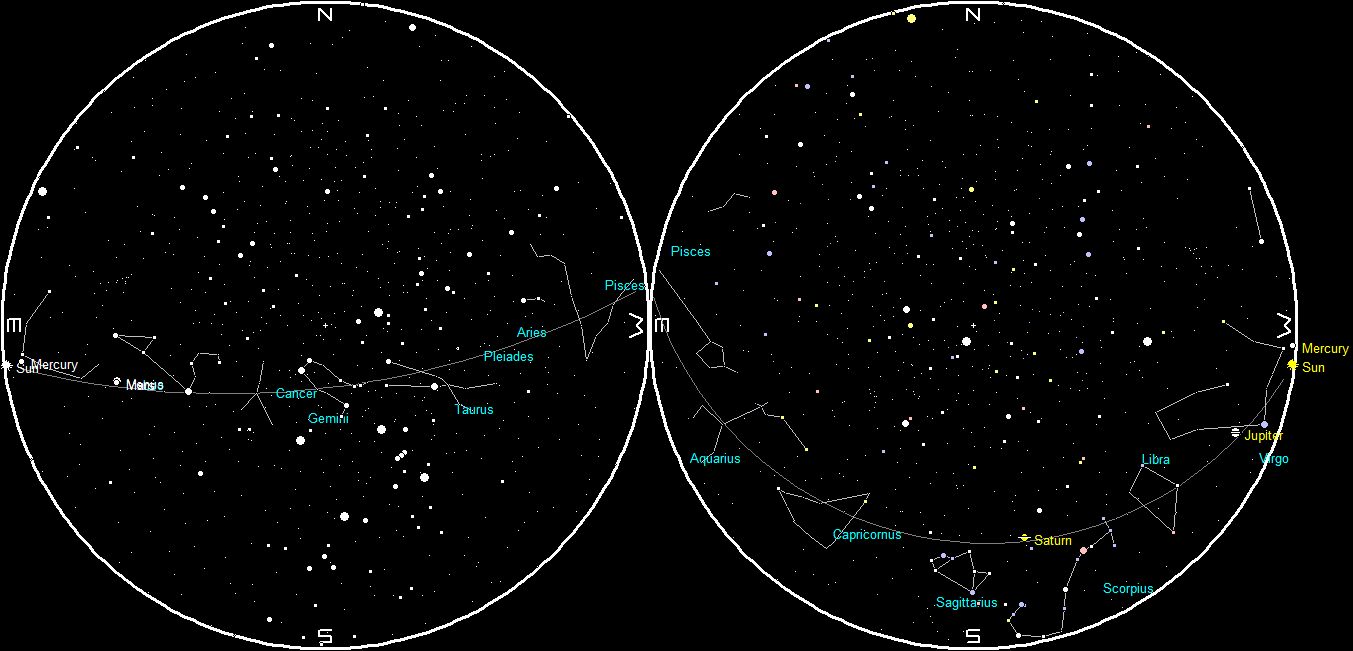
Planets at sunset and sunrise of a single night starting with sunset on the right on October 4, 2017. The night ends on the left with sunrise on the 5th. The full Moon has fallen in the cracks between the sunset and sunrise charts due to its position south of the ecliptic. Click on the image to enlarge. Created using my LookingUp program.
 Bob Moler's Ephemeris Blog