Archive
09/18/2017 – Ephemeris – The constellation of the shield
Ephemeris for Monday, September 18th. The Sun will rise at 7:25. It’ll be up for 12 hours and 21 minutes, setting at 7:46. The Moon, 2 days before new, will rise at 6:35 tomorrow morning.
In the evening sky, in the south after it gets dark can be seen part of the Milky Way. There is actually a constellation here located between Sagittarius the archer, which really looks like a teapot, below and Aquila the eagle above. It’s Scutum the shield of John Sobieski the Polish king who stopped the advance of the Turks at Kalenberg in 1683. Scutum is the only official constellation I know of which is related to a real person. The Polish half of me is very proud. However the stars here are so dim and embedded in the glow of the Milky Way as to be nearly impossible to discern. Scutum lies in one of the richest portions of the Milky Way, wonderful to scan with binoculars and telescopes for star clusters and nebulae or clouds of dust and gas.
The times given are for the Traverse City/Interlochen area of Michigan. They may be different for your location.
Addendum
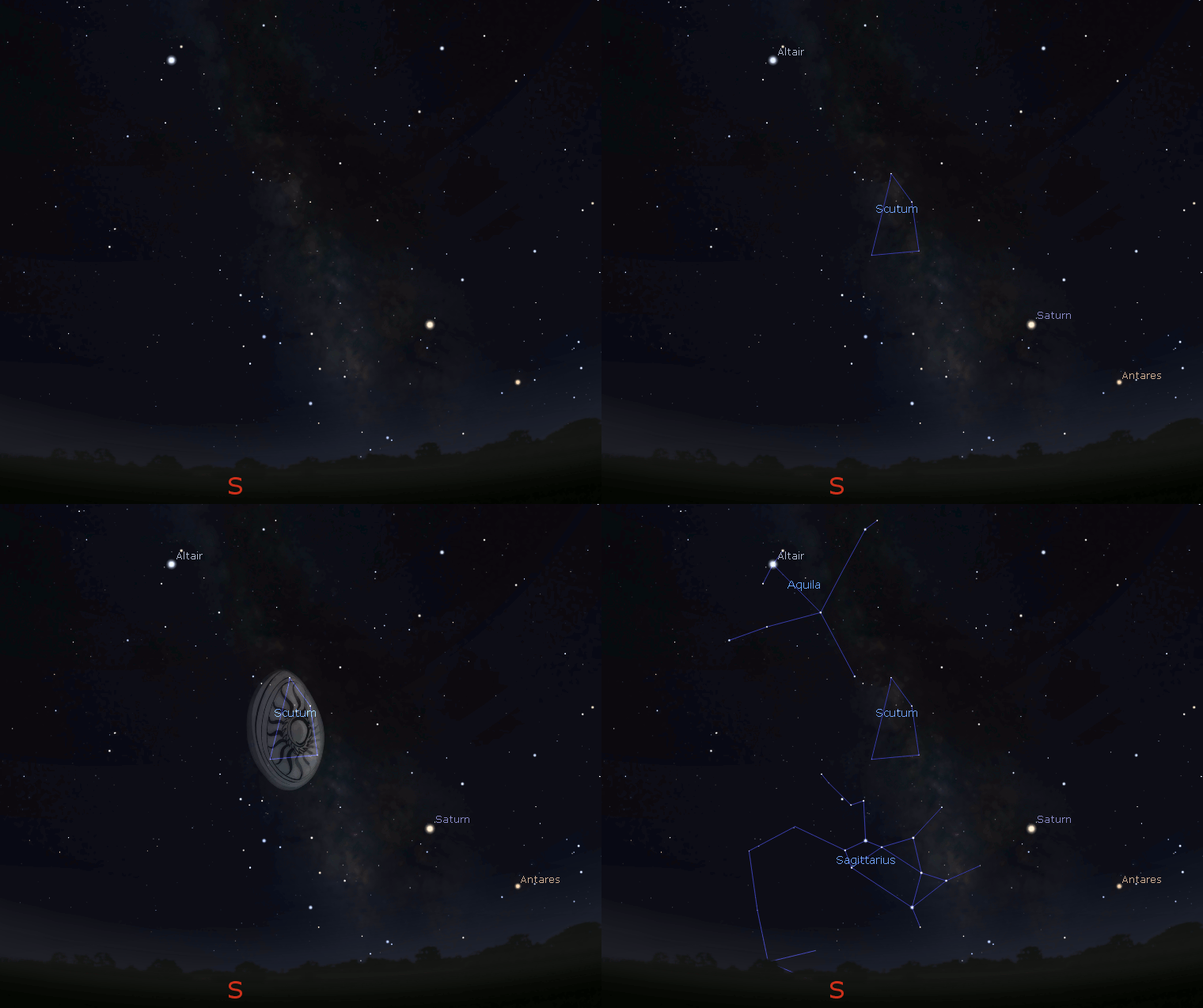
Scutum Finder Chart animation. For 9 p.m. September 18, 2017. Created using Stellarium and GIMP. Click on image to enlarge.
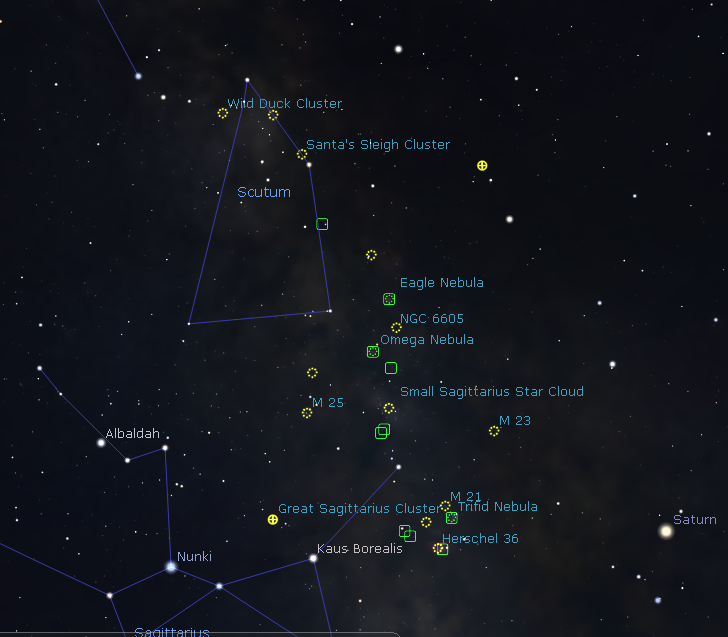
Deep sky objects in Scutum and surrounding area. September 2017. Created using Stellarium. Click on image to enlarge.
09/11/2017 – Ephemeris – The celestial dolphin and an arrow
Ephemeris for Monday, September 11th. The Sun will rise at 7:16. It’ll be up for 12 hours and 43 minutes, setting at 8:00. The Moon, 2 days before last quarter, will rise at 11:27 this evening.
Located below the eastern edge of the Summer Triangle of three of the brightest stars in the sky, which is high in the east to overhead in our sky at 9 p.m., is the tiny constellation of Delphinus the dolphin. Delphinus’ 6 stars in a small parallelogram with a tail, really does look like a dolphin leaping out of the water. The parallelogram itself has the name Job’s Coffin. The origin of this asterism or informal constellation is unknown. Of the dolphin itself: the ancient Greeks appreciated this aquatic mammal as we do, and told stories of dolphins rescuing shipwrecked sailors. There’s another tiny constellation to the right of Delphinus, Sagitta the arrow a small thin group of 5 stars, which represents Cupid’s dart.
The times given are for the Traverse City/Interlochen area of Michigan. They may be different for your location.
Addendum

Delphinus and Sagitta finder animation. Created using Stellarium and GIMP. Click on image to enlarge.
08/28/2017 – Ephemeris – Polaris the North Star
Ephemeris for Monday, August 28th. The Sun will rise at 7:00. It’ll be up for 13 hours and 25 minutes, setting at 8:25. The Moon, 1 day before first quarter, will set at 12:19 tomorrow morning.
The bright star Polaris is a very important star. It is also known as the North Star and the Pole Star. Its unique position is nearly directly at the zenith at the Earth’s north pole, making it a very important navigational star. It’s about 40 minutes of arc, or about one and a third Moon diameters away from the extension of the Earth’s axis into the sky. As a rule of thumb, it’s angular altitude above the northern horizon is approximately one’s latitude, and it stands about at the due north compass point. Polaris is found using the Big Dipper, using the two stars at the front of the dipper bowl to point to it. It’s located at the tip of the handle of the very dim Little Dipper, which this time of year in the evening appears to standing on its handle.
The times given are for the Traverse City/Interlochen area of Michigan. They may be different for your location.
Addendum
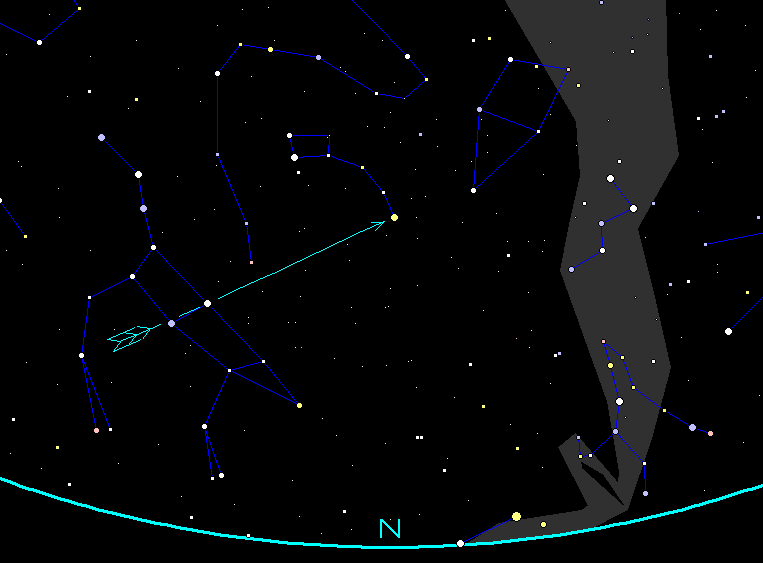
Polaris finder chart for 10 p.m., August 28th. Created using my LookingUp program
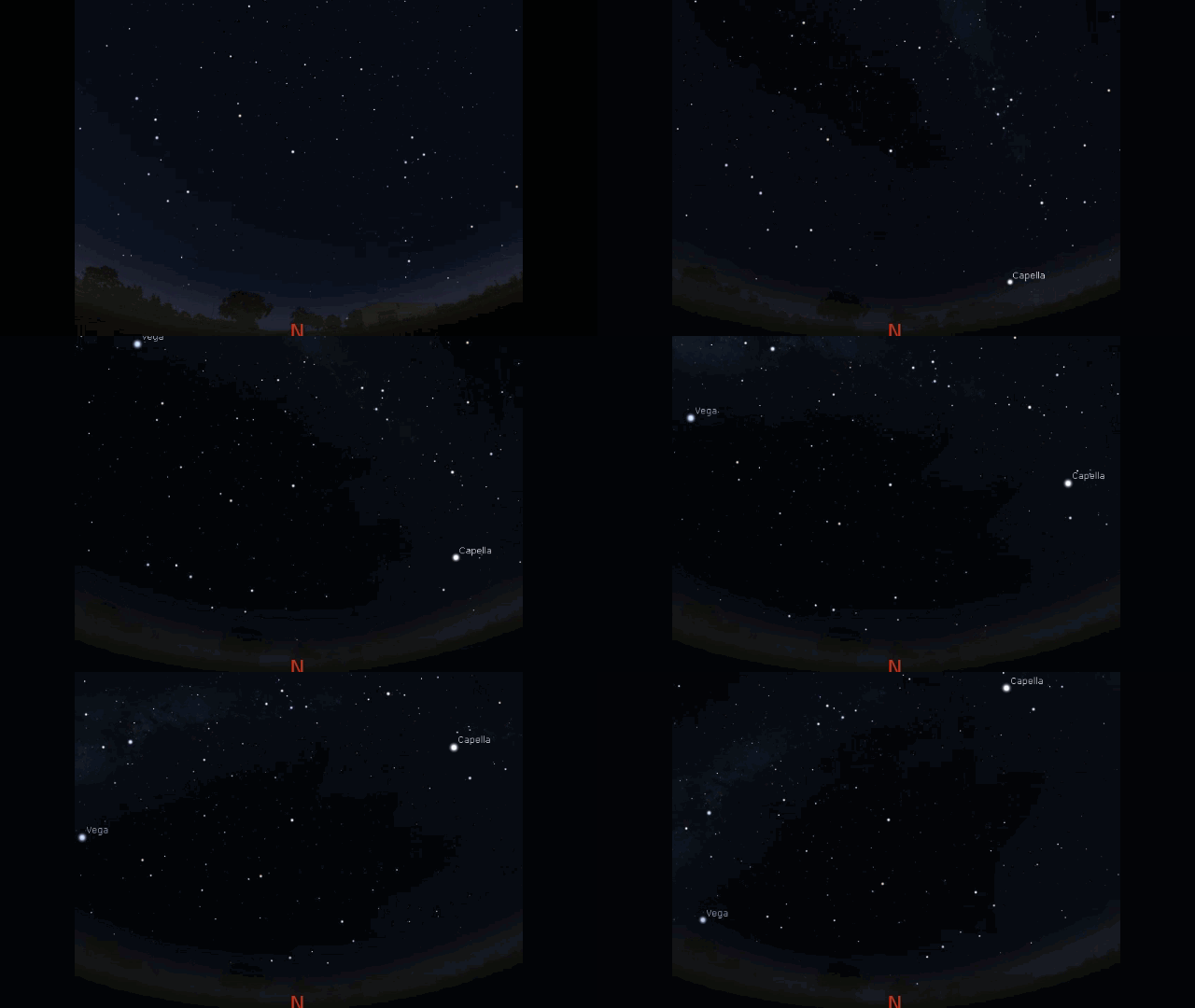
Animation of the rotation of the sky around Polaris on the night of August 28/29, 2017. Created using Stellarium and Filmora.
I’ve left the constellation lines off. The Big Dipper is seen easily as is Cassiopeia’s “W” opposite it around the stationary Polaris.
08/24/2017 – Ephemeris – Centaur or Teapot?
Ephemeris for Thursday, August 24th. The Sun rises at 6:55. It’ll be up for 13 hours and 36 minutes, setting at 8:32. The Moon, 3 days past new, will set at 10:17 this evening.
This time of year when the bright Moon near full is reluctant leave the evening sky the Moon after New is taking its time to enter the evening sky. Three days after new and the Moon sets at the end of twilight. At that time the constellation of Sagittarius the archer is low and due south in our sky. Sagittarius is a centaur, one of two in the sky. These half man and half horse creatures are rarely seen outside of Harry Potter movies. Since we’re more familiar with teapots, the stars here make a very passable stout little teapot of the children’s song. The Milky Way even looks like steam rising from the spout. And as the night progresses or the days go by, the teapot will tilt to pour its tea on the southwestern horizon.
The times given are for the Traverse City/Interlochen area of Michigan. They may be different for your location.
Addendum
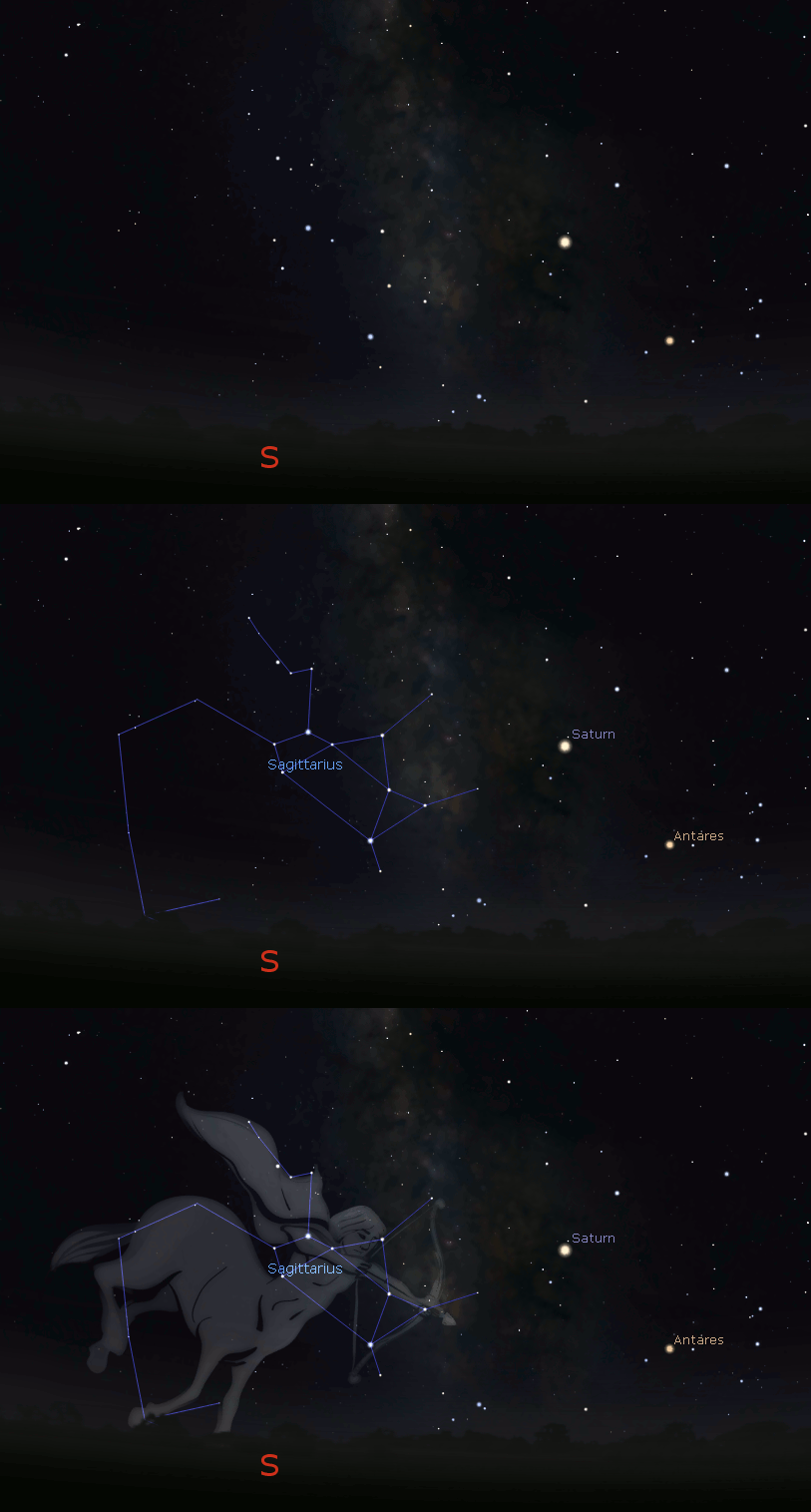
Sagittarius finder animation for 2017 with Saturn nearby. Created using Stellarium and GIMP
07/24/2017 – Ephemeris – The celestial scorpion
Ephemeris for Monday, July 24th. The Sun rises at 6:20. It’ll be up for 14 hours and 56 minutes, setting at 9:16. The Moon, 1 day past new, will set at 10:12 this evening.
Crawling just above the southern horizon at 11 p.m. is the zodiacal constellation of Scorpius the scorpion. His heart is the red giant star Antares. Its facing the west or right with a short arc of three stars as its head. His body and tail drop to the left and scrape the horizon before curving up to the critter’s poisonous stinger of two stars. It really makes a great scorpion. One story of the scorpion concerns Orion the hunter the great winter constellation. In that story Orion was killed by the sting of a scorpion. Therefore Orion and Scorpius are never seen in the sky at the same time. That is certainly true around here and for the Greeks, whose legend it is. However if one travels far enough south that is no longer true.
The times given are for the Traverse City/Interlochen area of Michigan. They may be different for your location.
Addendum
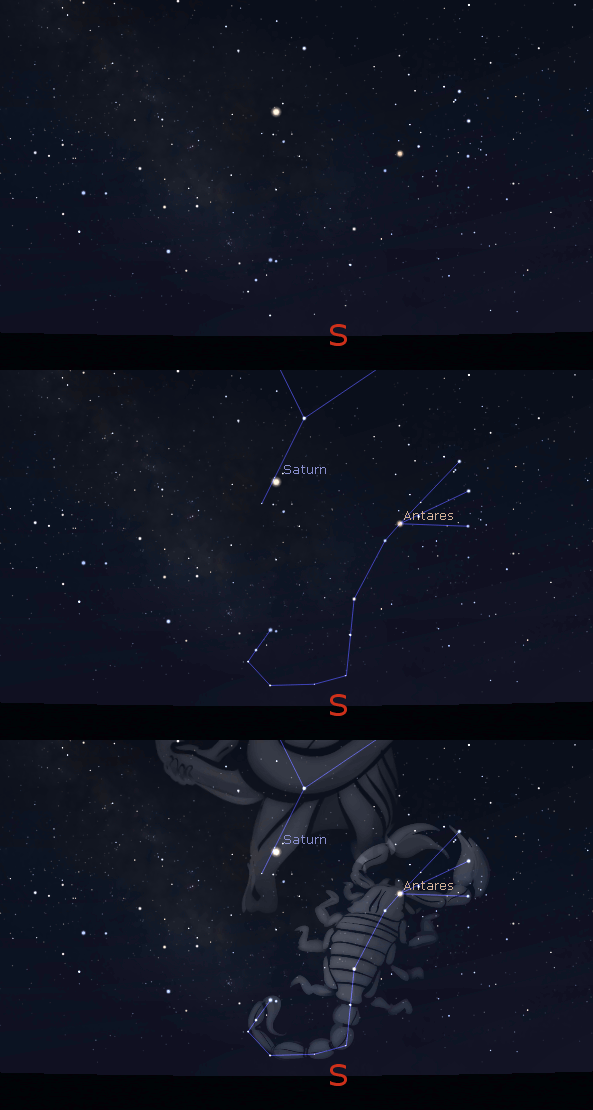
Scorpius finder chart for 10:30 p.m., July 24, 2017. Created using Stellarium, which has a bug in the newest version and is also showing Ophiuchus.
07/18/2017 – Ephemeris – The constellation of Ophiuchus the serpent bearer
Ephemeris for Tuesday, July 18th. Today the Sun will be up for 15 hours and 7 minutes, setting at 9:22, and it will rise tomorrow at 6:15. The Moon, 2 days past last quarter, will rise at 2:47 tomorrow morning.
Saturn and the red star Antares shine in the south at 11 p.m. In the area of sky above them lies a large constellation of faint stars called Ophiuchus, the serpent bearer. Ophiuchus represent the legendary physician Aesculapius. The constellation shape is like a large bell, which reminds me of the head, shoulders and arms of a fellow that’s holding the snake like a weight lifter struggling to pull up a heavy barbell. Serpens, the constellation of the serpent is in the sky in two sections. The front end lies to the right as Serpens Caput, and wends its way up the right side of Ophiuchus. Serpens Cauda, the tail rises to the left of Ophiuchus. It’s a rewarding sight, and not that hard to spot.
The times given are for the Traverse City/Interlochen area of Michigan. They may be different for your location.
Addendum
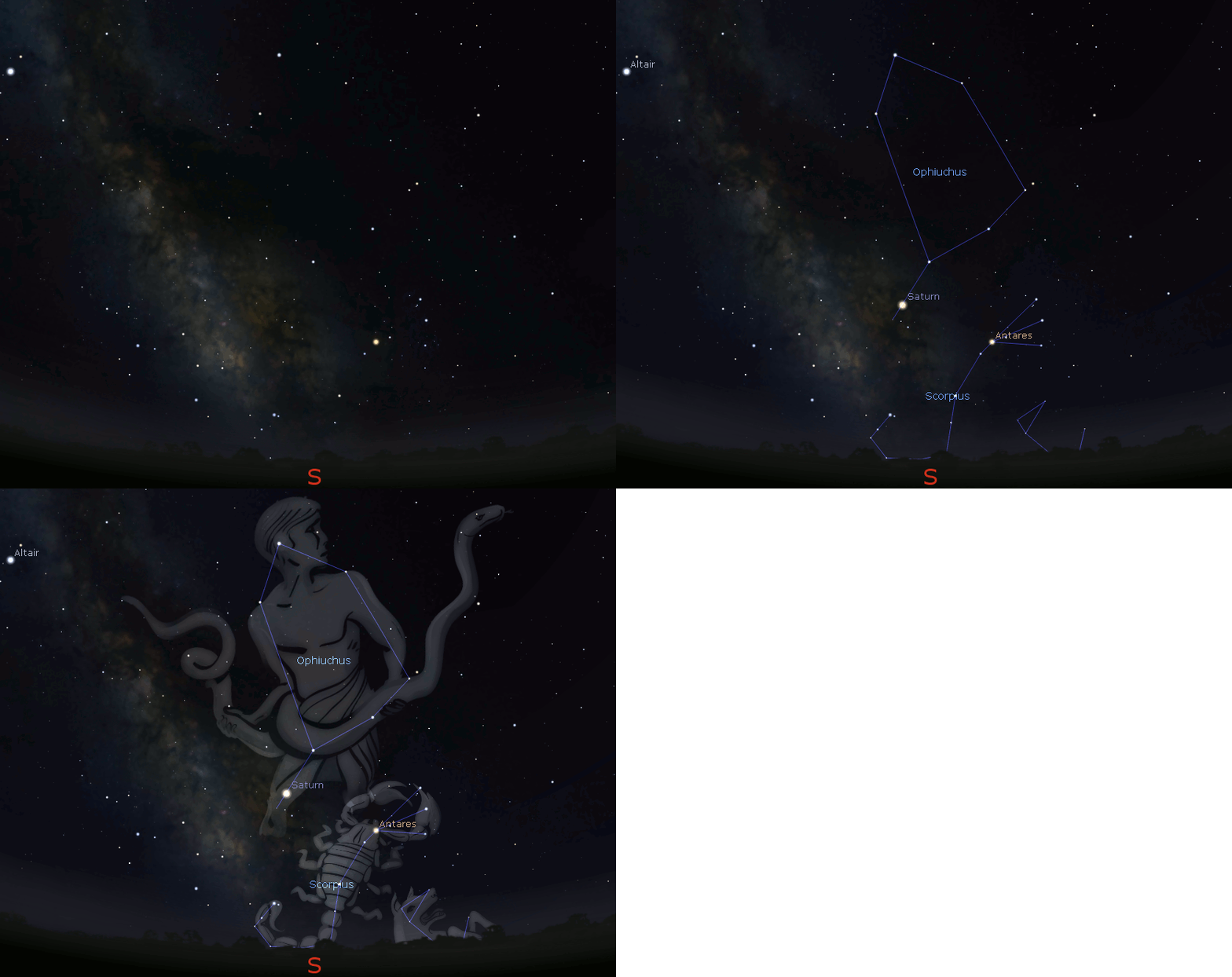
Animated Ophiuchus finder chart. Unfortunately the program doesn’t isolate Ophiuchus and Serpens, but also displays Scorpius and Lupus the wolf peeking over the horizon. Created using Stellarium. Click on the image to enlarge.
07/17/2017 – Ephemeris – Constellations of the Summer Triangle III: Aquila the Eagle
Ephemeris for Monday, July 17th. Today the Sun will be up for 15 hours and 9 minutes, setting at 9:23, and it will rise tomorrow at 6:14. The Moon, 1 day past last quarter, will rise at 2:08 tomorrow morning.
Aquila the eagle is a constellation that lies in the Milky Way. It’s in the southeastern sky as it gets dark. Its brightest star, Altair is one of the stars of the Summer Triangle, the group of three bright stars dominating the eastern sky in the evening now. Altair, in the head of the eagle, is flanked by two slightly dimmer stars, the shoulders of the eagle. The eagle is flying northeastward through the Milky Way. Its wings are seen in the wing tip stars. A curved group of stars to the lower right of Altair is its tail. Within Aquila the Milky Way shows many dark clouds as part of the Great Rift that splits it here. The other summer bird is Cygnus the swan above and left of Aquila, flying in the opposite direction.
The times given are for the Traverse City/Interlochen area of Michigan. They may be different for your location.
Addendum
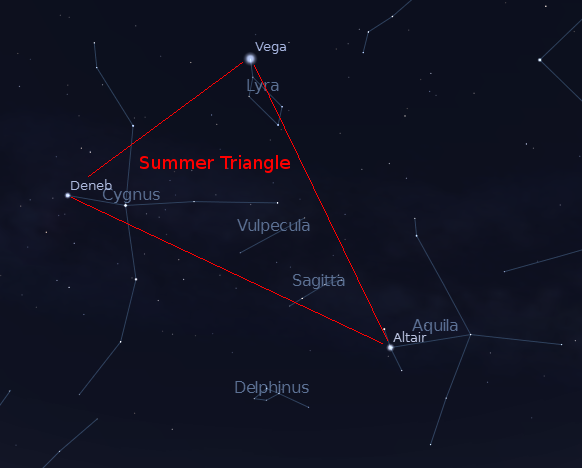
The Summer Triangle. Created using Stellarium and The Gimp.
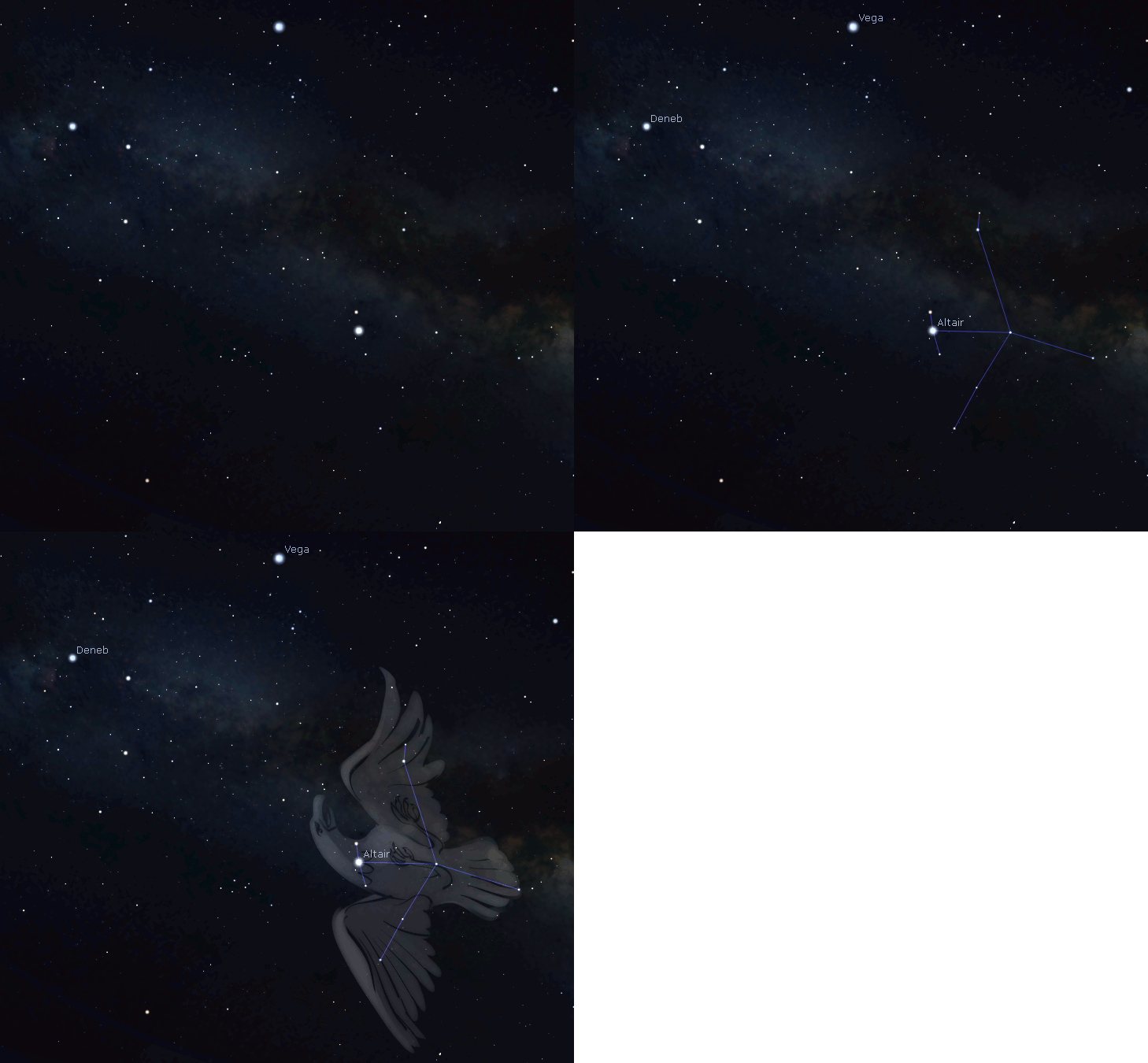
Animated Cygnus finder chart. Created using Stellarium.
07/14/2017 – Ephemeris – Constellations of the Summer Triangle II: Cygnus the swan
Ephemeris for Friday, July 14th. Today the Sun will be up for 15 hours and 14 minutes, setting at 9:25, and it will rise tomorrow at 6:11. The Moon, 2 days before last quarter, will rise at 12:32 tomorrow morning.
Fairly high in the east at 11 p.m. Is the constellation of Cygnus the swan, flying south through the Milky Way. It is also called the Northern Cross. At the left, the tail of the swan or the head of the cross is the bright star Deneb, one of the stars of the Summer Triangle. The next star right is Sadr the intersection of the body and the wings of the swan seen in flight, or the intersection of the two pieces of the cross. There are two or three stars farther to the right that delineate the swan’s long neck or upright of the cross, that ends with the star Alberio in the beak of the swan or foot of the cross. The crosspiece of the cross extends to the stars on either side of the intersection star Sadr, while the swan’s wings extend to a couple more stars each.
The times given are for the Traverse City/Interlochen area of Michigan. They may be different for your location.
Addendum
The Summer Triangle. Created using Stellarium and The Gimp.
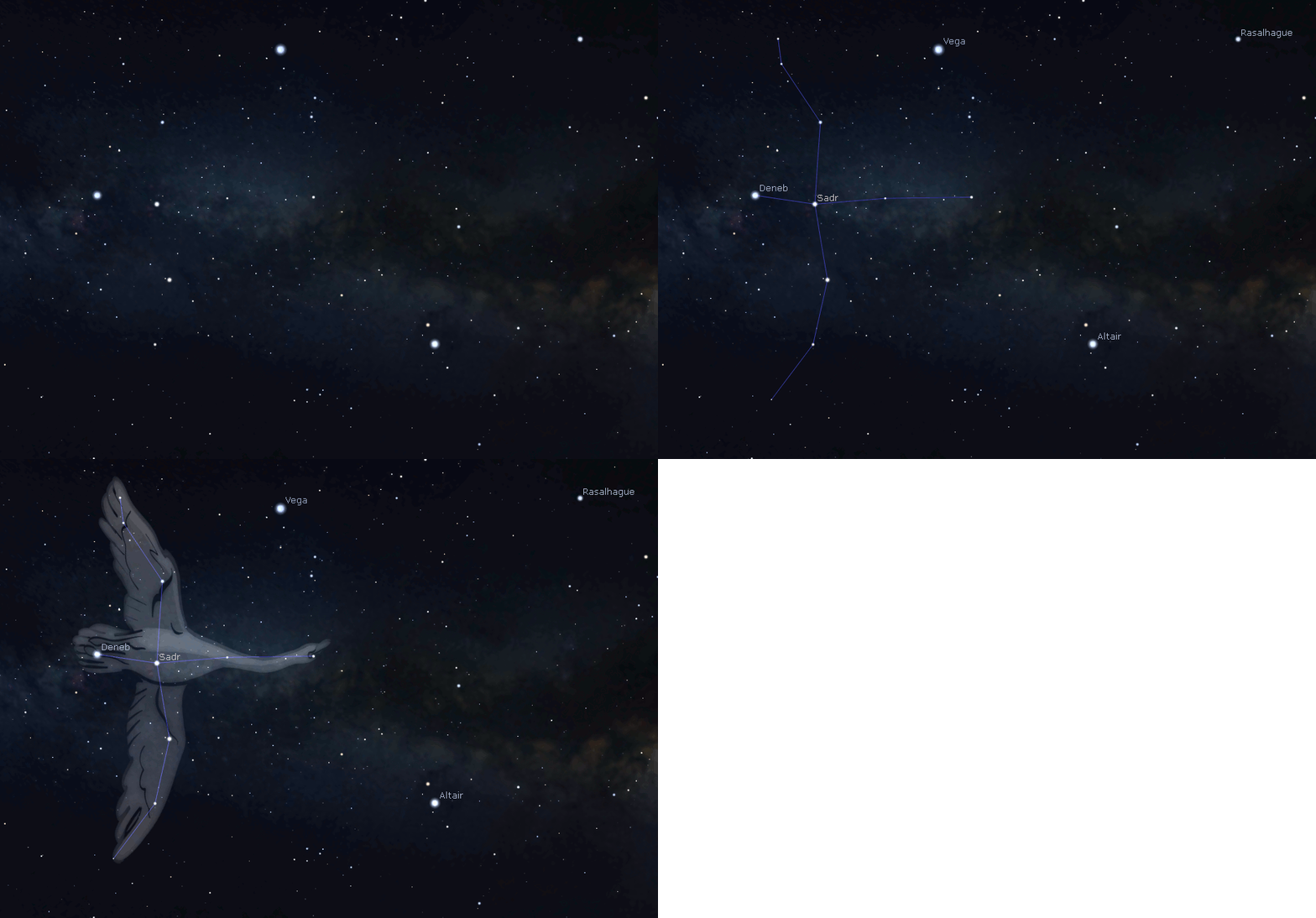
Animated Cygnus finder chart. Created using Stellarium.
In mythology Cygnus was the form Zeus took in the Leda and the swan affair. Out of that union was born Pollux of Gemini fame. His half-brother and twin Castor was fathered by a mere mortal. Go here for their story.
Alberio is the star that shows in Cygnus’ eye. In telescopes of even low power Alberio shows as a binary star whose components are distinctly and beautiful blue and gold. Binoculars are not quite powerful enough to split these two.
07/13/2017 – Ephemeris – Constellations of the Summer Triangle I: Lyra the harp
Ephemeris for Thursday, July 13th. Today the Sun will be up for 15 hours and 16 minutes, setting at 9:26, and it will rise tomorrow at 6:10. The Moon, 3 days before last quarter, will rise at 12:02 tomorrow morning.
Very high up in the eastern sky at 11 p.m. can be found a bright star just above a small, narrow, but very distinctive parallelogram of stars. They are the stars of the constellation Lyra the harp. The bright star is Vega, member of the Summer Triangle and one of the twenty one brightest first magnitude stars. Vega is actually the 5th brightest night-time star. The harp, according to Greek mythology, was invented by the Greek god Hermes. The form of the harp in the sky, is as he had invented it: by stretching strings across a tortoise-shell. Hermes gave it to his half-brother Apollo, who in turn gave it to the great musician Orpheus. The Sun’s motion with respect to most stars around it is towards the vicinity of Lyra.
The times given are for the Traverse City/Interlochen area of Michigan. They may be different for your location.
Addendum
The Summer Triangle. Created using Stellarium.
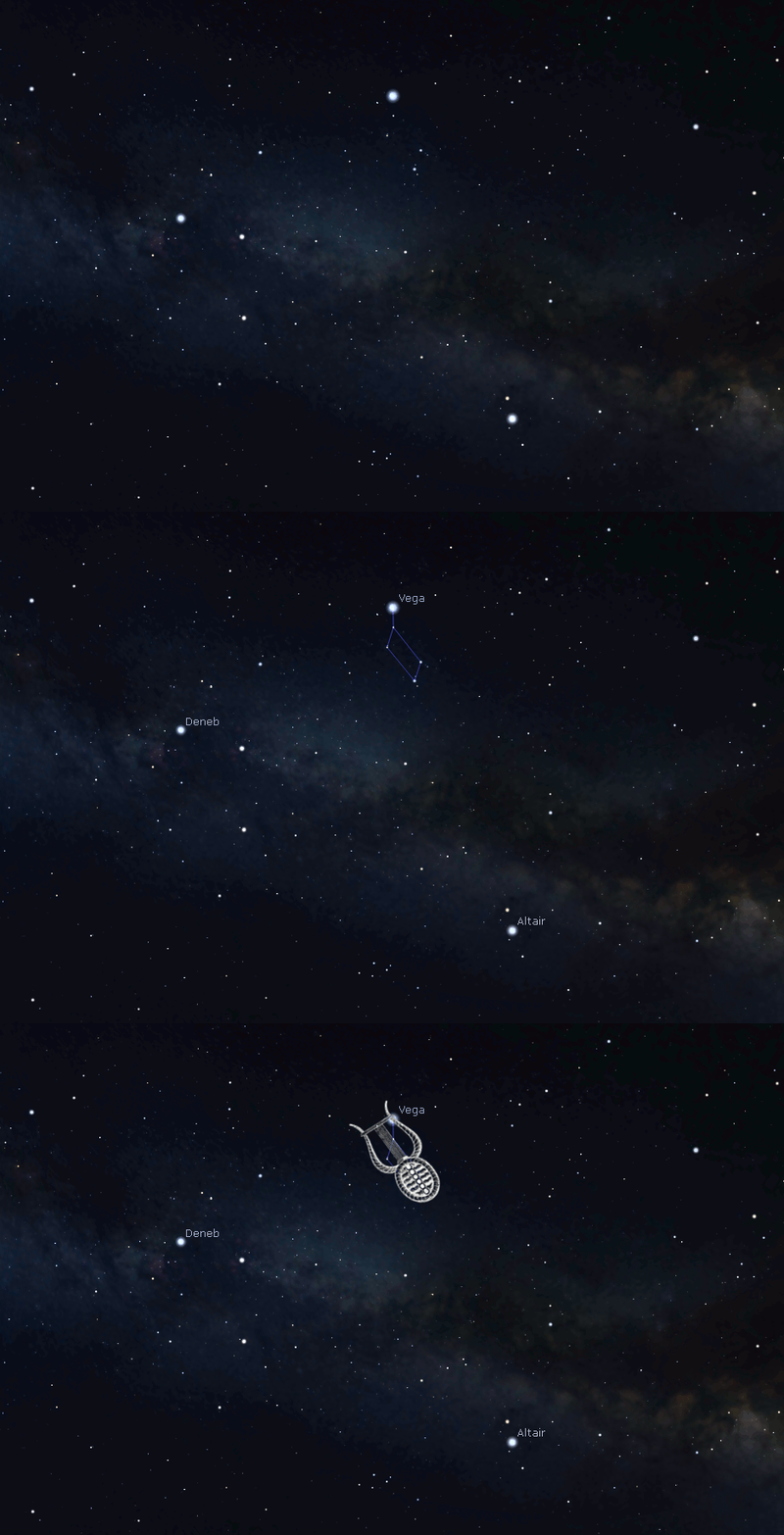
Animated Lyra finder chart. The lyre image not supplied by Stellarium but is from The World’s Earliest Music by Hermann Smith, a Project Gutenberg E book, figure 60, captioned “The Chelys or Greek Tortoiseshell Lyre”. Image created using Stellarium and GIMP.
05/25/2017 – Ephemeris – Another look at Leo the lion
Ephemeris for Ascension Thursday, Thursday, May 25th. Today the Sun will be up for 15 hours and 9 minutes, setting at 9:14, and it will rise tomorrow at 6:04. The Moon is new today, and won’t be visible.
The constellation Leo the lion is now high in the southwest at 10:30 pm. It’s below the Big Dipper higher up near the zenith. Leo is marked by two sets of easily recognizable stars. The front of him is a backward question mark of stars, also known as the Sickle that mark his head and mane, along with the front part of his body. Regulus is the star at the bottom of that backwards question mark. It’s the Little King Star. The hind end of him is a triangle of stars ending with another bright star, but not as bright as Regulus. It’s Denebola which means Lion’s tail. It was thought when the sun was in this constellation long ago that the lions were driven by the heat to quench their thirst in the Nile river. Ancient physicians thought medicines were poison when the Sun was here too.
The times given are for the Traverse City/Interlochen area of Michigan. They may be different for your location.
Addendum
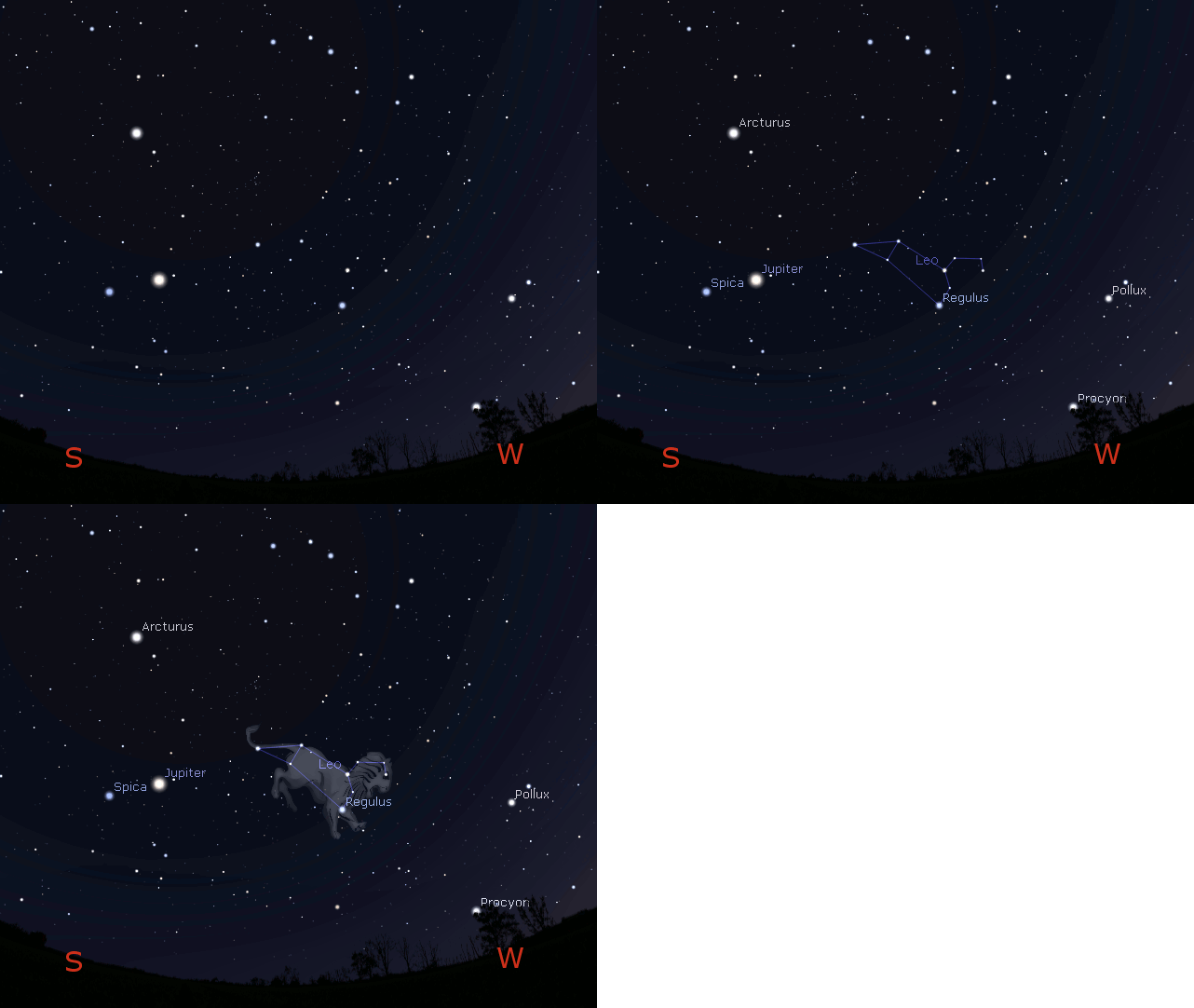
Animation on how to find Leo the lion at 10:30 p.m., May 25, 2017. Created using Stellarium and GIMP. Click on image to enlarge if necessary.
 Bob Moler's Ephemeris Blog