Archive
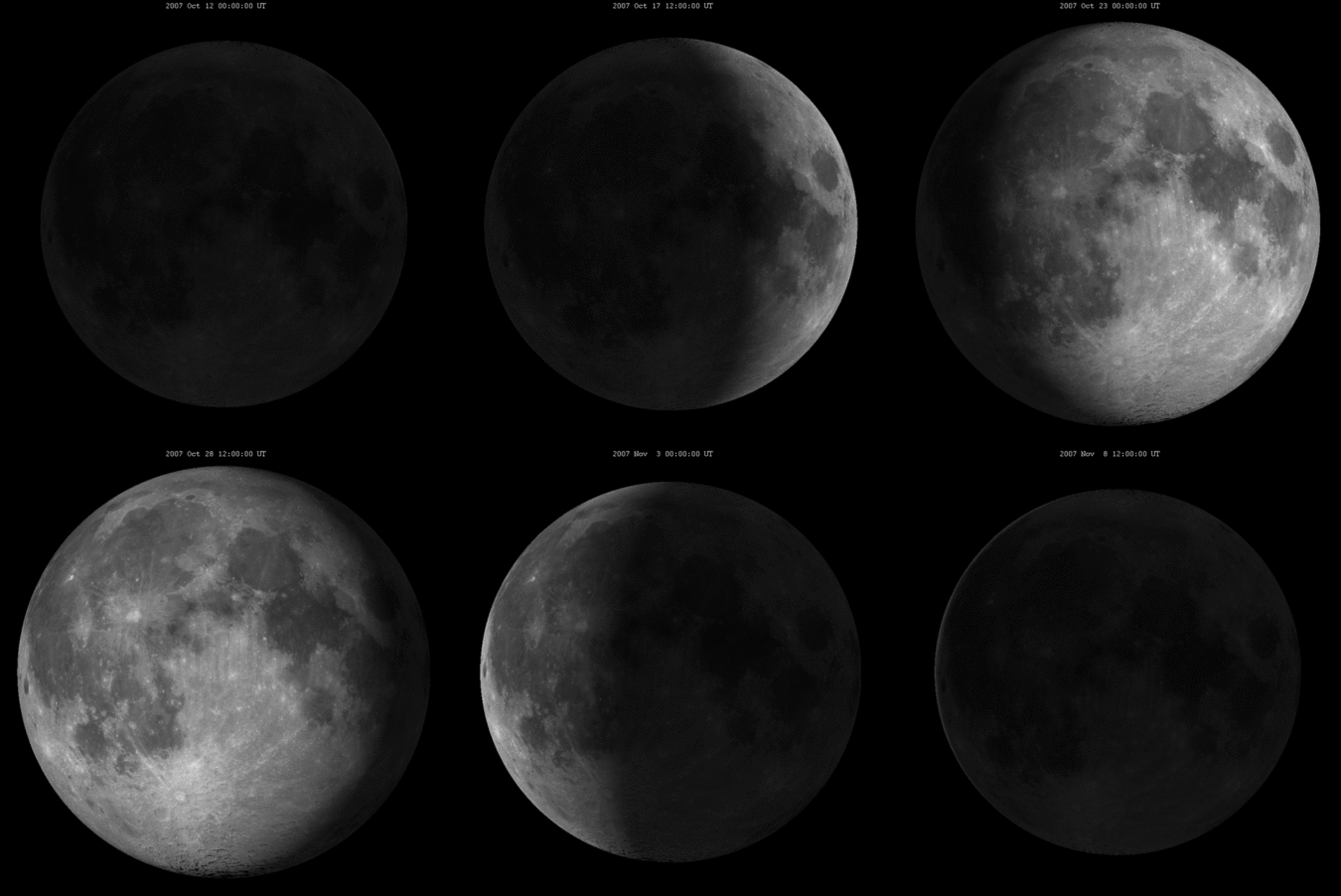
04/15/2021 – Ephemeris – The Moon tonight – libration
This is Bob Moler with Ephemeris for Thursday, April 15th. Today the Sun will be up for 13 hours and 30 minutes, setting at 8:28, and it will rise tomorrow at 6:56. The Moon, 4 days past new, will set at 12:14 tomorrow morning.
The crescent Moon tonight is in the constellation of Taurus the bull. The bright star Aldebaran will be just to the left of the Moon. In binoculars the dark oval spot visible on the Moon is the Sea of Crises or Mare Crisium a small dark lava plain. The Moon’s rotation is quite uniform, however its orbit isn’t circular, so the Moon’s appearance seems to rock a bit back and forth over the month. It’s an effect called libration. And one way to track that is to note how close the Sea of Crises is to the edge of the Moon. A week from now that sea will appear its closest to the edge. Astronomers call the edge of the Moon the limb. The phase line between day and night on the Moon is called the terminator. Now as the Moon is waxing, it is the morning or sunrise terminator.
The astronomical event times given are for the Traverse City/Interlochen area of Michigan. They may be different for your location.
Addendum
04/14/2021 – Ephemeris – Let’s search for the naked-eye planets for this week
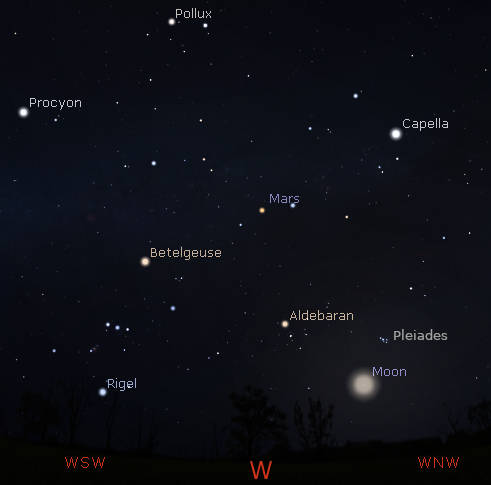
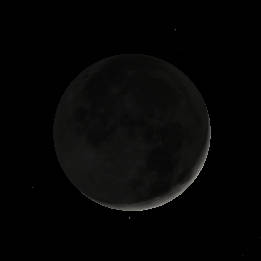
This is Bob Moler with Ephemeris for Wednesday, April 14th. Today the Sun will be up for 13 hours and 27 minutes, setting at 8:27, and it will rise tomorrow at 6:58. The Moon, 3 days past new, will set at 11:11 this evening.
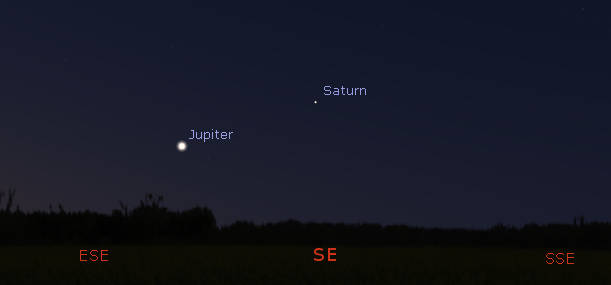
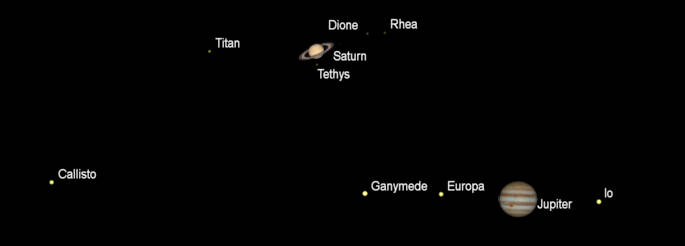
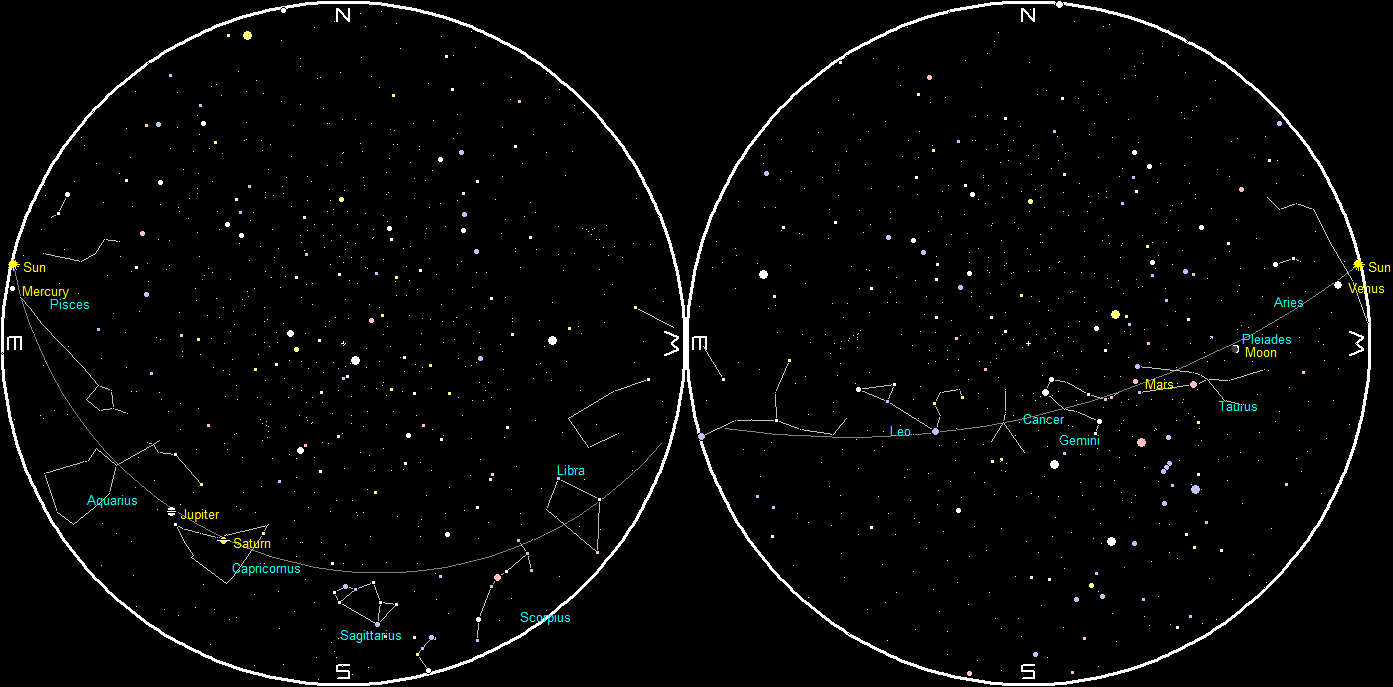
Let’s search for the naked-eye planets for this week. Unfortunately the only one you’ll find in the evening is Mars. It can be found in the west at 10 pm tonight, between the constellations of Taurus the bull below and Gemini the twins above. Mars will set at 1:39 am. Venus is now just east of the Sun, setting 23 minutes after sunset. It will be late May or early June before it will be easily spotted in the evening twilight. The other three naked-eye planets are west of the Sun in the morning sky. Only Saturn and Jupiter are at a far enough angle from the Sun to be spotted in the morning twilight. Saturn will rise at 4:17 am, with Jupiter rising at 4:53 am. By 6 am they will be low in the southeast.
The astronomical event times given are for the Traverse City/Interlochen area of Michigan. They may be different for your location.
Addendum
04/13/2021 – Ephemeris – Hydra slithers across the southern sky
This is Bob Moler with Ephemeris for Tuesday, April 13th. Today the Sun will be up for 13 hours and 24 minutes, setting at 8:25, and it will rise tomorrow at 6:59. The Moon, 2 days past new, will set at 10:08 this evening.
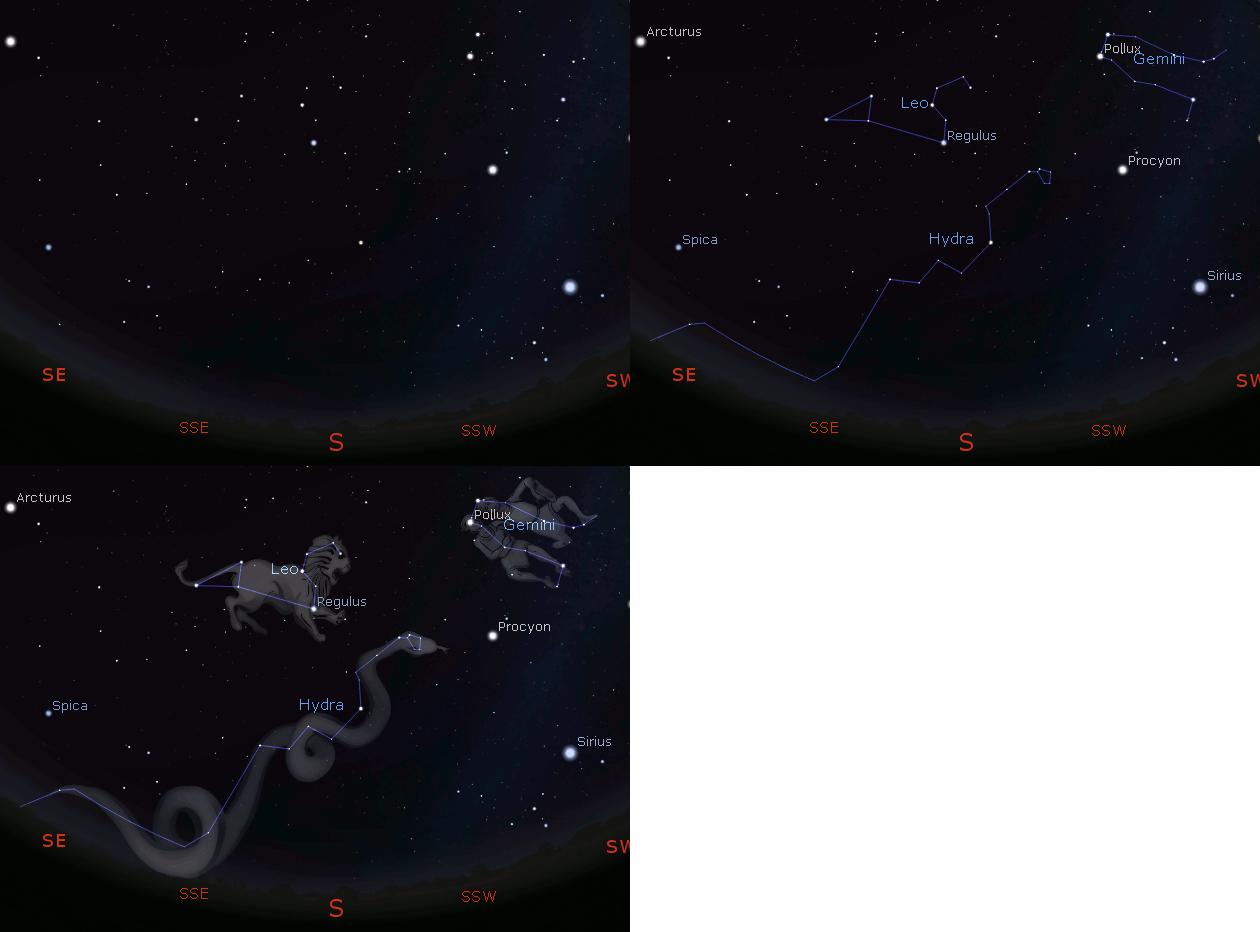
In the southern evening sky can be found the constellation of Hydra the water snake. Unlike the monster of the same name this Hydra has but one head, which is its most distinctive part. At 10 p.m. look midway up the sky in the south-southwest. The head of Hydra is located below a line from the constellation Leo the Lion in the south and Gemini high in the west-southwest. Its head is directly below Cancer the crab in the southwest. Hydra’s head is a small but distinctive group of 6 stars that make a loop and the snake’s slightly drooping head. The rest of Hydra wends its way to the southeastern horizon, and eventually ends near the late spring constellation of Libra the scales. Over the next few hours Hydra will be seen slithering across the southern sky.
The astronomical event times given are for the Traverse City/Interlochen area of Michigan. They may be different for your location.
Addendum
04/09/2021 – Ephemeris – Follow the arc to Arcturus
This is Bob Moler with Ephemeris for Friday, April 9th. Today the Sun will be up for 13 hours and 12 minutes, setting at 8:20, and it will rise tomorrow at 7:06. The Moon, 2 days before new, will rise at 6:57 tomorrow morning.
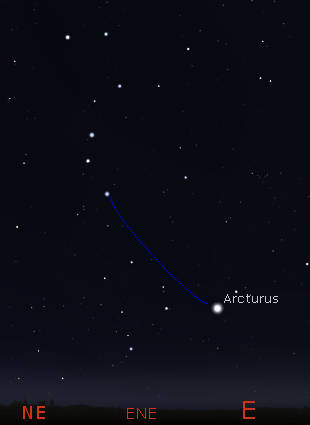
The fourth or fifth brightest night-time star, depending on whose list you see, is now up in the east in the evening. It is Arcturus, a bright star with an orange hue. It can be found otherwise by finding the Big Dipper and tracing out and extending the curve of the handle and “Follow the arc of the handle to Arcturus”, to remember the name of the star and how to find it. Arcturus is about 37 light years from us and is moving quite rapidly across the sky, compared to most stars, though one would not notice it to the naked eye in one’s lifetime. Arcturus is slightly more massive than our Sun, and about 7 billion years old, and is entering its red giant stage of life after using all the hydrogen fuel in its core. Our Sun, being slightly less massive will survive on hydrogen a bit longer.
The astronomical event times given are for the Traverse City/Interlochen area of Michigan. They may be different for your location.
Addendum
I’ll be talking more about Arcturus and the constellation it’s in Boötes the herdsman, a kite shaped constellation that’s currently laying on its side. He’s not herding, but chasing the Great Bear. But that’s another story.
04/08/2021 – Ephemeris – Ursa Major, the Great Bear
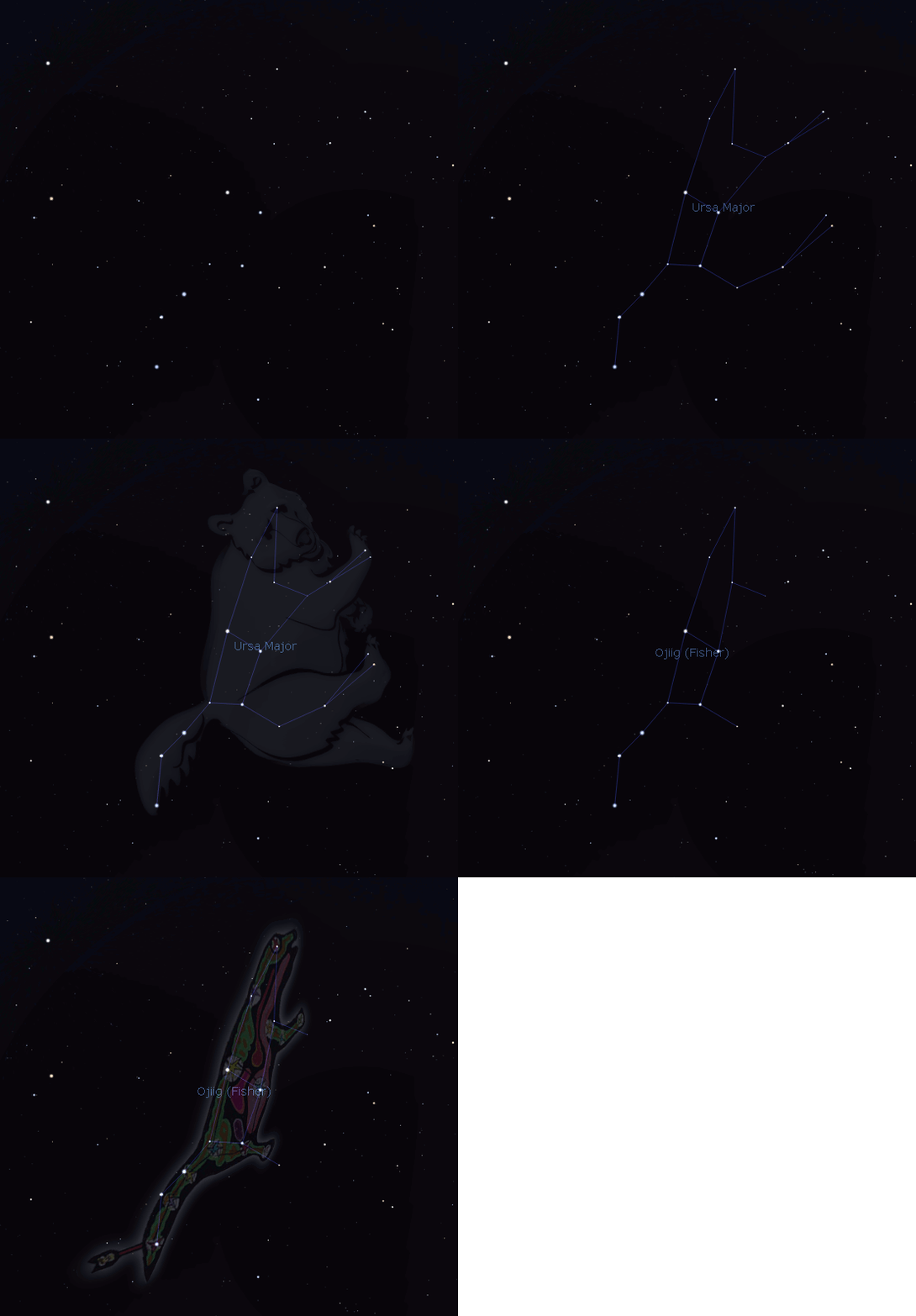
This is Bob Moler with Ephemeris for Thursday, April 8th. Today the Sun will be up for 13 hours and 9 minutes, setting at 8:19, and it will rise tomorrow at 7:08. The Moon, 3 days before new, will rise at 6:37 tomorrow morning. | The constellation of Ursa Major, or great bear was well-known to the ancient Greeks and Native Americans. Today, however, many of us can recognize only part of it as the Big Dipper. The whole bear can be easily seen only in a dark sky. At 10 pm it’s high in the northeast with feet to the south. The stars in front of the bowl are the front part of his body and head. The bowl of the Big Dipper is his rump, and the handle his long tail. The Native Americans, saw those three stars as three hunters following the bear. The Anishinaabe tribes of the Great Lakes region saw it as the Fisher or Ojiig, who brought summer to the Earth. These stars here do make a convincing bear, except for the tail, when seen on a dark night. However, the weasel-like Fisher fits the stars completely.
The astronomical event times given are for the Traverse City/Interlochen area of Michigan. They may be different for your location.
Addendum
04/07/2021 – Ephemeris – Three naked-eye planets are visible overnight
This is Bob Moler with Ephemeris for Wednesday, April 7th. Today the Sun will be up for 13 hours and 6 minutes, setting at 8:18, and it will rise tomorrow at 7:10. The Moon, 3 days past last quarter, will rise at 6:14 tomorrow morning.
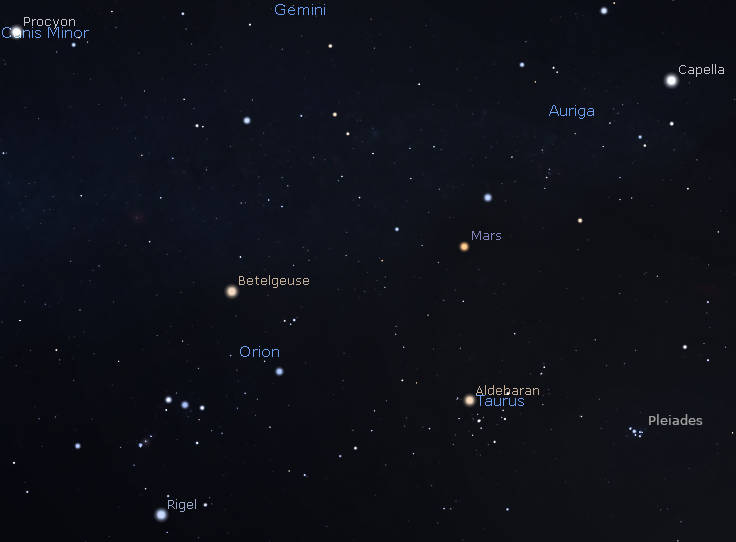
Let’s search for the naked-eye planets for this week. Unfortunately, the only one you’ll find in the evening is Mars. It can be found in the west at 10 pm tonight, above the orange star Aldebaran in the face of Taurus the bull. Mars will set at 1:47 am. Venus is now just a bit east of the Sun, setting fourteen minutes after sunset. It will be late May or early June before it will be easily spotted in the evening twilight. The other three naked-eye planets are just west of the Sun in the Morning sky. Only Saturn and Jupiter are at a far enough angle from the Sun to be spotted in the morning twilight. Saturn will rise at 4:43 am, with Jupiter rising 34 minutes later. By 6:30 am they will be low in the southeast.
The astronomical event times given are for the Traverse City/Interlochen area of Michigan. They may be different for your location.
Addendum
04/06/2021 – Ephemeris – The spring constellation of Leo
This is Bob Moler with Ephemeris for Tuesday, April 6th. Today the Sun will be up for 13 hours and 3 minutes, setting at 8:17, and it will rise tomorrow at 7:12. The Moon, 2 days past last quarter, will rise at 5:48 tomorrow morning.
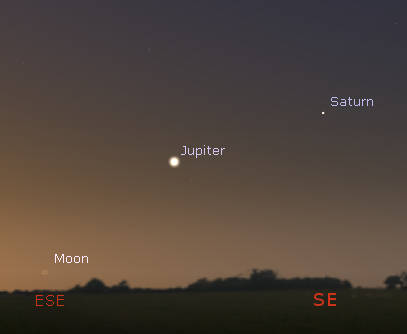
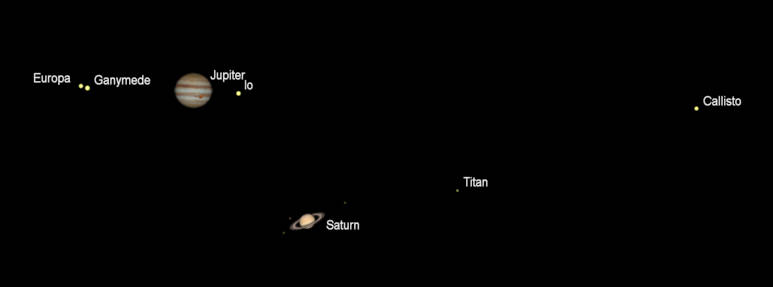
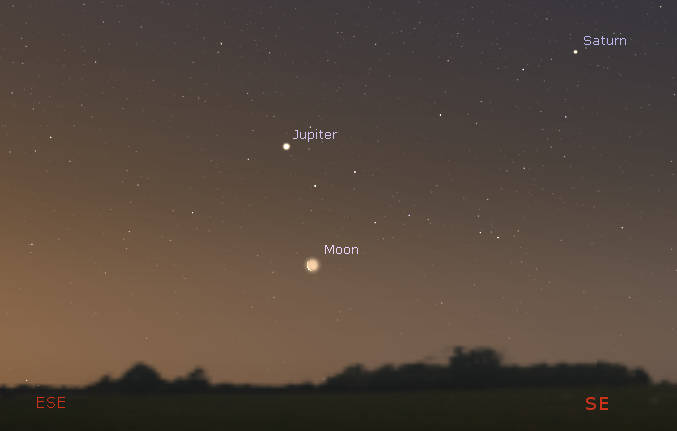
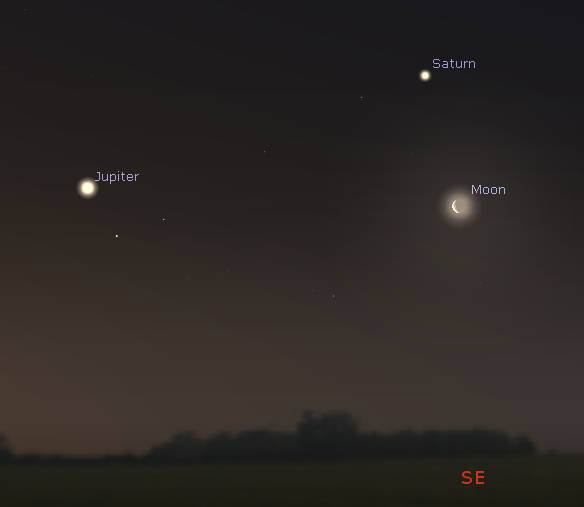
Tomorrow morning early risers will see the Moon near the planets Saturn and Jupiter. Specifically Jupiter, left of Saturn will be right above the waning crescent Moon.
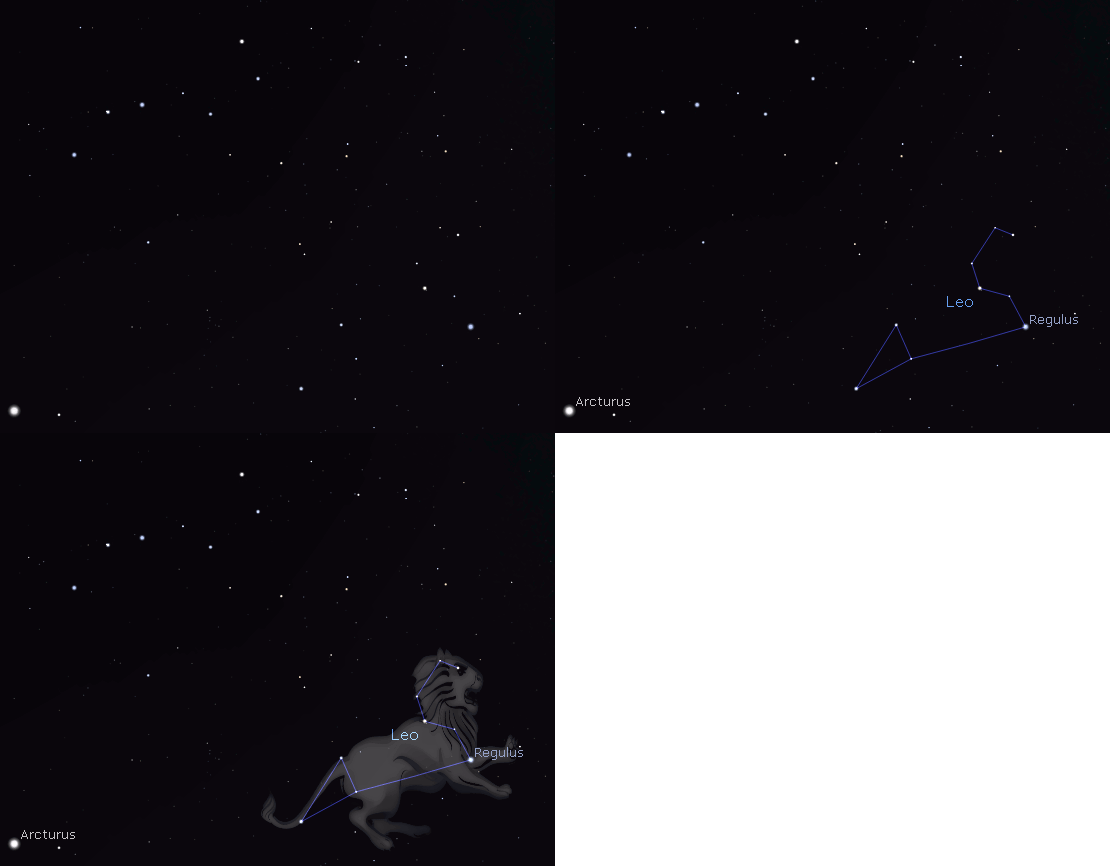
Tonight however, will be a good time to check out Leo the celestial lion high in the southeast. His distinctive pattern of stars is a backward question mark, with the bright star Regulus as the dot on the bottom of it. It delineates the male lion’s head and mane. That pattern is also called the Sickle. While Leo is one of the official 88 constellations, the Sickle is an asterism, or informal constellation. Completing Leo is a triangle of stars below left of Regulus, his rump ending with the star Denebola, at the root of Leo’s tail. Leo is rich in mythology.
The astronomical event times given are for the Traverse City/Interlochen area of Michigan. They may be different for your location.
Addenda
Jupiter and the Moon tomorrow morning
Leo tonight
04/05/2021 – Ephemeris – Saturn, Jupiter and the Moon will be seen together tomorrow morning
This is Ephemeris for Monday, April 5th. Today the Sun will be up for 13 hours even, setting at 8:15, and it will rise tomorrow at 7:13. The Moon, 1 day past last quarter, will rise at 5:15 tomorrow morning.
By 6:30 am tomorrow morning, if it’s clear the waning crescent Moon will be seen near Saturn and Jupiter low in the southeastern sky. Saturn will be almost directly above the Moon. And Jupiter, which is much brighter than Saturn, will be farther off to the left of the Moon at the same height. At that hour, Saturn will be only 14 degrees above the horizon, while Jupiter will be only 10 degrees up. This will make telescopic viewing tough, since you’re looking through a lot of atmosphere. The planet images won’t be sharp and will be undulating due to atmospheric currents, though they are usually not as bad in the early morning as they are in the evening. Wednesday morning the Moon will be below Jupiter. However, in the coming weeks the planets will be getting higher. Both planets will be in prime evening position by August.
The astronomical event times given are for the Traverse City/Interlochen area of Michigan. They may be different for your location.
Addendum
04/02/2021 – Ephemeris – Tonight: Free zoom based astronomy meeting and possible star party if clear
This is Bob Moler with Ephemeris for Good Friday, April 2nd. Today the Sun will be up for 12 hours and 50 minutes, setting at 8:12, and it will rise tomorrow at 7:19. The Moon, 2 days before last quarter, will rise at 2:42 tomorrow morning.
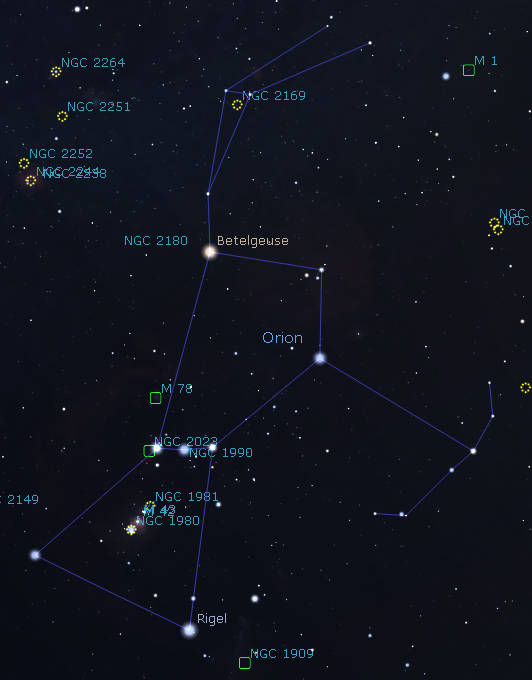
The Grand Traverse Astronomical Society hold a virtual meeting and program at 8 pm tonight via Zoom. For the program member Dan Dall’Olmo will present A Deep Look at Orion. April is our last chance to enjoy this most wonderful constellation until August mornings. The virtual star party will start around 9 pm, hosted by Dr. Jerry Dobek, astronomy professor at Northwestern Michigan College, but only if it’s clear in Traverse City. It will feature our last look at the Great Orion Nebula, and the first globular cluster of spring, M3, and a host of galaxies. Instructions to join and a link can be found on the society’s website www.gtastro.org.
The astronomical event times given are for the Traverse City/Interlochen area of Michigan. They may be different for your location.
Addendum
04/01/2021 – Ephemeris – Previewing April Skies
This is Bob Moler with Ephemeris for Wednesday, March 31st. Today the Sun will be up for 12 hours and 44 minutes, setting at 8:09, and it will rise tomorrow at 7:23. The Moon, 3 days past full, will rise at 12:11 tomorrow morning.
Let’s search for the naked-eye planets for this week. Unfortunately the only one you’ll find in the evening is Mars. It can be found in the west-southwest at 9 pm tonight, above the orange star Aldebaran in the face of Taurus the bull. Mars will set at 1:54 am. Right now three of the other four naked eye planets are just west of the Sun in the Morning sky. Venus is now below and just a bit east of the Sun, setting four minutes after sunset. Only Saturn and Jupiter are at a far enough angle from the Sun to be just spotted in the morning twilight. Saturn will rise at 5:10 am, with Jupiter rising 31 minutes later. By 6:30 am they will be low in the southeast. The Sun is rising earlier by 2 minutes a day now, while sunset is nearly matching that pace in the opposite direction.
The astronomical event times given are for the Traverse City/Interlochen area of Michigan. They may be different for your location.
Addendum
April Evening Star Chart
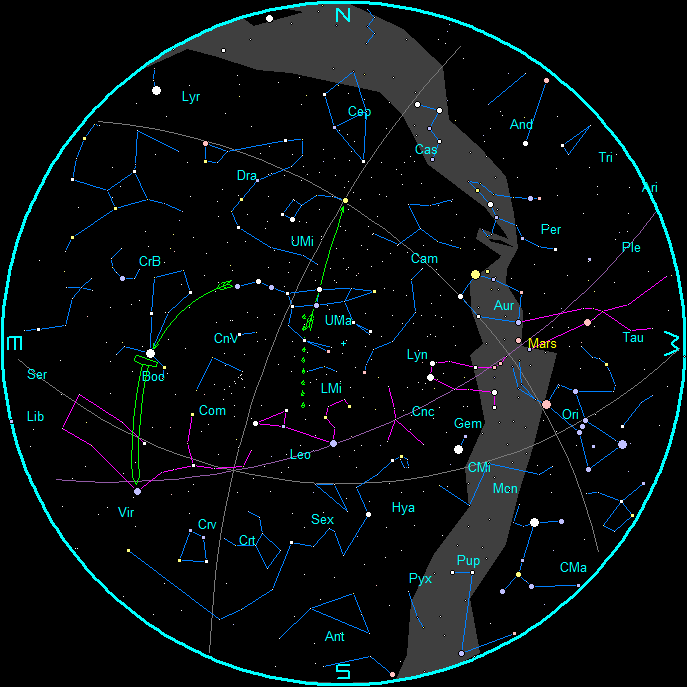
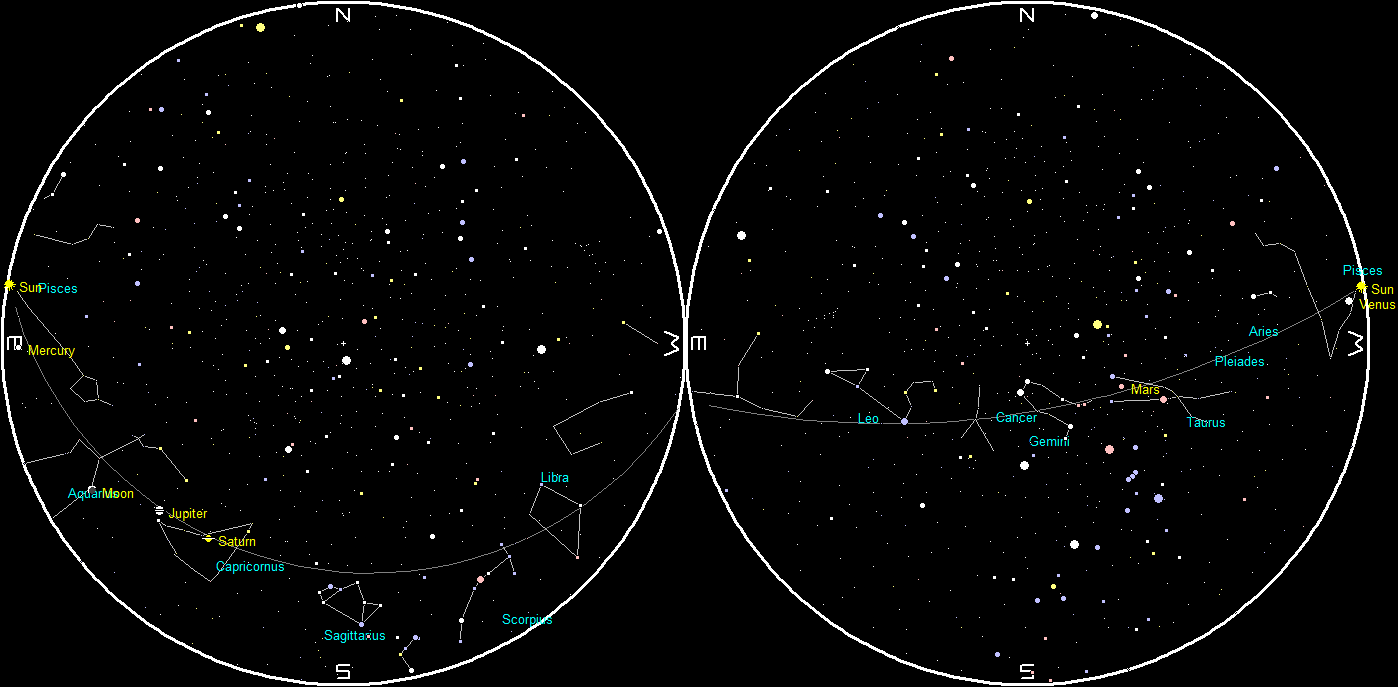
The planets and stars are plotted for the 15th at 10 p.m. EDT in the evening and 5 a.m. for the morning chart. These are the chart times. The brilliant planet Venus is our Evening Star in the West at chart time. Note that Traverse City is located approximately 45 minutes behind our time meridian, West 75° longitude. (An hour and 45 minutes behind our daylight saving time meridian during EDT).
April Morning Star Chart
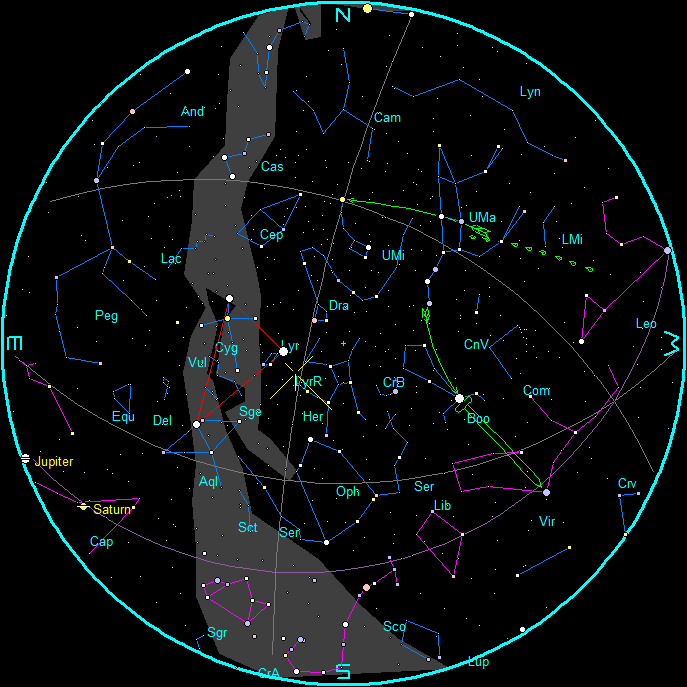
For a list of constellation names to go with the abbreviations click here.
- Pointer stars at the front of the bowl of the Big Dipper point to Polaris the North Star.
- The leaky bowl of the Big Dipper drips on Leo.
- Follow the arc of the handle of the Big Dipper to the star Arcturus, then
- Follow the spike to Spica.
- The Summer Triangle appears in red.
- LyrR is the radiant of the Lyrid meteor shower which will reach peak on the morning of the 22nd.
- the 22nd.
Twilight Limits, Nautical and Astronomical
| Morning | Twilight | Evening | Twilight | Dark | Night | Moon | |
| Date | Astro. | Nautical | Nautical | Astro. | Start | End | Illum. |
| 2021-04-01 | 5h46m | 6h23m | 21h18m | 21h54m | 21h54m | 0h11m | 0.74 |
| 2021-04-02 | 5h44m | 6h21m | 21h19m | 21h56m | 21h56m | 1h29m | 0.64 |
| 2021-04-03 | 5h42m | 6h19m | 21h20m | 21h57m | 21h57m | 2h42m | 0.52 |
| 2021-04-04 | 5h39m | 6h17m | 21h22m | 21h59m | 21h59m | 3h44m | 0.42 |
| 2021-04-05 | 5h37m | 6h15m | 21h23m | 22h01m | 22h01m | 4h35m | 0.31 |
| 2021-04-06 | 5h35m | 6h13m | 21h25m | 22h02m | 22h02m | 5h16m | 0.22 |
| 2021-04-07 | 5h33m | 6h11m | 21h26m | 22h04m | 22h04m | 5h33m | 0.14 |
| 2021-04-08 | 5h31m | 6h09m | 21h27m | 22h05m | 22h05m | 5h31m | 0.08 |
| 2021-04-09 | 5h28m | 6h07m | 21h29m | 22h07m | 22h07m | 5h28m | 0.03 |
| 2021-04-10 | 5h26m | 6h05m | 21h30m | 22h09m | 22h09m | 5h26m | 0.01 |
| 2021-04-11 | 5h24m | 6h03m | 21h32m | 22h10m | 22h10m | 5h24m | 0 |
| 2021-04-12 | 5h22m | 6h01m | 21h33m | 22h12m | 22h12m | 5h22m | 0.01 |
| 2021-04-13 | 5h20m | 5h59m | 21h35m | 22h14m | 22h14m | 5h20m | 0.04 |
| 2021-04-14 | 5h17m | 5h57m | 21h36m | 22h16m | 23h12m | 5h17m | 0.08 |
| 2021-04-15 | 5h15m | 5h55m | 21h38m | 22h17m | – | 5h15m | 0.14 |
| 2021-04-16 | 5h13m | 5h53m | 21h39m | 22h19m | 0h14m | 5h13m | 0.22 |
| 2021-04-17 | 5h11m | 5h51m | 21h41m | 22h21m | 1h15m | 5h11m | 0.3 |
| 2021-04-18 | 5h09m | 5h49m | 21h42m | 22h23m | 2h12m | 5h09m | 0.39 |
| 2021-04-19 | 5h06m | 5h47m | 21h44m | 22h24m | 3h03m | 5h06m | 0.49 |
| 2021-04-20 | 5h04m | 5h45m | 21h45m | 22h26m | 3h47m | 5h04m | 0.59 |
| 2021-04-21 | 5h02m | 5h43m | 21h47m | 22h28m | 4h25m | 5h02m | 0.7 |
| 2021-04-22 | 5h00m | 5h41m | 21h48m | 22h30m | 4h56m | 5h00m | 0.79 |
| 2021-04-23 | 4h57m | 5h39m | 21h50m | 22h32m | – | – | 0.88 |
| 2021-04-24 | 4h55m | 5h37m | 21h51m | 22h34m | – | – | 0.94 |
| 2021-04-25 | 4h53m | 5h35m | 21h53m | 22h35m | – | – | 0.99 |
| 2021-04-26 | 4h51m | 5h34m | 21h55m | 22h37m | – | – | 1 |
| 2021-04-27 | 4h49m | 5h32m | 21h56m | 22h39m | – | – | 0.98 |
| 2021-04-28 | 4h46m | 5h30m | 21h58m | 22h41m | 22h41m | 23h06m | 0.94 |
| 2021-04-29 | 4h44m | 5h28m | 21h59m | 22h43m | 22h43m | – | 0.87 |
| 2021-04-30 | 4h42m | 5h26m | 22h01m | 22h45m | 22h45m | 0h25m | 0.78 |
Twilight calendar was generated using Cartes du Ciel (Sky Charts).
See my blog post: Twilight Zone for the definitions of the different periods of twilight here: https://bobmoler.wordpress.com/2018/09/27/.
NASA Calendar of Planetary Events
   Date     Time      Event
Apr  1  Th            Venus: 2° E
     1  Th  10:41 pm  Moon Descending Node
     3  Sa  10:08 pm  Moon South Dec.: 25.4° S
     4  Su   6:02 am  Last Quarter
     6  Tu   4:34 am  Moon-Saturn: 4.2° N
     7  We   3:15 am  Moon-Jupiter: 4.7° N
    11  Su  10:31 pm  New Moon
    14  We   1:47 pm  Moon Apogee: 406100 km
    16  Fr   1:53 am  Moon Ascending Node
    17  Sa   8:09 am  Moon-Mars: 0.1° N,
                         Occultation Africa-Asia
    18  Su  12:02 pm  Moon North Dec.: 25.5° N
    18  Su   9:31 pm  Mercury Superior Conj.
    20  Tu   2:59 am  First Quarter
    20  Tu   2:25 pm  Moon-Beehive: 3° S
    22  Th   8:16 am  Lyrid Shower: ZHR = 20
    26  Mo  11:31 pm  Full Moon - Supermoon
    27  Tu  11:24 am  Moon Perigee: 357400 km
    29  Th   5:17 am  Moon Descending Node
    30  Fr   5:15 pm  Uranus Conjunction
May  1  Sa            Venus: 9.4° E
Sky Events Calendar by Fred Espenak and Sumit Dutta (NASA’s GSFC),
http://eclipse.gsfc.nasa.gov/SKYCAL/SKYCAL.html.
Sun and Moon Rising and Setting Events
              Ephemeris of Sky Events for Interlochen/TC
April, 2021    Local time zone: EDT
+-----------------------------------------------------------------------+
| DATE |  SUN     SUN  DAYLIGHT|   TWILIGHT*    |MOON  RISE OR    ILLUM |
|      |  RISE    SET    HOURS |  END    START  |PHASE SET** TIME FRACTN|
+=======================================================================+
|Thu  1| 07:23a  08:10p  12:47 | 09:15p  06:18a |      Rise 01:29a   76%|
|Fri  2| 07:21a  08:12p  12:50 | 09:17p  06:16a |      Rise 02:42a   66%|
|Sat  3| 07:19a  08:13p  12:53 | 09:18p  06:14a |      Rise 03:44a   55%|
+------+-----------------------+----------------+-----------------------+
|Sun  4| 07:17a  08:14p  12:56 | 09:19p  06:12a |L Qtr Rise 04:35a   44%|
|Mon  5| 07:15a  08:15p  13:00 | 09:21p  06:10a |      Rise 05:15a   33%|
|Tue  6| 07:13a  08:17p  13:03 | 09:22p  06:08a |      Rise 05:48a   24%|
|Wed  7| 07:12a  08:18p  13:06 | 09:24p  06:06a |      Rise 06:14a   16%|
|Thu  8| 07:10a  08:19p  13:09 | 09:25p  06:04a |      Rise 06:37a    9%|
|Fri  9| 07:08a  08:20p  13:12 | 09:27p  06:02a |      Rise 06:57a    4%|
|Sat 10| 07:06a  08:22p  13:15 | 09:28p  06:00a |      Rise 07:17a    1%|
+------+-----------------------+----------------+-----------------------+
|Sun 11| 07:05a  08:23p  13:18 | 09:30p  05:58a |New   Set  08:03p    0%|
|Mon 12| 07:03a  08:24p  13:21 | 09:31p  05:56a |      Set  09:05p    1%|
|Tue 13| 07:01a  08:25p  13:24 | 09:32p  05:54a |      Set  10:08p    3%|
|Wed 14| 06:59a  08:27p  13:27 | 09:34p  05:52a |      Set  11:11p    7%|
|Thu 15| 06:58a  08:28p  13:30 | 09:35p  05:50a |      Set  12:14a   13%|
|Fri 16| 06:56a  08:29p  13:33 | 09:37p  05:48a |      Set  01:15a   20%|
|Sat 17| 06:54a  08:30p  13:36 | 09:38p  05:46a |      Set  02:12a   28%|
+------+-----------------------+----------------+-----------------------+
|Sun 18| 06:52a  08:32p  13:39 | 09:40p  05:44a |      Set  03:03a   37%|
|Mon 19| 06:51a  08:33p  13:42 | 09:41p  05:42a |      Set  03:47a   47%|
|Tue 20| 06:49a  08:34p  13:44 | 09:43p  05:40a |F Qtr Set  04:24a   57%|
|Wed 21| 06:47a  08:35p  13:47 | 09:45p  05:38a |      Set  04:56a   67%|
|Thu 22| 06:46a  08:37p  13:50 | 09:46p  05:37a |      Set  05:24a   77%|
|Fri 23| 06:44a  08:38p  13:53 | 09:48p  05:35a |      Set  05:49a   86%|
|Sat 24| 06:43a  08:39p  13:56 | 09:49p  05:33a |      Set  06:14a   93%|
+------+-----------------------+----------------+-----------------------+
|Sun 25| 06:41a  08:40p  13:59 | 09:51p  05:31a |      Set  06:39a   98%|
|Mon 26| 06:39a  08:41p  14:02 | 09:52p  05:29a |Full  Rise 08:19p  100%|
|Tue 27| 06:38a  08:43p  14:04 | 09:54p  05:27a |      Rise 09:43p   99%|
|Wed 28| 06:36a  08:44p  14:07 | 09:55p  05:25a |      Rise 11:06p   95%|
|Thu 29| 06:35a  08:45p  14:10 | 09:57p  05:23a |      Rise 12:25a   88%|
|Fri 30| 06:33a  08:46p  14:13 | 09:59p  05:22a |      Rise 01:34a   80%|
+-----------------------------------------------------------------------+
* Nautical Twilight
** Moonrise or moonset, whichever occurs between sunrise and sunset
Generated using my LookingUp for DOS program.

