Archive
Ephemeris: 06/23/2025 – The Big Dipper is tearing itself apart
This is Ephemeris for Monday, June 23rd. Today the Sun will be up for 15 hours and 34 minutes, setting at 9:32, and it will rise tomorrow at 5:58. The Moon, 2 days before new, will rise at 4:33 tomorrow morning.
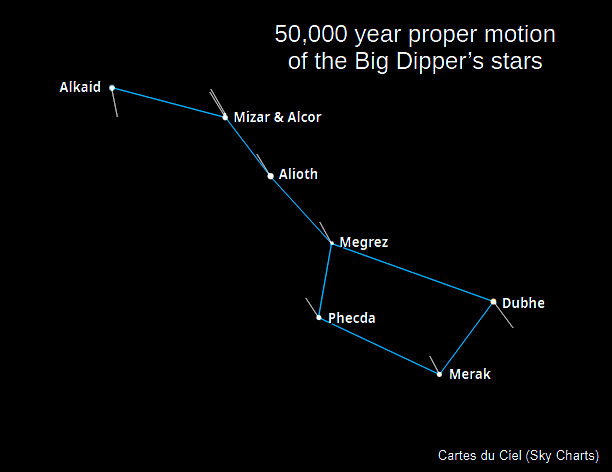
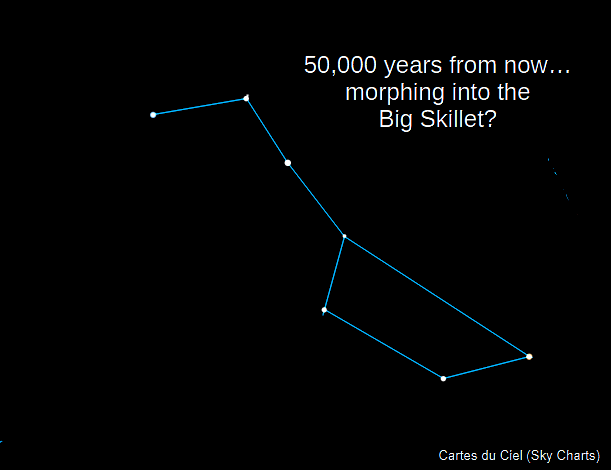
The usual impression is to think that the stars of a constellation are actually located close together. This is usually not true. The stars of a constellation can be at vastly different distances. The Big Dipper is different. The five stars, excepting the two end stars of the dipper and 12 other dimmer stars in the general area are of similar distance and have the same motion through space. The group is called the Ursa Major Moving Cluster or Ursa Major Association, and is moving about 9 miles per second relative to the solar system to the east. An association is a rather loose, sparse star cluster. This association lies about 80 light years away. If it were five and a half times farther away, it would be the same distance as the Pleiades.
The astronomical event times given in this blog are for the Traverse City/Interlochen area of Michigan (Lat 44.7° N, Long 85.7° W; EDT, UT – 4 hours) unless stated otherwise. Times will be different for other locations.
Addendum
Ephemeris: 06/20/2025 – Summer begins tonight!
This is Ephemeris for Friday, June 20th. Today the Sun will be up for 15 hours and 34 minutes, setting at 9:31, and it will rise tomorrow at 5:57. The Moon, 2 days past last quarter, will rise at 2:38 tomorrow morning.
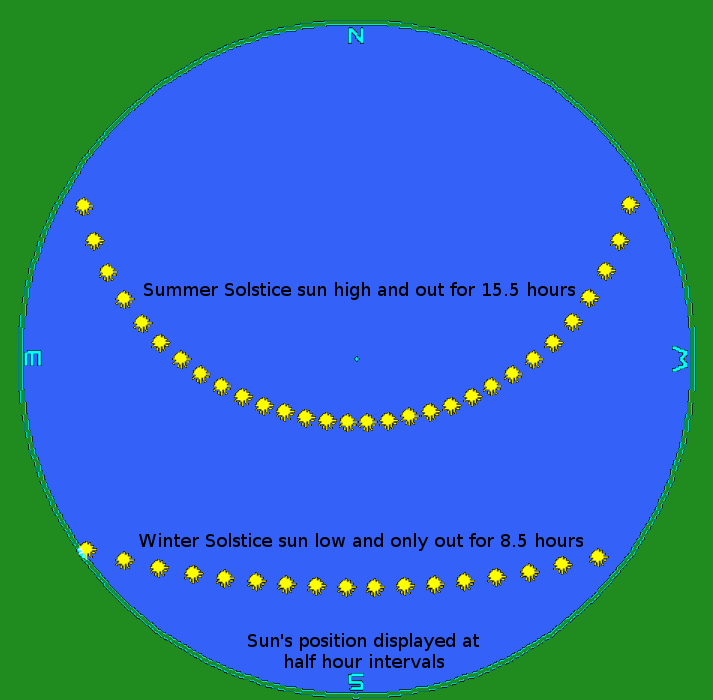
Summer will officially arrive for us on Earth’s Northern Hemisphere at 10:42 pm, tonight. If you are south of the equator, winter will arrive. If you are listening to this on the Internet from two time zones east of the Eastern United States it’s 2:42 UT, June 21st. And to be season agnostic, it’s the June solstice. From tonight to the December solstice, the first day of winter for us northern hemispherians, (I think that’s a word) the daylight hours will get shorter as the Sun heads south. Solstice means “Sun standstill” as it stops its northerly motion and will, after tonight, head back south again. The Northern Hemisphere will still be heating up for another month, before we begin to cool down.
The astronomical event times given in this blog are for the Traverse City/Interlochen area of Michigan (Lat 44.7° N, Long 85.7° W; EDT, UT – 4 hours) unless stated otherwise. Times will be different for other locations.
Addendum
Ephemeris: 06/19/2025 – Finding the Serpent Bearer in the heavens
This is Ephemeris for Juneteenth, Thursday, June 19th. Today the Sun will be up for 15 hours and 34 minutes, setting at 9:31, and it will rise tomorrow at 5:57. The Moon, 1 day past last quarter, will rise at 2:15 tomorrow morning.
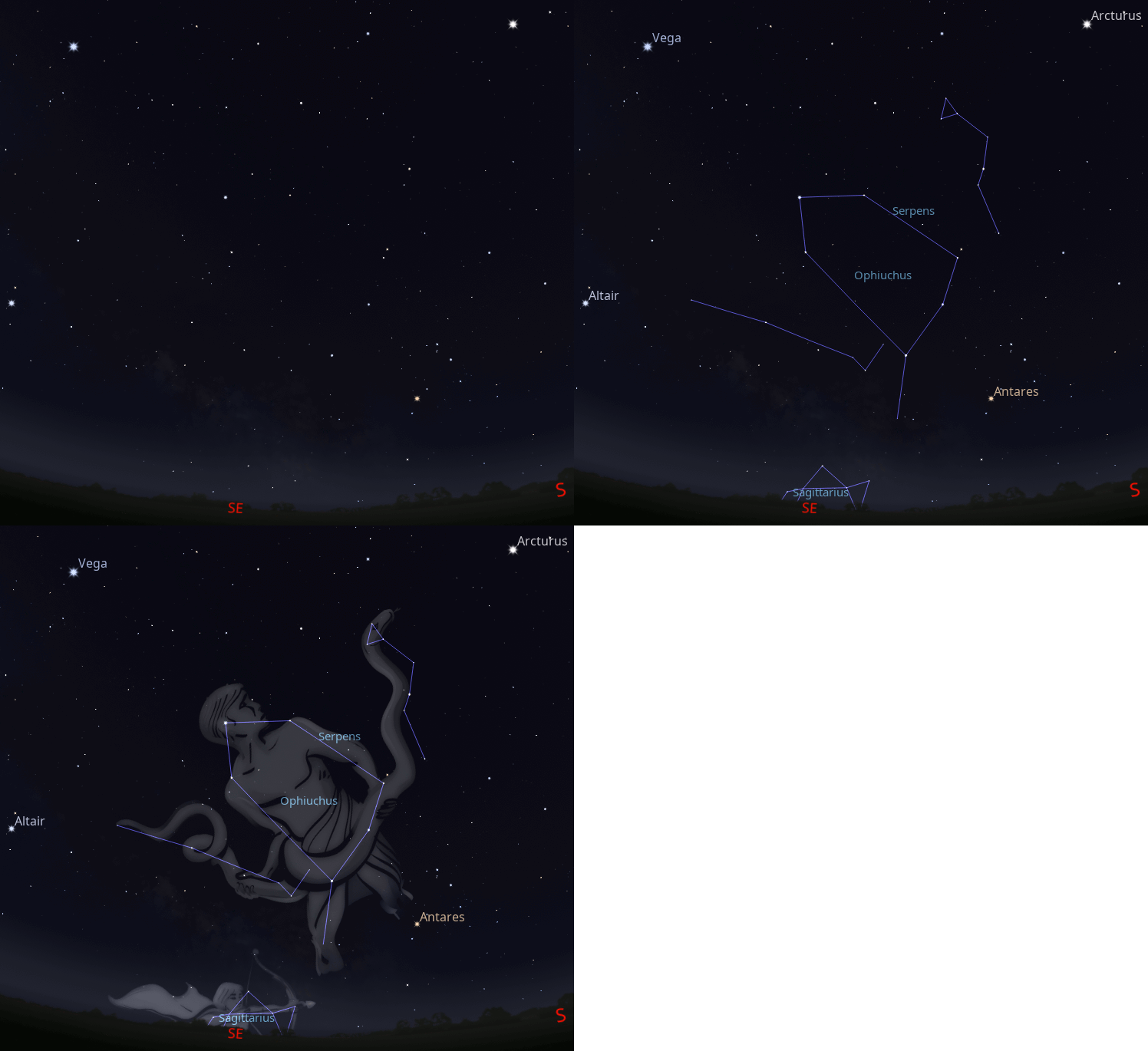
The red star Antares shines low in the south-southeast at 11 PM in the constellation of Scorpius. In the area of sky above and to the left lies a large constellation of faint stars called Ophiuchus, the serpent bearer. The constellation shape is like a large bell, which reminds me of the head, shoulders and arms of a fellow that’s holding the snake stretched out across his body. The serpent he’s holding is Serpens, the only two-part constellation in the heavens. The head rises to Ophiuchus’ right, and the tail extends up to the left. In Greek myth, Ophiuchus represents the great physician Aesculapius, educated by the god Apollo, and the centaur Chiron, who is found in the stars as Sagittarius, just rising below him.
The astronomical event times given in this blog are for the Traverse City/Interlochen area of Michigan (Lat 44.7° N, Long 85.7° W; EDT, UT – 4 hours) unless stated otherwise. Times will be different for other locations.
Addendum
Ephemeris: 06/18/2025 – Three of the five naked-eye planets are visible now
This is Ephemeris for Wednesday, June 18th. Today the Sun will be up for 15 hours and 34 minutes, setting at 9:31, and it will rise tomorrow at 5:56. The Moon, at last quarter today, will rise at 1:55 tomorrow morning.
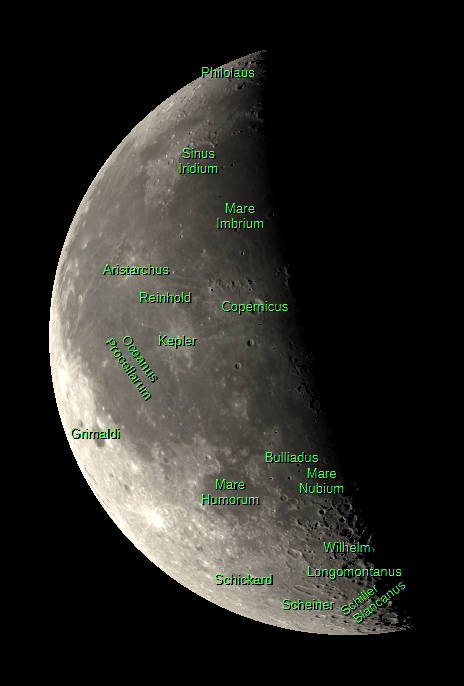
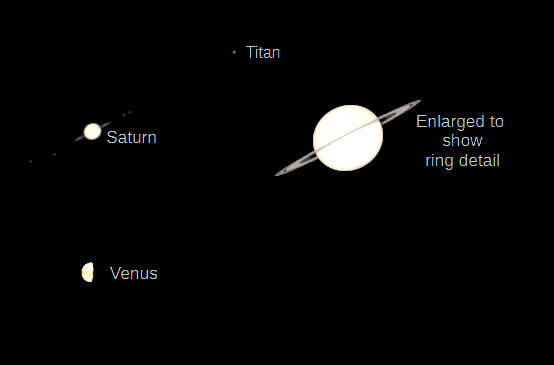
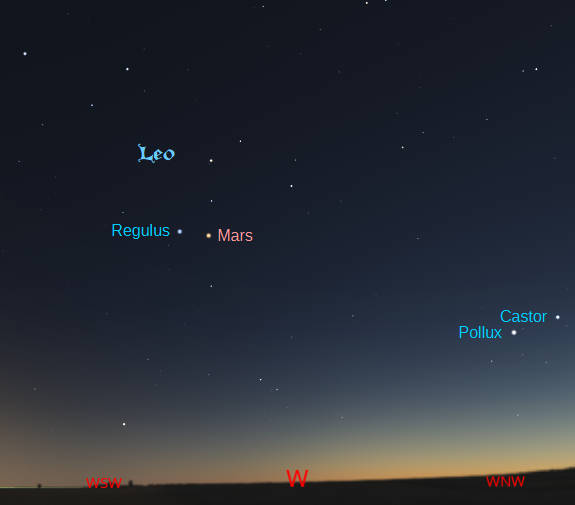
Let’s take our weekly look at the whereabouts of the naked-eye planets. The Red Planet Mars, will be seen just to the upper left of the bright star Regulus in the constellation Leo the lion. Both are seen in the western sky by 10:30 PM at least. They are currently about the same brightness, but Mars has an orange-reddish hue, while Regulus, is blue-white. They are a good color contrast, especially in binoculars which will increase their brightness. Even before 5 AM Venus will be seen very low in the east, as the Morning Star. The waning crescent Moon will be near Saturn, having passed it around midnight. By 5 AM Saturn will be to the right and below it. Venus will be visible until close to 5:40.
The astronomical event times given in this blog are for the Traverse City/Interlochen area of Michigan (Lat 44.7° N, Long 85.7° W; EDT, UT – 4 hours) unless stated otherwise. Times will be different for other locations.
Addendum
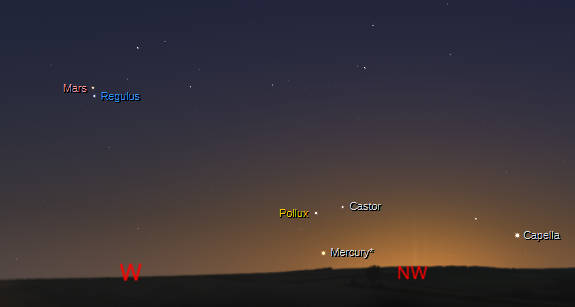
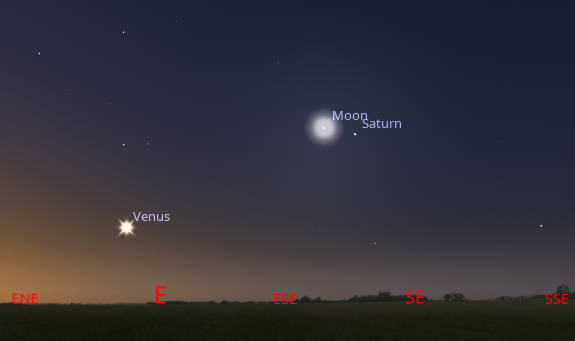
Venus, Saturn and the waining crescent Moon at 5 AM tomorrow morning, June 19th, 2025, in the east. Created using Stellarium.
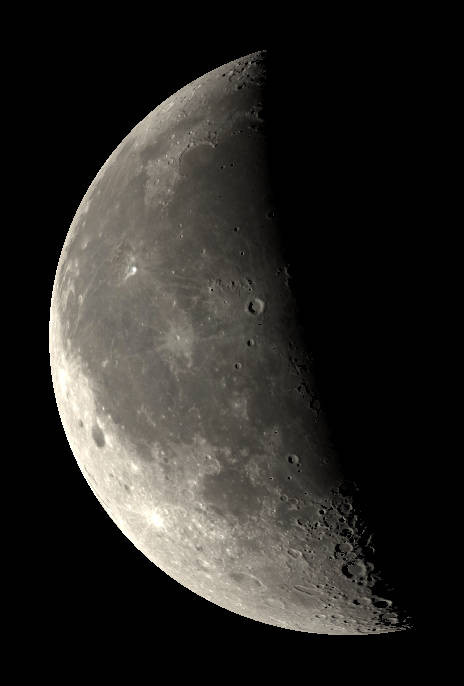
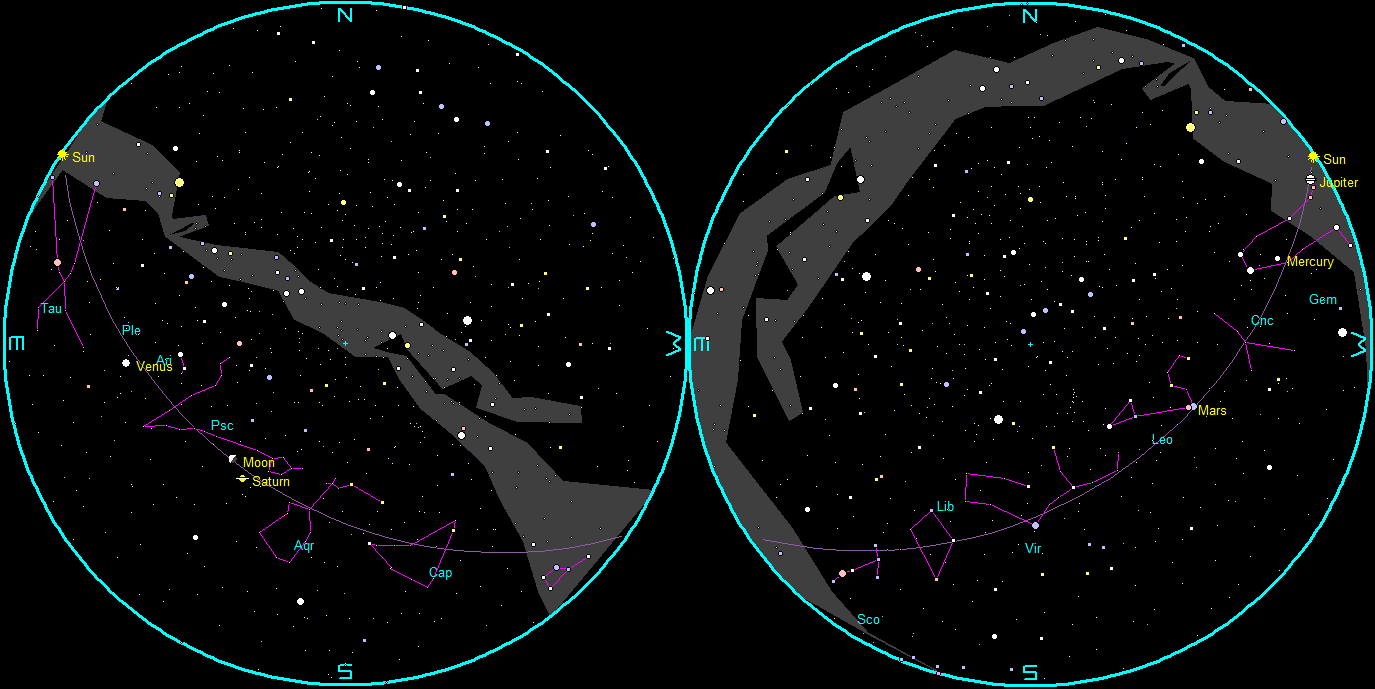
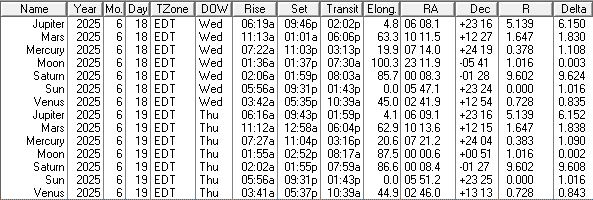
The naked-eye planets and the Moon at sunset and sunrise on a single night, starting with sunset on the right on June 18, 2025. The night ends on the left with sunrise on the 19th. Click or tap on the image to enlarge it. Created using my LookingUp app and GIMP.
Ephemeris: 06/17/2025 – Finding the naked-eye double star Mizar and Alcor
This is Ephemeris for Tuesday, June 17th. Today the Sun will be up for 15 hours and 34 minutes, setting at 9:31, and it will rise tomorrow at 5:56. The Moon, 1 day before last quarter, will rise at 1:36 tomorrow morning.
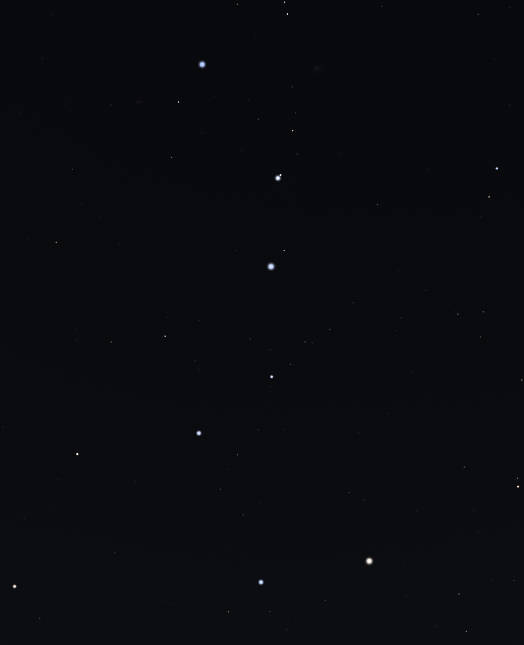
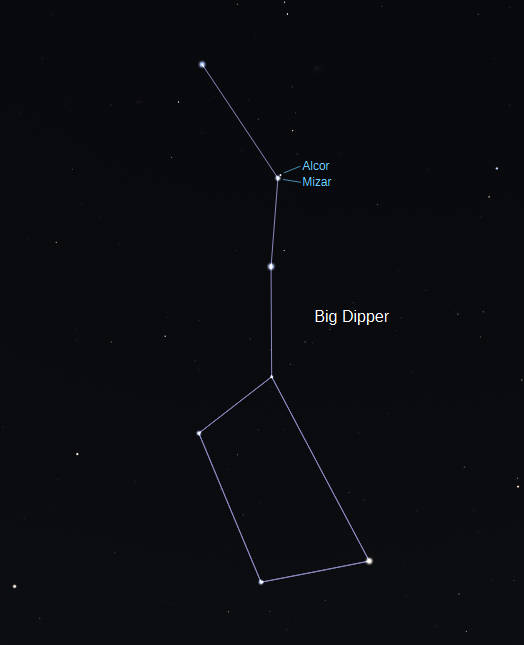
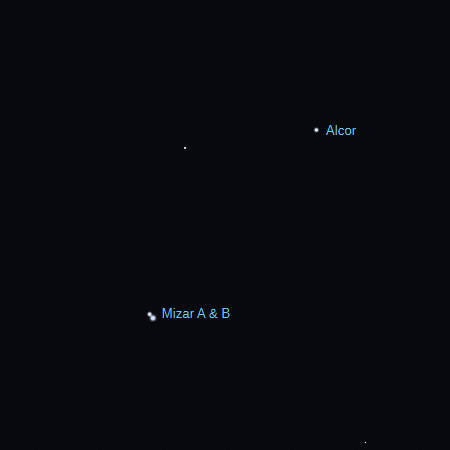
In tonight’s sky, the Big Dipper is high in the northwest hanging from its handle. In its handle is a star or two that are fascinating. It’s the star at the bend in the handle. It’s called Mizar. Next to it, for those with good eyesight, is a dimmer star, called Alcor. The name Mizar is from the Arabic, meaning apron or cover, while Alcor means the forgotten one. In ancient times the ability to actually see both stars was a test for good eyesight, especially for Arabic warriors. The pair is also known as the “Horse and the Rider”. Some Native American tribes saw the handle stars as hunters tracking the Great Bear, Ursa Major, of which the Big Dipper is a part, rather than its very unnatural tail. Dim Alcor became a hunting dog.
The astronomical event times given in this blog are for the Traverse City/Interlochen area of Michigan (Lat 44.7° N, Long 85.7° W; EDT, UT – 4 hours) unless stated otherwise. Times will be different for other locations.
Addendum
Ephemeris: 06/16/2025 – Mars meets Regulus tonight
This is Ephemeris for Monday, June 16th. Today the Sun will be up for 15 hours and 34 minutes, setting at 9:30, and it will rise tomorrow at 5:56. The Moon, 2 days before last quarter, will rise at 1:17 tomorrow morning.
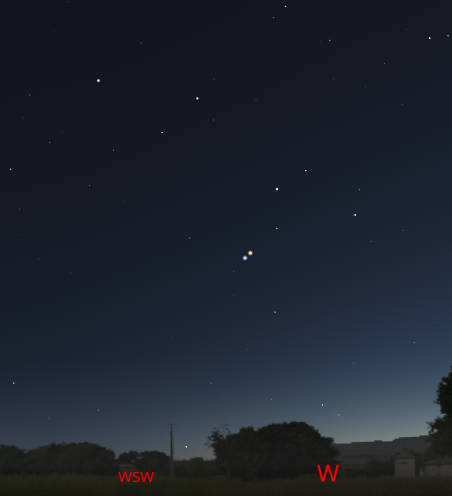
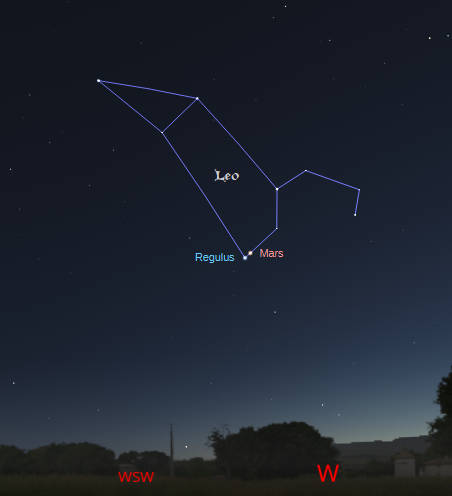
If one looks out tonight to the west after dark, two bright stars will appear very close together. One appears to the upper right of the other and very close, about one and a half moon-widths apart. The star to the upper right will have a reddish hue. It’s not a star at all but the planet Mars. The other one is a star, Regulus in Leo the lion. After tonight Mars will continue its trek eastward against the stars heading towards another bright star, Spica in Virgo. It will pass north of that star on September 11th. Mars will pass any particular star near the ecliptic on the average of one year, ten and a half months, which is its orbital period of the Sun. Since we’re viewing it from the moving Earth, along with Mars’ eccentric orbit, the interval can vary greatly.
The astronomical event times given in this blog are for the Traverse City/Interlochen area of Michigan (Lat 44.7° N, Long 85.7° W; EDT, UT – 4 hours) unless stated otherwise. Times will be different for other locations.
Addendum
Ephemeris: 06/13/2025 – Finding the Summer Triangle
This is Ephemeris for Friday, June 13th. Today the Sun will be up for 15 hours and 32 minutes, setting at 9:29, and it will rise tomorrow at 5:56. The Moon, 2 days past full, will rise at 11:59 this evening.
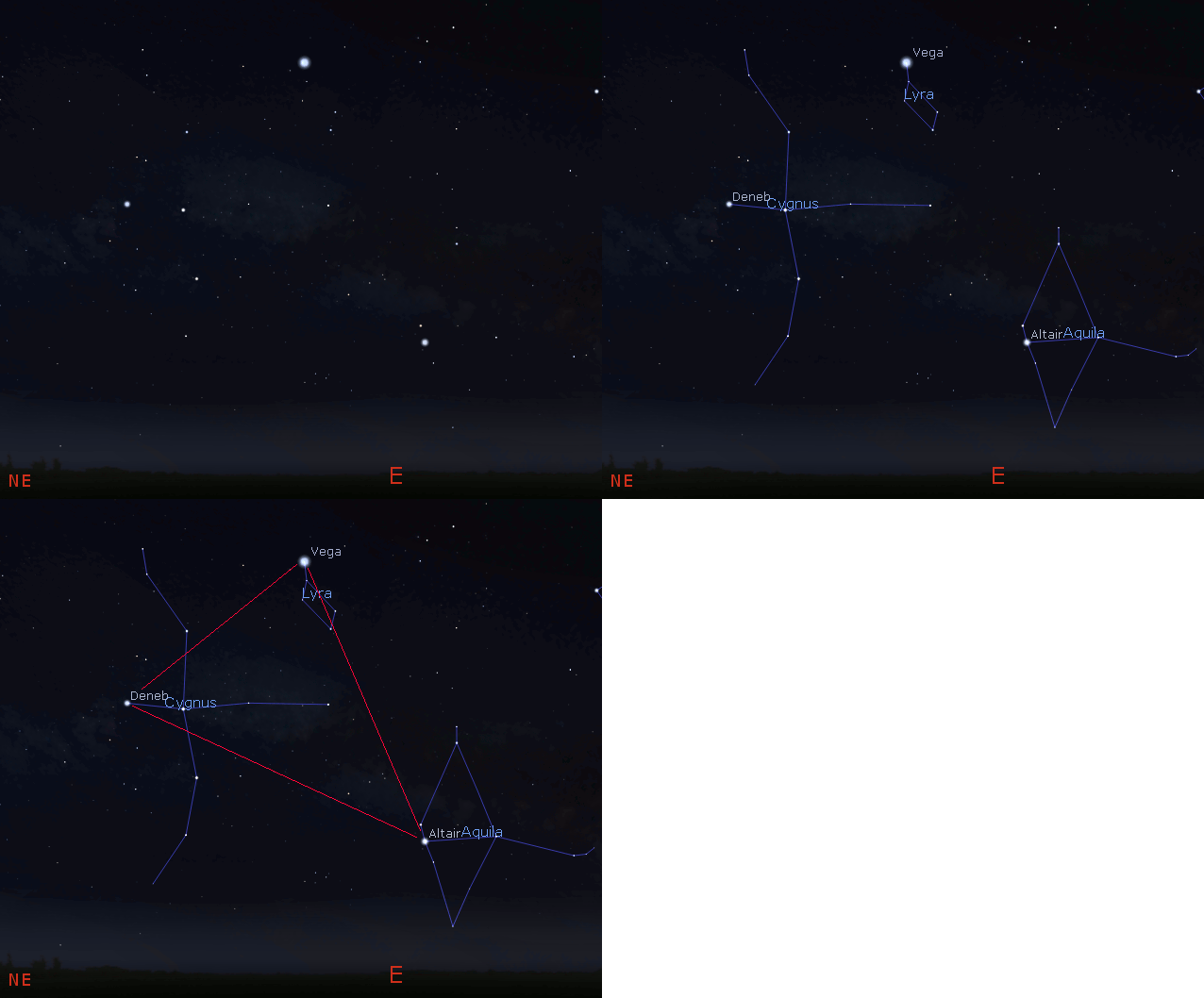
Summer skies are coming. It’s only 7 days until summer officially arrives. Looking to the eastern sky at 11 pm are three of the brightest stars in a large triangle. The top star Vega is about halfway up the sky to the zenith, and the brightest of the three. It’s in the small constellation of Lyra the harp. Lowest of the stars and just about due east is Altair in Aquila the eagle. Completing the triangle is Deneb in the northeast in the tail of Cygnus the swan or the head of the horizontal Northern Cross. These three stars make up the Summer Triangle, which isn’t an official constellation. It’s one of the many informal star patterns called asterisms. The Summer Triangle will be in our evening sky moving slowly westward until December.
The astronomical event times given in this blog are for the Traverse City/Interlochen area of Michigan (Lat 44.7° N, Long 85.7° W; EDT, UT – 4 hours) unless stated otherwise. Times will be different for other locations.
Addendum
Ephemeris: 06/12/2025 – Another look at the star Spica
This is Ephemeris for Thursday, June 12th. Today the Sun will be up for 15 hours and 32 minutes, setting at 9:29, and it will rise tomorrow at 5:56. The Moon, 1 day past full, will rise at 11:20 this evening.
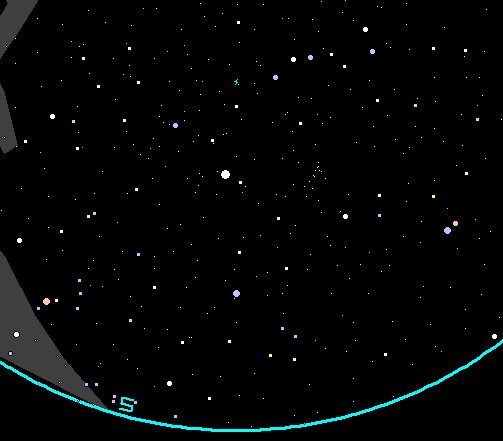
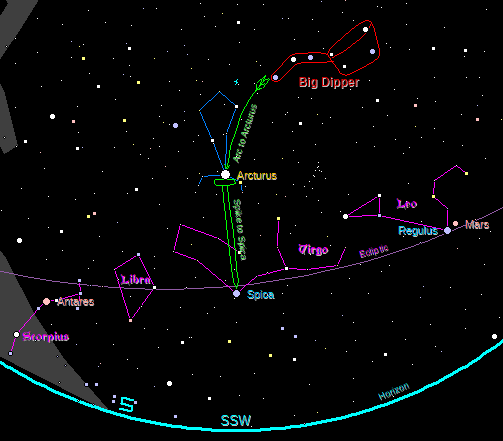
In the south-southwest at 11 PM is the bright star Spica in Virgo the virgin. Arcturus, high in the south, is much brighter than Spica and has an orange tint to Spica’s bluish hue. In fact, Spica is the 15th brightest and the bluest of the 21 first magnitude stars. That means that it has a really hot surface temperature. Spica is actually two stars in a tight 4-day orbit of each other. They are both reasonably matched in mass and brightness. I found that out once photographing a lunar eclipse near Spica, The star came out very blue. The twin stars of Spica are 250 light years away. I’m glad the stars are young now. They will have a very interesting future as they age and interact in the next few million years.
The astronomical event times given in this blog are for the Traverse City/Interlochen area of Michigan (Lat 44.7° N, Long 85.7° W; EDT, UT – 4 hours) unless stated otherwise. Times will be different for other locations.
Addendum

Ephemeris: 06/11/2025 – Checking on the naked-eye planets for this week
This is Ephemeris for Wednesday, June 11th. Today the Sun will be up for 15 hours and 31 minutes, setting at 9:28, and it will rise tomorrow at 5:56. The Moon, at full today, will rise at 10:31 this evening.
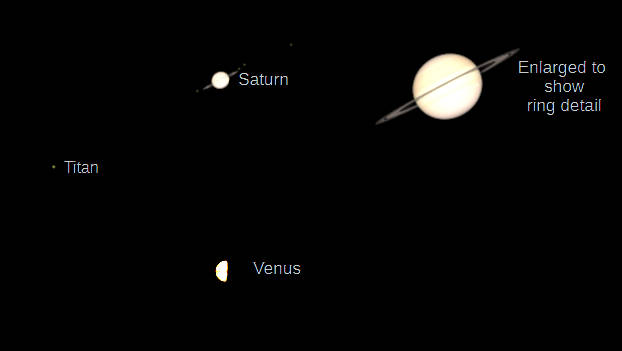
Let’s take our weekly look at the whereabouts of the naked-eye planets. Only one naked eye planet will be visible in the evening sky. That is reddish Mars, now approaching the bright star Regulus in the constellation Leo the lion, which it will pass just north of next Monday evening, June 16th. Both are seen in the western sky. They are currently about the same brightness, but Mars has an orange-reddish hue, while Regulus, to the left, is white. By 5 AM Venus will be seen very low in the east, as the Morning Star, with Saturn to the right and above it in the east-southeast. Venus will be visible until close to 5:40. For those with telescopes, Saturn’s rings are now slowly opening up again, and will for the next 7 years.
The astronomical event times given in this blog are for the Traverse City/Interlochen area of Michigan (Lat 44.7° N, Long 85.7° W; EDT, UT – 4 hours) unless stated otherwise. Times will be different for other locations.
Addendum
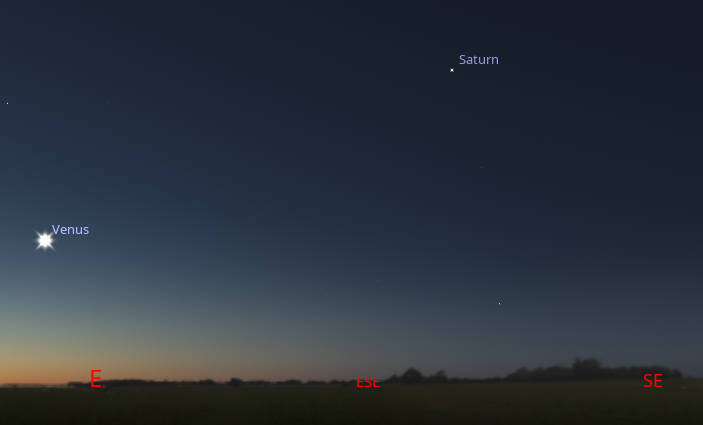
Venus and Saturn at 5 AM tomorrow morning, June 12th, 2025, low in the east. Created using Stellarium.
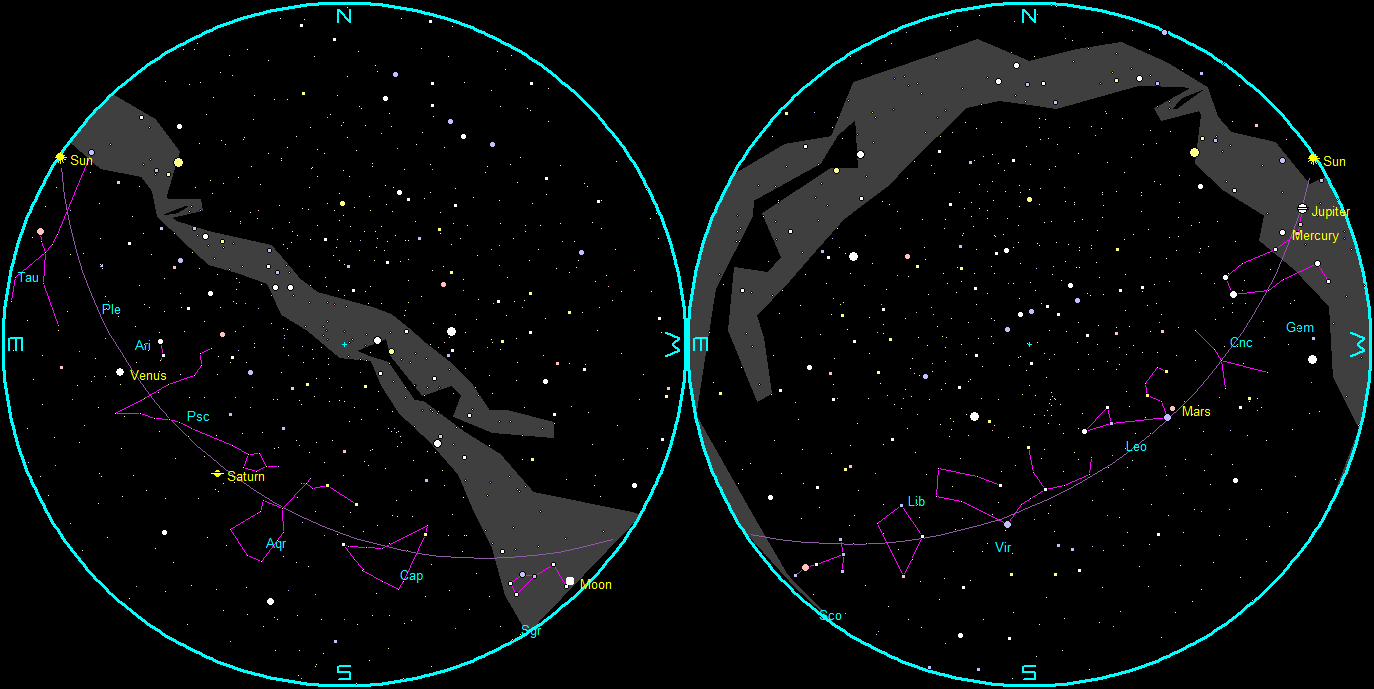
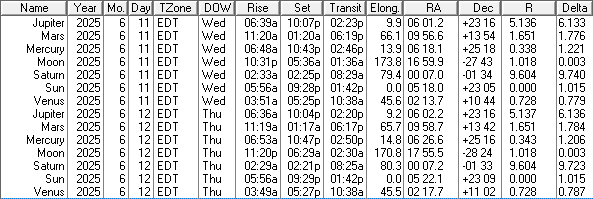
The naked-eye planets and the Moon at sunset and sunrise on a single night, starting with sunset on the right on June 11, 2025. The night ends on the left with sunrise on the 12th. Click or tap on the image to enlarge it. Created using my LookingUp app and GIMP.
Ephemeris: 06/10/2025 – Tonight’s Strawberry Moon
This is Ephemeris for Tuesday, June 10th. Today the Sun will be up for 15 hours and 30 minutes, setting at 9:27, and it will rise tomorrow at 5:56. The Moon, 1 day before full, will set at 5:36 tomorrow morning.
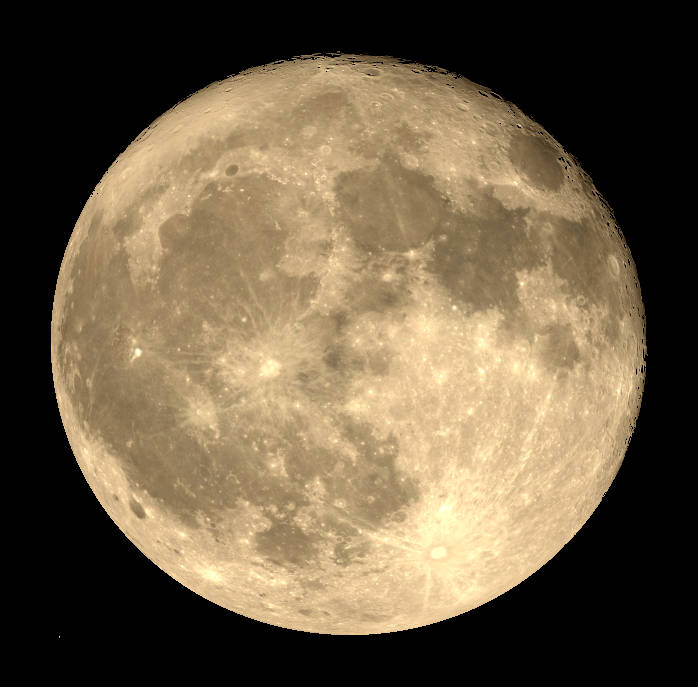
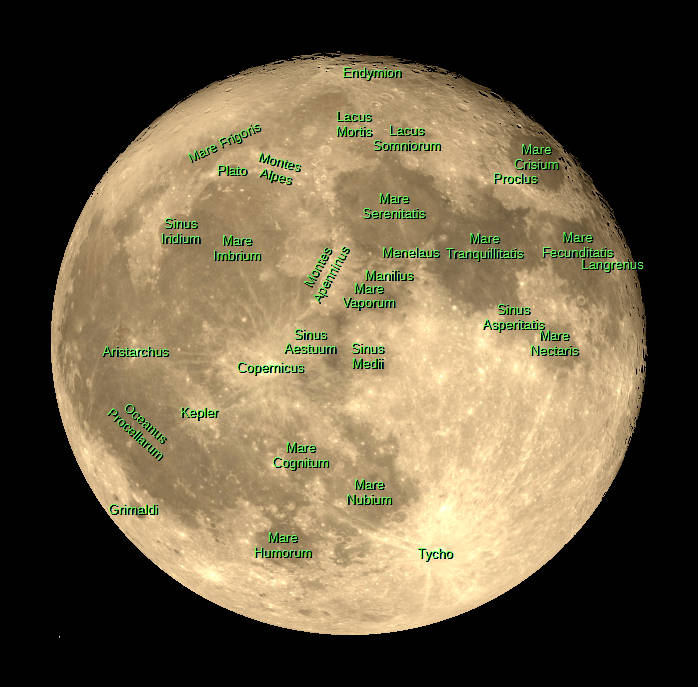
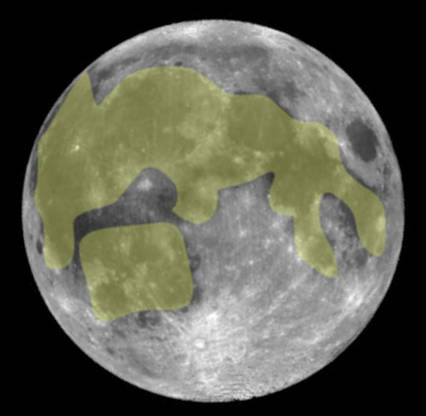
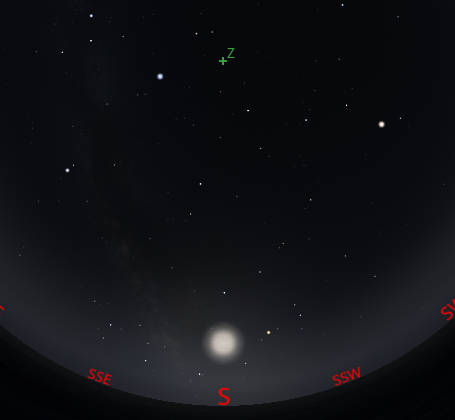
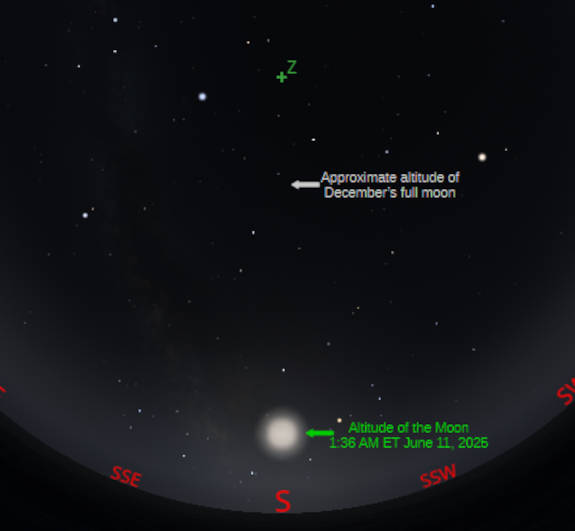
The actual instant that the Moon will be full, that is opposite the Sun in the sky, will be 3:44 tomorrow morning. So tonight’s full moon will be fuller than tomorrow night’s Moon. This month’s full moon is also called the Strawberry Moon by Native Americans, because this is the month that strawberries ripen. Also, the term honeymoon comes from the fact that many weddings are in June, when the full moon is low in the sky in the south and has a yellowish or honey color due to haze and atmospheric preferential scattering of blue light. The darker areas of the Moon give the effect of a face called the Man in the Moon. There is also a rabbit in the Moon, curled around the upper edge, with head and ears to the right and body to the left.
The astronomical event times given in this blog are for the Traverse City/Interlochen area of Michigan (Lat 44.7° N, Long 85.7° W; EDT, UT – 4 hours) unless stated otherwise. Times will be different for other locations.
Addendum
 Bob Moler's Ephemeris Blog