Archive
Ephemeris: 05/24/2024 – The twilight zone
This is Ephemeris for Friday, May 24th. Today the Sun will be up for 15 hours and 9 minutes, setting at 9:14, and it will rise tomorrow at 6:04. The Moon, 1 day past full, will rise at 11:06 this evening.
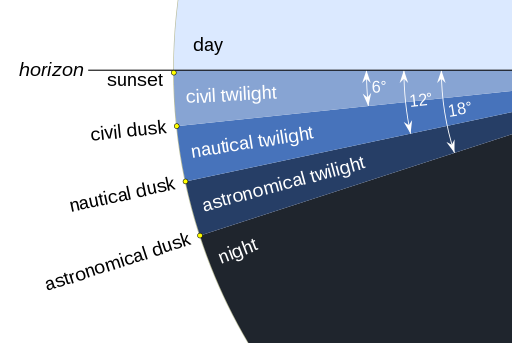
Let’s take a look at twilight, despite the fact it doesn’t end until 1132 PM. Of course the bright Moon will rise before then. By the 12th of June astronomical twilight will end at midnight and a couple of days before the summer solstice it will have extended itself to 12:05 AM. The Moon tonight will rise in the middle of astronomical twilight so we’ll get about 1/2 hour or so of semi dark sky viewing from about 10:37 PM to moonrise at 11:07. There are three intervals of twilight. Civil twilight which is the period between sunset and when the Sun is 6° below the horizon. Nautical twilight extends to when the Sun is 12° below the horizon, and astronomical twilight which ends when the Sun is 18° below the horizon.
The astronomical event times given are for the Traverse City/Interlochen area of Michigan (EDT, UT–4 hours). They may be different for your location
Addendum
Ephemeris: 05/23/2024 – My observations of the Earth as a globe
This is Bob Moler with Ephemeris for Thursday, May 23rd. Today the Sun will be up for 15 hours and 7 minutes, setting at 9:13, and it will rise tomorrow at 6:05. The Moon, at full today, will rise at 9:58 this evening.
As far as I can remember back in time I’ve always thought that the Earth was a globe. To me that the Earth is flat is nonsensical. And I’ve looked to the sky as confirmation that the Earth was indeed a globe. During my first trip to a southern state I saw it for myself. From our vantage point here in Michigan the constellation of Scorpius the scorpion just scrapes the southern horizon at its highest. When traveling down to Kentucky it was higher in the sky, so that was my first proof that the Earth is round. I’ve since gone to Hawaii and even using the programs I wrote and use for the times for Ephemeris, based on the Earth as a globe, I was able to predict when and where to see the Southern Cross. It was right there as calculated by my program.
The astronomical event times given are for the Traverse City/Interlochen area of Michigan (EDT, UT–4 hours). They may be different for your location.
Addendum
Ephemeris: 05/22/2024 – Where have the naked-eye planets wandered off to this week?
This is Ephemeris for Wednesday, May 22nd. Today the Sun will be up for 15 hours and 5 minutes, setting at 9:12, and it will rise tomorrow at 6:06. The Moon, 1 day before full, will set at 5:42 tomorrow morning.
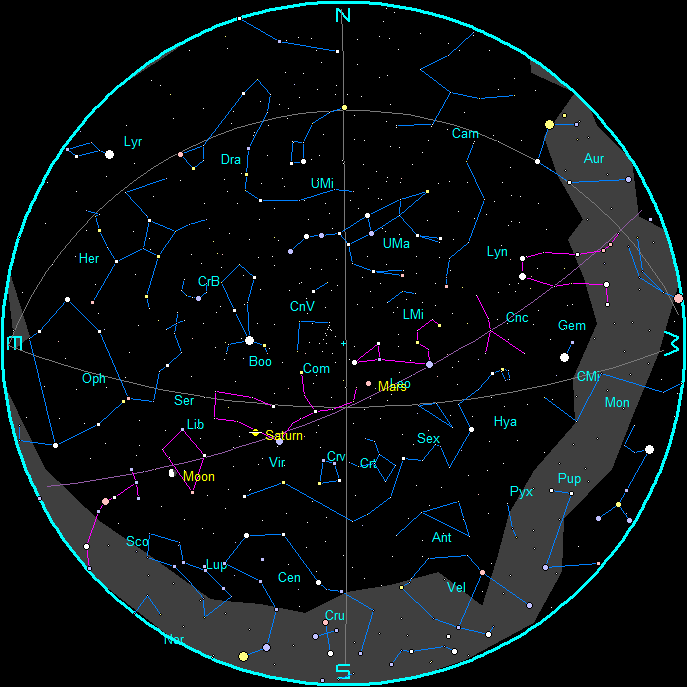
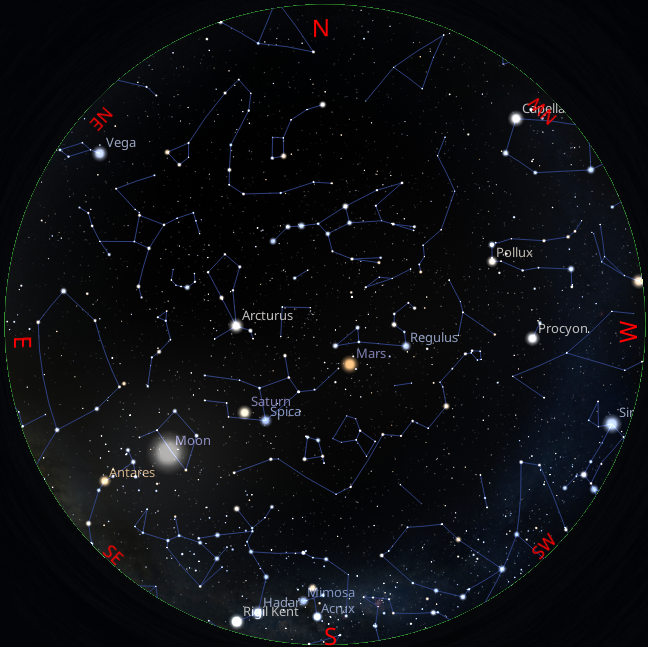
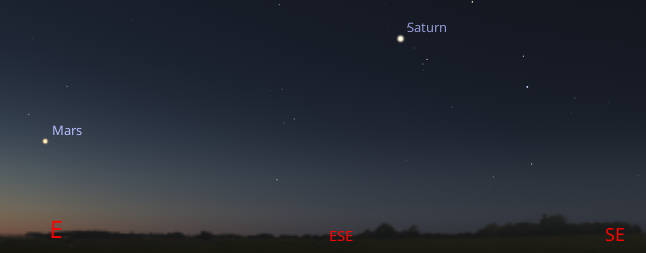
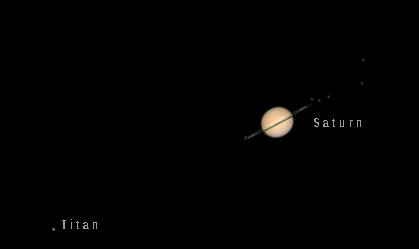
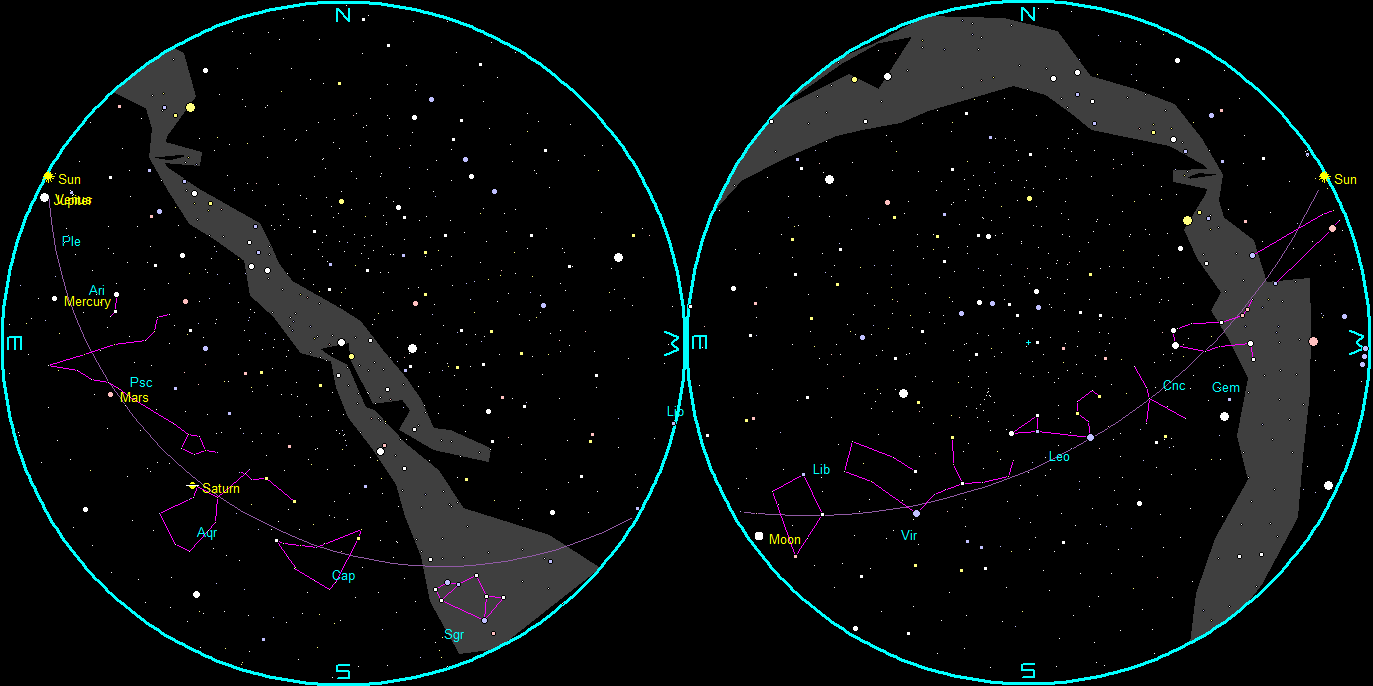
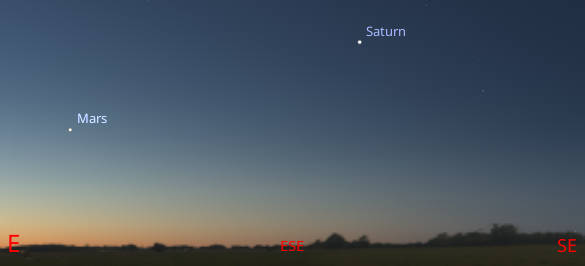
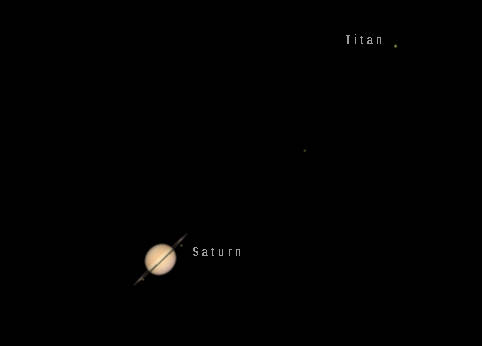
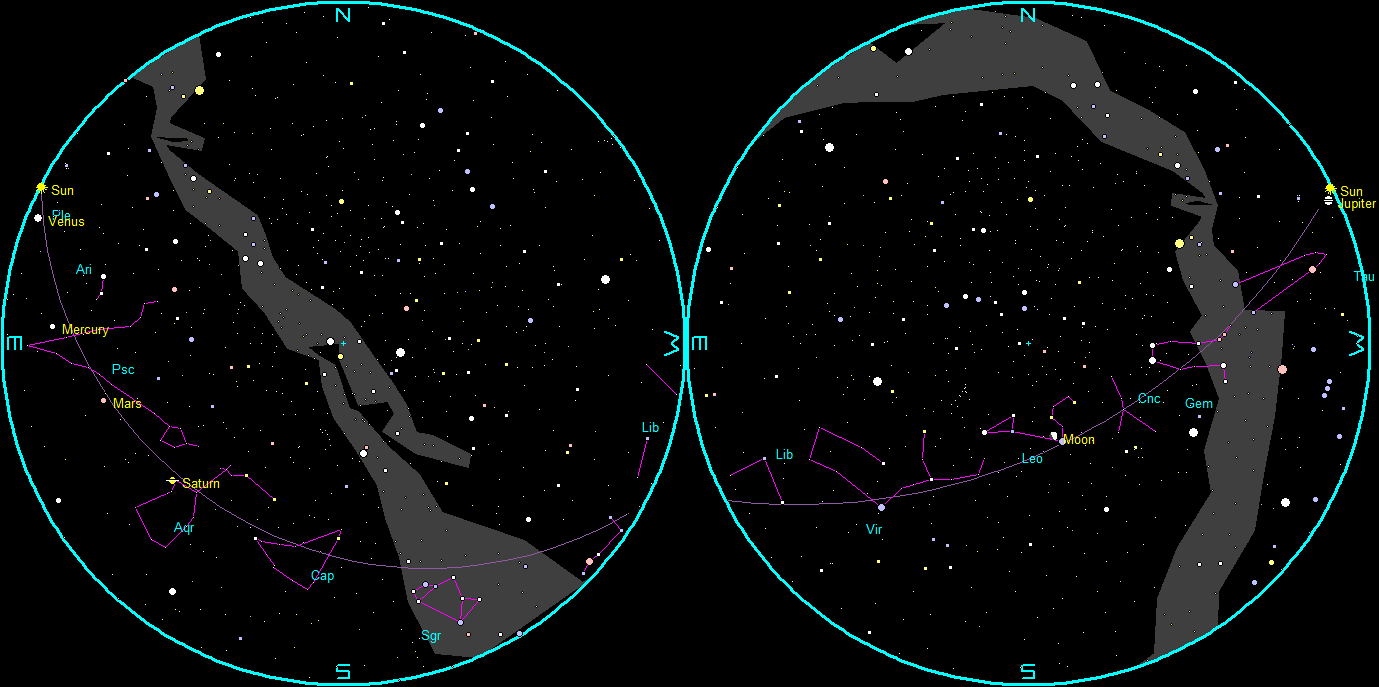
Let’s find out where the naked-eye planets have wandered off to this week, and see what planets are left. Jupiter now is too close to the direction of the Sun to be seen. It is on the morning side of the Sun, and by late June may be visible in the morning sky in twilight. By 5 tomorrow morning, about 66 minutes before sunrise, Saturn will be low in the east-southeast and Mars will be lower still in the east. In telescopes, Saturn will look fairly different this year and next with its rings nearly edge on to us. They will open up a bit through October before closing again. We won’t see the rings go exactly edge on because Saturn will be too close to the Sun in the sky on March 23rd next year. After that the rings will open up again.
The astronomical event times given are for the Traverse City/Interlochen area of Michigan (EDT, UT–4 hours). They may be different for your location.
Addendum
Ephemeris: 05/21/2024 – Looking ahead to the summer solstice
This is Ephemeris for Tuesday, May 21st. Today the Sun will be up for 15 hours and 3 minutes, setting at 9:11, and it will rise tomorrow at 6:07. The Moon, 2 days before full, will set at 5:14 tomorrow morning.
Summer is coming. Days are definitely warmer. The Sun’s out longer. Yesterday we passed the 15 hours of daytime. Summer will start a month from yesterday on the 20th of June. We normally expect the solstices on the 21st of June and 21st of December and the equinoxes on the 21st of March and the 23rd of September. However, we haven’t had, in our time zone at least, spring start on the 21st of March since 1987. The slow wondering of the equinox and solstice dates are due to the fact that the seasonal year, also called the tropical year, is not exactly 365 and a quarter days long. It is slightly shorter than that, which is the reason in 1582 Pope Gregory the 13th decreed that the calendar would be reformed which is the Gregorian Calendar we have now.
The astronomical event times given are for the Traverse City/Interlochen area of Michigan (EDT, UT–4 hours). They may be different for your location.
Addendum
I talk about the calendar in much more detail in this post: https://bobmoler.wordpress.com/2016/02/28/02282016-ephemeris-extra-the-years-of-our-lives/
Ephemeris: 05/20/2024 – Sunspots
This is Ephemeris for Monday, May 20th. Today the Sun will be up for 15 hours and 1 minute, setting at 9:10, and it will rise tomorrow at 6:07. The Moon, 3 days before full, will set at 4:52 tomorrow morning.
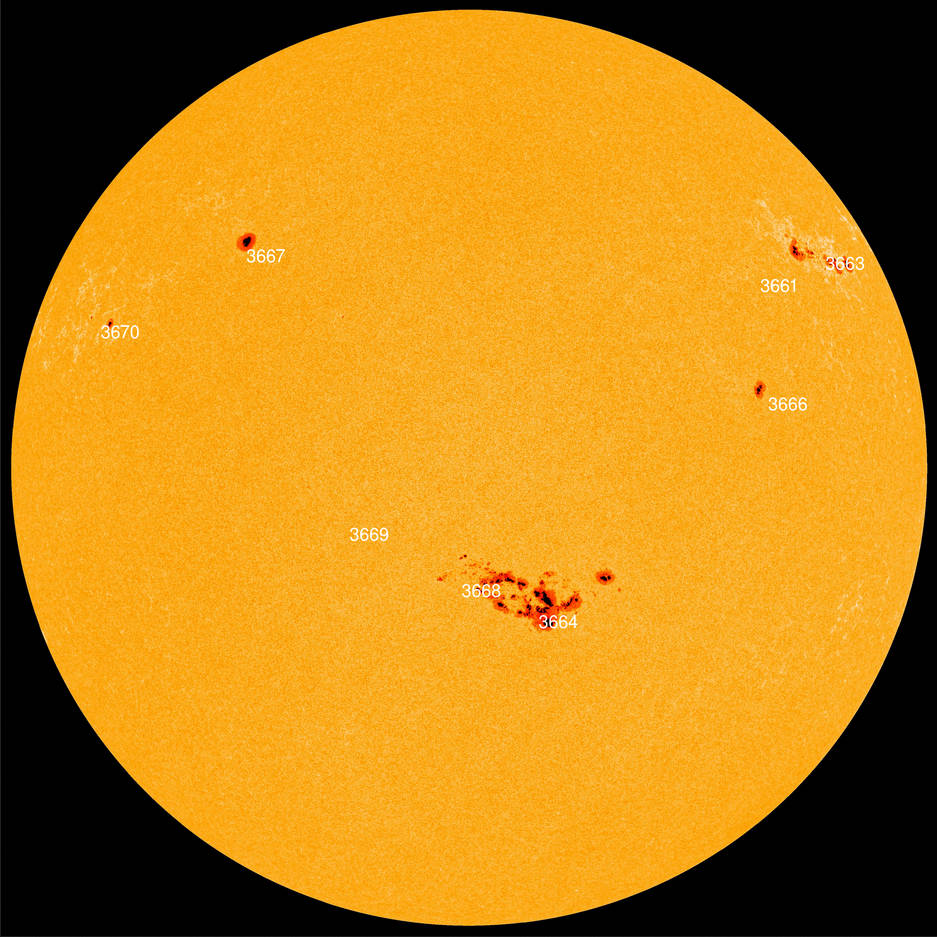
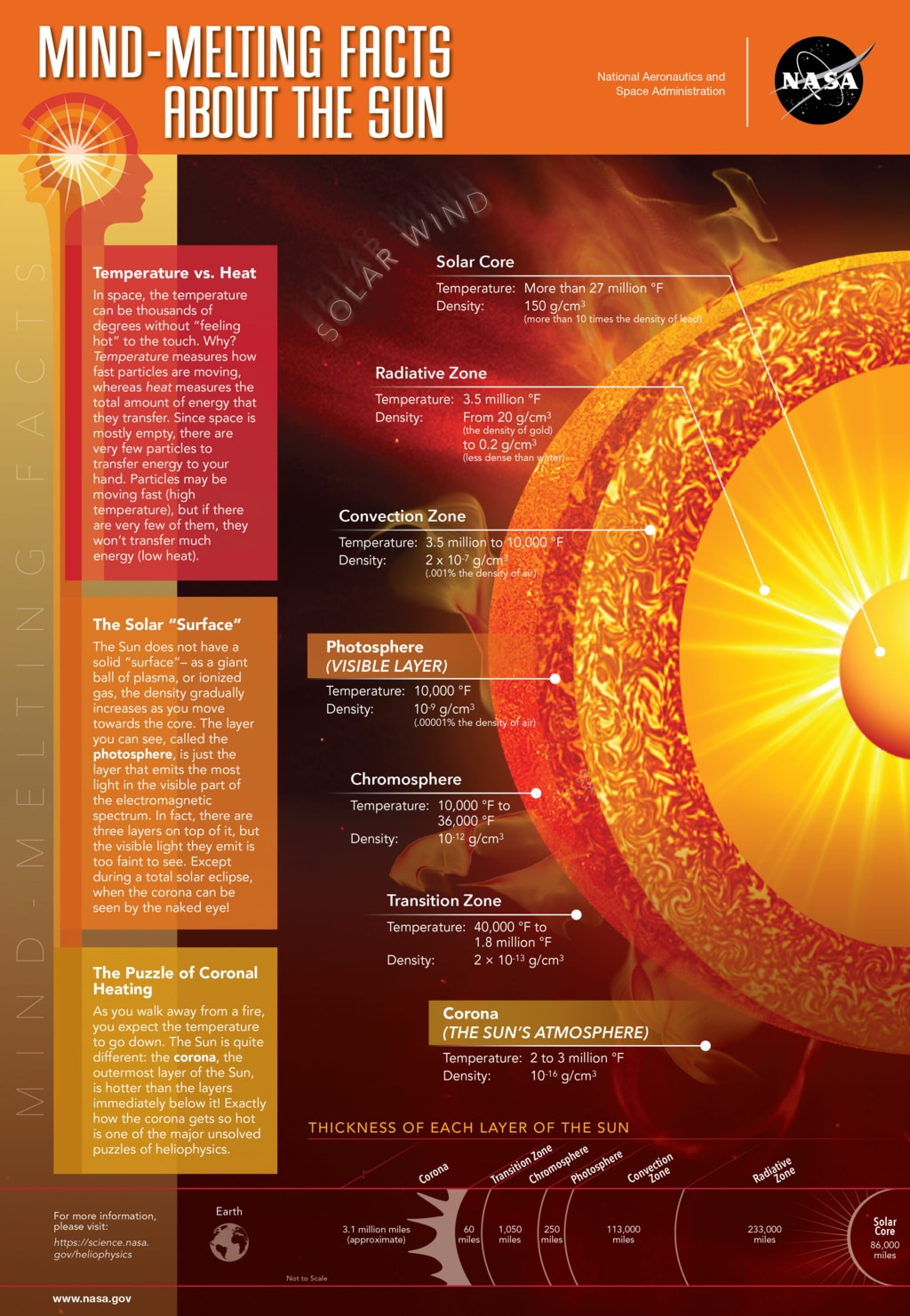
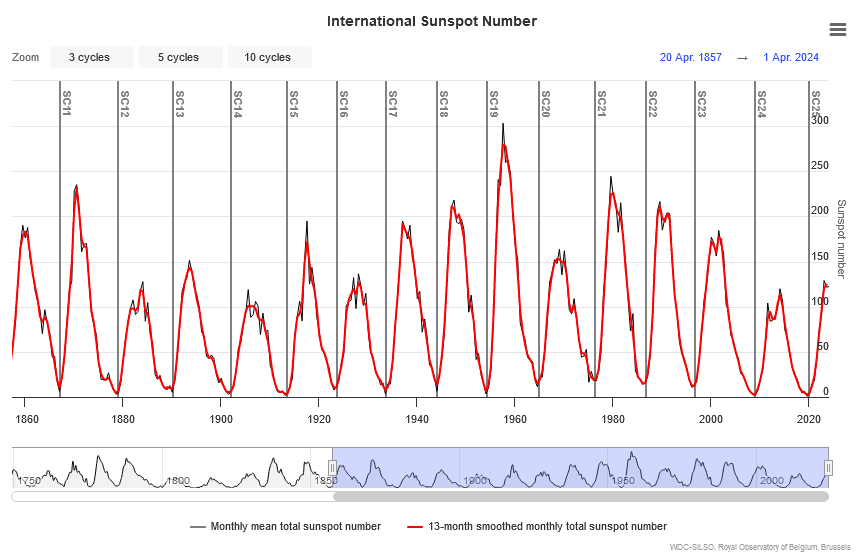
As can be seen with the northern light display more than a week ago that the Sun is becoming more active. It’s because particles, mostly protons, from the Sun in the form of the solar wind and enhancements in the solar wind called coronal mass ejections, tangle with the Earth’s magnetic field and stream through the upper atmosphere. The activity on the Sun is signaled by the ebb and flow of the number of dark spots called sunspots. Individual sunspots or sunspot groups only last for, maybe, a couple of weeks. They’re caused by the magnetic fields being generated in the Sun causing the gas to cool a bit and making them darker. Sunspot numbers ebb flow in a period of about 11 years, called a sunspot cycle. This sunspot cycle is reaching a higher peak than expected.
The astronomical event times given are for the Traverse City/Interlochen area of Michigan (EDT, UT–4 hours). They may be different for your location.
Addendum
Ephemeris: 05/17/2024 – The famous Big Dipper stars Mizar and Alcor
This is Ephemeris for Friday, May 17th. Today the Sun will be up for 14 hours and 55 minutes, setting at 9:07, and it will rise tomorrow at 6:10. The Moon, 2 days past first quarter, will set at 4:01 tomorrow morning.
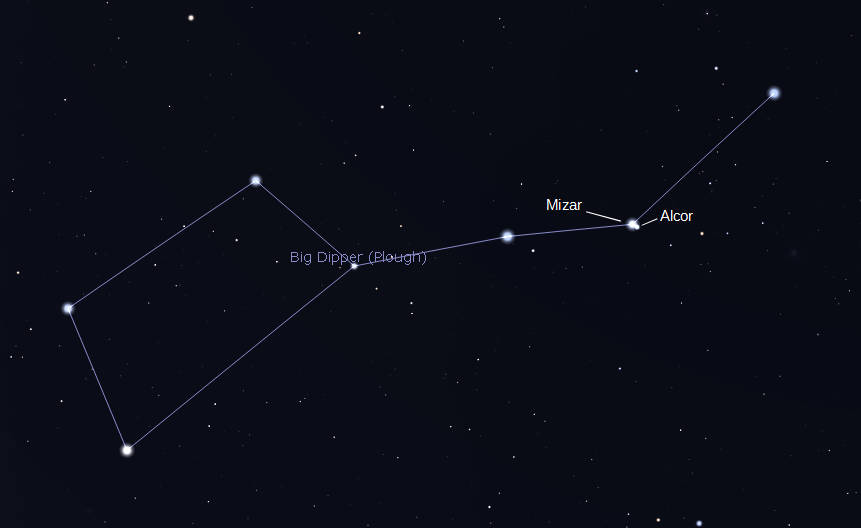
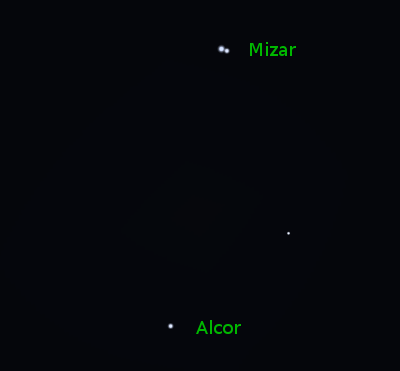
In tonight’s sky, the Big Dipper is nearly overhead. In its handle is a star or two that are interesting. It’s the star at the bend in the handle. It’s called Mizar. Next to it, for those with good eyesight, is a dimmer star, called Alcor. The name Mizar is from the Arabic, meaning apron or cover, while Alcor means the forgotten one. Before optometrists, the ability to actually see both stars was a test for good eyesight, especially for Arabic warriors. The pair is also known as the “Horse and the Rider”. I’ve been told that some Native American tribes saw the handle stars as hunters following the Great Bear, Ursa Major, of which the Big Dipper is a part, rather than its very unnatural tail. Dim Alcor became a hunting dog.
The astronomical event times given are for the Traverse City/Interlochen area of Michigan (EDT, UT–4 hours). They may be different for your location.
Addendum
Ephemeris: 05/15/2024 – Getting reacquainted with the Moon
This is Ephemeris for Thursday, May 16th. Today the Sun will be up for 14 hours and 53 minutes, setting at 9:06, and it will rise tomorrow at 6:11. The Moon, 1 day past first quarter, will set at 3:45 tomorrow morning.
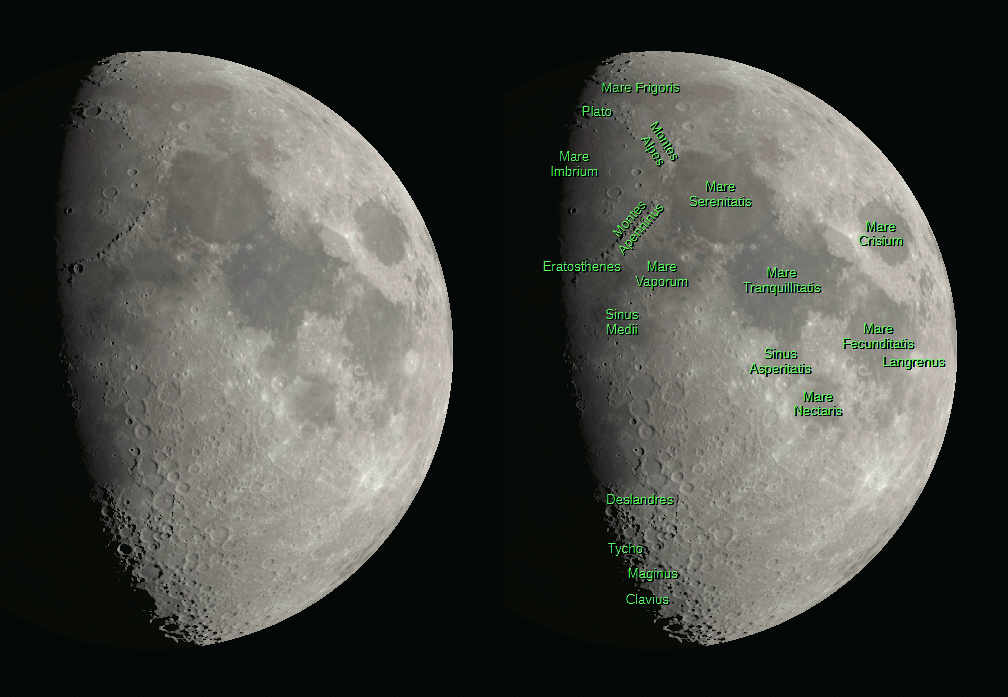
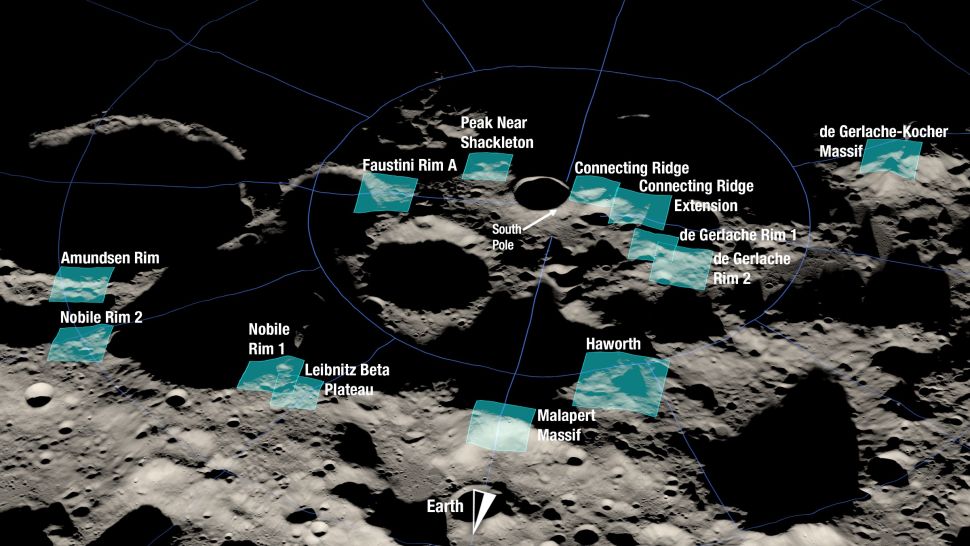
My interest in astronomy has always tended to be in deep sky, that is the part of astronomy having to do with objects beyond the solar system. This was probably mainly due to the fact that my first telescope was the reflecting telescope and not really that good at viewing the planets. My opinion of the Moon has normally been that of being a big streetlight that kept me from viewing the faint things in the sky. However, as the Apollo program was ramping up in the 1960s, I began to get more interested in the Moon. And so it is, again, now that the Artemis program is beginning to ramp up. Unfortunately the landing zones that are being planned are at the South Pole of the Moon, which we can barely see from the Earth.
The astronomical event times given are for the Traverse City/Interlochen area of Michigan (EDT, UT–4 hours). They may be different for your location.
Addendum
Ephemeris: 05/15/2024 – Where have naked-eye planets wandered off to this week?
This is Ephemeris for Wednesday, May 15th. Today the Sun will be up for 14 hours and 51 minutes, setting at 9:05, and it will rise tomorrow at 6:12. The Moon, at first quarter today, will set at 3:28 tomorrow morning.
Let’s find out where the naked-eye planets have wandered off to this week, and see what planets are left. Jupiter now is too close to the direction of the Sun to be seen. It will move to be in conjunction with the Sun on Saturday and by late June may be visible in the morning sky in twilight. By 5:30 tomorrow morning, about 40 minutes before sunrise, Saturn will be low in the east-southeast and Mars will be lower still in the east. In telescopes, Saturn will look fairly different this year and next with its rings nearly edge on to us. They will open up a bit through October before closing again. We won’t see the rings go exactly edge on because Saturn will be too close to the Sun in the sky on March 23rd next year. After that the rings will open up again.
The astronomical event times given are for the Traverse City/Interlochen area of Michigan (EDT, UT–4 hours). They may be different for your location.
Addendum
Ephemeris: 05/14/2024 – Last Friday’s geomagnetic storm
This is Ephemeris for Tuesday, May 14th. Today the Sun will be up for 14 hours and 48 minutes, setting at 9:03, and it will rise tomorrow at 6:13. The Moon, 1 day before first quarter, will set at 3:08 tomorrow morning.
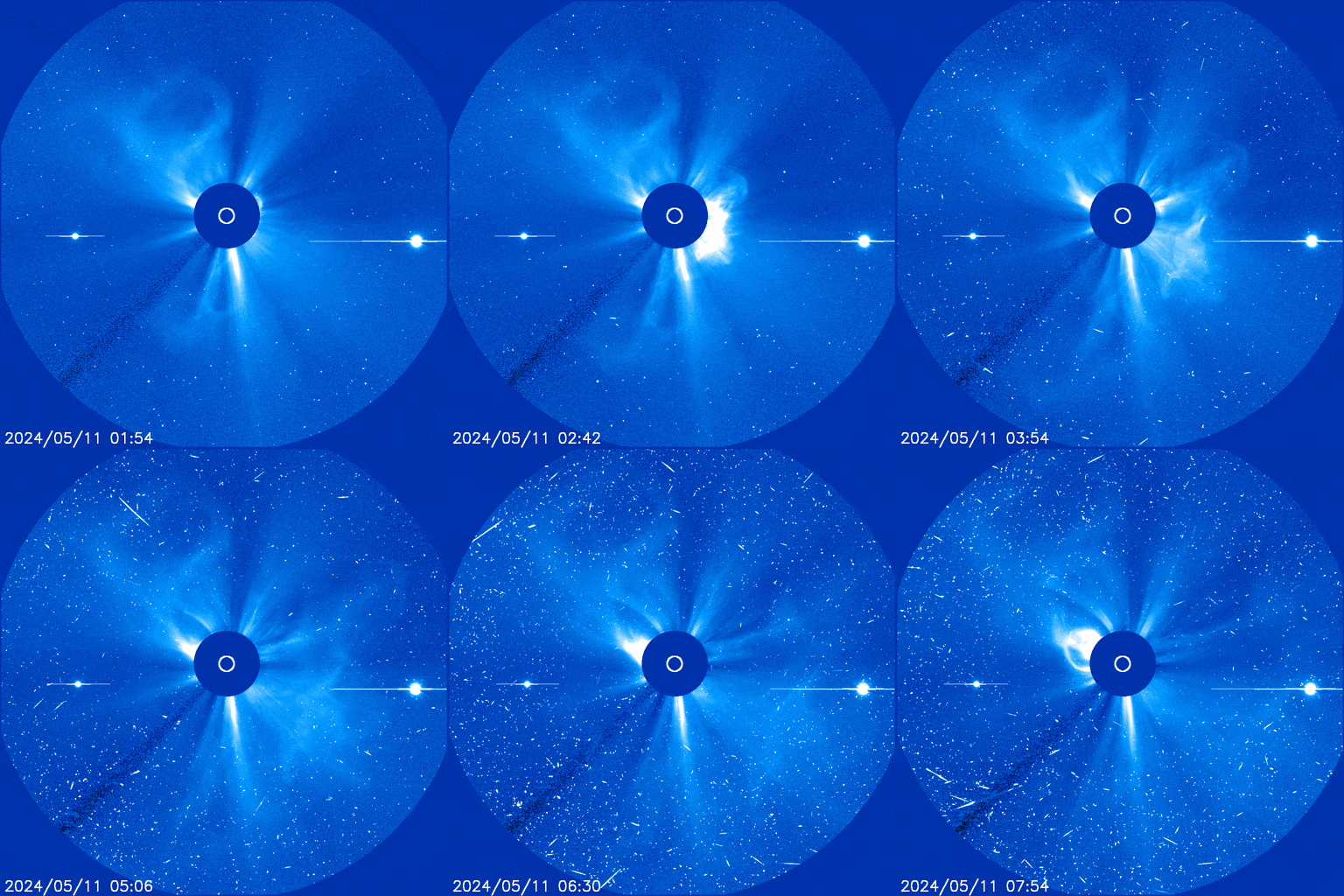
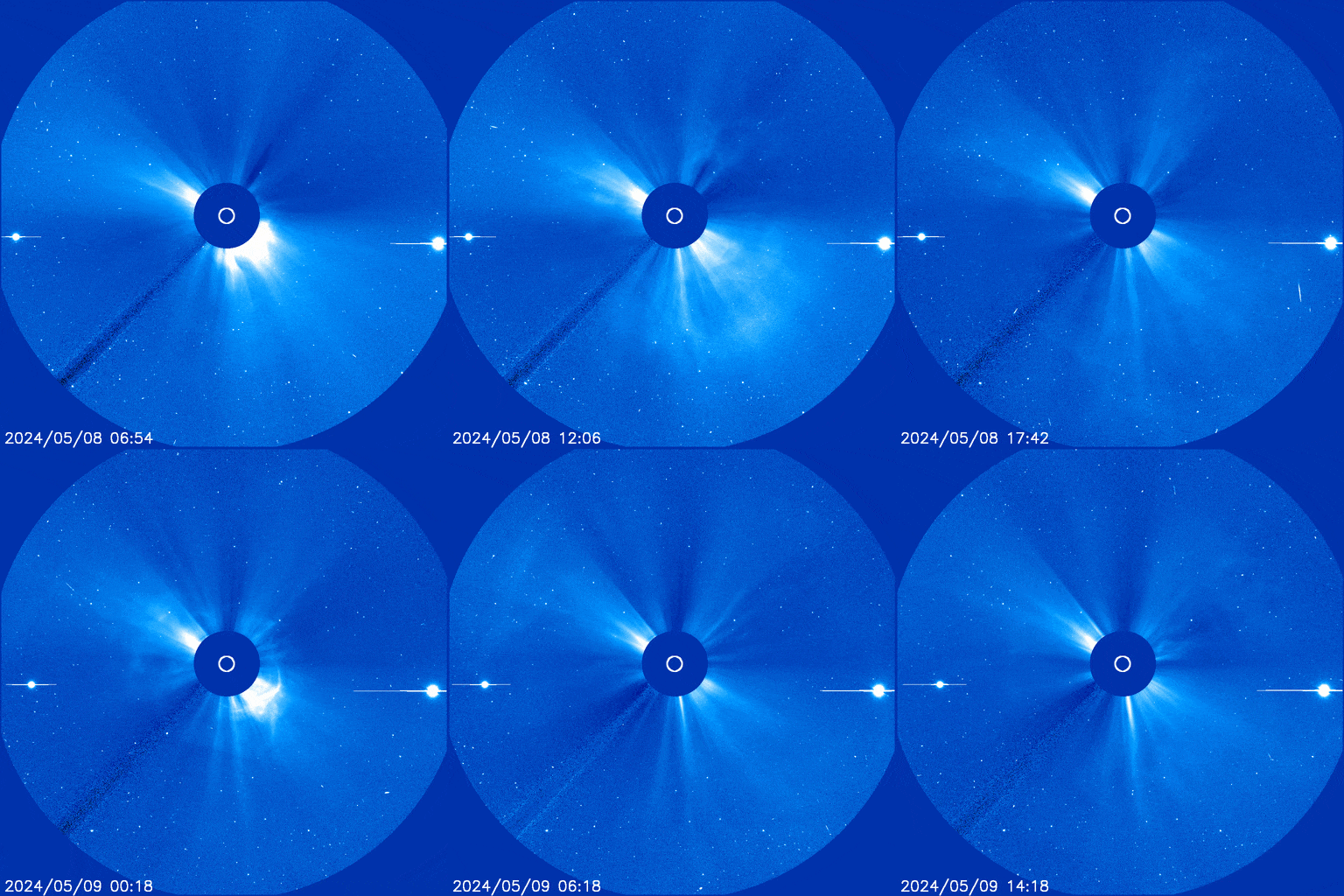
Last Friday night’s displays of the Northern Lights were seen as far as the Caribbean, making the greatest what is called a geomagnetic storm of the last 20 years, and up there with the greatest storms ever recorded. Last Wednesday there was an immense solar flare coming from a large sunspot group on the Sun. That group was large enough to be able to be seen with eclipse glasses. So you might want to keep those eclipse glasses handy, and check out the Sun every once in a while. Only the largest sunspot groups will be visible. The flare causes the ejection of the part of the Sun’s corona, what astronomers call the coronal mass ejection or CME for short. These charged particles were intercepted by the Earth’s magnetic field and caused the aurora we saw.
The astronomical event times given are for the Traverse City/Interlochen area of Michigan (EDT, UT–4 hours). They may be different for your location.
Addendum
Ephemeris: 05/13/2024 – Viewing the Moon tonight
This is Bob Moler with Ephemeris for Monday, May 13th. Today the Sun will be up for 14 hours and 46 minutes, setting at 9:02, and it will rise tomorrow at 6:15. The Moon, 2 days before first quarter, will set at 2:44 tomorrow morning.
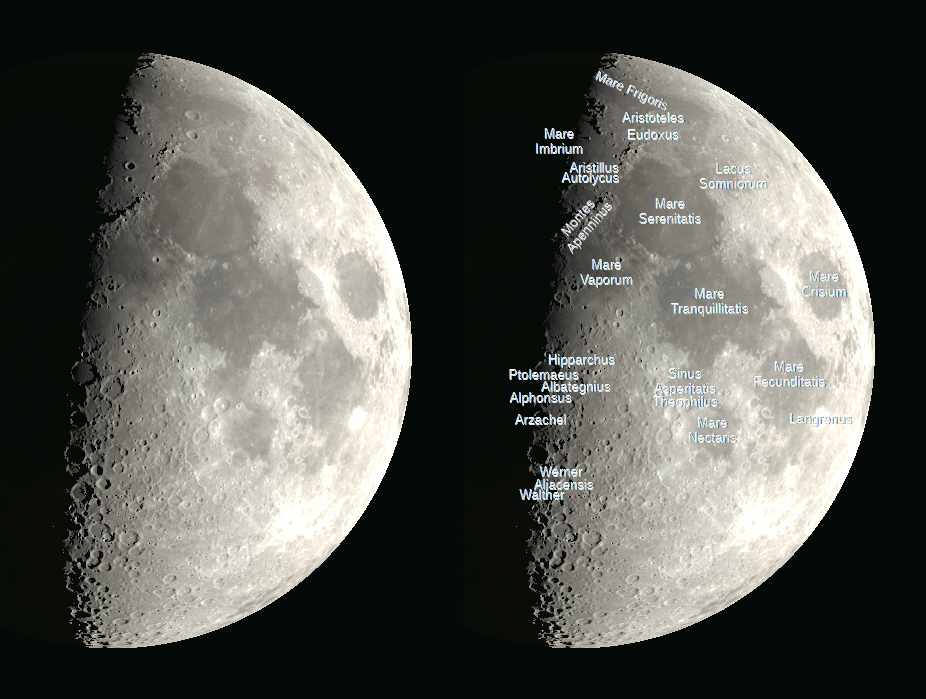
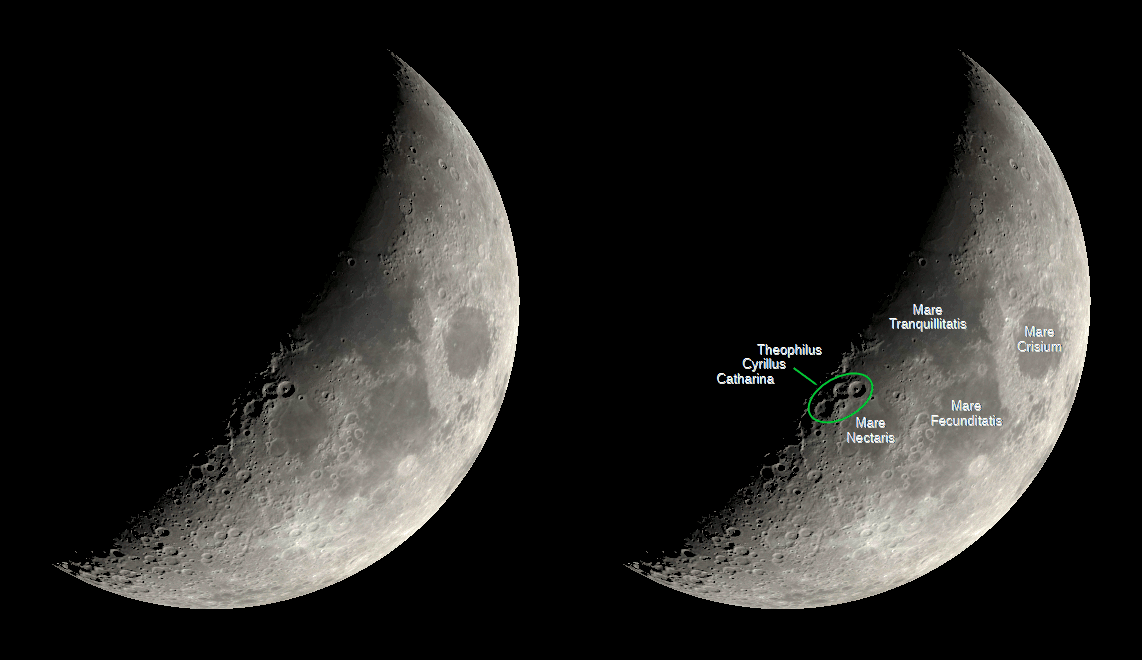
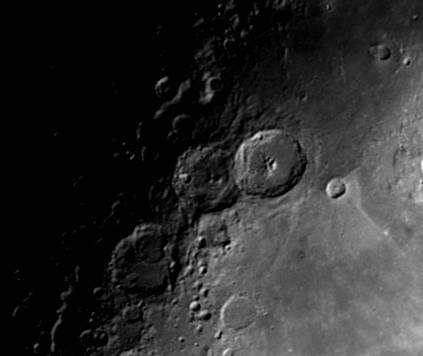
The crescent Moon tonight has what looks like a chain of three large craters near the terminator, visible in a low power telescope. The terminator is the line between day and night. Before the full moon, it’s the sunrise line. On closer inspection, these craters are of different ages. The north crater Theophilus, 63 miles in diameter and one of my favorite craters with a prominent central peak, looks relatively fresh. It’s not, it’s somewhat older than a billion years. The crater just south or below-left of it is Cyrillus, about the same size, which is almost 4 billion years old. Theophilus slightly overlaps Cyrillus. A bit farther south is Catharina, which again is about the same size and age range as Cyrillus, but seems more broken down than the other.
The astronomical event times given are for the Traverse City/Interlochen area of Michigan (EDT, UT–4 hours). They may be different for your location.
Addendum
 Bob Moler's Ephemeris Blog