Archive
Ephemeris: 01/15/2024 – The Moon is a great first target for that new telescope
This is Bob Moler with Ephemeris for the Martin Luther King Jr. Holiday, Monday, January 15th. Today the Sun will be up for 9 hours and 11 minutes, setting at 5:27, and it will rise tomorrow at 8:16. The Moon, 2 days before first quarter, will set at 10:55 this evening.
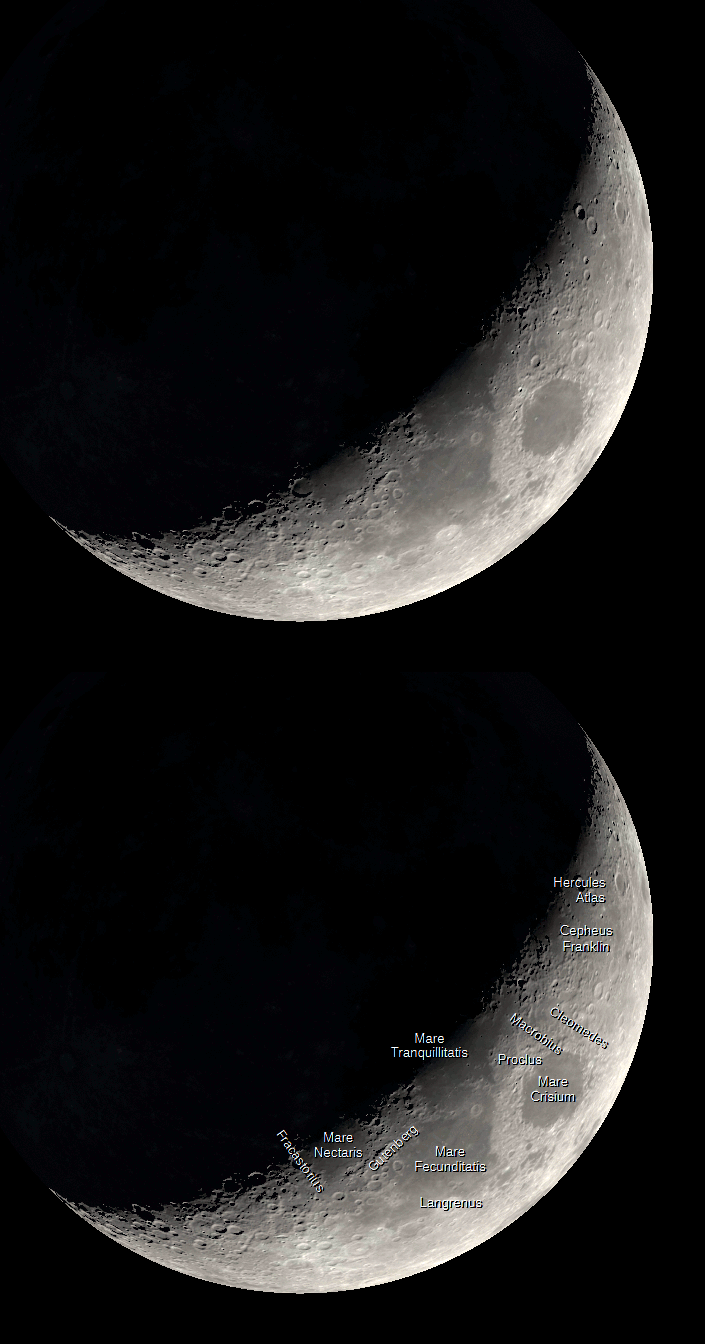
The Moon is a great first target for that Christmas telescope. Over the weekend we began a new lunar month so that the Moon appears as a crescent in the southwestern sky after sunset. The first time I looked at the Moon with the telescope or looked at anything in the sky, actually, I found it very difficult to aim the telescope correctly. The field of view of the telescope is very small compared to what you can see with the naked eye. Always start with the lowest power eyepiece because it gives the widest field of view for finding what you’re looking for. It does take a little practice to learn how to aim a telescope, but the moon is a wonderful object to look at because it’s really big and very bright.
The astronomical event times given are for the Traverse City/Interlochen area of Michigan (EST, UT –5 hours). They may be different for your location.
Addendum
Ephemeris: 01/12/2024 – Mercury is at greatest western elongation from the Sun today
This is Ephemeris for Friday, January 12th. Today the Sun will be up for 9 hours and 6 minutes, setting at 5:24, and it will rise tomorrow at 8:17. The Moon, 1 day past new, will set at 6:49 this evening.
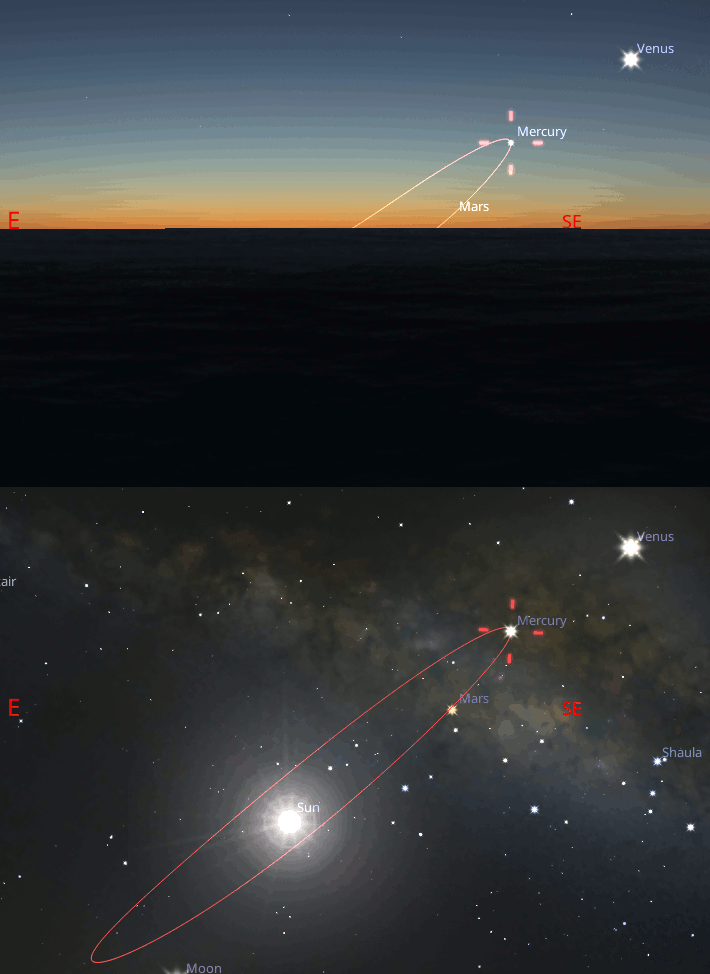
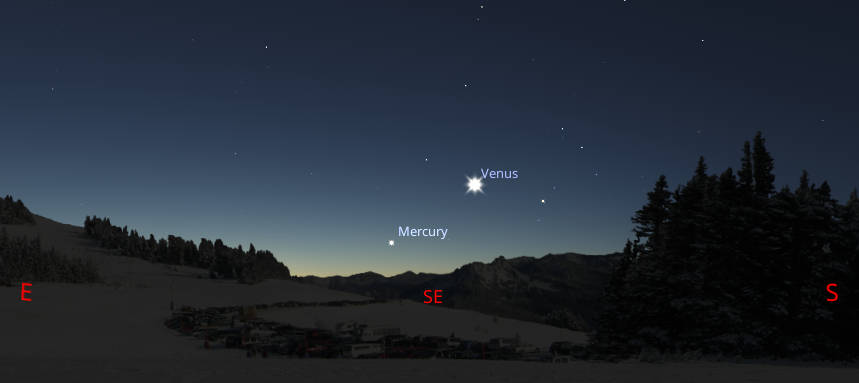
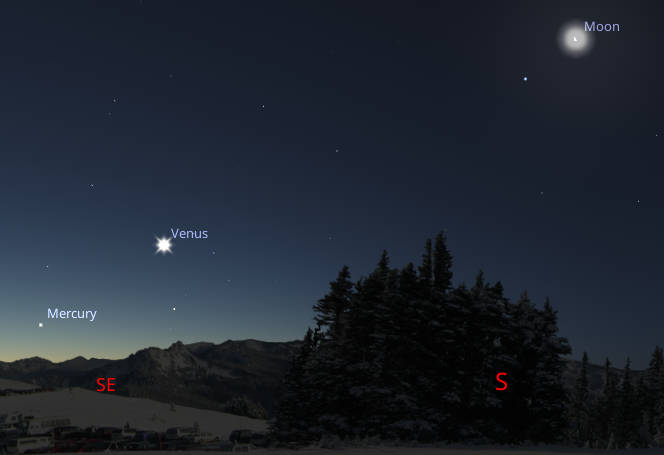
The planet Mercury is reaching its greatest western elongation or separation west of the Sun today at a 23.5 degrees angle, which is pretty good actually, although the angle above the horizon where we see Mercury at this point in the year is not the best. However, Venus can be used to spot Mercury because Mercury will be to the lower left of Venus. Binoculars are always helpful in spotting Mercury for the first time. From now until about a week from now Mercury will not move very much in relationship to Venus, but it will be getting somewhat brighter as its phase goes from half illuminated to more gibbous towards full. Early in the spring it will be seen in the evening sky, at a little bit better angle above the horizon, although it will be it will not be as far away from the Sun. Created using Stellarium and GIMP.
The astronomical event times given are for the Traverse City/Interlochen area of Michigan (EST, UT –5 hours). They may be different for your location.
Addendum
Ephemeris: 01/11/2024 – Rigel, the star in Orion’s knee or is it his foot?
This is Bob Moler with Ephemeris for Thursday, January 11th. Today the Sun will be up for 9 hours and 4 minutes, setting at 5:23, and it will rise tomorrow at 8:18. The Moon is new today, and won’t be visible.
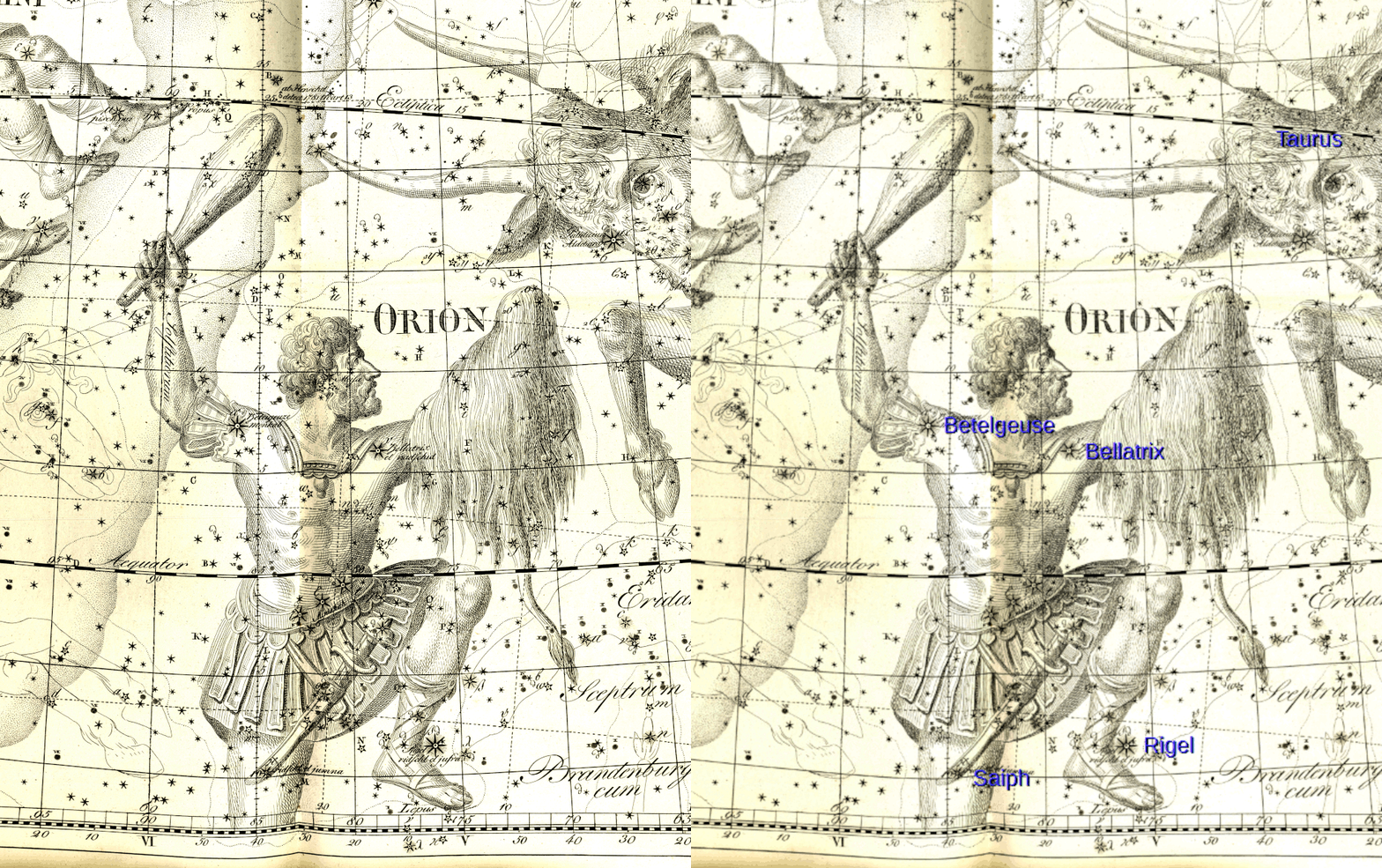
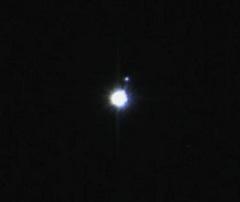
Orion’s second first magnitude star is Rigel in the lower right corner of the constellation this is a blue-white star in contrast to Betelgeuse which is a reddish star. The name Rigel is part of a phrase that means Left foot of Jauzah. Jauzah being the old name of the constellation Orion. It’s where we place Orion’s left knee now. In older drawings of the constellation, Orion has his left foot raised as if charging towards Taurus who’s charging at him. Rigel is about the same mass as Betelgeuse, though it’s nearly twice as far away at nearly 900 light years. Rigel is a quadruple star system. The bright Rigel A itself has what looks like a companion in small telescopes. That companion is actually three stars orbiting each other.
The astronomical event times given are for the Traverse City/Interlochen area of Michigan (EST, UT –5 hours). They may be different for your location.
Addendum
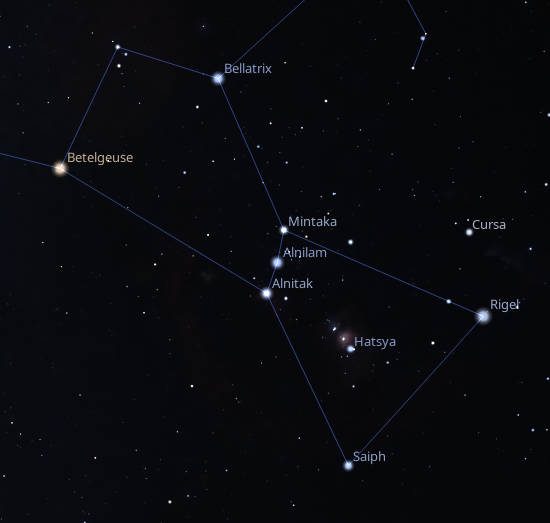
right-most bright star Is Rigel, a bluish white star, in contrast to Betelgeuse which has a ruddy glow. Here it looks like Betelgeuse and Bellatrix are in Orion’s shoulders and Saiph and Rigel are in his knees, with the belt star halfway in between. The word Rigel, however, means foot, and Saiph means sword. Check out the star chart below. Created using Stellarium.
Ephemeris: 01/10/2024 – Where have the naked-eye planets wandered off to this week?
This is Ephemeris for Wednesday, January 10th. Today the Sun will be up for 9 hours and 2 minutes, setting at 5:21, and it will rise tomorrow at 8:18. The Moon, 1 day before new, will rise at 8:59 tomorrow morning.
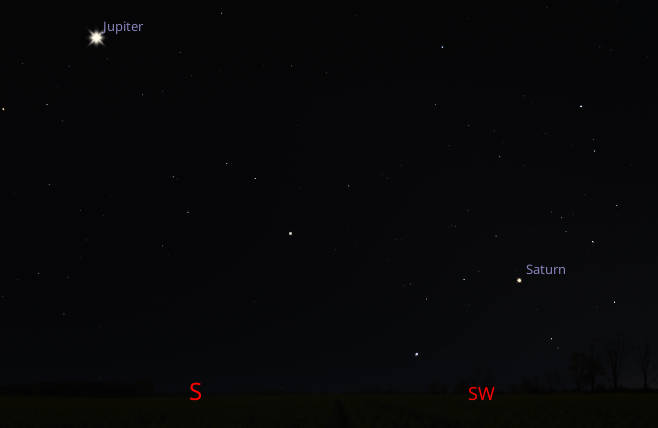
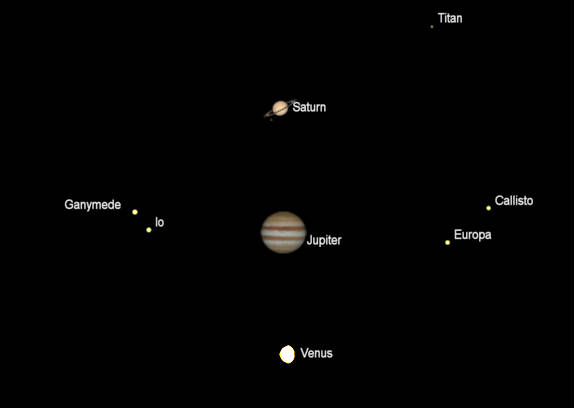
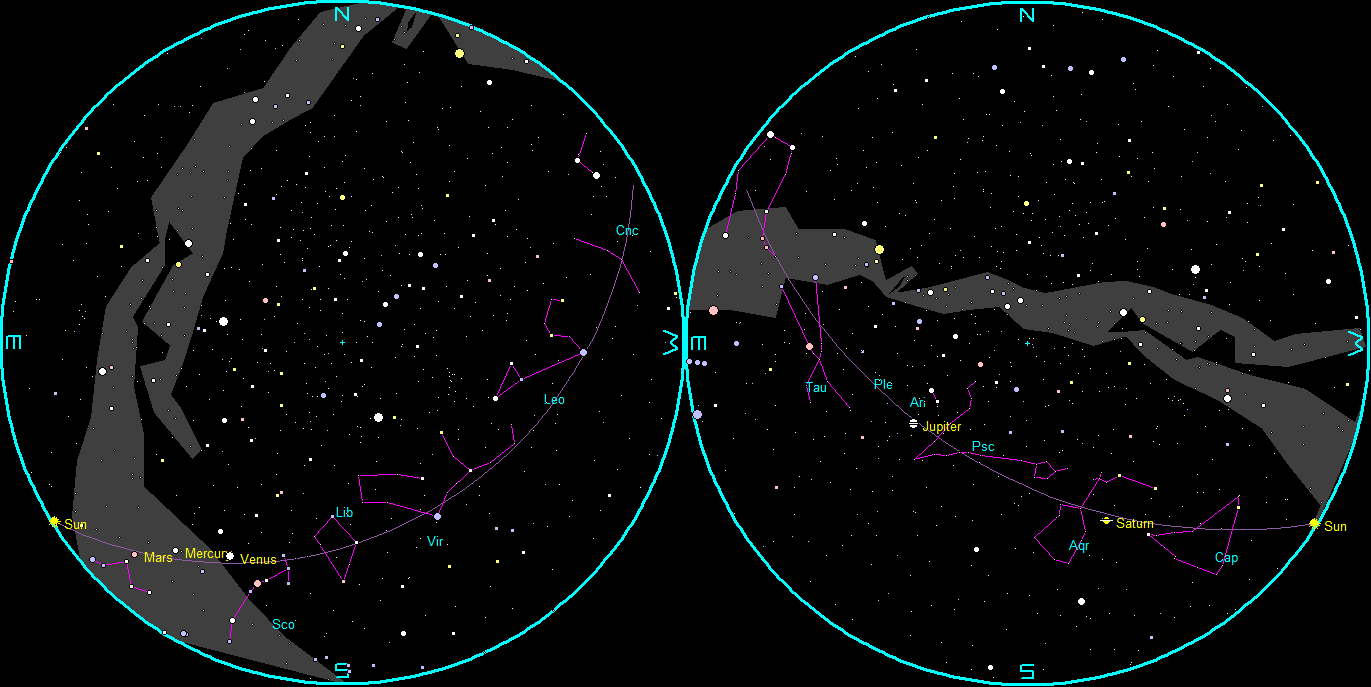
Let’s find out where the naked-eye planets have wandered off to this week. Four of those five planets are now visible. Mars will rise too close to sunrise to be seen, however. Saturn and Jupiter are the evening planets. Saturn can be seen moving from low in the southwest to setting in the west-southwest at 9:06 pm. Jupiter will be moving from high in the south to the west by midnight and will set at 2:31 am. Venus, the brilliant morning star, will rise in the east-southeast at 5:44 am, and be a brilliant beacon in the morning, shining in the southeast before the bright morning twilight claims it around 8 am. Mercury will also be visible below and left of Venus, and should be visible by 7:30 am.
The astronomical event times given are for the Traverse City/Interlochen area of Michigan (EST, UT –5 hours). They may be different for your location.
Addendum
Ephemeris: 01/09/2024 – Betelgeuse, Betelgeuse, nope I’m not saying it again
Jan 9. This is Ephemeris for Tuesday, January 9th. Today the Sun will be up for 9 hours and 1 minute, setting at 5:20, and it will rise tomorrow at 8:18. The Moon, 2 days before new, will rise at 8:04 tomorrow morning.
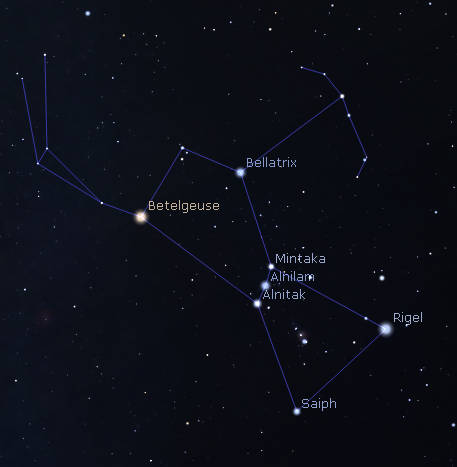
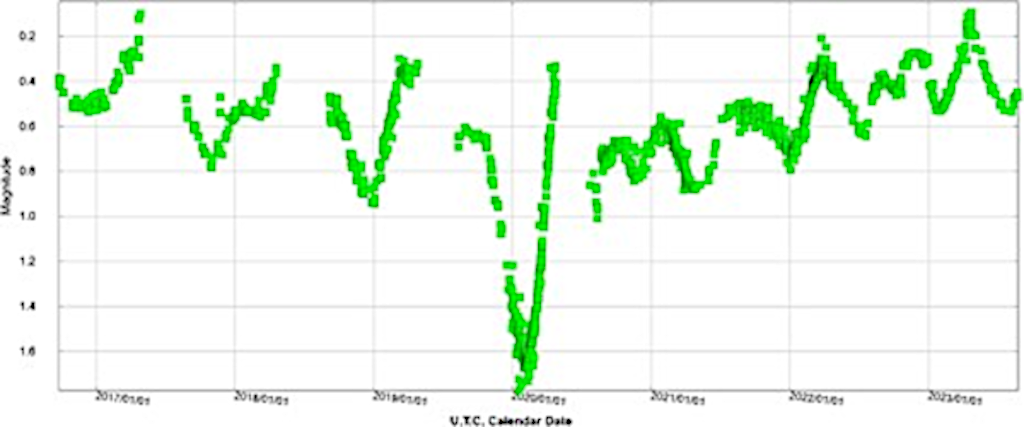
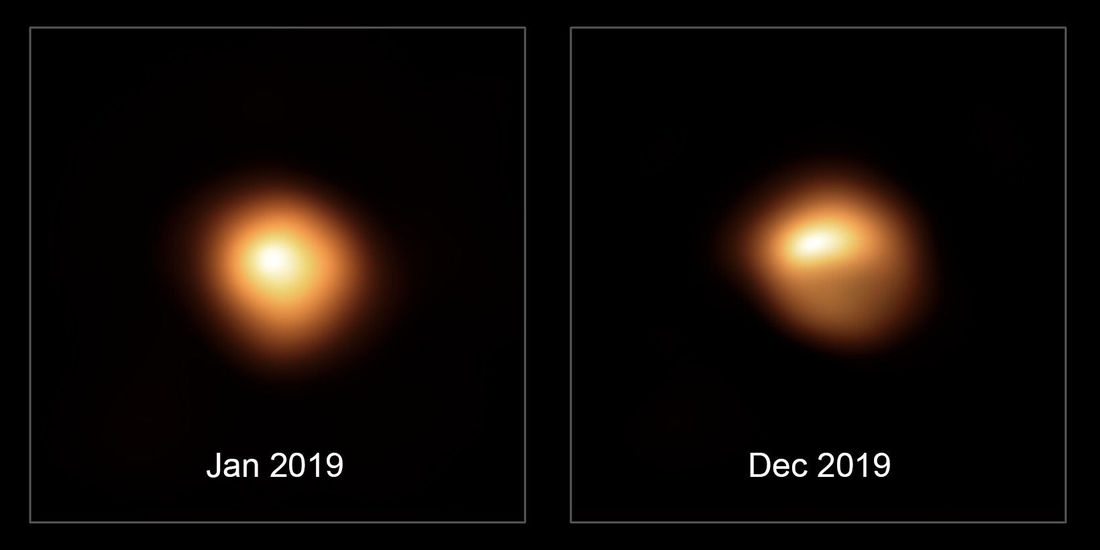
The constellation Orion has two first magnitude stars, the most famous of these is Betelgeuse. It is a red supergiant star in Orion’s shoulder. Its name actually means Armpit of the Central One. Betelgeuse is about 500 light years away, and it is many hundreds of thousands of times brighter than the Sun, and it’s thought to be almost as big as the orbit of Jupiter. For all its size it’s only about 20 times the mass of the Sun. Some call it a red-hot vacuum. Betelgeuse has been interesting lately, first dimming for a period of time and now somewhat brighter than normal. Astronomers are wondering what’s going on with it. Betelgeuse is a type of star that will end with the supernova explosion. The question is when. Perhaps sometime in the next 100,000 years.
The astronomical event times given are for the Traverse City/Interlochen area of Michigan (EST, UT –5 hours). They may be different for your location.
Addendum
Ephemeris: 01/08/2024 – Orion vs Taurus: conflict for the ages
This is Ephemeris for Monday, January 8th. Today the Sun will be up for 9 hours even, setting at 5:19, and it will rise tomorrow at 8:19. The Moon, 3 days before new, will rise at 6:58 tomorrow morning.
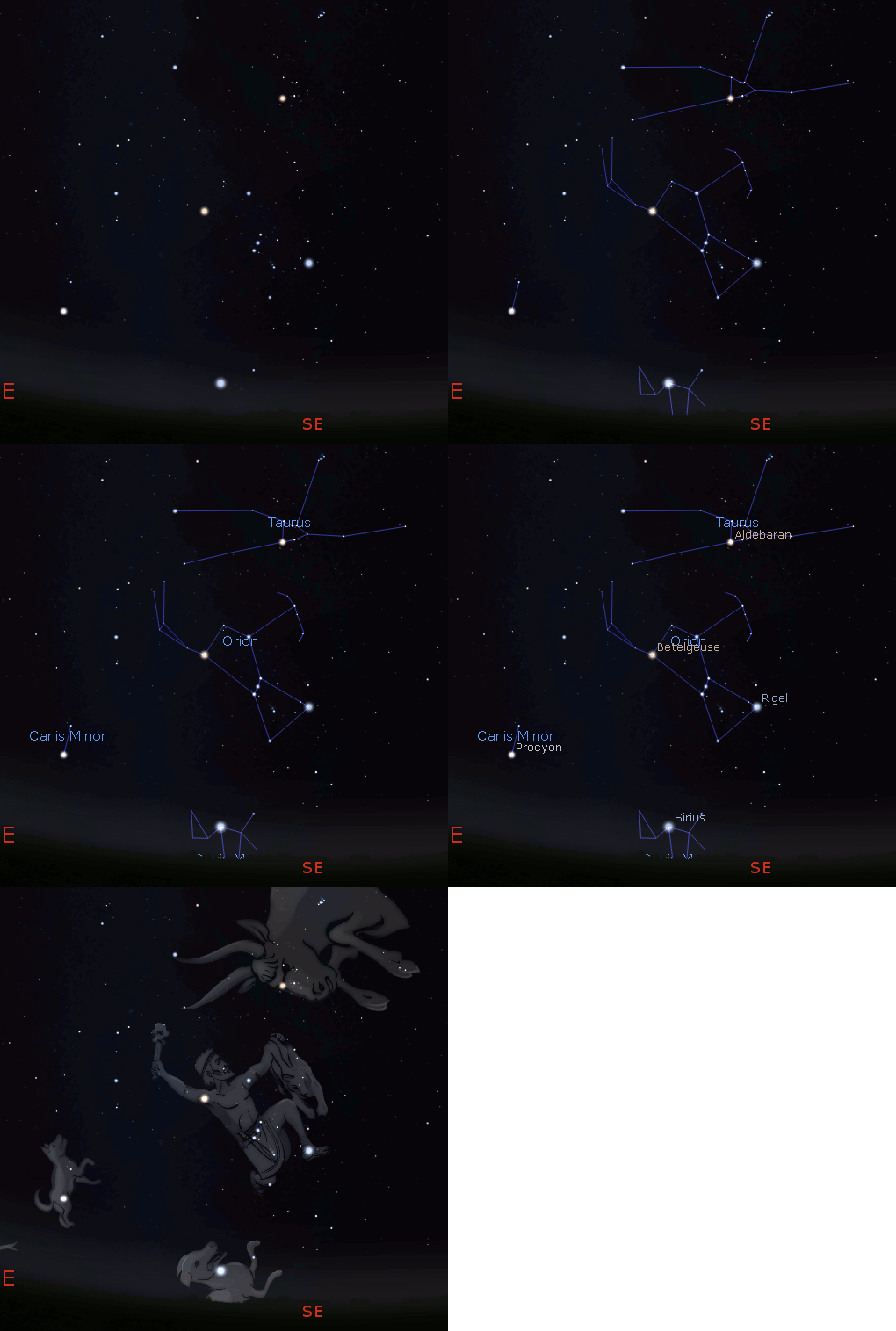
There are several instances in the Greek heavens where constellations appear to interact with one another. This is true with Orion the hunter and Taurus the bull. Taurus, whose face is the letter V of stars with orangish Aldebaran as his angry bloodshot eye is charging down on Orion, who has raised a lion skin shield on one arm and an upraised club in the other, ready to strike. They have been frozen in this pose for millennia. Stars below and right of the letter V of the Bull’s face suggest the front part of his body and his front legs charging at Orion. Orion also has two hunting dogs, Canis Major and Canis Minor. Canis Major with its dazzling star Sirius will rise around 7:30 on a line extended down from Orion’s belt.
The astronomical event times given are for the Traverse City/Interlochen area of Michigan (EST, UT –5 hours). They may be different for your location.
Addendum
Ephemeris: 01/05/2024 – The Great Orion Nebula
This is Ephemeris for Friday, January 5th. The Sun will rise at 8:20. It’ll be up for 8 hours and 56 minutes, setting at 5:16. The Moon, 2 days past last quarter, will rise at 3:18 tomorrow morning.
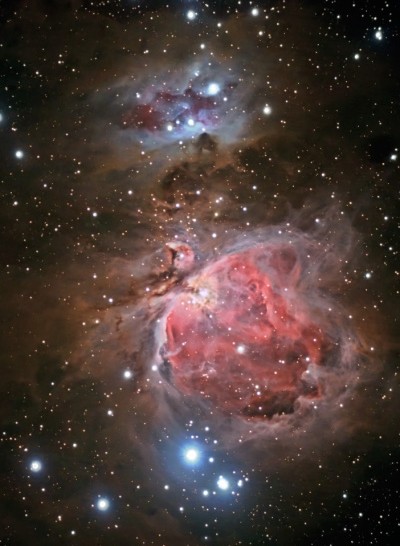
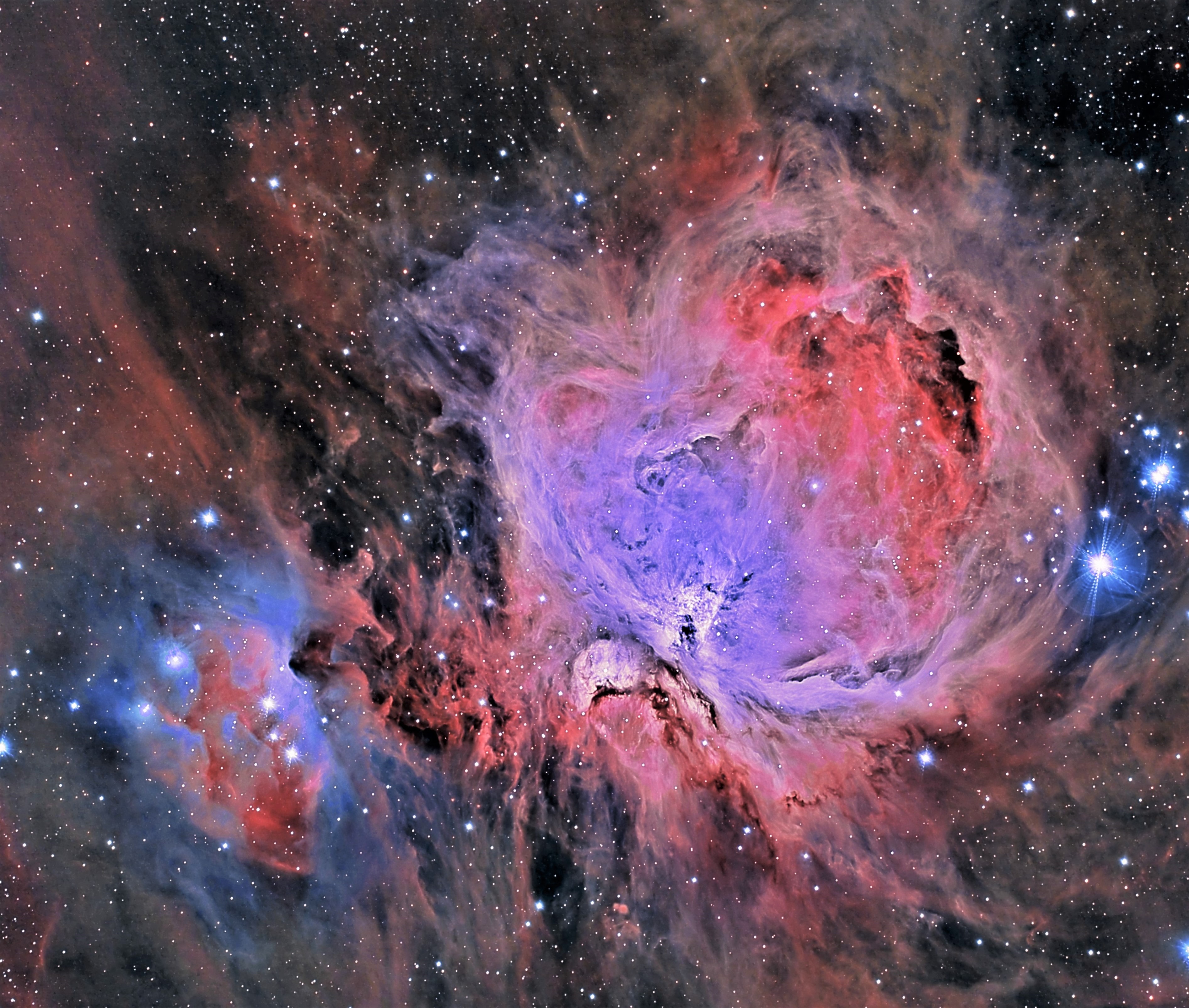
The constellation Orion the hunter is in the south-southeast at 9 p.m. Its upright rectangle of four stars frame his belt of three stars in a straight line and still tilt a bit to the left. Below the belt is what appear to the unaided eye as three more stars arranged vertically, his sword. Binoculars aimed at the middle stars of the sword will find a glowing haze around those stars. That is the Great Orion Nebula, also known as Messier 42 or M42. It is the birthplace of stars, and is even illuminated by a clutch of four hot young stars. Besides stars and protostars being born in the nebula, there are also many double planets not belonging to stars discovered by the James Webb Space Telescope. The planets are only detectable in the infrared, Webb’s specialty.
The astronomical event times given are for the Traverse City/Interlochen area of Michigan (EST, UT –5 hours). They may be different for your location.
Addendum
Ephemeris: 01/04/2024 – Viewing Orion’s Belt
This is Ephemeris for Thursday, January 4th. The Sun will rise at 8:20. It’ll be up for 8 hours and 55 minutes, setting at 5:15. The Moon, 1 day past last quarter, will rise at 2:10 tomorrow morning.
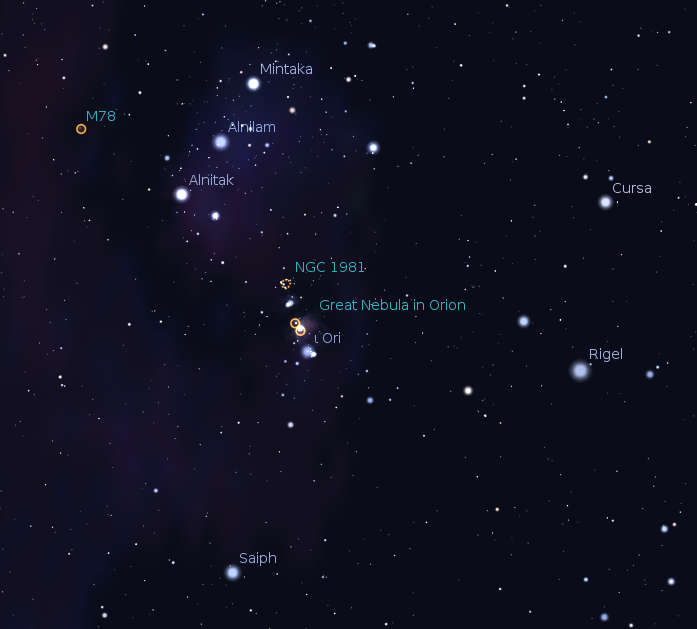
Orion’s belt of three stars is one of the most noticeable star groupings in the sky. There are no other groups of three bright stars in a straight line visible anywhere else in the sky. The star’s names from left to right are Alnitak, Alnilam and Mintaka. They are actually a bit farther away than the other bright stars of Orion. Alnilam, the center star, is over three times the distance of red giant Betelgeuse above them and over twice as far as blue white giant star Rigel below them. Alnilam is 375 thousand times brighter than the Sun. These three stars were also known as Frigga’s Spindle by the Norsemen. Frigga, also known as Freya, is the goddess from which we get the name of the day of the week we call Friday.
The astronomical event times given are for the Traverse City/Interlochen area of Michigan (EST, UT –5 hours). They may be different for your location.
Addendum
Ephemeris: 01/03/2024 – Where have the naked-eye planets wandered off to this week?
This is Ephemeris for Wednesday, January 3rd. The Sun will rise at 8:20. It’ll be up for 8 hours and 54 minutes, setting at 5:14. The Moon, at last quarter today, will rise at 1:04 tomorrow morning.
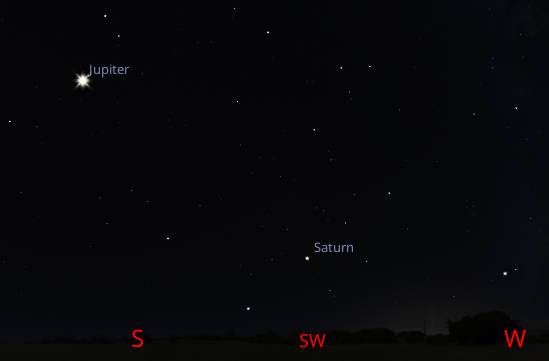
Let’s find out where the naked-eye planets have wandered off to this week. Four of those five planets are now visible. Mars rises too close to sunrise to be seen. Saturn and Jupiter are the only evening planets. Saturn can be seen moving from low in the southwest to setting in the west-southwest at 9:30 pm. Jupiter will be moving from the high in the south-southeast to the west-southwest, by midnight and will set at 2:57 am. The last quarter Moon will be in Virgo tomorrow morning. Venus, the brilliant morning star, will rise in the east-southeast at 5:29 am, and be a brilliant beacon in the morning, shining in the southeast before the bright morning twilight claims it around 8 am. Mercury may be glimpsed below and left of it.
The astronomical event times given are for the Traverse City/Interlochen area of Michigan (EST, UT –5 hours). They may be different for your location.
Addendum
Ephemeris: 01/02/2024 – We’re closest to the Sun today
This is Ephemeris for Tuesday, January 2nd. The Sun will rise at 8:20. It’ll be up for 8 hours and 53 minutes, setting at 5:13. The Moon, 1 day before last quarter, will rise at 12:01 tomorrow morning.
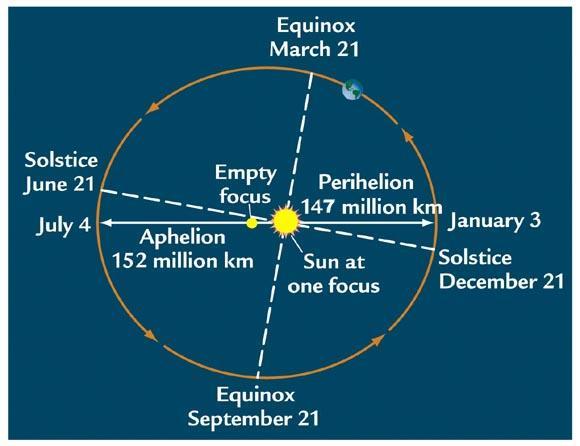
We start off the year with the Earth being really close to the Sun. As a matter of fact at 6:59 pm the Earth will reach perihelion, that is as close as it gets to the Sun for the entire year at 91.41 million miles (147.10 million kilometers). It’s not as big a deal as it seems, because the Earth varies only plus or minus a million and a half miles from the Sun over the year out of 93 million miles. It doesn’t make much difference in the amount of heat we get from the Sun. However, it’s much less than what the tilt of the Earth’s axis does to give us our seasons, but what it does do is alter the length of the seasons, and makes winter the shortest season. It’s shorter by about four days than summer, even though in Northern Michigan it doesn’t really seem like it. Today is also the date of the latest sunrise of the year.
The astronomical event times given are for the Traverse City/Interlochen area of Michigan (EST, UT –5 hours). They may be different for your location.
Addendum