Archive
Ephemeris: 02/19/2025 – All the naked-eye planets are seen in the evening this week
Ephemeris: 02/19/2025 – Where have the naked-eye planets wandered off to this week?
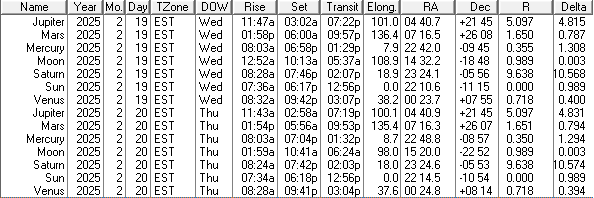
This is Ephemeris for Wednesday, February 19th. Today the Sun will be up for 10 hours and 40 minutes, setting at 6:17, and it will rise tomorrow at 7:34. The Moon, 1 day before last quarter, will rise at 1:59 tomorrow morning.
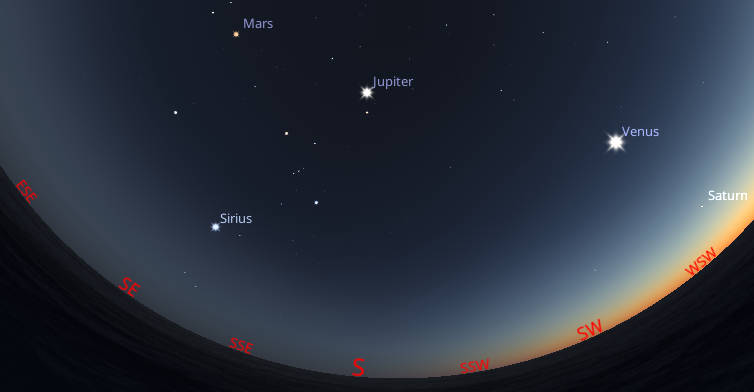
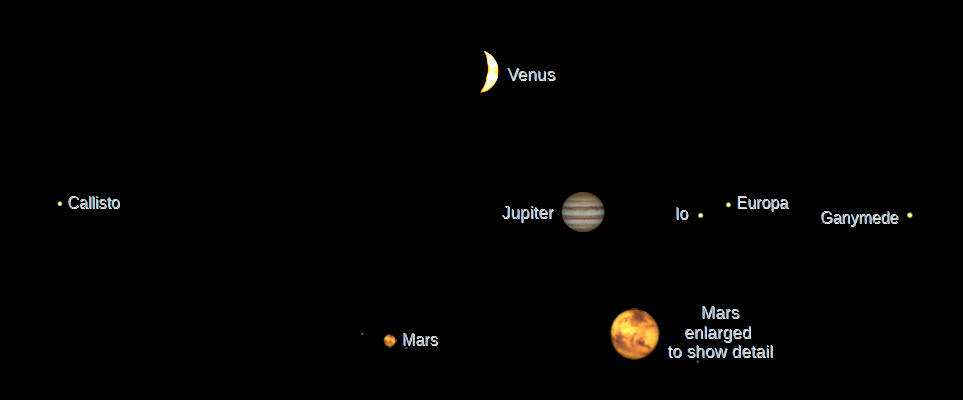
Let’s take our weekly look at the whereabouts of the naked-eye planets. At 7 PM this evening four of the five naked eye planets will be out. Starting from the West we have Venus the brightest of all in the west southwest. Far below it, near the horizon, will be the much dimmer Saturn, which we are about to lose, or may already have, to the evening twilight. Jupiter, the second-brightest planet will be high in the south. It has reversed course and is heading back eastward now. Farther below it is the spectacular constellation of Orion the hunter. The fourth planet out is Mars, the third-brightest planet now, with its distinctive reddish hue, west of the stars Castor and Pollux in Gemini, and in the east-southeast.
The astronomical event times given are for the Traverse City/Interlochen area of Michigan (EST, UT – 5 hours). Times will be different for other locations.
Addendum
Ephemeris: 02/18/2025 – Finding Orion’s greater hunting dog
This is Ephemeris for Tuesday, February 18th. Today the Sun will be up for 10 hours and 37 minutes, setting at 6:15, and it will rise tomorrow at 7:36. The Moon, 2 days before last quarter, will rise at 12:52 tomorrow morning.
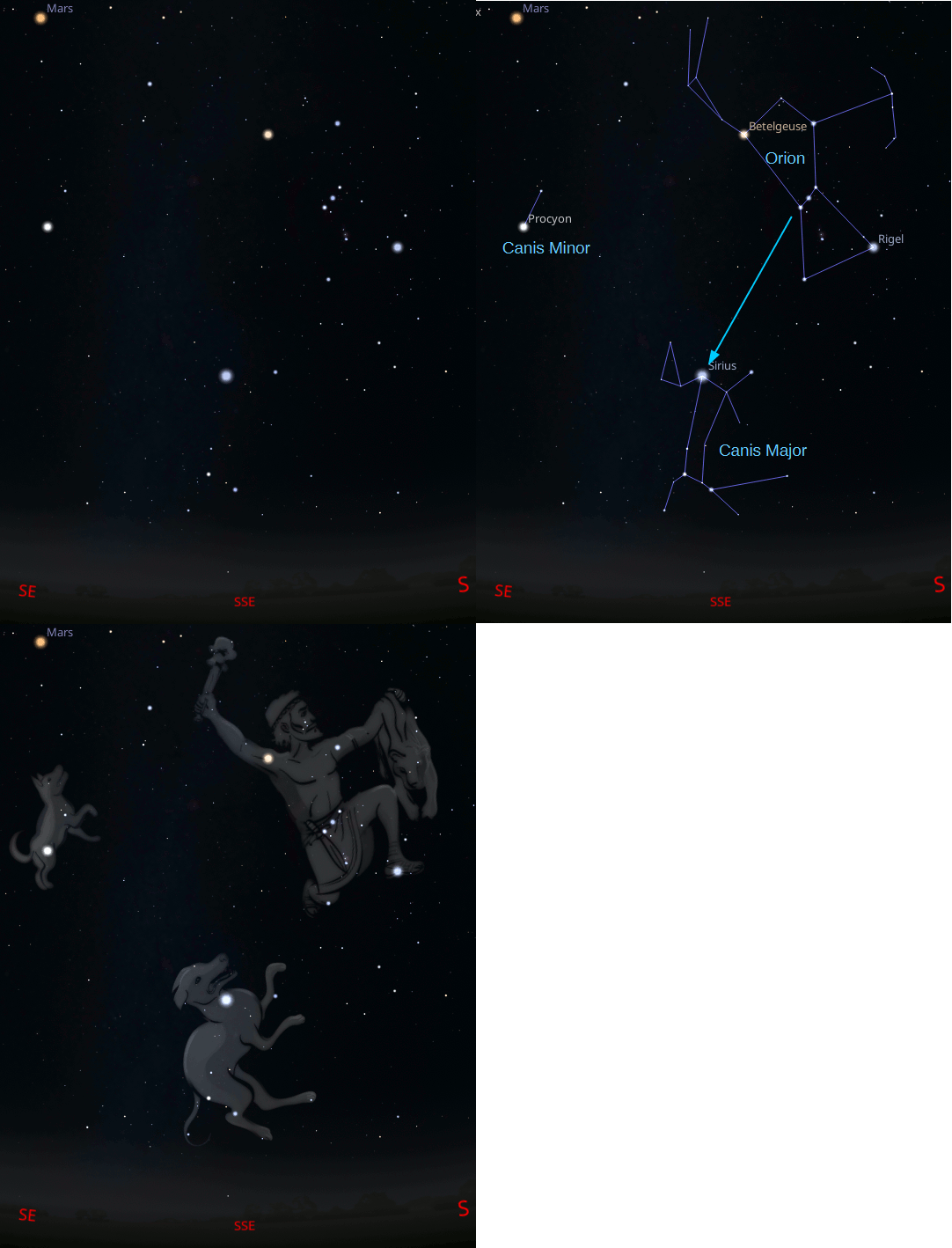
The great winter constellation or star group Orion the Hunter, is located in the south-southeastern sky at 8 p.m. His elongated rectangle of a torso is almost vertical. In the center of the rectangle are three stars in a line that mark his belt. As a hunter, especially one of old, he has two hunting dogs. The larger, Canis Major can be found by following the three belt stars of Orion down and to the left. There lies the brilliant star called Sirius, also known as the Dog Star. It’s in the heart of a stick figure dog low in the southeast, facing Orion, that appears to be begging. There’s a fine star cluster, called M41, at the 5 o’clock position from Sirius, easily visible in binoculars or a small telescope.
The astronomical event times given are for the Traverse City/Interlochen area of Michigan (EST, UT – 5 hours). Times will be different for other locations.
Addendum
Ephemeris: 02/12/2025 – Taking our weekly look at the whereabouts of the naked-eye planets
This is Ephemeris for Darwin Day, Wednesday, February 12th. Today the Sun will be up for 10 hours and 20 minutes, setting at 6:07, and it will rise tomorrow at 7:45. The Moon, at full today, will rise at 6:21 this evening.
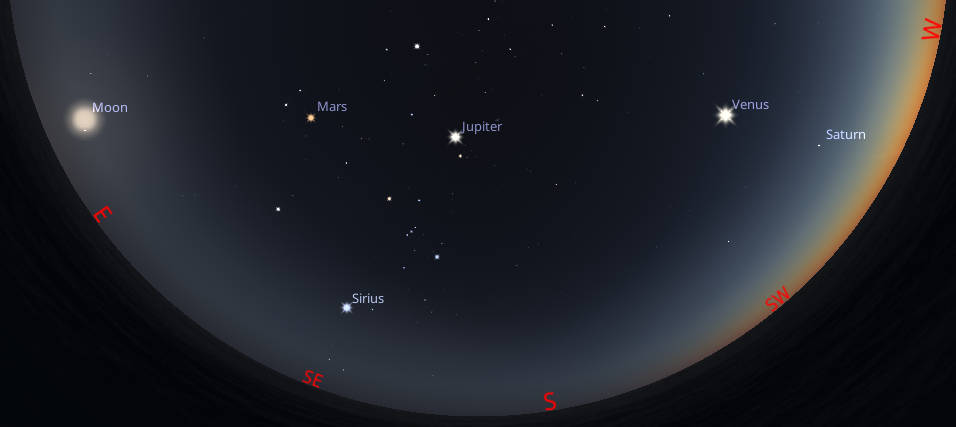
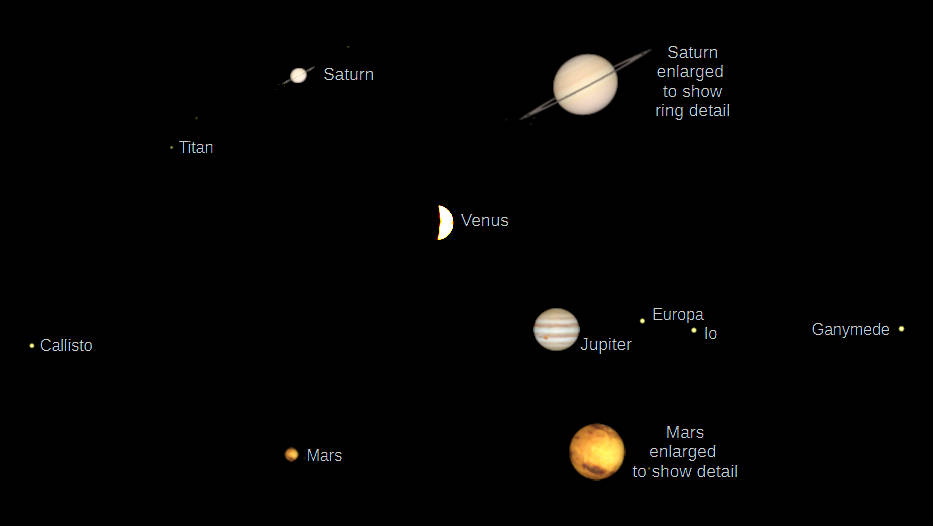
Let’s take our weekly look at the whereabouts of the naked-eye planets. At 7 PM this evening four of the five naked eye planets will be out. Starting from the West we have Venus the brightest of all in the west southwest. Far below it, near the horizon, will be the much dimmer Saturn, which we are about to lose to the evening twilight. Jupiter, the second-brightest planet will be high in the south-southeast. It is reversing course and beginning to head back eastward now. Farther below it is the spectacular constellation of Orion the hunter. The 4th planet out is Mars, the third-brightest planet now, with its distinctive reddish hue, west of the stars Castor and Pollux in Gemini, and just about due east. The full Moon will be rising in the east.
The astronomical event times given are for the Traverse City/Interlochen area of Michigan (EST, UT – 5 hours). Times will be different for other locations.
Addendum
Ephemeris: 02/06/2025 – The Moon tonight, two days after first quarter
This is Ephemeris for Thursday, February 6th. Today the Sun will be up for 10 hours and 3 minutes, setting at 5:59, and it will rise tomorrow at 7:54. The Moon, 1 day past first quarter, will set at 4:30 tomorrow morning.
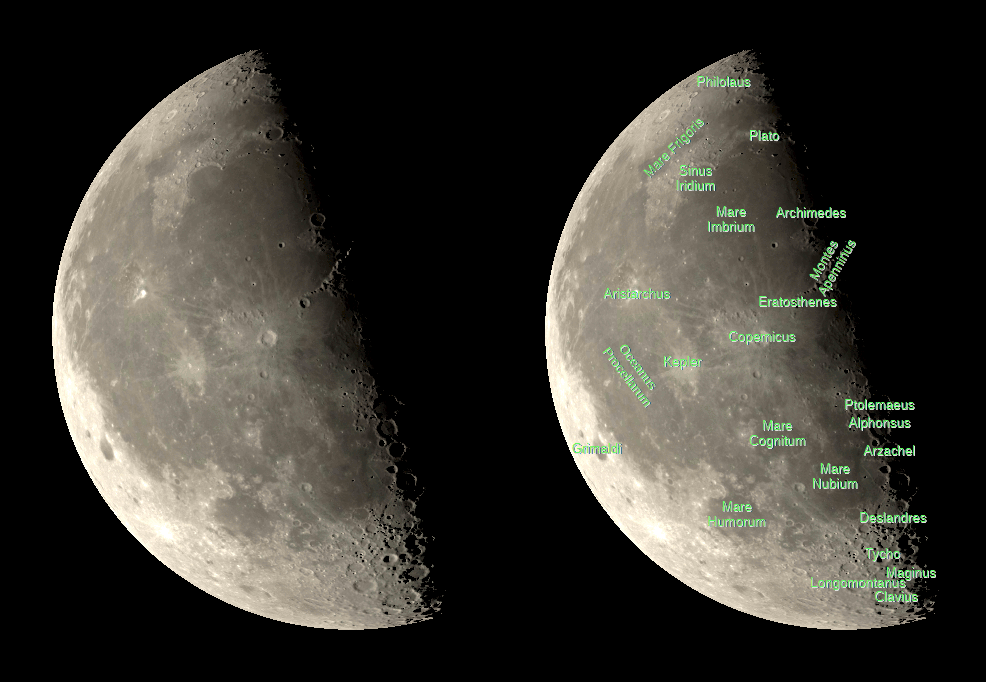
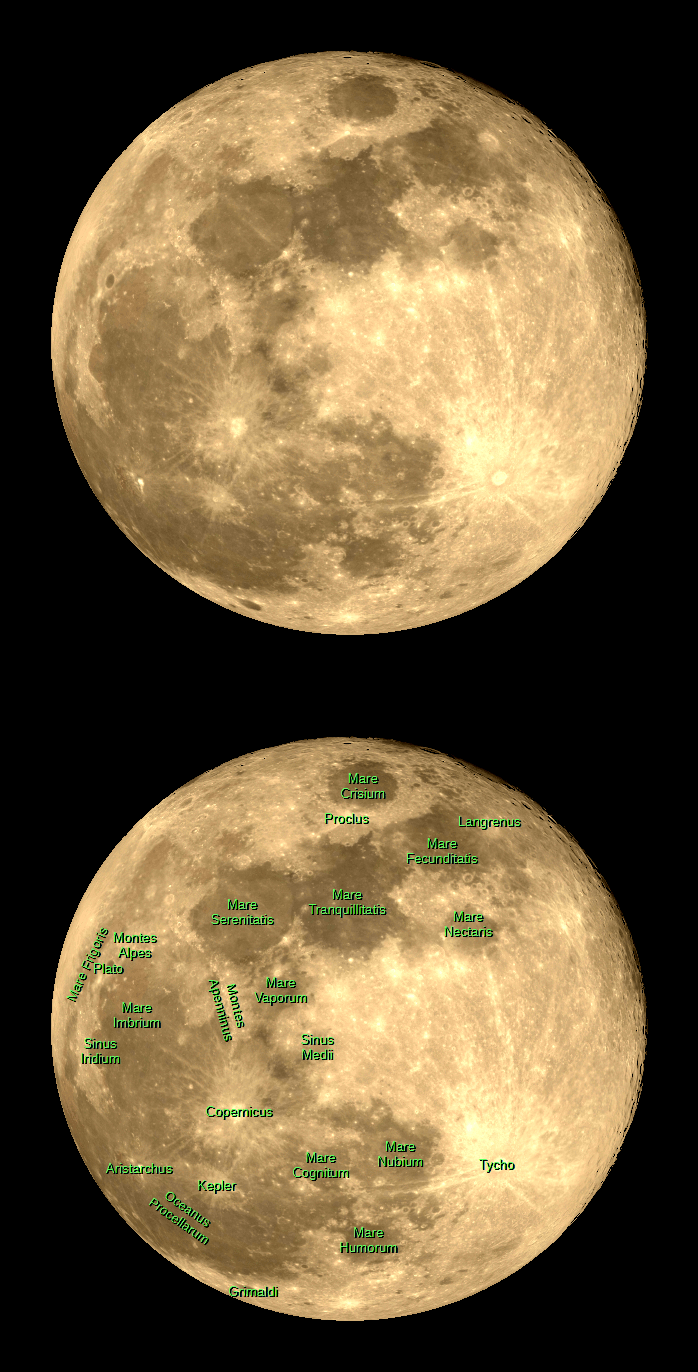
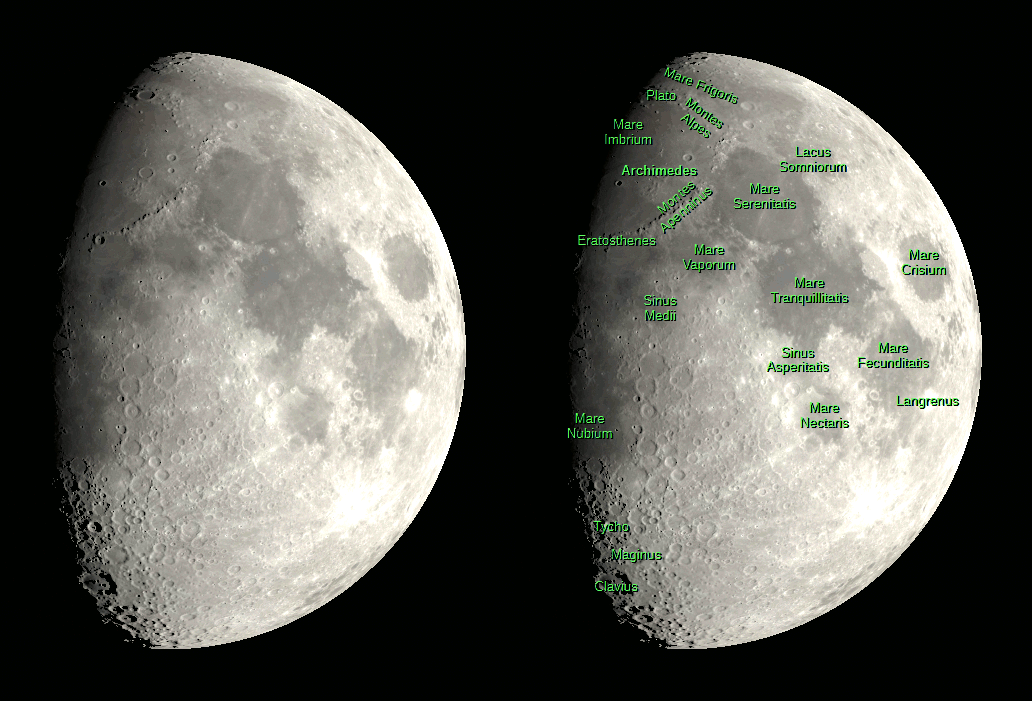
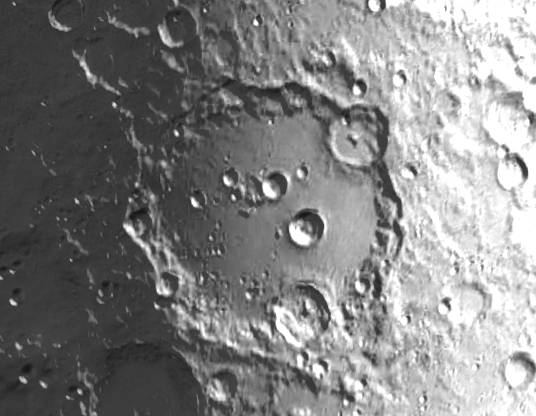
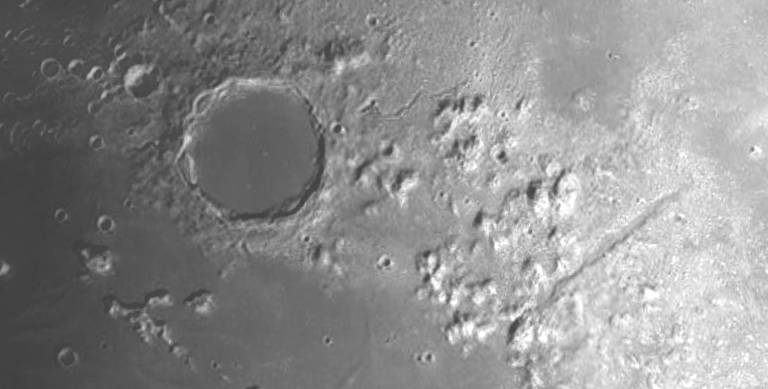
Tonight the moon will be about a day and a half past first quarter it is showing some very nice craters for the binoculars or small telescope. Near the south end of the moon near the terminator, the sunrise line, is the crater called Clavius which has an arc of several craters within it, each of decreasing size. North or above that is the sharp-edged crater called Tycho which, during a full moon, shows several long ejecta rays across the face of the Moon, but are almost invisible now. Near the top edge of the Moon the flat floored crater called Plato is seen by the edge of the large sea Mare Imbrium or Sea of Showers. A mountain range at the opposite side of Imbrium is called the Apennines Mountains.
The astronomical event times given are for the Traverse City/Interlochen area of Michigan (EST, UT – 5 hours). Times will be different for other locations.
Addendum
Ephemeris: 02/05/2025 – Let’s take our weekly look at the naked-eye planets
This is Ephemeris for Wednesday, February 5th. Today the Sun will be up for 10 hours and 1 minute, setting at 5:57, and it will rise tomorrow at 7:55. The Moon, at first quarter today, will set at 3:14 tomorrow morning.
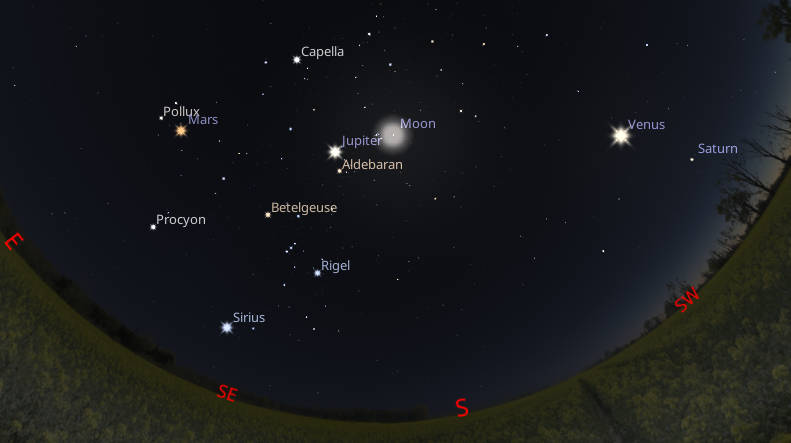
Let’s take our weekly look at the whereabouts of the naked-eye planets. At 7:30 PM this evening four of the five naked eye planets will be out. Starting from the West we have Venus the brightest of all in the west southwest. Far below it, near the horizon, will be the much dimmer Saturn. Jupiter, the second-brightest planet will be high in the south-southeast. It is reversing course and beginning to head back eastward now. Farther below it is the spectacular constellation of Orion the hunter. The 4th planet out is Mars, the third-brightest planet now, with its distinctive reddish hue, near the star Pollux in Gemini, and just about due east. The fifth naked eye planet, Mercury, is too close to the Sun to be visible.
The astronomical event times given are for the Traverse City/Interlochen area of Michigan (EST, UT – 5 hours). Times will be different for other locations.
Addendum
Ephemeris: 01/31/2025 – Previewing February Skies
This is Bob Moler with Ephemeris for Friday, January 31st. Today the Sun will be up for 9 hours and 47 minutes, setting at 5:50, and it will rise tomorrow at 8:01. The Moon, 2 days past new, will set at 8:39 this evening.
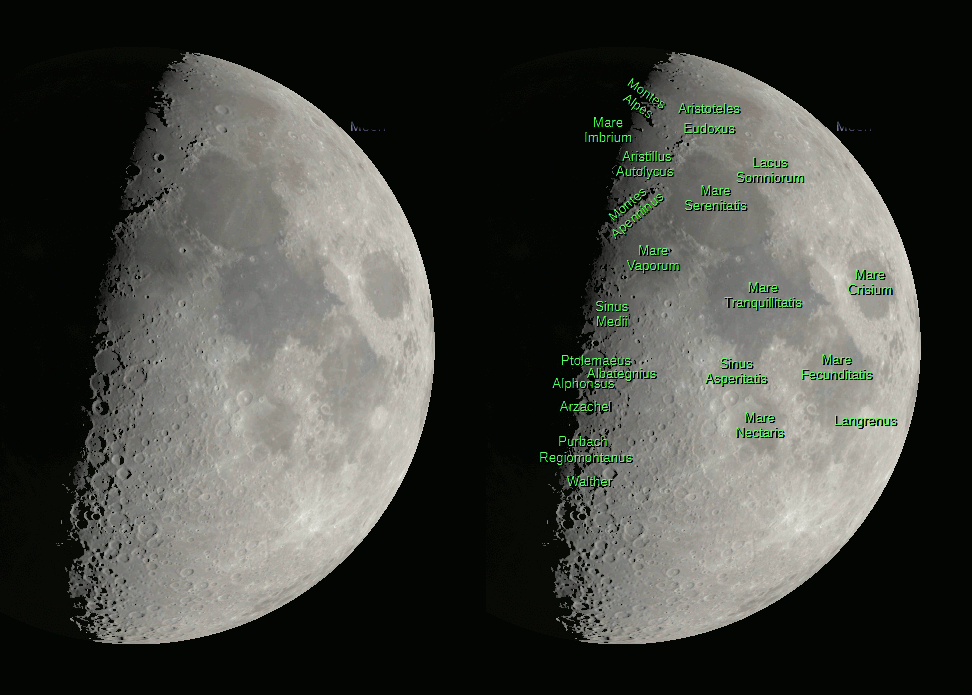
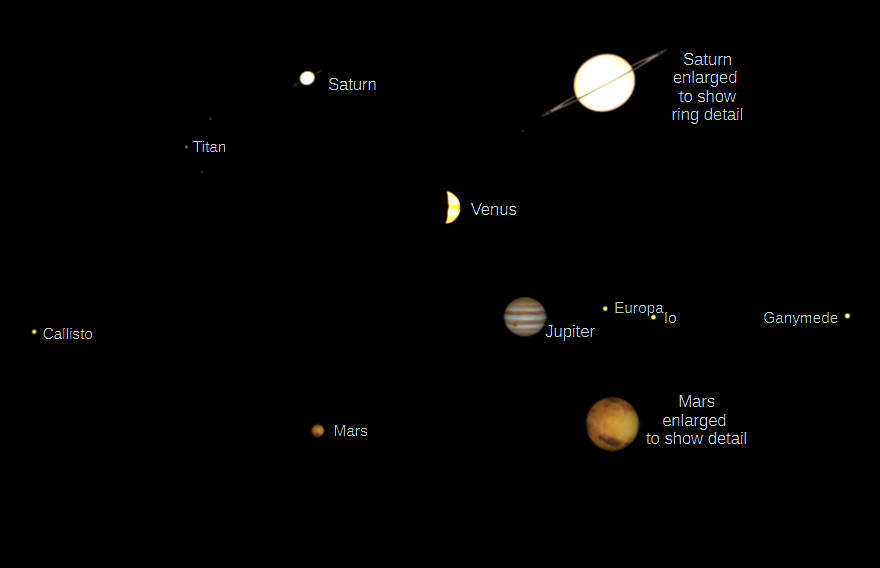
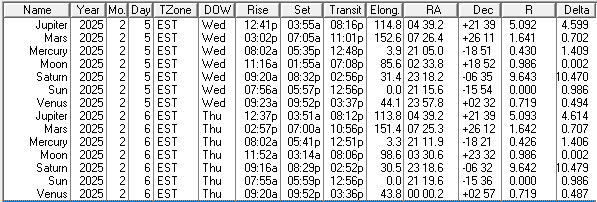
January was a wild and crazy month, let’s hope February is short and sweet. Well, at least it’ll be short. The daylight hours throughout the month will be getting longer. Daylight hours will increase from 9 hours and 50 minutes tomorrow to 11 hours and 8 minutes on the 28th. The sunrise time will decrease from 8:01 today to 7:21 at month’s end. The sunset times will increase from 5:51 tomorrow to 6:29 on the 28th. Along with that the altitude of the Sun at noon will increase from 28.4 degrees tomorrow to 37.6 degrees at month’s end. It will be a degree lower for folks in the Straits area because they are a degree of latitude farther north. Local noon, by the way for Interlochen and Traverse City is about 12:56 p.m. The Moon will be near Saturn tonight.
The astronomical event times given are for the Traverse City/Interlochen area of Michigan (EST, UT – 5 hours). Times will be different for other locations.
Addendum
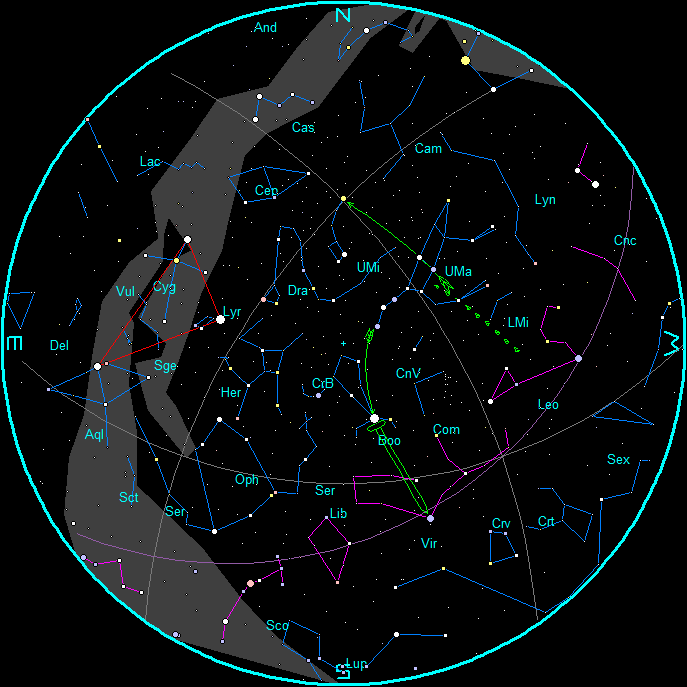
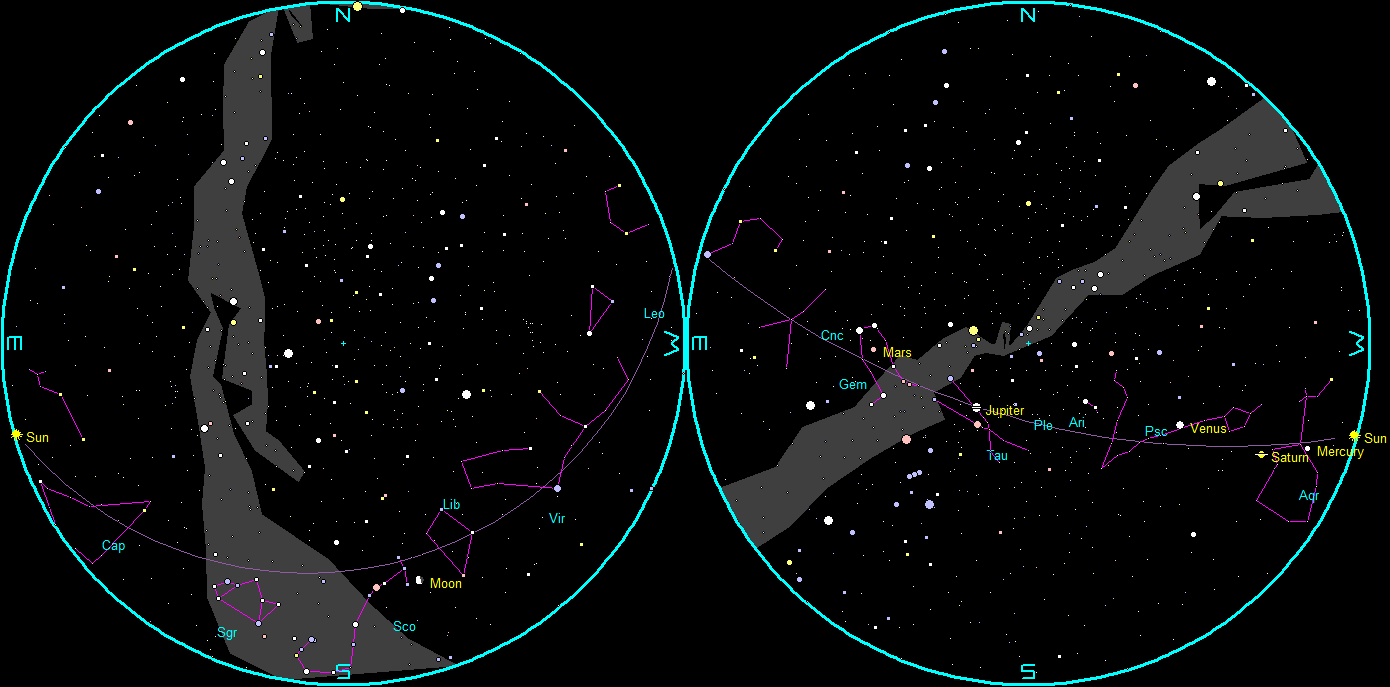
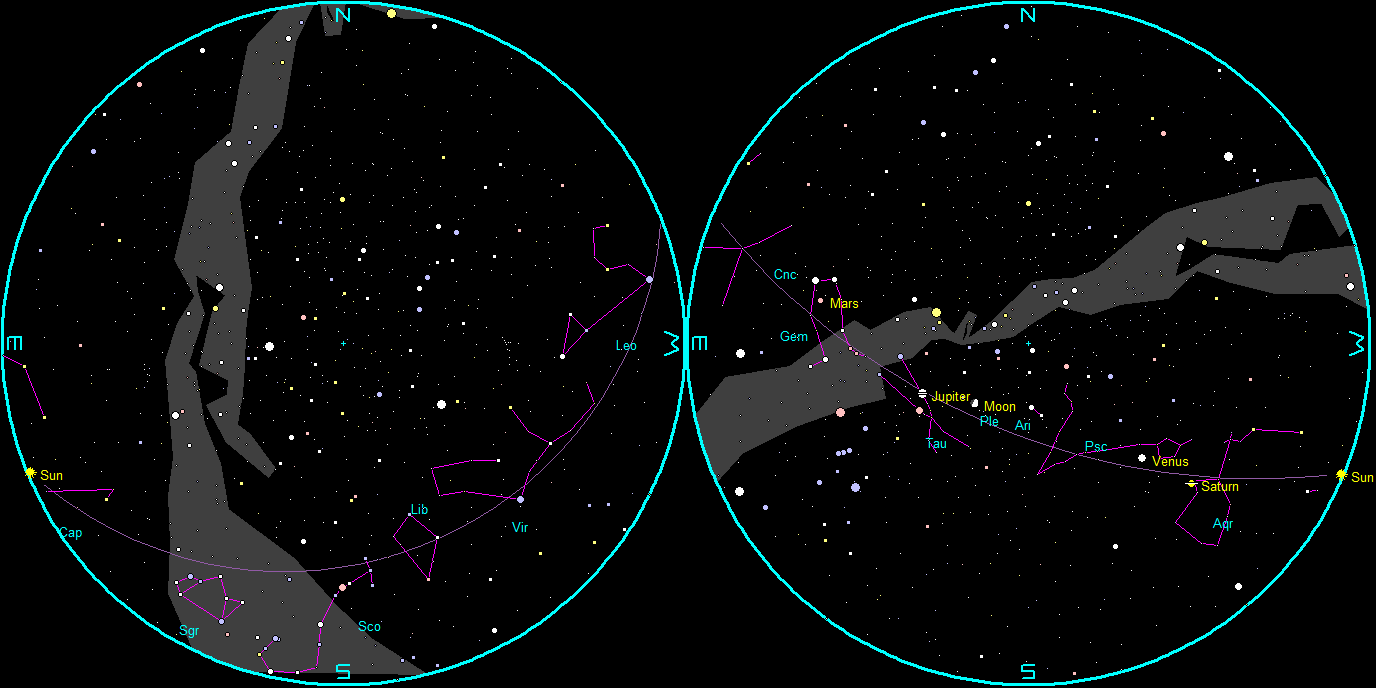
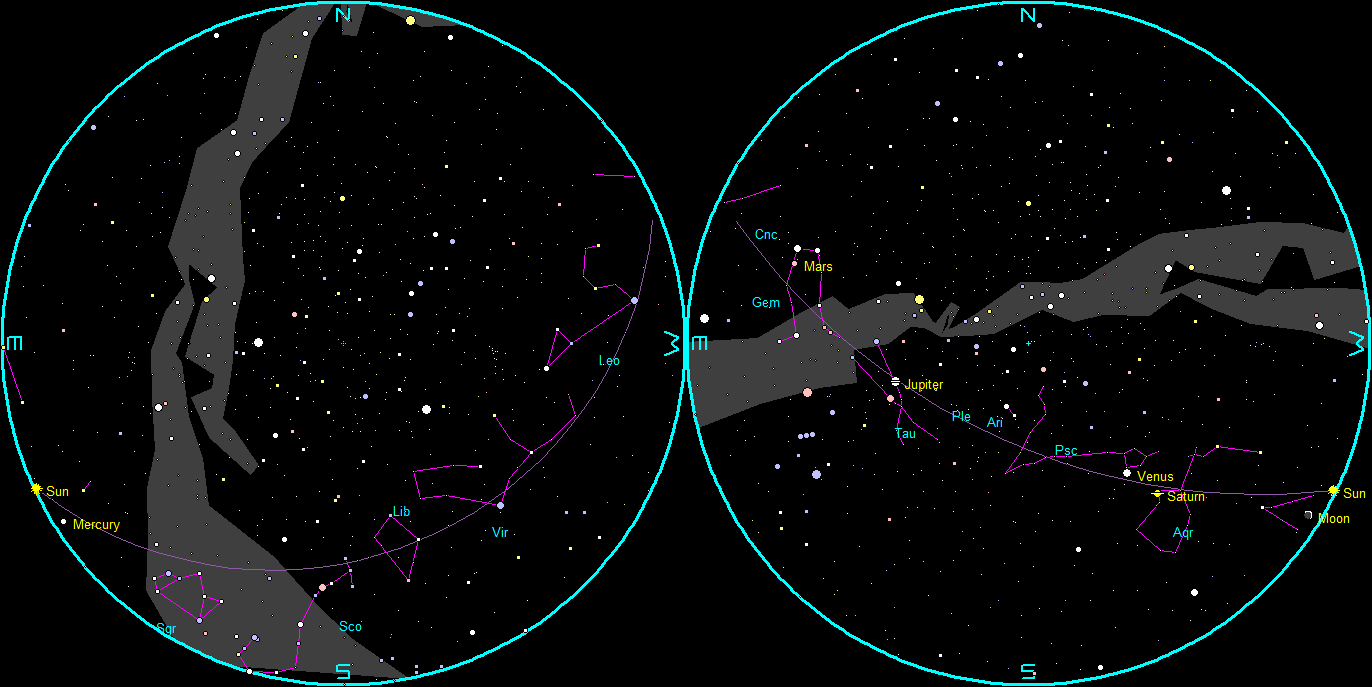
February Evening Star Chart
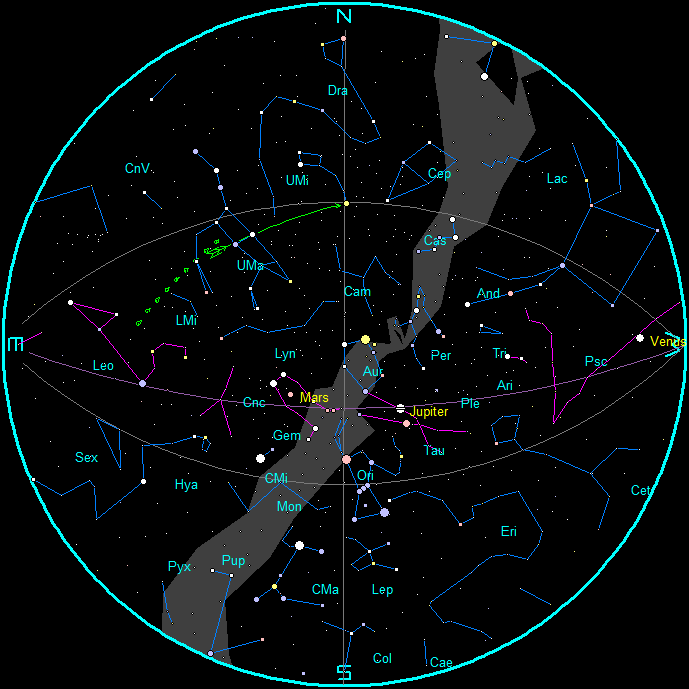
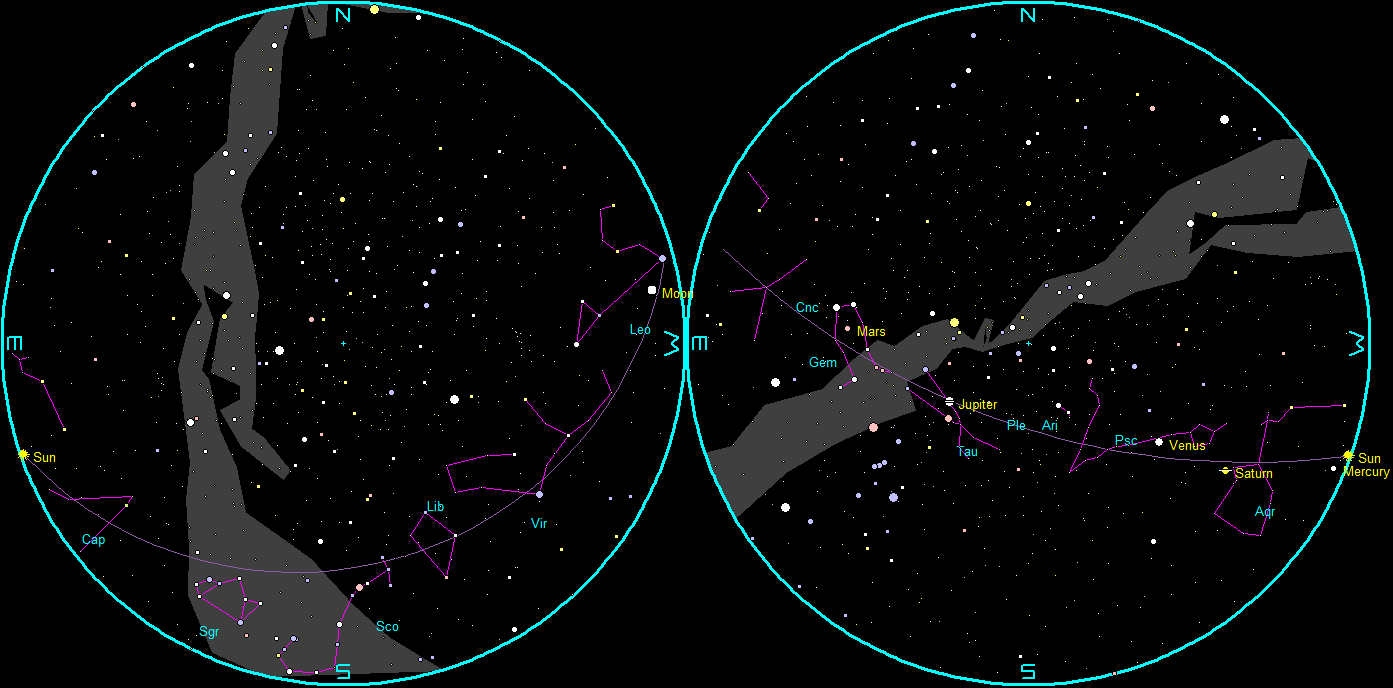
The planets and stars are plotted for the 14th at 9 PM EST in the evening and 6 AM for the morning chart. These are the chart times. Note that Traverse City is located approximately 45 minutes behind our time meridian. (An hour 45 minutes behind our daylight saving time meridian during EDT). To duplicate the star positions on a planisphere (rotating star finder) you may have to set it to 45 minutes or one hour 45 minutes (Daylight Time) earlier than the current time.
Note the chart times of 9 p.m. and 6 a.m. are for the 14th and 15th. For each week before these dates, add ½ hour (28 minutes if you’re picky). For each week after, subtract ½ hour. Planet positions on dates other than the 15th can be found in the Wednesday planet posts on this blog.
February Morning Star Chart
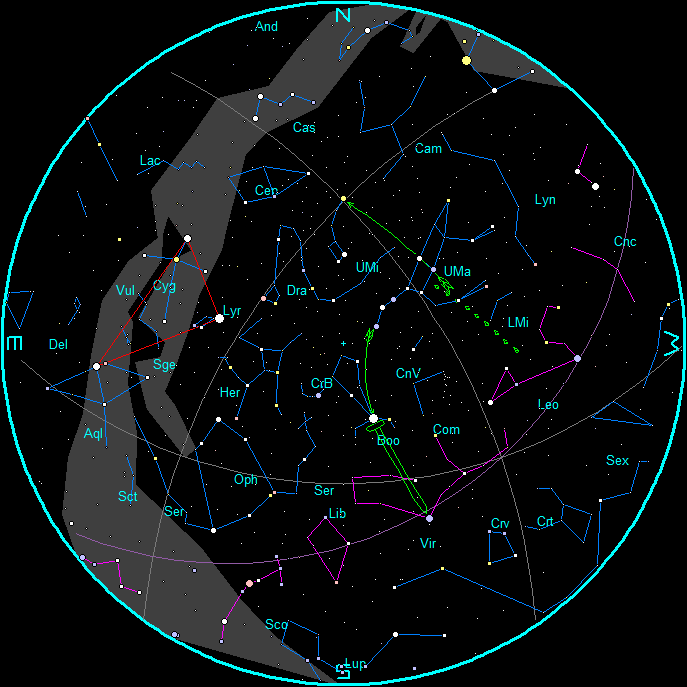
For a list of constellation names to go with the abbreviations, click here.
- Pointer stars at the front of the bowl of the Big Dipper point to Polaris, the North Star.
- Follow the arc of the handle of the Big Dipper to the star Arcturus, and
- Extend like a spike to Spica,
- The Summer Triangle is in red.
Twilight Limits, Nautical and Astronomical
| EST | |||||||
| Morning | Twilight | Evening | Twilight | Dark | Night | Moon | |
| Date | Astro. | Nautical | Nautical | Astro. | Start | End | Illum. |
| 2025-02-01 | 6h22m | 6h56m | 19h00m | 19h35m | 21h58m | 6h22m | 0.17 |
| 2025-02-02 | 6h21m | 6h55m | 19h02m | 19h36m | 23h16m | 6h21m | 0.27 |
| 2025-02-03 | 6h20m | 6h54m | 19h03m | 19h37m | – | 6h20m | 0.37 |
| 2025-02-04 | 6h19m | 6h53m | 19h04m | 19h38m | 0h35m | 6h19m | 0.49 |
| 2025-02-05 | 6h18m | 6h52m | 19h05m | 19h39m | 1h55m | 6h18m | 0.6 |
| 2025-02-06 | 6h17m | 6h51m | 19h07m | 19h41m | 3h15m | 6h17m | 0.71 |
| 2025-02-07 | 6h16m | 6h49m | 19h08m | 19h42m | 4h30m | 6h16m | 0.8 |
| 2025-02-08 | 6h14m | 6h48m | 19h09m | 19h43m | 5h36m | 6h14m | 0.88 |
| 2025-02-09 | 6h13m | 6h47m | 19h11m | 19h44m | – | – | 0.94 |
| 2025-02-10 | 6h12m | 6h46m | 19h12m | 19h46m | – | – | 0.98 |
| 2025-02-11 | 6h11m | 6h44m | 19h13m | 19h47m | – | – | 1 |
| 2025-02-12 | 6h09m | 6h43m | 19h14m | 19h48m | – | – | 1 |
| 2025-02-13 | 6h08m | 6h42m | 19h16m | 19h50m | – | – | 0.97 |
| 2025-02-14 | 6h07m | 6h40m | 19h17m | 19h51m | 19h51m | 20h35m | 0.93 |
| 2025-02-15 | 6h05m | 6h39m | 19h18m | 19h52m | 19h52m | 21h39m | 0.88 |
| 2025-02-16 | 6h04m | 6h38m | 19h20m | 19h53m | 19h53m | 22h43m | 0.81 |
| 2025-02-17 | 6h02m | 6h36m | 19h21m | 19h55m | 19h55m | 23h47m | 0.73 |
| 2025-02-18 | 6h01m | 6h35m | 19h22m | 19h56m | 19h56m | – | 0.64 |
| 2025-02-19 | 6h00m | 6h33m | 19h23m | 19h57m | 19h57m | 0h53m | 0.55 |
| 2025-02-20 | 5h58m | 6h32m | 19h25m | 19h58m | 19h58m | 2h00m | 0.46 |
| 2025-02-21 | 5h56m | 6h30m | 19h26m | 20h00m | 20h00m | 3h07m | 0.36 |
| 2025-02-22 | 5h55m | 6h29m | 19h27m | 20h01m | 20h01m | 4h10m | 0.26 |
| 2025-02-23 | 5h53m | 6h27m | 19h29m | 20h02m | 20h02m | 5h06m | 0.18 |
| 2025-02-24 | 5h52m | 6h25m | 19h30m | 20h04m | 20h04m | 5h52m | 0.1 |
| 2025-02-25 | 5h50m | 6h24m | 19h31m | 20h05m | 20h05m | 5h50m | 0.04 |
| 2025-02-26 | 5h48m | 6h22m | 19h33m | 20h06m | 20h06m | 5h48m | 0.01 |
| 2025-02-27 | 5h47m | 6h21m | 19h34m | 20h08m | 20h08m | 5h47m | 0 |
| 2025-02-28 | 5h45m | 6h19m | 19h35m | 20h09m | 20h09m | 5h45m | 0.02 |
Twilight calendar was generated using Cartes du Ciel (Sky Charts).
See my blog post: Twilight Zone for the definitions of the different periods of twilight here: https://bobmoler.wordpress.com/2019/09/27/
NASA Calendar of Planetary Events
   Date       Time    Event
Feb  1  Sa            Venus: 45° E
     1  Sa   3:27 PM  Moon-Venus: 2.4° N
     1  Sa   5:06 PM  Moon Ascending Node
     1  Sa   9:43 PM  Moon Perigee: 367500 km
     5  We   3:02 AM  First Quarter
     6  Th   1:43 AM  Moon-Pleiades: 0.5° S
     8  Sa   5:40 AM  Moon North Dec.: 28.6° N
     9  Su   6:57 AM  Mercury Superior Conj.
     9  Su   2:36 PM  Moon-Mars: 0.8° S
    10  Mo  12:19 AM  Moon-Pollux: 2.2° N
    11  Tu  12:03 AM  Moon-Beehive: 2.7° S
    12  We   8:53 AM  Full Moon
    12  We   6:21 PM  Moon-Regulus: 2.3° S
    15  Sa   1:53 AM  Moon Descending Node
    17  Mo   7:01 AM  Moon-Spica: 0.3° N
    17  Mo   8:11 PM  Moon Apogee: 404900 km
    20  Th  12:32 PM  Last Quarter
    21  Fr   3:21 AM  Moon-Antares: 0.5° N
    22  Sa   5:32 PM  Moon South Dec.: 28.7° S
    27  Th   7:45 PM  New Moon
Mar  1  Sa            Venus: 30.4° E
All event times are given for UTC-5 Eastern Standard Time
Sky Events Calendar by Fred Espenak and Sumit Dutta (NASA’s GSFC),
http://eclipse.gsfc.nasa.gov/SKYCAL/SKYCAL.html
If you go to the above site you can print out a list like the above for the entire year or calendar pages for your time zone.
Sun and Moon Rising and Setting Events
LU               Ephemeris of Sky Events for Interlochen/TC
February, 2025    Local time zone: EST
+-----------------------------------------------------------------------+
| DATE |  SUN     SUN  DAYLIGHT|   TWILIGHT*    |MOON  RISE OR    ILLUM |
|      |  RISE    SET    HOURS |  END    START  |PHASE SET** TIME FRACTN|
+=======================================================================+
|Sat  1| 08:01a  05:51p  09:50 | 06:58p  06:55a |      Set  09:57p   15%|
+------+-----------------------+----------------+-----------------------+
|Sun  2| 08:00a  05:53p  09:53 | 06:59p  06:54a |      Set  11:15p   24%|
|Mon  3| 07:59a  05:54p  09:55 | 07:00p  06:53a |      Set  12:35a   35%|
|Tue  4| 07:57a  05:56p  09:58 | 07:01p  06:52a |      Set  01:55a   46%|
|Wed  5| 07:56a  05:57p  10:01 | 07:03p  06:51a |F Qtr Set  03:14a   57%|
|Thu  6| 07:55a  05:59p  10:03 | 07:04p  06:50a |      Set  04:30a   68%|
|Fri  7| 07:54a  06:00p  10:06 | 07:05p  06:48a |      Set  05:36a   78%|
|Sat  8| 07:52a  06:01p  10:09 | 07:06p  06:47a |      Set  06:29a   86%|
+------+-----------------------+----------------+-----------------------+
|Sun  9| 07:51a  06:03p  10:12 | 07:08p  06:46a |      Set  07:10a   93%|
|Mon 10| 07:49a  06:04p  10:14 | 07:09p  06:45a |      Set  07:42a   97%|
|Tue 11| 07:48a  06:06p  10:17 | 07:10p  06:43a |      Set  08:06a  100%|
|Wed 12| 07:47a  06:07p  10:20 | 07:12p  06:42a |Full  Rise 06:21p  100%|
|Thu 13| 07:45a  06:08p  10:23 | 07:13p  06:41a |      Rise 07:29p   98%|
|Fri 14| 07:44a  06:10p  10:26 | 07:14p  06:39a |      Rise 08:34p   94%|
|Sat 15| 07:42a  06:11p  10:29 | 07:16p  06:38a |      Rise 09:38p   89%|
+------+-----------------------+----------------+-----------------------+
|Sun 16| 07:41a  06:13p  10:32 | 07:17p  06:37a |      Rise 10:42p   82%|
|Mon 17| 07:39a  06:14p  10:35 | 07:18p  06:35a |      Rise 11:47p   75%|
|Tue 18| 07:38a  06:15p  10:37 | 07:19p  06:34a |      Rise 12:52a   66%|
|Wed 19| 07:36a  06:17p  10:40 | 07:21p  06:32a |      Rise 01:59a   57%|
|Thu 20| 07:34a  06:18p  10:43 | 07:22p  06:31a |L Qtr Rise 03:06a   47%|
|Fri 21| 07:33a  06:20p  10:46 | 07:23p  06:29a |      Rise 04:09a   38%|
|Sat 22| 07:31a  06:21p  10:49 | 07:25p  06:28a |      Rise 05:06a   28%|
+------+-----------------------+----------------+-----------------------+
|Sun 23| 07:29a  06:22p  10:52 | 07:26p  06:26a |      Rise 05:53a   19%|
|Mon 24| 07:28a  06:24p  10:55 | 07:27p  06:24a |      Rise 06:30a   12%|
|Tue 25| 07:26a  06:25p  10:59 | 07:28p  06:23a |      Rise 07:00a    6%|
|Wed 26| 07:24a  06:26p  11:02 | 07:30p  06:21a |      Rise 07:25a    2%|
|Thu 27| 07:23a  06:28p  11:05 | 07:31p  06:20a |New   Set  06:14p    0%|
|Fri 28| 07:21a  06:29p  11:08 | 07:32p  06:18a |      Set  07:34p    1%|
+-----------------------------------------------------------------------+
* Nautical Twilight
** Moonrise or moonset, whichever occurs between sunset and sunrise
Created using my LookingUp for MS-DOS app.
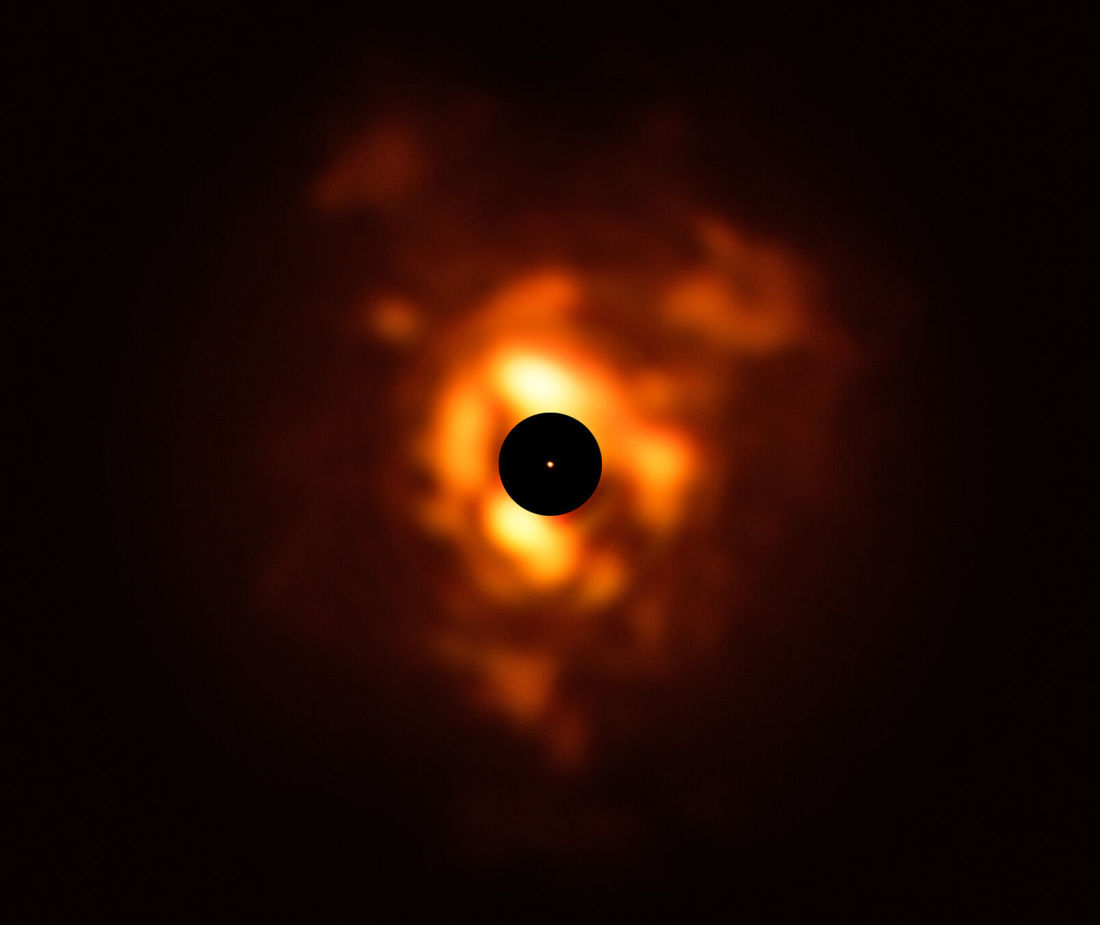
Ephemeris: 01/30/2025 – What’s up with Betelgeuse
This is Bob Moler with Ephemeris for Thursday, January 30th. Today the Sun will be up for 9 hours and 45 minutes, setting at 5:49, and it will rise tomorrow at 8:02. The Moon, 1 day past new, will set at 7:20 this evening.
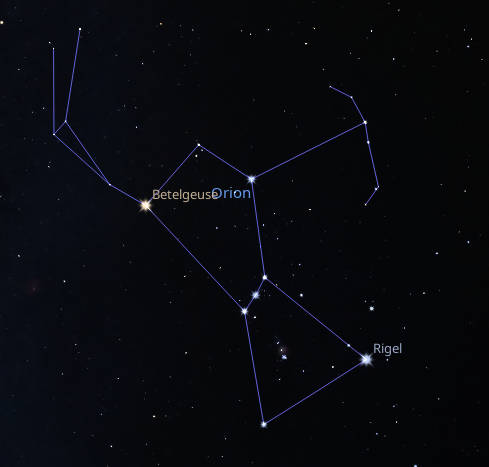
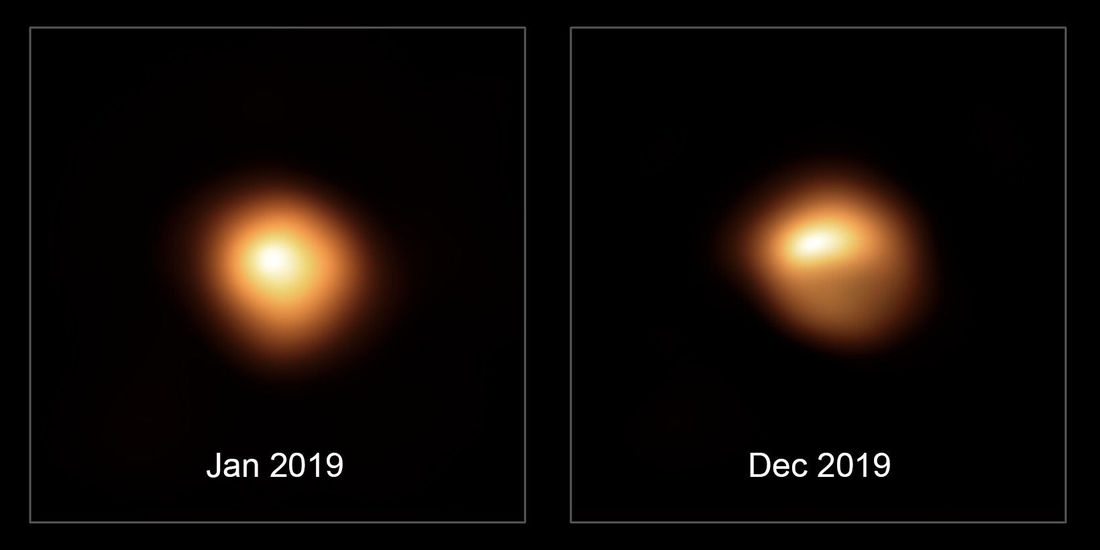
The constellation Orion is in the southeast at 8 PM, so what’s up with Betelgeuse. Betelgeuse is the bright reddish upper leftmost star of the torso of Orion the hunter, it’s in his shoulder. Betelgeuse has been acting up lately. In 2019 and 2020 Betelgeuse had dimmed significantly. Astronomers didn’t know why at the time, but found out later that it ejected a large cloud of gas and dust which blocked the light from the star. Since then Betelgeuse has increased its brightness significantly, so it’s much brighter than normal. Again, we don’t exactly know why. Some have speculated that Betelgeuse is will soon go supernova. We’ve known that for a while, but soon is measured in hundreds of thousands of years. So astronomers are keeping an eye on Betelgeuse to see what happens next.
The astronomical event times given are for the Traverse City/Interlochen area of Michigan (EST, UT – 5 hours). Times will be different for other locations.
Addendum
Ephemeris: 01/29/2025 – Our weekly look at the whereabouts of the naked-eye planets
This is Bob Moler with Ephemeris for Wednesday, January 29th. Today the Sun will be up for 9 hours and 42 minutes, setting at 5:47, and it will rise tomorrow at 8:03. The Moon is new today, and won’t be visible.
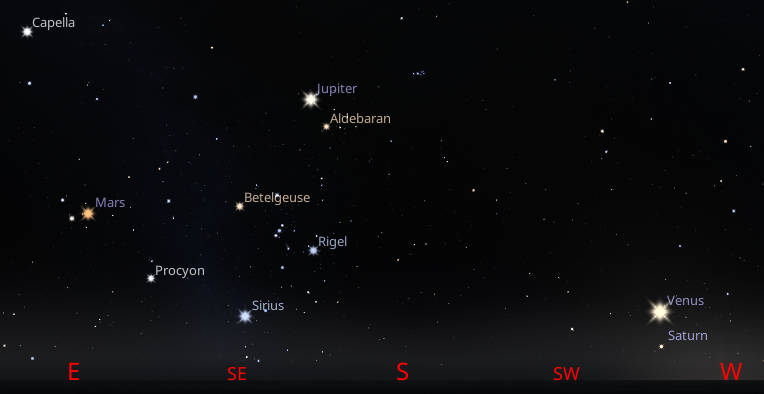
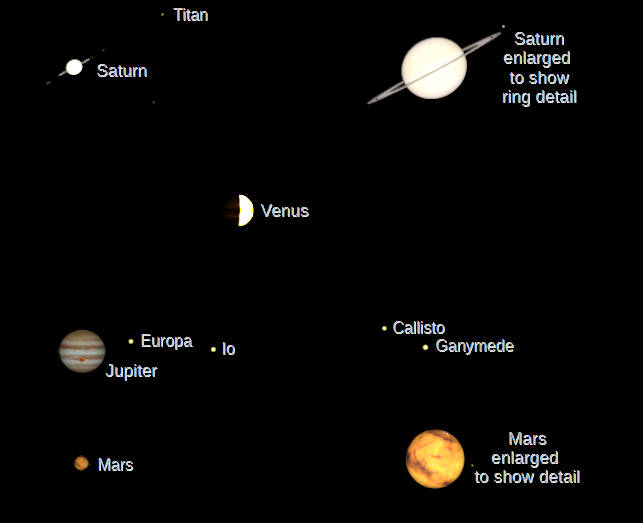
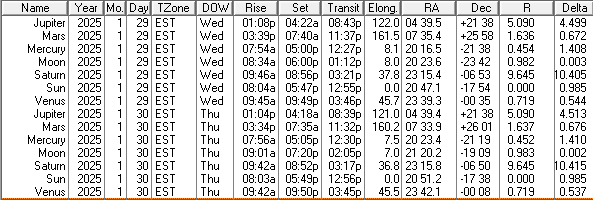
Let’s take our weekly look at the whereabouts of the naked-eye planets. At 8 PM this evening four of the five naked eye planets will be out. Starting from the West we have Venus the brightest of all low in the west southwest. Almost directly below it will be the much dimmer Saturn. Jupiter, the second-brightest planet will be high in the south-southeast. Below it is the letter V shape of stars that is the head of Taurus the bull. Farther below is the spectacular constellation of Orion the hunter. The 4th planet out is Mars, the third-brightest planet now, with its distinctive reddish hue, near the star Pollux in Gemini, and just about due east. The fifth naked eye planet, Mercury, is too close to the Sun in the morning to be visible.
The astronomical event times given are for the Traverse City/Interlochen area of Michigan (EST, UT – 5 hours). Times will be different for other locations.
Addendum
Ephemeris: 01/28/2025 – Tranquility amongst chaos
This is Bob Moler with Ephemeris for Tuesday, January 28th. Today the Sun will be up for 9 hours and 40 minutes, setting at 5:46, and it will rise tomorrow at 8:04. The Moon, 1 day before new, will rise at 8:34 tomorrow morning.
We’ve come off a tumultuous week, and while this program deals with topics generally in the heavens. Events on the Earth more than occasionally intrude. I often remind folks that the Earth is a planet too; an astronomical object in someone else’s sky. I consider astronomy not to be just about the heavens but about the entire universe of which the Earth is a part. The heavens above the Earth to the naked eye at least seems to be a tranquil place. That is because we cannot, with our human senses, pick up the energies of the great collisions and the other cataclysms in the universe, due to distance, our protective atmosphere and our limited senses. So going out under the stars for a while is a way to get away from it all: far, far away.
The astronomical event times given are for the Traverse City/Interlochen area of Michigan (EST, UT – 5 hours). Times will be different for other locations.
Addendum

Ephemeris: 01/27/2025 – Gemini the twins with Mars this year
This is Ephemeris for Monday, January 27th. Today the Sun will be up for 9 hours and 38 minutes, setting at 5:44, and it will rise tomorrow at 8:05. The Moon, 2 days before new, will rise at 8:00 tomorrow morning.
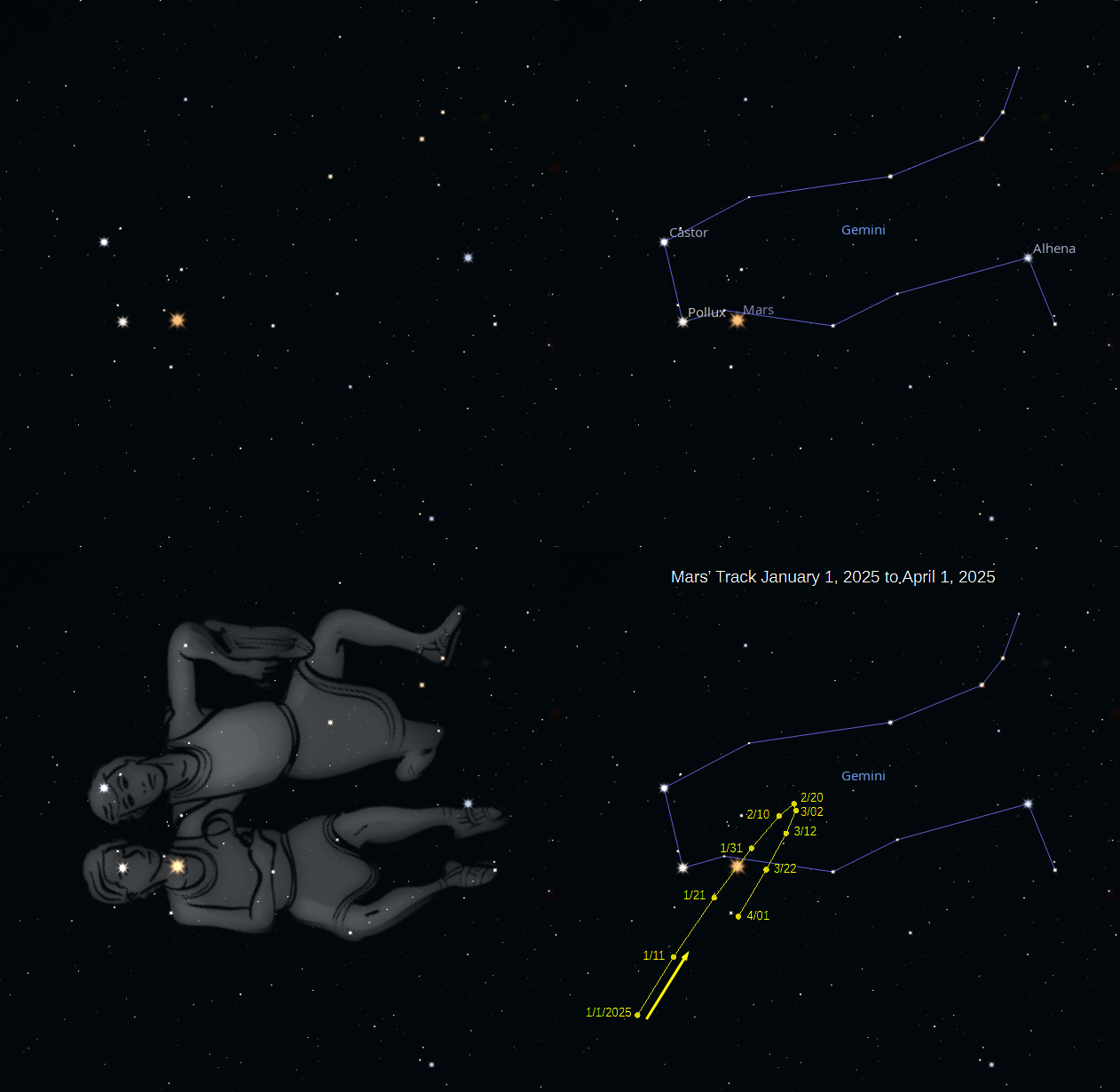
Another famous winter constellation is Gemini. The constellation of Gemini the Twins is visible halfway to the zenith in the east, at the top and left of Orion the hunter, at 9 pm. The namesake stars of the two lads, are the two bright stars at the left end of Gemini, and are high and are due east. Castor is on top, while Pollux is below. From them come two lines of stars that outline the two, extending horizontally toward Orion. Mars is passing in front of the stars of Gemini during the first quarter of this year, reaching the western end of its retrograde loop and doubling back to the east. In Greek mythology the Gemini twins were half brothers, Castor was fathered by a mere mortal, while Pollux was fathered by Zeus, but were born together as twins. When Castor was killed during the quest for the Golden Fleece, Pollux pleaded with Zeus to let him die also, so Zeus placed them together in the sky.
The astronomical event times given are for the Traverse City/Interlochen area of Michigan (EST, UT – 5 hours). Times will be different for other locations.
Addendum
 Bob Moler's Ephemeris Blog