Archive
Ephemeris: 01/16/2026 – Comparing Orion’s two brightest stars
This is Ephemeris for Friday, January 16th. Today the Sun will be up for 9 hours and 13 minutes, setting at 5:29, and it will rise tomorrow at 8:15. The Moon, 2 days before new, will rise at 7:54 tomorrow morning.
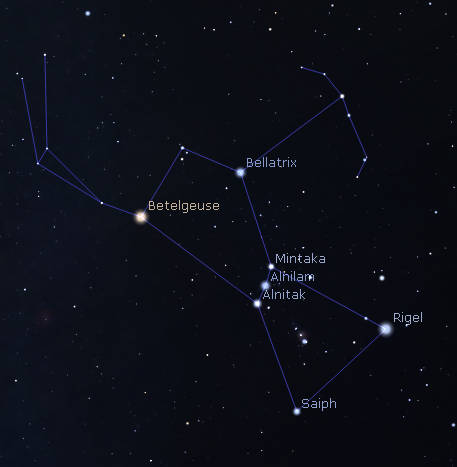
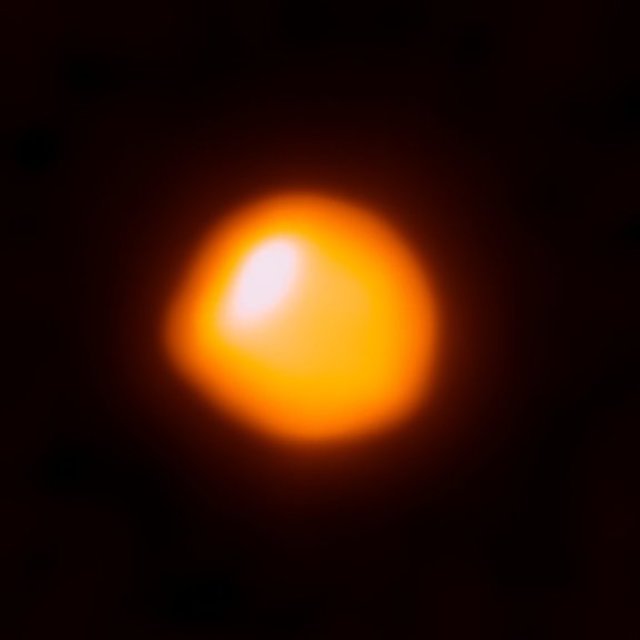
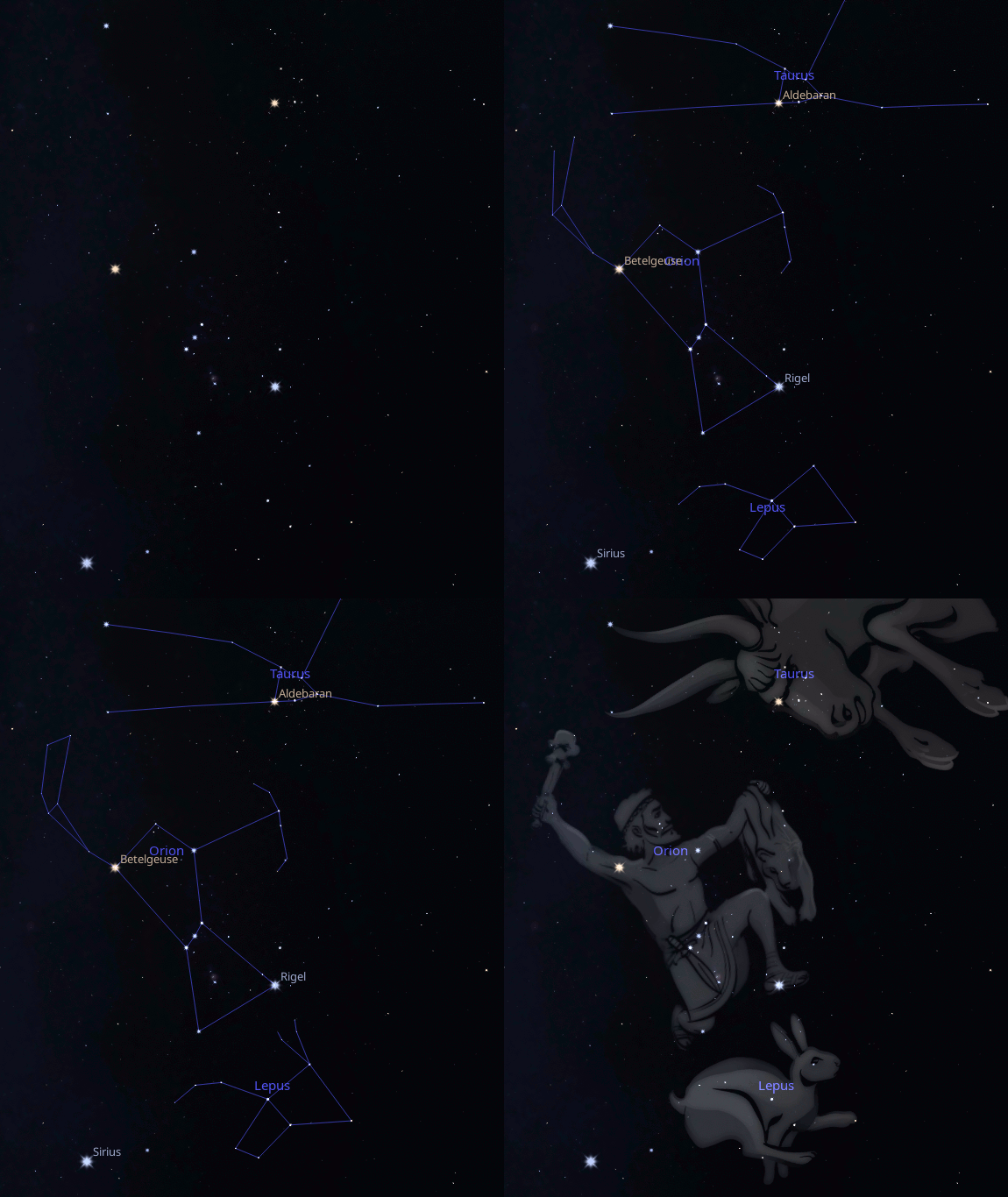
Orion’s two brightest stars are kind of the same but different. Let me explain. Betelgeuse is a red giant star, extremely massive, maybe 14 to 19 times the sun’s mass. It is somewhere between 8 and 14 million years old, which compared to the sun is just a baby, except it is so massive that it is in the last million or so years of its life. Rigel is a bluish white and a bit more massive, about 21 times the mass of the sun, and maybe 8 million years old. It has used most of the hydrogen in its core, and is beginning to transition into its final years which is a few more millions of years. So it’s not as far along in its evolution as Betelgeuse and has not bloated out and turned red. Betelgeuse is 500 light years away, while Rigel is almost 900.
The astronomical event times given in this blog are for the Traverse City/Interlochen area of Michigan (Lat 44.7° N, Long 85.7° W; EST, UT – 5 hours) unless stated otherwise. Times will be different for other locations.
Addendum
Ephemeris: 01/14/2026 – Only two naked-eye planets are visible this week, both in the evening
This is Ephemeris for Wednesday, January 14th. Today the Sun will be up for 9 hours and 10 minutes, setting at 5:27, and it will rise tomorrow at 8:16. The Moon, halfway from last quarter to new, will rise at 6:14 tomorrow morning.
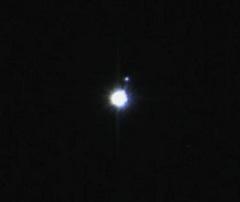
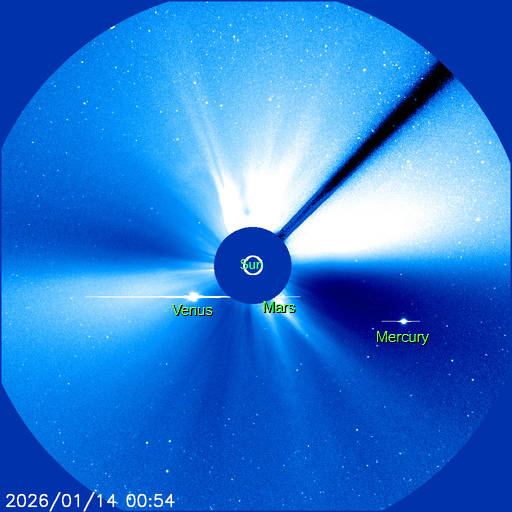
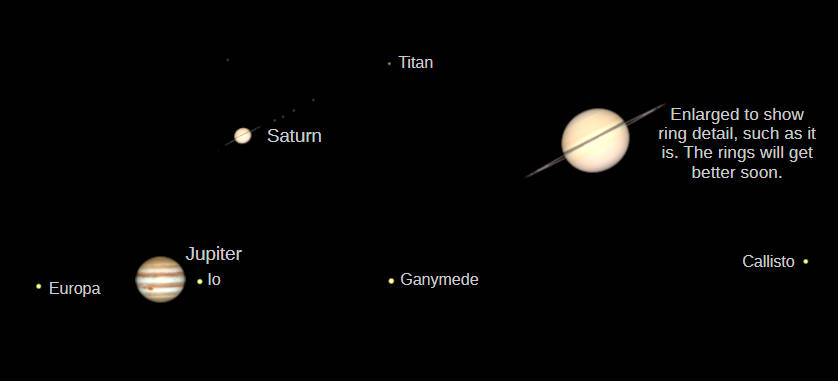
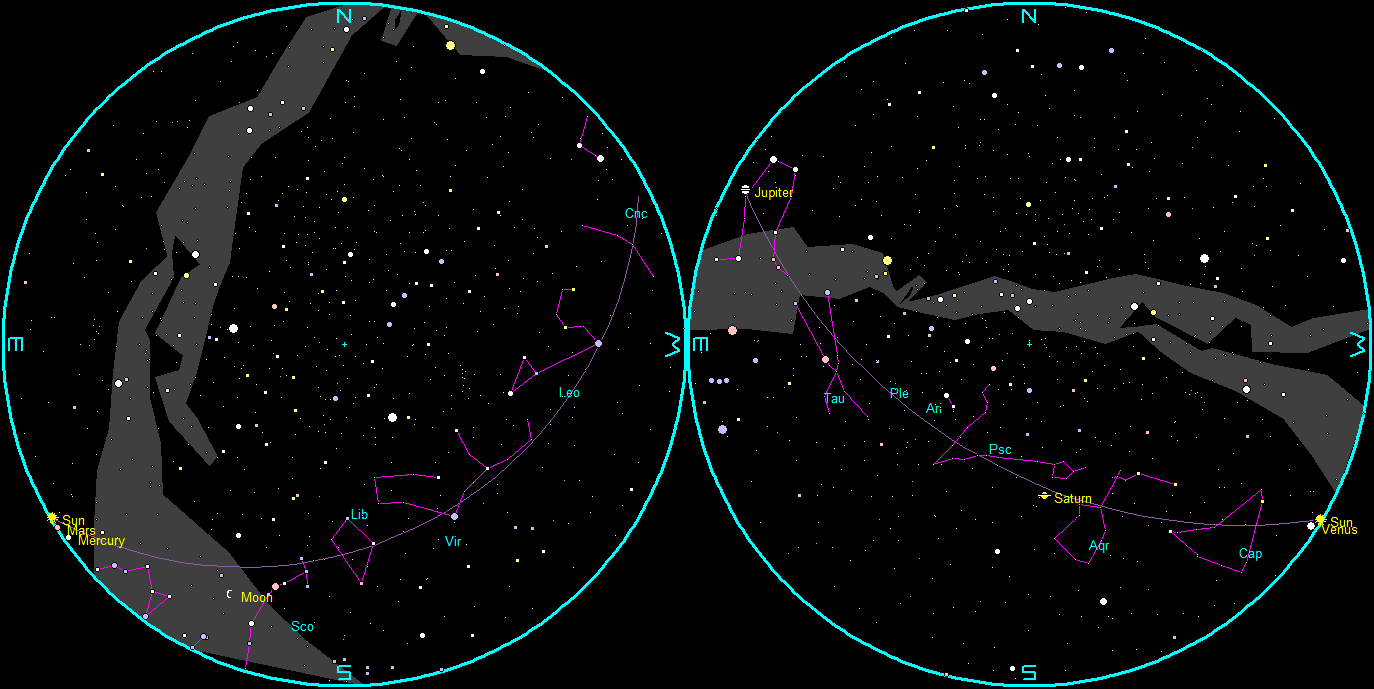
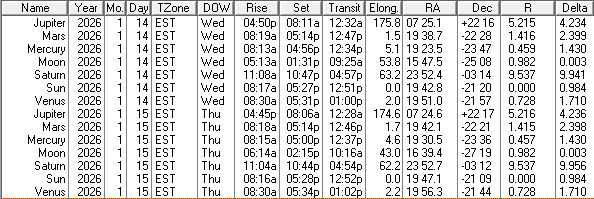
Let’s take our weekly look at the whereabouts of the naked-eye planets. Saturn is the brightest star-like object in the southwestern sky as soon as it gets dark. In a telescope Saturn sports a very thin ring, 1½ degrees from being edge on and is slowly opening. Jupiter is now officially an evening planet, rising before sunset. It’s seen in the evening to the right of Pollux in the pair Castor and Pollux, the bright stars of Gemini. Jupiter’s four brightest moons can be seen even in binoculars, and shift position night to night. Jupiter can still be seen in the morning sky. At 7 AM it will be low in the western sky. Venus, Mercury and Mars are too close to the direction of the Sun to be seen.
The astronomical event times given in this blog are for the Traverse City/Interlochen area of Michigan (Lat 44.7° N, Long 85.7° W; EST, UT – 5 hours) unless stated otherwise. Times will be different for other locations.
Addendum
Ephemeris: 01/13/2026 – Orion is too preoccupied to notice Lepus the hare
This is Ephemeris for Tuesday, January 13th. Today the Sun will be up for 9 hours and 8 minutes, setting at 5:26, and it will rise tomorrow at 8:17. The Moon, 3 days past last quarter, will rise at 5:13 tomorrow morning.
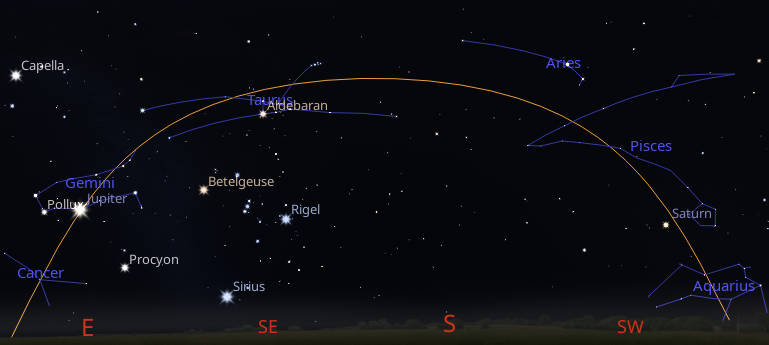
Orion, the central winter constellation is seen in the southern sky this evening. He is a hunter, as artists depict him, however, he is preoccupied with the charge of Taurus the bull from the upper right. At Orion’s feet, and unnoticed by him is the small constellation of Lepus the hare. It’s very hard to see a rabbit in its dim stars: however, I can see a rabbit’s head ears and shoulders. A misshapen box is the head and face of this critter facing to the left. His ears extend upwards from the upper right star of the box, and they bend forward a bit. Two stars to the right of the box and a bit farther apart hint at the front part of the body. Others see a whole rabbit facing the other direction, with additional stars to depict his long ears.
The astronomical event times given in this blog are for the Traverse City/Interlochen area of Michigan (Lat 44.7° N, Long 85.7° W; EST, UT – 5 hours) unless stated otherwise. Times will be different for other locations.
Addendum
Ephemeris: 01/12/2026 – How to find the twins of Gemini
This is Ephemeris for Monday, January 12th. Today the Sun will be up for 9 hours and 6 minutes, setting at 5:24, and it will rise tomorrow at 8:17. The Moon, 2 days past last quarter, will rise at 4:08 tomorrow morning.
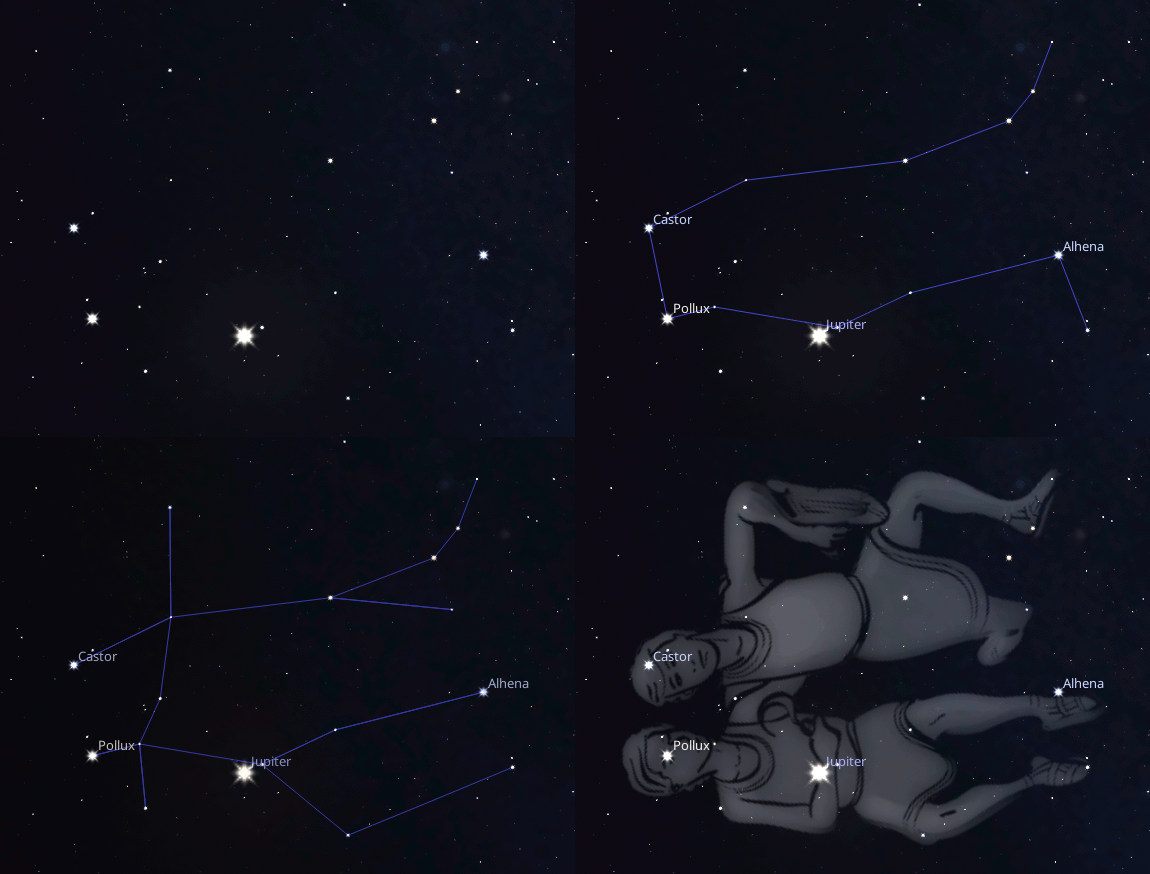
Another famous winter constellation is Gemini. The constellation of Gemini the Twins is visible halfway to the zenith in the east, at the top and left of Orion the hunter, at 9 pm. The namesake stars of the two lads, are the two bright stars at the left end of Gemini, and are high and are due east. Castor is on top, while Pollux is below. From them come two lines of stars that outline the two, extending horizontally toward Orion. Currently, Jupiter in its retrograde motion is situated level with Pollux at 9 PM. Pollux is left of the much brighter Jupiter. In Greek mythology the Gemini twins were half brothers, Castor was fathered by a mere mortal, while Pollux was fathered by Zeus, but were born together as twins. When Castor was killed during the quest for the Golden Fleece, Pollux pleaded with Zeus to let him die also, so Zeus placed them together in the sky.
The astronomical event times given in this blog are for the Traverse City/Interlochen area of Michigan (Lat 44.7° N, Long 85.7° W; EST, UT – 5 hours) unless stated otherwise. Times will be different for other locations.
Addendum

Ephemeris: 01/08/2026 – The star named “Before the Dog”
This is Ephemeris for Thursday, January 8th. Today the Sun will be up for 9 hours even, setting at 5:20, and it will rise tomorrow at 8:19. The Moon, 2 days before last quarter, will rise at 11:45 this evening.
After 8 o’clock this evening look to the southeastern sky for the Orion the hunter constellation. Below into the left of it are two very bright stars. The one below is Sirius also known as the Dog Star, in the heart of Canis Major, the Great Dog, which is still rising at 8. Above and to the left of it is a star called Procyon which is the heart of Orion’s little dog, Canis Minor. The name Procyon is from the Greek meaning Before the Dog. The reason for Procyon’s name is the fact that it, though east of Sirius, rises before it. All things being equal, Sirius should rise before Procyon. The reason is, viewing from the Northern Hemisphere Procyon is north of Sirius, and stays out longer. It is far enough north and not that far to the east of Sirius, that it can rise before Sirius or before the Dog… Star.
The astronomical event times given in this blog are for the Traverse City/Interlochen area of Michigan (Lat 44.7° N, Long 85.7° W; EST, UT – 5 hours) unless stated otherwise. Times will be different for other locations.
Addendum
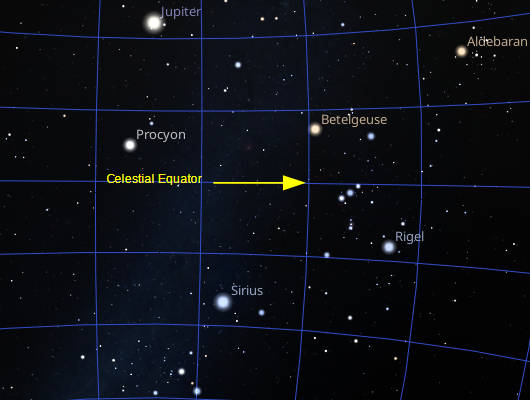
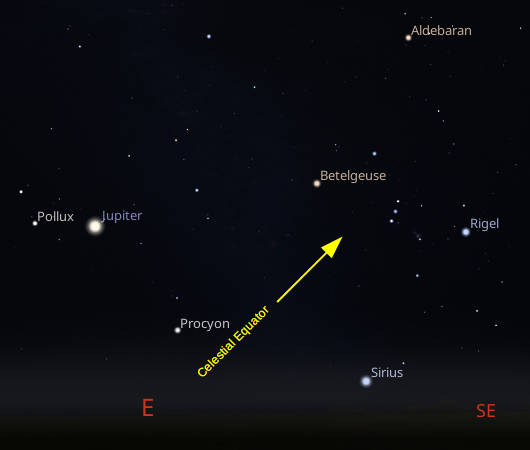
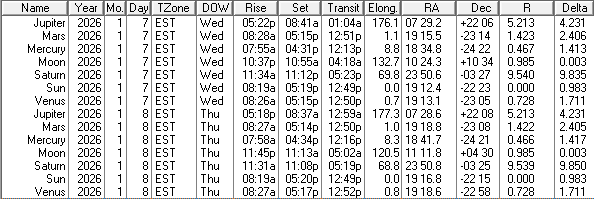
Ephemeris: 01/07/2026 – Taking our first weekly look at the whereabouts of the naked-eye planets for 2026
This is Ephemeris for Wednesday, January 7th. Today the Sun will be up for 8 hours and 59 minutes, setting at 5:19, and it will rise tomorrow at 8:19. The Moon, 3 days before last quarter, will rise at 10:37 this evening.
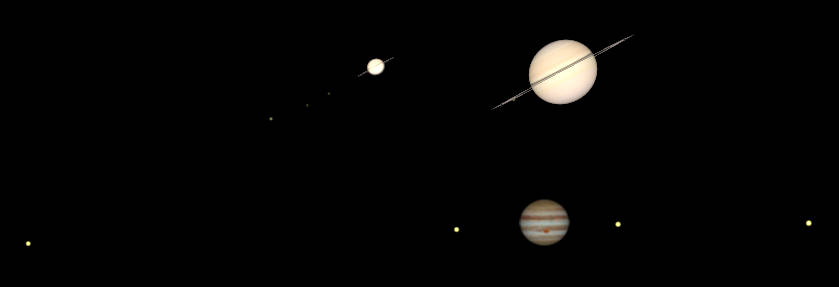
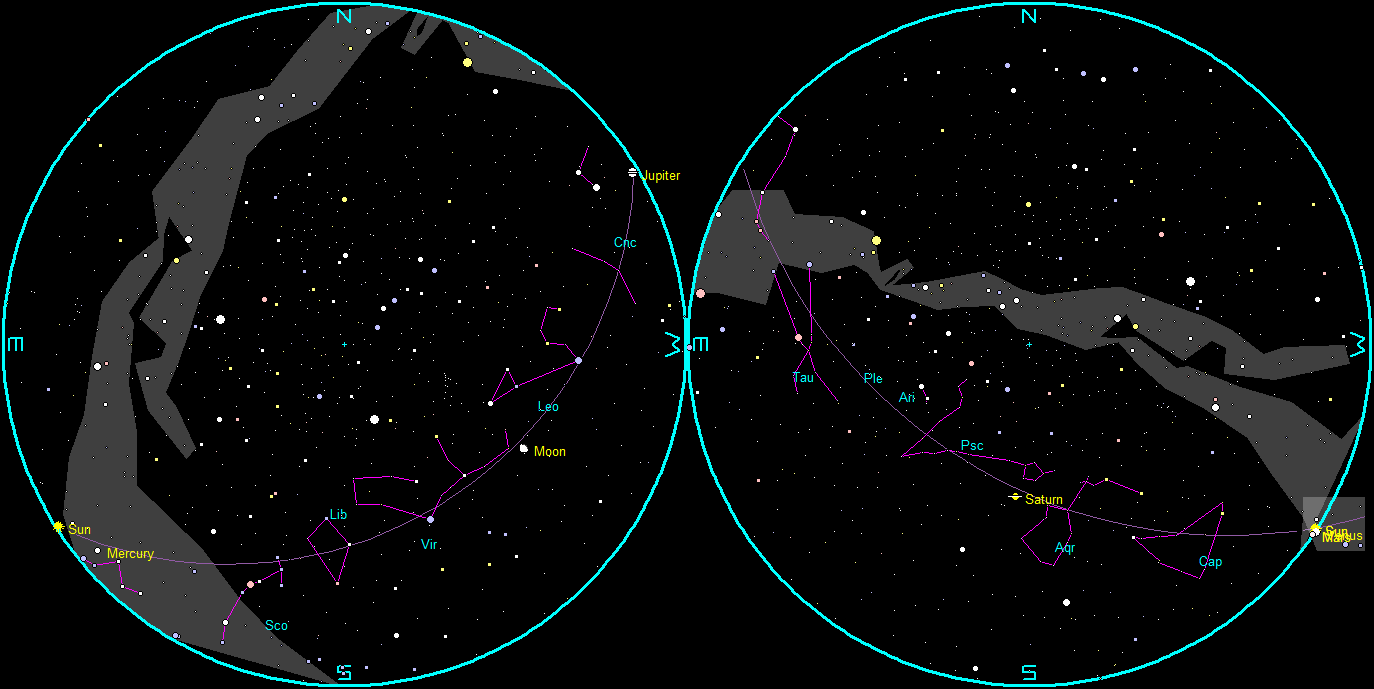
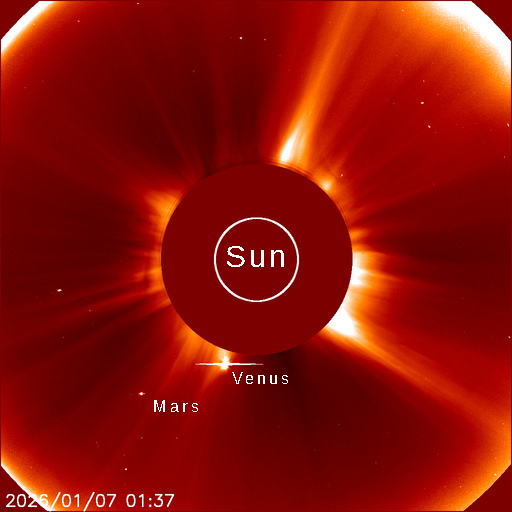
Let’s take our first weekly look at the whereabouts of the naked-eye planets for 2026. Saturn is the brightest star-like object in the southwestern sky as soon as it gets dark. In a telescope Saturn sports a very thin ring, 1.2 degrees from being edge on and is slowly opening. Jupiter will rise just after sunset. It is seen in the evening right of Pollux in the pair Castor and Pollux, the bright stars of Gemini. The giant planet is slowly moving westward with its retrograde motion. Jupiter’s 4 brightest moons can be seen even in binoculars, and shift position night to night. In the morning sky, only Jupiter can be seen. It will leave the morning sky, become an official evening planet Saturday. Venus crossed behind the Sun yesterday to become an evening planet. Mars will also cross behind the Sun Friday to become a morning planet.
The astronomical event times given in this blog are for the Traverse City/Interlochen area of Michigan (Lat 44.7° N, Long 85.7° W; EST, UT – 5 hours) unless stated otherwise. Times will be different for other locations.
Addendum
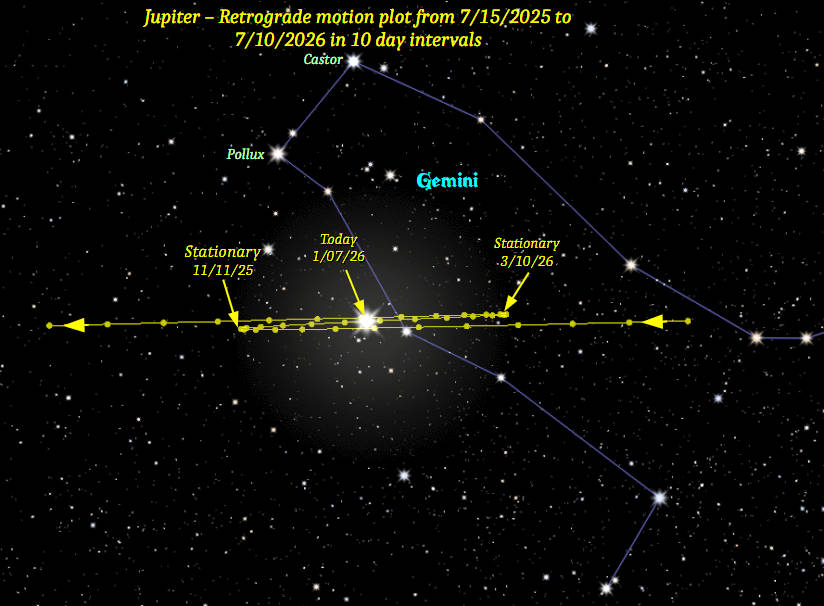
Ephemeris: 01/06/2026 – A river in the sky
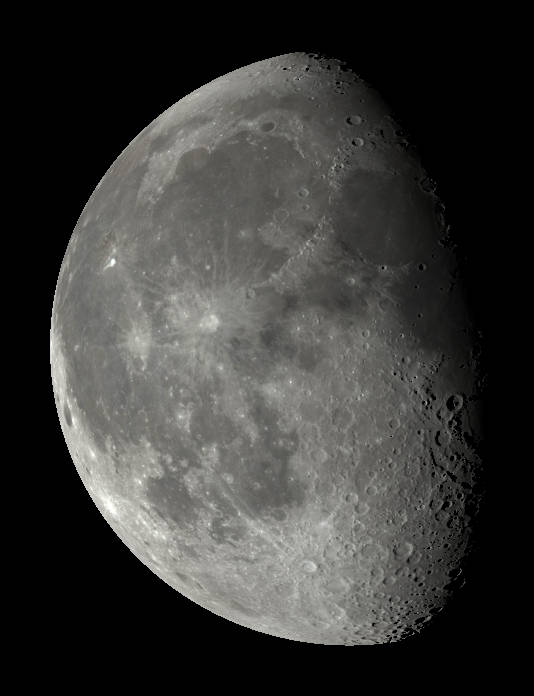
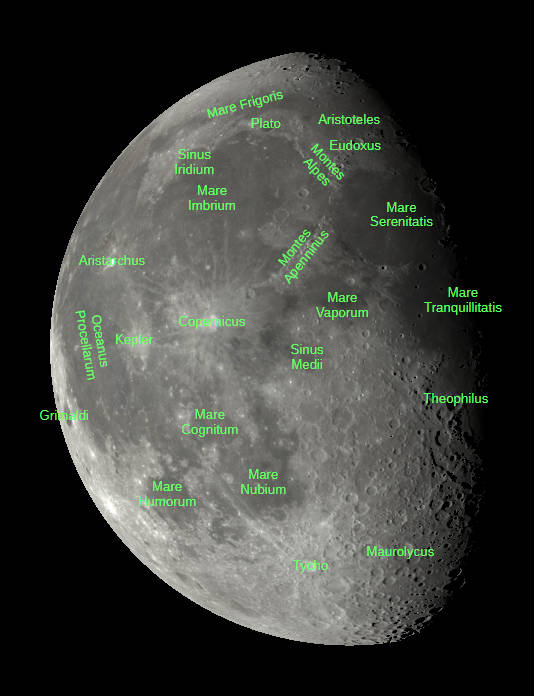
This is Ephemeris for Tuesday, January 6th. Today the Sun will be up for 8 hours and 58 minutes, setting at 5:18, and it will rise tomorrow at 8:19. The Moon, 3 days past full, will rise at 9:25 this evening.
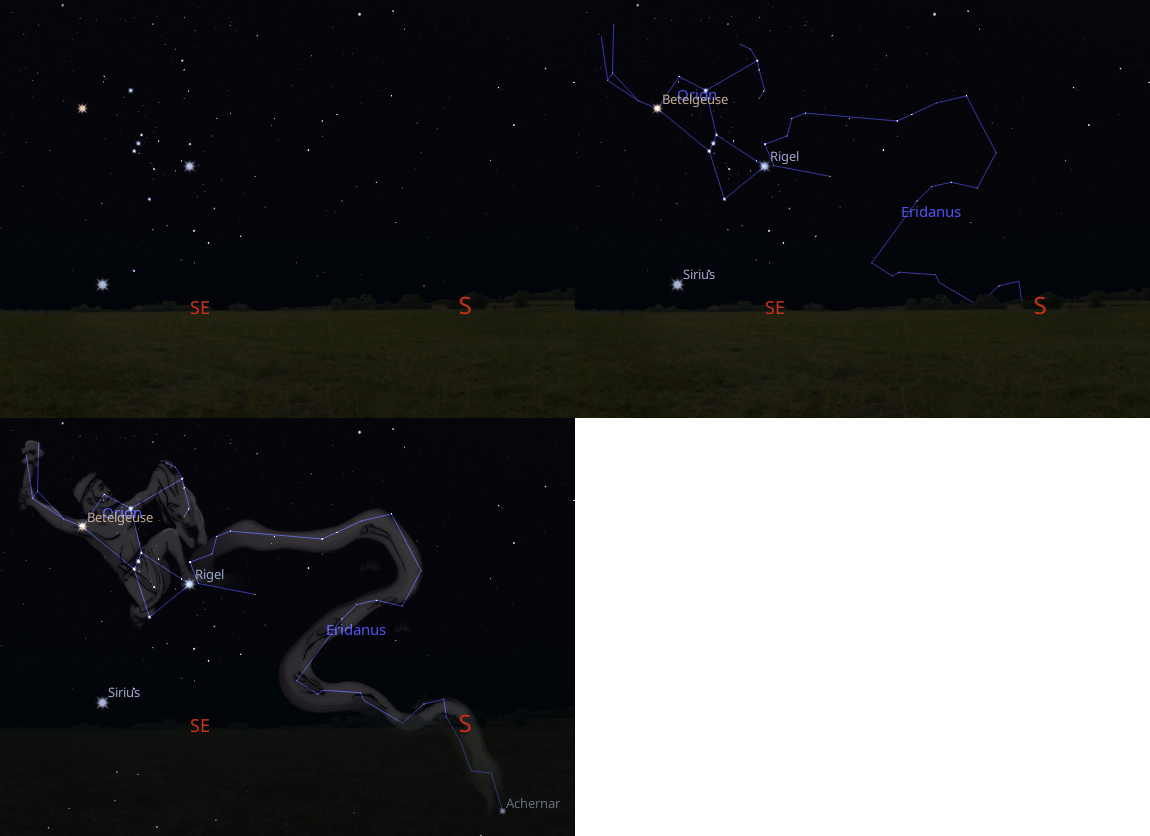
One of the more obscure constellations around is Eridanus, which depicts a river. At 8 PM the river, marked by dim stars, starts near the lower right corner of Orion, near the bright star Rigel and flows to the right then down a little way, then to the lower left, and again to the right, to the southern horizon. One has to travel to the far south to see the southern terminus of the river, the bright star Achernar. Writers over the ages have seen here the Nile, the Rhine and the Earth circling river Ocean of the flat earth days. To most Greeks, including Ptolemy it was simply the River. The earlier Greek astronomer Hipparchus called it the River of Orion, alluding to Orion’s star Rigel as its source. The southern part of the river was added when astronomers made it far enough south.
The astronomical event times given in this blog are for the Traverse City/Interlochen area of Michigan (Lat 44.7° N, Long 85.7° W; EST, UT – 5 hours) unless stated otherwise. Times will be different for other locations.
Addendum
Ephemeris: 01/01/2026 – Previewing January’s skies
Happy New Year, this is Ephemeris for New Year’s Day, Thursday,
January 1st 2026. The Sun will rise at 8:20. It’ll be up for 8 hours and 52 minutes, setting at 5:13. The Moon, 2 days before full, will set at 8 o’clock tomorrow morning.
As we start a new year let’s take a look at the calendar we’ve adopted from the Romans. When first adopted there were only 10 months, and it began in March. That’s why the months September through December actually means 7 through the 10th month respectively. Originally they didn’t count January and February, (I kind of agree with them there). But eventually they added them to the calendar. And starting in 153 BCE the Romans moved the beginning of the year to January 1st. January was named for the Roman god Janus, who also had a face on the back of his head, looking both forward and backward, as we too look back at the year past and ahead at the year just starting, hoping for a happier one.
The astronomical event times given in this blog are for the Traverse City/Interlochen area of Michigan (Lat 44.7° N, Long 85.7° W; EST, UT – 5 hours) unless stated otherwise. Times will be different for other locations.
Addendum
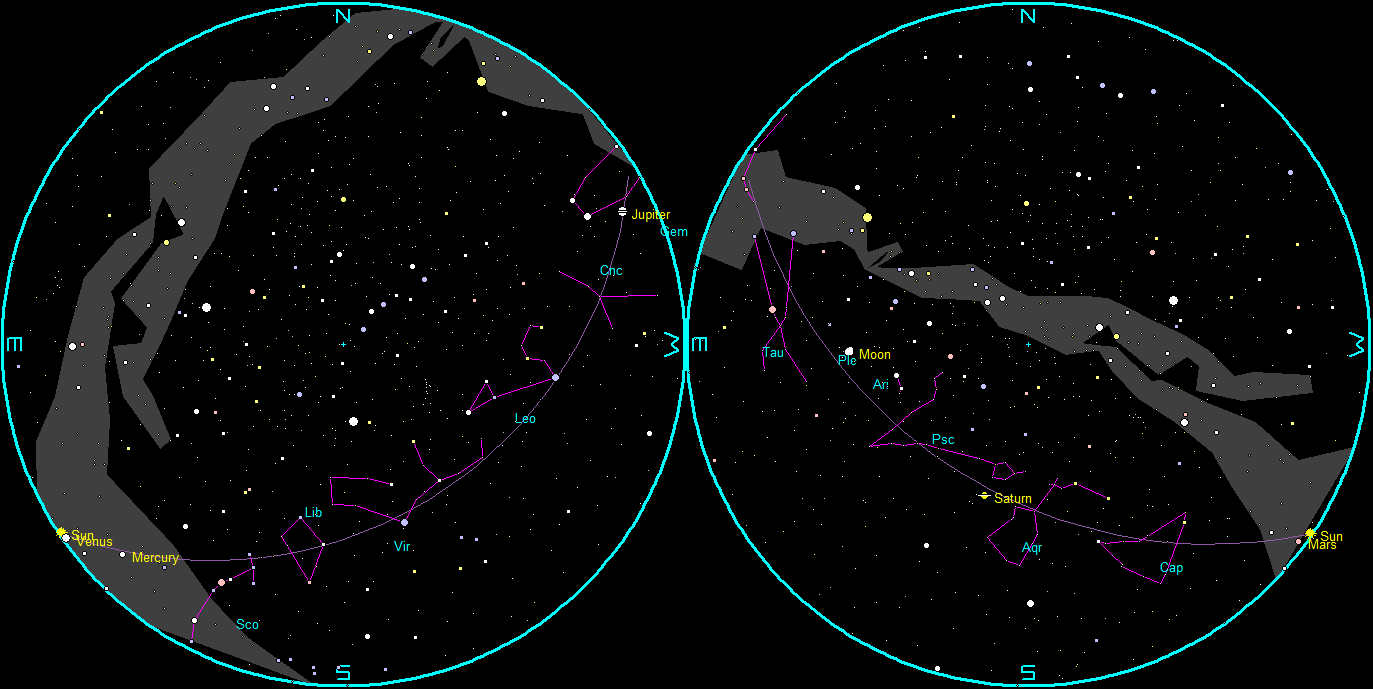
January Evening Star Chart
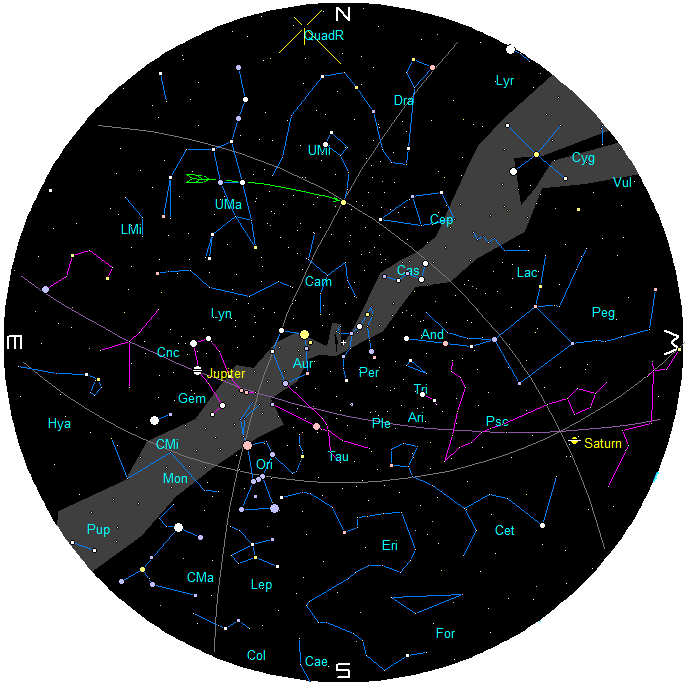
The planets and stars are plotted for the 15th at 9 PM EST in the evening and 6 AM on the 16th for the morning chart. These are the chart times. Note that Traverse City is located approximately 45 minutes behind our time meridian, West 75° longitude. (An hour 45 minutes behind our daylight saving time meridian during EDT), so the skies may not exactly match as seen from other locations.
January Morning Star Chart
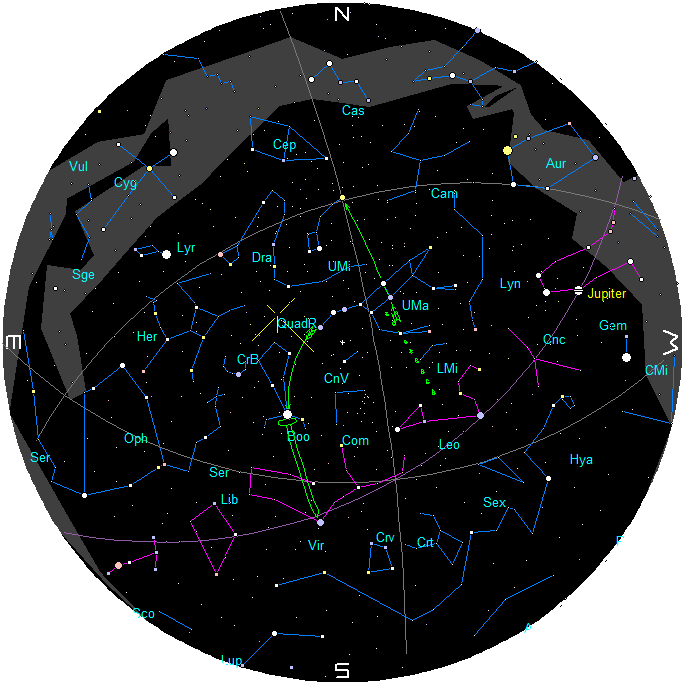
For a list of constellation names to go with the abbreviations click here.
- Pointer stars at the front of the bowl of the Big Dipper point to Polaris the North Star.
- The leaky bowl of the Big Dipper drips on Leo.
- Follow the arc of the handle of the Big Dipper to the star Arcturus, then
- Follow the spike to Spica.
- QuadR on the star charts is the radiant of the Quadrantid meteor shower which peaks on the 3rd at 4:34 PM EST (21:14 UT).
Twilight Limits, Nautical and Astronomical
| EST | |||||||
| Morning | Twilight | Evening | Twilight | Dark | Night | Moon | |
| Date | Astro. | Nautical | Nautical | Astro. | Start | End | Illum. |
| 2026-01-01 | 6h35m | 7h11m | 18h22m | 19h01m | – | – | 98% |
| 2026-01-02 | 6h35m | 7h11m | 18h23m | 19h02m | – | – | 100% |
| 2026-01-03 | 6h35m | 7h11m | 18h24m | 19h03m | – | – | 99% |
| 2026-01-04 | 6h35m | 7h11m | 18h25m | 19h04m | – | – | 96% |
| 2026-01-05 | 6h35m | 7h11m | 18h26m | 19h05m | 19h05m | 20h10m | 90% |
| 2026-01-06 | 6h35m | 7h11m | 18h27m | 19h06m | 19h06m | 21h26m | 82% |
| 2026-01-07 | 6h35m | 7h11m | 18h27m | 19h07m | 19h07m | 22h37m | 74% |
| 2026-01-08 | 6h35m | 7h10m | 18h28m | 19h08m | 19h08m | 23h45m | 64% |
| 2026-01-09 | 6h35m | 7h10m | 18h29m | 19h08m | 19h08m | – | 54% |
| 2026-01-10 | 6h35m | 7h10m | 18h30m | 19h09m | 19h09m | 0h51m | 45% |
| 2026-01-11 | 6h35m | 7h10m | 18h31m | 19h10m | 19h10m | 1h57m | 35% |
| 2026-01-12 | 6h35m | 7h10m | 18h33m | 19h11m | 19h11m | 3h03m | 27% |
| 2026-01-13 | 6h34m | 7h09m | 18h34m | 19h12m | 19h12m | 4h09m | 19% |
| 2026-01-14 | 6h34m | 7h09m | 18h35m | 19h14m | 19h14m | 5h14m | 12% |
| 2026-01-15 | 6h34m | 7h08m | 18h36m | 19h15m | 19h15m | 6h15m | 7% |
| 2026-01-16 | 6h33m | 7h08m | 18h37m | 19h16m | 19h16m | 6h33m | 3% |
| 2026-01-17 | 6h33m | 7h08m | 18h38m | 19h17m | 19h17m | 6h33m | 0% |
| 2026-01-18 | 6h32m | 7h07m | 18h39m | 19h18m | 19h18m | 6h32m | 0% |
| 2026-01-19 | 6h32m | 7h07m | 18h40m | 19h19m | 19h19m | 6h32m | 2% |
| 2026-01-20 | 6h31m | 7h06m | 18h41m | 19h20m | 19h42m | 6h31m | 6% |
| 2026-01-21 | 6h31m | 7h05m | 18h43m | 19h21m | 20h53m | 6h31m | 12% |
| 2026-01-22 | 6h30m | 7h05m | 18h44m | 19h22m | 22h05m | 6h30m | 19% |
| 2026-01-23 | 6h29m | 7h04m | 18h45m | 19h24m | 23h17m | 6h29m | 29% |
| 2026-01-24 | 6h29m | 7h03m | 18h46m | 19h25m | – | 6h29m | 39% |
| 2026-01-25 | 6h28m | 7h03m | 18h47m | 19h26m | 0h32m | 6h28m | 50% |
| 2026-01-26 | 6h27m | 7h02m | 18h49m | 19h27m | 1h50m | 6h27m | 62% |
| 2026-01-27 | 6h27m | 7h01m | 18h50m | 19h28m | 3h10m | 6h27m | 73% |
| 2026-01-28 | 6h26m | 7h00m | 18h51m | 19h29m | 4h30m | 6h26m | 82% |
| 2026-01-29 | 6h25m | 6h59m | 18h52m | 19h31m | 5h43m | 6h25m | 90% |
| 2026-01-30 | 6h24m | 6h58m | 18h54m | 19h32m | – | – | 96% |
| 2026-01-31 | 6h23m | 6h57m | 18h55m | 19h33m | – | – | 99% |
Twilight calendar was generated using Cartes du Ciel (Sky Charts).
See my blog post: Twilight Zone for the definitions of the different periods of twilight here: https://bobmoler.wordpress.com/2018/09/27/.
NASA Calendar of Planetary Events
    Date      Time    Event
Jan  1  Th            Venus: 1.3° W
     1  Th   4:43 PM  Moon Perigee: 360300 km
     2  Fr   3:20 AM  Moon North Dec.: 28.3° N
     3  Sa   5:03 AM  Full Moon
     3  Sa  11:59 AM  Perihelion: 0.9833 AU
     3  Sa   4:34 PM  Quadrantid Shower: ZHR = 120
     3  Sa   5:01 PM  Moon-Jupiter: 3.7° S
     4  Su   8:09 PM  Moon-Beehive: 1.3° S
     6  Tu  10:58 AM  Venus Superior Conj.
     6  Tu  11:20 AM  Moon-Regulus: 0.5° S
     7  We   6:22 AM  Moon Descending Node
     9  Fr   4:58 AM  Mars Conjunction
    10  Sa   3:22 AM  Jupiter Opposition
    10  Sa  10:48 AM  Last Quarter
    10  Sa   6:50 PM  Moon-Spica: 1.8° N
    13  Tu   3:47 PM  Moon Apogee: 405400 km
    14  We   2:28 PM  Moon-Antares: 0.6° N
    16  Fr  12:25 AM  Moon South Dec.: 28.3° S
    18  Su   2:52 PM  New Moon
    21  We  10:45 AM  Mercury Superior Conj.
    21  We   7:03 PM  Moon Ascending Node
    23  Fr   7:31 AM  Moon-Saturn: 4.5° S
    25  Su  11:47 PM  First Quarter
    27  Tu   4:07 PM  Moon-Pleiades: 1.1° S
    29  Th  12:02 PM  Moon North Dec.: 28.4° N
    29  Th   4:53 PM  Moon Perigee: 365900 km
    30  Fr   9:31 PM  Moon-Jupiter: 3.9° S
Feb  1  Su            Venus: 6.3° E
All event times are given for UTC-5 Eastern Standard Time.
Sky Events Calendar by Fred Espenak and Sumit Dutta (NASA’s GSFC),
http://eclipse.gsfc.nasa.gov/SKYCAL/SKYCAL.html.
If you go to the above site you can print out a list like the above for the entire year or calendar pages for your time zone.
Sun and Moon Rising and Setting Events
LU           Ephemeris of Sky Events for Interlochen/TC
January, 2026    Local time zone: EST
+-----------------------------------------------------------------------+
| DATE |  SUN     SUN  DAYLIGHT|   TWILIGHT*    |MOON  RISE OR    ILLUM |
|      |  RISE    SET    HOURS |  END    START  |PHASE SET** TIME FRACTN|
+=======================================================================+
|Thu  1| 08:20a  05:13p  08:52 | 06:23p  07:09a |      Set  08:00a   97%|
|Fri  2| 08:20a  05:14p  08:53 | 06:24p  07:09a |      Set  08:57a  100%|
|Sat  3| 08:20a  05:14p  08:54 | 06:25p  07:09a |Full  Rise 05:28p   99%|
+------+-----------------------+----------------+-----------------------+
|Sun  4| 08:20a  05:15p  08:55 | 06:26p  07:10a |      Rise 06:50p   96%|
|Mon  5| 08:19a  05:16p  08:57 | 06:26p  07:10a |      Rise 08:10p   91%|
|Tue  6| 08:19a  05:18p  08:58 | 06:27p  07:09a |      Rise 09:25p   84%|
|Wed  7| 08:19a  05:19p  08:59 | 06:28p  07:09a |      Rise 10:37p   75%|
|Thu  8| 08:19a  05:20p  09:00 | 06:29p  07:09a |      Rise 11:45p   66%|
|Fri  9| 08:19a  05:21p  09:02 | 06:30p  07:09a |      Rise 12:51a   56%|
|Sat 10| 08:18a  05:22p  09:03 | 06:31p  07:09a |L Qtr Rise 01:57a   47%|
+------+-----------------------+----------------+-----------------------+
|Sun 11| 08:18a  05:23p  09:05 | 06:32p  07:09a |      Rise 03:02a   37%|
|Mon 12| 08:17a  05:24p  09:06 | 06:33p  07:08a |      Rise 04:08a   28%|
|Tue 13| 08:17a  05:26p  09:08 | 06:35p  07:08a |      Rise 05:13a   20%|
|Wed 14| 08:17a  05:27p  09:10 | 06:36p  07:08a |      Rise 06:14a   13%|
|Thu 15| 08:16a  05:28p  09:12 | 06:37p  07:07a |      Rise 07:09a    8%|
|Fri 16| 08:15a  05:29p  09:13 | 06:38p  07:07a |      Rise 07:54a    3%|
|Sat 17| 08:15a  05:31p  09:15 | 06:39p  07:06a |      Rise 08:31a    1%|
+------+-----------------------+----------------+-----------------------+
|Sun 18| 08:14a  05:32p  09:17 | 06:40p  07:06a |New   Set  05:19p    0%|
|Mon 19| 08:13a  05:33p  09:19 | 06:41p  07:05a |      Set  06:30p    1%|
|Tue 20| 08:13a  05:35p  09:21 | 06:42p  07:05a |      Set  07:42p    5%|
|Wed 21| 08:12a  05:36p  09:23 | 06:44p  07:04a |      Set  08:53p   10%|
|Thu 22| 08:11a  05:37p  09:26 | 06:45p  07:04a |      Set  10:04p   18%|
|Fri 23| 08:10a  05:39p  09:28 | 06:46p  07:03a |      Set  11:17p   26%|
|Sat 24| 08:09a  05:40p  09:30 | 06:47p  07:02a |      Set  12:31a   37%|
+------+-----------------------+----------------+-----------------------+
|Sun 25| 08:09a  05:41p  09:32 | 06:48p  07:01a |F Qtr Set  01:49a   48%|
|Mon 26| 08:08a  05:43p  09:35 | 06:50p  07:01a |      Set  03:10a   59%|
|Tue 27| 08:07a  05:44p  09:37 | 06:51p  07:00a |      Set  04:29a   70%|
|Wed 28| 08:06a  05:45p  09:39 | 06:52p  06:59a |      Set  05:43a   80%|
|Thu 29| 08:05a  05:47p  09:42 | 06:53p  06:58a |      Set  06:44a   89%|
|Fri 30| 08:04a  05:48p  09:44 | 06:55p  06:57a |      Set  07:31a   95%|
|Sat 31| 08:02a  05:50p  09:47 | 06:56p  06:56a |      Set  08:07a   99%|
+-----------------------------------------------------------------------+
* Nautical Twilight
** Moonrise or moonset, whichever occurs between sunset and sunrise
Generated using my LookingUp for DOS program.
Ephemeris: 12/31/2025 – A last look at the naked-eye planets for 2025
This is Ephemeris for New Year’s Eve, Wednesday, December 31st. The Sun will rise at 8:20. It’ll be up for 8 hours and 52 minutes, setting at 5:12. The Moon, 3 days before full, will set at 6:49 tomorrow morning.
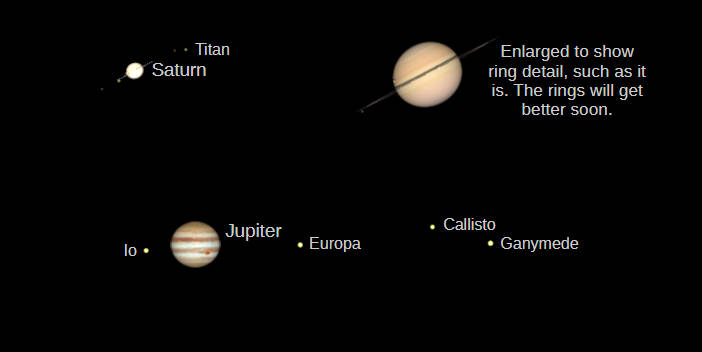
Let’s take our last weekly look at the whereabouts of the naked-eye planets for 2025. Saturn is the brightest star-like object in the southwestern sky as soon as it gets dark. In a telescope Saturn sports a very thin ring, one degree from being edge on and is slowly opening. Jupiter will rise at 5:54 PM in the east-northeast, below and right of Castor and Pollux, the bright stars of Gemini. The giant planet is slowly moving westward with its retrograde motion. Jupiter’s 4 brightest moons can be seen even in binoculars, and shift position night to night. In the morning sky, only Jupiter can be seen, descending in the western sky. It will leave the morning sky, officially on January 10th, as it reaches opposition with the Sun.
The astronomical event times given in this blog are for the Traverse City/Interlochen area of Michigan (Lat 44.7° N, Long 85.7° W; EST, UT – 5 hours) unless stated otherwise. Times will be different for other locations.
Addendum
Ephemeris: 12/25/2025 – Christmas night stars
Merry Christmas! This is Ephemeris for Christmas Day, Thursday, December 25th. Today the Sun will be up for 8 hours and 48 minutes, setting at 5:07, and it will rise tomorrow at 8:19. The Moon, 2 days before first quarter, will set at 11:01 this evening.
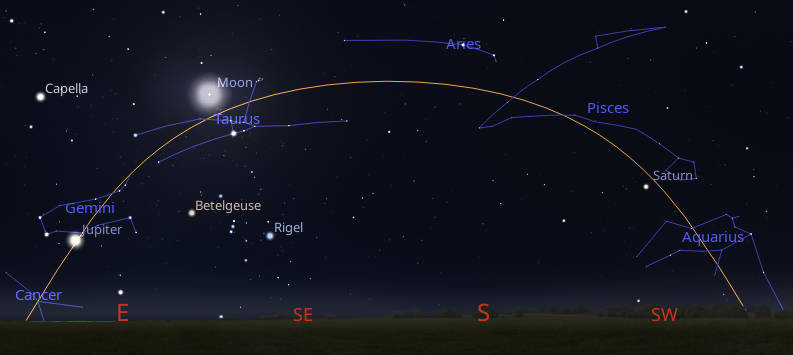
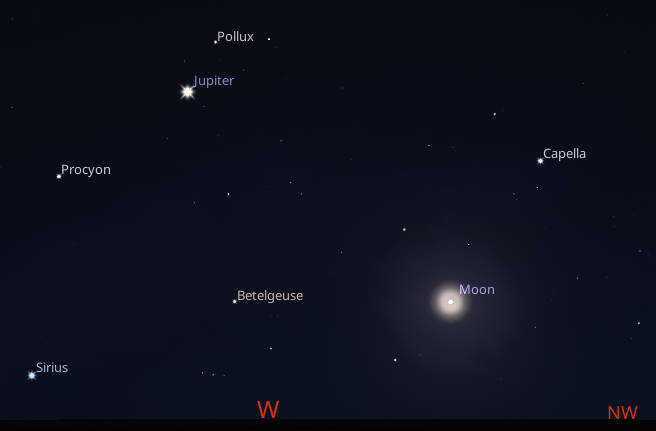
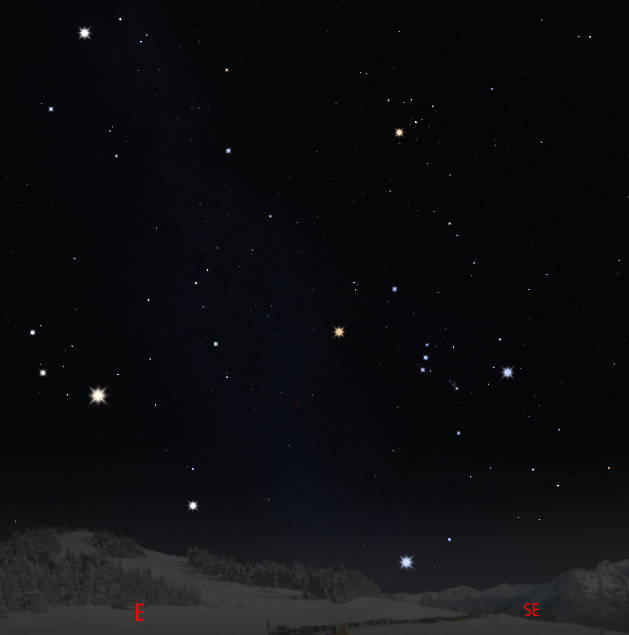
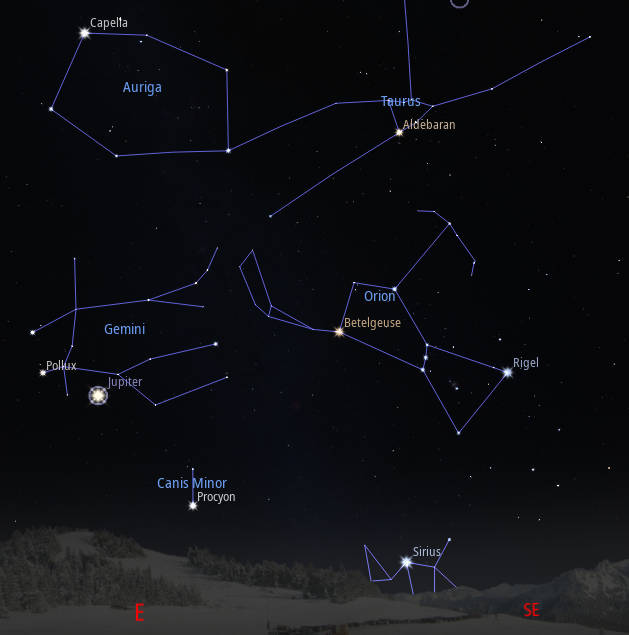
The real star of Bethlehem is probably not what is popularly depicted as a bright star in the sky, rather it was something subtle, only noticed by some astrologers. However, gracing our skies tonight we do have, in the evening, a brilliant star-like object, and our usual winter sprinkling of bright real stars in the southeastern sky. I call the one star-like because it’s a planet, Jupiter to be specific. The term “planet” we get from the Greeks, meaning wanderer. Planets don’t actually wander. Their paths can be determined, and are affected by the Sun, mainly and the other planet’s gravitational attraction. Perhaps the Magi, thought the cause was by divine action, to set them on their journey. Again have a Merry Christmas!
The astronomical event times given in this blog are for the Traverse City/Interlochen area of Michigan (Lat 44.7° N, Long 85.7° W; EST, UT – 5 hours) unless stated otherwise. Times will be different for other locations.
Addendum
 Bob Moler's Ephemeris Blog