Archive
Ephemeris: 02/03/2025 – Did the groundhog see his shadow yesterday?
Did it matter?
This is Ephemeris for Monday, February 3rd. Today the Sun will be up for 9 hours and 55 minutes, setting at 5:54, and it will rise tomorrow at 7:57. The Moon, 2 days before first quarter, will set at 12:35 tomorrow morning.
I don’t know if Punxsutawney Phil saw his shadow yesterday morning or not, but February 2nd was a special day to the ancients. It is celebrated as a cross-quarter day, the middle of the season of winter, though the real date of the middle of winter is tomorrow. And if Phil saw his shadow, and we do get 6 more weeks of winter, that’s OK too. By the calendar, it’s actually more like 6 ½ weeks to the vernal or spring equinox the official end of winter, plus this is Northern Michigan. I don’t know if Phil is any better or worse than the National Weather Service at long range forecasts. Of the other cross-quarter days, two others stand out. They are May 1st, May Day; and Halloween.
The astronomical event times given are for the Traverse City/Interlochen area of Michigan (EST, UT – 5 hours). Times will be different for other locations.
Addendum


Ephemeris: 12/20/2024 – Winter is coming tomorrow!
Dec 20. This is Bob Moler with Ephemeris for Friday, December 20th. Today the Sun will be up for 8 hours and 48 minutes, setting at 5:04, and it will rise tomorrow at 8:17. The Moon, 2 days before last quarter, will rise at 10:55 this evening.
Today is the last full day of autumn. Tomorrow at 4:40 a.m. winter will begin as the Sun passes the winter solstice and stops its southward movement in the sky. Immediately it will slowly climb northward again. It will lengthen the daytime hours and increase the power of the Sun as it gets higher in our sky. The cooling of the Northern Hemisphere will continue until late January, on average, until the lengthening days and increased solar altitude will finally overcome it. Ancient cultures weren’t all that sure that the Sun would come back, since they didn’t understand what was really happening. So when the solstice finally arrived it was a time for great celebrations which survive to this day.
The astronomical event times given are for the Traverse City/Interlochen area of Michigan (EST, UT – 5 hours). Times will be different for other locations.
Addendum
Ephemeris: 12/09/2024 – Today’s sunset is the earliest of the year
This is Ephemeris for Monday, December 9th. Today the Sun will be up for 8 hours and 53 minutes, setting at 5:02, and it will rise tomorrow at 8:09. The Moon, 1 day past first quarter, will set at 2:20 tomorrow morning.
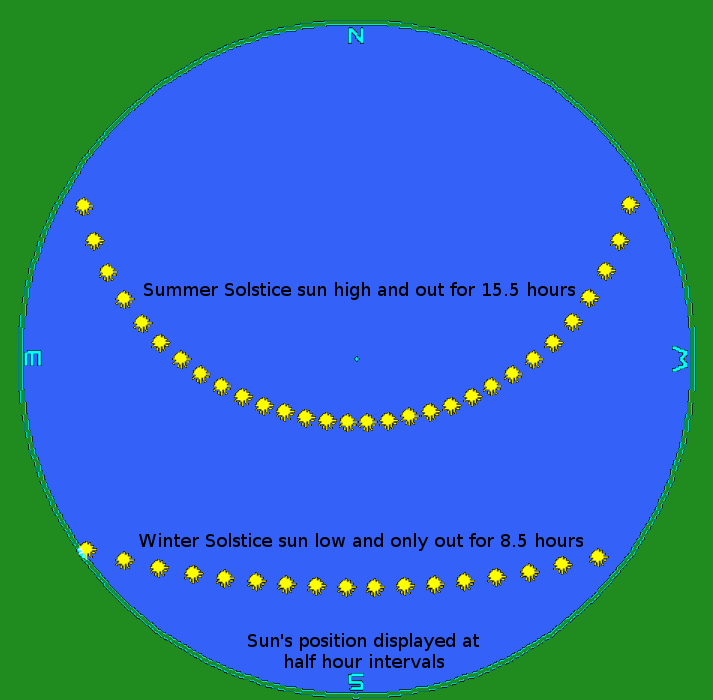
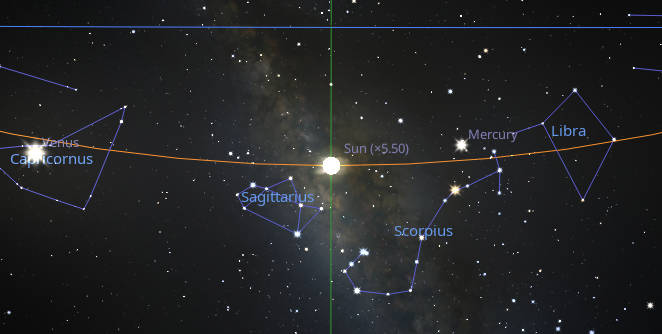
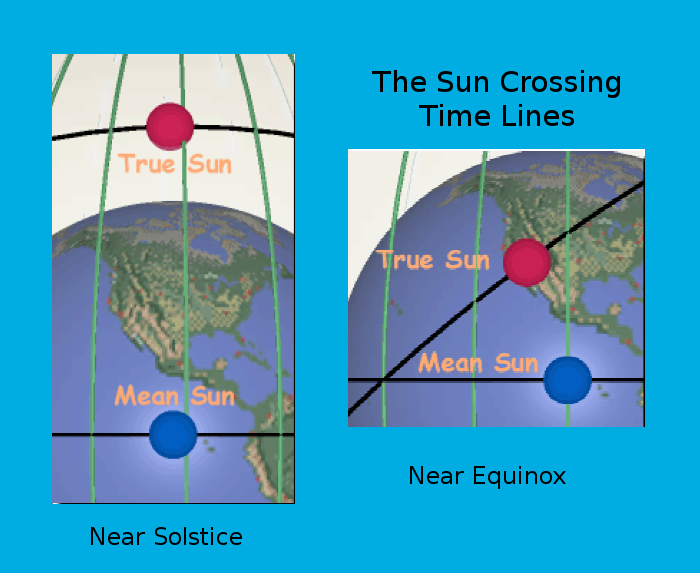
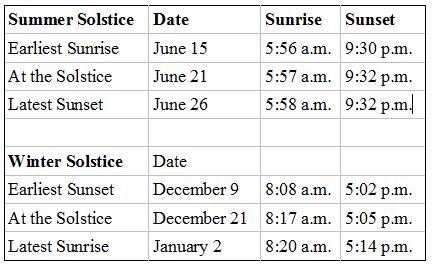
Today is the date of the earliest sunset, in the middle of a 13-day stretch where the Sun sets within the same minute. We are still 12 days from the winter solstice, the day of the shortest daylight hours, on the 21st. The reason is twofold. The Sun is approaching its farthest position south of the equator, where the longitude lines are closer together, so it takes less time to cross them. 15 degrees in longitude equals one hour in Earth’s rotation. Add to that we are less than a month from Earth’s perihelion in its orbit of the Sun, that is at its closest, and is moving faster than average. The combined effects delay sunrise and sunset, from what they’d be if the Sun stayed on the equator and the Earth’s orbit was circular. We will have our latest sunrise on January 2nd.
The astronomical event times given are for the Traverse City/Interlochen area of Michigan (EST, UT – 5 hours). Times will be different for other locations.
Addendum
Ephemeris: 09/20/2024 – Fall will fall upon us Sunday
This is Ephemeris for Friday, September 20th. Today the Sun will be up for 12 hours and 14 minutes, setting at 7:42, and it will rise tomorrow at 7:29. The Moon, 3 days past full, will rise at 8:55 this evening.
The season of fall is about to, well, fall upon us and in a few weeks so will the leaves. At 8:44 Sunday morning (12:44 UT Sunday) the Sun will cross the celestial equator heading southward. The celestial equator is an imaginary line in the sky above the earth’s equator. At that point, the Sun will theoretically set at the North Pole and rise at the South Pole. The day is called the autumnal equinox and the daylight hours of Sunday will be 12 hours and 8 minutes instead of 12 hours exactly. That’s due to our atmosphere and our definition of sunrise and sunset. The reason for the cooler weather we are heading into is that the length of daylight is shortening, and the Sun rides lower in the sky, spreading its heat over a larger area, thus diluting its intensity.
The astronomical event times given are for the Traverse City/Interlochen area of Michigan (EDT, UT – 4 hours). Times will be different for other locations.
Addendum

Ephemeris: 06/20/2024 – Summer starts this afternoon
This is Ephemeris for Thursday, June 20th. Today the Sun will be up for 15 hours and 34 minutes, setting at 9:31, and it will rise tomorrow at 5:57. The Moon, 1 day before full, will set at 4:59 tomorrow morning.
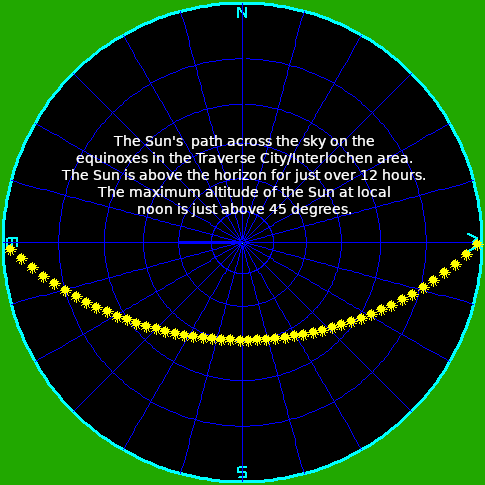
Well, this is it, the summer solstice! Summer will begin at 4:51 this afternoon. In the Southern Hemisphere the season of winter will begin, and the South Pole of the Earth in the middle of its six months of darkness. Maybe we should call it the June solstice, because winter also begins in the Southern Hemisphere. The north above 66 ½ degrees north latitude is the land of the midnight Sun. Over summer that line will creep northward as the Sun heads southward. The seasons are caused by the tilt of the Earth’s axis, not by the Earth’s change in distance from the Sun. In fact, we are approaching our farthest distance from the Sun, of about 94.5 million miles (152 million kilometers) on July 5th, called aphelion. The greater than normal distance makes summer the longest season at 93.7 days, winter being the shortest at 89 days. The Sun will be at its highest, of just under 69 degrees altitude at 1:44 pm for the Interlochen/Traverse City area, and about a degree lower than that in the Straits area, though their daylight hours will be 12 minutes longer.
The astronomical event times given are for the Traverse City/Interlochen area of Michigan (EDT, UT–4 hours). They may be different for your location.
Addendum
Ephemeris: 05/27/2024 The evening sky is transitioning into summer
This is Bob Moler with Ephemeris for Memorial Day, Monday, May 27th. Today the Sun will be up for 15 hours and 14 minutes, setting at 9:17, and it will rise tomorrow at 6:02. The Moon, 3 days before last quarter, will rise at 1:36 tomorrow morning.
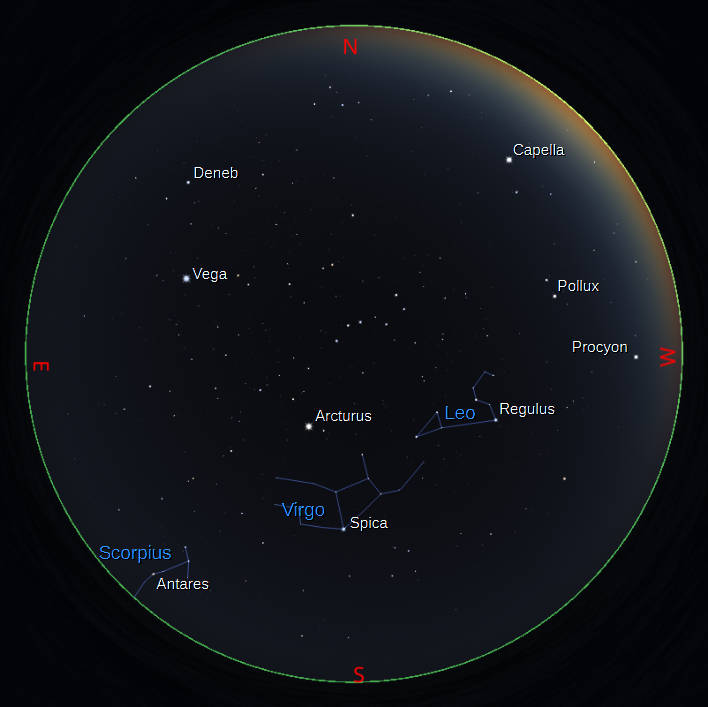
The sky tonight at 10:30 is beginning to show the transition from spring to summer. Antares in Scorpius is very low in the southeast, rising and chasing away Orion who has disappeared in the West. According to Greek mythology, at least in one story, Orion was killed by the sting of a giant scorpion and so neither he nor Scorpius the scorpion can be in the sky at the same time. The bright star Spica in Virgo the virgin is due South at that time, with Leo the lion in the southwest. Very high in the southeast is the star Arcturus. The Big Dipper is overhead. And in the east-northeast high up this is the bright star Vega, one of the stars of the summer triangle. The second star of the triangle Deneb is lower in the northeast. The third star has yet to rise.
The astronomical event times given are for the Traverse City/Interlochen area of Michigan (EDT, UT–4 hours). They may be different for your location.
Addendum
Ephemeris: 03/19/2024 – Today is the last day of winter and the first night of spring
This is Ephemeris for Tuesday, March 19th. Today the Sun will be up for 12 hours and 8 minutes, setting at 7:54, and it will rise tomorrow at 7:44. The Moon, 2 days past first quarter, will set at 6:13 tomorrow morning.
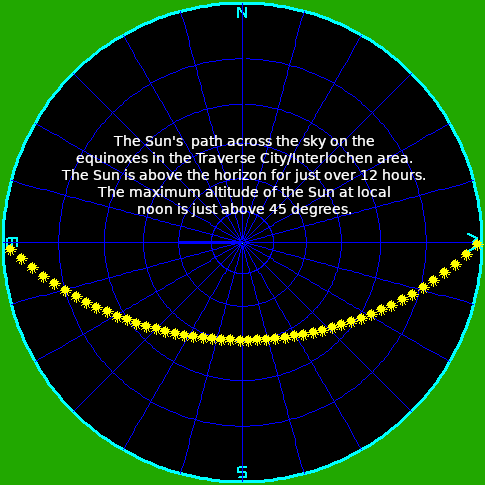
Today, at least in daylight, is the last day of winter. Tonight will be the first night of spring, since spring will arrive at 11:07 pm tonight. This is when the Sun crosses the celestial equator heading northward in the sky, which is actually the Sun moving so it passes overhead and moving north of the equator on the Earth. This gives us in the Northern Hemisphere longer days and warmer temperatures. We call it the vernal or spring equinox. However since some folks are living south of the equator, and are starting autumn at the same time. We sometimes call it the March equinox to recognize that fact. From now until June 20th the Sun will be moving higher in our sky and be staying out longer each day.
The astronomical event times given are for the Traverse City/Interlochen area of Michigan (EDT, UT–4 hours). They may be different for your location.
Addendum
Ephemeris: 03/04/2024 – The evening skies are a-changing
This is Ephemeris for Monday, March 4th. Today the Sun will be up for 11 hours and 21 minutes, setting at 6:35, and it will rise tomorrow at 7:12. The Moon, 1 day past last quarter, will rise at 4:30 tomorrow morning.
Tonight at 8 pm Orion is in the south. This will be the last month that we will be able to enjoy Orion in the evening sky, because by month’s end he will begin to dip low in the west in the evening twilight. Even though it’s not quite spring, the central constellation of that season, Leo the lion, is already rising in the east. It has cleared the horizon at 8 this evening. The backwards question mark of Leo’s head, mane and front part of his body is easily spotted in the east now with the bright star Regulus at the bottom. The Big Dipper is in the northeast, also rising higher, and signaling via the Anishinaabek constellation there of the Fisher Star, announcing the maple sugaring season.
The astronomical event times given are for the Traverse City/Interlochen area of Michigan (EST, UT –5 hours). They may be different for your location.
Addendum
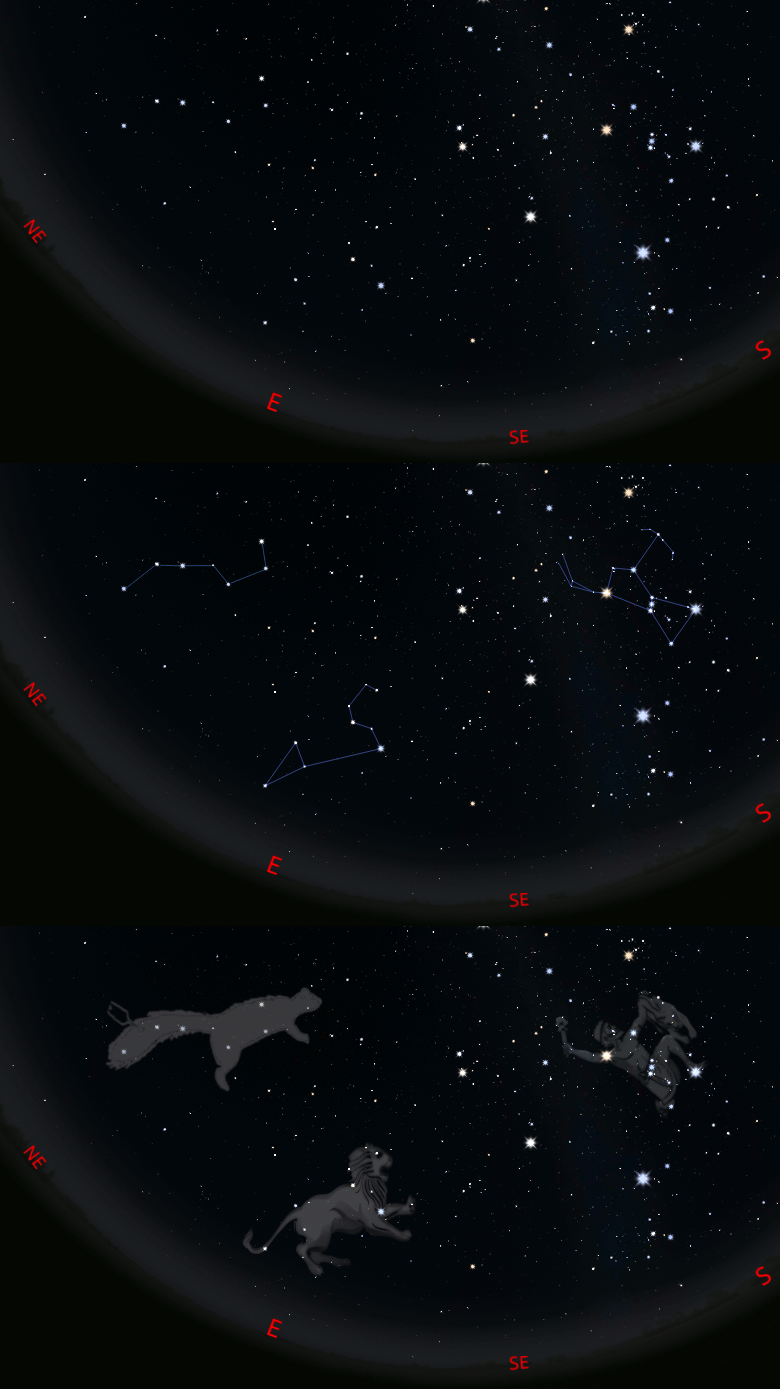
Looking to the east-southeast at 8 pm we look at three star groups or constellations. From left to right we have the Big Dipper and the Fisher Star in the northeast. Centered in the east we have Leo the lion. And on the right, just west of south, we have Orion the central winter constellation. Click or tap on the image to enlarge it. Credit: Stellarium, and using LibreOffice Draw, and GIMP.
Ephemeris: 02/02/2024 – It’s Groundhog Day!
This is Bob Moler with Ephemeris for Groundhog Day, Friday, February 2nd. Today the Sun will be up for 9 hours and 51 minutes, setting at 5:52, and it will rise tomorrow at 8:00. The Moon, at last quarter today, will rise at 2:11 tomorrow morning.
I’m not sure if Punxsutawney Phil will see his shadow this morning or not, but February 2nd was a special day to the ancients. It is also Candlemas day for the Catholic Church, and it is celebrated as a cross-quarter day, the middle of the season of winter, though the exact date of the middle of winter is the 4th. And if Phil sees his shadow, and we do get 6 more weeks of winter, that’s OK too. By the calendar, it’s actually more like 6 ½ weeks to the vernal or spring equinox and the official end of winter. Of the other cross-quarter days, two others stand out. They are May 1st, May Day; and Halloween. The way this year has been going, winter has had a hard time getting started. The temperatures are above normal and the snowfall is below normal. A lot of grass is showing, and the bay isn’t even thinking of freezing over.
The astronomical event times given are for the Traverse City/Interlochen area of Michigan (EST, UT –5 hours). They may be different for your location.
Addendum


Ephemeris: 01/25/2024 – Where is the full moon in winter?
This is Ephemeris for Thursday, January 25th. Today the Sun will be up for 9 hours and 31 minutes, setting at 5:41, and it will rise tomorrow at 8:08. The Moon, at full today, will rise at 5:30 this evening.
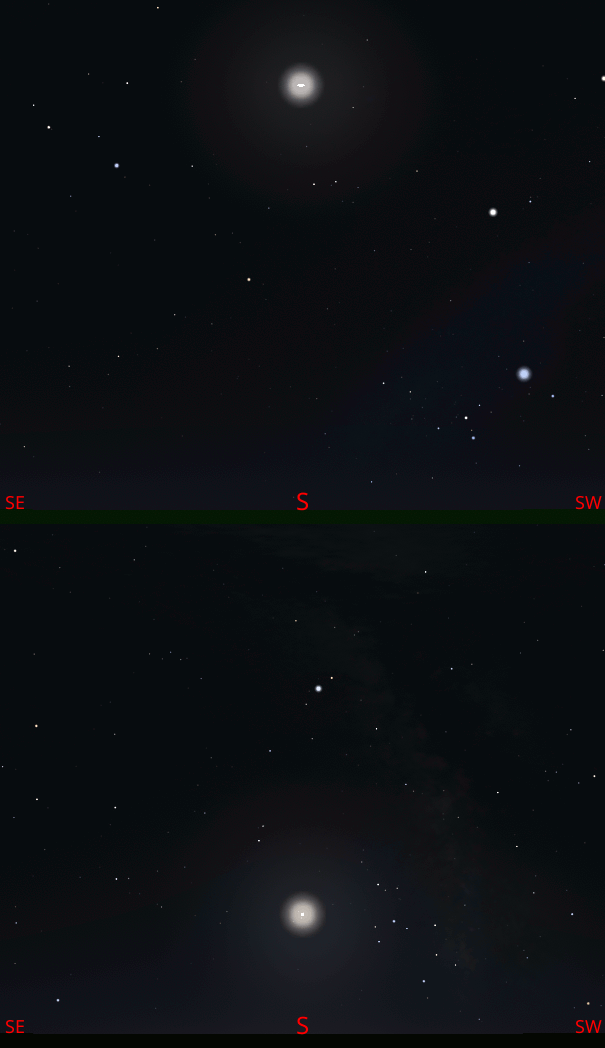
The exact time that the Moon will be full, at least to the nearest minute is 12:54 this afternoon. Have you ever noticed the placement of the full moon in the sky between winter and summer? The full moon near the winter solstice moves very high at midnight, while the full moon near the summer solstice is seen quite low in the south. For the Moon to be full, it must be nearly opposite the Sun in the sky, so we see it fully illuminated as the Sun does. The Moon’s orbit is close to the Sun’s apparent path in the sky, the ecliptic, which is the projection of the Earth’s orbit of the Sun. So the Moon now is near, and actually a bit north of, where the Sun will be 6 months from now in mid to late July.
The astronomical event times given are for the Traverse City/Interlochen area of Michigan (EST, UT –5 hours). They may be different for your location.
Addendum
 Bob Moler's Ephemeris Blog