Archive
Ephemeris: 04/08/2025 – A look at Proxima Centauri
This is Ephemeris for Tuesday, April 8th. Today the Sun will be up for 13 hours and 9 minutes, setting at 8:19, and it will rise tomorrow at 7:08. The Moon, halfway from first quarter to full, will set at 5:57 tomorrow morning.
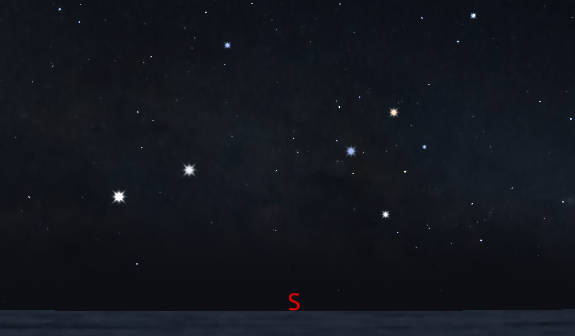
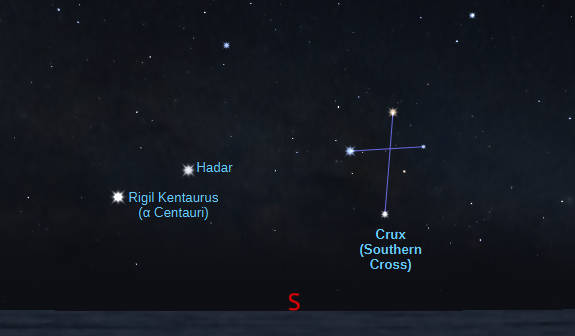
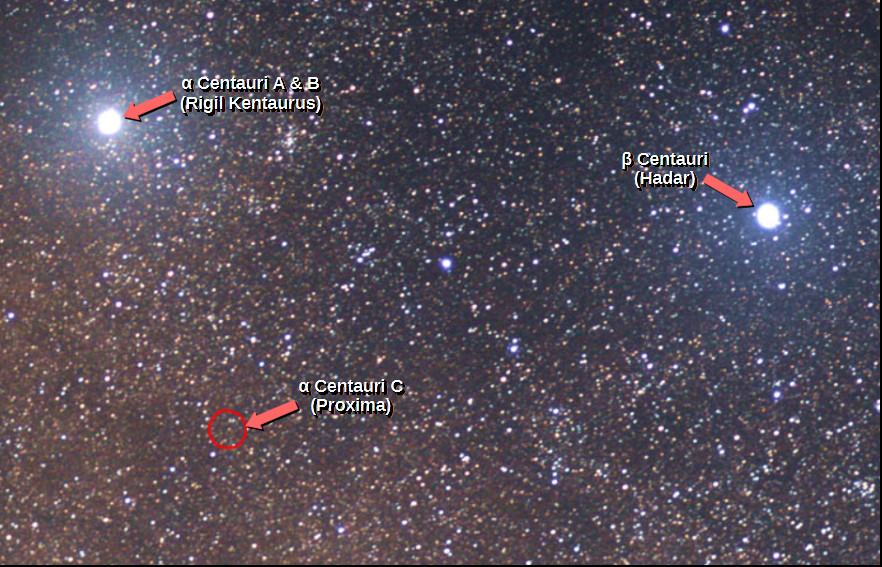
The nearest star to our Sun is a triple star system called Alpha Centauri or Rigil Kentaurus. It is in the skies of the Southern Hemisphere, but visible from the far southern parts of the United States. I’ve seen it from the Florida Keys and also from the latitude of the Big Island of Hawai’i. The closest member of that group this is a star we call Proxima Centauri or just Proxima for short. It is not visible to the naked eye. It is a red dwarf star maybe 12% the Sun’s mass, and at 11th magnitude. Proxima would be tough to spot with a pair of binoculars in a region of the sky which is filled with stars because it’s in the band of the Milky Way. Alpha Centauri, itself, is located near the Southern Cross, the farthest of the two bright stars to the east of it.
The astronomical event times given are for the Traverse City/Interlochen area of Michigan (EDT, UT – 4 hours). Times will be different for other locations.
Addendum
Ephemeris: 02/21/2025 – Orion’s most distinctive feature
This is Bob Moler with Ephemeris for Friday, February 21st. Today the Sun will be up for 10 hours and 46 minutes, setting at 6:20, and it will rise tomorrow at 7:31. The Moon, 1 day past last quarter, will rise at 4:09 tomorrow morning.
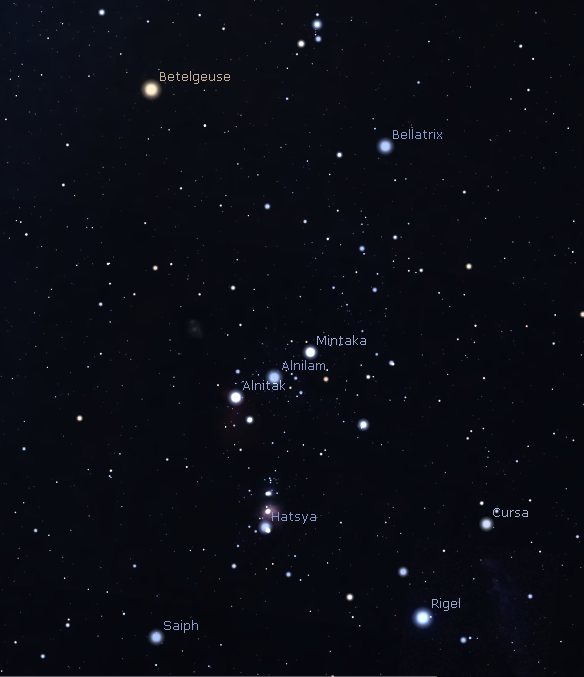
Orion’s belt of three stars is one of the most noticeable star groupings in the sky. There are no other groups of three bright stars in a straight line visible anywhere else in the sky. The star’s names from left to right are Alnitak, Alnilam and Mintaka. They are actually a bit farther away than the other bright stars of Orion. Alnilam, the center star, is over three times the distance of red giant Betelgeuse above it and over twice as far as blue white giant star Rigel below it. Alnilam is 375 thousand times brighter than the Sun. These three stars were also known as Frigga’s Spindle by the Norsemen. Frigga, also known as Freya, is the goddess from whom we get the name of the day of the week we call Friday.
The astronomical event times given are for the Traverse City/Interlochen area of Michigan (EST, UT – 5 hours). Times will be different for other locations.
Addendum
Ephemeris: 01/30/2025 – What’s up with Betelgeuse
This is Bob Moler with Ephemeris for Thursday, January 30th. Today the Sun will be up for 9 hours and 45 minutes, setting at 5:49, and it will rise tomorrow at 8:02. The Moon, 1 day past new, will set at 7:20 this evening.
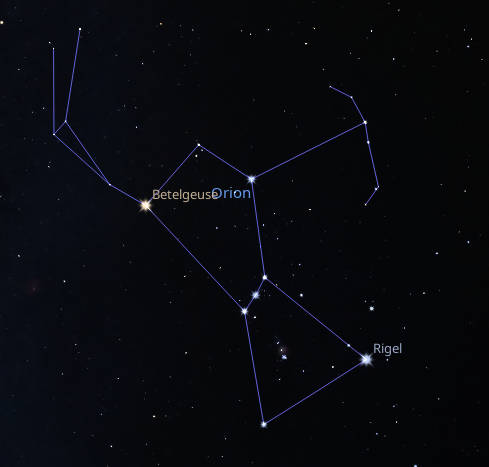
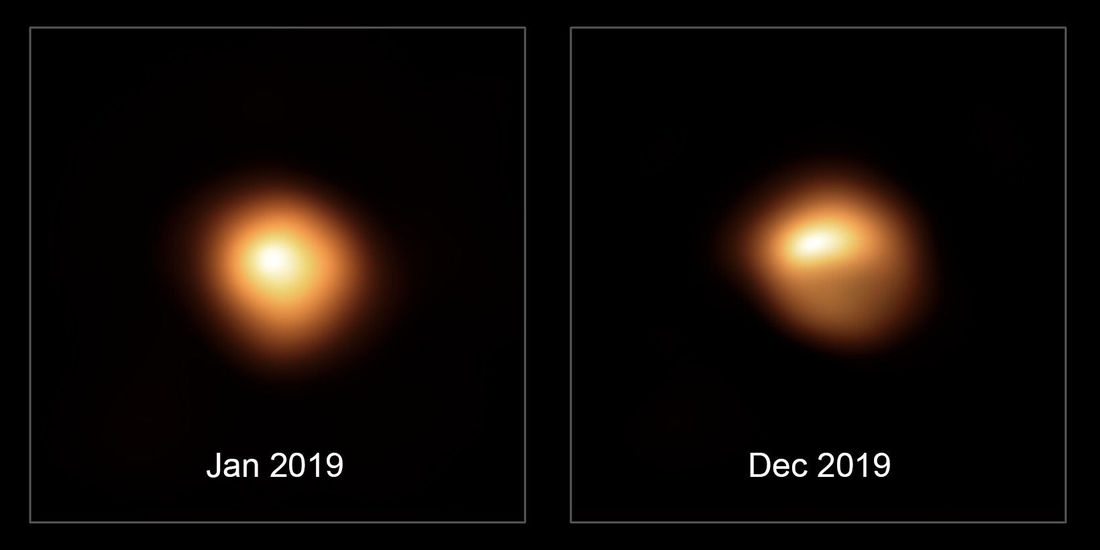
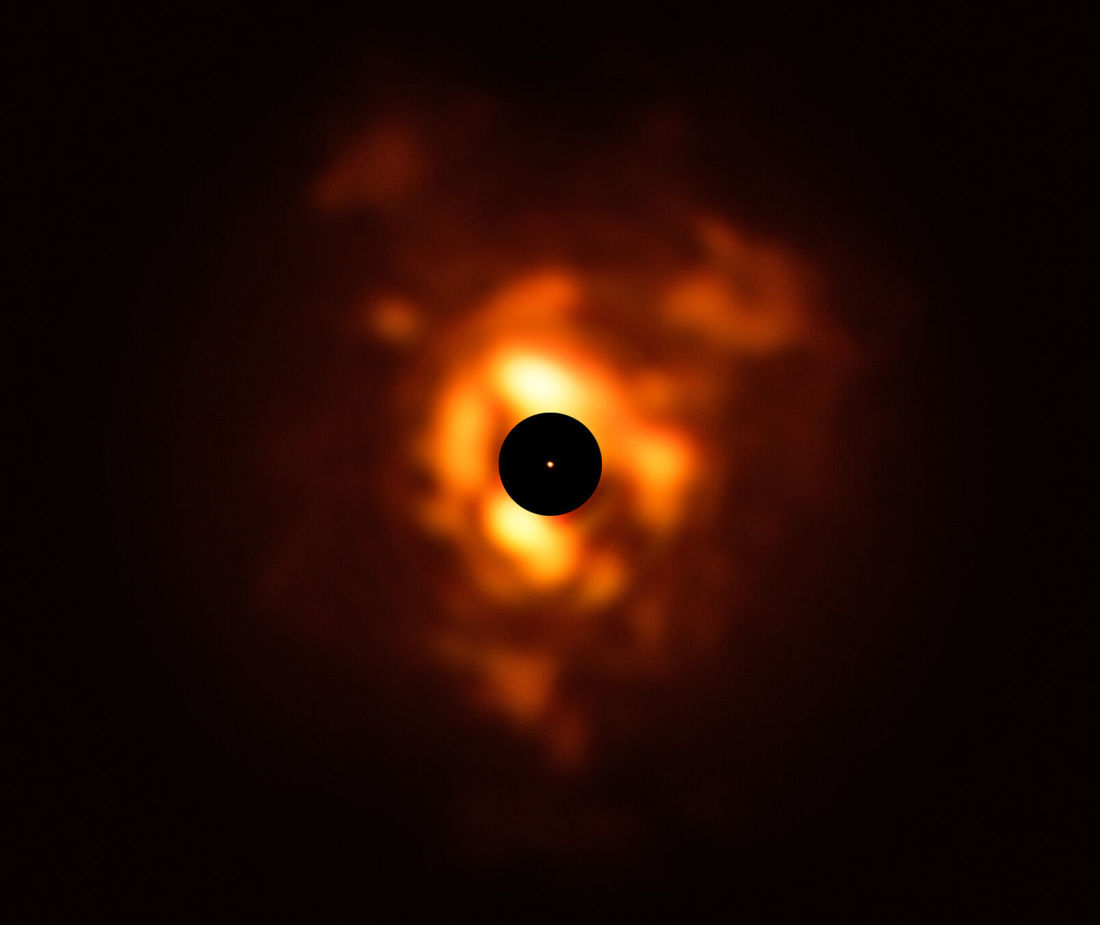
The constellation Orion is in the southeast at 8 PM, so what’s up with Betelgeuse. Betelgeuse is the bright reddish upper leftmost star of the torso of Orion the hunter, it’s in his shoulder. Betelgeuse has been acting up lately. In 2019 and 2020 Betelgeuse had dimmed significantly. Astronomers didn’t know why at the time, but found out later that it ejected a large cloud of gas and dust which blocked the light from the star. Since then Betelgeuse has increased its brightness significantly, so it’s much brighter than normal. Again, we don’t exactly know why. Some have speculated that Betelgeuse is will soon go supernova. We’ve known that for a while, but soon is measured in hundreds of thousands of years. So astronomers are keeping an eye on Betelgeuse to see what happens next.
The astronomical event times given are for the Traverse City/Interlochen area of Michigan (EST, UT – 5 hours). Times will be different for other locations.
Addendum
Ephemeris: 01/28/2025 – Tranquility amongst chaos
This is Bob Moler with Ephemeris for Tuesday, January 28th. Today the Sun will be up for 9 hours and 40 minutes, setting at 5:46, and it will rise tomorrow at 8:04. The Moon, 1 day before new, will rise at 8:34 tomorrow morning.
We’ve come off a tumultuous week, and while this program deals with topics generally in the heavens. Events on the Earth more than occasionally intrude. I often remind folks that the Earth is a planet too; an astronomical object in someone else’s sky. I consider astronomy not to be just about the heavens but about the entire universe of which the Earth is a part. The heavens above the Earth to the naked eye at least seems to be a tranquil place. That is because we cannot, with our human senses, pick up the energies of the great collisions and the other cataclysms in the universe, due to distance, our protective atmosphere and our limited senses. So going out under the stars for a while is a way to get away from it all: far, far away.
The astronomical event times given are for the Traverse City/Interlochen area of Michigan (EST, UT – 5 hours). Times will be different for other locations.
Addendum

Ephemeris: 01/20/2025 – The planets augment the Winter Hexagon
This is Ephemeris for Martin Luther King Jr. Day, Monday, January 20th. Today the Sun will be up for 9 hours and 22 minutes, setting at 5:35, and it will rise tomorrow at 8:12. The Moon, 1 day before last quarter, will rise at 12:56 tomorrow morning.
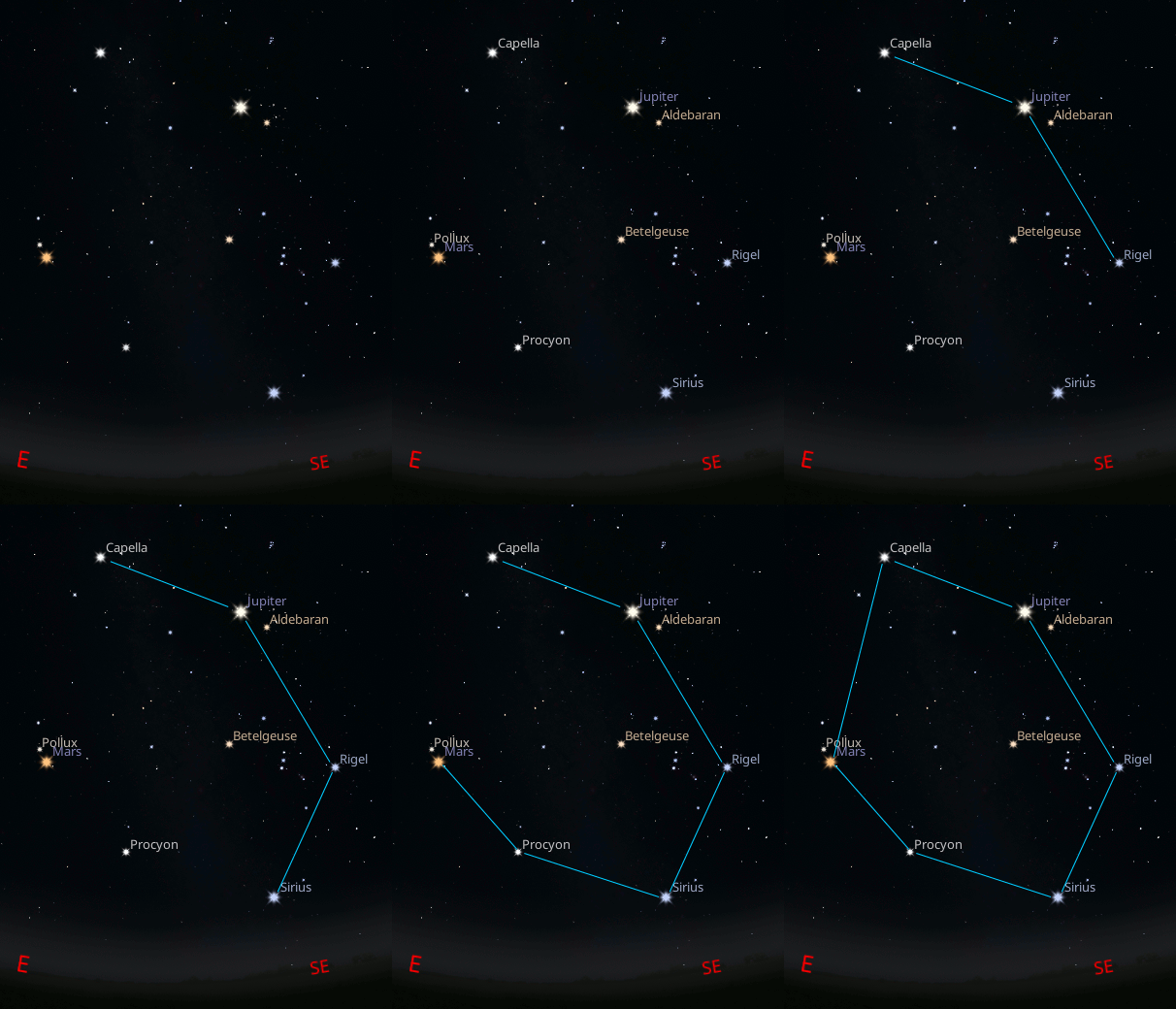
The winter circle or more properly hexagon, seen in the winter sky this evening, has the addition of two planets, and they’re in the proper location so that they don’t spoil the hexagon. We start at the top with the star Capella high in the east. We move clockwise downward to Jupiter and below it the star Aldebaran. We drop lower to Orion’s knee and the star Rigel, then down to Sirius, low in the southeast, the brightest nighttime star, but doesn’t hold a candle to Jupiter. Then we go above left to Procyon and upwards and left to Mars, which is near Pollux, and finally back up to Capella. That’s that is our winter hexagon right now, so take it in while you can, before Jupiter and Mars move off and mess it up.
The astronomical event times given are for the Traverse City/Interlochen area of Michigan (EST, UT – 5 hours). Times will be different for other locations.
Addendum
As for events happening on Earth: Resist!
Ephemeris: 01/07/25 – Lights in the sky: Sirius, the brightest star
This is Bob Moler with Ephemeris for Tuesday, January 7th. Today the Sun will be up for 8 hours and 59 minutes, setting at 5:19, and it will rise tomorrow at 8:19. The Moon, 1 day past first quarter, will set at 2:45 tomorrow morning.
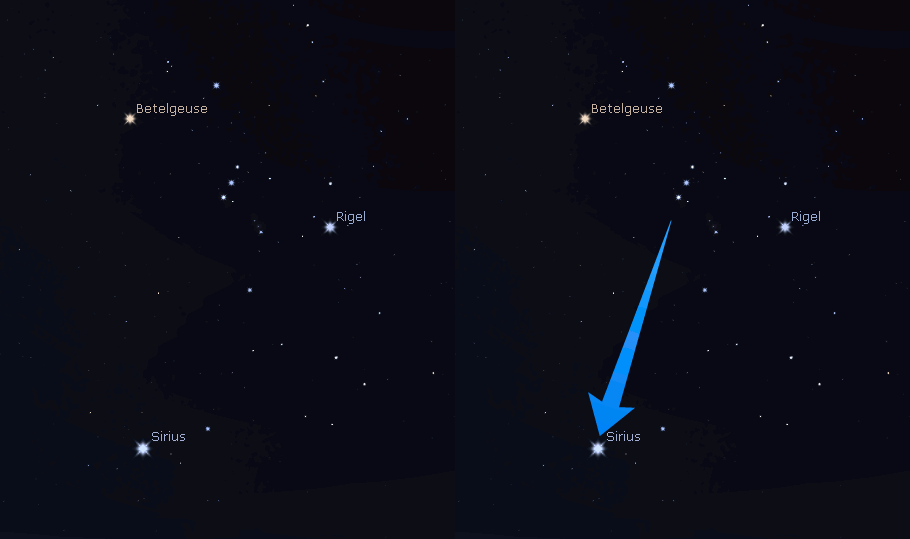
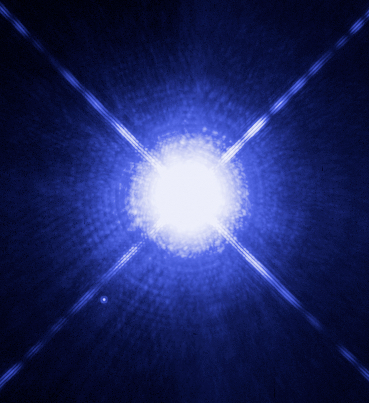
The brightest star in the nighttime sky, Sirius, will rise about 7:30 this evening in the east-southeast. By 9 PM it will be low in the southeast. It is also known as the Dog Star because it’s located in Orion’s greater hunting dog, Canis Major. However, its name Sirius means Dazzling One, or Scorcher, alluding to its great brightness. Sirius is about twice as massive as the Sun, but 25 times brighter, It is one of the nearer stars, being about 8.7 light years away, about twice the distance of Alpha Centauri. Sirius is a pure white star as opposed to the sun’s somewhat yellowish cast. It seems to really sparkle in a pair of binoculars. The sparkling or the twinkling of Sirius or of any star is not due to the star itself but by turbulence in Earth’s atmosphere.
The astronomical event times given are for the Traverse City/Interlochen area of Michigan (EST, UT – 5 hours). Times will be different for other locations.
Addendum
Ephemeris: 01/06/2025 – Things that go blink in the night
This is Ephemeris for Monday, January 6th. Today the Sun will be up for 8 hours and 58 minutes, setting at 5:18, and it will rise tomorrow at 8:19. The Moon, at first quarter today, will set at 1:26 tomorrow morning.
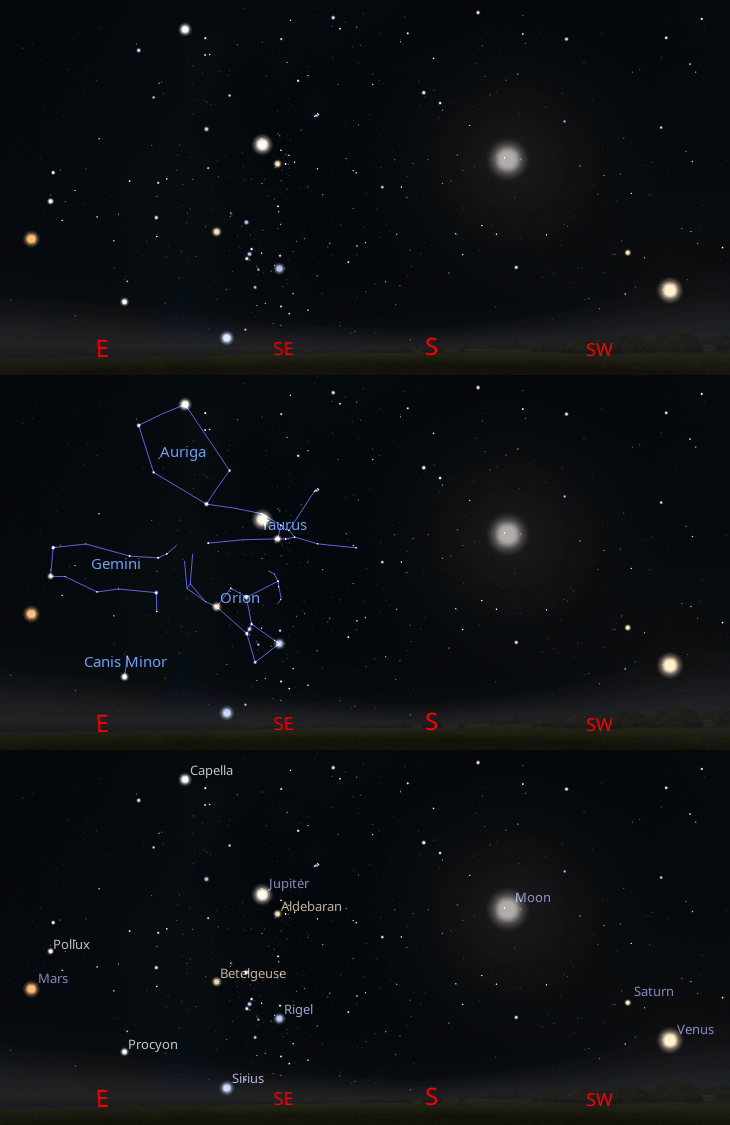
Lately there’s been a lot of reported observations of drones or various things in the sky at night, especially, for some reason, in New Jersey. If it’s something that’s moving in the sky other than satellites, meteors and aurorae, they’re out of my wheelhouse. I generally concern myself with the sidereal universe, the universe beyond the atmosphere. Things that don’t seem to move that rapidly. There are a lot of bright lights in the sky, that are things that I can and do talk about this time of year and this particular year. We have a lot of bright lights in the sky now, foremost Venus in the southwest in the early evening, and Jupiter in the east and the south. Mars is also up, but it’s not in competition with Jupiter this year. These plus the bright winter stars.
The astronomical event times given are for the Traverse City/Interlochen area of Michigan (EST, UT – 5 hours). Times will be different for other locations.
Addendum
Ephemeris: 11/19/2024 – The loneliest star in the sky
This is Bob Moler with Ephemeris for Tuesday, November 19th. Today the Sun will be up for 9 hours and 24 minutes, setting at 5:10, and it will rise tomorrow at 7:47. The Moon, 3 days before last quarter, will rise at 8:32 this evening.
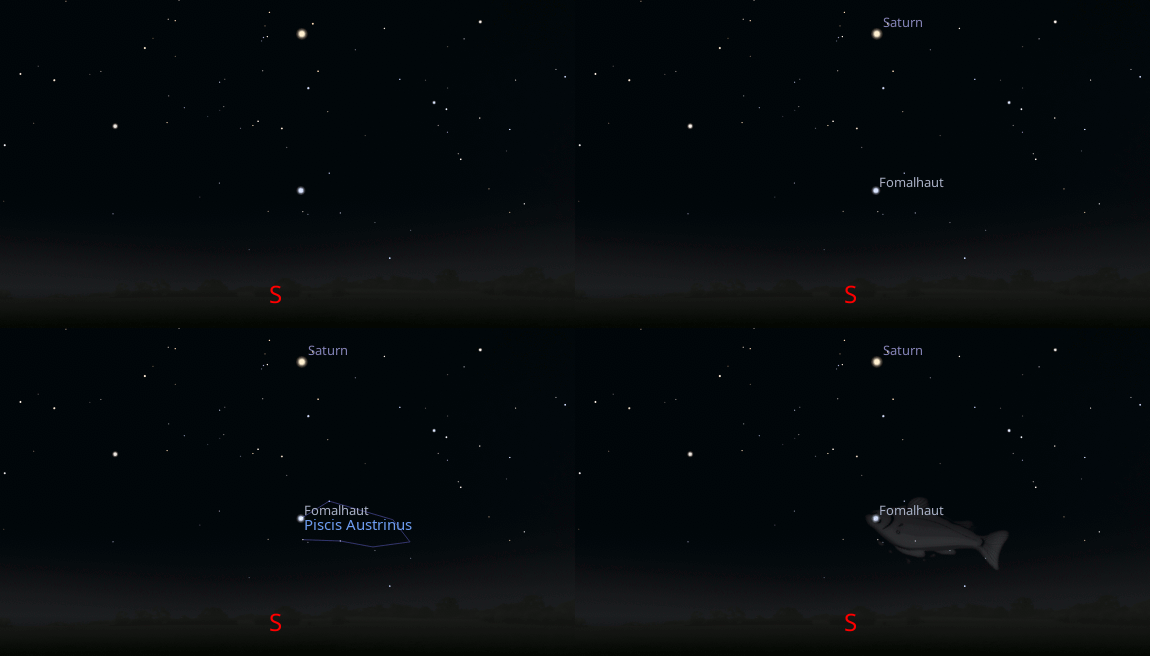
There’s a bright star that appears for only seven and a half hours on autumn evenings. Its appearance, low in the south-southeast at 8 p.m., is a clear sign that autumn is here. It is currently far below the much brighter Saturn. The star’s name is Fomalhaut, which means fish’s mouth. That’s fitting because it’s in the constellation of Piscis Austrinus, the southern fish. At our latitude it’s kind of the fish that got away, because usually Fomalhaut appears to be quite alone low in the sky. For the last few years Jupiter and then Saturn have kept it company. In a couple of years Saturn will have moved on leaving Fomalhaut to its lonely vigil in the south.
The astronomical event times given are for the Traverse City/Interlochen area of Michigan (EST, UT – 5 hours). Times will be different for other locations.
Addendum
Ephemeris: 10/03/2024 – Capella rising
This is Ephemeris for Thursday, October 3rd. Today the Sun will be up for 11 hours and 34 minutes, setting at 7:18, and it will rise tomorrow at 7:45. The Moon, 1 day past new, will set at 7:33 this evening.
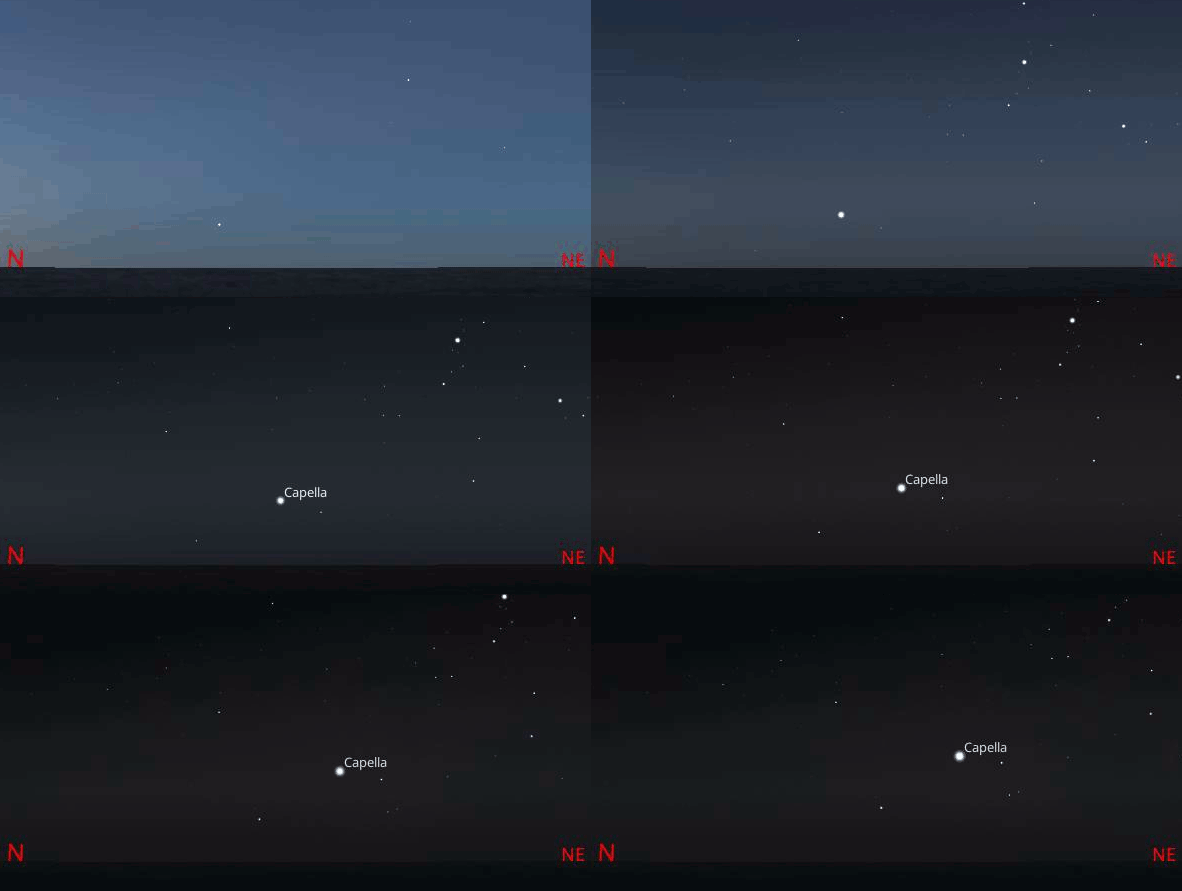
There is a bright star low in the northeast these evenings. It doesn’t seem to be rising very much over the course of the evening. This star is Capella, whose name means “little goat” and is part of the constellation Auriga the charioteer, which won’t completely rise for until about 11 PM. Capella is a circumpolar star meaning it appears to go around the North Pole of the sky, in a circle, as the Earth rotates but never sets. This is true for the Interlochen/Traverse City area and for latitudes north of the city of Ludington. Capella is slowly rising from the bottom of its circumpolar circle in the north, so it’s moving more horizontally than it is rising up. This motion was suspicious to one person who called me, who wondered what it was.
The astronomical event times given are for the Traverse City/Interlochen area of Michigan (EDT, UT – 4 hours). Times will be different for other locations.
Addendum
Ephemeris: 09/09/2024 – The Sun’s sibling star?
This is Ephemeris for Monday, September 9th. Today the Sun will be up for 12 hours and 48 minutes, setting at 8:03, and it will rise tomorrow at 7:16. The Moon, 2 days before first quarter, will set at 10:38 this evening.
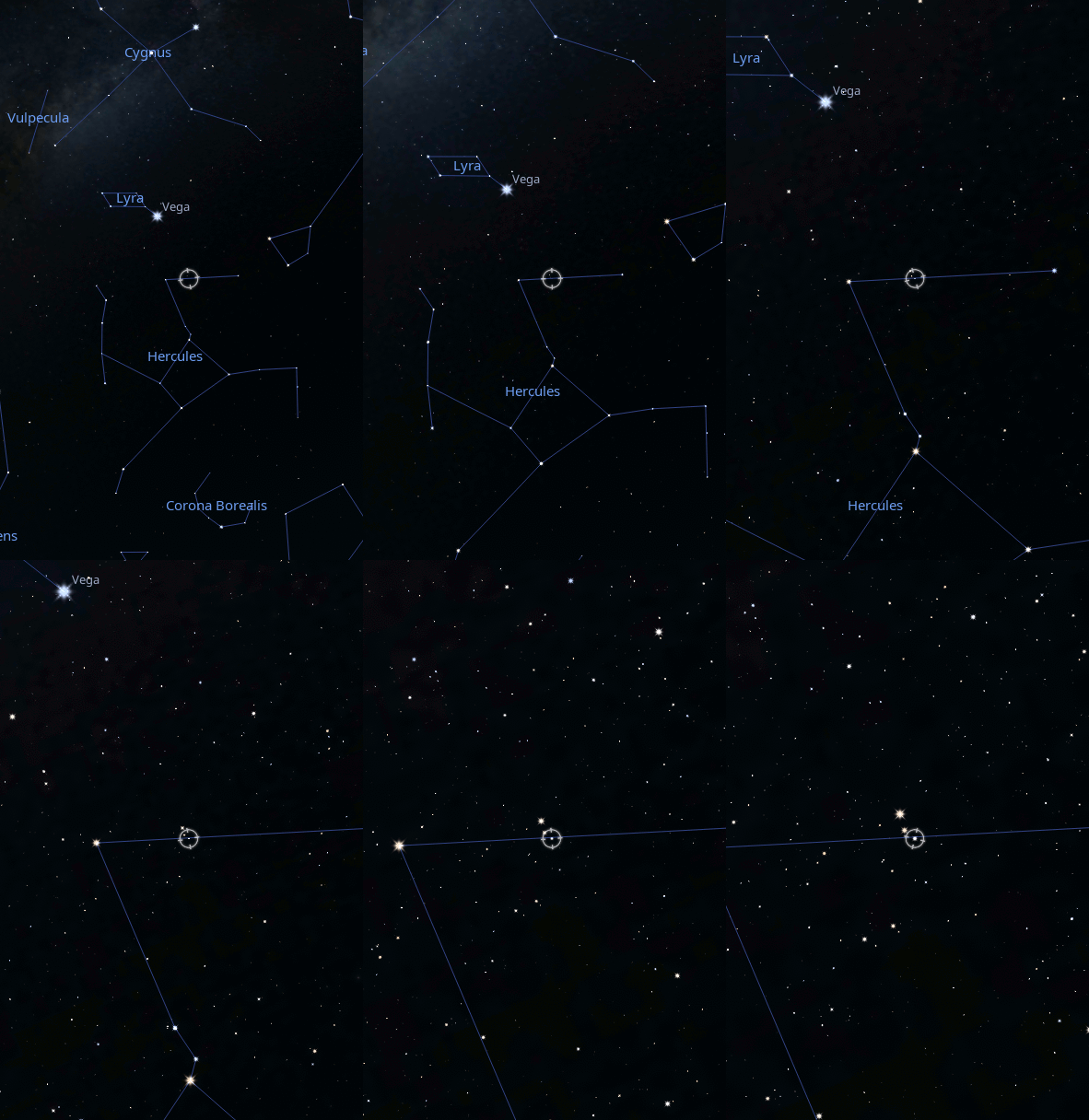
The Sun was born from a cloud, a nebula, of mostly hydrogen and helium with traces of heavier elements. Astronomers consider any element heaver than helium a metal. It was not born alone, but with many other stars in a star cluster, all at about the same time. The elements that are in the Sun’s atmosphere came from that nebula. Astronomers are wondering if there were any other stars they could see which were siblings of the Sun. Apparently they found one star that has the same metals in the same proportions as the Sun. That star is HD 162826, a dim star in the constellation Hercules, visible in binoculars. It’s a bit more massive than the Sun, and about 109 light years away. The Sun’s sibling stars have scattered far and wide.
The astronomical event times given are for the Traverse City/Interlochen area of Michigan (EDT, UT – 4 hours). Times will be different for other locations.
Addendum
 Bob Moler's Ephemeris Blog