Archive
08/23/2021 – Ephemeris – Seeking shelter on the Moon
This is Ephemeris for Monday, August 23rd. Today the Sun will be up for 13 hours and 39 minutes, setting at 8:34, and it will rise tomorrow at 6:56. The Moon, 1 day past full, will rise at 9:39 this evening.
The area of interest on the Moon for NASA’s Artemis crewed landing program and the target for Chinese lunar ambitions is the south pole, where signs of water ice have been detected in permanently shadowed craters. That is a valuable resource, if one wants to live off the land on the Moon. There’s another resource that is also valuable in finding: shelter from radiation and the Moon’s extreme temperature swings. Those are lava tubes. They are lava channels in which lava flowed, the top and sides cooled and crusted over. They emptied when the lava ran out, leaving a hollow tube. Sometimes part of the upper crust fails, leaving what is called a skylight. Several of these skylights have been found on the Moon and even Mars.
The astronomical event times given are for the Traverse City/Interlochen area of Michigan (EDT, UT – 4 hr). They may be different for your location.
Addendum
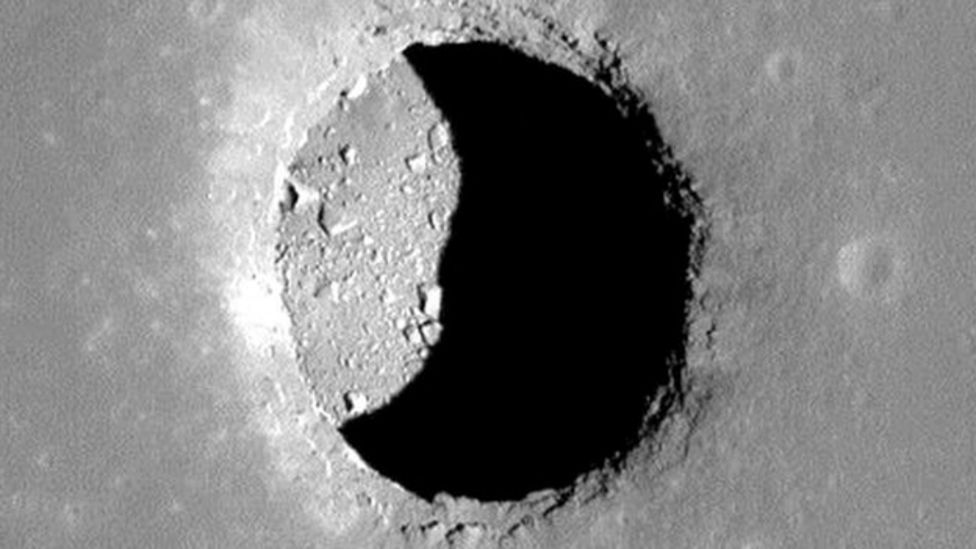
A skylight betrays the presence of a lunar lava tube. Credit NASA/LRO.
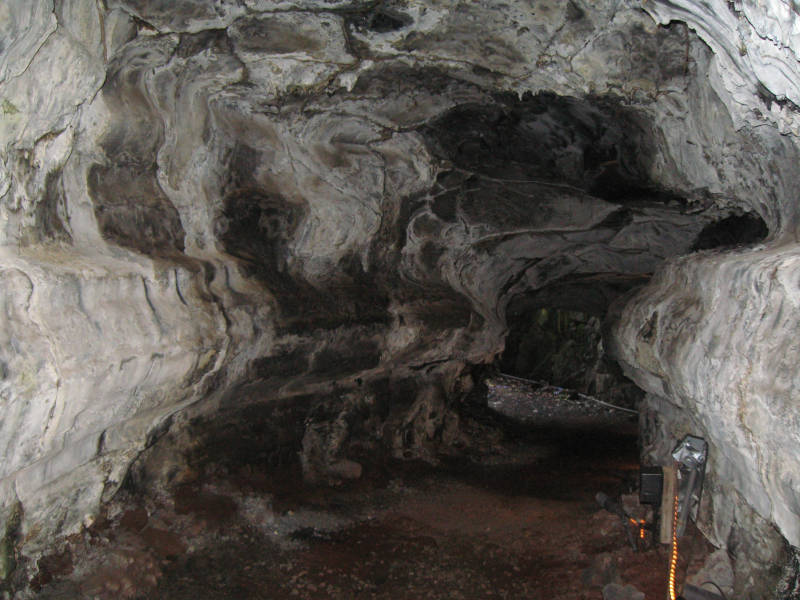
Here’s an earthly lava tube on the Island of Hawai’i, I visited in 2012 with my wife. It was on the site of a coffee plantation south of Kona. Credit mine.
08/20/2021 – Ephemeris – The Moon will pass Saturn tonight
This is Bob Moler with Ephemeris for Friday, August 20th. Today the Sun will be up for 13 hours and 48 minutes, setting at 8:39, and it will rise tomorrow at 6:52. The Moon, 2 days before full, will set at 5:26 tomorrow morning.
The Moon is passing Saturn this evening. Saturn will be directly above the Moon by about 10 moon-widths or five degrees at 10 pm tonight. Tomorrow night the Moon will have moved toward Jupiter, which at the same time of night, the planet will appear to the upper left of our satellite. The sky appears to us to be a dome over us, which is useful for imagining the constellations, navigation, and pointing telescopes. However, that is an illusion. The night sky is impossibly and wonderfully deep. The Moon is a quarter of a million miles away, Jupiter and Saturn are hundreds of million miles away. The nearest nighttime stars are trillions of miles away, and so on as far as our eyes and instruments can see.
The astronomical event times given are for the Traverse City/Interlochen area of Michigan (EDT, UT – 4 hr). They may be different for your location.
Addendum
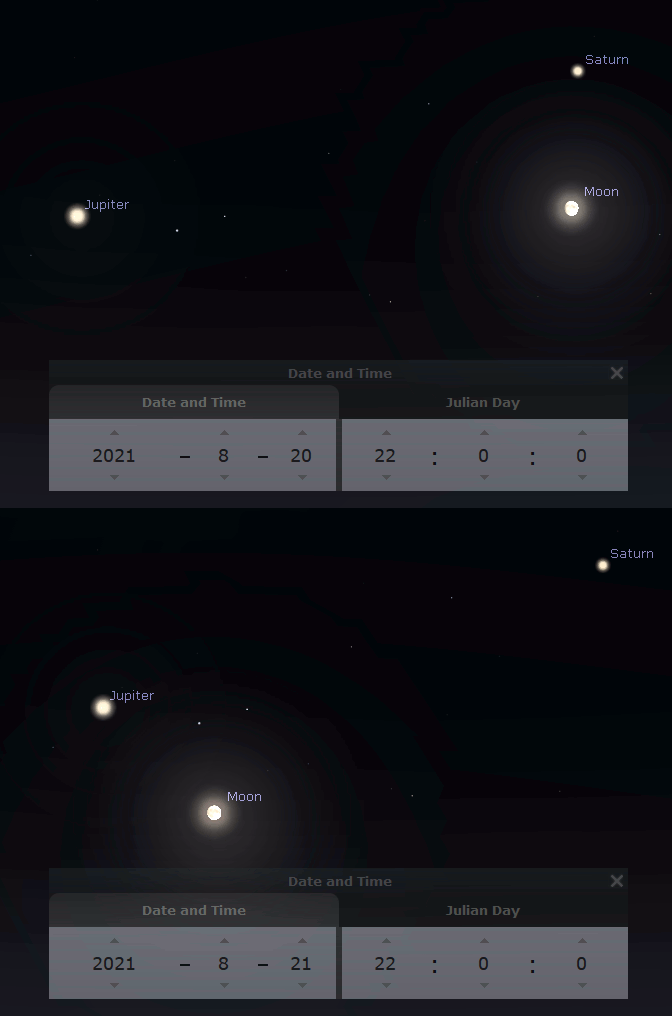
Animation showing the Moon passing Saturn and Jupiter at 10 pm on August 20 & 21, 2021. Beside the Moon jumping position between the two dates, the planets and stars do too, but to a lesser extent to the right. This is due to the Earth’s change in position as it orbits the Sun. Stars rise and set 3 minutes, 56 seconds earlier each night. The Created using Stellarium and GIMP.
07/16/2021 – Ephemeris – The best time to see detail on the Moon (IMHO)
This is Ephemeris for Friday, July 16th. Today the Sun will be up for 15 hours and 11 minutes, setting at 9:24, and it will rise tomorrow at 6:13. The Moon, 1 day before first quarter, will set at 1:08 tomorrow morning.
I consider the week centered on the first quarter moon to be the best time to view the Moon in a telescope. The best part of the Moon to view is near the terminator. The terminator is the sunrise line on the moon that we see before full moon, and the sunset line we see after full moon. The terminator is where the shadows are longest on the Moon and indeed on the Earth, with the low Sun in the sky. The Moon has lots of craters in its south or bottom part. We call that the lunar highlands, which is completely saturated with craters. Personally, I like craters. The darker lava plains that were initially called seas (the name stuck). They are flat and nearly featureless unless seen very close to the terminator, where the slight wrinkle ridges can be spotted.
The astronomical event times given are for the Traverse City/Interlochen area of Michigan (EDT, UT – 4 hr). They may be different for your location.
Addendum
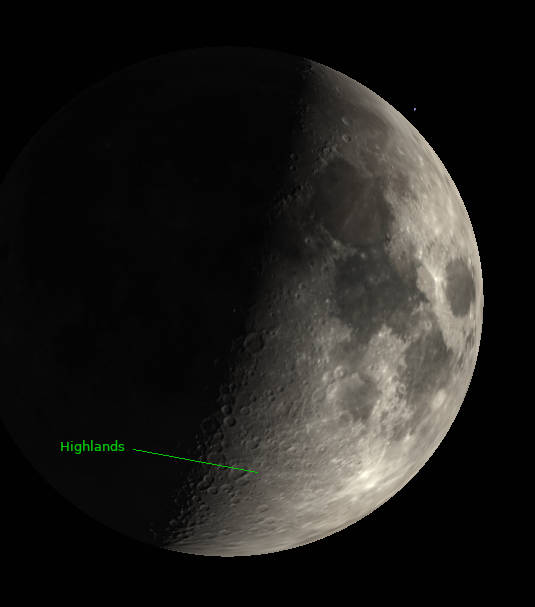
The Moon tonight at 11 pm, July 16, 2021, about a day and 7 hours before the instant of first quarter. Note the shadows that bring out the craters near the terminator. Created using Stellarium.
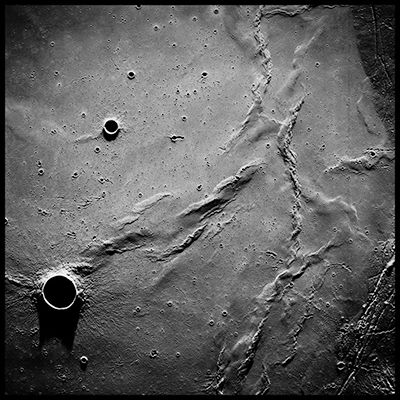
Wrinkle ridges on the floor of a lunar sea (lava plain). These are only visible at a very low sun angle near the terminator. I can find no information on this image, but apparently it was taken in lunar orbit. This is much sharper detail than can be seen from earth.
07/15/2021 – Ephemeris – What the Chinese saw in the face of the Moon
This is Bob Moler with Ephemeris for Thursday, July 15th. Today the Sun will be up for 15 hours and 13 minutes, setting at 9:25, and it will rise tomorrow at 6:12. The Moon, 2 days before first quarter, will set at 12:45 tomorrow morning.
Looking at the Moon tonight with the naked eye or binoculars, the dark patches called seas, which are really lava filled plains, make out the ears, head, and top part of the body of a rabbit that appears upside down. It’s the Chinese Jade Rabbit, Yutu. The seas involved, with their English names are: Serenity, the top of its body; Tranquility, its head; the more prominent ear is Fertility; while the other ear is a combination of the Bay of Roughness and Sea of Nectar. Yutu is the pet rabbit of the Moon goddess Chang’e, who flew to the Moon to escape her pursuers. The Chinese space agency has named all their moon landers Chang’e and their lunar rovers Yutu in their honor.
The astronomical event times given are for the Traverse City/Interlochen area of Michigan (EDT, UT – 4 hr). They may be different for your location.
Addendum
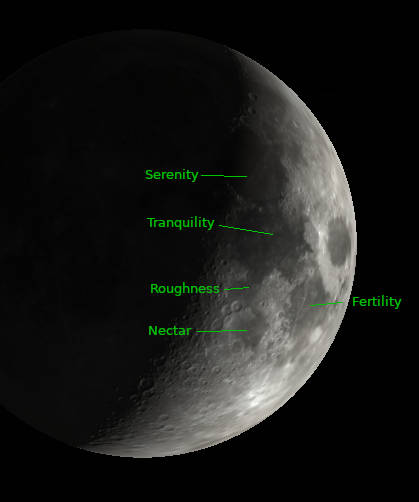
The Moon tonight with the Jade Rabbit delineated in the seas and one bay the dark lava covered plains of the Moon. Created using Stellarium.
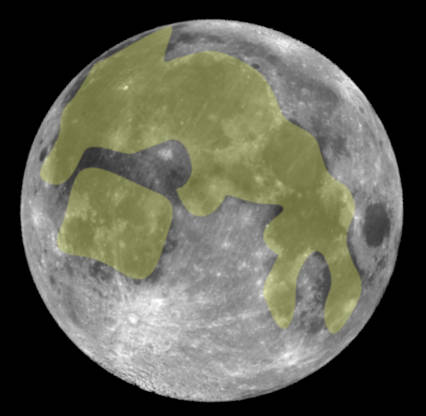
The Jade Rabbit seen on a full moon rotated close to what tonight’s Moon is. Actually, the ancient Chinese saw the rabbit pounding medicine.
06/17/2021 – Ephemeris – Congress approves more money for NASA’s lunar lander
This is Bob Moler with Ephemeris for Thursday, June 17th. Today the Sun will be up for 15 hours and 34 minutes, setting at 9:31, and it will rise tomorrow at 5:56. The Moon, at first quarter tonight, will set at 2:18 tomorrow morning. | Tonight’s Moon will be almost exactly cut in half by the sunrise terminator, since the precise moment of first quarter will be at 11:54 this evening. Speaking of the Moon, Congress has approved NASA spending of 10 billion dollars over 5 years on the Human Lander System for the Artemis Moon program. This would allow more than one bidder to win the lander contract. SpaceX’s Lunar Starship was the only one to win a contract. NASA and Congress wanted two to win, but couldn’t afford more than SpaceX. Now comes the rub… Congress will have to appropriate the money out of the budget every year for this. The target date for the first landing is 2024, which I’m pretty sure is already out of reach.
The astronomical event times given are for the Traverse City/Interlochen area of Michigan (EDT, UT-4). They may be different for your location.
Addendum
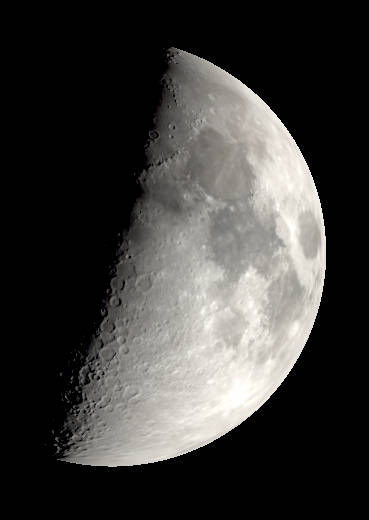
First Quarter Moon with binoculars or low power telescope as it might appear tonight at 11 pm. Created using Stellarium.
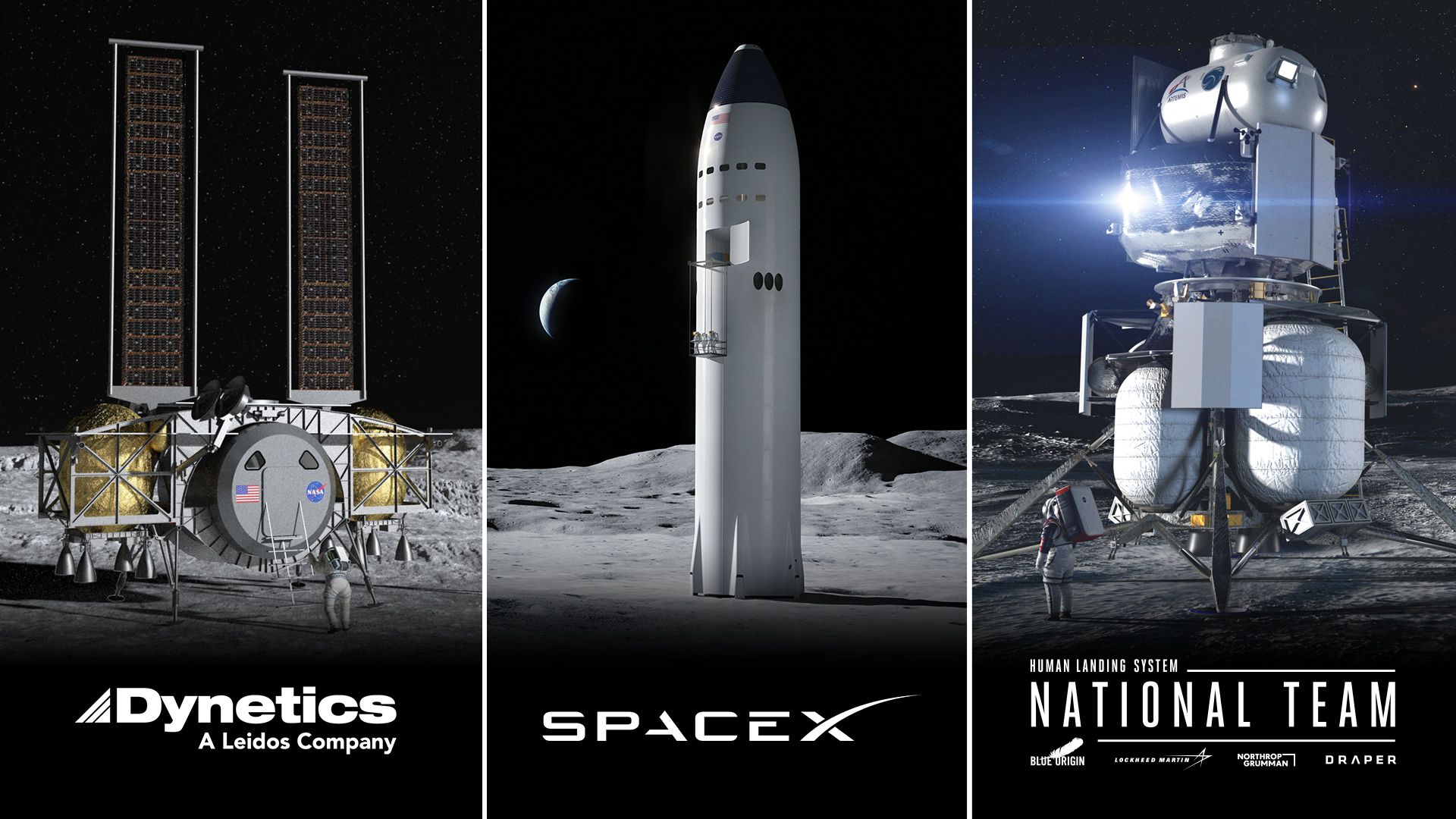
Three Lunar Lander proposals. Credit Dynetics, SpaceX, and Blue Origin. Credit NASA.
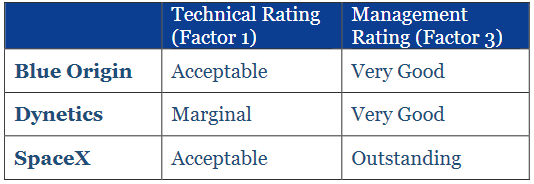
Technical and Management Adjectival Ratings from https://www.nasa.gov/sites/default/files/atoms/files/option-a-source-selection-statement-final.pdf
Also, SpaceX’s bid was the lowest by a wide margin. With the extra funds, it looks like Blue Origin will be the second successful bidder.
06/14/2021 – Ephemeris – Images of the Moon: Then and now
This is Bob Moler with Ephemeris for Flag Day, Monday, June 14th. Today the Sun will be up for 15 hours and 33 minutes, setting at 9:29, and it will rise tomorrow at 5:56. The Moon, 3 days before first quarter, will set at 1 am.
The waxing crescent Moon shows its cratered highlands and flat lava plains that early telescopic astronomers fancied as water filled and called them seas, so the nomenclature stuck, and we call them seas to this day. When I grew up in the 1950s I was captivated by the moonscapes painted by Chesley Bonestell with their sharp rugged mountain peaks. The actual lunar landscape turned out to be softer, more rounded. The Earth’s surface features are younger than the Moon’s due to plate tectonics, something few geologists in the 1950s believed in. The Moon’s features are generally billions of years old and erosion by meteoroid impacts and ejecta have covered the landscape with a fine dust, over the eons, that smooths out its features.
The astronomical event times given are for the Traverse City/Interlochen area of Michigan. They may be different for your location.
Addendum
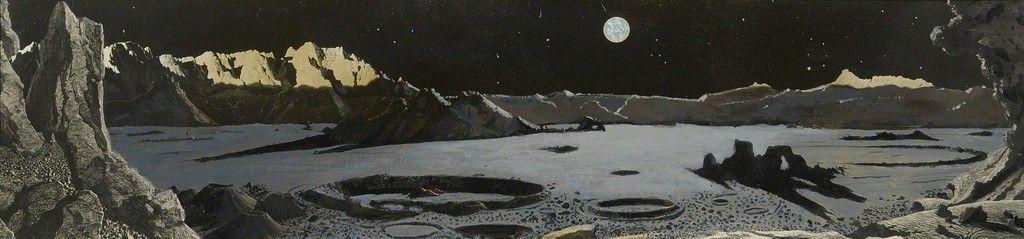
A Chesley Bonestell moonscape. Note the sharp detail including an arch at center right and an overhang at right. Such was the state of our ignorance before spacecraft like Ranger, Surveyor, Lunar Orbiter and Apollo reached the Moon. Click on the image to enlarge. Credit Chesley Bonestell.
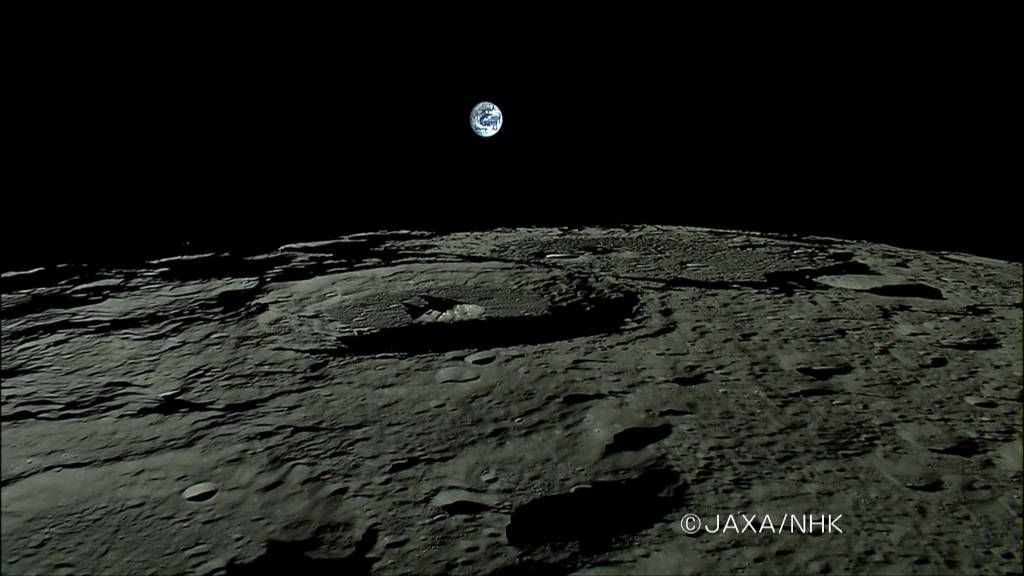
Moonscape photographed by JAXA (Japan) spacecraft Kaguya with about the same orientation as the Bonestell painting, except from orbit. Click on the image to enlarge. Credit JAXA/NHK.
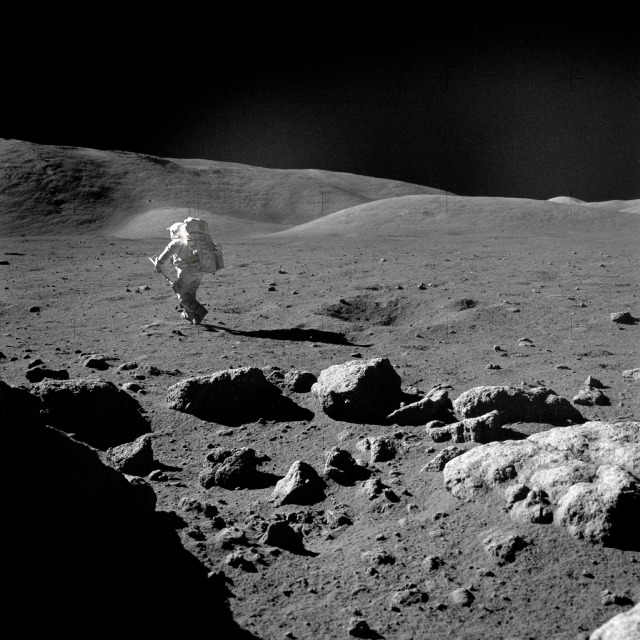
Image from Apollo 17 showing lunar erosion. Even the rocks in the foreground show that they were eroded. The image also shows astronaut Dr. Harrison “Jack” Schmidt. Click on the image to enlarge. Credit NASA.
06/11/2021 – Ephemeris – Spotting the one-day-old Moon
This is Bob Moler with Ephemeris for Friday, June 11th. Today the Sun will be up for 15 hours and 31 minutes, setting at 9:28, and it will rise tomorrow at 5:56. The Moon, 1 day past new, will set at 10:56 this evening.
Tonight the thin crescent Moon, some 40 hours old, or more properly 40 hours from eclipsing the Sun, will be to the right and a bit below the bright planet Venus. It might be possible to spot it. I do remember spotting the tiny sliver of a Moon the next evening after a solar eclipse in 1970. But that was in March*, when the ecliptic, the path of the Sun and near the path of all the planets and the Moon, was angled more vertically than it is this time of year. That means that the Moon and planets, when near the Sun, are lower in the sky after sunset than they would be in late winter and early spring. Venus is slowly moving away from the Sun, from our vantage point, while Mars, above and left of it, is slowly retreating toward the Sun. Their apparent paths will cross on July 13th.
The astronomical event times given are for the Traverse City/Interlochen area of Michigan. They may be different for your location.
* On the program, I mistakenly said April.
Addendum
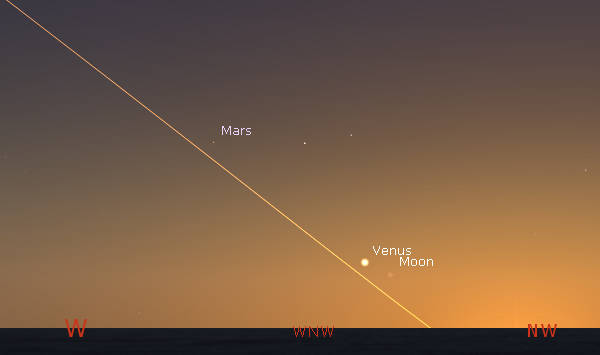
Sunset sky and ecliptic (orange line) 45 minutes after sunset tonight, June 11, 2021. Note the low angle of the ecliptic, the apparent path of the Sun and near the path of the planets. The angle will get even lower as summer progresses. So planets close to the Sun will set shortly after the Sun. Created using Stellarium.
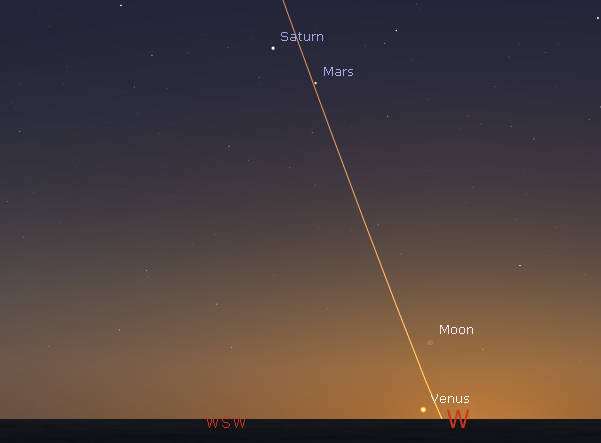
This is the sky one day after the March 7, 1970 eclipse and 45 minutes after sunset. Being March, note how steep the angle of the ecliptic, so planets close to the Sun are higher in the sky. Also, twilight ends quicker in March than in June.
05/21/2021 – Ephemeris – For everything there is a season… even eclipses
This is Ephemeris for Friday, May 21st. Today the Sun will be up for 15 hours and 3 minutes, setting at 9:11, and it will rise tomorrow at 6:07. The Moon, 2 days past first quarter, will set at 4:14 tomorrow morning.
There are seasons for everything: baseball season, football season, spring, summer, what have you. There are also eclipse seasons. The Moon’s orbit is tilted by about 5 degrees to the ecliptic, the path of the Sun in the sky. The points where they cross are called nodes, 180 degrees apart. When the Sun is near one of those nodes we are in an eclipse season, where a solar eclipse can occur at new moon, and a lunar eclipse can occur at full moon. We are guaranteed one of each per eclipse season, and on rare occasions a third eclipse. Of course one has to be at the right place to see an eclipse. This eclipse season we will be at a marginal place to see both eclipses. Both are at sunrise, so we’ll see just a part of each of them.
The astronomical event times given are for the Traverse City/Interlochen area of Michigan. They may be different for your location.
Addendum
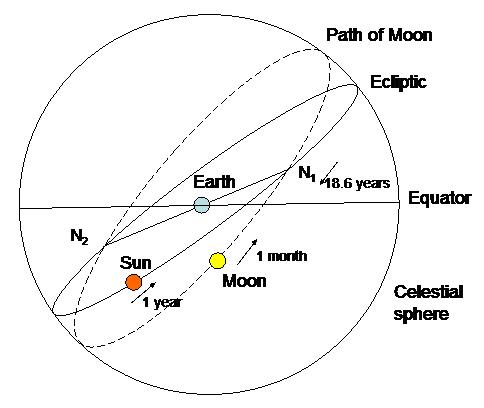
For a more extensive treatment of this subject check out: https://earthsky.org/astronomy-essentials/definition-what-is-an-eclipse-season
05/17/2021 – Ephemeris – The Moon tonight
This is Ephemeris for Monday, May 17th. Today the Sun will be up for 14 hours and 54 minutes, setting at 9:06, and it will rise tomorrow at 6:11. The Moon, 2 days before first quarter, will set at 2:25 tomorrow morning.
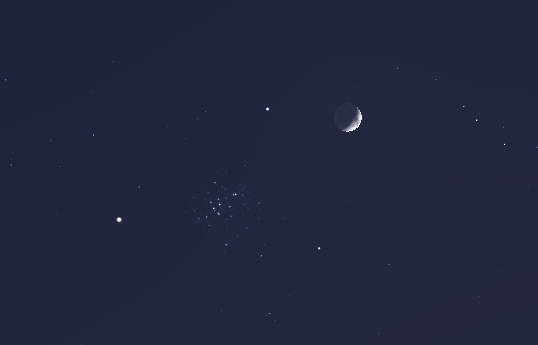
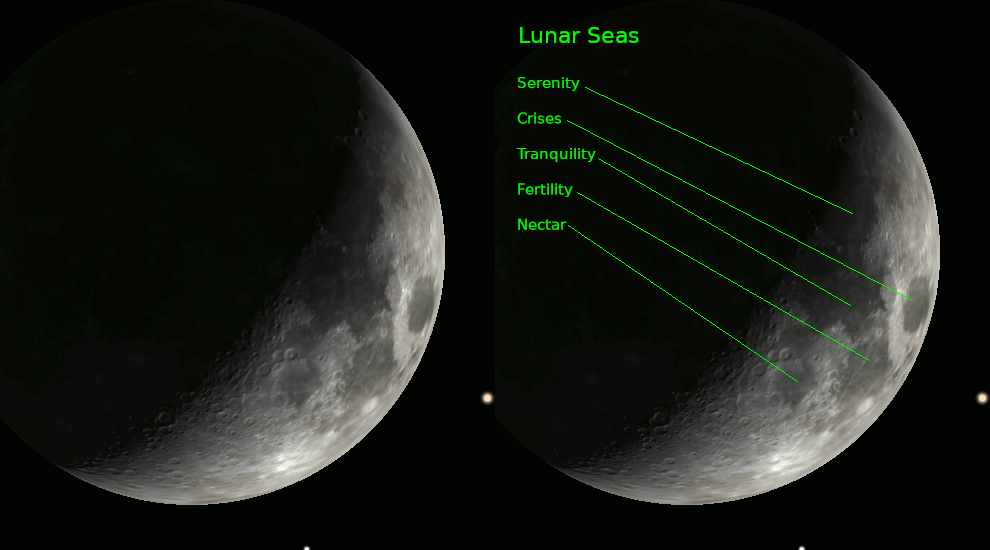
The Moon tonight reveals a bit more territory than it did last night, and will every night until full moon. The Moon’s solar day equals a lunar month of about 29 and a half of our days. As seen in binoculars, below and left of The distinctly oval Sea of Crises, or Mare Crisium, is the Sea of Fertility, or Mare Fecunditatis. To the left of the Sea of Crises, the Sea of Tranquility (Tranquilitatis) where the Apollo 11 crew landed. Above that half of Sea of Serenity has come into daylight. Tonight the Beehive star cluster will be visible below and left of the Moon. It should be easily visible in binoculars and has a vaguely triangular shape. It was known to the ancients as Praesepe, the manger, who saw it as a glowing spot on moonless nights.
The astronomical event times given are for the Traverse City/Interlochen area of Michigan. They may be different for your location.
Addendum
04/27/2021 – Ephemeris – What is the opposite of the Harvest Moon effect?
This is Bob Moler with Ephemeris for Tuesday, April 27th. Today the Sun will be up for 14 hours and 4 minutes, setting at 8:43, and it will rise tomorrow at 6:36. The Moon, 1 day past full, will rise at 9:43 this evening.
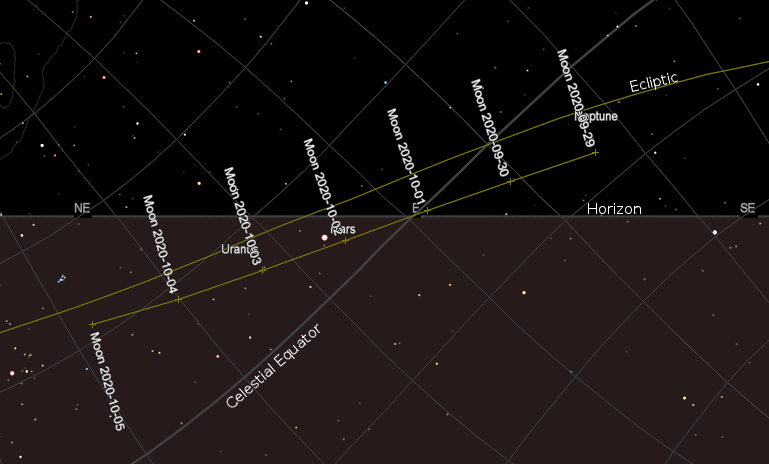
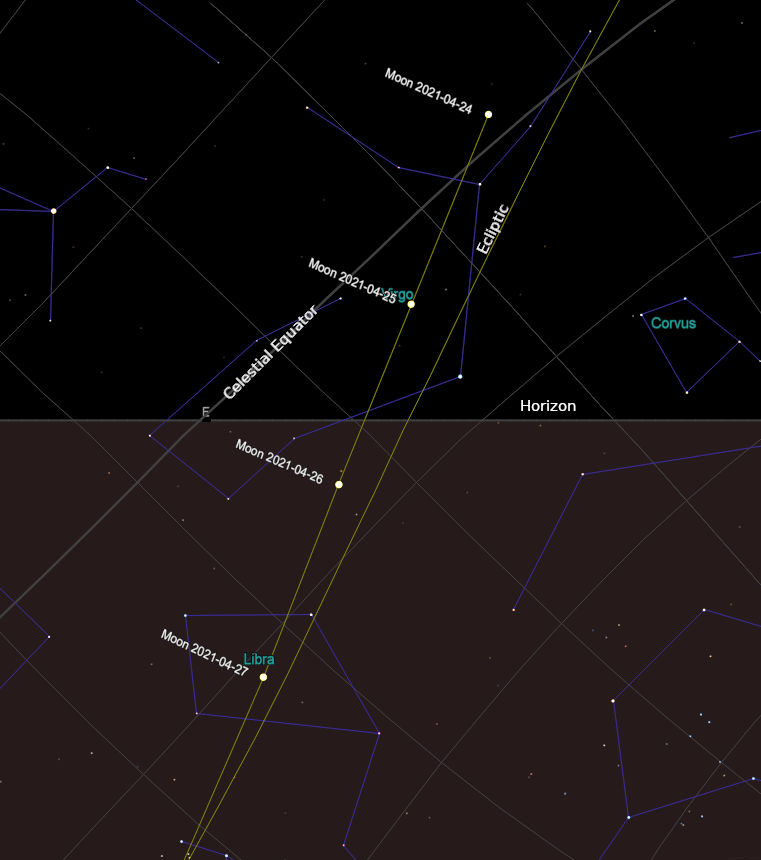
Let’s think back to last fall and the Harvest Moon. The big deal about the Harvest Moon is the Moon lingers, rising or being bright in twilight to help illuminate the harvesters of old by effective lengthening the effects of daylight. The spring bright Moon after full moon rises much later night to night. Six months ago the difference in the rise times of the Moon between the full moon and the next day was 20 minutes. Today the Moon will rise 96 minutes later than it did yesterday. The reason is the beside moving eastward, it is also moving southward to where the Sun was in late fall. So it rises much later each night than it did after full moon last fall. As it is the dark skies are moving to later and later in the evening due to the spring season and daylight time.
The astronomical event times given are for the Traverse City/Interlochen area of Michigan. They may be different for your location.
Addendum
 Bob Moler's Ephemeris Blog