Archive
08/07/2014 – Ephemeris – Two large craters of the lunar highlands visible tonight
Ephemeris for Thursday, August 7th. The sun rises at 6:35. It’ll be up for 14 hours and 24 minutes, setting at 8:59. The moon, 3 days before full, will set at 4:07 tomorrow morning.
The gibbous Moon is getting brighter as it becomes more sunlit from the Earth’s prospective. The disk of the Moon will be 89 percent illuminated by the sun tonight. The bright crater Aristarchus, which I’ve talked about before, on the upper left of the moon is now in sunlight. On the lower left there are two interesting craters for the small telescope. Split in half by the sunrise line terminator is the large crater Schickard 137 miles (227 km) in diameter. Craters near the limb of the Moon are foreshortened by the fact that the Moon’s nearly spherical so they there appear elongated. One, more elongated than most, is nearby Schiller which is actually 108 by 43 miles (179 by 69 km), which may be two overlapping craters or a really low angle asteroid impact.
Times are for the Traverse City/Interlochen area of Michigan. They may be different for your location.
Addendum
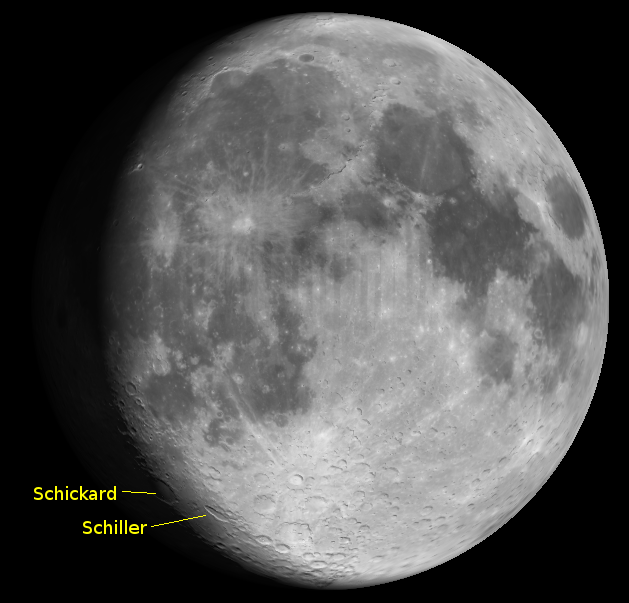
The lunar craters Schickard and Schiller on the lunar terminator at 10 p..m., August 7, 2014. Created using Virtual Moon Atlas.
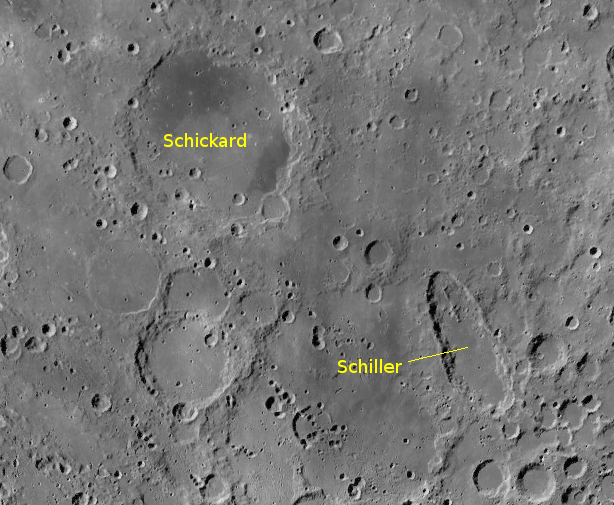
The craters Schickard and Schiller from the Lunar Reconnaissance Orbiter. Credit NASA from Virtual Moon Atlas.
08/05/2014 – Ephemeris – The gibbous Moon and the Perseid meteors
Ephemeris for Tuesday, August 5th. The sun rises at 6:33. It’ll be up for 14 hours and 29 minutes, setting at 9:02. The moon, 2 days past first quarter, will set at 2:07 tomorrow morning.
As the moon moves around the Earth, its illuminated fraction gets greater since it’s now moving around to be opposite the sun in the sky which it will reach in 5 days, the full moon. Tonight the face of the moon we see is 71 percent illuminated by the sun. Anytime the moon is between 50 and 100 percent illuminated by the Sun we call a gibbous moon. The word gibbous means hump-backed, and lets face it, the Moon looks cooler when it’s a crescent. If you’re interested in the growing Perseid meteor shower and want to see it in dark skies, the hours of darkness will be restricted tonight to between moon set at 2:07 a.m. and the beginning of astronomical twilight at 4:32 a.m., though you can push it to 5 a.m. before the twilight becomes objectionable.
Times are for the Traverse City/Interlochen area of Michigan. They may be different for your location.
Addendum
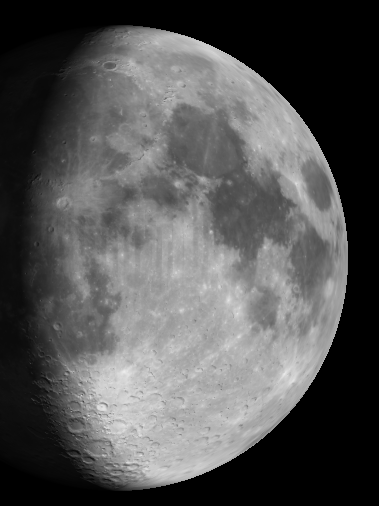
The gibbous Moon tonight (August 5, 2014). Created using Virtual Moon Atlas.
08/04/2014 – Ephemeris – The Moon’s remarkable crater Clavius
Ephemeris for Monday, August 4th. The sun rises at 6:32. It’ll be up for 14 hours and 31 minutes, setting at 9:03. The moon, 1 day past first quarter, will set at 1:20 tomorrow morning.
Let’s take a look at the Moon tonight. The south end of the moon is bright part, the lunar highlands, the oldest terrain on the Moon. A huge crater is visible that just came into sunlight. It is the crater Clavius. It’s visible in binoculars, but it is best seen in a telescope with enough magnification so the moon more than fills the field of view. Clavius has four small craters on its floor in a slight arc, in descending order of size. Clavius itself is 136 miles (225 km) in diameter. It has a flat floor, but it’s large enough to be convex following the curvature of the Moon, a fact that can be seen when Clavius is close to the terminator as it will be tonight. It is another one of my favorite lunar features.
Times are for the Traverse City/Interlochen area of Michigan. They may be different for your location.
Addendum
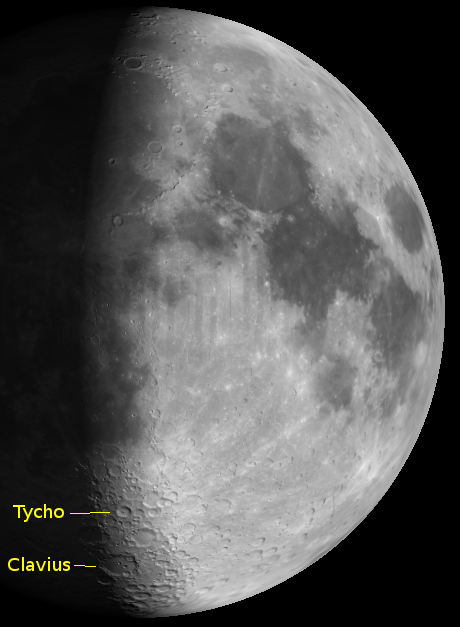
The Moon highlighting the craters Clavius and Tycho for 10 p.m. August 4, 2014. Created using Virtual Moon Atlas.
A note: For science fiction fans in the book and movie 2001 a Space Odyssey by Arthur C. Clarke the U.S. Moon Base was located in the crater Clavius, and the lunar monolith, designated TMA-1 (Tycho Magnetic Anomaly 1) in surveys, was located in the nearby crater Tycho.
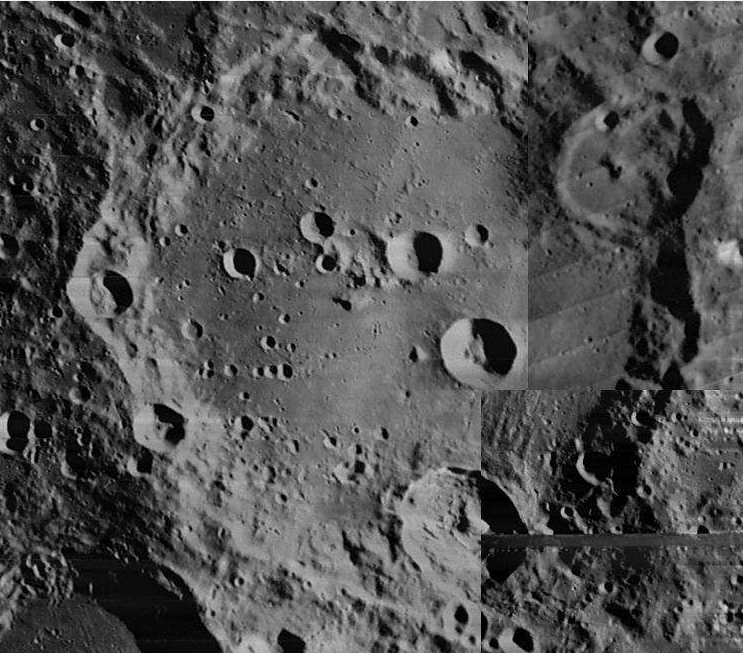
Clavius as photographed by one of the Lunar Orbiter spacecraft in the 1960s. From Digital Lunar Orbital Photographic Atlas. Credit Jeff Gillis, Lunar and Planetary Institute.
07/08/2014 – Ephemeris – Why are the near side and the far side of the moon so different?
Ephemeris for Tuesday, July 8th. Today the sun will be up for 15 hours and 23 minutes, setting at 9:29. The moon, 3 days past first quarter, will set at 3:27 tomorrow morning. Tomorrow the sun will rise at 6:06.
We’re all familiar with the gray blotches on the moon called seas that make up the face of the Man in the Moon. The other side, the far side, misnamed the dark side, has only one small sea. Astronomers have wondered why. Seems that it’s a product of the Moon’s birth and the late heavy bombardment that came later. In a new hypothesis, a Mars sized proto-planet hit the proto-Earth with a glancing blow peeling off material that fell into a disk that coalesced into the Moon, a lot closer to the earth than it is today, and the far side contained thicker light crustal material than the near side. When the giant planets began their migration much asteroidal material struck the moon. Near side impacts penetrated into the Moons magma, while the far side impacts did not.
Times are for the Traverse City/Interlochen area of Michigan. They may be different for your location.
Addendum
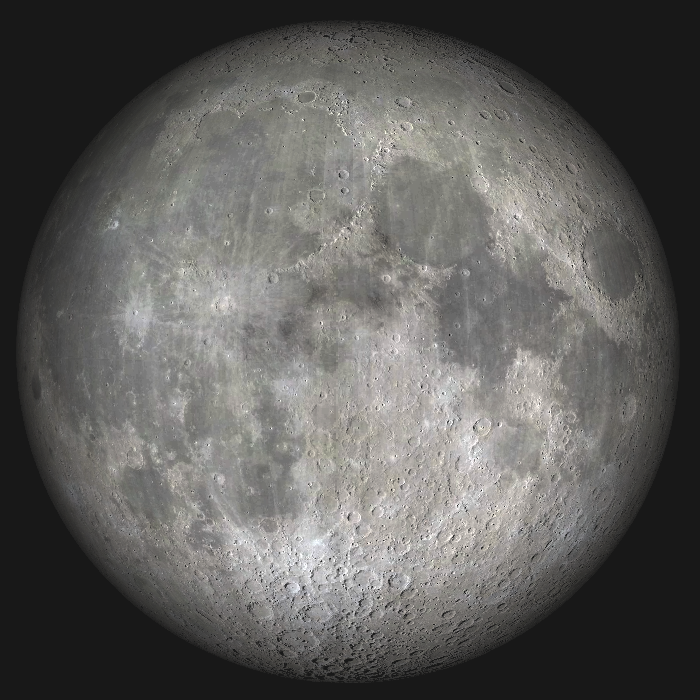
The Moon’s near side. Created using Virtual Moon Atlas.
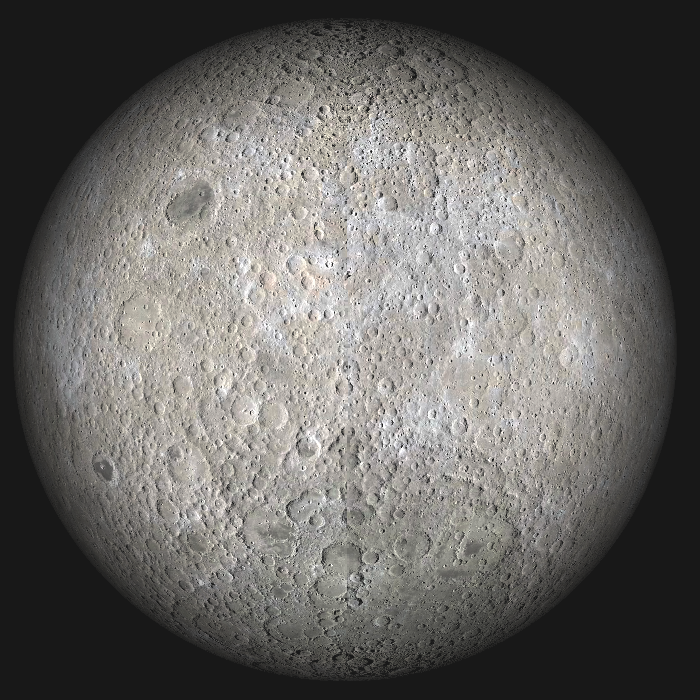
The Moon’s far side. Created using Virtual Moon Atlas.
07/07/2014 – Ephemeris – The Moon will appear near Saturn tonight
Ephemeris for Monday, July 7th. Today the sun will be up for 15 hours and 24 minutes, setting at 9:29. The Moon, 2 days past first quarter, will set at 2:43 tomorrow morning. Tomorrow the sun will rise at 6:05.
Tonight the planet Saturn will be seen above the bright gibbous Moon. At 11 p.m. Saturn will be only 3 moon widths above the moon and may be hard to spot in the Moon’s glare, so that binoculars may be needed to find it. Other than that the moon makes a nice pointer to the ringed planet. The rings of Saturn become apparent in telescopes of at least 20 power. At first the planet looks elliptical, then the planet can be seen to separate from the rings. The Moon itself is a fine but bright object for the telescope. Look near the terminator or sunrise line to see the long lunar shadows delineate the Moon’s crater detail, especially the grand Crater Copernicus near the center of the Moon.
Times are for the Traverse City/Interlochen area of Michigan. They may be different for your location.
Addendum
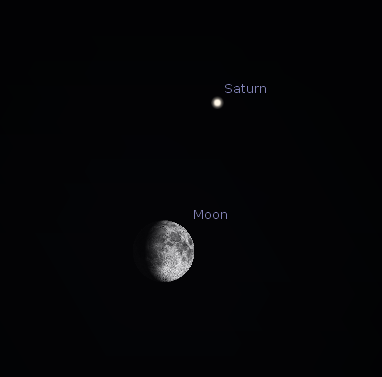
Saturn and the Moon as they would appear at 11 p.m. on July 7, 2014. Created using Stellarium.
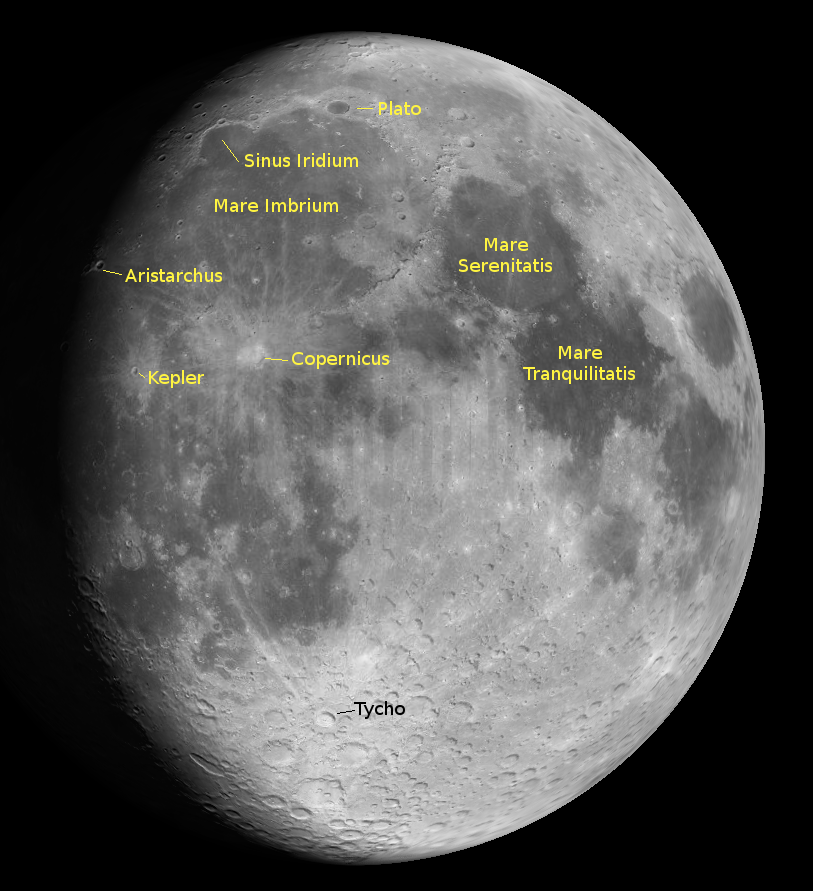
Oops, here’s the Moon for tomorrow night July 8th, 2014. The difference from tonight is the Aristarchus will not be visible, and Sinus Iridium will look cooler. Created using Virtual Moon Atlas. It’s 2 a.m. and I’m too tired to fix it.
06/10/2014 – Ephemeris – Our Moon and Saturn’s largest moon Titan
Ephemeris for Tuesday, June 10th. Today the sun will be up for 15 hours and 29 minutes, setting at 9:26. The moon, 3 days before full, will set at 4:51 tomorrow morning. Tomorrow the sun will rise at 5:57.
Tonight the planet Saturn will be near the bright gibbous Moon. One might need a bit of help locating it in the Moon’s glare. Saturn is to the right and slightly above the Moon. Saturn has a few moons of its own. The count’s up to 62, with another apparently forming from one of Saturn’s rings as monitored by the Cassini spacecraft now in orbit of Saturn. Cassini, which has about three years left in its mission, entered orbit of Saturn 10 years ago next month after a 7 year journey to get there. One of the most intensively studied moons is Titan, whose haze foiled the earlier Voyager spacecraft, Cassini and it’s Huygens lander have shown us earthly terrain and methane seas. Titan is easily seen in small telescopes near Saturn.
Addendum
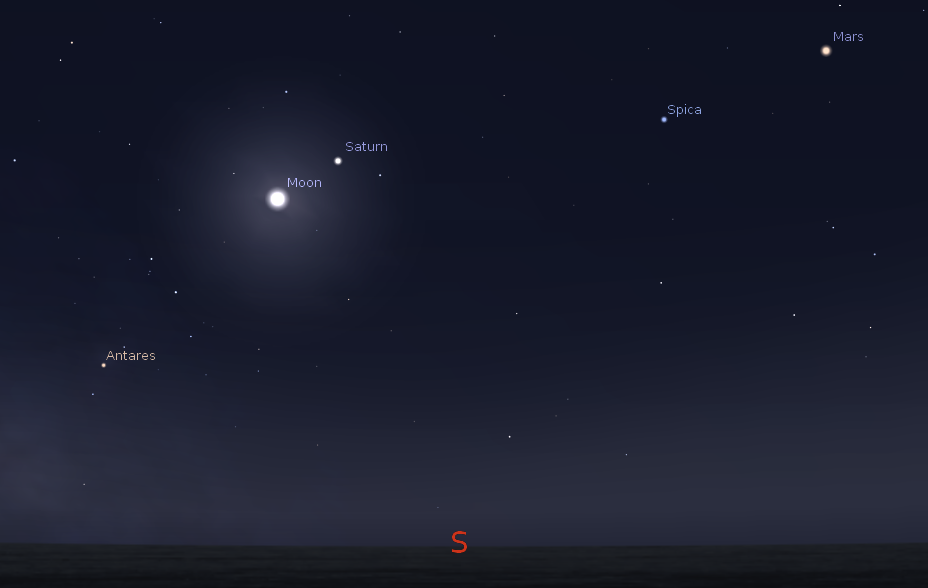
Saturn and the Moon tonight at 11 p.m., June 10, 2014. Created using Stellarium.
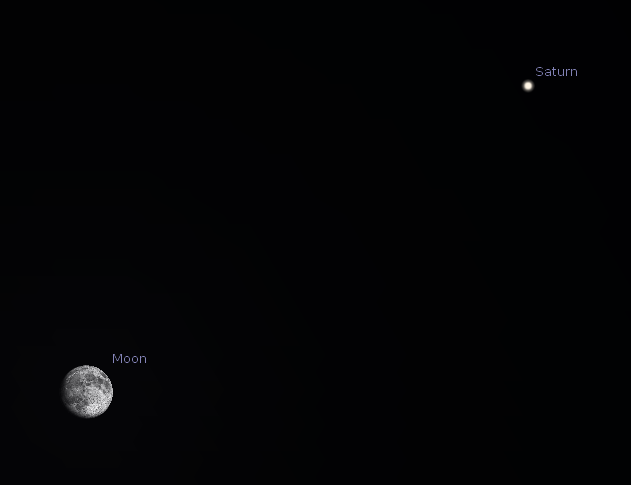
Just Saturn and the Moon showing the moon’s gibbous phase at 11 p.m. June 10, 2014. Created using Stellarium.
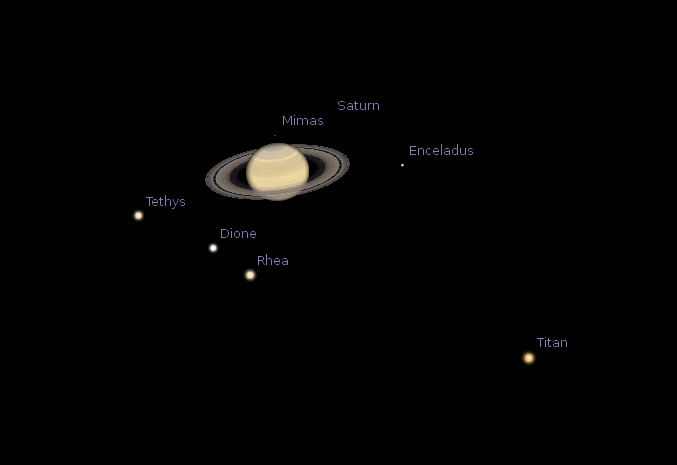
Saturn and its moons including Titan at 11 p.m. June 10, 2014. Created using Stellarium.
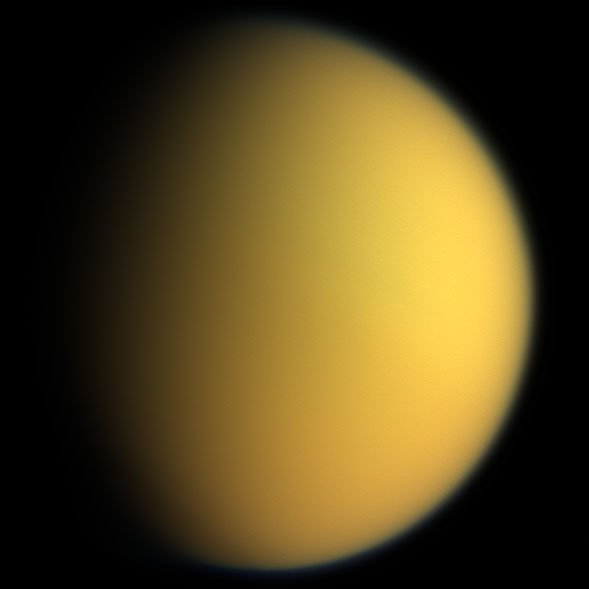
Titan, as Voyager would have seen it, but photographed by Cassini. Credit: NASA/JPL/Space Science Institute.
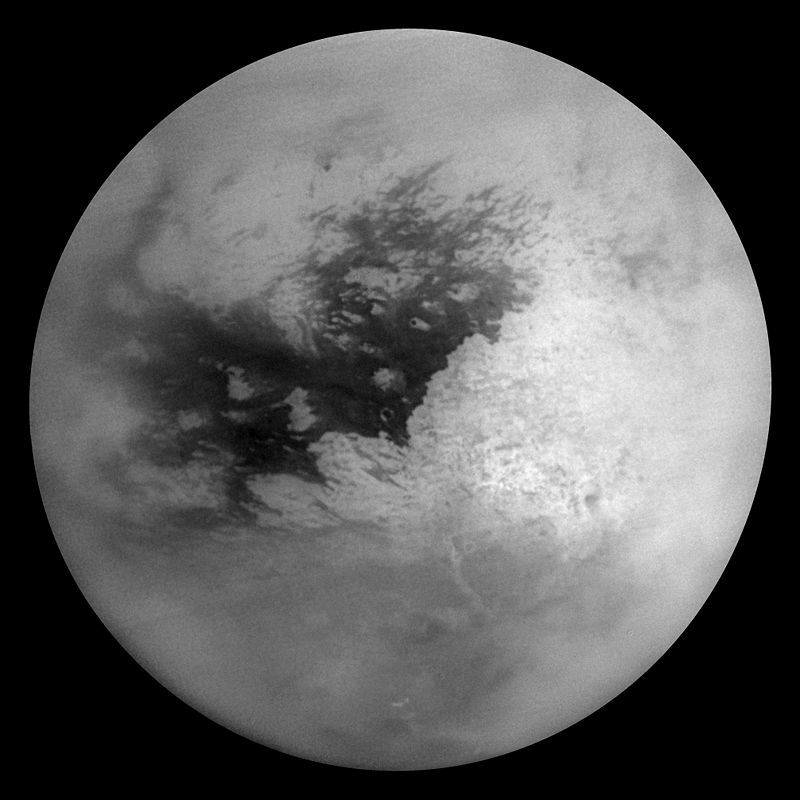
Titan as seen in the infrared by the Cassini spacecraft. Credit: NASA/JPL/Space Science Institute.
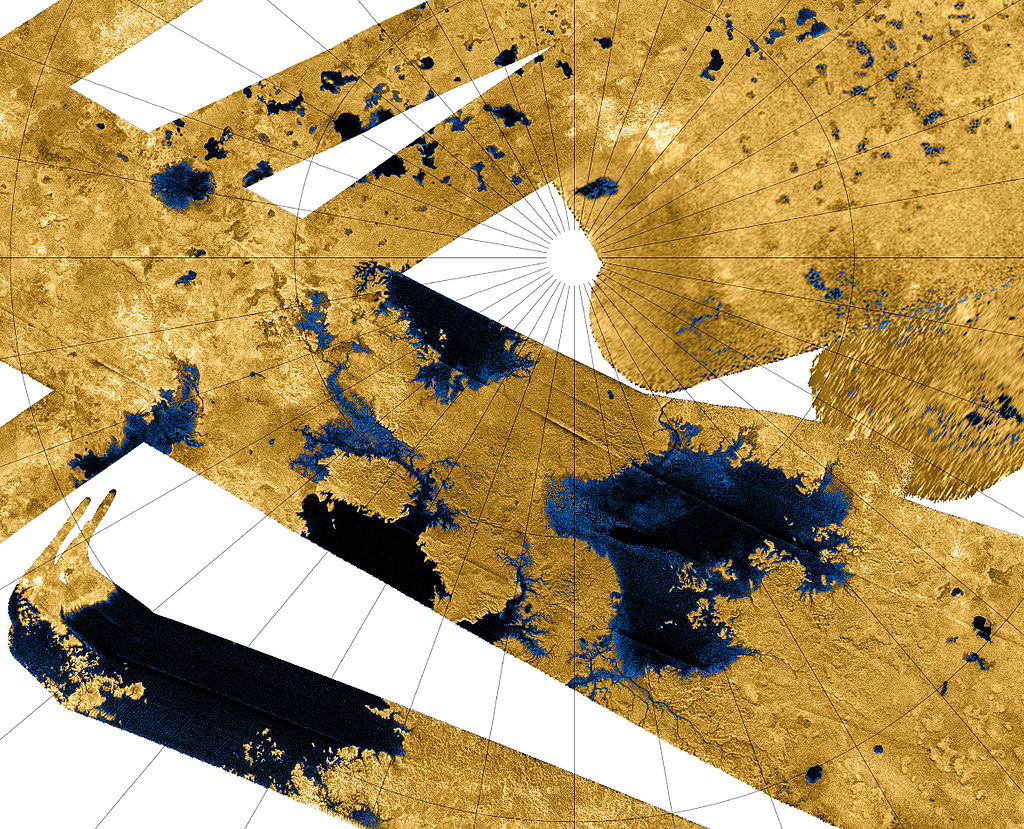
Seas and lakes at Titan’s north pole seen by radar from the Cassini spacecraft. Credit: NASA/JPL-Caltech/GSFC.

Image mosaic of Titan from the descending Huygens Lander. Credit: ESA/NASA/Univ. of Arizona.
06/09/2014 – Ephemeris – The brightest spot on the moon
Ephemeris for Monday, June 9th. Today the sun will be up for 15 hours and 28 minutes, setting at 9:26. The moon, half way from first quarter to full, will set at 4:09 tomorrow morning. Tomorrow the sun will rise at 5:57.
For all you Moon lovers out there we have a chance to study with telescopes the brightest spot on the Moon. It is at the upper left corner of the Moon and can easily be seen in binoculars. It’s the crater Aristarchus. However a telescope is what’s needed to see the crater in detail. Like the crater Alphonsus we looked at last Thursday, occasional hazes have been seen in this crater. Aristarchus isn’t really large, only 24 miles (40 km) in diameter. It is a young crater, which is why it’s bright. The asteroid that hit these penetrated the dark gray regolith into the lighter bedrock. Young in this case is somewhere younger than 1.1 billion years old. There’s an interesting valley near it called Schroter’s Valley.
Times are for the Traverse City/Interlochen area of Michigan. They may be different for your location.
Addendum
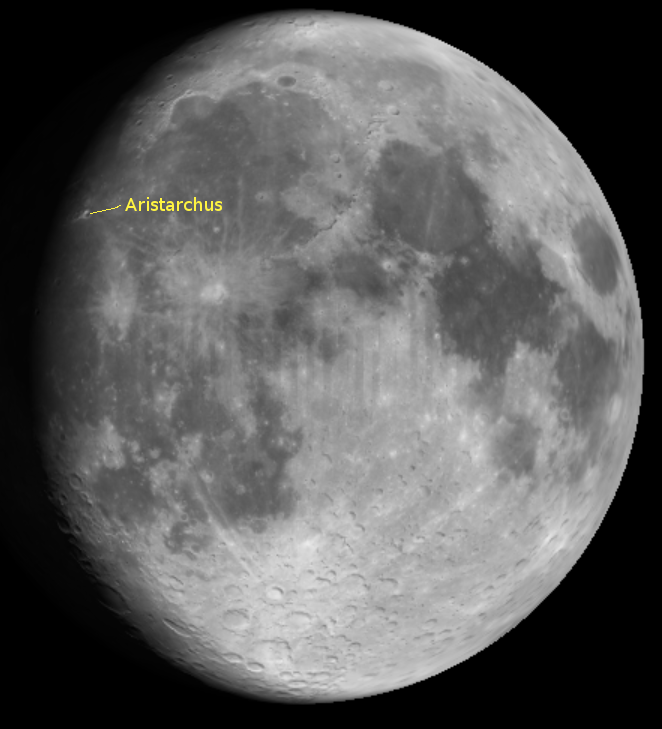
The crater Aristarchus at 11 p.m., June 9, 2014. It will brighten as we move to full moon. Created using Stellarium.
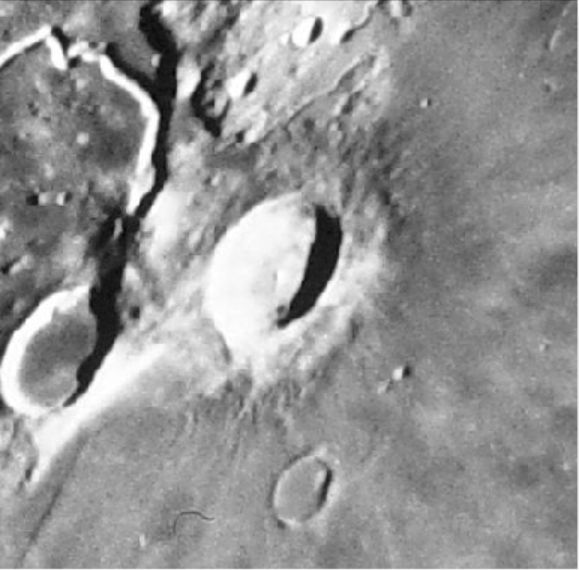
The crater Aristarchus. Credit: Lunar and Planetary Institute.
06/05/2014 – Ephemeris – A remarkable crater visible on the Moon tonight
Ephemeris for Thursday, June 5th. Today the sun will be up for 15 hours and 25 minutes, setting at 9:23. The moon, at first quarter today, will set at 2:05 tomorrow morning. Tomorrow the sun will rise at 5:58.
Near the Moon’s sunrise terminator at the southern half of our satellite are three large craters roughly arranged parallel to the terminator. The northernmost is the largest named Ptolemaeus. Just south of it is Alphonsus, and the third is Arzachel. Of the three Alphonsus is suspected of activity over the years. In 1956 Dinsmore Alter noticed a haze that obscured some of the cracks in the floor of Alphonsus and took photographs. The ultraviolet photos showed something, but his infrared photos did not. In 1959, Soviet astronomer Nicolai Kozyrev obtained spectra of a glow. In 1965 the last Ranger probe was sent to Alphonsus to see what there was to see, and apparently reported nothing unusual.
Times are for the Traverse City/Interlochen area of Michigan. They may be different for your location.
Addendum
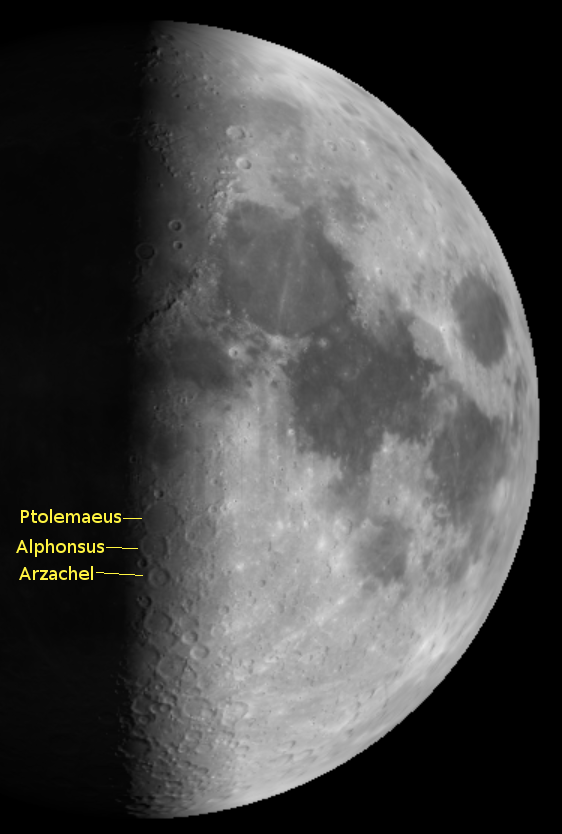
The Moon tonight, June 5, 2014. Created using Virtual Moon Atlas.
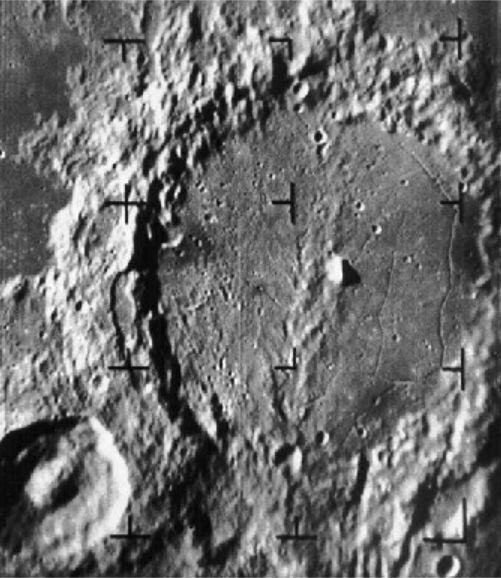
Ranger 9 Image of Alphonsus #1. Credit NASA.
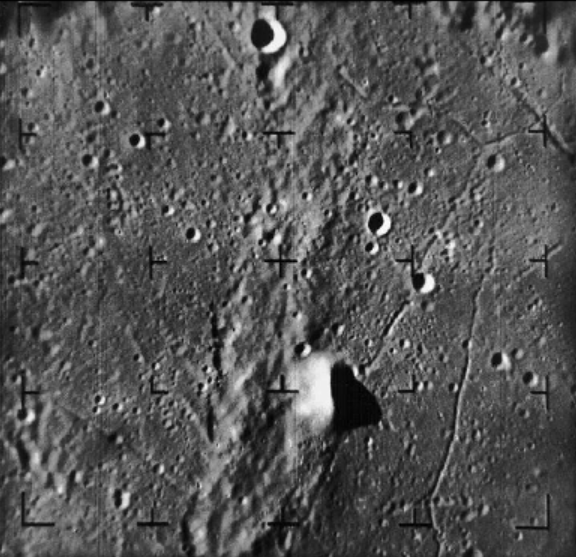
Ranger 9 Image of Alphonsus #2. Credit NASA.
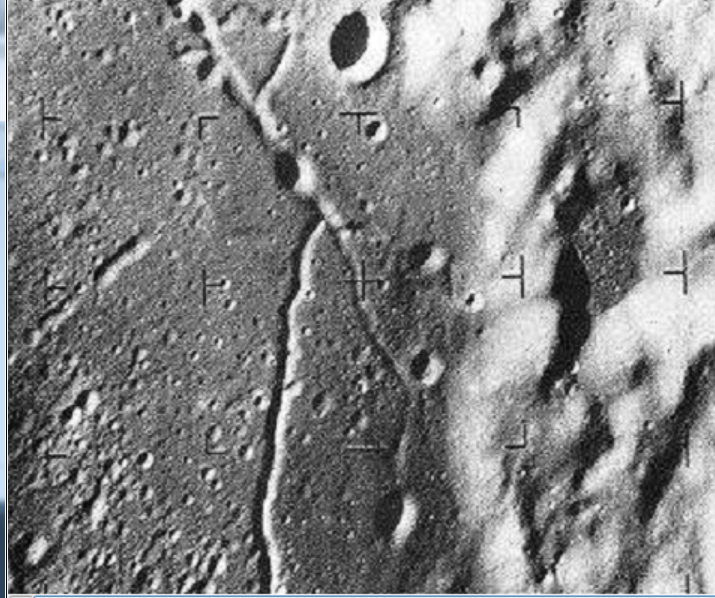
Ranger 9 Image of Alphonsus #3. Credit NASA.
05/14/2014 – Ephemeris – All 5 bright planets are visible this week
Ephemeris for Wednesday, May 14th. Today the sun will be up for 14 hours and 46 minutes, setting at 9:02. The moon, at full today, will rise at 9:05 this evening. Tomorrow the sun will rise at 6:14.
It’s Wednesday and once again time to locate the bright planets for this week. Mercury is beginning to show up in the west shortly after sunset, It will be at its farthest from the Sun on the 25th. It will set at 10:51. Brilliant Jupiter will be in the western sky as darkness falls tonight. It will set at 1:07 a.m. Reddish Mars is in Virgo in the southeast as darkness falls. It will pass due south at 10:47 p.m. It’s 64.6 million miles away now, and moving away, and will set at 4:38 a.m. Saturn will be low in the southeast as darkness falls. It’s in the faint constellation of Libra the scales this year. It will pass due south at 1:23 a.m. Brilliant Venus will rise in the east at 4:46 a.m. in twilight.
Times are for the Traverse City/Interlochen area of Michigan. They may be different for your location.
Addendum
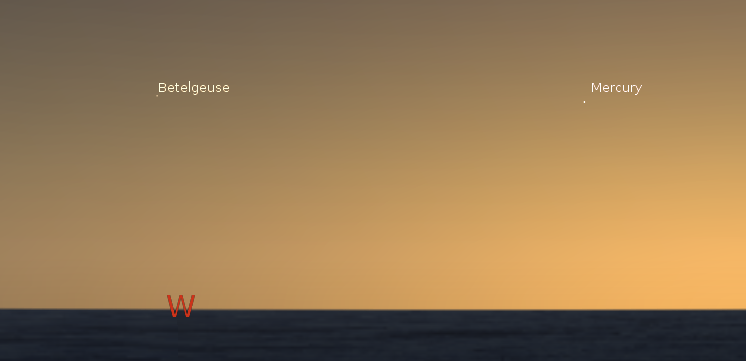
Mercury low in the west at 9:30 p.m. May 14, 2014. Created using Stellarium.
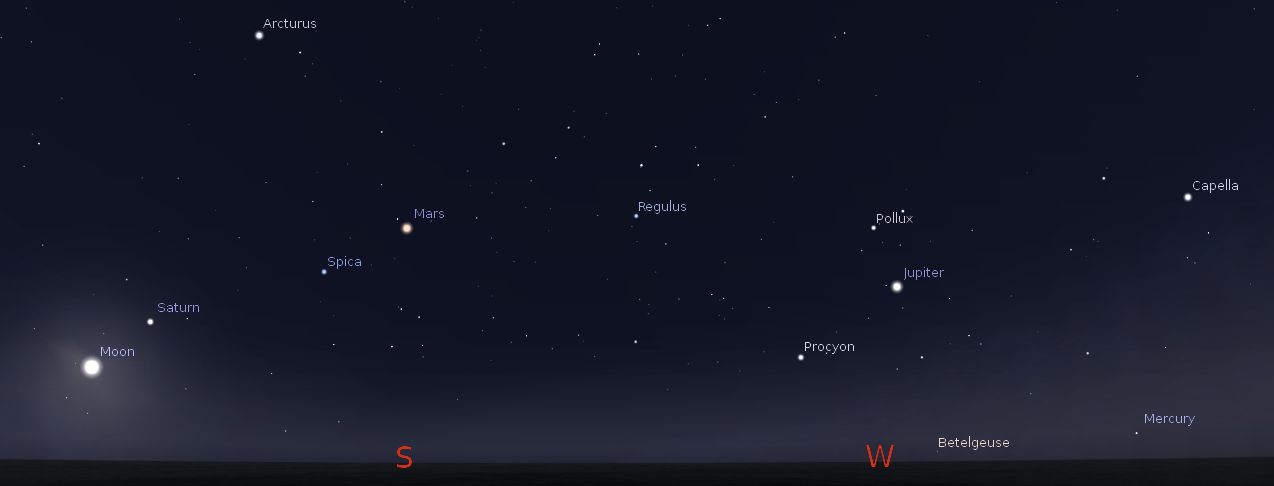
All the evening planets from Mercury to Saturn plus the moon at 10:30 p.m. May 14, 2014. Created using Stellarium.
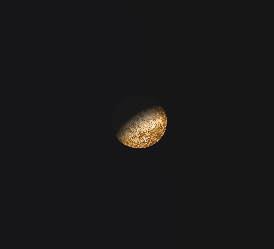
Mercury through a telescope on May 14, 2014. Created using Stellarium.
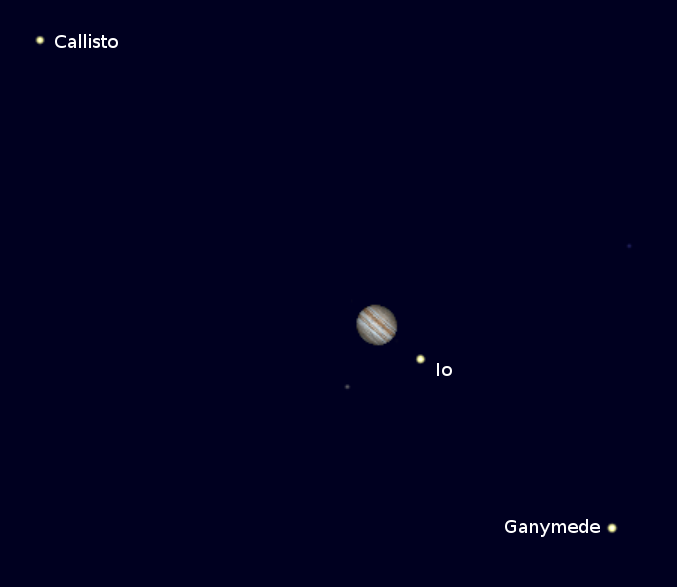
Jupiter and its moons at 10:30 p.m. May 14, 2014. Europa is being occulted by Jupiter. Created using Cartes du Ciel (Sky Charts).
Europa will disappear behind the moon at 9:48 p.m, and will reappear after Jupiter sets for northern Michigan. Places west of here will see Europa reappear before Jupiter sets.
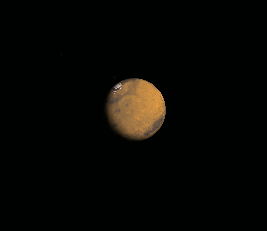
Mars through a telescope at 10:30 p.m. on May 14, 2014. Created using Stellarium.
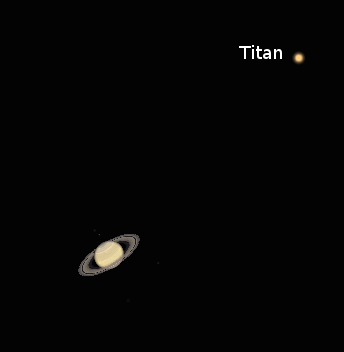
Saturn through a telescope. on May 14, 2014. Created using Stellarium.
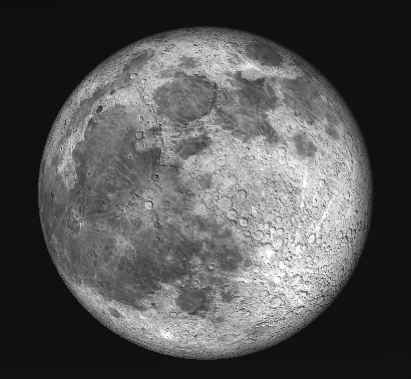
The Moon as it would appear through binoculars at 10:30 p.m. May 14, 2014. Created using Stellarium.
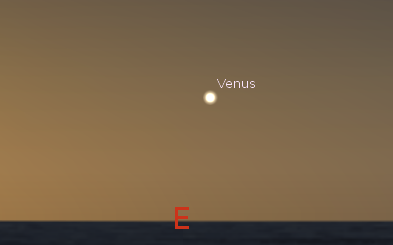
Venus in the east at 5:30 a.m. on May 15, 2014. Created using Stellarium.
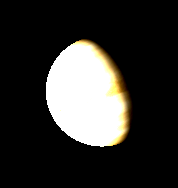
Venus through a telescope on May 15, 2014. Created using Stellarium.
05/06/2014 – Ephemeris – A square crater on the moon
Ephemeris for Tuesday, May 6th. The sun rises at 6:25. It’ll be up for 14 hours and 27 minutes, setting at 8:53. The moon, at first quarter today, will set at 2:40 tomorrow morning.
Tonight’s moon reveals some great features. Back in my early astronomy days, one of the odd thing I saw on the moon with my telescope at about this phase, was what appeared as a square crater on the moon. Craters are supposed to be round. This one was near the north pole of the moon. It can be seen with a small telescope. It was given the name Barrow. I’ve since confirmed that it is indeed quite square, with a small crater, Barrow A sitting on one corner. The Lunar Reconnaissance Orbiter shows this in great detail. Also on the north end of the moon tonight is the Alpine Valley, which looks like a gash crossing the Lunar Alps. Lunar mountain ranges tend to be named for earthly mountains, but are really crater walls.
Times are for the Traverse City/Interlochen area of Michigan. They may be different for your location.
Addendum
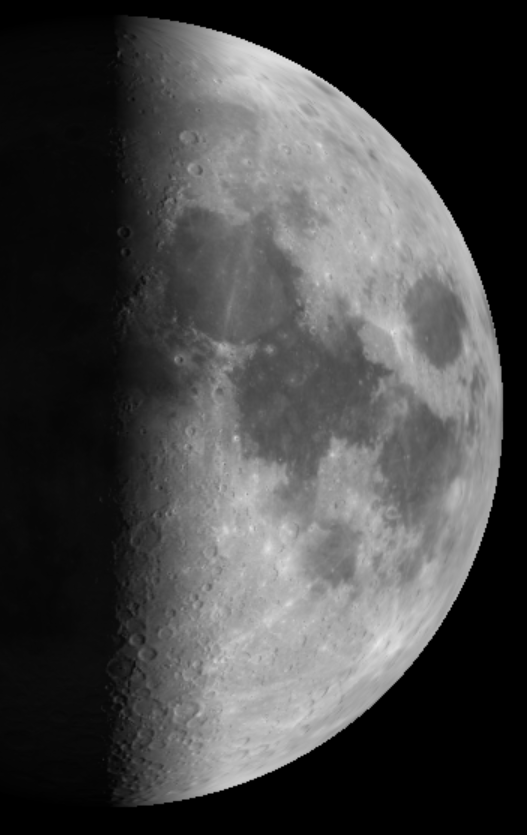
First quarter Moon at 10 p.m. May 6, 2014. Created using Virtual Moon Atlas.
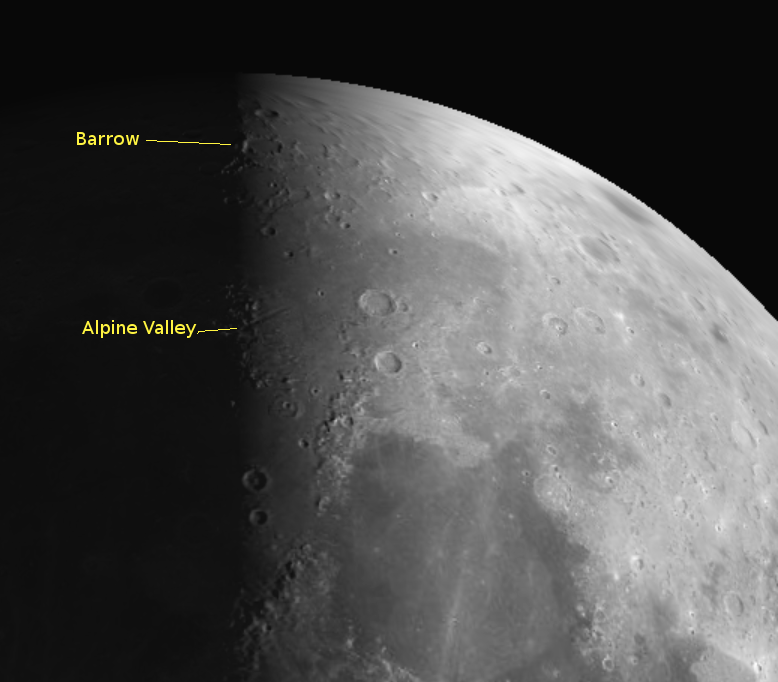
The square crater Barrow and the Alpine Valley as it would be seen in a telescope on May 6, 2014 at 10 p.m. Created using Virtual Moon Atlas.
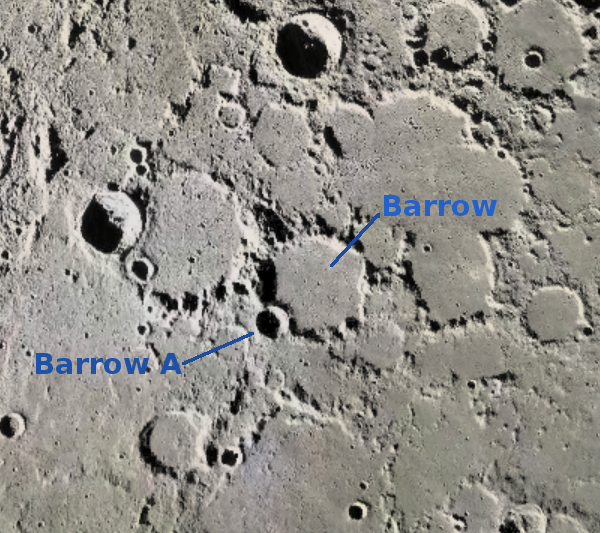
The Barrow crater as imaged by the Lunar Reconnaissance Orbiter. Credit NASA/GSFC/Arizona State University, Virtual Moon Atlas.
Actually Barrow almost looks pentagonal in the above image.
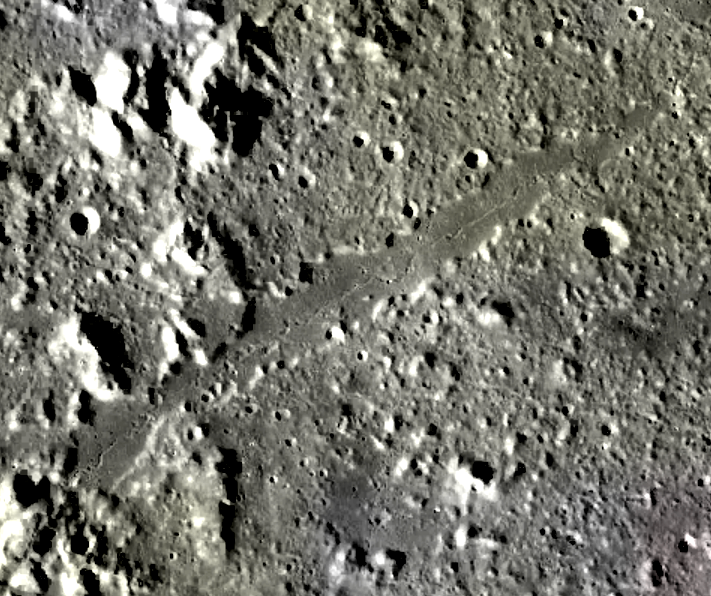
The Alpine Valley as imaged by the Lunar Reconnaissance Orbiter. Credit NASA/GSFC/Arizona State University, Virtual Moon Atlas.
 Bob Moler's Ephemeris Blog