Archive
Ephemeris: 02/23/2024 – The rabbit in the Moon
This is Bob Moler with Ephemeris for Friday, February 23rd. Today the Sun will be up for 10 hours and 50 minutes, setting at 6:21, and it will rise tomorrow at 7:29. The Moon, 1 day before full, will set at 7:52 tomorrow morning.
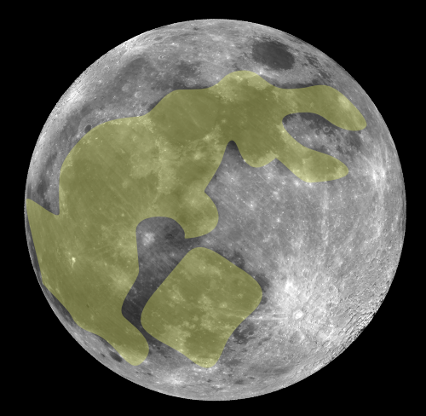
Even though it is a day before full the moon, will be full at 7:30 tomorrow morning. So tonight will be the closest that we’ll see the full moon this lunation. If one looks at the Moon most of us can see the face of the Man in the Moon. A rabbit, can also be seen. To the Chinese the rabbit here was named Yutu also known as the Jade Rabbit, the pet of the moon goddess Chang’e. To them, it was a rabbit pounding medicine with a mortar and pestle. At 8 o’clock tonight it resides along the left side of the Moon. Its head and body are seen in the dark areas of the Moon we call seas. Its ears are near the top of the moon at 8:00 with his head and body bent down on the left. Near the bottom of The moon is the mortar and pestle with which he’s pounding medicine.
The astronomical event times given are for the Traverse City/Interlochen area of Michigan (EST, UT –5 hours). They may be different for your location.
Addendum:
Ephemeris: 02/22/2024 – IM-1, the Odysseus spacecraft lunar landing is today
This is Bob Moler with Ephemeris for Thursday, February 22nd. Today the Sun will be up for 10 hours and 47 minutes, setting at 6:20, and it will rise tomorrow at 7:31. The Moon, 2 days before full, will set at 7:32 tomorrow morning.
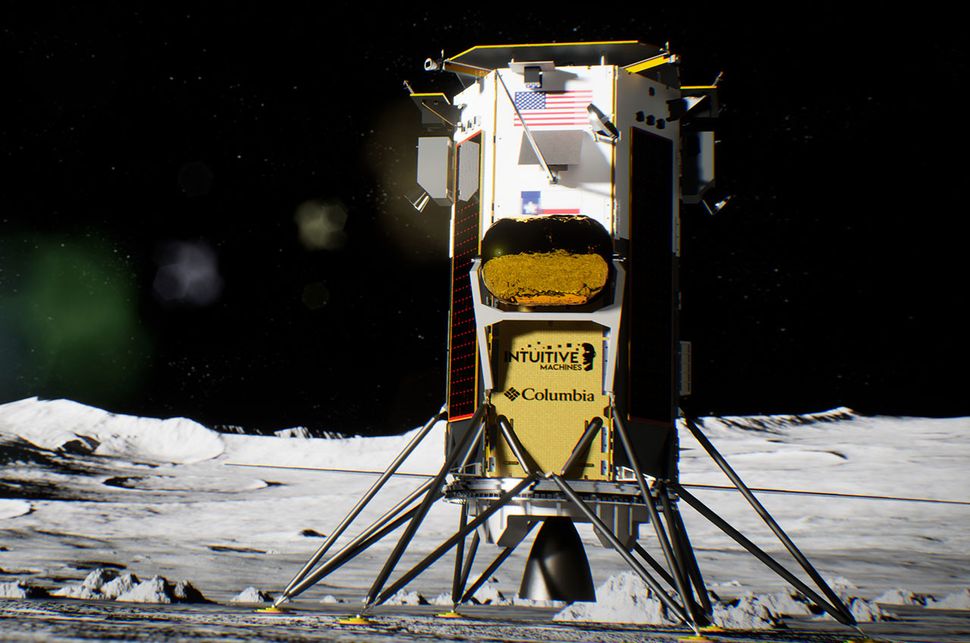
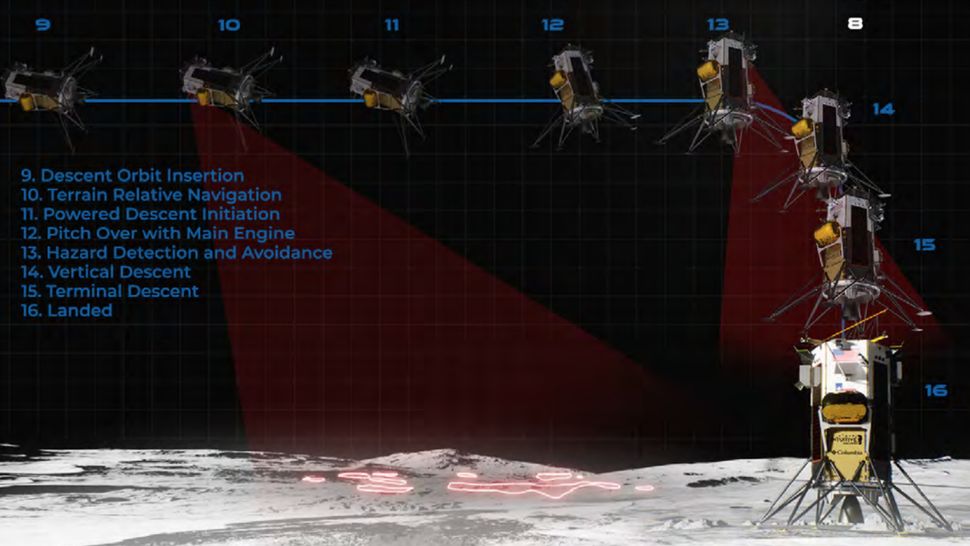
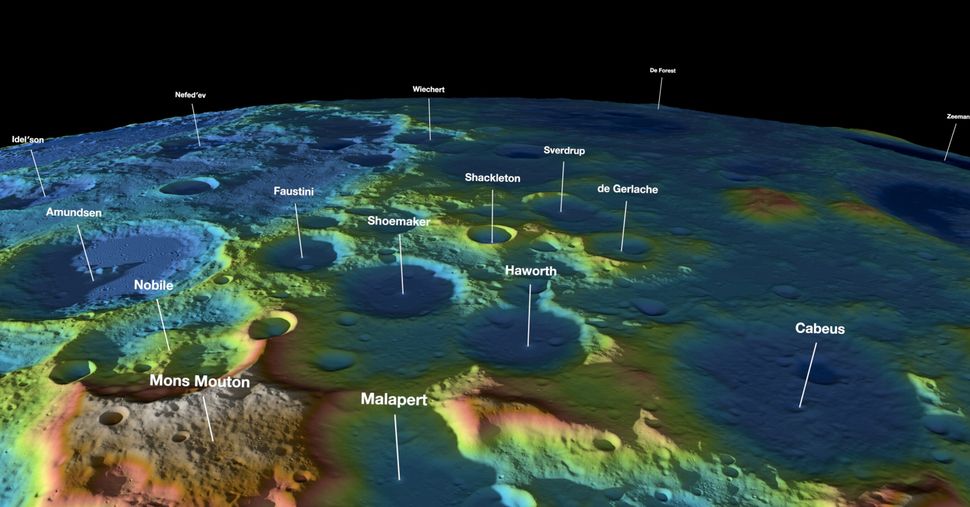
Today is the day the Intuitive Machines’ moon lander called Odysseus is slated to land on the Moon. It was launched a week ago on a SpaceX Falcon 9 rocket. And if successful it will be the first soft landing on the Moon by the United States since Apollo 17 back in 1972. I’m recording this last Sunday, so I don’t know the condition of the spacecraft and a lot can happen between launch and landing on the moon. The last spacecraft sent from the United States, last month, by the inaugural flight of United Launch Alliance’s Vulcan Centaur rocket crashed back on Earth. The spacecraft is supposed to land about 190 miles from the Moon’s South Pole, which is considerably closer to the South Pole than the Indian spacecraft landed last year.
The astronomical event times given are for the Traverse City/Interlochen area of Michigan (EST, UT –5 hours). They may be different for your location.
Addendum
Ephemeris: 02/20/2024 – Schiller, an odd lunar crater
This is Ephemeris for Tuesday, February 20th. Today the Sun will be up for 10 hours and 41 minutes, setting at 6:17, and it will rise tomorrow at 7:34. The Moon, halfway from first quarter to full, will set at 6:39 tomorrow morning.
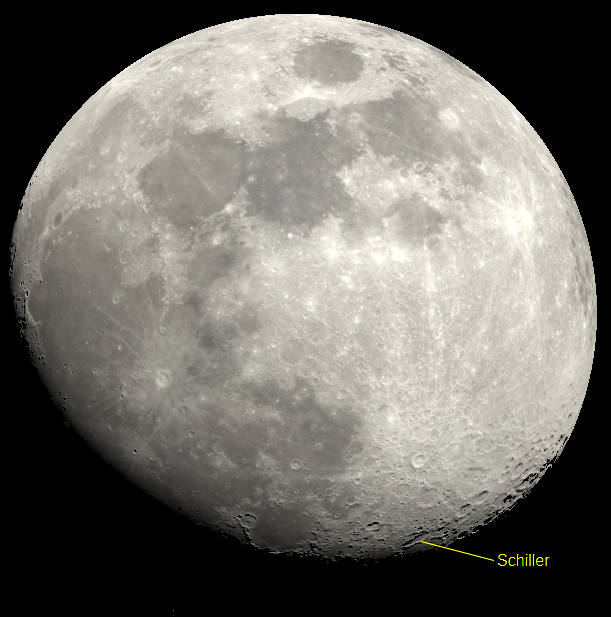
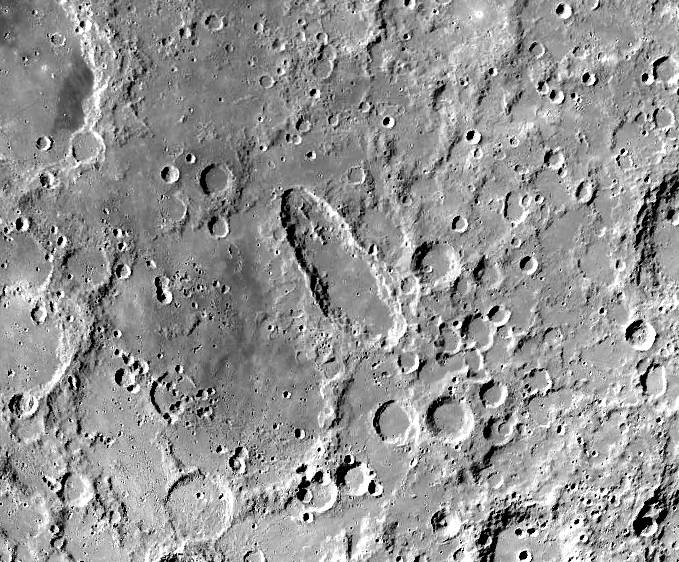
The moon tonight is in its gibbous phase, with more than half of it being illuminated by the Sun. In binoculars or a small telescope, looking at the bottom part of the moon, near the South Pole. All the craters appear to be elongated, foreshortened actually, because the moon is spherical. But one crater stands out as being more elliptical than the rest it’s called Schiller. It’s about 111 miles long, and much less in the other direction. It still appears elongated when seen from overhead by a spacecraft. It looks like the footprint of a long narrow shoe. It is either the result of a low angle hit from the asteroid or two overlapping low angle asteroid craters. I suspect the latter, though I have no expertise in the matter.
The astronomical event times given are for the Traverse City/Interlochen area of Michigan (EST, UT –5 hours). They may be different for your location.
Addendum
Ephemeris: 02/15/2024 – Viewing the Moon tonight
This is Ephemeris for Thursday, February 15th. Today the Sun will be up for 10 hours and 26 minutes, setting at 6:10, and it will rise tomorrow at 7:42. The Moon, 1 day before first quarter, will set at 1:48 tomorrow morning.
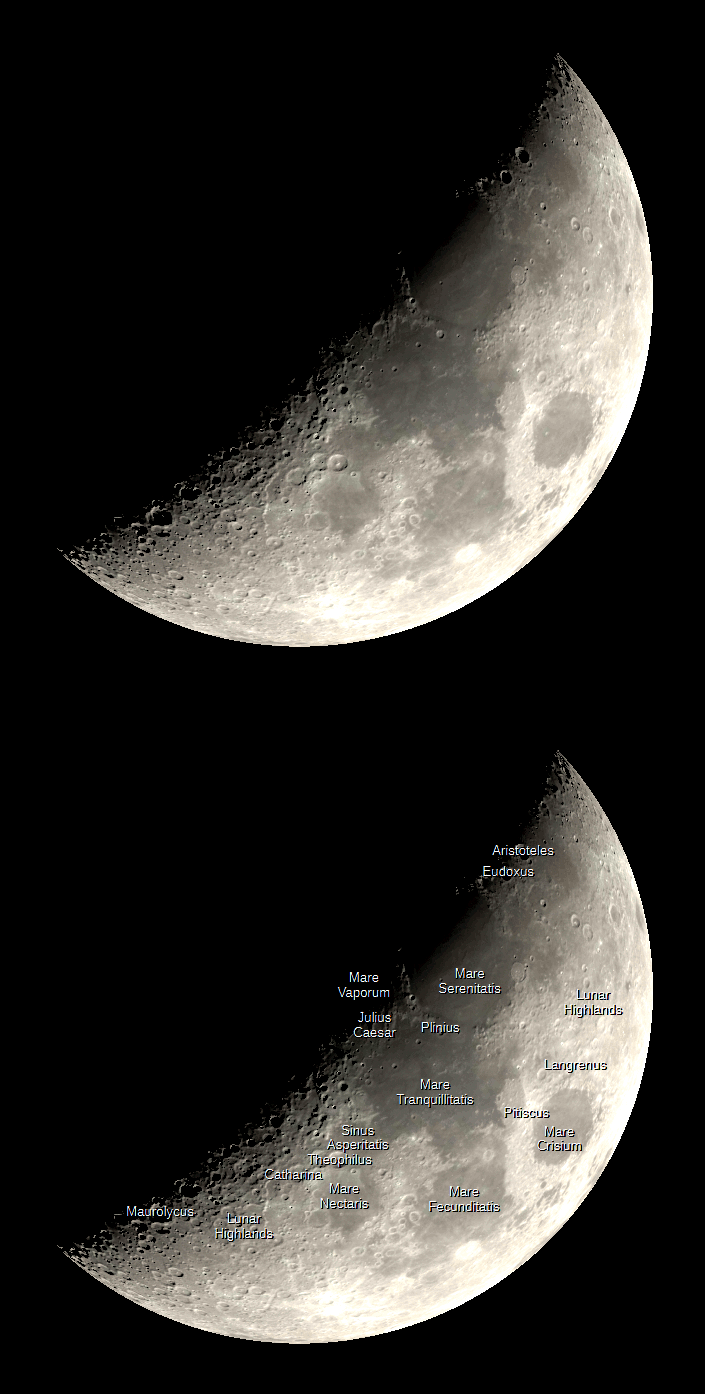
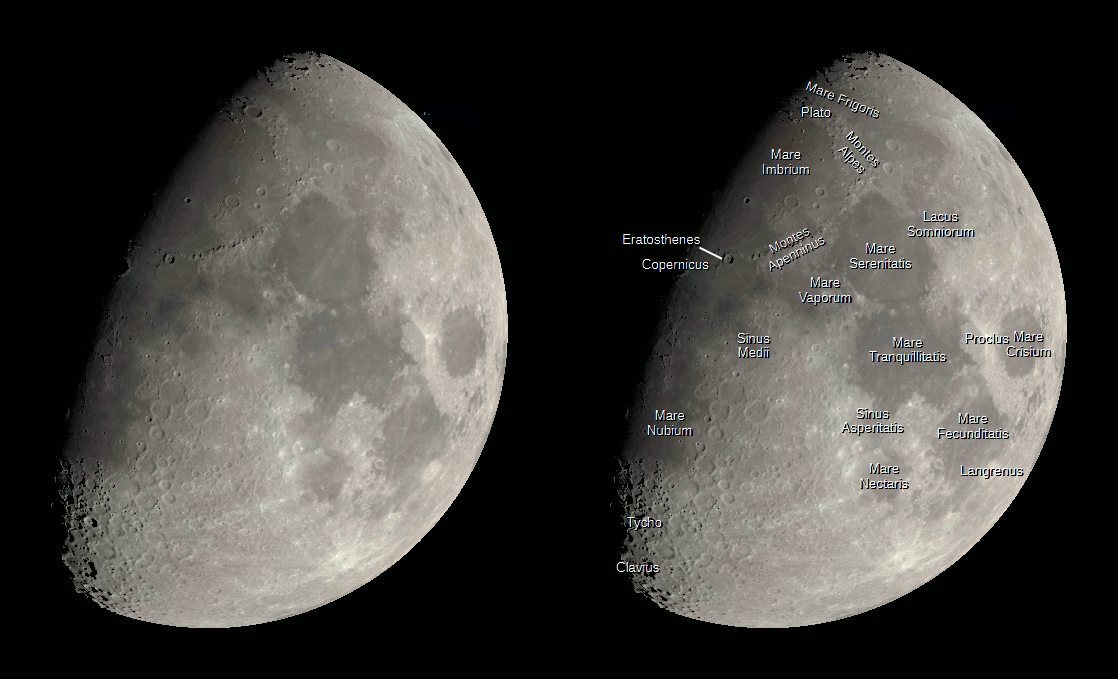
Let’s look at the Moon again this evening. The moving terminator or sunrise line on the Moon has moved westward, though it looks like eastward to us. It shows Mare Crisium, or Sea of Crises, near the Moon’s edge, which is surrounded by the bright highlands, and to the left and below is the Sea of Fertility. Above that is Mare Tranquillitatis, where the Apollo 11 spacecraft Eagle landed, and below Tranquility are two small dark areas that look like seas, but only the bottom one is, it’s the Sea of Nectar, Mare Nectaris. Between it and Tranquility is the Bay of Roughness or Sinus Asperitatis, which sounds better in the original Latin.
The astronomical event times given are for the Traverse City/Interlochen area of Michigan (EST, UT –5 hours). They may be different for your location.
Addendum
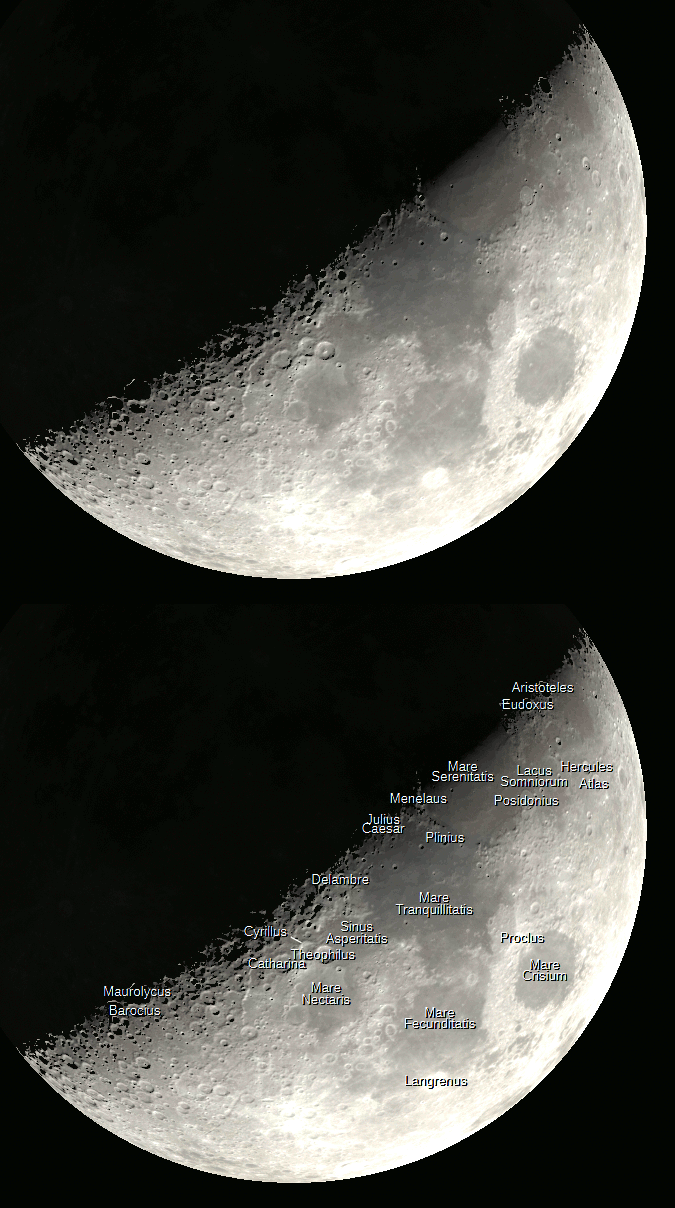
Translations of some lunar feature names according to Virtual Moon Atlas
Lacus Somniorum – Lake of Dreams
Mare Crisium – Sea of Crises
Mare Fecunditatis – Sea of Fertility
Mare Nectaris – Sea of Nectar
Mare Serenitatis – Sea of Serenity
Mare Tranquillitatis – Sea of Tranquility
Sinus Asperitatis – Bay of Roughness
Ephemeris: 02/13/2024 – View the Moon tonight
This is Ephemeris for Fat Tuesday, February 13th. Today the Sun will be up for 10 hours and 21 minutes, setting at 6:07, and it will rise tomorrow at 7:45. The Moon, 3 days before first quarter, will set at 11:12 this evening.
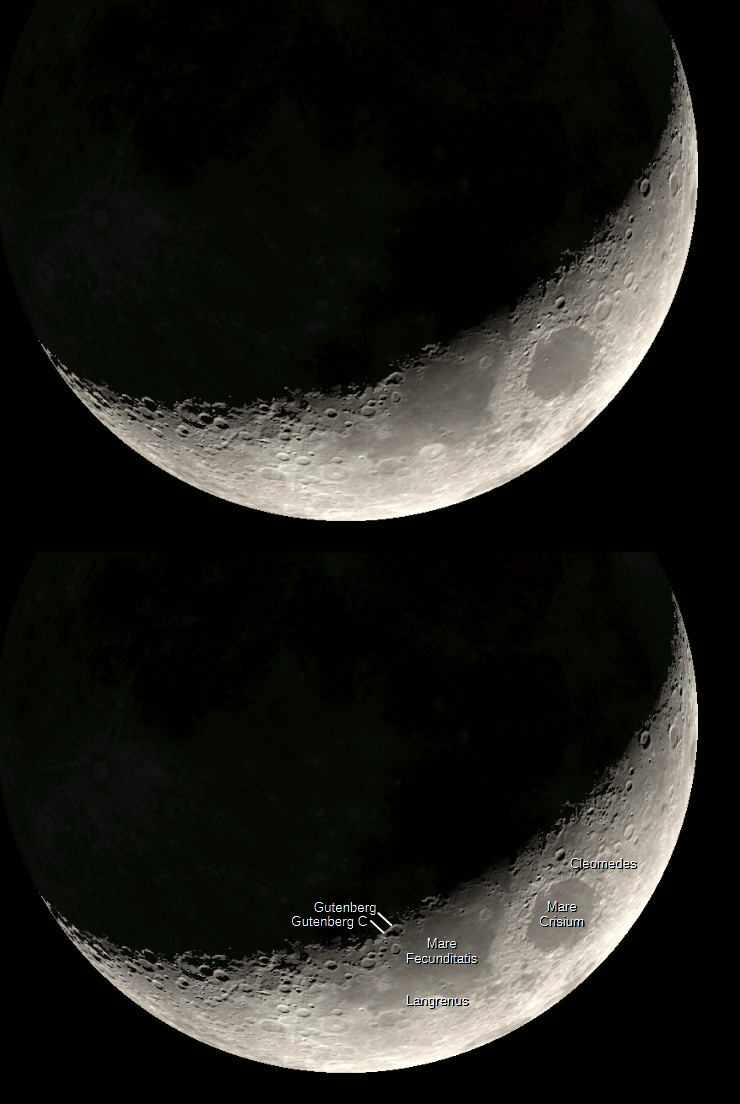
The moon tonight appears to be a beautiful crescent, a four-day-old moon, or three days before first quarter. On it are two dark seas visible, the small sea Mare Crisium, or Sea of Crises, is easily spotted surrounded by bright highlands near the moon’s limb, or edge. The larger Mare Fecunditatis (Fertility) is left of it. At the edge of the Sea of Fertility at the Terminator, one can see in binoculars, or a small telescope, a tiny keyhole-shaped crater which stands out. It really does look like a tiny keyhole, but it’s two craters slightly overlapping each other. Both are named after Johannes Gutenberg, the inventor of the movable-type printing press. The big crater is Gutenberg. The second is Gutenberg C.
The astronomical event times given are for the Traverse City/Interlochen area of Michigan (EST, UT –5 hours). They may be different for your location.
Addendum
Ephemeris: 01/25/2024 – Where is the full moon in winter?
This is Ephemeris for Thursday, January 25th. Today the Sun will be up for 9 hours and 31 minutes, setting at 5:41, and it will rise tomorrow at 8:08. The Moon, at full today, will rise at 5:30 this evening.
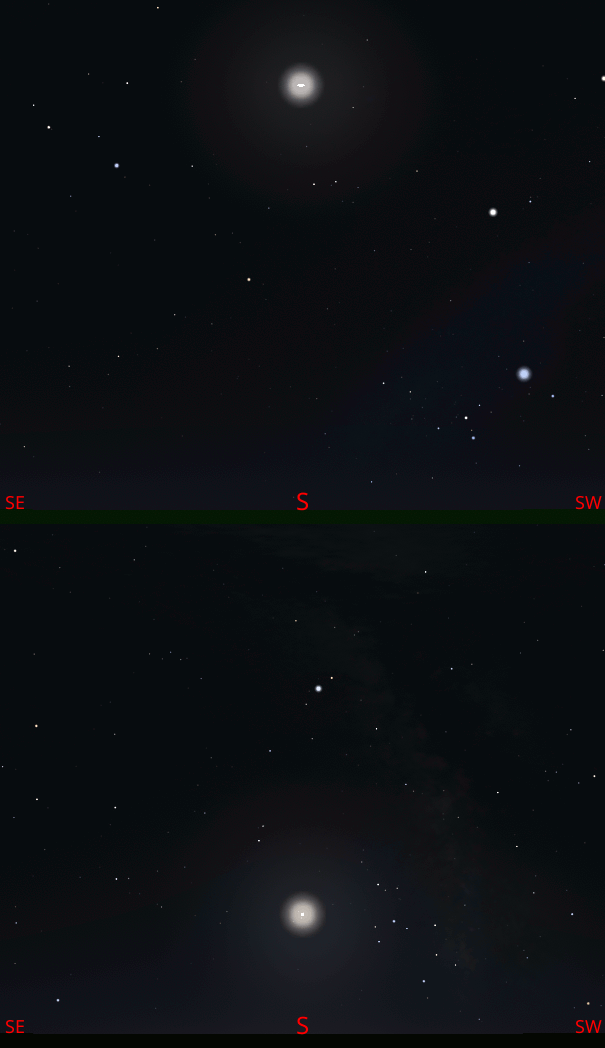
The exact time that the Moon will be full, at least to the nearest minute is 12:54 this afternoon. Have you ever noticed the placement of the full moon in the sky between winter and summer? The full moon near the winter solstice moves very high at midnight, while the full moon near the summer solstice is seen quite low in the south. For the Moon to be full, it must be nearly opposite the Sun in the sky, so we see it fully illuminated as the Sun does. The Moon’s orbit is close to the Sun’s apparent path in the sky, the ecliptic, which is the projection of the Earth’s orbit of the Sun. So the Moon now is near, and actually a bit north of, where the Sun will be 6 months from now in mid to late July.
The astronomical event times given are for the Traverse City/Interlochen area of Michigan (EST, UT –5 hours). They may be different for your location.
Addendum
Ephemeris: 01/23/2024- The “dark” side of the Moon is its brightest side
This is Ephemeris for Tuesday, January 23rd. Today the Sun will be up for 9 hours and 27 minutes, setting at 5:38, and it will rise tomorrow at 8:10. The Moon, 2 days before full, will set at 8 o’clock tomorrow morning.
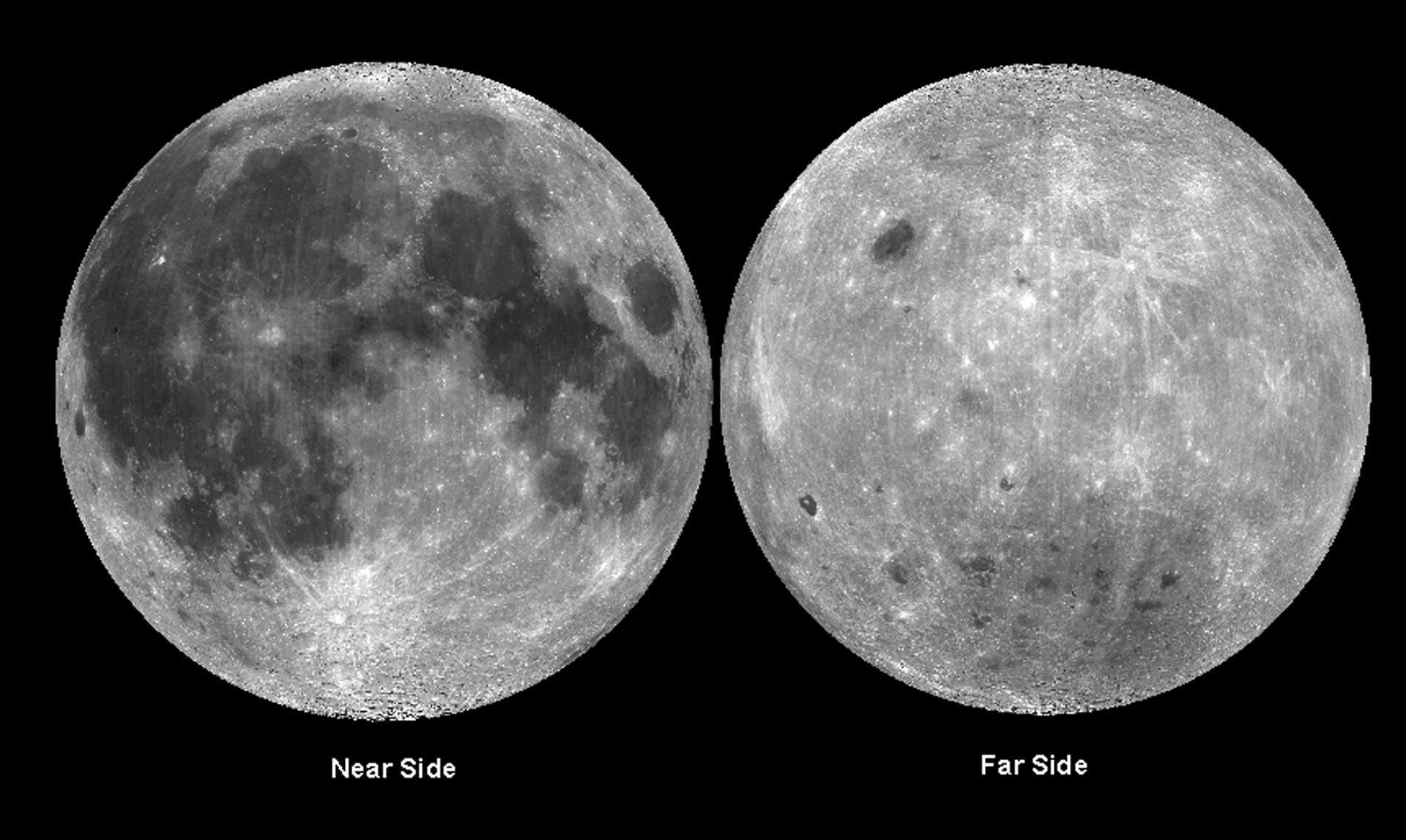
In a couple of days the far side of the Moon will become the dark side for real. It’ll be night when the near side of the moon becomes fully illuminated, the far side will be a night. The far side of the moon actually gets more sunlight than the near side of the moon because it does not suffer solar eclipses. The lunar solar eclipse occurs when we see a lunar eclipse. The Sun is blocked from shining on the Moon. The totality of a lunar solar eclipse lasts much longer than a few minutes that we get when the Moon totally blocks the Sun, the length of totality for the Moon’s solar eclipse can last several hours. The far side of the moon does not see eclipses, and when fully illuminated at what we call new moon it is a quarter of a million miles closer to the Sun than Earth.
The astronomical event times given are for the Traverse City/Interlochen area of Michigan (EST, UT –5 hours). They may be different for your location.
Addendum
Ephemeris: 12/18/2023 – The Moon tonight
This is Bob Moler with Ephemeris for Monday, December 18th. Today the Sun will be up for 8 hours and 48 minutes, setting at 5:03, and it will rise tomorrow at 8:15. The Moon, 1 day before first quarter, will set at 11:50 this evening.
Tonight’s Moon is just about exactly one day before first quarter it’s a six-day-old Moon. Each quarter of the revolution of the moon is just about one week. A lunar month comes out to 29 1/2 days which is a little bit more than 28 days which should be four weeks. That’s pretty close. The illuminated part of the moon that we’re looking at first quarter I consider the most interesting half of the Moon with a good mixture of lowlands which are the seas which are the dark grayer parts of the Moon and the highlands which are very roughly cratered, and are actually higher than the lowlands, or the seas. So if you could put water on the Moon without evaporating it, this is where the water would be. Early telescopic astronomers did think that’s where the water was. Of course the Moon has no atmosphere and the water would just evaporate.
The astronomical event times given are for the Traverse City/Interlochen area of Michigan (EST, UT –5 hours). They may be different for your location.
Addendum
Ephemeris: 11/20/2023 – Observing the Moon tonight
This is Ephemeris for Monday, November 20th. Today the Sun will be up for 9 hours and 24 minutes, setting at 5:10, and it will rise tomorrow at 7:47. The Moon, at first quarter today, will set at 12:42 tomorrow morning.
The moon was exactly first quarter at 5:50 this morning. By this evening it will be slightly gibbous. If I want to see the most detail on the Moon of any kind, the best time to observe it is within a few days of first quarter. More craters are visible, and other features are easier to see then. The southern part of the Moon or the bottom part, as we see it, is littered with craters. It’s called the lunar highlands, and they are really higher than the darker and flatter regions, which are called seas. There is no water in them but if the Moon did have water, that’s where it would be. There are a couple of mountain ranges which are actually the edges of a sea called Mare Imbrium that are just coming into view. They show up nicely with their shadows. It’s shadows that make the detail on the moon stand out, because the Moon basically is darker gray on lighter gray, so the only contrast is with shadows. That’s why I find the full moon to be so disappointing. No shadows.
The astronomical event times given are for the Traverse City/Interlochen area of Michigan (EST, UT –5 hours). They may be different for your location.
Ephemeris: 09/28/2023 – Tomorrow night’s full moon is the Harvest Moon
This is Ephemeris for Thursday, September 28th. Today the Sun will be up for 11 hours and 52 minutes, setting at 7:29, and it will rise tomorrow at 7:38. The Moon, 1 day before full, will set at 7:43 tomorrow morning.
Tomorrow night’s full moon is the Harvest Moon. It is the most famous of the named full moons, and was very useful in the days before electric lights. The reason is that the Moon, around the time it is full, doesn’t advance its rising time very much from night to night, effectively adding its light to twilight to allow more time to gather in crops. This is because the Moon is moving north as well as eastward. The farther north it is, the longer it stays up and retards the advance in rise times. On average, the Moon rises 50 minutes later each night. This week, the interval is down near 22 minutes advance in moonrise times per day, extending twilight and the amount of time each day to harvest the crops for a few more days.
The astronomical event times given are for the Traverse City/Interlochen area of Michigan (EDT, UT –4 hours). They may be different for your location.
Addendum
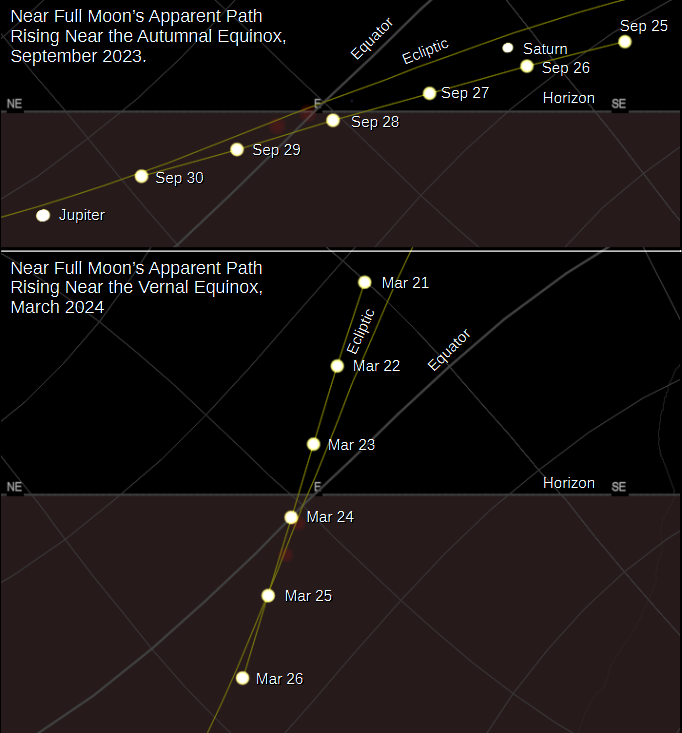
My interest in the Harvest Moon is not in harvesting the crops. I just have a little garden, so it doesn’t take that long to pick tomatoes or whatever. But as an amateur astronomer I’m more interested in deep sky objects than I am in planets. Deep sky objects or DSOs are objects beyond the solar system and are usually very dim, which requires dark skies to view them. Near the Harvest Moon and even in August near the full moon it takes nearly a week for that @#$%^&* Moon to get the heck out of the evening sky, so I don’t have to stay up till after midnight to see anything. That’s I why have this interest in the Harvest Moon. Know your enemy!
 Bob Moler's Ephemeris Blog