Archive
10/03/2022 – Ephemeris – There’s something on the Moon that’s straight and not circular
This is Ephemeris for Monday, October 3rd. Today the Sun will be up for 11 hours and 36 minutes, setting at 7:19, and it will rise tomorrow at 7:44. The Moon, 1 day past first quarter, will set at 12:55 tomorrow morning.
On this program, I try to talk about celestial objects one can see or find with the naked eye. Once found, I do talk about what they would look like in binoculars or small telescope. For those wanting more information, consult my blog bobmoler.wordpress.com where my scripts are posted with more information, illustrations and charts. The thing I’m talking about today is a feature on the Moon that’s visible only two nights a month. The day after first quarter, and the day after last quarter. It’s the straightest thing on the Moon, called the Straight Wall, that’s 67 miles (110 km) long and 900 feet (300 m) high. It is close to the terminator, the Moon’s sunrise line, about halfway from the center of the Moon to the south edge. It’s the thinnest dark line you can imagine.
The astronomical event times given are for the Traverse City/Interlochen area of Michigan (EDT, UT – 4 hours). They may be different for your location.
Addendum
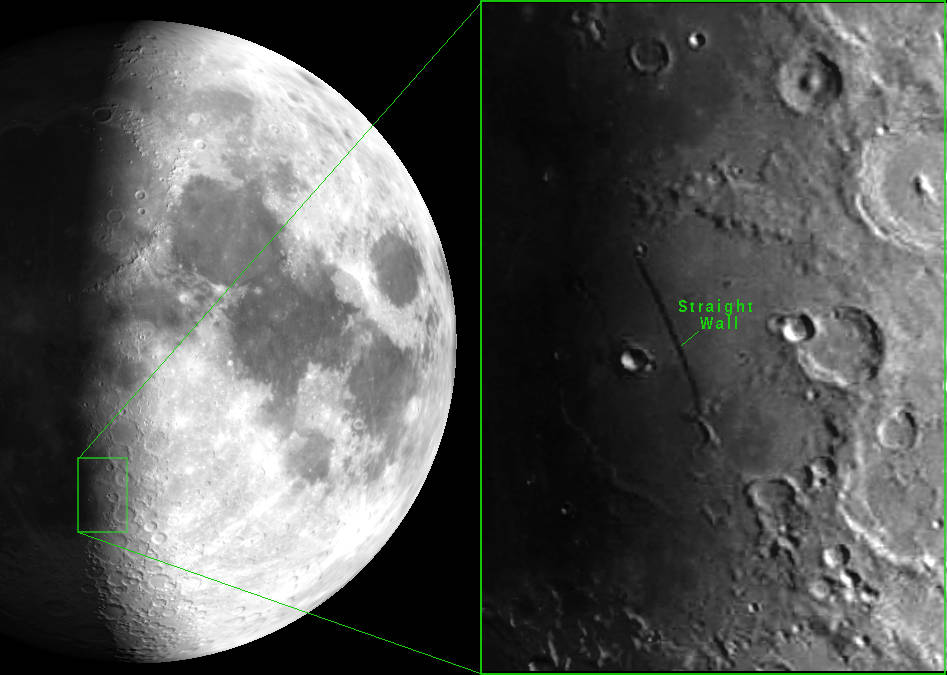
The Straight Wall or, officially in Latin, Rupes Recta, is a rectilinear fault. It isn’t really a wall, but a 7 degree slope. Once the Sun rises past seven degrees in that location of the Moon, it disappears. Near local sunset, a day after last quarter, the low sun in its sky shines more on it than the flat ground, so it shows up bright. Click on the image to enlarge it. The information and images were created from Virtual Moon Atlas, which is free software for MS Windows. I have a link to it on this page.
09/30/2022 – Ephemeris – View the Sun and Moon tomorrow in the Grand Traverse Area!
This is Ephemeris for Friday, September 30th. Today the Sun will be up for 11 hours and 45 minutes, setting at 7:25, and it will rise tomorrow at 7:40. The Moon, 2 days before first quarter, will set at 9:57 this evening.
There are two observing sessions tomorrow in the Traverse City area with the assistance of the Grand Traverse Astronomical Society. First at the Dennos Museum Center grounds, from 2 to 4 pm, there will be telescopes to safely view the Sun. The Sun’s eleven-year sunspot cycle is getting active again. There will be telescopes to see those sunspots, and special solar hydrogen alpha telescopes to view the Sun’s chromosphere and any prominences above the Sun that day. From 8 to 10 pm, Northwestern Michigan College’s Rogers Observatory will be open for International Observe The Moon Night. There will also be a telescope on the 200 Block of East Front Street to observe the Moon during this time. Of course, all this is contingent on clear or mostly clear skies.
Update: It’s supposed to be nice this weekend, after a week of cold and rain.
The astronomical event times given are for the Traverse City/Interlochen area of Michigan (EDT, UT – 4 hours). They may be different for your location.
Addendum
Later today I’ll add a Moon Map for tomorrow evening and what the Sun looks like today, which should give a clue to what’s happening on the Sun now.
Sun in white light (How we normally see it with a solar filter)
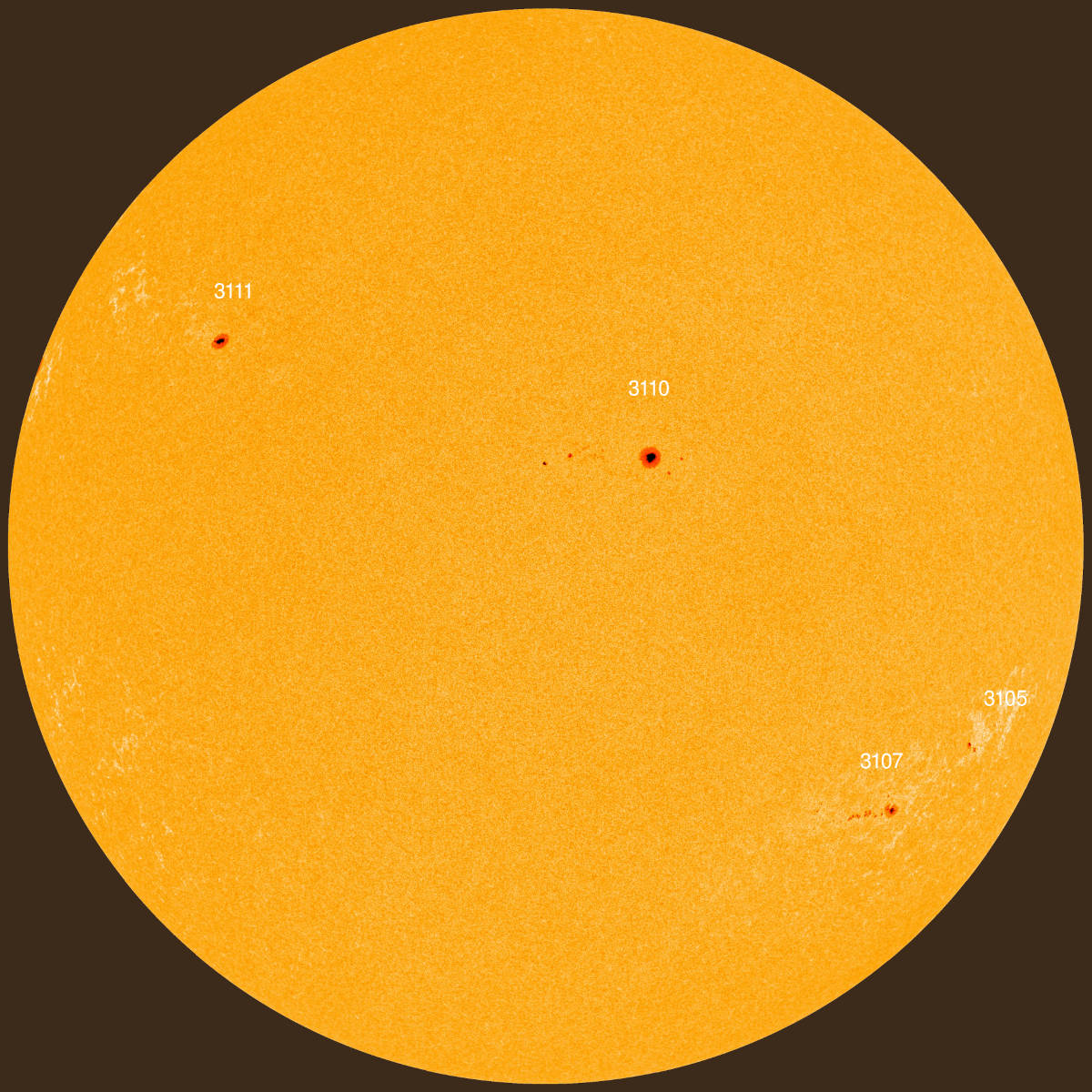
The Sun in white light, by the Solar Dynamics Observatory on September 30, 2022. What is seen is the photosphere, the visible “surface” of the Sun, where the energy transport from the interior changes from convection to radiation. The apparent roughness of the surface are the tops of the convection cells, called granules, which are usually about 600 miles wide that bubble up and recede. The numbers label active areas. The dark spots are sunspots, areas of intense magnetic activity. Brighter wispy or splotchy areas are faculae and are associated with sunspots or precursors of a new group forming. The rotation of the Sun will move the surface features from left to right in this image with north up. Telescopes may show the image upside down or mirror reversed. Click on the image to enlarge it. Credit NASA/SDO.
Sun in the light of the Hydrogen Alpha wavelength. Light absorbed and emitted by the hydrogen atom.
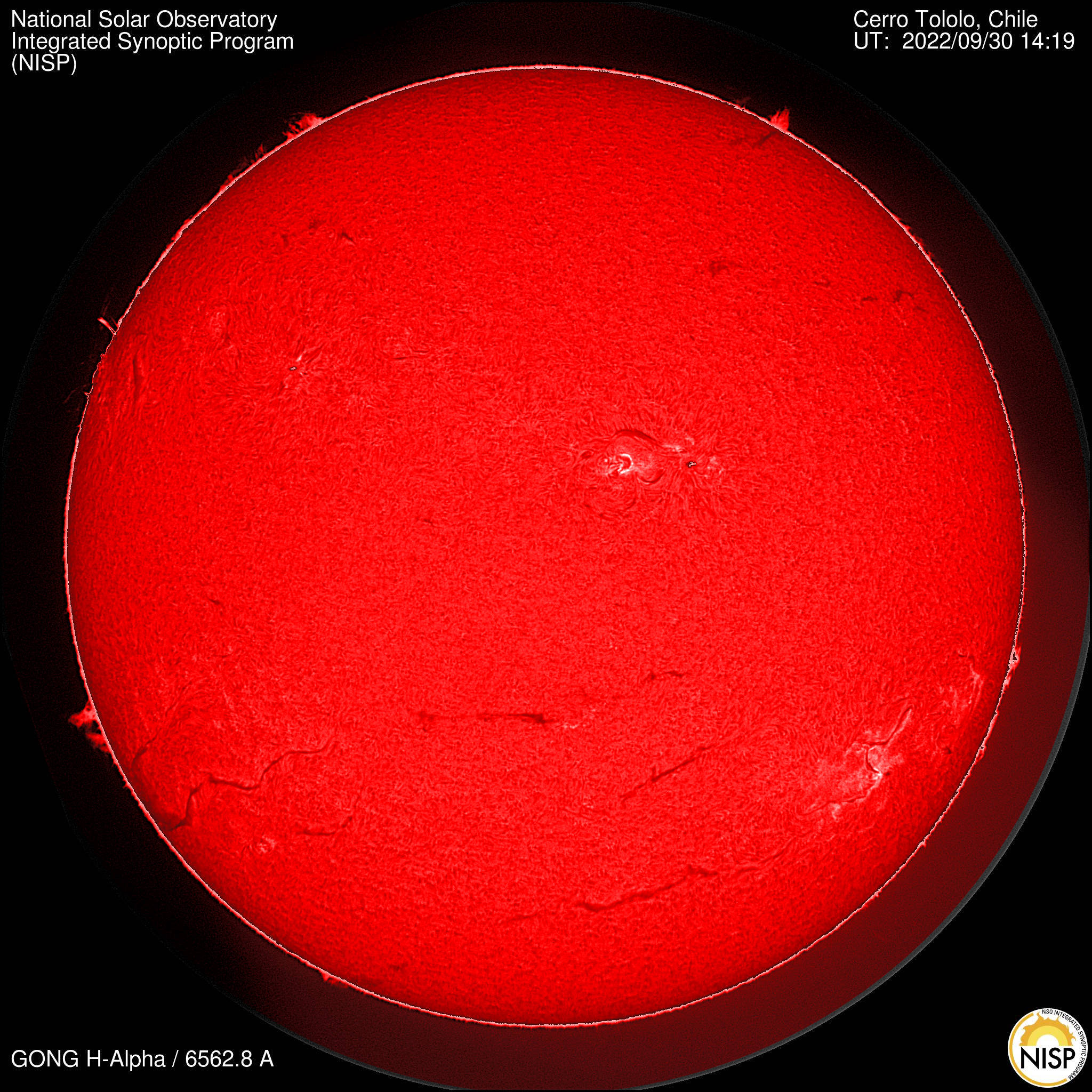
The Sun in Hydrogen-Alpha light, taken at 10:19 EDT today, September 30, 2022. It is in the same orientation as the SDO image above, but may have been taken at a different time of the day. This image was taken from the web page https://gong2.nso.edu/products/tableView/table.php?configFile=configs/hAlpha.cfg I colorized the image to show how it would look in a Hydrogen-Alpha telescope, of which we may have several, both the society’s and personal. The images may be dim since they select one narrow frequency of light from the broad spectrum of white light coming up from the photosphere. Its temperature is 10,000 degrees F. The thin dark markings are called filaments. These are the same thing as the bright prominences seen off the edge or limb of the Sun. Brighter areas of the chromosphere are called plages and are associated with active regions. The Chromosphere is a thin layer of the Sun’s atmosphere lying above the photosphere only 3,000 miles thick, and slightly hotter than the photosphere, its appearance is rougher than the granules of the photosphere. It reminds me of uneven, red grass that hasn’t been mown in a few weeks. They grow and recede in minutes. Sometimes a bright spot will appear in a sunspot group. These are solar flares and are caused by magnetic disruptions in sunspot groups. They last only a relatively few minutes but emit x-rays, electrons and protons as the most energetic explosions in the solar system. The x-rays arrive at Earth in 8 and a half minutes at the speed of light, the particles a day or two later will affect the Earth’s magnetic field if aimed in our direction, causing the aurora (northern and southern lights), and possibly disrupt communications and the power grid. On Earth, it’s called a geomagnetic storm.
The Moon for Saturday evening during the International Observe the Moon Night
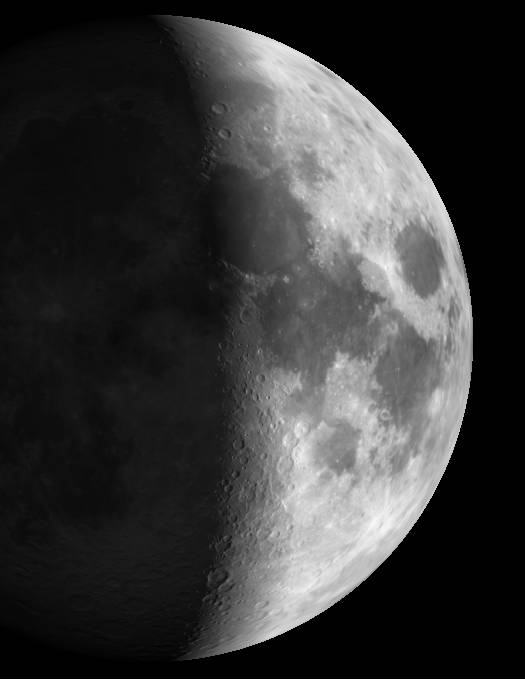
The Moon as it should appear at 9 pm EDT, October 1st, 2022. The telescopic image would be sharper than this. Created using Virtual Moon Atlas.
Download page of maps from the Official 2022 International Observe the Moon Night website.
Images in astronomical telescopes produce images of various orientations. They may be right side up or upside down, mirror reversed or both. Telescopes with an odd number of mirrors produce mirror images. Astronomers are used to it, though they have a preferred orientation… The one their favorable telescope produces.
Come on out!
08/29/2022 – Ephemeris – On the day of the first Artemis I launch opportunity, a look at possible landing sites for Artemis III
As usual, the Ephemeris radio programs are recorded prior to them being aired. Monday’s programs have the longest lead times, being written and recorded eight days earlier, Sunday of the previous week. This blog post was created on the 28th. So I have no idea if Artemis I launches today or not. All three times this program will be sent out on-air will be before the scheduled launch.
This is Bob Moler with Ephemeris for Monday, August 29th. Today the Sun will be up for 13 hours and 23 minutes, setting at 8:24, and it will rise tomorrow at 7:02. The Moon, 2 days past new, will set at 9:43 this evening.
Earlier this month, NASA announced the selection of 13 possible landing areas near the South Pole of the Moon. The South Pole of the Moon was selected as the Artemis target since ice was found at the bottom of some of the craters there. Back in the Apollo days, landing sites were selected by being smooth, and the first were in the broad lava plains called lunar seas. The Moon’s South Pole is the opposite. It’s in the rugged lunar highlands. The landing areas turn out to be crater rims and ridges or small plateaus that catch the Sun, just above the lunar horizon. NASA is developing autonomous landing systems that can cope with landing on such difficult terrain, with deep shadows illuminated by a very low Sun. These are not ideal landing conditions.
The astronomical event times given are for the Traverse City/Interlochen area of Michigan (EDT, UT – 4 hours). They may be different for your location.
Addendum
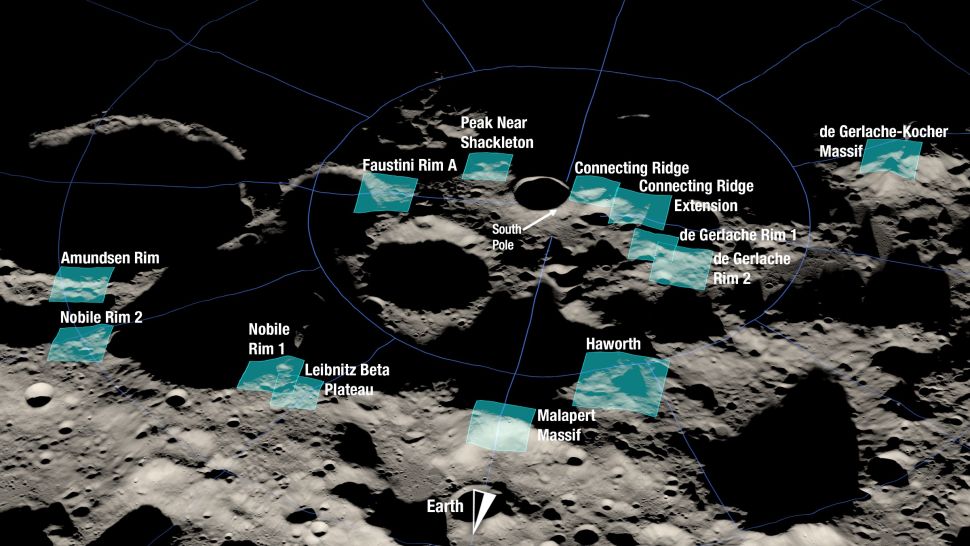
On August 19, 2022, NASA released the candidate lunar landing sites for Artemis III near the Moon’s South Pole. Click on the image to enlarge it. Credit: NASA, Lunar Reconnaissance Orbiter.
08/08/2022 – Ephemeris – The ages of the features on the Moon
This is Ephemeris for Monday, August 8th. Today the Sun will be up for 14 hours and 21 minutes, setting at 8:59, and it will rise tomorrow at 6:38. The Moon, halfway from first quarter to full, will set at 3:03 tomorrow morning.
Looking up at the gibbous Moon tonight, at the various patches of light and dark gray. Did you ever wonder how planetary scientists could piece together the history of our satellite? Other than studying photographs of the Moon, we have samples to study brought back be the Apollo astronauts, the Russians, and most recently the Chinese. We have the Lunar Reconnaissance Orbiter, which has photographed, and otherwise studied the surface and environment of the moon up close for 13 years so far. Something of the Moon’s history can be seen even with a small telescope. Craters showing rays, that has bright ejecta are newer than craters with faint ejecta, which are newer than craters with no ejecta marks. And so on.
The astronomical event times given are for the Traverse City/Interlochen area of Michigan (EDT, UT – 4 hours). They may be different for your location.
Addendum
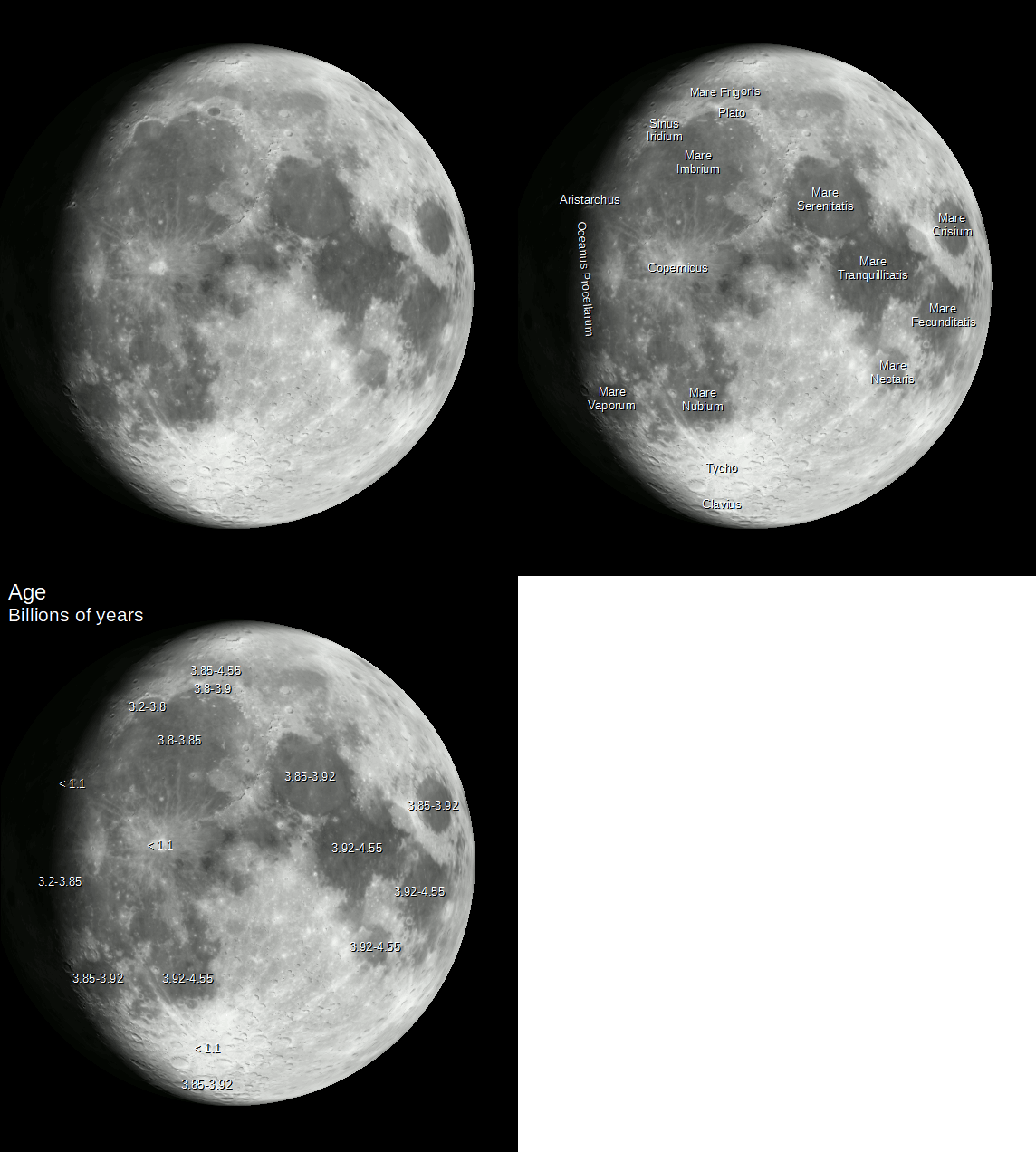
Names and ages of selected lunar features via GIF animation for the Moon as it will appear tonight, August 8, 2022. Ages are in billions of years, with the oldest features being created 4.55 billion years ago. Source: Virtual Moon Atlas application. It can be downloaded from a link from the right panel of this page. GIF created using GIMP and LibreOffice Draw apps.
Here’s a link to the Planetary Society article Relative and absolute ages in the histories of Earth and the Moon: The Geologic Time Scale by Emily Lakdawalla: https://www.planetary.org/articles/09301225-geologic-time-scale-earth-moon
08/02/2022 – Ephemeris – Where did the Moon’s “seas” come from?
This is Ephemeris for Tuesday, August 2nd. Today the Sun will be up for 14 hours and 37 minutes, setting at 9:07, and it will rise tomorrow at 6:31. The Moon, 3 days before first quarter, will set at 11:37 this evening.
As the days progress to full moon on the 13th, the Moon will reveal its many maria or seas, as the first telescopic astronomers called these blemishes. Many have roughly circular outlines bounded by mountains. They have flat floors that are darker than the heavily cratered parts of the moon, and have very few craters on them. That means they were created after the major craters were made, and obliterated the craters beneath. The majority of the cratering came very early, as the Moon accreted from the material the was produced when a Mars sized protoplanet hit the early Earth about 4.51 billion years ago. That’s according to most planetary scientists. The maria are actually huge craters produced by large asteroids later, about 3.9 billion years ago.
The astronomical event times given are for the Traverse City/Interlochen area of Michigan (EDT, UT – 4 hours). They may be different for your location.
Addendum
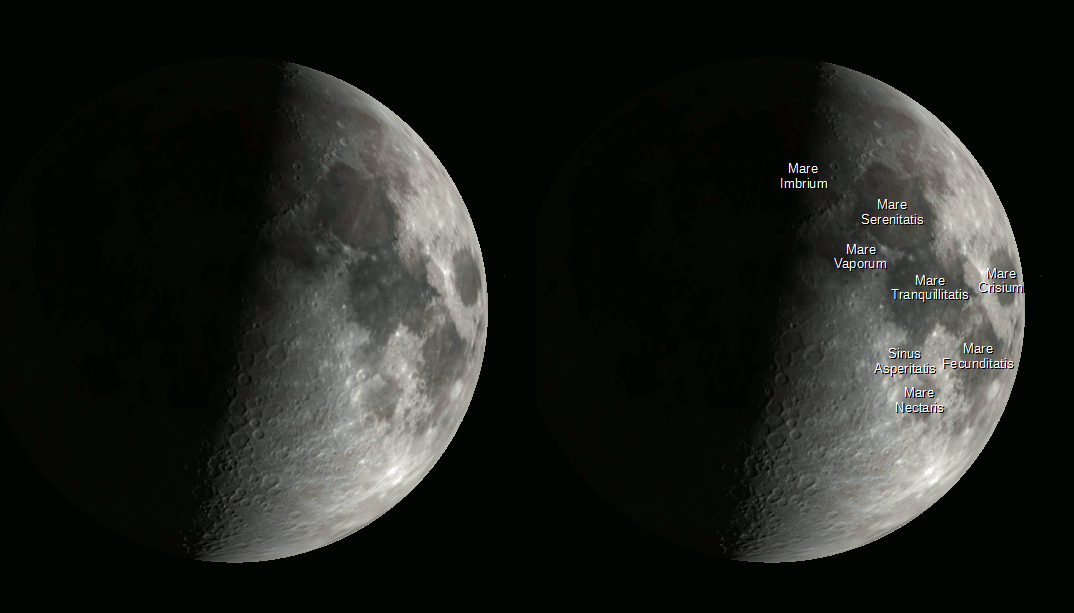
Lunar “seas” seen on a first quarter moon. Mare is Latin for sea. Sinus means bay. Created using Stellarium, GIMP and LibreOffice.
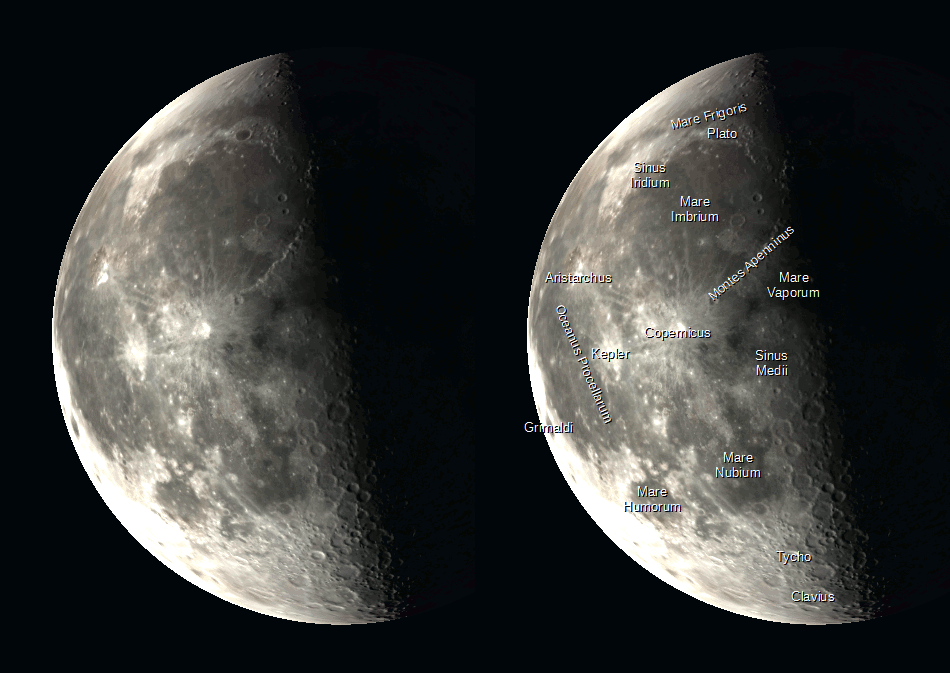
Lunar “seas” and some other prominent features labeled on the last quarter moon.
06/14/2022 – Ephemeris – All about tonight’s full moon
This is Bob Moler with Ephemeris for Flag Day, Tuesday, June 14th. Today the Sun will be up for 15 hours and 33 minutes, setting at 9:29, and it will rise tomorrow at 5:56. The Moon, at full today, will rise at 10:22 this evening.
The actual instant that the Moon was full, that is opposite the Sun in the sky, is 7:52 this morning. That’s why the Moon will rise nearly an hour after the Sun sets tonight. It’s also a supermoon, though I dare anyone to be able to tell it apart from any other rising full Moon, since there is nothing to compare its size too. Both the Sun and Moon appear larger than normal when seen on the horizon. The Moon’s perigee or closest point in its orbit of the Earth occurs at 7:52 this evening. This month’s full Moon is also called the Strawberry Moon by Native Americans, because this is the month that strawberries ripen. Also, the term honeymoon comes from the fact that many weddings are in June, when the full moon is low in the sky in the south and has a yellowish or honey color due to haze and atmospheric preferential scattering of blue light.
The astronomical event times given are for the Traverse City/Interlochen area of Michigan (EDT, UT – 4 hours). They may be different for your location.
Addendum
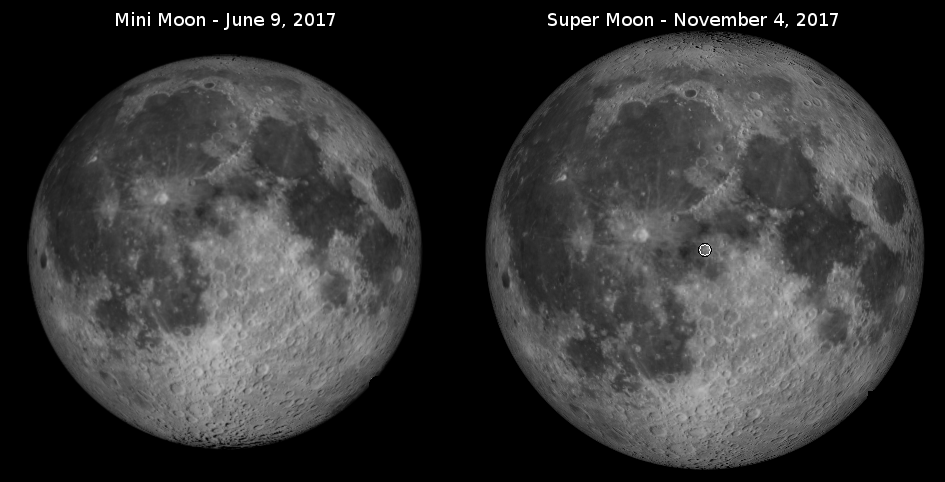
Mini Moon (Moon at apogee) and Super Moon (moon at perigee) for 2017. Created using Cartes du Ciel (Sky Charts).
The distance of the Moon at perigee this month, at 7:21 pm June 14th is 357,400 kilometers, or 222,100 miles. The Moon reaches apogee twice this month: On the 1st at 406,200 kilometers, or 252,400 miles, and again on the 29th at 406,600 kilometers or 252,600 miles. The reason for the differences in aphelion distances, which also occur with perigee distances, is the additional gravitational influences of the Sun, Jupiter and Venus, plus all the other planets to a lesser degree.
06/07/2022 – Ephemeris – The Moon’s Straight Wall
This is Ephemeris for Tuesday, June 7th. Today the Sun will be up for 15 hours and 28 minutes, setting at 9:25, and it will rise tomorrow at 5:57. The Moon, at first quarter today, will set at 2:49 tomorrow morning.
Around the first quarter Moon there is, among all the circular formations on the Moon like craters, something that’s straight. Its name is Rupes Recta, better known as the Straight Wall. Tonight it’s a dark line seen near and parallel to the terminator, the sunrise line on the Moon, about a third of the way down from the center of the Moon’s disc to the edge. It looks like a cliff that’s 900 feet (300 meters) high and 67 miles (110 kilometers) long. It’s not. It is apparently a rectilinear fault, and its slope is only 7 degrees. It will disappear as the sun rises higher and illuminates the slope. It can be spotted in a small telescope, though it requires something generally larger and more powerful than a pair of binoculars. Near last quarter, the Straight Wall appears as a bright line.
The astronomical event times given are for the Traverse City/Interlochen area of Michigan (EDT, UT – 4 hours). They may be different for your location.
Addendum
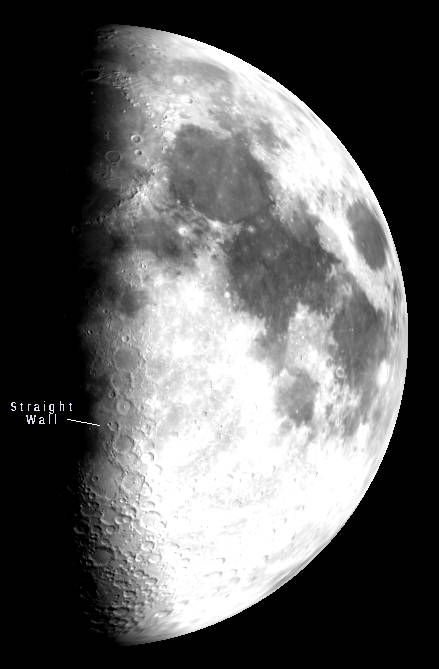
Moon’s Straight Wall locator, though it may not be visible at this magnification. Created using Virtual Moon Atlas.
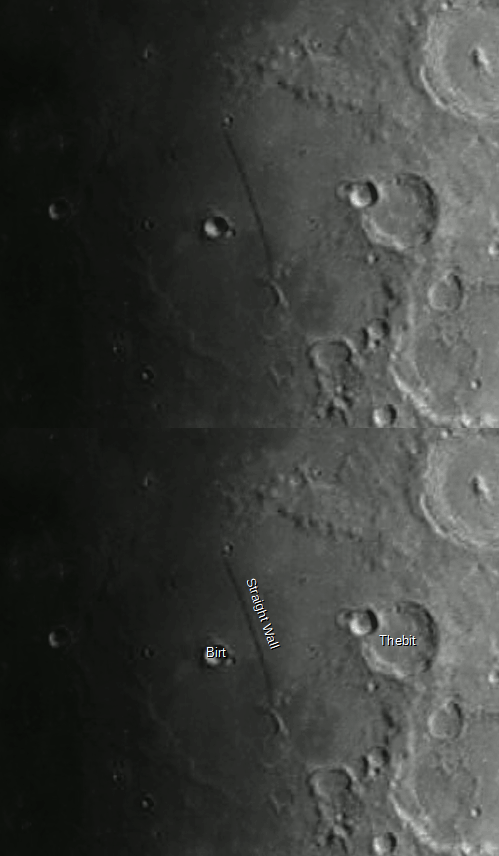
Enlargement of the area of the Straight Wall with labels blinking on and off. Created using Virtual Moon Atlas, Libreoffice, and GIMP.
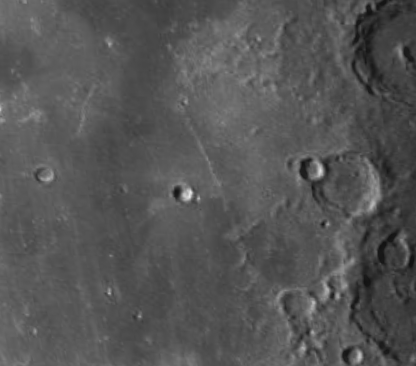
Enlargement of the area of the Straight Wall near last quarter. Created using Virtual Moon Atlas.
05/09/2022 – Ephemeris – Monday’s Moon
This is Bob Moler with Ephemeris for Monday, May 9th. Today the Sun will be up for 14 hours and 35 minutes, setting at 8:57, and it will rise tomorrow at 6:20. The Moon, 1 day past first quarter, will set at 4:03 tomorrow morning.
Nothing is more fun than to look at the Moon through binoculars or a small telescope around its first quarter phase. The little gray oval on the face of the Moon on its upper right, not connected to all the other gray areas, is called the Sea of Crises or Mare Crisium. I use Mare Crisium as a telltale for the Moon’s libration or wobble. Tonight Crisium is close to the edge of the Moon, so on a day after first quarter, we’re seeing somewhat more territory on the left side of the Moon than we normally would at this phase. At the bottom or south end of the Moon are two prominent craters visible even in binoculars, the small but distinct Tycho, and the much larger Clavius, whose floor contains other craters and is convex following the curvature of the Moon.
Reminder: There will be a total lunar eclipse occurring a week from this morning, actually starting Sunday evening Eastern Daylight Time. I’ll give you full details later in the week. That’s the evening of May 15th, through morning of the 16th.
The astronomical event times given are for the Traverse City/Interlochen area of Michigan (EDT, UT – 4 hours). They may be different for your location.
Addendum
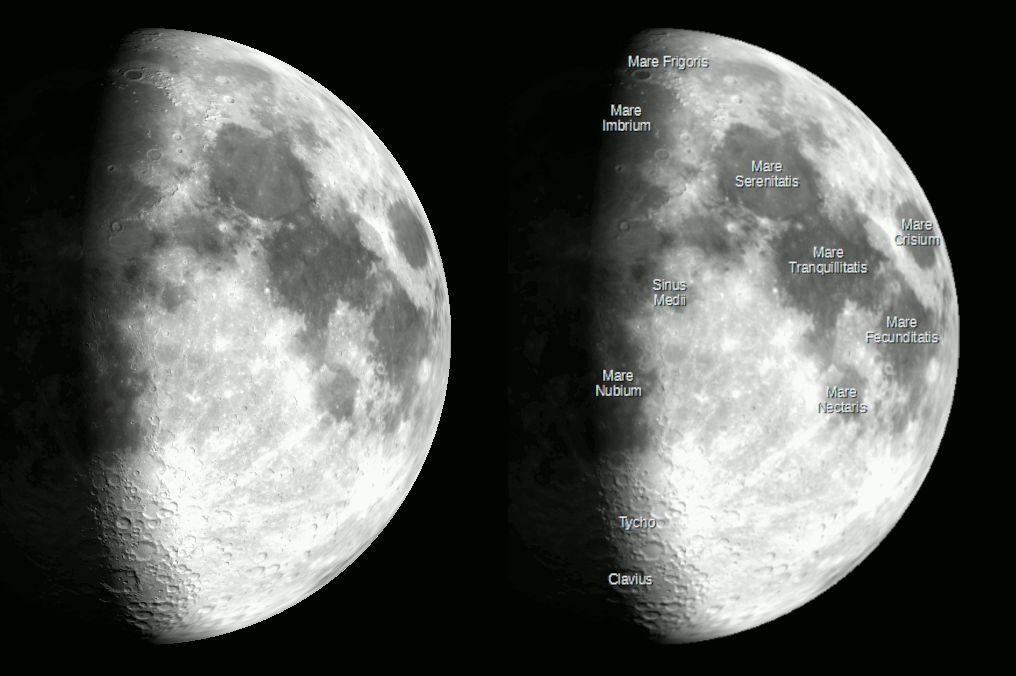
The 8-day-old Moon labeled via animated GIF, as it would appear in binoculars or a small telescope tonight, May 9, 2022. Created using Virtual Moon Atlas, GIMP and LibreOffice Draw.
Translations
Mare Crisium – Sea of Crises
Mare Fecunditatis – Sea of Fertility
Mare Frigoris – Sea of Cold
Mare Imbrium – Sea of Showers
Mare Nectaris – Sea of Nectar
Mare Nubium – Sea of Clouds
Mare Serenitatis – Sea of Serenity
Mare Tranquillitatis – Sea of Tranquility
Sinus Medii – Bay of the Center
Note that Mare is pronounced Mar-é
04/22/2022 – Ephemeris – Earth Day and the Moon passes four planets in the morning
This is Ephemeris for Earth Day, Friday, April 22nd. Today the Sun will be up for 13 hours and 50 minutes, setting at 8:36, and it will rise tomorrow at 6:45. The Moon, 1 day before last quarter, will rise at 3:43 tomorrow morning.
The Lyrid meteor shower will still be active tonight and tomorrow morning from 10 pm to almost 4 am. Speaking of things hitting the Earth, NASA’s DART Mission to collide and deflect a small asteroid is still on its way to smash into a tiny asteroid in September to see how it works. A more predictable disaster is climate change or global warming, which is continuing to appear more rapid than earlier thought. It demands that nations start immediately to reduce carbon emissions to slow and eventually stop the rise in global temperatures. As someone said: “There is no Planet B”. Mars isn’t it. It’s too cold, too small, too dry, and the air is too thin and contains no free oxygen. So support your local planet, it’s the only one we’ve got.
The astronomical event times given are for the Traverse City/Interlochen area of Michigan (EDT, UT – 4 hours). They may be different for your location.
Addendum
There is an interesting Planet and morning planet encounter Sunday through Wednesday mornings as the Moon passes four planets.
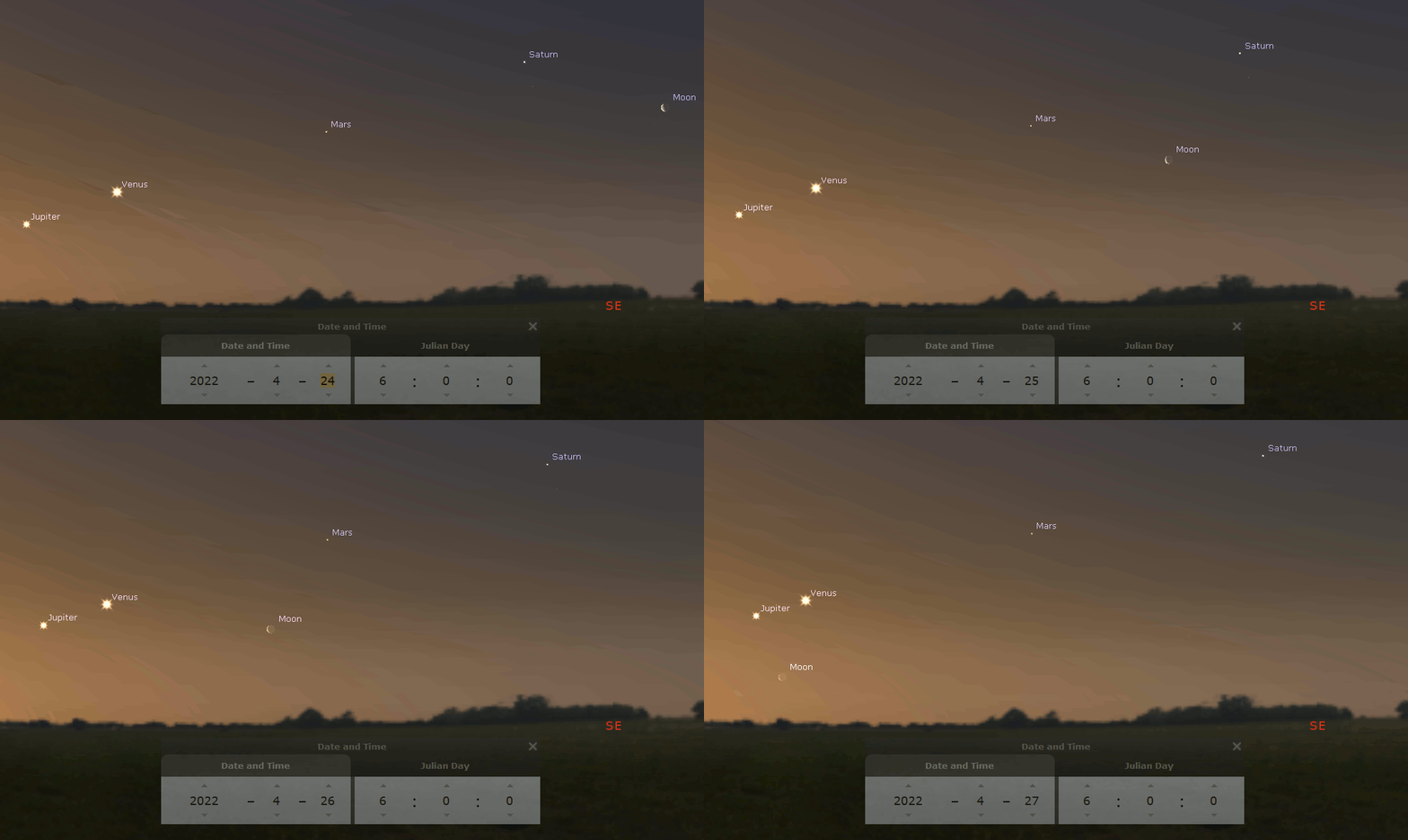
The Moon passing the morning planets from Sunday to Wednesday mornings 4/24 to 4/27/2022. Note also the approach of Jupiter and Venus. Their paths will cross on Saturday, 4/30/2022. Click on the image to enlarge it. Created using Stellarium and GIMP
04/14/2022 – Ephemeris – The Moon appears to wobble
This is Bob Moler with Ephemeris for Thursday, April 14th. Today the Sun will be up for 13 hours and 26 minutes, setting at 8:26, and it will rise tomorrow at 6:58. The Moon, 2 days before full, will set at 6:43 tomorrow morning.
Tonight’s Moon is nearly full, only two days to go. In the evening, the little dark sea on the Moon called Mare Crisium or Sea of Crises is near the top of the Moon. Now it’s real close to the top edge of the Moon, what astronomers call the limb. Ten days ago, when the Moon was a crescent, Mare Crisium was farther from the limb. This wobbling motion over the lunar month is called libration. This occurs because the Moon has an elliptical orbit of the Earth and speeds up when it’s closer and slows when it’s farther away. However, the Moon’s rotation is constant due to its angular momentum. The period of the revolution of the Moon around the Earth exactly matches its rotation. When the Moon is farthest, its rotation gets a bit ahead of its revolution around the Earth. When closest, the rotation lags a bit. So it appears to wobble over the lunar month.
The astronomical event times given are for the Traverse City/Interlochen area of Michigan (EDT, UT – 4 hours). They may be different for your location.
Addendum
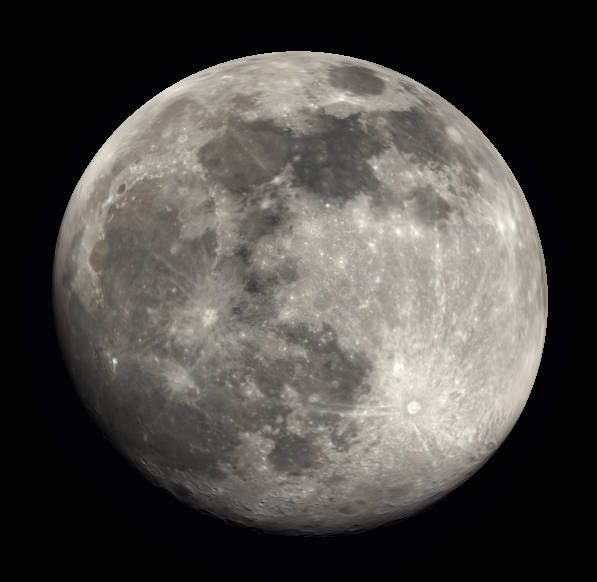
The Moon as it should appear at 10 pm tonight, April 14, 2022. Note the position, relative to the Moon’s limb, of the small lunar sea called Mare Crisium near the top of the Moon. Mare Crisium means Sea of Crises. It is quite close to the limb tonight. In the animation below, shown without the phase, the orientation of the Moon is not changed by the position in the sky or the latitude of the observer. Created using Stellarium.
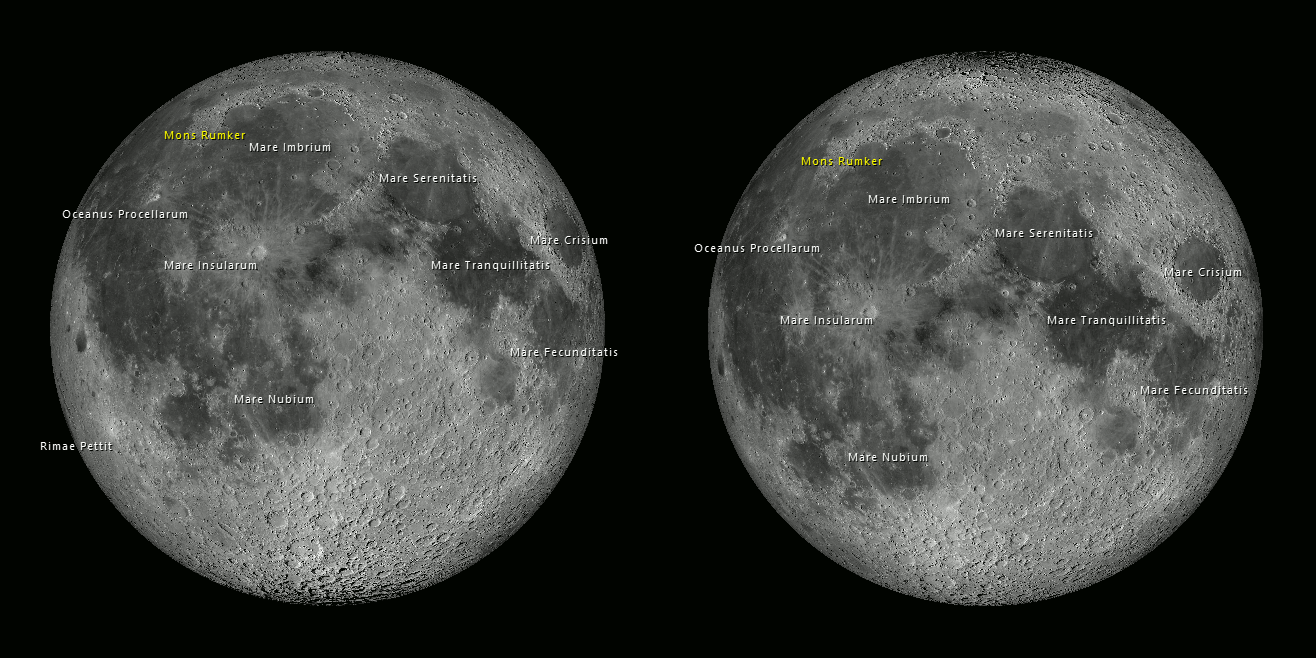
A demonstration of libration by viewing the position of Mare Crisium. Also note that there is also a libration in the Moon’s latitude, causing a north-south nodding. Another good indicator of libration is the dark floored crater called Grimaldi on the left side of the Moon, which is not visible tonight in the image at the top. But it will appear in sunlight tomorrow night. Created using Virtual Moon Atlas.
 Bob Moler's Ephemeris Blog