Ephemeris: 01/28/2026 – Taking our weekly look at the whereabouts of the naked-eye planets
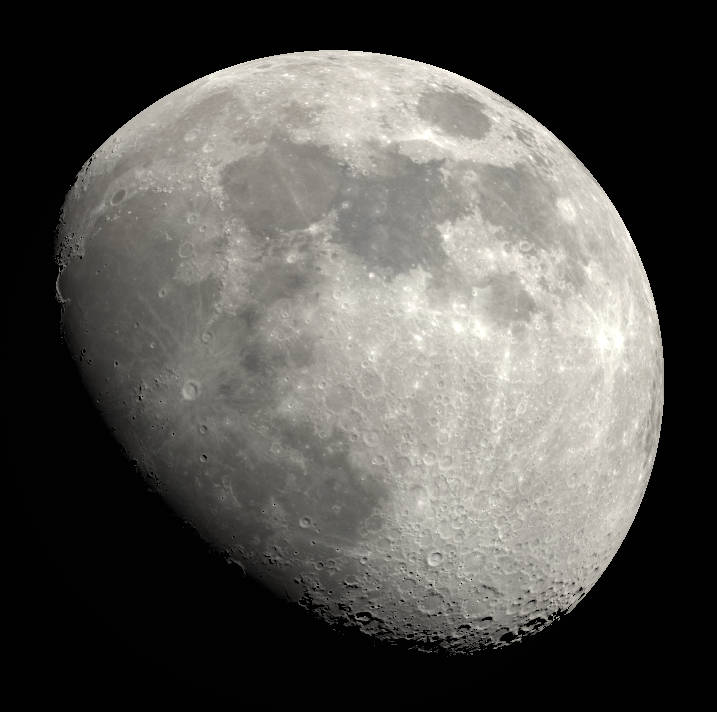
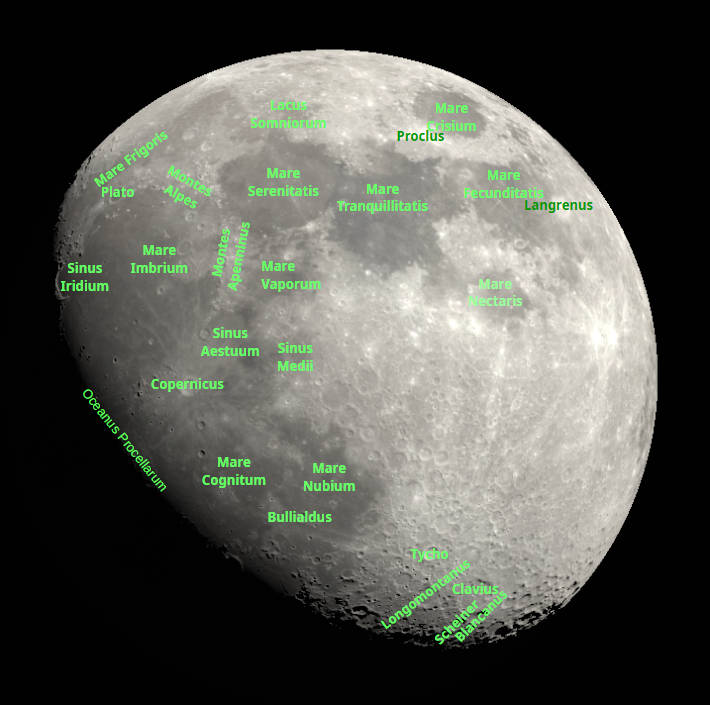
This is Ephemeris for Wednesday, January 28th. Today the Sun will be up for 9 hours and 39 minutes, setting at 5:45, and it will rise tomorrow at 8:05. The Moon, 3 days past first quarter, will set at 5:43 tomorrow morning.
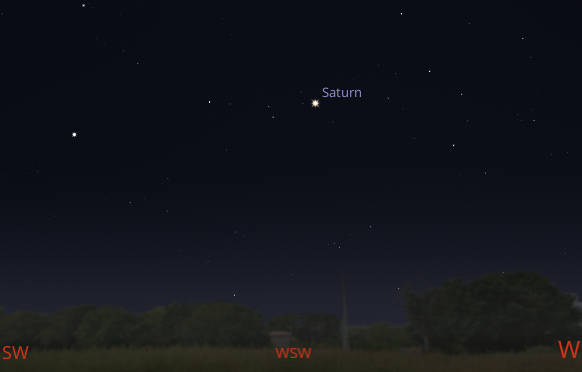
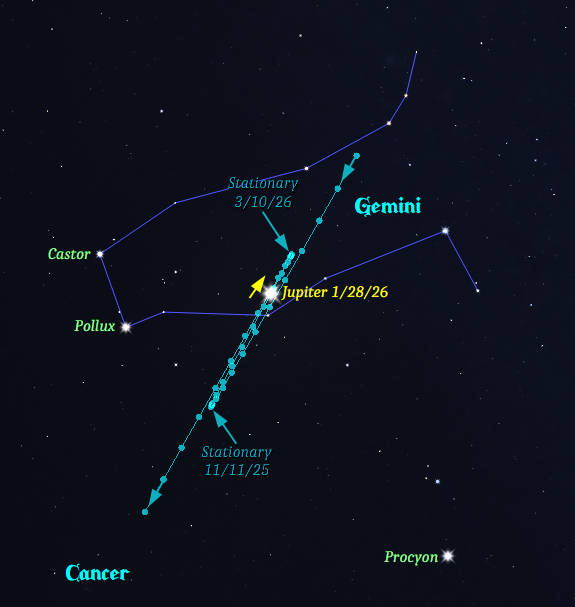
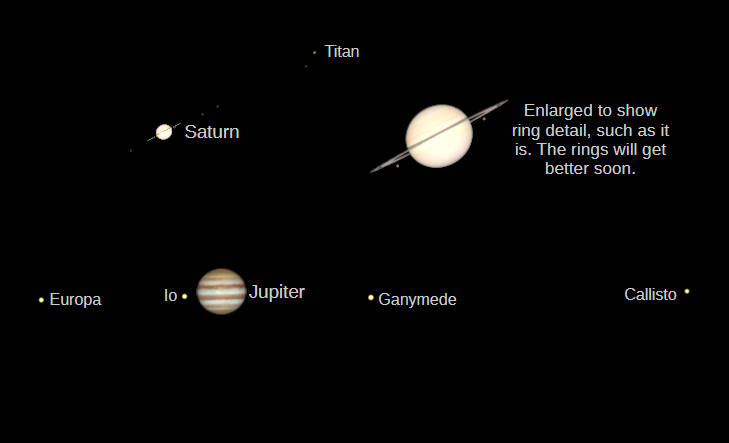
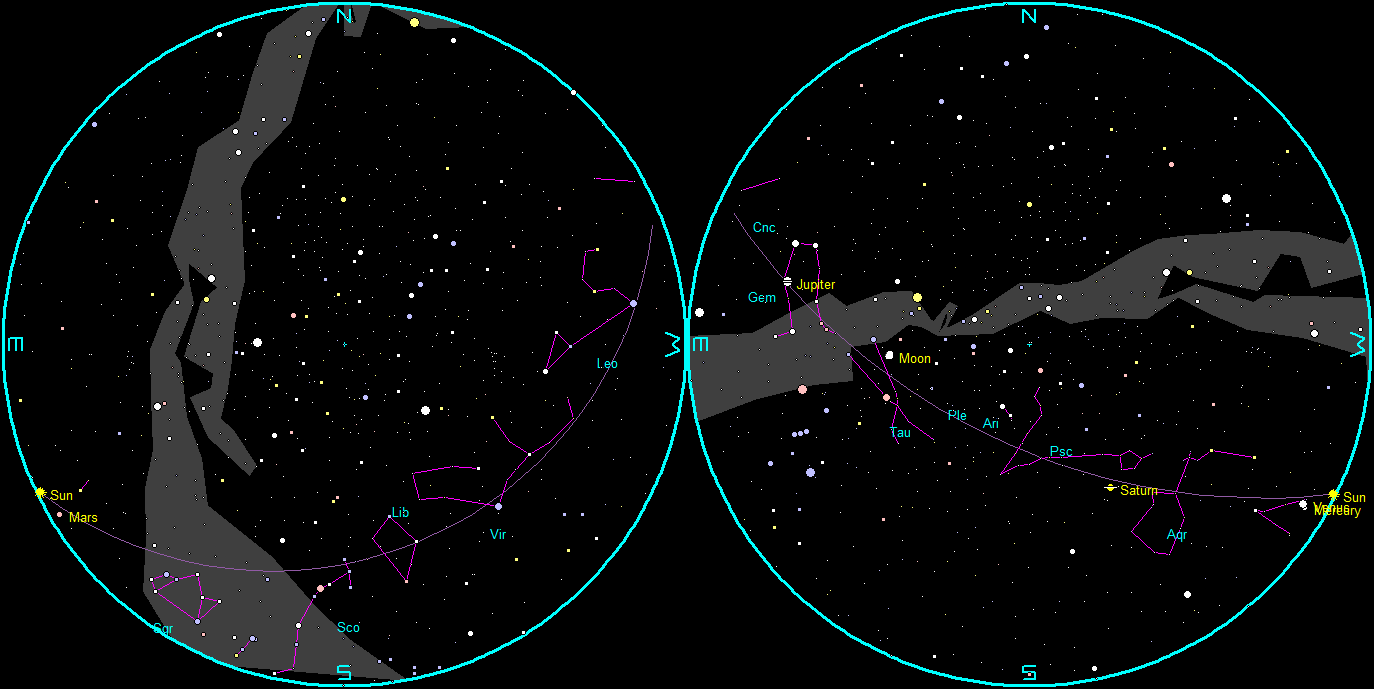
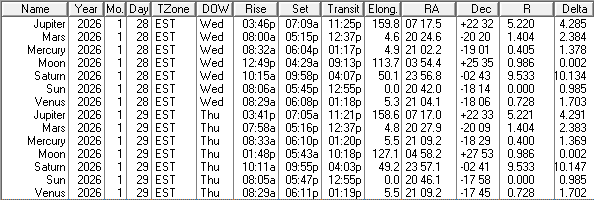
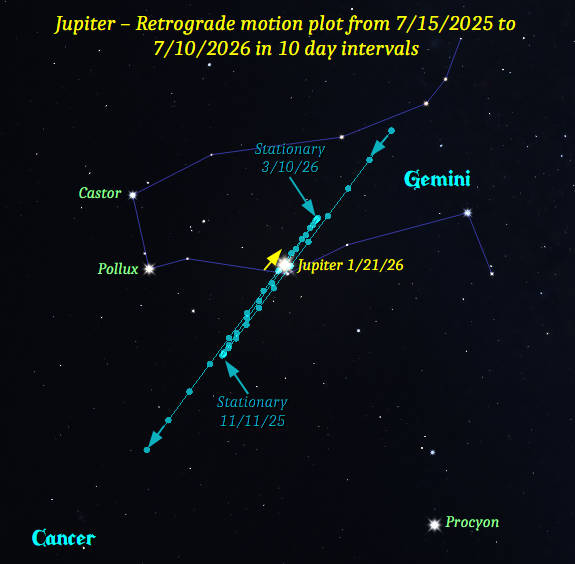
Let’s take our weekly look at the whereabouts of the naked-eye planets. Saturn is the brightest star-like object in the southwestern sky as soon as it gets dark. In a telescope Saturn sports a very thin ring, 2 degrees from being edge on and is slowly opening. Jupiter is the brilliant star-like object in the eastern sky, to the right of Pollux in the pair Castor and Pollux, the bright stars of Gemini. It is still moving slowly to the west, and will, until it stops and reverses its track on March 10th. Jupiter’s 4 brightest moons can be seen even in binoculars, if held steadily enough. They shift position night to night. At 8 PM tonight, all four Galilean moons can be seen, though two may too close to the planet to be picked out in binoculars.
The astronomical event times given in this blog are for the Traverse City/Interlochen area of Michigan (Lat 44.7° N, Long 85.7° W; EST, UT – 5 hours) unless stated otherwise. Times will be different for other locations.
Addendum
Ephemeris: 01/27/2026 – Orion’s heat shield problem
This is Ephemeris for Tuesday, January 27th. Today the Sun will be up for 9 hours and 37 minutes, setting at 5:44, and it will rise tomorrow at 8:06. The Moon, 2 days past first quarter, will set at 4:29 tomorrow morning.
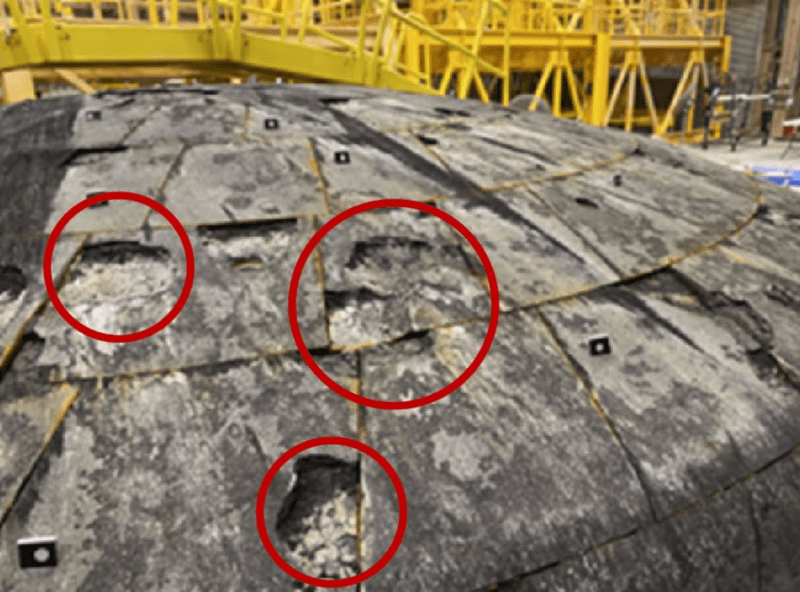
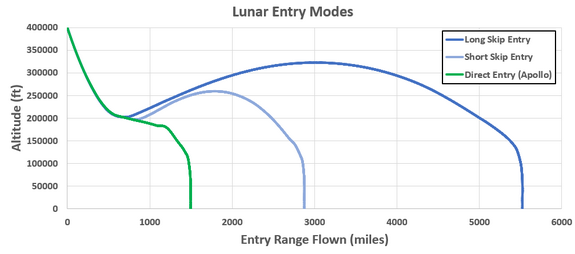
One of the problems that was detected with the reentry of the Artemis 1 mission back in November 2022* was the degradation of the heat shield of the Orion capsule. Chunks of the heat shield actually were breaking off. The technique they use for reentry called the skip reentry was thought to be the culprit. So while they are attempting to redesign the heat shield, Artemis 2 will be using the same type heat shield, but they will not do a skip reentry and come in without a skip off the atmosphere. The reason for using a skip reentry is to lessen the amount of Gs that are pulled by the capsule coming in at 7 miles per second by prolonging the entry and increasing the downrange travel of the capsule. Skip reentry is a proven technique, the Russians have been doing it for decades.
The astronomical event times given in this blog are for the Traverse City/Interlochen area of Michigan (Lat 44.7° N, Long 85.7° W; EST, UT – 5 hours) unless stated otherwise. Times will be different for other locations.
* For the broadcast, I misremembered the date as December 2024. That’s what happens when you’re old.
Addendum
Ephemeris: 01/26/2026 – Artemis, not just flags and footprints
This is Ephemeris for Monday, January 26th. Today the Sun will be up for 9 hours and 35 minutes, setting at 5:43, and it will rise tomorrow at 8:07. The Moon, 1 day past first quarter, will set at 3:10 tomorrow morning.
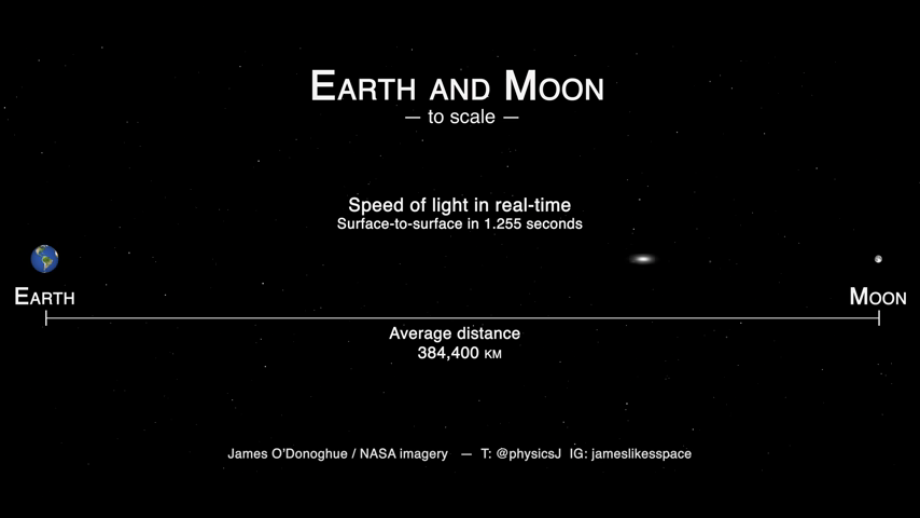
The current space race or I might say more properly, Moon race, is more than it was in the 1960s this race is not simply what is called a flag and footprints race get there first and go home. We already did that 57 years ago. But to set up permanent settlements on the moon to explore and extract the Moon’s resources like water. Water is not for export. Whatever water we find on the Moon would still be fairly scarce and probably rationed. There’s also an unknown amount of helium 3, which is a useful fuel for fusion reactors. Something we don’t have on the Earth, but would be the Holy Grail for clean energy production. We don’t know the Moon’s mineral potential, but whatever we find won’t have to be hauled up a quarter of a million miles from the Earth.
The astronomical event times given in this blog are for the Traverse City/Interlochen area of Michigan (Lat 44.7° N, Long 85.7° W; EST, UT – 5 hours) unless stated otherwise. Times will be different for other locations.
Addendum

Ephemeris: 01/23/2026 – The new space race
This is Ephemeris for Friday, January 23rd. Today the Sun will be up for 9 hours and 28 minutes, setting at 5:39, and it will rise tomorrow at 8:09. The Moon, 2 days before first quarter, will set at 11:17 this evening.
In the 1960s The United States and the Soviet Union engaged into what was called the space race. A race that was essentially to be the first nation to set foot on the Moon. It was a race the United States won when Neil Armstrong set foot on the Moon on July 20th 1969. We are now engaged in another space race, this time with China. It looks like Russia is sitting this one out, or are helping the Chinese, though it looks like the Chinese are out innovating them with their own reusable rockets. The stakes are higher this time. There is a place on the Moon in which everyone is interested. That being the Moon’s South Pole which has water in the form of ice in permanently shadowed craters, which would be worth its weight in gold.
The astronomical event times given in this blog are for the Traverse City/Interlochen area of Michigan (Lat 44.7° N, Long 85.7° W; EST, UT – 5 hours) unless stated otherwise. Times will be different for other locations.
Addendum
Ephemeris: 01/22/2026 – Artemis II launch window opens up in 15 days
This is Ephemeris for Thursday, January 22nd. Today the Sun will be up for 9 hours and 26 minutes, setting at 5:37, and it will rise tomorrow at 8:10. The Moon, 3 days before first quarter, will set at 10:04 this evening.
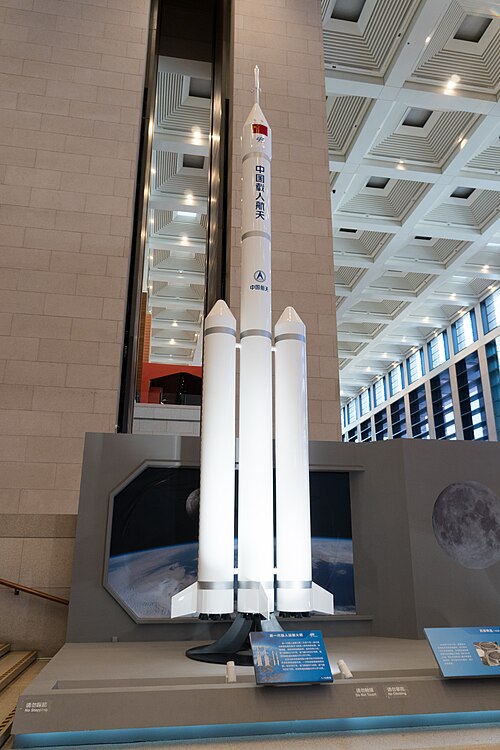
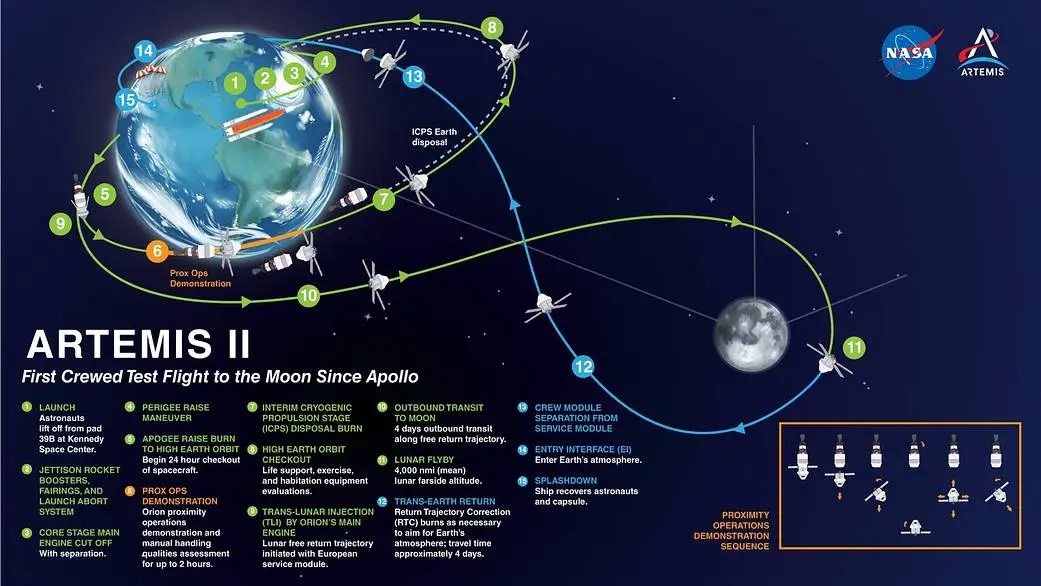
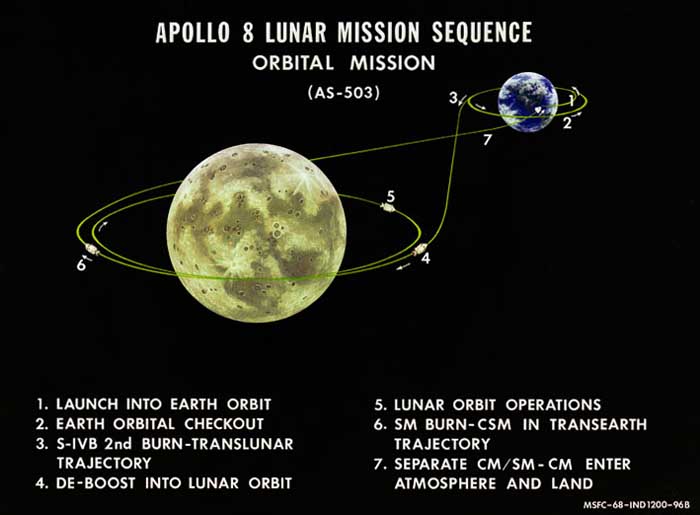
The launch window for the first crewed Artemis mission to the Moon opens up in a bit more than two weeks. It is made-up of 3 approximately 2 week windows containing four or five possible launch dates that extend to April. This mission is a mission to simply loop around the Moon and come back. It is different from the Apollo 8 mission, that actually orbited the Moon 10 times before returning to the Earth. The four astronauts will become the farthest members of humanity to venture from the Earth. One has hoped that NASA has solved the hydrogen leak problem that plagued the Artemis 1 mission a bit more than a year ago. Hydrogen is a small molecule that can leak through just about anything.
The astronomical event times given in this blog are for the Traverse City/Interlochen area of Michigan (Lat 44.7° N, Long 85.7° W; EST, UT – 5 hours) unless stated otherwise. Times will be different for other locations.
Addendum
Ephemeris: 01/21/2026 – Taking our weekly look at the whereabouts of the naked-eye planets
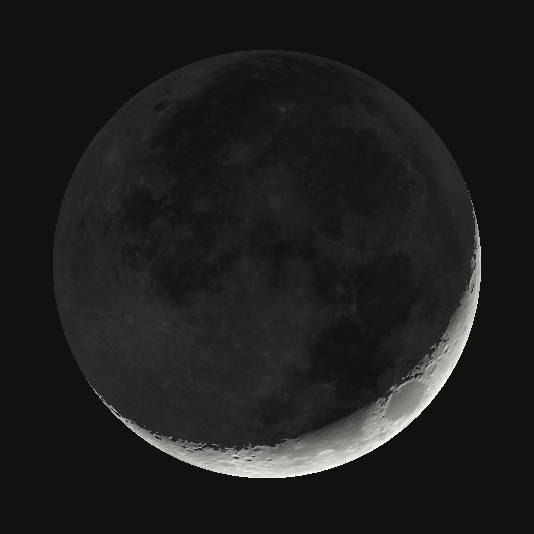
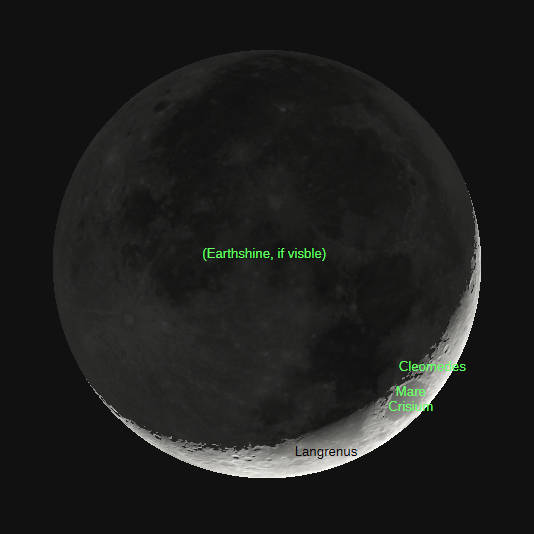
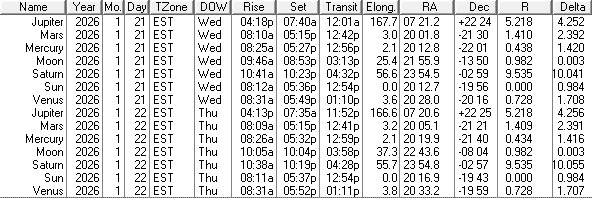
This is Ephemeris for Wednesday, January 21st. Today the Sun will be up for 9 hours and 23 minutes, setting at 5:36, and it will rise tomorrow at 8:11. The Moon, 3 days past new, will set at 8:53 this evening.
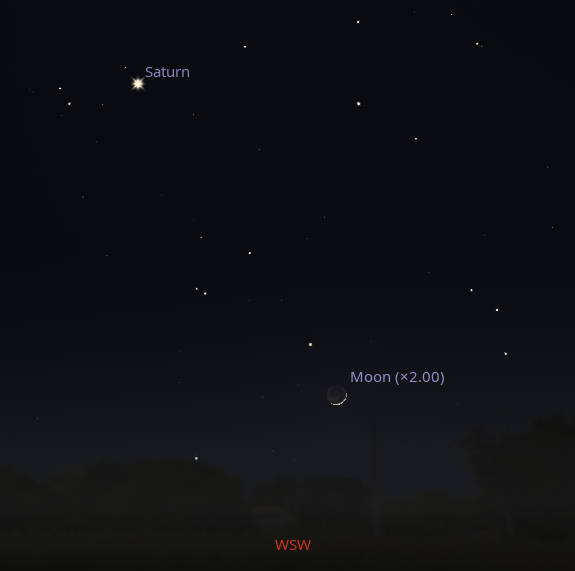
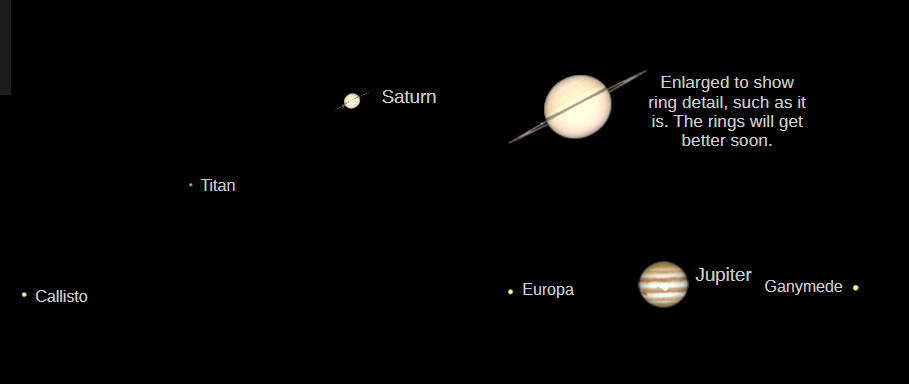
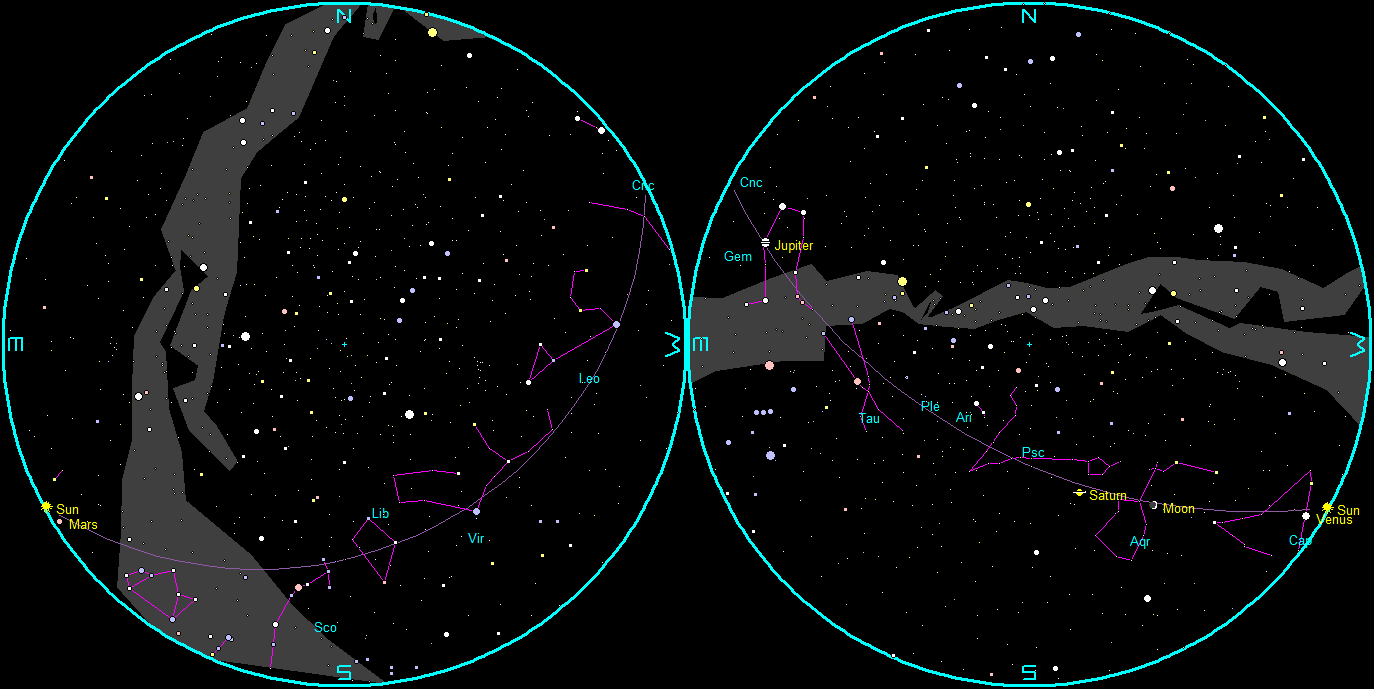
Let’s take our weekly look at the whereabouts of the naked-eye planets. Saturn is the brightest star-like object in the west-southwestern sky as soon as it gets dark. At 8 PM, it is in roughly in the same direction as the Moon, but a good deal higher in the sky. In a telescope Saturn sports a very thin ring, 1.8 degrees from being edge on and is slowly opening. Jupiter is the brilliant star-like object in the eastern sky, to the right of Pollux in the pair Castor and Pollux, the bright stars of Gemini. Jupiter’s 4 brightest moons can be seen even in binoculars, if held steady enough. They shift position night to night. At 8 PM tonight, only three will be visible, but the 4th will be appearing from in front of Jupiter later this evening.
The astronomical event times given in this blog are for the Traverse City/Interlochen area of Michigan (Lat 44.7° N, Long 85.7° W; EST, UT – 5 hours) unless stated otherwise. Times will be different for other locations.
Addendum
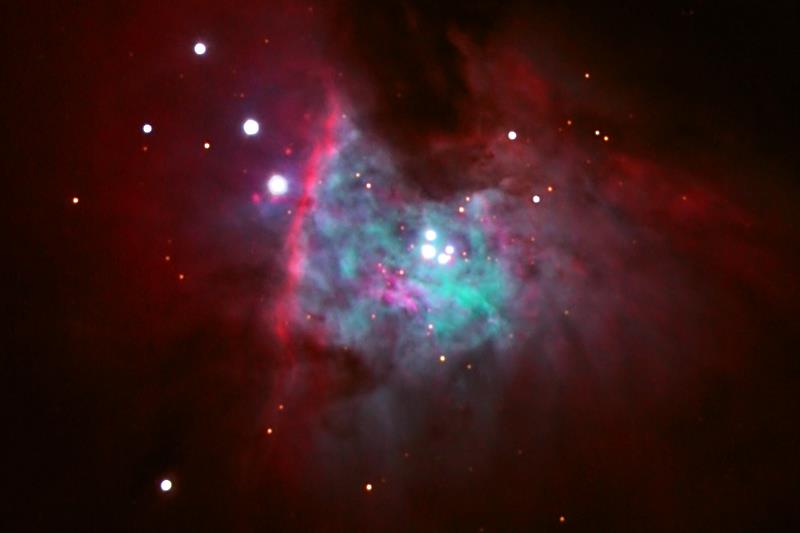
Ephemeris: 01/20/2026 – What’s happening inside the Great Orion Nebula
This is Bob Moler with Ephemeris for Tuesday, January 20th. Today the Sun will be up for 9 hours and 21 minutes, setting at 5:35, and it will rise tomorrow at 8:12. The Moon, 2 days past new, will set at 7:42 this evening.
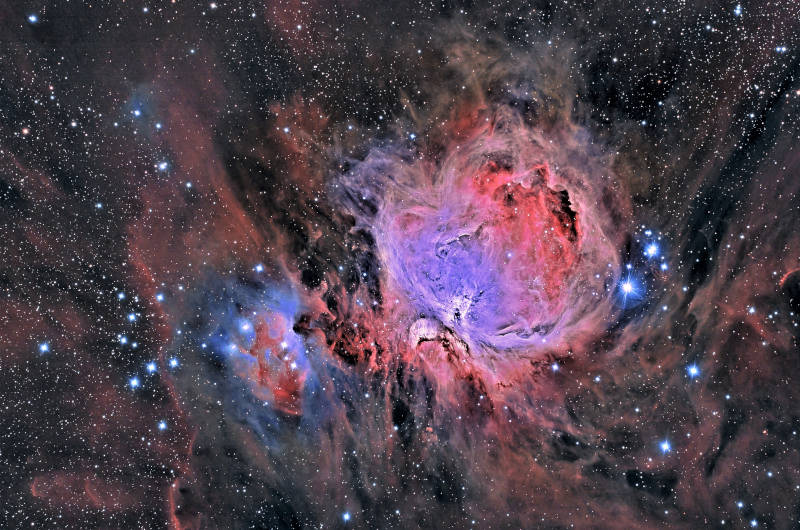
The closest star nursery to us, places where stars are being born, is the Great Orion Nebula, 1,300 light years away. A light year is about 6 trillion miles, if you want to pace it out. It’s located in the constellation Orion’s sword that hangs below his belt. It is seen in as little as a pair of binoculars, and shines by emission and reflection of the light of a tiny clutch of four stars at its heart, called the Trapezium. These extremely hot young massive stars are not destined to live long. Unlike the Sun’s 10 billion year lifetime, these stars lifespans will be measured in millions of years. Yet do not mourn for them, even now stars are forming within their dusty cocoons in the nebula. The Trapezium stars’ deaths will provide heavy elements for new stars and planets.
The astronomical event times given in this blog are for the Traverse City/Interlochen area of Michigan (Lat 44.7° N, Long 85.7° W; EST, UT – 5 hours) unless stated otherwise. Times will be different for other locations.
Addendum
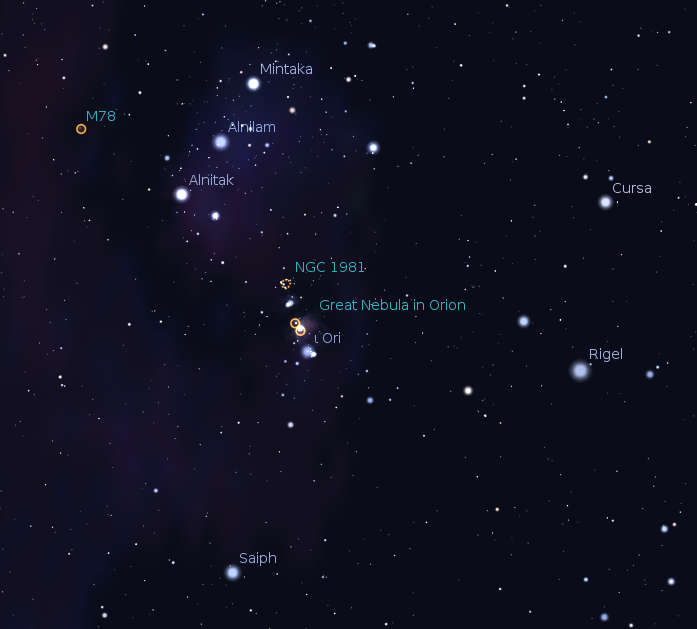
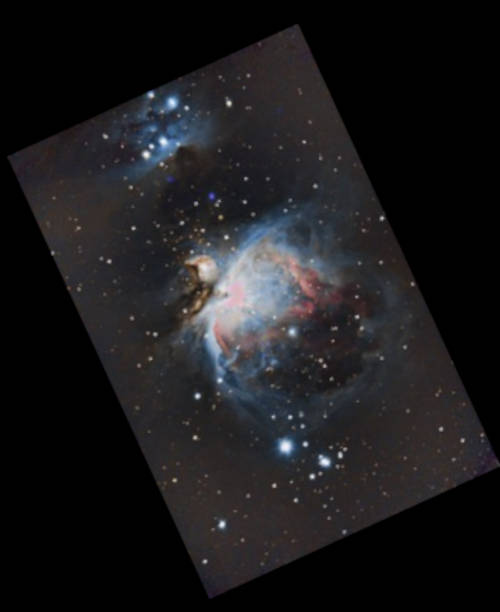
There are several videos produced by NASA, ESA and others of a fanciful trip through the Great Orion Nebula. I found them by typing: NASA trip through the Orion nebula into my Internet browser.
Ephemeris: 01/19/2026 – Follow the drinkin’ gourd!
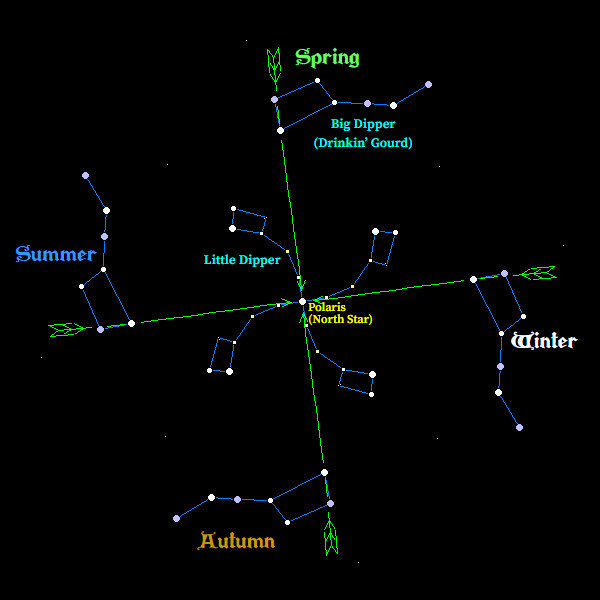
This is Bob Moler with Ephemeris for Martin Luther King Jr. Day, Monday, January 19th. Today the Sun will be up for 9 hours and 19 minutes, setting at 5:33, and it will rise tomorrow at 8:13. The Moon, 1 day past new, will set at 6:30 this evening. | This day is set aside to honor the Reverend Dr. Martin Luther King Jr. who gave his life for the struggle for equality for blacks and other minorities and to end segregation. A struggle that continues to this day. In the decades before the Civil War runaway slaves would travel, often at night, northward from the slave states of the south to the northern free states and Canada over the metaphorical Underground Railroad. They followed the Drinking Gourd, the Big Dipper as their compass. Over the last several millennia the Great Bear, Ursa Major had been that northward pointer. For the past few millennia the North Pole of the sky had been passing near the handle of the Big Dipper or bear’s tail. Though the Big Dipper isn’t always north, the two stars at the front of the bowl, or gourd, point to the star Polaris, which is nearly at the true North Pole of the sky.
The astronomical event times given in this blog are for the Traverse City/Interlochen area of Michigan (Lat 44.7° N, Long 85.7° W; EST, UT – 5 hours) unless stated otherwise. Times will be different for other locations.
Addendum
Ephemeris: 01/16/2026 – Comparing Orion’s two brightest stars
This is Ephemeris for Friday, January 16th. Today the Sun will be up for 9 hours and 13 minutes, setting at 5:29, and it will rise tomorrow at 8:15. The Moon, 2 days before new, will rise at 7:54 tomorrow morning.
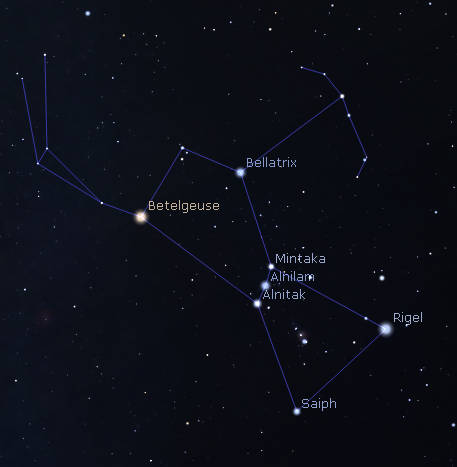
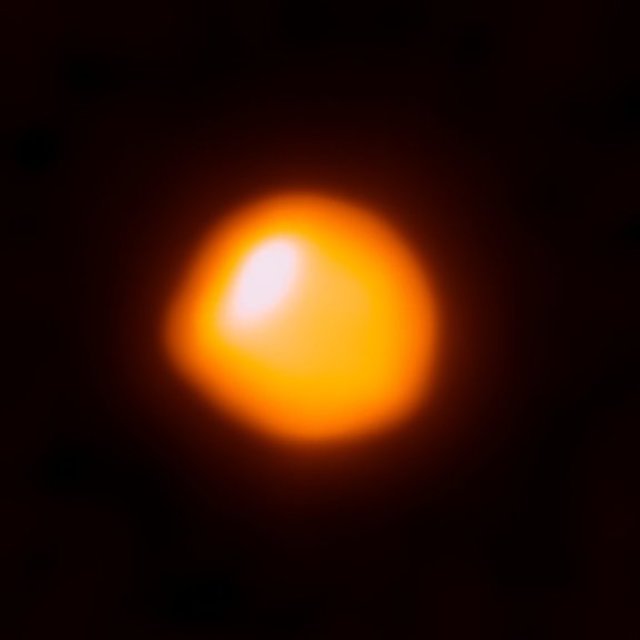
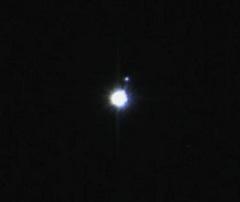
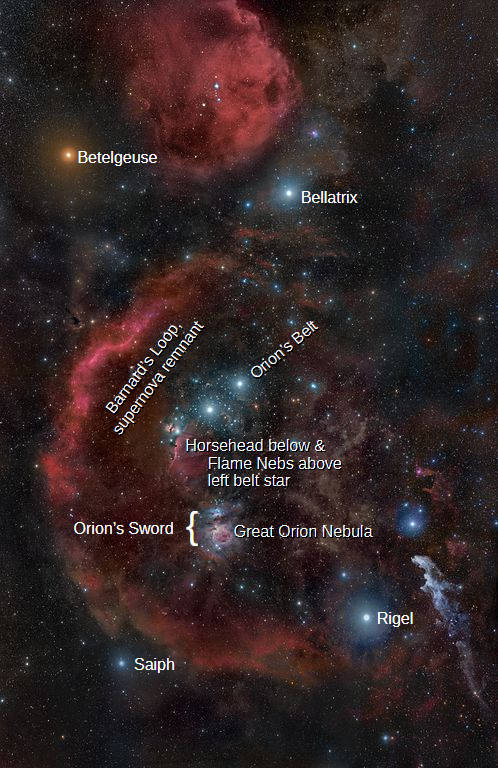
Orion’s two brightest stars are kind of the same but different. Let me explain. Betelgeuse is a red giant star, extremely massive, maybe 14 to 19 times the sun’s mass. It is somewhere between 8 and 14 million years old, which compared to the sun is just a baby, except it is so massive that it is in the last million or so years of its life. Rigel is a bluish white and a bit more massive, about 21 times the mass of the sun, and maybe 8 million years old. It has used most of the hydrogen in its core, and is beginning to transition into its final years which is a few more millions of years. So it’s not as far along in its evolution as Betelgeuse and has not bloated out and turned red. Betelgeuse is 500 light years away, while Rigel is almost 900.
The astronomical event times given in this blog are for the Traverse City/Interlochen area of Michigan (Lat 44.7° N, Long 85.7° W; EST, UT – 5 hours) unless stated otherwise. Times will be different for other locations.
Addendum
Ephemeris: 01/15/2026 – Orion’s great cloud
This is Ephemeris for Thursday, January 15th. Today the Sun will be up for 9 hours and 12 minutes, setting at 5:28, and it will rise tomorrow at 8:15. The Moon, 3 days before new, will rise at 7:09 tomorrow morning.
The brightest interstellar cloud visible in our skies is the Great Orion Nebula. The word nebula is from the Latin “nebulum” for cloud. The constellation of Orion is filled with nebulae, most of it are dim or dark. The Great Orion Nebula is in Orion’s sword. The sword is what looks like three stars that look dimmer than the three belt stars hanging from the belt. There are actually more than three stars here. Around the stars that appear as the center of the sword stars, to the eye, can be seen a haze in binoculars. A telescope with a wider aperture and low power can see detail in the cloud. With more magnification, a clutch of four baby stars can be spotted in the brightest part of the nebula. They light up the nebula and are called the Trapezium.
The astronomical event times given in this blog are for the Traverse City/Interlochen area of Michigan (Lat 44.7° N, Long 85.7° W; EST, UT – 5 hours) unless stated otherwise. Times will be different for other locations.
Addendum
 Bob Moler's Ephemeris Blog