07/29/2021 – Ephemeris – Anishinaabe constellation of their hero
This is Bob Moler with Ephemeris for Thursday, July 29th. Today the Sun will be up for 14 hours and 45 minutes, setting at 9:11, and it will rise tomorrow at 6:27. The Moon, 2 days before last quarter, will rise at 12:17 tomorrow morning. | Tuesday I talked about the constellation Scorpius the scorpion now seen low in the southern sky in the evening. To me, the stars here make a very good scorpion. Scorpius was invented by people of the Middle East, where scorpions are plentiful. The Anishinaabe native peoples of our area, however, saw one of their legendary hero figures, Nenabozho*. In the sky, the arc of three stars at the front of the scorpion and to the right of the bright star Antares is his bow. He is shooting an arrow toward the receding Great Panther or Curly Tail a constellation of spring whose curl of a tail is the head of the constellation Leo, now lost in the evening twilight in the west. Nenabozho was a hero in their creation stories, a trickster who was often seen as a rabbit.
The astronomical event times given are for the Traverse City/Interlochen area of Michigan (EDT, UT – 4 hr). They may be different for your location.
Addenda
* Nenabozho is pronounced like Nana-bouz-hou, though different tribes pronounced it differently. I could not find Nenabozho and its various other transliterations, one of which was Nanaboozhoo in the Ojibwe People’s Dictionary (https://ojibwe.lib.umn.edu/). However, since he occasionally shape-shifted into being a rabbit his name includes a part of the name for rabbit, waabooz. That entry had several audio examples. That’s how I got the pronunciation for the radio program.
Finder chart
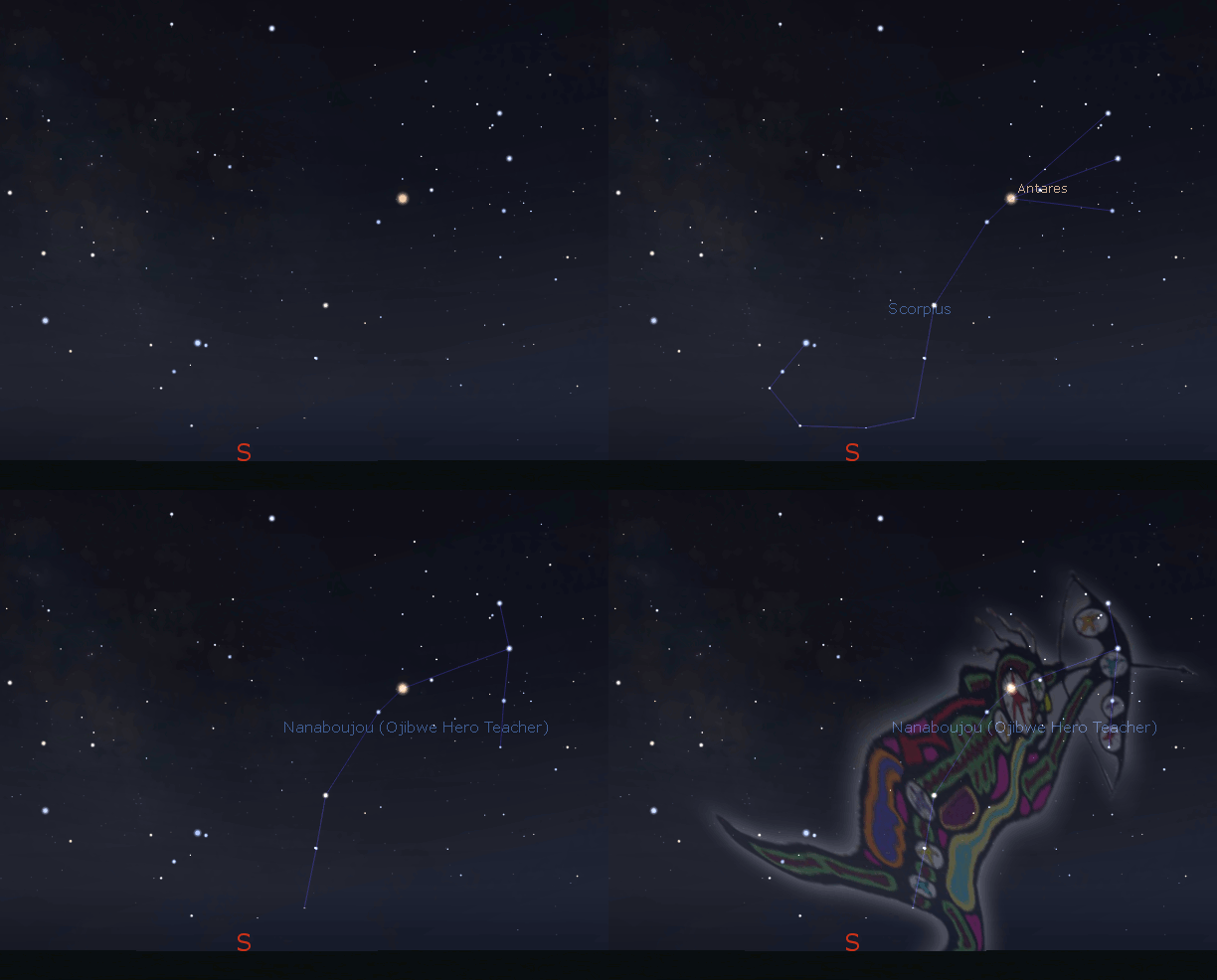
Animated finder for the Anishinaabe constellation of Nenabozho showing the unannotated star field, the Western constellation of Scorpius and Nenabozho. Created using Stellarium (both star lore images are embedded in Stellarium). The Anishinaabe image is embedded in Stellarium and is from Ojibwe Giizhig Anung Masinaaigan – Ojibiwe Sky Star Map created by A. Lee, W. Wilson, and C. Gawboy.
07/28/2021 – Ephemeris – Searching for the naked-eye planets on the last Wednesday in July
This is Ephemeris for Wednesday, July 28th. Today the Sun will be up for 14 hours and 48 minutes, setting at 9:13, and it will rise tomorrow at 6:25. The Moon, 3 days before last quarter, will rise at 11:58 this evening.
Let’s search for the naked-eye planets for this week. Venus can be spotted low in the west-northwest twilight by 9:45 pm. It will set at 10:39 pm. Venus will be spending the rest of summer low in the western sky, and not be as conspicuous as it usually is as the Evening Star. Mars, I believe, is too faint and close to the Sun to be seen from northern latitudes. Saturn will be seen low in the southeast in the evening, with Jupiter rising later. Saturn, 5 days from opposition, that is being opposite the Sun in the sky and closest to Earth, will rise at 9:21 pm. Brighter Jupiter will rise at 10:12 pm, both planets will rise in the east-southeast. By 5:30 am, these two planets will be in the southwestern sky in the morning twilight.
The astronomical event times given are for the Traverse City/Interlochen area of Michigan (EDT, UT – 4 hr). They may be different for your location.
Addendum

Venus in evening twilight in the west at 10 pm, July 28, 2021. Created using Stellarium.
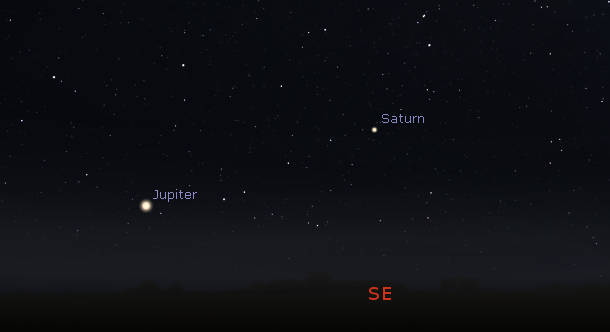
Jupiter and Saturn low in the southeast at 11 pm. Created using Stellarium.
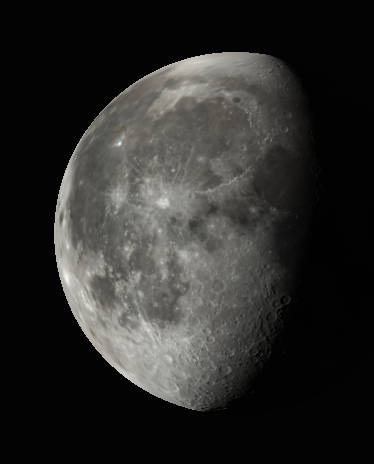
The waning gibbous Moon as it might be seen in binoculars or small telescope at 5:30 am, July 29, 2021. Created using Stellarium.
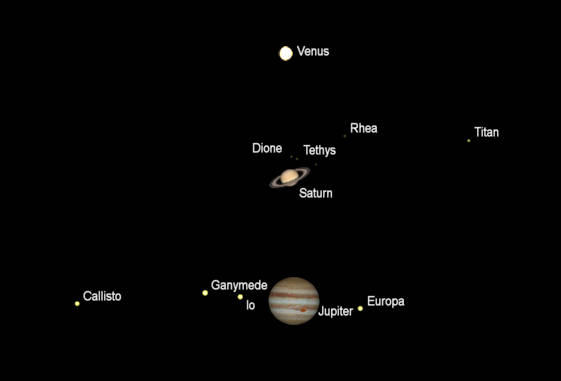
Telescopic view of the bright planets (north up) as they would be seen in a small telescope, with the same magnification, this evening, July 28, 2021. Apparent diameters: Venus, 12.58″; Saturn 18.59″, its rings 43.31″; Jupiter, 48.28″. The ” symbol means seconds of arc (1/3600th of a degree.) Click on the image to enlarge it. Created using Cartes du Ciel (Sky Charts).
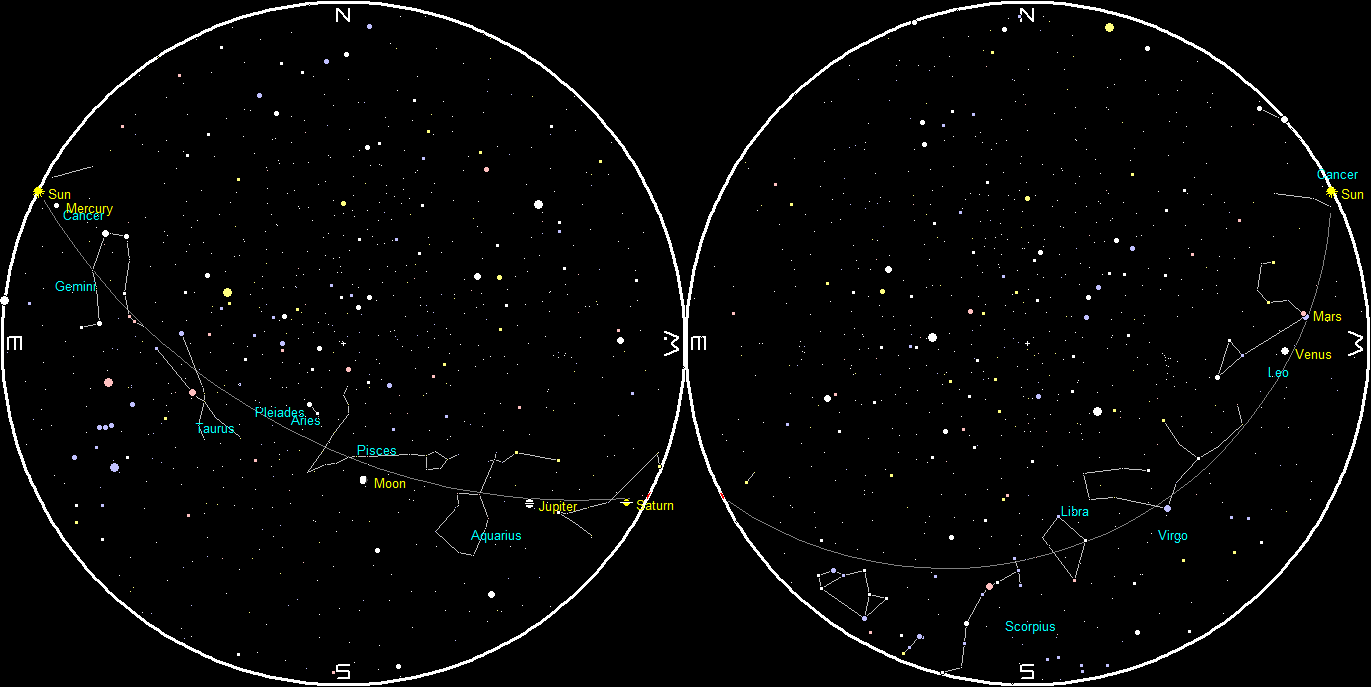
Planets and the Moon at sunset and sunrise of a single night, starting with sunset on the right on July 28, 2021. The night ends on the left with sunrise on the 29th. Click on the image to enlarge. Created using my LookingUp program.
07/27/2021 – Ephemeris – The celestial scorpion crawls over the southern horizon
This is Ephemeris for Tuesday, July 27th. Today the Sun will be up for 14 hours and 50 minutes, setting at 9:14, and it will rise tomorrow at 6:24. The Moon, halfway from full to last quarter, will rise at 11:37 this evening.
There’s a large constellation located low in the south around 10:30, 11 o’clock tonight. It’s Scorpius the scorpion. Its brightest star is Antares in its heart, a red giant star, that I used to get calls about from time to time as being a UFO. From Antares to the right is a star, then a vertical arc of three stars that is its head. The Scorpion’s tail is a line of stars running down to the left of Antares, swooping to the horizon before coming back up and ending in a pair of stars that portray his poisonous stinger. Scorpius looks huge lying on the southern horizon. But if you go south, Scorpius will be higher in the sky, and will look smaller. Being close to the horizon from here, Scorpius shares with the rising and setting sun and moon the illusion of increased size.
The astronomical event times given are for the Traverse City/Interlochen area of Michigan (EDT, UT – 4 hr). They may be different for your location.
Addendum
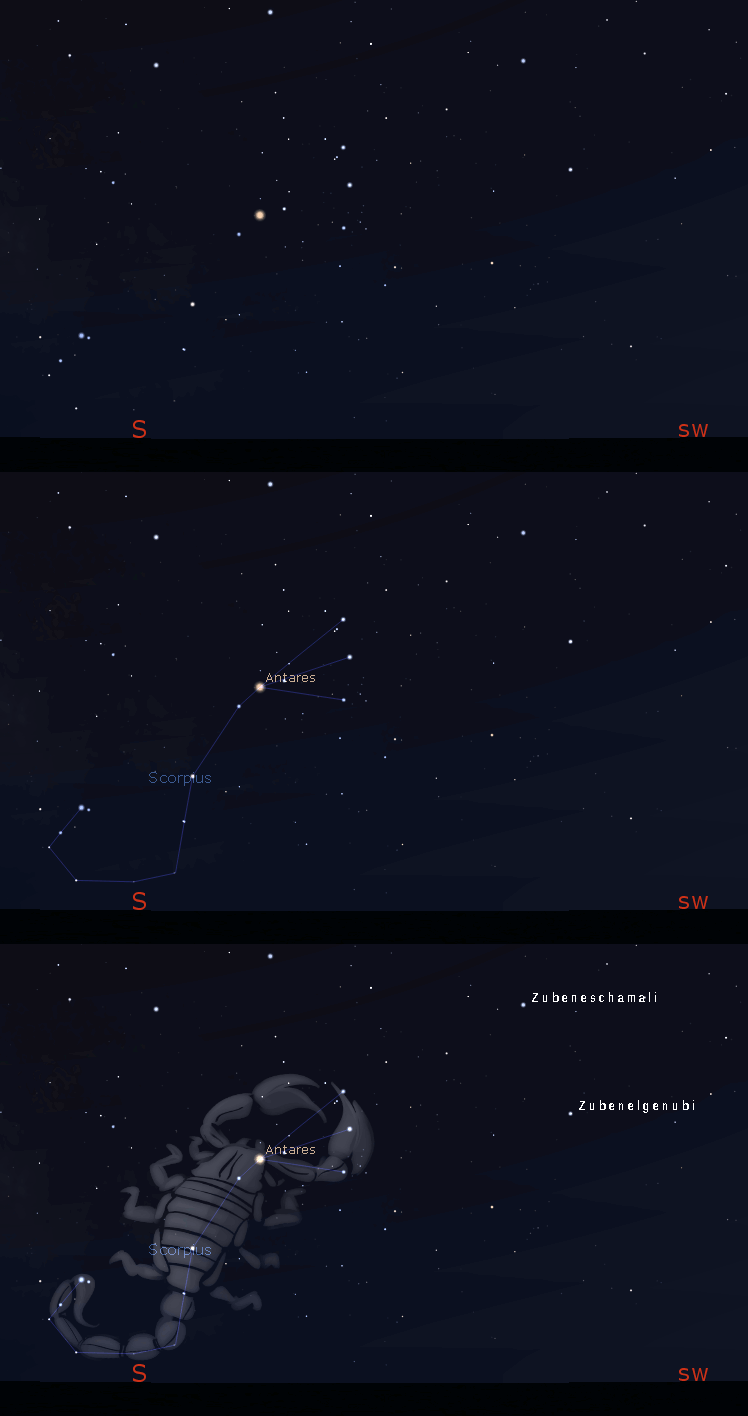
Scorpius animated finder for 10:30 pm July 27th. The Arabs saw a bigger scorpion with Antares in the upper part of its body, the arc of three stars near its head and its claws extending to Zubeneschamali (North Claw) and Zubenelgenubi (South Claw). The latter two stars belong to Libra the scales. Click on the image to enlarge it. Created using Stellarium and GIMP.
07/26/2021 – Ephemeris – Albireo, a colorful double star in Cygnus the swan
This is Ephemeris for Monday, July 26th. Today the Sun will be up for 14 hours and 52 minutes, setting at 9:15, and it will rise tomorrow at 6:23. The Moon, 3 days past full, will rise at 11:15 this evening.
Alberio is the name given to the star that is in the beak of the constellation of Cygnus the swan, which is high in the east these evenings. It is also at the foot of the asterism or informal constellation of the Northern Cross. To the naked eye Alberio looks like a single star, however even in small telescopes* its true nature is revealed. It is a double star whose individual star colors are strikingly different Its brightest star is yellow, and the dimmer star is blue. While star colors are subtle, these two, due to their apparent closeness, make an obvious color contrast. Unlike what your interior decorator says: In stars blue is hot, yellow, orange and red are cool. Also, it turns out that Alberio’s component stars don’t orbit each other. It is what is called an optical double. The blue star is a bit farther away than the yellow one, though they’re both around 430 light years away.
The astronomical event times given are for the Traverse City/Interlochen area of Michigan (EDT, UT – 4 hr). They may be different for your location.
* It will take at least about 20 power magnification to split. Binoculars won’t do it.
Addendum
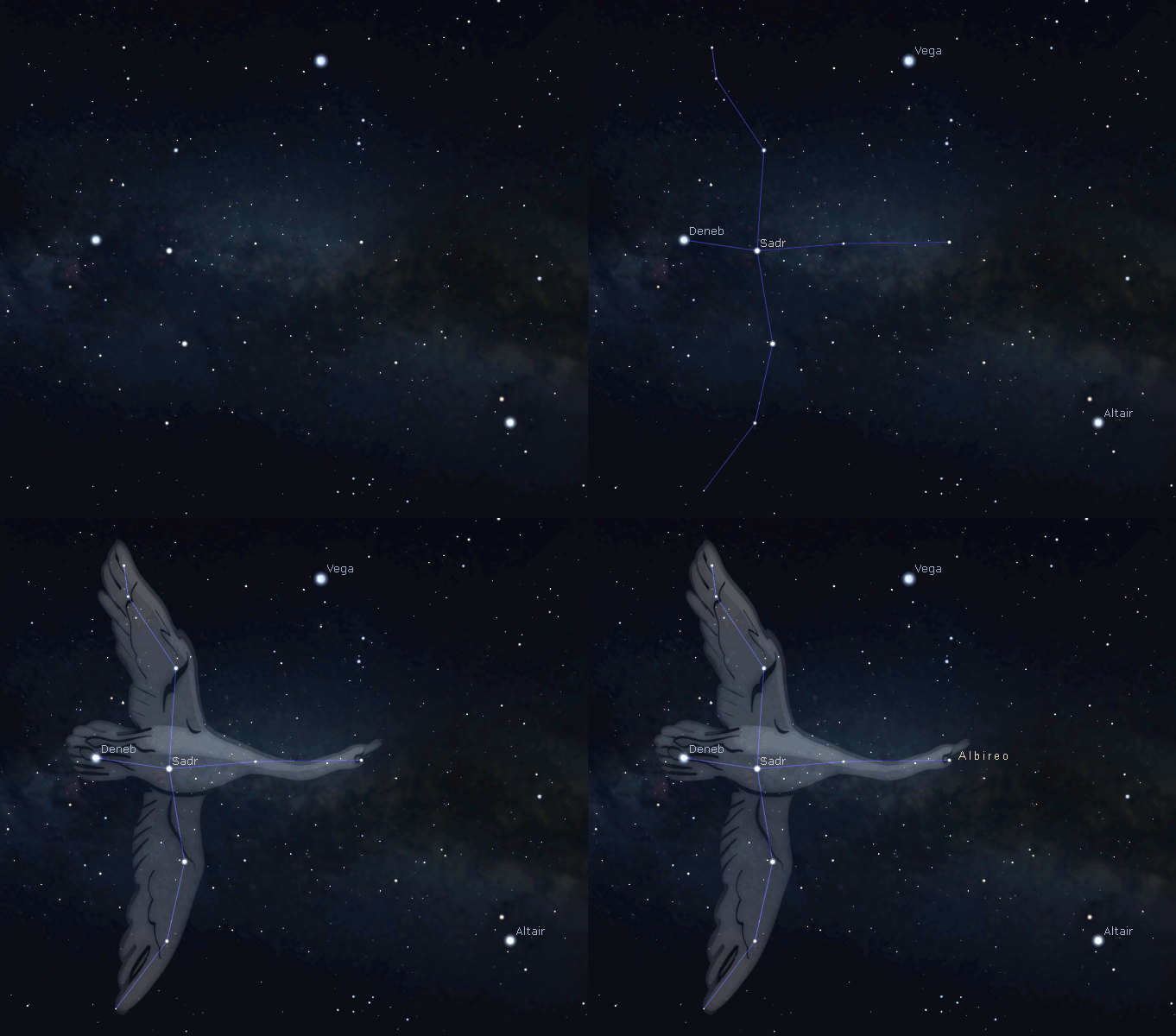
Animated Albireo finder chart. Albireo is located in the head of Cygnus the swan, or at the base of the Northern Cross. Tagged stars are, beside Albireo, the stars of the Summer Triangle: Deneb, Vega and Altair plus the star at the junction of the upright and crosspiece of the cross, Sadr. Created using Stellarium.
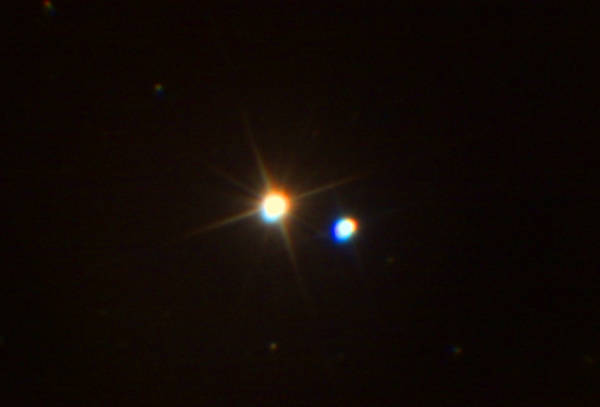
Albireo, captured at high magnification by the staff of the Smithsonian Institution.
07/23/2021 – Ephemeris – The first exoplanet* found
This is Bob Moler with Ephemeris for Friday, July 23rd. Today the Sun will be up for 14 hours and 58 minutes, setting at 9:18, and it will rise tomorrow at 6:20. The Moon, at full today, will rise at 9:35 this evening.
In 1995 the first planet was found that orbits another star. It was 51 Pegasi b. That’s the star labeled number 51 in the constellation Pegasus, the flying horse. It was found because it tugged on its star as it orbited it. The planet was detected by the Doppler method, the same method that the police can tell if you’re speeding. A planet doesn’t orbit the center of the star, but the center of their combined mass. It turned out That 51 Pegasi b is a very large planet, half the mass of Jupiter, orbiting its star every 4 ½ days. Its discovery threw everything we thought we knew about planetary system evolution into a cocked hat. Planets just don’t stay nicely in their orbits like we thought. They move in and out! As this planet moved in toward its star, it would have ejected any of the inner planets out of the system.
The astronomical event times given are for the Traverse City/Interlochen area of Michigan (EDT, UT – 4 hr). They may be different for your location.
* A planet was found several years before, orbiting a pulsar, which is a neutron star. Apparently, planets orbiting dead stars don’t count.
Addendum
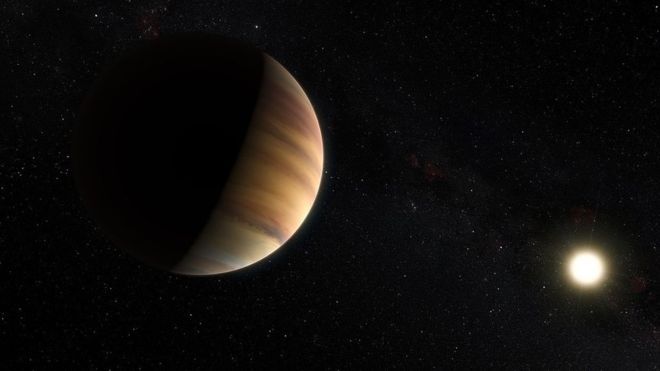
An artist’s depiction of what exoplanet Pegasus 51b and its star might look like. Credit: ESO (European Southern Observatory) / M. Kornmesser.
07/22/2021 – Ephemeris – Hubble’s trouble is fixed
This is Bob Moler with Ephemeris for Thursday, July 22nd. Today the Sun will be up for 15 hours even, setting at 9:19, and it will rise tomorrow at 6:19. The Moon, 1 day before full, will set at 5:18 tomorrow morning.
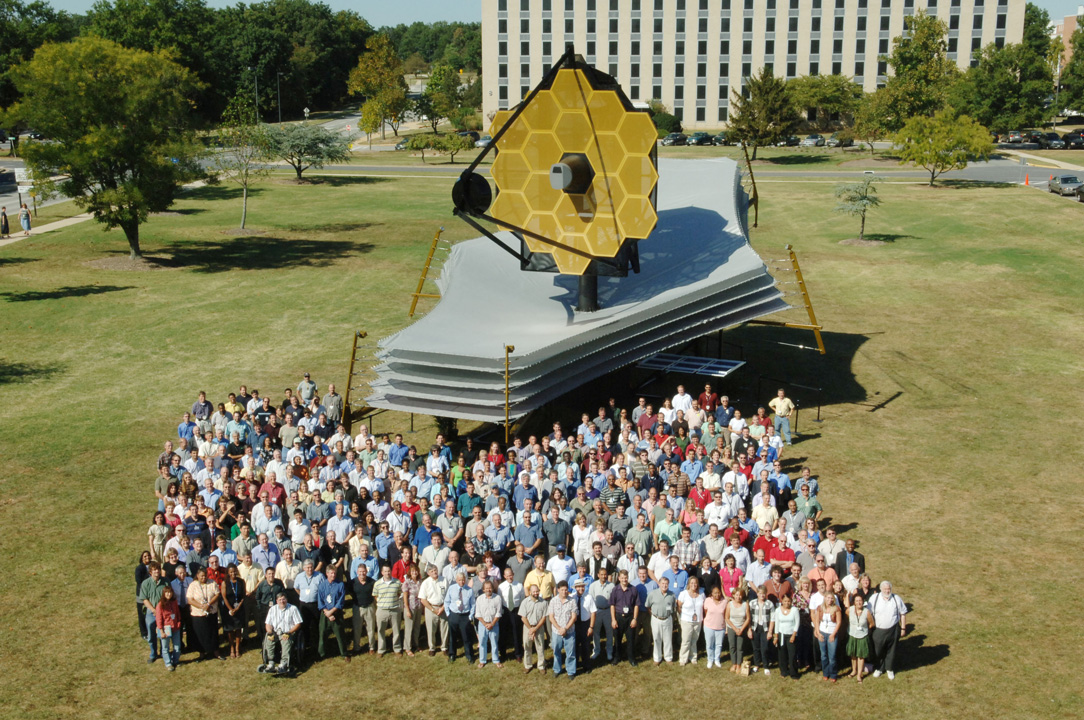
Folks at NASA are breathing a sigh of relief. After a month when one of its computers failed in the Hubble Space Telescope, ground controllers were able to diagnose that the problem was actually in the computer and not somewhere else. They switched to a backup computer. This wasn’t the main computer, but the one that ran the instruments. Hubble resumed operations this past Sunday. Hubble’s more or less replacement, the James Webb Space Telescope is many years overdue to be launched, and is expected to be launched later this year by the European Space Agency from French Guiana, as their contribution to the project. The Webb telescope operates in the infrared, while Hubble operates mostly in visible light.
The astronomical event times given are for the Traverse City/Interlochen area of Michigan (EDT, UT – 4 hr). They may be different for your location.
Addendum
The Hubble Space Telescope after its last servicing mission. Credit: NASA.
Full scale model of the James Webb Space Telescope at Goddard Space Flight Center. Note its scale with the people in front of it.
07/21/2021 – Ephemeris – Let’s search for the naked-eye planets for this week
This is Ephemeris for Wednesday, July 21st. Today the Sun will be up for 15 hours and 2 minutes, setting at 9:20, and it will rise tomorrow at 6:18. The Moon, 2 days before full, will set at 4:13 tomorrow morning.
Let’s search for the naked-eye planets for this week. Venus can be spotted low in the west-northwest twilight by 10 pm. It will set at 10:49 pm. Venus will be spending the rest of summer low in the western sky, and not be as conspicuous as it usually is as the Evening Star. Mars’ visibility is a real problem. It will be to the right and below Venus in the evening, and will set at 10:35 pm. It’s much dimmer than Venus. The bright star Regulus will be just below and left of Venus tonight. Saturn will be seen low in the southeast in the evening, with Jupiter rising later and best in the morning sky. Saturn will rise at 9:49 pm. Brighter Jupiter will rise at 10:41 pm, both in the east-southeast. By 5:30 am, these two planets will be in the southern sky in the morning twilight.
The astronomical event times given are for the Traverse City/Interlochen area of Michigan (EDT, UT – 4 hr). They may be different for your location.
Addendum
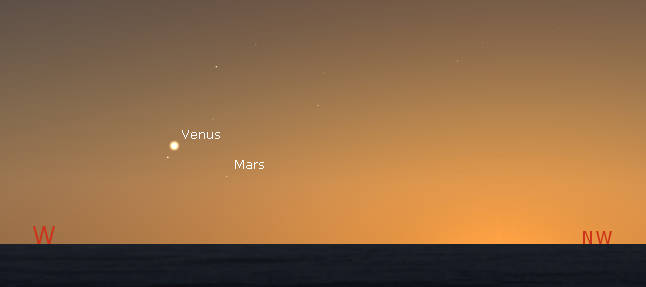
Venus and Mars in evening twilight at 10 pm, about 40 minutes after sunset, tonight, Julyn21, 2021. Regulus, the first magnitude star in Leo, will appear just below and left of Venus. Click on the image to enlarge it. Created using Stellarium.
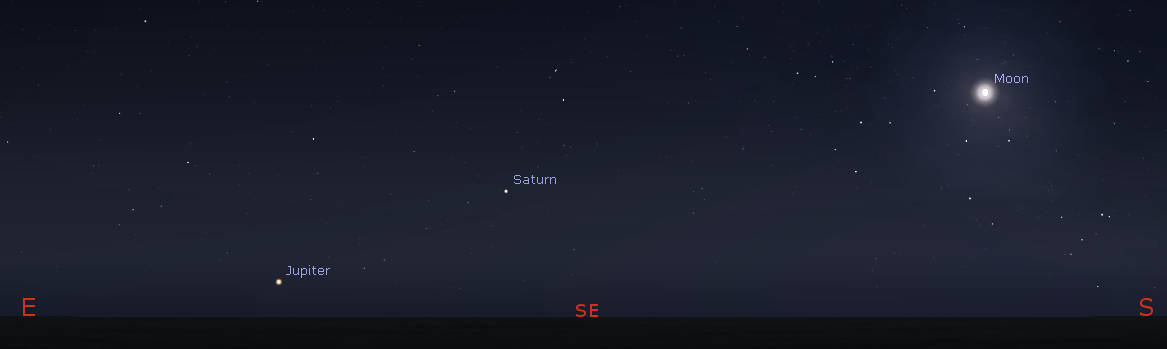
The Gibbous Moon, Saturn, and Jupiter at 11 pm, tonight, July 21, 2021. The Moon is above the spout in the asterism of the Teapot in Sagittarius. Click on the image to enlarge it. Created using Stellarium.
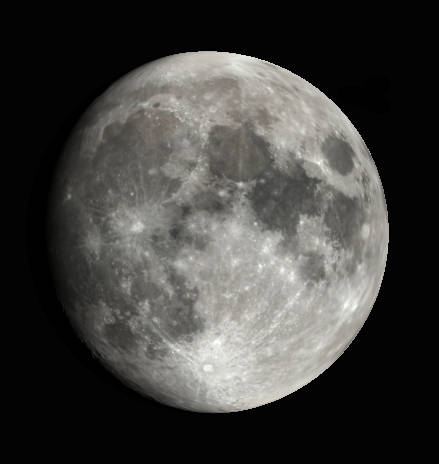
The gibbous Moon as it will look like in binoculars or small telescope tonight, July 21, 2021. Created using Stellarium.
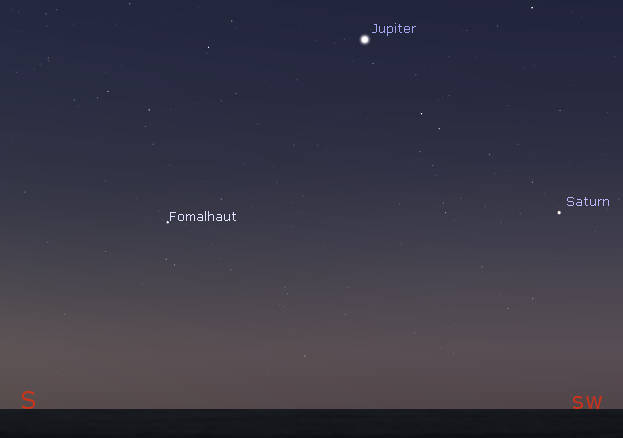
Jupiter and Saturn with the bright autumn star Fomalhaut, seen in morning twilight at 5:30. Created using Stellarium.
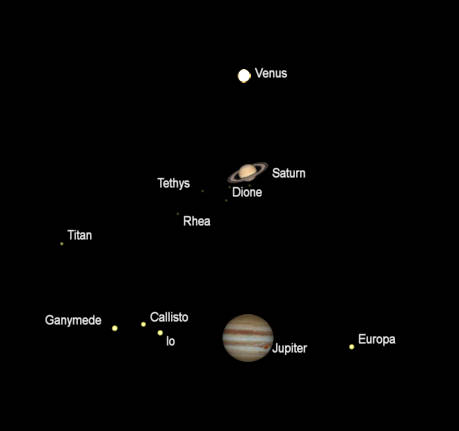
Telescopic view of the bright planets (north up), with the same magnification, this evening, July 21, 2021. Apparent diameters: Venus, 12.17″; Saturn 18.56″, its rings 43.24″; Jupiter, 47.70″. Mars has an apparent diameter of only 3.71″ and is not represented. The ” symbol means seconds of arc (1/3600th of a degree.) Click on the image to enlarge it. Created using Cartes du Ciel (Sky Charts).
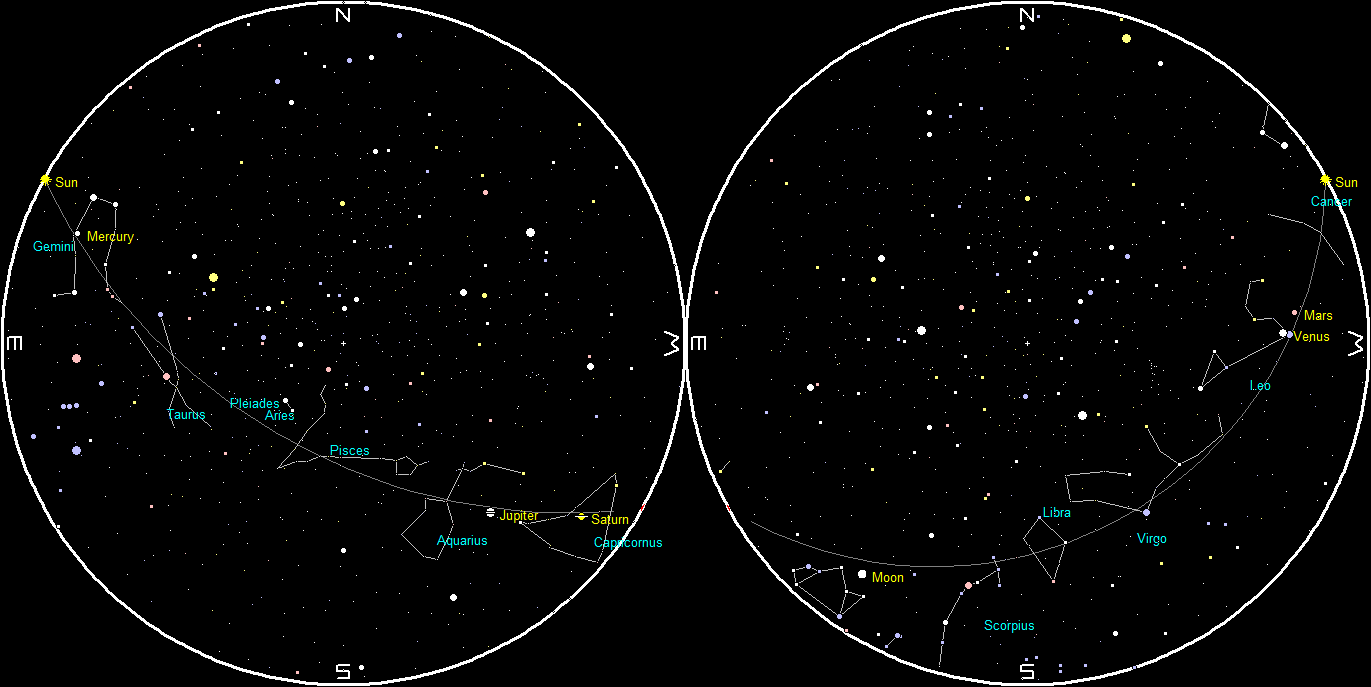
Planets and the Moon at sunset and sunrise of a single night, starting with sunset on the right on July 21, 2021. The night ends on the left with sunrise on the 22nd. Click on the image to enlarge. Created using my LookingUp program.
07/20/2021 – Ephemeris – Another giant leap for billionaires
This is Bob Moler with Ephemeris for Tuesday, July 20th. Today the Sun will be up for 15 hours and 4 minutes, setting at 9:21, and it will rise tomorrow at 6:17. The Moon, halfway from first quarter to full, will set at 3:18 tomorrow morning.
Today is the fifty-second anniversary of Neil Armstrong and Buzz Aldrin’s first steps on the Moon with Apollo 11 and the 45th anniversary of the first robotic spacecraft to soft land on Mars, Viking 1. And if all goes well, it will be the first crewed flight of Blue Origin’s New Shepard rocket with capsule up to over 100 kilometers altitude for 5 minutes of weightlessness. On board will be Jeff Bezos, CEO of Blue Origin, founder of Amazon, his brother, and 82-year-old Wally Funk, one of the Mercury 13 women, who took all the physical and mental tests that the Mercury 7 astronauts took back in the late 50s and early 60s. She’ll be the oldest person to fly into space. And with them will be Oliver Daemon, 18, the youngest person to fly in space.
The astronomical event times given are for the Traverse City/Interlochen area of Michigan (EDT, UT – 4 hr). They may be different for your location.
Addendum

A test Launch of the Blue Origin’s New Shepard rocket and Crew Capsule. Credit: Blue Origin.
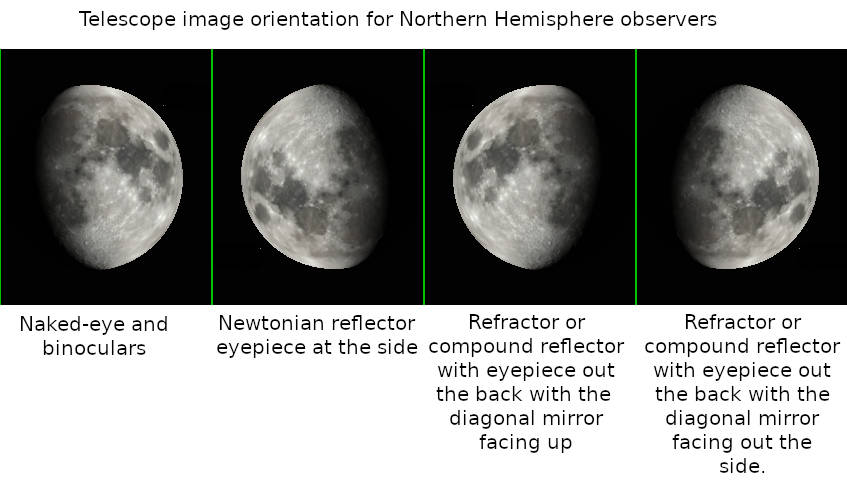
07/19/2021 – Ephemeris – How does your telescope’s image orientation compare to how it looks to the naked-eye?
This is Ephemeris for Monday, July 19th. Today the Sun will be up for 15 hours and 6 minutes, setting at 9:22, and it will rise tomorrow at 6:16. The Moon, 2 days past first quarter, will set at 2:35 tomorrow morning.
When you look through a telescope at the Moon, how does it look compare to how it looks to the naked-eye? Yes, it’s bigger and probably brighter. But how did its orientation change? Astronomical telescopes generally give an upside-own image, that is rotated 180 degrees. Newtonian reflector telescopes, with their eyepiece near the top of the telescope, give such an image, as do refractor telescopes where the diagonal mirror near the eyepiece is not used. When such a mirror is used a right side up, but mirror image is the result. The mirror image results when an odd number of reflections occur in the light path. Binoculars use two or four reflections. Newtonian reflectors have two reflections. It can be confusing sometimes.
The astronomical event times given are for the Traverse City/Interlochen area of Michigan (EDT, UT – 4 hr). They may be different for your location.
Addendum
07/16/2021 – Ephemeris – The best time to see detail on the Moon (IMHO)
This is Ephemeris for Friday, July 16th. Today the Sun will be up for 15 hours and 11 minutes, setting at 9:24, and it will rise tomorrow at 6:13. The Moon, 1 day before first quarter, will set at 1:08 tomorrow morning.
I consider the week centered on the first quarter moon to be the best time to view the Moon in a telescope. The best part of the Moon to view is near the terminator. The terminator is the sunrise line on the moon that we see before full moon, and the sunset line we see after full moon. The terminator is where the shadows are longest on the Moon and indeed on the Earth, with the low Sun in the sky. The Moon has lots of craters in its south or bottom part. We call that the lunar highlands, which is completely saturated with craters. Personally, I like craters. The darker lava plains that were initially called seas (the name stuck). They are flat and nearly featureless unless seen very close to the terminator, where the slight wrinkle ridges can be spotted.
The astronomical event times given are for the Traverse City/Interlochen area of Michigan (EDT, UT – 4 hr). They may be different for your location.
Addendum
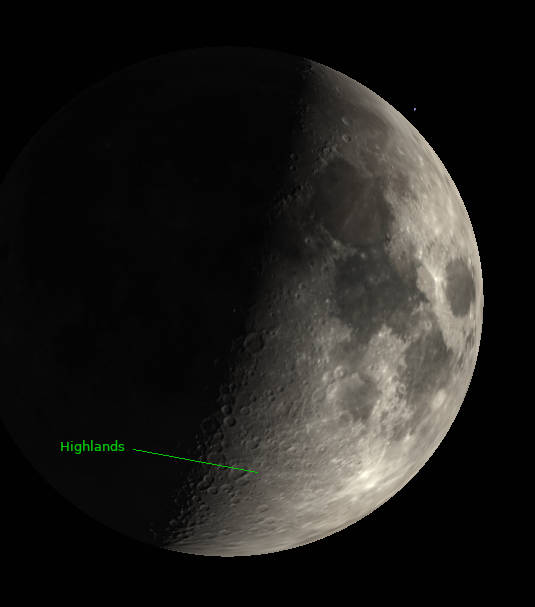
The Moon tonight at 11 pm, July 16, 2021, about a day and 7 hours before the instant of first quarter. Note the shadows that bring out the craters near the terminator. Created using Stellarium.
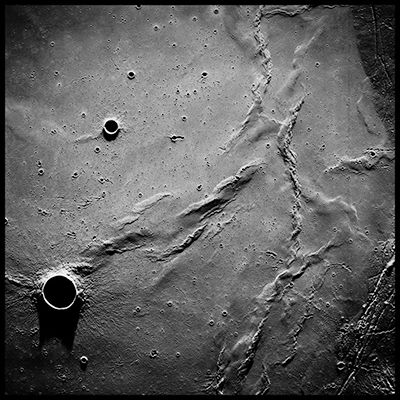
Wrinkle ridges on the floor of a lunar sea (lava plain). These are only visible at a very low sun angle near the terminator. I can find no information on this image, but apparently it was taken in lunar orbit. This is much sharper detail than can be seen from earth.

