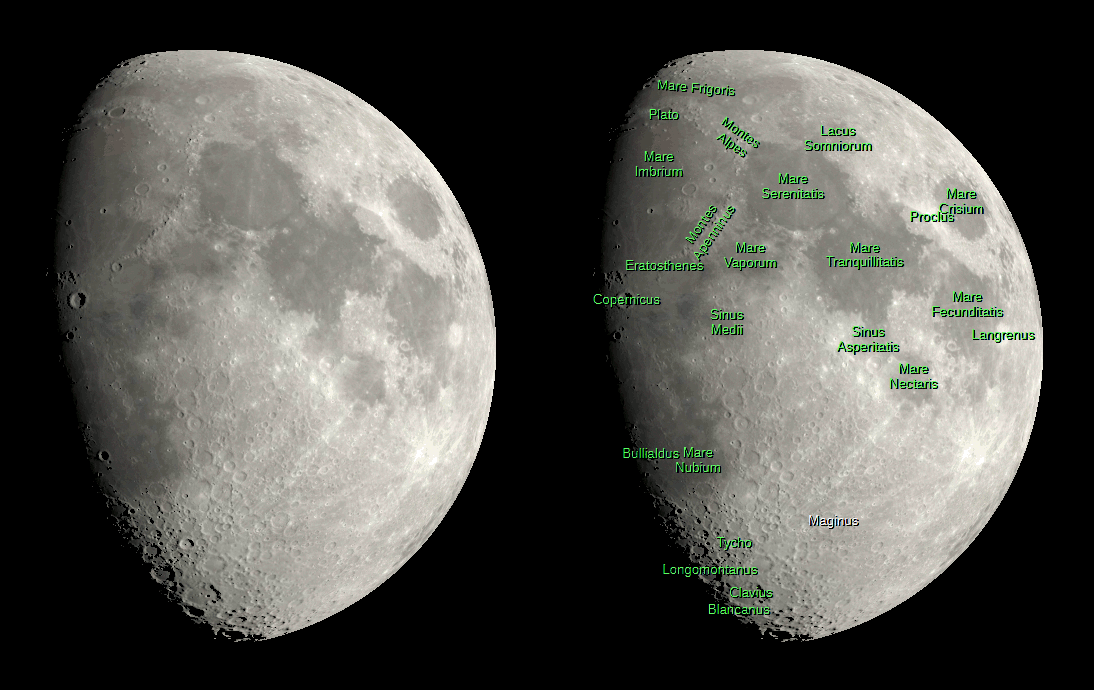
Ephemeris: 01/28/2025 – Tranquility amongst chaos
This is Bob Moler with Ephemeris for Tuesday, January 28th. Today the Sun will be up for 9 hours and 40 minutes, setting at 5:46, and it will rise tomorrow at 8:04. The Moon, 1 day before new, will rise at 8:34 tomorrow morning.
We’ve come off a tumultuous week, and while this program deals with topics generally in the heavens. Events on the Earth more than occasionally intrude. I often remind folks that the Earth is a planet too; an astronomical object in someone else’s sky. I consider astronomy not to be just about the heavens but about the entire universe of which the Earth is a part. The heavens above the Earth to the naked eye at least seems to be a tranquil place. That is because we cannot, with our human senses, pick up the energies of the great collisions and the other cataclysms in the universe, due to distance, our protective atmosphere and our limited senses. So going out under the stars for a while is a way to get away from it all: far, far away.
The astronomical event times given are for the Traverse City/Interlochen area of Michigan (EST, UT – 5 hours). Times will be different for other locations.
Addendum

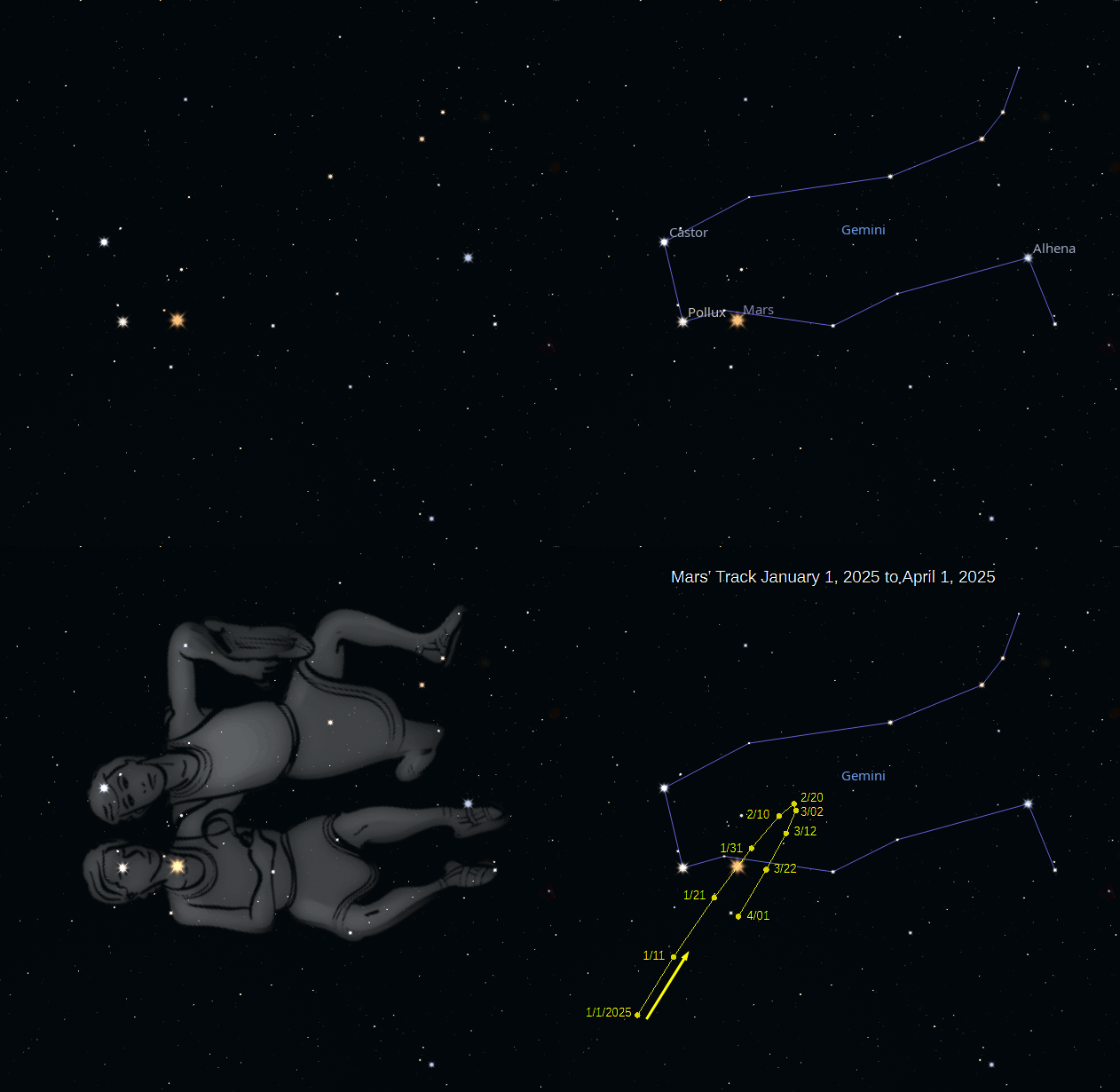
Ephemeris: 01/27/2025 – Gemini the twins with Mars this year
This is Ephemeris for Monday, January 27th. Today the Sun will be up for 9 hours and 38 minutes, setting at 5:44, and it will rise tomorrow at 8:05. The Moon, 2 days before new, will rise at 8:00 tomorrow morning.
Another famous winter constellation is Gemini. The constellation of Gemini the Twins is visible halfway to the zenith in the east, at the top and left of Orion the hunter, at 9 pm. The namesake stars of the two lads, are the two bright stars at the left end of Gemini, and are high and are due east. Castor is on top, while Pollux is below. From them come two lines of stars that outline the two, extending horizontally toward Orion. Mars is passing in front of the stars of Gemini during the first quarter of this year, reaching the western end of its retrograde loop and doubling back to the east. In Greek mythology the Gemini twins were half brothers, Castor was fathered by a mere mortal, while Pollux was fathered by Zeus, but were born together as twins. When Castor was killed during the quest for the Golden Fleece, Pollux pleaded with Zeus to let him die also, so Zeus placed them together in the sky.
The astronomical event times given are for the Traverse City/Interlochen area of Michigan (EST, UT – 5 hours). Times will be different for other locations.
Addendum
Ephemeris: 01/24/2025 – 100th anniversary of the last total solar eclipse visible in Northern Michigan
This is Ephemeris for Friday, January 24th. Today the Sun will be up for 9 hours and 31 minutes, setting at 5:40, and it will rise tomorrow at 8:08. The Moon, 3 days past last quarter, will rise at 5:22 tomorrow morning.
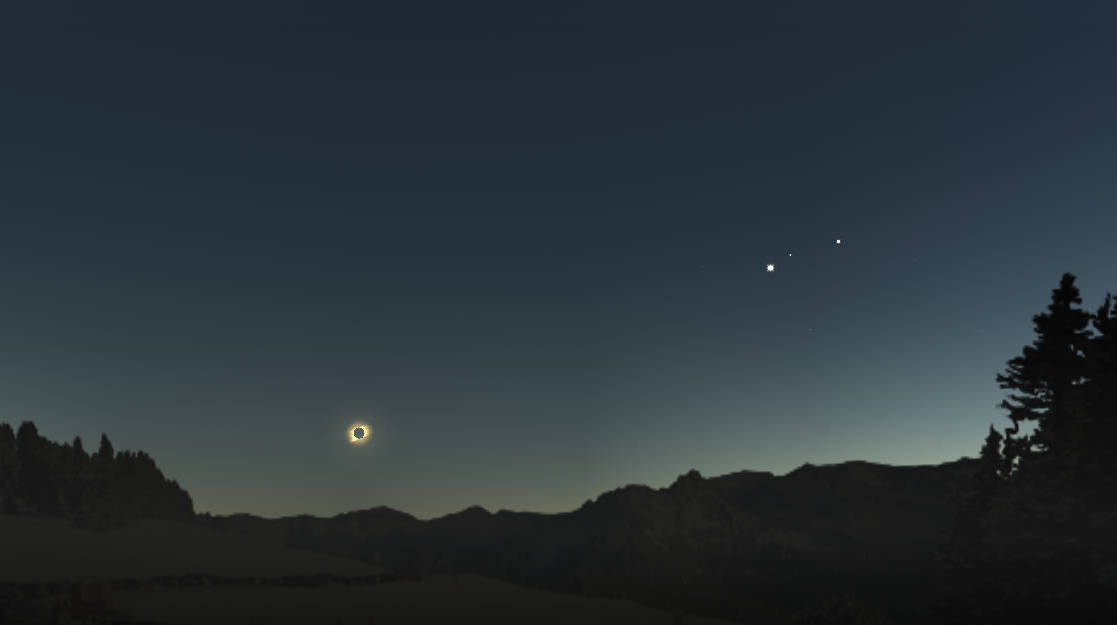
100 years ago this morning, Saturday, January 24th, 1925 the partial phase of a solar eclipse was already in progress as the Sun rose at 8:12 AM in the Grand Traverse region. I found no record of the weather that day, but being January, I don’t expect it was clear. So after sunrise instead of the daylight getting brighter as the Sun rose, it got darker. This was the last time Northern Michigan experienced a total solar eclipse. Totality was around 9:03 AM. After that the daylight gradually became brighter with the eclipse ending at 10:15 AM. If it was clear that morning the sight would have been spectacular with the eclipsed Sun’s corona shining low in the southeastern sky, off to the right were a group of three planets: Venus, Mercury and Jupiter in a tight line.
The astronomical event times given are for the Traverse City/Interlochen area of Michigan (EST, UT – 5 hours). Times will be different for other locations.
Addenda
My article in this January’s Stellar Sentinel, newsletter of the Grand Traverse Astronomical Society
Last year’s total solar eclipse was fantastic. Those of us in Northern Michigan had to travel to neighboring states or even further to experience it. When was the last time that someone in Northern Michigan didn’t have to leave home to see a total solar eclipse?
That was 100 years ago this January. On the morning of Saturday, January 24th, 1925 the partial phase of the eclipse was already in progress as the Sun rose at 8:12 AM. I found no record of the weather that day, but being January, I don’t expect that it was clear. So after sunrise instead of the daylight getting brighter as the Sun rose, it got darker. Totality began at 9:02 AM, midi-eclipse was at 9:03, and totality ended at 9:04. After that the daylight gradually became brighter with the eclipse ending at 10:15 AM. And things got back to normal. If it were clear that day, it would have been a spectacular sight with the corona shining brightly around the blacked out Sun only 7° above the southeastern horizon. A little off to the right would be 3 planets: Venus, Mercury and Jupiter within 4° of each other. That scene is reproduced in the image above, created using Stellarium.
The eclipse made especially big news because the path of totality clipped New York City. In fact the northern half of Central Park got to experience totality while the southern part did not.
Most of the then 48 states of the United States got to see at least part of the eclipse, although the path of totality started in northern Minnesota, crossed northern Wisconsin, western UP, and northern lower Michigan. It went across southern Ontario and across New York State, Connecticut, Massachusetts and Rhode Island, then into the Atlantic Ocean. The path of totality ended north of Scotland. Its path of totality crossed the path of last April’s total eclipse at Niagara Falls.
As I was preparing for this article I got to thinking that I saw the total solar eclipse in Bottineau, North Dakota on February 26, 1979. The 1925 eclipse was on January 24th. A one-month difference. Subtracting 1925 from 1979 is a difference of 54 years. I had seen this eclipse before. Eclipses nearly the same character reoccur in a period of 18 years 10 or 11 1/3rd days. The period is called a saros which was discovered by the Babylonians a long time ago. The third of a day is a kicker. Each eclipse of the saros series occurs 120° in longitude west of the previous one so in three saros periods you get 360°, a whole circle, back to the same longitude again. The Greeks had a word for it, exeligmos, meaning ’turning of the wheel’.
So, when is our next chance for a stay-at-home total solar eclipse? On average any particular place on the Earth can see a total solar eclipse about once in 375 years. Traverse City will see its next total solar eclipse on October 26, 2144. That’s cheating on the average, with only 219 years, and only 120 years away If you can’t wait that long, there is a total eclipse in the UP in 2106. There is a much sooner annular eclipse visible from Northern Michigan on June 11, 2048. It’s an exeligmos from the annular eclipse that clipped the southeast corner of Michigan on May 10, 1994, which I viewed from Genoa, Ohio.
We will have a total lunar eclipse this year. Its partial phase begins just after midnight March 14th. Next year we will have another total lunar eclipse in March and a little nibble of a solar eclipse in August.
Ephemeris: 01/23/2025 – Conflict in the heavens
This is Ephemeris for Thursday, January 23rd. Today the Sun will be up for 9 hours and 28 minutes, setting at 5:39, and it will rise tomorrow at 8:09. The Moon, 2 days past last quarter, will rise at 4:15 tomorrow morning.
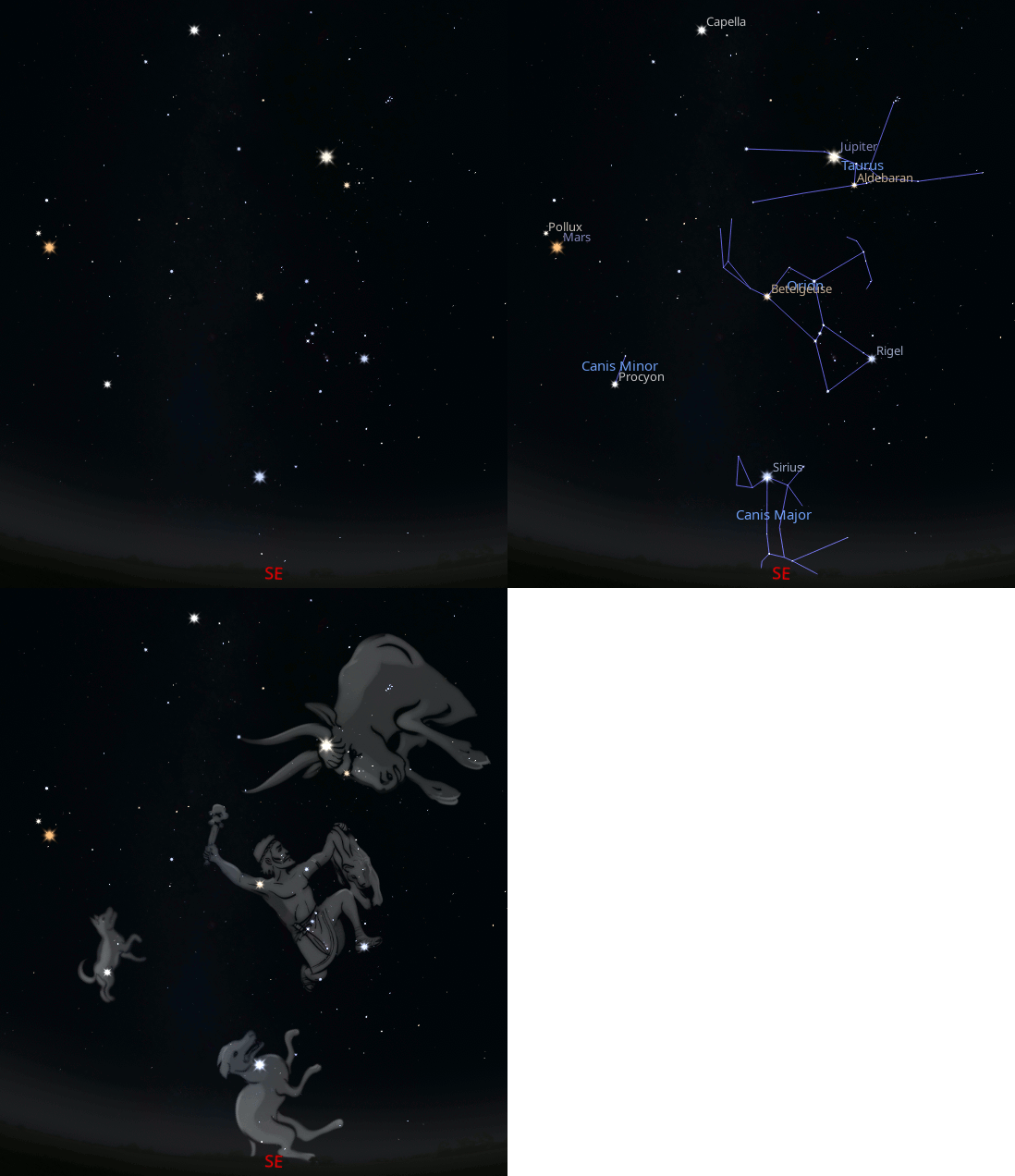
There are several instances in the Greek heavens where constellations appear to interact with one another. This is true with Orion the hunter and Taurus the bull. Taurus, whose face is the letter V of stars, near Jupiter this year. The orangish star Aldebaran as his angry bloodshot eye is charging down on Orion, who has raised a lion skin shield on one arm and an upraised club in the other, ready to strike. They have been frozen in this pose for millennia. Stars below and right of the letter V of the Bull’s face suggest the front part of his body and his front legs charging at Orion. Orion also has two hunting dogs, Canis Major and Canis Minor. Canis Major with its dazzling star Sirius will rise around 6:21 on a line extending down from Orion’s belt.
The astronomical event times given are for the Traverse City/Interlochen area of Michigan (EST, UT – 5 hours). Times will be different for other locations.
Addendum
Perhaps Jupiter is not intruding, because the Roman god Jupiter is the Greek god Zeus, who turned himself into a bull to carry off the maiden Europa. And Europa is with him still as Jupiter’s moon, and target of NASA’s recently launched Europa Clipper spacecraft.
Ephemeris: 01/22/2025 – Let’s take our weekly look at the whereabouts of the naked-eye planets
This is Ephemeris for Wednesday, January 22nd. Today the Sun will be up for 9 hours and 26 minutes, setting at 5:38, and it will rise tomorrow at 8:10. The Moon, 1 day past last quarter, will rise at 3:07 tomorrow morning.
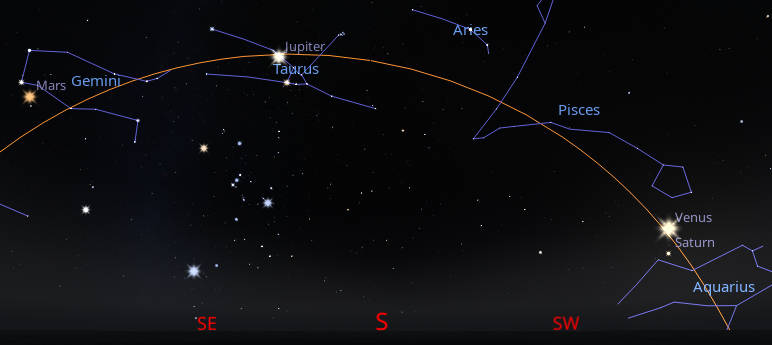
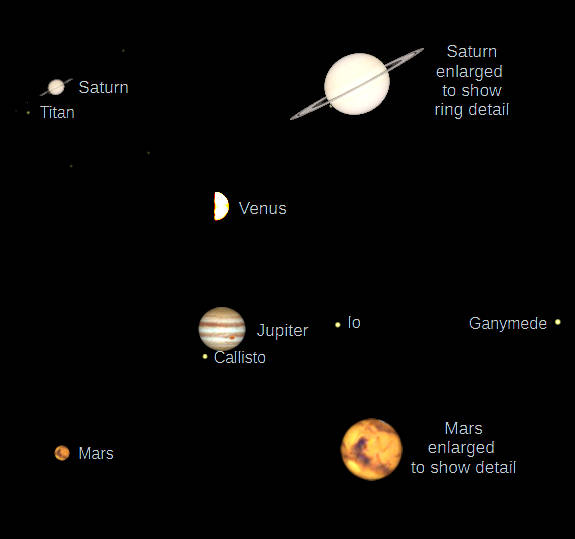
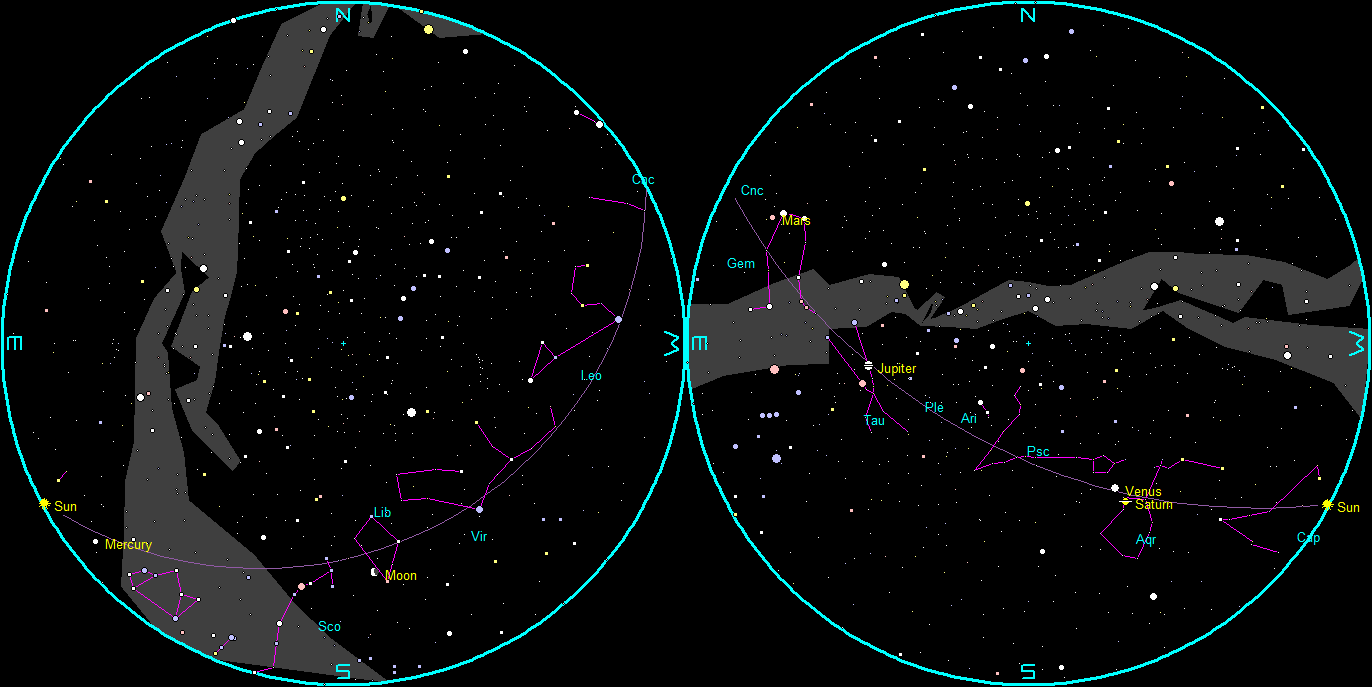
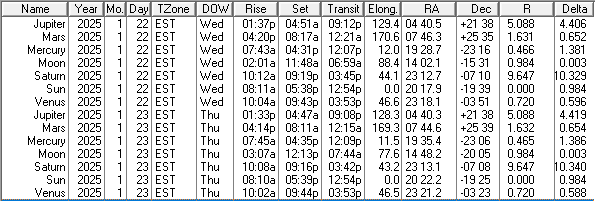
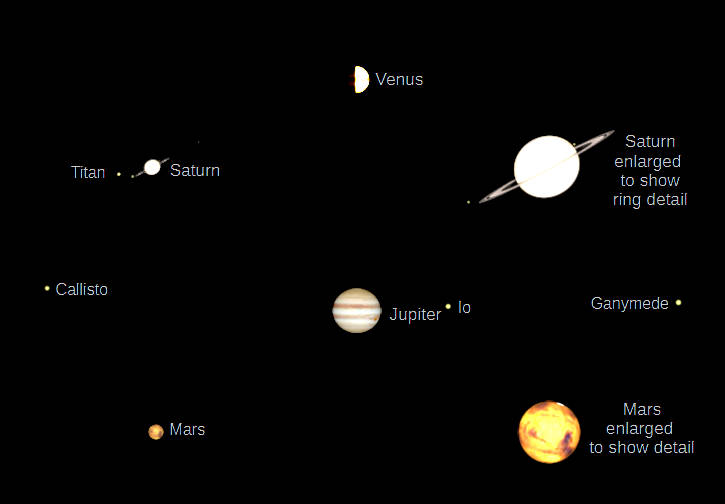
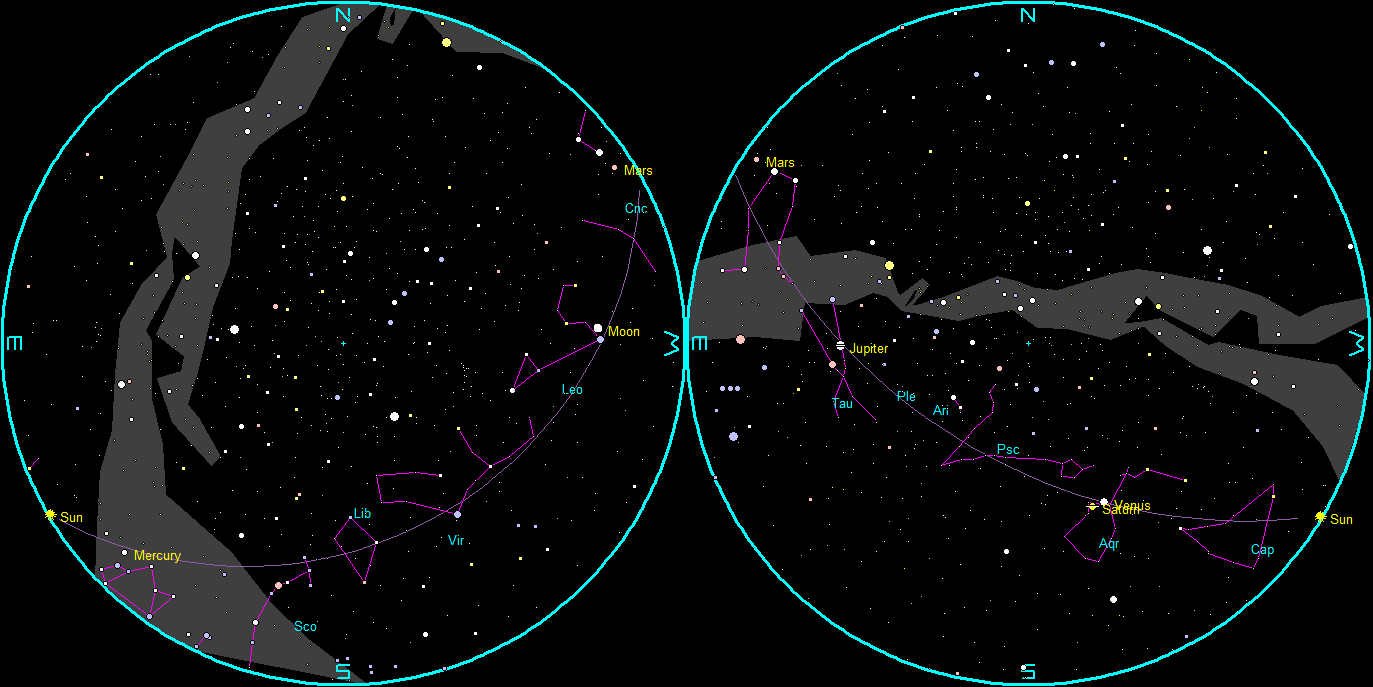
Let’s take our weekly look at the whereabouts of the naked-eye planets. At 8 PM this evening four of the five naked eye planets will be out. Starting from the West we have Venus the brightest of all low in the west southwest. Directly below it will be the much dimmer Saturn. Jupiter, the second-brightest planet will be high in the southeast. Below and right of it is the letter V shape of stars that is the head of Taurus the bull. Farther below is the spectacular constellation of Orion the hunter. The 4th planet out is Mars, the third brightest planet now, with its distinctive reddish hue, near the star Pollux in Gemini. The fifth naked eye planet, Mercury, is too close to the Sun in the morning to be visible.
The astronomical event times given are for the Traverse City/Interlochen area of Michigan (EST, UT – 5 hours). Times will be different for other locations.
Addendum
Ephemeris: 01/21/2025 – How to find the Great Orion Nebula
This is Ephemeris for Tuesday, January 21st. Today the Sun will be up for 9 hours and 24 minutes, setting at 5:36, and it will rise tomorrow at 8:11. The Moon, at last quarter today, will rise at 2:01 tomorrow morning.
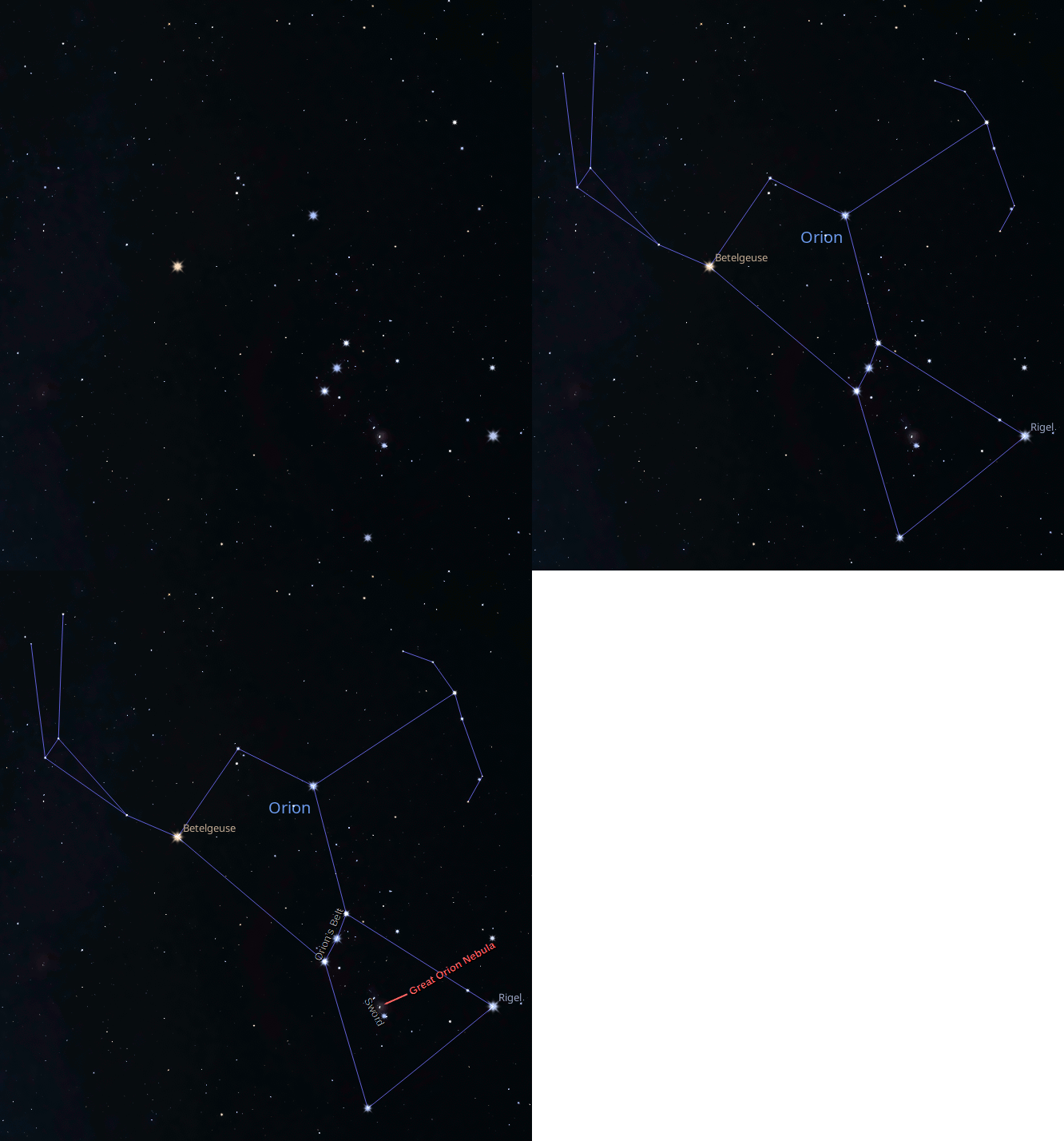
The constellation Orion the hunter is in the southeast at 8 PM. Its rectangle of four stars lean to the left and frame his belt of three stars in a straight line in the center of the rectangle. Below the belt is what appear to the unaided eye as three more stars arranged in a shorter straight line, his sword. Binoculars aimed at the middle stars of the sword will find a glowing haze around those stars. That is the Great Orion Nebula, also known as Messier 42 or M 42. It is the birthplace of stars, illuminated by a clutch of four hot young stars. Besides stars and protostars being born in the nebula, there are also many double planets not belonging to stars discovered by the James Webb Space Telescope. The planets are only detectable in the infrared, Webb’s specialty.
The astronomical event times given are for the Traverse City/Interlochen area of Michigan (EST, UT – 5 hours). Times will be different for other locations.
Addendum
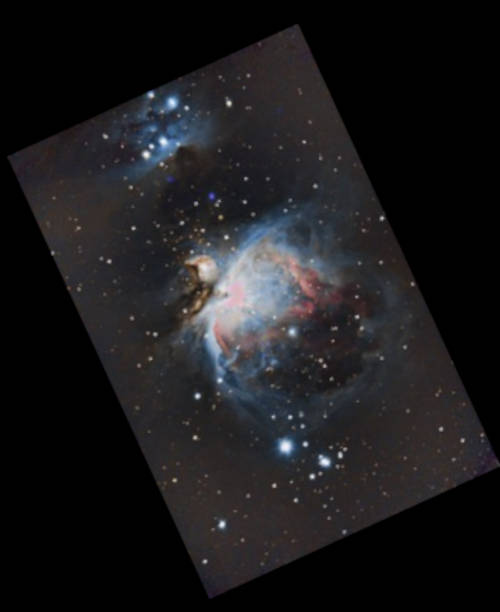
The blog’s archive has many other posts about the Great Orion Nebula and other nebulae in Orion.
Ephemeris: 01/20/2025 – The planets augment the Winter Hexagon
This is Ephemeris for Martin Luther King Jr. Day, Monday, January 20th. Today the Sun will be up for 9 hours and 22 minutes, setting at 5:35, and it will rise tomorrow at 8:12. The Moon, 1 day before last quarter, will rise at 12:56 tomorrow morning.
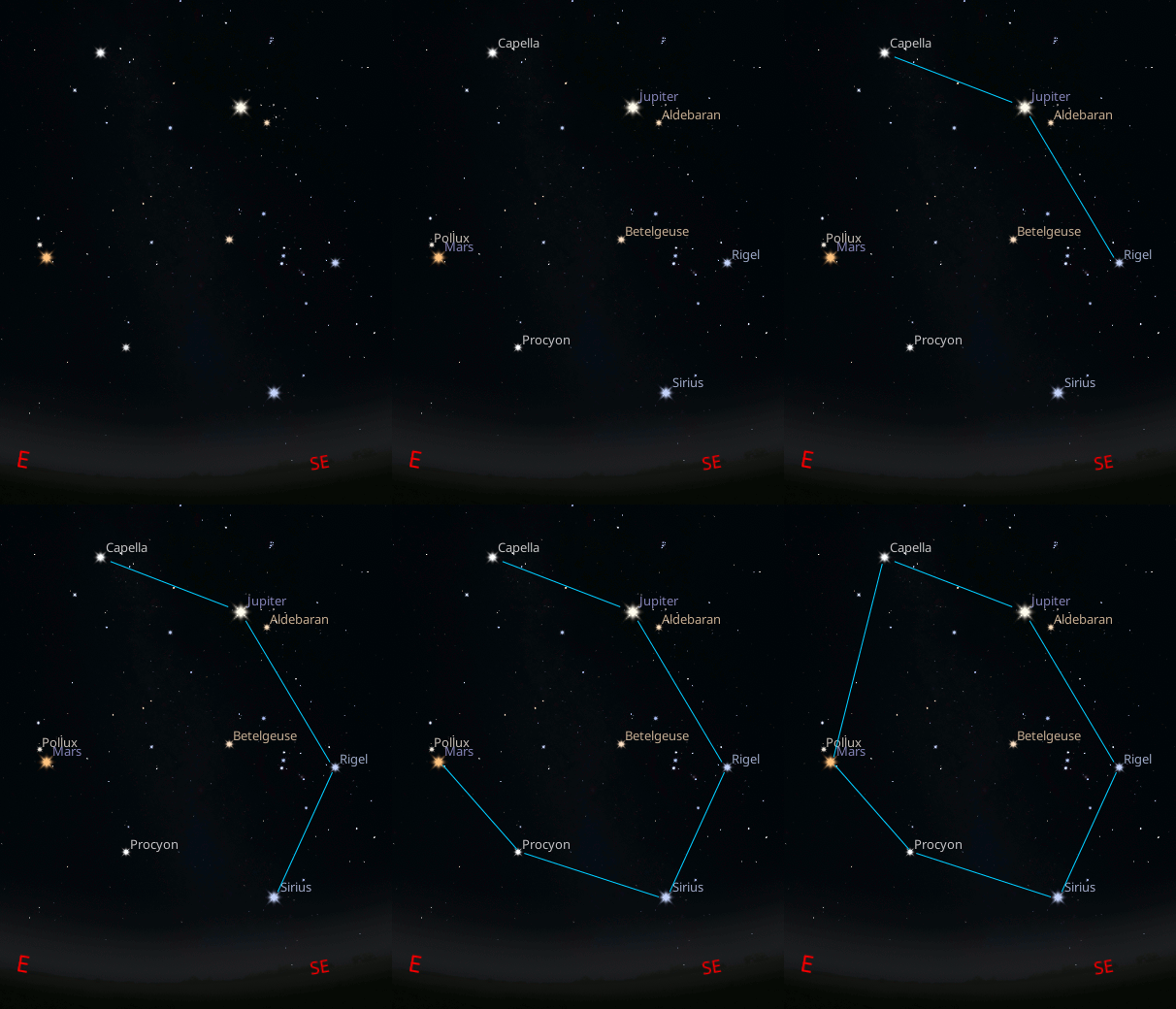
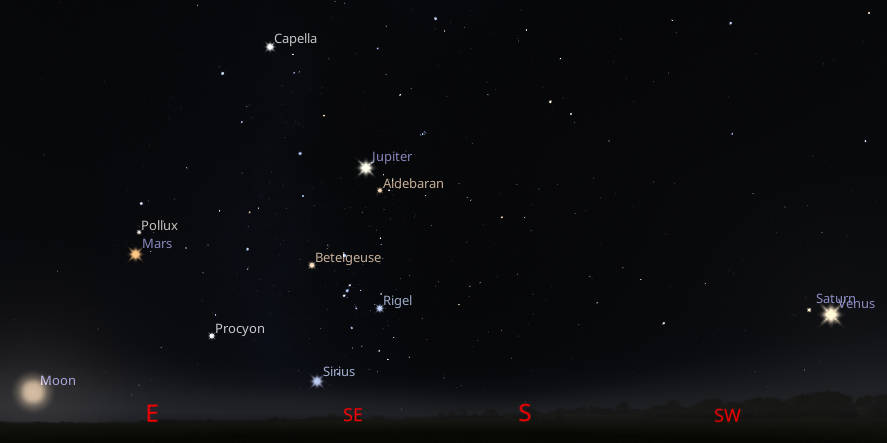
The winter circle or more properly hexagon, seen in the winter sky this evening, has the addition of two planets, and they’re in the proper location so that they don’t spoil the hexagon. We start at the top with the star Capella high in the east. We move clockwise downward to Jupiter and below it the star Aldebaran. We drop lower to Orion’s knee and the star Rigel, then down to Sirius, low in the southeast, the brightest nighttime star, but doesn’t hold a candle to Jupiter. Then we go above left to Procyon and upwards and left to Mars, which is near Pollux, and finally back up to Capella. That’s that is our winter hexagon right now, so take it in while you can, before Jupiter and Mars move off and mess it up.
The astronomical event times given are for the Traverse City/Interlochen area of Michigan (EST, UT – 5 hours). Times will be different for other locations.
Addendum
As for events happening on Earth: Resist!
Ephemeris: 01/17/2025 – Venus passes Saturn in conjunction tomorrow
We end this week of planetary events with this post:
This is Ephemeris for Friday, January 17th. Today the Sun will be up for 9 hours and 16 minutes, setting at 5:31, and it will rise tomorrow at 8:14. The Moon, halfway from full to last quarter, will rise at 9:44 this evening.
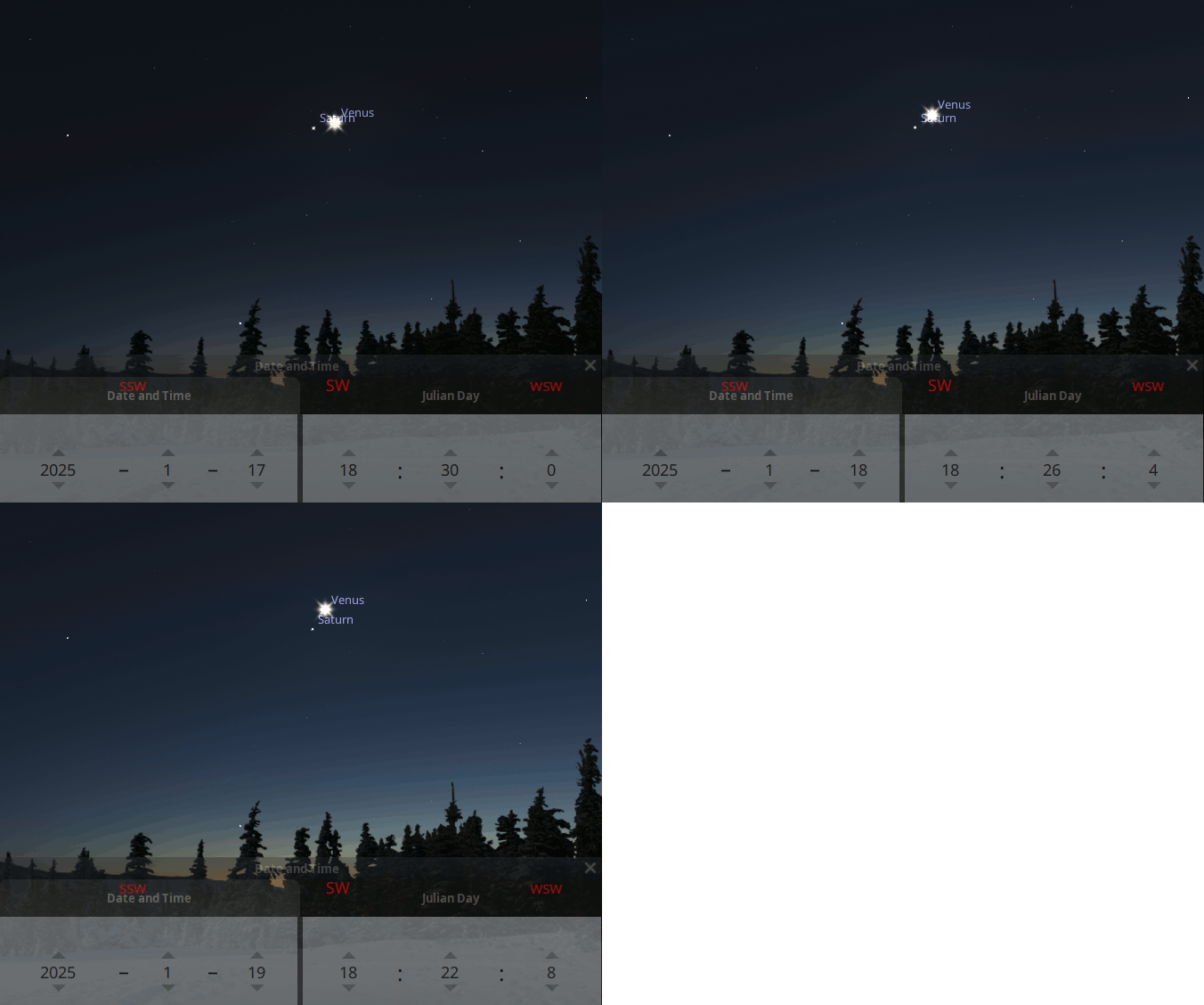
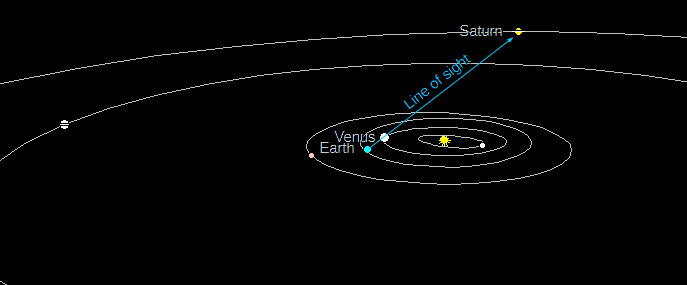
Venus will pass the slower moving Saturn at about 11:00 tomorrow morning, so tonight and Saturday night are your best times to see these two planets at their closest. They will probably be slightly closer tomorrow night than tonight. This apparent meeting of two planets is called a conjunction. The two planets are not anywhere close to each other, in fact Venus is closer than the Sun right now, and Saturn is 10 times farther away than the Sun. They just happen to be near the same line of sight. From there both will lose their battle with evening twilight. Saturn will make it back to conjunction with the Sun first, ten days before Venus. Before that Mercury will pass in conjunction with Venus.
The astronomical event times given are for the Traverse City/Interlochen area of Michigan (EST, UT – 5 hours). Times will be different for other locations.
Addendum
Ephemeris: 01/16/2025 – Mars has the second most eccentric orbit of all the planets
This is Ephemeris for Thursday, January 16th. Today the Sun will be up for 9 hours and 14 minutes, setting at 5:30, and it will rise tomorrow at 8:15. The Moon, 3 days past full, will rise at 8:37 this evening.
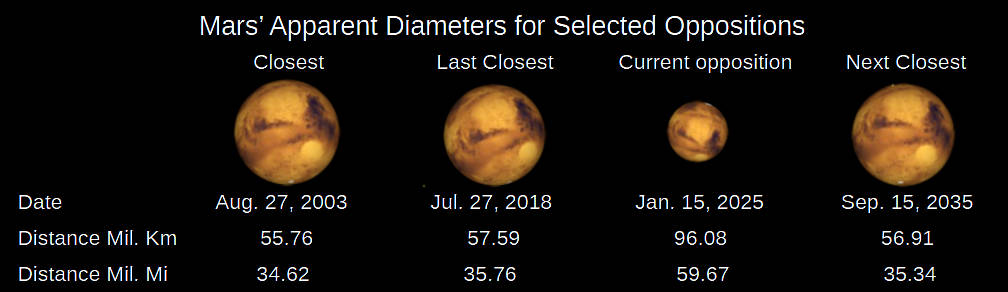
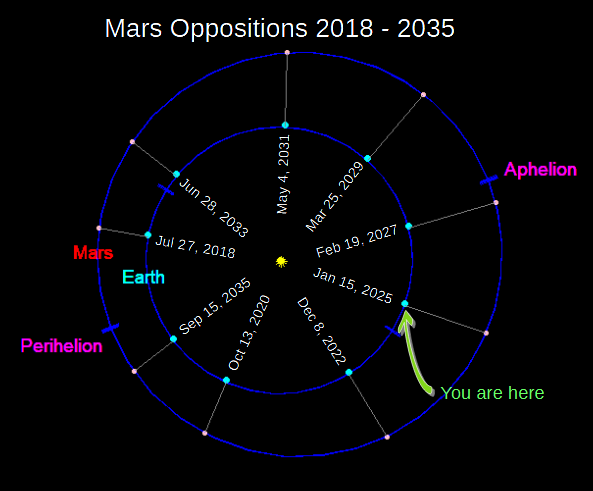
The planet Mars has the second most eccentric orbit of all the planets, after Mercury. But with yesterday’s opposition of Mars it only came down to 59.7 million miles away. At its absolute closest to us, which occurred in 2003, Mars got down to 34.6 million miles away. Since Mars orbits the Sun in little less than two earth years we catch up to it a little farther down in its orbit every time. Mars closest approaches occur every 15 or 17 years. The last close approach was in 2018. The next closest approach will occur in 2035 a span of 17 years. The closest approach before 2018 occurred in 2003 the span between those two was 15 years. Even at closest approach Martian detail is hard to see with a small telescope.
The astronomical event times given are for the Traverse City/Interlochen area of Michigan (EST, UT – 5 hours). Times will be different for other locations.
Addendum
Ephemeris: 01/15/2025 – Our weekly look at the whereabouts of the naked-eye planets
This is Ephemeris for Wednesday, January 15th. Today the Sun will be up for 9 hours and 12 minutes, setting at 5:28, and it will rise tomorrow at 8:15. The Moon, 2 days past full, will rise at 7:27 this evening.
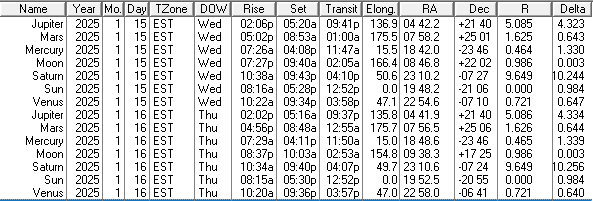
Let’s take our weekly look at the whereabouts of the naked-eye planets. At 8 PM this evening four of the five naked eye planets will be out. Starting from the West we have Venus the brightest of all low in the west southwest. Left and a bit above it is Saturn. They will appear at their closest Friday and Saturday nights. Jupiter, the second-brightest planet will be high in the southeast. The 4th planet out is Mars, which is at opposition from the Sun tonight. Mars will not get this close to the Earth again until 2031. It shines with its reddish hue a third as bright as Jupiter in the eastern sky. On unusually close approaches, Mars can actually outshine Jupiter. The fifth naked eye planet, Mercury, is too close to the Sun on the morning side to be visible.
The astronomical event times given are for the Traverse City/Interlochen area of Michigan (EST, UT – 5 hours). Times will be different for other locations.
Addendum
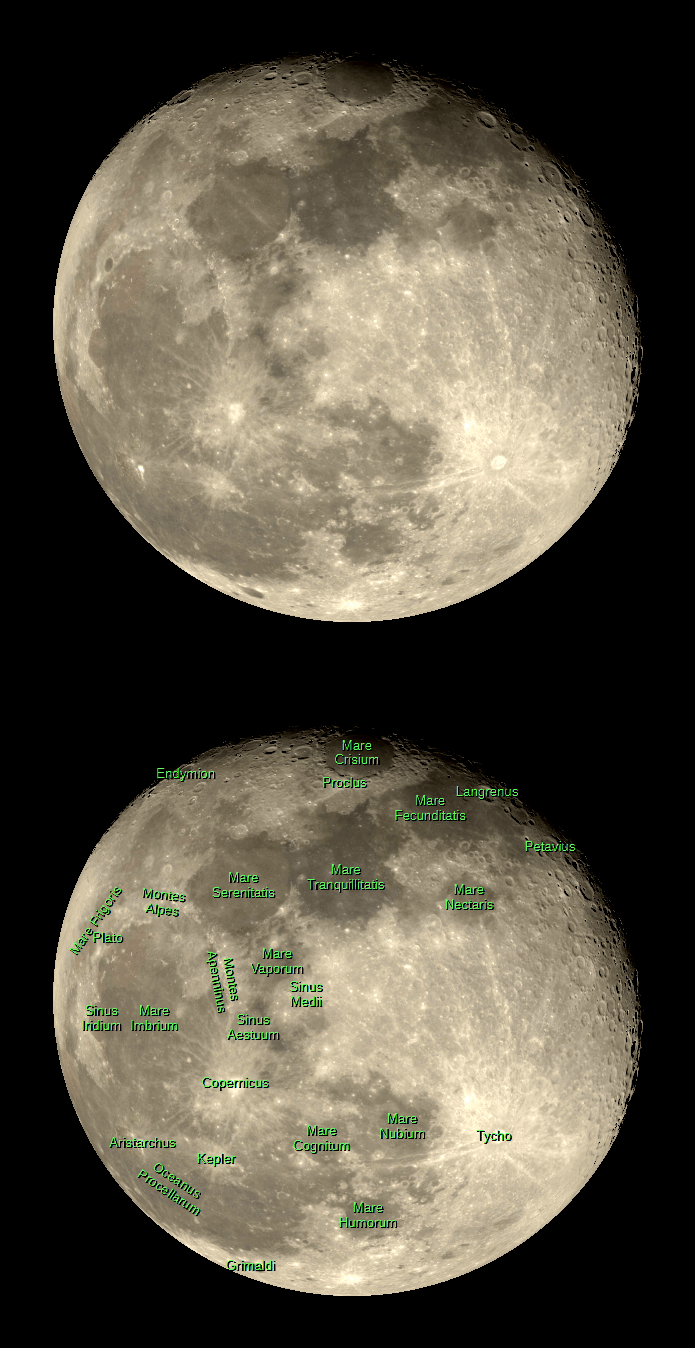
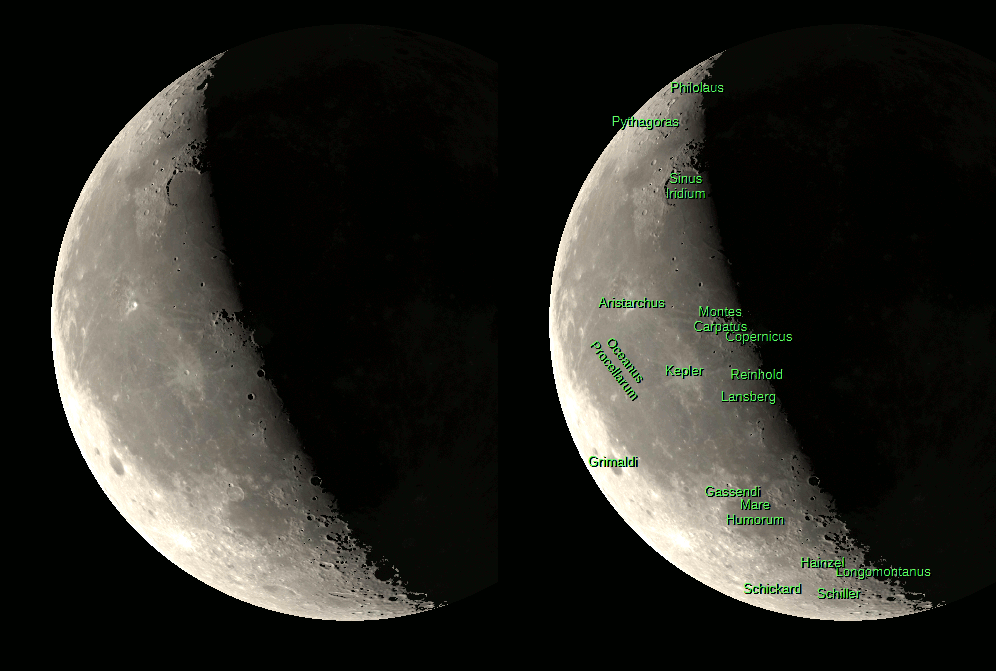
Translations of some lunar feature names according to Virtual Moon Atlas
Mare Cognitum – Sea of Knowledge
Mare Crisium – Sea of Crises
Mare Fecunditatis – Sea of Fruitfulness
Mare Frigoris – Sea of Cold
Mare Humorum – Sea of Moisture
Mare Imbrium – Sea of Showers
Mare Nectaris – Sea of Nectar
Mare Nubium – Sea of Clouds
Mare Serenitatis – Sea of Serenity
Mare Tranquillitatis – Sea of Tranquility
Mare Vaporum – Sea of Vapors
Montes Alpes – Alps Mountains
Montes Apenninus – Apennines Mountains
Oceanus Procellarum – Ocean of Storms
Sinus Iridium – Bay of Rainbows
Sinus Medii – Central Bay
Mare is pronounced Mar-e. Craters are named for persons, real or otherwise.
 Bob Moler's Ephemeris Blog