Ephemeris: 02/09/2026 – Orion’s amazing belt stars
This is Ephemeris for Monday, February 9th. Today the Sun will be up for 10 hours and 11 minutes, setting at 6:02, and it will rise tomorrow at 7:50. The Moon, at last quarter today, will rise at 3:01 tomorrow morning.
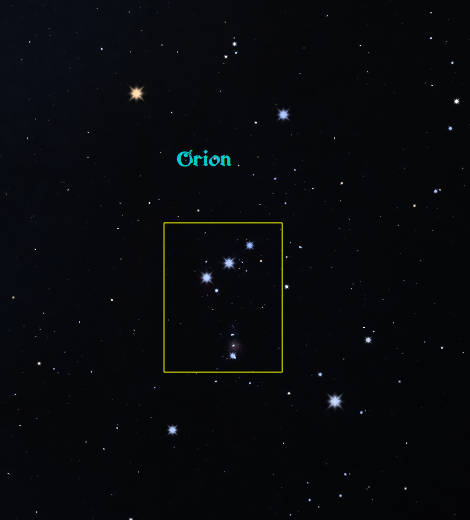
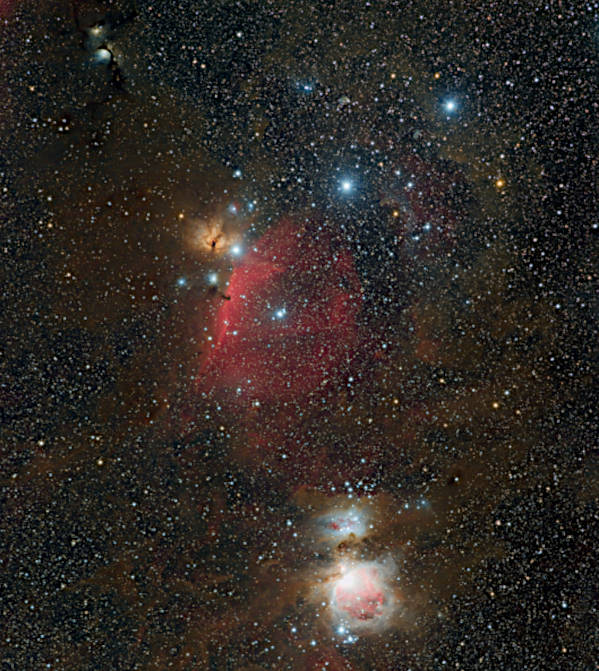
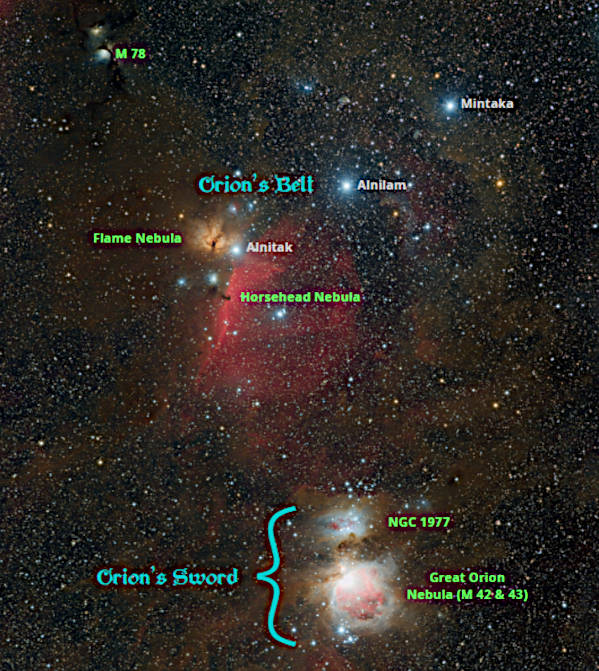
Orion’s belt of three stars is one of the most noticeable star groupings in the sky. There are no other groups of three bright stars in a straight line visible anywhere else in the sky. The star’s names from left to right are Alnitak, Alnilam and Mintaka. They are actually a bit farther away than the other bright stars of Orion. Alnilam, the center star, is over three times the distance of red giant Betelgeuse above them and over twice as far as blue white giant star Rigel below them. Alnilam is 375 thousand times brighter than the Sun. These three stars were also known as Frigga’s Spindle by the Norsemen. Frigga, also known as Freya, is the goddess from which we get the name of the day of the week we call Friday.
The astronomical event times given in this blog are for the Traverse City/Interlochen area of Michigan (Lat 44.7° N, Long 85.7° W; EST, UT – 5 hours) unless stated otherwise. Times will be different for other locations.
Addendum
Ephemeris: 02/06/2026 – GTAS Tonight, Annual Telescope Clinic
This is Ephemeris for Friday, February 6th. Today the Sun will be up for 10 hours and 3 minutes, setting at 5:58, and it will rise tomorrow at 7:54. The Moon, 3 days before last quarter, will rise at 11:41 this evening.
Did you or someone in your family get a telescope for Christmas, or have one in a closet or attic because you don’t know how to put it together or how to operate it? Or maybe you are trying to figure out which one to buy. Well, tonight’s your night. The Grand Traverse Astronomical Society (GTAS) will host the annual Telescope Clinic starting at 8 pm at Northwestern Michigan College’s Rogers Observatory. Professor Jerry Dobek will demonstrate the types of telescopes and how to use them. He and other members may be able to help with problems by checking out participants telescopes, so “bring ‘em if you’ve got ‘em.” This is interesting to say the least. Go to gtastro.org for more information and a link to attend the meeting via Zoom.
The astronomical event times given in this blog are for the Traverse City/Interlochen area of Michigan (Lat 44.7° N, Long 85.7° W; EST, UT – 5 hours) unless stated otherwise. Times will be different for other locations.
Addendum – Some telescope basics
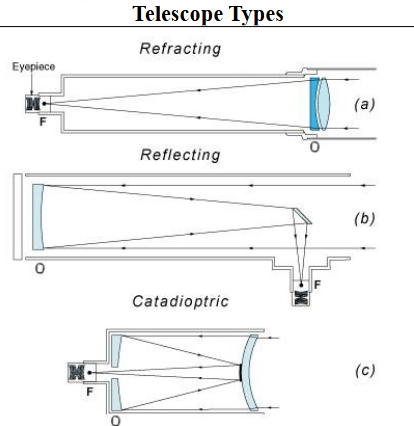
There are two basic telescope types: The refractor or refracting telescope and reflector or reflecting telescope. The reflecting type shown is a Newtonian telescope, is the simplest and most inexpensive reflector. The Catadioptric (Mirror-Lens) telescope uses a corrector plate in front of the telescope. The one shown is a type called a Maksutov-Cassegrain. The more popular type is the Schmidt-Cassegrain which uses a thin, nearly flat corrector plate. The Cassegrain design uses a convex secondary mirror the sends the light back through a hole in the Primary mirror (O) to an eyepiece.
Refracting telescopes get expensive in a hurry as the diameter of the objective (O) lens increases due to the requirements of at least 4 lens surfaces of the at least two lenses that make it up. The reason for it is to correct for color fringes that would result around bright objects seen through it (chromatic aberration), and the optical quality of the glass required. Reflectors primary mirror have a single surface and the glass simply supports it. The corrector plates of the catadioptric telescopes don’t create chromatic aberration because they don’t bend light much. Telescopes are rated by the diameter of their objectives
(O). One could purchase an 11 inch Newtonian telescope for less than $1,000, An 11” Schmidt-Cassegrain for $3,000+, or an 11” refractor (Don’t ask, you can’t afford it).
The reason astronomers go for wider telescopes (greater aperture) is two-fold: To gather more light to better see faint objects, and to increase resolving power, the ability of the telescope to see fine detail and be able to use higher magnification. We’ll see the rules when we talk about eyepieces.
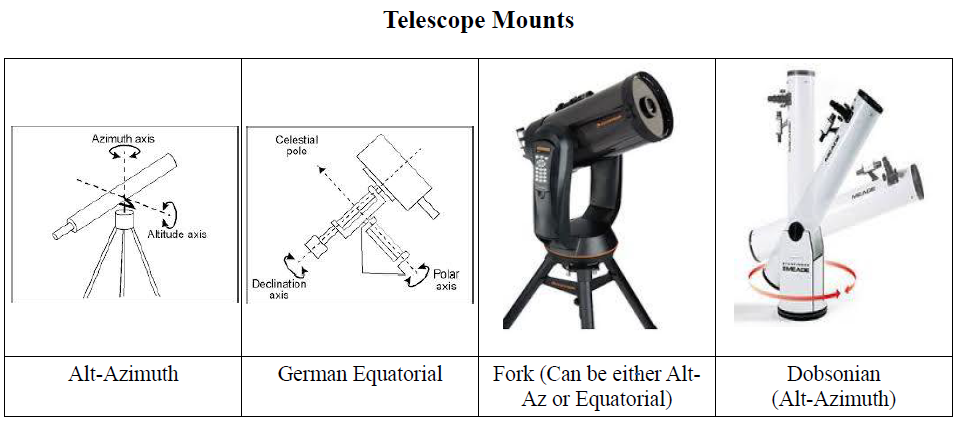
There are four basic mounts. Equatorial mounts have to be aligned to the earth’s axis in order to work properly to follow objects in the sky. Alt-Azimuth mounts are the simplest and easiest to set up, but all but the most sophisticated cannot be made to track objects in the sky as the Earth rotates. A relatively new addition to mounts is the computerized “Go To” feature allows the telescope to find objects itself when the mount is properly aligned to the sky. Telescopes with Dobsonian mounts have the largest aperture for the buck. Cheap telescopes tend to have cheap mounts that are hard to use and wobbly, especially the ones with German equatorial mounts. An alt-azimuth mount would be steadier in this case.
Telescope Finders
The telescope eyepiece covers so little area of the sky to make finding anything virtually impossible. So all telescopes have small finder scopes attached of 6 to 10 power, or 1 power devices that put a finder circle or red dot on the sky when you look through them. A newer finder idea is a mount for a green laser that projects a beam in the atmosphere toward the object to be located. The author prefers a finder with an aperture of at least 50mm to be able to see most of the dim objects he’s looking for. In the main telescope, use the lowest power eyepiece because it has the widest field of view.
Eyepieces and filters
Magnifying power or magnification is not a telescope property. The eyepiece is essentially a magnifying glass to view the real image that the objective lens or mirror produces at the focal plane (F) in the telescope type diagram on the first page. The focal length of the objective lens or mirror or the effective focal length of the mirrors of the catadioptric telescope divided by the focal length of the eyepiece gives the magnification of that particular combination of telescope and eyepiece. The focal length of the eyepiece is marked on the eyepiece. The telescope focal length may or may not be stamped or marked on the telescope, if not, check the owner’s manual for that quantity.
A telescope will generally come with one or two eyepieces, The lowest power eyepiece will generally be a 25mm eyepiece of some kind. Eyepieces come in 2 standard barrel sizes, 1 ¼ inch and 2 inch. There are some old telescopes that only accept sub 1 inch diameter eyepieces. You may have to hunt to see if any of those size eyepieces are still around. The cheaper the telescope the crummier the eyepiece. Decent eyepieces start at around $50 and go up from there. The best way to tell which eyepiece fits your needs is to ask an astronomer what eyepiece he or she is using at a star party.
About magnification. The highest usable magnification in a telescope is calculated as the aperture in millimeters times 2.4 or aperture in inches times 60. After that the image becomes fuzzy and dim. It’s due to the wave nature of light. The author halves those values in his experience. He’d rather have small crisp images than big fuzzy ones devoid of contrast.
A handy accessory to have is a Barlow lens, a negative lens in a tube, that the eyepiece is slipped in before inserting the pair in the eyepiece holder. It will double the power of the eyepiece. So with two eyepieces and a Barlow four separate magnifications are available. The author would rather use a lower power eyepiece with a Barlow than a high power eyepiece of the same power. In that same vein a good low power wide angle eyepiece is generally the first extra eyepiece astronomers purchase. More expensive ones can be like viewing the universe in IMAX. Here is a truism: Amateur astronomers use their telescope’s lowest power 90% of the time.
Solar filters that fit over the front of the telescope and finder is a fine addition to any telescope and allow viewing of our star close up. Some old telescopes have a solar filter that fits in an eyepiece. For your visual health take the filter, go down to the bay and see how many times you can skip that sucker on the water. There are also filters that can filter out some of the light pollution for dim nebulae. There are filters also to bring out detail in planets.
Above all, have fun! If you have any questions ask that friendly amateur astronomer over there standing by his or her telescope.
Ephemeris: 02/05/2026 – The celestial unicorn
Feb 5. This is Ephemeris for Thursday, February 5th. Today the Sun will be up for 10 hours even, setting at 5:57, and it will rise tomorrow at 7:55. The Moon, halfway from full to last quarter, will rise at 10:34 this evening.
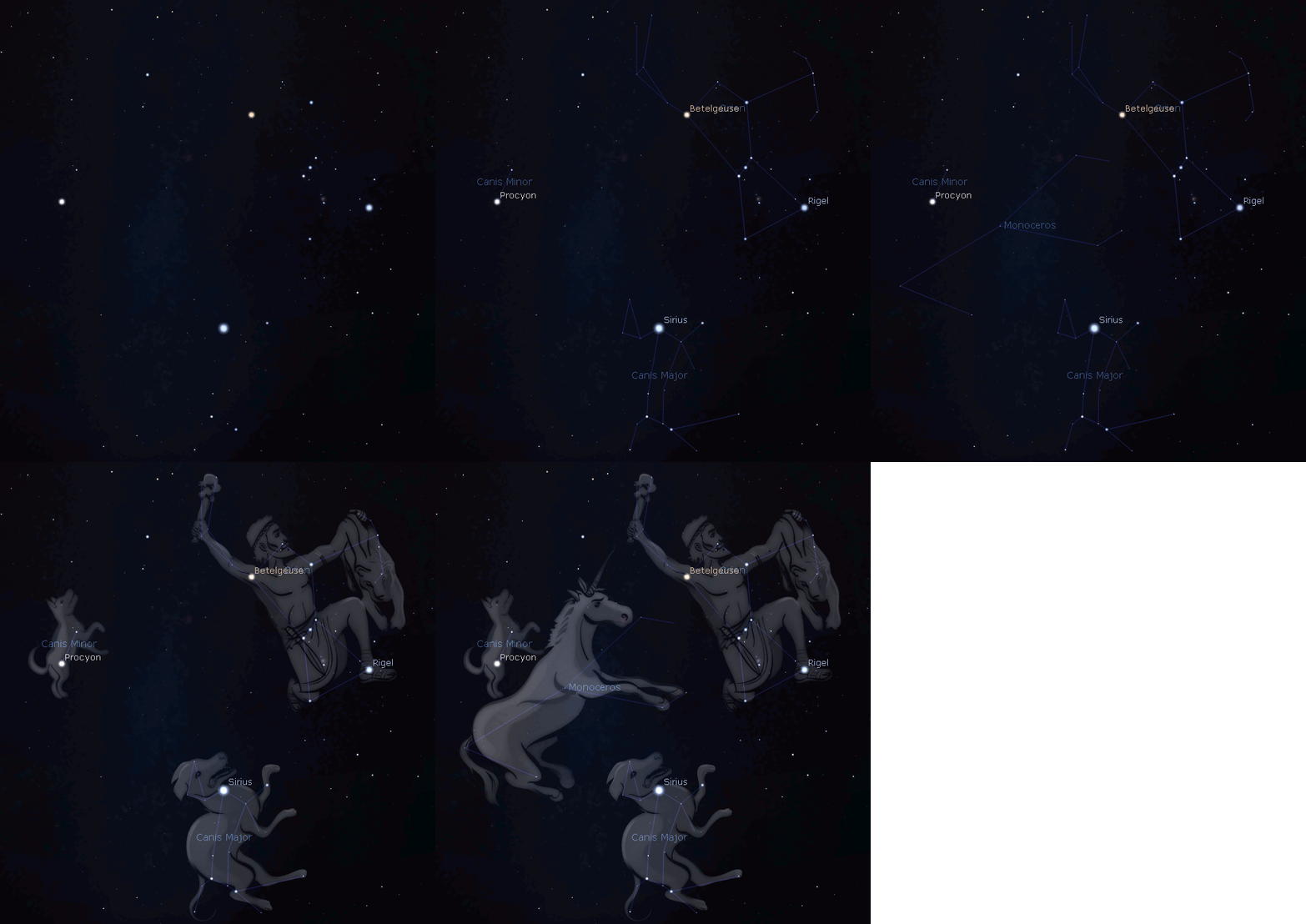
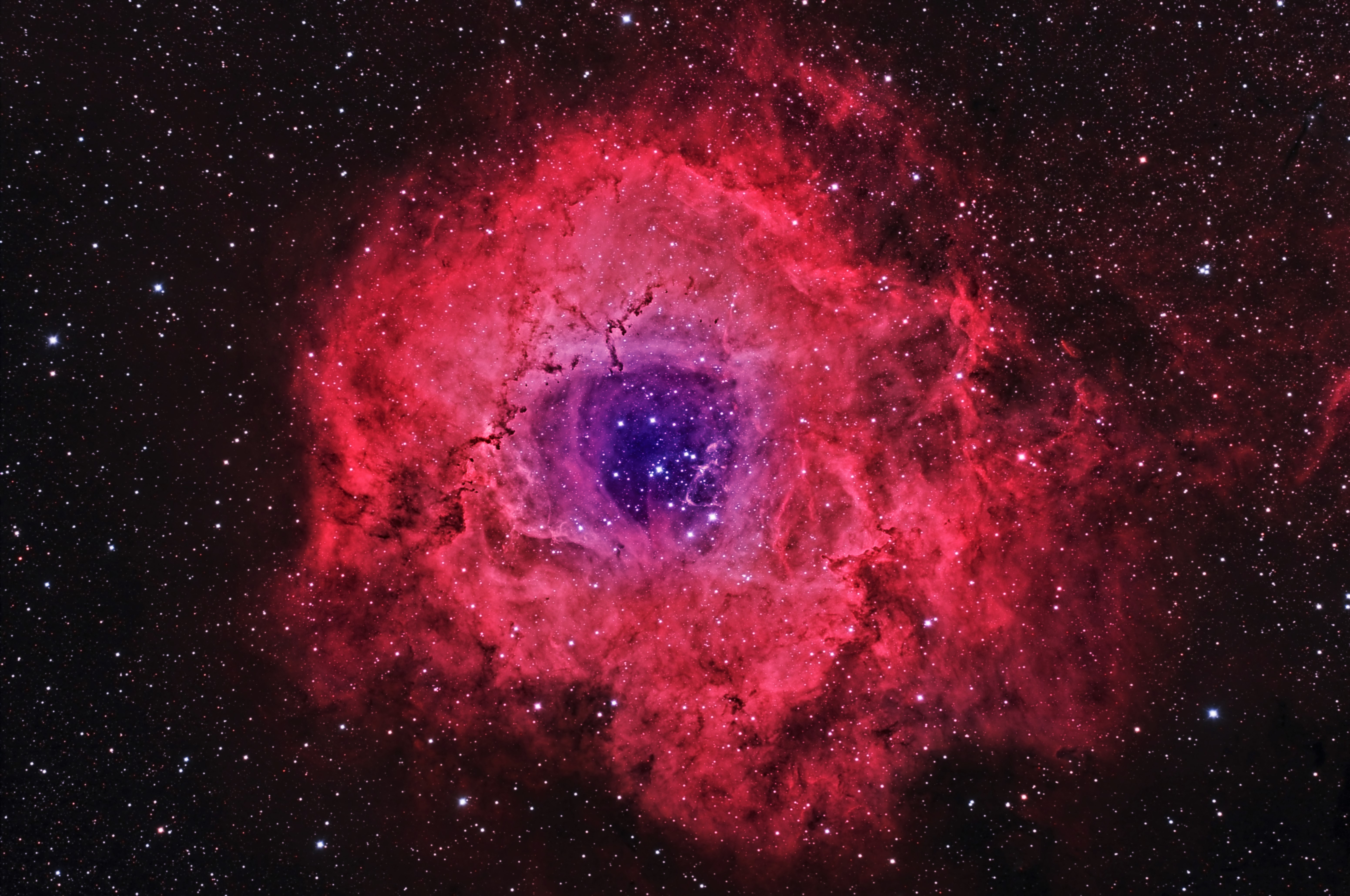
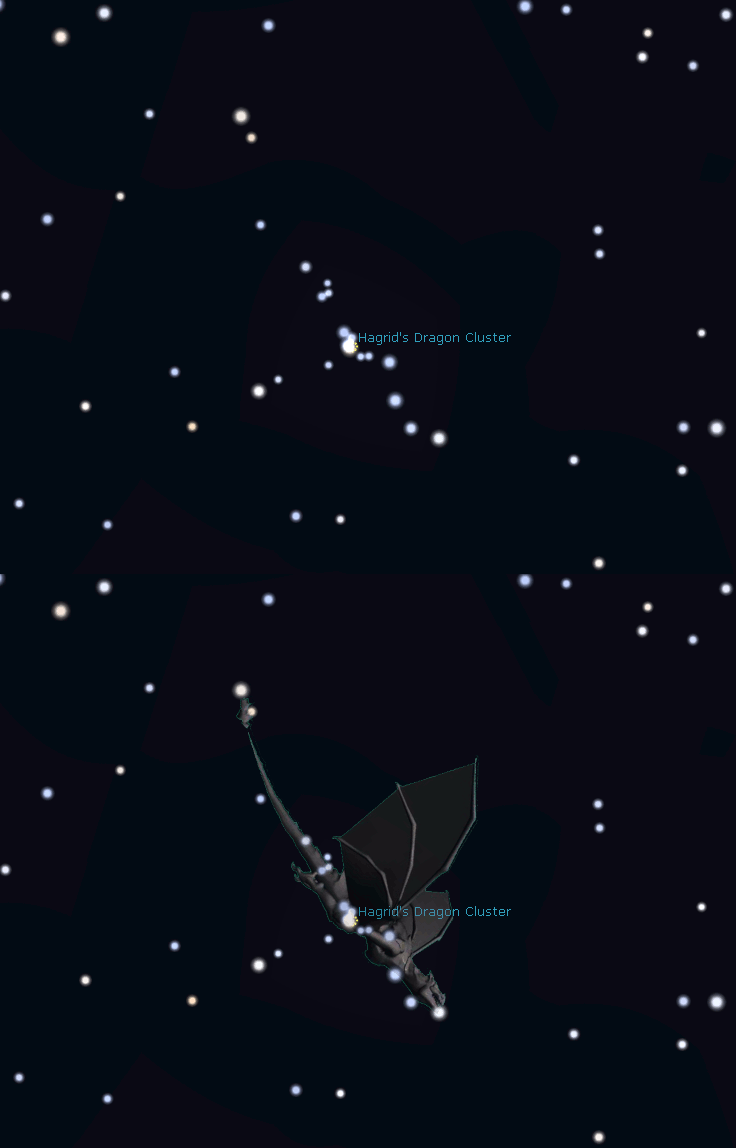
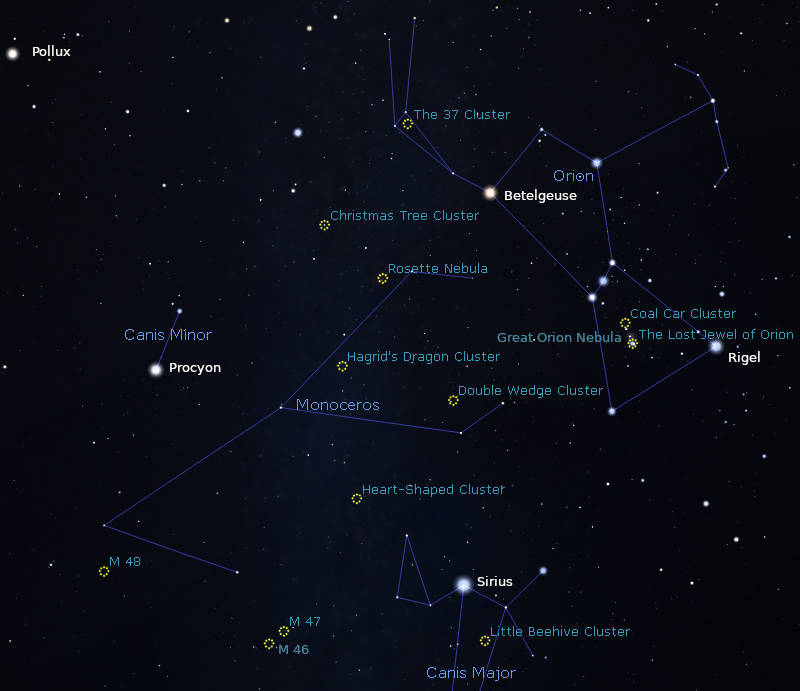
Among all the constellations in the sky of animals real and mythical, there is also a unicorn. It’s called Monoceros, and inhabits the southeastern sky at 8 p.m. mostly bounded by Orion on the right, Canis Major, the great dog below and Canis Minor, the little dog to the left and above. Unfortunately for observers without a telescope Monoceros, is devoid of any but the faintest stars. Maybe that’s why no one sees unicorns anymore. Though it lacks bright stars Monoceros is full of wonders revealed by telescopes and photography. A feast of faint nebulae or clouds of gas and dust, the birthplace of stars, including the red rose of the Rosette Nebula, and the more recently named Hagrid’s Dragon Cluster (NGC 2301).
The astronomical event times given in this blog are for the Traverse City/Interlochen area of Michigan (Lat 44.7° N, Long 85.7° W; EST, UT – 5 hours) unless stated otherwise. Times will be different for other locations.
Addendum
Ephemeris: 02/04/2026 – Taking our weekly look at the whereabouts of the naked-eye planets
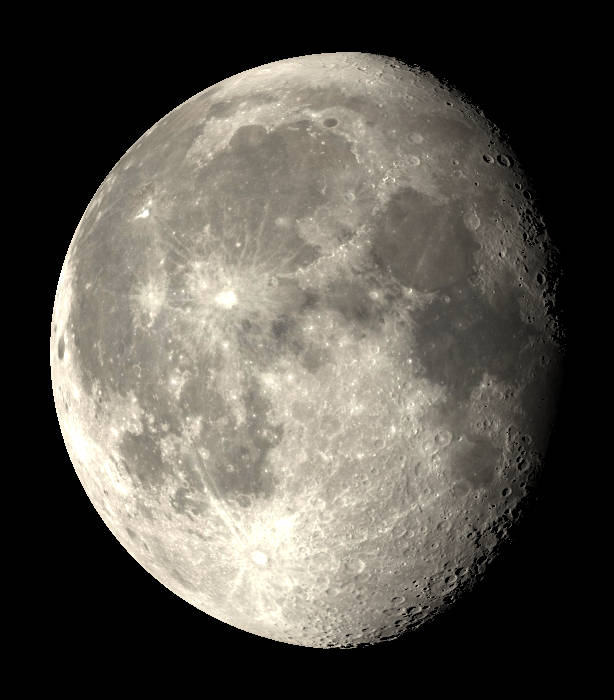
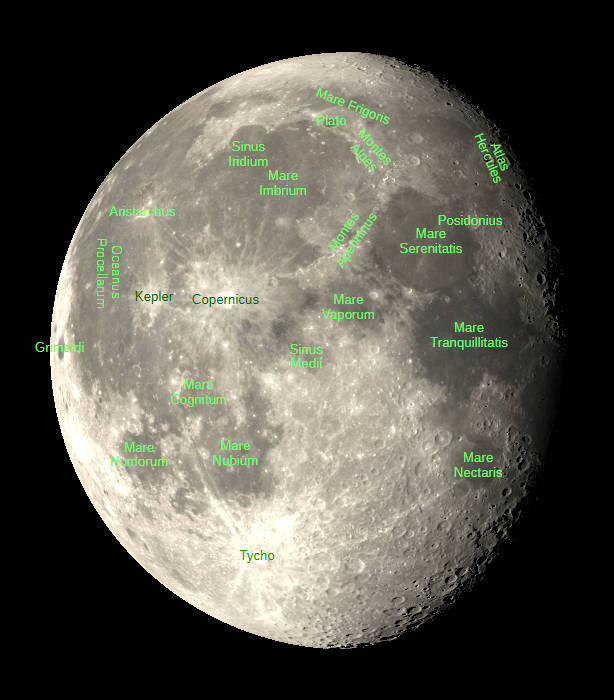
This is Ephemeris for Wednesday, February 4th. Today the Sun will be up for 9 hours and 57 minutes, setting at 5:55, and it will rise tomorrow at 7:56. The Moon, 3 days past full, will rise at 9:25 this evening.
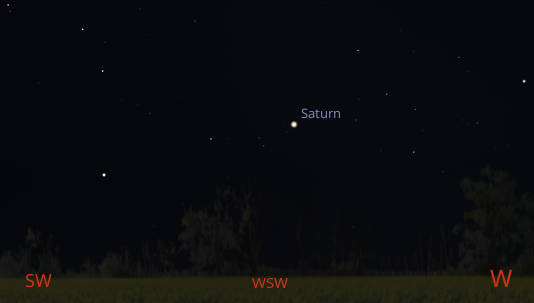
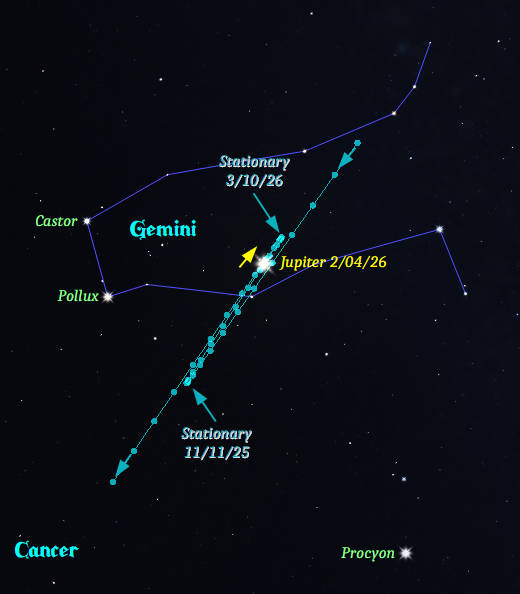
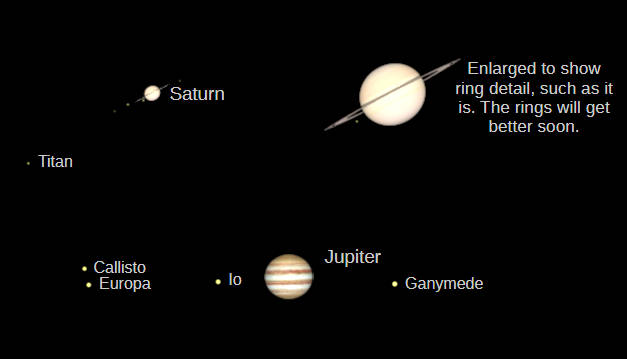
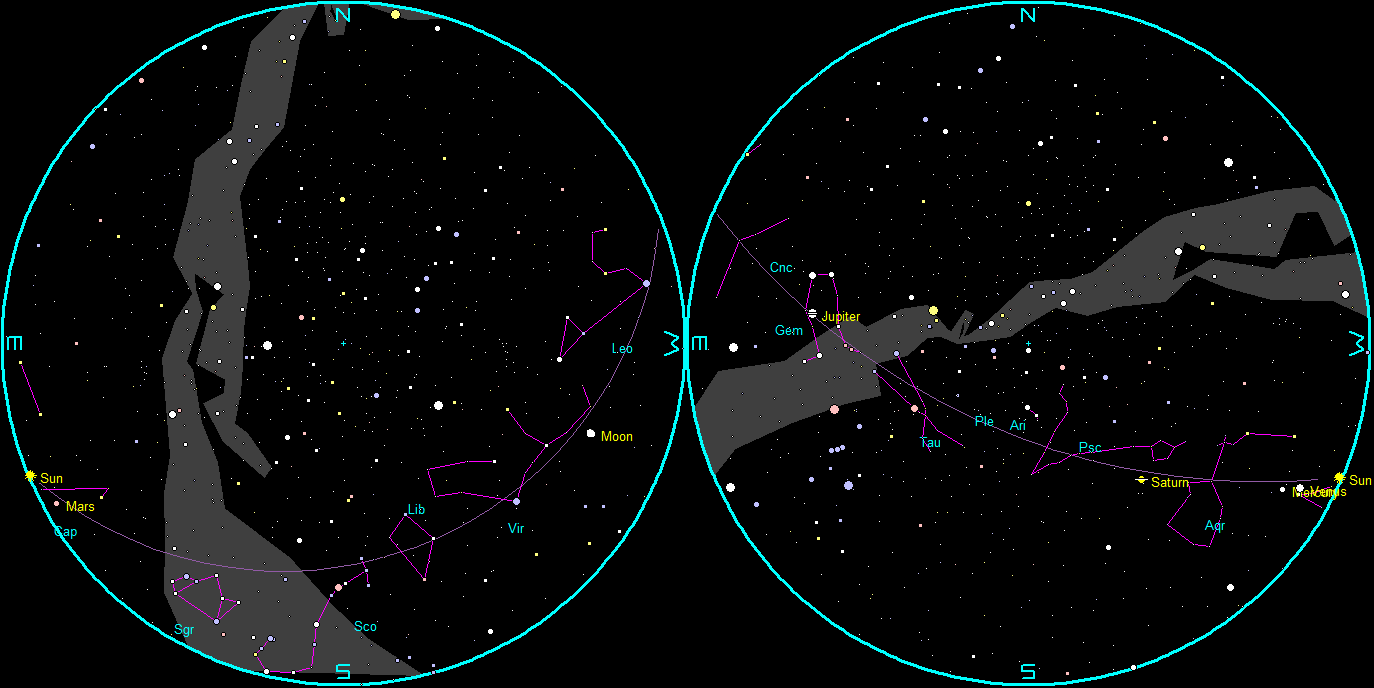
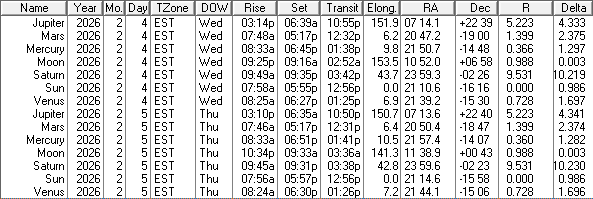
Let’s take our weekly look at the whereabouts of the naked-eye planets. Saturn is the brightest star-like object low in the west southwestern sky as soon as it gets dark. In a telescope Saturn sports a very thin ring, 2.4 degrees from being edge on and is slowly opening. Jupiter is the brilliant star-like object in the eastern sky, to the right of Pollux in the pair Castor and Pollux, the bright stars of Gemini. It is still moving slowly to the west, and will, until it stops and reverses its track on March 10th. Jupiter’s four brightest moons can be seen even in binoculars, if held steadily enough. They shift position night to night. At 8 PM tonight, all four Galilean moons can be seen, though two may too close together to be picked out separately in binoculars.
The astronomical event times given in this blog are for the Traverse City/Interlochen area of Michigan (Lat 44.7° N, Long 85.7° W; EST, UT – 5 hours) unless stated otherwise. Times will be different for other locations.
Addendum
Ephemeris: 02/03/2026 – Canis Major, Orion’s greater hunting dog
This is Ephemeris for Tuesday, February 3rd. Today the Sun will be up for 9 hours and 55 minutes, setting at 5:54, and it will rise tomorrow at 7:58. The Moon, 2 days past full, will rise at 8:14 this evening.
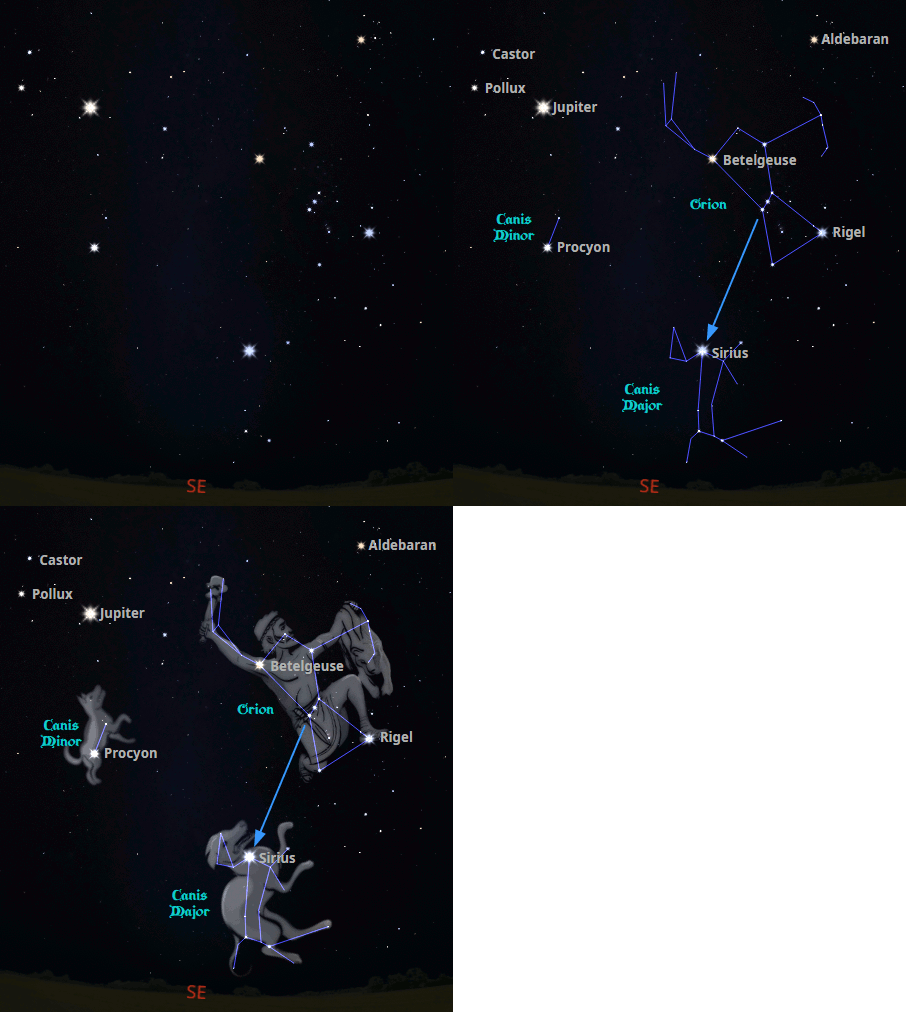
What kind of hunter would the constellation Orion be without his trusty hunting dogs. The larger of his two dogs is Canis Major which can be found if you extend Orion’s belt stars down to the left. There in the southeast by 8 PM, will appear the brightest nighttime star Sirius the Dog Star. It is in the heart of the dog, which appears to be begging. Well it’s tilted funny. Other than that it’s a pretty good representation of a dog as a stick figure. The name Sirius doesn’t mean Dog Star, but means Dazzling One due to its great brightness. It outshines all other nighttime stars, only to be out shown by the planets Venus, Jupiter and occasionally, Mars. Binoculars will show a nice little star cluster a short ways below Sirius known as M41.
The astronomical event times given in this blog are for the Traverse City/Interlochen area of Michigan (Lat 44.7° N, Long 85.7° W; EST, UT – 5 hours) unless stated otherwise. Times will be different for other locations.
Addendum
Ephemeris: 02/02/2026 – Groundhog Day’s significance
This is Ephemeris for Ground Hog Day, Monday, February 2nd. Today the Sun will be up for 9 hours and 52 minutes, setting at 5:53, and it will rise tomorrow at 7:59. The Moon, 1 day past full, will rise at 7:00 this evening.
I don’t know if Punxsutawney Phil will see his shadow this morning or not, but February 2nd was a special day to the ancients. It is also Candlemas day for the Catholic Church, and celebrated as a cross-quarter day, the middle of the season of Winter. Though the exact date of the middle of winter is the 4th. And if Phil sees his shadow, and we do get 6 more weeks of winters, that’s OK too. By the calendar it’s actually more like 7 weeks to the vernal or spring equinox and the official end of winter. Of the other cross-quarter days, two stand out today. They’re May 1st, May Day, and Halloween, October 31st. As far as winter goes, we’ve had lots of snow, and some extremely cold temperatures a couple of weeks ago.
The astronomical event times given in this blog are for the Traverse City/Interlochen area of Michigan (Lat 44.7° N, Long 85.7° W; EST, UT – 5 hours) unless stated otherwise. Times will be different for other locations.
Addendum

Ephemeris: 01/30/2026 – Previewing February skies
This is Ephemeris for Friday, January 30th. Today the Sun will be up for 9 hours and 44 minutes, setting at 5:48, and it will rise tomorrow at 8:02. The Moon, 2 days before full, will set at 7:31 tomorrow morning.
February is the shortest month, even so the daylight hours throughout the month will be getting longer. Daylight hours will increase from 9 hours and 49 minutes Sunday to 11 hours and 7 minutes on the 28th. The sunrise time will decrease from 8:01 Sunday to 7:21 at month’s end. The sunset times will increase from 5:51 today to 6:29 on the 28th. Along with that the altitude of the Sun at noon will increase from 28.4 degrees today to 37.6 degrees at month’s end. It will be a degree lower, and daylight a few minutes shorter, for folks in the Straits area because they are a degree of latitude farther north. Local noon, by the way for Interlochen and Traverse City will be about 12:56 PM at mid month.
The astronomical event times given in this blog are for the Traverse City/Interlochen area of Michigan (Lat 44.7° N, Long 85.7° W; EST, UT – 5 hours) unless stated otherwise. Times will be different for other locations.
Addendum
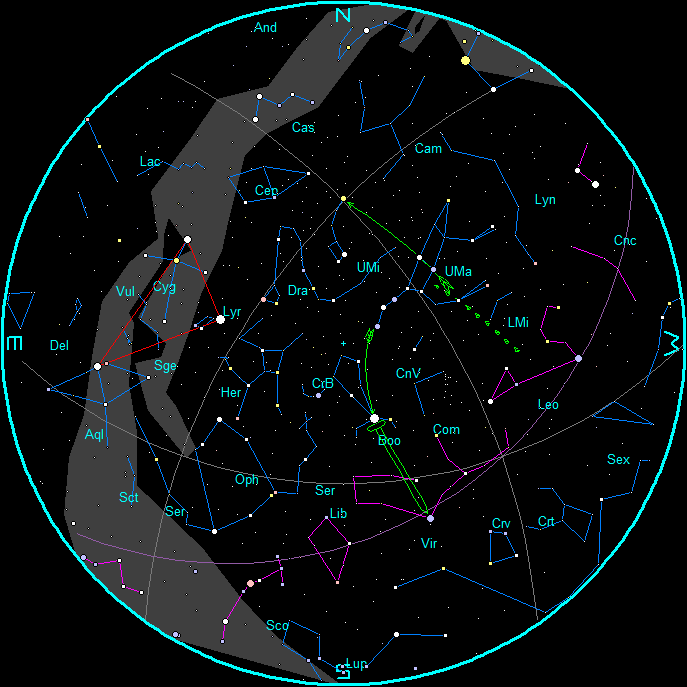
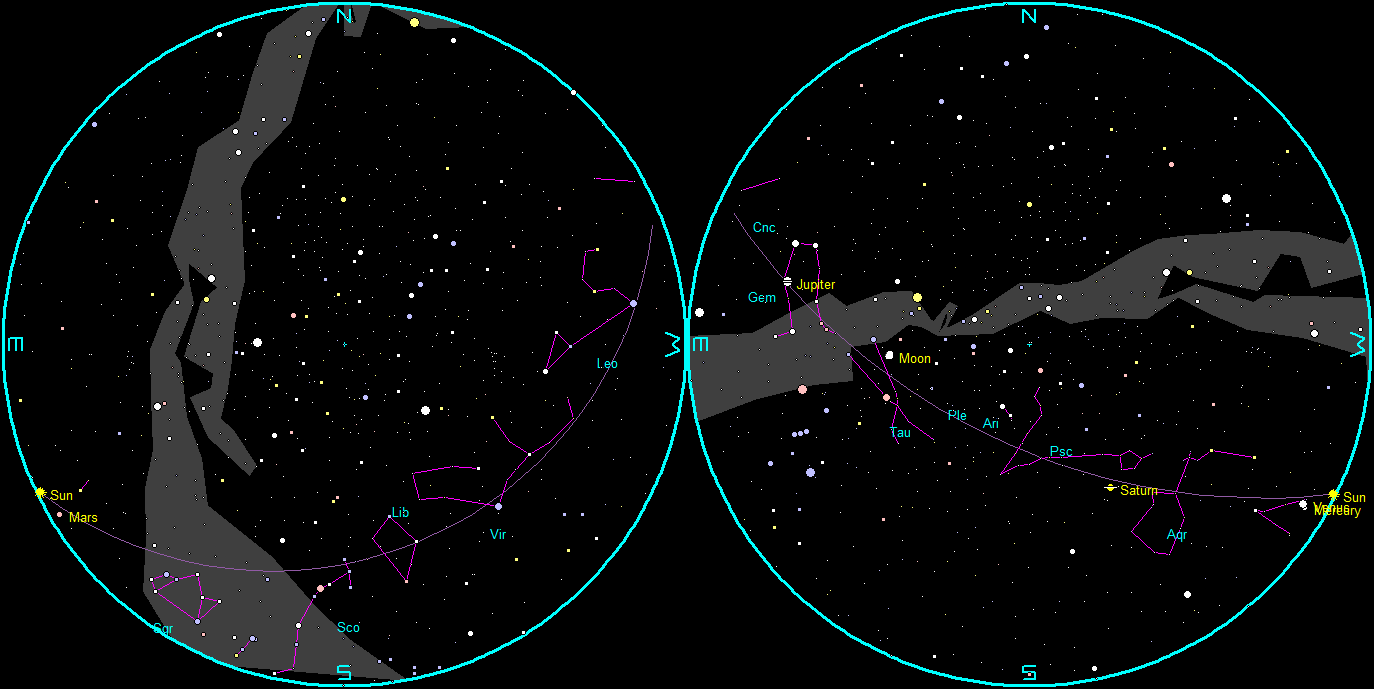
February Evening Star Chart
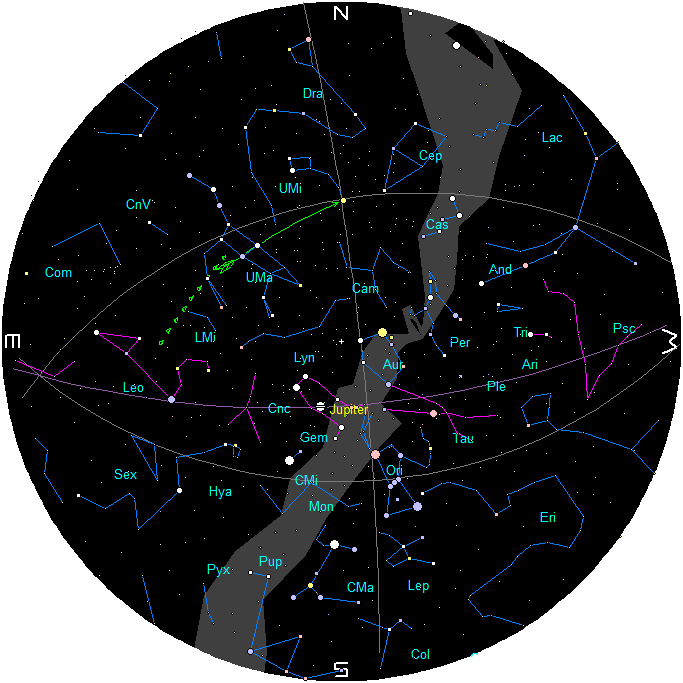
The planets and stars are plotted for the 14th at 9 PM EST in the evening and 6 AM for the morning chart. These are the chart times. Note that Traverse City is located approximately 45 minutes behind our time meridian. (An hour 45 minutes behind our daylight saving time meridian during EDT). To duplicate the star positions on a planisphere (rotating star finder) you may have to set it to 45 minutes or one hour 45 minutes (Daylight Time) earlier than the current time.
Note the chart times of 9 p.m. and 6 a.m. are for the 14th and 15th. For each week before these dates, add ½ hour (28 minutes if you’re picky). For each week after, subtract ½ hour. Planet positions on dates other than the 15th can be found in the Wednesday planet posts on this blog.
February Morning Star Chart
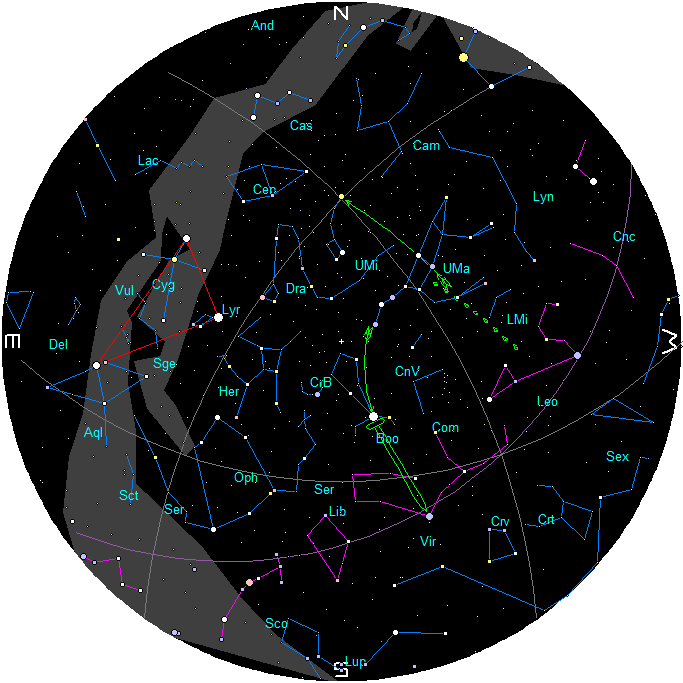
For a list of constellation names to go with the abbreviations, click here.
- Pointer stars at the front of the bowl of the Big Dipper point to Polaris, the North Star.
- Follow the arc of the handle of the Big Dipper to the star Arcturus, and
- Extend like a spike to Spica,
- The Summer Triangle is in red.
Twilight Limits, Nautical and Astronomical
| EST | |||||||
| Morning | Twilight | Evening | Twilight | Dark | Night | Moon | |
| Date | Astro. | Nautical | Nautical | Astro. | Start | End | Illum. |
| 2026-02-01 | 6h22m | 6h56m | 19h00m | 19h34m | – | – | 100% |
| 2026-02-02 | 6h21m | 6h55m | 19h01m | 19h35m | – | – | 98% |
| 2026-02-03 | 6h20m | 6h54m | 19h03m | 19h37m | 19h37m | 20h14m | 94% |
| 2026-02-04 | 6h19m | 6h53m | 19h04m | 19h38m | 19h38m | 21h25m | 88% |
| 2026-02-05 | 6h18m | 6h52m | 19h05m | 19h39m | 19h39m | 22h34m | 80% |
| 2026-02-06 | 6h17m | 6h51m | 19h06m | 19h40m | 19h40m | 23h41m | 72% |
| 2026-02-07 | 6h16m | 6h50m | 19h08m | 19h42m | 19h42m | – | 63% |
| 2026-02-08 | 6h15m | 6h49m | 19h09m | 19h43m | 19h43m | 0h48m | 53% |
| 2026-02-09 | 6h13m | 6h47m | 19h10m | 19h44m | 19h44m | 1h55m | 44% |
| 2026-02-10 | 6h12m | 6h46m | 19h12m | 19h45m | 19h45m | 3h01m | 35% |
| 2026-02-11 | 6h11m | 6h45m | 19h13m | 19h47m | 19h47m | 4h04m | 26% |
| 2026-02-12 | 6h10m | 6h43m | 19h14m | 19h48m | 19h48m | 5h01m | 18% |
| 2026-02-13 | 6h08m | 6h42m | 19h15m | 19h49m | 19h49m | 5h50m | 11% |
| 2026-02-14 | 6h07m | 6h41m | 19h17m | 19h50m | 19h50m | 6h07m | 6% |
| 2026-02-15 | 6h06m | 6h39m | 19h18m | 19h52m | 19h52m | 6h06m | 2% |
| 2026-02-16 | 6h04m | 6h38m | 19h19m | 19h53m | 19h53m | 6h04m | 0% |
| 2026-02-17 | 6h03m | 6h37m | 19h21m | 19h54m | 19h54m | 6h03m | 1% |
| 2026-02-18 | 6h01m | 6h35m | 19h22m | 19h56m | 19h56m | 6h01m | 3% |
| 2026-02-19 | 6h00m | 6h34m | 19h23m | 19h57m | 21h06m | 6h00m | 9% |
| 2026-02-20 | 5h58m | 6h32m | 19h24m | 19h58m | 22h21m | 5h58m | 16% |
| 2026-02-21 | 5h57m | 6h31m | 19h26m | 19h59m | 23h39m | 5h57m | 25% |
| 2026-02-22 | 5h55m | 6h29m | 19h27m | 20h01m | – | 5h55m | 35% |
| 2026-02-23 | 5h54m | 6h27m | 19h28m | 20h02m | 0h59m | 5h54m | 47% |
| 2026-02-24 | 5h52m | 6h26m | 19h30m | 20h03m | 2h19m | 5h52m | 58% |
| 2026-02-25 | 5h51m | 6h24m | 19h31m | 20h05m | 3h33m | 5h51m | 69% |
| 2026-02-26 | 5h49m | 6h23m | 19h32m | 20h06m | 4h37m | 5h49m | 79% |
| 2026-02-27 | 5h47m | 6h21m | 19h34m | 20h07m | 5h28m | 5h47m | 87% |
| 2026-02-28 | 5h46m | 6h19m | 19h35m | 20h09m | – | – | 94% |
Twilight calendar was generated using Cartes du Ciel (Sky Charts).
See my blog post: Twilight Zone for the definitions of the different periods of twilight here: https://bobmoler.wordpress.com/2019/09/27/
NASA Calendar of Planetary Events
Feb  1  Su            Venus: 6.3° E
     1  Su   6:41 AM  Moon-Beehive: 1.3° S
     1  Su   5:09 PM  Full Moon
     2  Mo   9:48 PM  Moon-Regulus: 0.4° S
     3  Tu   2:18 PM  Moon Descending Node
     7  Sa   3:26 AM  Moon-Spica: 2° N
     9  Mo   7:43 AM  Last Quarter
    10  Tu  11:52 AM  Moon Apogee: 404600 km
    10  Tu  10:19 PM  Moon-Antares: 0.8° N
    12  Th   7:56 AM  Moon South Dec.: 28.4° S
    17  Tu   7:01 AM  New Moon
    17  Tu   7:13 AM  Annular Solar Eclipse
                      Southern Ocean and Antarctica
    18  We   1:19 AM  Moon Ascending Node
    19  Th  12:59 PM  Mercury Elongation: 18.1° E
    19  Th   6:54 PM  Moon-Saturn: 4.8° S
    23  Mo   9:43 PM  Moon-Pleiades: 1.2° S
    24  Tu   7:28 AM  First Quarter
    24  Tu   6:18 PM  Moon Perigee: 370100 km
    25  We   6:23 PM  Moon North Dec.: 28.4° N
    27  Fr   1:26 AM  Moon-Jupiter: 4° S
    28  Sa   3:07 PM  Moon-Beehive: 1.3° S
Mar  1  Su            Venus: 13° E
Sky Events Calendar by Fred Espenak and Sumit Dutta (NASA’s GSFC),
http://eclipse.gsfc.nasa.gov/SKYCAL/SKYCAL.html
If you go to the above site you can print out a list like the above for the entire year or calendar pages for your time zone.
Sun and Moon Rising and Setting Events
LU             Ephemeris of Sky Events for Interlochen/TC
February, 2026    Local time zone: EST
+-----------------------------------------------------------------------+
| DATE |  SUN     SUN  DAYLIGHT|   TWILIGHT*    |MOON  RISE OR    ILLUM |
|      |  RISE    SET    HOURS |  END    START  |PHASE SET** TIME FRACTN|
+=======================================================================+
|Sun  1| 08:01a  05:51p  09:49 | 06:57p  06:55a |Full  Rise 05:41p  100%|
|Mon  2| 08:00a  05:53p  09:52 | 06:58p  06:54a |      Rise 07:00p   99%|
|Tue  3| 07:59a  05:54p  09:55 | 07:00p  06:53a |      Rise 08:14p   95%|
|Wed  4| 07:58a  05:55p  09:57 | 07:01p  06:52a |      Rise 09:25p   89%|
|Thu  5| 07:56a  05:57p  10:00 | 07:02p  06:51a |      Rise 10:34p   82%|
|Fri  6| 07:55a  05:58p  10:03 | 07:04p  06:50a |      Rise 11:41p   73%|
|Sat  7| 07:54a  06:00p  10:05 | 07:05p  06:49a |      Rise 12:48a   64%|
+------+-----------------------+----------------+-----------------------+
|Sun  8| 07:52a  06:01p  10:08 | 07:06p  06:47a |      Rise 01:55a   55%|
|Mon  9| 07:51a  06:02p  10:11 | 07:07p  06:46a |L Qtr Rise 03:01a   46%|
|Tue 10| 07:50a  06:04p  10:14 | 07:09p  06:45a |      Rise 04:03a   36%|
|Wed 11| 07:48a  06:05p  10:16 | 07:10p  06:44a |      Rise 05:00a   28%|
|Thu 12| 07:47a  06:07p  10:19 | 07:11p  06:42a |      Rise 05:49a   19%|
|Fri 13| 07:45a  06:08p  10:22 | 07:13p  06:41a |      Rise 06:30a   12%|
|Sat 14| 07:44a  06:10p  10:25 | 07:14p  06:40a |      Rise 07:02a    7%|
+------+-----------------------+----------------+-----------------------+
|Sun 15| 07:43a  06:11p  10:28 | 07:15p  06:38a |      Rise 07:29a    2%|
|Mon 16| 07:41a  06:12p  10:31 | 07:16p  06:37a |      Rise 07:51a    0%|
|Tue 17| 07:39a  06:14p  10:34 | 07:18p  06:36a |New   Set  06:39p    0%|
|Wed 18| 07:38a  06:15p  10:37 | 07:19p  06:34a |      Set  07:52p    3%|
|Thu 19| 07:36a  06:17p  10:40 | 07:20p  06:33a |      Set  09:05p    7%|
|Fri 20| 07:35a  06:18p  10:43 | 07:22p  06:31a |      Set  10:21p   14%|
|Sat 21| 07:33a  06:19p  10:46 | 07:23p  06:30a |      Set  11:38p   23%|
+------+-----------------------+----------------+-----------------------+
|Sun 22| 07:31a  06:21p  10:49 | 07:24p  06:28a |      Set  12:58a   33%|
|Mon 23| 07:30a  06:22p  10:52 | 07:26p  06:26a |      Set  02:18a   44%|
|Tue 24| 07:28a  06:23p  10:55 | 07:27p  06:25a |F Qtr Set  03:33a   56%|
|Wed 25| 07:27a  06:25p  10:58 | 07:28p  06:23a |      Set  04:37a   67%|
|Thu 26| 07:25a  06:26p  11:01 | 07:29p  06:22a |      Set  05:27a   77%|
|Fri 27| 07:23a  06:28p  11:04 | 07:31p  06:20a |      Set  06:06a   86%|
|Sat 28| 07:21a  06:29p  11:07 | 07:32p  06:18a |      Set  06:35a   93%|
+-----------------------------------------------------------------------+
* Nautical Twilight
** Moonrise or moonset, whichever occurs between sunset and sunrise
Created using my LookingUp for MS-DOS app.
Ephemeris: 01/29/2026 – After Artemis 2 comes Artemis 3 and the landing
This is Ephemeris for Thursday, January 29th. Today the Sun will be up for 9 hours and 42 minutes, setting at 5:47, and it will rise tomorrow at 8:04. The Moon, 3 days before full, will set at 6:44 tomorrow morning.
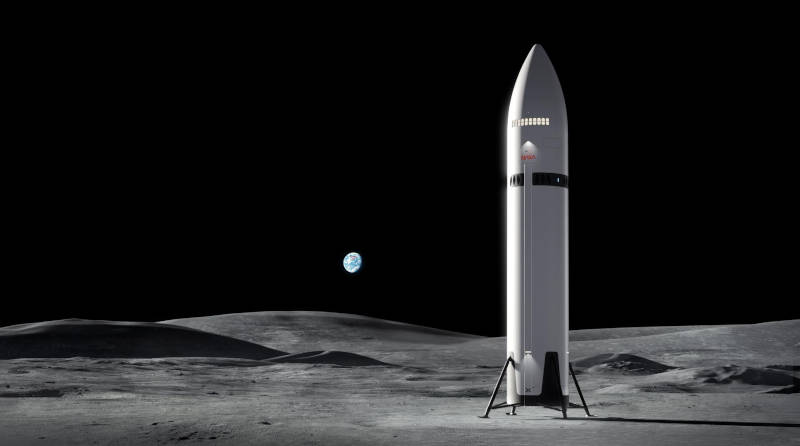
If Artemis 2 is successful in the late winter and early spring of this year, the next mission will be Artemis 3, a mission to land near the South Pole of the Moon. In order for that to happen a lunar Lander will have to be ready and tested. The Starship HLS or human landing system is currently being built by SpaceX. It’s delivery to the Moon, via Superheavy, Starship’s big booster, will require multiple launches and refueling in orbit, which has yet to be tested. There has been some question as to how many refueling trips will be necessary. NASA and SpaceX seem to differ. However, an uncrewed successful landing will have to be made to prove out the system before the Artemis 3 landing will be attempted.
The astronomical event times given in this blog are for the Traverse City/Interlochen area of Michigan (Lat 44.7° N, Long 85.7° W; EST, UT – 5 hours) unless stated otherwise. Times will be different for other locations.
Addendum
Ephemeris: 01/28/2026 – Taking our weekly look at the whereabouts of the naked-eye planets
This is Ephemeris for Wednesday, January 28th. Today the Sun will be up for 9 hours and 39 minutes, setting at 5:45, and it will rise tomorrow at 8:05. The Moon, 3 days past first quarter, will set at 5:43 tomorrow morning.
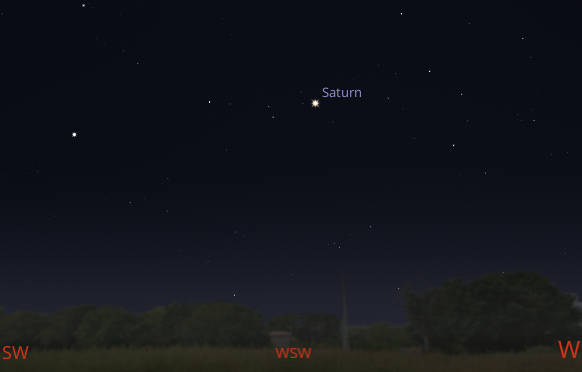
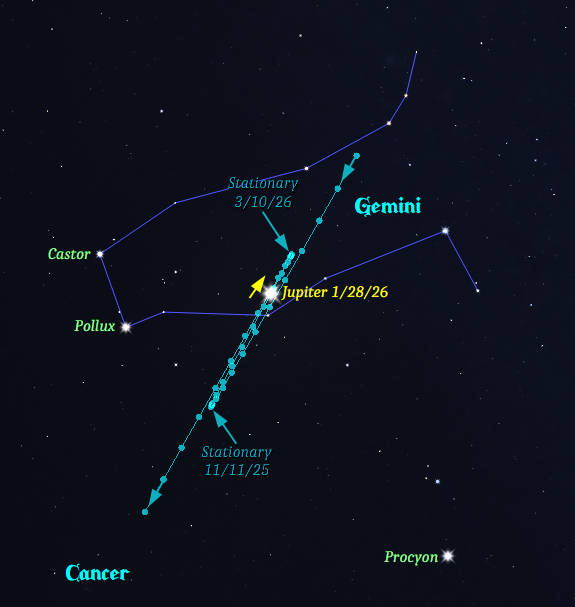
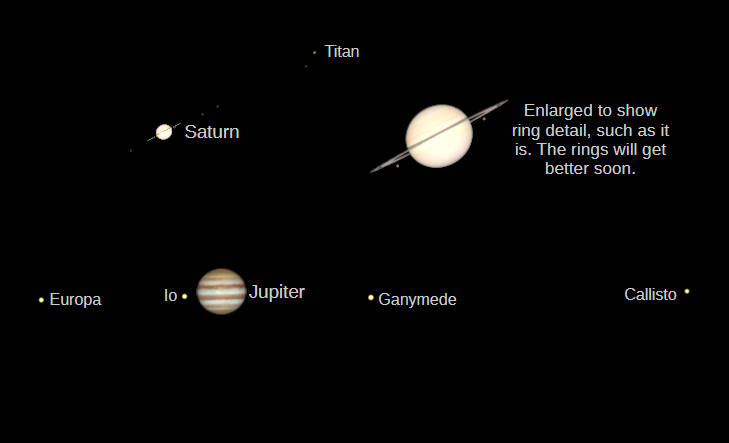
Let’s take our weekly look at the whereabouts of the naked-eye planets. Saturn is the brightest star-like object in the southwestern sky as soon as it gets dark. In a telescope Saturn sports a very thin ring, 2 degrees from being edge on and is slowly opening. Jupiter is the brilliant star-like object in the eastern sky, to the right of Pollux in the pair Castor and Pollux, the bright stars of Gemini. It is still moving slowly to the west, and will, until it stops and reverses its track on March 10th. Jupiter’s 4 brightest moons can be seen even in binoculars, if held steadily enough. They shift position night to night. At 8 PM tonight, all four Galilean moons can be seen, though two may too close to the planet to be picked out in binoculars.
The astronomical event times given in this blog are for the Traverse City/Interlochen area of Michigan (Lat 44.7° N, Long 85.7° W; EST, UT – 5 hours) unless stated otherwise. Times will be different for other locations.
Addendum
Ephemeris: 01/27/2026 – Orion’s heat shield problem
This is Ephemeris for Tuesday, January 27th. Today the Sun will be up for 9 hours and 37 minutes, setting at 5:44, and it will rise tomorrow at 8:06. The Moon, 2 days past first quarter, will set at 4:29 tomorrow morning.
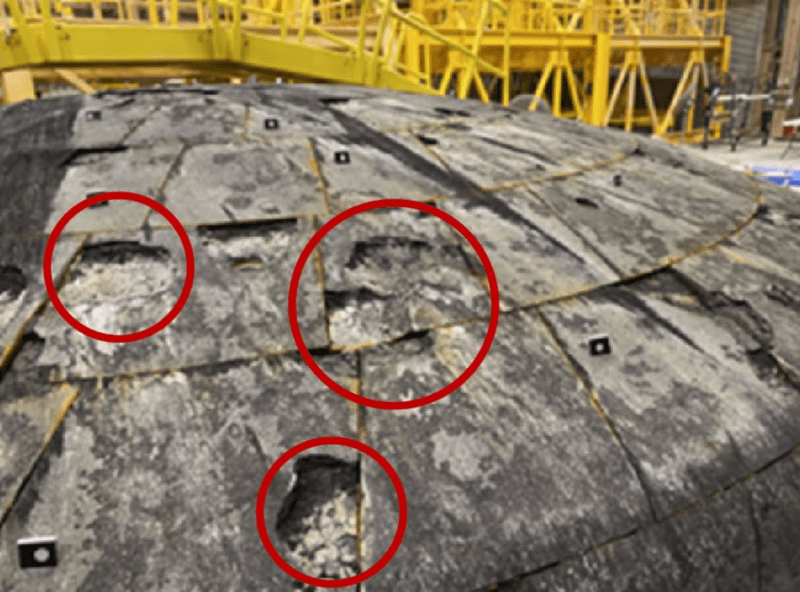
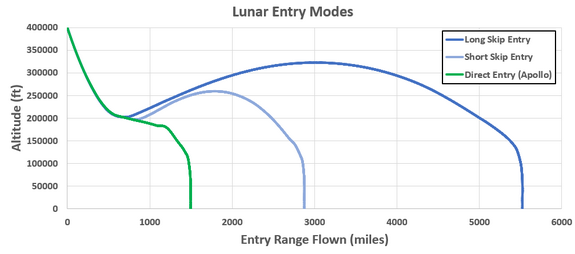
One of the problems that was detected with the reentry of the Artemis 1 mission back in November 2022* was the degradation of the heat shield of the Orion capsule. Chunks of the heat shield actually were breaking off. The technique they use for reentry called the skip reentry was thought to be the culprit. So while they are attempting to redesign the heat shield, Artemis 2 will be using the same type heat shield, but they will not do a skip reentry and come in without a skip off the atmosphere. The reason for using a skip reentry is to lessen the amount of Gs that are pulled by the capsule coming in at 7 miles per second by prolonging the entry and increasing the downrange travel of the capsule. Skip reentry is a proven technique, the Russians have been doing it for decades.
The astronomical event times given in this blog are for the Traverse City/Interlochen area of Michigan (Lat 44.7° N, Long 85.7° W; EST, UT – 5 hours) unless stated otherwise. Times will be different for other locations.
* For the broadcast, I misremembered the date as December 2024. That’s what happens when you’re old.
Addendum
 Bob Moler's Ephemeris Blog