Ephemeris: 07/30/2026 – The types and distribution of galaxies
This is Ephemeris for Thursday, July 30th. Today the Sun will be up for 14 hours and 44 minutes, setting at 9:10, and it will rise tomorrow at 6:27. The Moon, 1 day past full, will rise at 9:52 this evening.
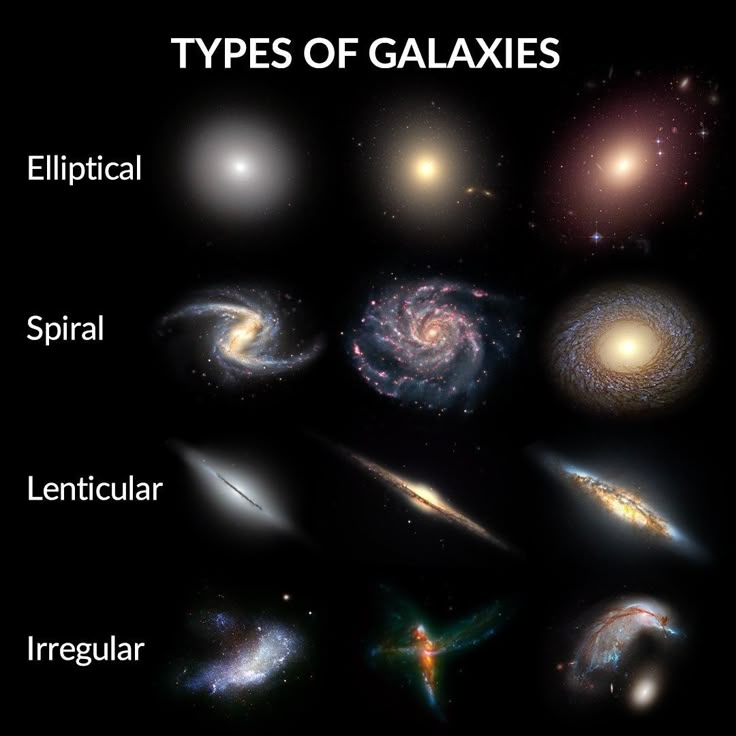
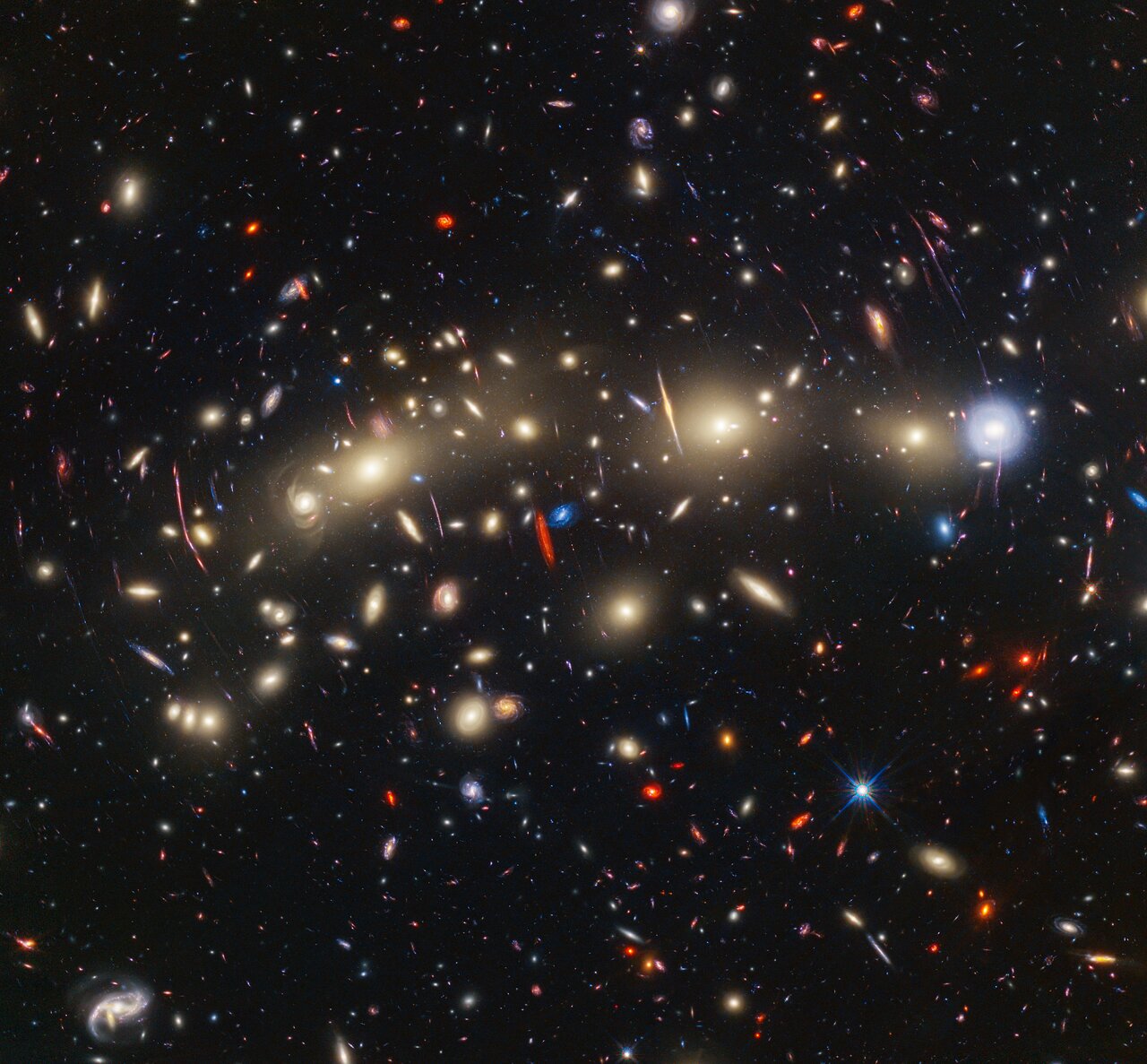
Until a little over 100 years ago the Milky Way was thought to be the whole universe. Then with photography the great Andromeda nebula turned out to be not a cloud of gas but a great group of stars outside. Since then we have found billions upon billions of these galaxies. Galaxy simply is a derivation from “Milky Way” in Latin. Galaxies are not sprinkled through the universe uniformly. They appear in great clusters and in small groups. The Milky Way and the Andromeda Galaxy belong to a relatively small group of galaxies called the Local Group, which contains 130 or more, mostly dwarf galaxies of which Andromeda and our Milky Way are the largest. The Great Andromeda Galaxy will come in view into the evening sky this autumn.
The astronomical event times given in this blog are for the Traverse City/Interlochen area of Michigan (Lat 44.7° N, Long 85.7° W; EDT, UT – 4 hours) unless stated otherwise. Times will be different for other locations.
Addendum
Ephemeris: 07/29/2026 – Taking our weekly look at the whereabouts of the naked-eye planets
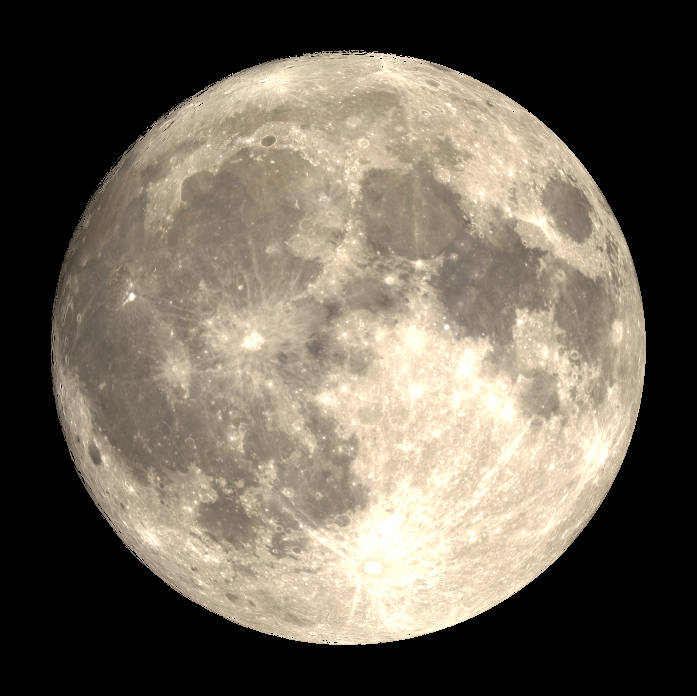
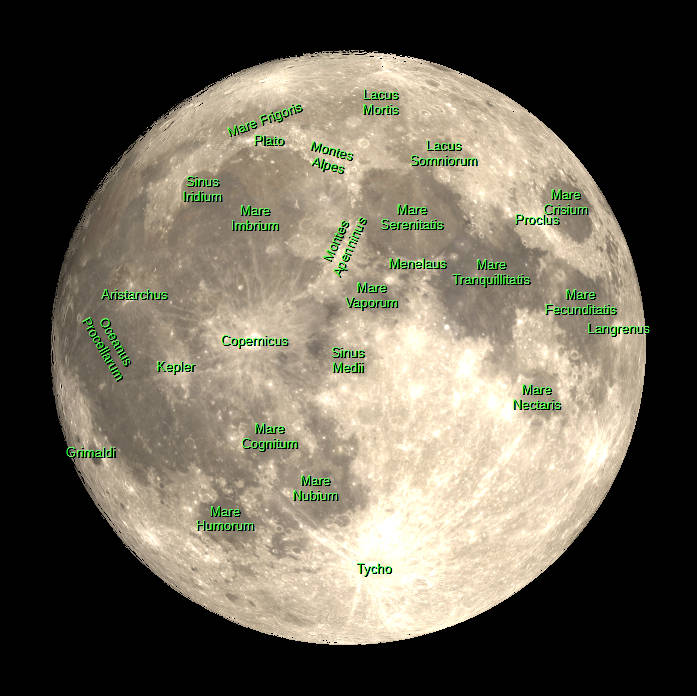
This is Ephemeris for Wednesday, July 29th. Today the Sun will be up for 14 hours and 46 minutes, setting at 9:12, and it will rise tomorrow at 6:26. The Moon, at full today, will rise at 9:30 this evening.
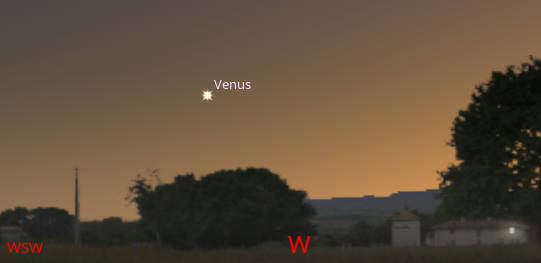
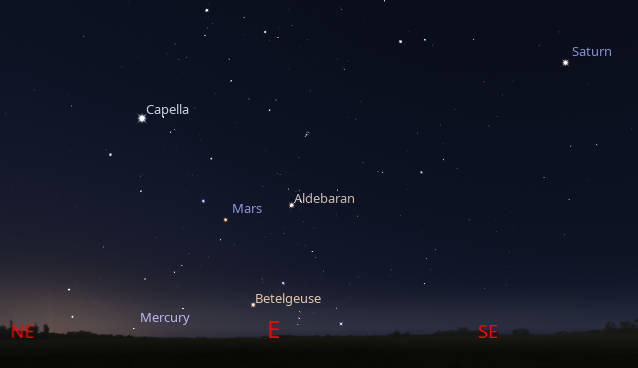
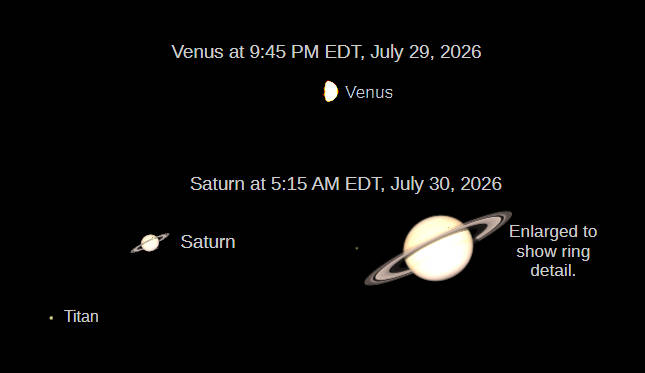
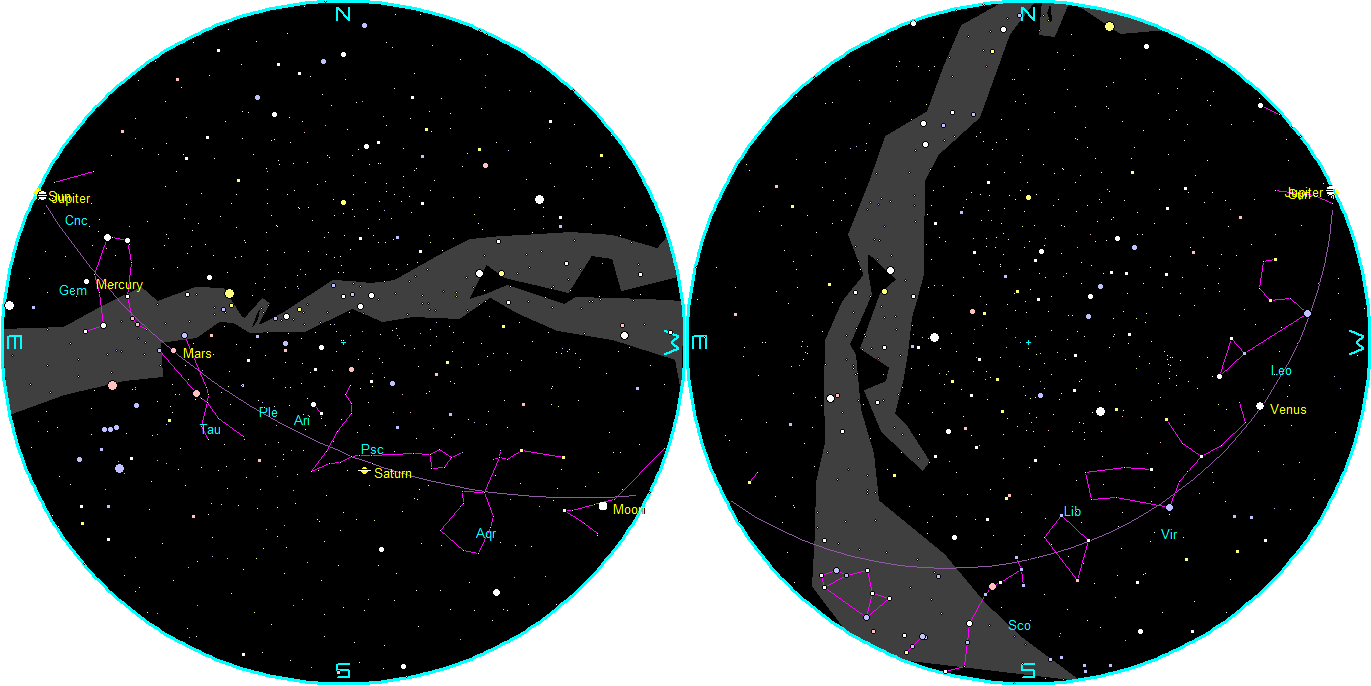
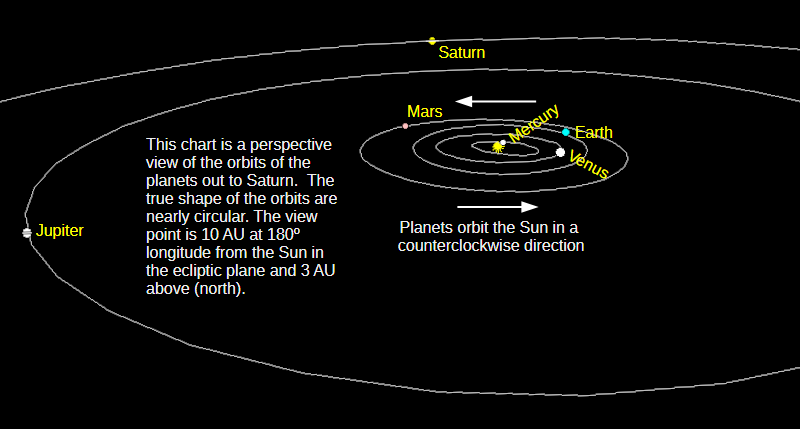
Let’s take our weekly look at the whereabouts of the naked-eye planets. By 9:45 PM tonight, a bit over a half-hour after sunset, Venus will be easily spotted in the western sky. A telescope will show a tiny gibbous disc of Venus. It is now closer than the Sun, at 76.5 million miles (123.3 mil km) away from us. We are 18 days from Venus greatest elongation east from the sun of 45.9 degrees. It’s within a degree of that now. In the morning, Saturn and Mars will be visible in the southeast and east respectively. Mars is competing with the brighter stars of winter, including the orange Aldebaran, and the red giant star Betelgeuse. The Earth is now chasing down Mars, which will be closest to the Earth and opposite the sun in the sky next February.
The astronomical event times given in this blog are for the Traverse City/Interlochen area of Michigan (Lat 44.7° N, Long 85.7° W; EDT, UT – 4 hours) unless stated otherwise. Times will be different for other locations.
Addendum
Ephemeris: 07/28/2026 – The size and shape of the Milky Way
7/
This is Ephemeris for Tuesday, July 28th. Today the Sun will be up for 14 hours and 48 minutes, setting at 9:13, and it will rise tomorrow at 6:25. The Moon, 1 day before full, will set at 6:11 tomorrow morning.
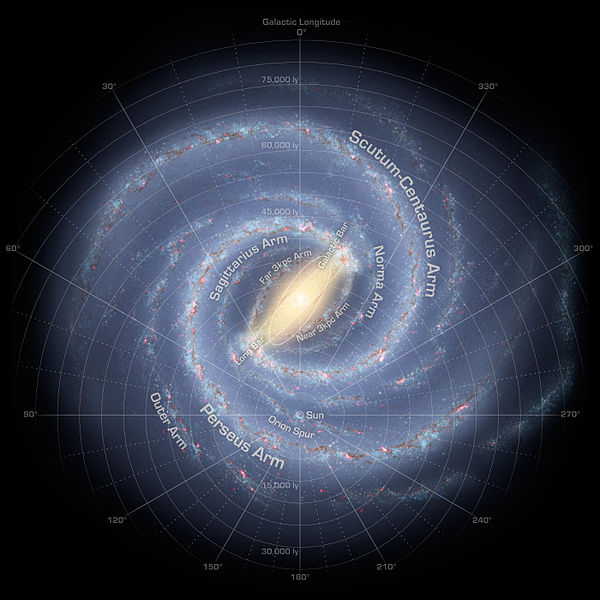
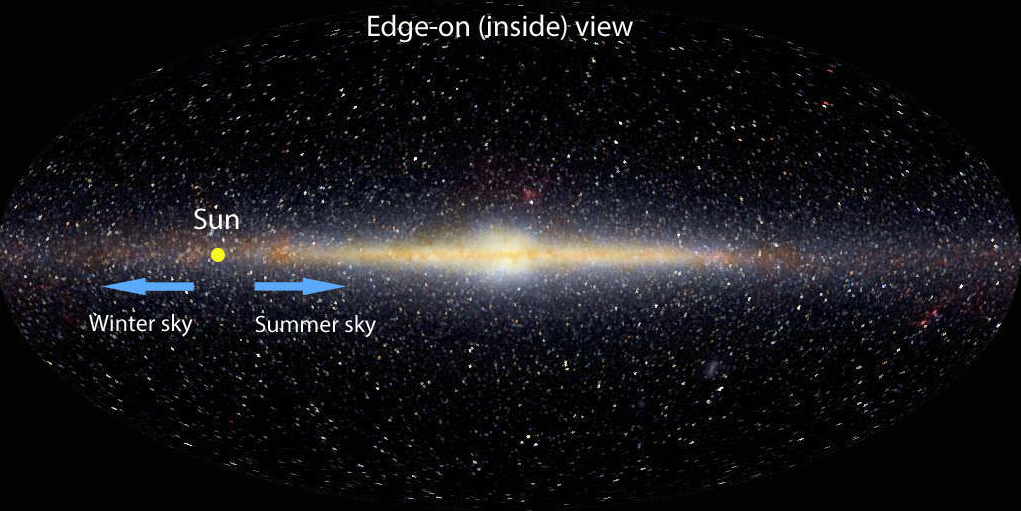
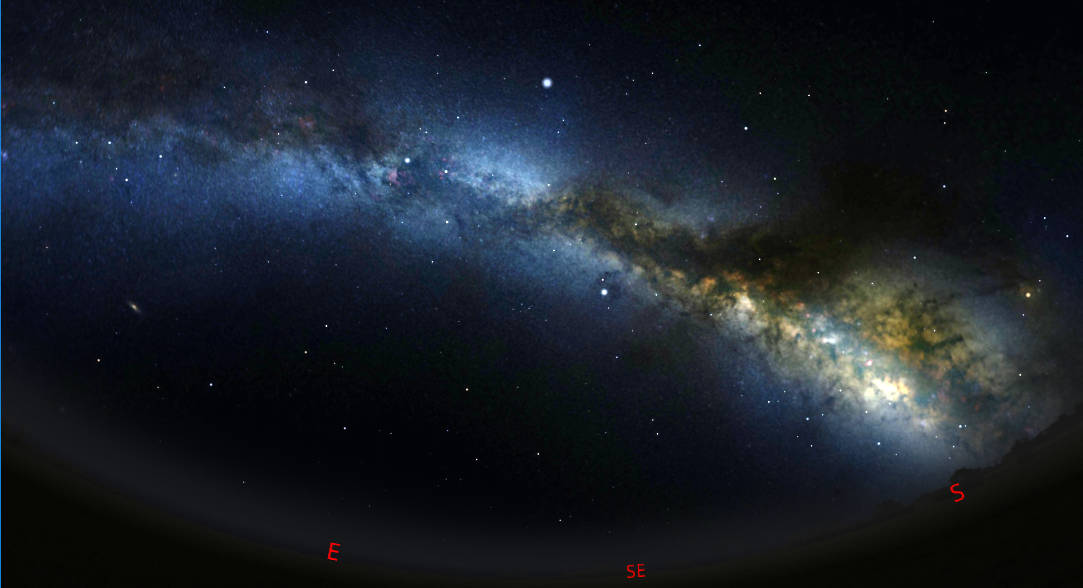
August and September are the two months in which the Milky Way dominates the evening sky. It also dominates the sky in the winter, six months from now but we’re looking out away from the center of the Milky Way. It is dimmer, an almost invisible as a band, but we have a great number of really bright stars, including those of Orion. The Milky Way is a galaxy, a large conglomeration of stars that are arranged in a disk, with the central bulge, whose diameter is about 87,400 light years. The thickness of the disk runs from 8,500 light years near the center to 1,000 light years farther out. The sun’s location is 25 to 26,000 light years from the center. From our location within the disk it appears to be a glowing band that surrounds the sky.
The astronomical event times given in this blog are for the Traverse City/Interlochen area of Michigan (Lat 44.7° N, Long 85.7° W; EDT, UT – 4 hours) unless stated otherwise. Times will be different for other locations.
Addendum
Ephemeris: 07/27/2026 – Can you trust chat bot answers?
This is Ephemeris for Monday, July 27th. Today the Sun will be up for 14 hours and 50 minutes, setting at 9:14, and it will rise tomorrow at 6:24. The Moon, 2 days before full, will set at 5:04 tomorrow morning.
What science fiction TV shows and movies get artificial intelligence or intelligent computers all wrong at least before 2001 A Space Odyssey, was if they don’t know the answer they will give you: a “THIS DOES NOT COMPUTE”. Current artificial intelligence large language models will rarely admit that they don’t know or can’t find an answer. It will give you something, even if it is not correct. It’s called halucinating. Sounds like lying to me. They’re called chat bots, because they are made to sound human, and can be very seductive. However, they are alien minds, as if space aliens learned about us by monitoring our radio, TV and internet. AI’s are trained on Internet content. You know what a swamp that is!
The astronomical event times given in this blog are for the Traverse City/Interlochen area of Michigan (Lat 44.7° N, Long 85.7° W; EDT, UT – 4 hours) unless stated otherwise. Times will be different for other locations.
Addendum

If a chat bot gives you references, follow them up. once when doing research on something, Google’s Gemini referenced an old post on this site. I also caught it in an error, and told it so. It told me I was right.
Ephemeris: 07/24/2026 – AI, a paradigm shift in computing
This is Ephemeris for Friday, July 24th. Today the Sun will be up for 14 hours and 57 minutes, setting at 9:17, and it will rise tomorrow at 6:21. The Moon, 3 days past first quarter, will set at 2:15 tomorrow morning.
Astronomy is my hobby. Back in my working days I was a computer systems analyst designing computer software systems for particular tasks, mainly for banks. However I was always interested in the idea of artificial intelligence. The computers I worked with were dumb. They did exactly what you told it to do, whether it was correct or not. So computer errors were really human errors. The current AI, based on neural networks, which are an approximation of what happens in the human brain, are different. Their errors are their own, because they are taught rather than programmed. And to my mind are more than the sum of their inputs. Even the people who design these systems admit they don’t really know what goes on inside. Scary.
The astronomical event times given in this blog are for the Traverse City/Interlochen area of Michigan (Lat 44.7° N, Long 85.7° W; EDT, UT – 4 hours) unless stated otherwise. Times will be different for other locations.

Ephemeris: 07/23/2026 – Our location in the Eastern Time zone
This is Ephemeris for Thursday, July 23rd. Today the Sun will be up for 14 hours and 59 minutes, setting at 9:18, and it will rise tomorrow at 6:20. The Moon, 2 days past first quarter, will set at 1:36 tomorrow morning.
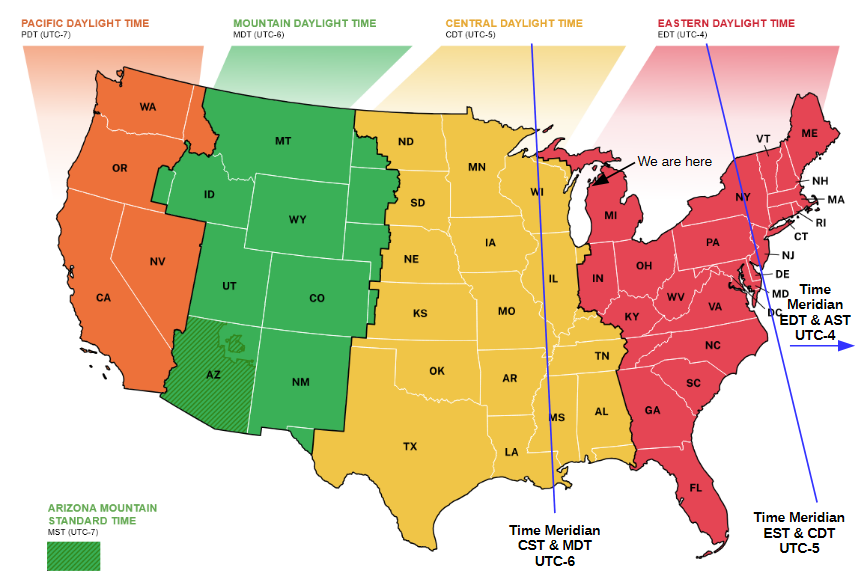
Continuing my discussion about daylight savings time: In theory time zones are supposed to be centered on longitude meridians 15º apart, starting at 0° through Greenwich Observatory in England and proceed eastward and westward. our time meridian for Standard Time (75º west longitude) runs through Philadelphia, Pennsylvania, far to the east. The central standard time meridian runs down just east of Ironwood, Michigan. Most of us in the western lower peninsula are between 85 and 86° west longitude, meaning that we are already from 40 to 45 minutes behind our time meridian in Philadelphia and Eastern Daylight Time we are an hour and 40 to 45 minutes behind our daylight time meridian which is out in the Atlantic Ocean at 60° west longitude.
The astronomical event times given in this blog are for the Traverse City/Interlochen area of Michigan (Lat 44.7° N, Long 85.7° W; EDT, UT – 4 hours) unless stated otherwise. Times will be different for other locations.
Addendum
Ephemeris: 07/22/2026 – Taking our weekly look at the whereabouts of the naked-eye planets
This is Ephemeris for Pi Approximation Day, Wednesday, July 22nd, that is 22/7ths. Today the Sun will be up for 15 hours and 1 minute, setting at 9:19, and it will rise tomorrow at 6:19. The Moon, 1 day past first quarter, will set at 1:04 tomorrow morning.
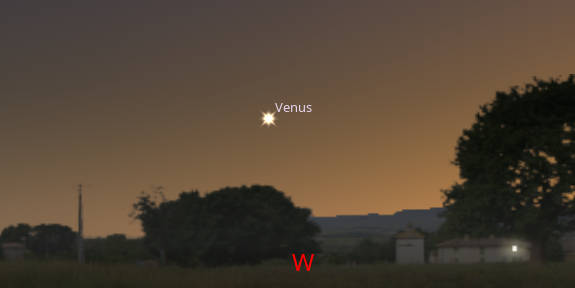
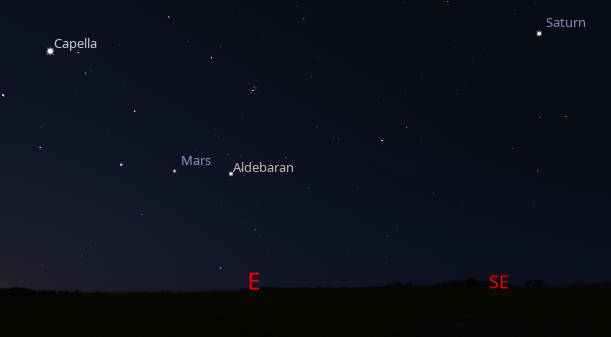
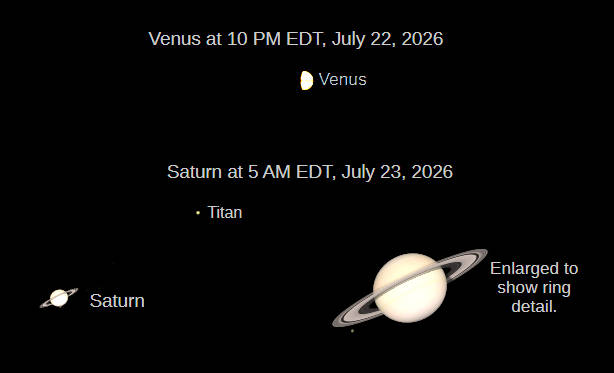
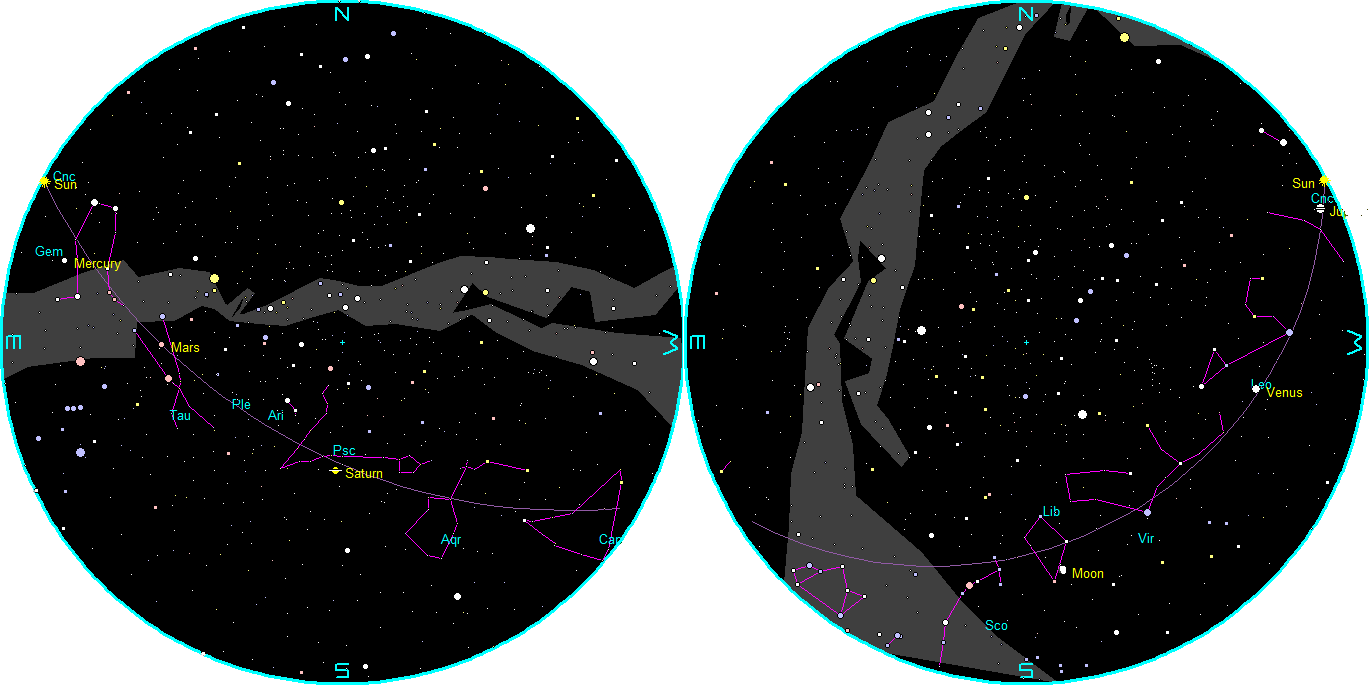
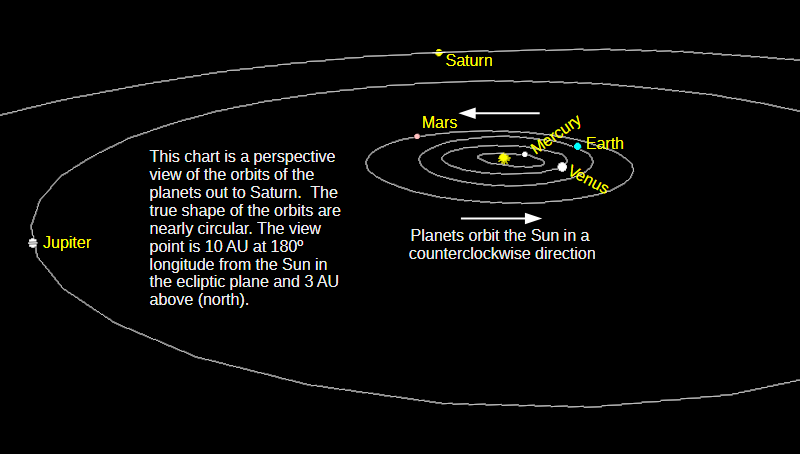
Let’s take our weekly look at the whereabouts of the naked-eye planets. By 9:45 PM tonight, nearly a half-hour after sunset, Venus will be easily spotted in the western sky. A telescope will show a tiny gibbous disc of Venus. It is now closer than the Sun, at 81.8 million miles (131.6 mil km) away from us. Over the next nearly 3 months it will be moving closer to us and becoming much larger. In the morning, Saturn and Mars will be visible, in the southeast and east respectively. The Earth is now chasing down Mars, and later this year the launch window will open to send spacecraft to the Red Planet. Mars will be closest to the Earth and opposite the sun in the sky next February.
The astronomical event times given in this blog are for the Traverse City/Interlochen area of Michigan (Lat 44.7° N, Long 85.7° W; EDT, UT – 4 hours) unless stated otherwise. Times will be different for other locations.
Addendum
Ephemeris: 07/21/2026 – The U.S. House voted to make Daylight Saving Time permanent
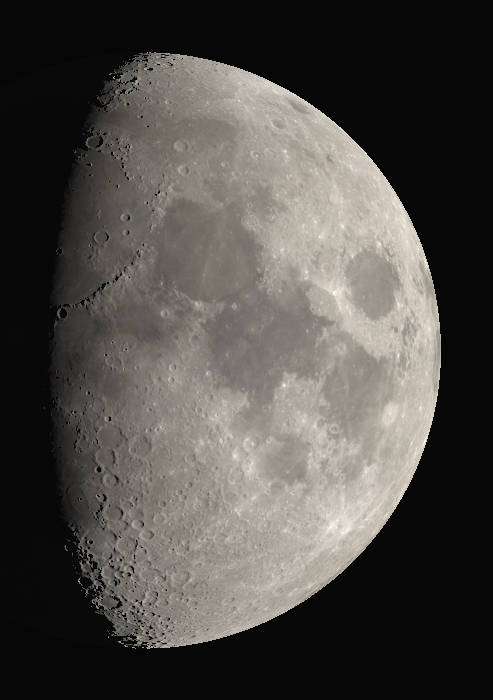
This is Bob Moler with Ephemeris for Tuesday, July 21st. Today the Sun will be up for 15 hours and 3 minutes, setting at 9:20, and it will rise tomorrow at 6:18. The Moon, at first quarter today, will set at 12:39 tomorrow morning.
Those who have listened to this program over the years may have been able to pick up on my feelings about daylight savings time. I’m against it. The House of Representatives has voted to make daylight savings time permanent. This kind of harkins back to the days of the oil crisis back in around 1973, that Nixon, through executive order, I believe, mandated daylight savings time year round. It didn’t last very long but, we did have a winter with daylight savings time, which in December and January makes the sunrise after 9:00 in the morning. I find this very dangerous for school kids who have to wait for school buses and go to school under nighttime conditions for several months during the year.
The astronomical event times given in this blog are for the Traverse City/Interlochen area of Michigan (Lat 44.7° N, Long 85.7° W; EDT, UT – 4 hours) unless stated otherwise. Times will be different for other locations.
Addendum

Ephemeris: 07/20/2026 – Important space anniversaries
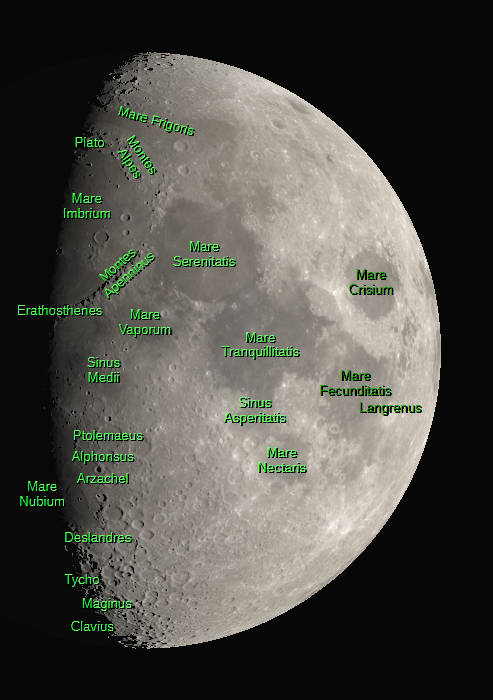
This is Ephemeris for Monday, July 20th. Today the Sun will be up for 15 hours and 5 minutes, setting at 9:21, and it will rise tomorrow at 6:17. The Moon, 1 day before first quarter, will set at 12:17 tomorrow morning.
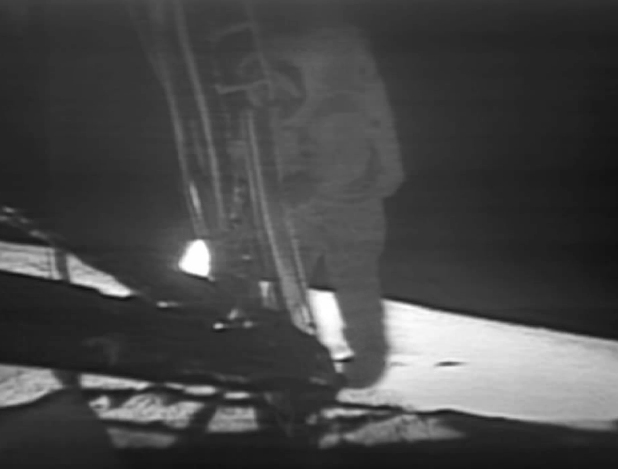
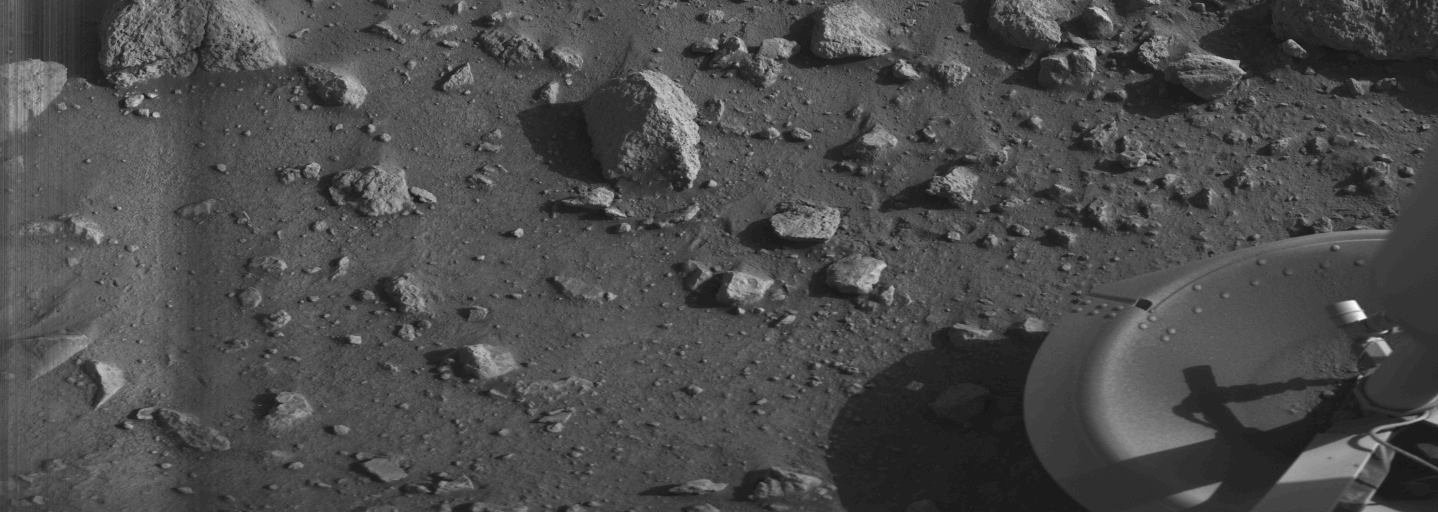
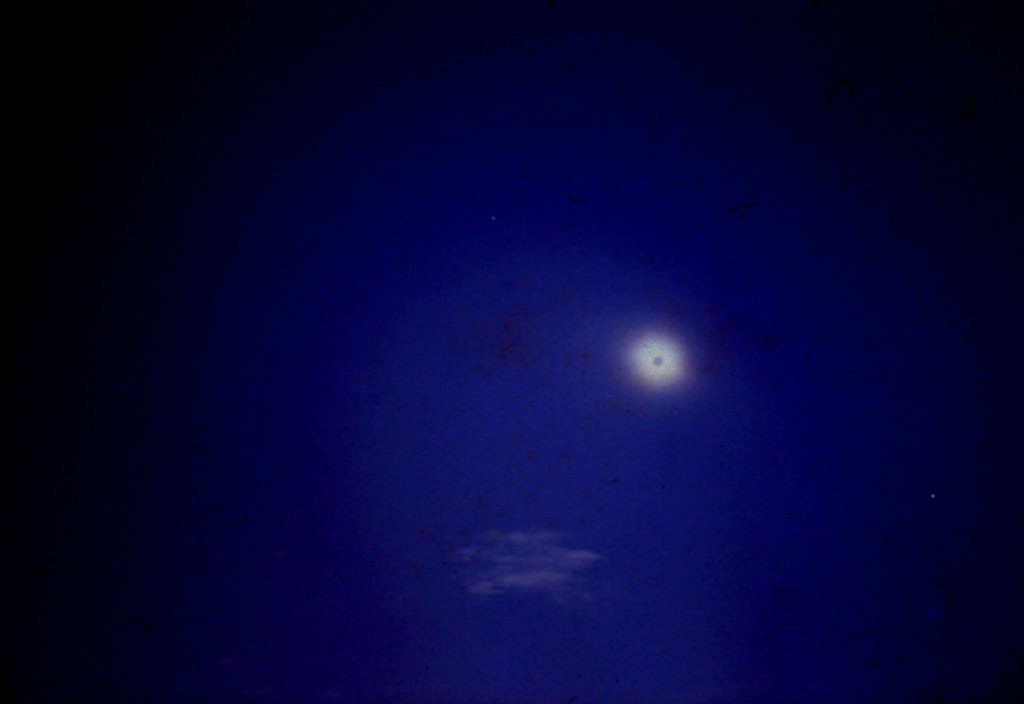
July 20th is a special date for this country’s space program and a personal one for me. 57 years ago in 1969 Apollo 11 landed on the Moon, the greatest achievement in the history of space flight. Seven years later the robot lander Viking 1 landed on Mars. NASA wanted it to be July 4th, 1976, the Bicentennial, but couldn’t find a smooth landing site in time. My own connection to the date came in 1963, my first total solar eclipse. We traveled to Quebec province along side the St. Maurice River to view about 60 seconds of totality. It was the first of six total solar eclipses I’ve seen, all from the U.S. or Canada. In each case it was clear or clear enough to see the sun’s corona, a feature only visible from the earth during totality.
The astronomical event times given in this blog are for the Traverse City/Interlochen area of Michigan (Lat 44.7° N, Long 85.7° W; EDT, UT – 4 hours) unless stated otherwise. Times will be different for other locations.
Addendum
Ephemeris: 07/17/2026 – Star Party scheduled for Sleeping Bear Dunes tomorrow night – Canceled due to Air Quality Alert!
This is Ephemeris for Friday, July 17th. Today the Sun will be up for 15 hours and 10 minutes, setting at 9:24, and it will rise tomorrow at 6:14. The Moon, 3 days past new, will set at 11:20 this evening.
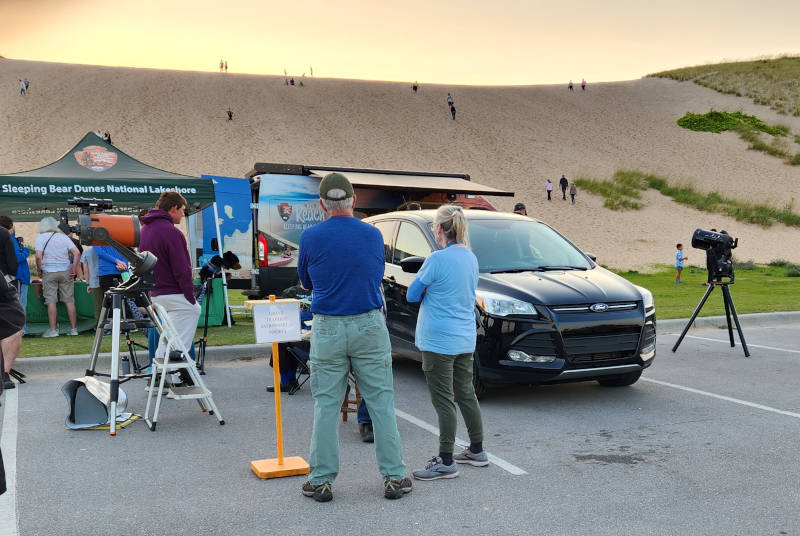
Tomorrow night, Saturday, July 18th, the Sleeping Bear Dunes National Lakeshore will team up with the Grand Traverse Astronomical Society to host a star party at the Dune Climb from 9 to 11 PM or later. It won’t be a star party only, because the featured attractions early on, will be Venus and the four day old crescent Moon. Planets and the Moon, when near the Sun in the summer appear low in the sk, and will set on the dune fairly early: Venus shortly after 10, and the moon by 10:30. Both should be visible before sunset. To my mind, Venus is best seen in telescopes during daylight, but the trick is to find it then. There will be much more to see as the sky darkens. The rangers have an alternate program, so you can still have an interesting time even if its cloudy.
The astronomical event times given in this blog are for the Traverse City/Interlochen area of Michigan (Lat 44.7° N, Long 85.7° W; EDT, UT – 4 hours) unless stated otherwise. Times will be different for other locations.
Addendum