Archive
Ephemeris: 03/09/2026 – The Great Underwater Panther in the stars
This is Ephemeris for Monday, March 9th. Today the Sun will be up for 11 hours and 35 minutes, setting at 7:41, and it will rise tomorrow at 8:04. The Moon, 2 days before last quarter, will rise at 2:50 tomorrow morning.
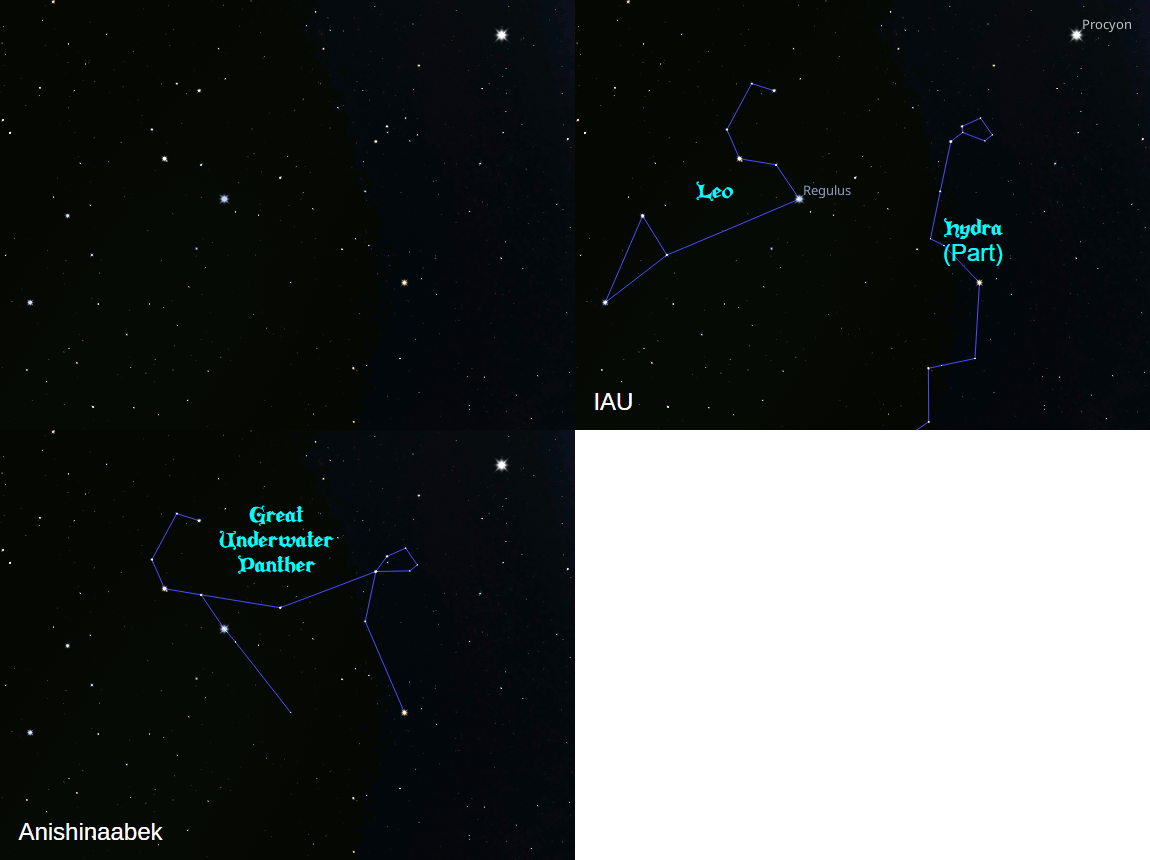
As Orion tilts into the southwest at 9 PM I’m reminded of our Anishinaabek native peoples here in Michigan, who saw it as the Winter Maker slowly beginning to leave the scene in the southwest. At this time in the southeast is Curly Tail, the Great Panther. I first knew him as the Great Underwater Panther, which tells us where he lives… beneath the ice. He’s in the sky to warn us that the warmer weather of spring is coming, and the ice on the lakes and rivers is getting thin. Be careful to not fall through and drown, becoming a victim of the Great Panther. The stars of the panther include those of the head of Leo the lion the great backwards question mark, as his curly tail, to his head, the head of what we call Hydra the water snake.
The astronomical event times given in this blog are for the Traverse City/Interlochen area of Michigan (Lat 44.7° N, Long 85.7° W; EST, UT – 5 hours) unless stated otherwise. Times will be different for other locations.
Addendum


Ephemeris: 05/15/2025 – Finding Virgo the virgin in the spring sky
This is Ephemeris for Thursday, May 15th. Today the Sun will be up for 14 hours and 50 minutes, setting at 9:04, and it will rise tomorrow at 6:13. The Moon, 3 days past full, will rise at 12:36 tomorrow morning.
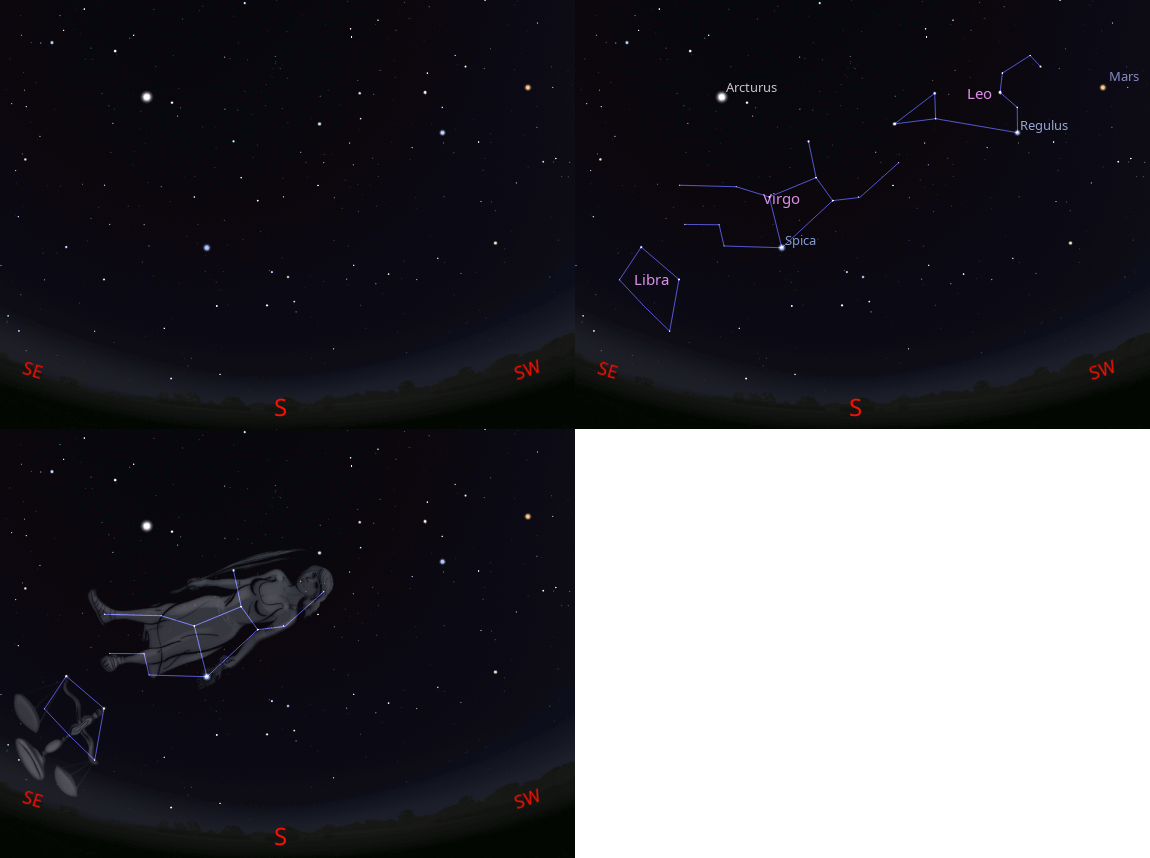
Located below the bright star Arcturus, high in the southeast, and below and left of Leo the lion, which is high in the south, lies the constellation of Virgo the virgin with its bright star Spica. Other than Spica, Virgo contains only dim stars. It’s quite large, extending to the upper right, and to the left of Spica. Virgo represents several goddesses. The Greek harvest goddess Persephone, whose Roman name is Ceres, which is the root of our word cereal, is one. The bright star Spica is the ear of wheat that she’s holding in her hand. Some see her standing at an odd angle, I see her reclining. Virgo also represents Astraea the goddess of Justice, with her scales, the constellation Libra, at her feet low in the southeast.
The astronomical event times given in this blog are for the Traverse City/Interlochen area of Michigan (Lat 44.7° N, Long 85.7° W; EDT, UT – 4 hours) unless stated otherwise. Times will be different for other locations.
Addendum
Ephemeris: 02/27/2025 – The spring constellations are rising
This is Ephemeris for Thursday, February 27th. Today the Sun will be up for 11 hours and 5 minutes, setting at 6:28, and it will rise tomorrow at 7:21. The Moon is new today, and won’t be visible.
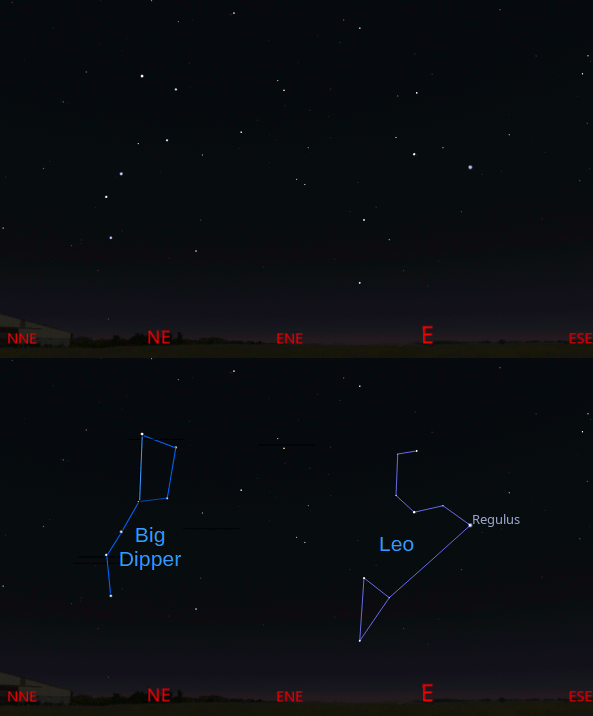
Today, we are exactly 3 weeks from the start of spring. The temperatures this week are rising. Even though at 8:00 PM Orion is high in the south, looking off to the east the spring constellation of Leo the lion has risen, and the Big Dipper is standing on its handle in the northeast. To the Anishinaabe native peoples of this area the Big Dipper is part of Ojiig, the Fisher, who brought summer to the Earth and when he’s in this position in the northeastern skies standing on his tail it is a sign of the spring to come and the start of the maple sugaring season. This next week or so is especially the best time, all year, to see the planet Mercury in the evening twilight due west, shortly after sunset. Its greatest separation from the Sun will come March 8th.
The astronomical event times given are for the Traverse City/Interlochen area of Michigan (EST, UT – 5 hours). Times will be different for other locations.
Addendum
Ephemeris: 05/27/2024 The evening sky is transitioning into summer
This is Bob Moler with Ephemeris for Memorial Day, Monday, May 27th. Today the Sun will be up for 15 hours and 14 minutes, setting at 9:17, and it will rise tomorrow at 6:02. The Moon, 3 days before last quarter, will rise at 1:36 tomorrow morning.
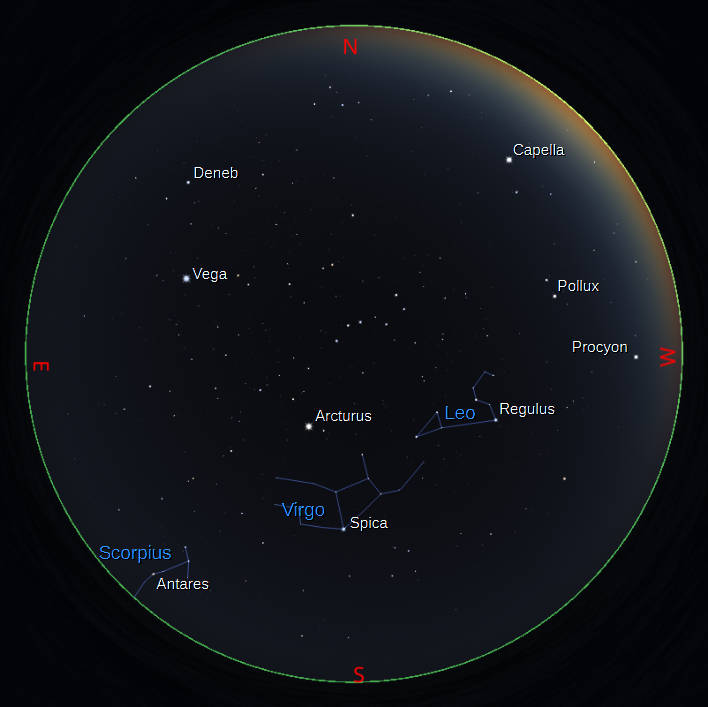
The sky tonight at 10:30 is beginning to show the transition from spring to summer. Antares in Scorpius is very low in the southeast, rising and chasing away Orion who has disappeared in the West. According to Greek mythology, at least in one story, Orion was killed by the sting of a giant scorpion and so neither he nor Scorpius the scorpion can be in the sky at the same time. The bright star Spica in Virgo the virgin is due South at that time, with Leo the lion in the southwest. Very high in the southeast is the star Arcturus. The Big Dipper is overhead. And in the east-northeast high up this is the bright star Vega, one of the stars of the summer triangle. The second star of the triangle Deneb is lower in the northeast. The third star has yet to rise.
The astronomical event times given are for the Traverse City/Interlochen area of Michigan (EDT, UT–4 hours). They may be different for your location.
Addendum
Ephemeris: 04/25/2024 – Finding Hydra, the longest constellation
This is Ephemeris for Thursday, April 25th. Today the Sun will be up for 14 hours exactly, setting at 8:41, and it will rise tomorrow at 6:39. The Moon, 2 days past full, will rise at 11:00 this evening.
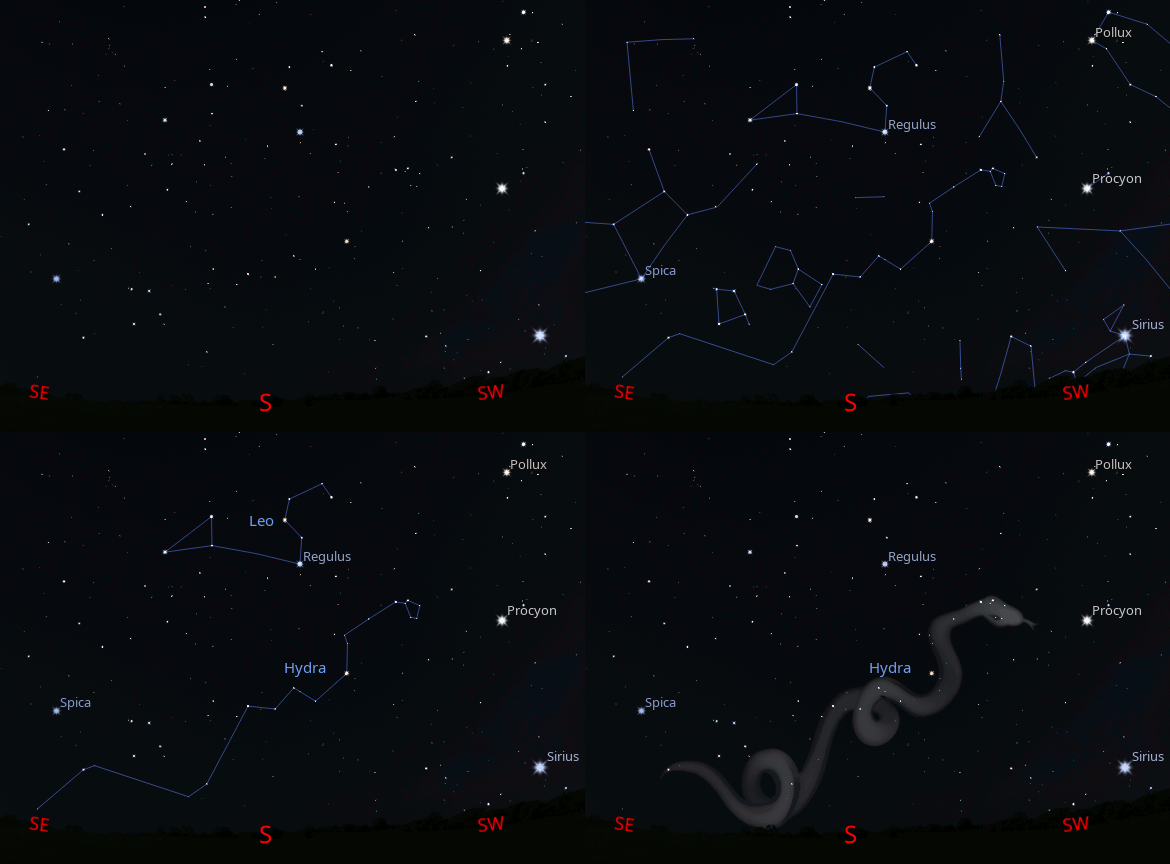
Stretching from midway up the sky in the southwest to low in the southeast at 10 p.m. can be found the constellation of Hydra the water snake, the longest constellation of all. Unlike the monster of the same name that Hercules slew, this Hydra has but one head, which is its most distinctive part. The head of Hydra is located between the bright stars Procyon in the southwest. Which is above the brighter star Sirius low in the sky, and Regulus in Leo the lion, higher in the south. Hydra’s head is a small but distinctive group of 6 stars that make a drooping loop to the right. The rest of Hydra wends its way in a reasonably straight line down to the southeastern horizon.
The astronomical event times given are for the Traverse City/Interlochen area of Michigan (EDT, UT–4 hours). They may be different for your location.
Addendum
Ephemeris: 03/04/2024 – The evening skies are a-changing
This is Ephemeris for Monday, March 4th. Today the Sun will be up for 11 hours and 21 minutes, setting at 6:35, and it will rise tomorrow at 7:12. The Moon, 1 day past last quarter, will rise at 4:30 tomorrow morning.
Tonight at 8 pm Orion is in the south. This will be the last month that we will be able to enjoy Orion in the evening sky, because by month’s end he will begin to dip low in the west in the evening twilight. Even though it’s not quite spring, the central constellation of that season, Leo the lion, is already rising in the east. It has cleared the horizon at 8 this evening. The backwards question mark of Leo’s head, mane and front part of his body is easily spotted in the east now with the bright star Regulus at the bottom. The Big Dipper is in the northeast, also rising higher, and signaling via the Anishinaabek constellation there of the Fisher Star, announcing the maple sugaring season.
The astronomical event times given are for the Traverse City/Interlochen area of Michigan (EST, UT –5 hours). They may be different for your location.
Addendum
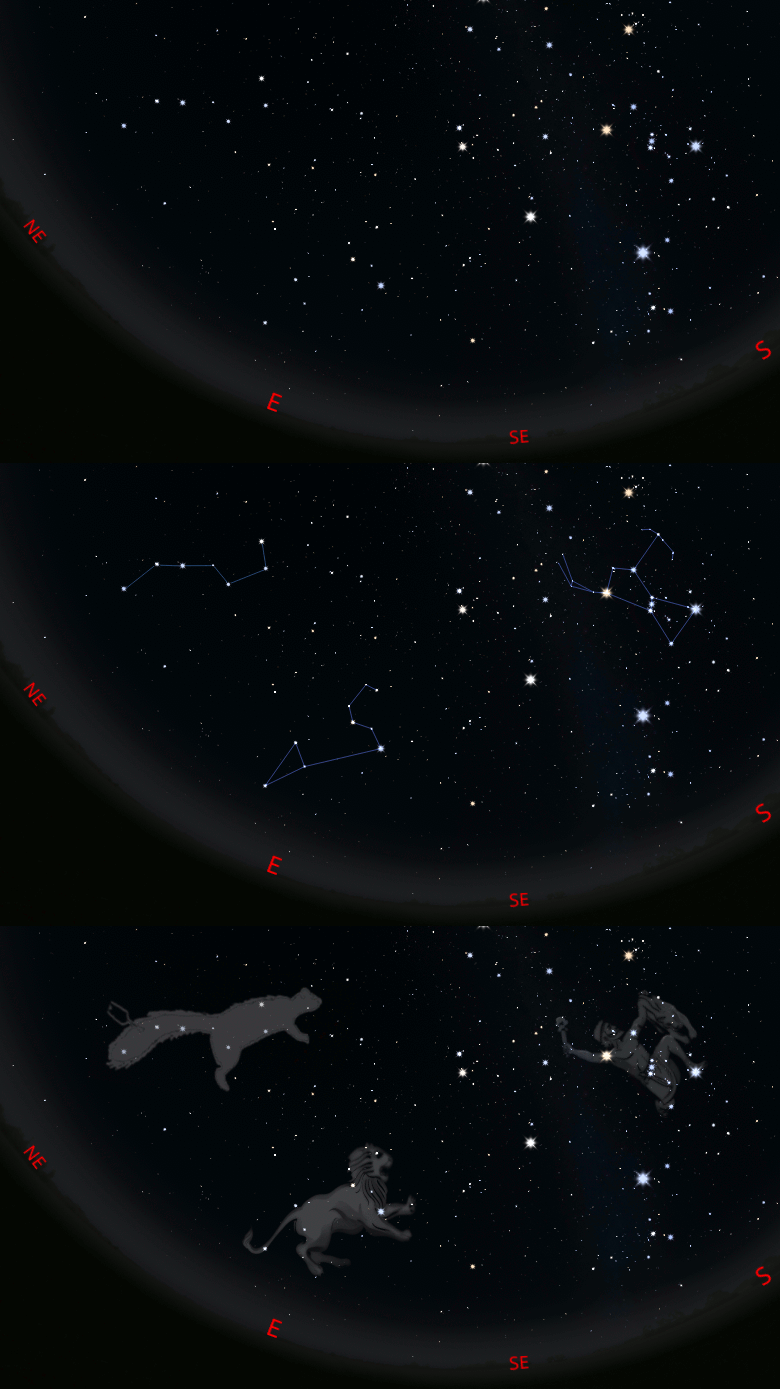
Looking to the east-southeast at 8 pm we look at three star groups or constellations. From left to right we have the Big Dipper and the Fisher Star in the northeast. Centered in the east we have Leo the lion. And on the right, just west of south, we have Orion the central winter constellation. Click or tap on the image to enlarge it. Credit: Stellarium, and using LibreOffice Draw, and GIMP.
05/16/2023 – Ephemeris – Regulus, the Little King Star
This is Ephemeris for Tuesday, May 16th. Today the Sun will be up for 14 hours and 51 minutes, setting at 9:05, and it will rise tomorrow at 6:12. The Moon, 3 days before new, will rise at 5:08 tomorrow morning.
Regulus is the brightest star in the constellation of Leo, the lion at the bottom of the backward question mark that is the head and mane of Leo. It’s in the southwest at 10 pm. Alluding to the lion’s status in the animal kingdom, Regulus is the little king star. It is dead last in order of brightness of the 21 brightest first magnitude stars, 1/13th the brightness of Sirius the brightest nighttime star, now lost in the evening twilight glow. To the Babylonians it was the king, the 15th of their constellations, that marked the passage of the Sun. Regulus is about 79 light years away, and 288 times the brightness of the sun. It is a rapidly spinning ellipsoid 3 times the sun’s diameter, rotating in just under 16 hours.
The astronomical event times given are for the Traverse City/Interlochen area of Michigan (EDT, UT –4 hours). They may be different for your location.
Addendum
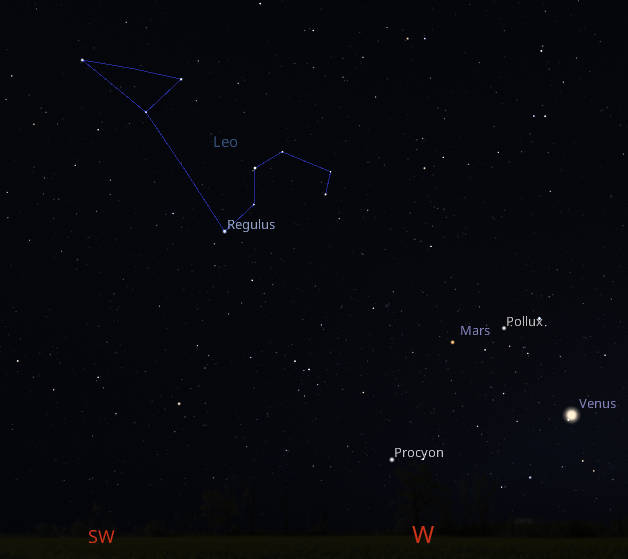
Regulus and Leo and the other stars and planets in the western sky at 11 pm, May 16, 2023. Created using Stellarium.
05/08/2023 – Ephemeris – How to find Leo the lion in the sky
This is Ephemeris for Monday, May 8th. Today the Sun will be up for 14 hours and 32 minutes, setting at 8:56, and it will rise tomorrow at 6:22. The Moon, 3 days past full, will rise at 12:57 tomorrow morning.
At 10 p.m. the spring constellation of Leo the lion will be high in the south. It can be found by locating the Big Dipper high overhead and imagining that a hole were drilled in the bottom of the bowl to let the water leak out. It would drip on the back of this giant cat. The Lion is standing or lying facing westward. His head and mane are seen in the stars as a backwards question mark. This group of stars is also called the sickle. The bright star Regulus is at the bottom, the dot at the bottom of the question mark. A triangle of stars, to the left of Regulus, is the lion’s haunches. Leo contains some nice galaxies visible in moderate sized telescopes. The stars in Leo’s part of the sky are fewer than those in the winter sky.
The astronomical event times given are for the Traverse City/Interlochen area of Michigan (EDT, UT –4 hours). They may be different for your location.
Addendum

Finding Leo the lion from the Big Dipper with no lines. The orientation is for 10 pm, May 8th. Can you find Leo? The Big Dipper? Created using Cartes du Ciel (Sky Charts).
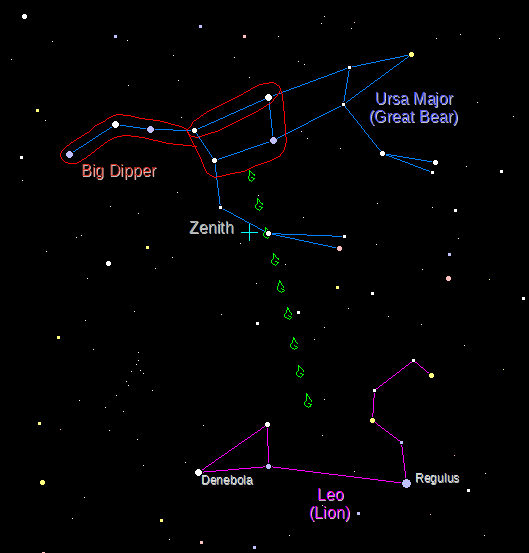
Using the Big Dipper to find Leo. The orientation is for 10 pm on May 8th. For any other time, the orientation would be different, as would the position of the zenith (overhead point). Created using my LookingUp app.
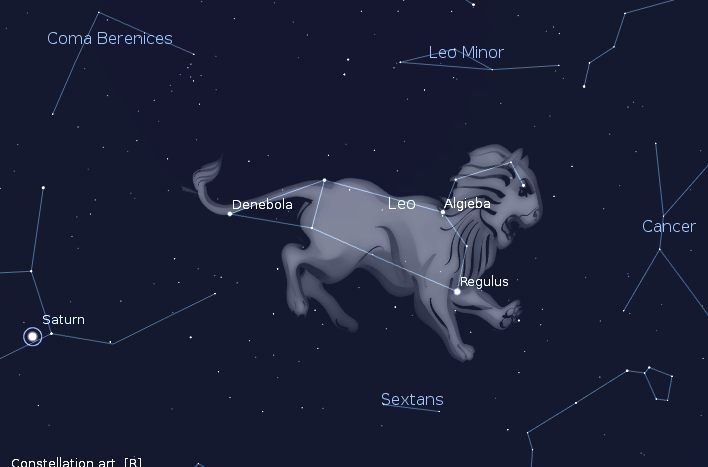
Leo, with drawing of a lion. Created using Stellarium.
Note the star at the left end of Leo is named Denebola. There are several stars that start with “Deneb”. Deneb must mean tail in Arabic because most star names are Arabic in origin. Denebola is the tail of the lion. Deneb Kaitos is the tail of the autumn constellation of Cetus the whale, and Deneb itself is the tail of the summer constellation of Cygnus the swan.
03/24/2022 – Ephemeris – A native constellation that’s a warning
This is Bob Moler with Ephemeris for Thursday, March 24th. Today the Sun will be up for 12 hours and 22 minutes, setting at 8:00, and it will rise tomorrow at 7:36. The Moon, 1 day before last quarter, will rise at 3:59 tomorrow morning.
The Anishinaabe peoples of the Great Lakes Region, which include the Ottawa and Chippewa Indians, have several constellations of spring. The first of them is Curly Tail, or the Great Underwater Panther, who lurks under the ice in lakes. It uses the stars of Leo the lion’s backward question mark, in the southeast at 9:30 in the evening, as its curved tail and the small knot of stars that are the head of Hydra the water snake as its head. The head of Hydra is below the constellation of Cancer, and in the south-southwest and to the right of the backwards question mark of Leo. The warning he gives is to keep off the thinning ice or break through and be snatched by the great panther that lives below.
The astronomical event times given are for the Traverse City/Interlochen area of Michigan (EDT, UT – 4 hours). They may be different for your location.
Addendum
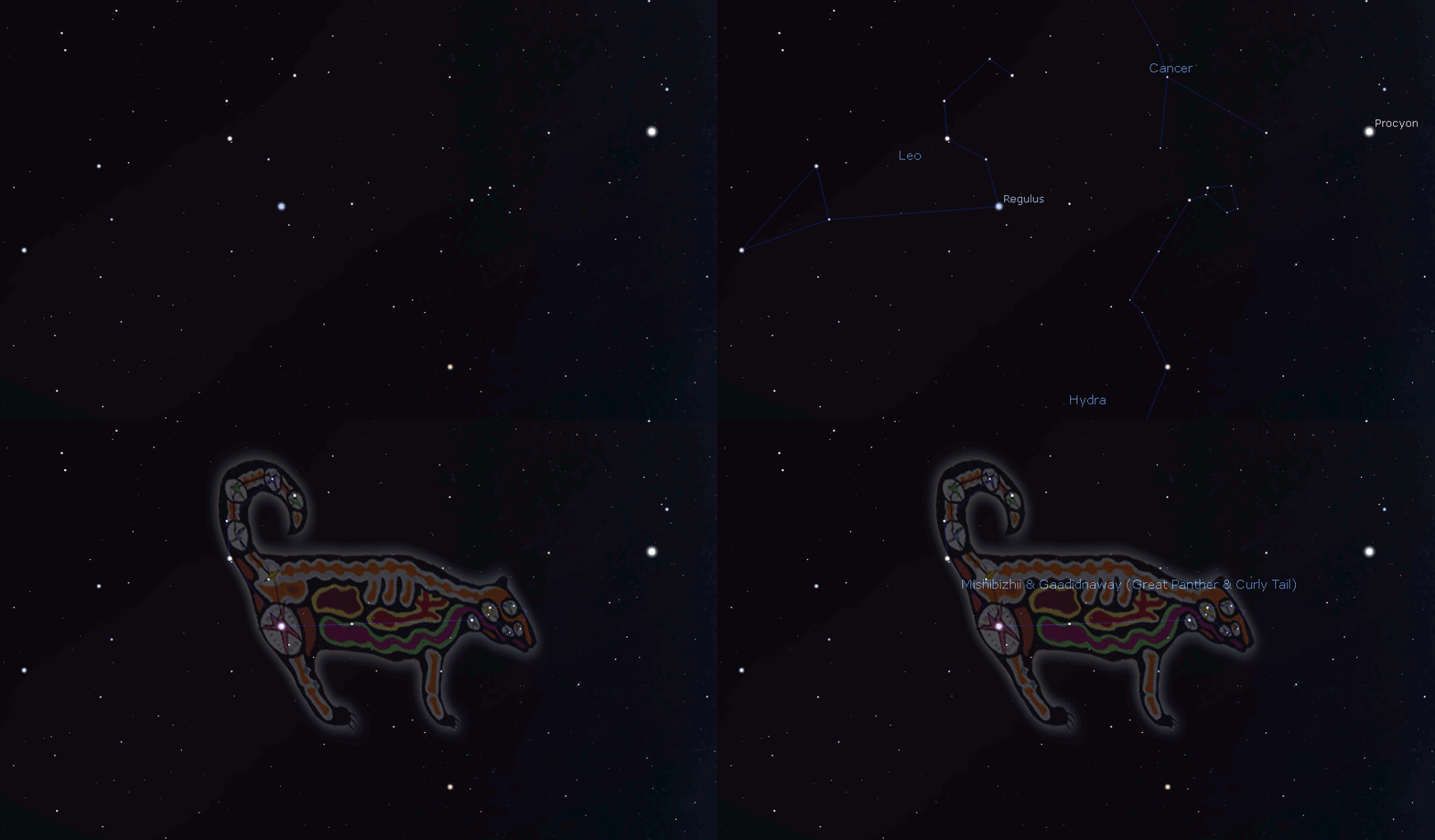
An animation showing the stars centered in the southeastern skies, the “official” constellations and the Anishinaabe constellation of Curly Tail and the Great (Underwater) Panther. Approximate time is 9:30 pm March 24th. Click on the image to enlarge. Created using Stellarium and GIMP.
03/03/2022 – Ephemeris – Finding Cancer the crab
This is Ephemeris for Thursday, March 3rd. Today the Sun will be up for 11 hours and 16 minutes, setting at 6:33, and it will rise tomorrow at 7:15. The Moon, 1 day past new, will set at 7:46 this evening.
The constellation of Cancer the crab is made of dim stars, which are generally connected, in constellation charts, with lines that make either the letter K or an upside down Y, which lie directly between the star pair Castor and Pollux in Gemini and Regulus in Leo. In the center of the constellation is, what to the naked-eye is a fuzzy spot called Praesepe, or the manger. The two nearby stars, one to the northeast, and one to the southeast are Asellus Borealis, and Asellus Australis, the northern and southern donkey colts feeding out of the manger. Viewing that fuzzy spot with a pair of binoculars will reveal that it’s not fuzzy at all. It resolves into a cluster of stars, which astronomers, over the years, have called the Beehive cluster. Back in the first and second century CE, the Sun entered Cancer to begin the season of summer. It’s now just a transitional constellation between the winter and spring evening skies.
The astronomical event times given are for the Traverse City/Interlochen area of Michigan (EST, UT – 5 hours). They may be different for your location.
Addendum

Cancer, the crab finder chart. Note the beehive cluster, also known to amateur astronomers as M44, along with other catalog names. Prior to the invention of the telescope this cluster was known as Praesepe which means “Manger”. Click on the image to enlarge it. Created using Stellarium and GIMP.
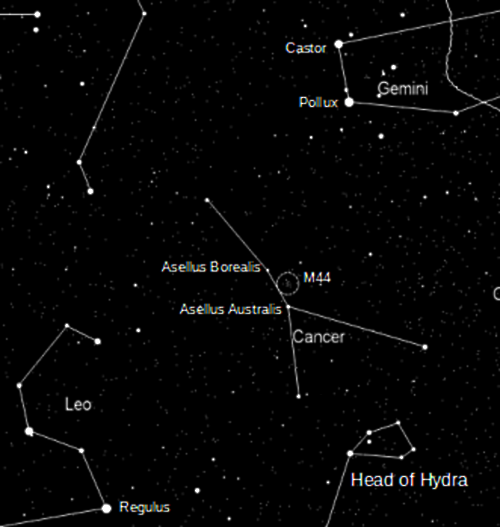
A closer look at Cancer, noting the donkey stars Asellus Borealis and Australis feeding at the manger, Praesepe or M44, aka: the Beehive Cluster. Created using Cartes du Ciel (Sky Charts) and LibreOffice for captions. Adapted from a chart I created for the March 2022 issue of the GTAS newsletter, the Stellar Sentinel.
 Bob Moler's Ephemeris Blog