Archive
02/18/2013 – Ephemeris – The moon appears near Jupiter tonight
Ephemeris for President’s Day, Monday, February 18th. The sun will rise at 7:37. It’ll be up for 10 hours and 38 minutes, setting at 6:15. The moon, 1 day past first quarter, will set at 3:15 tomorrow morning.
The moon will point to Jupiter tonight. The planet will be a ways to the west or right of the moon. Actually the moon was closer to Jupiter last night. It’s closest apparent approach is about now this morning. But they’re below the horizon now. My younger granddaughter Bea has made Jupiter her favorite planet because of its red spot. The Great Red Spot on Jupiter has been seen off and on ever its was discovered by a series of astronomers. It would fade for many years only to reappear again. In fact it never went away. Right now this high pressure system is more a light pastel pink. Back in the 1950’s, and 1960’s I found it hard to ignore in the smallest of telescopes. Now it takes bigger telescopes to spot.
Times are for the Traverse City/Interlochen area of Michigan. They may be different for your location.
Addendum
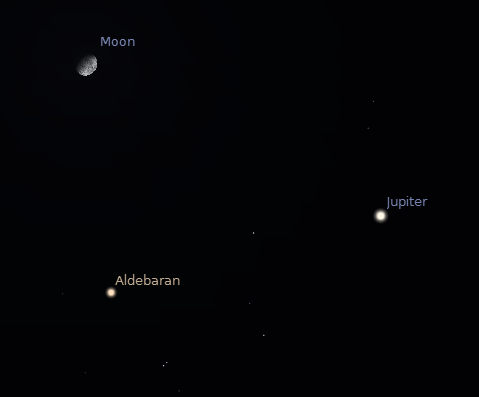
Jupiter and the moon at 9 p.m. on February 18, 2013. Created using Stellarium.
2/11/2013 – Ephemeris – The moon will appear near Mercury tonight
Ephemeris for Monday, February 11th. The sun will rise at 7:48. It’ll be up for 10 hours and 17 minutes, setting at 6:05. The moon, 1 day past new, will set at 8:09 this evening.
Mercury will appear below the skinny crescent moon tonight shortly after sunset. The best time to spot them is about 6:45 p.m. looking very low to the west southwestern horizon. Binoculars as always are a real help in picking them out of the evening twilight. Mercury will appear about 6 degrees or 12 moon widths below the moon. They will be actually at their closest appearance this afternoon, and will have separated a bit before we will get to see them. As a rule of thumb, the moon will move its diameter against the stars in an hour’s time. Mercury’s got its thing going too. In 5 days it will be at greatest elongation or apparent angle of separation from the sun of about 18.1 degrees. At about the same time Mercury will actually pass its closest to the sun.
Times are for the Traverse City/Interlochen area of Michigan. They may be different for your location.
Addendum
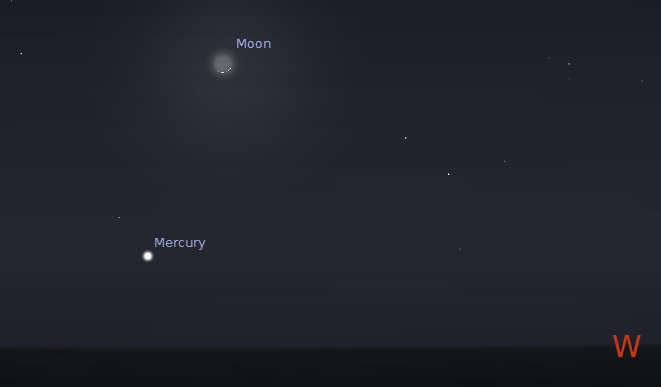
Mercury and the moon at 7:15 p.m. on February 11, 2013. Created using Stellarium. Note a one day old moon doesn’t show well in this view.
Saturn will appear above the moon on the morning of February 3rd
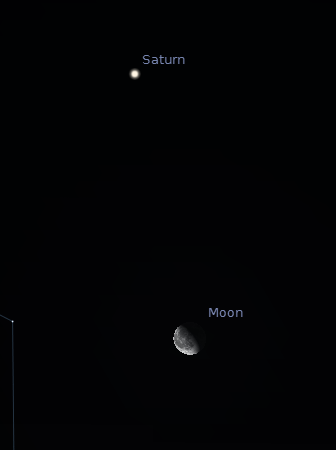
Here’s what you’ll see looking to the south at 4:55 a.m. EST. Created using Stellarium.
While you’re at it check out both with a telescopes. The two will hang out next to each other through the beginning of twilight.
01/30/2013 – Ephemeris – Where are the bright planets this week?
Ephemeris for Wednesday, January 30th. The sun will rise at 8:03. It’ll be up for 9 hours and 45 minutes, setting at 5:48. The moon, half way from full to last quarter, will rise at 9:58 this evening.
Let’s check out the planets for this week. Mars can be seen low in the west southwest. It will set at 7:15 p.m, two minutes later than last week because Mars is moving northward. The sun is gaining on it since it sets 10 minutes later each week. Jupiter will be visible in the southeast as it gets dark. Jupiter is located in the constellation of Taurus and moves from the southeast to the high south southwest during the evening. It will transit or pass due south at 8:15 p.m, and will set at 3:45 a.m. Jupiter is a wonderful sight in telescopes with its cloud bands and its moons which change positions each night. Saturn will be the next planet to rise at 1:24 a.m. in the east southeast. It’s located in eastern Virgo. Saturn will pass due south at 6:38 a.m.
Times are for the Traverse City/Interlochen area of Michigan. They may be different for your location.
Addendum
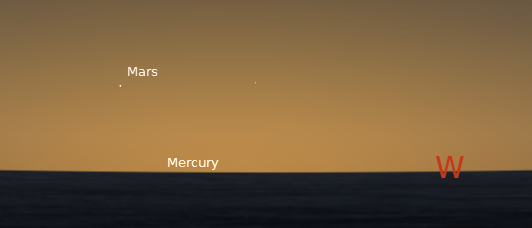
Mars low in the west southwest with Mercury just below the horizon at 6:30 p.m. on January 30, 2013. Created using Stellarium.
On February 8th Mercury will appear closest to Mars. Mercury’s greatest elongation from the sun will be on February 16th.
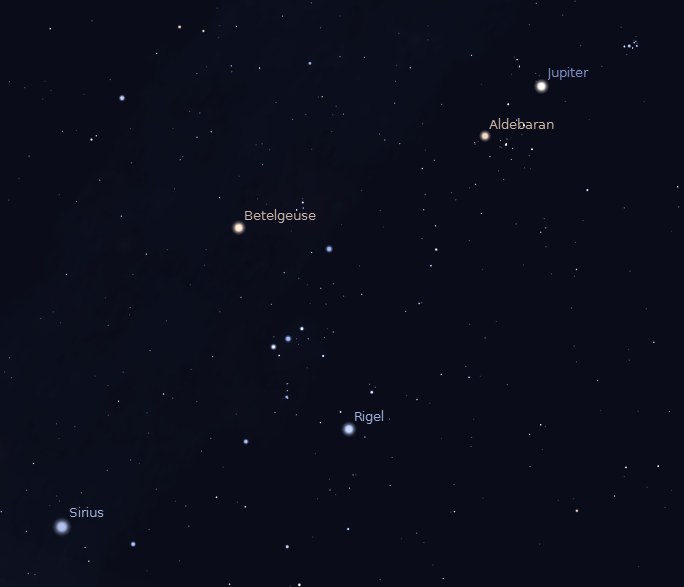
Jupiter and the stars of Taurus and Orion at 9 p.m. on January 30, 2013. Created using Stellarium.
Also see the Pleiades right and just above Jupiter.
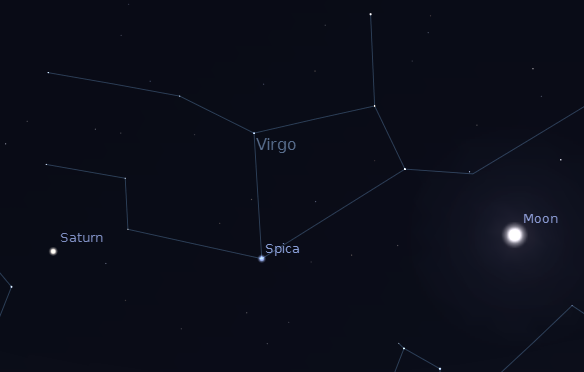
Saturn and the moon in Virgo at 6 a.m. on January 31, 2013. Created using Stellarium.
The moon will pass Saturn Sunday morning February 3rd.
01/07/2013 – Ephemeris – Saturn is near the moon this morning
Ephemeris for Monday, January 7th. The sun will rise at 8:18. It’ll be up for 9 hours and 0 minutes, setting at 5:19. The moon, 3 days past last quarter, will rise at 4:49 tomorrow morning.
This morning the planet Saturn will appear above and right of the crescent moon. They should be visible until a bit after seven a.m. The moon will be slipping eastward morning by morning, and by Thursday it will appear near the planet Venus. The moon’s movement around the earth with respect to the sun is called the synodic month, or a lunation. It is the period between one new moon to the next of about 29 and a half days. It is the basis for lunar calendars such as the Jewish and Islamic calendars. The moon’s crescent can be waxing or waning, growing fatter or thinner. It is now waning, and next week when we see the moon in the evening its phase will be waxing. The moon is just an illuminated ball in space.
Times are for the Traverse City/Interlochen area of Michigan. They may be different for your location.
Addendum
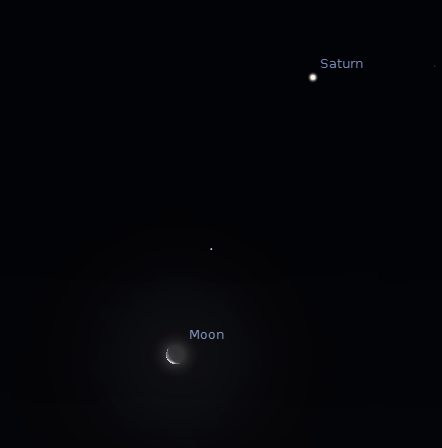
Saturn and the moon as seen at 6:30 a.m. on January 7, 2012. Created using Stellarium,
12/10/2012 – Ephemeris – Saturn will be above the moon this morning.
Ephemeris for Monday, December 10th. The sun will rise at 8:08. It’ll be up for 8 hours and 53 minutes, setting at 5:02. The moon, 3 days before new, will rise at 6:01 tomorrow morning.
This morning, if it’s clear look eastward at the moon and planets. The planet just above the moon is the planet Saturn. Farther below and to the left is the brilliant planet Venus. Those with good eyesight or binoculars might spot tiny Mercury. In the morning we get a preview in the stars of a season or two ahead from what we see in the evening. Orion, which is rising in the east in the early evening is seen setting in the west at 7 in the morning. The spring stars are now reigning in the morning sky, and a few summer are peeking above the eastern horizon, pretty much drowned out by the morning twilight. Next spring Saturn will be little moved from its current position, It takes it a bit less than 30 years to orbit the sun.
Times are for the Traverse City/Interlochen area of Michigan. They may be different for your location.
Addendum
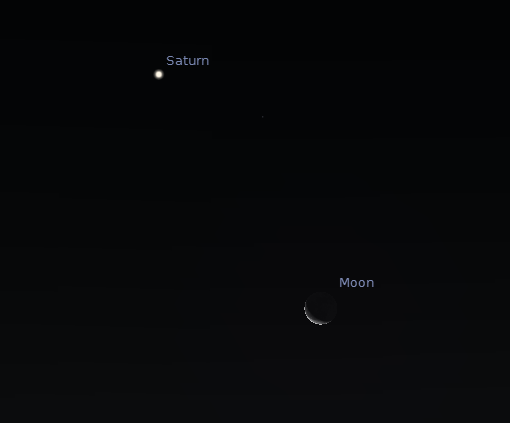
Saturn and the moon low in the southeast at 6:30 a.m. on December 10, 2012. Created using Stellarium.
Tomorrow morning the moon will pass below Venus. See this animation below.
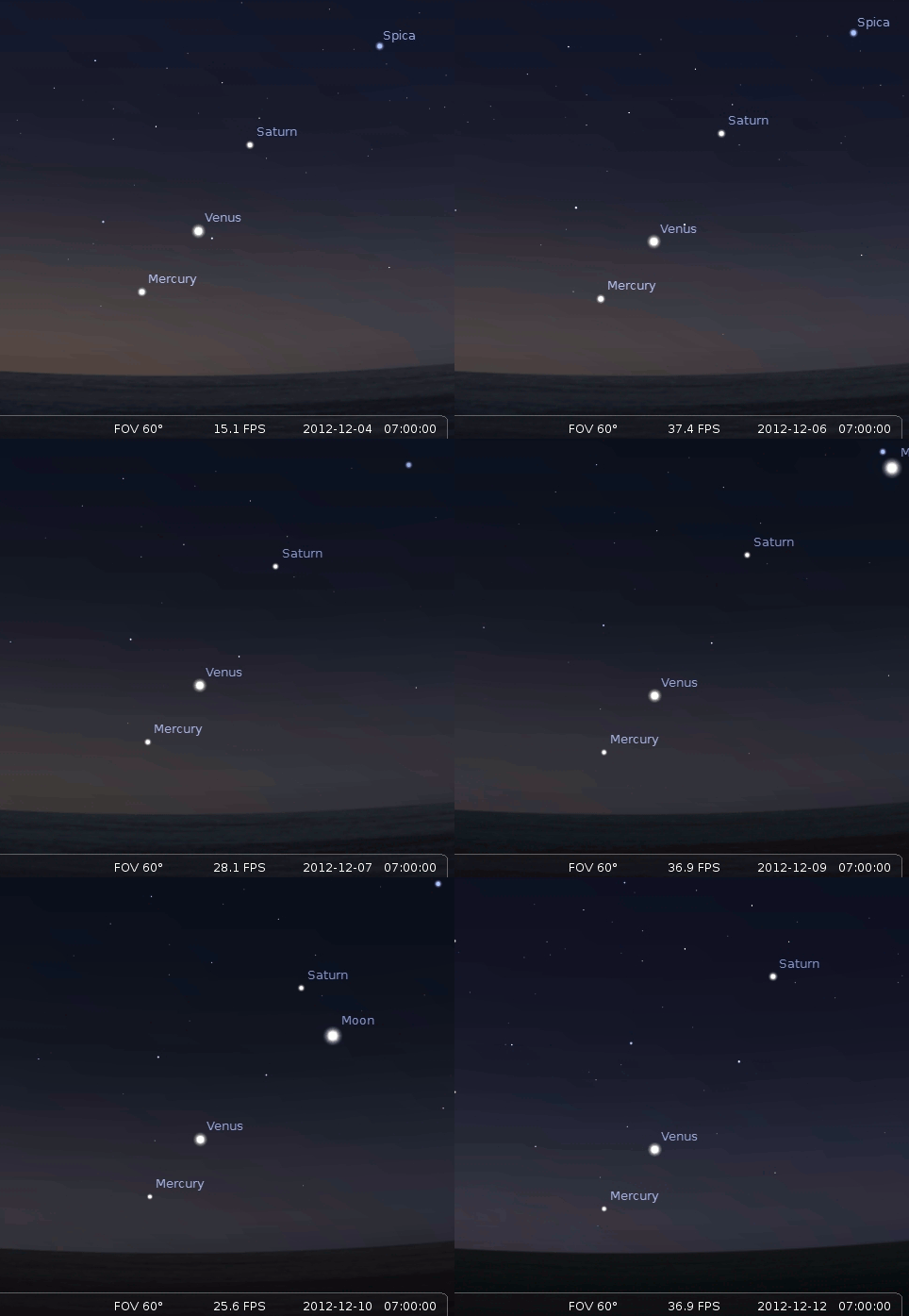
Mercury animation from December 4 to thru 12, 2012. Created using Stellarium
11/20/2012 – Ephemeris – Tides from Sandy to Galaxies
Ephemeris for Tuesday, November 20th. The sun will rise at 7:46. It’ll be up for 9 hours and 23 minutes, setting at 5:09. The moon, at first quarter today, will set at 12:50 tomorrow morning.
It was three quarters of the moon’s revolution ago or three weeks that the moon was full and adding to the storm surge of Hurricane Sandy. When the moon is full or new the moon’s greater tidal force adds to the sun’s giving us the highest tides called spring tides. Tides are caused by the difference in the gravitational pull on a body from on side to the other when two bodies are close. That’s why the moon exerts a greater tidal force than the sun, even thought its very much less massive. Tides just don’t occur in earth’s oceans. Jupiter’s tidal force tore apart Comet Shoemaker-Levy 9 two years before its more than 20 pieces plunged into Jupiter’s atmosphere in 1994. Colliding galaxies exhibit tidal tails.
Times are for the Traverse City/Interlochen area of Michigan. They may be different for your location.
Addendum
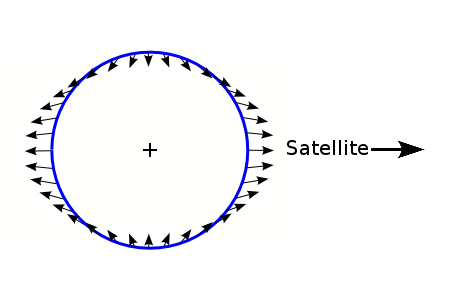
Tidal forces on a planet, the earth for instance by the moon. Source – Wikimedia.
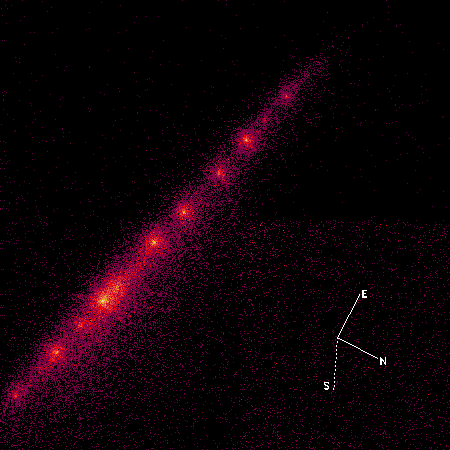
Comet Shoemaker-Levy 9 after a too close approach to Jupiter. The comet was torn into a “String of Pearls” by Jupiter,s immense tidal pull. They came back, crashing into Jupiter in July of 1994. Courtesy NASA Hubble Space Telescope.
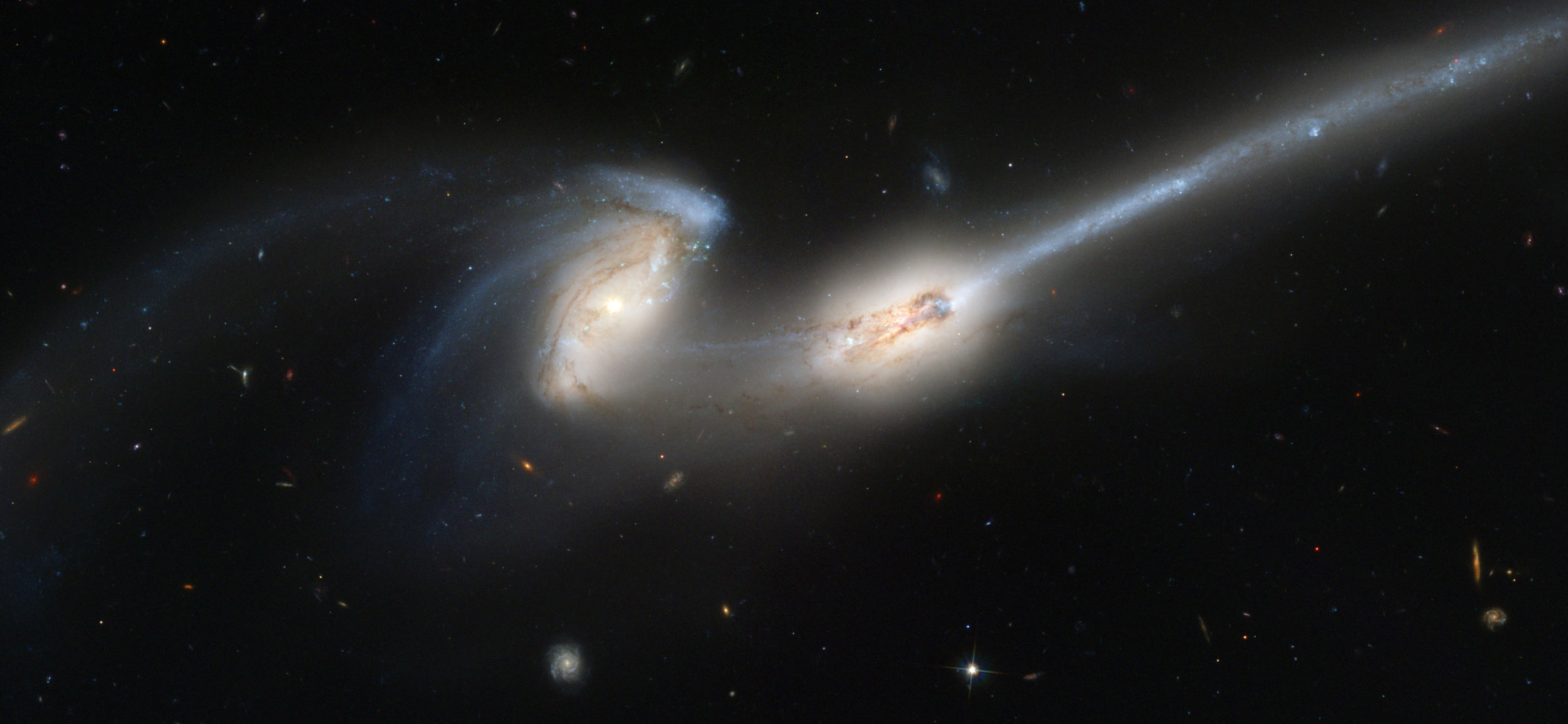
Two galaxies colliding, throwing off tidal tails as they close in. NGC4686 photo courtesy NASA and the Hubble Space Telescope.

Don’t do this at home! Spaghettification by black hole. The intense gravitational gradient near a black hole will stretch a body, be it asteroid or astronaut as they approach a black hole.
11/07/2012 – Ephemeris – Where are the bright planets this week?
Ephemeris for Wednesday, November 7th. The sun will rise at 7:28. It’ll be up for 9 hours and 53 minutes, setting at 5:22. The moon, 1 day past last quarter, will rise at 1:11 tomorrow morning.
Let’s check out the planets for this week. At 6:15 p.m. Mars can be seen low in the southwest. Mars, being the nearest planet outside the earth’s orbit takes its own sweet time leaving the evening sky. Mars will set at 7:19. The planetary action will have already picked up on the other side of the sky. Jupiter, will rise at 6:48 p.m. in the east northeast. It is located in the constellation of Taurus. It will transit or pass due south at 2:23 a.m. The last bright planet of the night is the morning star Venus which will rise at 4:33 a.m. also in the east. Venus is now below the hind end of Leo, and actually in the constellation of Virgo. The planets Venus and Jupiter and the winter constellations are a great sight for early risers.
Times are for the Traverse City/Interlochen area of Michigan. They may be different for your location.
Addendum
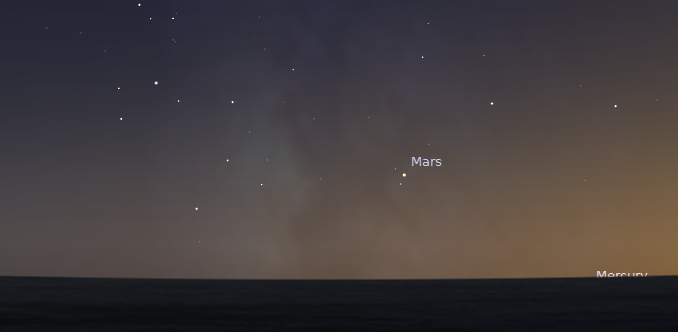
Mars low in the southwest at 6:15 p.m. on November 7, 2012. Created using Stellarium.
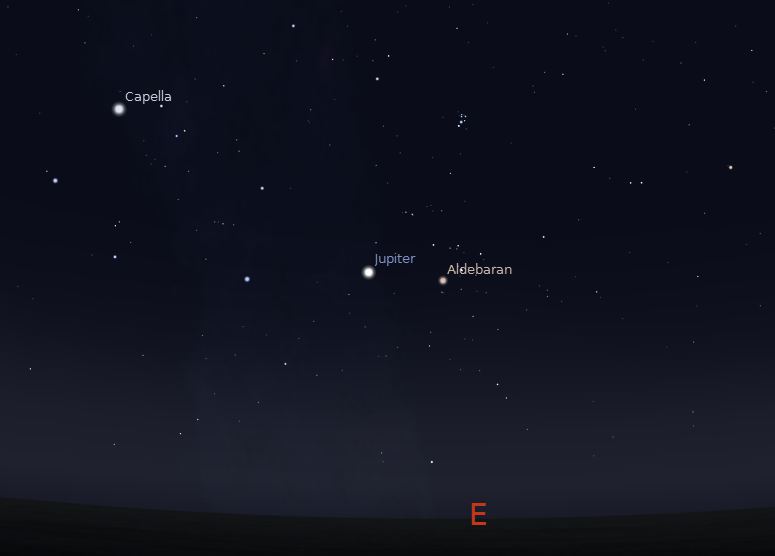
Jupiter rising at 9 p.m. on November 7, 2012. Created using Stellarium.
In the morning.
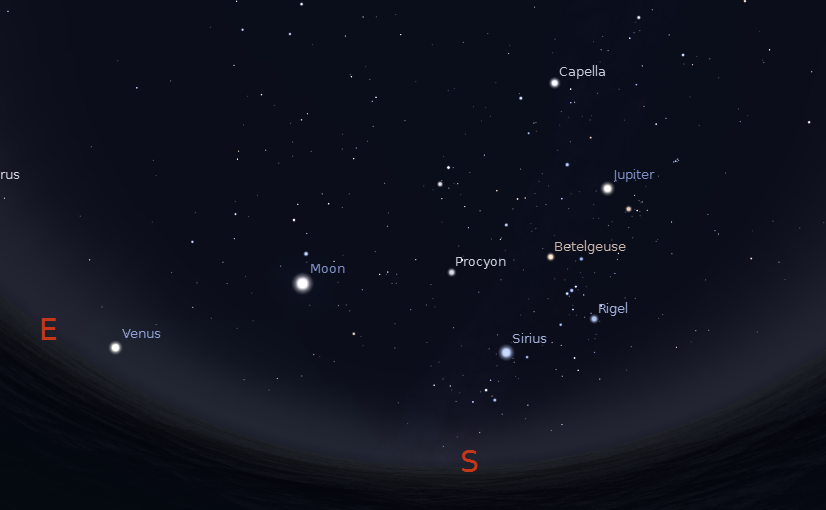
Jupiter and Venus with the winter stars at 5 a.m. November 8, 2012. Created using Stellarium.
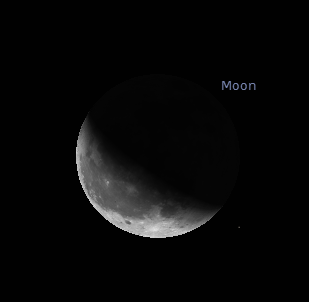
The waning crescent moon on November 8, 2012 at 5 a.m. Created using Stellarium.
11/01/2012 – Ephemeris – Previewing November Skies
Ephemeris for Thursday, November 1st. The sun will rise at 8:20. It’ll be up for 10 hours and 9 minutes, setting at 6:30. The moon, 3 days past full, will rise at 8:21 this evening.
Tonight Jupiter will appear above the moon. The month of November is one early sunsets, especially with the return to standard time this Sunday, and shortening of day light hours. Daylight hours will decrease from 10 hours 9 minutes today to 9 hours 5 minutes at month end. The altitude of the sun above the southern horizon at local noon, will drop from 31 degrees to 23½ degrees over the month. The Leonid meteor shower will have two peaks this year, but the best for us will be at 2 a.m. on the morning of the 20th. Up to 15 meteors per hour are expected. These are from Comet Tempel-Tuttle’s 1400 AD passage through the inner solar system. It won’t be until the late 2030’s when the comet will come around again.
Times are for the Traverse City/Interlochen area of Michigan. They may be different for your location.
Addendum
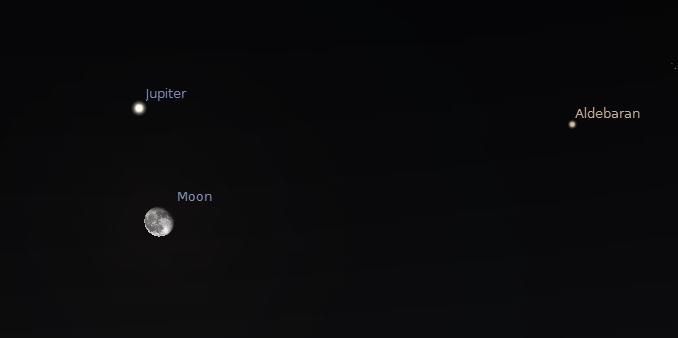
Jupiter and the moon at 10 p.m. November 1, 2012. Created using Stellarium.
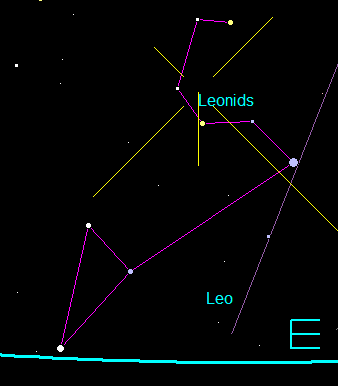
Leo rising at around 2 a.m. on the morning of November 20. Note the radiant in the sickle asterism of Leo. Created using Looking Up, my own program.
10/29/2012 – Ephemeris – The full Hunters Moon and Tycho’s rays
Ephemeris for Monday, October 29th. The sun will rise at 8:16. It’ll be up for 10 hours and 18 minutes, setting at 6:34. The moon, at full today, will rise at 6:24 this evening.
The full moon tonight is the full Hunters Moon. As down as I am about full moons due to the fact that they light up the sky and flood out the dimmer objects in the sky, I once and a while stop and view it. The time of the full moon is about 3 this afternoon, so when it rises tonight we will be looking at the moon from very nearly the direction of the sun, so there will be few shadows to be had. Last week I talked about the crater Tycho near the bottom or south end of the moon and its long rays of ejecta. The full moon is the best time to see these rays, which are easily visible in binoculars, through which Tycho itself looks like a bright dot. In telescopes Tycho looks like a small bright ring. The full moon is super bright. It’s daytime there.
Times are for the Traverse City/Interlochen area of Michigan. They may be different for your location.
Addendum
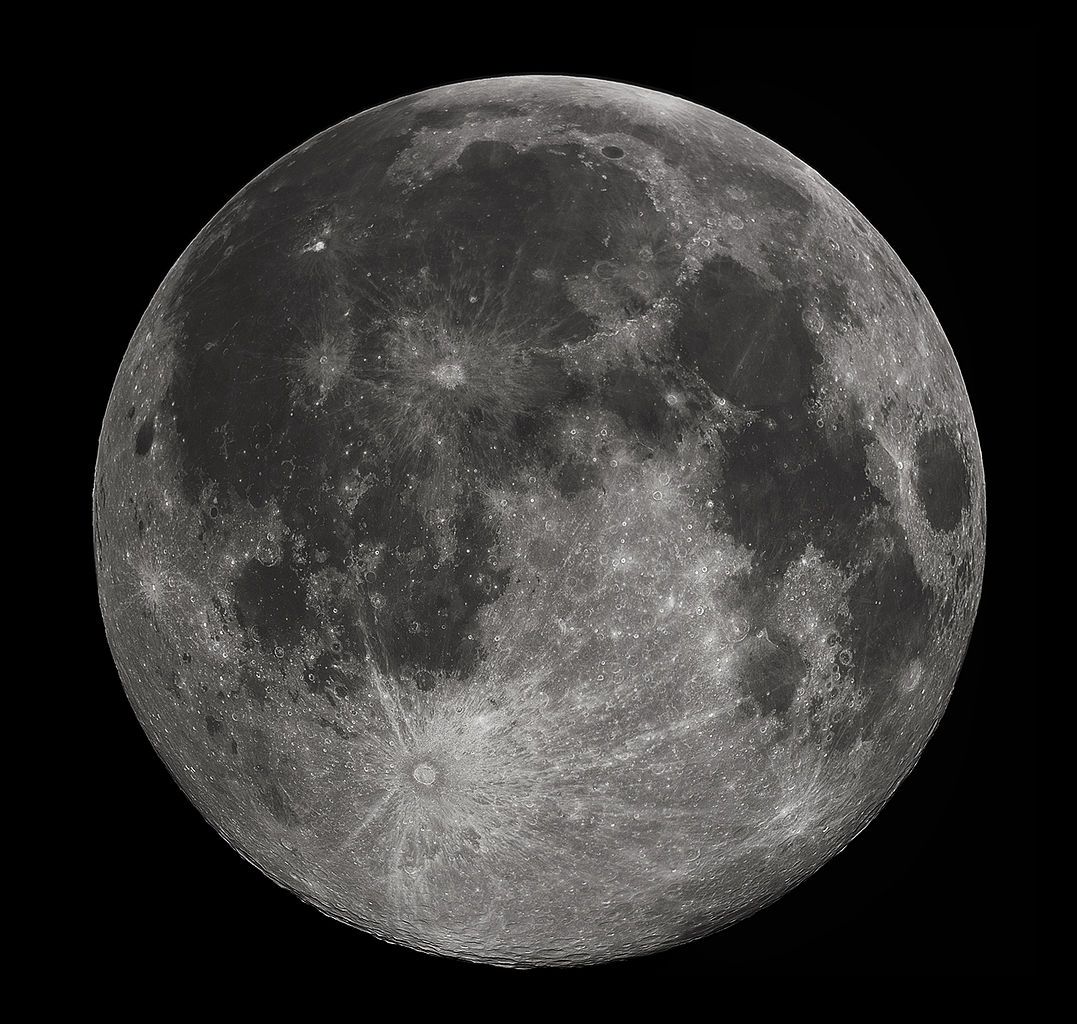
Photographed with a Celestron 9.25 Schmidt-Cassegrain telescope. Acquired with a Canon EOS Rebel T1i (EOS 500D), 20 images stacked to reduce noise. 200 ISO 1/640 sec. Gregory H. Revera
Tycho and its rays are prominent in the photo above. I found this image in the article Moon in Wikipedia.
 Bob Moler's Ephemeris Blog