Archive
03/16/2018 – Ephemeris – The Moon and evening planets this weekend
Ephemeris for Friday, March 16th. The Sun will rise at 7:53. It’ll be up for 11 hours and 56 minutes, setting at 7:50. The Moon, 1 day before new, will rise at 8:13 tomorrow morning.
The Moon will very close to new this weekend, so the dark skies can be enjoyed after 9:30 in the evening for hard-core dark sky observers. However after 9 p.m. it’s dark enough for most of us. The Moon next week will rapidly push that back as its phase waxes over the next week toward first quarter. About the first appearance of the Moon will be Sunday night when it will be almost in line with Venus and Mercury. Top right will be Mercury, then Venus, then below and left of brilliant Venus will be the thin sliver of the crescent Moon, whose night side will be illuminated by the Earth. It will take binoculars to really appreciate this Earth shine on the Moon. The full Moon this lunation will fall on the 31st with Easter following the next day for western churches.
The times given are for the Traverse City/Interlochen area of Michigan. They may be different for your location.
Addendum
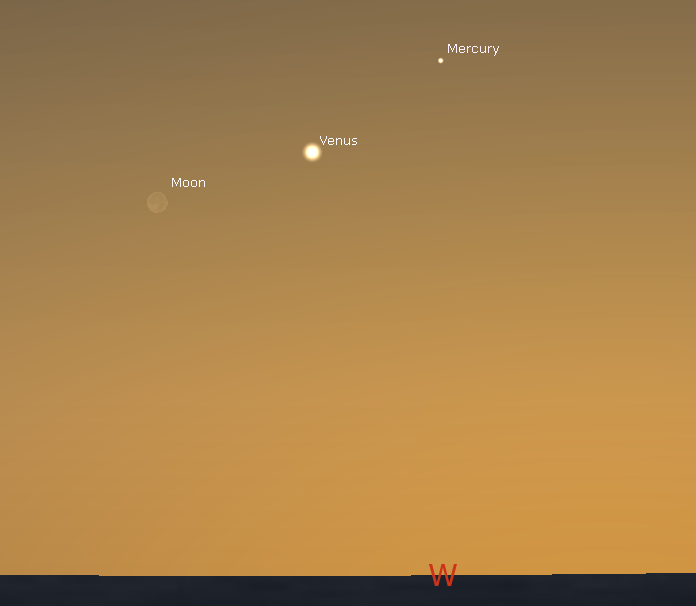
Mercury, Venus, and the Moon at 8:15 p.m. Sunday, March 18, 2018. Created using Stellarium, which was incapable of showing the very thin crescent of the Moon centered at the 5 o’clock limb of the Moon..
03/15/2018 – Ephemeris – Mercury at greatest separation (elongation) from the Sun today
Ephemeris for the Ides of March, Thursday, March 15th. The Sun will rise at 7:55. It’ll be up for 11 hours and 53 minutes, setting at 7:48. The Moon, 2 days before new, will rise at 7:45 tomorrow morning.
Today the planet Mercury will be at its greatest separation east from the Sun. It is called its greatest eastern elongation from the Sun. It is at an angle of 18.4 degrees from the Sun. It will be seen in the west about 8:15 for about an hour before it sets. It will be above right of the much brighter Venus. Mercury is probably at its best place to be observed than any time this year, with eastern elongation happening near the vernal equinox and is placed at a high angle above the Sun. The best morning appearance of Mercury will be its greatest western elongation on August 26th, almost a month short of the autumnal equinox, where it won’t be placed at as great an angle above the rising Sun.
The times given are for the Traverse City/Interlochen area of Michigan. They may be different for your location.
Addendum
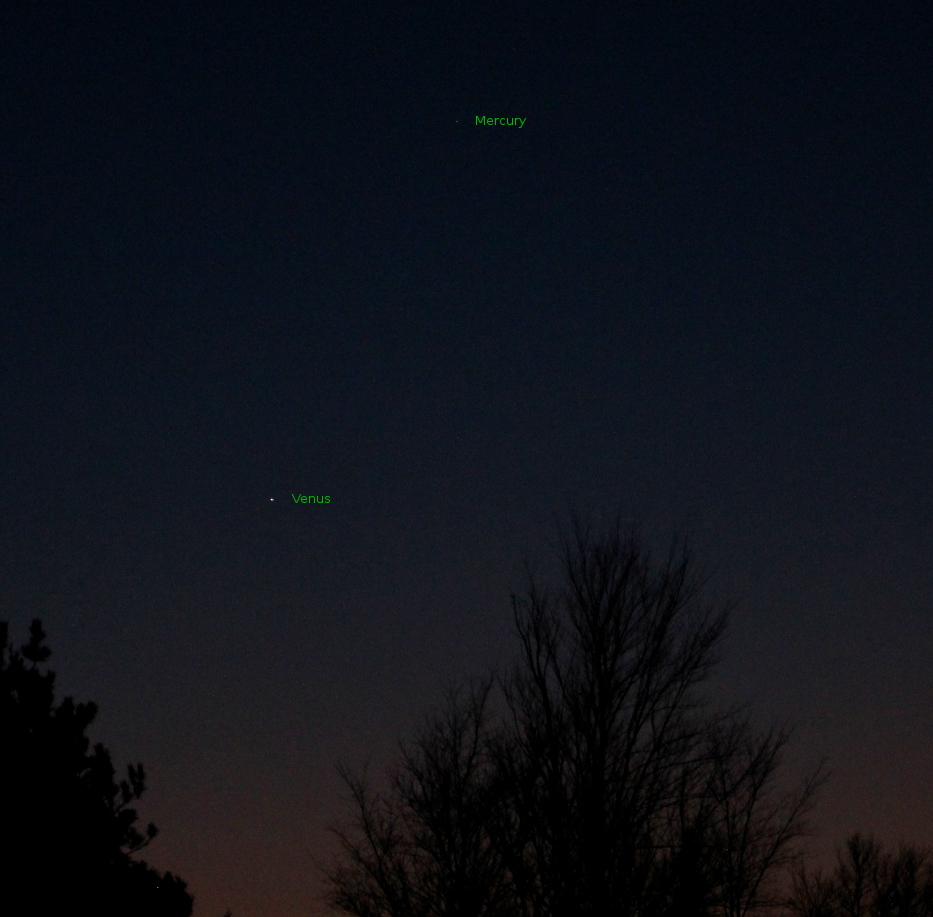
Venus and Mercury photographed last night at 8:20 EDT March 14, 2018. Did some tweaks to bring out Mercury in GIMP. Canon EOS Rebel T5, 75 mm, though reduced by 67%; f/4, 1/400 sec., ISO 1600. Click on image to enlarge. Click on image to enlarge. Credit Bob Moler.
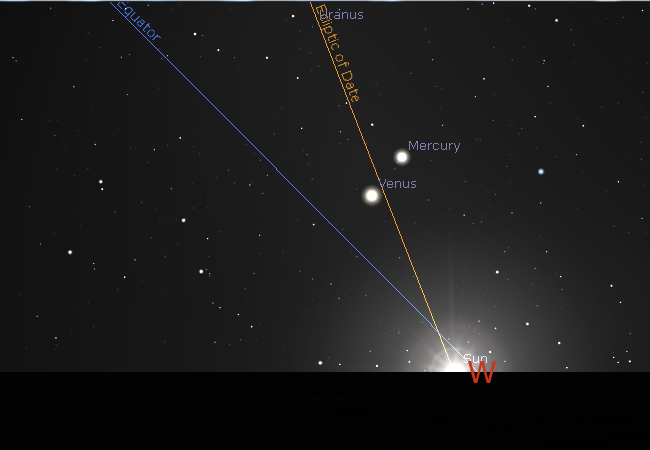
Stellarium’s showing of Venus and Mercury at 8:15 p.m. March 15. 2018.
Note in the above image, the steepness of the ecliptic (plane of the Earth’s orbit) is to the horizon in the spring. Its angle to the celestial equator is 23.5°. The angle the celestial equator makes with the horizon is your co-latitude (90° – your latitude). At my location my latitude is 44.7°, so the celestial equator meets the horizon at 45.3°. On the March equinox the ecliptic, near where the planets hang out, reaches its most vertical at nearly 70°. This makes planets, including Mercury appear higher in the sky near sunset, and as they set, moving parallel to the equator, will stay up their longest.
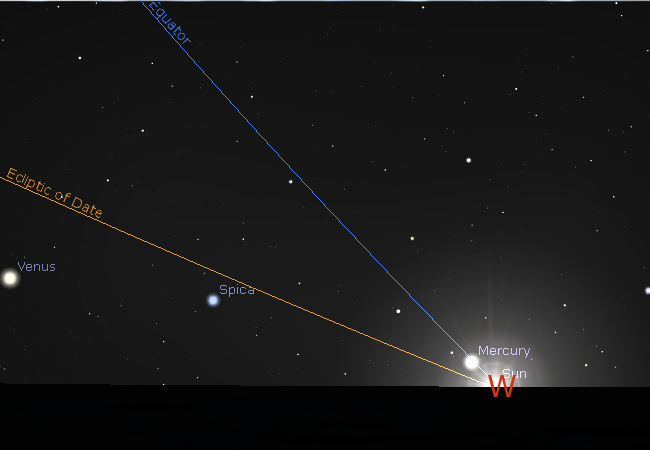
Celestial equator and ecliptic at the September equinox showing how low it appears. Created using Stellarium.
On the September equinox the ecliptic, near where the planets hang out, reaches its most horizontal at near 22°. This makes planets, including Mercury appear lower in the sky near sunset, and as they set, moving parallel to the equator, will set shortly after the Sun. This September Venus happens to be approaching its inferior conjunction and is very close to the Earth. This exaggerates its orbital inclination. in this case shows the planet a good deal south of the ecliptic.
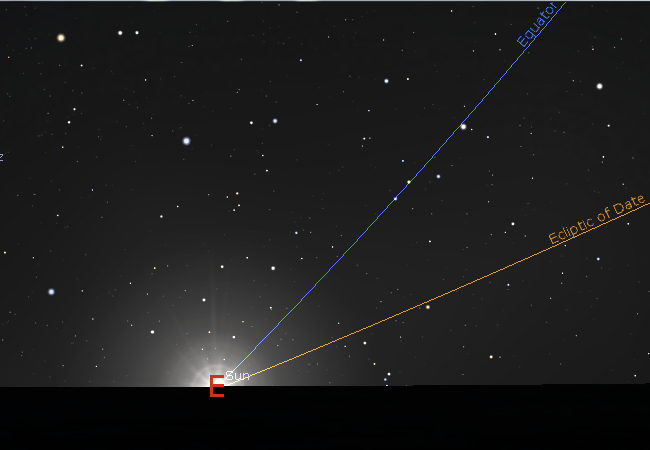
At the spring equinox close morning planets to the Sun will be hard to spot, being low to the horizon.
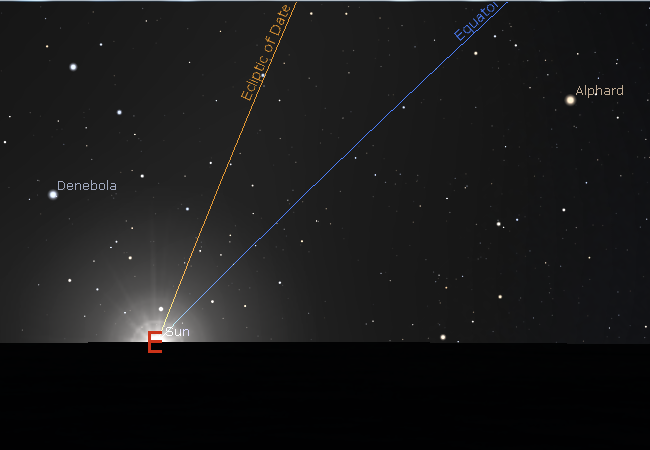
Celestial equator and ecliptic at the September equinox mornings showing how high it appears. Created using Stellarium.
Update
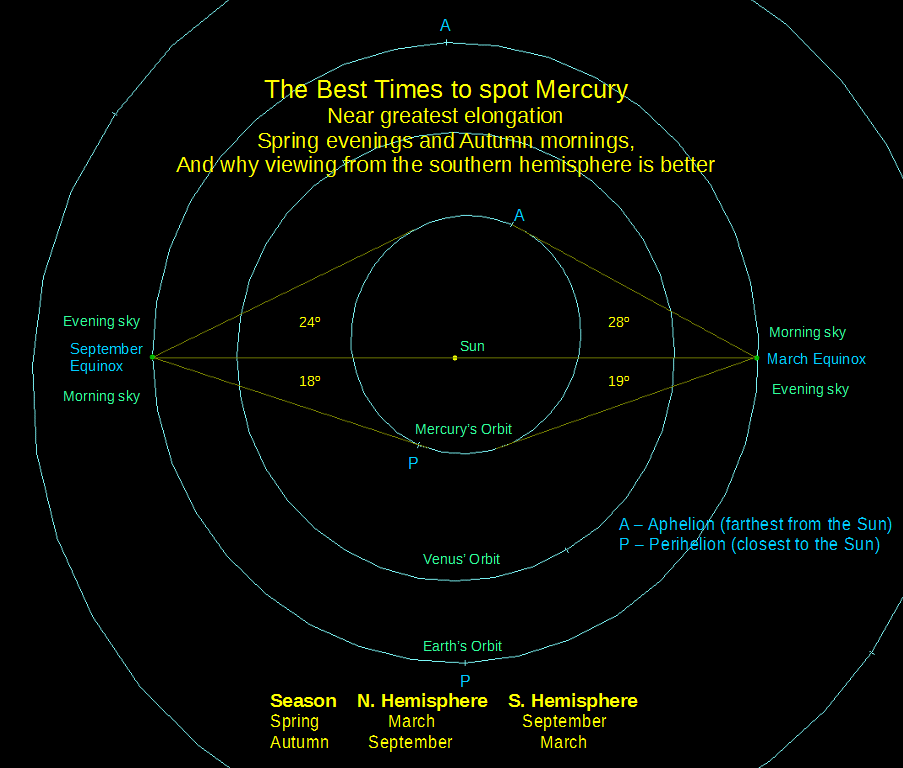
The angles of the elongation of Mercury at the equinoxes. Click on image to enlarge. Created using my LookingUp program.
Due to the eccentricity of Mercury’s orbit and its orientation with respect to the Earth’s positions at the equinoxes, observers on the southern hemisphere of the Earth get a better view of Mercury than us northerners.
(I created a similar diagram for posting yesterday, but found right before the scheduled posting time that it was incorrect in its orientation, so I redid it this morning.)
03/14/2018 – Ephemeris – A Pi Day look at the bright planets
Ephemeris for Pi Day, Wednesday, March 14th. The Sun will rise at 7:57. It’ll be up for 11 hours and 50 minutes, setting at 7:47. The Moon, 3 days before new, will rise at 7:15 tomorrow morning.
Pi day: the first three digits of the mathematical constant pi is 3-14. Let’s take our weekly look at the bright planets. All 5 of the naked eye planets are visible now. Three of them are visible this morning. Before it gets light Jupiter will be in the west-southwest, with Mars in the south and Saturn a bit left of the red planet. Jupiter will rise at 12:44 tomorrow morning. Mars will rise at 3:42. And Saturn will rise at 4:19 a.m. In the evening sky Venus will be visible low in the western twilight from about 8:15 p.m. until before it sets at 9:06. Mercury is much dimmer but above and a bit right of Venus, tonight about 8 Moon widths at 1 o’clock from Venus. It will set at 9:26. Mercury will appear higher than Venus in the sky for 6 more nights.
The times given are for the Traverse City/Interlochen area of Michigan. They may be different for your location.
Addendum
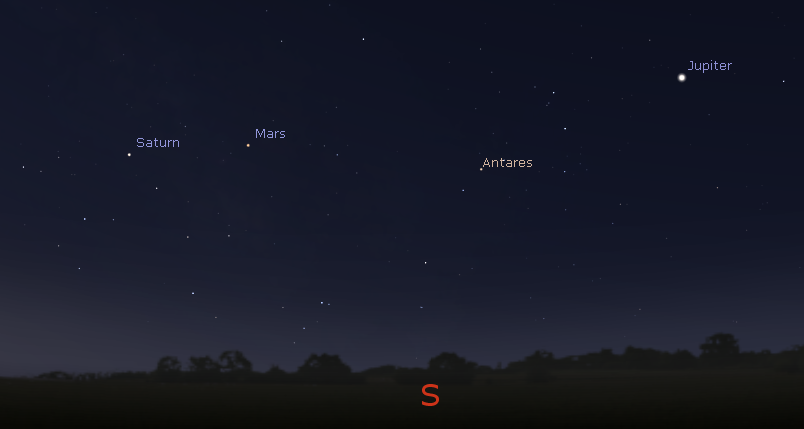
The morning planets of Jupiter, Mars and Saturn plus the Moon. Seen at 7 a.m. EDT this morning March 14, 2018. Click on image to enlarge. Created using Stellarium.
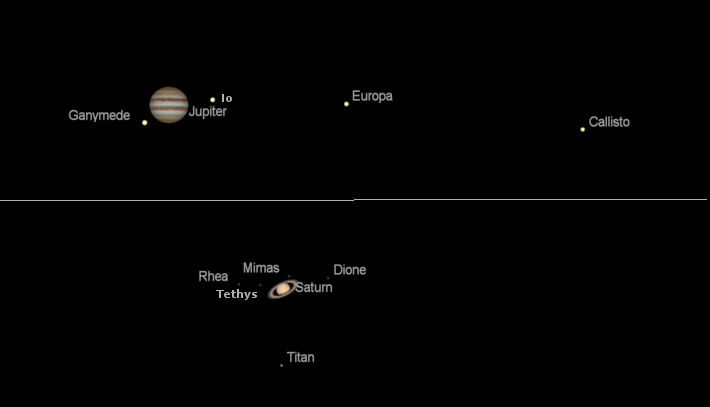
Jupiter and Saturn with their brighter satellites tomorrow morning at 6 a.m. March 8, 2018. They are displayed at the same scale. Saturn in about twice as far as Jupiter. Its disk is a bit smaller than Jupiter’s so it appears about half as large. The extent of the rings appear to be about the same as Jupiter’s diameter. Created using Cartes du Ciel (Sky Charts).

Venus and Mercury, low in the west at 8:15 p.m., March 14, 2018. Created using Stellarium.
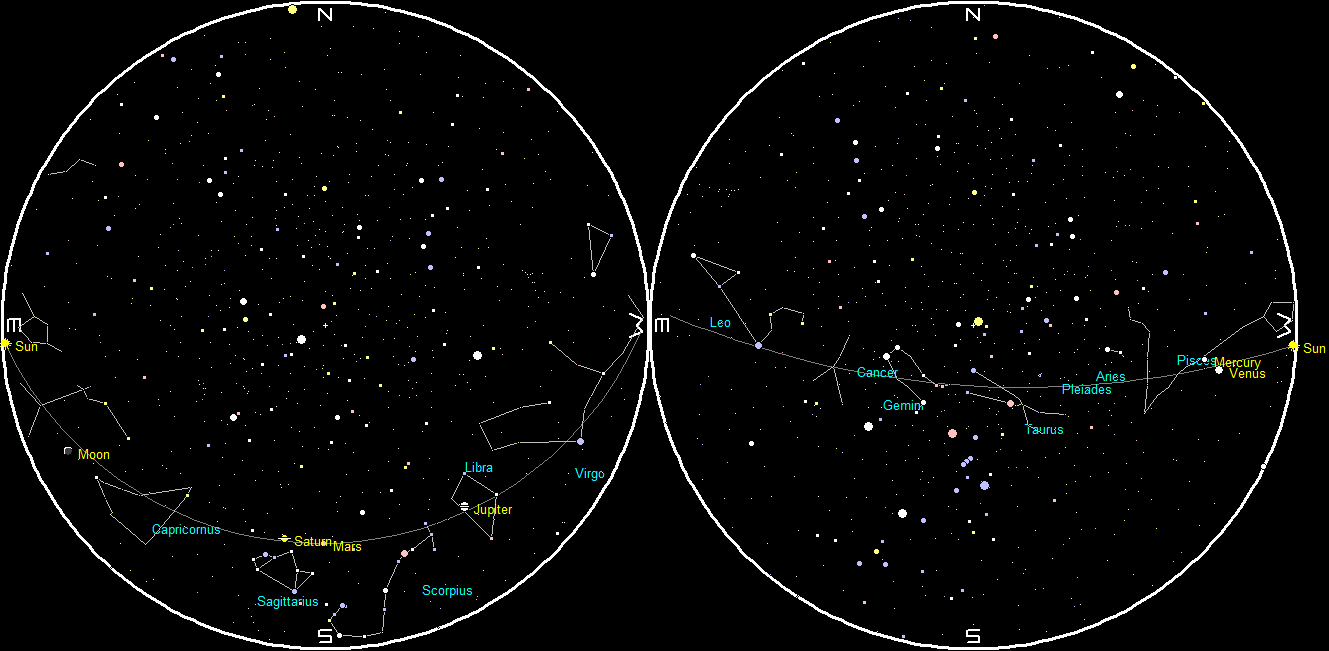
Planets at sunset and sunrise of a single night starting with sunset on the right on March 14, 2018. The night ends on the left with sunrise on the 15th. Click on the image to enlarge. Created using my LookingUp program.
02/13/2018 – Ephemeris – The Big Dipper as a pointer to other stars and constellations
Ephemeris for Tuesday, March 13th. The Sun will rise at 7:58. It’ll be up for 11 hours and 47 minutes, setting at 7:46. The Moon, 4 days before new, will rise at 6:42 tomorrow morning.
With the Big Dipper up in the northeastern sky it is a sign that spring is coming. At 9 p.m. The Big Dipper can be used to find other stars and constellations. The Big Dipper’s most famous function is in locating Polaris the North Star. It’s a good way of finding directions at night. The altitude of Polaris, that is angle above the horizon, will give one’s approximate latitude north of the equator. Another constellation that can be found is Leo the lion. It is rising in the east in the evening, but it can also be found from the Big Dipper by imagining that a hole were drilled in the bottom of the bowl to let the water leak out. It would fall on Leo’s back. The Big Dipper can be used to find two more stars, but they have not yet risen.
The times given are for the Traverse City/Interlochen area of Michigan. They may be different for your location.
Addendum
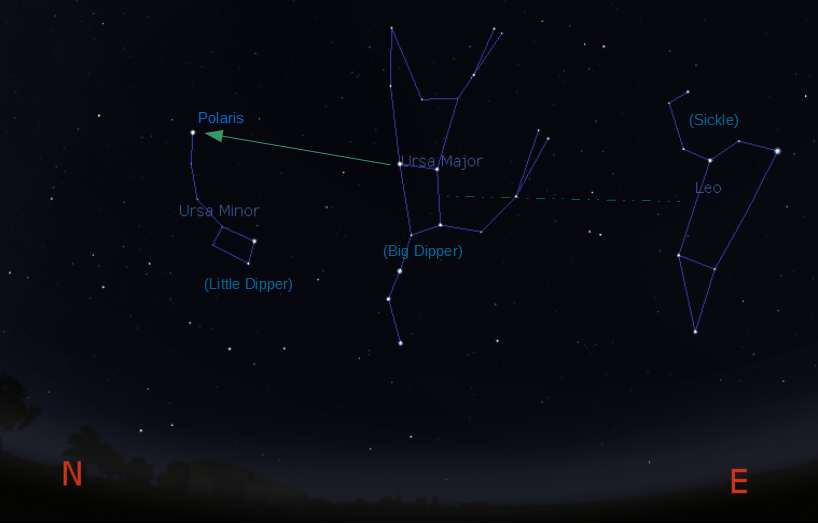
The Big Dipper points to Polaris, the, North Star, and to Leo the lion at 9 p.m., March 13th. In another hour the 4th brightest night-time star Arcturus will appear above the eastern horizon pointed to by the arc of the handle of the Big Dipper. We’ll revisit the Big Dipper next month when Arcturus and Spica will also be found by the use of the Big Dipper. Created using Stellarium and Libre Office.
03/12/2018 – Ephemeris – The Fisher is rising as spring approaches
Ephemeris for Monday, March 12th. The Sun will rise at 8:00. It’ll be up for 11 hours and 44 minutes, setting at 7:45. The Moon, 4 days past last quarter, will rise at 6:05 tomorrow morning.
Now in the evening the Big Dipper has moved up in the northeast. The Anishinaabek peoples around the Great Lakes, like the Ottawa and Chippewa saw instead of a dipper or a bear: Ojiig the Fisher. It’s a magical weasel-like creature who, with some animal friends, brought summer to the Earth. The story is too long to relay here, but my telling of it is here. For his trouble he was slain, and was placed among the stars of the sky by the Great Spirit Manitou where we see him today. His blood is said to paint the trees with the fall colors. However as the Fisher rises in the northeast in late winter and early spring it is a signal for the maple trees to bring forth their sweet sap.
The times given are for the Traverse City/Interlochen area of Michigan. They may be different for your location.
Addendum
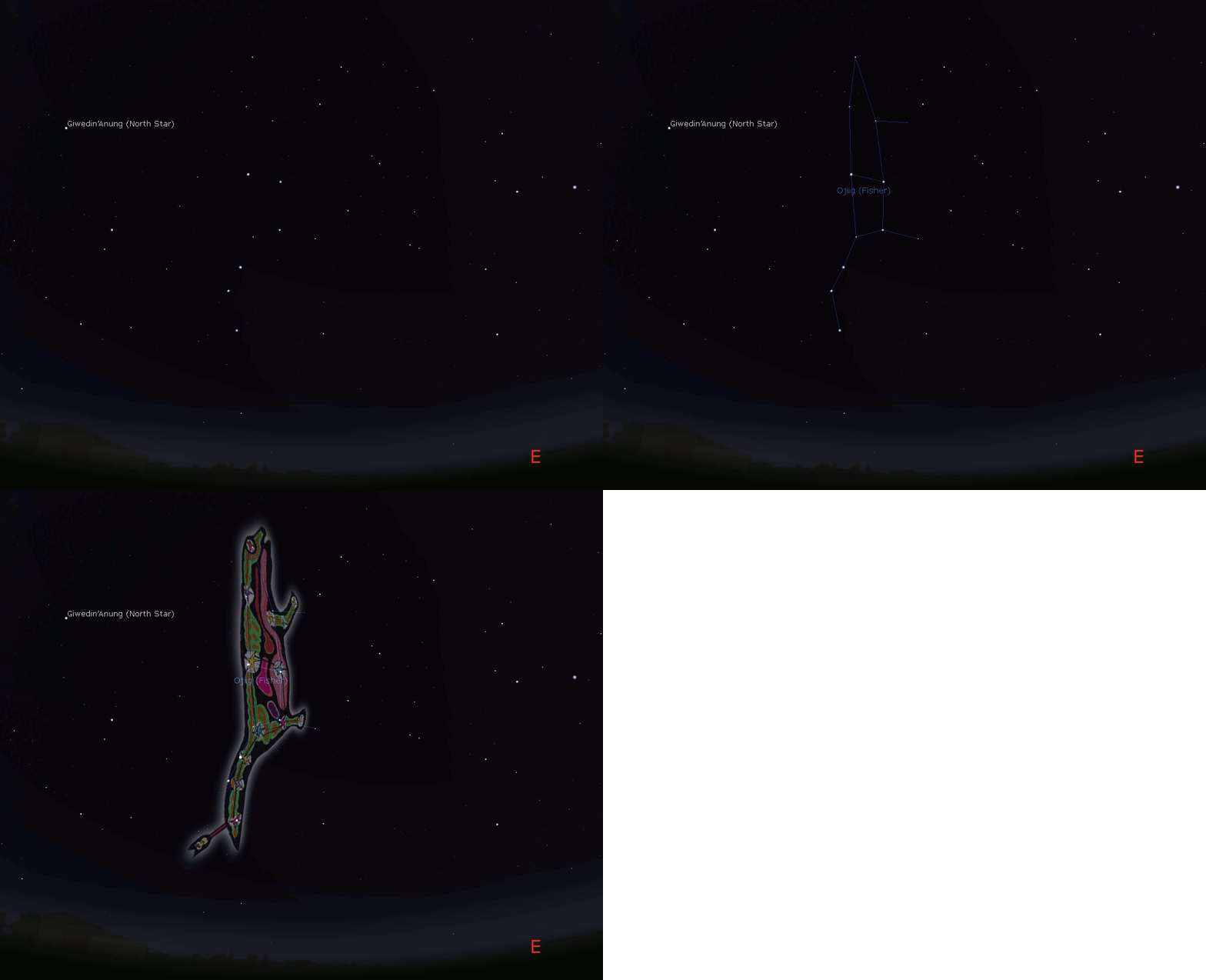
Finding the Big Dipper and the Fisher at 9 p.m., March 12, 2018. Click on the image to enlarge. Created using Stellarium and GIMP.
The Anishinaabek constellation drawings are from Ojibwe Sky Star Map Constellation Guide by Annette S. Lee, William Wilson, Jeffrey Tibbets and Carl Gawboy available locally and online. They are part of the latest editions of Stellarium, a free planetarium program. Links to it are on the left. Other information and links are available within the Sky Lore tab.
Here’s one of the links: http://www.nativeskywatchers.com/. It also contains links to Lakota star maps and lore.
03/09/2018 – Ephemeris – The good ship Argo
Ephemeris for Friday, March 9th. The Sun will rise at 7:06. It’ll be up for 11 hours and 35 minutes, setting at 6:41. The Moon, at last quarter today, will rise at 2:50 tomorrow morning.
Located south and east of Canis Major, the great hunting dog of Orion and it brilliant star Sirius in the south is a dim constellation of Puppis, the poop deck of the old constellation Argo Navis, the constellation that depicts the ship Jason and the Argonauts used in their search for the Golden Fleece. This huge constellation has been subdivided. Only Puppis and Pyxis the ship’s compass are visible from Michigan. The other parts of the ship are Carina the keel, and Vela the sails require traveling south at least to the southern most of the United States. Three other constellations also related to this expedition are Gemini with Castor, who died on the expedition and Pollux. Hercules was also aboard as was the physician of the constellation Ophiuchus.
The times given are for the Traverse City/Interlochen area of Michigan. They may be different for your location.
Addendum
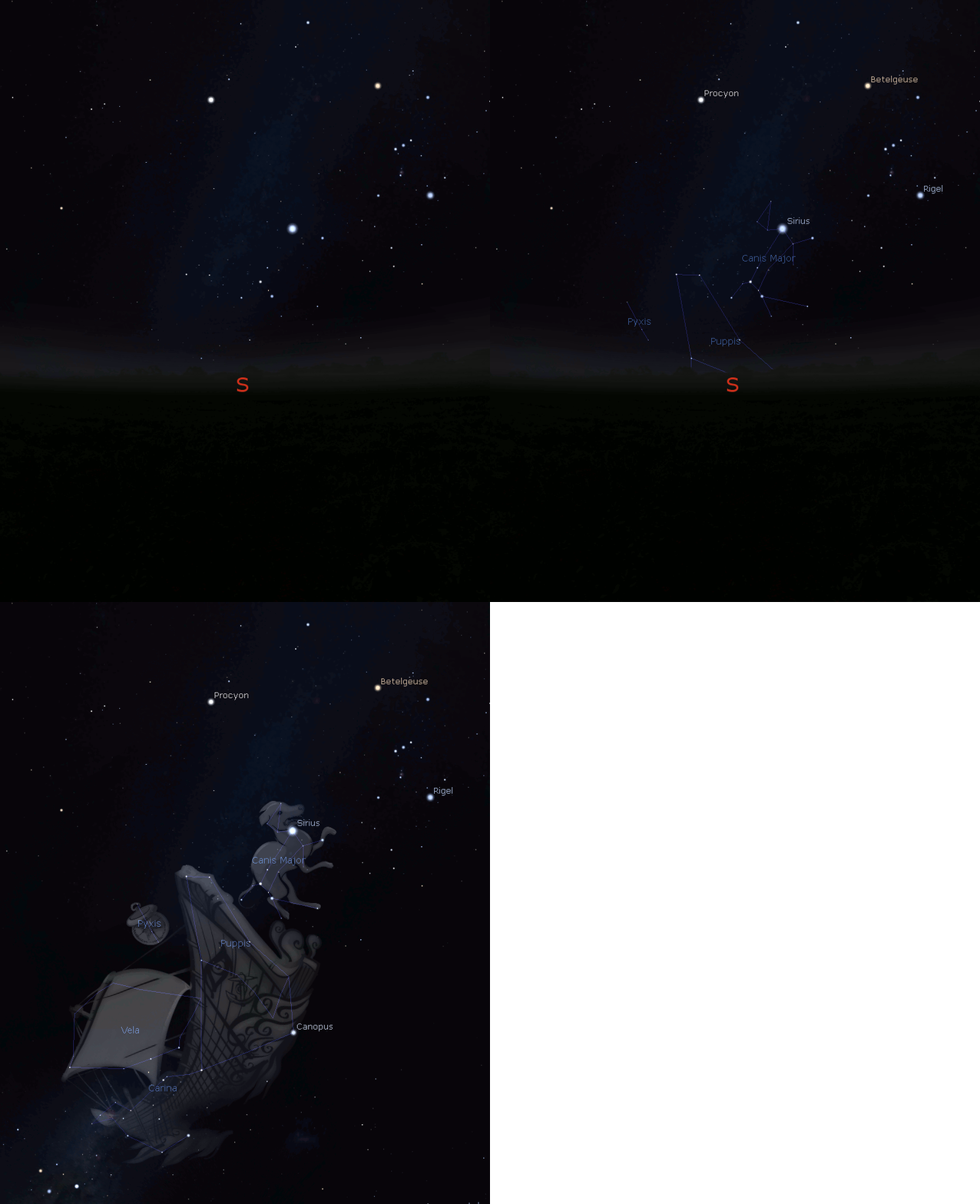
Puppis ans Pyxis; what we can see from Michigan, plus the rest of Argo Navis at 9 p.m., March 9, 2018. The Stellarium artist has the ship reversed. Puppis is the rear end, not the bow. Note that the Crux, the Southern Cross is below the ship. Click on the image to enlarge. Created using Stellarium and GIMP.
03/08/2018 – Ephemeris – Beware the Great Underwater Panther
Ephemeris for Thursday, March 8th. The Sun will rise at 7:07. It’ll be up for 11 hours and 31 minutes, setting at 6:39. The Moon, 1 day before last quarter, will rise at 1:56 tomorrow morning.
The Anishinaabek people of the Great Lakes Region, which includes the Ottawa or Odawa, Chippewa and Ojibwe Indians have two constellations of winter that I know of. The first is The Winter Maker which uses many of Orion’s stars plus Aldebaran and Procyon. It rises in the eastern skies in the evening as winter is beginning. The second, of late winter and early spring is Curly Tail, the Great Underwater Panther. Which uses the stars of Leo the lion’s backward question mark as its tail and the small knot of stars that are the head of Hydra the water snake below Cancer as its head. I imagine this constellation was a warning to youngsters to keep off the thinning ice of spring, lest they fall in and be snatched by the great underwater panther that lives beneath the ice.
The times given are for the Traverse City/Interlochen area of Michigan. They may be different for your location.
Addendum
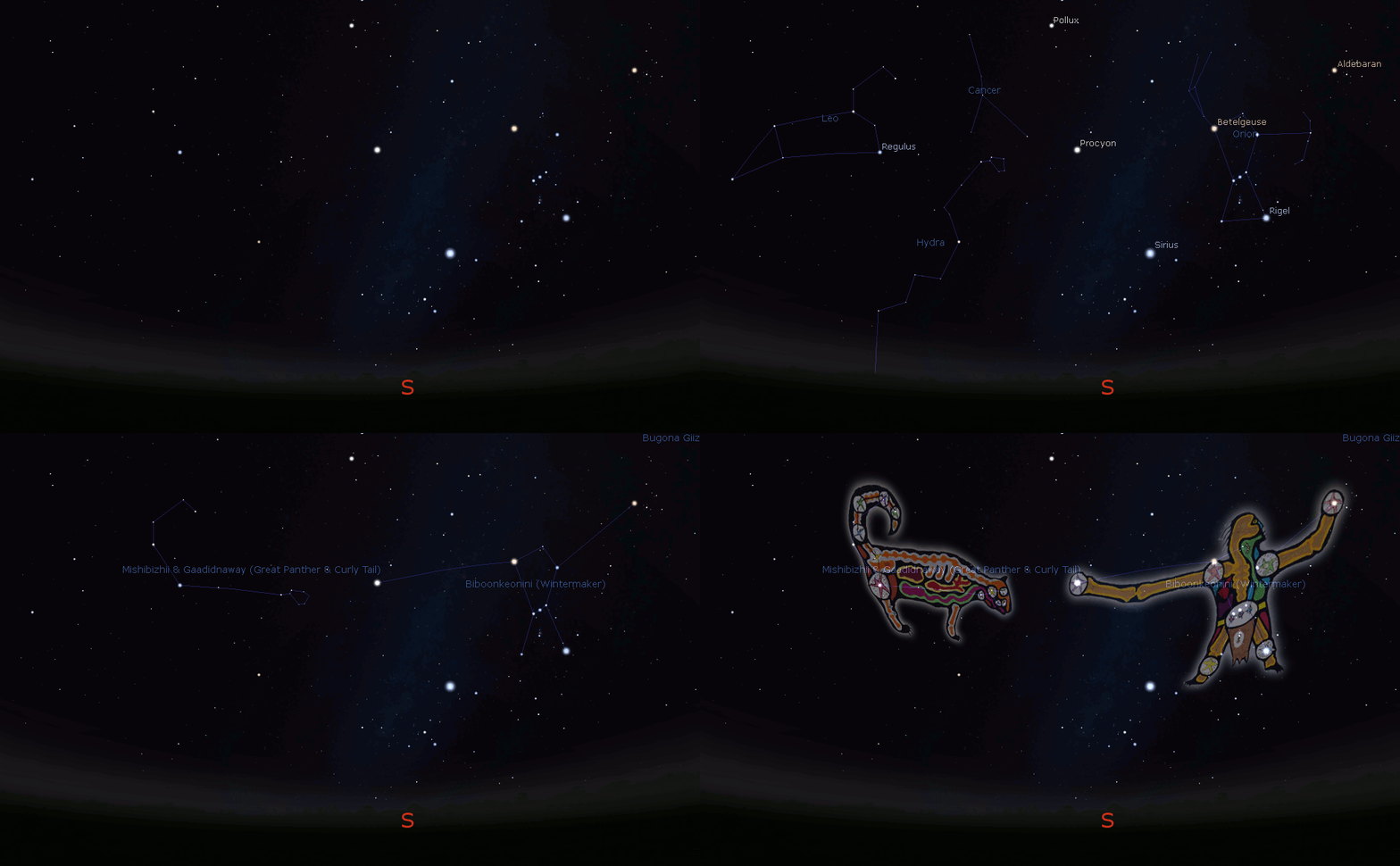
Finder animation for western and Anishinaabek constellations for March 8, 2018 at 9 p.m. Click on image to enlarge. Created using Stellarium and GIMP.
The Anishinaabek constellation drawings are from Ojibwe Sky Star Map Constellation Guide by Annette S. Lee, William Wilson, Jeffrey Tibbets and Carl Gawboy available locally and online. They are part of the latest editions of Stellarium, a free planetarium program. Links to it are on the left. Other information and links are available within the Sky Lore tab.
Here’s one of the links: http://www.nativeskywatchers.com/. It also contains links to Lakota star maps and lore.
03/07/2018 – Ephemeris – All 5 naked eye planets are now visible
Ephemeris for Wednesday, March 7th. The Sun will rise at 7:09. It’ll be up for 11 hours and 28 minutes, setting at 6:38. The Moon, 2 days before last quarter, will rise at 12:58 tomorrow morning.
Let’s take our weekly look at the bright planets. All 5 of the naked eye planets are visible now. Two of them are in the evening sky, but very close to the Sun. Venus will be visible low in the Western twilight from about 7 p.m. until before it sets at 7:47. Mercury is much dimmer but above and a bit right of Venus, tonight about 5 Moon widths at 1 o’clock from Venus. It will set at 7:59. Mercury will appear higher than Venus in the sky until about March 20th. In the morning Jupiter will rise at 12:12 tomorrow morning. Mars will rise at 2:51. Saturn will end the procession, rising at 3:45 a.m. At 6 tomorrow morning bright Jupiter will be in the south to the left of it is dimmer Mars. Saturn is low in the southeast.
The times given are for the Traverse City/Interlochen area of Michigan. They may be different for your location.
Addendum

Venus and Mercury, low in the west at 7 p.m., March 7, 2018. Created using Stellarium.
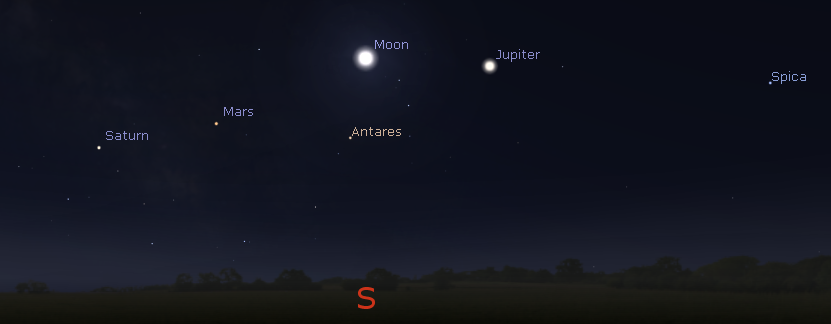
The morning planets of Jupiter, Mars and Saturn plus the Moon. Seen at 6 a.m. tomorrow morning March 8, 2018. Click on image to enlarge. Created using Stellarium.
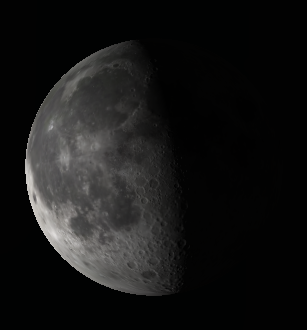
The waning gibbous Moon as it might be seen in binoculars at 6 a.m. tomorrow morning, March 8, 2018. Created using Stellarium.
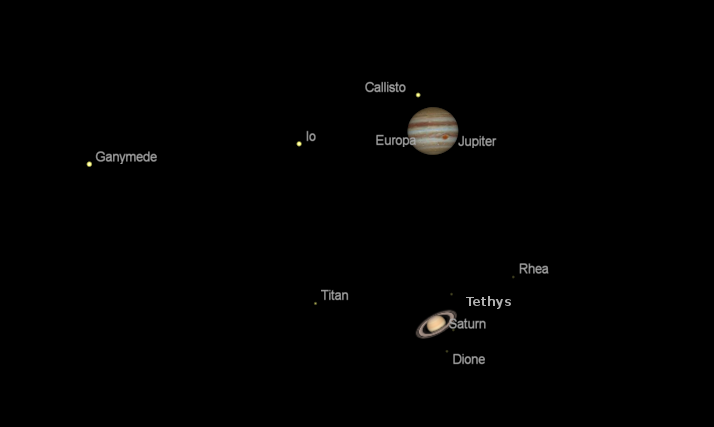
Jupiter and Saturn with their brighter satellites tomorrow morning at 6 a.m. March 8, 2018. They are displayed at the same scale. Saturn in about twice as far as Jupiter. Its disk is a bit smaller than Jupiter’s so it appears about half as large. The extent of the rings appear to be about the same as Jupiter’s diameter. Created using Cartes du Ciel (Sky Charts).
The Great Red Spot should be visible on Jupiter.
Europa is labeled but unseen at 6 a.m. EST
Here is what’s happening
Moon    Event              Date        UT       Local time
Europa: Eclipse start:     8 Mar 2018  7:12 UT  2:12 a.m. EST
Europa: Eclipse end:       8 Mar 2018  9:28 UT  4:28 a.m. EST
Europa: Occultation start: 8 Mar 2018  9:34 UT  4:34 a.m. EST
Europa: Occultation end:   8 Mar 2018 11:43 UT  6:43 a.m. EST
An eclipse is when the moon passes through Jupiter’s shadow. An occultation is when the moon is hidden behind the planet.
Note the 6 minutes between the end of the eclipse and the start of the occultation.
Timings are from https://www.projectpluto.com.
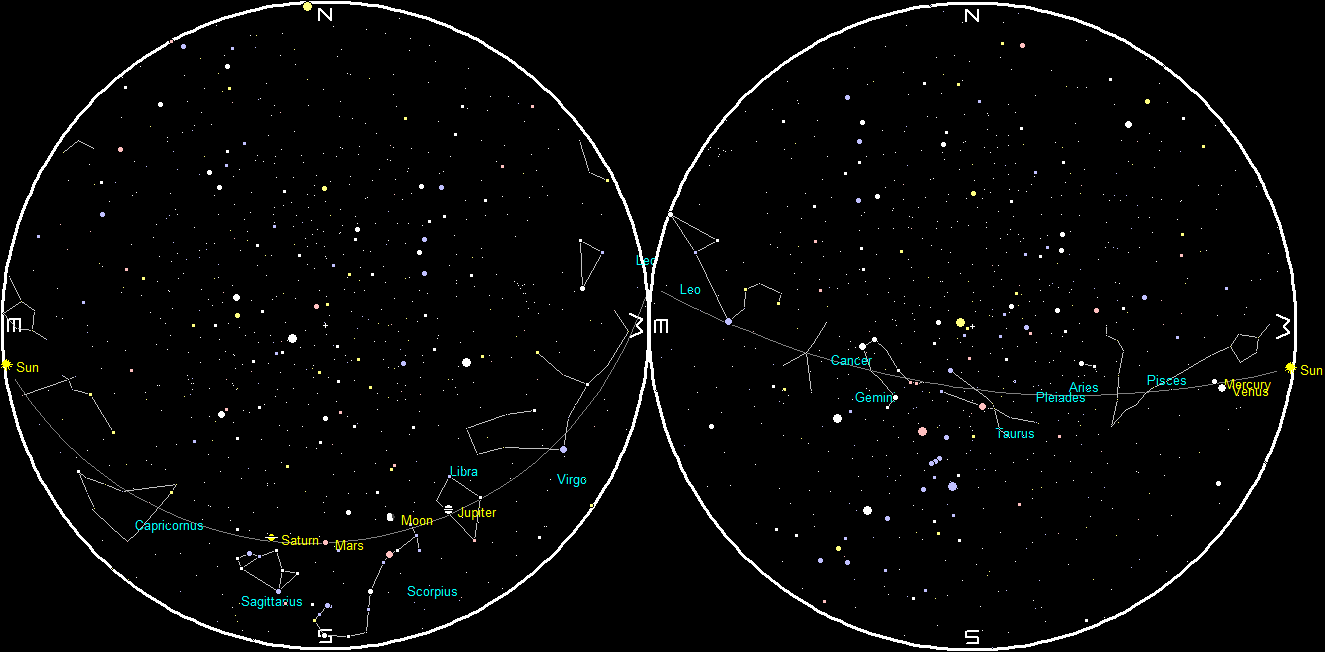
Planets at sunset and sunrise of a single night starting with sunset on the right on March 7, 2018. The night ends on the left with sunrise on the 8th. Click on the image to enlarge. Created using my LookingUp program.
03/06/2018 – Ephemeris – The Moon will pass the morning planets for the rest of the week
Ephemeris for Tuesday, March 6th. The Sun will rise at 7:11. It’ll be up for 11 hours and 25 minutes, setting at 6:37. The Moon, 3 days before last quarter, will rise at 11:57 this evening.
From tomorrow morning through the rest of the week the Moon will be passing above the morning planets one by one. Tomorrow morning the waning gibbous Moon will appear above and left of Jupiter the brightest of the morning planets in the south at 6 a.m. By Friday morning the then last quarter Moon will be approaching Mars and will be to the right and above the red planet. Saturday morning the then waning crescent Moon will appear above and right between Mars and Saturn. Sunday morning the waning crescent Moon will be left of Saturn. I love waning crescent Moons in morning twilight. In a couple of weeks, on the evening of the 19th to be exact the waxing crescent moon will pass Venus and Mercury.
The times given are for the Traverse City/Interlochen area of Michigan. They may be different for your location.
Addendum
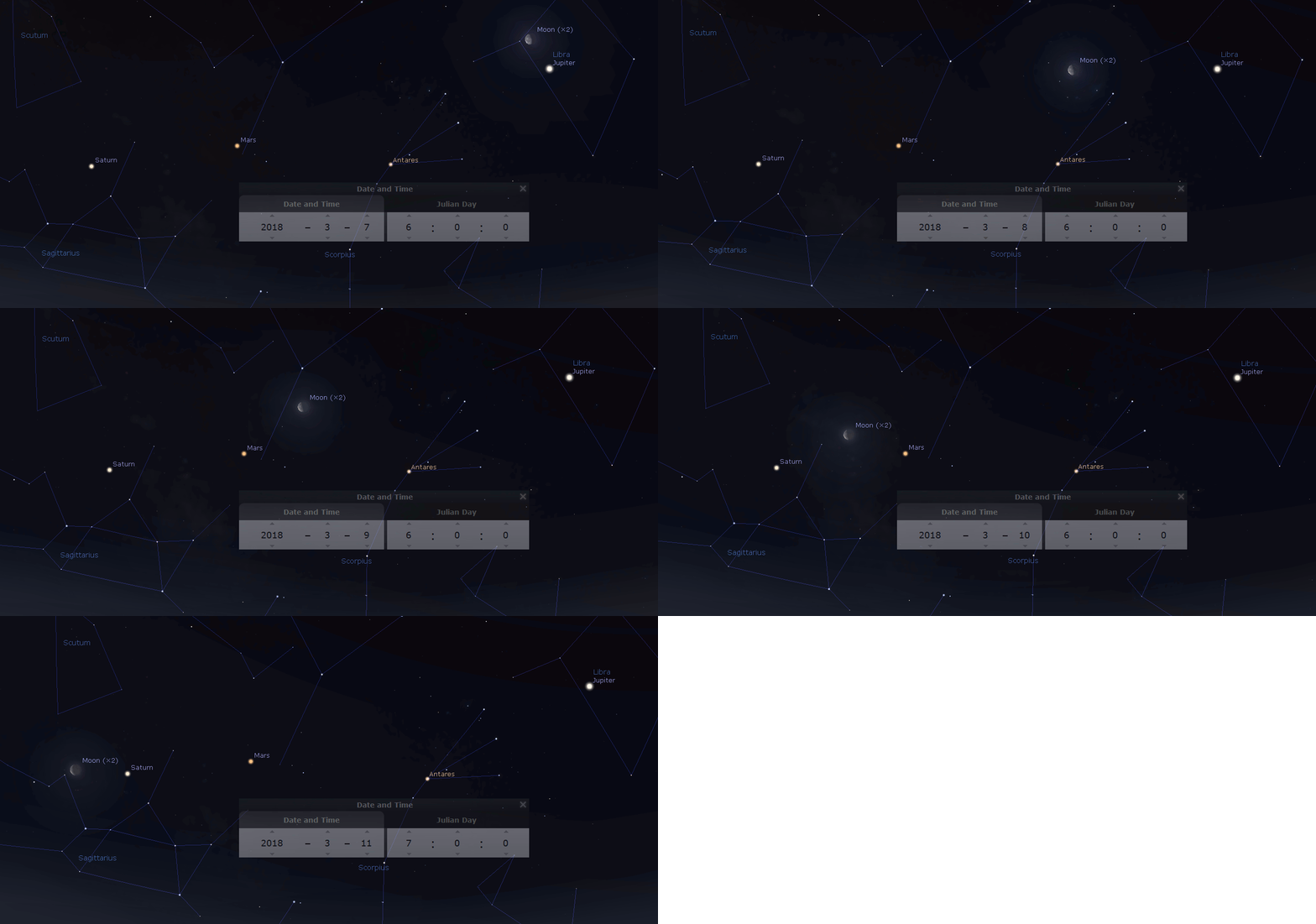
The Moon and morning planets at 6 a.m. each morning Wednesday through Sunday March 7-11, 2018. The Moon’s size has been doubled to show its phase. Note that due to Earth’s revolution of the Sun, that the sky will rotate about one degree westward per day. Click on the image to enlarge. Created using Stellarium and GIMP.
03/05/2018 – Ephemeris – Spring is coming: Leo is rising
Ephemeris for Monday, March 5th. The Sun will rise at 7:13. It’ll be up for 11 hours and 22 minutes, setting at 6:35. The Moon, half way from full to last quarter, will rise at 10:53 this evening.
The constellation Leo the lion is now rising in the east at 9 pm. It’s below and left of the Big Dipper higher up in the east-northeast. Leo is marked by two sets of easily recognizable stars. The front of him is a backward question mark of stars, also known as the Sickle that mark his head and mane, along with the front part of his body. Regulus is the star at the bottom of that backwards question mark. It’s the Little King Star. The hind end of him is a triangle of stars ending with another bright star, but not as bright as Regulus. It’s Denebola which means Lion’s tail. It is thought when the Sun was in this constellation long ago that the lions were driven by the heat to quench their thirst in the Nile river. Ancients physicians thought medicines were poison when the Sun was here also.
The times given are for the Traverse City/Interlochen area of Michigan. They may be different for your location.
Addendum
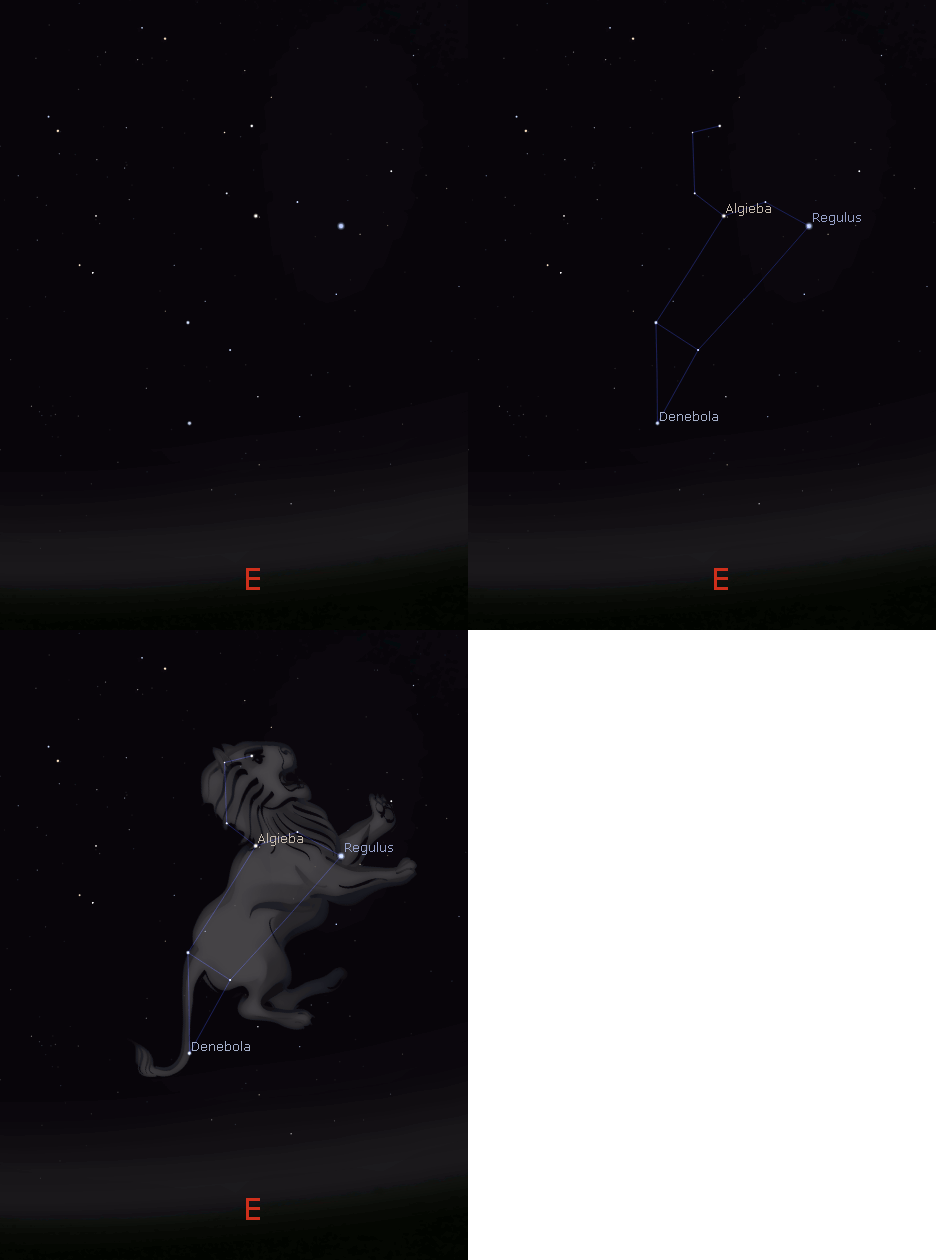
The constellation Leo animation. Created using Stellarium and GIMP.
Algieba is a binary star, which should be able to be split with any good telescope. The magnitude 2.4 and 3.6 components are separated by 4.6 arc seconds. Binary stars are one type of object that benefit from using high power to resolve. The stars are very close in temperature, so each appears a yellow-orange color offering no color contrast.
 Bob Moler's Ephemeris Blog