Archive
Ephemeris: 09/29/2023 – Previewing October skies
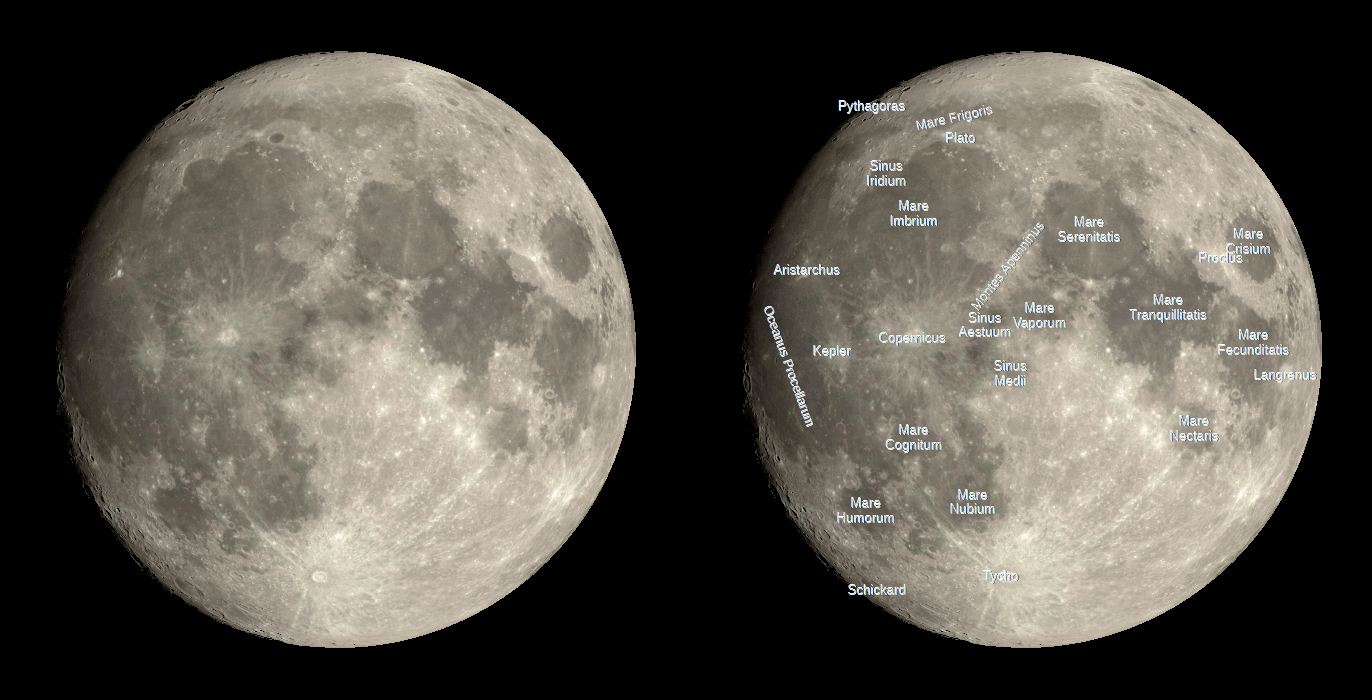
This is Ephemeris for Friday, September 29th. Today the Sun will be up for 11 hours and 49 minutes, setting at 7:27, and it will rise tomorrow at 7:39. The Moon today, the full harvest supermoon, will rise at 7:45 this evening.
Let’s look at the skies for the month of October The sun will still be moving south rapidly. Daylight hours in the Interlochen/Traverse City area will drop from 11 hours and 43 minutes Sunday to 10 hours 13 minutes on the 31st. The altitude of the Sun above the southern horizon at local noon will be 42 degrees Sunday, and will descend to 31 degrees on Halloween, also in the Interlochen area. The Straits area will have the Sun a degree lower. Local noon, when the Sun is due south will be about 1:30 p.m. in Interlochen. There will be, for us in Michigan, a partial solar eclipse around midday on Saturday the 14th.
The astronomical event times given are for the Traverse City/Interlochen area of Michigan (EDT, UT –4 hours). They may be different for your location.
Addendum
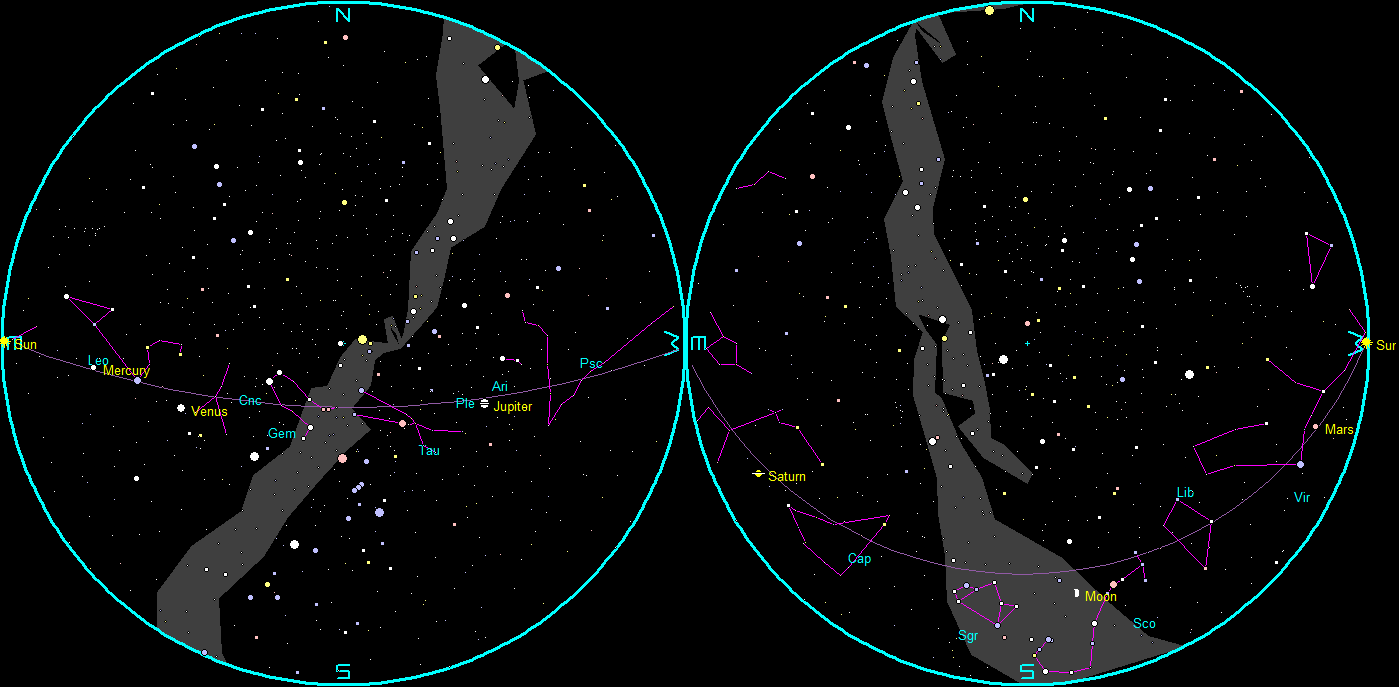
October Evening Star Chart
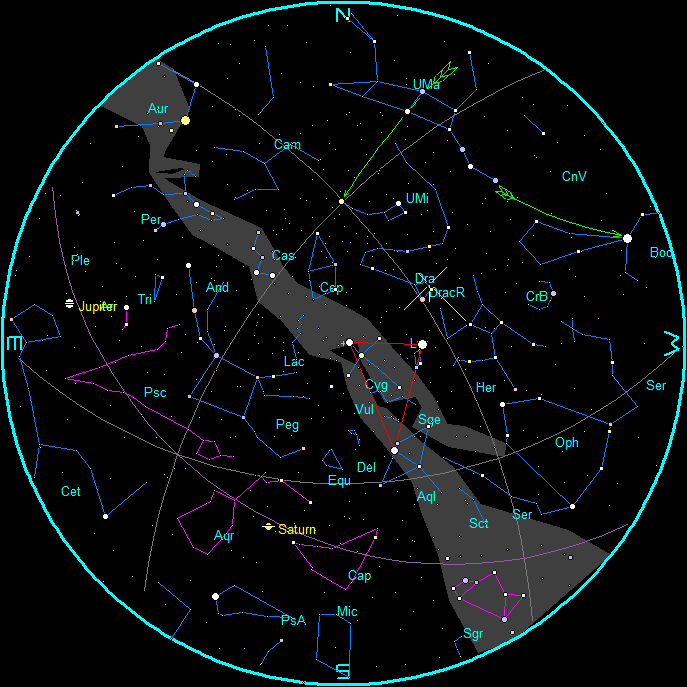
The planets and stars are plotted for the 15th at 10 p.m. EDT in the evening and 6 a.m. for the morning chart. These are the chart times. Note that Traverse City is located approximately 45 minutes behind our time meridian, West 75° longitude. (An hour 45 minutes behind our daylight saving time meridian during EDT). To duplicate the star positions on a planisphere you may have to set it to 1 hour 45 minutes earlier than the current time.
October Morning Star Chart
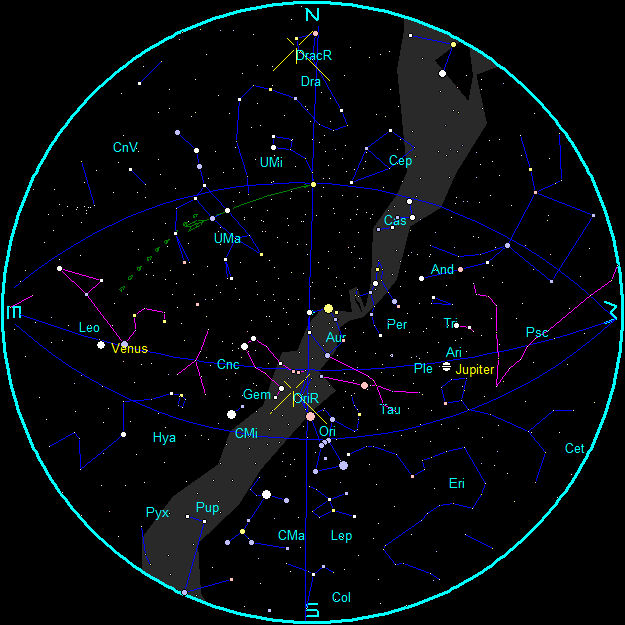
or a list of constellation names to go with the abbreviations, click here.
- Pointer stars at the front of the bowl of the Big Dipper point to Polaris, the North Star.
- Leaky dipper drips on Leo.
- Follow the arc of the handle of the Big Dipper to the star Arcturus.
- The Summer Triangle is in red.
- DracR – Draconid Radiant – Peaks the 8th – Zenithal Hourly Rate < 10 with rare outbursts of a thousand an hour. It’s hindered this year by the full moon.
- OriR – Orionid Radiant – Peak 21st – Zenithal Hourly Rate = 20
Twilight Limits, Nautical and Astronomical
| EDT | |||||||
| Morning | Twilight | Evening | Twilight | Dark | Night | Moon | |
| Date | Astro. | Nautical | Nautical | Astro. | Start | End | Illum. |
| 2023-10-01 | 6h08m | 6h43m | 20h30m | 21h04m | – | – | 0.90 |
| 2023-10-02 | 6h10m | 6h44m | 20h28m | 21h02m | – | – | 0.82 |
| 2023-10-03 | 6h11m | 6h45m | 20h26m | 21h00m | 21h00m | 21h35m | 0.73 |
| 2023-10-04 | 6h12m | 6h46m | 20h24m | 20h58m | 20h58m | 22h19m | 0.63 |
| 2023-10-05 | 6h14m | 6h48m | 20h22m | 20h57m | 20h57m | 23h11m | 0.54 |
| 2023-10-06 | 6h15m | 6h49m | 20h21m | 20h55m | 20h55m | – | 0.44 |
| 2023-10-07 | 6h16m | 6h50m | 20h19m | 20h53m | 20h53m | 0h11m | 0.34 |
| 2023-10-08 | 6h17m | 6h51m | 20h17m | 20h51m | 20h51m | 1h15m | 0.26 |
| 2023-10-09 | 6h19m | 6h53m | 20h15m | 20h49m | 20h49m | 2h21m | 0.18 |
| 2023-10-10 | 6h20m | 6h54m | 20h14m | 20h47m | 20h47m | 3h27m | 0.11 |
| 2023-10-11 | 6h21m | 6h55m | 20h12m | 20h46m | 20h46m | 4h32m | 0.06 |
| 2023-10-12 | 6h22m | 6h56m | 20h10m | 20h44m | 20h44m | 5h36m | 0.02 |
| 2023-10-13 | 6h24m | 6h57m | 20h08m | 20h42m | 20h42m | 6h24m | 0.00 |
| 2023-10-14 | 6h25m | 6h59m | 20h07m | 20h40m | 20h40m | 6h25m | 0.00 |
| 2023-10-15 | 6h26m | 7h00m | 20h05m | 20h39m | 20h39m | 6h26m | 0.02 |
| 2023-10-16 | 6h27m | 7h01m | 20h03m | 20h37m | 20h37m | 6h27m | 0.06 |
| 2023-10-17 | 6h29m | 7h02m | 20h02m | 20h35m | 20h35m | 6h29m | 0.12 |
| 2023-10-18 | 6h30m | 7h04m | 20h00m | 20h34m | 20h50m | 6h30m | 0.20 |
| 2023-10-19 | 6h31m | 7h05m | 19h58m | 20h32m | 21h40m | 6h31m | 0.29 |
| 2023-10-20 | 6h32m | 7h06m | 19h57m | 20h31m | 22h42m | 6h32m | 0.40 |
| 2023-10-21 | 6h34m | 7h07m | 19h55m | 20h29m | 23h56m | 6h34m | 0.51 |
| 2023-10-22 | 6h35m | 7h08m | 19h54m | 20h28m | – | 6h35m | 0.62 |
| 2023-10-23 | 6h36m | 7h10m | 19h52m | 20h26m | 1h15m | 6h36m | 0.73 |
| 2023-10-24 | 6h37m | 7h11m | 19h51m | 20h25m | 2h37m | 6h37m | 0.83 |
| 2023-10-25 | 6h38m | 7h12m | 19h49m | 20h23m | 3h57m | 6h38m | 0.91 |
| 2023-10-26 | 6h40m | 7h13m | 19h48m | 20h22m | 5h17m | 6h40m | 0.96 |
| 2023-10-27 | 6h41m | 7h15m | 19h47m | 20h20m | 6h36m | 6h41m | 0.99 |
| 2023-10-28 | 6h42m | 7h16m | 19h45m | 20h19m | – | – | 1.00 |
| 2023-10-29 | 6h43m | 7h17m | 19h44m | 20h18m | – | – | 0.98 |
| 2023-10-30 | 6h44m | 7h18m | 19h42m | 20h16m | – | – | 0.93 |
| 2023-10-31 | 6h46m | 7h19m | 19h41m | 20h15m | – | – | 0.87 |
Twilight calendar was generated using Cartes du Ciel (Sky Charts).
See my blog post: Twilight Zone for the definitions of the different periods of twilight here: https://bobmoler.wordpress.com/2018/09/27/.
NASA Calendar of Planetary Events
NASA - SKYCAL - Sky Events Calendar  2023
Date          Time    Event
Oct  1  Su            Venus: 44.2° W
     1  Su  11:16 pm  Moon-Jupiter: 3.5° S
     3  Tu  12:25 am  Moon-Pleiades: 1.1° N
     5  Th   4:31 pm  Moon North Dec.: 28.3° N
     6  Fr   9:48 am  Last Quarter
     7  Sa   6:23 am  Moon-Pollux: 1.6° N
     9  Mo   2:10 am  Venus-Regulus: 2.3° S
     9  Mo  11:41 pm  Moon Apogee: 405,400 km
    14  Sa   1:55 pm  New Moon
    14  Sa   2:00 pm  Annular Solar Eclipse
                      11:42 am - 2:18 pm in the Grand Traverse area
    14  Sa   9:11 pm  Moon Descending Node
    18  We   9:17 am  Moon-Antares:  0.9° S
    20  Fr   1:08 am  Mercury Superior Conj.
    20  Fr   5:19 am  Moon South Dec.: 28.3° S
    21  Sa   7:48 pm  Orionid Meteor Shower: ZHR = 20
    21  Sa  11:29 pm  First Quarter
    23  Mo   5:59 pm  Venus Greatest Western Elongation: 46.4° W
    24  Tu   3:52 am  Moon-Saturn: 2.8° N
    25  We  10:53 pm  Moon Perigee: 364,900 km
    27  Fr  11:14 pm  Moon Ascending Node
    28  Sa   4:14 pm  Partial Lunar Eclipse
                      Visible: e Americas, Europe, Africa, Asia, Australia
    28  Sa   4:24 pm  Full Hunter's Moon
    29  Su   4:10 am  Moon-Jupiter: 3.2° S
    30  Mo   9:30 am  Moon-Pleiades: 1.1° N
Nov  1  We            Venus: 46.2° W
All event times are given for UTC-4 hr: Eastern Daylight Saving Time.
Sky Events Calendar by Fred Espenak and Sumit Dutta (NASA’s GSFC),
http://eclipse.gsfc.nasa.gov/SKYCAL/SKYCAL.html.
If you go to the above site, you can print out a list like the above for the entire year or calendar pages for your time zone.
Sun and Moon Rising and Setting Events
LU                  Ephemeris of Sky Events for Interlochen/TC
October, 2023    Local time zone: EDT
+-----------------------------------------------------------------------+
| DATE |  SUN     SUN  DAYLIGHT|   TWILIGHT*    |MOON  RISE OR    ILLUM |
|      |  RISE    SET    HOURS |  END    START  |PHASE SET** TIME FRACTN|
+=======================================================================+
|Sun  1| 07:40a  07:23p  11:43 | 08:26p  06:37a |      Rise 08:31p   91%|
|Mon  2| 07:41a  07:21p  11:40 | 08:24p  06:38a |      Rise 09:00p   84%|
|Tue  3| 07:42a  07:19p  11:36 | 08:22p  06:39a |      Rise 09:35p   75%|
|Wed  4| 07:44a  07:18p  11:33 | 08:20p  06:41a |      Rise 10:18p   65%|
|Thu  5| 07:45a  07:16p  11:30 | 08:19p  06:42a |      Rise 11:11p   56%|
|Fri  6| 07:46a  07:14p  11:27 | 08:17p  06:43a |L Qtr Rise 12:10a   46%|
|Sat  7| 07:47a  07:12p  11:24 | 08:15p  06:44a |      Rise 01:15a   36%|
+------+-----------------------+----------------+-----------------------+
|Sun  8| 07:49a  07:10p  11:21 | 08:13p  06:46a |      Rise 02:21a   28%|
|Mon  9| 07:50a  07:09p  11:18 | 08:11p  06:47a |      Rise 03:26a   20%|
|Tue 10| 07:51a  07:07p  11:15 | 08:10p  06:48a |      Rise 04:31a   13%|
|Wed 11| 07:52a  07:05p  11:12 | 08:08p  06:49a |      Rise 05:35a    7%|
|Thu 12| 07:54a  07:03p  11:09 | 08:06p  06:51a |      Rise 06:39a    3%|
|Fri 13| 07:55a  07:01p  11:06 | 08:05p  06:52a |      Rise 07:45a    1%|
|Sat 14| 07:56a  07:00p  11:03 | 08:03p  06:53a |New   Set  07:00p    0%|
+------+-----------------------+----------------+-----------------------+
|Sun 15| 07:58a  06:58p  11:00 | 08:01p  06:54a |      Set  07:20p    2%|
|Mon 16| 07:59a  06:56p  10:57 | 08:00p  06:55a |      Set  07:43p    5%|
|Tue 17| 08:00a  06:55p  10:54 | 07:58p  06:57a |      Set  08:12p   11%|
|Wed 18| 08:01a  06:53p  10:51 | 07:56p  06:58a |      Set  08:50p   18%|
|Thu 19| 08:03a  06:51p  10:48 | 07:55p  06:59a |      Set  09:39p   27%|
|Fri 20| 08:04a  06:50p  10:45 | 07:53p  07:00a |      Set  10:42p   37%|
|Sat 21| 08:05a  06:48p  10:42 | 07:52p  07:02a |F Qtr Set  11:55p   48%|
+------+-----------------------+----------------+-----------------------+
|Sun 22| 08:07a  06:46p  10:39 | 07:50p  07:03a |      Set  01:15a   60%|
|Mon 23| 08:08a  06:45p  10:36 | 07:49p  07:04a |      Set  02:36a   71%|
|Tue 24| 08:09a  06:43p  10:33 | 07:47p  07:05a |      Set  03:57a   81%|
|Wed 25| 08:11a  06:42p  10:30 | 07:46p  07:06a |      Set  05:16a   89%|
|Thu 26| 08:12a  06:40p  10:28 | 07:44p  07:08a |      Set  06:36a   95%|
|Fri 27| 08:13a  06:38p  10:25 | 07:43p  07:09a |      Set  07:55a   99%|
|Sat 28| 08:15a  06:37p  10:22 | 07:41p  07:10a |Full  Rise 06:30p  100%|
+------+-----------------------+----------------+-----------------------+
|Sun 29| 08:16a  06:36p  10:19 | 07:40p  07:11a |      Rise 06:56p   98%|
|Mon 30| 08:17a  06:34p  10:16 | 07:39p  07:13a |      Rise 07:29p   94%|
|Tue 31| 08:19a  06:33p  10:13 | 07:37p  07:14a |      Rise 08:09p   88%|
+-----------------------------------------------------------------------+
* Nautical Twilight
** Moonrise or moonset, whichever occurs between sunrise and sunset
Generated using my LookingUp for DOS program.
Ephemeris: 09/28/2023 – Tomorrow night’s full moon is the Harvest Moon
This is Ephemeris for Thursday, September 28th. Today the Sun will be up for 11 hours and 52 minutes, setting at 7:29, and it will rise tomorrow at 7:38. The Moon, 1 day before full, will set at 7:43 tomorrow morning.
Tomorrow night’s full moon is the Harvest Moon. It is the most famous of the named full moons, and was very useful in the days before electric lights. The reason is that the Moon, around the time it is full, doesn’t advance its rising time very much from night to night, effectively adding its light to twilight to allow more time to gather in crops. This is because the Moon is moving north as well as eastward. The farther north it is, the longer it stays up and retards the advance in rise times. On average, the Moon rises 50 minutes later each night. This week, the interval is down near 22 minutes advance in moonrise times per day, extending twilight and the amount of time each day to harvest the crops for a few more days.
The astronomical event times given are for the Traverse City/Interlochen area of Michigan (EDT, UT –4 hours). They may be different for your location.
Addendum
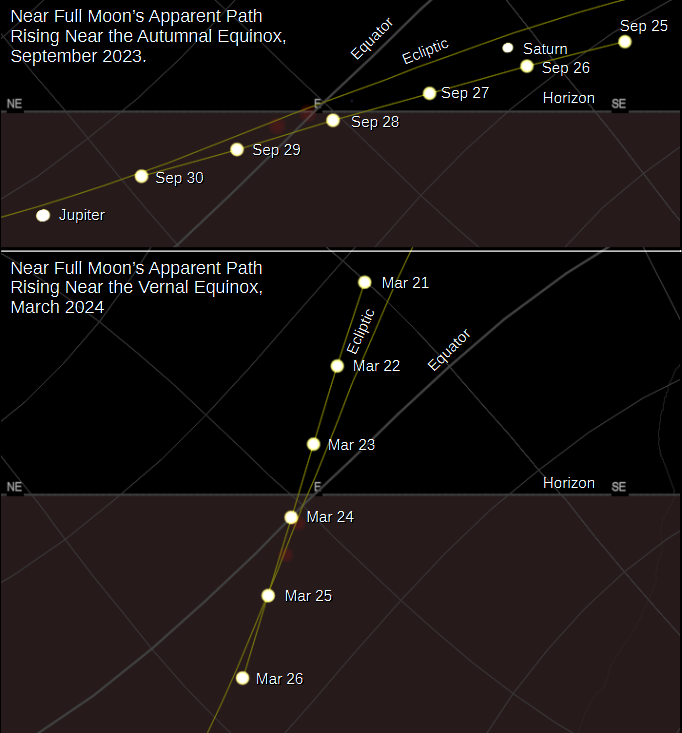
My interest in the Harvest Moon is not in harvesting the crops. I just have a little garden, so it doesn’t take that long to pick tomatoes or whatever. But as an amateur astronomer I’m more interested in deep sky objects than I am in planets. Deep sky objects or DSOs are objects beyond the solar system and are usually very dim, which requires dark skies to view them. Near the Harvest Moon and even in August near the full moon it takes nearly a week for that @#$%^&* Moon to get the heck out of the evening sky, so I don’t have to stay up till after midnight to see anything. That’s I why have this interest in the Harvest Moon. Know your enemy!
Ephemeris: 09/27/2023 – Let’s find out where the naked-eye planets have wandered off to this week
This is Bob Moler with Ephemeris for Wednesday, September 27th. Today the Sun will be up for 11 hours and 55 minutes, setting at 7:31, and it will rise tomorrow at 7:36. The Moon, 2 days before full, will set at 6:22 tomorrow morning.
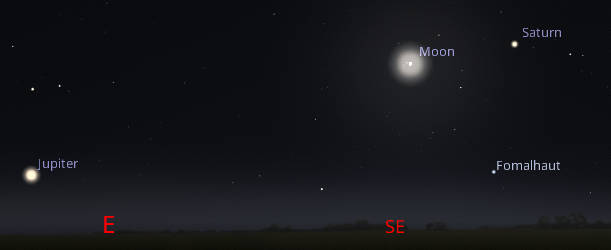
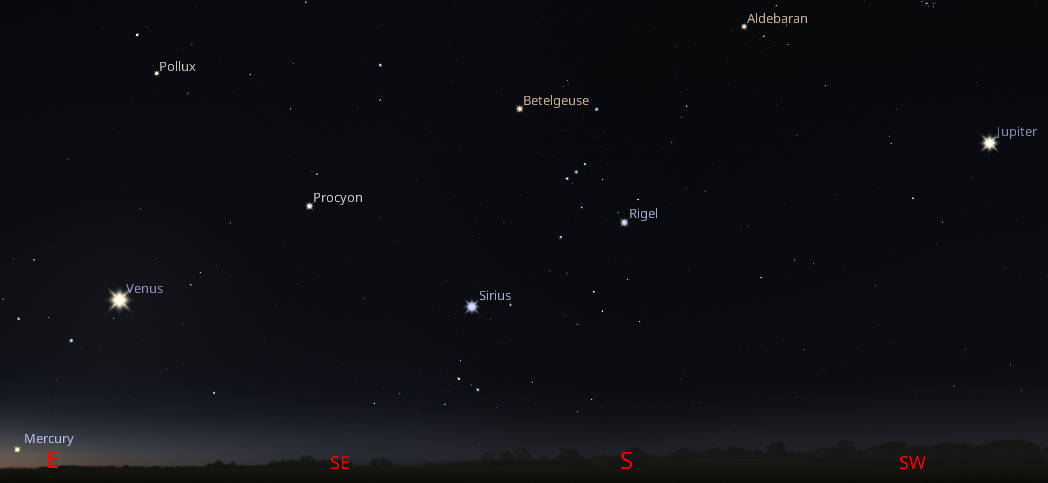
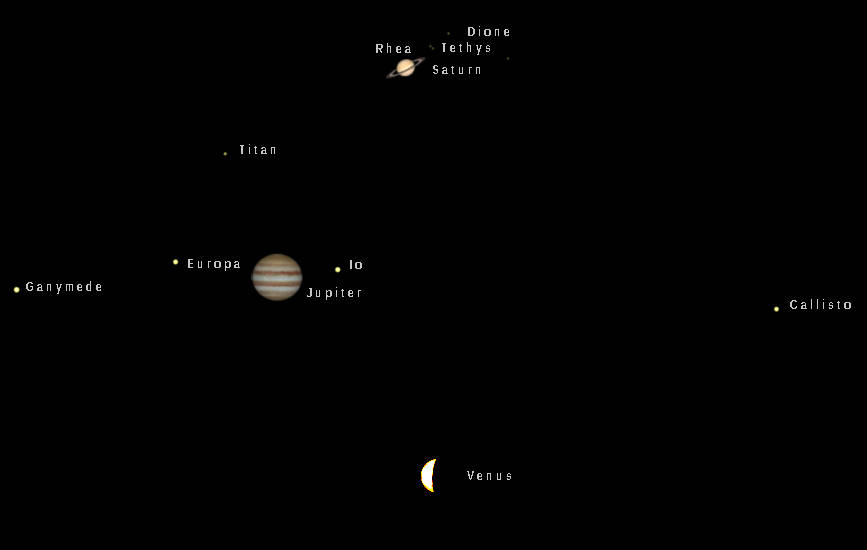
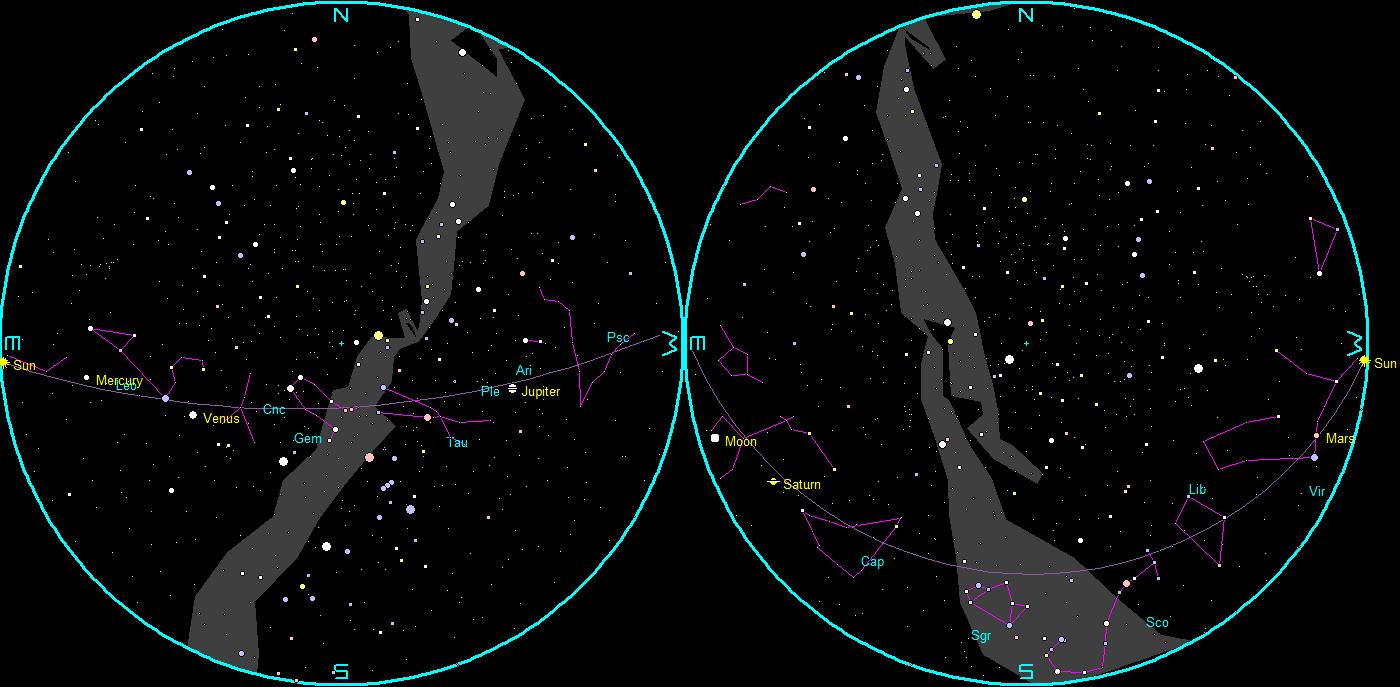
Let’s find out where the naked-eye planets have wandered off to this week. Four of those five planets are now visible, but Mars is too close to the Sun to be seen. Saturn is the sole evening planet visible. It can be spotted in the southeast in the evening. And it will still be visible throughout the morning hours until it sets at 4:44 am. Saturn is in retrograde or westward motion now, against the stars of Aquarius. Jupiter, Venus and Mercury are the morning planets. Jupiter will rise at 9:02 pm. It, like Saturn is moving retrograde, which will last the rest of this year. Venus is our brilliant morning star, at its brightest, and will rise in the east-northeast at 3:59 am. Tiny Mercury will rise at 6:10 am, and be visible in the east by around 6:30.
The astronomical event times given are for the Traverse City/Interlochen area of Michigan (EDT, UT –4 hours). They may be different for your location.
Addendum
Ephemeris: 09/26/2023 – I’ve got some asteroid news today
This is Ephemeris for Tuesday, September 26th. Today the Sun will be up for 11 hours and 58 minutes, setting at 7:33, and it will rise tomorrow at 7:35. The Moon, 3 days before full, will set at 4:59 tomorrow morning.
I’ve got some asteroid news today. It’s good news. Two days ago, Sunday the 24th the OSIRIS REx return capsule landed in Utah with its precious cargo of rock and dust from the asteroid Bennu. And as of the time I’m recording this, I don’t know what was in the capsule. Although when they captured the material from Bennu they actually captured much more than they thought they would get, and had trouble closing the cover on the collection device.
Today is the one-year anniversary of the DART spacecraft’s collision with the small asteroid satellite Dimorphos. The latest news is that the original increase in the period of the orbit around Didymos by 33 minutes increased by another minute since. Nobody seems to know exactly why.
The astronomical event times given are for the Traverse City/Interlochen area of Michigan (EDT, UT –4 hours). They may be different for your location.
Addendum

Ephemeris: 09/25/2023 – Now that autumn has set in, what does that mean?
This is Bob Moler with Ephemeris for Monday, September 25th. Today the Sun will be up for 12 hours and 1 minute, setting at 7:34, and it will rise tomorrow at 7:34. The Moon, 3 days past first quarter, will set at 3:34 tomorrow morning.
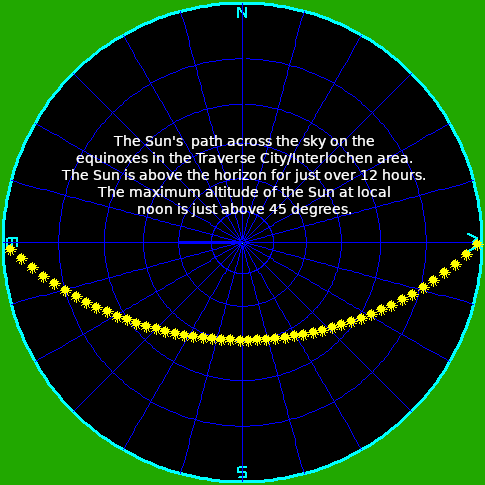
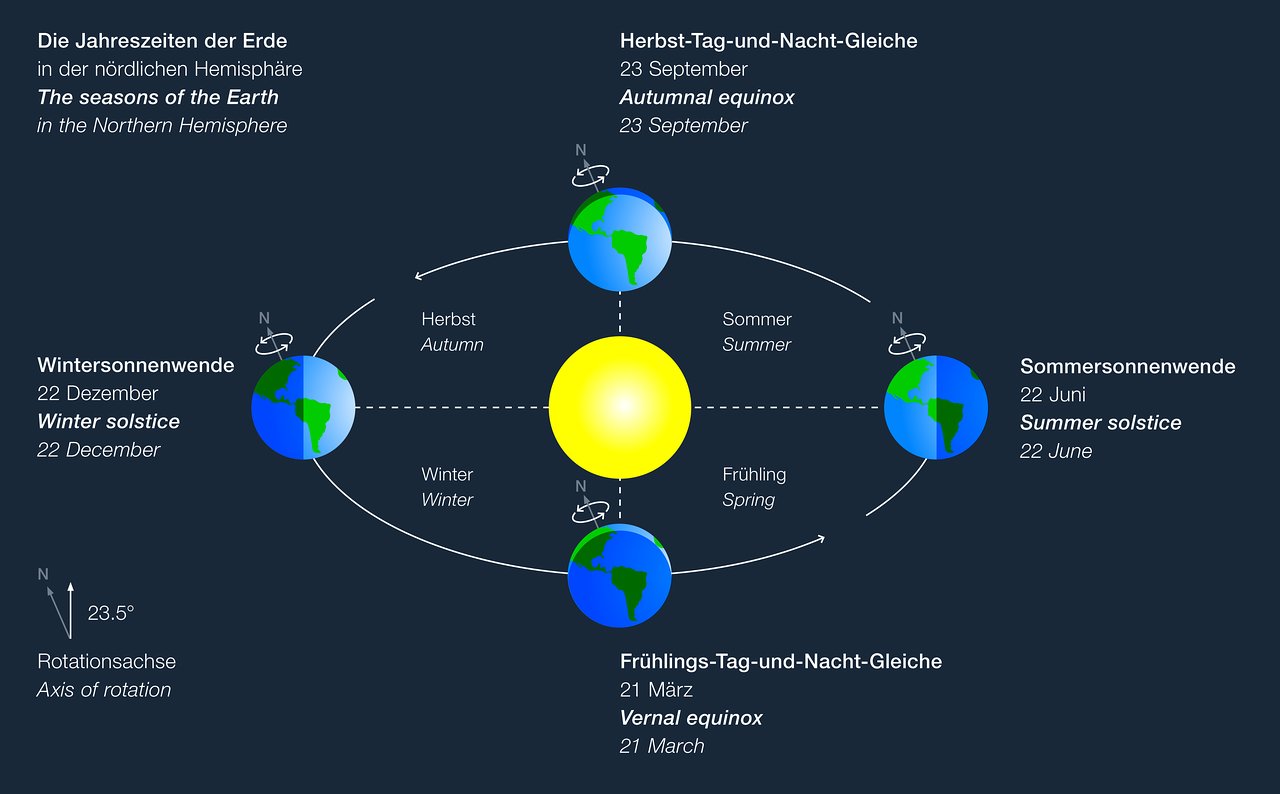
Now that autumn has set in, what does that mean? The latitude on the Earth where the Sun passes overhead is now south of the equator, and will stay south of the equator until March 19th, our time, next year. The North Pole of the Earth is experiencing a prolonged sunset, starting six months of night, while the South Pole is enjoying an equally long sunrise, for their six months of daylight. The Earth’s seasons are not caused by our distance from the Sun. We’re closer to the Sun now than we were in early July, and will continue to move closer to the Sun until early January. The Earth’s average distance of 93 million miles only varies by a million and a half miles either way. It’s the Earth’s axial tilt that causes the seasons.
The astronomical event times given are for the Traverse City/Interlochen area of Michigan (EDT, UT –4 hours). They may be different for your location.
Addendum
Ephemeris extra: 09/22/2023 5 pm – The talk and Star party tonight and tomorrow have been canceled.
The problem is a communication problem on my end. Sorry.
Ephemeris: 09/22/2023 – Star party tonight in Thompsonville
This is Ephemeris for Friday, September 22nd. Today the Sun will be up for 12 hours and 10 minutes, setting at 7:40, and it will rise tomorrow at 7:30. The Moon, at first quarter today, will set at 11:45 this evening. | Tonight, if it’s clear, members of the Grand Traverse Astronomical Society will hold a twilight talk and a star party at the Betsie Valley District Library in Thompsonville, MI. It starts at 7 p.m. with a talk about the upcoming solar eclipses by member Dan Dall’Olmo. There will be a minor partial solar eclipse next month on the 14th, and a much greater partial eclipse April 8th for our area. The total part of the April eclipse can be seen less than a day’s drive away in mid-Indiana and northern Ohio. If tonight is cloudy the star party will be postponed to tomorrow. Featured will be the Moon and some of the stars of the waning nights of summer. (It’s looking like Saturday night might be the better night, but we’ll see. A decision can be made as late as 5 pm the day of the event) The season of fall starts tomorrow at 2:50 am with the autumnal equinox.
The astronomical event times given are for the Traverse City/Interlochen area of Michigan (EDT, UT –4 hours). They may be different for your location. I’ll have more on the autumnal equinox and its effects on Monday.

Ephemeris: 09/21/2023 – Star party in Thompsonville, MI tomorrow or Saturday
Sorry for the delay, but we had a star party event as part of a Child & Family Services of Northwestern Michigan event last evening and I forgot this post. The radio program were broadcast at its scheduled times. Any late additions are in italics.
This is Ephemeris for Thursday, September 21st. Today the Sun will be up for 12 hours and 13 minutes, setting at 7:42, and it will rise tomorrow at 7:29. The Moon, 1 day before first quarter, will set at 10:51 this evening.
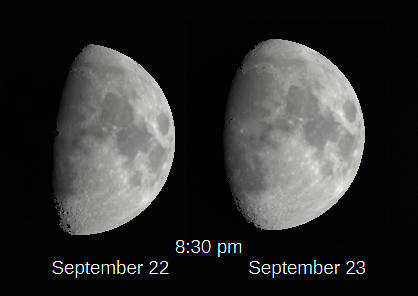
Tomorrow night, if it’s clear, members of the Grand Traverse Astronomical Society will hold a twilight talk and a star party at the Betsie Valley District Library in Thompsonville, Michigan. It starts at 7 p.m. with a talk about the upcoming solar eclipses by member Dan Dall’Olmo. There will be a minor partial solar eclipse next month on the 14th, and a much greater partial eclipse April 8th. The total part of the April eclipse can be seen less than a day’s drive away in Indiana and Ohio. Featured will be the first quarter Moon and some of the stars of the waning nights of summer. If Friday night is cloudy the event will be postponed until Saturday night. (It’s looking like Saturday night might be the better night, but a decision can be made as late as 5 pm the day of the event) The season of fall starts Saturday with the autumnal equinox.
The astronomical event times given are for the Traverse City/Interlochen area of Michigan (EDT, UT –4 hours). They may be different for your location.
Addendum
Ephemeris: 09/20/2023 – Let’s find out where the naked-eye planets have wandered off to
This is Ephemeris for Wednesday, September 20th. Today the Sun will be up for 12 hours and 17 minutes, setting at 7:44, and it will rise tomorrow at 7:28. The Moon, 2 days before first quarter, will set at 10:10 this evening.
Let’s find out where the naked-eye planets have wandered off to. Four of those five planets are now visible, but Mars is too close to the Sun to be seen. Saturn is the sole evening planet visible. It can be spotted in the southeast in the evening. And it will still be visible throughout the morning hours until it sets at 5:15 am. Saturn is in retrograde or westward motion now, against the stars of Aquarius. Jupiter, Venus and Mercury are the morning planets. Jupiter will rise at 9:35 pm. It is a week into its retrograde motion, which will last the rest of this year. Venus is our brilliant morning star, at its brightest, and will rise in the east-northeast at 4:07 am. Tiny Mercury will have risen by 6 am, and be visible in the east by around 6:30.
The astronomical event times given are for the Traverse City/Interlochen area of Michigan (EDT, UT –4 hours). They may be different for your location.
Addendum
Ephemeris: 09/19/23 – How to find Pegasus in the sky
This is Ephemeris for Tuesday, September 19th. Today the Sun will be up for 12 hours and 20 minutes, setting at 7:46, and it will rise tomorrow at 7:27. The Moon, 3 days before first quarter, will set at 9:39 this evening.
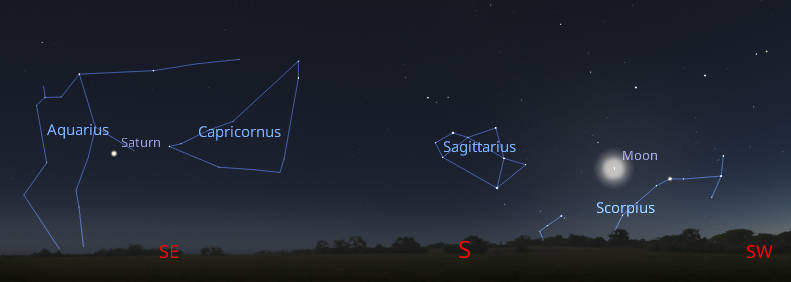
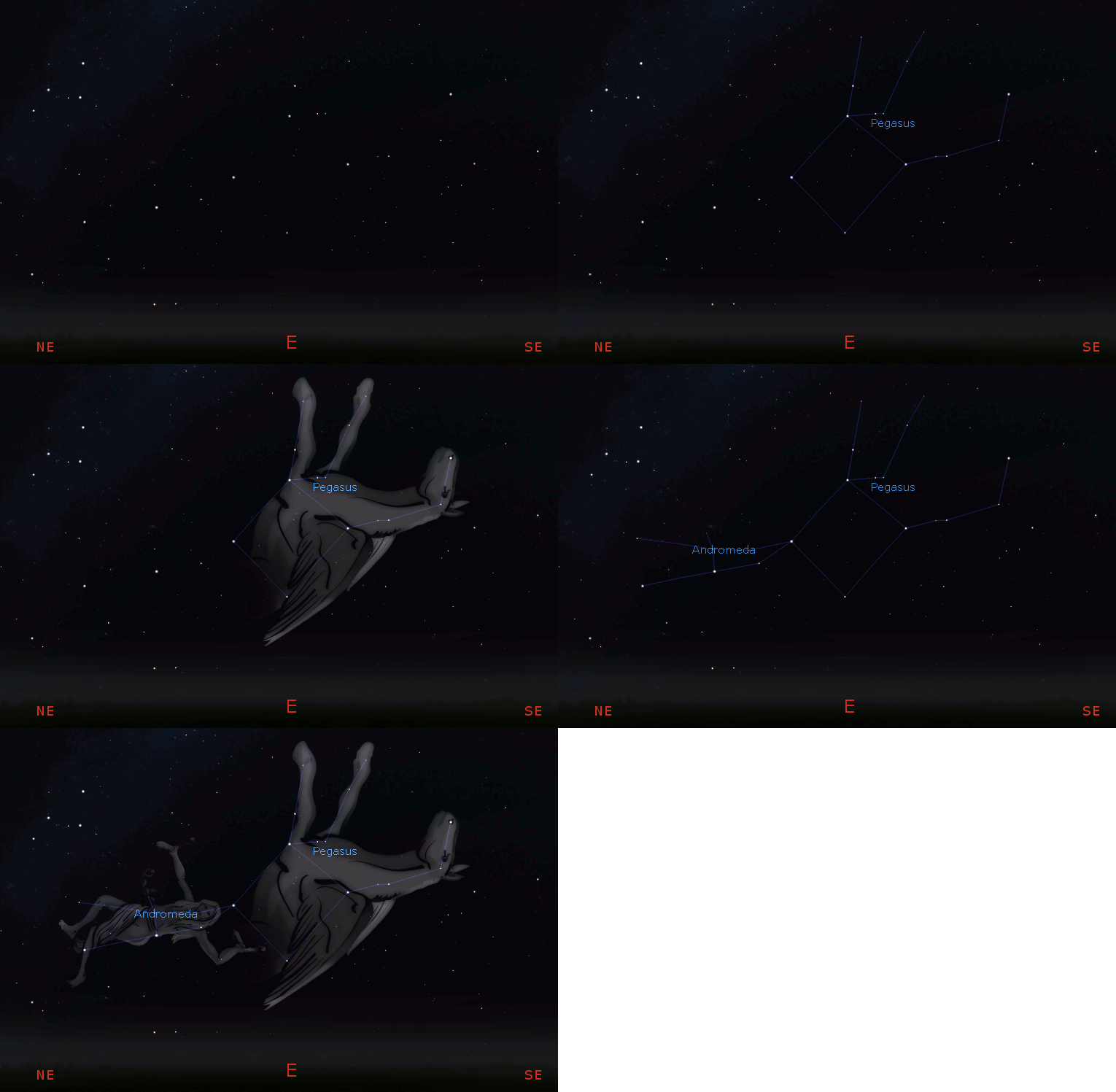
Looking eastward at around 9 pm, one of the great constellations of autumn. A season that will start in four days. It is Pegasus the flying horse of Greek myth. Its most visible feature is a large square of four stars, now standing on one corner. This feature, called the Great Square of Pegasus, represents the front part of the horse’s body. The horse is quite aerobatic, because it is seen flying upside down. Remembering that fact, the neck and head is a bent line of stars emanating from the right corner star of the square. Its front legs can be seen in a gallop extending to the upper right from the top star of the square. From the left star extend, not hind legs but the constellation of Andromeda, the princess rescued with the help of Pegasus.
The astronomical event times given are for the Traverse City/Interlochen area of Michigan (EDT, UT –4 hours). They may be different for your location.
 Bob Moler's Ephemeris Blog