Archive
Ephemeris: 02/15/2024 – Viewing the Moon tonight
This is Ephemeris for Thursday, February 15th. Today the Sun will be up for 10 hours and 26 minutes, setting at 6:10, and it will rise tomorrow at 7:42. The Moon, 1 day before first quarter, will set at 1:48 tomorrow morning.
Let’s look at the Moon again this evening. The moving terminator or sunrise line on the Moon has moved westward, though it looks like eastward to us. It shows Mare Crisium, or Sea of Crises, near the Moon’s edge, which is surrounded by the bright highlands, and to the left and below is the Sea of Fertility. Above that is Mare Tranquillitatis, where the Apollo 11 spacecraft Eagle landed, and below Tranquility are two small dark areas that look like seas, but only the bottom one is, it’s the Sea of Nectar, Mare Nectaris. Between it and Tranquility is the Bay of Roughness or Sinus Asperitatis, which sounds better in the original Latin.
The astronomical event times given are for the Traverse City/Interlochen area of Michigan (EST, UT –5 hours). They may be different for your location.
Addendum
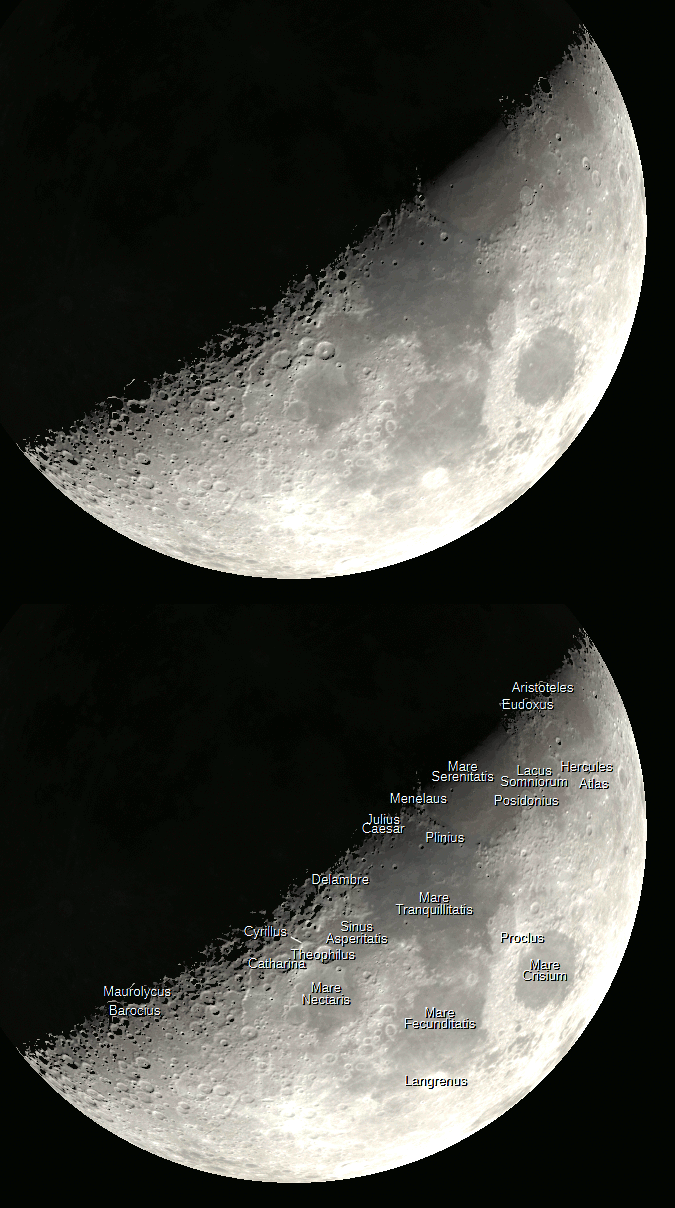
Translations of some lunar feature names according to Virtual Moon Atlas
Lacus Somniorum – Lake of Dreams
Mare Crisium – Sea of Crises
Mare Fecunditatis – Sea of Fertility
Mare Nectaris – Sea of Nectar
Mare Serenitatis – Sea of Serenity
Mare Tranquillitatis – Sea of Tranquility
Sinus Asperitatis – Bay of Roughness
Ephemeris: 02/14/2024 – A Valentine’s Day look at the bright planets
This is Ephemeris for Valentine’s Day and Ash Wednesday, Wednesday, February 14th. Today the Sun will be up for 10 hours and 24 minutes, setting at 6:09, and it will rise tomorrow at 7:43. The Moon, 2 days before first quarter, will set at 12:31 tomorrow morning.
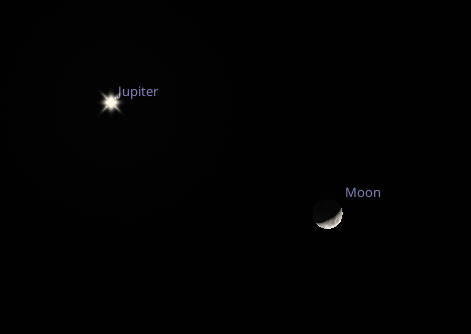
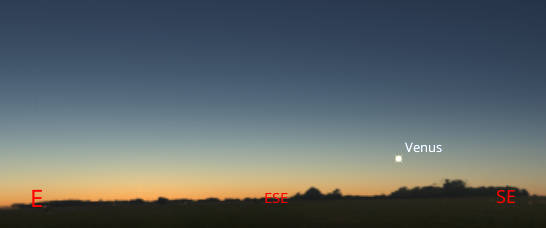
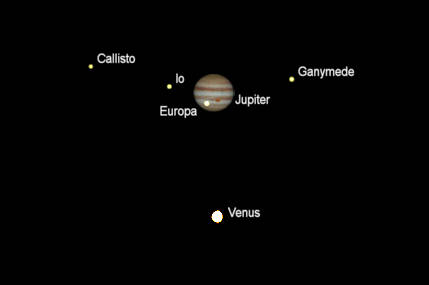
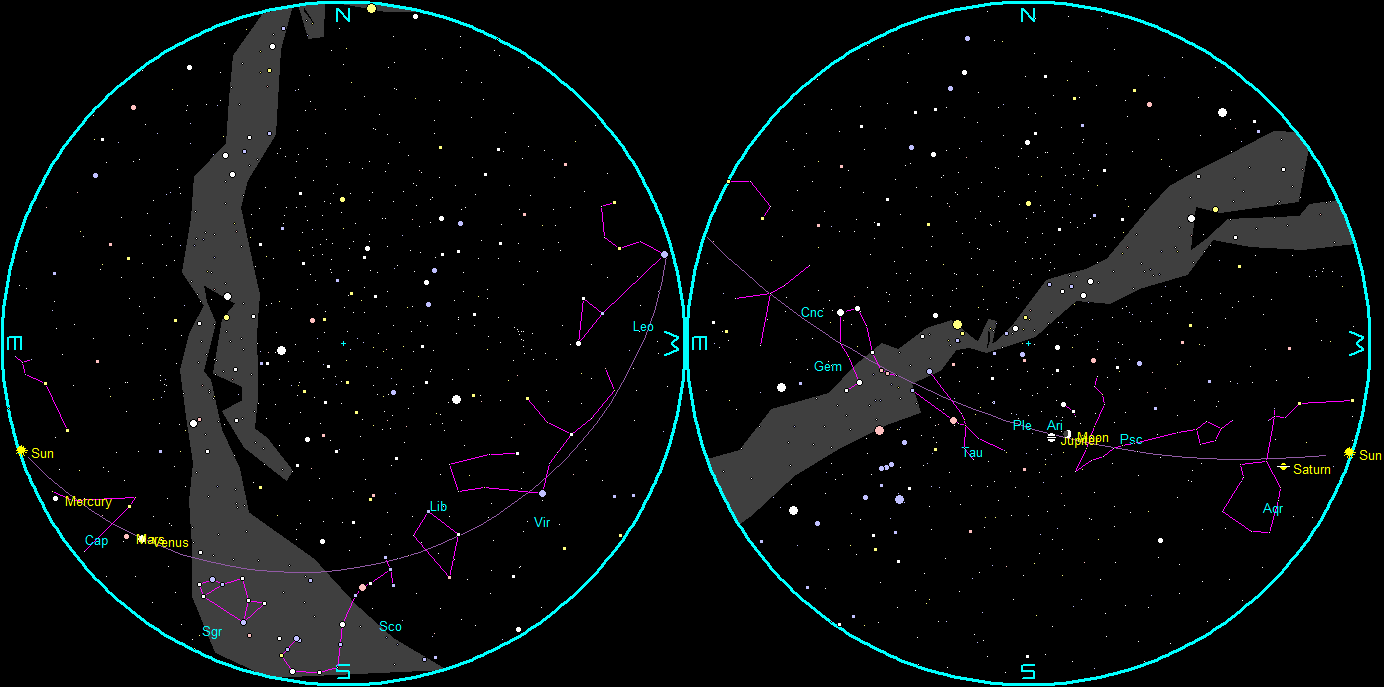
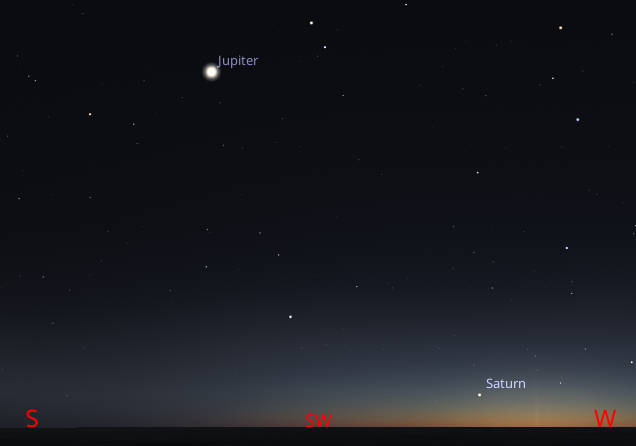
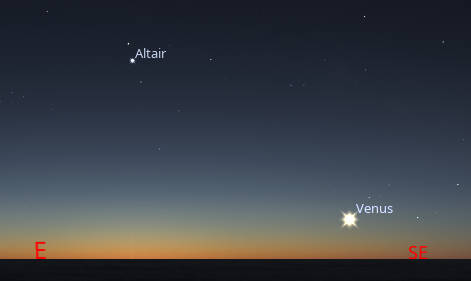
Let’s find out where the naked -eyed planets have wandered off to this week, and see what planets are left. Saturn, for all practical purposes, is gone, setting an hour after the sun. Jupiter will be in the southwest at 7:30 this evening, above and left to the crescent moon. It will move to the low west -northwest by midnight and will set at 12:30 am. Venus, the morning star, will rise into the east-southeast at 6:30 am, but its brilliance is diminished by the bright twilight and its low position in the sky. It will be very low in the southeast at seven am. Being Ash Wednesday, Easter is 46 days away. But Lent has 40 days. The six Sundays in Lent don’t count.
The astronomical event times given are for the Traverse City/Interlochen area of Michigan (EST, UT –5 hours). They may be different for your location.
Addendum
Ephemeris: 02/13/2024 – View the Moon tonight
This is Ephemeris for Fat Tuesday, February 13th. Today the Sun will be up for 10 hours and 21 minutes, setting at 6:07, and it will rise tomorrow at 7:45. The Moon, 3 days before first quarter, will set at 11:12 this evening.
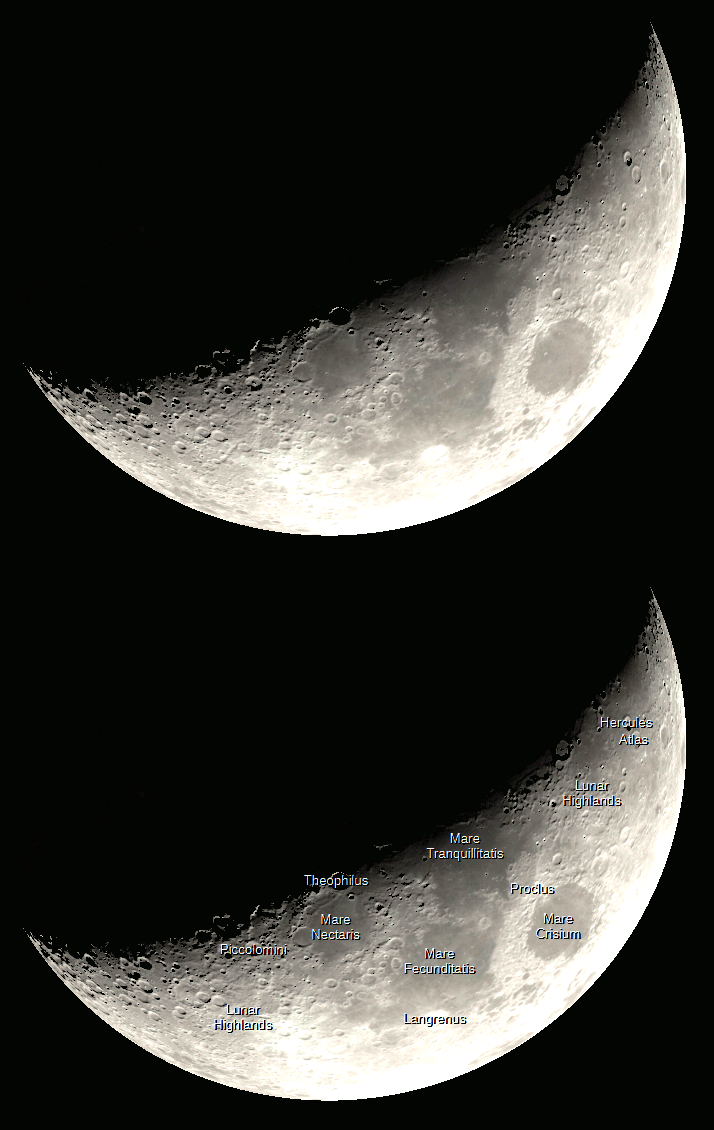
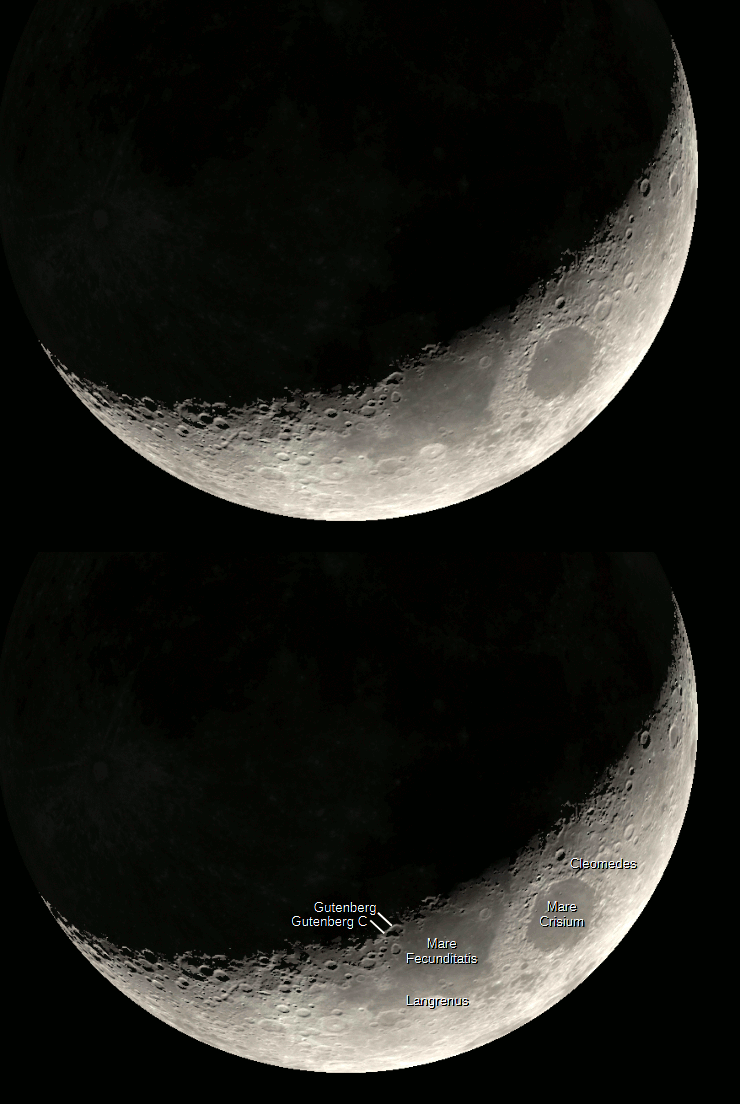
The moon tonight appears to be a beautiful crescent, a four-day-old moon, or three days before first quarter. On it are two dark seas visible, the small sea Mare Crisium, or Sea of Crises, is easily spotted surrounded by bright highlands near the moon’s limb, or edge. The larger Mare Fecunditatis (Fertility) is left of it. At the edge of the Sea of Fertility at the Terminator, one can see in binoculars, or a small telescope, a tiny keyhole-shaped crater which stands out. It really does look like a tiny keyhole, but it’s two craters slightly overlapping each other. Both are named after Johannes Gutenberg, the inventor of the movable-type printing press. The big crater is Gutenberg. The second is Gutenberg C.
The astronomical event times given are for the Traverse City/Interlochen area of Michigan (EST, UT –5 hours). They may be different for your location.
Addendum
Ephemeris: 02/12/2024 – Darwin Day
This is Bob Moler with Ephemeris for Darwin Day, Monday, February 12th. Today the Sun will be up for 10 hours and 18 minutes, setting at 6:06, and it will rise tomorrow at 7:46. The Moon, 3 days past new, will set at 9:53 this evening.
Today we commemorate the birthday of Charles Darwin, whose Origins of the Species produced a revolution in biology, that is the Theory of Evolution. Back then, in the 19th century, the Earth was thought to be fairly young. By then geologists had figured out that the Earth was at least millions of years old. Astronomers working on the amount of energy that the Sun put out calculated that if it were made of coal it would burn out in about 3000 years. So there was a definite problem with the age of the Sun and the Earth. With the discovery of radioactivity and the beginnings of Quantum Theory, at the turn of the last century, astronomers and physicists figured out that the conversion of matter into energy, according to Einstein, was energetic enough to fuel the Sun for billions of years. Enough time for evolution to work. In fact the entire universe is evolving!
The astronomical event times given are for the Traverse City/Interlochen area of Michigan (EST, UT –5 hours). They may be different for your location.
Addendum
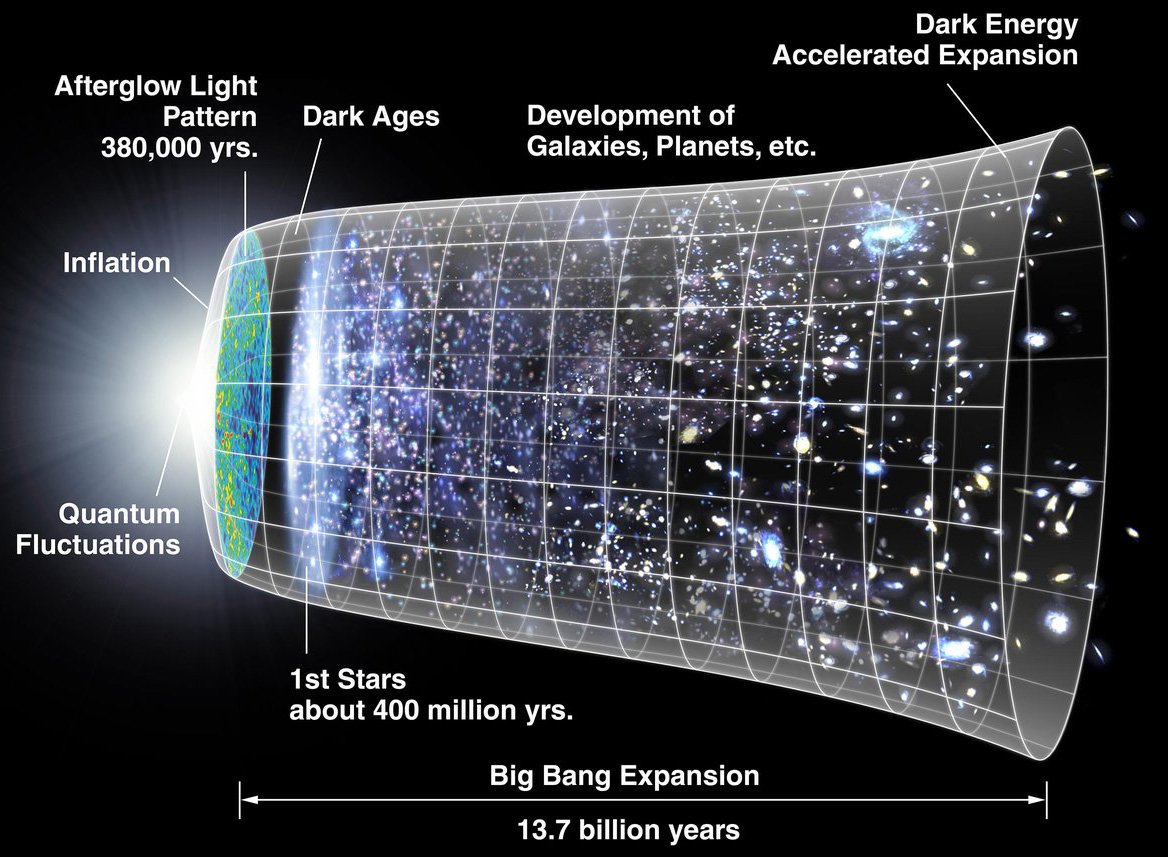
Biology isn’t my thing… too messy. Astronomy is mainly physics and chemistry, with the addition, relatively recently of astrobiology. However, not only living things evolve, the universe itself has been evolving for the last 13.8 billion years from the origin of the Big Bang to the present day.
Ephemeris: 02/09/2024 – Two lunar months until the total solar eclipse!
This is Ephemeris for Friday, February 9th. Today the Sun will be up for 10 hours and 9 minutes, setting at 6:02, and it will rise tomorrow at 7:50. The Moon is new today, and won’t be visible.
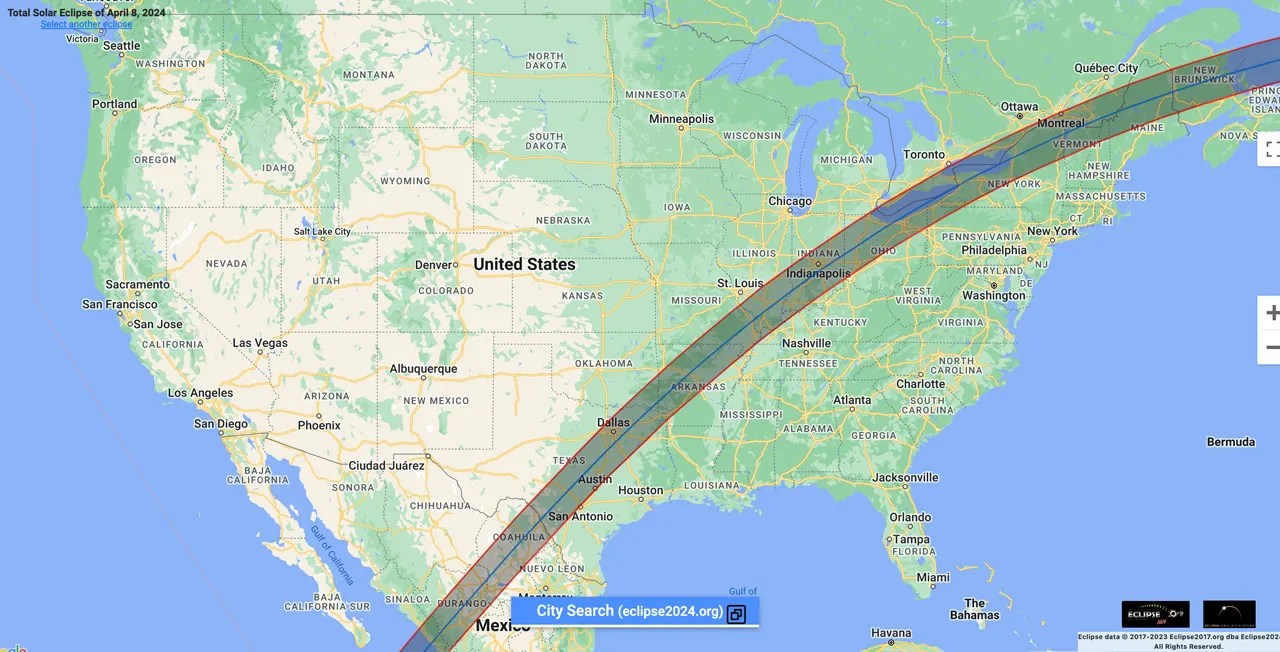
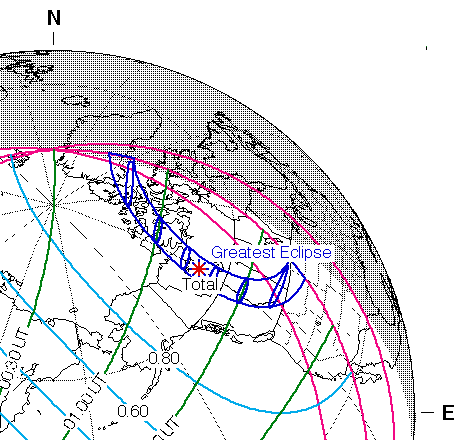
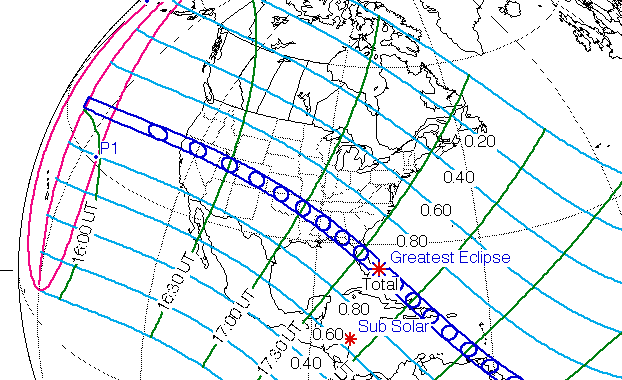
Today marks two lunar months before the April 8th total eclipse of the Sun. It will be partial here when nearly 90% of the Sun will be blocked by the Moon. The best place to see the total part of the eclipse is on the line from Texas through Indiana, Ohio and ending in Maine. We will not have another total eclipse visible in the continental United States until 2044 and again in 2045. The 2044 total eclipse path will only touch North Dakota and Montana at sunset, after descending south from Canada*. The eclipse of 2045 will have a path across the United States much like, but south of, the path in of the August 21st 2017 eclipse. This time passing from Northern California to Northern Florida. So it’s going to be a long drought of total solar eclipses unless one travels to other continents or go on an eclipse cruise.
The astronomical event times given are for the Traverse City/Interlochen area of Michigan (EST, UT –5 hours). They may be different for your location.
* On the radio program I have the Moon’s shadow going the other way. This is a rare eclipse where the Moon umbral shadow (the part that produces totality) starts and ends at local sunset.
Addendum
I will have Ephemeris Extra posts soon about how to observe the eclipse safely.
Ephemeris: 02/08/2024 – Up the river
This is Ephemeris for Thursday, February 8th. Today the Sun will be up for 10 hours and 7 minutes, setting at 6:00, and it will rise tomorrow at 7:52. The Moon, 1 day before new, will rise at 8:09 tomorrow morning.
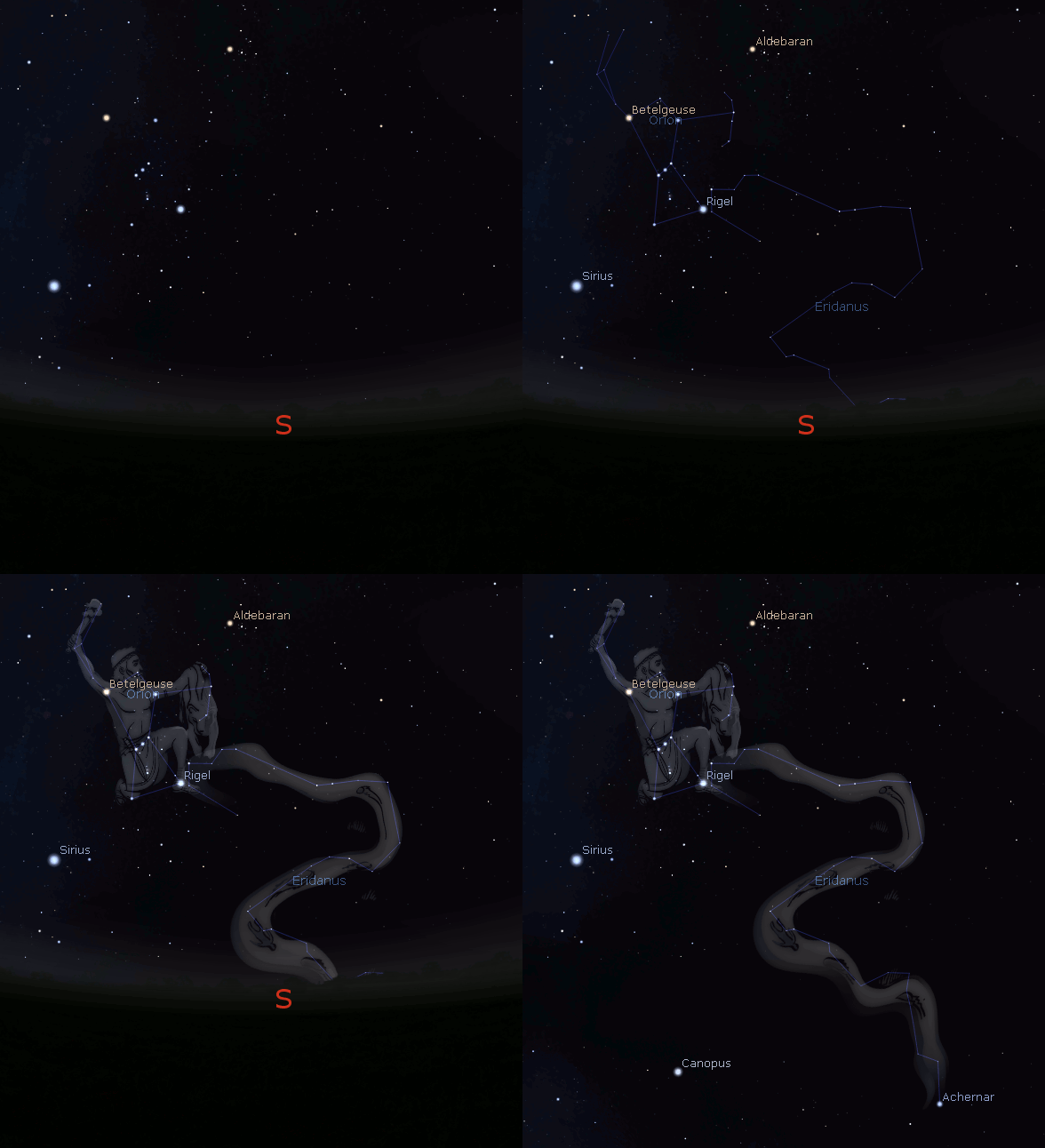
One of the more obscure constellations around is Eridanus, which depicts a river. The river starts near the lower right corner of Orion, near the bright star Rigel and flows to the right then down near the southwestern horizon, then it meanders along the horizon to the south before turning below the horizon. One has to travel to the far south to see the southern terminus of the river, the bright star Achernar. Writers over the ages have seen here the Nile and the Earth circling river Ocean of the flat earth days. Achernar is actually two stars, the brightest was discovered to be the flattest star known, due to its rapid spin. The dimensions of Achernar A has been determined to be twice as wide across its equator than from pole to pole. It’s 139 light years away.
The astronomical event times given are for the Traverse City/Interlochen area of Michigan (EST, UT –5 hours). They may be different for your location.
Addendum
Ephemeris: 02/07/2024 – Where have the naked-eye planets wandered off to this week?
This is Ephemeris for Wednesday, February 7th. Today the Sun will be up for 10 hours and 4 minutes, setting at 5:59, and it will rise tomorrow at 7:53. The Moon, 2 days before new, will rise at 7:32 tomorrow morning.
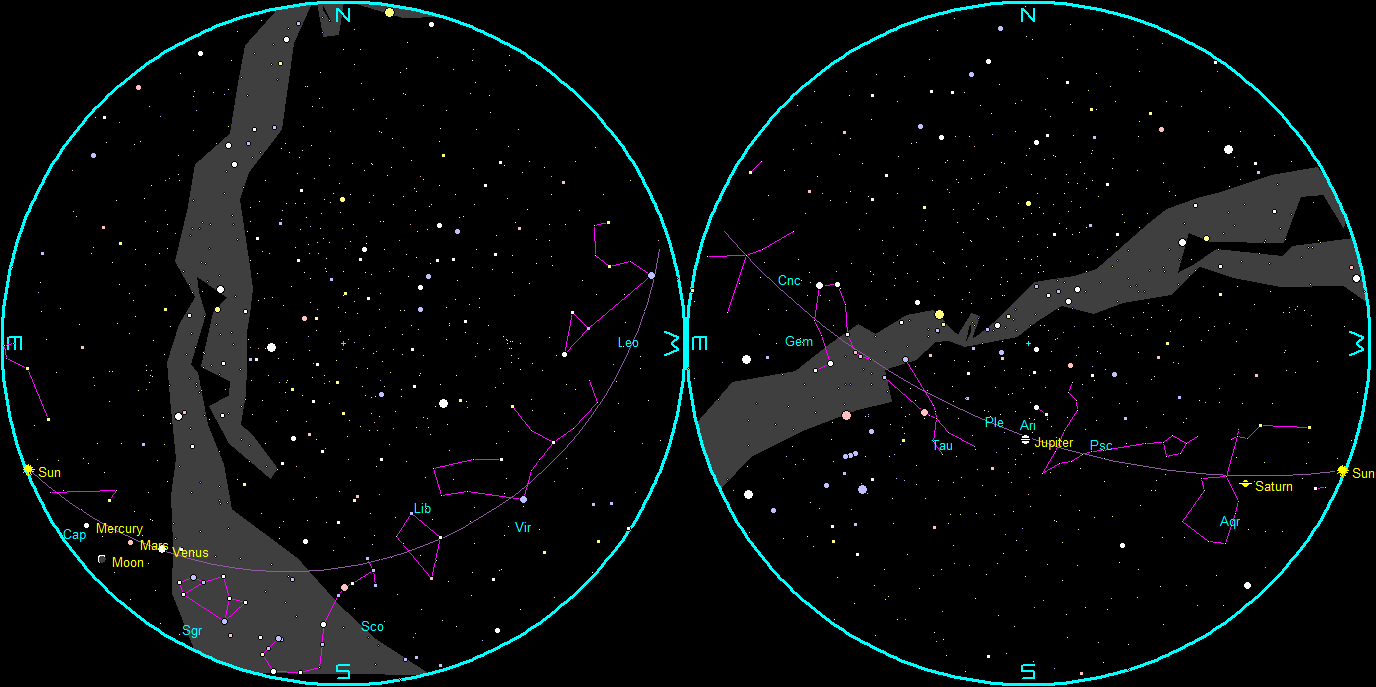
Let’s find out where the naked-eye planets have wandered off to this week. Three of those five planets are now visible. Saturn and Jupiter are the evening planets. Saturn is getting harder to spot very low in the west-southwest, nearly succumbing to evening twilight, setting at 7:32 pm. Jupiter will move from high in the south-southwest to low in the west by midnight, and will set in the west-northwest at 12:53 am. Venus, the morning star, will rise in the east-southeast at 6:25 am, but its brilliance is diminished by the bright twilight and its low altitude in the sky. As we advance through winter into spring Venus is going to be harder to spot before sunrise for two reasons, Venus is getting closer to the Sun, and it is appearing more to the right side of the Sun, than above it.
The astronomical event times given are for the Traverse City/Interlochen area of Michigan (EST, UT –5 hours). They may be different for your location.
Addendum
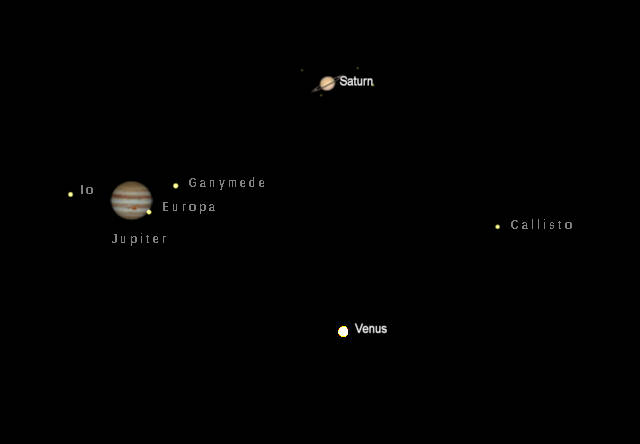
Jovian satellite interactions with Jupiter and its shadow visible for Michigan and longitudes around 85 degrees west:
- 7:03 pm Europa’s transit across the face of Jupiter ends.
- 7:18 pm Europa’s shadow begins to cross Jupiter’s face.
- 9:38 pm Europa’s shadow leaves Jupiter’s face.
- 9:42 pm Ganymede starts an occultation by Jupiter (hides behind it).
- 12:47 am Ganymede’s occultation ends.
Ephemeris: 02/04/2024 – The rabbit at the feet of Orion
This is Ephemeris for Tuesday, February 6th. Today the Sun will be up for 10 hours and 1 minute, setting at 5:57, and it will rise tomorrow at 7:55. The Moon, 3 days before new, will rise at 6:44 tomorrow morning.
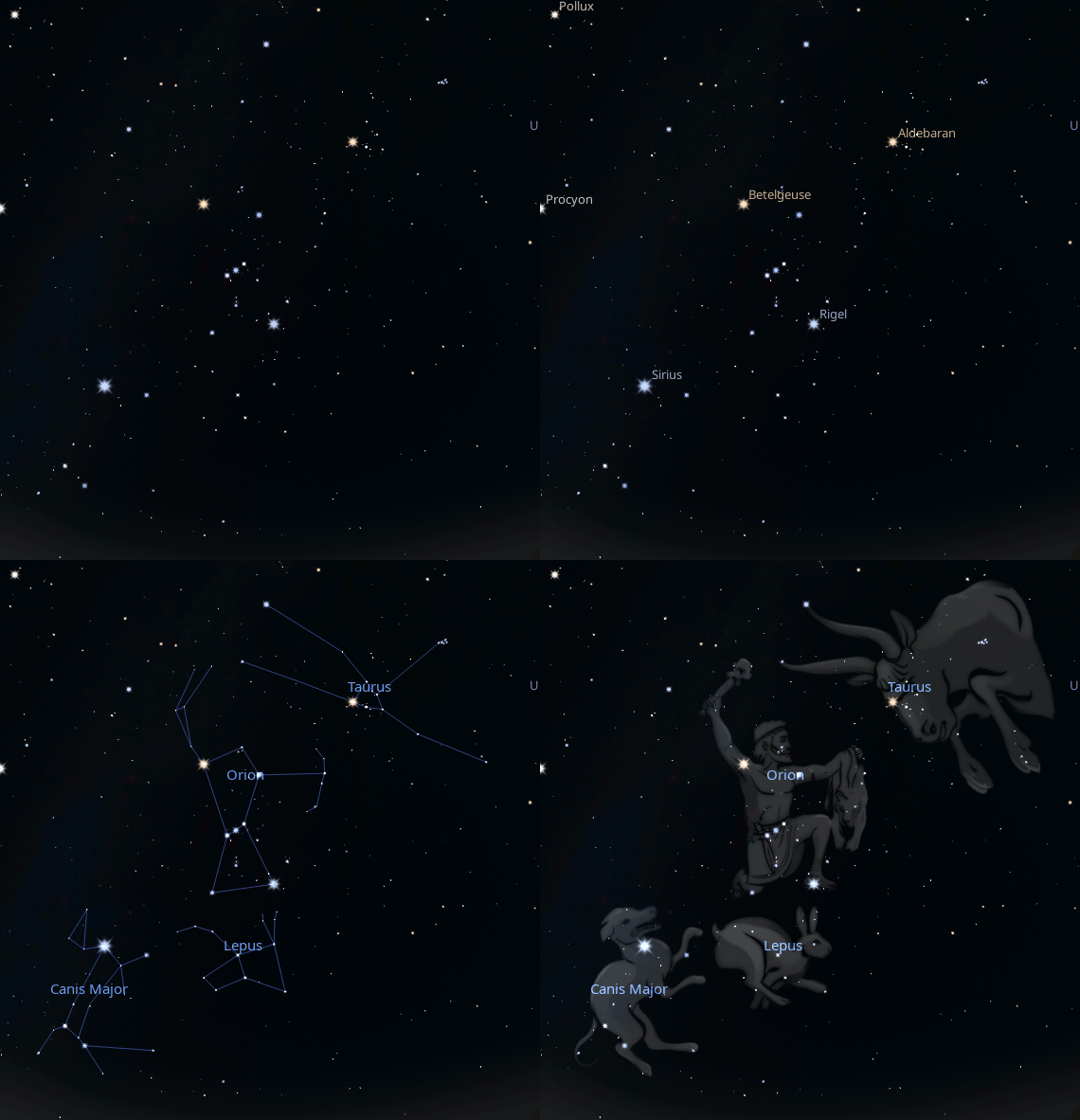
The constellation of Orion the hunter is in the south in the evening, and he seems to be preoccupied with the charge of Taurus the bull to his upper right. Unnoticed by him and below him is a small constellation called Lepus the hare, made of very dim stars. Good luck trying to make a rabbit out of those stars. In the constellation art that comes with the free application Stellarium. It displays the sky like a planetarium. The artistic constellation of the figure of Canis Major, Orion’s large hunting dog seems to be taking notice of Lepus and is beginning to chase it Lepus the hare is a nice addition to the tableau presented in the winter sky. Stellarium-web.org is a web based version of Stellarium that doesn’t have to be installed on your device.
The astronomical event times given are for the Traverse City/Interlochen area of Michigan (EST, UT –5 hours). They may be different for your location.
Addendum
Ephemeris: 02/05/2024 – Looking at the star Procyon
This is Ephemeris for Monday, February 5th. Today the Sun will be up for 9 hours and 59 minutes, setting at 5:56, and it will rise tomorrow at 7:56. The Moon, 3 days past last quarter, will rise at 5:44 tomorrow morning.
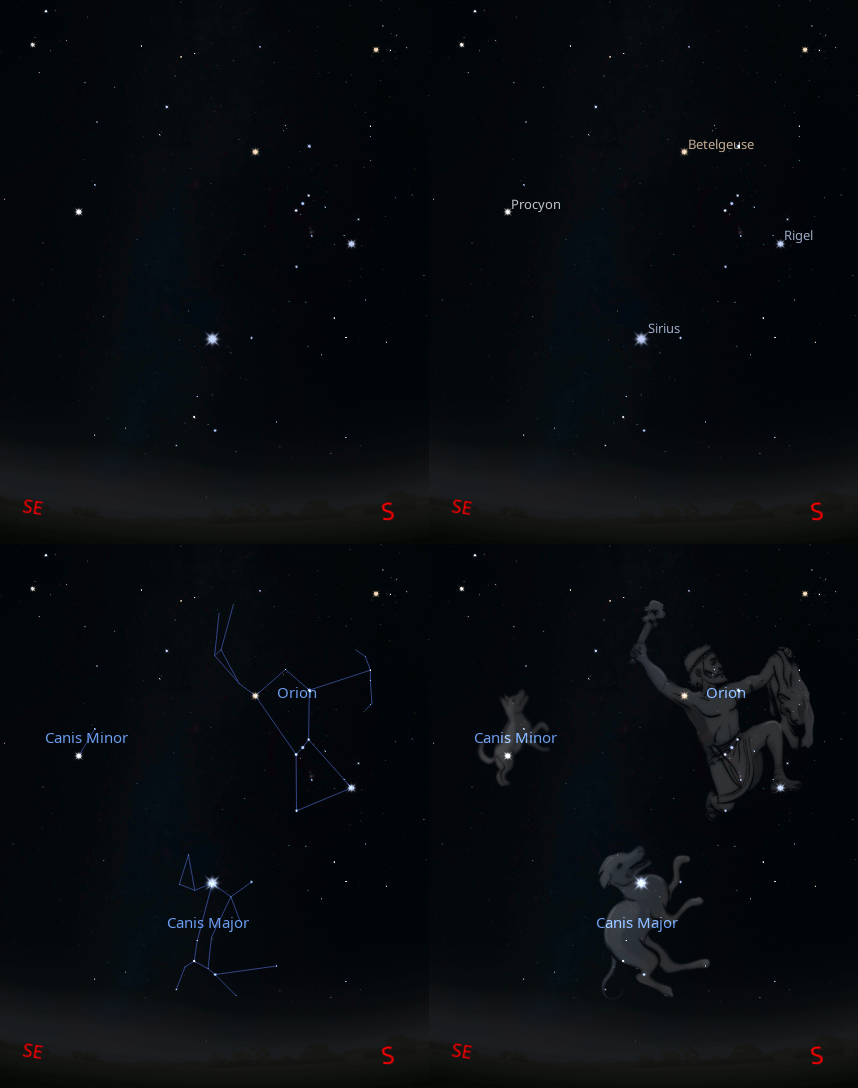
The star Procyon is in Orion’s little hunting dog Canis Minor, which contains only one other star. It can be found by using the shoulder stars of Orion, Bellatrix and Betelgeuse, pointing to the left and down a bit to Procyon in the evening. The word Procyon appears to mean “Before the Dog” meaning that rises before the Dog Star, Sirius, even though it is east of it. Procyon is also north of Sirius, which for observers above 30° north latitude does indeed rise before the Dog Star. It is a star like Sirius, though it’s not as bright, or white. Procyon is 11.5 light years away while Sirius is 8.4 light years away. Both have tiny white dwarf companion stars.
The astronomical event times given are for the Traverse City/Interlochen area of Michigan (EST, UT –5 hours). They may be different for your location.
Addendum
Ephemeris: 02/02/2024 – It’s Groundhog Day!
This is Bob Moler with Ephemeris for Groundhog Day, Friday, February 2nd. Today the Sun will be up for 9 hours and 51 minutes, setting at 5:52, and it will rise tomorrow at 8:00. The Moon, at last quarter today, will rise at 2:11 tomorrow morning.
I’m not sure if Punxsutawney Phil will see his shadow this morning or not, but February 2nd was a special day to the ancients. It is also Candlemas day for the Catholic Church, and it is celebrated as a cross-quarter day, the middle of the season of winter, though the exact date of the middle of winter is the 4th. And if Phil sees his shadow, and we do get 6 more weeks of winter, that’s OK too. By the calendar, it’s actually more like 6 ½ weeks to the vernal or spring equinox and the official end of winter. Of the other cross-quarter days, two others stand out. They are May 1st, May Day; and Halloween. The way this year has been going, winter has had a hard time getting started. The temperatures are above normal and the snowfall is below normal. A lot of grass is showing, and the bay isn’t even thinking of freezing over.
The astronomical event times given are for the Traverse City/Interlochen area of Michigan (EST, UT –5 hours). They may be different for your location.
Addendum


 Bob Moler's Ephemeris Blog