Archive
Ephemeris: 02/13/2026 – The real cause of a planet’s retrograde motion
This is Ephemeris for Friday, February 13th. Today the Sun will be up for 10 hours and 22 minutes, setting at 6:08, and it will rise tomorrow at 7:44. The Moon, halfway from last quarter to new, will rise at 6:30 tomorrow morning.
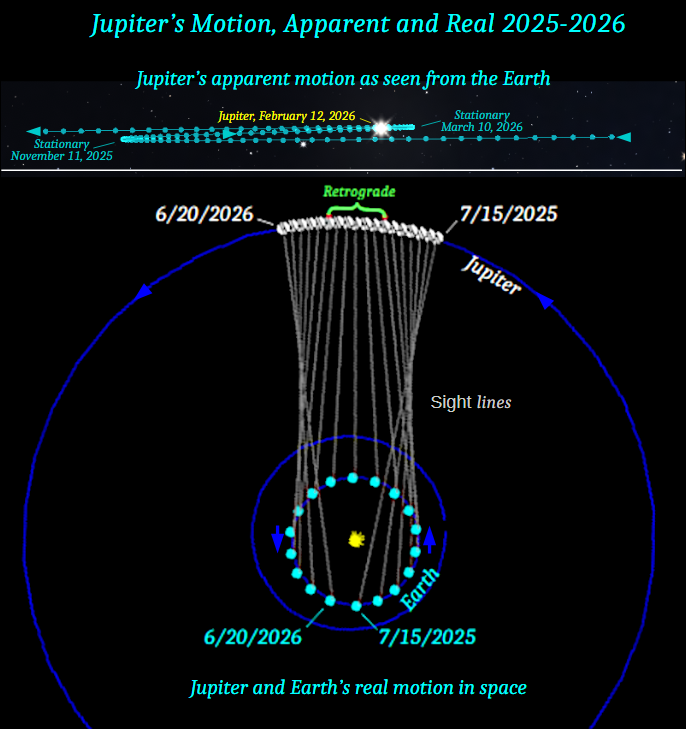
So what is the real reason that Jupiter is currently moving westward for a while in retrograde motion? Retrograde motion occurs in outer planets because the Earth is actually passing them. A simple analogy would be, if you were in a car that was passing another, the car you are passing would seem to move backwards compared to you. And that is exactly what’s happening. The Earth moves faster than the outer planets. Since the solar system is like a racetrack, and we get to lap these outer planets repeatedly when they are closest to us. For the inner planet it’s opposite. They go retrograde or backwards when they are passing us. This is a much simpler answer than all these circles upon circles the ancients invented.
The astronomical event times given in this blog are for the Traverse City/Interlochen area of Michigan (Lat 44.7° N, Long 85.7° W; EST, UT – 5 hours) unless stated otherwise. Times will be different for other locations.
Addendum
Ephemeris: 02/12/2026 – Why do planets stop and move backward for a time? Part 1
This is Ephemeris for Darwin Day, Thursday, February 12th. Today the Sun will be up for 10 hours and 19 minutes, setting at 6:07, and it will rise tomorrow at 7:45. The Moon, 3 days past last quarter, will rise at 5:49 tomorrow morning.
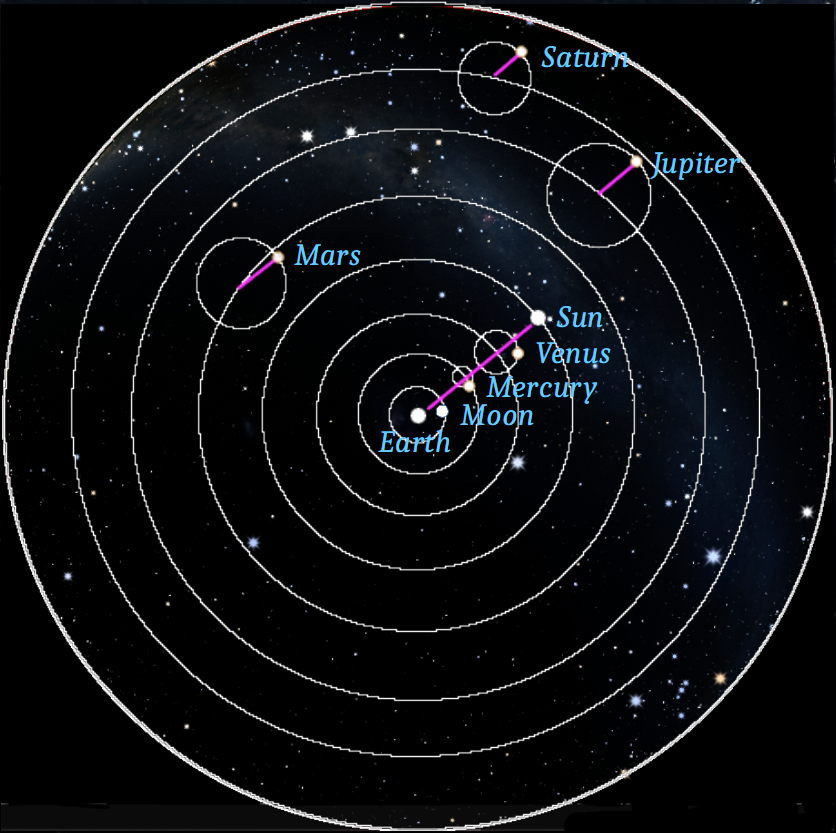
For the last month or so I’ve been talking about Jupiter in its retrograde or westward motion against the stars of Gemini. This motion isn’t due to just Jupiter itself. Jupiter orbits smoothly around the sun in one direction, in a little less than 12 years. The ancients thought that the earth was stationary, and everything in the sky orbited the earth. They thought that the planets orbited the earth in the same time that the planet orbits the sun, however every year and depending on where the planet was in the sky it would stop, reverse itself for a while and then resume its eastward motion through the sky. They thought that the planet moved on a small circle called an epicycle that rode on the larger circle called the deferent.
The astronomical event times given in this blog are for the Traverse City/Interlochen area of Michigan (Lat 44.7° N, Long 85.7° W; EST, UT – 5 hours) unless stated otherwise. Times will be different for other locations.
Addendum
Tomorrow, we’ll find out what’s really going on.
Ephemeris: 02/11/2026 – Taking our weekly look at the whereabouts of the naked-eye planets
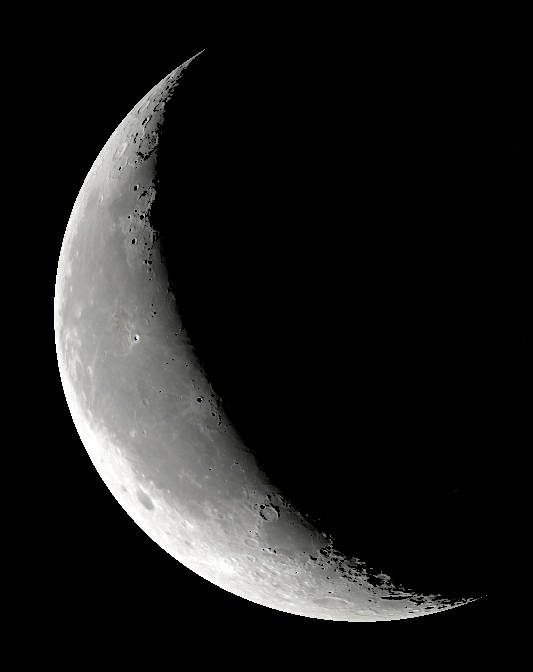
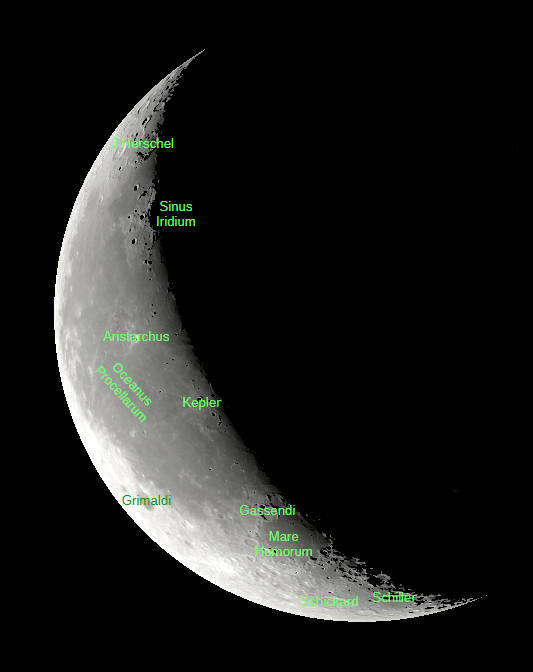
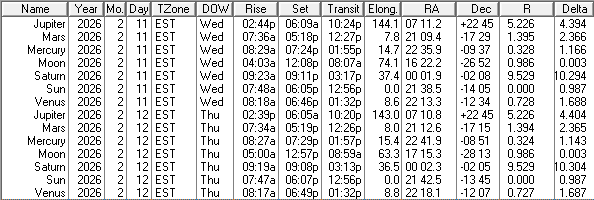
This is Ephemeris for Wednesday, February 11th. Today the Sun will be up for 10 hours and 16 minutes, setting at 6:05, and it will rise tomorrow at 7:47. The Moon, 2 days past last quarter, will rise at 5:00 tomorrow morning.
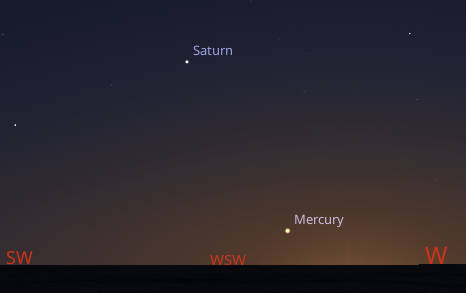
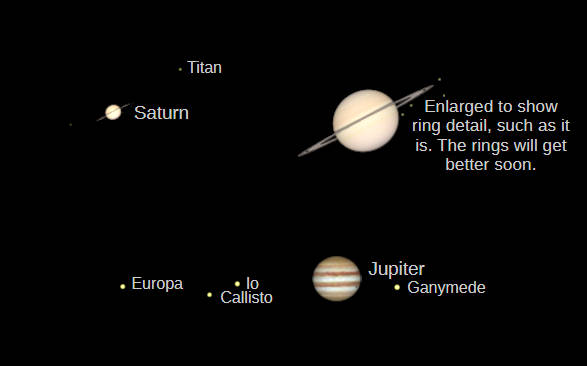
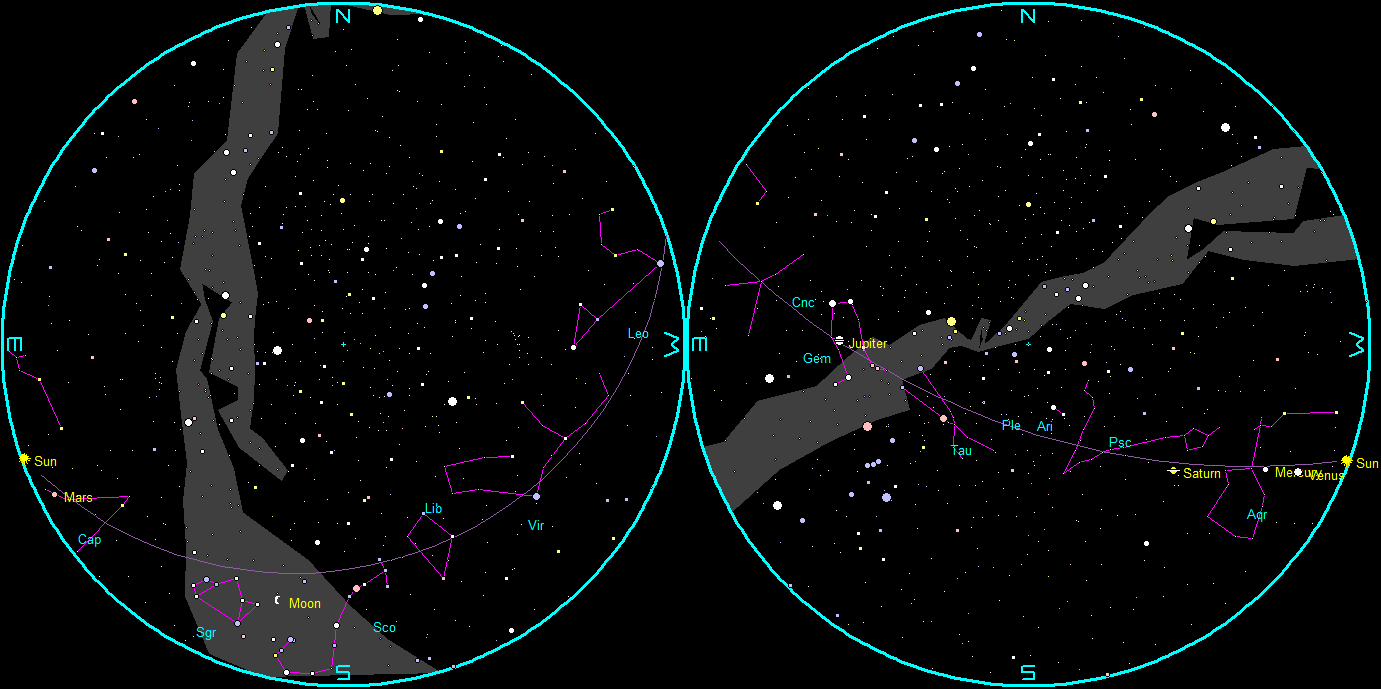
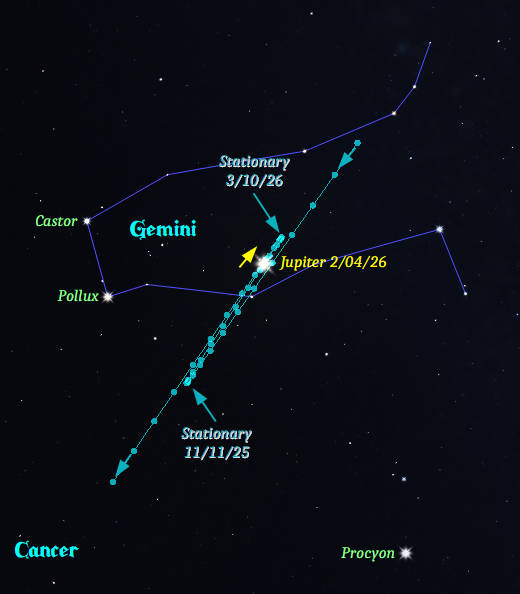
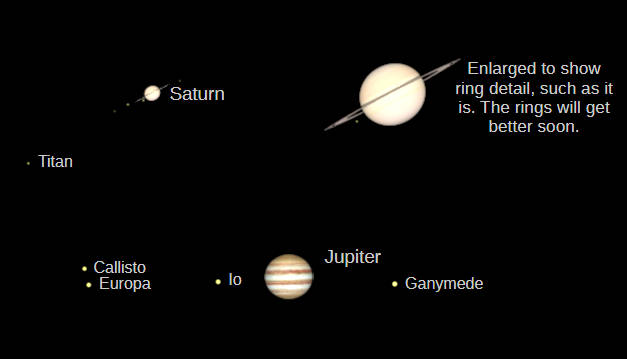
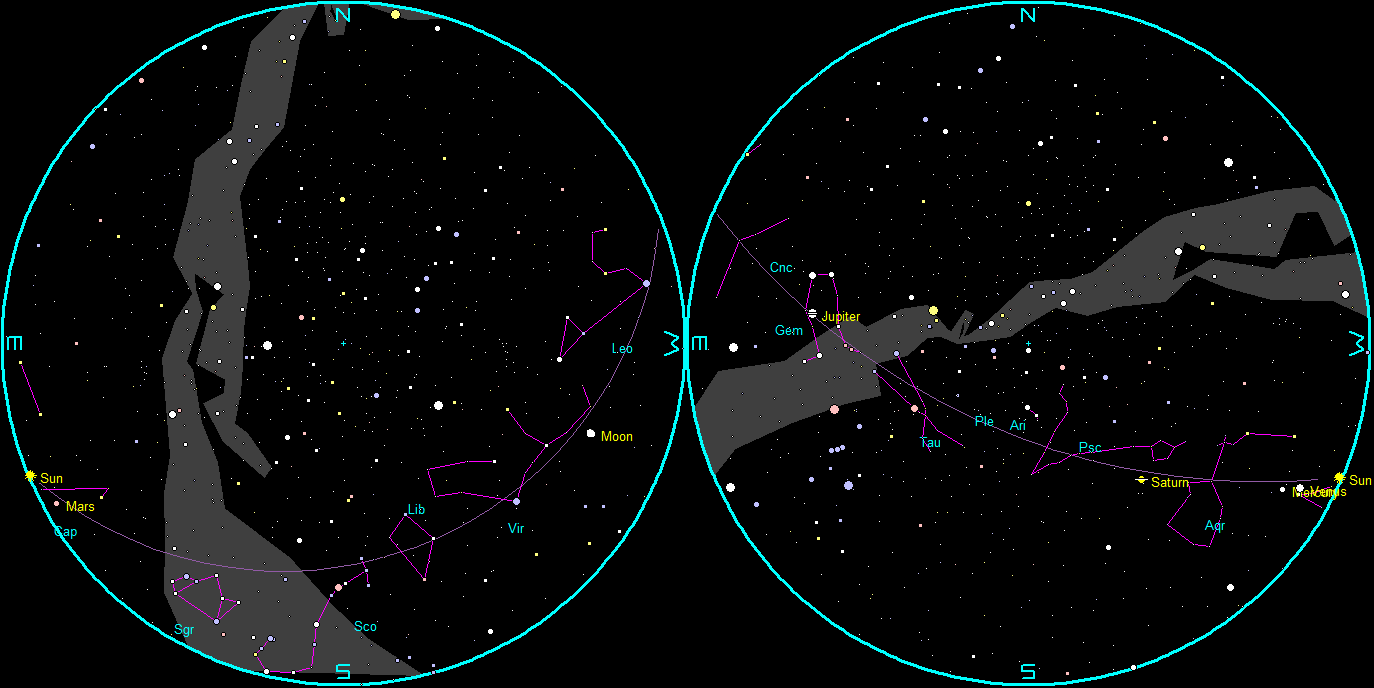
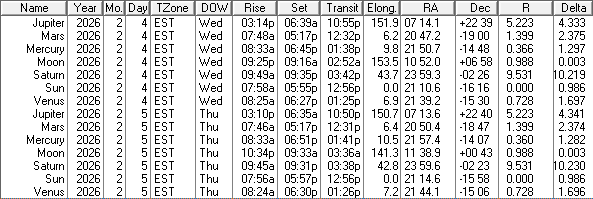
Let’s take our weekly look at the whereabouts of the naked-eye planets. Before twilight fades, Mercury may be spotted low in the west below and right of Saturn. Binoculars may help in finding it. Saturn is the brightest star-like object low in the west southwestern sky as soon as it gets dark, and it will set before 9:30. In a telescope Saturn sports a very thin ring, 2.6 degrees from being edge on and is slowly opening. Jupiter is the brilliant star-like object more than halfway up in the east-southeastern sky. It’s the brightest star-like object in the sky. It is still moving to the west, but is slowing down and will stop and reverse its course a month from now. Jupiter’s 4 brightest moons can be seen even in binoculars, if held steadily enough. They shift position night to night. At 8 PM tonight, all four Galilean moons can be seen.
The astronomical event times given in this blog are for the Traverse City/Interlochen area of Michigan (Lat 44.7° N, Long 85.7° W; EST, UT – 5 hours) unless stated otherwise. Times will be different for other locations.
Addendum
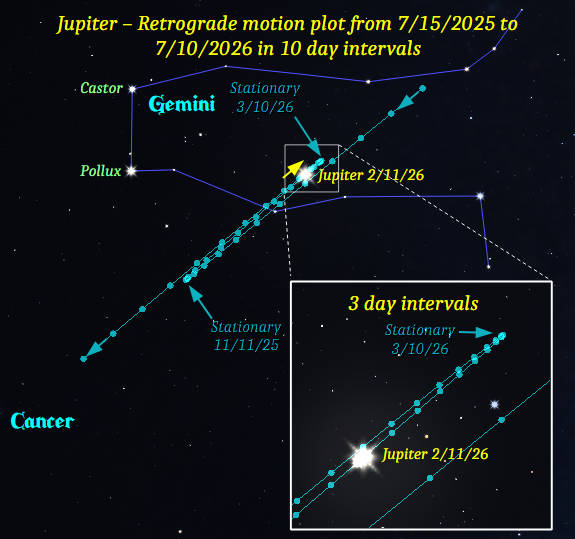
Tomorrow, I’ll discuss, more fully, why planets are seen to move in retrograde motion.
R
Ephemeris: 02/10/2026 – Artemis 2 is delayed until at least March
This is Ephemeris for Tuesday, February 10th. Today the Sun will be up for 10 hours and 14 minutes, setting at 6:04, and it will rise tomorrow at 7:48. The Moon, 1 day past last quarter, will rise at 4:03 tomorrow morning.
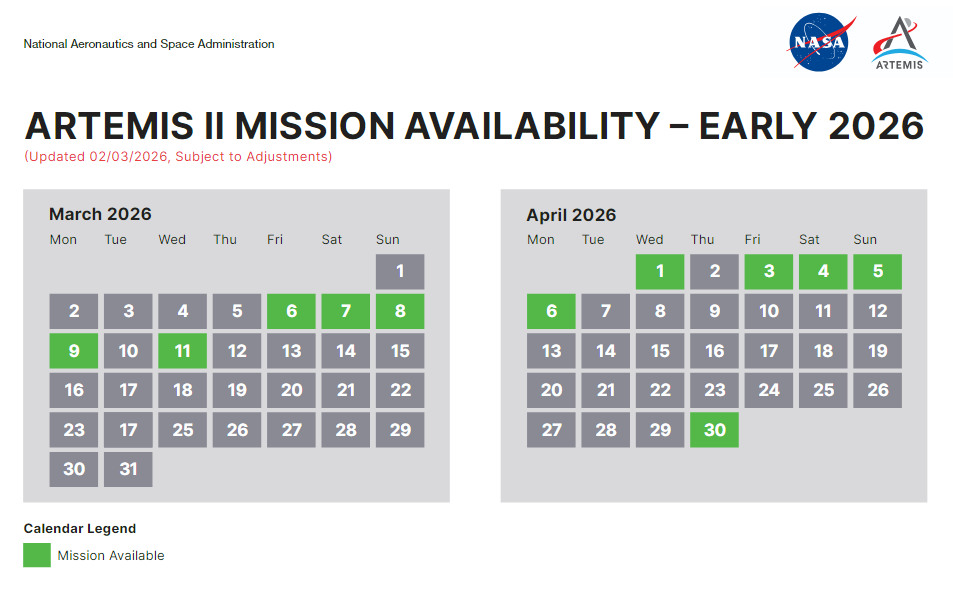
The next attempt to launch Artemis 2 and its crew around the moon will be in March. During the wet dress rehearsal, which involves filling the tanks of the huge core stage of the rocket with liquid hydrogen and oxygen, and counting down almost to the point of ignition. They discovered a greater than expected leak with the hydrogen quick disconnect fitting at the base of the core stage. They can’t test for hydrogen leaks while the spacecraft is sitting in the vertical assembly building because as cavernous as it is, it’s still a closed space and hydrogen is a notoriously leaky substance, being the smallest molecule. A little leakage is to be expected, but what they found was over the limit.
The astronomical event times given in this blog are for the Traverse City/Interlochen area of Michigan (Lat 44.7° N, Long 85.7° W; EST, UT – 5 hours) unless stated otherwise. Times will be different for other locations.
Addendum

Ephemeris: 02/09/2026 – Orion’s amazing belt stars
This is Ephemeris for Monday, February 9th. Today the Sun will be up for 10 hours and 11 minutes, setting at 6:02, and it will rise tomorrow at 7:50. The Moon, at last quarter today, will rise at 3:01 tomorrow morning.
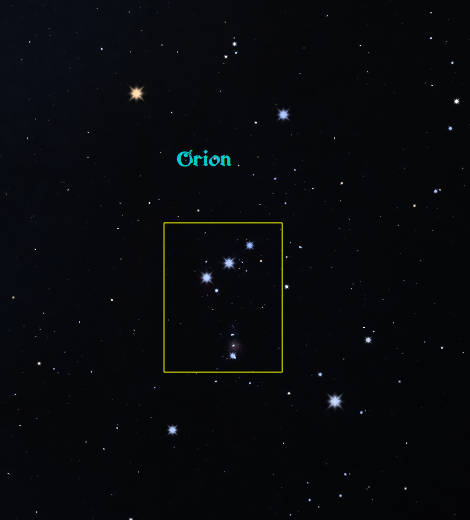
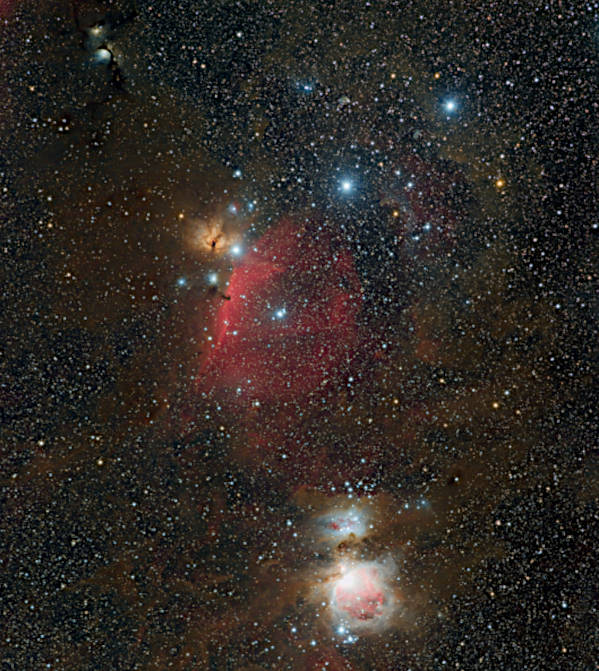
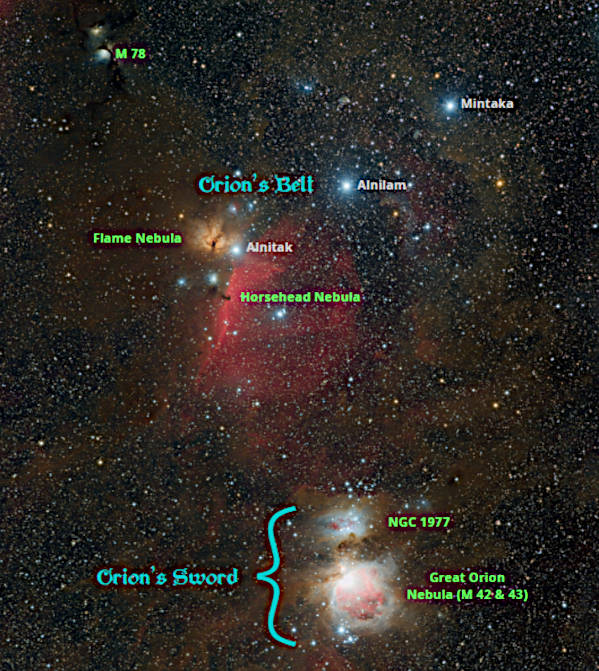
Orion’s belt of three stars is one of the most noticeable star groupings in the sky. There are no other groups of three bright stars in a straight line visible anywhere else in the sky. The star’s names from left to right are Alnitak, Alnilam and Mintaka. They are actually a bit farther away than the other bright stars of Orion. Alnilam, the center star, is over three times the distance of red giant Betelgeuse above them and over twice as far as blue white giant star Rigel below them. Alnilam is 375 thousand times brighter than the Sun. These three stars were also known as Frigga’s Spindle by the Norsemen. Frigga, also known as Freya, is the goddess from which we get the name of the day of the week we call Friday.
The astronomical event times given in this blog are for the Traverse City/Interlochen area of Michigan (Lat 44.7° N, Long 85.7° W; EST, UT – 5 hours) unless stated otherwise. Times will be different for other locations.
Addendum
Ephemeris: 02/06/2026 – GTAS Tonight, Annual Telescope Clinic
This is Ephemeris for Friday, February 6th. Today the Sun will be up for 10 hours and 3 minutes, setting at 5:58, and it will rise tomorrow at 7:54. The Moon, 3 days before last quarter, will rise at 11:41 this evening.
Did you or someone in your family get a telescope for Christmas, or have one in a closet or attic because you don’t know how to put it together or how to operate it? Or maybe you are trying to figure out which one to buy. Well, tonight’s your night. The Grand Traverse Astronomical Society (GTAS) will host the annual Telescope Clinic starting at 8 pm at Northwestern Michigan College’s Rogers Observatory. Professor Jerry Dobek will demonstrate the types of telescopes and how to use them. He and other members may be able to help with problems by checking out participants telescopes, so “bring ‘em if you’ve got ‘em.” This is interesting to say the least. Go to gtastro.org for more information and a link to attend the meeting via Zoom.
The astronomical event times given in this blog are for the Traverse City/Interlochen area of Michigan (Lat 44.7° N, Long 85.7° W; EST, UT – 5 hours) unless stated otherwise. Times will be different for other locations.
Addendum – Some telescope basics
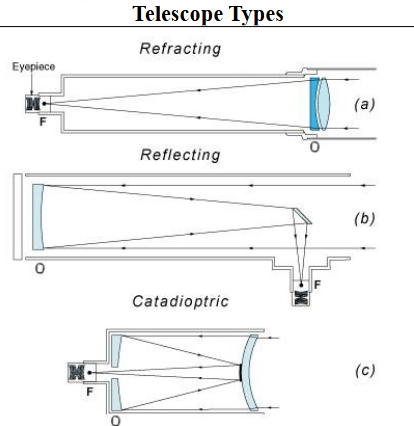
There are two basic telescope types: The refractor or refracting telescope and reflector or reflecting telescope. The reflecting type shown is a Newtonian telescope, is the simplest and most inexpensive reflector. The Catadioptric (Mirror-Lens) telescope uses a corrector plate in front of the telescope. The one shown is a type called a Maksutov-Cassegrain. The more popular type is the Schmidt-Cassegrain which uses a thin, nearly flat corrector plate. The Cassegrain design uses a convex secondary mirror the sends the light back through a hole in the Primary mirror (O) to an eyepiece.
Refracting telescopes get expensive in a hurry as the diameter of the objective (O) lens increases due to the requirements of at least 4 lens surfaces of the at least two lenses that make it up. The reason for it is to correct for color fringes that would result around bright objects seen through it (chromatic aberration), and the optical quality of the glass required. Reflectors primary mirror have a single surface and the glass simply supports it. The corrector plates of the catadioptric telescopes don’t create chromatic aberration because they don’t bend light much. Telescopes are rated by the diameter of their objectives
(O). One could purchase an 11 inch Newtonian telescope for less than $1,000, An 11” Schmidt-Cassegrain for $3,000+, or an 11” refractor (Don’t ask, you can’t afford it).
The reason astronomers go for wider telescopes (greater aperture) is two-fold: To gather more light to better see faint objects, and to increase resolving power, the ability of the telescope to see fine detail and be able to use higher magnification. We’ll see the rules when we talk about eyepieces.
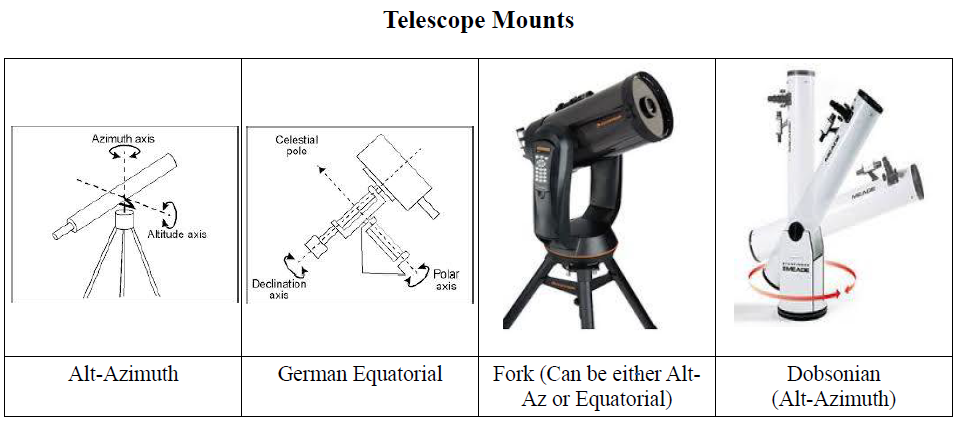
There are four basic mounts. Equatorial mounts have to be aligned to the earth’s axis in order to work properly to follow objects in the sky. Alt-Azimuth mounts are the simplest and easiest to set up, but all but the most sophisticated cannot be made to track objects in the sky as the Earth rotates. A relatively new addition to mounts is the computerized “Go To” feature allows the telescope to find objects itself when the mount is properly aligned to the sky. Telescopes with Dobsonian mounts have the largest aperture for the buck. Cheap telescopes tend to have cheap mounts that are hard to use and wobbly, especially the ones with German equatorial mounts. An alt-azimuth mount would be steadier in this case.
Telescope Finders
The telescope eyepiece covers so little area of the sky to make finding anything virtually impossible. So all telescopes have small finder scopes attached of 6 to 10 power, or 1 power devices that put a finder circle or red dot on the sky when you look through them. A newer finder idea is a mount for a green laser that projects a beam in the atmosphere toward the object to be located. The author prefers a finder with an aperture of at least 50mm to be able to see most of the dim objects he’s looking for. In the main telescope, use the lowest power eyepiece because it has the widest field of view.
Eyepieces and filters
Magnifying power or magnification is not a telescope property. The eyepiece is essentially a magnifying glass to view the real image that the objective lens or mirror produces at the focal plane (F) in the telescope type diagram on the first page. The focal length of the objective lens or mirror or the effective focal length of the mirrors of the catadioptric telescope divided by the focal length of the eyepiece gives the magnification of that particular combination of telescope and eyepiece. The focal length of the eyepiece is marked on the eyepiece. The telescope focal length may or may not be stamped or marked on the telescope, if not, check the owner’s manual for that quantity.
A telescope will generally come with one or two eyepieces, The lowest power eyepiece will generally be a 25mm eyepiece of some kind. Eyepieces come in 2 standard barrel sizes, 1 ¼ inch and 2 inch. There are some old telescopes that only accept sub 1 inch diameter eyepieces. You may have to hunt to see if any of those size eyepieces are still around. The cheaper the telescope the crummier the eyepiece. Decent eyepieces start at around $50 and go up from there. The best way to tell which eyepiece fits your needs is to ask an astronomer what eyepiece he or she is using at a star party.
About magnification. The highest usable magnification in a telescope is calculated as the aperture in millimeters times 2.4 or aperture in inches times 60. After that the image becomes fuzzy and dim. It’s due to the wave nature of light. The author halves those values in his experience. He’d rather have small crisp images than big fuzzy ones devoid of contrast.
A handy accessory to have is a Barlow lens, a negative lens in a tube, that the eyepiece is slipped in before inserting the pair in the eyepiece holder. It will double the power of the eyepiece. So with two eyepieces and a Barlow four separate magnifications are available. The author would rather use a lower power eyepiece with a Barlow than a high power eyepiece of the same power. In that same vein a good low power wide angle eyepiece is generally the first extra eyepiece astronomers purchase. More expensive ones can be like viewing the universe in IMAX. Here is a truism: Amateur astronomers use their telescope’s lowest power 90% of the time.
Solar filters that fit over the front of the telescope and finder is a fine addition to any telescope and allow viewing of our star close up. Some old telescopes have a solar filter that fits in an eyepiece. For your visual health take the filter, go down to the bay and see how many times you can skip that sucker on the water. There are also filters that can filter out some of the light pollution for dim nebulae. There are filters also to bring out detail in planets.
Above all, have fun! If you have any questions ask that friendly amateur astronomer over there standing by his or her telescope.
Ephemeris: 02/05/2026 – The celestial unicorn
Feb 5. This is Ephemeris for Thursday, February 5th. Today the Sun will be up for 10 hours even, setting at 5:57, and it will rise tomorrow at 7:55. The Moon, halfway from full to last quarter, will rise at 10:34 this evening.
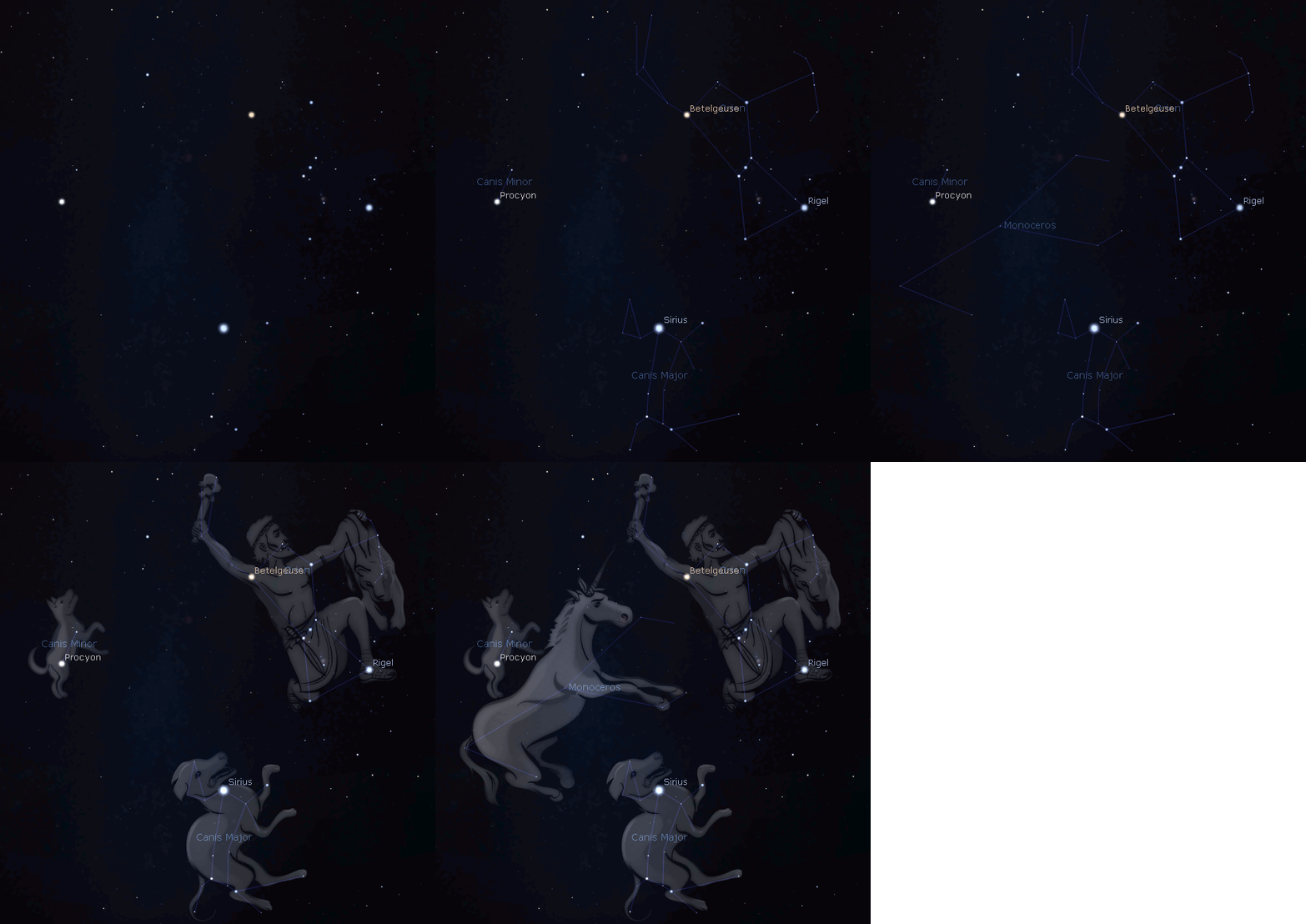
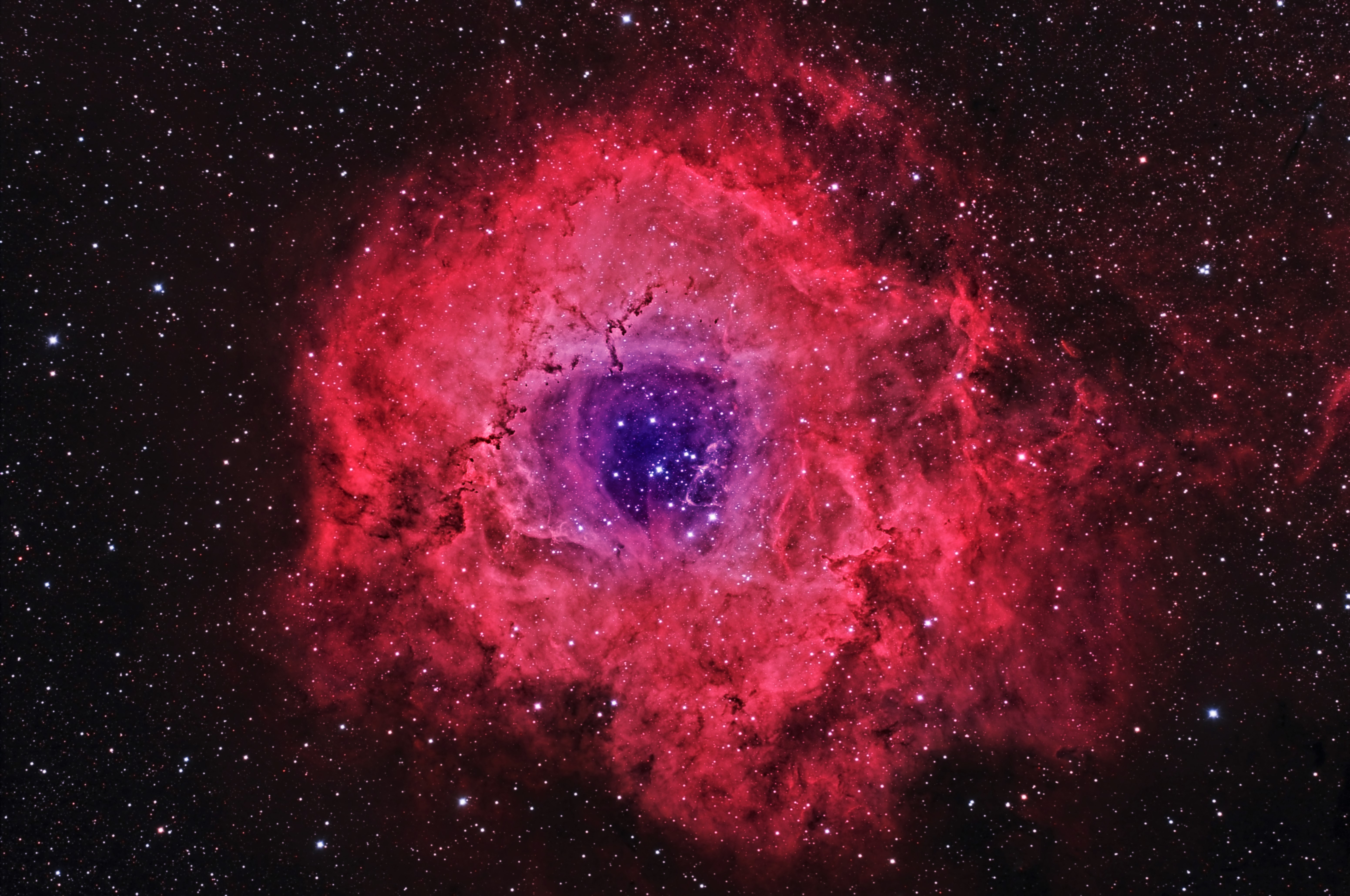
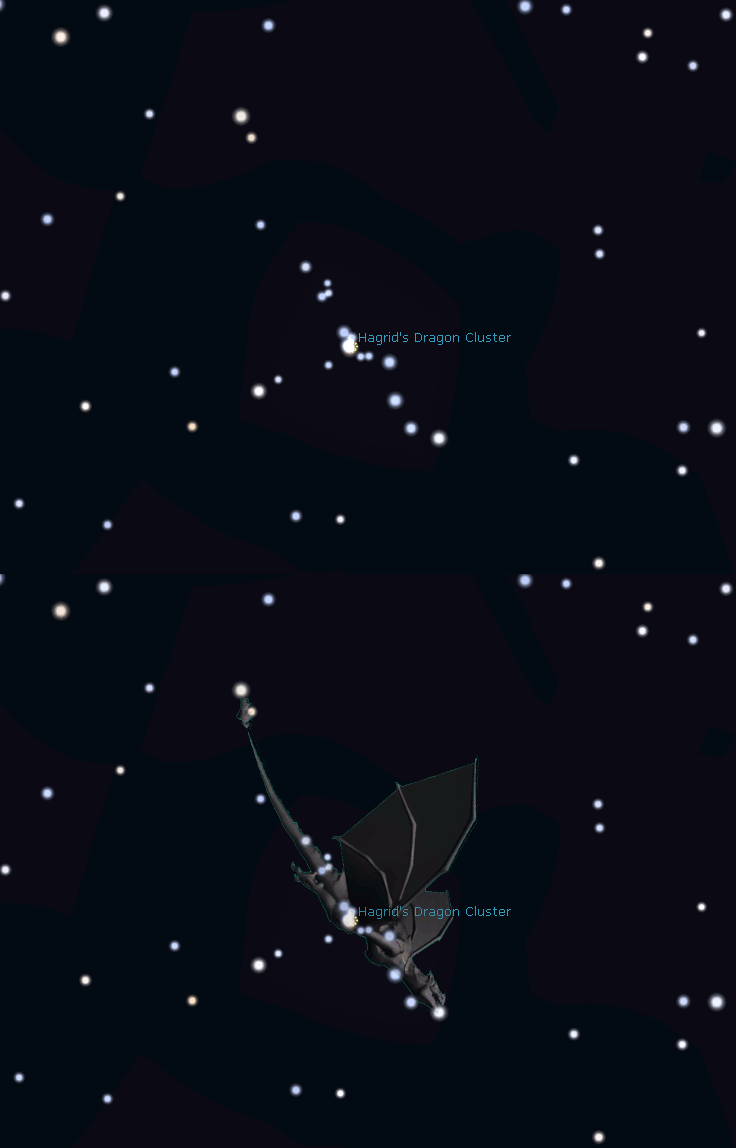
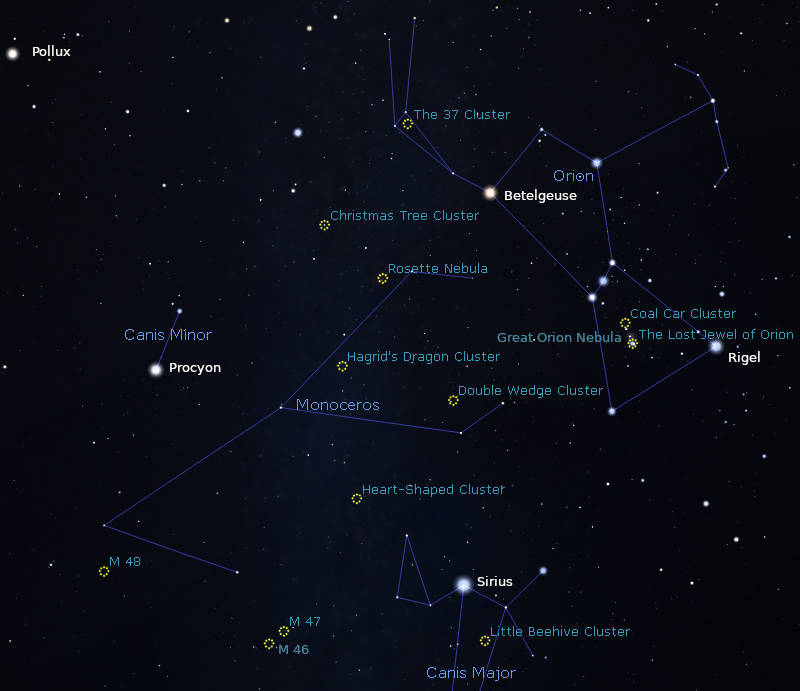
Among all the constellations in the sky of animals real and mythical, there is also a unicorn. It’s called Monoceros, and inhabits the southeastern sky at 8 p.m. mostly bounded by Orion on the right, Canis Major, the great dog below and Canis Minor, the little dog to the left and above. Unfortunately for observers without a telescope Monoceros, is devoid of any but the faintest stars. Maybe that’s why no one sees unicorns anymore. Though it lacks bright stars Monoceros is full of wonders revealed by telescopes and photography. A feast of faint nebulae or clouds of gas and dust, the birthplace of stars, including the red rose of the Rosette Nebula, and the more recently named Hagrid’s Dragon Cluster (NGC 2301).
The astronomical event times given in this blog are for the Traverse City/Interlochen area of Michigan (Lat 44.7° N, Long 85.7° W; EST, UT – 5 hours) unless stated otherwise. Times will be different for other locations.
Addendum
Ephemeris: 02/04/2026 – Taking our weekly look at the whereabouts of the naked-eye planets
This is Ephemeris for Wednesday, February 4th. Today the Sun will be up for 9 hours and 57 minutes, setting at 5:55, and it will rise tomorrow at 7:56. The Moon, 3 days past full, will rise at 9:25 this evening.
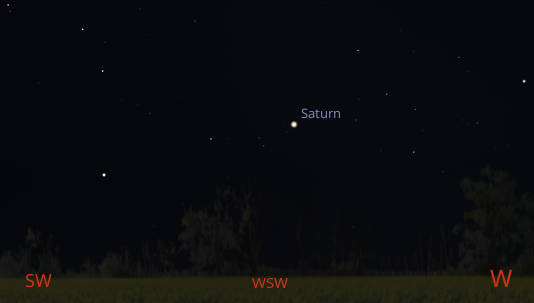
Let’s take our weekly look at the whereabouts of the naked-eye planets. Saturn is the brightest star-like object low in the west southwestern sky as soon as it gets dark. In a telescope Saturn sports a very thin ring, 2.4 degrees from being edge on and is slowly opening. Jupiter is the brilliant star-like object in the eastern sky, to the right of Pollux in the pair Castor and Pollux, the bright stars of Gemini. It is still moving slowly to the west, and will, until it stops and reverses its track on March 10th. Jupiter’s four brightest moons can be seen even in binoculars, if held steadily enough. They shift position night to night. At 8 PM tonight, all four Galilean moons can be seen, though two may too close together to be picked out separately in binoculars.
The astronomical event times given in this blog are for the Traverse City/Interlochen area of Michigan (Lat 44.7° N, Long 85.7° W; EST, UT – 5 hours) unless stated otherwise. Times will be different for other locations.
Addendum
Ephemeris: 02/03/2026 – Canis Major, Orion’s greater hunting dog
This is Ephemeris for Tuesday, February 3rd. Today the Sun will be up for 9 hours and 55 minutes, setting at 5:54, and it will rise tomorrow at 7:58. The Moon, 2 days past full, will rise at 8:14 this evening.
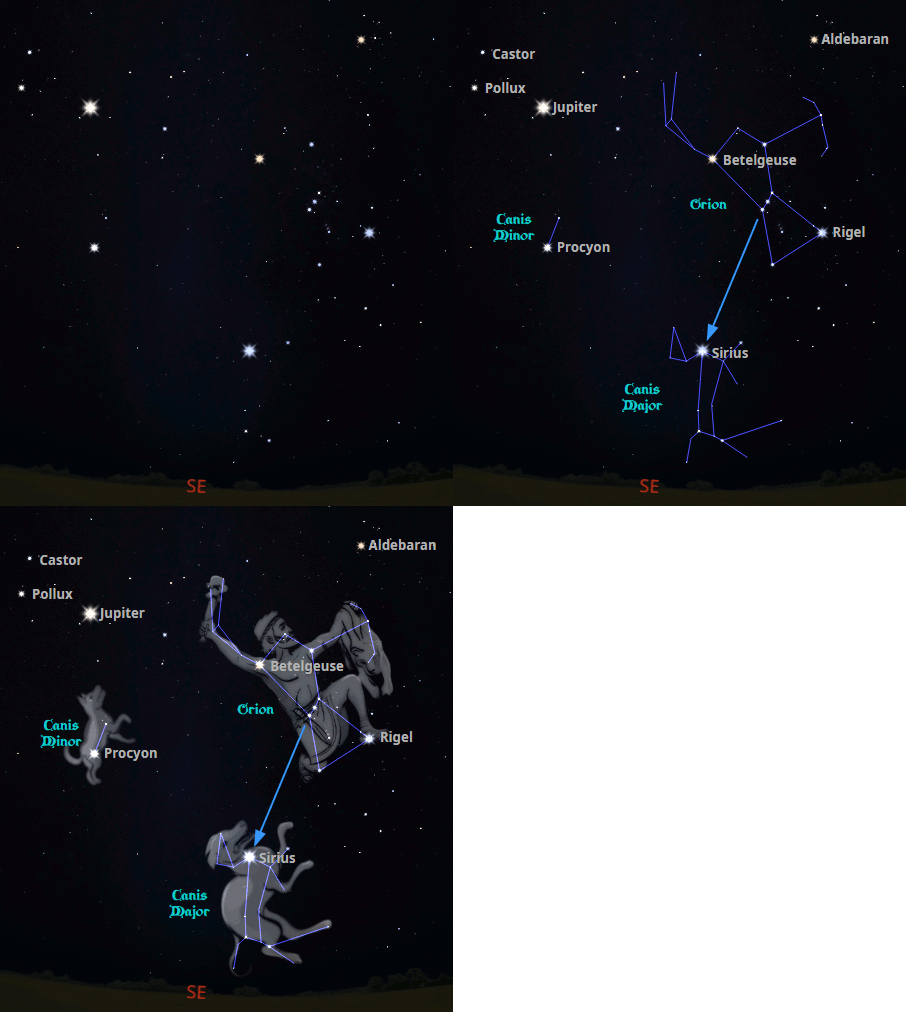
What kind of hunter would the constellation Orion be without his trusty hunting dogs. The larger of his two dogs is Canis Major which can be found if you extend Orion’s belt stars down to the left. There in the southeast by 8 PM, will appear the brightest nighttime star Sirius the Dog Star. It is in the heart of the dog, which appears to be begging. Well it’s tilted funny. Other than that it’s a pretty good representation of a dog as a stick figure. The name Sirius doesn’t mean Dog Star, but means Dazzling One due to its great brightness. It outshines all other nighttime stars, only to be out shown by the planets Venus, Jupiter and occasionally, Mars. Binoculars will show a nice little star cluster a short ways below Sirius known as M41.
The astronomical event times given in this blog are for the Traverse City/Interlochen area of Michigan (Lat 44.7° N, Long 85.7° W; EST, UT – 5 hours) unless stated otherwise. Times will be different for other locations.
Addendum
Ephemeris: 02/02/2026 – Groundhog Day’s significance
This is Ephemeris for Ground Hog Day, Monday, February 2nd. Today the Sun will be up for 9 hours and 52 minutes, setting at 5:53, and it will rise tomorrow at 7:59. The Moon, 1 day past full, will rise at 7:00 this evening.
I don’t know if Punxsutawney Phil will see his shadow this morning or not, but February 2nd was a special day to the ancients. It is also Candlemas day for the Catholic Church, and celebrated as a cross-quarter day, the middle of the season of Winter. Though the exact date of the middle of winter is the 4th. And if Phil sees his shadow, and we do get 6 more weeks of winters, that’s OK too. By the calendar it’s actually more like 7 weeks to the vernal or spring equinox and the official end of winter. Of the other cross-quarter days, two stand out today. They’re May 1st, May Day, and Halloween, October 31st. As far as winter goes, we’ve had lots of snow, and some extremely cold temperatures a couple of weeks ago.
The astronomical event times given in this blog are for the Traverse City/Interlochen area of Michigan (Lat 44.7° N, Long 85.7° W; EST, UT – 5 hours) unless stated otherwise. Times will be different for other locations.
Addendum

 Bob Moler's Ephemeris Blog