Archive
Ephemeris: 7/02/2024 – Antares and the scorpion
This is Bob Moler with Ephemeris for Tuesday, July 2nd. Today the Sun will be up for 15 hours and 29 minutes, setting at 9:31, and it will rise tomorrow at 6:02. The Moon, 3 days before new, will rise at 3:26 tomorrow morning.
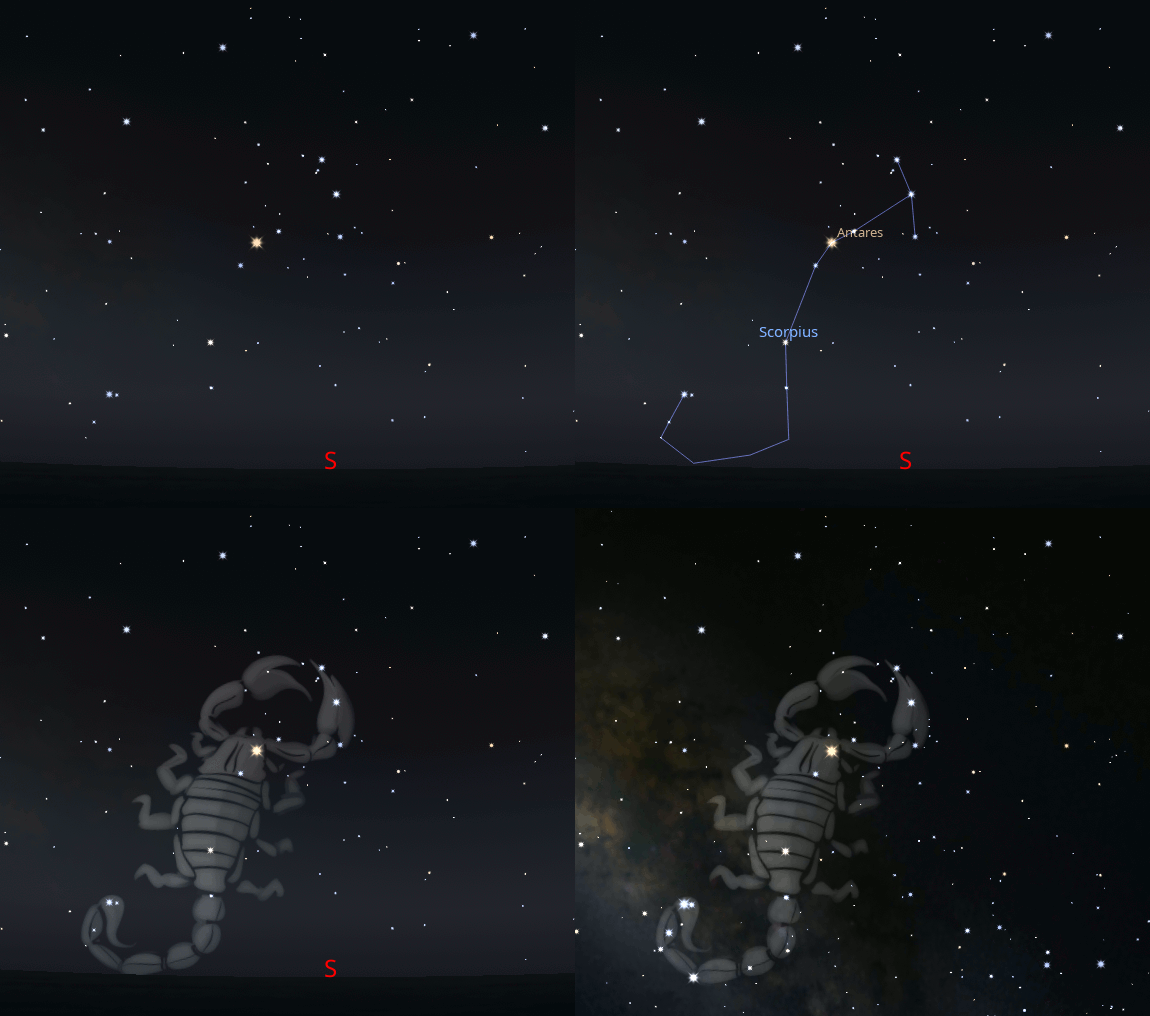
The constellation of Scorpius the scorpion is low in the south at 11 PM these nights. It’s bright star Antares will pass due south at 11:30 this evening. Antares is an interesting star in that it is a red giant star, and its name Antares* means “Rival of Mars” alluding to the fact that it and Mars appears to be the same color. And about every two years Mars passes near Antares, so unless you know your stars and planets you could mistake them for each other. Antares lies at the heart of the scorpion. To its upper right is the front part of its body and claws, and the trail of stars running down the other way, nearly to the horizon, in the south and back up in the south-southeast to the two stars of its stinger make its characteristic tail.
The astronomical event times given are for the Traverse City/Interlochen area of Michigan (EDT, UT–4 hours). They may be different for your location.
*Breaking down Antares: Ant (Anti, against) – Ares (The Greek god of war the Romans called Mars).
Addendum
Note for trivia fans: Zubeneschamali is the longest star name at 14 letters.
Ephemeris: 06/10/2024 – Finding Draco the Dragon
This is Ephemeris for Monday, June 10th. Today the Sun will be up for 15 hours and 31 minutes, setting at 9:28, and it will rise tomorrow at 5:56. The Moon, halfway from new to first quarter, will set at 1:09 tomorrow morning.
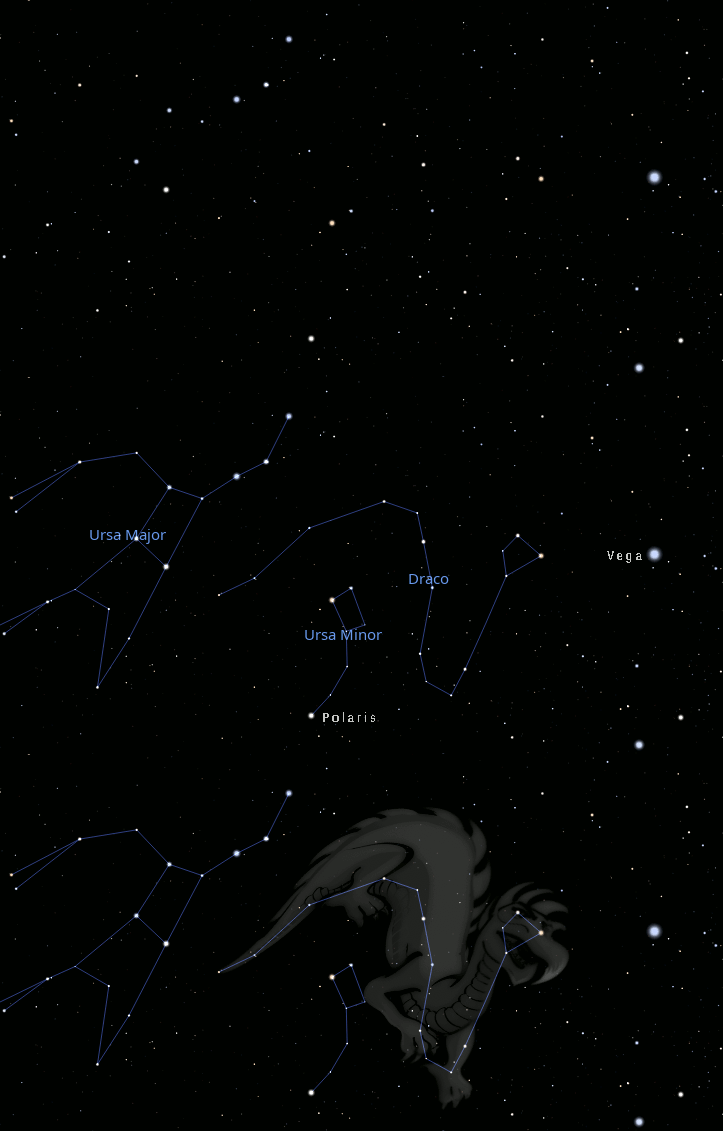
High in the northern sky at 11 p.m. lies the twisted constellation, that of Draco the dragon. This dragon is more like the snakelike Chinese dragon than the dinosaur-like dragon of European legend. I find it better to start at the tail of Draco, to trace him out in the stars. Draco’s tail starts, or ends, between the bowl of the Big Dipper and the Little Dipper high in the north-northwest. The Dragon is seen in a line of stars that extends parallel to the handle of the Big Dipper before curving around the bowl of the Little Dipper then bends back down to the level of Polaris in the north-northeast before turning toward the east. The head of Draco is an odd box of stars near the bright star Vega, high in the east. Though not made up of very bright stars, Draco has an easy shape to trace.
The astronomical event times given are for the Traverse City/Interlochen area of Michigan (EDT, UT–4 hours). They may be different for your location.
Addendum
Ephemeris: 06/04/2024 – Finding the Little Dipper
This is Ephemeris for Tuesday, June 4th. Today the Sun will be up for 15 hours and 25 minutes, setting at 9:24, and it will rise tomorrow at 5:58. The Moon, 2 days before new, will rise at 4:51 tomorrow morning.
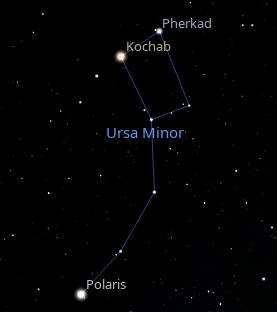
One of the constellations I don’t talk about much, except in passing is Ursa Minor, the Little Bear with an impossibly long tail. It is better known as the Little Dipper. As a dipper goes, its handle is bent the wrong way, like someone stepped on it. Anyway, this time of year in the evening, it’s standing on the tip of it’s handle, which is the North Star, Polaris. Polaris is pointed to by the front two stars of the Big Dipper. As dippers go they pour their contents into each other. The second and third-brightest stars of the Little Dipper are at the front of the bowl, and are Kochab and Pherkad, the Guard Stars, that is, Guardians of the Pole. To the Anishinaabe native peoples of our area the Little Dipper is Maang, the Loon.
The astronomical event times given are for the Traverse City/Interlochen area of Michigan (EDT, UT–4 hours). They may be different for your location.
Addendum

Ephemeris: 05/30/2024 – Virgo and what’s hidden within
This is Bob Moler with Ephemeris for Thursday, May 30th. Today the Sun will be up for 15 hours and 18 minutes, setting at 9:20, and it will rise tomorrow at 6:00. The Moon, at last quarter today, will rise at 2:52 tomorrow morning.
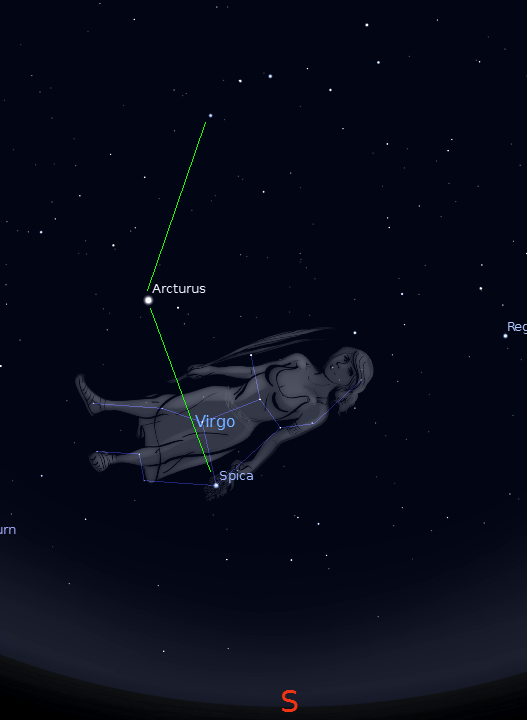
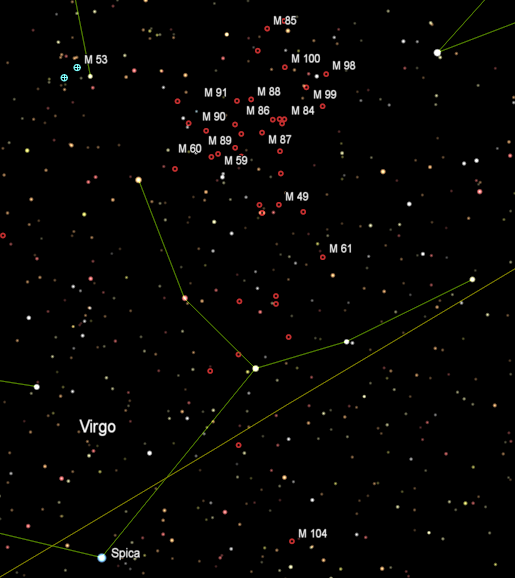
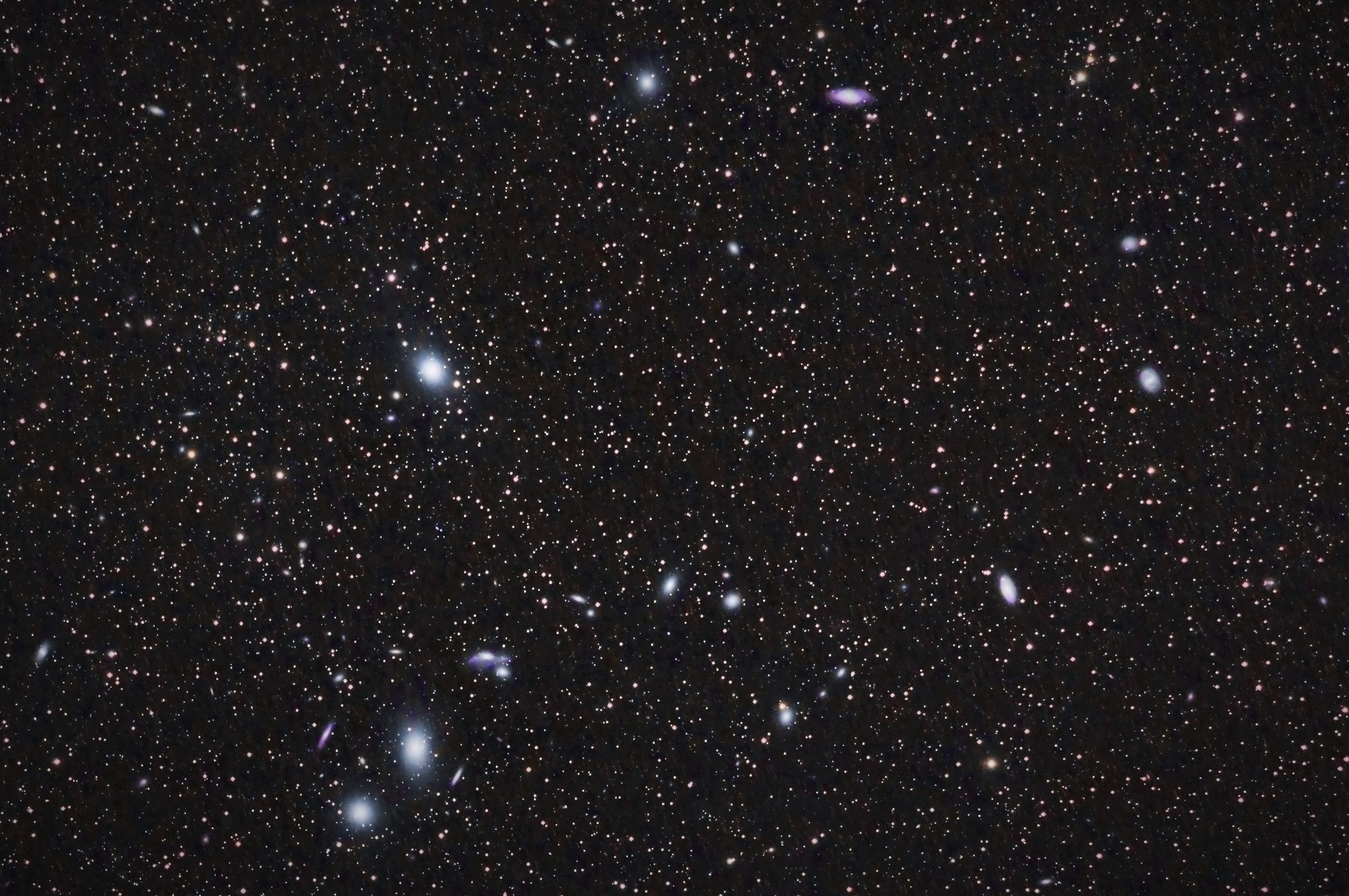
One of the large constellations we see in the south at 11 p.m. can be found using the Big Dipper overhead, follow the arc of the handle to the bright star Arcturus, then straighten the arc to a spike to reach Spica, a bright blue-white star in the south. Spica is the brightest star in the constellation Virgo, the virgin. She represents the goddess of the harvest, Virgo is holding a sheaf of wheat in depictions of her, and Spica is placed at the head of the sheaf. In the space between Spica and Leo the lion to her upper right is, a great cluster of thousands of galaxies just below naked eye visibility. The Virgo Cluster. Inside that cluster is galaxy M87, in whose center lies a black hole with the mass of 6.5 billion suns. The center of the cluster is at about 54 million light years away. The first black hole imaged by the Earth spanning Event Horizon Telescope.
The astronomical event times given are for the Traverse City/Interlochen area of Michigan (EDT, UT–4 hours). They may be different for your location.
Addendum
Ephemeris: 05/28/2024 – Finding Spica and Virgo
This is Ephemeris for Tuesday, May 28th. Today the Sun will be up for 15 hours and 15 minutes, setting at 9:18, and it will rise tomorrow at 6:01. The Moon, 2 days before last quarter, will rise at 2:06 tomorrow morning.
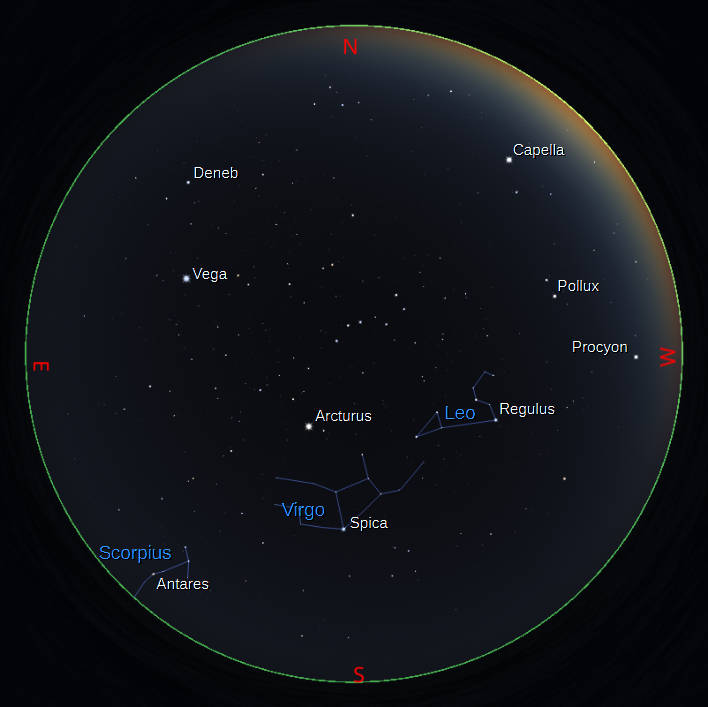
The Big Dipper, near the zenith at 10:30 pm points to several stars and constellations. It’s handle points to two bright stars. First we follow the arc of the handle to the bright orange star Arcturus, the 4th brightest nighttime star. The reason I say nighttime is that the Sun is a star also, but by definition is not out at night. The arc to Arcturus is a way to find Arcturus and a clue to its name. Arcturus, high in the south-southeast, lies at the base point of the kite shaped constellation of Boötes the herdsman. From Arcturus, straighten out the arc to a spike and one soon arrives at Spica a blue-white star in Virgo the virgin, now in the south. Spica is also sometimes pronounced ‘Speeka’.
The astronomical event times given are for the Traverse City/Interlochen area of Michigan (EDT, UT–4 hours). They may be different for your location.
Addendum
Ephemeris: 05/27/2024 The evening sky is transitioning into summer
This is Bob Moler with Ephemeris for Memorial Day, Monday, May 27th. Today the Sun will be up for 15 hours and 14 minutes, setting at 9:17, and it will rise tomorrow at 6:02. The Moon, 3 days before last quarter, will rise at 1:36 tomorrow morning.
The sky tonight at 10:30 is beginning to show the transition from spring to summer. Antares in Scorpius is very low in the southeast, rising and chasing away Orion who has disappeared in the West. According to Greek mythology, at least in one story, Orion was killed by the sting of a giant scorpion and so neither he nor Scorpius the scorpion can be in the sky at the same time. The bright star Spica in Virgo the virgin is due South at that time, with Leo the lion in the southwest. Very high in the southeast is the star Arcturus. The Big Dipper is overhead. And in the east-northeast high up this is the bright star Vega, one of the stars of the summer triangle. The second star of the triangle Deneb is lower in the northeast. The third star has yet to rise.
The astronomical event times given are for the Traverse City/Interlochen area of Michigan (EDT, UT–4 hours). They may be different for your location.
Addendum
Ephemeris: 05/09/2024 – How the Great Bear got her long tail
This is Ephemeris for Thursday, May 9th. Today the Sun will be up for 14 hours and 37 minutes, setting at 8:58, and it will rise tomorrow at 6:19. The Moon, 2 days past new, will set at 11:30 this evening.
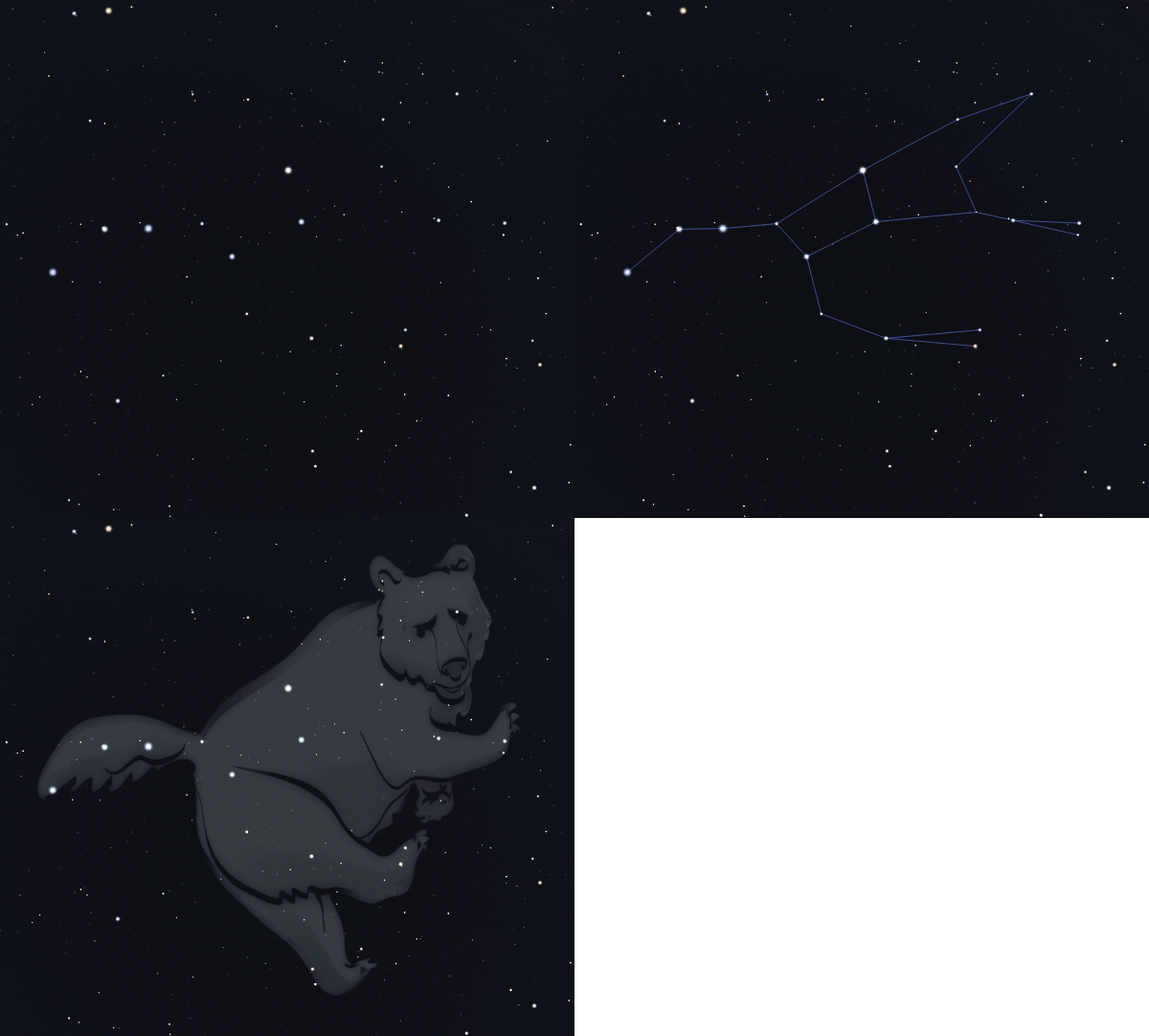
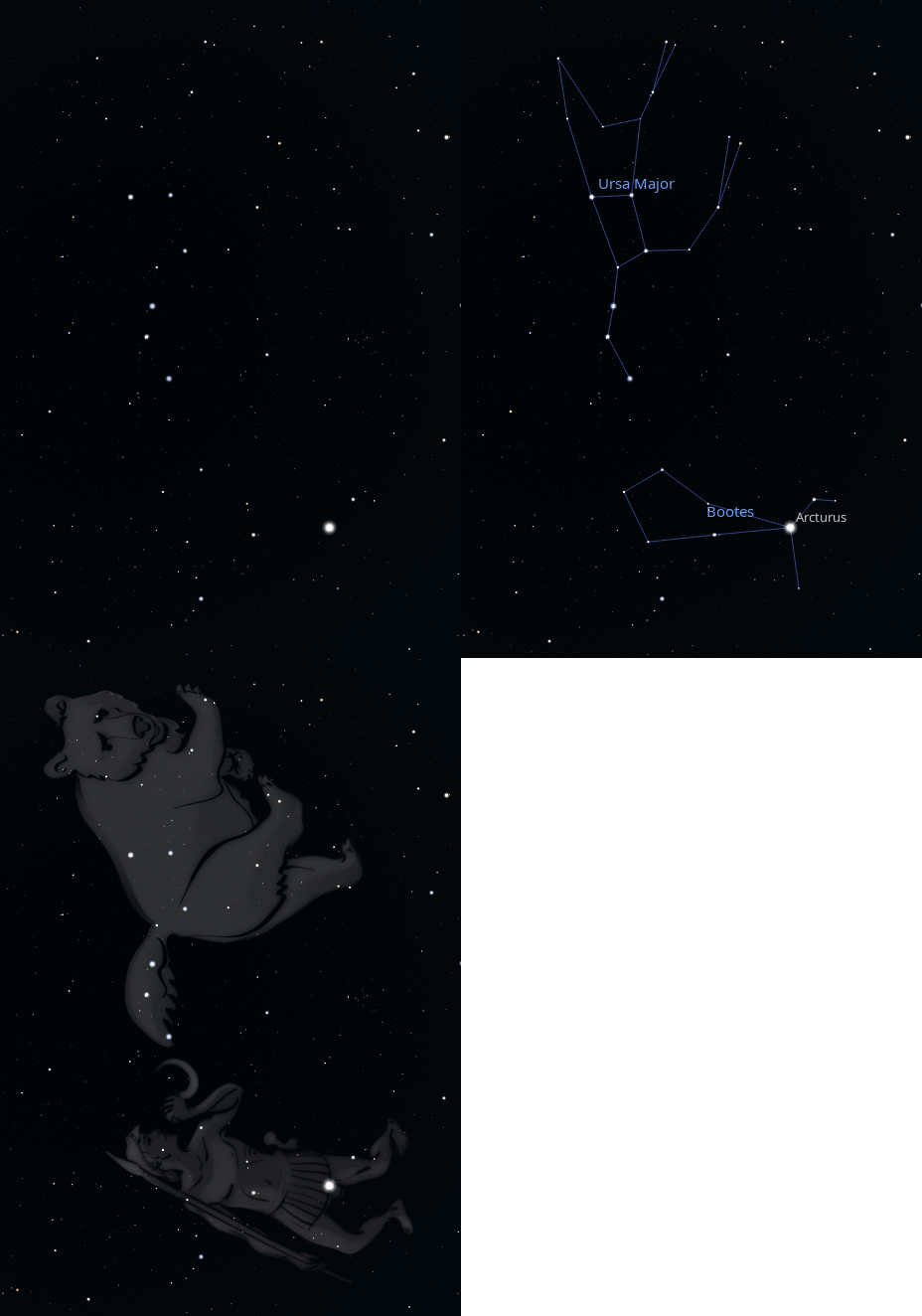
As we see the Great Bear, Ursa Major in the sky with the Big Dipper as its hind end and tail, it seems apparent that the bear is unusual, because bears don’t have long tails. The peoples of the old world, Greeks and others, had a story of how the bear got his long tail. The God Zeus was responsible for the predicament that caused a young lady to be turned into the bear and placed her in the sky out of harm. Some question how he did this. To throw her into the sky, he probably didn’t want to grab the end with the teeth, so he grabbed the bear’s stubby tail whirled the bear around his head and threw her up into the sky where we see her today. Of course the tail was stretched. Some Native Americans did see a bear here too. But the three stars of the dipper’s handle were 3 hunters following the bear.
The astronomical event times given are for the Traverse City/Interlochen area of Michigan (EDT, UT–4 hours). They may be different for your location.
Addendum
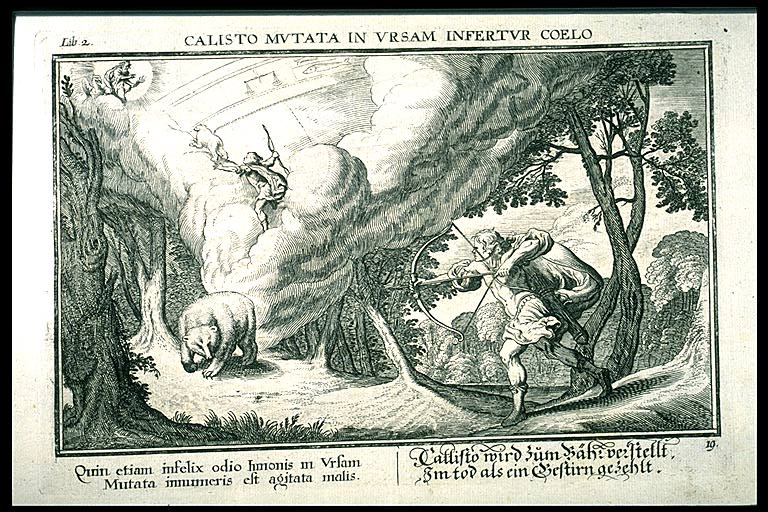
For the story of why the young lady, Callisto, was turned into a bear, check out this post of a week ago: https://bobmoler.wordpress.com/2024/05/02/…
Ephemeris: 05/07/2024 – Coma Berenices, a queen’s sacrifice
This is Ephemeris for Tuesday, May 7th. Today the Sun will be up for 14 hours and 32 minutes, setting at 8:55, and it will rise tomorrow at 6:22. The Moon is new today, and won’t be visible.
High in the south-southeast at 10:30 p.m. is a tiny and faint constellation of Coma Berenices, or Berenice’s Hair. In it are lots of faint stars arrayed to look like several strands of hair to the naked eye. The whole group will fit in the field of a pair of binoculars, which will also show many more stars. The story behind it was that Berenice was a real queen of Egypt, whose husband, the Pharaoh Ptolemy III, was away at war. This was in the days when the Greeks ruled Egypt after Alexander had conquered it. She offered her golden tresses to the gods for the king’s safe return. The hair, was placed in a temple. However, the offering disappeared when the king returned. Ever since then, the constellation of Coma Berenices has been seen to commemorate the queen’s sacrifice.
The astronomical event times given are for the Traverse City/Interlochen area of Michigan (EDT, UT–4 hours). They may be different for your location.
Addendum
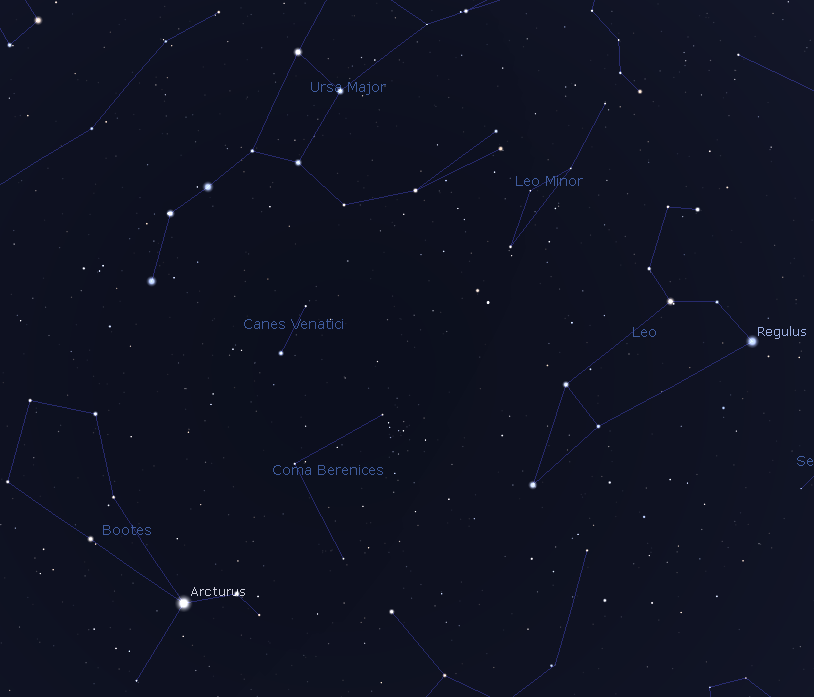
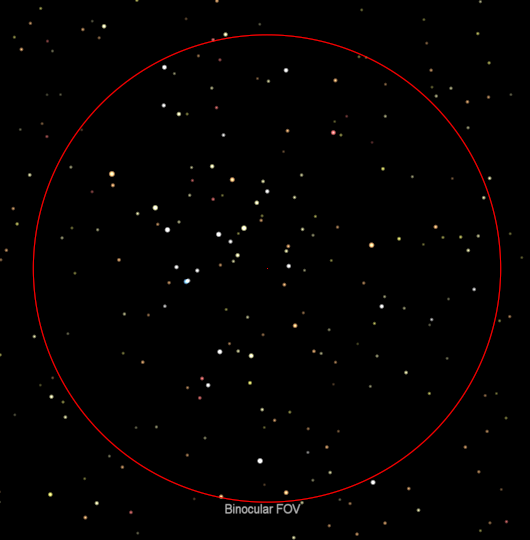
Do not confuse the Coma Berenices star cluster (Melotte 111 and Collinder 256) with the Coma Cluster (actually a supercluster of galaxies up to 300 million light years away) in the northern part of the constellation. The Coma Cluster contains upwards of 10,000 galaxies.
Ephemeris: 05/02/2024 – All about the constellation of Boötes and Ursa Major
This is Ephemeris for Thursday, May 2nd. Today the Sun will be up for 14 hours and 19 minutes, setting at 8:49, and it will rise tomorrow at 6:29. The Moon, 1 day past last quarter, will rise at 4:27 tomorrow morning.
Seen in the east at 10:30 p.m. tonight is the kite shaped constellation of Boötes the herdsman. The bright star Arcturus is at the bottom of the kite to the right. It is pointed to by the arc of the handle of the Big Dipper, higher in the east. Boötes represents a young hunter named Arcas, son of Callisto, a beautiful young lady who had the misfortune of being loved by Zeus the chief of the Greek gods. Zeus’ wife Hera, found out about it, and since she couldn’t punish Zeus, turned the poor woman into a bear. Arcas, many years later, unaware of the events surrounding his mother’s disappearance was about to kill the bear when Zeus intervened and placed them both in the sky to save her, as Arcas still pursues her across the sky nightly.
The astronomical event times given are for the Traverse City/Interlochen area of Michigan (EDT, UT–4 hours). They may be different for your location.
Addendum
Ephemeris: 04/29/2024 – Corona Borealis, the Northern Crown
This is Ephemeris for Monday, April 29th. Today the Sun will be up for 14 hours and 11 minutes, setting at 8:46, and it will rise tomorrow at 6:33. The Moon, 2 days before last quarter, will rise at 2:58 tomorrow morning.
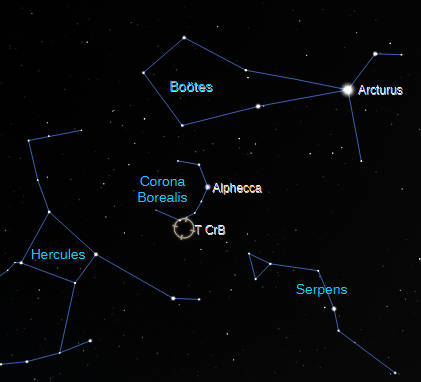
About a third of the way up the sky in the east at 10 p.m. can be found a small but easily spotted constellation of Corona Borealis, the Northern Crown. It is located just below the kite shaped constellation of Boötes, with its bright star Arcturus at the right. The Northern Crown is a three-quarter circle of stars, like a tiara, with a brighter star Alphecca at the bottom. Alphecca in Arabic means “The bright star of the broken ring of stars”, which is an accurate description of it. Check it out now for later this year we expect to have a bright star appear just below it. That star is T Coronae Borealis a recurrent Nova or exploding star. They occur when a white dwarf star is orbiting with a large red giant star and accumulating gas from that red giant star until it explodes.
The astronomical event times given are for the Traverse City/Interlochen area of Michigan (EDT, UT–4 hours). They may be different for your location.
Addendum
 Bob Moler's Ephemeris Blog