Archive
09/03/2020 – Ephemeris – Why is the new NASA Moon landing program called Artemis?
This is Ephemeris for Thursday, September 3rd. Today the Sun will be up for 13 hours and 6 minutes, setting at 8:14, and it will rise tomorrow at 7:09. The Moon, 1 day past full, will rise at 9:20 this evening.
Why is the new NASA crewed Moon landing program called Artemis? And why is it crewed, and not manned? Artemis was a Greek deity and Apollo’s twin sister. He was the god of the Sun and she was goddess, among other things, of the Moon. So she has a greater connection to the Moon than Apollo did. Spacecraft now-a-days are crewed, rather than manned to denote that both sexes are chosen to be astronauts in nearly equal numbers now. Of course that’s crewed spelled c-r-e-w-e-d, not c-r-u-d-e, though they sound the same. Deities of the Moon tend to be female be they Artemis, Cynthia, Luna, Selene, or Chang’e. Astronomers use Cynthia, Luna, and Selene (pronounced Sel-e-nae) in naming various aspects of the Moon and Chang’e is the goddess that the Chinese name their lunar landers after.
The event times given are for the Traverse City/Interlochen area of Michigan. They may be different for your location.
Addendum
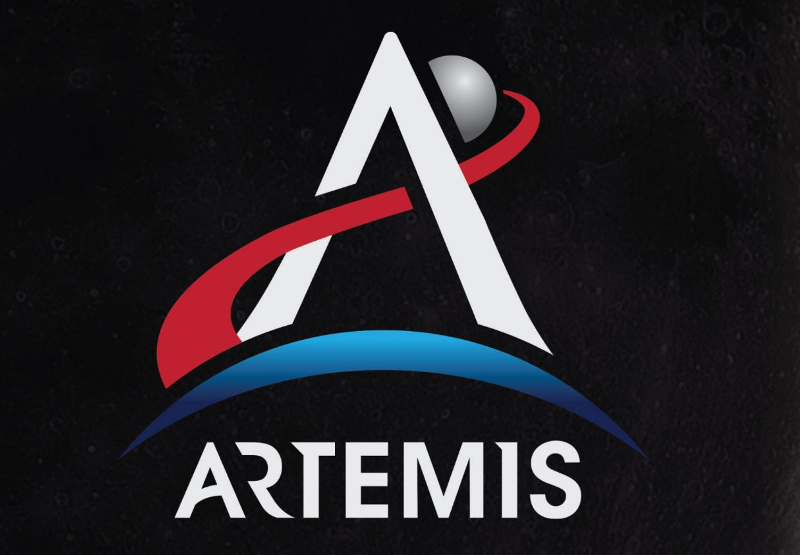
The logo chosen by NASA for the Artemis Program. The blue crescent at the bottom represents the earth. The gray ball at the top is the Moon. The curved red path is the stylized return path from the Moon to the Earth of the Orion capsule. Credit: NASA.
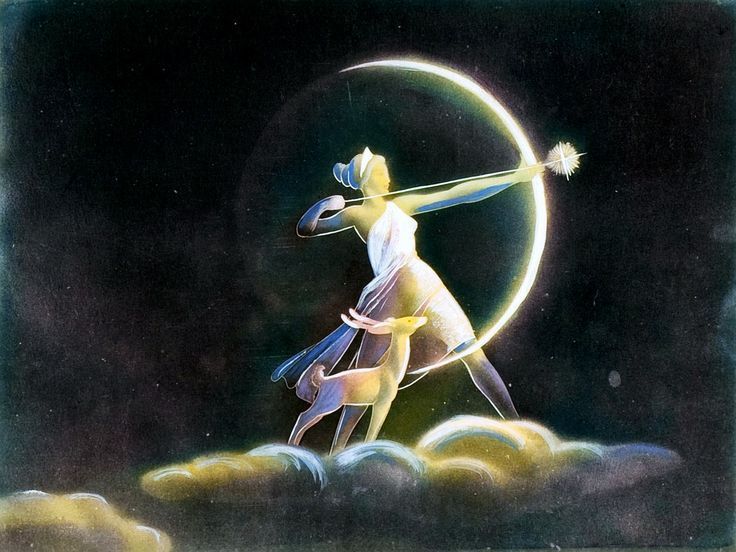
Artemis, goddess of the hunt and the Moon. Credit: Disney (Fantasia) source Daily Kos.
08/17/2020 – Ephemeris – The Milky Way’s Great Rift.
This is Ephemeris for Monday, August 17th. Today the Sun will be up for 13 hours and 56 minutes, setting at 8:44, and it will rise tomorrow at 6:49. The Moon, 1 day before new, will rise at 5:53 tomorrow morning.
High overhead the Milky Way is seen passing through the Summer Triangle of three bright stars. Here we find the Milky Way splits into two sections. The split starts in the constellation of Cygnus the Swan or Northern Cross very high in the east. The western part of the Milky Way ends southwest of Aquila the eagle. This dark dividing feature is called the Great Rift. Despite the lack of stars seen there, it doesn’t mean that there are fewer stars there than in the brighter patches of the Milky Way. The rift is a great dark cloud that obscures the light of the stars behind it. Sometimes binoculars can be used to find the edges of the clouds of the rift, as stars numbers drop off suddenly. This is especially easily seen in Aquila.
The event times given are for the Traverse City/Interlochen area of Michigan. They may be different for your location.
Addendum
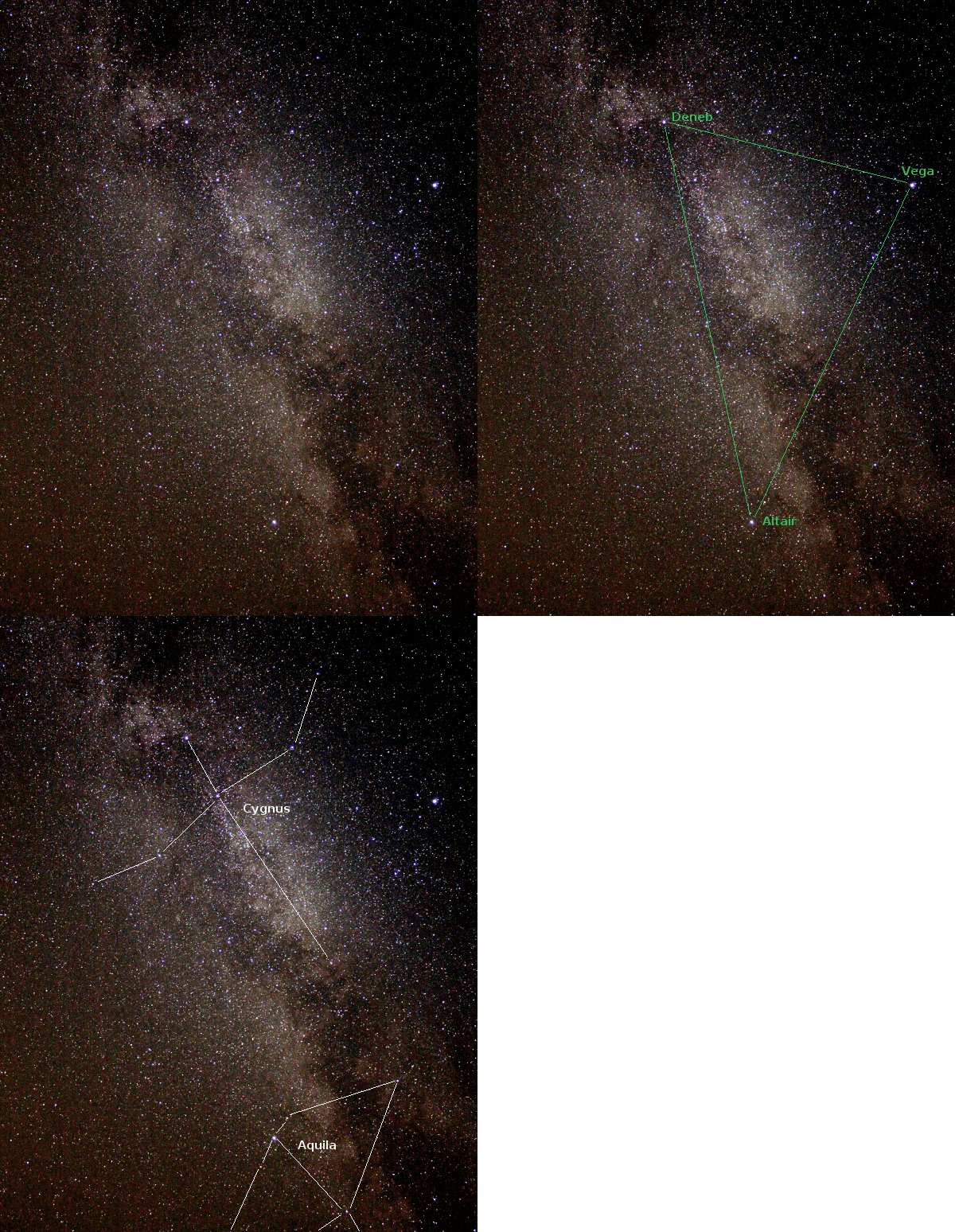
The Great Rift finder animation as seen in the Summer Triangle, also showing the constellations of Cygnus the swan and the the northern part of Aquila the Eagle. This image a stack of 5 30 second exposures taken the morning of the Perseid meteor shower in a vain attempt to capture some meteors.
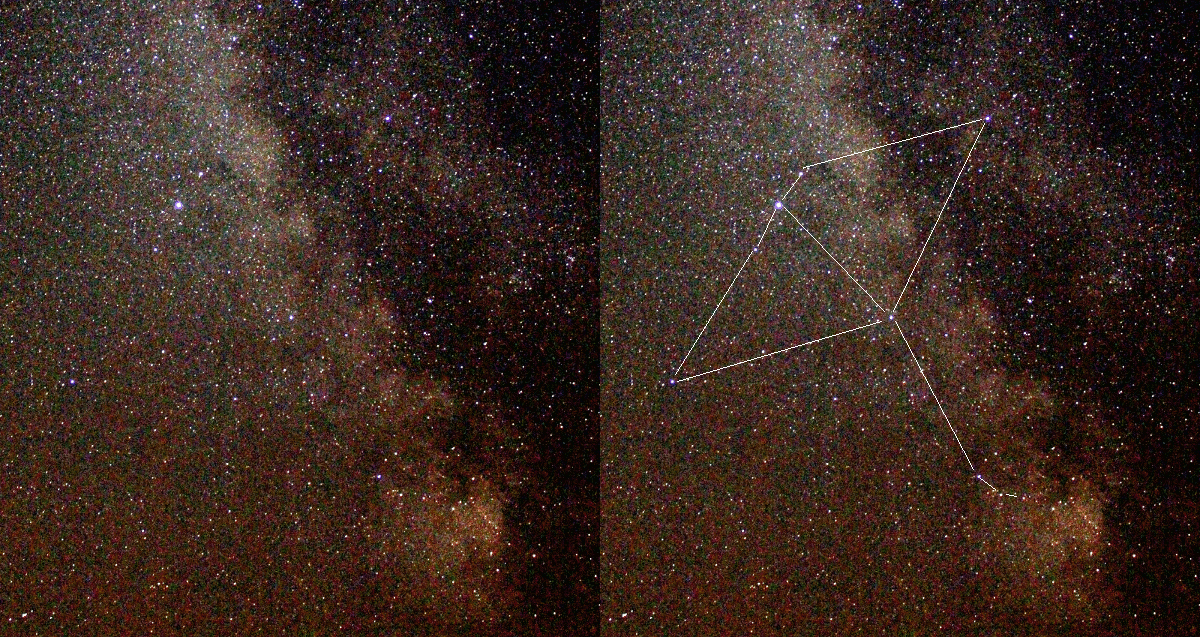
Annotated and animated photograph taken of Aquila August 13, 2018 during the Perseid meteor shower, the same night the image above. Taken by me and processed using Registax and GIMP.
08/13/2020 – Ephemeris – Sagittarius the archer, morphs into a teapot
This is Bob Moler with Ephemeris for Thursday, August 13th. Today the Sun will be up for 14 hours and 7 minutes, setting at 8:50, and it will rise tomorrow at 6:44. The Moon, 2 days past last quarter, will rise at 1:53 tomorrow morning.
Due south and low in the sky at 10:30 p.m. now is one of my favorite asterisms the Teapot of the constellation Sagittarius. Sagittarius classically represents a centaur with a bow and arrow aimed at the heart of the constellation Scorpius to its west. I can find the bow and arrow here, but the half man half horse figure of the centaur eludes me. However the stout little teapot of the children’s song is quite obvious, with its base, lid on top, handle to the left and the spout to the right. To make things more realistic the bright Milky Way seems to rise like steam from its spout. As the night goes on the Teapot slides westward and appears to tilt, pouring its tea on the southwestern horizon. Jupiter and Saturn are just to the left of it now.
The event times given are for the Traverse City/Interlochen area of Michigan. They may be different for your location.
Addendum
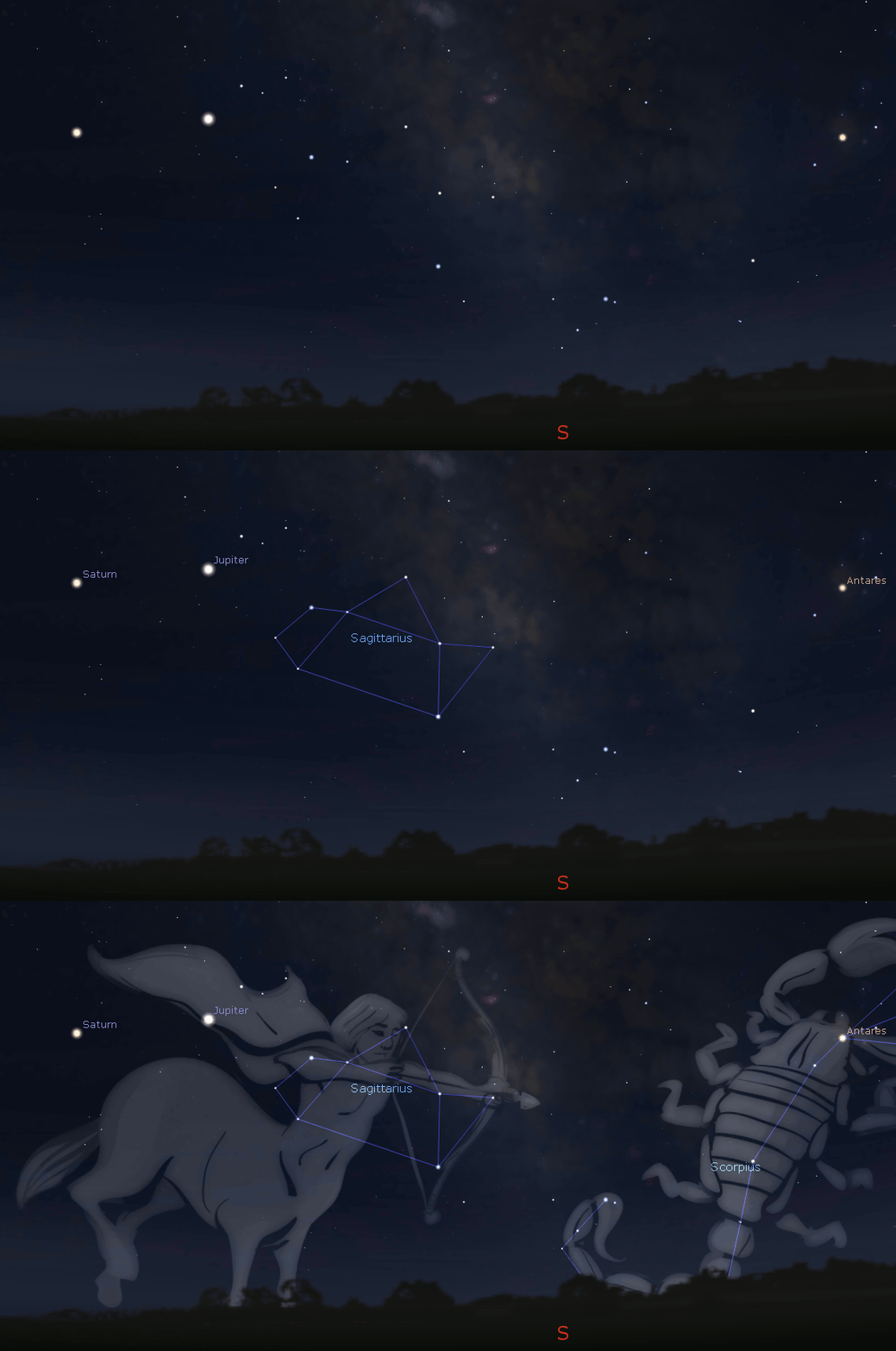
Sagittarius-Teapot finder animation for 10 pm August 13, 2020. Click on the image to enlarge. Created using Stellarium and GIMP.
08/10/2020 – Ephemeris – The celestial eagle: Aquila
This is Bob Moler with Ephemeris for Monday, August 10th. Today the Sun will be up for 14 hours and 15 minutes, setting at 8:55, and it will rise tomorrow at 6:41. The Moon, 1 day before last quarter, will rise at 12:20 tomorrow morning.
Aquila the eagle is a constellation that lies in the Milky Way. It’s in the southeastern sky as it gets dark. Its brightest star, Altair is one of the stars of the Summer Triangle, a group of three bright stars dominating the eastern sky in the evening now. Altair, in the head of the eagle, is flanked by two slightly dimmer stars, the shoulders of the eagle. The eagle is flying northeastward through the Milky Way. Its wings are seen in the wing tip stars. A curved group of stars to the lower right of Altair is its tail. Within Aquila the Milky Way shows many dark clouds as part of the Great Rift that splits it here. The other summer bird is Cygnus the swan above and left of Aquila, flying in the opposite direction.
The event times given are for the Traverse City/Interlochen area of Michigan. They may be different for your location.
Addendum
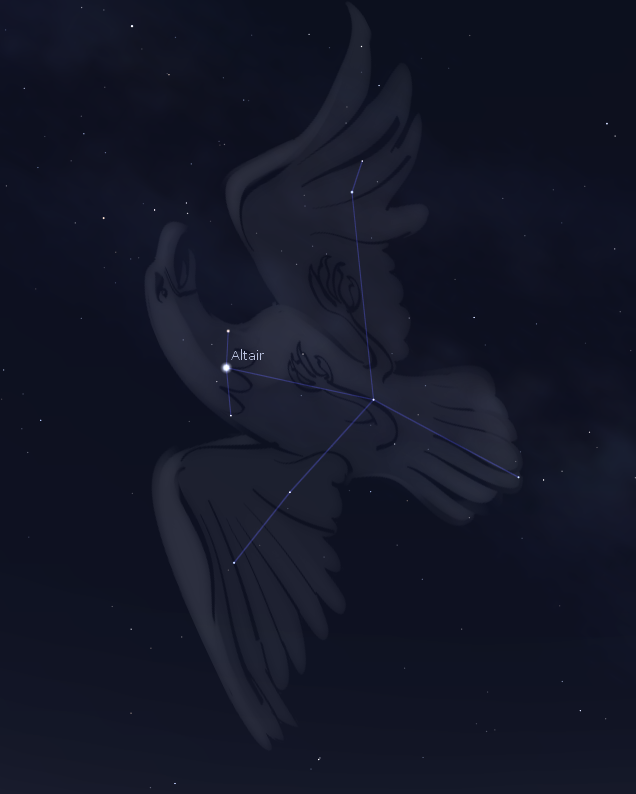
Aquila the Eagle in the southeastern sky. Created using Stellarium.
Annotated and animated photograph taken of Aquila August 13, 2018 during the Perseid meteor shower. Alas, no Perseids in this photograph. Taken by me and processed using Registax and GIMP.
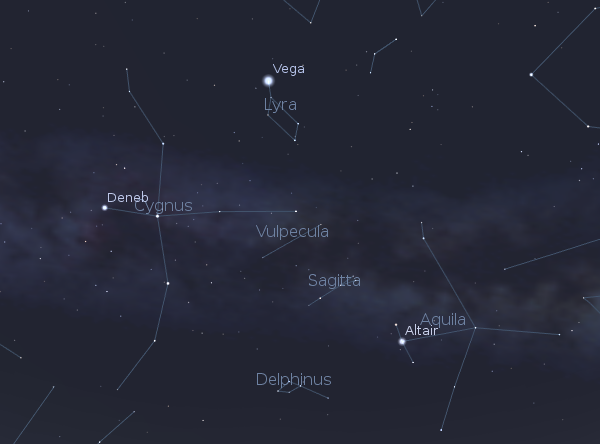
Deneb with the other stars and constellations in the Summer Triangle. Created using Stellarium.
07/13/2020 – Ephemeris – The constellation of Ajijaak, the crane
This is Bob Moler with Ephemeris for Monday, July 13th. Today the Sun will be up for 15 hours and 16 minutes, setting at 9:26, and it will rise tomorrow at 6:11. The Moon, 1 day past last quarter, will rise at 1:55 tomorrow morning.
Friday I looked at the constellation of Cygnus the swan and the informal constellation or asterism made from most of its stars the Northern Cross. Cygnus is the official International Astronomical Union constellation name. However the indigenous Anishinaabe people of our area had another bird in mind when seeing these stars, which are now fairly high in the east in the evening: Ajijaak, (pronounced a-ji-jock) a Sand Hill crane. While the swan is flying, neck outstretched to the south through the Milky Way, the crane is flying northward with its long legs trailing behind. The bright star Deneb is at his head. Where I live I see more cranes than swans these days and hear their creaking-door-like calls, and see a pair from time to time in a field south of where I live.
The event times given are for the Traverse City/Interlochen area of Michigan. They may be different for your location.
Addendum
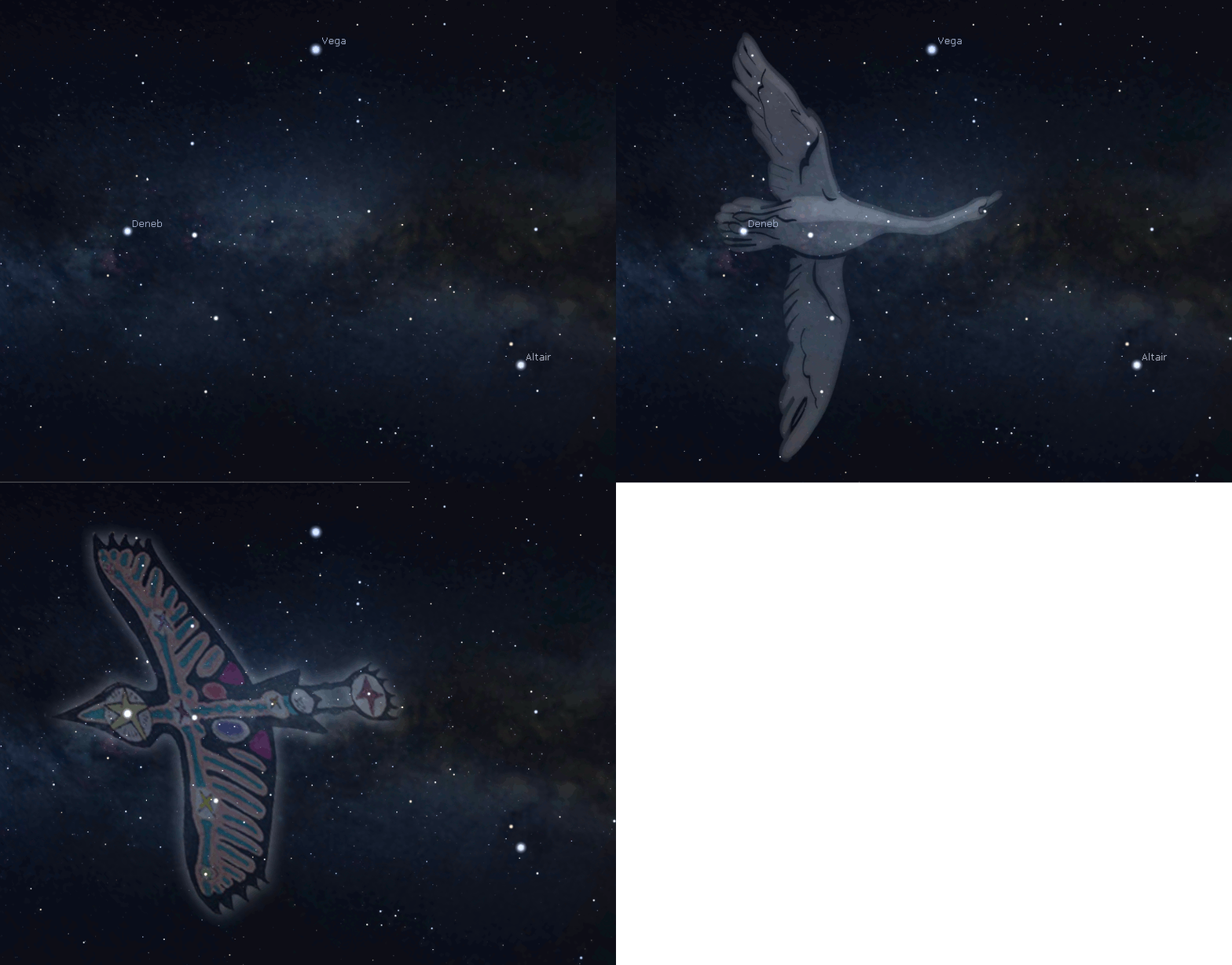
The IAU Cygnus the swan and the Anishinaabe Ajijaak the crane constellations demonstrated via an animated GIF image. Note the bright star of the Summer Triangle. Click on the Image to enlarge it. Created using Stellarium (both star lore images are embedded in Stellarium). The Anishinaabe image is from Ojibwe Giizhig Anung Masinaaigan – Ojibiwe Sky Star Map created by A. Lee, W. Wilson, and C. Gawboy.
07/10/2020 – Ephemeris – The constellation Cygnus the swan
This is Bob Moler with Ephemeris for Friday, July 10th. Today the Sun will be up for 15 hours and 20 minutes, setting at 9:28, and it will rise tomorrow at 6:08. The Moon, 2 days before last quarter, will rise at 12:52 tomorrow morning.
Fairly high in the east at 11 p.m. Is the constellation of Cygnus the swan, flying south through the Milky Way. It is also called the Northern Cross. At the left, the tail of the swan or the head of the cross is the bright star Deneb, one of the stars of the Summer Triangle. The next star right is Sadr the intersection of the body and the wings of the swan seen in flight, or the intersection of the two pieces of the cross. There are two or three stars farther to the right that delineate the swan’s long neck or upright of the cross, that ends with the star Alberio in the beak of the swan or foot of the cross. The crosspiece of the cross extends to the stars on either side of the intersection star Sadr, while the swan’s wings extend to a couple more stars each.
The event times given are for the Traverse City/Interlochen area of Michigan. They may be different for your location.
Addendum
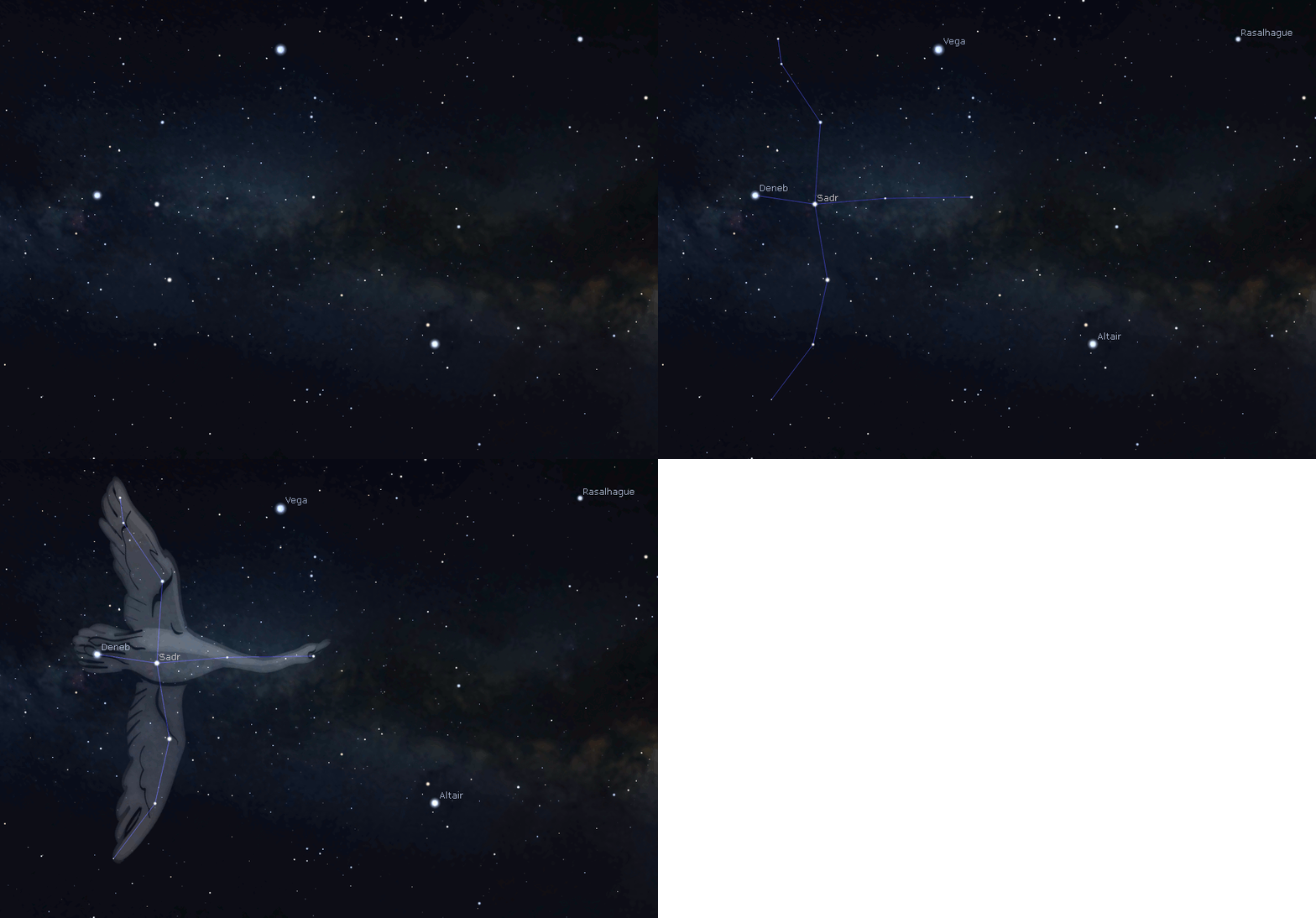
Animated Cygnus finder chart. Included also are, beside Deneb, the other stars of the Summer Triangle: Vega and Altair and their constellations Lyra the harp and Aquila. See if you can find them. Click on the image to enlarge it. Created using Stellarium.
07/09/2020 – Ephemeris – The constellation of Lyra the harp
Jul 9. This is Bob Moler with Ephemeris for Thursday, July 9th. Today the Sun will be up for 15 hours and 22 minutes, setting at 9:29, and it will rise tomorrow at 6:07. The Moon, 3 days before last quarter, will rise at 12:30 tomorrow morning.
High in the east at 11 p.m. can be found a bright star just above a small, narrow, but very distinctive parallelogram of stars. They are the stars of the constellation Lyra the harp. The bright star is Vega the 5th brightest night-time star. To the Romans the star Vega represented a falling eagle or vulture. Apparently they never made the distinction between the two. It is a pure white star and serves as a calibration star for color and brightness. The harp, according to Greek mythology, was invented by the god Hermes. The form of the harp in the sky, is as he had invented it: by stretching strings across a tortoise-shell. Hermes gave it to his half-brother Apollo, who in turn gave it to the legendary musician Orpheus.
The event times given are for the Traverse City/Interlochen area of Michigan. They may be different for your location.
Addendum
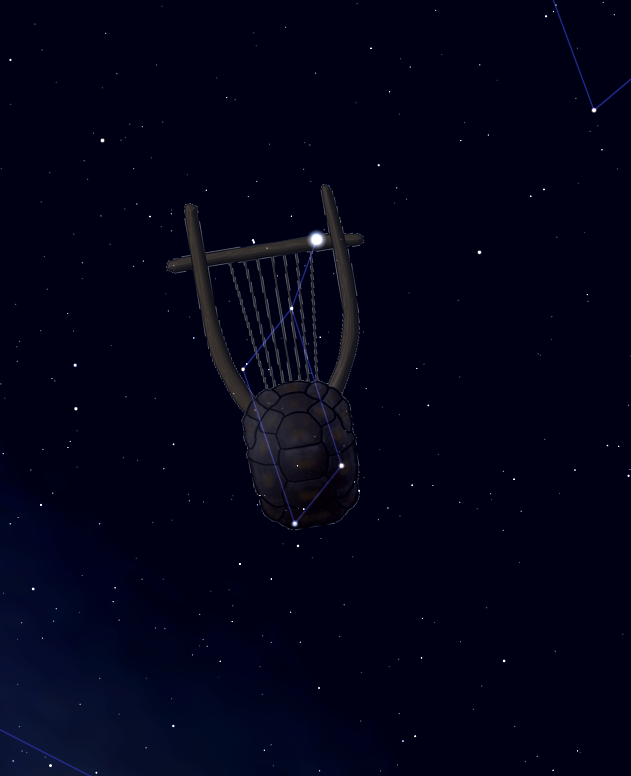
Lyra as a tortoise shell harp. Created using Stellarium and free clip art.
06/25/2020 – Ephemeris – The bright star Spica
This is Ephemeris for Thursday, June 25th. Today the Sun will be up for 15 hours and 33 minutes, setting at 9:32, and it will rise tomorrow at 5:58. The Moon, 3 days before first quarter, will set at 12:59 tomorrow morning.
Low in the southwest at 11 p.m. is the bright star Spica which can be found from all the way back overhead to the Big Dipper. Follow the arc of the handle of the Big Dipper to the bright star Arcturus high in the southwest. Then straighten the curve of the arc to a straight spike which points to Spica. Arcturus is much brighter than Spica and has an orange tint to Spica’s bluish hue. In fact Spica is the bluest of the 21 first magnitude stars. That means that it is hot. Actually Spica is really two blue stars orbiting each other in 4 days. Spica is 250 light years away, which is reasonably close. Spica was an important star to the ancient Greeks. One temple was built, and aligned to its setting point.
The event times given are for the Traverse City/Interlochen area of Michigan. They may be different for your location.
Addendum
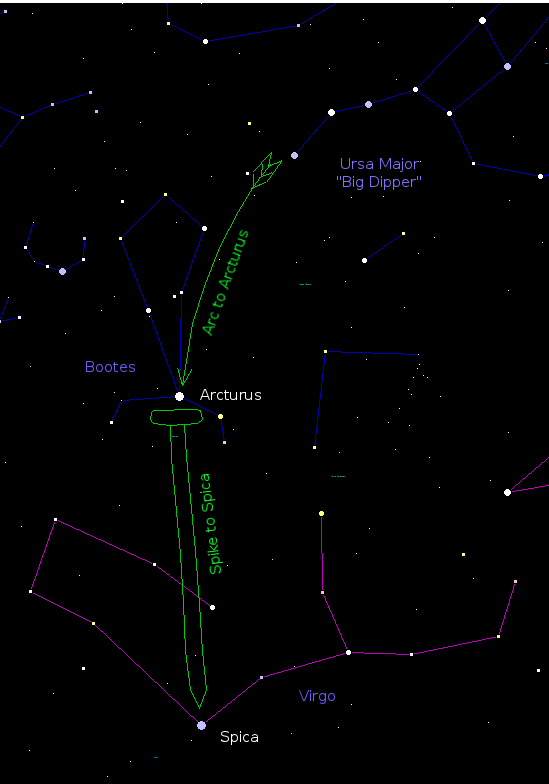
Spica finder chart using my LookingUp program fo 11 p.m. tonight June 25.
06/18/2020 – Ephemeris – Finding the constellation Hercules
This is Ephemeris for Thursday, June 18th. Today the Sun will be up for 15 hours and 34 minutes, setting at 9:31, and it will rise tomorrow at 5:56. The Moon, 3 days before new, will rise at 4:48 tomorrow morning.
Orion, the hard luck mythological Greek hunter gets a splashy constellation in the winter sky, but the greatest hero of all, Hercules, gets a dim group of stars on the border between the spring and summer stars. At 11 p.m. Hercules is very high in the east-southeast. It is located above and right of the bright star, Vega in the east. Hercules’ central feature is a box shaped of star wider at the top than the bottom, called the Keystone, which represents the old boy’s shorts. From each top corner extend lines of stars that are his legs, from the bottom stars, the rest of his torso and arms extend. So in one final indignity he’s upside down in our sky. Some see him crouched down, club upraised holding the Hydra about to throttle it. For those with a telescope it contains the beautiful globular star cluster M13.
The event times given are for the Traverse City/Interlochen area of Michigan. They may be different for your location.
Addendum

Hercules animation showing neighboring stars at 11 p.m. for mid June, Click on image to enlarge. Created using Stellarium.
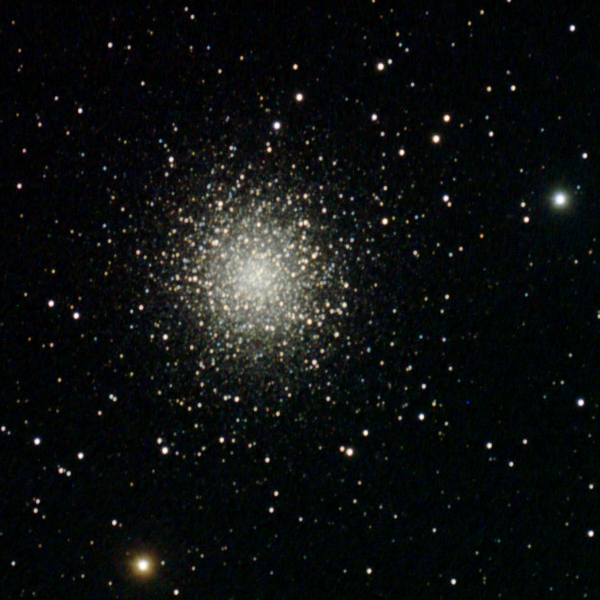
M13, the Great Globular Star Cluster in Hercules. Credit: Scott Anttila
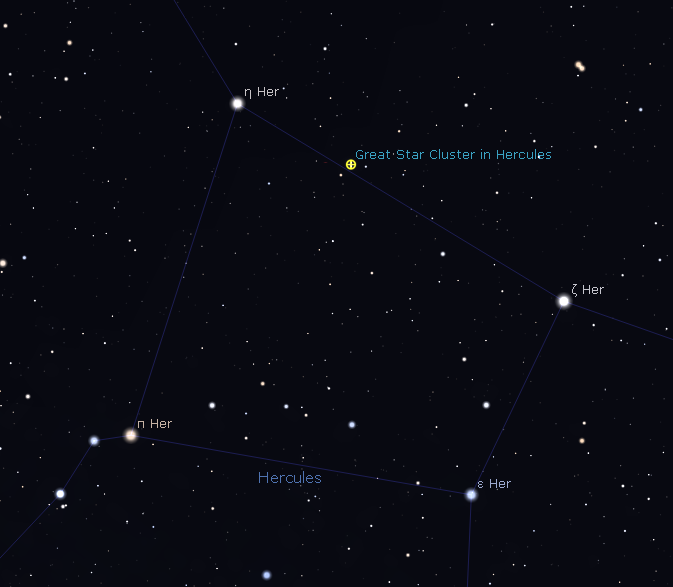
Stars and M13 (Great Star Cluster in Hercules) visible in binoculars in the Keystone of Hercules. Click in the image to enlarge. Created using Stellarium.
06/16/2020 – Ephemeris – One circlet of stars, two constellations: old world and new world
This is Ephemeris for Tuesday, June 16th. Today the Sun will be up for 15 hours and 34 minutes, setting at 9:30, and it will rise tomorrow at 5:56. The Moon, 3 days past last quarter, will rise at 3:52 tomorrow morning.
High in the south-southeast at 11 this evening can be seen a small nearly circular constellation of Corona Borealis, the Northern Crown. It is just below Boötes, the kite shaped constellation off the handle of the Big Dipper. According to Greek myth the crown was given by the gods to the princess Ariadne, daughter of King Minos of Crete. The crown is more like a tiara with the bright star Alphecca at the front. To the Anishinaabe people, who are natives of our region it is the Sweat Lodge. Part of what we call Hercules next to it is the Exhausted Bather, who is lying on the ground after the ceremony. The seven stones that are heated for the Sweat Lodge are the Pleiades, now too close to the Sun to be seen.
The event times given are for the Traverse City/Interlochen area of Michigan. They may be different for your location.
Addendum

Animated Corona Borealis/Sweat Lodge Finder Chart looking to the south-southeast at 11 p.m. June 16th. Click on the image to enlarge Created using Stellarium and GIMP.
 Bob Moler's Ephemeris Blog