Archive
Ephemeris: 03/28/2024 Comet Pons-Brooks can be seen near Jupiter with binoculars
This is Ephemeris for Thursday, March 28th. Today the Sun will be up for 12 hours and 36 minutes, setting at 8:06, and it will rise tomorrow at 7:28. The Moon, 3 days past full, will rise at 11:59 this evening.
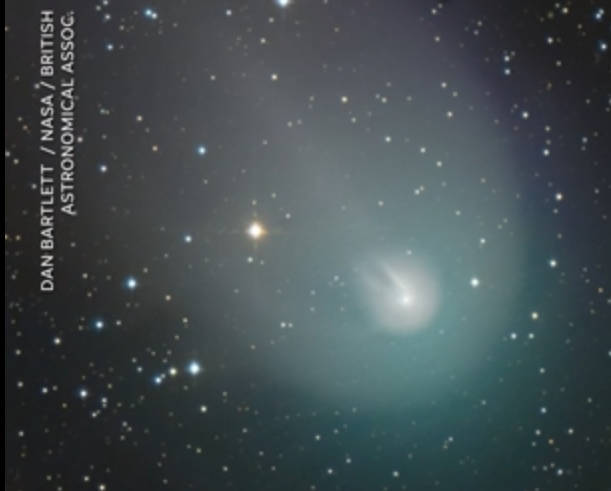
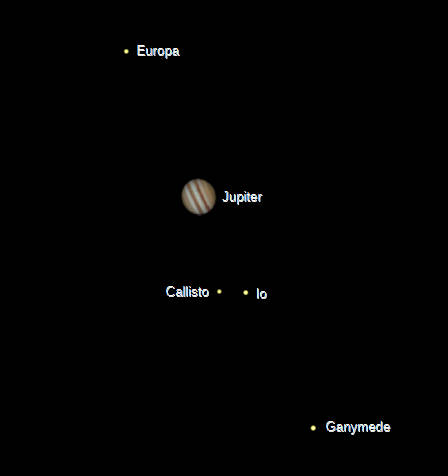
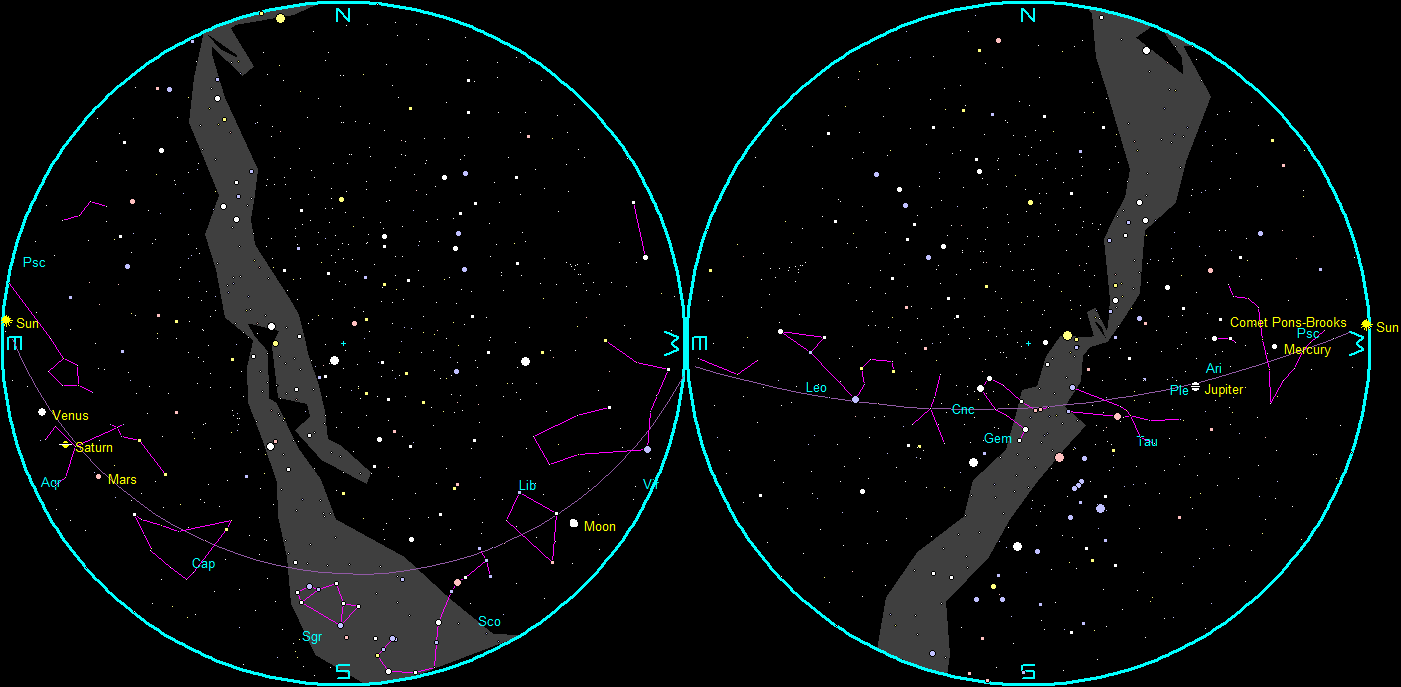
A dim naked eye comet is gracing our evening skies now. It’s called 12P/Pons Brooks. The 12P designation means it was the 12th periodic comet discovered. It was discovered in 1812 by French astronomer Jean-Louis Pons and rediscovered 71 years later on its return by William Brooks. Last July it had an outburst and gained about 100 times increase in brightness. It has held on to most of that. However, right now it’s 5th magnitude which makes it very difficult to spot even in binoculars. Comets always appear to be much dimmer than their magnitude suggests. It was last seen in 1954 and has a 71-year orbit of the Sun that takes it out to Neptune’s orbit. It currently appears below-right of Jupiter.
The astronomical event times given are for the Traverse City/Interlochen area of Michigan (EDT, UT–4 hours). They may be different for your location.
Addendum
Ephemeris: 03/27/2024 – Let’s find out where the naked-eye planets have wandered off to this week
This is Ephemeris for Wednesday, March 27th. Today the Sun will be up for 12 hours and 33 minutes, setting at 8:04, and it will rise tomorrow at 7:30. The Moon, 2 days past full, will rise at 10:50 this evening.
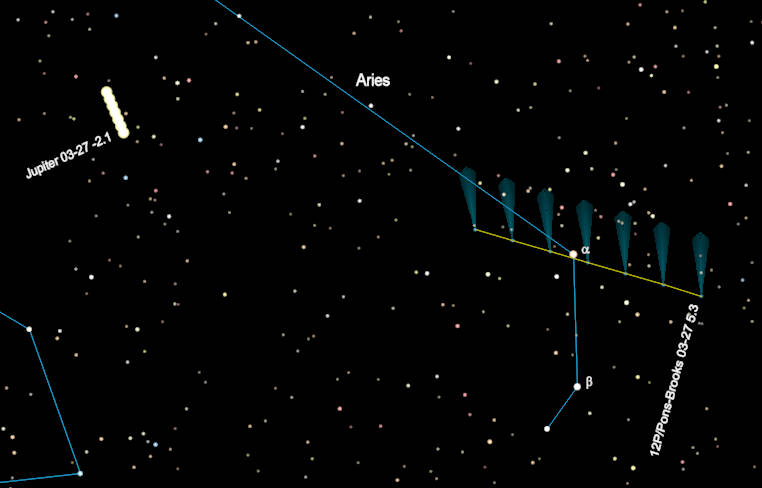
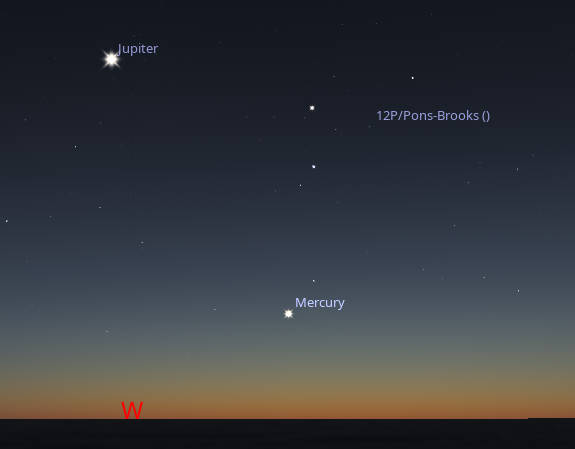
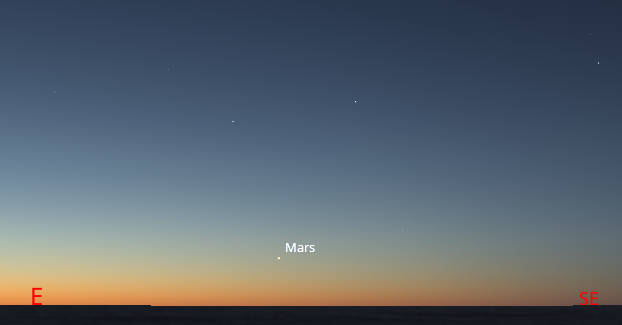
Let’s find out where the naked-eye planets have wandered off to this week, and see what planets are left. Mercury is visible in the evening sky shortly after sunset appearing very low in the west. It will be visible for the next few days or so, slowly heading back toward the Sun since this past Sunday. Higher up in the sky is bright Jupiter in the west southwest. It will set at 11:25 pm. Jupiter will be visible in the evening for only about another month or so. In the morning Mars, and especially Venus and Saturn may be impossible to spot, in the east-southeast in the bright twilight. Mars will rise at 6:28, and will be very low in the east-southeast. Comet 12P/Pons-Brooks is below-right of Jupiter in the evening. I’ll have more about it tomorrow.
The astronomical event times given are for the Traverse City/Interlochen area of Michigan (EDT, UT–4 hours). They may be different for your location.
Addendum
Ephemeris: 03/26/2024 – The dimmest constellation of the Zodiac is Cancer the crab
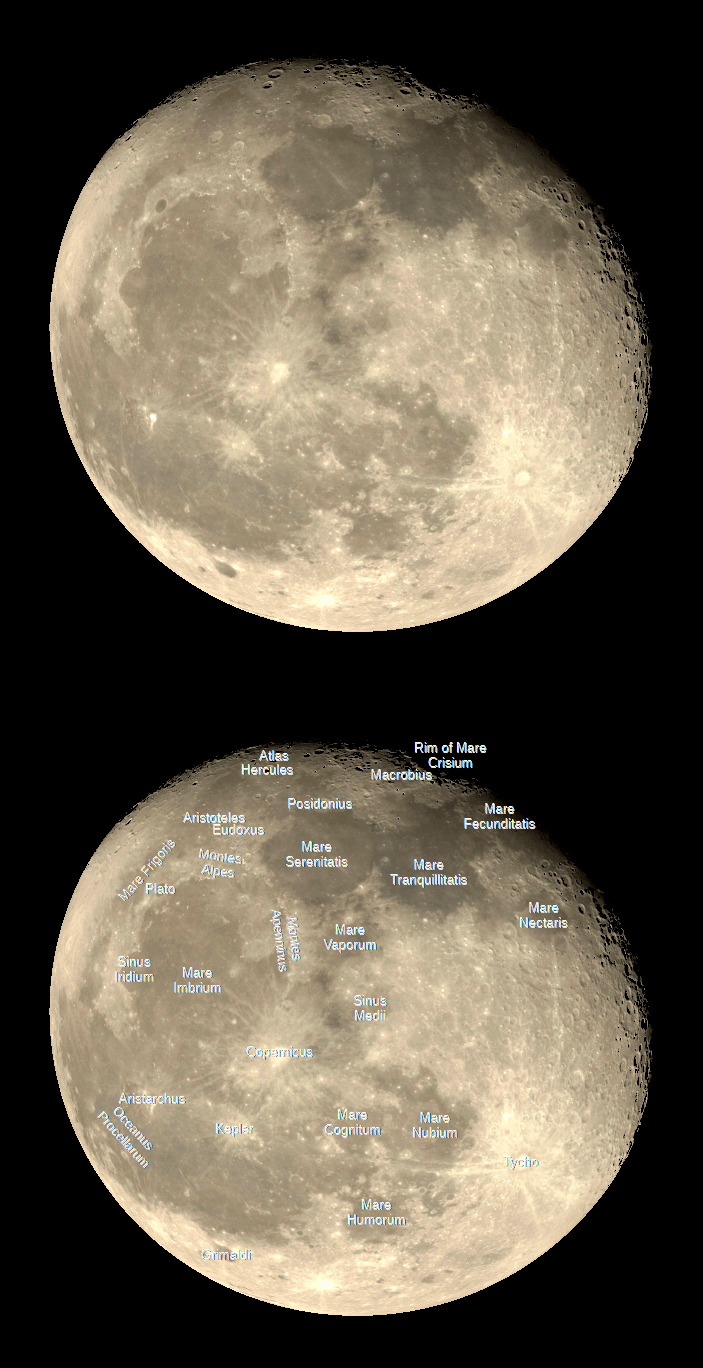
This is Ephemeris for Tuesday, March 26th. Today the Sun will be up for 12 hours and 29 minutes, setting at 8:03, and it will rise tomorrow at 7:31. The Moon, 1 day past full, will rise at 9:44 this evening.
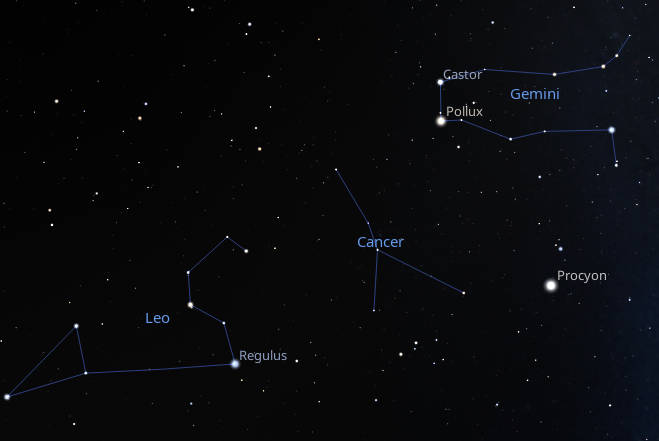
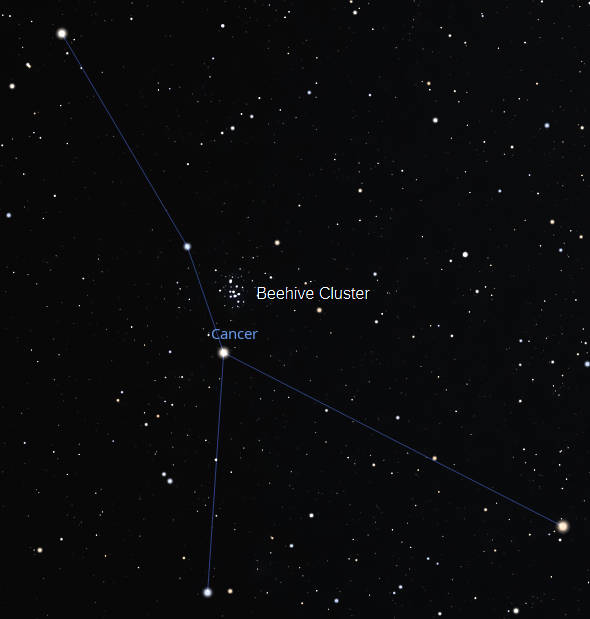
The dimmest constellation of the Zodiac is Cancer the crab. It is located high in the southeast at 9 PM between the backwards question mark that is the front of Leo the lion towards the lower left and Castor and Pollux of Gemini to the upper right. Its claim to more modern astronomical fame is the star cluster within it called the Beehive Cluster also known in ancient times as Praesepe the manger which looks like a fuzzy spot to the naked eye. In binoculars or a small telescope it shows up as a rather sparse open cluster of stars and to me the whole cluster appears somewhat triangular like an old-fashioned beehive. The Beehive cluster is relatively close to us at about 610 light years away.
The astronomical event times given are for the Traverse City/Interlochen area of Michigan (EDT, UT–4 hours). They may be different for your location.
Addendum
Ephemeris: 03/25/2024 – Your subsequent opportunities for total solar eclipses in the U.S. if you miss the April 8th one
This is Ephemeris for Monday, March 25th. Today the Sun will be up for 12 hours and 26 minutes, setting at 8:02, and it will rise tomorrow at 7:33. The Moon, at full today, will rise at 8:39 this evening.
The Moon was officially full at 3:00 this morning. At that time it was in a penumbral eclipse. If you didn’t see it you didn’t miss much. Deep penumbral eclipses only show that the moon has a proverbial 5 o’clock shadow. This means that for the next new moon we’ll have a total solar eclipse. It’s in exactly 2 weeks. The eclipse totality path, in the United States, will run from Texas to Maine, and through Indiana and northwestern Ohio. The next total solar eclipse for the U.S. will occur in 2044, a sunset eclipse visible from parts of Montana and North Dakota. The next great eclipse for North America and the U.S. will be on August 12th of 2045, twenty years from now. The totality path will pass from Northern California all the way through to Florida.
The astronomical event times given are for the Traverse City/Interlochen area of Michigan (EDT, UT–4 hours). They may be different for your location.
Addendum
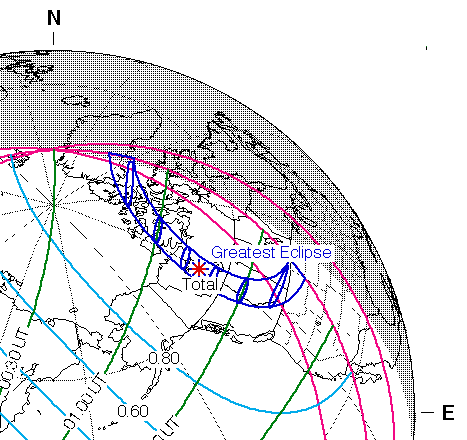
The eclipse will be visible in the area underneath the red lines. Within the dark blue lines is where totality will be visible. In United States that only includes parts of North Dakota and Montana at sunset. the funny three line teardrop in the right is where the eclipse will be in progress at sunset . Adapted from an eclipse map from NASA/GSFC, Fred Espenak.
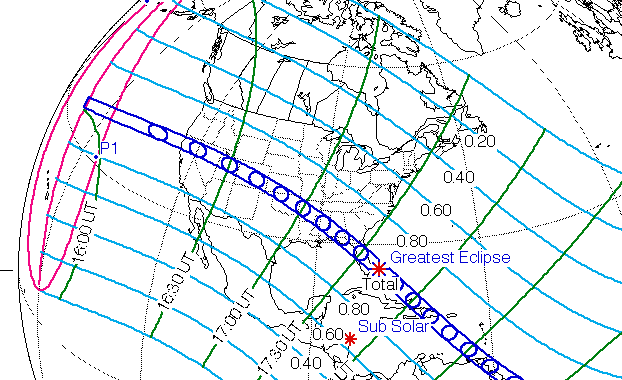
This is the next Great American Eclipse after the April 8th eclipse . The path runs from Northern California to Florida . It is generally parallel to and south of the eclipse path of the August 21st 2017 eclipse. Adapted from an eclipse map from NASA/GSFC, Fred Espenak.
Ephemeris: 03/22/2024 – There will be a penumbral eclipse of the Moon Monday morning
This is Ephemeris for Friday, March 22nd. Today the Sun will be up for 12 hours and 17 minutes, setting at 7:58, and it will rise tomorrow at 7:39. The Moon, 3 days before full, will set at 7:16 tomorrow morning.
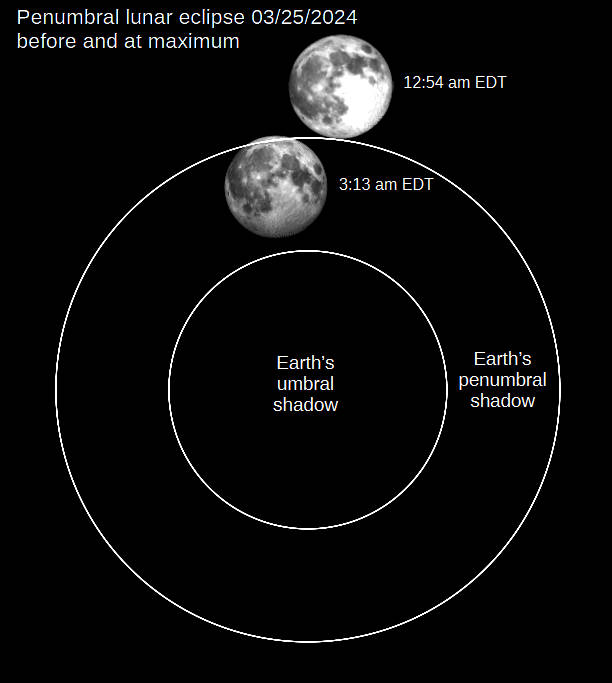
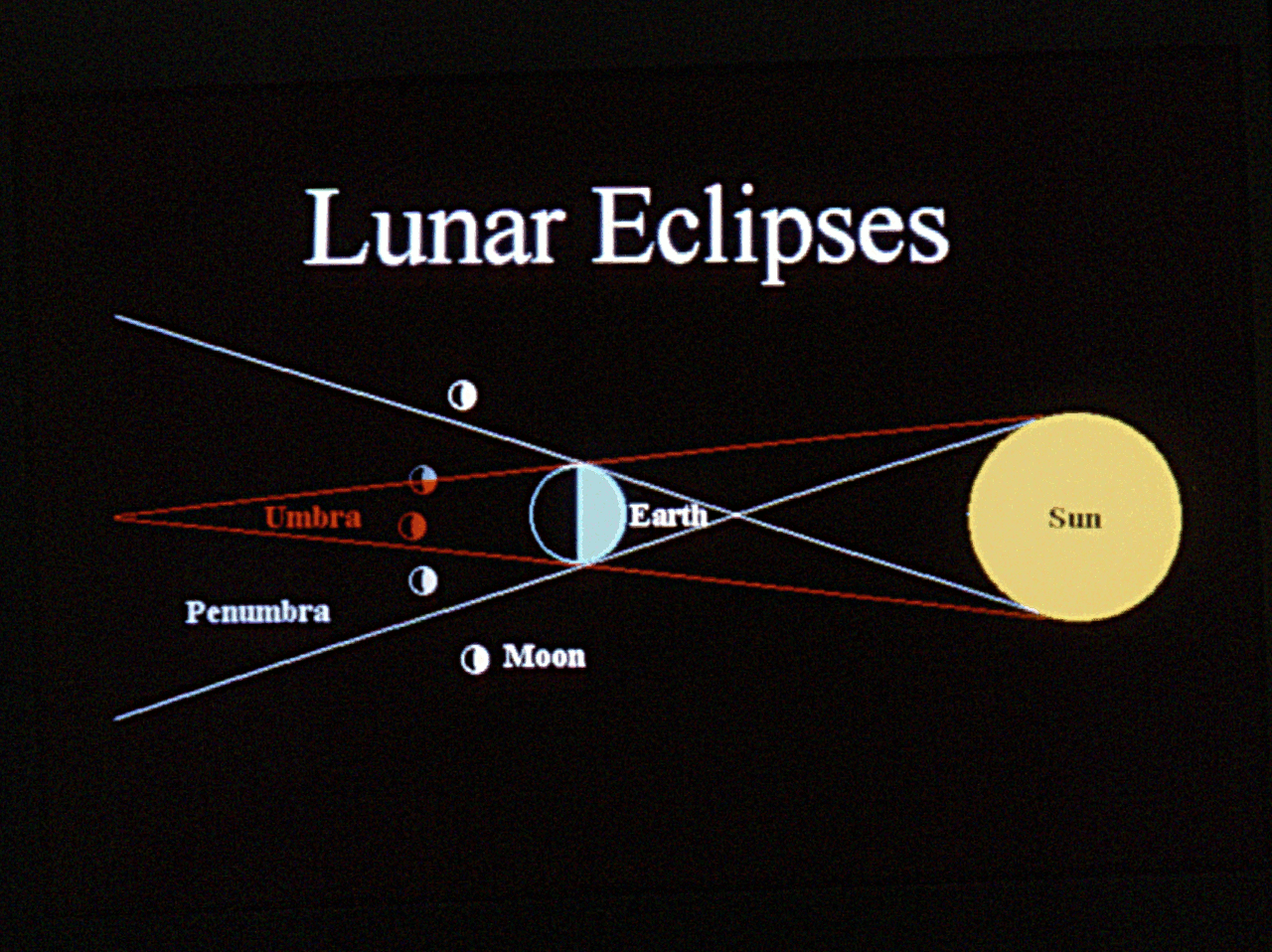
We are in an eclipse season. These occur at a bit less than 6 months intervals, and last about 35 days. During this period we will have a solar eclipse and a lunar eclipse. Of course the big eclipse of this eclipse season is the April 8th total solar eclipse, which will be visible from the United States and be visible from here as a very deep partial eclipse. We start off this eclipse season with a lunar eclipse, not a really great lunar eclipse, but a lunar eclipse nonetheless. It is a penumbral eclipse where the Moon enters the Earth’s outer shadow where the Sun is only partially blocked to it. What we will see will be not much. It will reach its maximum at 3:13 am Monday morning, when the bottom part of the Moon will be slightly darker than the top.
The astronomical event times given are for the Traverse City/Interlochen area of Michigan (EDT, UT–4 hours). They may be different for your location.
Addendum
Ephemeris: 03/20/2024 – Let’s find out where the naked-eye planets have wandered off to this week
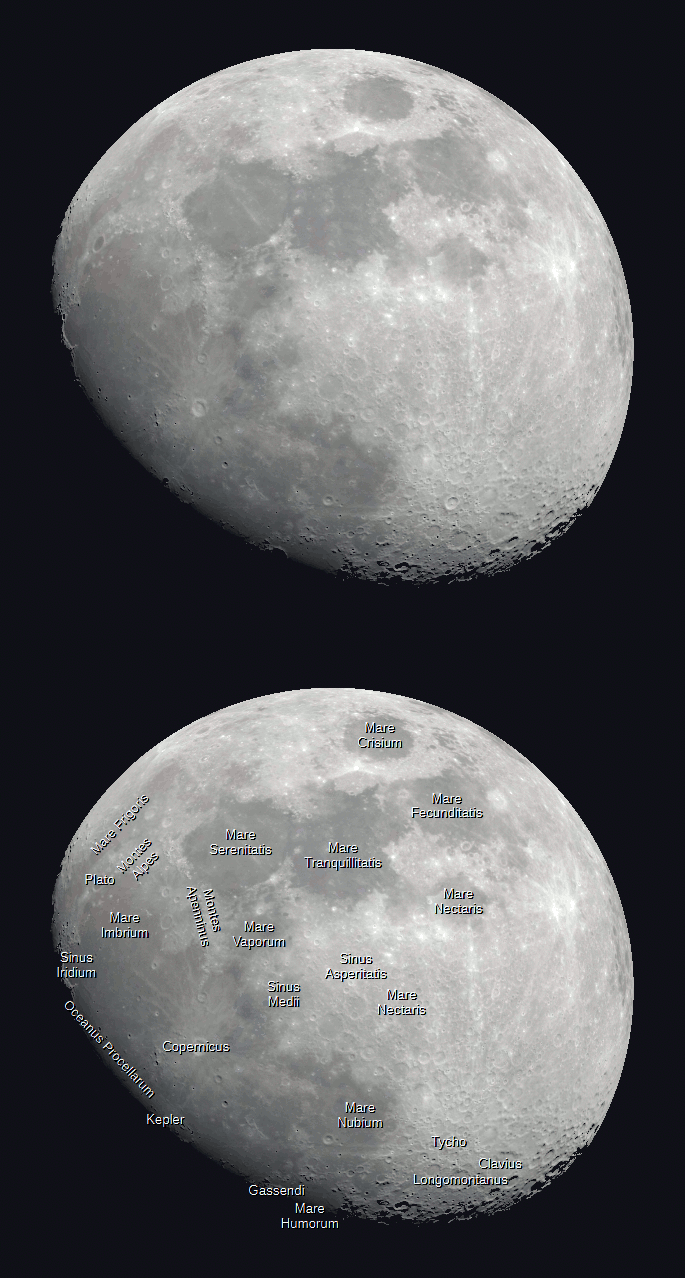
This is Ephemeris for Wednesday, March 20th. Today the Sun will be up for 12 hours and 11 minutes, setting at 7:56, and it will rise tomorrow at 7:43. The Moon, 3 days past first quarter, will set at 6:38 tomorrow morning.
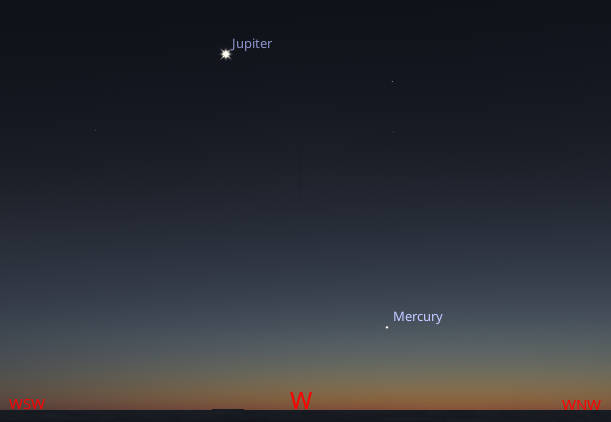
Let’s find out where the naked-eye planets have wandered off to this week, and see what planets are left. Mercury is visible in the evening sky shortly after sunset appearing very low in the west. It will be visible for the next week or so, moving away from the Sun, but getting dimmer, and starting back toward the Sun after Sunday. Higher up in the sky is bright Jupiter in the west southwest. It will set at 11:45 pm. Jupiter will be visible in the evening for only about another month or so. In the morning Mars, Venus and Saturn may be impossible to spot, in the east-southeast in the bright twilight. Mars will rise at 6:43 am, followed by Venus at 7:13, with Saturn right below it.
The astronomical event times given are for the Traverse City/Interlochen area of Michigan (EDT, UT–4 hours). They may be different for your location.
Addendum
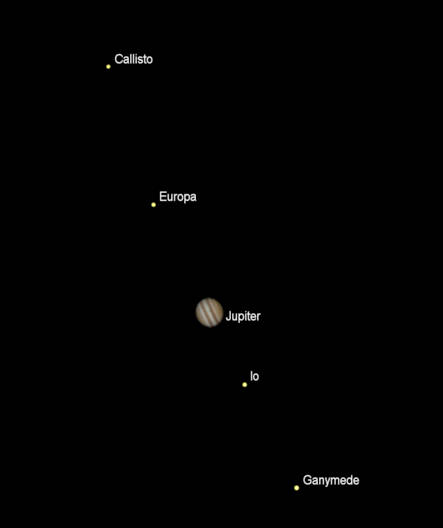
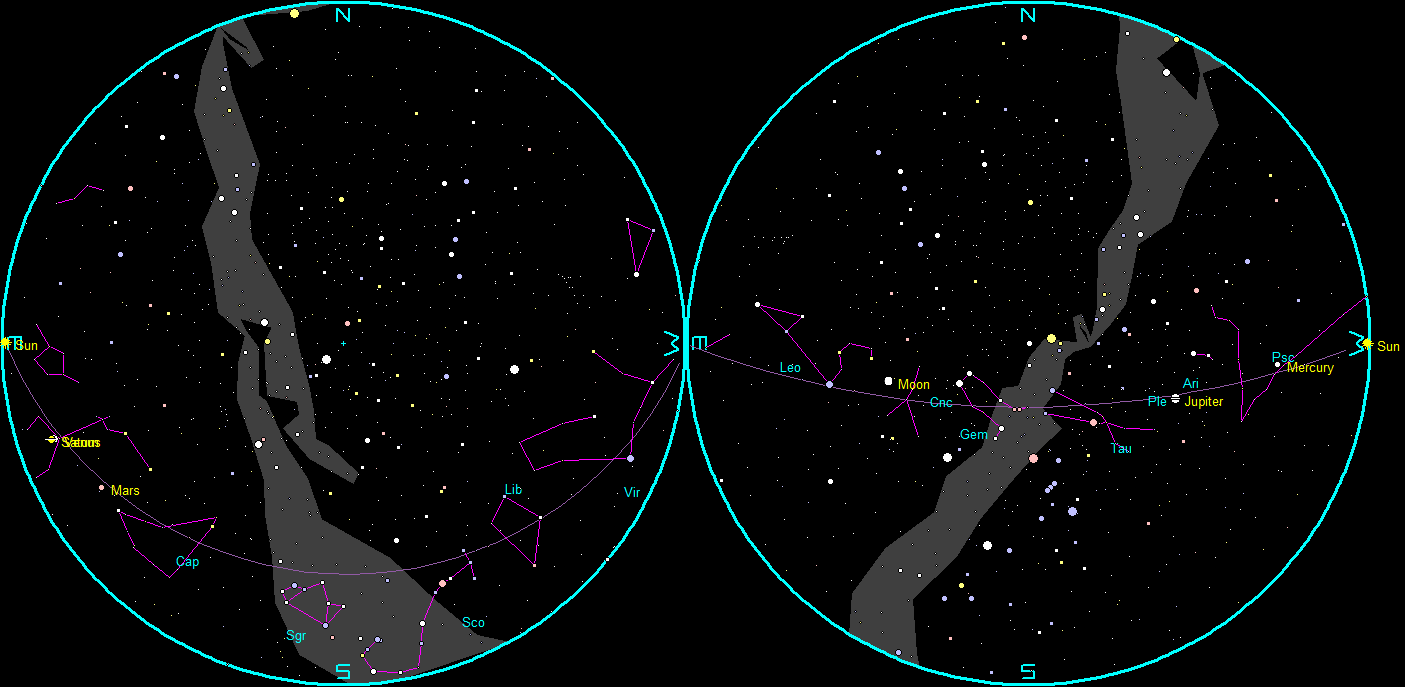
Ephemeris: 03/19/2024 – Today is the last day of winter and the first night of spring
This is Ephemeris for Tuesday, March 19th. Today the Sun will be up for 12 hours and 8 minutes, setting at 7:54, and it will rise tomorrow at 7:44. The Moon, 2 days past first quarter, will set at 6:13 tomorrow morning.
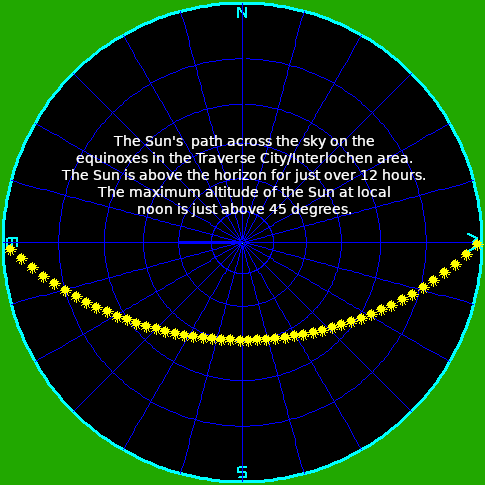
Today, at least in daylight, is the last day of winter. Tonight will be the first night of spring, since spring will arrive at 11:07 pm tonight. This is when the Sun crosses the celestial equator heading northward in the sky, which is actually the Sun moving so it passes overhead and moving north of the equator on the Earth. This gives us in the Northern Hemisphere longer days and warmer temperatures. We call it the vernal or spring equinox. However since some folks are living south of the equator, and are starting autumn at the same time. We sometimes call it the March equinox to recognize that fact. From now until June 20th the Sun will be moving higher in our sky and be staying out longer each day.
The astronomical event times given are for the Traverse City/Interlochen area of Michigan (EDT, UT–4 hours). They may be different for your location.
Addendum
Ephemeris: 03/18/2024 – Where did the Moon come from?
This is Ephemeris for Monday, March 18th. Today the Sun will be up for 12 hours and 4 minutes, setting at 7:53, and it will rise tomorrow at 7:46. The Moon, 1 day past first quarter, will set at 5:41 tomorrow morning.
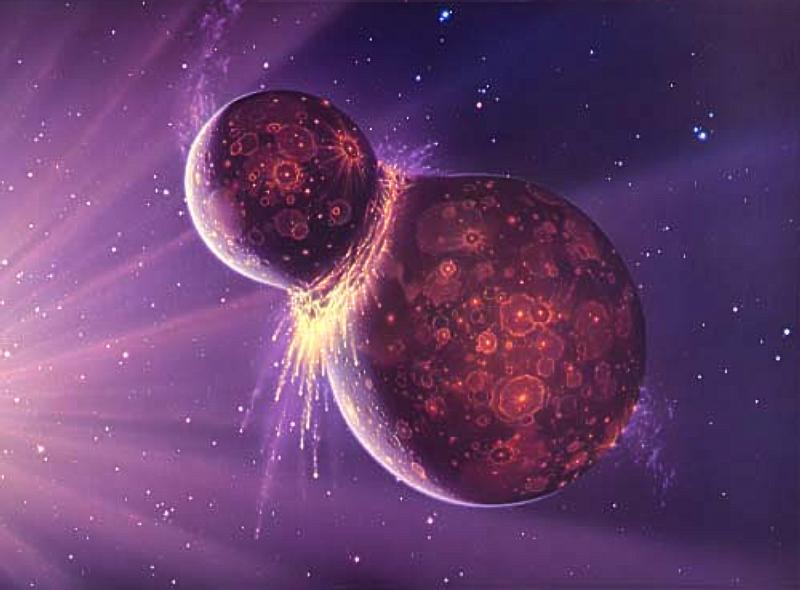
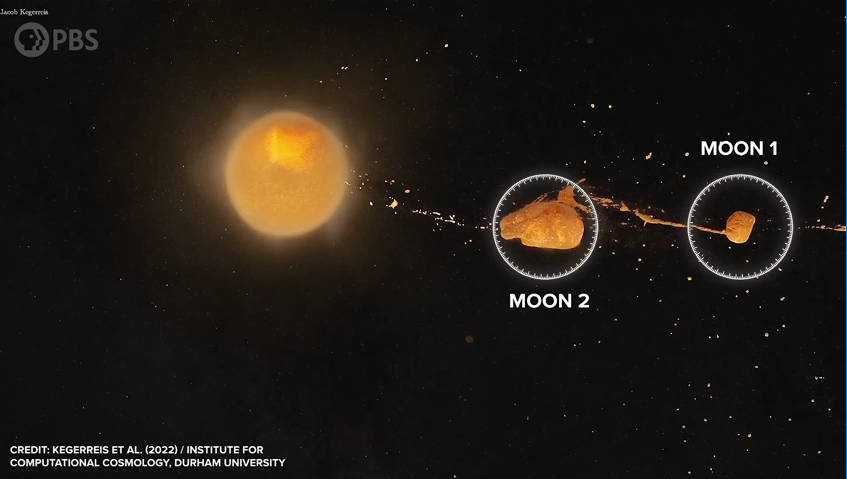
When one gazes upon the moon tonight the thought of where the moon came from comes to mind. Did it form with the Earth? Was it captured by the Earth? The latest thought on the origin of the moon centers around a grazing collision with the Earth of a Mars sized body that has been given the name Theia, the mother of Selene the goddess of the Moon, shortly after the Earth was formed. This is based on the Apollo mission discoveries that the composition of the rocks on the moon are approximately the same as those of the Earth. It has been known for some time that there are two dense masses within the Earth about halfway from the surface to the center. One geologist has put forth the idea that these masses could have been the core of Theia that sank down into the Earth.
The astronomical event times given are for the Traverse City/Interlochen area of Michigan (EDT, UT–4 hours). They may be different for your location.
Addendum
Ephemeris: 03/15/2024 – The Ides of March
This is Ephemeris for Ides of March, Friday, March 15th. Today the Sun will be up for 11 hours and 55 minutes, setting at 7:49, and it will rise tomorrow at 7:52. The Moon, 2 days before first quarter, will set at 3:01 tomorrow morning.
Our calendar is derived from the Roman calendar. The Ides is the only named day ion the Roman calendar that we’re familiar with today, the Ides of March. On this day in 44 BCE Roman Emperor Julius Caesar was assassinated. The Ides of a month is the 13th of the month except for March, May, July, and October when it’s the 15th. The Roman calendar has two other named days. The 1st of the month is called Kalend, from which we get our word calendar. The other day is Nones which is the 5th day of the month except for March, May, July, and October when it’s on the 7th. The other days are countdown days to those dates so tomorrow will be the 17th day before the Kalend of April. The countdown is to 1 not 0, if you’re counting.
My source: https://www.slideserve.com/jonah/roman-calendar
The astronomical event times given are for the Traverse City/Interlochen area of Michigan (EDT, UT–4 hours). They may be different for your location.
Addendum

This being a leap year, I will spend more time on these programs talking about the calendar. As you may know, we no longer use the Julian calendar for our normal calendar keeping functions. We use the Gregorian Calendar which is a modification of the Julian Calendar that was first made in the year 1582 CE. As we get closer to Easter I will delve into the Gregorian Calendar because it has everything to do with the date of Easter.
Ephemeris: 03/14/2024 – It’s Pi Day!
This is Ephemeris for Pi Day, Thursday, March 14th. Today the Sun will be up for 11 hours and 52 minutes, setting at 7:48, and it will rise tomorrow at 7:54. The Moon, 3 days before first quarter, will set at 1:47 tomorrow morning.
Yes, it’s Pi day that’s the Greek letter π for 3.14 approximating the ratio of the circle’s circumference to its diameter, which scientific and technical people celebrate by baking a pie P-I-E and carving the Greek letter π on the top.
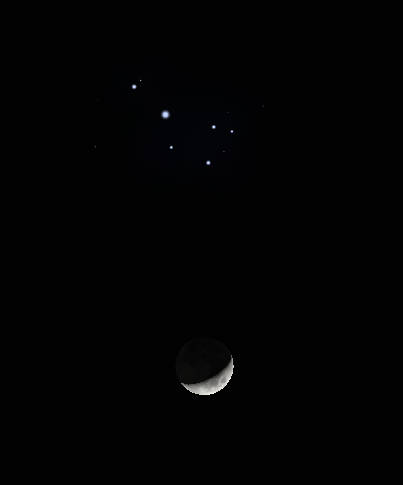
Tonight around 9 or 9:30 when it gets dark, is a good time to use the Moon to find the Pleiades, the Seven Sisters star cluster. The Pleiades will appear above the crescent Moon this evening, so it’s a good time to locate them if you haven’t already. We only have about another month viewing the Pleiades in the evening. And we have one more passage of the Moon by the Pleiades next month before they disappear from the evening sky.
The astronomical event times given are for the Traverse City/Interlochen area of Michigan (EDT, UT–4 hours). They may be different for your location.
Addendum

There’s another Pi day that some celebrate. A well-known approximation of pi is the fraction 22/7ths. Europeans and others write dates in day/month order, so July 22nd is also a Pi Day: 22/7.