Archive
Ephemeris: 08/07/2023 – Sagittarius, centaur or teapot?
This is Bob Moler with Ephemeris for Monday, August 7th. Today the Sun will be up for 14 hours and 25 minutes, setting at 9:00, and it will rise tomorrow at 6:36. The Moon, 1 day before last quarter, will rise at 12:06 tomorrow morning.
Looking due south and low in the sky at 11 pm, now is one of my favorite asterisms, the Teapot of the constellation Sagittarius. Sagittarius, classically, represents a centaur with a bow and arrow aimed at the heart of the constellation Scorpius to its west. I can find the bow and arrow here, but the half man, half horse figure of the centaur eludes me. However, the stout little teapot of the children’s song is quite obvious, with its base, lid on top, handle to the left and the spout to the right. To make things more realistic, the bright Milky Way seems to rise like steam from its spout. The Teapot is an asterism, an informal constellation. As the night goes on, the Teapot moves westward and appears to tilt, pouring its tea on the southwestern horizon.
The astronomical event times given are for the Traverse City/Interlochen area of Michigan (EDT, UT –4 hours). They may be different for your location.
Addendum
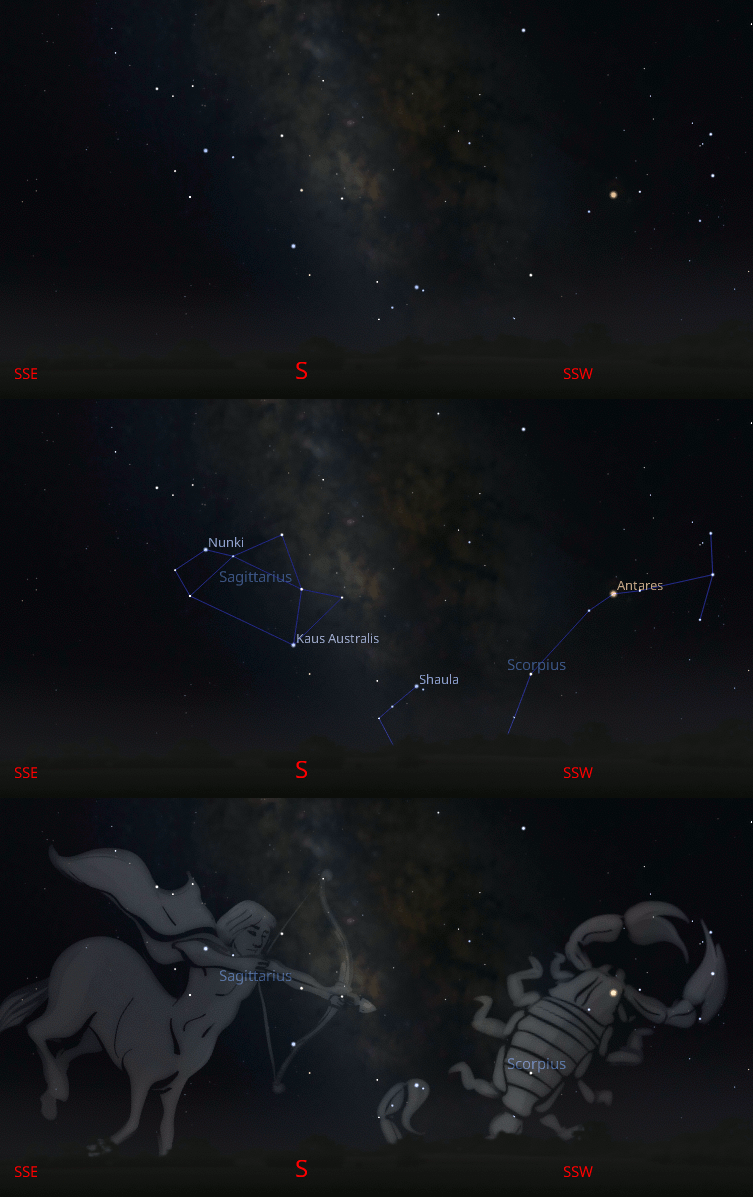
Sagittarius-Teapot finder animation for 11 pm, August 7, 2023. I’ve omitted all the lines in Sagittarius except the teapot stars from Stellarium, so there are more lines connecting the stars, most too far south to really spot easily from our latitude (45 degrees north). Click or tap on the image to enlarge it. Created using Stellarium and GIMP.
Named stars that are shown in the image above are Nunki, from an ancient tablet of thirty stars – The proclaimer of the sea. This is because the next four constellations to the east are water constellations: Capricornus, the sea goat; Aquarius, the water bearer; Pisces the fish; and Piscis Australis, the southern fish. Antares, in Scorpius, is of course the Rival of Mars, due to its reddish hue, and Mars passes Antares regularly on its journey through the Zodiac. An archer has to have his bow. Kaus Australis is the southern bow star. The star above that is Kaus Media, the middle bow star. And the star above and left of that is Kaus Borealis, the northern bow star. The constellation art that comes with Stellarium doesn’t match up with the stars of the bow.
The five stars on the left side of the Teapot is another asterism called the Milk Dipper.
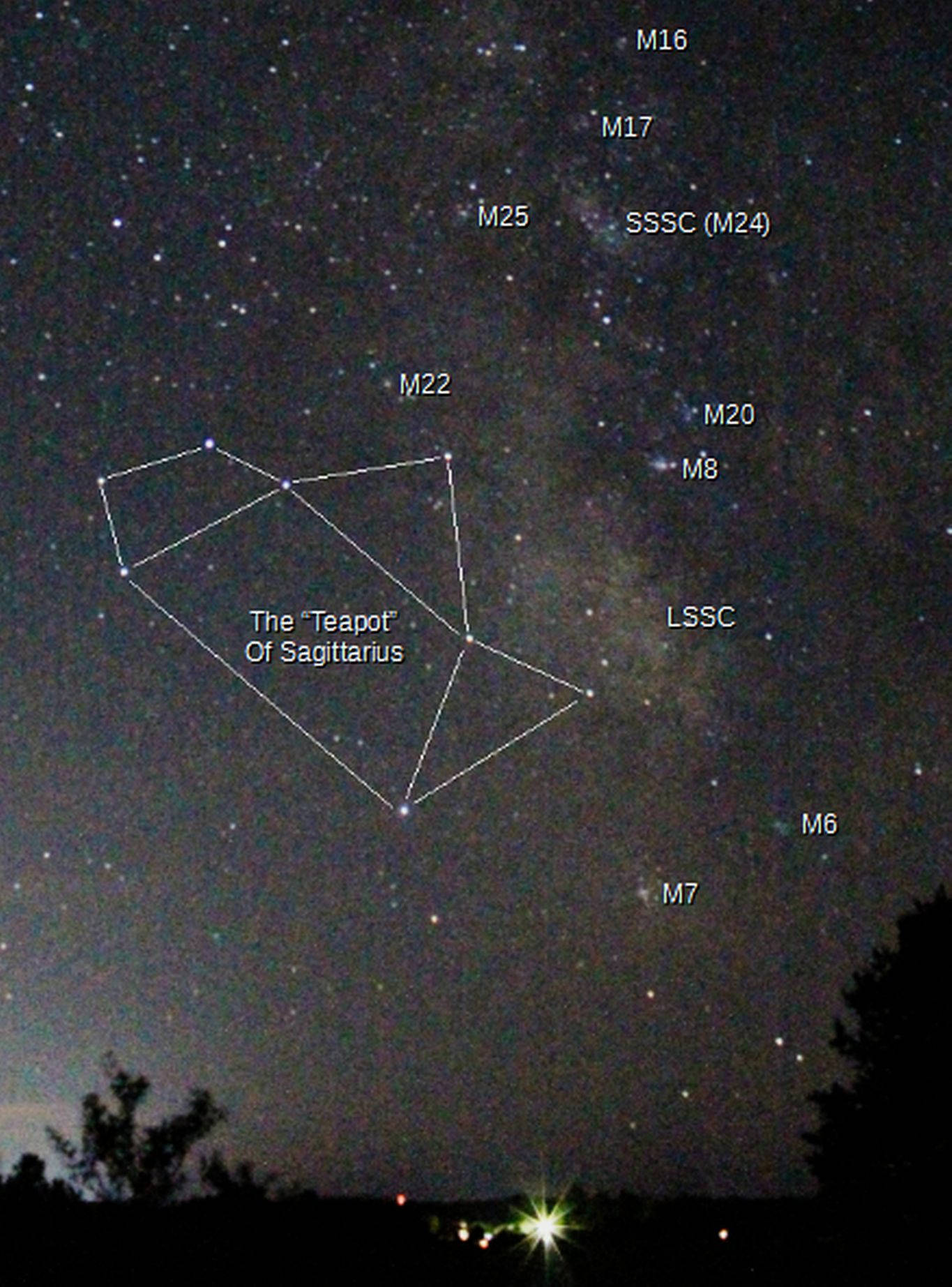
Sagittarius in a short time exposure with added annotations. This would be later in the evening, around midnight. The “M” designations are objects in Charles Messier’s catalog created in the latter half of the 18th century. LSSC is the Large Sagittarius Star Cloud, SSSC is the Small Sagittarius Star Cloud. These will be easily visible in binoculars. Credit Bob Moler.
Ephemeris: 08/04/2023 – Star party tonight if it’s clear
This is Ephemeris for Friday, August 4th. Today the Sun will be up for 14 hours and 32 minutes, setting at 9:04, and it will rise tomorrow at 6:33. The Moon, 3 days past full, will rise at 11:02 this evening.
The Grand Traverse Astronomical Society will be hosting a star party tonight at Northwestern Michigan College’s Joseph Rogers observatory from 10:00 and midnight. If it’s clear, there will be at least a good solid hour of relatively dark sky to view the wonders beyond the solar system between 10 and 11 pm tonight before the bright moon rises. Saturn should be spotted by 11 pm. Low in the east southeast. Though Saturn will be fuzzy due to all the Earth’s atmosphere we have to look through to see it, it will still be a great sight. Astronomers don’t consider Saturn to be an evening planet yet. To be an evening planet, it must rise before sunset. The observatory is located south of Traverse City, MI on Birmley Road between Keystone and Garfield roads.
The astronomical event times given are for the Traverse City/Interlochen area of Michigan (EDT, UT –4 hours). They may be different for your location.
Addendum
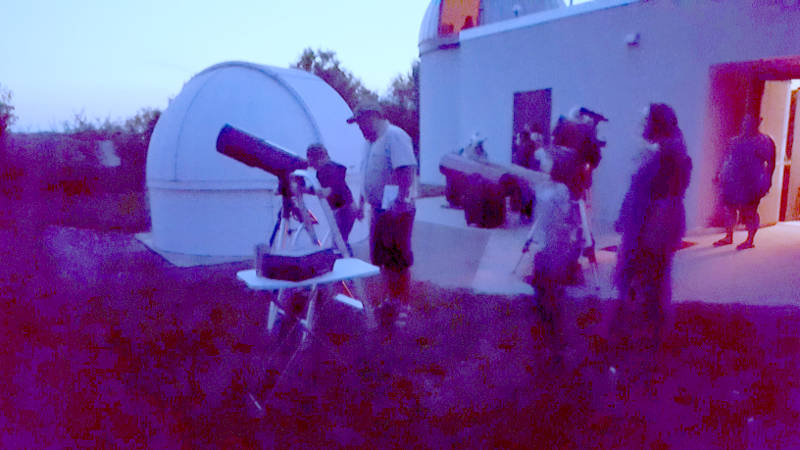
Some of the GTAS members’ telescopes set up behind the observatory for the star party. There’s a 16-inch telescope in the dome above. The dome at ground level is set up for to transmit images for a Zoom connection with a 14-inch telescope. When Saturn and the Moon rise, they will only be visible from the 16-inch telescope in the big dome.
Ephemeris: 08/03/2023 – What is a rogue planet?
This is Bob Moler with Ephemeris for Thursday, August 3rd. Today the Sun will be up for 14 hours and 35 minutes, setting at 9:06, and it will rise tomorrow at 6:32. The Moon, 2 days past full, will rise at 10:40 this evening.
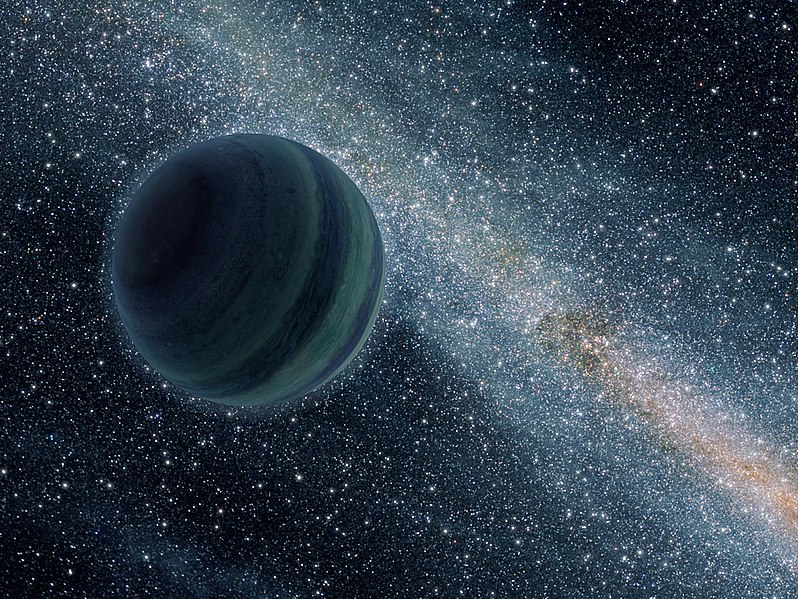
Did you ever hear of something called a rogue planet? A rogue planet is an exoplanet without a star, wandering through interstellar space. A planet could be ejected from its planetary system through interaction with another planet, or maybe it’s in a multiple star system and usually the body with the lease mass loses and can be ejected from the system. Another way to create a rogue planet is to have a planet being created like a star but without enough mass to build it up and be left with too little mass to ignite the hydrogen within its core to create helium and thus begin to shine. Rogue planets are detectable by gravitational microlensing, causing a background star inline with the rogue planet and the Earth to briefly brighten. Rogue planets can be detected and studied because they are relatively warmer than the 3
Kelvin Cosmic Microwave Background. The James Webb Space Telescope is an ideal tool to study them. There may be more rogue planets than stars in the Milky Way.
The astronomical event times given are for the Traverse City/Interlochen area of Michigan (EDT, UT –4 hours). They may be different for your location.
This has been extensively modified from the presentation in the radio program.
Addendum
Ephemeris: 08/02/2023 – Let’s find out where the naked-eye planets have wandered off to this week
This is Bob Moler with Ephemeris for Wednesday, August 2nd. Today the Sun will be up for 14 hours and 37 minutes, setting at 9:07, and it will rise tomorrow at 6:31. The Moon, 1 day past full, will rise at 10:15 this evening.
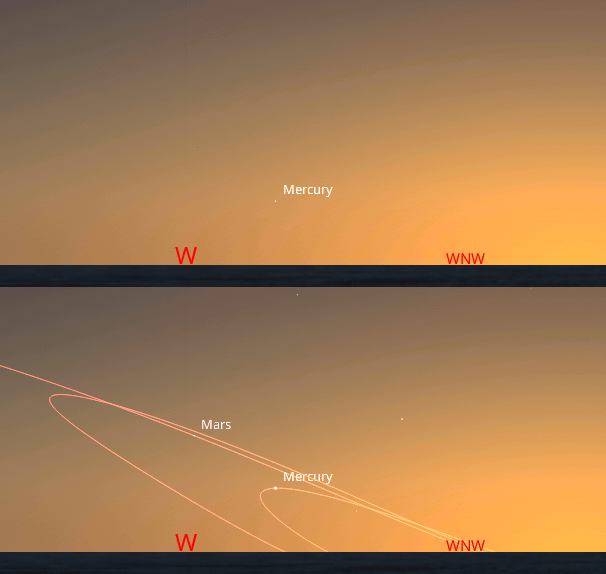
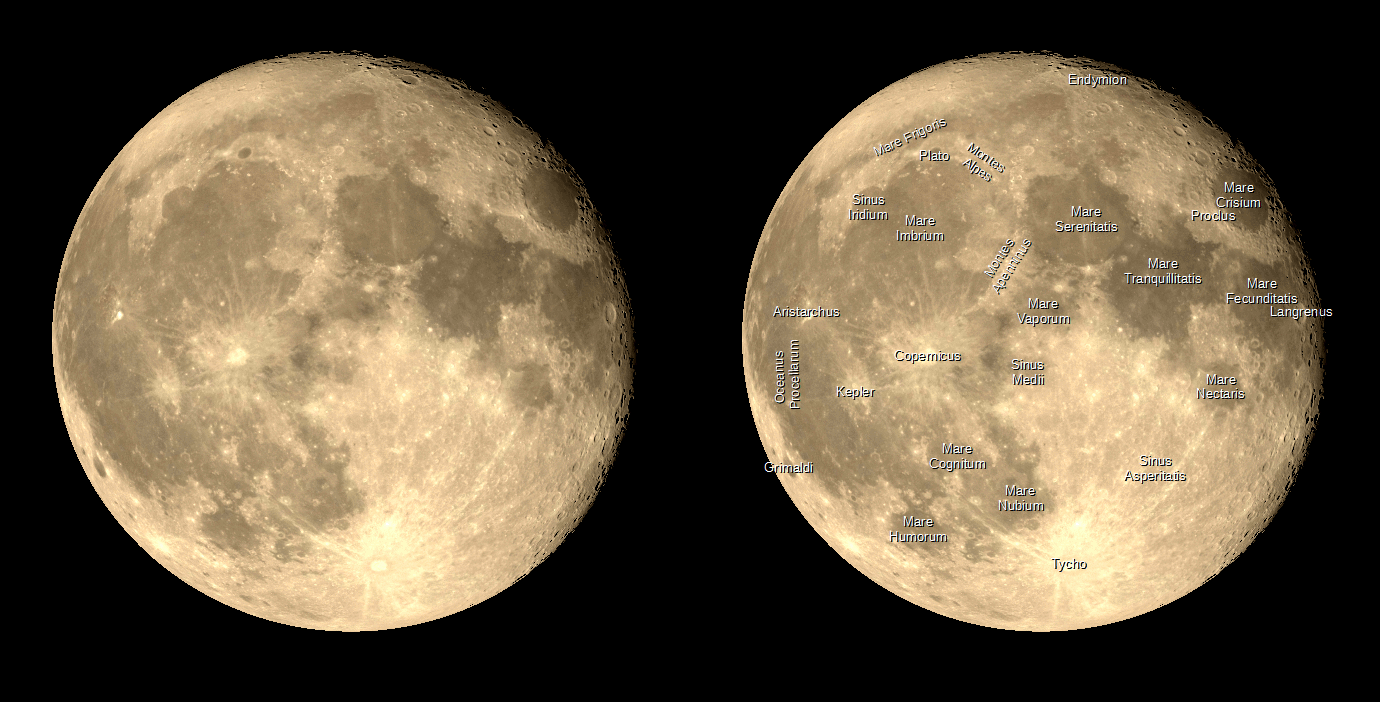
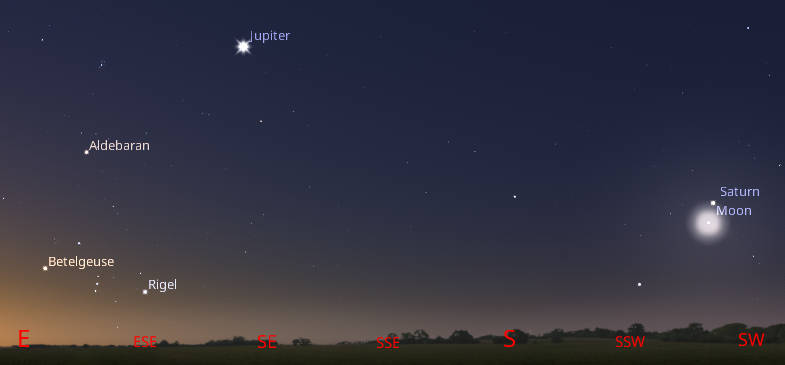
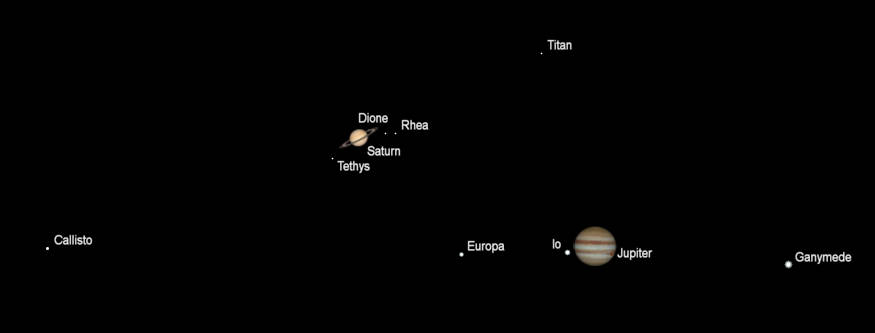
Let’s find out where the naked-eye planets have wandered off to this week. Venus is gone, setting too close to sunset. It will pass between the Earth and the Sun on the 13th, and be visible before sunrise by the end of the month. Mars and Mercury, though technically in the evening sky and like Venus, appear too close to the Sun to be spotted. Mars will pass behind the Sun in November. The other two naked eye planets are in the morning sky. Appearing at 5:45 am, which is roughly 45 minutes before sunrise, tomorrow morning, Jupiter will be high in the southeast, while Saturn will be lower in the southwest. And tomorrow morning Saturn will be just above the bright waning gibbous Moon.
The astronomical event times given are for the Traverse City/Interlochen area of Michigan (EDT, UT –4 hours). They may be different for your location.
Addendum
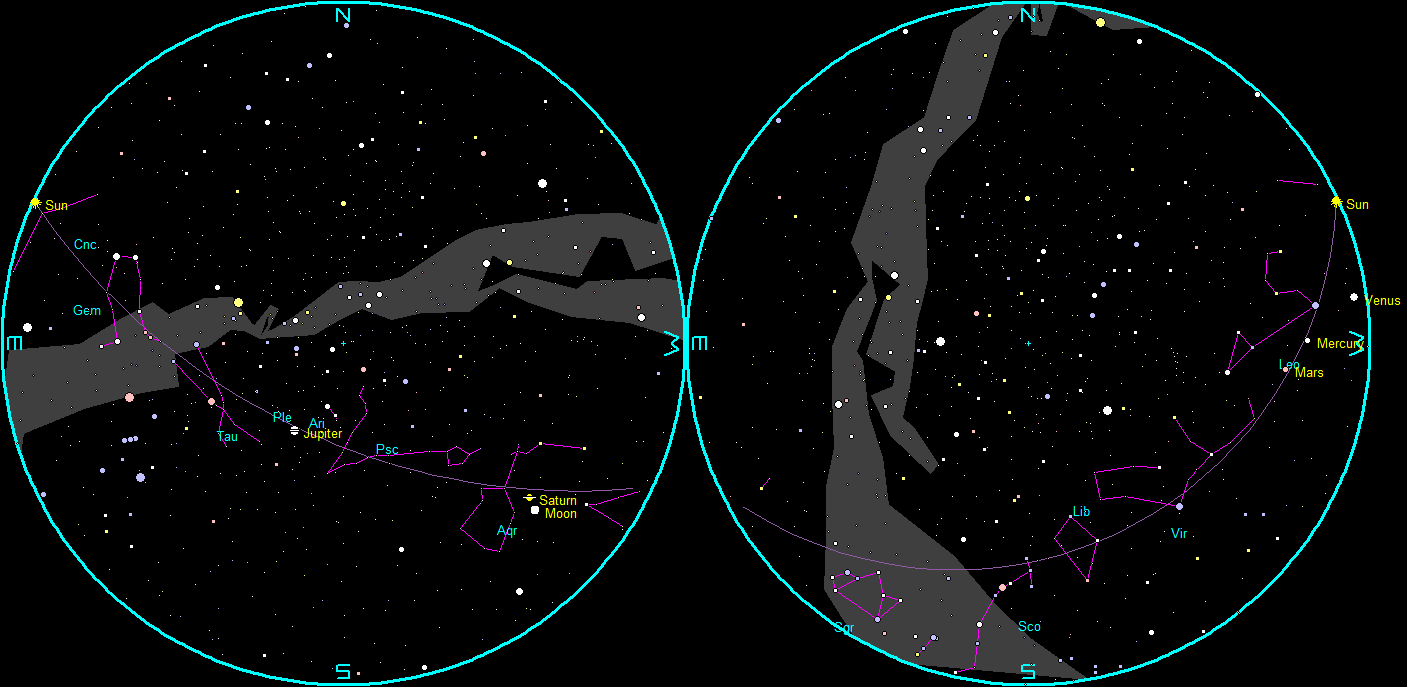
Large images like this are sometimes truncated to the right. Enlarging the image will restore the whole image.
Ephemeris: 08/01/2023 – Looking ahead to August skies
This is Ephemeris for Tuesday, August 1st. Today the Sun will be up for 14 hours and 39 minutes, setting at 9:08, and it will rise tomorrow at 6:29. The Moon, at full today, will rise at 9:44 this evening.
Let’s look ahead at the month of August in the skies. Daylight hours will decrease from 14 hours and 39 minutes today to 13 hours 17 minutes on the 31st. The altitude of the Sun at local noon, that is degrees of angle above the southern horizon, will decrease from 63 degrees today to just over 53 degrees on the 31st. Straits area listeners can subtract one more degree from those angles. Local noon, when the Sun is due south, is about 1:43 p.m. The Perseid meteor shower will reach its peak on the morning of the13th. The Moon will not interfere until it rises at 3:39 am, but then it’s only a waning crescent. A few Perseid meteors can be seen even now, nearly two weeks before the peak. They will seem to come from the northeastern part of the sky.
The astronomical event times given are for the Traverse City/Interlochen area of Michigan (EDT, UT –4 hours). They may be different for your location.
Addendum
August Evening Star Chart
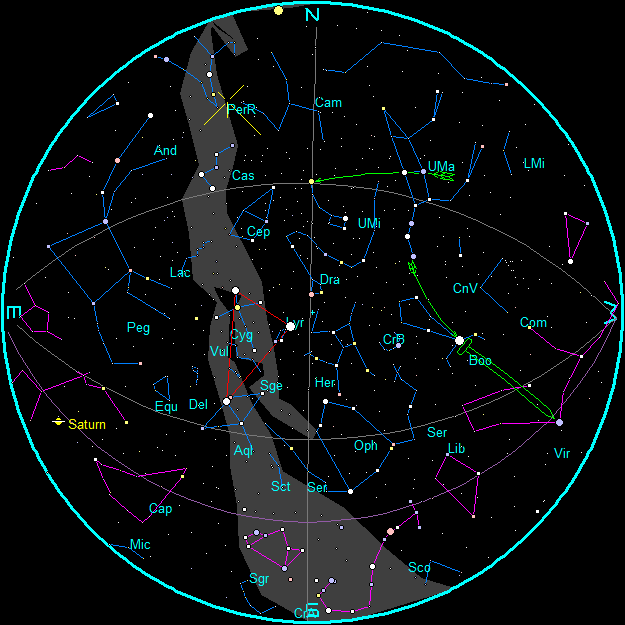
The planets and stars are plotted for the 15th at 10 pm EDT in the evening and 5 am. These are the chart times. Note that Traverse City is located approximately 45 minutes behind our time meridian, West 75° longitude. (An hour 45 minutes behind our daylight saving time meridian during EDT). To duplicate the star positions on a planisphere you may have to set it to 1 hour 45 minutes earlier than the current time.
Note the chart times are for the 15th. For each week before the 15th, add ½ hour (28 minutes if you’re picky). For each week after the 15th, subtract ½ hour. The planet positions are updated each Wednesday on this blog. See them for planet positions on dates other than the 15th.
August Morning Star Chart
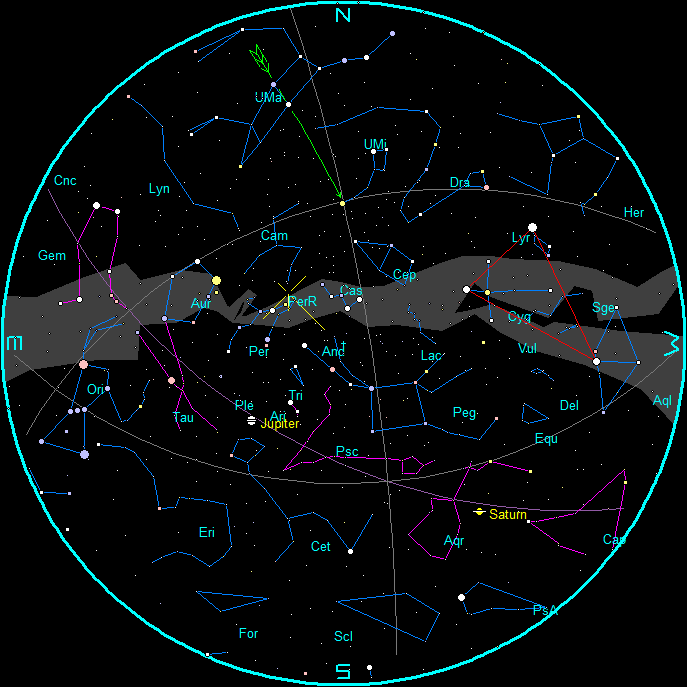
For a list of constellation names to go with the abbreviations, click here.
- Pointer stars at the front of the bowl of the Big Dipper point to Polaris, the North Star.
- Leaky dipper drips on Leo.
- Follow the arc of the handle of the Big Dipper to the star Arcturus, and
- Extend like a spike to Spica.
- The Summer Triangle is in red.
- PerR is the radiant of the Perseid meteor shower (Peaks on the morning of the 13th)
Twilight Limits, Nautical and Astronomical
| EDT | |||||||
| Morning | Twilight | Evening | Twilight | Dark | Night | Moon | |
| Date | Astro. | Nautical | Nautical | Astro. | Start | End | Illum. |
| 2023-08-01 | 4h30m | 5h19m | 22h27m | 23h16m | – | – | 1.00 |
| 2023-08-02 | 4h32m | 5h20m | 22h26m | 23h14m | – | – | 0.97 |
| 2023-08-03 | 4h34m | 5h22m | 22h24m | 23h12m | – | – | 0.91 |
| 2023-08-04 | 4h36m | 5h23m | 22h22m | 23h09m | – | – | 0.83 |
| 2023-08-05 | 4h38m | 5h25m | 22h21m | 23h07m | 23h07m | 23h23m | 0.74 |
| 2023-08-06 | 4h40m | 5h26m | 22h19m | 23h05m | 23h05m | 23h43m | 0.63 |
| 2023-08-07 | 4h42m | 5h28m | 22h17m | 23h03m | 23h03m | – | 0.52 |
| 2023-08-08 | 4h44m | 5h29m | 22h15m | 23h01m | 23h01m | 0h06m | 0.42 |
| 2023-08-09 | 4h46m | 5h31m | 22h14m | 22h59m | 22h59m | 0h32m | 0.32 |
| 2023-08-10 | 4h47m | 5h32m | 22h12m | 22h57m | 22h57m | 1h04m | 0.23 |
| 2023-08-11 | 4h49m | 5h34m | 22h10m | 22h54m | 22h54m | 1h44m | 0.15 |
| 2023-08-12 | 4h51m | 5h35m | 22h08m | 22h52m | 22h52m | 2h32m | 0.09 |
| 2023-08-13 | 4h53m | 5h37m | 22h06m | 22h50m | 22h50m | 3h28m | 0.04 |
| 2023-08-14 | 4h55m | 5h38m | 22h05m | 22h48m | 22h48m | 4h31m | 0.01 |
| 2023-08-15 | 4h57m | 5h40m | 22h03m | 22h46m | 22h46m | 4h57m | 0.00 |
| 2023-08-16 | 4h58m | 5h41m | 22h01m | 22h43m | 22h43m | 4h58m | 0.01 |
| 2023-08-17 | 5h00m | 5h43m | 21h59m | 22h41m | 22h41m | 5h00m | 0.03 |
| 2023-08-18 | 5h02m | 5h44m | 21h57m | 22h39m | 22h39m | 5h02m | 0.07 |
| 2023-08-19 | 5h04m | 5h45m | 21h55m | 22h37m | 22h37m | 5h04m | 0.13 |
| 2023-08-20 | 5h06m | 5h47m | 21h53m | 22h34m | 22h34m | 5h06m | 0.20 |
| 2023-08-21 | 5h07m | 5h48m | 21h51m | 22h32m | 22h49m | 5h07m | 0.28 |
| 2023-08-22 | 5h09m | 5h50m | 21h49m | 22h30m | 23h10m | 5h09m | 0.38 |
| 2023-08-23 | 5h11m | 5h51m | 21h47m | 22h28m | 23h37m | 5h11m | 0.48 |
| 2023-08-24 | 5h13m | 5h53m | 21h45m | 22h25m | – | 5h13m | 0.59 |
| 2023-08-25 | 5h14m | 5h54m | 21h43m | 22h23m | 0h12m | 5h14m | 0.69 |
| 2023-08-26 | 5h16m | 5h56m | 21h41m | 22h21m | 0h58m | 5h16m | 0.79 |
| 2023-08-27 | 5h18m | 5h57m | 21h39m | 22h19m | 2h00m | 5h18m | 0.88 |
| 2023-08-28 | 5h19m | 5h58m | 21h37m | 22h17m | 3h15m | 5h19m | 0.95 |
| 2023-08-29 | 5h21m | 6h00m | 21h35m | 22h14m | 4h39m | 5h21m | 0.99 |
| 2023-08-30 | 5h22m | 6h01m | 21h33m | 22h12m | – | – | 1.00 |
| 2023-08-31 | 5h24m | 6h03m | 21h31m | 22h10m | – | – | 0.98 |
Twilight calendar was generated using Cartes du Ciel (Sky Charts).
See my blog post: Twilight Zone for the definitions of the different periods of twilight here: https://bobmoler.wordpress.com/2018/09/27/.
NASA Calendar of Planetary Events
Date          Time    Event
Aug  1  Tu            Venus: 18.7° E
     1  Tu   2:31 pm  Full Sturgeon Moon
     2  We   1:52 am  Moon Perigee: 357,300 km
     3  Th   6:21 am  Moon-Saturn: 2.4° N
     6  Su  10:46 pm  Moon Ascending Node
     8  Tu   5:41 am  Moon-Jupiter: 3° S
     8  Tu   6:28 am  Last Quarter
     9  We   8:16 am  Moon-Pleiades: 1.6° N
     9  We   9:59 pm  Mercury Elongation: 27.4° E
    12  Sa   3:39 am  Moon North Dec.: 28° N
    13  Su   3:02 am  Mercury-Mars: 4.7° N
    13  Su   3:29 am  Perseid Meteor Shower: ZHR = 90
    13  Su   7:10 am  Venus Inferior Conj.
    13  Su   5:36 pm  Moon-Pollux: 1.9° N
    16  We   5:38 am  New Moon
    16  We   7:55 am  Moon Apogee: 406,600 km
    18  Fr   7:06 pm  Moon-Mars: 2.4° S
    21  Mo   5:28 am  Moon-Spica: 2.8° S
    21  Mo  12:23 pm  Moon Descending Node
    24  Th   5:57 am  First Quarter
    24  Th   9:30 pm  Moon-Antares: 1.1° S
    26  Sa   4:22 pm  Moon South Dec.: 28.1° S
    27  Su   3:52 am  Saturn Opposition
    30  We  11:51 am  Moon Perigee: 357,200 km
    30  We   2:03 pm  Moon-Saturn: 2.4° N
    30  We   9:35 pm  Full Blue Moon
Sky Events Calendar by Fred Espenak and Sumit Dutta (NASA’s GSFC),
http://eclipse.gsfc.nasa.gov/SKYCAL/SKYCAL.html.
If you go to the above site, you can print out a list like the above for the entire year or calendar pages for your time zone.
Sun and Moon Rising and Setting Events
     LU                  Ephemeris of Sky Events for Interlochen/TC
     August 2023    Local time zone: EDT
     +-----------------------------------------------------------------------+
     | DATE |  SUN     SUN  DAYLIGHT|   TWILIGHT*    |MOON  RISE OR    ILLUM |
     |      |  RISE    SET    HOURS |  END    START  |PHASE SET** TIME FRACTN|
     +=======================================================================+
     |Tue  1| 06:28a  09:08p  14:39 | 11:12p  04:24a |Full  Rise 09:44p  100%|
     |Wed  2| 06:29a  09:07p  14:37 | 11:10p  04:26a |      Rise 10:15p   98%|
     |Thu  3| 06:31a  09:06p  14:35 | 11:08p  04:28a |      Rise 10:40p   92%|
     |Fri  4| 06:32a  09:04p  14:32 | 11:06p  04:30a |      Rise 11:02p   85%|
     |Sat  5| 06:33a  09:03p  14:30 | 11:04p  04:31a |      Rise 11:22p   76%|
     +------+-----------------------+----------------+-----------------------+
     |Sun  6| 06:34a  09:02p  14:27 | 11:01p  04:33a |      Rise 11:43p   65%|
     |Mon  7| 06:35a  09:00p  14:25 | 10:59p  04:35a |      Rise 12:06a   55%|
     |Tue  8| 06:36a  08:59p  14:22 | 10:57p  04:37a |L Qtr Rise 12:32a   44%|
     |Wed  9| 06:37a  08:57p  14:19 | 10:55p  04:39a |      Rise 01:04a   34%|
     |Thu 10| 06:39a  08:56p  14:17 | 10:53p  04:41a |      Rise 01:43a   25%|
     |Fri 11| 06:40a  08:54p  14:14 | 10:51p  04:43a |      Rise 02:32a   17%|
     |Sat 12| 06:41a  08:53p  14:12 | 10:48p  04:45a |      Rise 03:28a   10%|
     +------+-----------------------+----------------+-----------------------+
     |Sun 13| 06:42a  08:51p  14:09 | 10:46p  04:47a |      Rise 04:30a    5%|
     |Mon 14| 06:43a  08:50p  14:06 | 10:44p  04:48a |      Rise 05:35a    2%|
     |Tue 15| 06:44a  08:48p  14:03 | 10:42p  04:50a |      Rise 06:41a    0%|
     |Wed 16| 06:46a  08:47p  14:01 | 10:40p  04:52a |New   Set  09:21p    0%|
     |Thu 17| 06:47a  08:45p  13:58 | 10:37p  04:54a |      Set  09:40p    2%|
     |Fri 18| 06:48a  08:44p  13:55 | 10:35p  04:56a |      Set  09:57p    6%|
     |Sat 19| 06:49a  08:42p  13:52 | 10:33p  04:57a |      Set  10:13p   11%|
     +------+-----------------------+----------------+-----------------------+
     |Sun 20| 06:50a  08:40p  13:49 | 10:31p  04:59a |      Set  10:30p   18%|
     |Mon 21| 06:52a  08:39p  13:47 | 10:28p  05:01a |      Set  10:48p   26%|
     |Tue 22| 06:53a  08:37p  13:44 | 10:26p  05:03a |      Set  11:09p   36%|
     |Wed 23| 06:54a  08:35p  13:41 | 10:24p  05:05a |      Set  11:36p   46%|
     |Thu 24| 06:55a  08:33p  13:38 | 10:22p  05:06a |F Qtr Set  12:11a   56%|
     |Fri 25| 06:56a  08:32p  13:35 | 10:19p  05:08a |      Set  12:57a   67%|
     |Sat 26| 06:57a  08:30p  13:32 | 10:17p  05:10a |      Set  01:59a   77%|
     +------+-----------------------+----------------+-----------------------+
     |Sun 27| 06:59a  08:28p  13:29 | 10:15p  05:11a |      Set  03:14a   86%|
     |Mon 28| 07:00a  08:26p  13:26 | 10:13p  05:13a |      Set  04:38a   93%|
     |Tue 29| 07:01a  08:25p  13:23 | 10:10p  05:15a |      Set  06:05a   98%|
     |Wed 30| 07:02a  08:23p  13:20 | 10:08p  05:16a |Full  Rise 08:39p  100%|
     |Thu 31| 07:03a  08:21p  13:17 | 10:06p  05:18a |      Rise 09:02p   99%|
     +-----------------------------------------------------------------------+
     * Astronomical Twilight
     ** Moonrise or moonset, whichever occurs between sunrise and sunset
Generated using my LookingUp for DOS program.
Ephemeris: 07/31/2023 – August’s Blue Moon
This is Ephemeris for Monday, July 31st. Today the Sun will be up for 14 hours and 42 minutes, setting at 9:10, and it will rise tomorrow at 6:28. The Moon, 1 day before full, will set at 5:45 tomorrow morning.
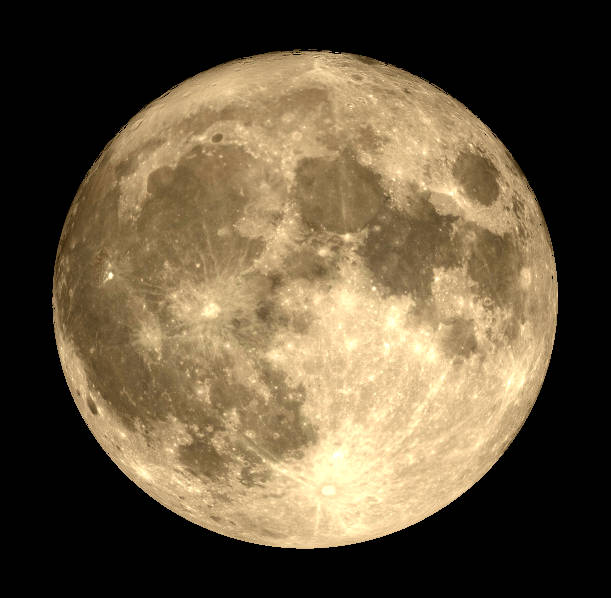
In August, we are going to have two full moons this year and by most modern reckoning the second full moon is called a Blue Moon, even though that’s not the color of the Moon, which looks like normal although both of these moons in August will be supermoons, so they’ll be a little bit larger than average. However, there is nothing to compare them to, so there’s no way of determining this visually for yourself. The older definition of blue moon is the third full moon in a season that has four full moons. Being a purist, I prefer the latter definition, but I seem to be in a minority. The months of our calendar are a result of Roman politics and superstition, an arbitrary construct. So are time zones by modern politicians. Some time zones could have a blue moon, and some not.
The astronomical event times given are for the Traverse City/Interlochen area of Michigan (EDT, UT –4 hours). They may be different for your location.
Addendum
Ephemeris: 07/28/2023 – Sun and Star Party scheduled for tomorrow at the Sleeping Bear Dunes
This is Ephemeris for Friday, July 28th. Today the Sun will be up for 14 hours and 49 minutes, setting at 9:13, and it will rise tomorrow at 6:25. The Moon, 3 days past first quarter, will set at 2:19 tomorrow morning.
Tomorrow, the Sleeping Bear Dunes National Lakeshore and the Grand Traverse Astronomical Society will host a Sun and Star Party at the Dune Climb area of the park. There will be a solar viewing period from 5 pm to about 7 pm. The society has two hydrogen alpha solar telescopes to view the Sun’s chromosphere and prominences. Plus, some members also have solar scopes and white light filtered telescopes to view sunspots on the face of the Sun. Night viewing will start at 9 pm with the Moon featured, along with the brighter telescopic wonders of summer. The park rangers will leave at 11 pm, but society members will stay later to get a good view of Saturn as it moves higher in the sky. All this will happen only if clouds permit.
The astronomical event times given are for the Traverse City/Interlochen area of Michigan (EDT, UT –4 hours). They may be different for your location.
Addendum
There will be a pass of the International Space Station starting in the WNW at 9:48 pm, reaching maximum altitude at 9:52 pm of 63o in the SW, entering the Earth’s shadow at 9:55 pm. Note, these are specific times to the nearest minute for the Dune Climb, but close for the Grand Traverse area of Michigan. For other locations, go to: heavens-above.com.
Ephemeris: 07/27/2023 – See the Moon’s Bay of Rainbows at sunrise
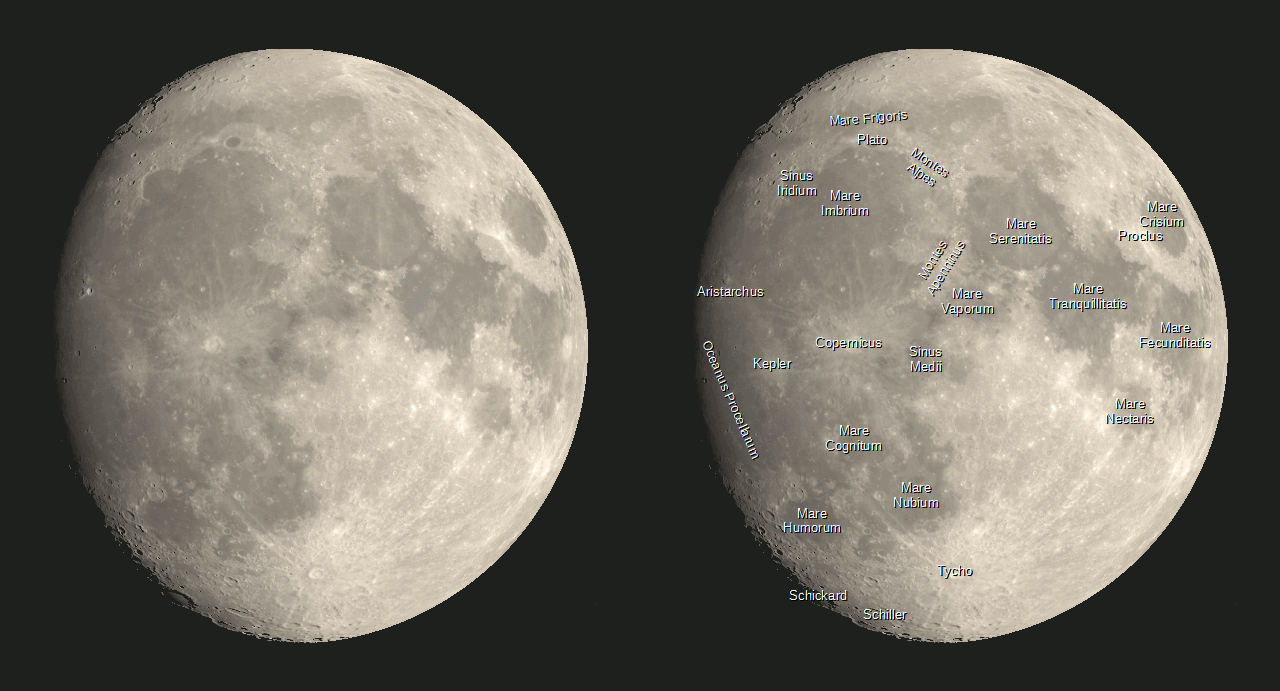
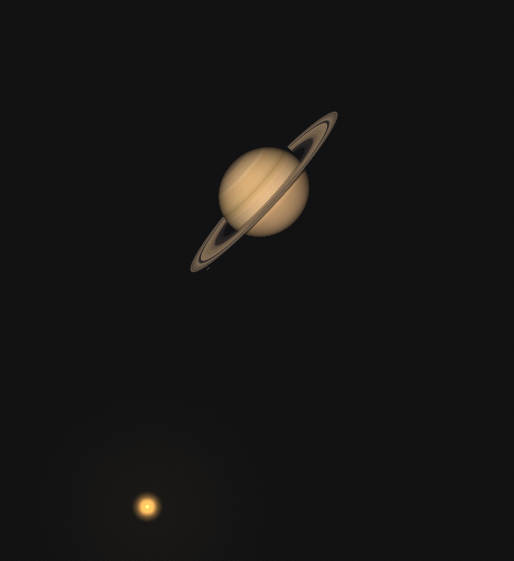
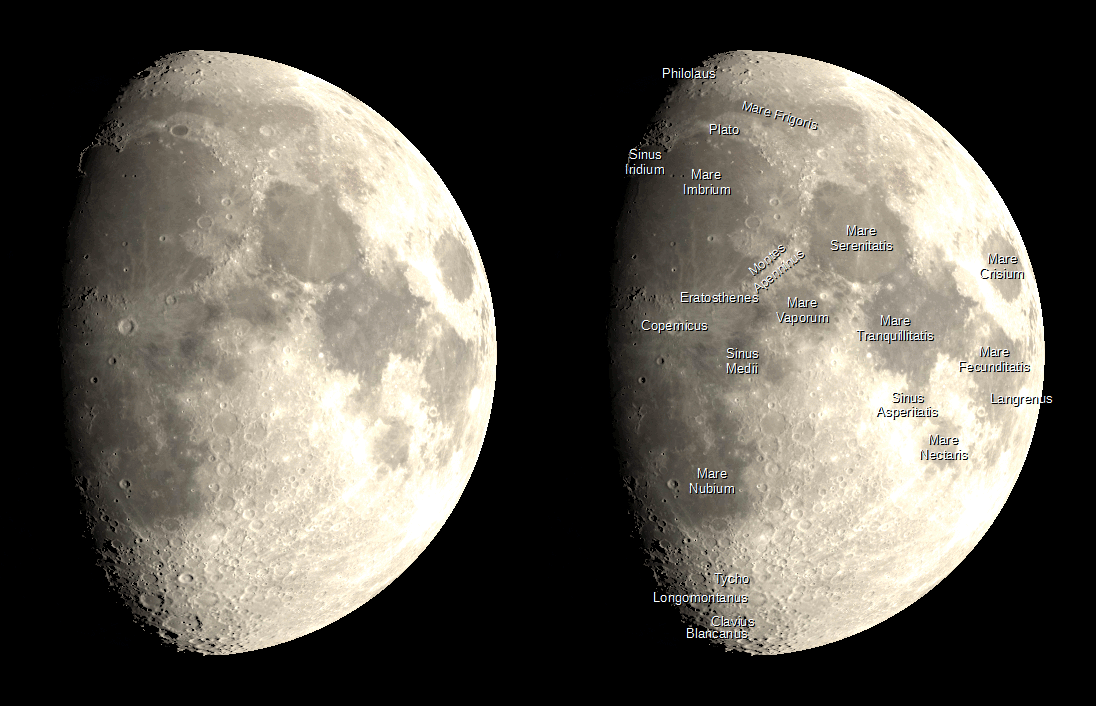
This is Bob Moler with Ephemeris for Thursday, July 27th. Today the Sun will be up for 14 hours and 51 minutes, setting at 9:14, and it will rise tomorrow at 6:24. The Moon, 2 days past first quarter, will set at 1:38 tomorrow morning.
The moon tonight is a waxing gibbous phase, so it’s more than half illuminated by the Sun. The line between light and dark on the left side of the Moon is called the terminator, which before full is the sunrise line. It is where we can see the greatest detail because the Sun is low in the Moon’s sky there, and creates the longest shadows. Compare it to the right side of the Moon which is seen at nearly solar noon where no shadows are seen, so it has a very bland appearance. One of the cool features of the gibbous moon tonight is Sinus Iridium, the Bay of Rainbows, which is on the upper left part of the terminator. Part of the mountain range that partially rings it is seen in sunlight, while that floor of the bay is still in shadow.
The astronomical event times given are for the Traverse City/Interlochen area of Michigan (EDT, UT –4 hours). They may be different for your location.
Addendum
Ephemeris: 07/26/2023 – Let’s find out where the naked-eye planets have wandered off to this week
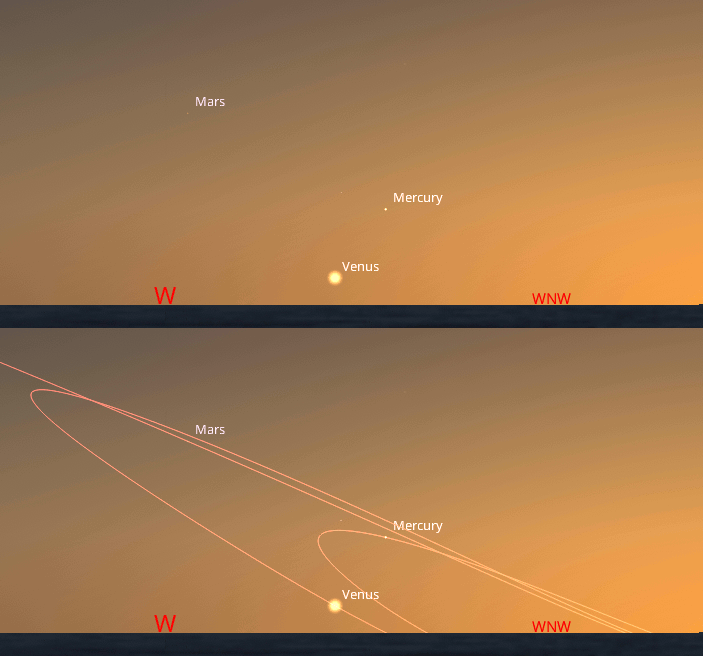
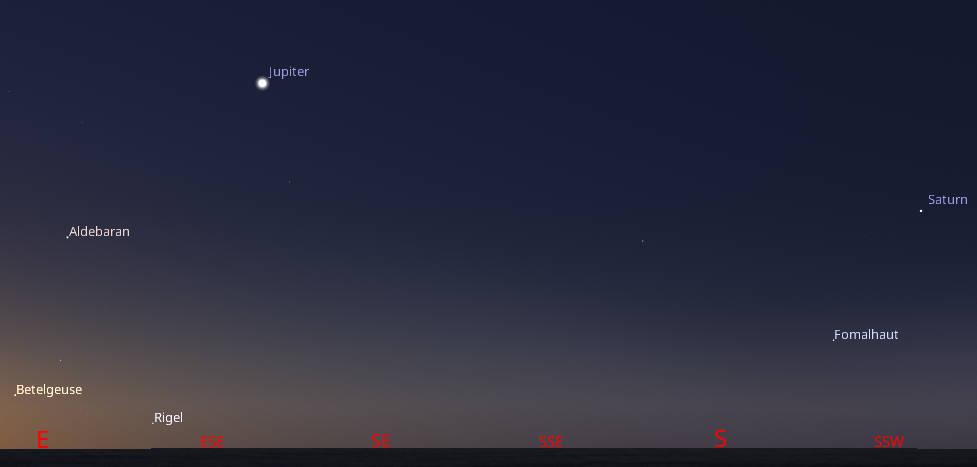
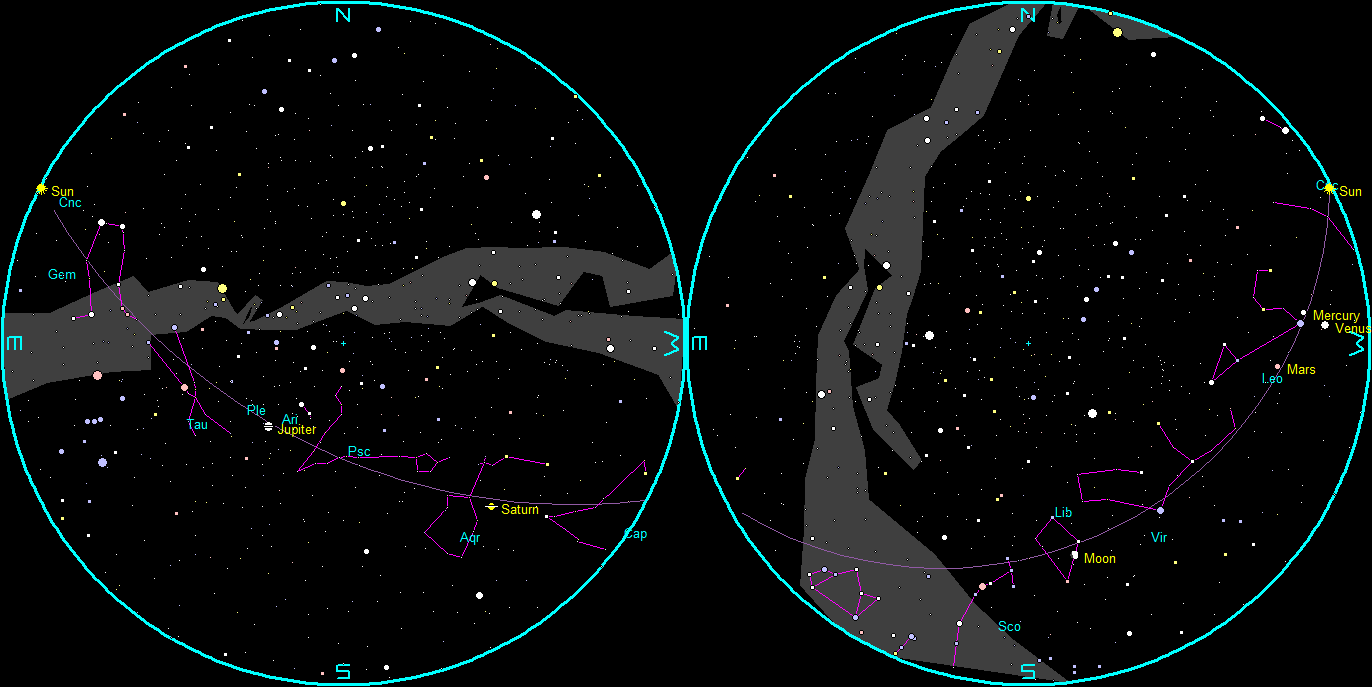
This is Bob Moler with Ephemeris for Wednesday, July 26th. Today the Sun will be up for 14 hours and 53 minutes, setting at 9:15, and it will rise tomorrow at 6:23. The Moon, 1 day past first quarter, will set at 1:08 tomorrow morning. | Let’s find out where the naked-eye planets have wandered off to this week. Venus is our hard to find Evening Star, seen very low in the west in evening twilight by 9:45 pm. It will set at 10:11 pm, Mercury might be spotted to Venus’ right and a bit above. The red planet Mars is pretty much lost in the evening twilight, above and left of Venus. Saturn will rise at 10:38 pm. And by 5:30 am, or a bit less than an hour before sunrise tomorrow, it will appear in the south-southwest, the brightest “star” in that direction. Its above the bright star Fomalhaut, normally the loneliest bright star in the sky. Jupiter will be in the east-southeast at that hour. Jupiter is the brightest star-like object in the morning sky now, near some of the bright stars of a winter’s evening.
The astronomical event times given are for the Traverse City/Interlochen area of Michigan (EDT, UT –4 hours). They may be different for your location.
Addendum
Ephemeris: 07/25/2023 – Is the universe twice as old as we think?
This is Ephemeris for Tuesday, July 25th. Today the Sun will be up for 14 hours and 55 minutes, setting at 9:16, and it will rise tomorrow at 6:22. The Moon, at first quarter today, will set at 12:44 tomorrow morning.
Is the universe twice as old as we thought? That’s a conclusion of a study printed in the monthly notices of the Royal Astronomical Society by Rajendra Gupta from the University of Ottawa, in which he postulates that the structure and chemical composition of very early galaxies found by the James Webb Space Telescope turn out to be more developed than one would expect for objects so soon after The Big Bang. The problem with hypothesizing an older universe is to explain what we see currently that have shown that the universe is 13.8 billion years old. One of the things he hypothesized was something called tired light, where light loses energy and is red-shifted not just because of the expansion of the universe but over time and distance. Stay tuned.
The astronomical event times given are for the Traverse City/Interlochen area of Michigan (EDT, UT –4 hours). They may be different for your location.
Addendum
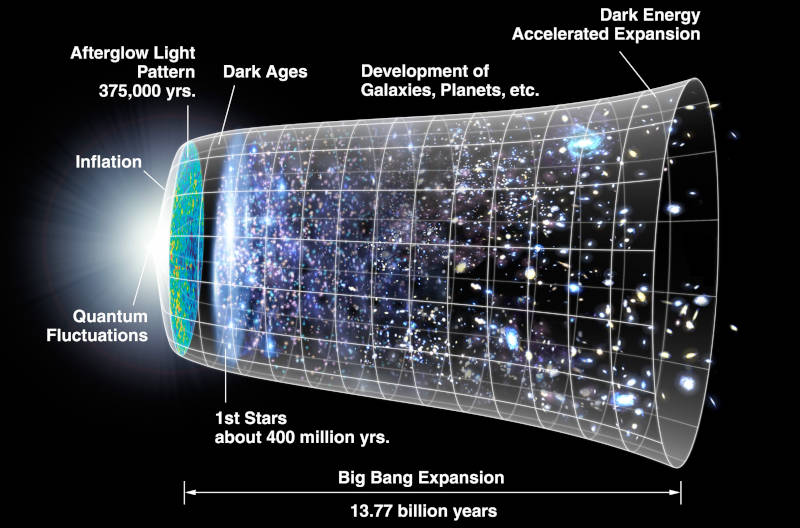
Timeline of the universe. A representation of the evolution of the universe over 13.77 billion years. The far left depicts the earliest moment we can now probe, when a period of “inflation” produced a burst of exponential growth in the universe. (Size is depicted by the vertical extent of the grid in this graphic.) For the next several billion years, the expansion of the universe gradually slowed down as the matter in the universe pulled on itself via gravity. More recently, the expansion has begun to speed up again as the repulsive effects of dark energy have come to dominate the expansion of the universe. The afterglow light seen by WMAP was emitted about 375,000 years after inflation and has traversed the universe largely unimpeded since then. The conditions of earlier times are imprinted on this light; it also forms a backlight for later developments of the universe. Public Domain.
Diagram is from Wikipedia. Above is the expansion of the universe as commonly understood. Not mentioned in the program script above, is the requirement, according to Gupta’s hypothesis, that the basic constants of the universe change over time. As Carl Sagan explained, “Extraordinary claims require extraordinary evidence.” So more evidence is needed. His hypothesis won’t be the only explanation put forth, so there will be more to test. That’s job security for astrophysicists and cosmologists.
 Bob Moler's Ephemeris Blog