Archive
Ephemeris: 06/26/2024 – Where are the naked-eye planets this week?
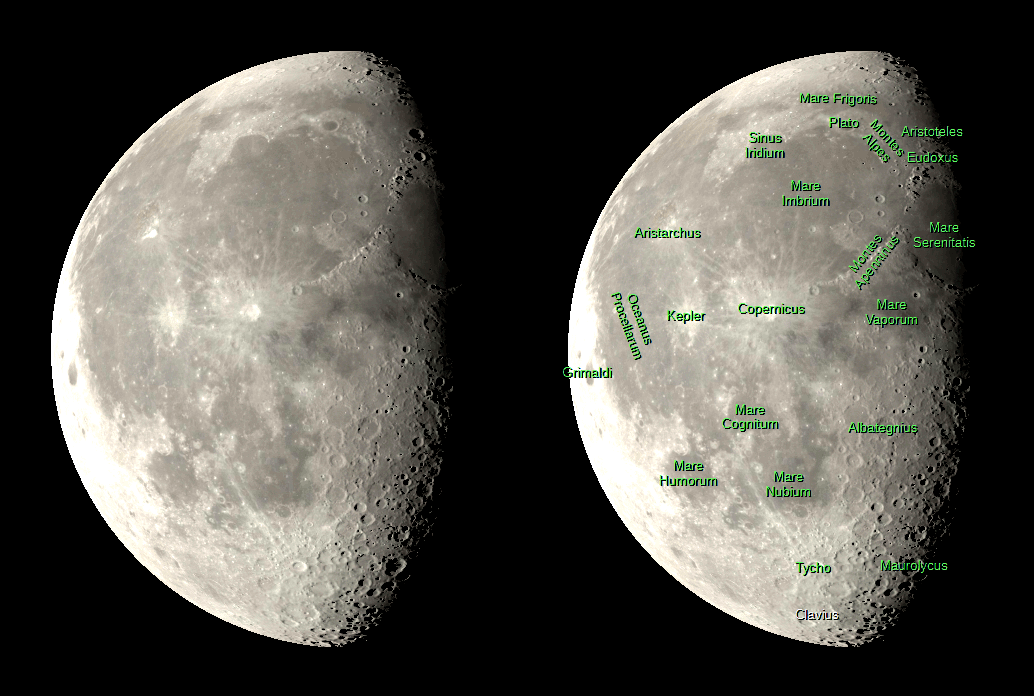
This is Bob Moler with Ephemeris for Wednesday, June 26th. Today the Sun will be up for 15 hours and 33 minutes, setting at 9:32, and it will rise tomorrow at 5:59. The Moon, 2 days before last quarter, will rise at 12:58 tomorrow morning.
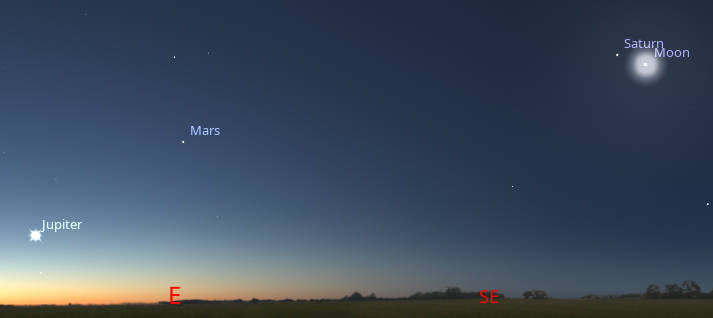
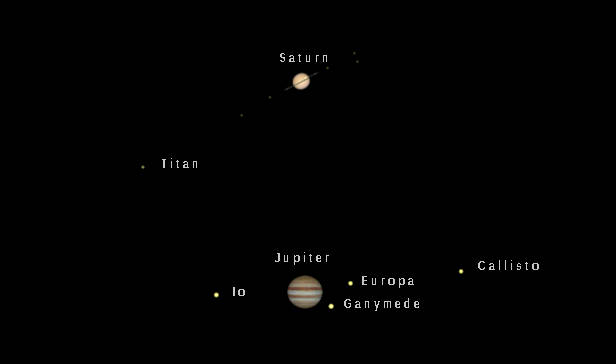
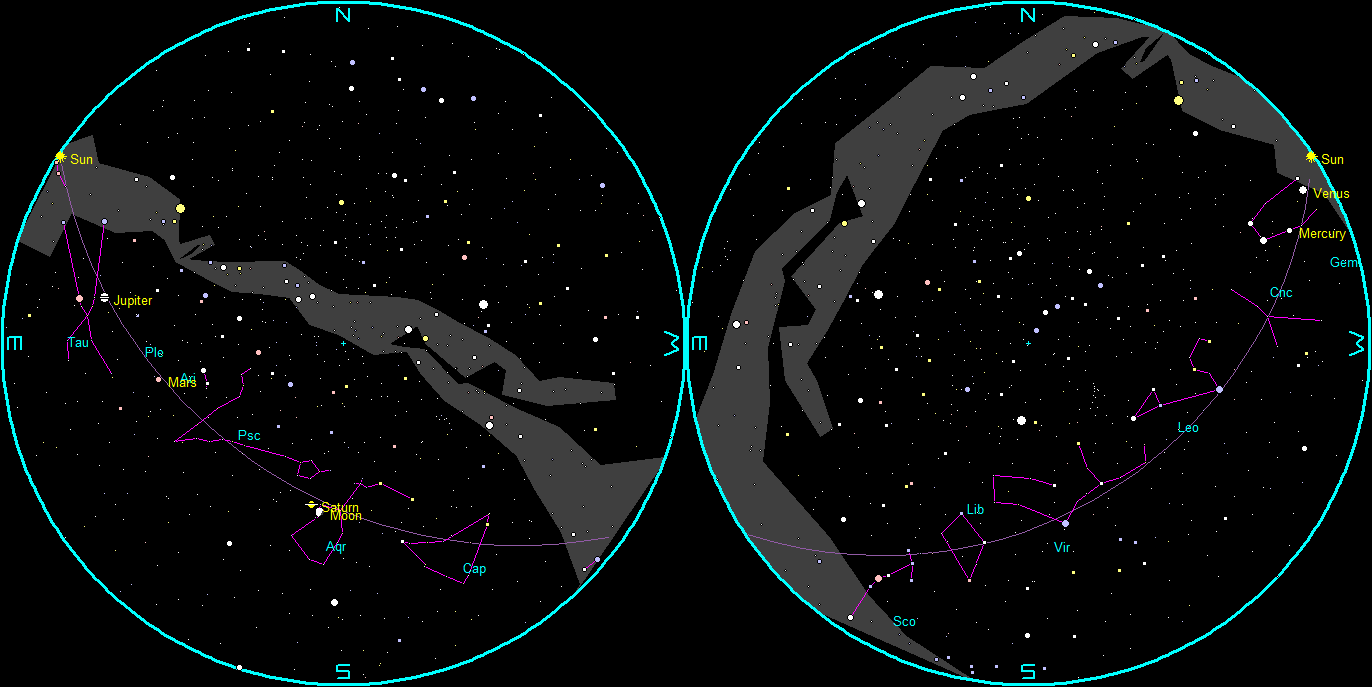
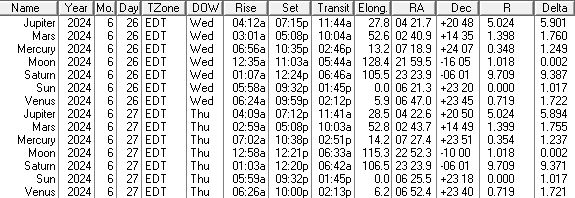
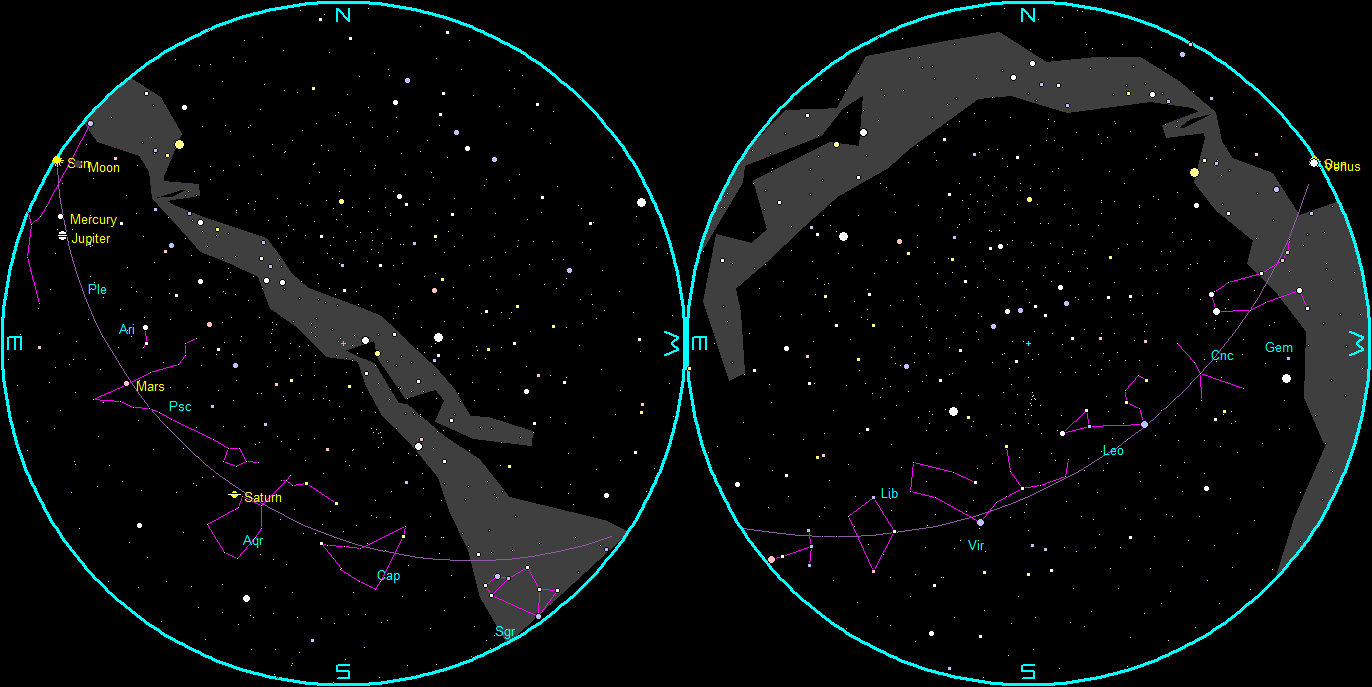
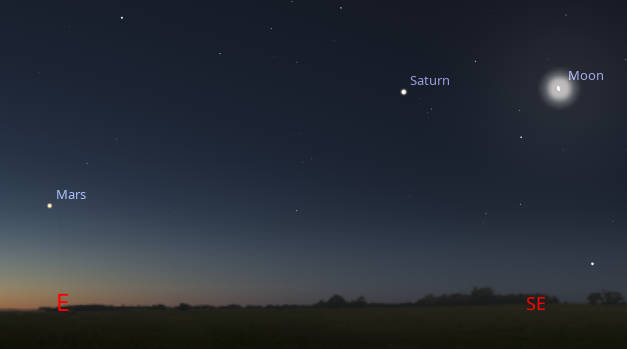
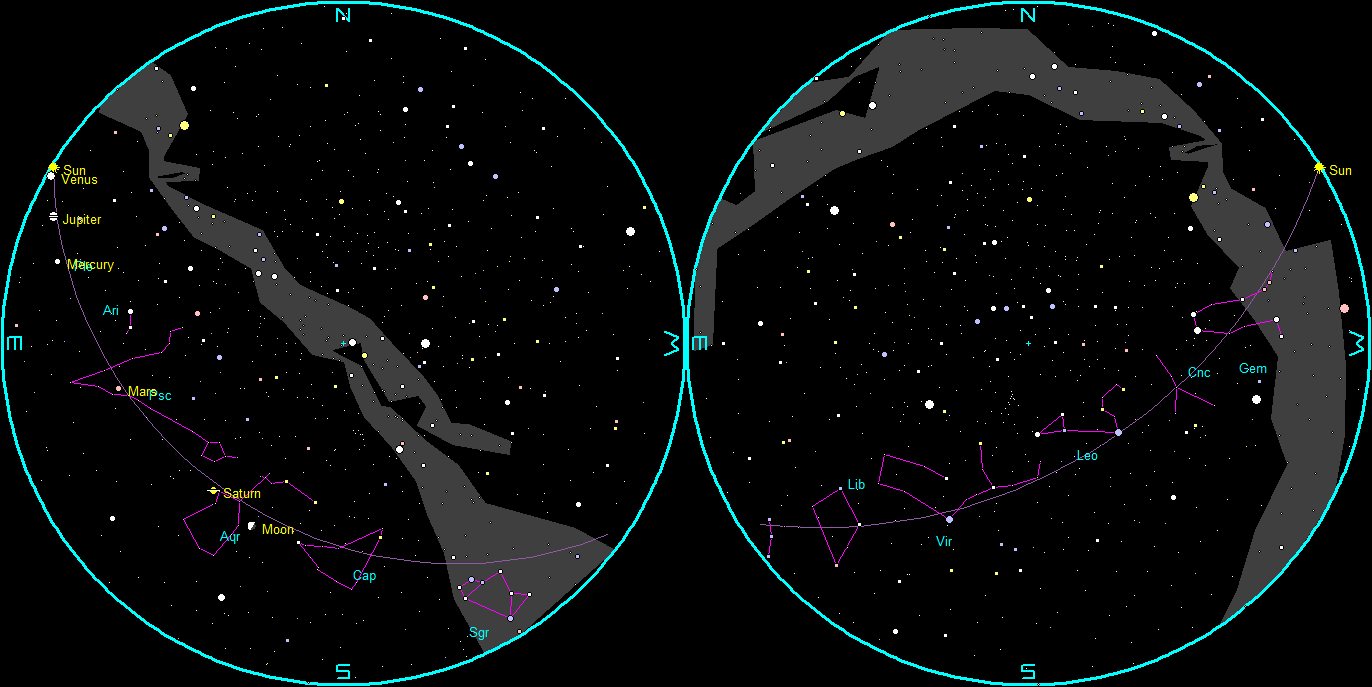
Let’s find out where the naked-eye planets have wandered off to this week. Venus and Mercury are too close to the direction of the Sun to be seen. Both are on the evening side of the Sun, but lost in its glare. Venus will appear in the evening sky next month. By 5:15 tomorrow morning, or about 45 minutes before sunrise, Saturn will be in the southeast just above and left of the Moon, and Mars will be lower in the east, and Jupiter will be very low in the east-northeast. Saturn will be a bit dimmer this year and next due to its rings being nearly edge on to us and not reflecting as much light. Saturn will rise at 1:15 am, Mars at 3:07 am, and Jupiter at 4:19 am.
The astronomical event times given are for the Traverse City/Interlochen area of Michigan (EDT, UT–4 hours). They may be different for your location.
Addendum
Ephemeris: 06/24/2024 – Waiting for a bright nova*
This is Ephemeris for Monday, June 24th. Today the Sun will be up for 15 hours and 34 minutes, setting at 9:32, and it will rise tomorrow at 5:58. The Moon, 3 days past full, will rise at 12:09 tomorrow morning.
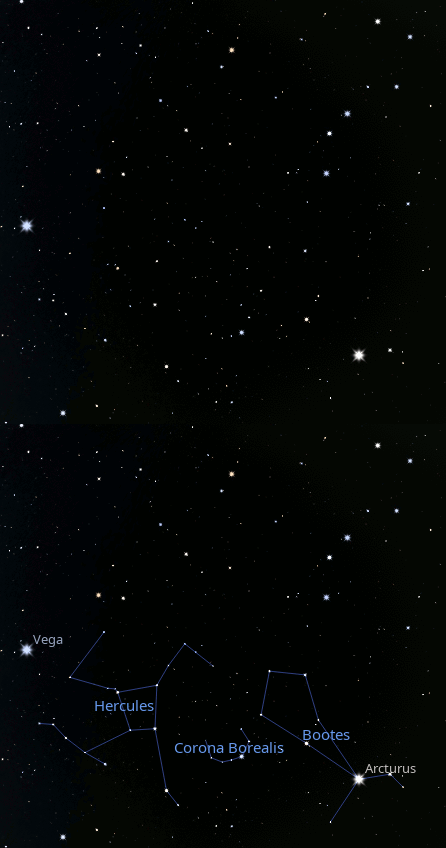
The small constellation of Corona Borealis, or Northern Crown appears about a third of the way between the bright star Arcturus, high in the south and the star Vega in the east. It is a small semicircle of stars with the brighter star called Alphecca near the center of the arc of stars. Sometime this year, we hope, another bright star will appear there. A nova of a dim star brightening about 1,600 times normal near that circle of stars. It has done it before. It has the designation of T Coronae Borealis (T CrB for short), and is a recurrent nova of a white dwarf star that suffers an explosion about once every 80 years. So this year we need to be looking out for that stellar explosion, which will be bright for only a few days, so one must be vigilant to spot it.
The astronomical event times given are for the Traverse City/Interlochen area of Michigan (EDT, UT–4 hours). They may be different for your location.
* The word ‘nova’ comes from the Latin Nova Stella, meaning New Star.
Addendum
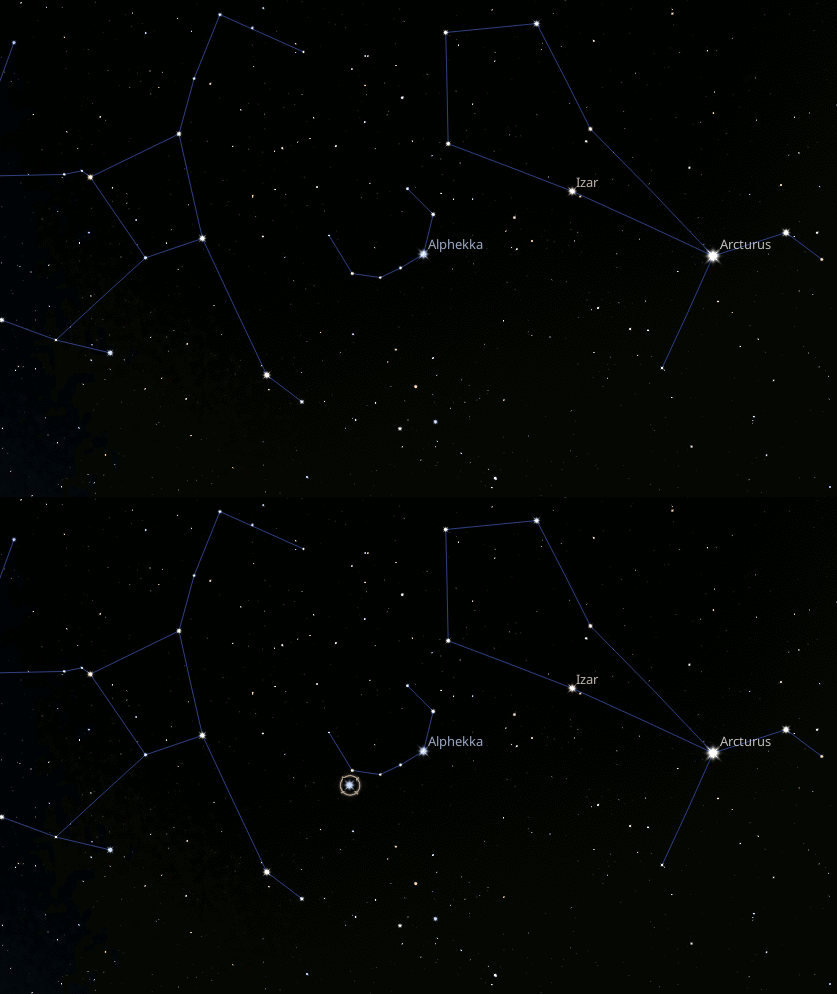
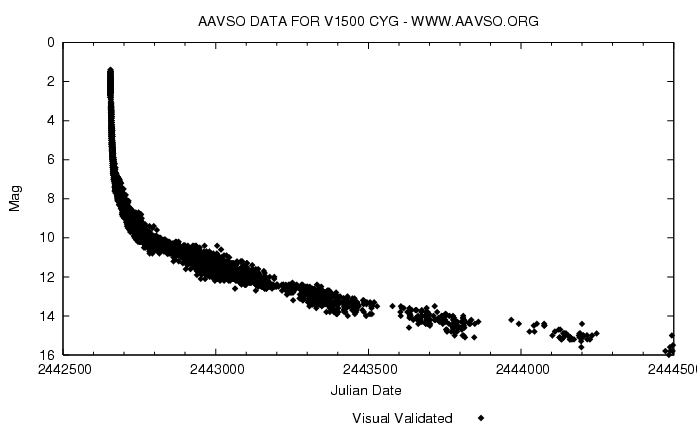
NASA has post about T CrB here: https://www.nasa.gov/centers-and-facilities/marshall/nasa-global-astronomers-await-rare-nova-explosion/
Ephemeris: 06/21/2024 – Saturn’s rings are almost edge-on this year
This is Ephemeris for Friday, June 21st. Today the Sun will be up for 15 hours and 34 minutes, setting at 9:32, and it will rise tomorrow at 5:57. The Moon, at full today, will rise at 9:57 this evening.
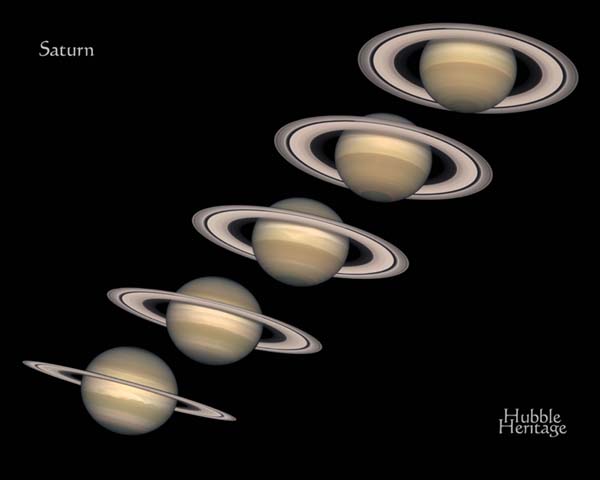
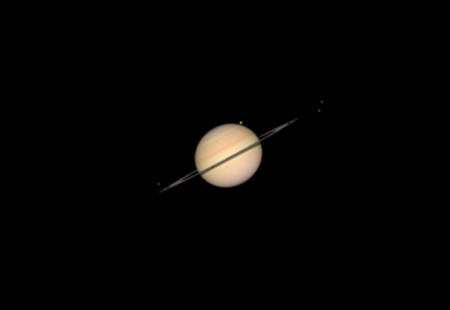
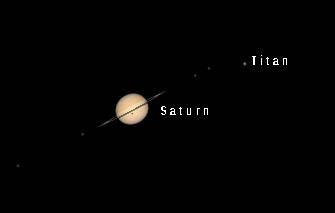
Saturn’s rings change their aspect or their tilt to us over a period of nearly 30 years, the time it takes Saturn to orbit the Sun. Saturn has an axial tilt like the Earth does in its case it is 27° compared to the Earth’s 23 1/2 degrees. So as Saturn moves around the Sun and us we see those rings at different tilts to us. Currently, the angle of the rings to us is nearing zero degrees, meaning that they are going edge on to us. And being perhaps less than 100 meters thick, they will disappear entirely in telescopes from the Earth. That will happen on March 23rd next year. However, they will not go edge on to the Sun until May 6th. So between March 23rd and May 6th we will be we will be looking at the unlit or dark side of the rings. Since we’re not at in line with the Sun and Saturn, the Sun will still be illuminating the rings slightly, but we will be looking at the dark side of the rings.
The astronomical event times given are for the Traverse City/Interlochen area of Michigan (EDT, UT–4 hours). They may be different for your location.
Addendum
Ephemeris: 06/19/2024 – Where have the naked-eye planets wandered off to this week?
This is Ephemeris for Juneteenth, Wednesday, June 19th. Today the Sun will be up for 15 hours and 34 minutes, setting at 9:31, and it will rise tomorrow at 5:57. The Moon, 2 days before full, will set at 4:15 tomorrow morning.
Let’s find out where the naked-eye planets have wandered off to this week, and see what planets are left. Venus and Mercury are too close to the direction of the Sun to be seen. Both are on the evening side of the Sun, but lost in its glare. It will appear in the evening sky next month. By 5:15 tomorrow morning, or about 45 minutes before sunrise, Saturn will be in the southeast and Mars will be lower in the east, and Jupiter will be very low in the east-northeast. In telescopes, Saturn will look fairly different this year and next with its rings nearly edge on to us. Saturn will rise at 1:35 am, Mars at 3:19 am, and Jupiter, making its first morning appearance, will rise at 4:38 am.
The astronomical event times given are for the Traverse City/Interlochen area of Michigan (EDT, UT–4 hours). They may be different for your location.
Addendum
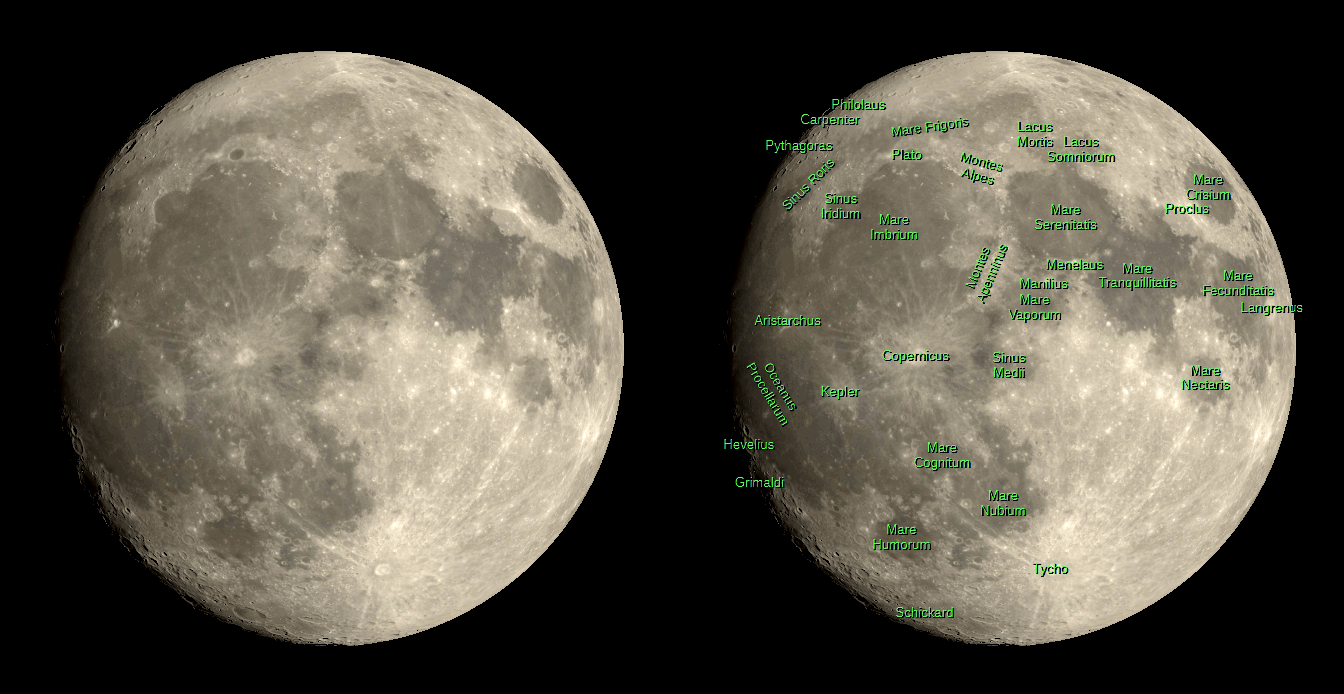
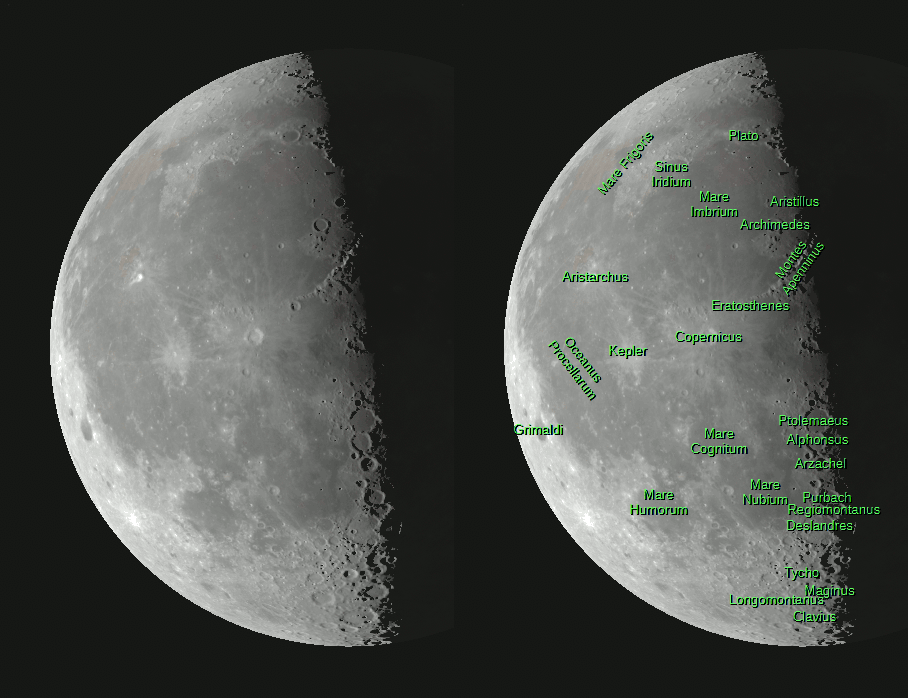
Translations of some lunar feature names according to Virtual Moon Atlas
Lacus Mortis – Lake of Death
Lacus Somniorum – Lake of Dreams
Mare Cognitum – Sea of Knowledge
Mare Crisium – Sea of Crises
Mare Fecunditatis – Sea of Fruitfulness
Mare Frigoris – Sea of Cold
Mare Humorum – Sea of Moisture
Mare Imbrium – Sea of Showers
Mare Nectaris – Sea of Nectar
Mare Nubium – Sea of Clouds
Mare Serenitatis – Sea of Serenity
Mare Tranquillitatis – Sea of Tranquility
Mare Vaporum – Sea of Vapors
Montes Alpes – Alps Mountains
Montes Apenninus – Apennines Mountains
Oceanus Procellarum – Ocean of Storms
Sinus Iridium – Bay of Rainbows
Sinus Medii – Central Bay
Sinus Roris – Bay of Moisture
Craters are named for persons, real or otherwise.
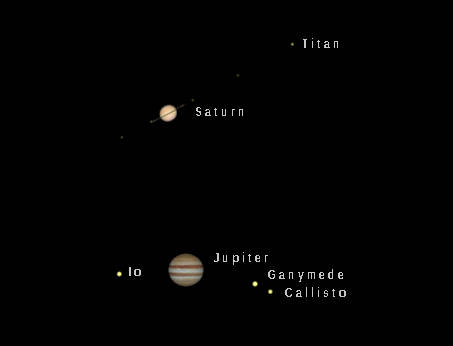
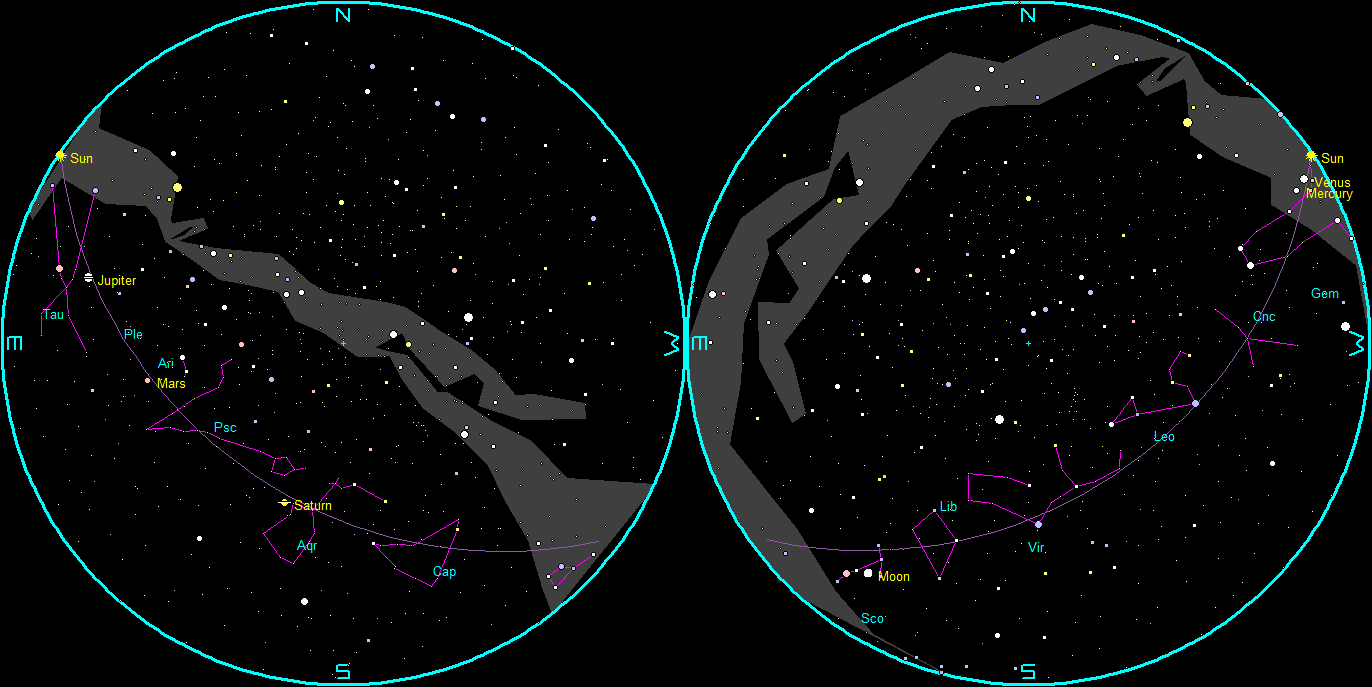
Ephemeris: 06/12/2024 – Where are the naked-eye planets this week?
This is Ephemeris for Wednesday, June 12th. Today the Sun will be up for 15 hours and 32 minutes, setting at 9:29, and it will rise tomorrow at 5:56. The Moon, 2 days before first quarter, will set at 1:49 tomorrow morning.
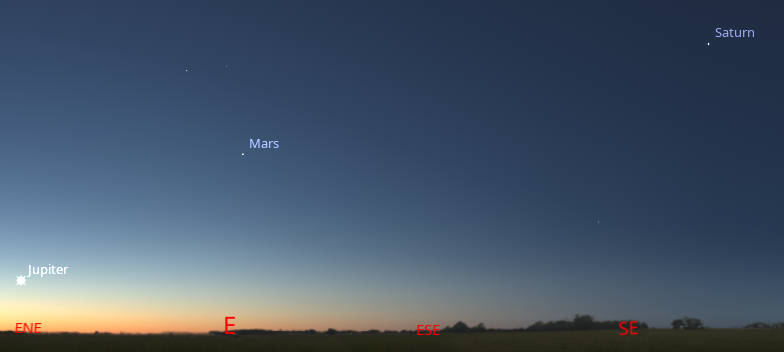
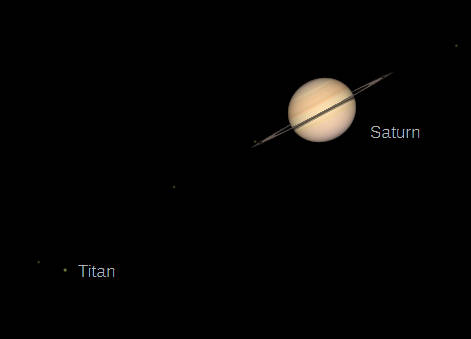
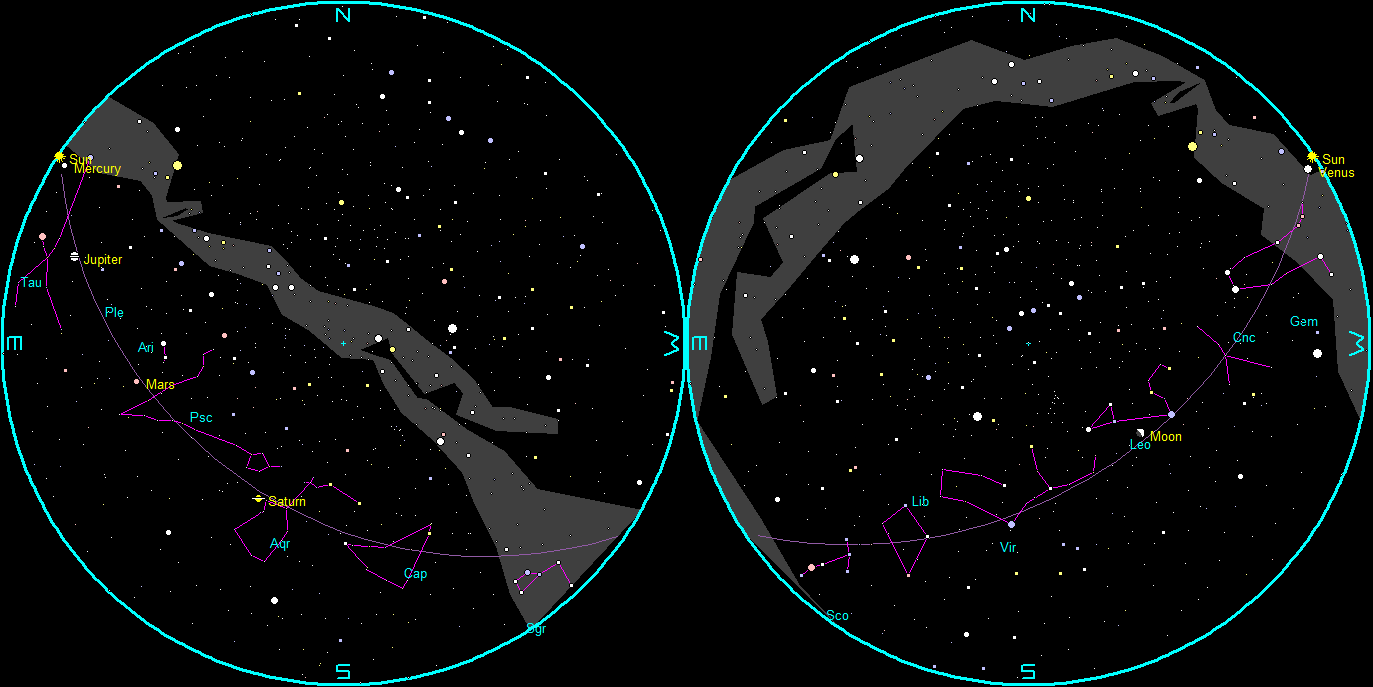
Let’s find out where the naked-eye planets have wandered off to this week, and see what planets are left. Venus and Mercury are too close to the direction of the Sun to be seen. Venus just entered the evening sky last week when it passed behind the Sun in conjunction. It will appear in the evening sky next month. Jupiter, the second-brightest planet still is a week or so from being spotted in the morning, since it rises about an hour before the Sun. By 5 tomorrow morning, or about an hour before sunrise, Saturn will be in the southeast and Mars will be lower in the east. In telescopes, Saturn will look fairly different this year and next with its rings nearly edge on to us. They will open up a bit through October before closing again. They are only 2 degrees from being edge on to us.
The astronomical event times given are for the Traverse City/Interlochen area of Michigan (EDT, UT–4 hours). They may be different for your location.
Addendum
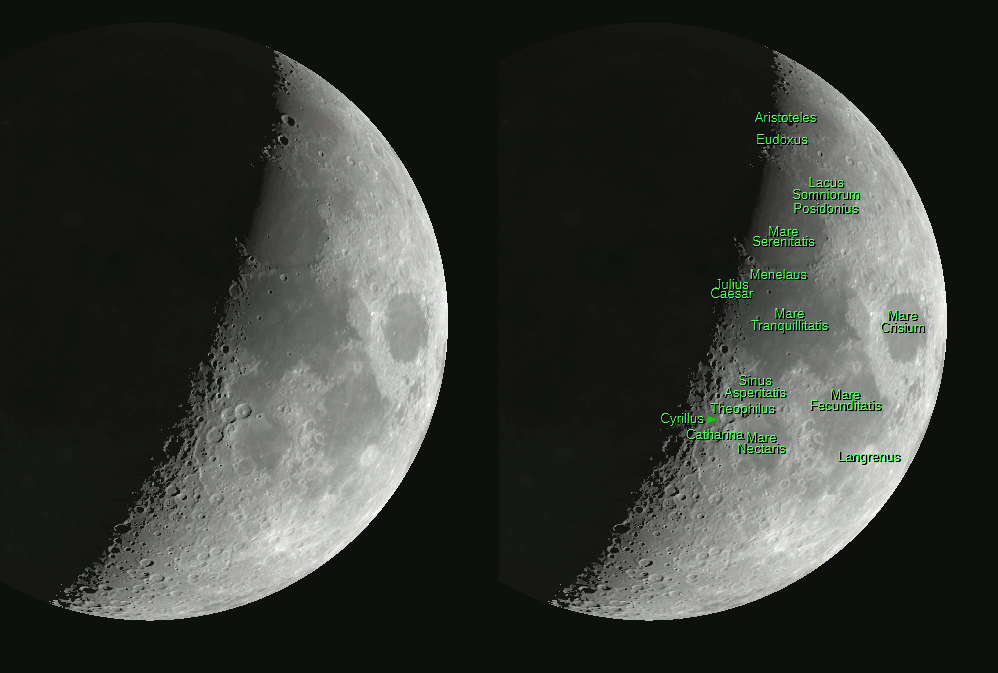
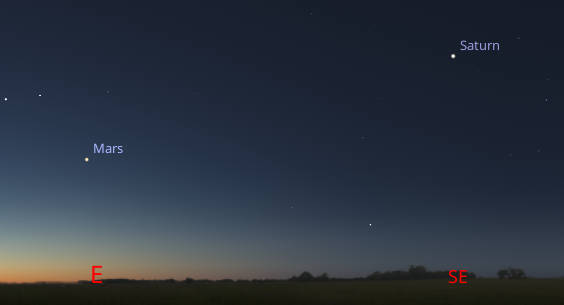
Ephemeris: 06/10/2024 – Finding Draco the Dragon
This is Ephemeris for Monday, June 10th. Today the Sun will be up for 15 hours and 31 minutes, setting at 9:28, and it will rise tomorrow at 5:56. The Moon, halfway from new to first quarter, will set at 1:09 tomorrow morning.
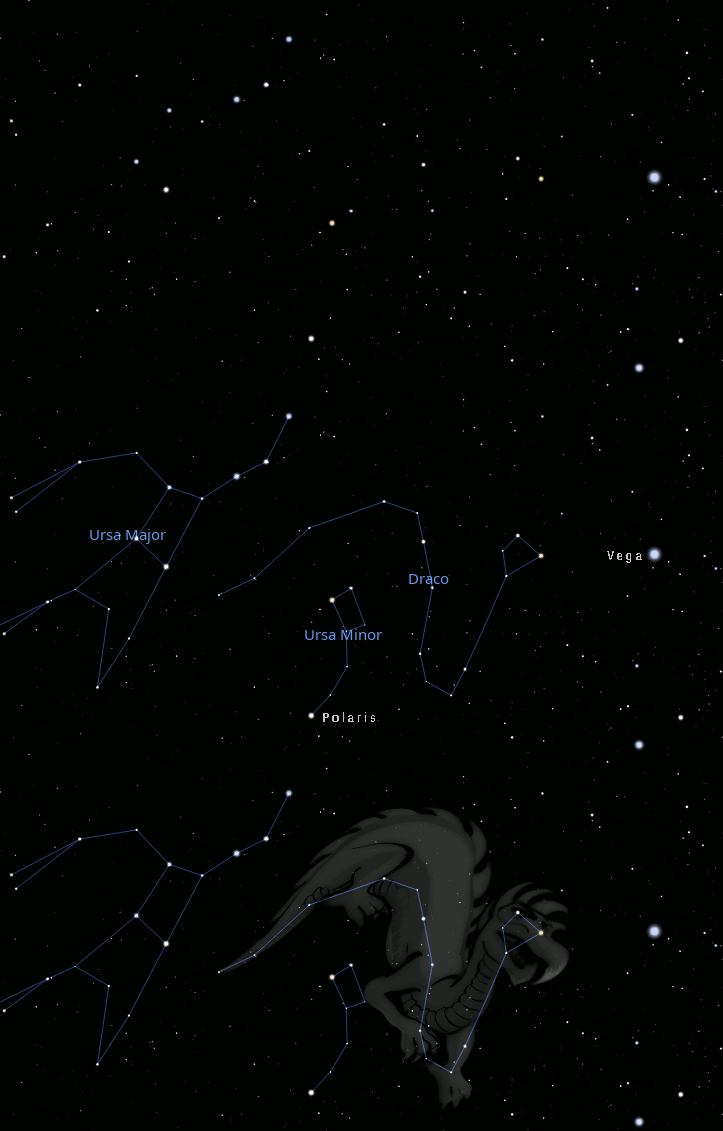
High in the northern sky at 11 p.m. lies the twisted constellation, that of Draco the dragon. This dragon is more like the snakelike Chinese dragon than the dinosaur-like dragon of European legend. I find it better to start at the tail of Draco, to trace him out in the stars. Draco’s tail starts, or ends, between the bowl of the Big Dipper and the Little Dipper high in the north-northwest. The Dragon is seen in a line of stars that extends parallel to the handle of the Big Dipper before curving around the bowl of the Little Dipper then bends back down to the level of Polaris in the north-northeast before turning toward the east. The head of Draco is an odd box of stars near the bright star Vega, high in the east. Though not made up of very bright stars, Draco has an easy shape to trace.
The astronomical event times given are for the Traverse City/Interlochen area of Michigan (EDT, UT–4 hours). They may be different for your location.
Addendum
Ephemeris: 06/05/2024 – Where have the naked-eye planets wandered off to this week?
Wonder why I use the term wander? Planets, definitely don’t wander. They do not move aimlessly, but their motions behave by the action of gravitation discovered by Newton and Einstein. However, we do call these bodies planets, from the Greek “Planetes” which means wanderer. By the time of Aristotle circa 4th century BCE, they realized there was a method to their motions. Except for Aristarchus, they all got it wrong. But they did realize that the planet’s motions were predictable.
This is Ephemeris for Wednesday, June 5th. Today the Sun will be up for 15 hours and 26 minutes, setting at 9:24, and it will rise tomorrow at 5:57. The Moon, 1 day before new, will rise at 5:32 tomorrow morning.
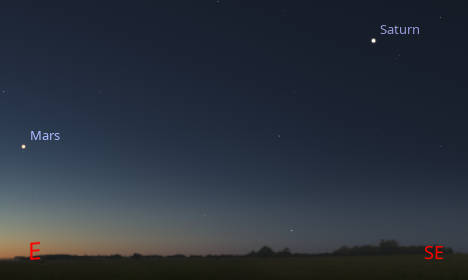
Let’s find out where the naked-eye planets have wandered off to this week, and see what planets are left. Venus, Mercury and Jupiter are now too close to the direction of the Sun to be seen. Venus just entered the evening sky yesterday when it passed behind the Sun in conjunction. It will appear in the evening sky next month, while Jupiter may be visible in the morning later this month. By 5 tomorrow morning, or about an hour before sunrise, Saturn will be low in the southeast and Mars will be lower in the east. In telescopes, Saturn will look fairly different this year and next with its rings nearly edge on to us. They will open up a bit through October before closing again. They are only 2 degrees from being edge on to us.
The astronomical event times given are for the Traverse City/Interlochen area of Michigan (EDT, UT–4 hours). They may be different for your location.
Addendum
Ephemeris: 06/04/2024 – Finding the Little Dipper
This is Ephemeris for Tuesday, June 4th. Today the Sun will be up for 15 hours and 25 minutes, setting at 9:24, and it will rise tomorrow at 5:58. The Moon, 2 days before new, will rise at 4:51 tomorrow morning.
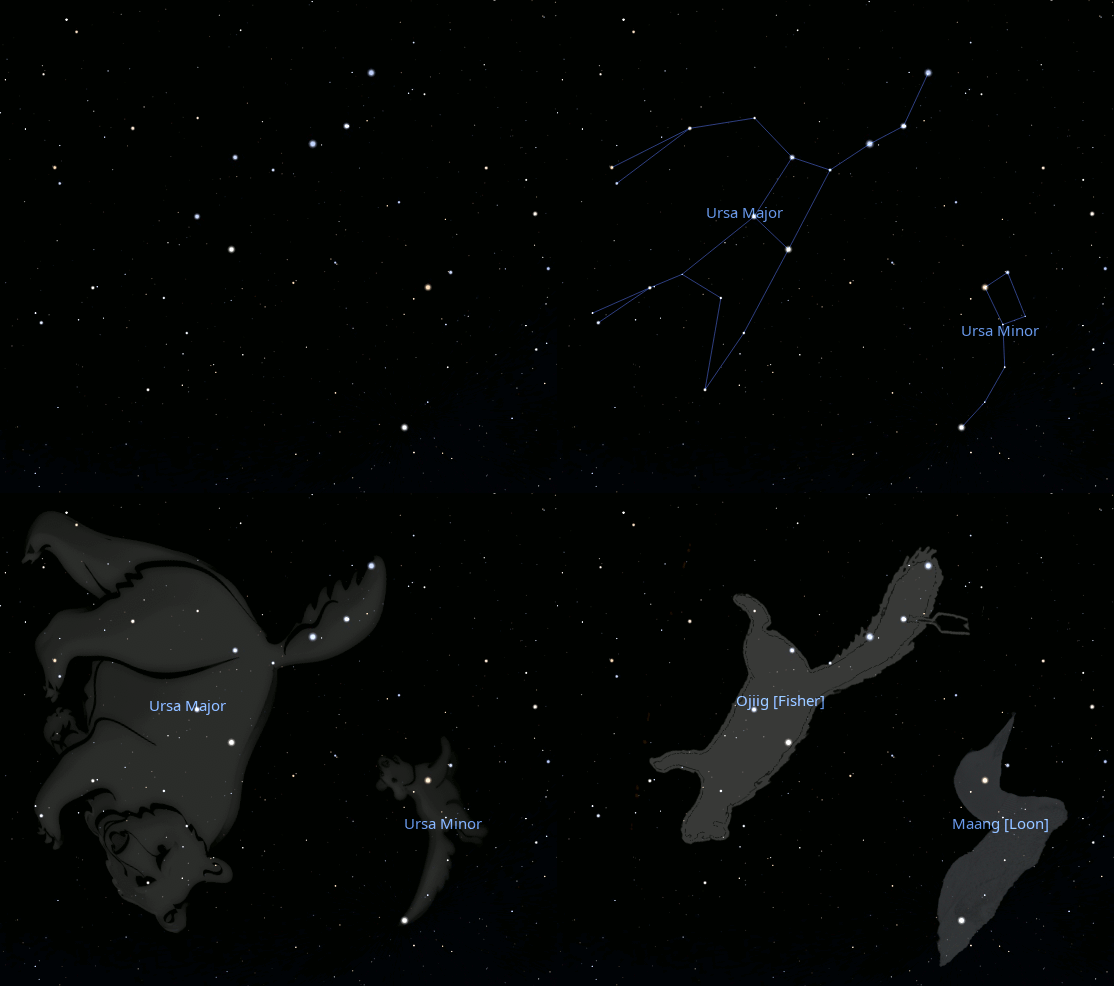
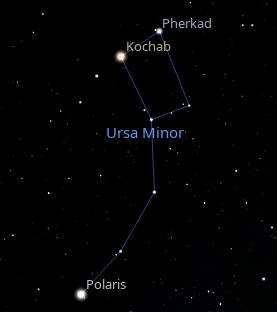
One of the constellations I don’t talk about much, except in passing is Ursa Minor, the Little Bear with an impossibly long tail. It is better known as the Little Dipper. As a dipper goes, its handle is bent the wrong way, like someone stepped on it. Anyway, this time of year in the evening, it’s standing on the tip of it’s handle, which is the North Star, Polaris. Polaris is pointed to by the front two stars of the Big Dipper. As dippers go they pour their contents into each other. The second and third-brightest stars of the Little Dipper are at the front of the bowl, and are Kochab and Pherkad, the Guard Stars, that is, Guardians of the Pole. To the Anishinaabe native peoples of our area the Little Dipper is Maang, the Loon.
The astronomical event times given are for the Traverse City/Interlochen area of Michigan (EDT, UT–4 hours). They may be different for your location.
Addendum
Ephemeris: 05/29/2024 – Where have the naked-eye planets wandered off to this week?
This is Ephemeris for Wednesday, May 29th. Today the Sun will be up for 15 hours and 17 minutes, setting at 9:19, and it will rise tomorrow at 6:01. The Moon, 1 day before last quarter, will rise at 2:31 tomorrow morning.
Let’s find out where the naked-eye planets have wandered off to this week, and see what planets are left. Venus, Mercury and Jupiter are now too close to the direction of the Sun to be seen. Venus will appear in the evening sky by July, while Jupiter may be visible in the morning in late June. By 5:15 tomorrow morning, or about 45 minutes before sunrise, Saturn will be low in the southeast and Mars will be lower still in the east. In telescopes, Saturn will look fairly different this year and next with its rings nearly edge on to us. They will open up a bit through October before closing again. We won’t see the rings go exactly edge on because Saturn will be too close to the Sun in the sky on March 23rd next year. After that, the rings will open up again.
The astronomical event times given are for the Traverse City/Interlochen area of Michigan (EDT, UT–4 hours). They may be different for your location.
Addendum
Ephemeris: 05/28/2024 – Finding Spica and Virgo
This is Ephemeris for Tuesday, May 28th. Today the Sun will be up for 15 hours and 15 minutes, setting at 9:18, and it will rise tomorrow at 6:01. The Moon, 2 days before last quarter, will rise at 2:06 tomorrow morning.
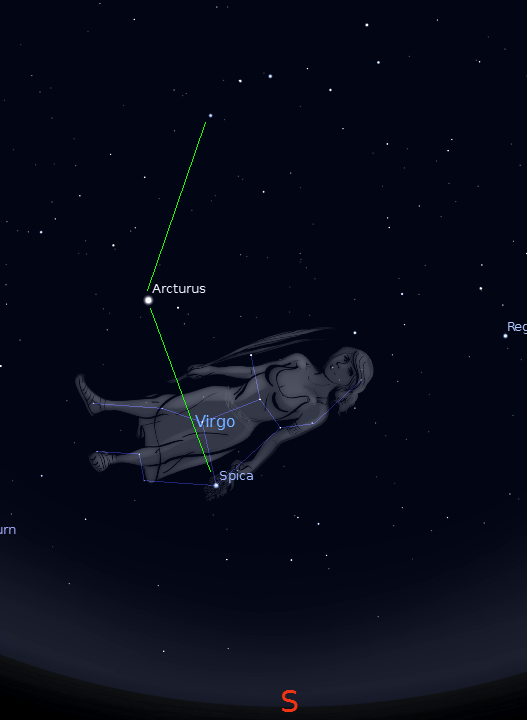
The Big Dipper, near the zenith at 10:30 pm points to several stars and constellations. It’s handle points to two bright stars. First we follow the arc of the handle to the bright orange star Arcturus, the 4th brightest nighttime star. The reason I say nighttime is that the Sun is a star also, but by definition is not out at night. The arc to Arcturus is a way to find Arcturus and a clue to its name. Arcturus, high in the south-southeast, lies at the base point of the kite shaped constellation of Boötes the herdsman. From Arcturus, straighten out the arc to a spike and one soon arrives at Spica a blue-white star in Virgo the virgin, now in the south. Spica is also sometimes pronounced ‘Speeka’.
The astronomical event times given are for the Traverse City/Interlochen area of Michigan (EDT, UT–4 hours). They may be different for your location.
Addendum