Archive
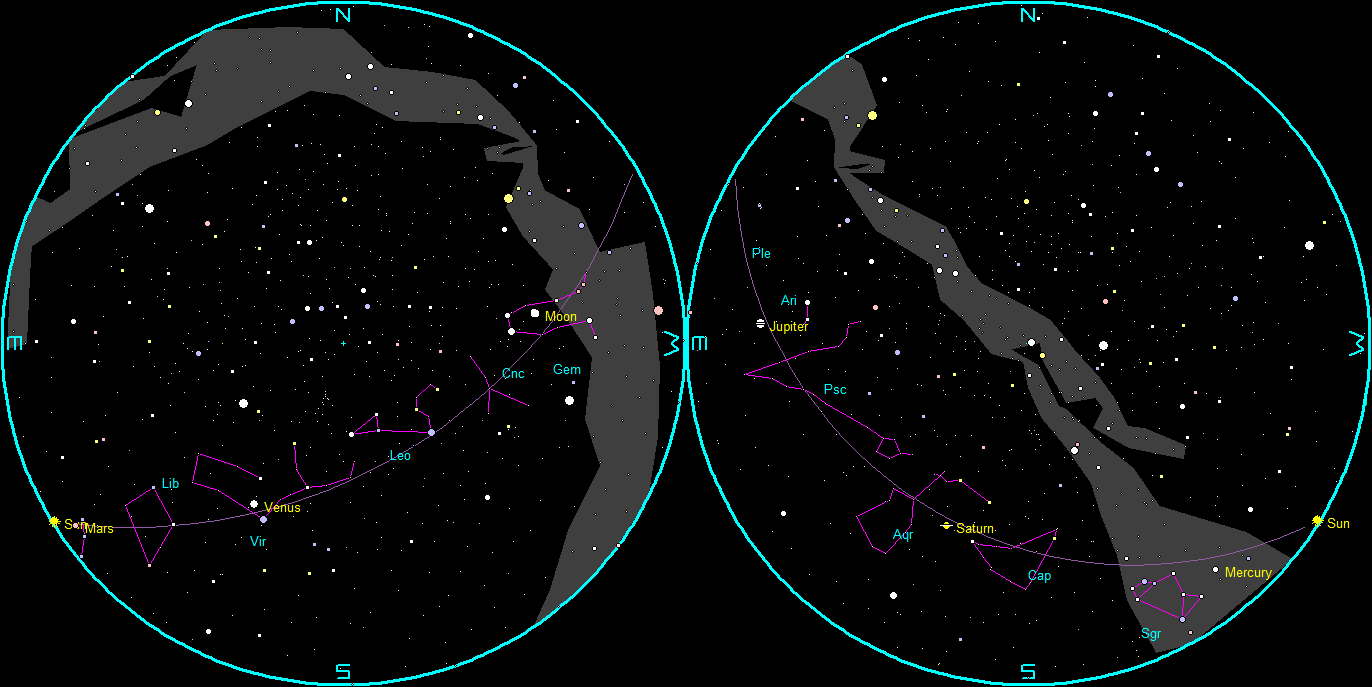
Ephemeris: 12/13/2023 – Where are the naked eye planets this week?
This is Bob Moler with Ephemeris for Wednesday, December 13th. Today the Sun will be up for 8 hours and 50 minutes, setting at 5:02, and it will rise tomorrow at 8:12. The Moon, 1 day past new, will set at 5:22 this evening.
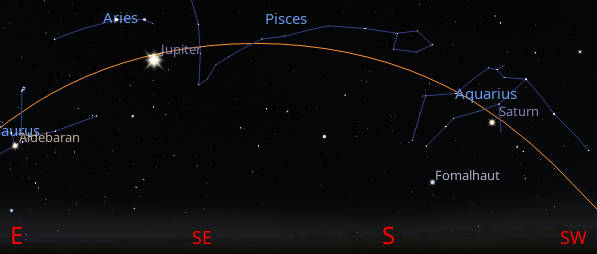
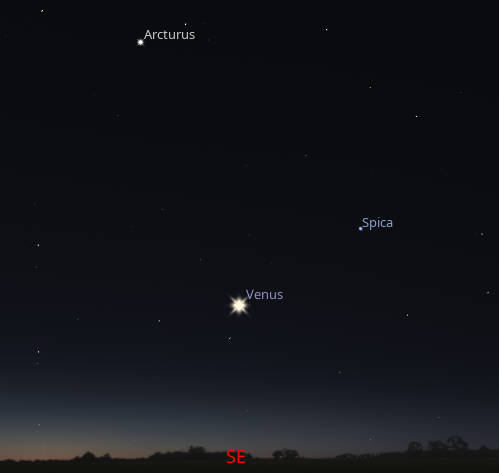
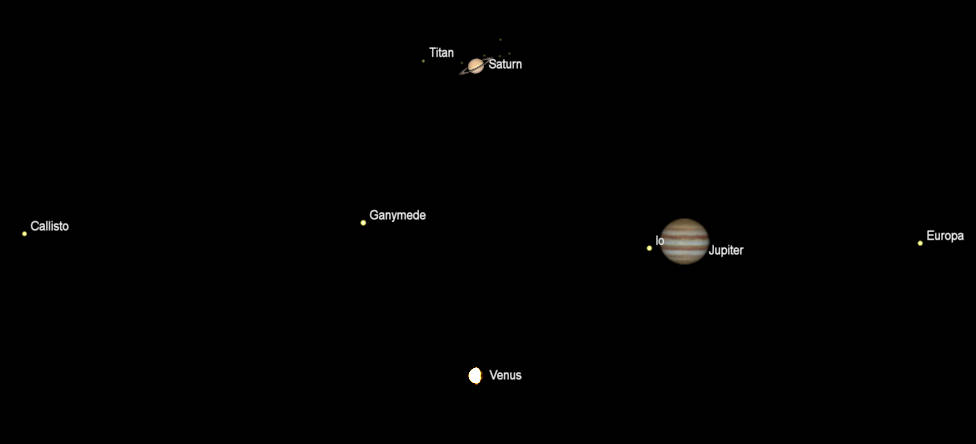
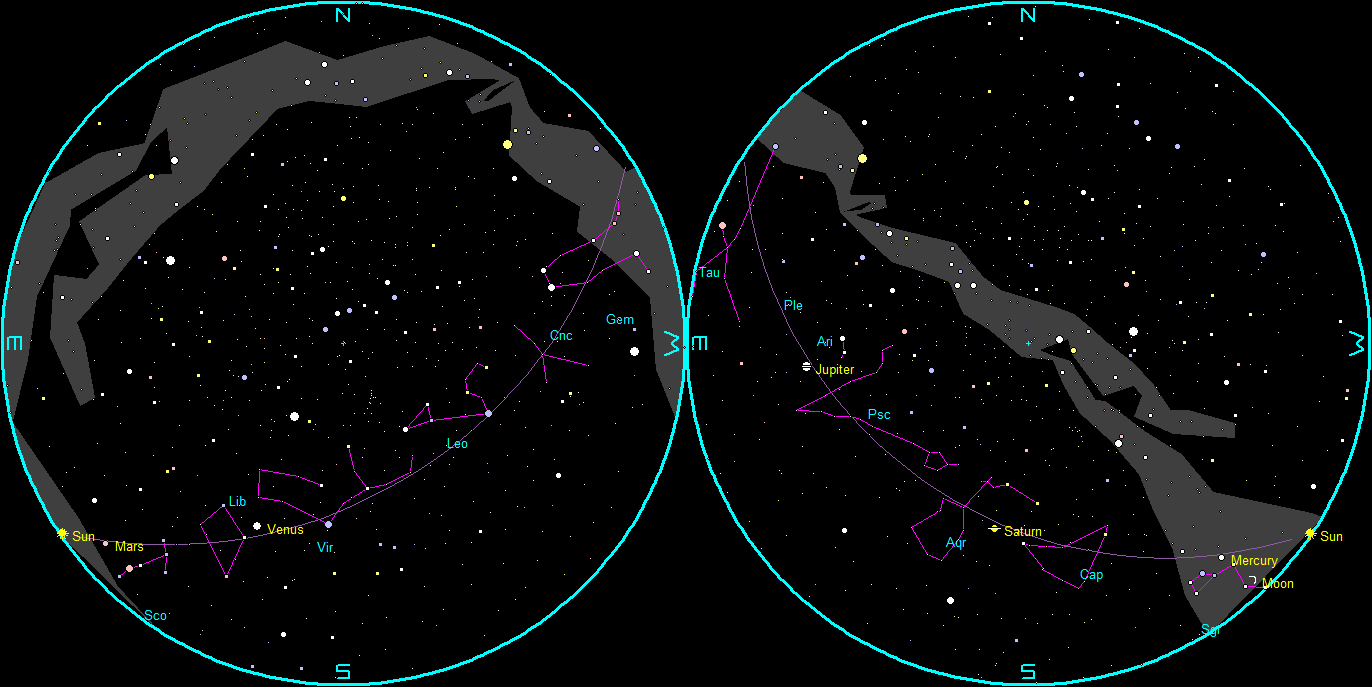
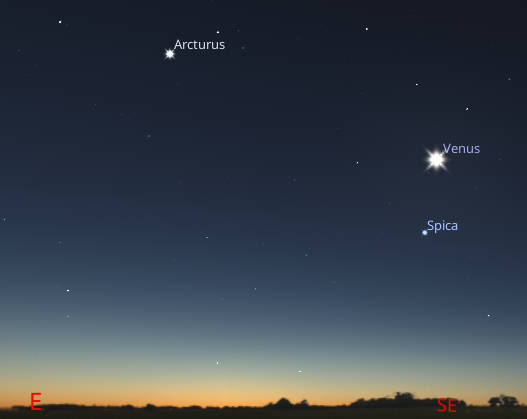
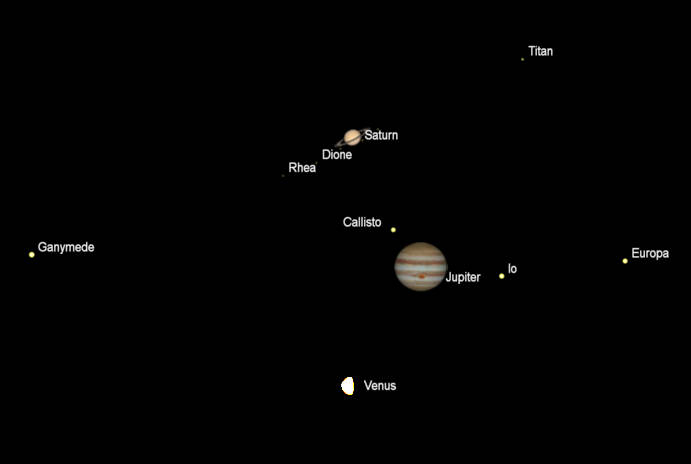
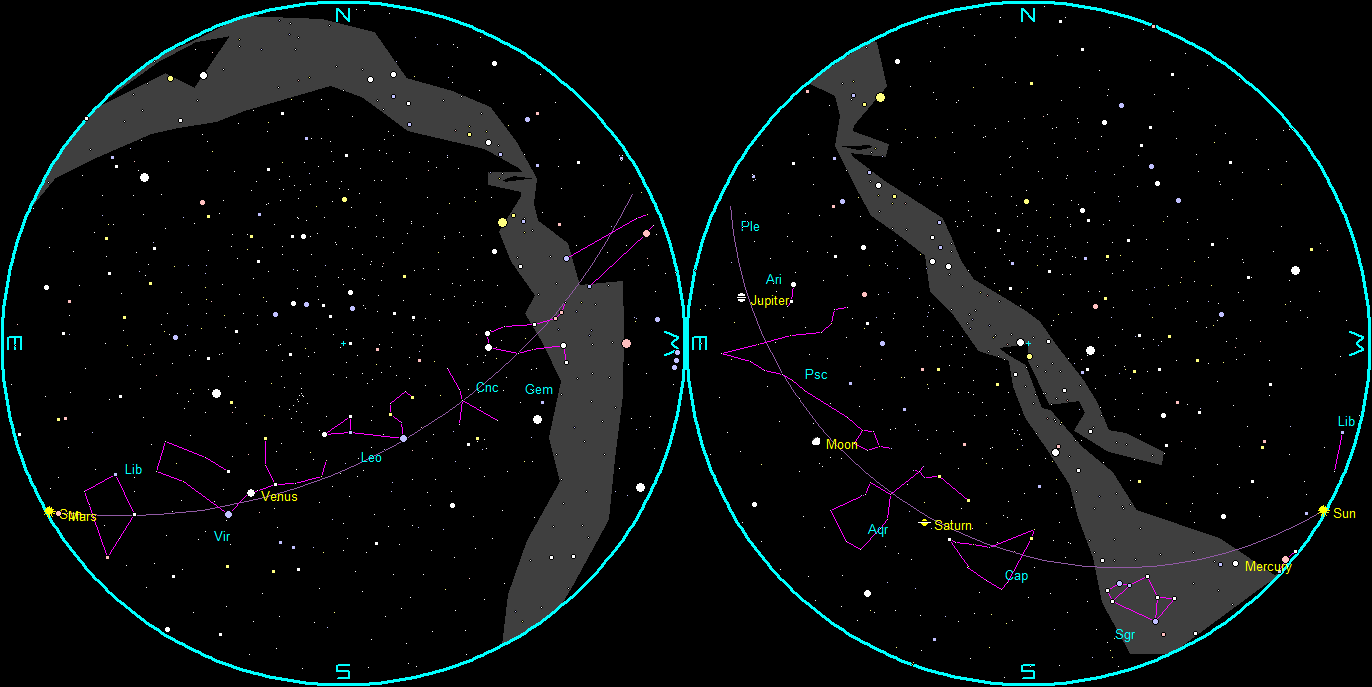
Let’s find out where the naked-eye planets have wandered off to this week. Three of those five planets are now visible, but Mercury sets too close to sunset to be seen. And Mars rises too close to sunrise. Saturn and Jupiter are the only evening planets visible. Saturn can be seen moving from low in the south-southwest to setting in the west-southwest at 10:44 pm. Jupiter will be moving from the high in the southeast to southwest, and will be up most of the night until 4:22 am. Venus, the brilliant morning star, will rise in the east-southeast at 4:40 am, and be a brilliant beacon in the morning, shining in the southeast by 7 am. Tonight is the first of two nights when the Geminid meteor shower will be at its peak.
The astronomical event times given are for the Traverse City/Interlochen area of Michigan (EST, UT –5 hours). They may be different for your location.
Addendum
Ephemeris: 12/11/2023 – This is the week of the Geminid meteor shower
This is Bob Moler with Ephemeris for Monday, December 11th. Today the Sun will be up for 8 hours and 52 minutes, setting at 5:02, and it will rise tomorrow at 8:10. The Moon, 1 day before new, will rise at 8:09 tomorrow morning.
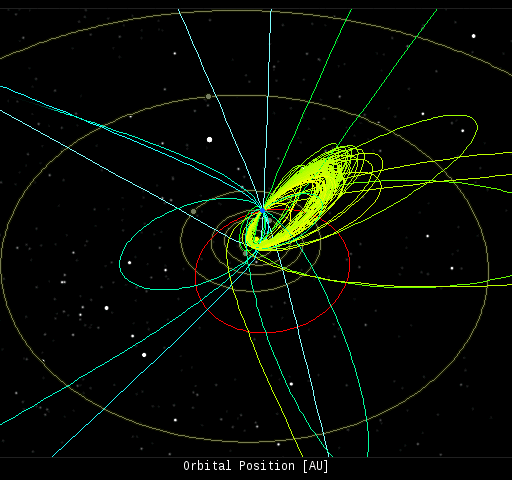
The Geminid meteor shower will reach its peak this week, well Thursday afternoon, actually. I’m talking about this early hoping that we might get a clear night this week to see them. The Geminids are the most active annual meteor shower. Up to 120 meteors may be visible per hour at its peak when it’s the radiant in Gemini is directly overhead which would be on Wednesday or Thursday mornings this week. At those times it will be about half a day before or after the peak, but with such a high number of meteors it should be a spectacular show anyway. The Geminids are produced by a rock comet called Phaethon, which was discovered in 1983 by the Infrared Astronomy Satellite, the first to perform an infrared survey of the entire sky.
The astronomical event times given are for the Traverse City/Interlochen area of Michigan (EST, UT –5 hours). They may be different for your location.
Addendum
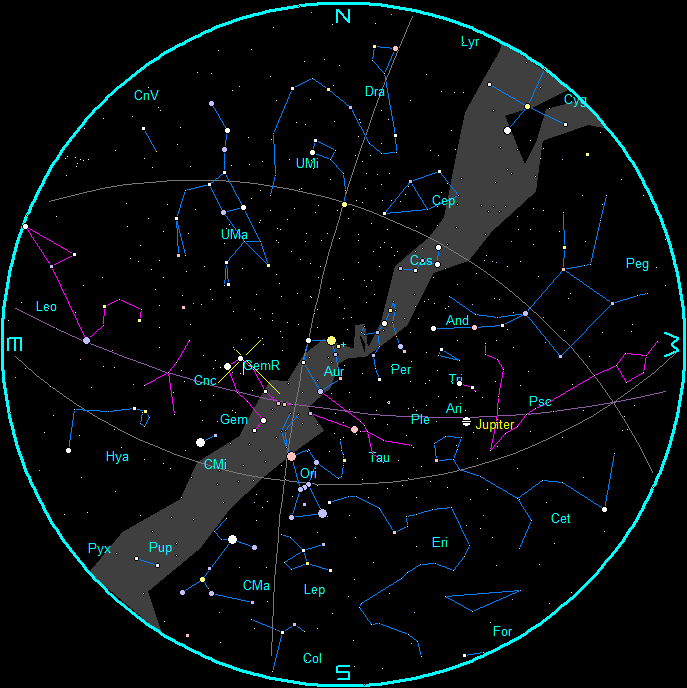
The Geminids are supposed to reach about 120 an hour at peak which would be at one or two in the morning which is about 12 hours after their actual peak. So that we won’t get the 120, but there’s an equal chance to spot them on the night of the 13/14th or 14/15th. Click or tap on the image to enlarge it. Image created using my Looking Up app.
Ephemeris: 12/08/2023 – Tomorrow has the earliest sunset of the year
This is Ephemeris for Friday, December 8th. Today the Sun will be up for 8 hours and 55 minutes, setting at 5:02, and it will rise tomorrow at 8:08. The Moon, 3 days past last quarter, will rise at 4:28 tomorrow morning.
Tomorrow is the date of the earliest sunset, in the middle of a 12-day stretch where the Sun sets within the same minute. We are still 13 days from the winter solstice, the day of the shortest daylight hours, on the 21st. The reason is twofold. The Sun is near its farthest position south of the equator, where the longitude lines are closer together, so it takes less time to cross them. 15 degrees in longitude equals one hour in Earth’s rotation. Add to that we are less than a month from Earth’s perihelion in its orbit of the Sun, that is at its closest, and is moving faster than average. The combined effects delay sunrise and sunset, from what they’d be if the Sun was on the equator and the Earth’s orbit was circular. We will have our latest sunrise on January 2nd.
The astronomical event times given are for the Traverse City/Interlochen area of Michigan (EST, UT –5 hours). They may be different for your location.
Addendum
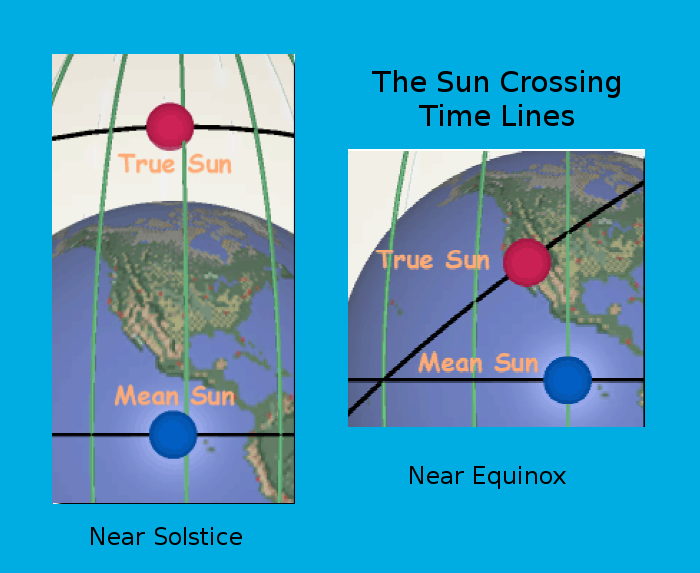
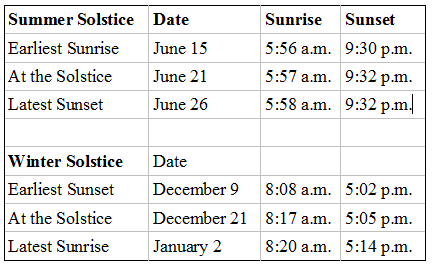
In December the Earth is approaching perihelion, its closest to the Sun, so it moves faster than average. This makes the Sun to appear to move faster eastward against the stars in our sky, and tends to make our sunrises, apparent local noons and sunsets later than they would otherwise be. Sunset bottoms out early and extends the date of the latest sunrise
For the June or summer solstice around here, the Earth is near aphelion, it’s farthest from the Sun where the Earth is at its slowest in its orbit. By reflection, the Sun appears to move its slowest against the stars in our sky. This effect works against the high latitude effect, making the effect smaller. Looking at the table above, the days between the earliest and latest times is shorter for the summer solstice than for the winter solstice.
Ephemeris: 12/07/2023 – Auriga, the charioteer
This is Ephemeris for Thursday, December 7th. Today the Sun will be up for 8 hours and 56 minutes, setting at 5:02, and it will rise tomorrow at 8:07. The Moon, 2 days past last quarter, will rise at 3:20 tomorrow morning.
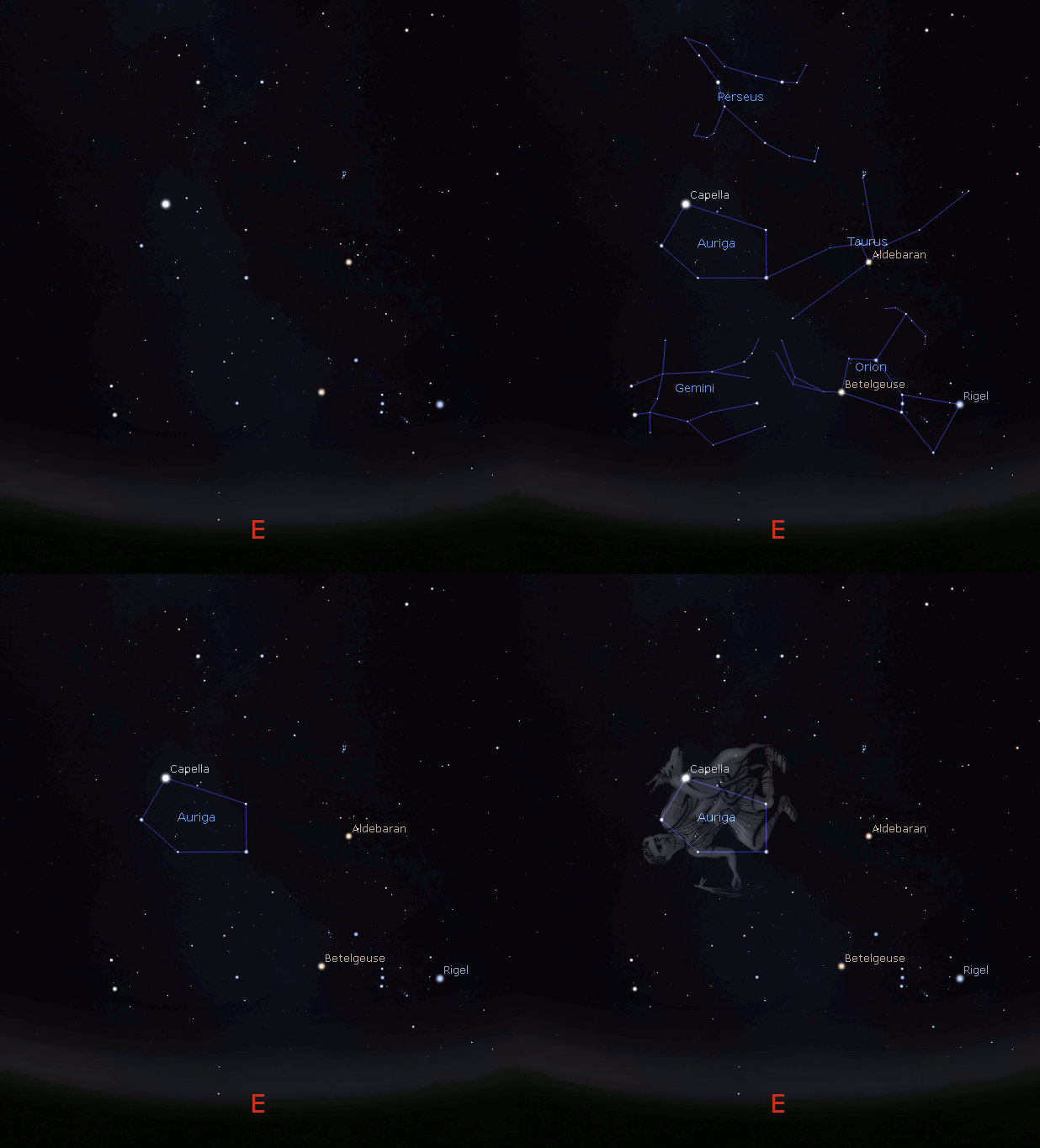
The first constellation of winter is in the northeastern sky, called Auriga the charioteer. It’s to the upper left of Orion and directly left of Taurus. Auriga actually never really quite leaves us, because its brightest star, Capella is the star that never leaves us even in the heat of summer, Though for most of us it’s in the trees in the north. Auriga is a pentagon of stars with the Capella on top. Just right of Capella is a thin triangle of three faint stars, an asterism or informal constellation called the Kids, baby goats. Capella is their mother. For some reason they are all held by a charioteer, who is without his chariot. And from all the Hollywood Biblical epic movies I’ve seen, it takes two hands to drive a chariot, and it doesn’t have a rumble seat.
The astronomical event times given are for the Traverse City/Interlochen area of Michigan (EST, UT –5 hours). They may be different for your location.
Addendum
Ephemeris: 12/06/2023 – Our weekly look at the naked-eye planets
This is Ephemeris for Wednesday, December 6th. Today the Sun will be up for 8 hours and 57 minutes, setting at 5:02, and it will rise tomorrow at 8:06. The Moon, 1 day past last quarter, will rise at 2:15 tomorrow morning.
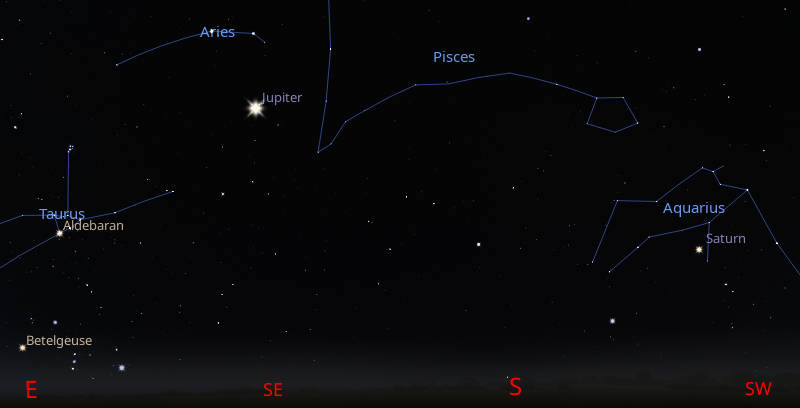
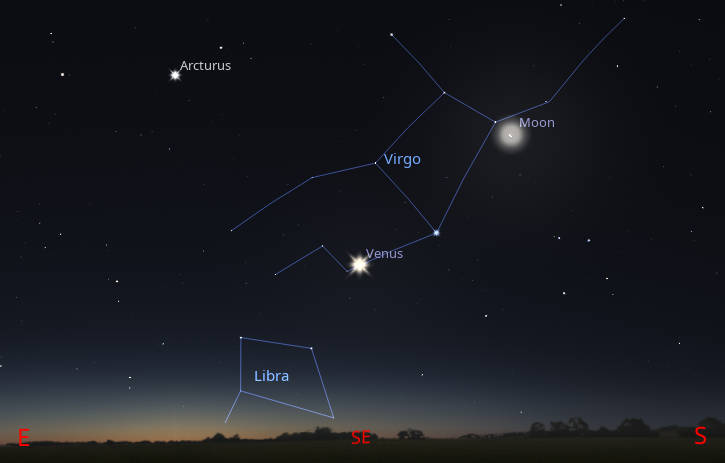
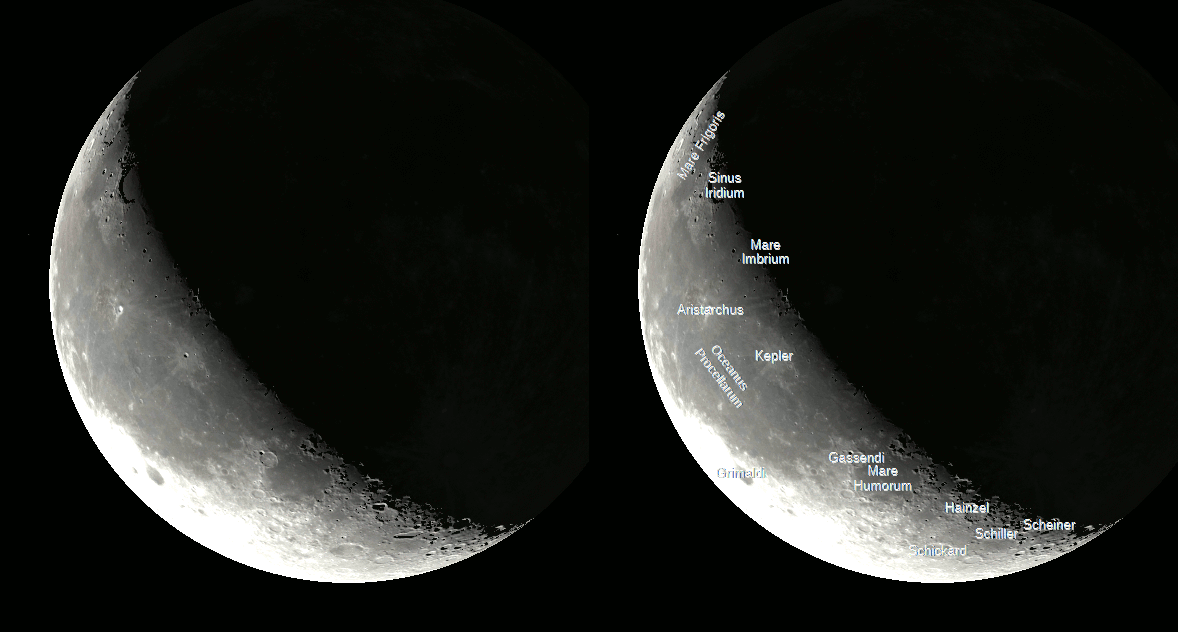
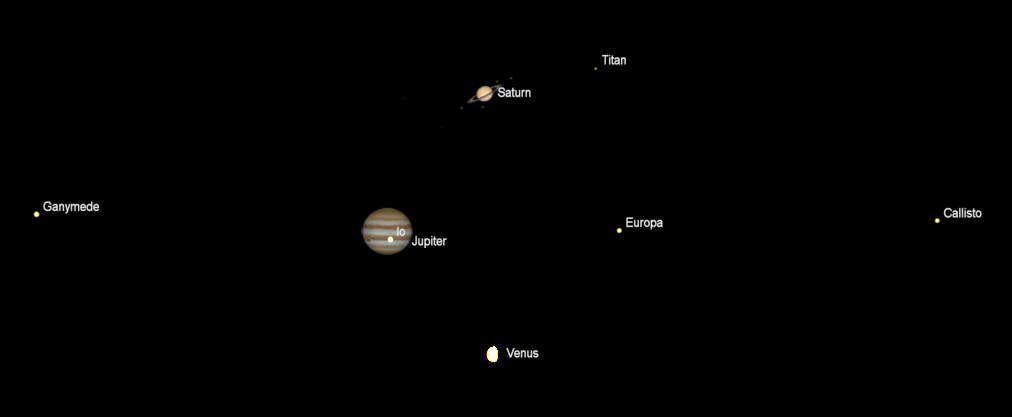
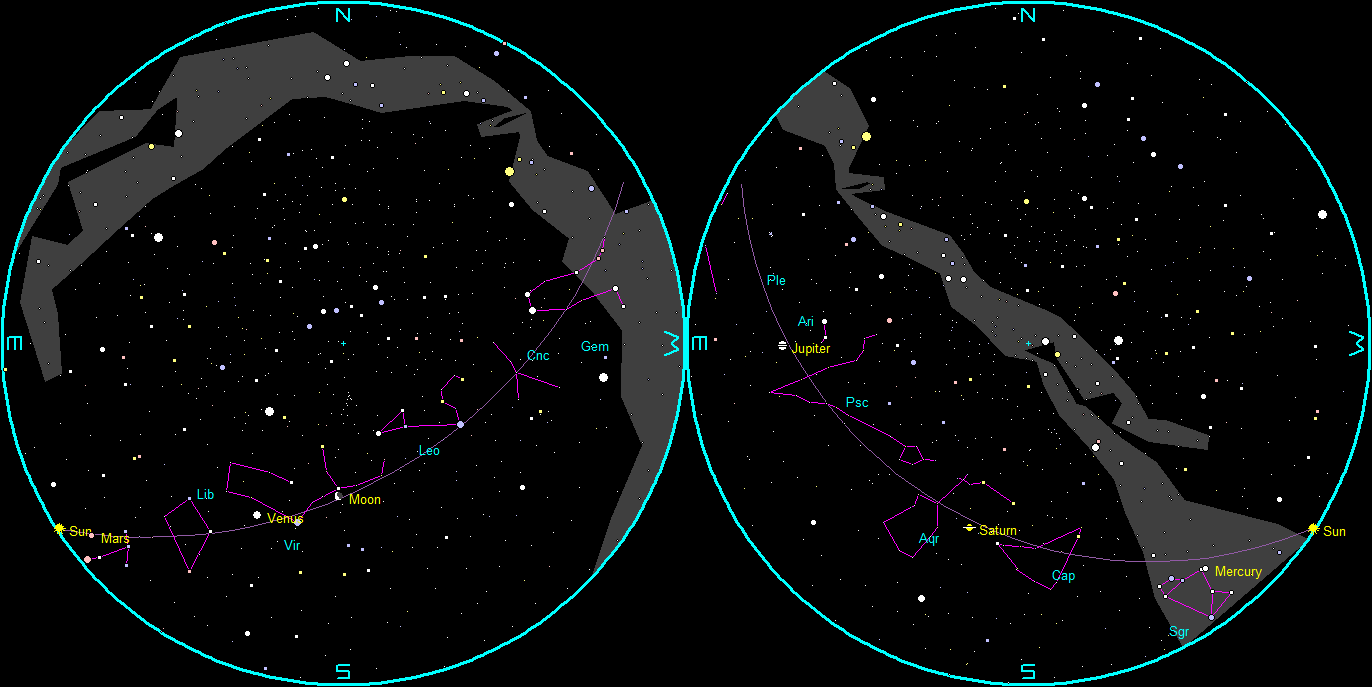
Let’s find out where the naked-eye planets have wandered off to this week. Three of those five planets are now visible, but Mercury sets too close to sunset to be seen. Mars rises too close to sunrise. Saturn and Jupiter are the only evening planets visible. Saturn can be seen moving from the south-southwest to setting in the west-southwest at 11:12 pm. Jupiter will be moving from the southeast to southwest and will be much higher in the sky during the evening hours than Saturn is, and will be up most of the night until 4:56 am. Venus, the brilliant morning star, will rise in the east-southeast at 4:22 am, and be a brilliant beacon in the morning. It will be far below and left of the fat crescent Moon.
The astronomical event times given are for the Traverse City/Interlochen area of Michigan (EST, UT –5 hours). They may be different for your location.
Ephemeris: 11/29/2023 – Where are the naked-eye planets this week?
This is Ephemeris for Wednesday, November 29th. Today the Sun will be up for 9 hours and 7 minutes, setting at 5:04, and it will rise tomorrow at 7:58. The Moon, 2 days past full, will rise at 6:42 this evening.
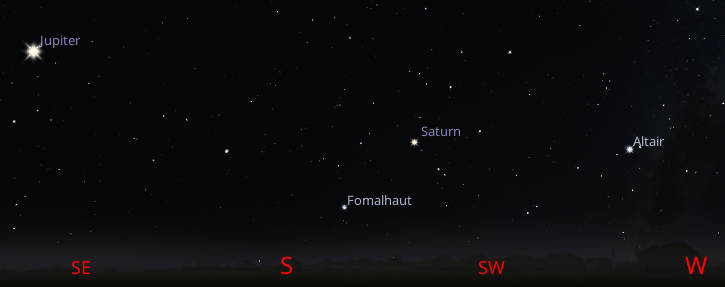
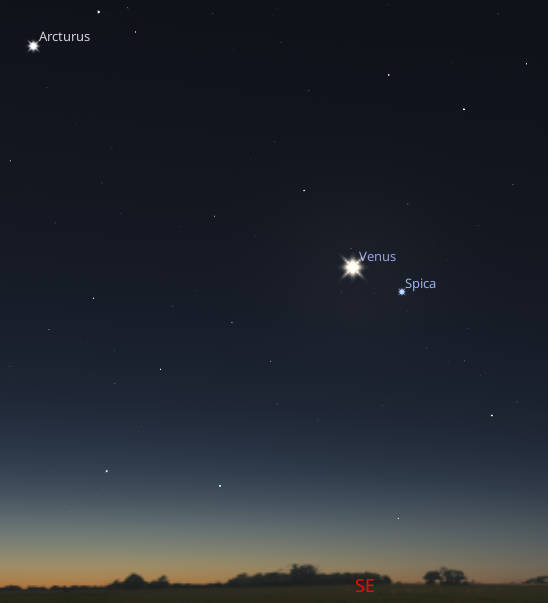
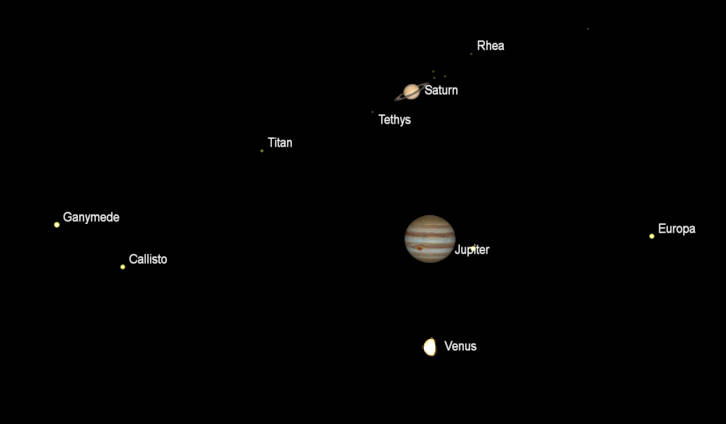
Let’s find out where the naked-eye planets have wandered off to this week. Three of those five planets are now visible, but Mercury sets too close to sunset to be seen, and Mars rises too close to sunrise. Saturn and Jupiter are the only evening planets visible. Saturn can be seen moving from the south-southwest to setting in the west-southwest in the evening. Ringed planet will be setting at 11:34 pm. Jupiter will be moving from the east-southeast to southwest and will be much higher in the sky during the evening hours than Saturn is, and will be up most of the night until 5:22 am. Venus, the brilliant morning star, will rise in the east-northeast at 4:09 am, and be a brilliant beacon in the morning.
The astronomical event times given are for the Traverse City/Interlochen area of Michigan (EST, UT –5 hours). They may be different for your location.
Addendum
Ephemeris: 11/27/2023 – Seeing in low light levels
This is Bob Moler with Ephemeris for Monday, November 27th. Today the Sun will be up for 9 hours and 10 minutes, setting at 5:05, and it will rise tomorrow at 7:56. The Moon, at full today, will rise at 5:01 this evening.
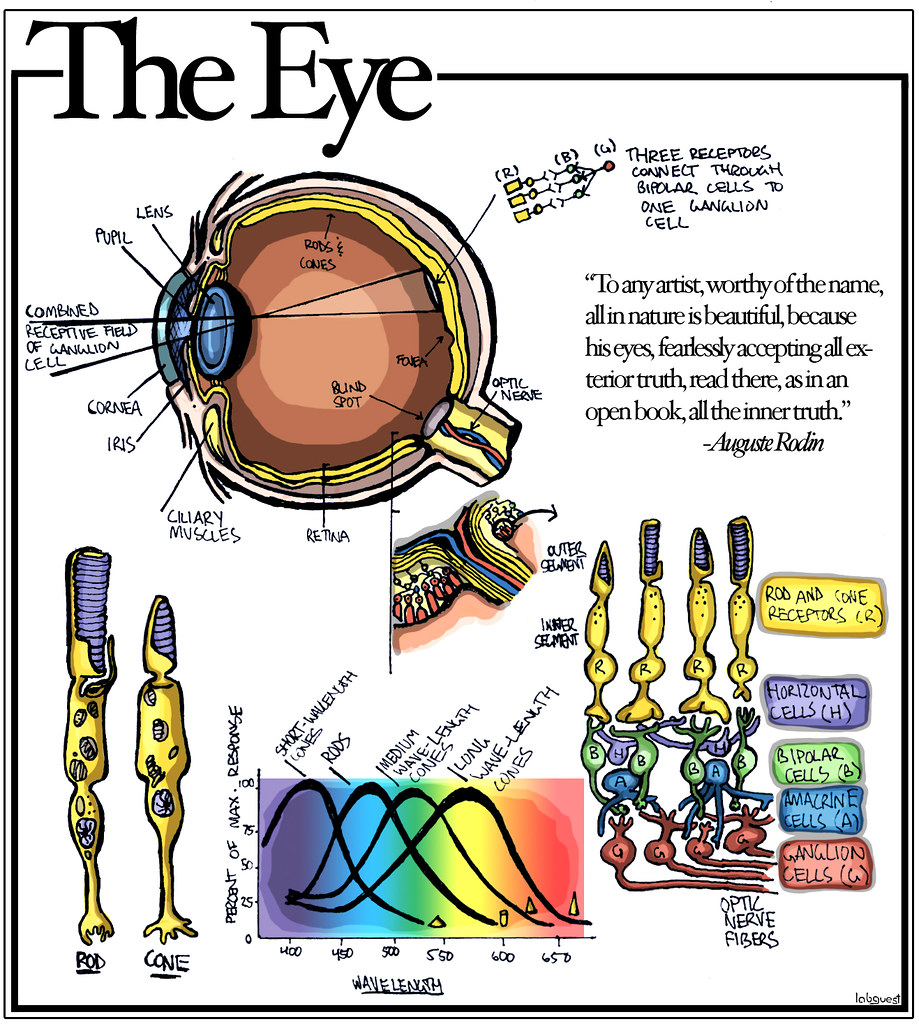
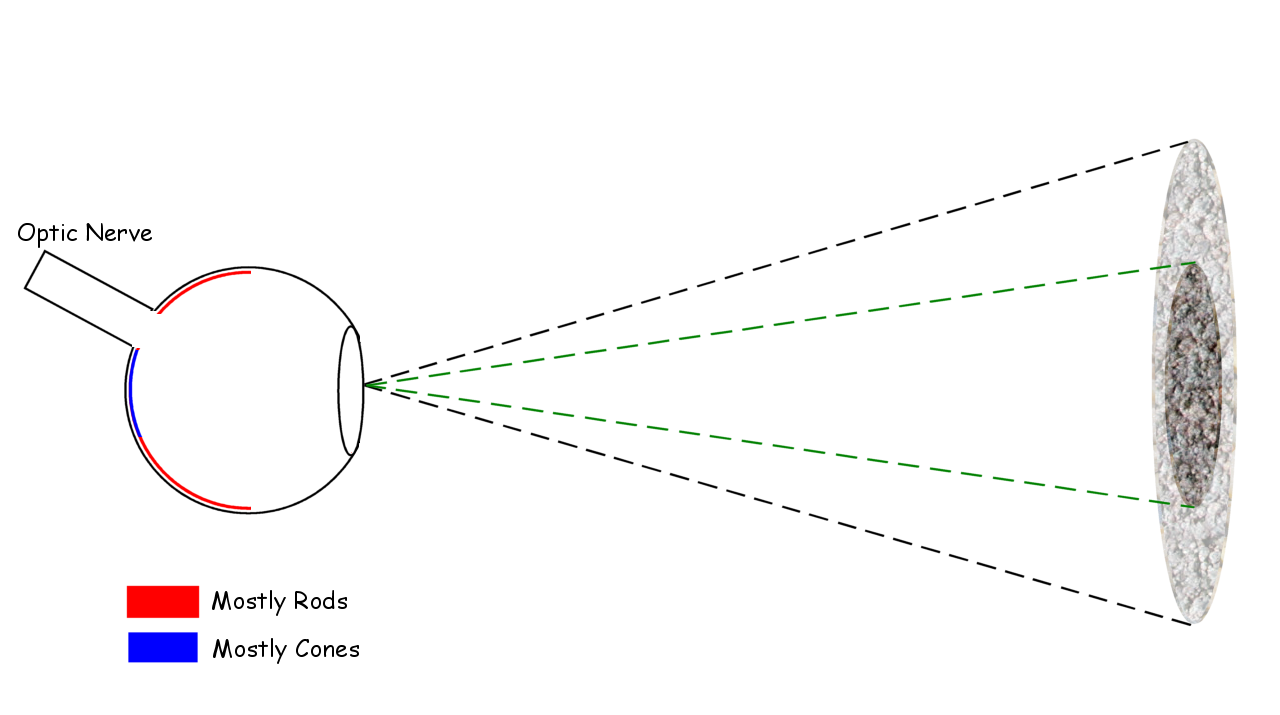
Today’s full moon is called the Beaver full moon actually the moon was exactly full at 4:16 this morning, so last night it was actually closer to full moon than it will be tonight. The bright full moon fills the sky with light so most of the fainter stars disappear. The sky looks gray when the moon is full, but it is just as blue as the daytime sky. It’s just that our eyes cannot discern color at low light levels. We sacrifice our color vision for night vision. Other animals can see in the dark much better than we can, though some of them do not have quite the color vision we have so viewing the skies and viewing the world around us is a compromise. We were evolved from creatures that were most active in the daytime and hid at night. My cats can see much better in the dark than I can. However, the other animals do not have the abilities we have to create tools and instruments to allow us to see better in the dark than they can.
The astronomical event times given are for the Traverse City/Interlochen area of Michigan (EST, UT –5 hours). They may be different for your location.
Addendum
Ephemeris: 11/22/2023 – Where have the naked-eye planets wandered off to this week?
This is Ephemeris for Wednesday, November 22nd. Today the Sun will be up for 9 hours and 20 minutes, setting at 5:08, and it will rise tomorrow at 7:50. The Moon, 2 days past first quarter, will set at 3:17 tomorrow morning.
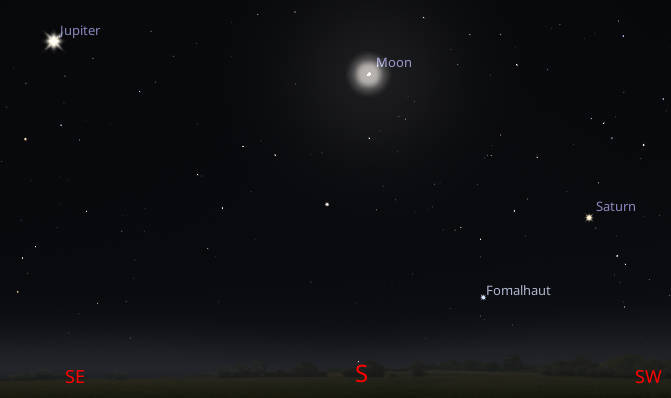
Let’s find out where the naked-eye planets have wandered off to this week. Three of those five planets are now visible, but Mercury sets too close to sunset to be seen. Mars is now a morning planet after passing conjunction with the Sun last Friday. So, Saturn and Jupiter are the only evening planets visible. Saturn can be seen moving from the south to the southwest in the evening. Saturn will be visible until 12:04 am. Jupiter is seen moving from low in the east-southeast to south-southeast in the evening. Only the Moon is brighter in the evening. Jupiter will be up most of the night until 5:54 am. The gibbous Moon is almost exactly centered between Saturn and Jupiter. Venus, the brilliant morning star, will rise in the east-northeast at 3:57 am.
The astronomical event times given are for the Traverse City/Interlochen area of Michigan (EST, UT –5 hours). They may be different for your location.
Addendum
Ephemeris: 11/20/2023 – Observing the Moon tonight
This is Ephemeris for Monday, November 20th. Today the Sun will be up for 9 hours and 24 minutes, setting at 5:10, and it will rise tomorrow at 7:47. The Moon, at first quarter today, will set at 12:42 tomorrow morning.
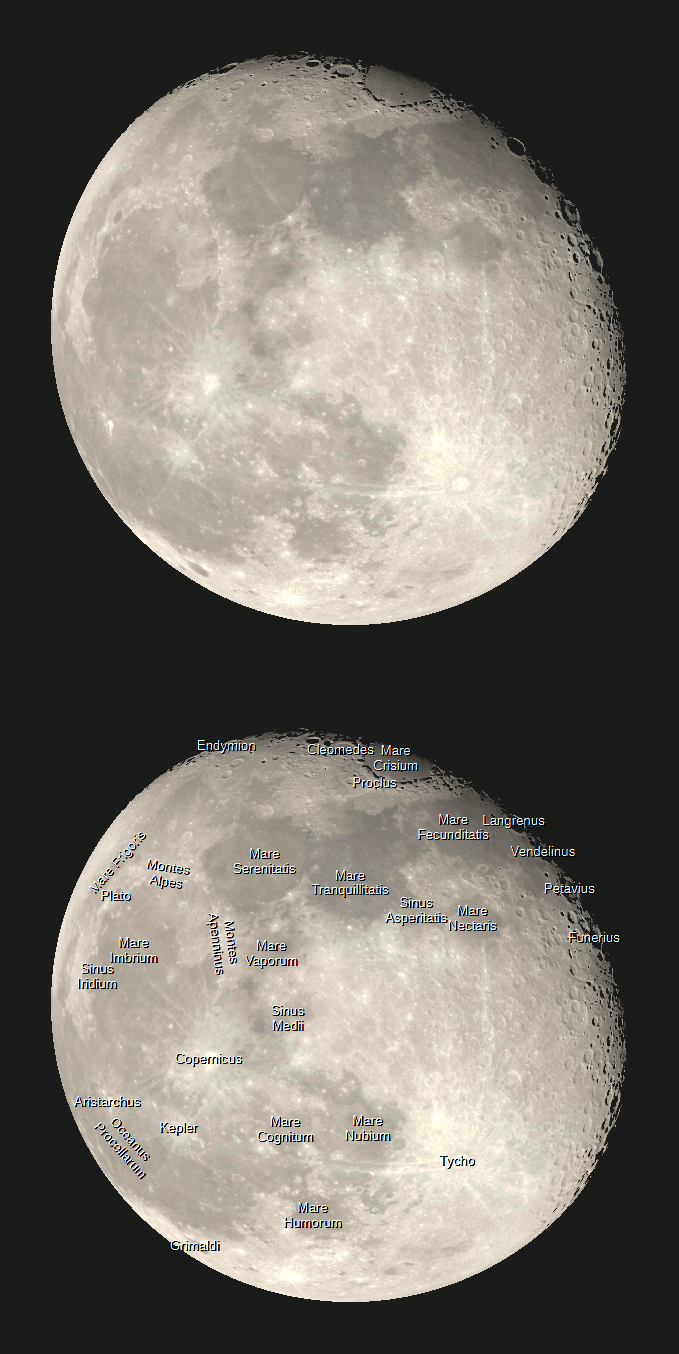
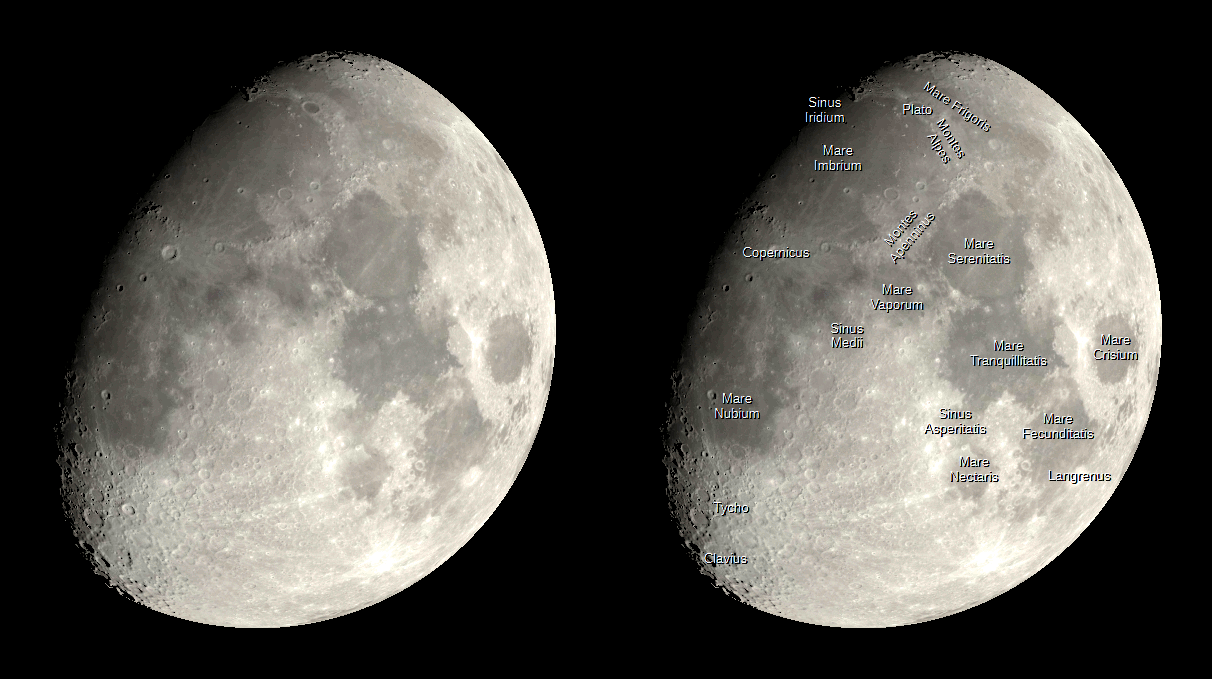
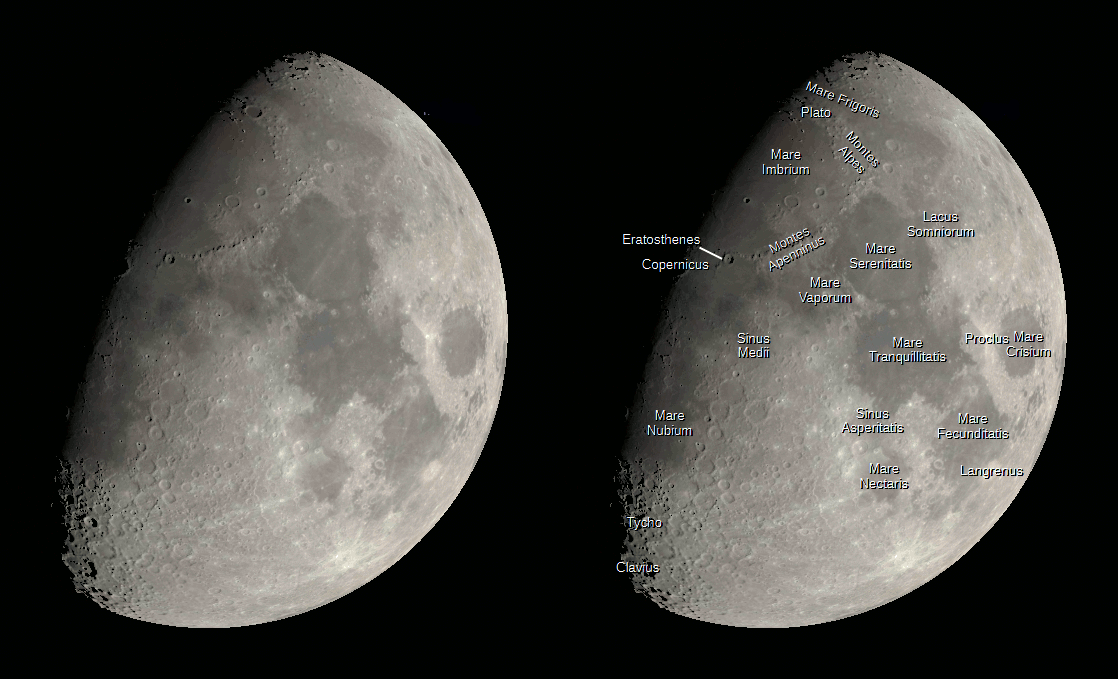
The moon was exactly first quarter at 5:50 this morning. By this evening it will be slightly gibbous. If I want to see the most detail on the Moon of any kind, the best time to observe it is within a few days of first quarter. More craters are visible, and other features are easier to see then. The southern part of the Moon or the bottom part, as we see it, is littered with craters. It’s called the lunar highlands, and they are really higher than the darker and flatter regions, which are called seas. There is no water in them but if the Moon did have water, that’s where it would be. There are a couple of mountain ranges which are actually the edges of a sea called Mare Imbrium that are just coming into view. They show up nicely with their shadows. It’s shadows that make the detail on the moon stand out, because the Moon basically is darker gray on lighter gray, so the only contrast is with shadows. That’s why I find the full moon to be so disappointing. No shadows.
The astronomical event times given are for the Traverse City/Interlochen area of Michigan (EST, UT –5 hours). They may be different for your location.
Ephemeris: 11/17/2023 – Observing this weekend’s Leonid meteor shower
This is Ephemeris for Friday, November 17th. Today the Sun will be up for 9 hours and 30 minutes, setting at 5:12, and it will rise tomorrow at 7:43. The Moon, 3 days before first quarter, will set at 8:45 this evening.
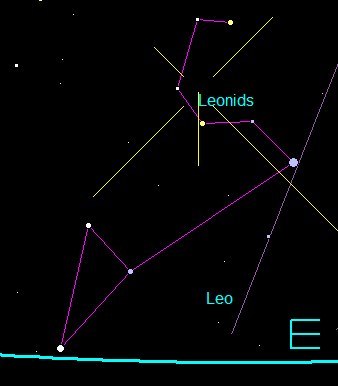
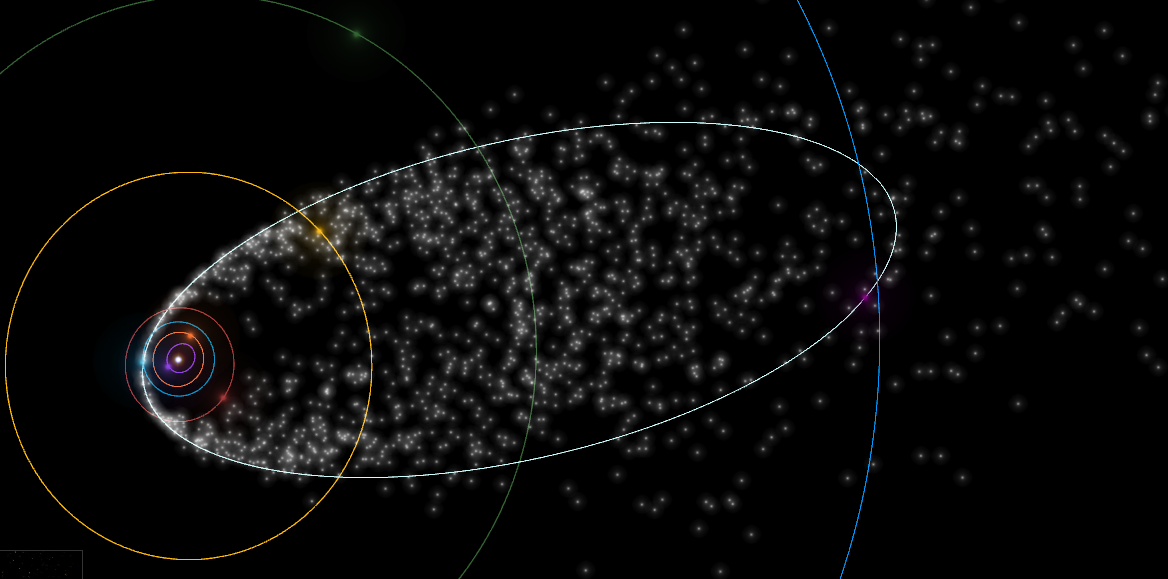
The Leonid meteor shower will reach peak this weekend. The normal peak will be actually this evening before the radiant, where the meteors seem to come from, rise which they will do at 11 pm. So tomorrow morning it would be a good time to see them. We only expect about 15 meteors an hour at peak. There is a possibility of another peak on the 21st which is Tuesday morning just before dawn composed of supposedly bright meteors from the passage of the comet crossed Earth’s orbit in 1767. So if it’s clear, and you’re willing to go outdoors and see what you can see of the Leonid meteor shower. The Leonids get really spectacular about every 33 years, and we’re about 8 or 9 years from now.
The astronomical event times given are for the Traverse City/Interlochen area of Michigan (EST, UT –5 hours). They may be different for your location.
Addendum