Archive
06/10/2014 – Ephemeris – Our Moon and Saturn’s largest moon Titan
Ephemeris for Tuesday, June 10th. Today the sun will be up for 15 hours and 29 minutes, setting at 9:26. The moon, 3 days before full, will set at 4:51 tomorrow morning. Tomorrow the sun will rise at 5:57.
Tonight the planet Saturn will be near the bright gibbous Moon. One might need a bit of help locating it in the Moon’s glare. Saturn is to the right and slightly above the Moon. Saturn has a few moons of its own. The count’s up to 62, with another apparently forming from one of Saturn’s rings as monitored by the Cassini spacecraft now in orbit of Saturn. Cassini, which has about three years left in its mission, entered orbit of Saturn 10 years ago next month after a 7 year journey to get there. One of the most intensively studied moons is Titan, whose haze foiled the earlier Voyager spacecraft, Cassini and it’s Huygens lander have shown us earthly terrain and methane seas. Titan is easily seen in small telescopes near Saturn.
Addendum
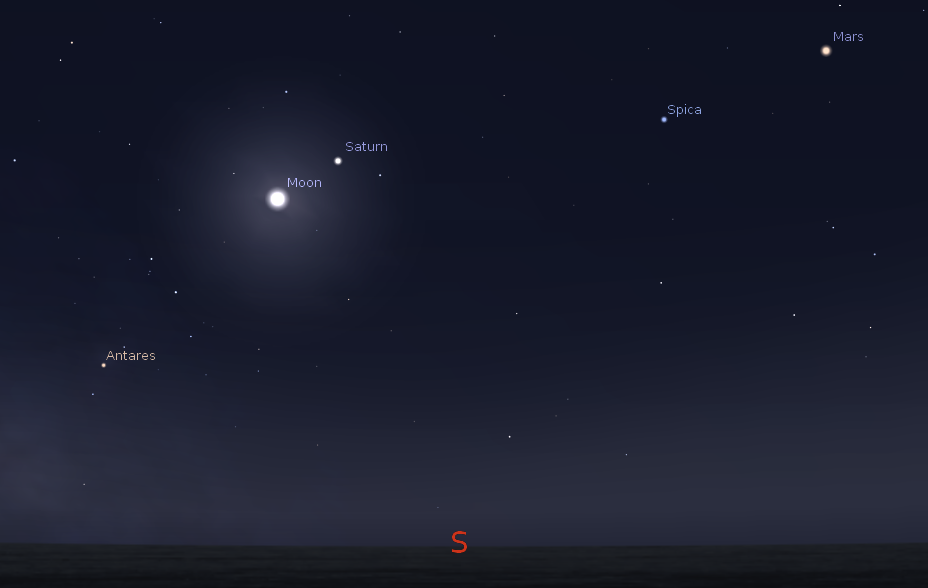
Saturn and the Moon tonight at 11 p.m., June 10, 2014. Created using Stellarium.
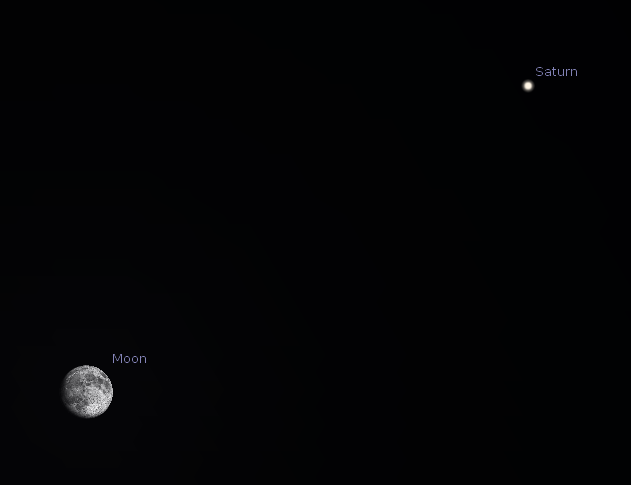
Just Saturn and the Moon showing the moon’s gibbous phase at 11 p.m. June 10, 2014. Created using Stellarium.
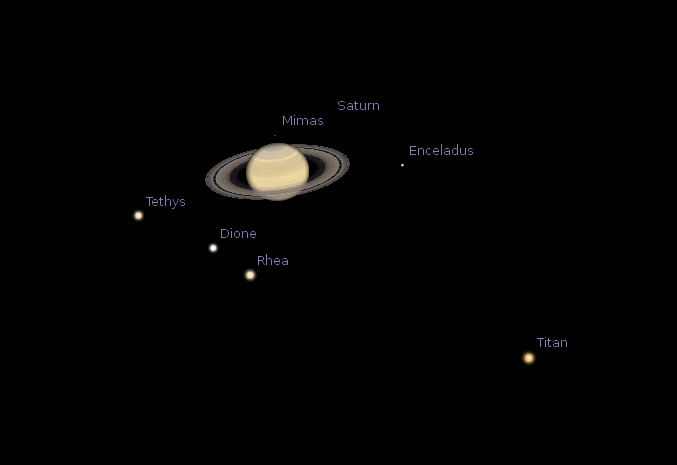
Saturn and its moons including Titan at 11 p.m. June 10, 2014. Created using Stellarium.
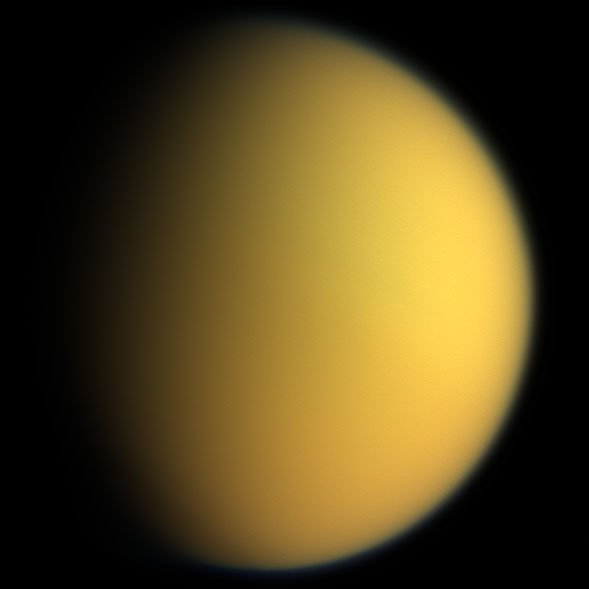
Titan, as Voyager would have seen it, but photographed by Cassini. Credit: NASA/JPL/Space Science Institute.
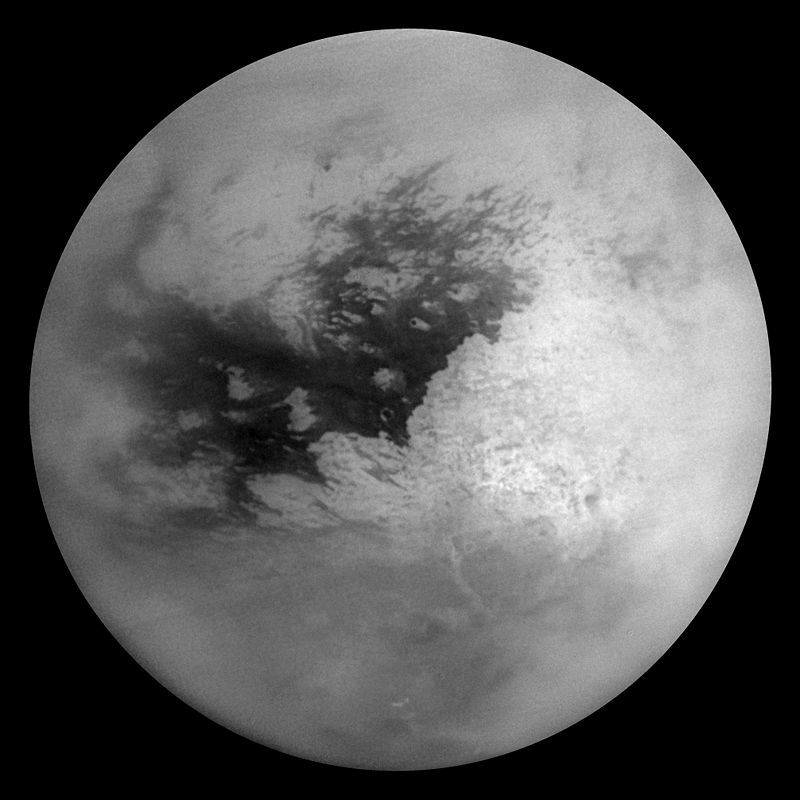
Titan as seen in the infrared by the Cassini spacecraft. Credit: NASA/JPL/Space Science Institute.
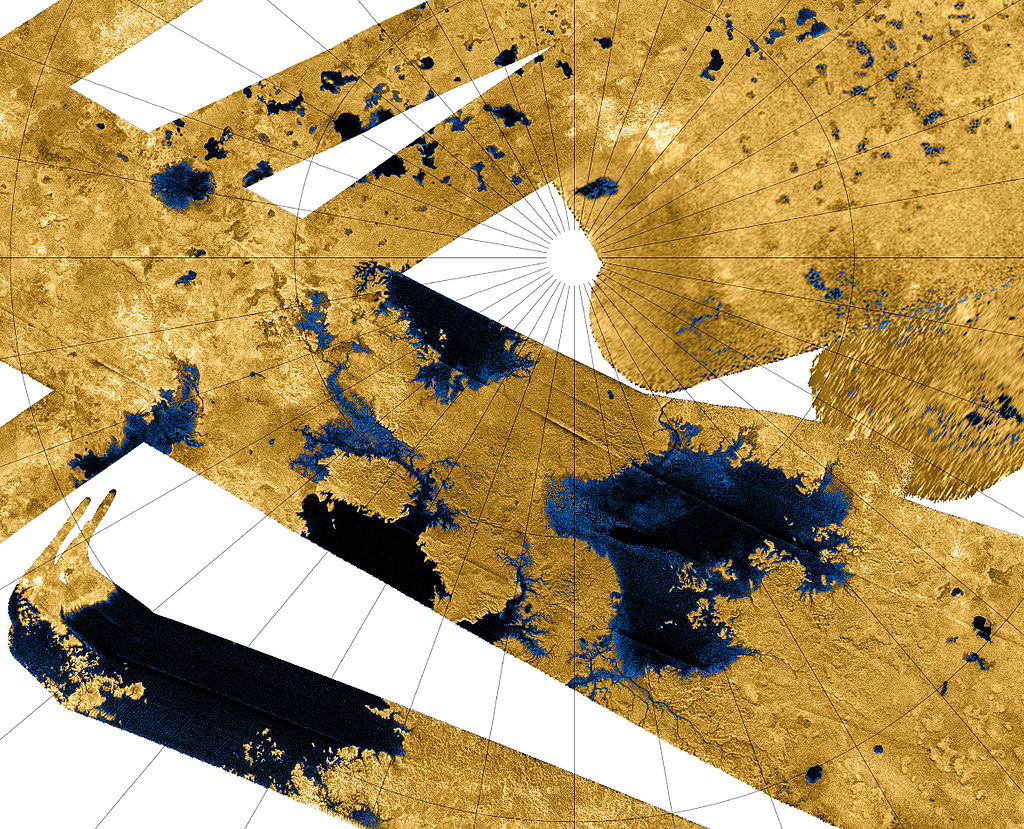
Seas and lakes at Titan’s north pole seen by radar from the Cassini spacecraft. Credit: NASA/JPL-Caltech/GSFC.

Image mosaic of Titan from the descending Huygens Lander. Credit: ESA/NASA/Univ. of Arizona.
06/09/2014 – Ephemeris – The brightest spot on the moon
Ephemeris for Monday, June 9th. Today the sun will be up for 15 hours and 28 minutes, setting at 9:26. The moon, half way from first quarter to full, will set at 4:09 tomorrow morning. Tomorrow the sun will rise at 5:57.
For all you Moon lovers out there we have a chance to study with telescopes the brightest spot on the Moon. It is at the upper left corner of the Moon and can easily be seen in binoculars. It’s the crater Aristarchus. However a telescope is what’s needed to see the crater in detail. Like the crater Alphonsus we looked at last Thursday, occasional hazes have been seen in this crater. Aristarchus isn’t really large, only 24 miles (40 km) in diameter. It is a young crater, which is why it’s bright. The asteroid that hit these penetrated the dark gray regolith into the lighter bedrock. Young in this case is somewhere younger than 1.1 billion years old. There’s an interesting valley near it called Schroter’s Valley.
Times are for the Traverse City/Interlochen area of Michigan. They may be different for your location.
Addendum
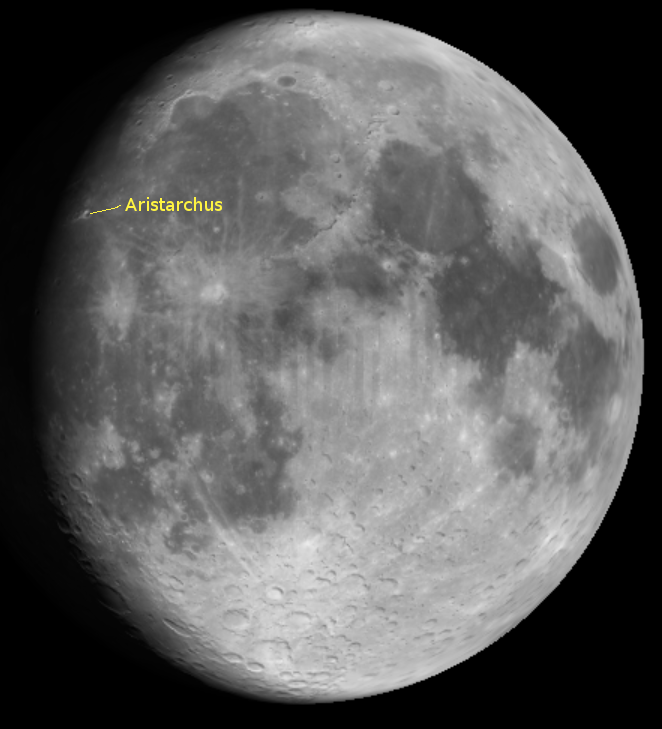
The crater Aristarchus at 11 p.m., June 9, 2014. It will brighten as we move to full moon. Created using Stellarium.
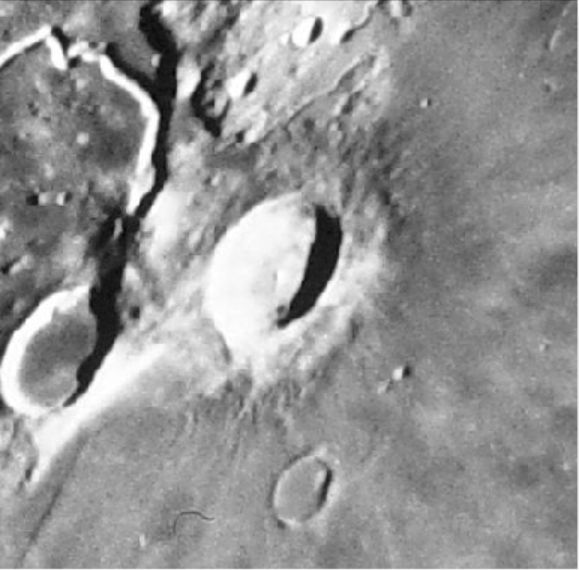
The crater Aristarchus. Credit: Lunar and Planetary Institute.
06/05/2014 – Ephemeris – A remarkable crater visible on the Moon tonight
Ephemeris for Thursday, June 5th. Today the sun will be up for 15 hours and 25 minutes, setting at 9:23. The moon, at first quarter today, will set at 2:05 tomorrow morning. Tomorrow the sun will rise at 5:58.
Near the Moon’s sunrise terminator at the southern half of our satellite are three large craters roughly arranged parallel to the terminator. The northernmost is the largest named Ptolemaeus. Just south of it is Alphonsus, and the third is Arzachel. Of the three Alphonsus is suspected of activity over the years. In 1956 Dinsmore Alter noticed a haze that obscured some of the cracks in the floor of Alphonsus and took photographs. The ultraviolet photos showed something, but his infrared photos did not. In 1959, Soviet astronomer Nicolai Kozyrev obtained spectra of a glow. In 1965 the last Ranger probe was sent to Alphonsus to see what there was to see, and apparently reported nothing unusual.
Times are for the Traverse City/Interlochen area of Michigan. They may be different for your location.
Addendum
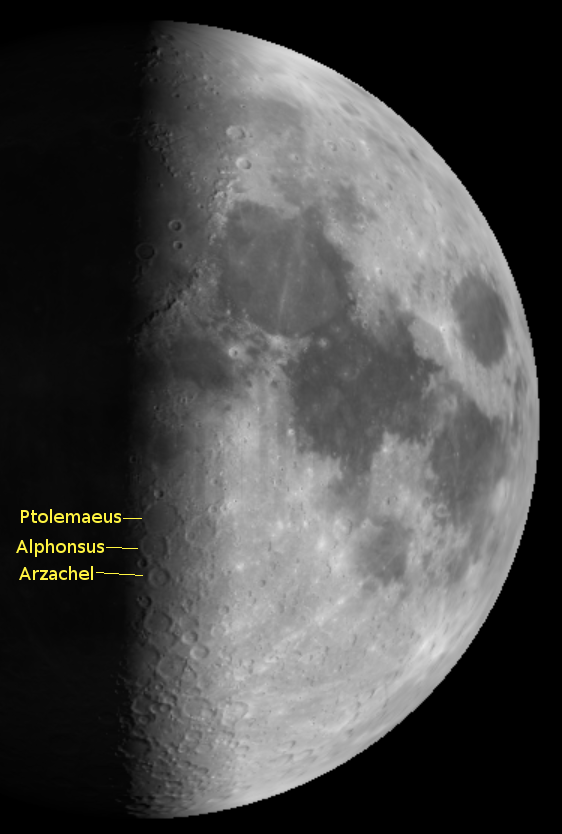
The Moon tonight, June 5, 2014. Created using Virtual Moon Atlas.
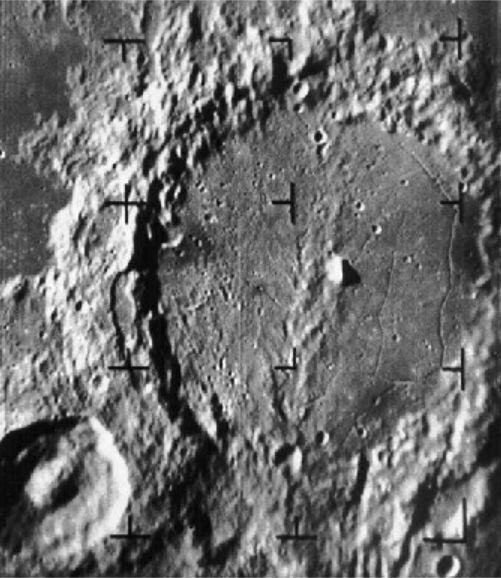
Ranger 9 Image of Alphonsus #1. Credit NASA.
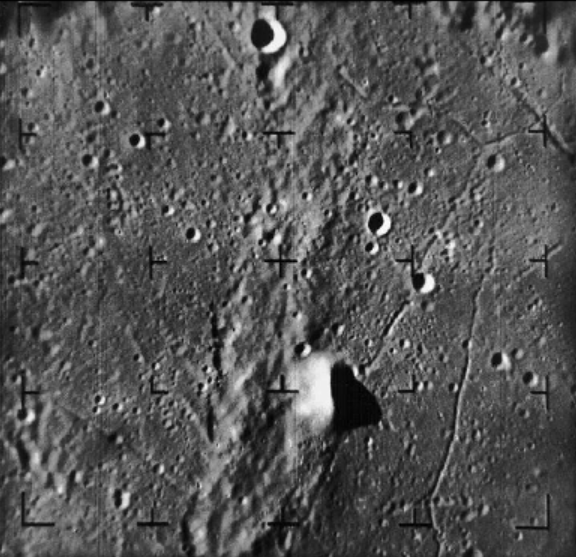
Ranger 9 Image of Alphonsus #2. Credit NASA.
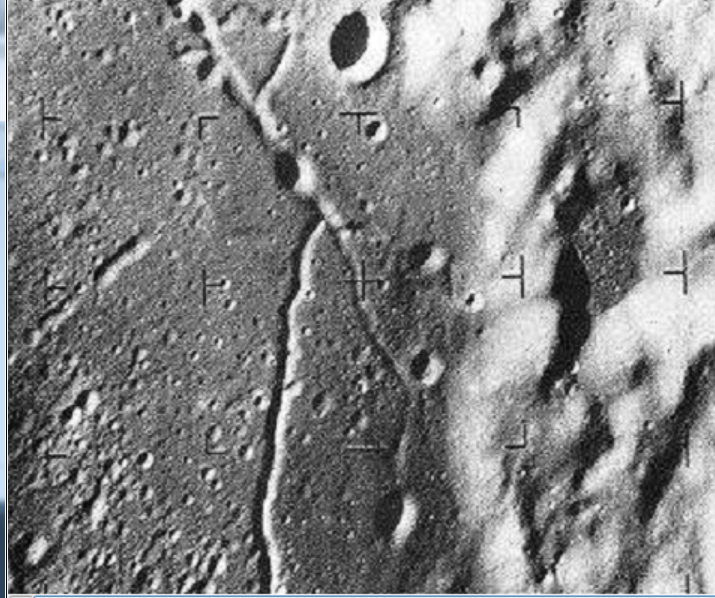
Ranger 9 Image of Alphonsus #3. Credit NASA.
06/04/2014 – Ephemeris – Last week for all 5 pre-telescopic planets to be visible for a while
Ephemeris for Wednesday, June 4th. Today the sun will be up for 15 hours and 23 minutes, setting at 9:22. The moon, 1 day before first quarter, will set at 1:39 tomorrow morning. Tomorrow the sun will rise at 5:58.
It’s Wednesday and once again time to locate the bright planets for this week. Mercury is showing up in the west shortly after sunset, It is getting dimmer (magnitude 1.6) as it is becoming a thin crescent. It will set at 10:47. Brilliant Jupiter will be in the western sky in Gemini as darkness falls tonight. It will set at 11:59 p.m. Reddish Mars is in Virgo in the south-southwest as darkness falls. It’s 76 million miles (122 million km) away now, and moving away, and will set at 3:14 a.m. Saturn will be low in the southeast as darkness falls. It’s in the faint constellation of Libra the scales this year. It will pass due south at 11:55 p.m. Brilliant Venus will rise in the east at 4:21 a.m. in morning twilight.
Times are for the Traverse City/Interlochen area of Michigan. They may be different for your location.
Addendum
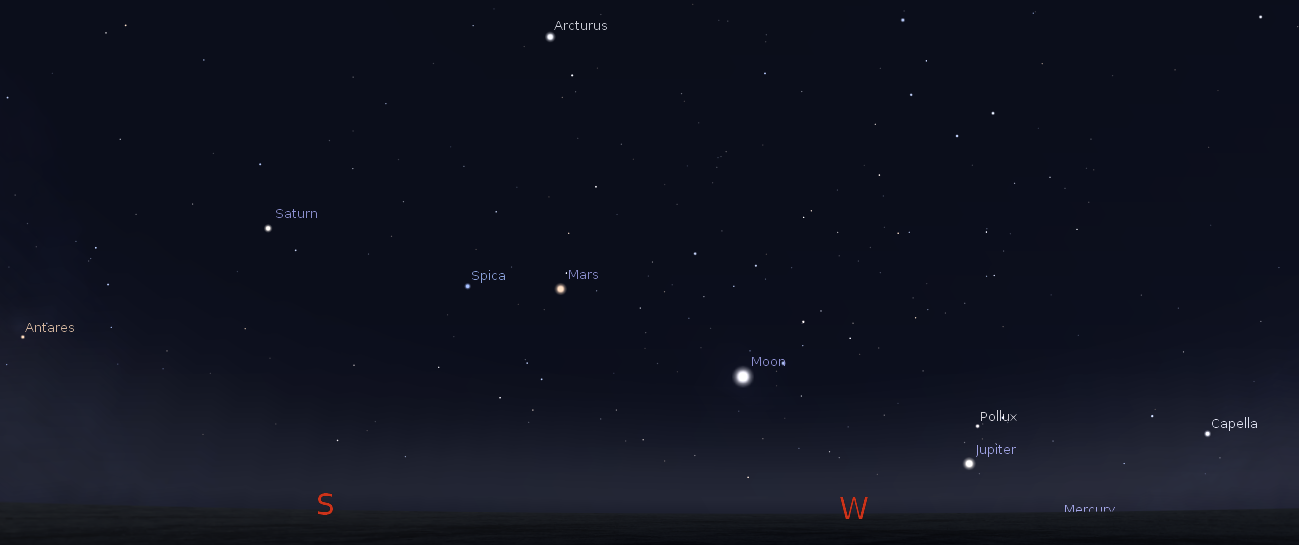
Jupiter, Mars, Saturn and the Moon seen at 11 p.m. June 4, 2014. Created using Stellarium.
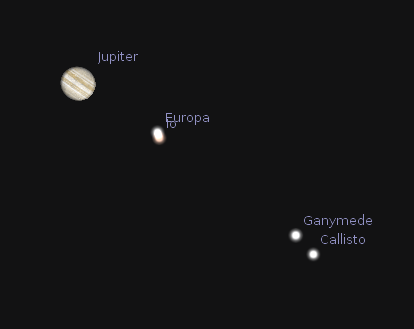
Jupiter and moons in a telescope at 11 p.m. June 4, 2014. Created using Stellarium.
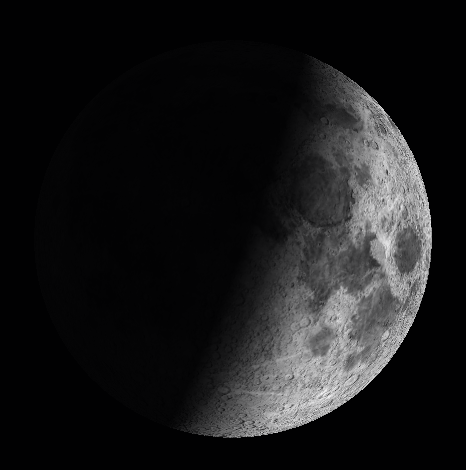
The Moon as it might appear in binoculars at 11 p.m. on June 4, 2014. Created using Stellarium.
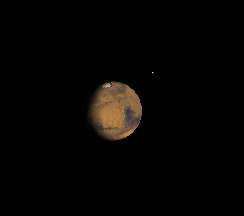
Mars, probably a bit better than it will appear in a small telescope at 11 p.m. June 4, 2014. Created using Stellarium.
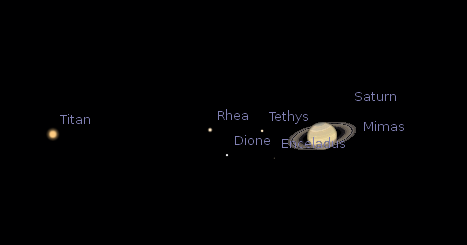
Saturn with some of its moons, not all of them will be visible in a small telescope, at 11 p.m. on June 4, 2014. Created using Stellarium.
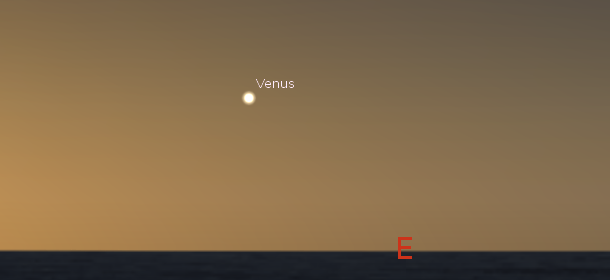
Venus in morning twilight in the east at 5:15, June 5, 2014. Created using Stellarium.
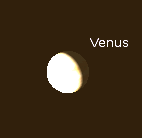
Venus showing its gibbous phase in a telescope at 5:15 a.m. on June 5, 2014. Created using Stellarium.
06/03/2014 – Ephemeris – Observing Saturn’s rings over the years
Ephemeris for Tuesday, June 3rd. Today the sun will be up for 15 hours and 22 minutes, setting at 9:22. The moon, 2 days before first quarter, will set at 1:11 tomorrow morning. Tomorrow the sun will rise at 5:59.
The planet Saturn is now well placed to see with a telescope. It’s located in the southeast. The brightest star in that direction. It takes a telescope of only 20 power magnification to spot the rings. A bit more power and the planet can be detected apart from the rings. Most of the light reflected by Saturn comes from the rings. The rings are still opening up, and will be for the next 3 years. The rings orbit the planet over its equator, and Saturn has an axial tilt of some 26 degrees. Over Saturn’s nearly 30 year journey around the sun, its seasonal changes go from solstice when the rings are open wide, to equinox where the rings, only about 90 feet [30 meters] thick on average, seem to disappear.
Times are for the Traverse City/Interlochen area of Michigan. They may be different for your location.
Addendum
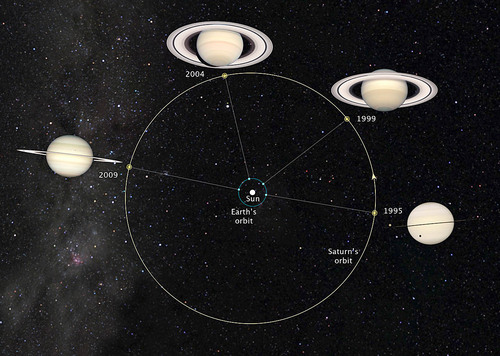
Saturn’s ring appearances over that last Saturnian half-year from the equinox in 1995 through southern hemisphere spring and summer to the equinox 2009. Illustration Credit: NASA, ESA, and Z. Levay (STScI)
06/02/2014 – Ephemeris – The Big Dipper points to other stars and constellations
Ephemeris for Monday, June 2nd. Today the sun will be up for 15 hours and 21 minutes, setting at 9:21. The moon, 3 days before first quarter, will set at 12:41 tomorrow morning. Tomorrow the sun will rise at 5:59.
The Big Dipper points to other stars and constellations. Right now the Big Dipper is nearly overhead. The front bowl stars point to Polaris, the North Star which never seems to move in the sky. The handle can be used to find two stars. First follow the arc of the handle away from the bowl to find the fourth brightest night time star Arcturus in the base of the kite shaped constellation of Boötes. Straighten the arc to a spike and continue to the south and you will come to the bright blue-white star Spica in Virgo the virgin. Don’t confuse it with reddish Mars to the right of it now. You can remember these stars with the phrase “Follow the arc of the handle to Arcturus and then spike to Spica”
Times are for the Traverse City/Interlochen area of Michigan. They may be different for your location.
Addendum
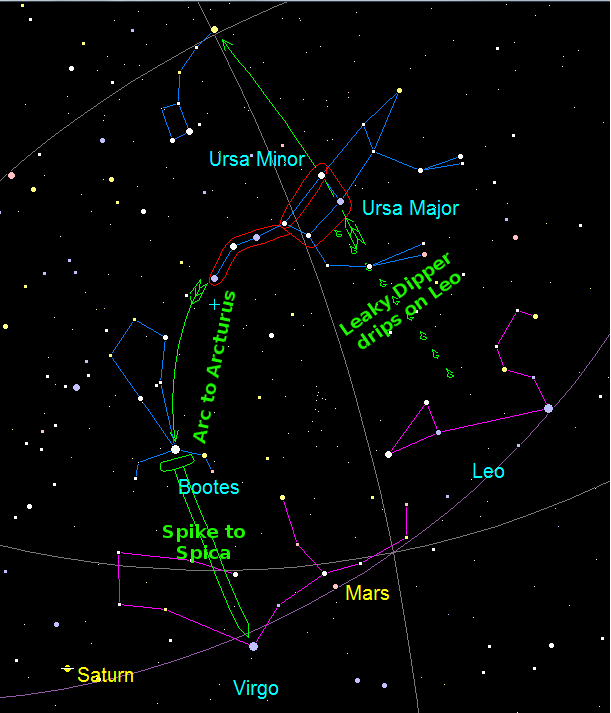
The Big Dipper can be used to point to other stars and constellations in the spring sky. Credit: My LookingUp program.
05/27/2014 – Ephemeris – There was a meteor sprinkle but no storm
Ephemeris for Tuesday, May 27th. Today the sun will be up for 15 hours and 12 minutes, setting at 9:16. The moon, 1 day before new, will rise at 6:11 tomorrow morning. Tomorrow the sun will rise at 6:02.
The Camelopardalid meteors straggled in last Saturday morning. No real shower and definitely not a storm, but waiting through the night I saw a few genuine Camelopardalids, moving slowly that could be traced back to the north. There was no peak of activity, but what meteors we did see appeared randomly. I and others reporting via Twitter from around the country remarked the large percentage of really bright meteors. I saw one that left a smokey train that stayed visible a few seconds. I didn’t have binoculars to follow it further. Other observers had better luck with meteor trains. So yes, the Camelopardalids were a disappointment, but at least they were not a no show. This was a newly discovered comet which had no history of meteor shower activity before.
Times are for the Traverse City/Interlochen area of Michigan. They may be different for your location.
05/23/2014 – Ephemeris – Possible Meteor Storm overnight tonight
Ephemeris for Friday, May 23rd. Today the sun will be up for 15 hours and 5 minutes, setting at 9:12. The moon, 2 days past last quarter, will rise at 3:45 tomorrow morning. Tomorrow the sun will rise at 6:05.
If you want to see a possible meteor storm, go out tomorrow morning and find a dark location. The meteors will be seen all over the sky, but will seem to come from the north. The Grand Traverse Astronomical Society will be at Sleeping Bear Dunes National Lakeshore at the Dune Climb with telescopes starting at 10 p.m. tonight, weather permitting, to enjoy the other wonders of the sky while we wait for the meteor storm to start. Dress warmly, bring a blanket or lounge chair so you can comfortably look up. The first meteors may show by 1:40 a.m. but the peak activity is expected about 3 a.m., but that estimate may be off by an hour or more. Check bobmoler.wordpress.com for cloud and meteor status from noon through 4 a.m. if it’s clear. The latter part depends on getting a decent data signal. The dunes seem to be the end of the world as far as cell phone service goes. I might have to climb the dune to get a good signal.
Times are for the Traverse City/Interlochen area of Michigan. They may be different for your location.
Addendum
Remember these meteors should be visible from anywhere in the continental United States. Convert the times to your location. 3 a.m. EDT is 7 hours UT.
Start the evening tonight with a talk by Dr. Tyler Nordgren, astronomer, artist and dark sky advocate at the Sleeping Bear Dunes National Lakeshore Philip A. Hart Visitor Center in Empire at 7 p.m. Afterward he will be signing copies of his beautiful new poster See the Stars from Sleeping Bear Dunes National Lakeshore featuring the Great and Little Bear constellations and the bluffs of the Sleeping Bear Dunes and the Manitou Islands. After that, weather permitting see the sunset from many of the park’s locations, then, for the hardy, settle down for an all night vigil for the possible meteor storm with the Grand Traverse Astronomical Society at the Dune Climb. We’ll be viewing out the planets and the other wonders of the spring and summer skies as we wait for the meteors to appear.
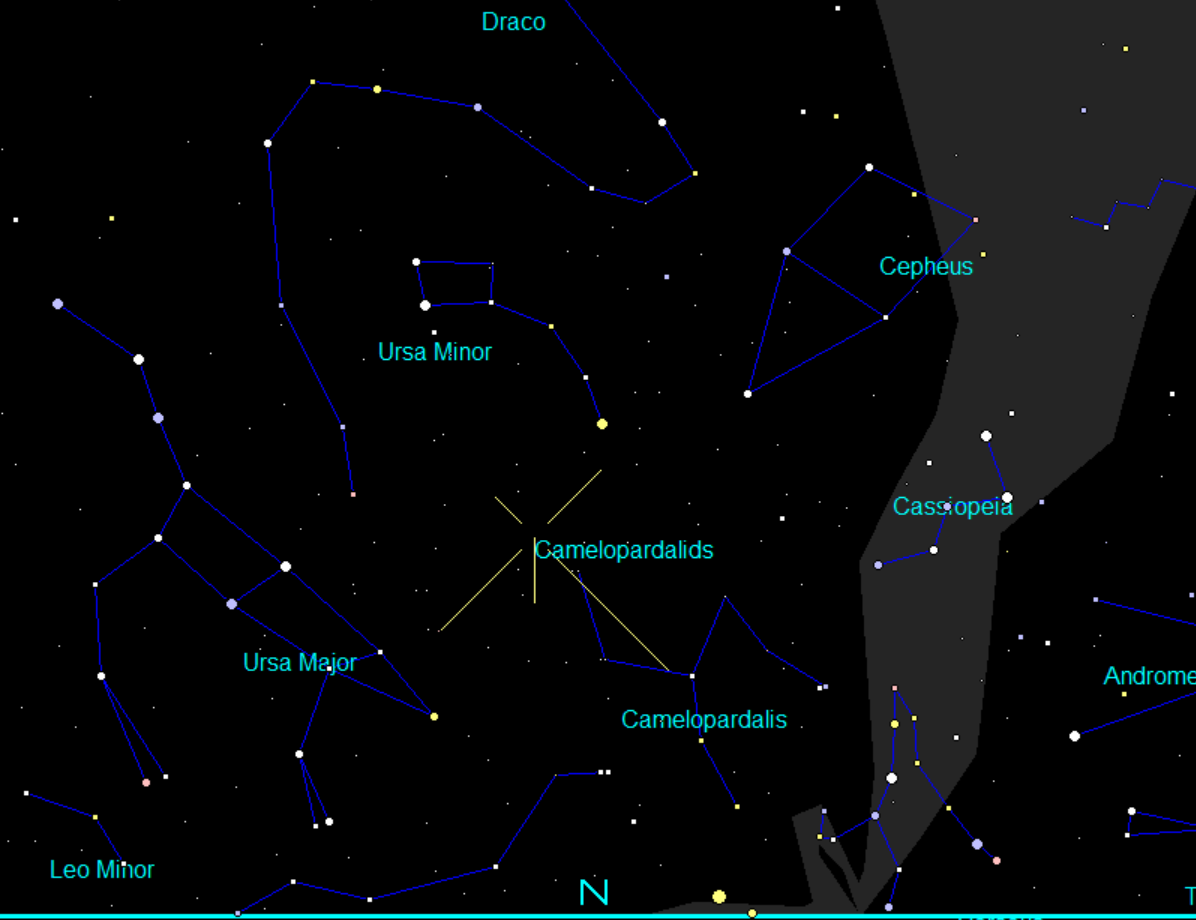
The expected radiant for the meteors of the May Camelopardalids, the meteors from the comet 209P/LINEAR at 3 a.m. on May 24, 2014. Credit: My LookingUp program.
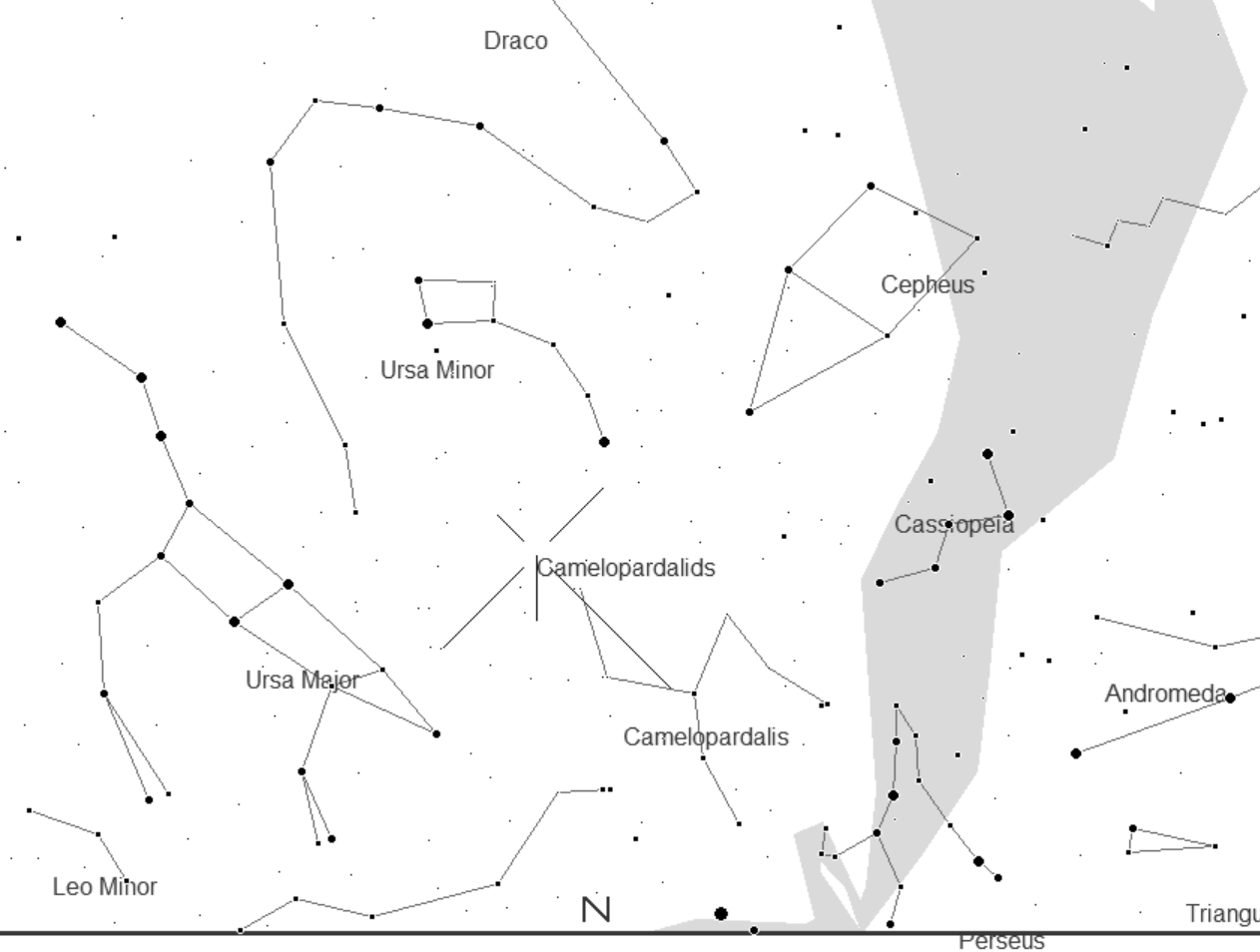
Same chart as above but black on white to save ink if you print it.
Here’s the culprit: Comet 209P/LINEAR

This May 17, 2014 image of Comet 209/LINEAR is the average of 5, 180-second exposures, taken remotely with the PlaneWave 17″+ Paramount ME+STL-6303E robotic unit of the Virtual Telescope Project. The telescope tracked the comet, so stars are trailing. This comet has the potential to generate an exceptional meteor shower (Camelopardalids) on May 24, 2014. Gianluca Masi / Virtual Telescope Project
Image and caption above from the Planetary Society blog from Bruce Betts: http://www.planetary.org/blogs/bruce-betts/20140522-one-night-only-a-new-meteor.html.
Want to find the comet?
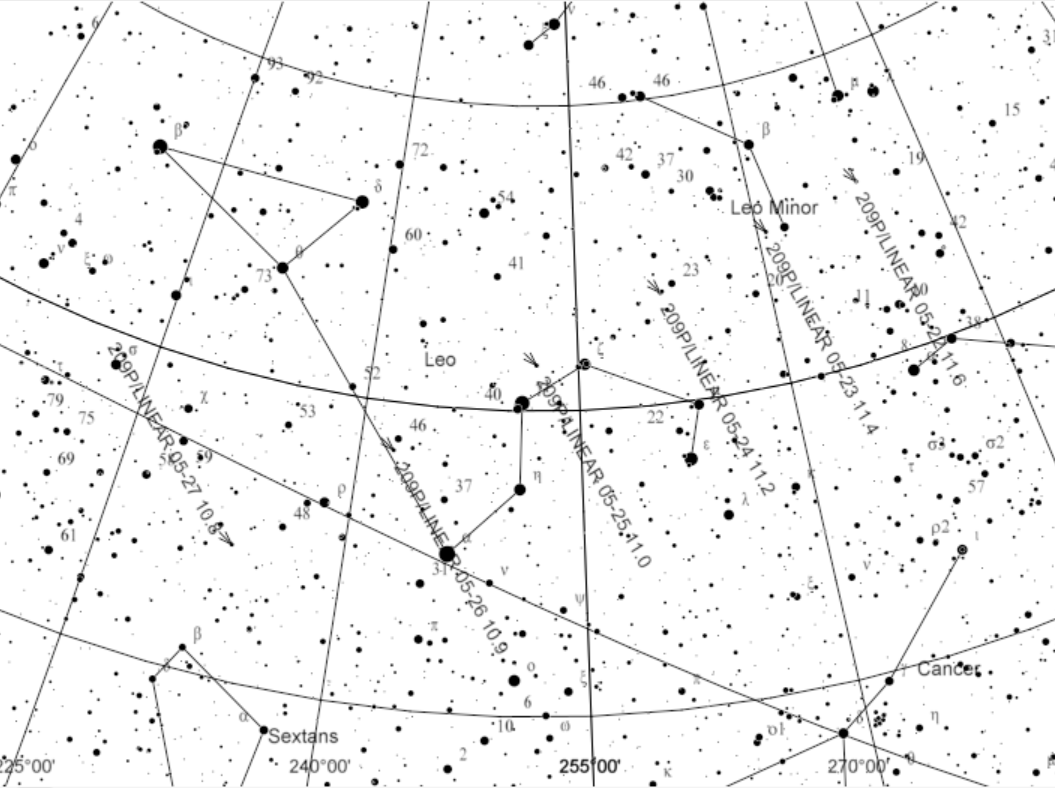
Finder chart for Comet 209P/LINEAR for 11 p.m. Note the dates are UT, 11 p.m. the 23rd is 3 a.m. UT on the 24th. Created using Cartes du Ciel (Sky Charts).
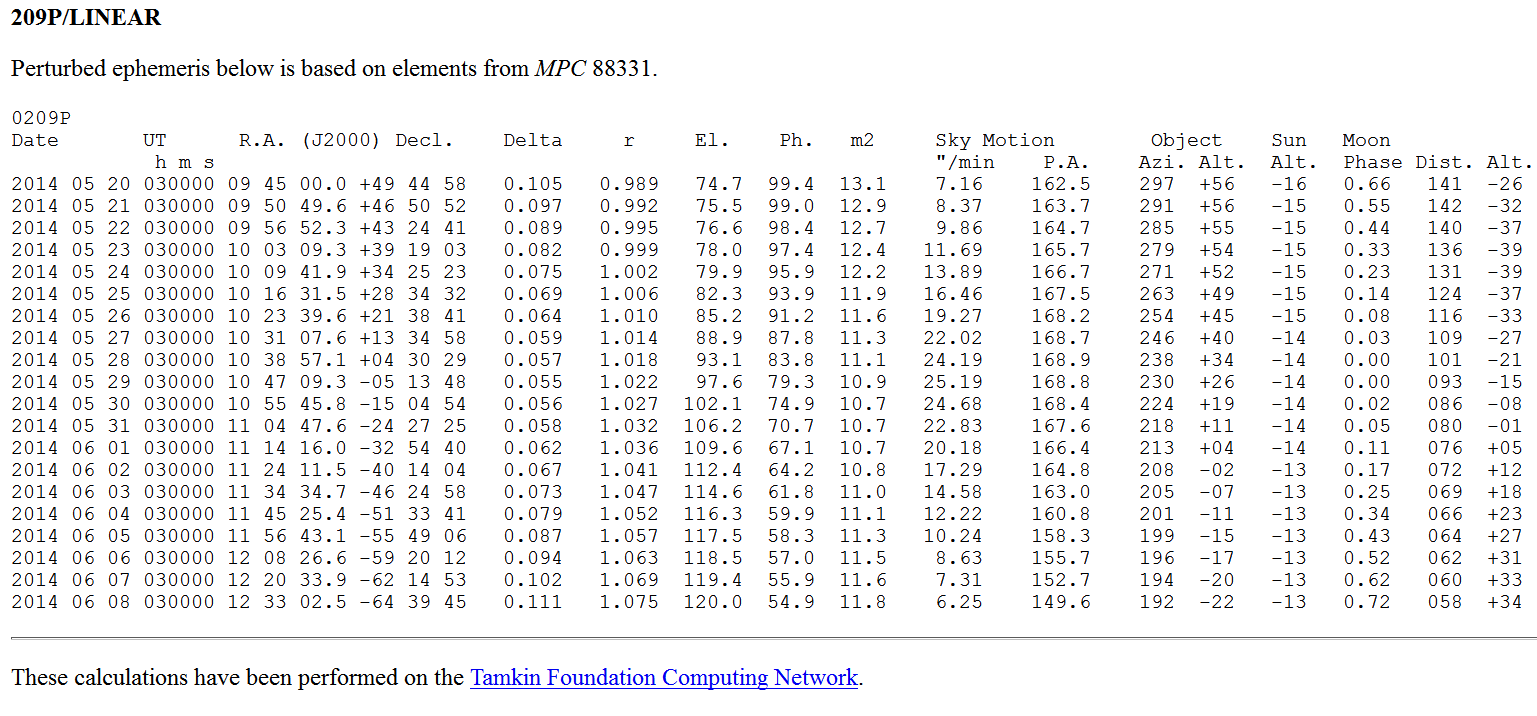
Ephemeris of positions for Comet 209P/LINEAR for May 20, 2014 to June 8, 2014 from the Minor Planet Center.
Got to http://www.minorplanetcenter.net/iau/MPEph/MPEph.html to print your own ephemeris for this or any comet. For purposes of this comet the comet name is: 209P/LINEAR.
All these images may be enlarged by clicking on them.
Note that:
Delta is the distance from Earth in Astronomical Units (AU)
r is the comet’s distance from the sun in AU.
El is the elongation in degrees from the sun
Ph. is the phase angle, not a big deal for comets.
m2 is the magnitude of the comet’s coma. Comets appear dimmer than their magnitude suggests.
05/20/2014 – Ephemeris – Special doings at the Sleeping Bear National Lakeshore Friday Night
Ephemeris for Tuesday, May 20th. Today the sun will be up for 14 hours and 59 minutes, setting at 9:09. The moon, 1 day before last quarter, will rise at 2:09 tomorrow morning. Tomorrow the sun will rise at 6:08.
This Friday evening Dr. Tyler Nordgren, astronomer, artist and dark sky advocate will give a presentation at the Sleeping Bear Dunes National Lakeshore Philip A. Hart Visitor Center in Empire at 7 p.m. Afterward he will be signing copies of his beautiful new poster See the Stars from Sleeping Bear Dunes National Lakeshore featuring the Great and Little Bear constellations and the bluffs of the Sleeping Bear Dunes and the Manitou Islands. After that, weather permitting see the sunset from many of the parks locations, then, for the hardy, settle down for an all night vigil for a possible meteor storm with the Grand Traverse Astronomical Society at the Dune Climb (The bottom, not the top, though you can climb up there for an all-sky view.).
Times are for the Traverse City/Interlochen area of Michigan. They may be different for your location.
Addendum

See the Stars from Sleeping Bear Dunes National Lakeshore Poster by Tyler Nordgren.
05/19/2014 – Ephemeris – The meteor storm and an all night star party to view it
Ephemeris for Monday, May 19th. Today the sun will be up for 14 hours and 57 minutes, setting at 9:08. The moon, 2 days before last quarter, will rise at 1:33 tomorrow morning. Tomorrow the sun will rise at 6:09.
This will be a first for the Grand Traverse Astronomical Society, an all night star party this Friday night and Saturday morning. The reason is the predicted meteor storm Saturday morning from Comet 209P/LINEAR, discovered in 2004. Near a I can tell no one has seen a single meteor from this comet. However several astronomers who work on cometary debris have some confidence that debris from this comet which orbits the Sun every 5 years will cross the Earth orbit on the morning of May 24th around 3 a.m. give or take. The hardiest of the GTAS members will be at the Dune Climb of the Sleeping Bear Dunes National Lakeshore all night. Join us if you can.
Times are for the Traverse City/Interlochen area of Michigan. They may be different for your location.
Addendum
The expected radiant for the meteors of the May Camelopardids, the meteors from the comet 209P/LINEAR at 3 a.m. on May 24, 2014. Credit: My LookingUp program.
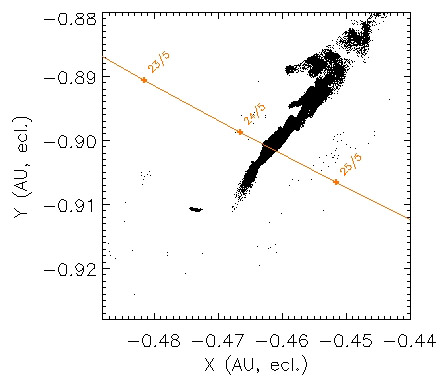
Earth’s motion in respect to the expected meteoroid stream from Comet 209P/LINEAR. Calculations by Jeremie Vaubaillon. From meteor.seti.org.

