Ephemeris: 03/05/2025 – Taking our weekly look at the whereabouts of the naked-eye planets
This is Ephemeris for Ash Wednesday, March 5th. Today the Sun will be up for 11 hours and 23 minutes, setting at 6:36, and it will rise tomorrow at 7:10. The Moon, 1 day before first quarter, will set at 2:21 tomorrow morning.
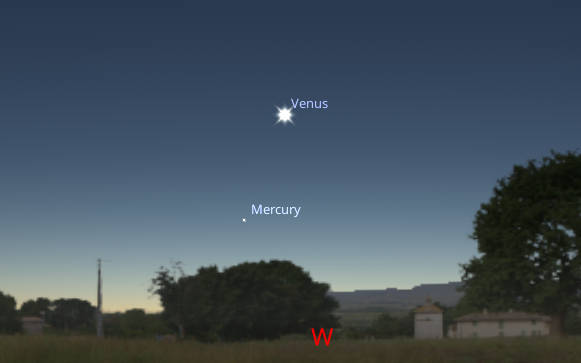
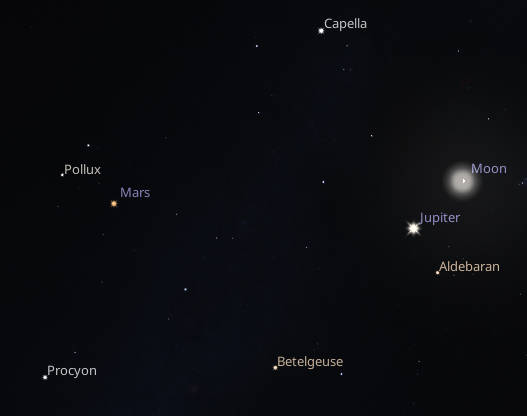
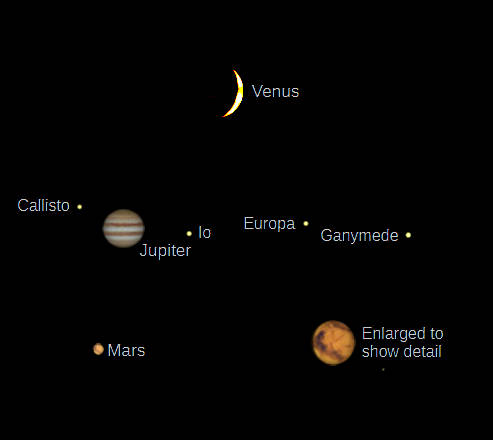
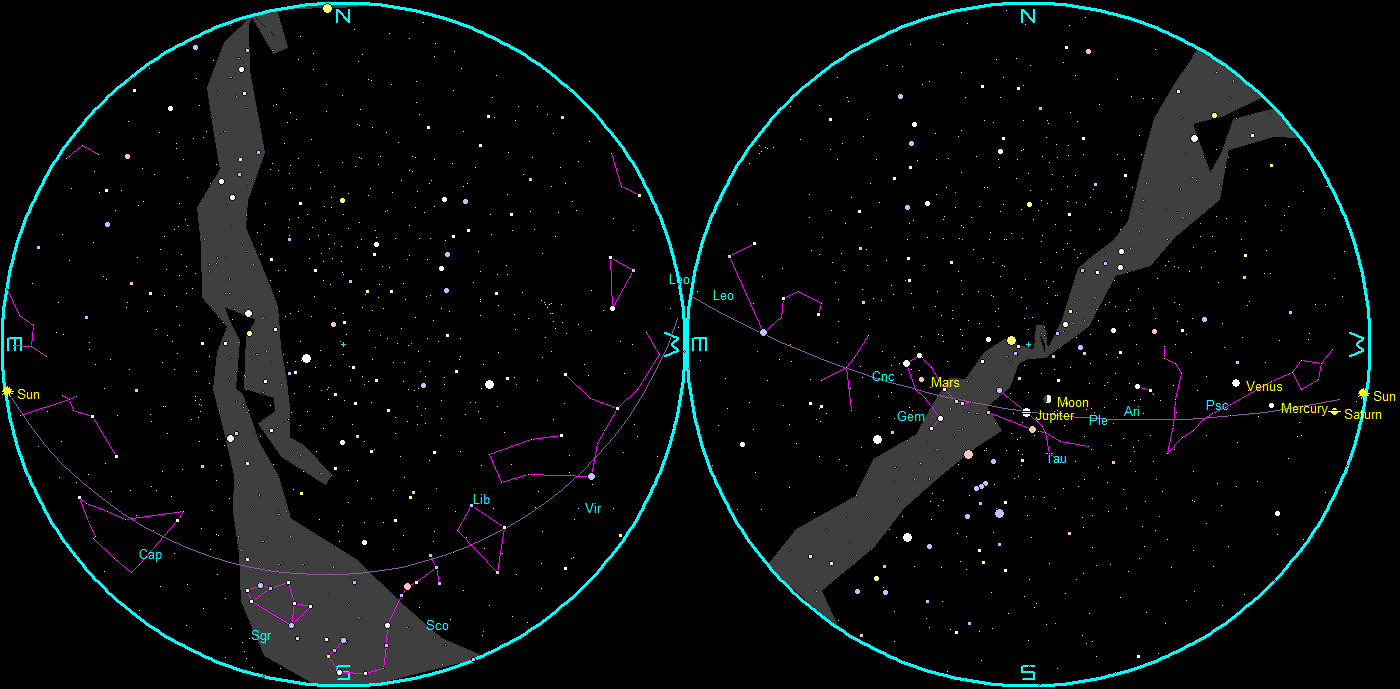
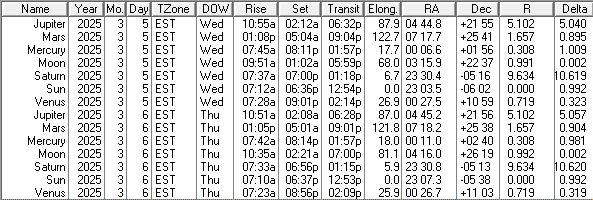
Let’s take our weekly look at the whereabouts of the naked-eye planets. At 7:10 PM this evening four of the five naked eye planets will be out. Starting from the West we have Venus the brightest of all. Below it at the 7 o’clock position and halfway to the horizon is the much dimmer Mercury, three days from its greatest separation from the Sun. Jupiter, the second-brightest planet will be high in the south-southwest below and right of the Moon tonight. The 4th planet out is Mars, the third-brightest planet now, with its distinctive reddish hue, west of the stars Castor and Pollux in Gemini, and in the southeast. By the end of the month both Venus and Mercury will be gone out of the evening sky, leaving only two, Mars and Jupiter.
The astronomical event times given are for the Traverse City/Interlochen area of Michigan (EST, UT – 5 hours). Times will be different for other locations.
Addendum
Ephemeris: 03/04/2025 – Looks like asteroid 2024 YR4 will miss the Earth
This is Ephemeris for Fat Tuesday, March 4th. Today the Sun will be up for 11 hours and 20 minutes, setting at 6:35, and it will rise tomorrow at 7:12. The Moon, 2 days before first quarter, will set at 1:02 tomorrow morning.
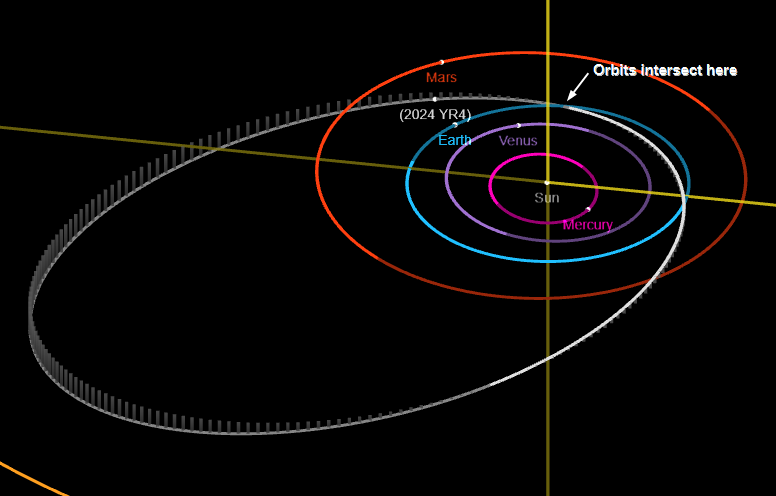
I’ve got some good news for a change. The recently discovered small asteroid with the provisional designation 2024 YR4 it’s not going to hit the Earth on December 22nd, 2032. More precisely the percentage chance of hitting the Earth is now down to four thousandths of a percent. The recalculation was due to observations from the Subaru Telescope in Hawaii. Three separate organizations calculated the chances of the asteroid to hit. That means this number is of very high confidence. The new center of the locus that they calculated for the asteroid’s passage by the Earth now comes closer to the orbit of the Moon than it does the Earth. So that’s one less thing to worry about, although astronomers will be keeping tabs on it.
The astronomical event times given are for the Traverse City/Interlochen area of Michigan (EST, UT – 5 hours). Times will be different for other locations.
Addendum
Ephemeris: 03/03/2025 – The Moon tonight
This is Bob Moler with Ephemeris for Monday, March 3rd. Today the Sun will be up for 11 hours and 17 minutes, setting at 6:33, and it will rise tomorrow at 7:14. The Moon, 3 days before first quarter, will set at 11:40 this evening.
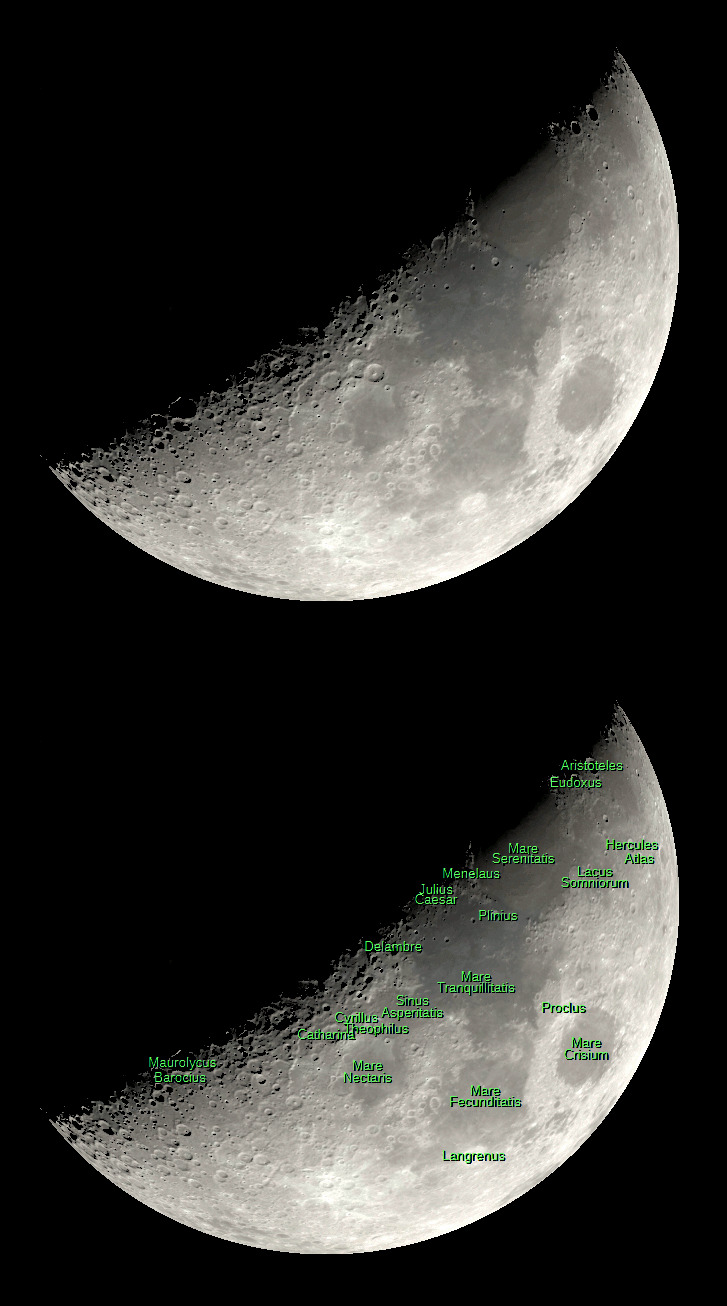
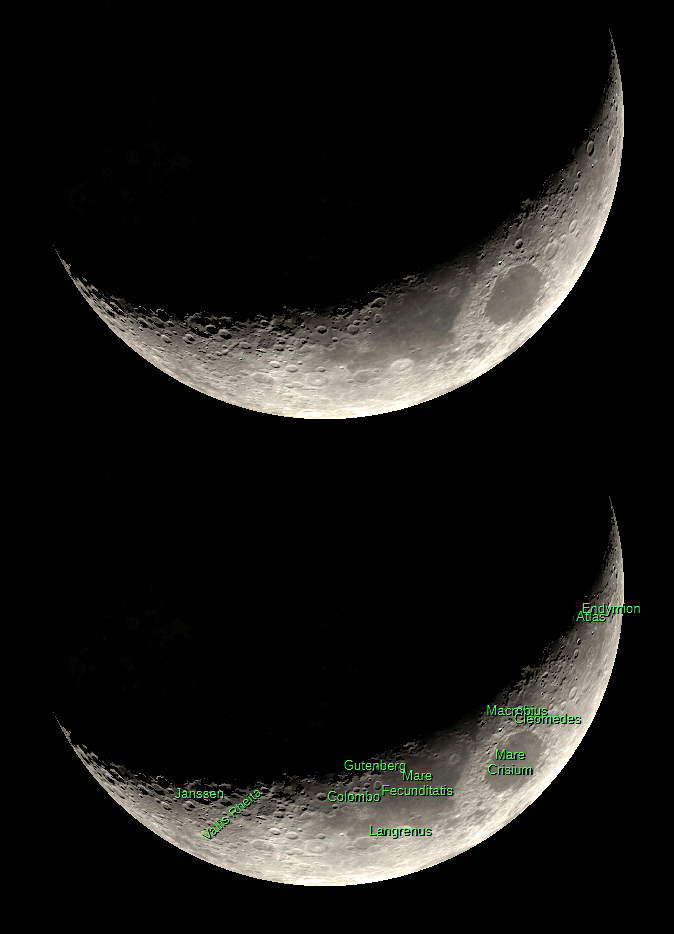
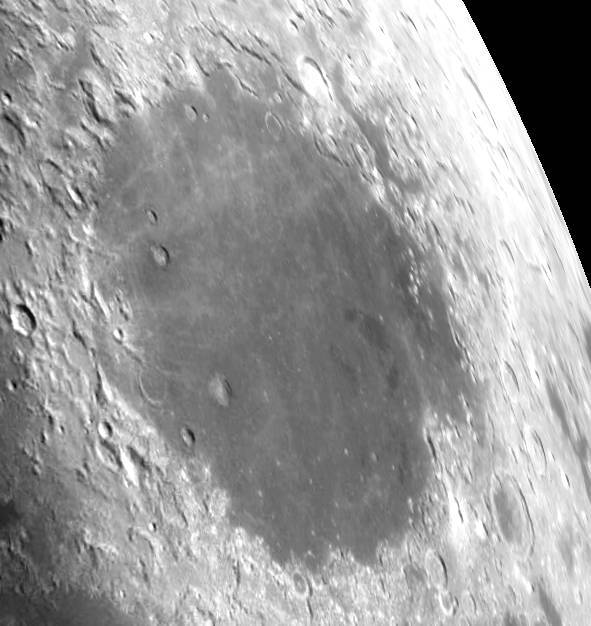
Tonight the moon will be four days old. The age of the moon is the number of days since the new moon which ranges from 1 to 28 or 29 for the lunar month. I usually don’t use that, being more concerned with the phase of the Moon so at the top of the program I give the moon’s relation to its new, quarter, or full phase. Being in its waxing crescent phase right now, the only features to the naked eye on the Moon besides the crescent itself are the dark Sea of Crises, Mare Crisium, target of Firefly Aerospace’s Blue Ghost Lander, and the larger Sea of Fruitfulness, Mare Fecunditatis. The Moon rotates about 1/28th the speed of the Earth, and it’s also smaller, about a quarter of the Earth’s diameter. So one would have to use a supersonic jet to fly around the Earth to keep up with the rotation, but on the Moon one could do that with the Apollo moon rover.
The astronomical event times given are for the Traverse City/Interlochen area of Michigan (EST, UT – 5 hours). Times will be different for other locations.
Addendum
Ephemeris: 02/28/25 – Previewing March Skies
Ephemeris: 02/28/25 – Previewing March Skies
This is Ephemeris for Friday, February 28th. Today the Sun will be up for 11 hours and 8 minutes, setting at 6:29, and it will rise tomorrow at 7:19. The Moon, 1 day past new, will set at 7:34 this evening.
Let’s preview the month of March. In March the increase in daylight hours is at its greatest, with spring 3 weeks away. Daylight hours will increase from 11 hours and 11 minutes tomorrow to 12 hours and 44 minutes on the 31st. Along with that the altitude of the Sun at local noon will increase from 38 degrees tomorrow to 49 ½ degrees at month’s end. Local noon tomorrow, by the way, for Interlochen and Traverse City is 12:54 pm, which is mainly due to the fact that our standard time meridian happens to run through Philadelphia. That’s before daylight time starts on the 9th. On that date local noon will be 1:52 pm. Spring will begin later this month on the 20th when the Sun will pass overhead on the equator heading northward.
We change to Daylight Saving Time on the 9th. EST to EDT. Bah, Humbug!
The astronomical event times given are for the Traverse City/Interlochen area of Michigan (EST, UT – 5 hours). Times will be different for other locations.
Addendum
Addendum
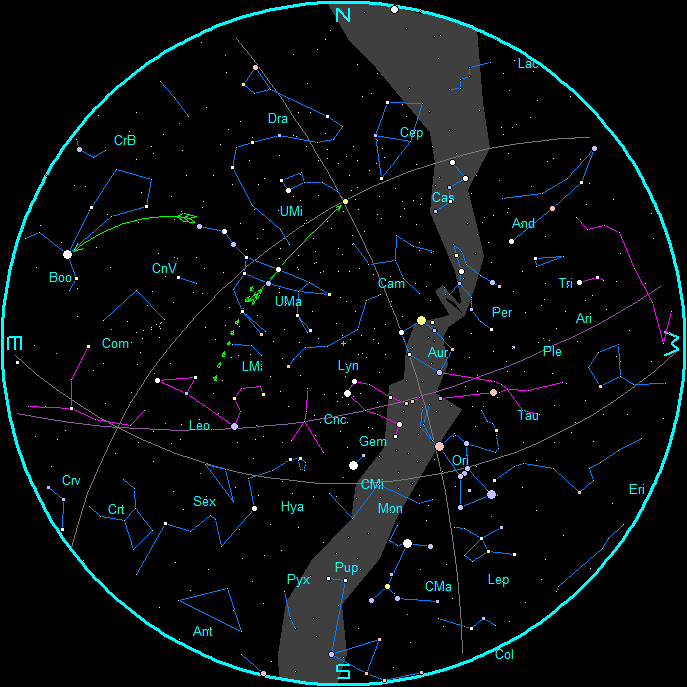
March Evening Star Chart
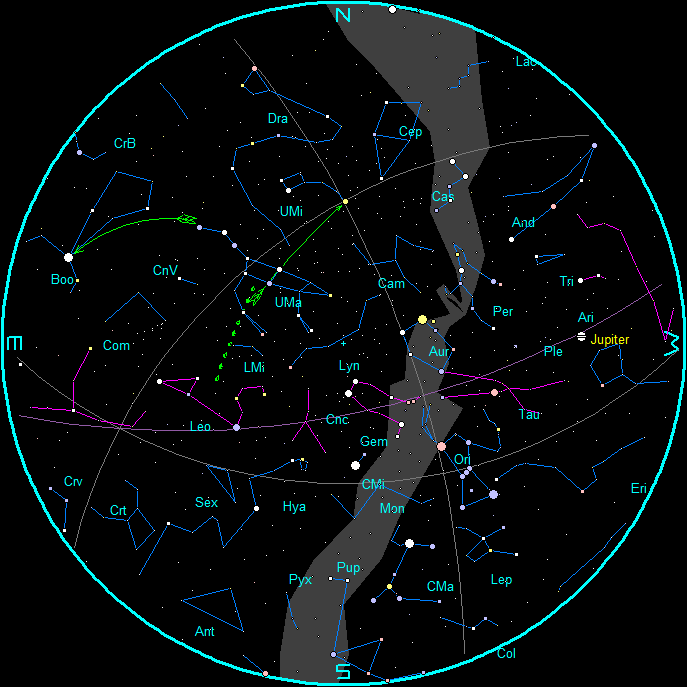
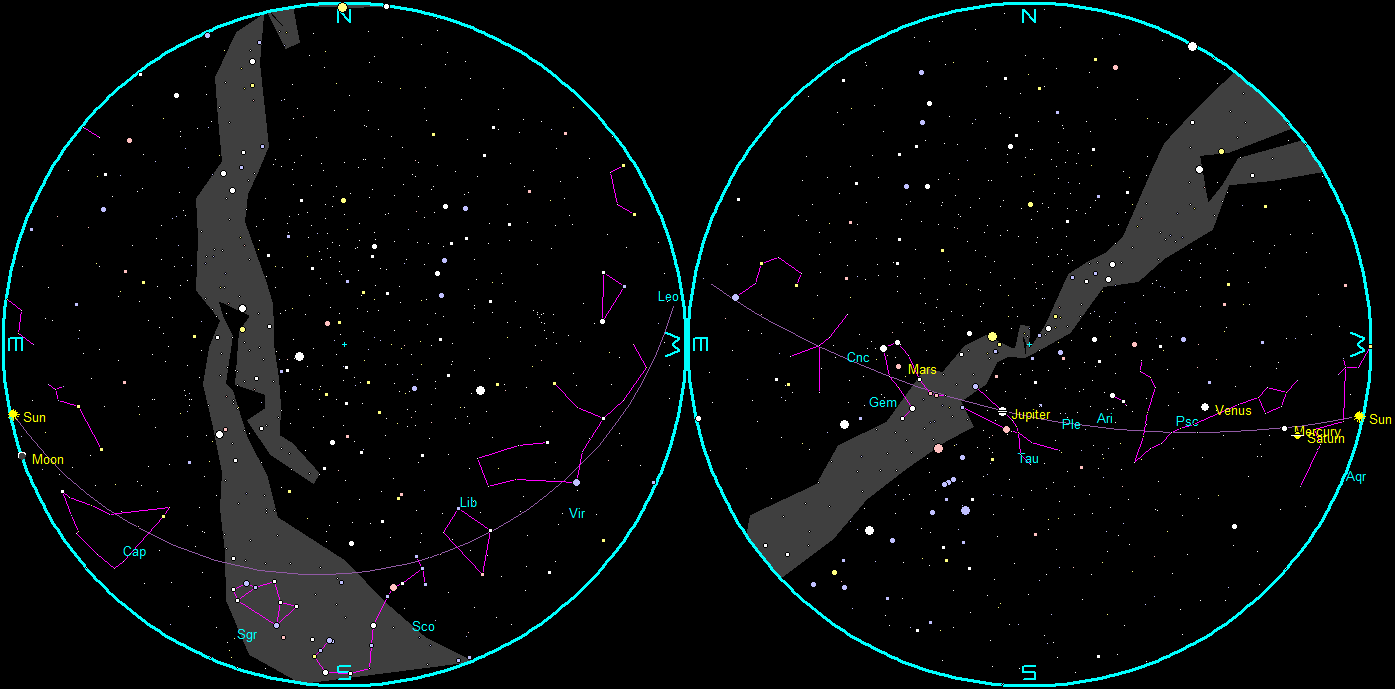
The planets and stars are plotted for the 15th at 10 p.m. EDT in the evening and 6 a.m. on the 16th for the morning chart. These are the chart times. Note that Traverse City is located approximately 45 minutes behind our time meridian. (An hour and 45 minutes behind our Daylight Saving Time meridian during EDT). To duplicate the star positions on a planisphere (rotating star finder) you may have to set it to 45 minutes or 1 hour 45 minutes earlier than your current time.
Note the chart times of 10 PM on the 15th, and 6 AM on the 16th. For each week before then, add ½ hour (28 minutes if you’re picky). For each week after then, subtract ½ hour. For planet positions on dates other than the dateshere, check the Wednesday planet posts on this blog.
March Morning Star Chart
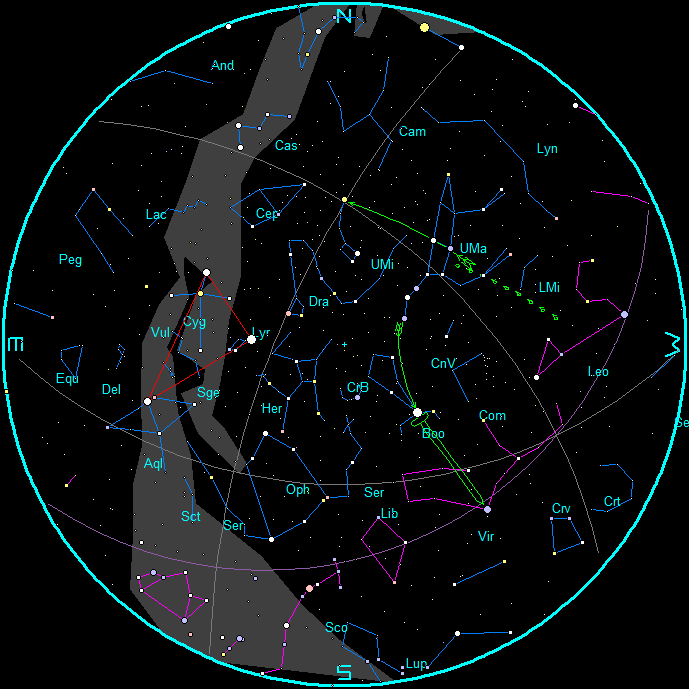
For a list of constellation names to go with the abbreviations click here.
- Pointer stars at the front of the bowl of the Big Dipper point to Polaris the North Star.
- The leaky bowl of the Big Dipper drips on Leo.
- Follow the arc of the handle of the Big Dipper to the star Arcturus, and
- Extend it as a spike to Spica.
- The Summer Triangle appears in red.
Twilight Limits, Nautical and Astronomical
Omitted due to WordPress issues
NASA Calendar of Planetary Events
     Date   Time EST  Event
Mar  1  Sa            Venus: 30.4° E
     1  Sa  12:40 AM  Moon Ascending Node
     1  Sa   4:18 PM  Moon Perigee: 362000 km
     1  Sa   6:18 PM  Moon-Venus: 6.4° N
     5  We   7:32 AM  Moon-Pleiades: 0.6° S
     6  Th  11:32 AM  First Quarter
     7  Fr  10:56 AM  Moon North Dec.: 28.7° N
     8  Sa  12:59 AM  Mercury Elongation: 18.2° E
     8  Sa   7:27 PM  Moon-Mars: 1.8° S
                 EDT
     9  Su   6:06 AM  Moon-Pollux: 2.1° N
    10  Mo   7:10 AM  Moon-Beehive: 2.8° S
    12  We   2:07 AM  Moon-Regulus: 2.4° S
    12  We   6:03 AM  Saturn Conjunction
    12  We   1:52 PM  Mercury-Venus: 5.5° N
    14  Fr   2:55 AM  Full Moon
    14  Fr   3:00 AM  Total Lunar Eclipse
    14  Fr   9:45 AM  Moon Descending Node
    16  Su   3:16 PM  Moon-Spica: 0.4° N
    17  Mo  12:37 PM  Moon Apogee: 405800 km
    19  We   6:20 PM  Neptune Conjunction
    20  Th   5:02 AM  Vernal Equinox
    20  Th  11:58 AM  Moon-Antares: 0.5° N
    22  Sa   2:47 AM  Moon South Dec.: 28.7° S
    22  Sa   7:29 AM  Last Quarter
    22  Sa   9:26 PM  Venus Inferior Conj.
    24  Mo   3:47 PM  Mercury Inferior Conj.
    28  Fr  12:29 PM  Moon Ascending Node
    29  Sa   6:48 AM  Partial Solar Eclipse
    29  Sa   6:58 AM  New Moon
    29  Sa   3:27 PM  Mars-Pollux: 4° S
    30  Su   1:26 AM  Moon Perigee: 358100 km
Sky Events Calendar by Fred Espenak and Sumit Dutta (NASA’s GSFC),
http://eclipse.gsfc.nasa.gov/SKYCAL/SKYCAL.html
If you go to the above site you can print out a list like the above for the entire year or calendar pages for your time zone.
Note that the site is now kept up for archival purposes. Fred Espenak retired from NASA several years ago and has his own site, AstroPixels, which contains much the same information: http://astropixels.com/almanac/almanac.html.
Sun and Moon Rising and Setting Events
LU              Ephemeris of Sky Events for Interlochen/TC
March, 2025    Local time zone: EST
+-----------------------------------------------------------------------+
| DATE |  SUN     SUN  DAYLIGHT|   TWILIGHT*    |MOON  RISE OR    ILLUM |
|      |  RISE    SET    HOURS |  END    START  |PHASE SET** TIME FRACTN|
+=======================================================================+
|Sat  1| 07:19a  06:31p  11:11 | 07:34p  06:16a |      Set  08:55p    5%|
+------+-----------------------+----------------+-----------------------+
|Sun  2| 07:18a  06:32p  11:14 | 07:35p  06:15a |      Set  10:17p   12%|
|Mon  3| 07:16a  06:33p  11:17 | 07:36p  06:13a |      Set  11:40p   21%|
|Tue  4| 07:14a  06:35p  11:20 | 07:38p  06:11a |      Set  01:02a   31%|
|Wed  5| 07:12a  06:36p  11:23 | 07:39p  06:09a |      Set  02:21a   42%|
|Thu  6| 07:10a  06:37p  11:26 | 07:40p  06:08a |F Qtr Set  03:31a   53%|
|Fri  7| 07:09a  06:38p  11:29 | 07:41p  06:06a |      Set  04:28a   64%|
|Sat  8| 07:07a  06:40p  11:32 | 07:43p  06:04a |      Set  05:12a   74%|
+------+-----------------------+----------------+-----------------------+
| EDT  |      Time Change      |                |                       |
|Sun  9| 08:05a  07:41p  11:36 | 08:44p  07:02a |      Set  06:45a   83%|
|Mon 10| 08:03a  07:42p  11:39 | 08:45p  07:00a |      Set  07:11a   90%|
|Tue 11| 08:01a  07:44p  11:42 | 08:47p  06:59a |      Set  07:32a   95%|
|Wed 12| 08:00a  07:45p  11:45 | 08:48p  06:57a |      Set  07:49a   98%|
|Thu 13| 07:58a  07:46p  11:48 | 08:49p  06:55a |      Set  08:06a  100%|
|Fri 14| 07:56a  07:48p  11:51 | 08:51p  06:53a |Full  Rise 08:27p  100%|
|Sat 15| 07:54a  07:49p  11:54 | 08:52p  06:51a |      Rise 09:30p   97%|
+------+-----------------------+----------------+-----------------------+
|Sun 16| 07:52a  07:50p  11:57 | 08:53p  06:49a |      Rise 10:35p   93%|
|Mon 17| 07:50a  07:51p  12:01 | 08:55p  06:47a |      Rise 11:40p   88%|
|Tue 18| 07:49a  07:53p  12:04 | 08:56p  06:45a |      Rise 12:47a   81%|
|Wed 19| 07:47a  07:54p  12:07 | 08:57p  06:43a |      Rise 01:53a   73%|
|Thu 20| 07:45a  07:55p  12:10 | 08:59p  06:42a |      Rise 02:57a   64%|
|Fri 21| 07:43a  07:56p  12:13 | 09:00p  06:40a |      Rise 03:55a   55%|
|Sat 22| 07:41a  07:58p  12:16 | 09:01p  06:38a |L Qtr Rise 04:45a   45%|
+------+-----------------------+----------------+-----------------------+
|Sun 23| 07:39a  07:59p  12:19 | 09:03p  06:36a |      Rise 05:25a   35%|
|Mon 24| 07:37a  08:00p  12:22 | 09:04p  06:34a |      Rise 05:58a   25%|
|Tue 25| 07:36a  08:02p  12:26 | 09:05p  06:32a |      Rise 06:24a   16%|
|Wed 26| 07:34a  08:03p  12:29 | 09:07p  06:30a |      Rise 06:47a    9%|
|Thu 27| 07:32a  08:04p  12:32 | 09:08p  06:28a |      Rise 07:08a    3%|
|Fri 28| 07:30a  08:05p  12:35 | 09:10p  06:26a |      Rise 07:29a    0%|
|Sat 29| 07:28a  08:07p  12:38 | 09:11p  06:24a |New   Set  08:48p    0%|
+------+-----------------------+----------------+-----------------------+
|Sun 30| 07:26a  08:08p  12:41 | 09:12p  06:22a |      Set  10:13p    4%|
|Mon 31| 07:24a  08:09p  12:44 | 09:14p  06:20a |      Set  11:39p   10%|
+-----------------------------------------------------------------------+
* Nautical Twilight
** Moonrise or moonset, whichever occurs between sunset and sunrise
Created using my LookingUp for DOS output as text.
Ephemeris: 02/27/2025 – The spring constellations are rising
This is Ephemeris for Thursday, February 27th. Today the Sun will be up for 11 hours and 5 minutes, setting at 6:28, and it will rise tomorrow at 7:21. The Moon is new today, and won’t be visible.
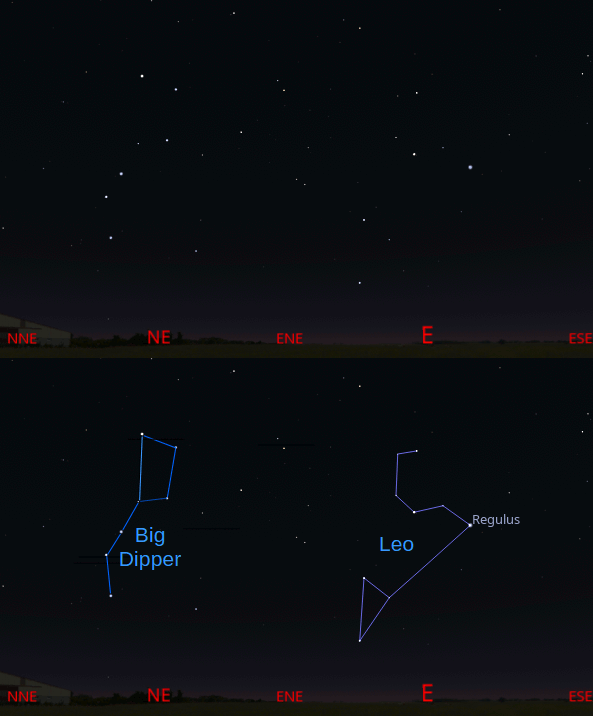
Today, we are exactly 3 weeks from the start of spring. The temperatures this week are rising. Even though at 8:00 PM Orion is high in the south, looking off to the east the spring constellation of Leo the lion has risen, and the Big Dipper is standing on its handle in the northeast. To the Anishinaabe native peoples of this area the Big Dipper is part of Ojiig, the Fisher, who brought summer to the Earth and when he’s in this position in the northeastern skies standing on his tail it is a sign of the spring to come and the start of the maple sugaring season. This next week or so is especially the best time, all year, to see the planet Mercury in the evening twilight due west, shortly after sunset. Its greatest separation from the Sun will come March 8th.
The astronomical event times given are for the Traverse City/Interlochen area of Michigan (EST, UT – 5 hours). Times will be different for other locations.
Addendum
Ephemeris: 02/26/2025 – Where are the naked-eye planets this week?
This is Ephemeris for Wednesday, February 26th. Today the Sun will be up for 11 hours and 2 minutes, setting at 6:26, and it will rise tomorrow at 7:23. The Moon, 1 day before new, will rise at 7:25 tomorrow morning.
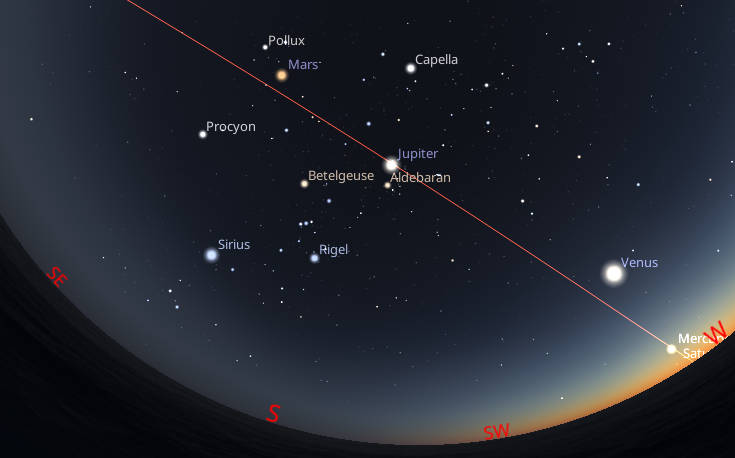
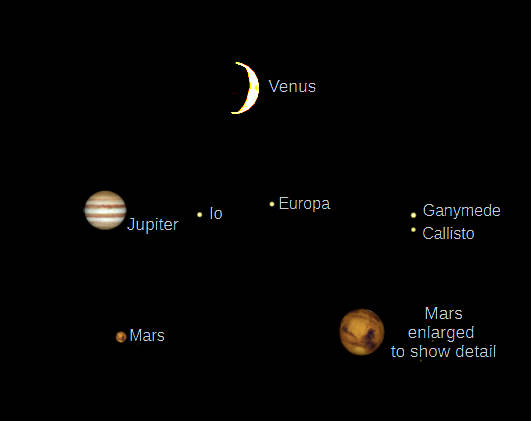
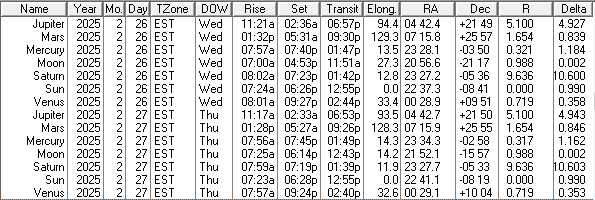
Let’s take our weekly look at the whereabouts of the naked-eye planets. At 7:15 PM this evening four of the five naked eye planets will be out. Starting from the west we have Venus the brightest of all. Far below it, near the horizon, will be the much dimmer Mercury, making its evening appearance, replacing Saturn. Jupiter, the second-brightest planet will be high in the south. It is slowly heading eastward now above the star Aldebaran. Farther below and left of it is the spectacular constellation of Orion the hunter. The 4th planet out is Mars, the third-brightest planet now, with its distinctive reddish hue in the east-southeast, to the right of the stars Castor and Pollux in Gemini.
The astronomical event times given are for the Traverse City/Interlochen area of Michigan (EST, UT – 5 hours). Times will be different for other locations.
Addendum
Ephemeris: 02/25/2025 – Eridanus, a river in the sky
This is Ephemeris for Tuesday, February 25th. Today the Sun will be up for 10 hours and 59 minutes, setting at 6:25, and it will rise tomorrow at 7:24. The Moon, 2 days before new, will rise at 7:00 tomorrow morning.
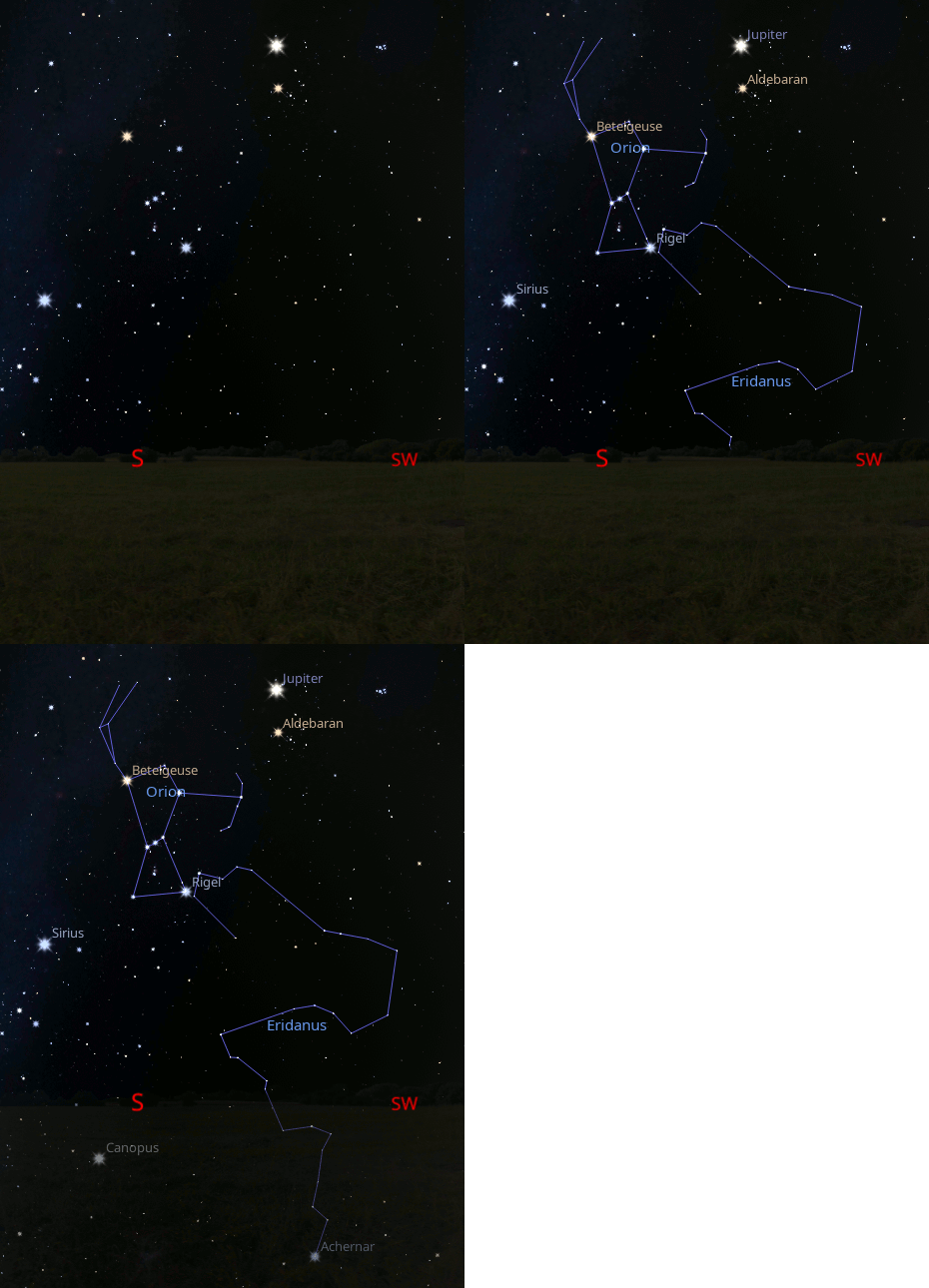
One of the more obscure constellations around is Eridanus, which depicts a river. At 8 PM the river starts near the lower right corner of Orion, near the bright star Rigel and flows to the lower right then zigzags back down to the south-southwestern horizon, it then heads below the horizon. One has to travel to the far south to see the southern terminus of the river, the bright star Achernar. Writers over the ages have seen here the Nile and the Earth circling river Ocean of the ancient flat earth days. Achernar is actually two stars, the brightest was discovered to be the flattest star known, due to its rapid spin. The dimensions of Achernar A has been determined to be twice as wide across its equator than from pole to pole. It’s 139 light years away.
The astronomical event times given are for the Traverse City/Interlochen area of Michigan (EST, UT – 5 hours). Times will be different for other locations.
Addendum
Ephemeris: 02/24/2025 – Mars stopped in its tracks!
This is Ephemeris for Monday, February 24th. Today the Sun will be up for 10 hours and 55 minutes, setting at 6:24, and it will rise tomorrow at 7:26. The Moon, 3 days before new, will rise at 6:30 tomorrow morning.
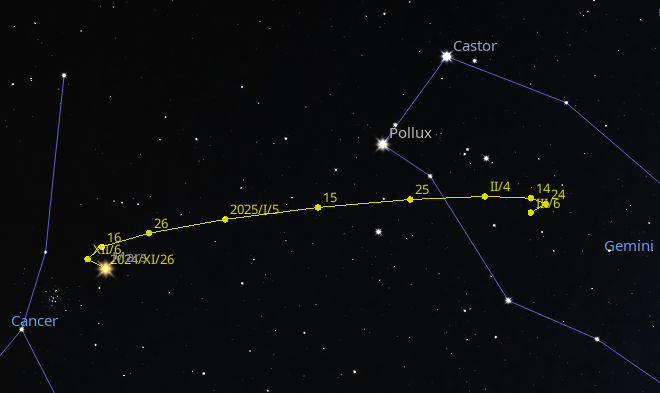
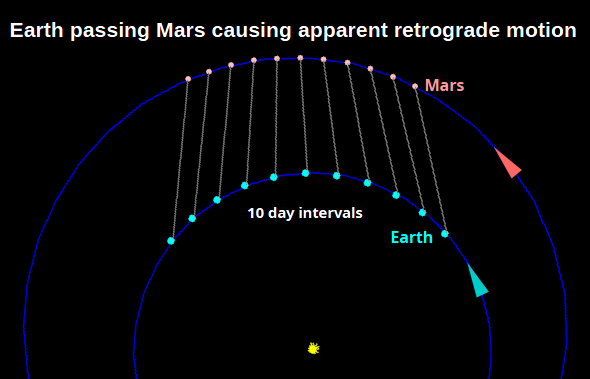
Today the planet Mars is said to be stationary. No, planets do not stop in their orbits of the Sun. It is because we are viewing them from the moving planet Earth. For the last few months Mars has been moving to the west, which is not its normal motion, so we call it retrograde motion. It does that because the Earth, moving faster on an inner orbit, is passing Mars moving slower on an outer orbit. This was a problem for the ancients of the western world because they thought all the moving objects, all seven of them, moved around a stationary Earth. Of those seven, two of them never went backwards, or westward against the stars. They were: the Moon which does orbit the Earth and the Sun which the Earth orbits.
The astronomical event times given are for the Traverse City/Interlochen area of Michigan (EST, UT – 5 hours). Times will be different for other locations.
Addendum
* For non astronomers: Inferior doesn’t refer to quality, but that the planet’s orbit is inside the Earth’s orbit. Superior planets orbit farther out from the Sun than the Earth.
Ephemeris: 02/21/2025 – Orion’s most distinctive feature
This is Bob Moler with Ephemeris for Friday, February 21st. Today the Sun will be up for 10 hours and 46 minutes, setting at 6:20, and it will rise tomorrow at 7:31. The Moon, 1 day past last quarter, will rise at 4:09 tomorrow morning.
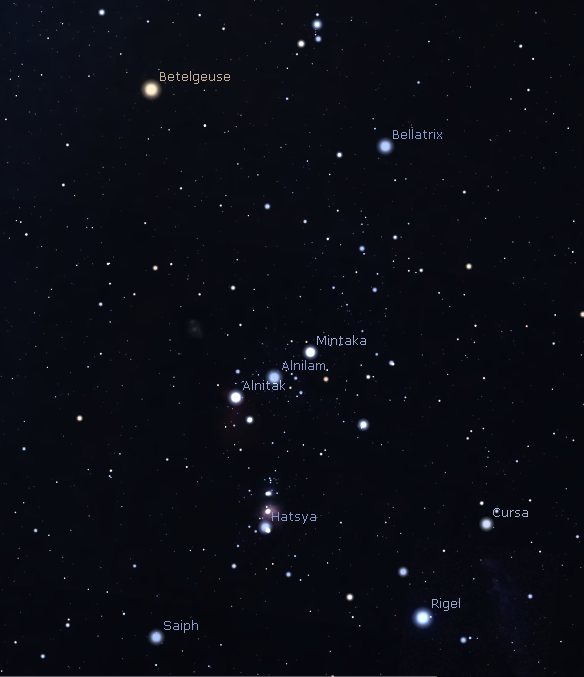
Orion’s belt of three stars is one of the most noticeable star groupings in the sky. There are no other groups of three bright stars in a straight line visible anywhere else in the sky. The star’s names from left to right are Alnitak, Alnilam and Mintaka. They are actually a bit farther away than the other bright stars of Orion. Alnilam, the center star, is over three times the distance of red giant Betelgeuse above it and over twice as far as blue white giant star Rigel below it. Alnilam is 375 thousand times brighter than the Sun. These three stars were also known as Frigga’s Spindle by the Norsemen. Frigga, also known as Freya, is the goddess from whom we get the name of the day of the week we call Friday.
The astronomical event times given are for the Traverse City/Interlochen area of Michigan (EST, UT – 5 hours). Times will be different for other locations.
Addendum
Ephemeris: 02/20/2025 – Can you find the celestial unicorn?
This is Bob Moler with Ephemeris for Thursday, February 20th. Today the Sun will be up for 10 hours and 43 minutes, setting at 6:18, and it will rise tomorrow at 7:33. The Moon, at last quarter today, will rise at 3:06 tomorrow morning.
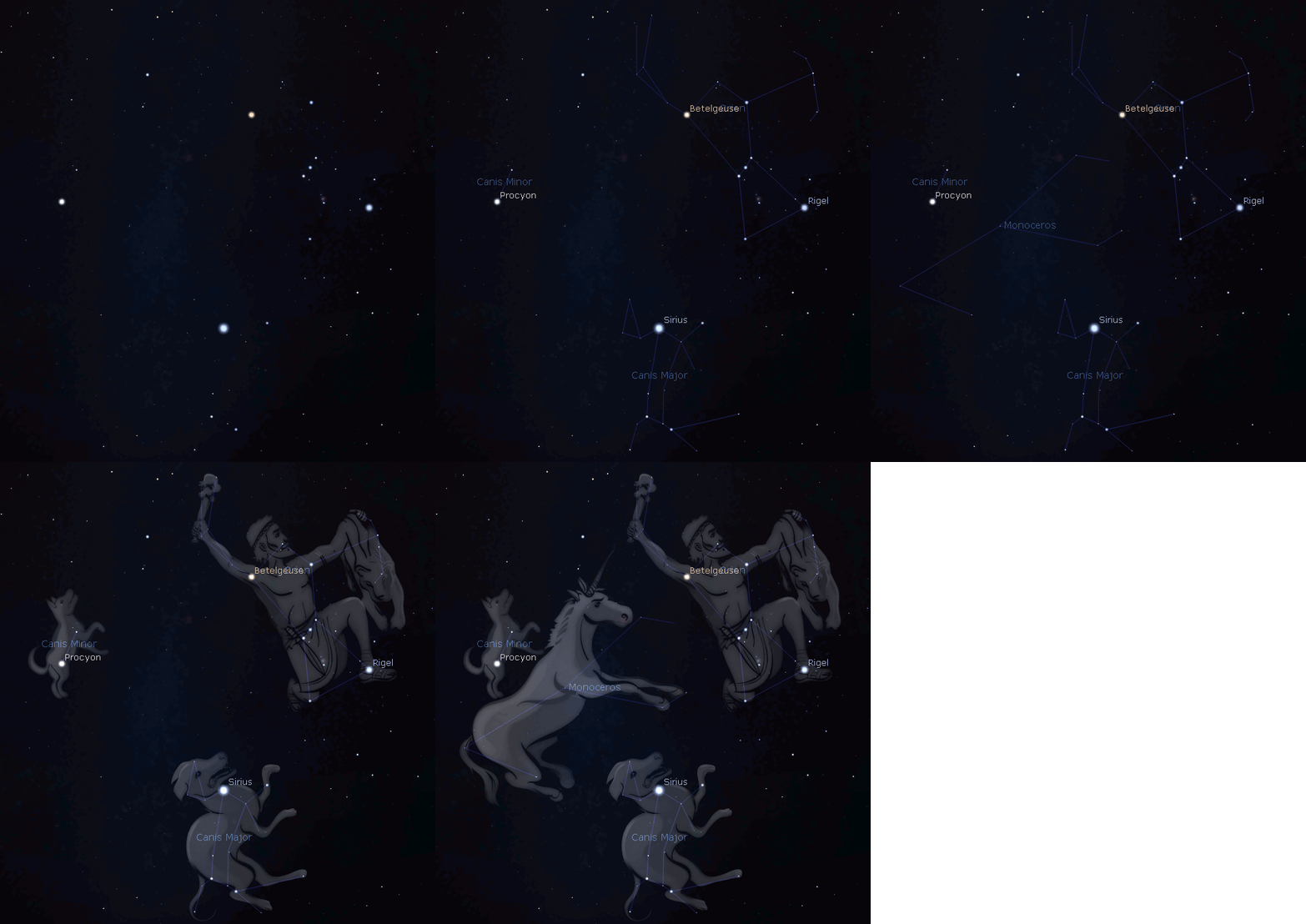
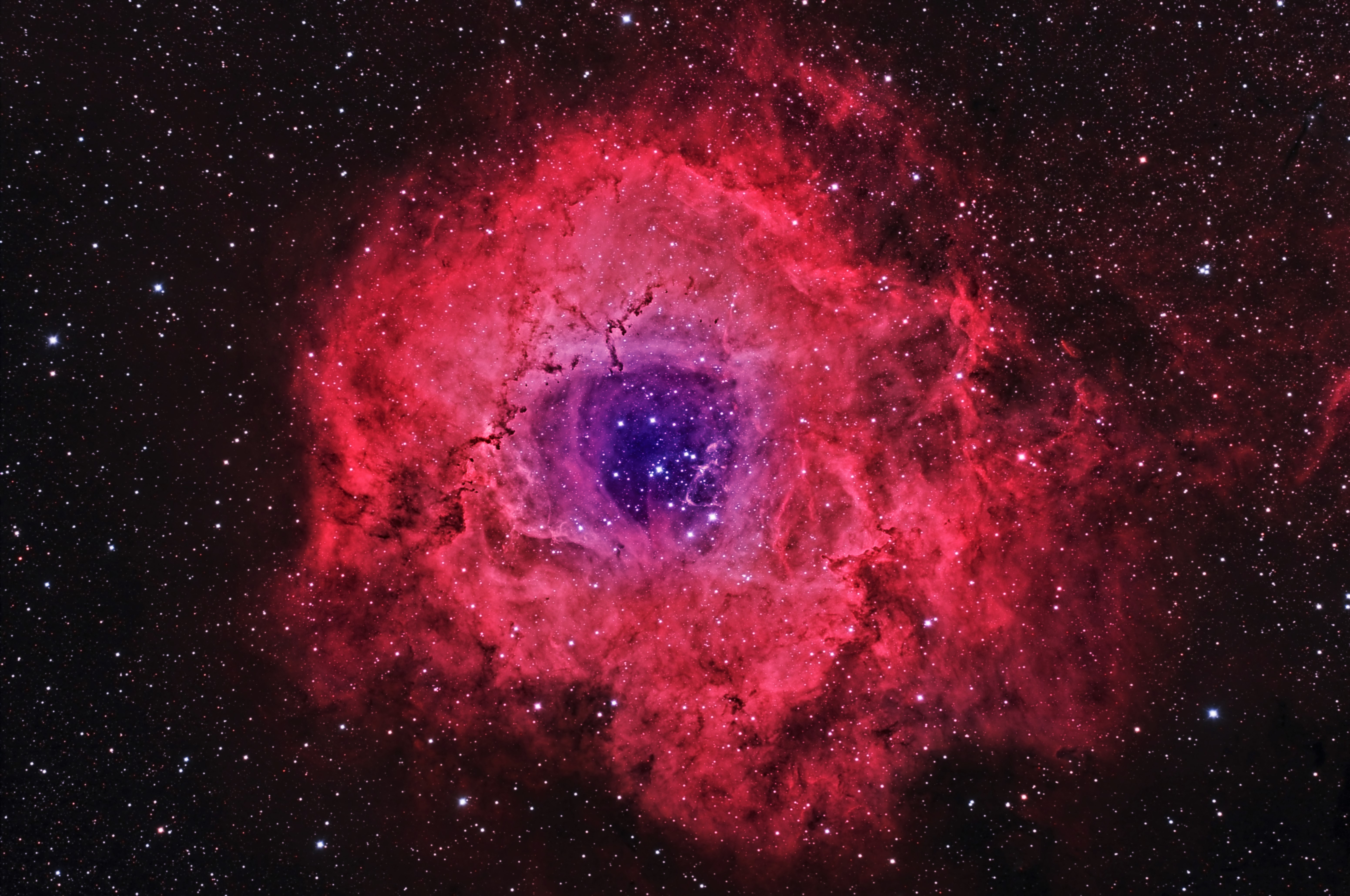
Among all the constellations in the sky of animals real and mythical, there is also a unicorn. It’s called Monoceros, and inhabits the southeastern sky at 8 p.m. mostly bounded by Orion on the right, Canis Major, the great dog below and Canis Minor, the little dog to the left and above. Unfortunately for observers without a telescope Monoceros, is devoid of any but the faintest stars. Maybe that’s why no one can find unicorns anymore. It has many faint stars because the Milky Way runs through it. For the astrophotographer it is a feast of star clusters and faint nebulae or clouds of gas and dust, the birthplace of stars, including the red rose of the Rosette Nebula. It also contains a beautiful telescopic triple star system, Beta (β) Monocerotis.
The astronomical event times given are for the Traverse City/Interlochen area of Michigan (EST, UT – 5 hours). Times will be different for other locations.
Addendum
 Bob Moler's Ephemeris Blog