Ephemeris: 08/13/2026 – The Milky Way seen in two cultures
This is Ephemeris for International Left-Handers Day, Thursday, August 13th. Today the Sun will be up for 14 hours and 8 minutes, setting at 8:51, and it will rise tomorrow at 6:44. The Moon, 1 day past new, will set at 9:22 this evening.
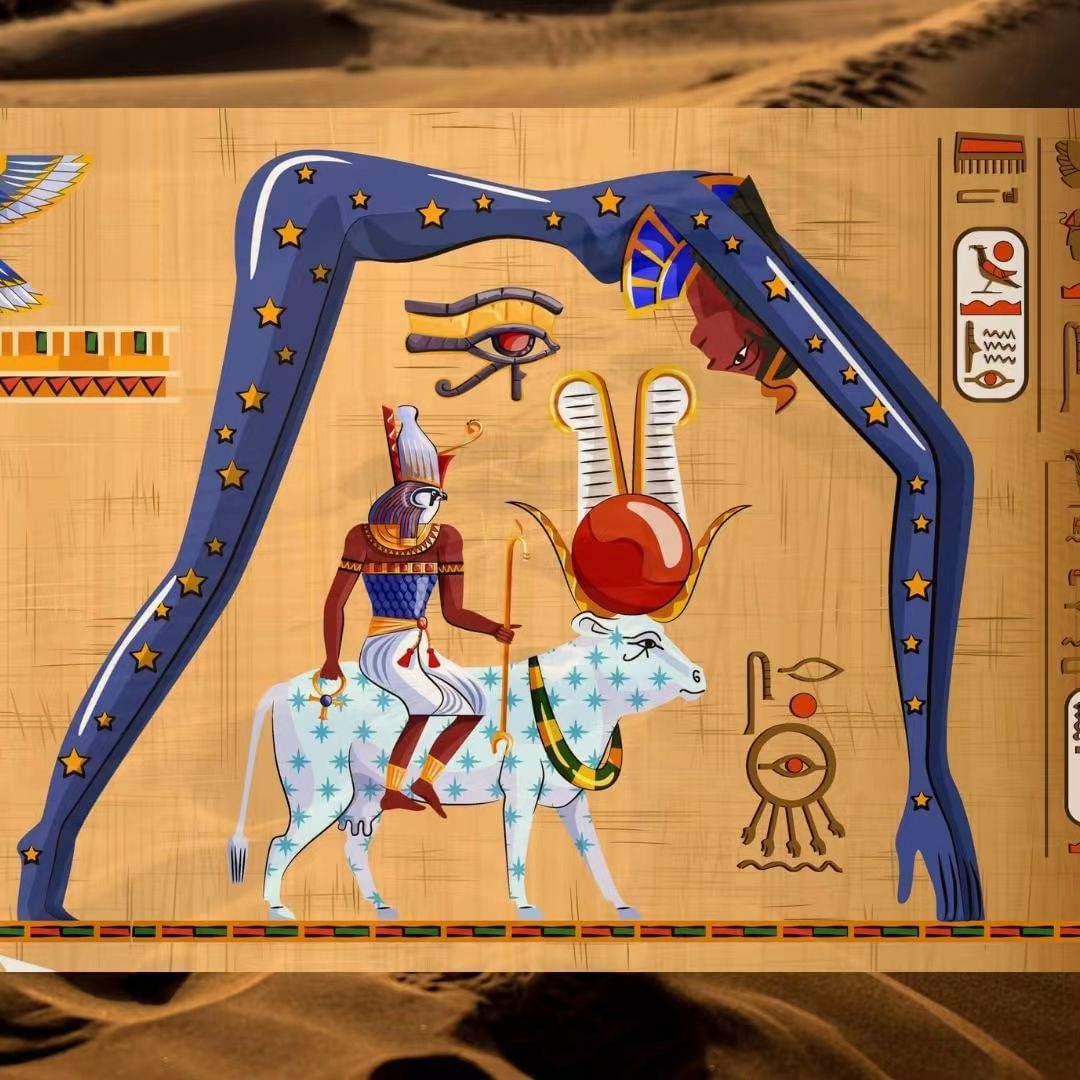
In the folk tales of many lands and cultures the Milky Way has been seen as either a stream or pathway. The term we get for it, the Milky Way, is that it is a stream of milk from the breasts of the Egyptian goddess Nut, the goddess of the sky.
The Anishinaabe native peoples of our area gave it several names: Jiibay-Miikana, The Spirit Road, or Jiibay-ziibi, River of souls, Both for the journey of souls to the afterlife. Or Binesiwi-miikana, Thunderbird’s path. This last is interesting, because in spring as the Milky Way rises from the southeast it beckons migrating birds northward, and in autumn as the Milky Way sinks to the southwest, it bids them to fly southward to warmer climes.
The astronomical event times given in this blog are for the Traverse City/Interlochen area of Michigan (Lat 44.7° N, Long 85.7° W; EDT, UT – 4 hours) unless stated otherwise. Times will be different for other locations.
Addendum
Ephemeris: 08/12/2026 – Eclipses, meteors and planets, oh my!
This is Ephemeris for Wednesday, August 12th. Today the Sun will be up for 14 hours and 11 minutes, setting at 8:53, and it will rise tomorrow at 6:42. The Moon is new today, and won’t be visible.
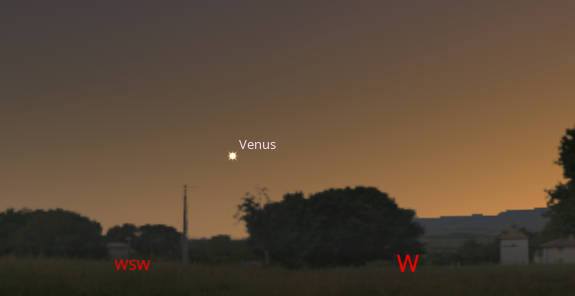
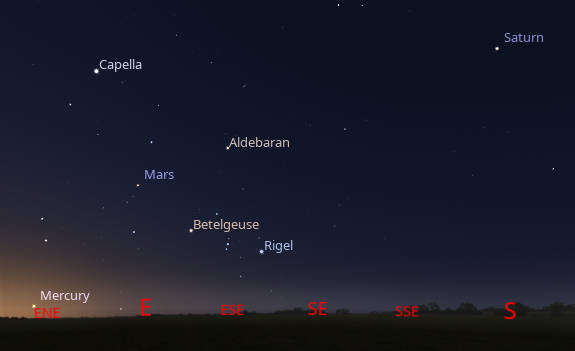
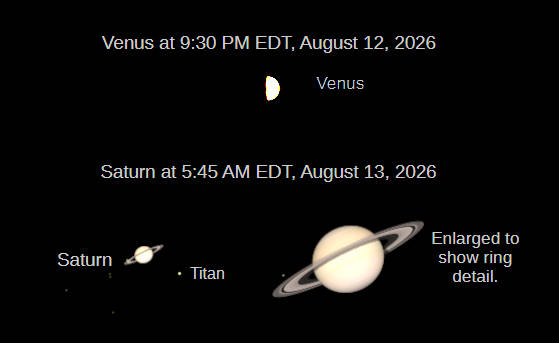
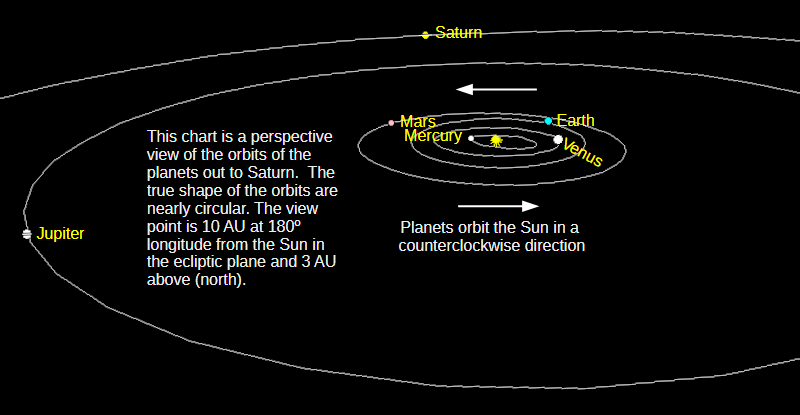
Today’s a double header of astronomical events with a slight eclipse of the sun from around 12:51 to 2:04 this afternoon for Northern Michigan, and the peak of the Perseid meteor shower tonight. Also our weekly look at the naked eye planets. Venus is our brilliant evening star low in the west after sunset. This Saturday Venus will achieve it’s greatest angular separation from the sun. It will then rapidly close the distance to the sun in 2 1/2 months. It will actually be moving around and between the earth and the sun growing a larger but thinner crescent in telescopes. In the morning, Saturn and Mars will be visible in the southeast and east respectively. Mars is competing with the brighter stars of winter, including the orange Aldebaran, and the red giant star Betelgeuse.
The astronomical event times given in this blog are for the Traverse City/Interlochen area of Michigan (Lat 44.7° N, Long 85.7° W; EDT, UT – 4 hours) unless stated otherwise. Times will be different for other locations.
Addendum
More on the solar eclipse here.
More on the Perseid meteor shower here.
Ephemeris: 08/11/2026 – The Perseid meteor shower peaks tomorrow night
This is Ephemeris for Tuesday, August 11th. Today the Sun will be up for 14 hours and 13 minutes, setting at 8:54, and it will rise tomorrow at 6:41. The Moon, 1 day before new, will rise at 6:22 tomorrow morning.
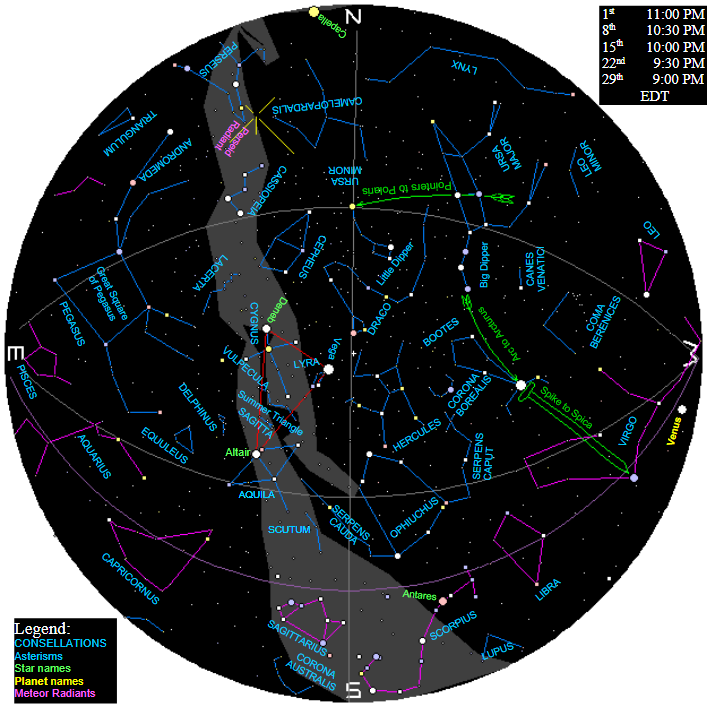
The Perseid meteor shower at its peak and will be visible all night tomorrow night. It won’t have to compete with the moon since it’s new, and incidently will eclipse the sun. The meteors will be seen all over the sky. Perseid meteors can be backtracked to a spot below the W shaped constellation of Cassiopeia, in the area of the constellation Perseus. As the night progresses, the radiant point will be rising higher in northeast. So lay down on a blanket in a dark location, keep mosquito repellent handy, dress warmly, because the ground and air will be chilly and dewy. Bring some hot coffee or chocolate to drink. And enjoy 60 meteors an hour, or more, at the peak after midnight. They will be near peak for the next few nights.
The astronomical event times given in this blog are for the Traverse City/Interlochen area of Michigan (Lat 44.7° N, Long 85.7° W; EDT, UT – 4 hours) unless stated otherwise. Times will be different for other locations.
Addendum
Ephemeris: 08/10/2026 – Previewing Wednesday’s (August 12 , 2026) solar eclipse
This is Ephemeris for Monday, August 10th. Today the Sun will be up for 14 hours and 16 minutes, setting at 8:56, and it will rise tomorrow at 6:40. The Moon, 2 days before new, will rise at 4:58 tomorrow morning.
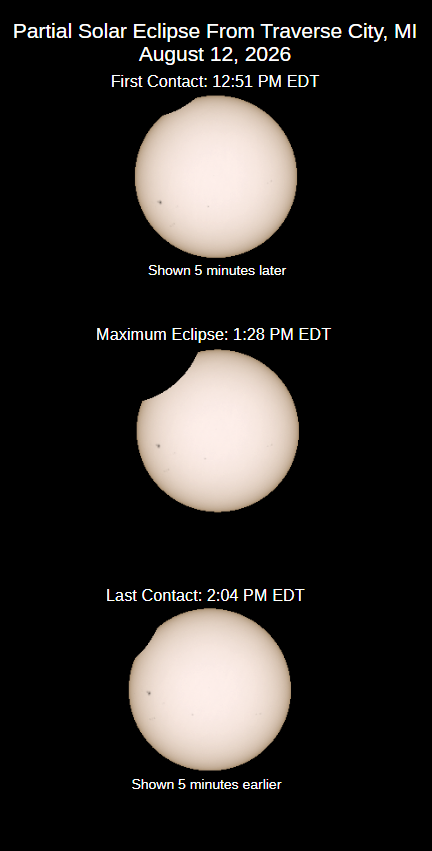
Early Wednesday afternoon there will be a very slight partial solar eclipse visible from northern Michigan. The eclipse begins around 12:51 and extends to 2:04 PM with the greatest coverage of the sun at 1:28 PM when a little bit less than 11% of the sun’s diameter will be covered by the moon. To view the eclipse you need to dig out your eclipse glasses from the 2024 eclipse. Inspect them against a strong light make sure there’s no pin holes that developed in them. You must discard if there are. The other way to view the eclipse is by projection either using a pinhole and a long cardboard box or by using a colander to provide both shade and a lot of small holes to project the sun’s image with. It’s the first of two astronomical events that day.
The astronomical event times given in this blog are for the Traverse City/Interlochen area of Michigan (Lat 44.7° N, Long 85.7° W; EDT, UT – 4 hours) unless stated otherwise. Times will be different for other locations.
Addendum
Ephemeris: 08/07/2026 – The Great Rift
This is Ephemeris for Friday, August 7th. Today the Sun will be up for 14 hours and 24 minutes, setting at 9:00, and it will rise tomorrow at 6:37. The Moon, 2 days past last quarter, will rise at 1:20 tomorrow morning.
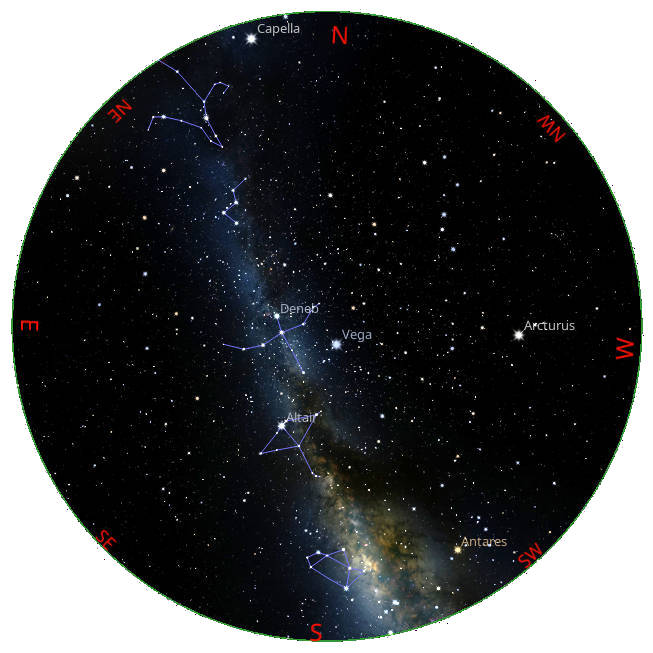
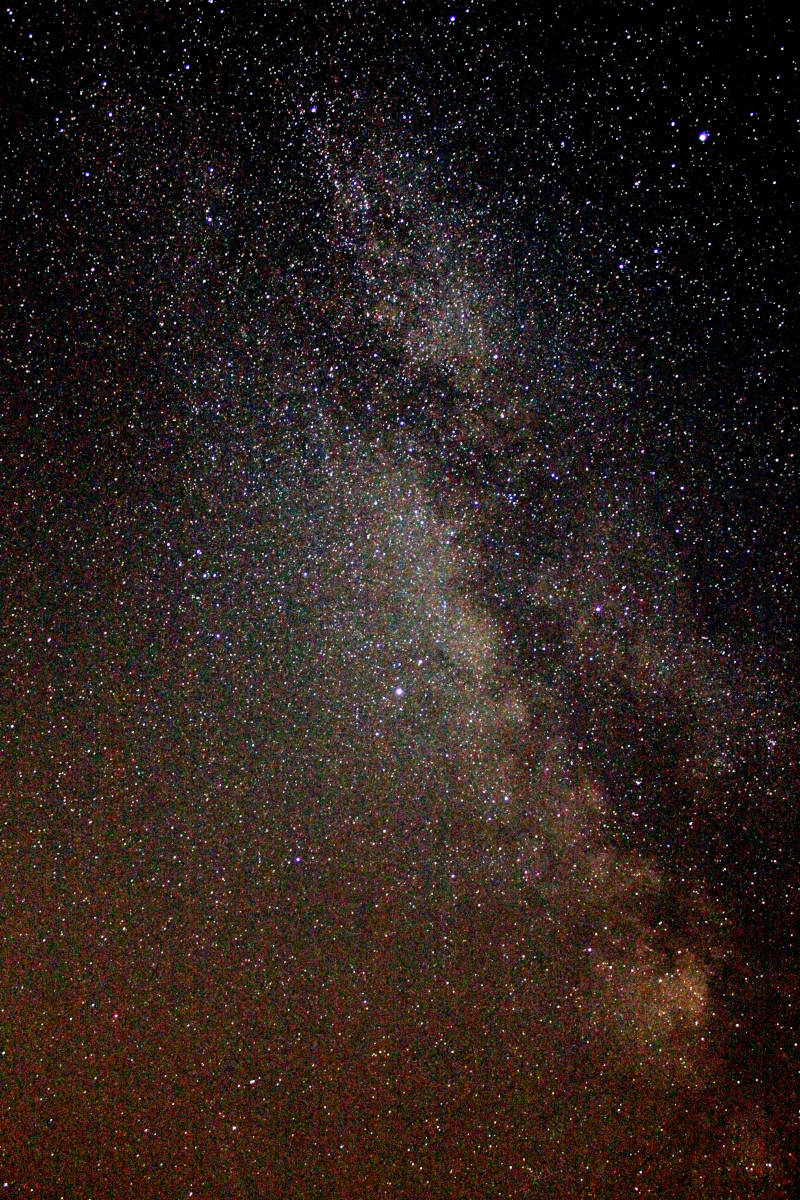
Once one finds the Milky Way which is pretty hard to miss this month, it becomes obvious that the Milky Way is split lengthwise starting near Deneb, the northernmost star of the Summer Triangle, almost all the way to the Teapot of Sagittarius low in the south. That dark split is called the Great Rift. Galileo first discovered that the hazy clouds of the Milky Way were actually made of faint stars, so it was thought the dark areas were due to a lack of stars. The great 18th century astronomer William Herschel did star counts all over the sky with his telescope. A map his sister drew of the flattened shape of his universe shows the lack of distant stars in one direction. It’s not really fewer stars, but interstellar clouds of dust blocking the light of the stars behind them.
The astronomical event times given in this blog are for the Traverse City/Interlochen area of Michigan (Lat 44.7° N, Long 85.7° W; EDT, UT – 4 hours) unless stated otherwise. Times will be different for other locations.
Addendum
Ephemeris: 08/06/2026 – Looking for Sagittarius
This is Ephemeris for Thursday, August 6th. Today the Sun will be up for 14 hours and 26 minutes, setting at 9:01, and it will rise tomorrow at 6:35. The Moon, 1 day past last quarter, will rise at 12:32 tomorrow morning.
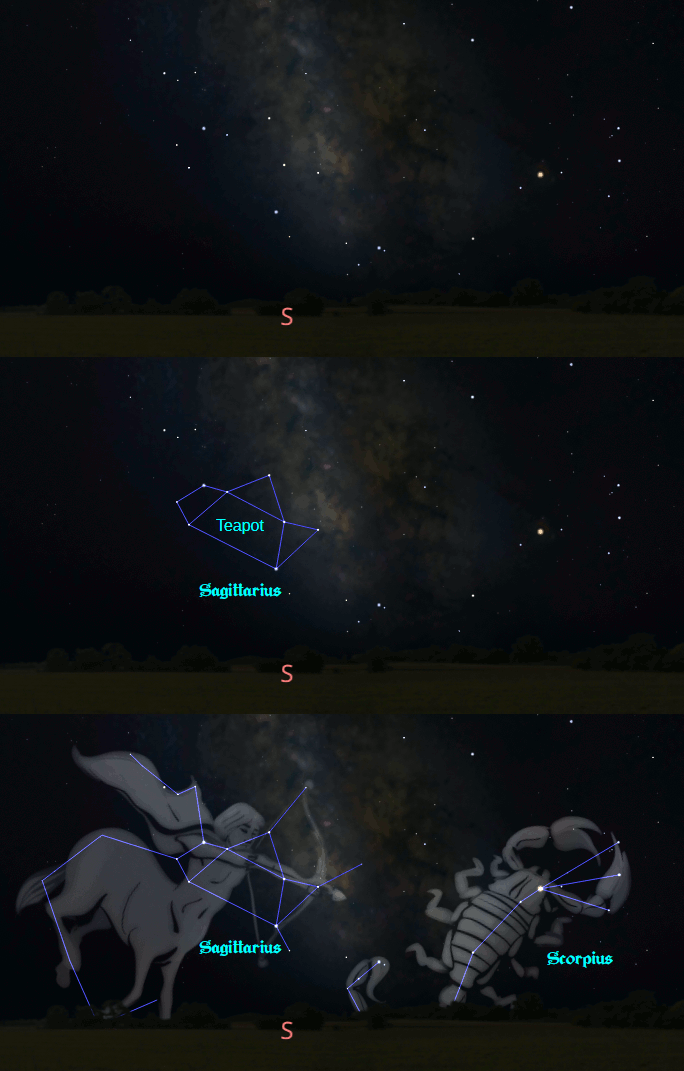
With the Moon out of the sky we get a look at the summer Milky Way in the evening. By 11 PM the Milky Way will stretch from the north-northeast, passing high in the east to the southern horizon. The asterism of the stout little Teapot in Sagittarius, low to the south, is near the bottom end of the Milky Way. The milky stream appears as steam rising out of its spout. With more stars there, one might be able to see the Centaur with a bow and arrow. The front part of the teapot is the bow. The bottom left, and the far right star are the back and the tip of the arrow which is pointing at the heart of Scorpius the scorpion in the south-southwest. We’ll be exploring the wonders of the summer Milky Way this month and next.
The astronomical event times given in this blog are for the Traverse City/Interlochen area of Michigan (Lat 44.7° N, Long 85.7° W; EDT, UT – 4 hours) unless stated otherwise. Times will be different for other locations.
Addendum
Ephemeris: 08/05/2026 – Taking our weekly look at the whereabouts of the naked-eye planets
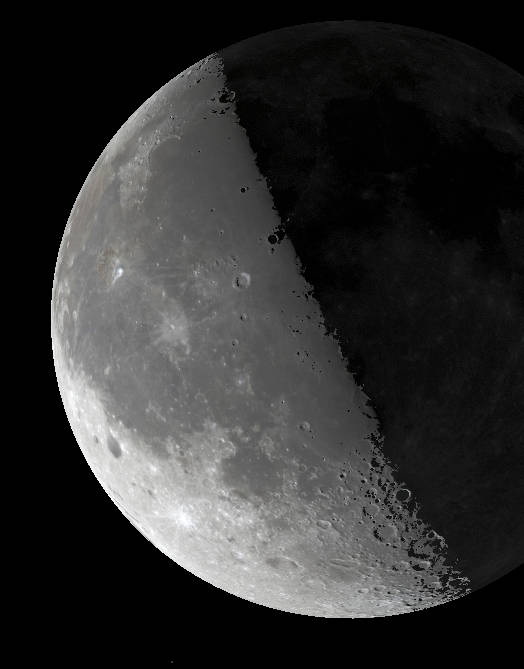
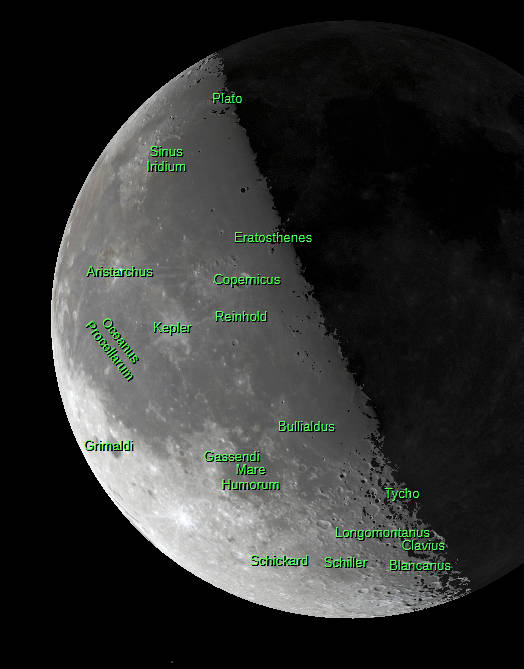
This is Ephemeris for Wednesday, August 5th. Today the Sun will be up for 14 hours and 29 minutes, setting at 9:03, and it will rise tomorrow at 6:34. The Moon, at last quarter today, will rise at 11:57 this evening.
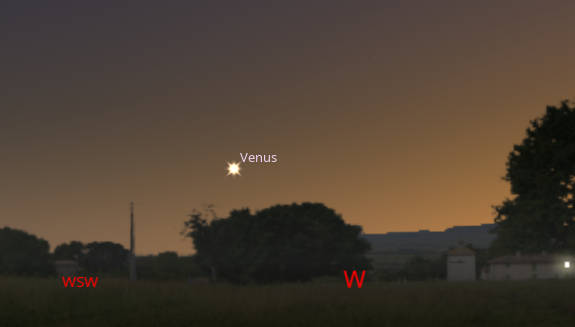
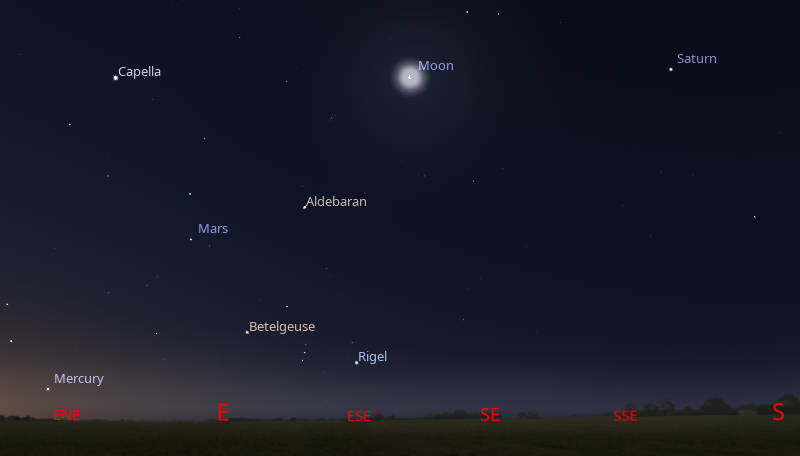
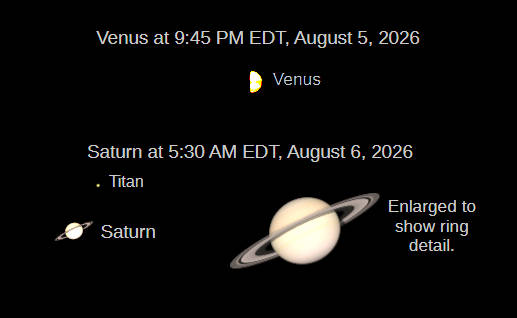
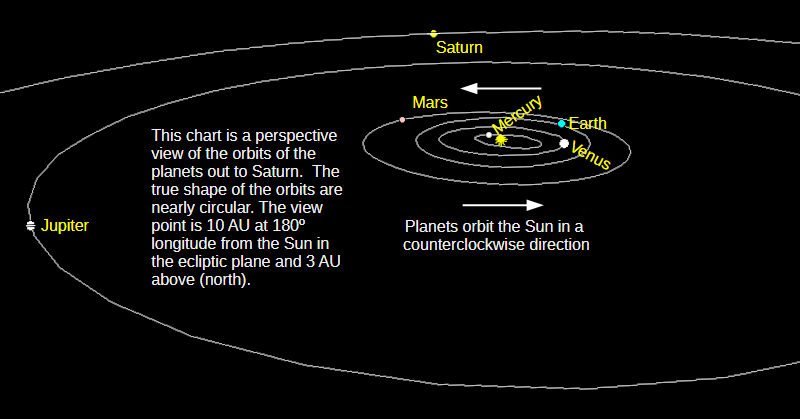
Let’s take our weekly look at the whereabouts of the naked-eye planets. By 9:45 PM tonight, almost three-quarters of an hour after sunset, Venus will be easily spotted in the western sky. A telescope will show a tiny gibbous disc of Venus. It is now closer than the Sun, at 71.3 million miles (114.9 mil km) away from us. We are 10 days from Venus greatest elongation east from the sun of 45.9 degrees. It’s within a degree of that now. In the morning, Saturn, Mars and even Mercury will be visible in the southeast and east respectively. Mars is competing with the brighter stars of winter, including the orange Aldebaran, and the red giant star Betelgeuse. The Earth is now chasing down Mars, which will be closest to the Earth and opposite the sun in the sky next February.
The astronomical event times given in this blog are for the Traverse City/Interlochen area of Michigan (Lat 44.7° N, Long 85.7° W; EDT, UT – 4 hours) unless stated otherwise. Times will be different for other locations.
Addendum

Ephemeris: 08/04/2026 – The Milky Way dominates the evening sky in August
This is Ephemeris for Primary Election Day in Michigan: Tuesday, August 4th. Today the Sun will be up for 14 hours and 32 minutes, setting at 9:04, and it will rise tomorrow at 6:33. The Moon, 1 day before last quarter, will rise at 11:29 this evening.
Now is the time the summer Milky Way is displayed to its fullest to the southern horizon. We have a week and a half before the Moon begins to encroach on our dark skies after 10 pm. City folk come to our area and are sometimes fooled by the brightness and expanse of the Milky Way and think it’s a cloud. Yes, those are clouds indeed, but they are clouds of stars. Binoculars will begin to show them to be millions of stars, each too faint to be seen individually to the eye, but whose combined glow give the impression of a luminous cloud. Binoculars are the ideal tool to explore the Milky Way. Objects still too fuzzy can be checked out with a telescope to reveal their true nature. The dark nights of August and September are my favorites.
The astronomical event times given in this blog are for the Traverse City/Interlochen area of Michigan (Lat 44.7° N, Long 85.7° W; EDT, UT – 4 hours) unless stated otherwise. Times will be different for other locations.
Addendum
Ephemeris: 08/03/2026 – The Milky Way, a spiral galaxy with a bar
This is Ephemeris for Monday, August 3rd. Today the Sun will be up for 14 hours and 34 minutes, setting at 9:05, and it will rise tomorrow at 6:32. The Moon, 2 days before last quarter, will rise at 11:07 this evening.
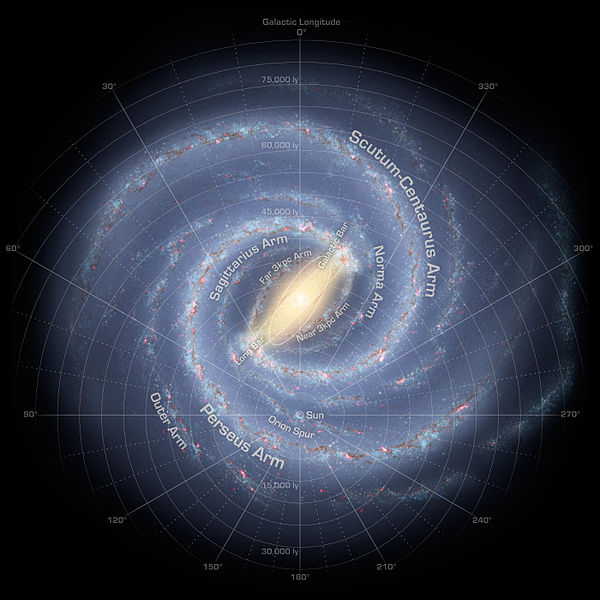
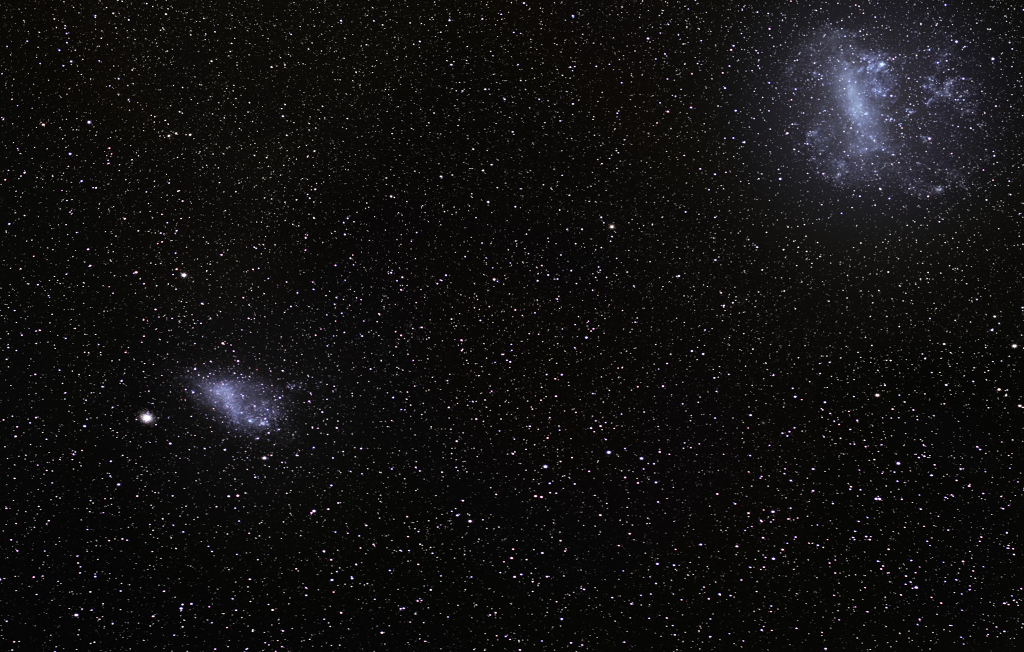
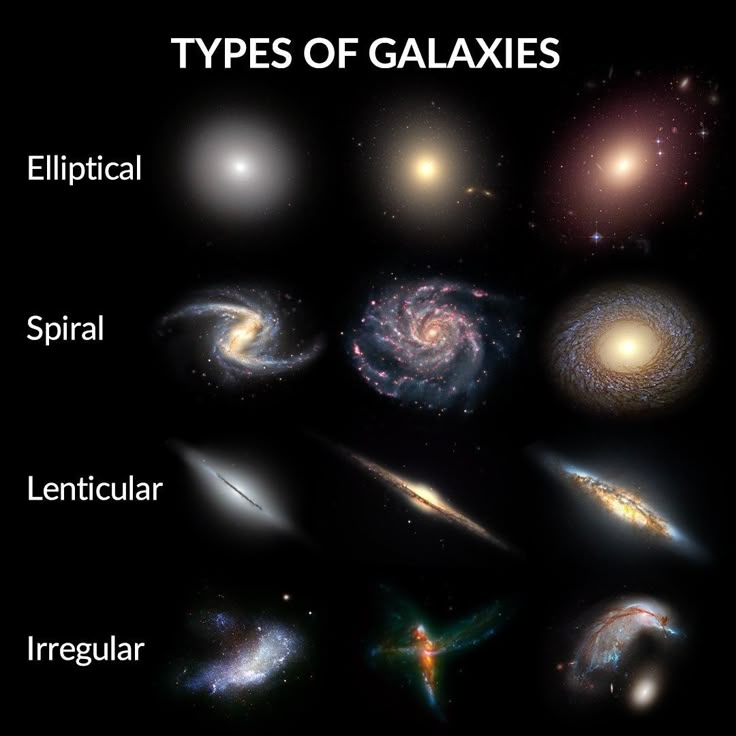
The Milky Way is classed as a barred spiral galaxy. It has an apparent spiral structure in its disk illuminated by bright massive short lived stars that don’t stray far from the nebulae they were born from. Nebulae, mostly dark, form the backbone of the spiral structure. The Andromeda Galaxy is also a spiral, a little larger than our Milky Way Galaxy. Dwarf galaxies like the Magellanic clouds which are seen from the southern hemisphere of the earth that happen to be satellites of the Milky Way, and are irregular in shape. A third type of galaxy is the elliptical galaxy, many of which are extremely large and contain pretty much nothing but old stars, and no nebulosity to make new ones.
The astronomical event times given in this blog are for the Traverse City/Interlochen area of Michigan (Lat 44.7° N, Long 85.7° W; EDT, UT – 4 hours) unless stated otherwise. Times will be different for other locations.
Addendum
Ephemeris: 07/31/2026 – Previewing August skies
This is Ephemeris for Friday, July 31st. Today the Sun will be up for 14 hours and 41 minutes, setting at 9:09, and it will rise tomorrow at 6:29. The Moon, 2 days past full, will rise at 10:12 this evening.
Let’s look ahead at the month of August in the skies. Daylight hours will decrease from 14 hours and 39 minutes tomorrow to 13 hours 17 minutes on the 31st. The altitude of the Sun at local noon, that is degrees of angle above the southern horizon, will decrease from 63 degrees tomorrow to just over 53 degrees on the 31st. Straits area listeners can subtract one more degree from those angles. Local noon, when the Sun is due south, is about 1:43 p.m. During August we have 3 astronomical events occurring. The first is August 12th, a double header: during the day a little nibble of a solar eclipse and in the evening the peak of the Perseid meteor shower, generally the best of the year, for us. And late night on the 27th we have an eclipse of the Moon that will be almost total.
The astronomical event times given in this blog are for the Traverse City/Interlochen area of Michigan (Lat 44.7° N, Long 85.7° W; EDT, UT – 4 hours) unless stated otherwise. Times will be different for other locations.
Addendum
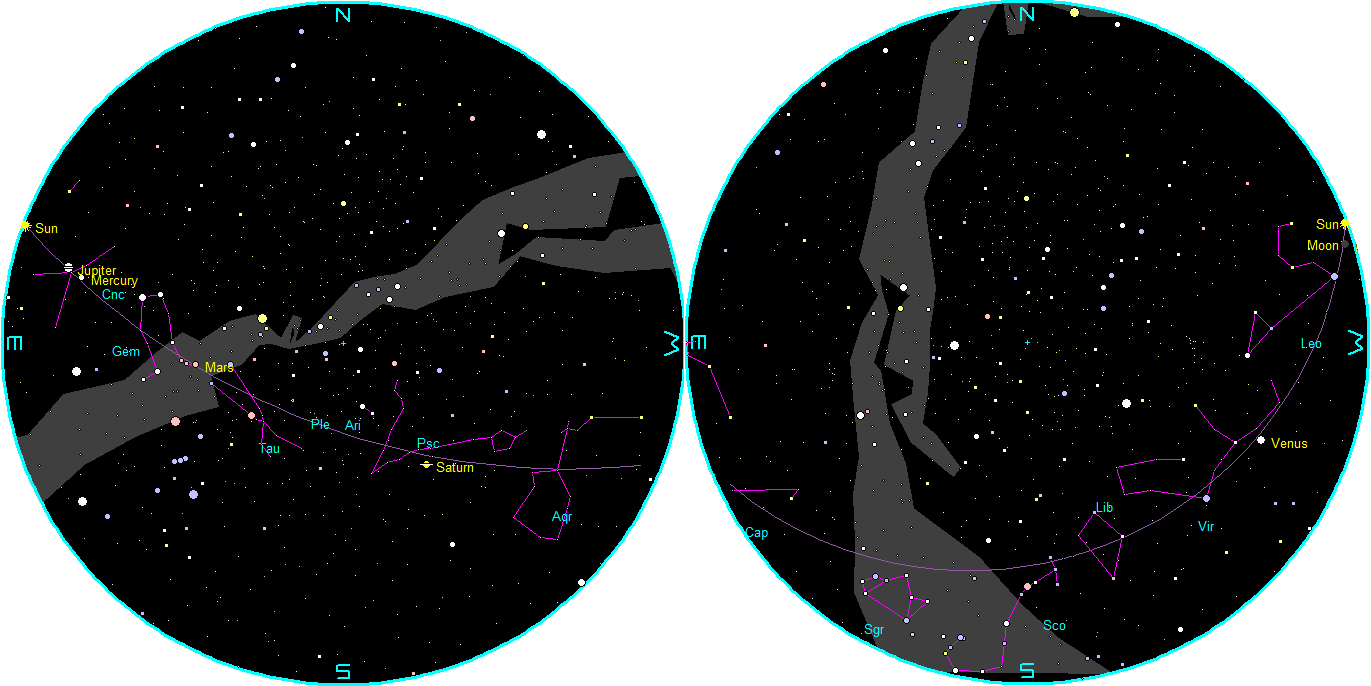
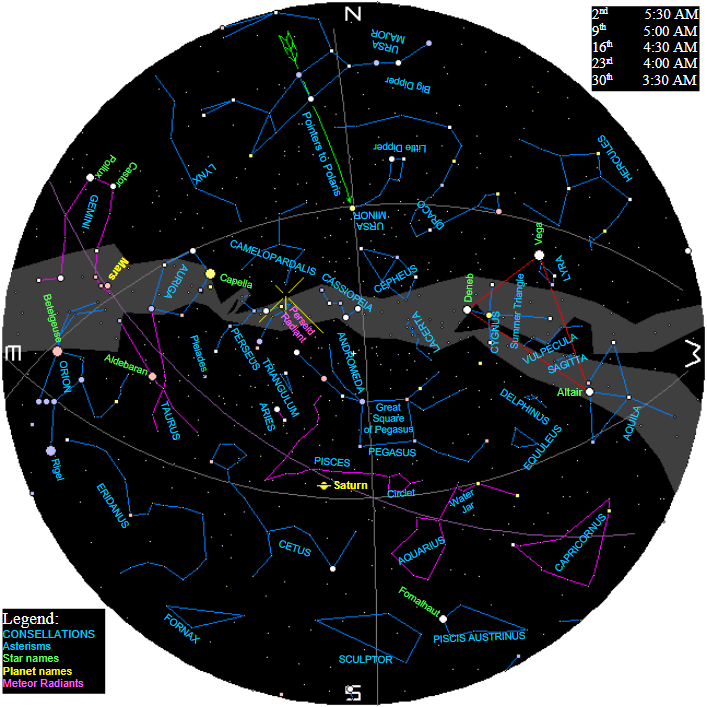
August Evening Star Chart
The planets and stars are plotted for the 15th at 10 PM EDT in the evening and 4:30 AM on the 16th for the morning chart. These are the chart times. Note that Interlochen/Traverse City is located approximately 45 minutes behind our time meridian, West 75° longitude. (An hour 45 minutes behind our daylight saving time meridian during EDT). To duplicate the star positions on a planisphere you may have to set it to 1 hour 45 minutes earlier than the current time.
Note, the chart times of 10 PM and 4:30 AM are for the 15th & 16th respectively. For each week before these dates, add ½ hour (28 minutes if you’re picky). For each week after the 15th, subtract ½ hour, or 28 minutes. The planet positions are updated each Wednesday on this blog.
August Morning Star Chart
Twilight Limits, Nautical and Astronomical
| EDT | |||||||
| Morning | Twilight | Evening | Twilight | Dark | Night | Moon | |
| Date | Astro. | Nautical | Nautical | Astro. | Start | End | Illum. |
| 2026-08-01 | 4h27m | 5h15m | 22h27m | 23h15m | – | – | 87% |
| 2026-08-02 | 4h29m | 5h17m | 22h25m | 23h13m | – | – | 80% |
| 2026-08-03 | 4h31m | 5h18m | 22h24m | 23h11m | – | – | 70% |
| 2026-08-04 | 4h33m | 5h20m | 22h22m | 23h09m | 23h09m | 23h30m | 60% |
| 2026-08-05 | 4h35m | 5h21m | 22h20m | 23h07m | 23h07m | 23h57m | 49% |
| 2026-08-06 | 4h36m | 5h23m | 22h18m | 23h05m | 23h05m | – | 38% |
| 2026-08-07 | 4h38m | 5h24m | 22h17m | 23h02m | 23h02m | 0h33m | 27% |
| 2026-08-08 | 4h40m | 5h26m | 22h15m | 23h00m | 23h00m | 1h20m | 17% |
| 2026-08-09 | 4h42m | 5h27m | 22h13m | 22h58m | 22h58m | 2h22m | 9% |
| 2026-08-10 | 4h44m | 5h29m | 22h11m | 22h56m | 22h56m | 3h36m | 3% |
| 2026-08-11 | 4h46m | 5h30m | 22h10m | 22h54m | 22h54m | 4h46m | 0% |
| 2026-08-12 | 4h48m | 5h32m | 22h08m | 22h52m | 22h52m | 4h48m | 0% |
| 2026-08-13 | 4h50m | 5h33m | 22h06m | 22h49m | 22h49m | 4h50m | 3% |
| 2026-08-14 | 4h51m | 5h35m | 22h04m | 22h47m | 22h47m | 4h51m | 8% |
| 2026-08-15 | 4h53m | 5h36m | 22h02m | 22h45m | 22h45m | 4h53m | 15% |
| 2026-08-16 | 4h55m | 5h38m | 22h00m | 22h43m | 22h43m | 4h55m | 23% |
| 2026-08-17 | 4h57m | 5h39m | 21h58m | 22h41m | 22h42m | 4h57m | 32% |
| 2026-08-18 | 4h59m | 5h41m | 21h56m | 22h38m | 23h06m | 4h59m | 41% |
| 2026-08-19 | 5h00m | 5h42m | 21h55m | 22h36m | 23h35m | 5h00m | 51% |
| 2026-08-20 | 5h02m | 5h43m | 21h53m | 22h34m | – | 5h02m | 61% |
| 2026-08-21 | 5h04m | 5h45m | 21h51m | 22h32m | 0h12m | 5h04m | 70% |
| 2026-08-22 | 5h06m | 5h46m | 21h49m | 22h29m | 0h57m | 5h06m | 78% |
| 2026-08-23 | 5h07m | 5h48m | 21h47m | 22h27m | 1h51m | 5h07m | 85% |
| 2026-08-24 | 5h09m | 5h49m | 21h45m | 22h25m | 2h52m | 5h09m | 91% |
| 2026-08-25 | 5h11m | 5h51m | 21h43m | 22h23m | 3h58m | 5h11m | 96% |
| 2026-08-26 | 5h12m | 5h52m | 21h41m | 22h20m | 5h07m | 5h12m | 99% |
| 2026-08-27 | 5h14m | 5h53m | 21h39m | 22h18m | – | – | 100% |
| 2026-08-28 | 5h16m | 5h55m | 21h37m | 22h16m | – | – | 99% |
| 2026-08-29 | 5h17m | 5h56m | 21h35m | 22h14m | – | – | 95% |
| 2026-08-30 | 5h19m | 5h58m | 21h33m | 22h11m | – | – | 90% |
| 2026-08-31 | 5h21m | 5h59m | 21h31m | 22h09m | – | – | 82% |
Twilight calendar was generated using Cartes du Ciel (Sky Charts).
See my blog post: Twilight Zone for the definitions of the different periods of twilight here: https://bobmoler.wordpress.com/2018/09/27/.
NASA Calendar of Planetary Events
Aug  1  Sa            Venus: 45.3° E
     2  Su   3:59 AM  Mercury Elongation: 19.5° W
     5  We  10:21 PM  Last Quarter
     7  Fr   2:23 AM  Moon-Pleiades: 1.2° S
     8  Sa   7:42 PM  Moon North Dec.: 28.1° N
     9  Su   1:31 AM  Moon-Mars: 4.4° S
    10  Mo   7:18 AM  Moon Perigee: 363300 km
    12  We   1:37 PM  New Moon
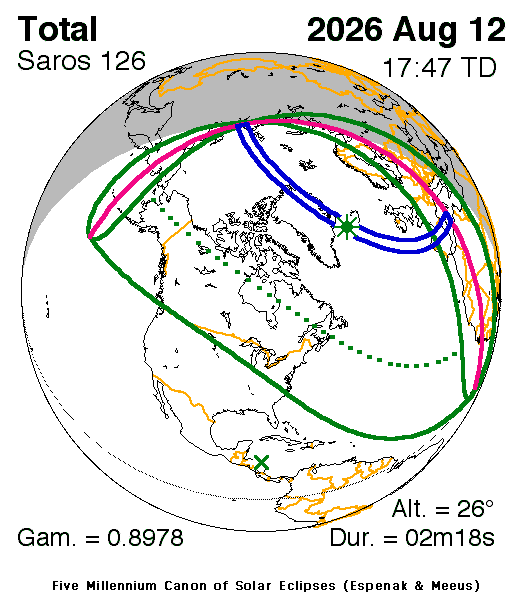
    12  We   1:47 PM  Total Solar Eclipse
                      11% Partial Solar Eclipse in N. Michigsn
    12  We   9:56 PM  Perseid Shower: ZHR = 90
    13  Th   5:56 AM  Moon Descending Node
    15  Sa   1:59 AM  Venus Elongation: 45.9° E
    16  Su   4:46 AM  Moon-Venus: 2.2° N
    17  Mo   7:49 AM  Moon-Spica: 2.6° N
    19  We  10:46 PM  First Quarter
    21  Fr  12:17 AM  Moon-Antares: 0.7° N
    22  Sa   4:20 AM  Moon Apogee: 404600 km
    22  Sa   6:59 AM  Moon South Dec.: 28.1° S
    27  Th  12:44 PM  Mercury Superior Conjunction
    27  Th   2:47 PM  Moon Ascending Node
    28  Fr  12:14 AM  Partial Lunar Eclipse
    28  Fr  12:18 AM  Full Moon
Sep  1  Tu            Venus: 44.6° E
All event times are given for UTC-4:00 Eastern Daylight Saving Time.
Events in bold will be covered in subsequent posts on this blog. Also, the August 2026 issue of the Grand Traverse Astronomical Society’s Stellar Sentinel contains an article I wrote about them. Access it here when it is published in a few days.
Sky Events Calendar by Fred Espenak and Sumit Dutta (NASA’s GSFC),
http://eclipse.gsfc.nasa.gov/SKYCAL/SKYCAL.html
If you go to the above site you can print out a list like the above for the entire year or calendar pages for your time zone.
Note that the site is now kept up for archival purposes. Fred Espenak retired from NASA several years ago and has his own site, AstroPixels, which contain the same information: http://astropixels.com/almanac/almanac.html. However, it uses standard time all year.
Fred passed away a year ago, on June 1, 2025. RIP.
Sun and Moon Rising and Setting Events
LU          Ephemeris of Sky Events for Interlochen/TC
August, 2026    Local time zone: EDT
+-----------------------------------------------------------------------+
| DATE |  SUN     SUN  DAYLIGHT|   TWILIGHT*    |MOON  RISE OR    ILLUM |
|      |  RISE    SET    HOURS |  END    START  |PHASE SET** TIME FRACTN|
+=======================================================================+
|Sat  1| 06:29a  09:08p  14:39 | 10:23p  05:13a |      Rise 10:30p   89%|
+------+-----------------------+----------------+-----------------------+
|Sun  2| 06:30a  09:07p  14:36 | 10:22p  05:14a |      Rise 10:48p   81%|
|Mon  3| 06:31a  09:05p  14:34 | 10:20p  05:16a |      Rise 11:07p   72%|
|Tue  4| 06:32a  09:04p  14:32 | 10:18p  05:17a |      Rise 11:29p   62%|
|Wed  5| 06:33a  09:03p  14:29 | 10:17p  05:19a |L Qtr Rise 11:57p   51%|
|Thu  6| 06:34a  09:01p  14:26 | 10:15p  05:20a |      Rise 12:32a   40%|
|Fri  7| 06:35a  09:00p  14:24 | 10:13p  05:22a |      Rise 01:20a   29%|
|Sat  8| 06:37a  08:58p  14:21 | 10:11p  05:23a |      Rise 02:21a   19%|
+------+-----------------------+----------------+-----------------------+
|Sun  9| 06:38a  08:57p  14:19 | 10:10p  05:25a |      Rise 03:36a   10%|
|Mon 10| 06:39a  08:56p  14:16 | 10:08p  05:26a |      Rise 04:58a    4%|
|Tue 11| 06:40a  08:54p  14:13 | 10:06p  05:28a |      Rise 06:22a    1%|
|Wed 12| 06:41a  08:53p  14:11 | 10:04p  05:29a |New   Set  09:00p    0%|
|Thu 13| 06:42a  08:51p  14:08 | 10:02p  05:31a |      Set  09:22p    2%|
|Fri 14| 06:44a  08:49p  14:05 | 10:00p  05:32a |      Set  09:42p    7%|
|Sat 15| 06:45a  08:48p  14:03 | 09:58p  05:34a |      Set  10:01p   13%|
+------+-----------------------+----------------+-----------------------+
|Sun 16| 06:46a  08:46p  14:00 | 09:57p  05:35a |      Set  10:20p   21%|
|Mon 17| 06:47a  08:45p  13:57 | 09:55p  05:37a |      Set  10:41p   30%|
|Tue 18| 06:48a  08:43p  13:54 | 09:53p  05:38a |      Set  11:05p   39%|
|Wed 19| 06:50a  08:41p  13:51 | 09:51p  05:40a |F Qtr Set  11:35p   49%|
|Thu 20| 06:51a  08:40p  13:49 | 09:49p  05:41a |      Set  12:11a   58%|
|Fri 21| 06:52a  08:38p  13:46 | 09:47p  05:43a |      Set  12:56a   68%|
|Sat 22| 06:53a  08:36p  13:43 | 09:45p  05:44a |      Set  01:50a   76%|
+------+-----------------------+----------------+-----------------------+
|Sun 23| 06:54a  08:35p  13:40 | 09:43p  05:46a |      Set  02:51a   84%|
|Mon 24| 06:55a  08:33p  13:37 | 09:41p  05:47a |      Set  03:57a   90%|
|Tue 25| 06:57a  08:31p  13:34 | 09:39p  05:49a |      Set  05:06a   95%|
|Wed 26| 06:58a  08:30p  13:31 | 09:37p  05:50a |      Set  06:15a   99%|
|Thu 27| 06:59a  08:28p  13:28 | 09:35p  05:51a |      Set  07:25a  100%|
|Fri 28| 07:00a  08:26p  13:25 | 09:33p  05:53a |Full  Rise 08:36p   99%|
|Sat 29| 07:01a  08:24p  13:22 | 09:31p  05:54a |      Rise 08:54p   96%|
+------+-----------------------+----------------+-----------------------+
|Sun 30| 07:02a  08:22p  13:19 | 09:29p  05:56a |      Rise 09:14p   91%|
|Mon 31| 07:04a  08:21p  13:17 | 09:27p  05:57a |      Rise 09:35p   84%|
+-----------------------------------------------------------------------+
* Nautical Twilight
** Moonrise or moonset, whichever occurs between sunset and sunrise
Generated using my LookingUp for DOS app.

