Ephemeris: 11/13/2023 – Betelgeuse is acting weird again
This is Ephemeris for Monday, November 13th. Today the Sun will be up for 9 hours and 40 minutes, setting at 5:16, and it will rise tomorrow at 7:38. The Moon is new today, and won’t be visible.
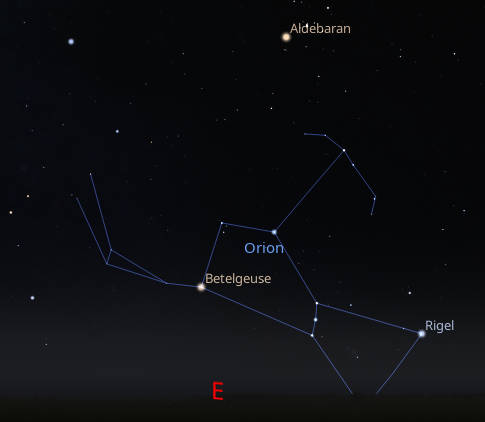
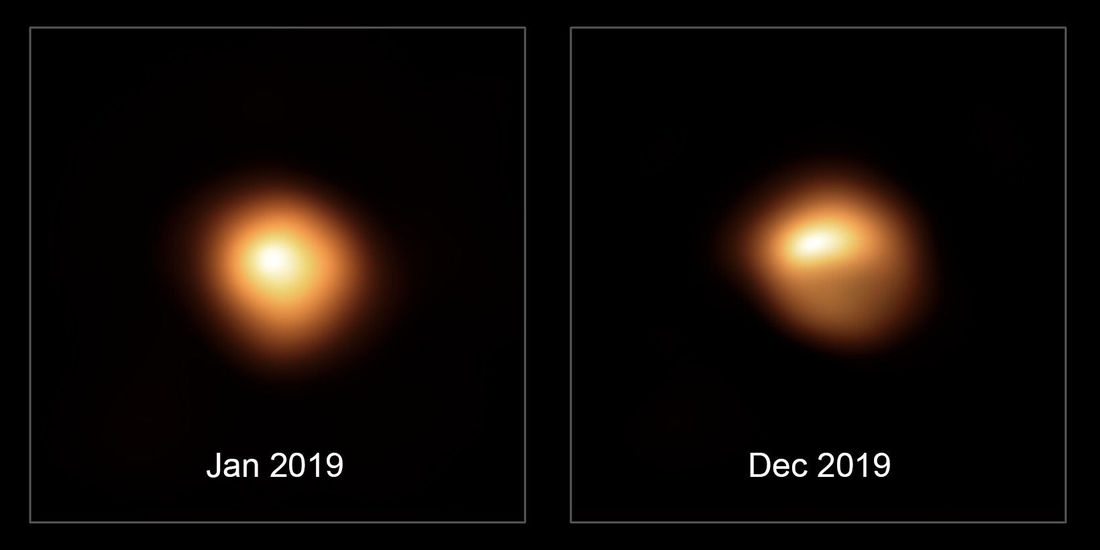
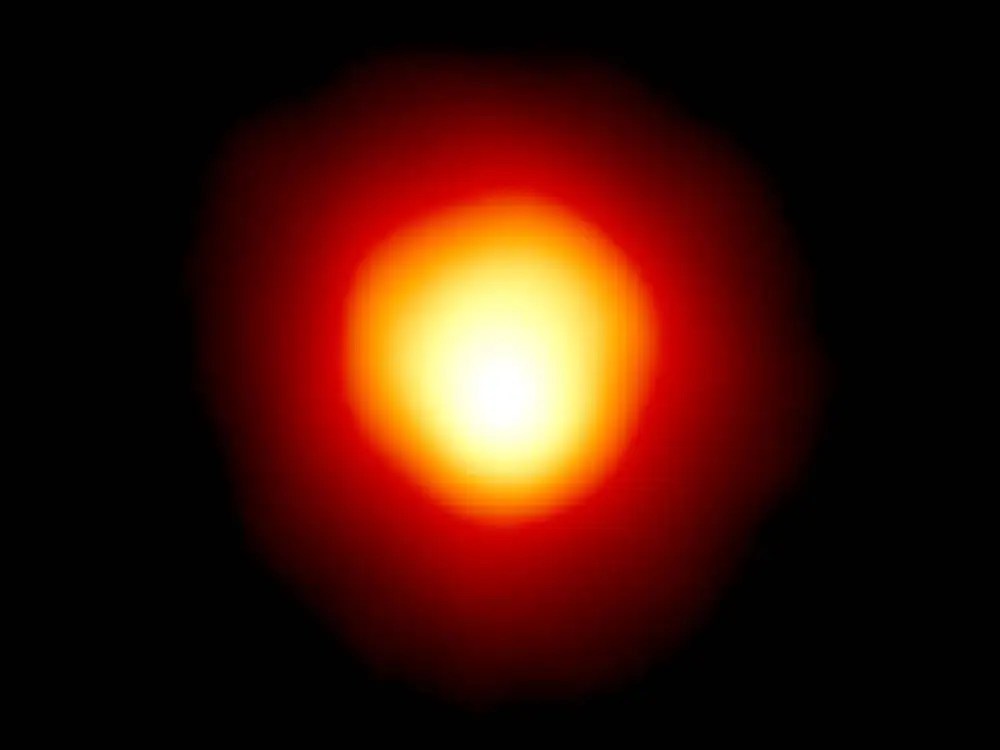
The constellation Orion is rising early in the evening now so what’s up with Betelgeuse. Betelgeuse is the bright reddish upper leftmost star of the torso of Orion the hunter, it’s in his shoulder. Betelgeuse has been acting up lately. In 2019 and 2020 Betelgeuse had dimmed significantly. Astronomers didn’t know why at the time, but found out later that it ejected a large cloud of gas and dust which blocked the light from the star. Now in the last year Betelgeuse has increased its brightness significantly, so it’s much brighter than normal. Again, we don’t exactly know why. Some have speculated that Betelgeuse is about ready to go supernova. We’ve known that for a while, but soon is measured within hundreds of thousands of years. So astronomers are keeping an eye on Betelgeuse to see what happens next.
The astronomical event times given are for the Traverse City/Interlochen area of Michigan (EST, UT –5 hours). They may be different for your location.
Addendum
Ephemeris: 11/10/2023 – The Northern Taurid Meteor Shower reaches its peak Sunday night
This is Bob Moler with Ephemeris for Friday, November 10th. Today the Sun will be up for 9 hours and 47 minutes, setting at 5:20, and it will rise tomorrow at 7:34. The Moon, 3 days before new, will rise at 5:38 tomorrow morning.
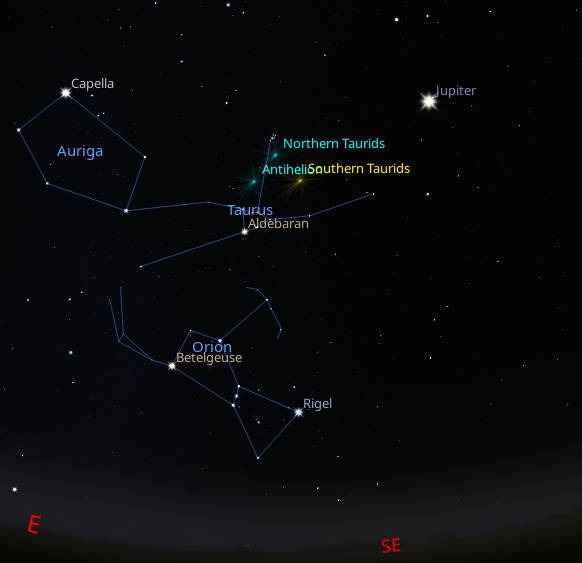
On Sunday night the North Taurid Meteor shower will reach its peak of about 15 meteors an hour. That’s not very many. However, there are reports that they are rather slow meteors and quite bright. They’re related to Encke’s comet. That comet has the shortest period of any comet of 3.3 years. So the meteoroid debris are not falling in from very far away from the Sun to reach us, so they’re moving rather slowly. The South Taurid meteor shower reached its peak last weekend with about the same number of meteors, and from the same comet. They’re also tangled up with something called the Antihelion meteor source, which is an ill-defined source of meteors which is directly opposite the Sun. Their radiant is near the Pleiades.
The astronomical event times given are for the Traverse City/Interlochen area of Michigan (EST, UT –5 hours). They may be different for your location.
Ephemeris: 11/09/2023 – The Milky Way will collide with the Great Andromeda Galaxy
This is Bob Moler with Ephemeris for Thursday, November 9th. Today the Sun will be up for 9 hours and 49 minutes, setting at 5:21, and it will rise tomorrow at 7:32. The Moon, halfway from last quarter to new, will rise at 4:31 tomorrow morning.
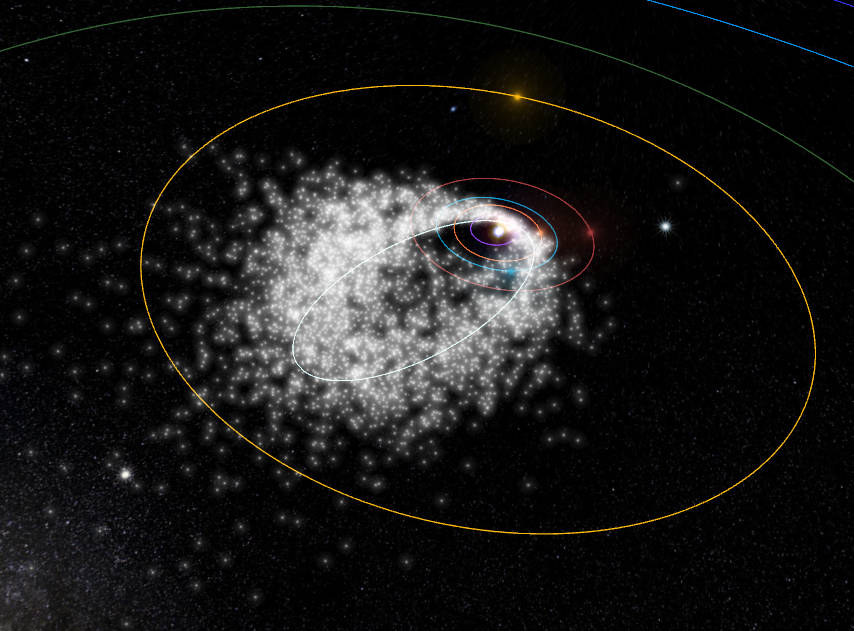
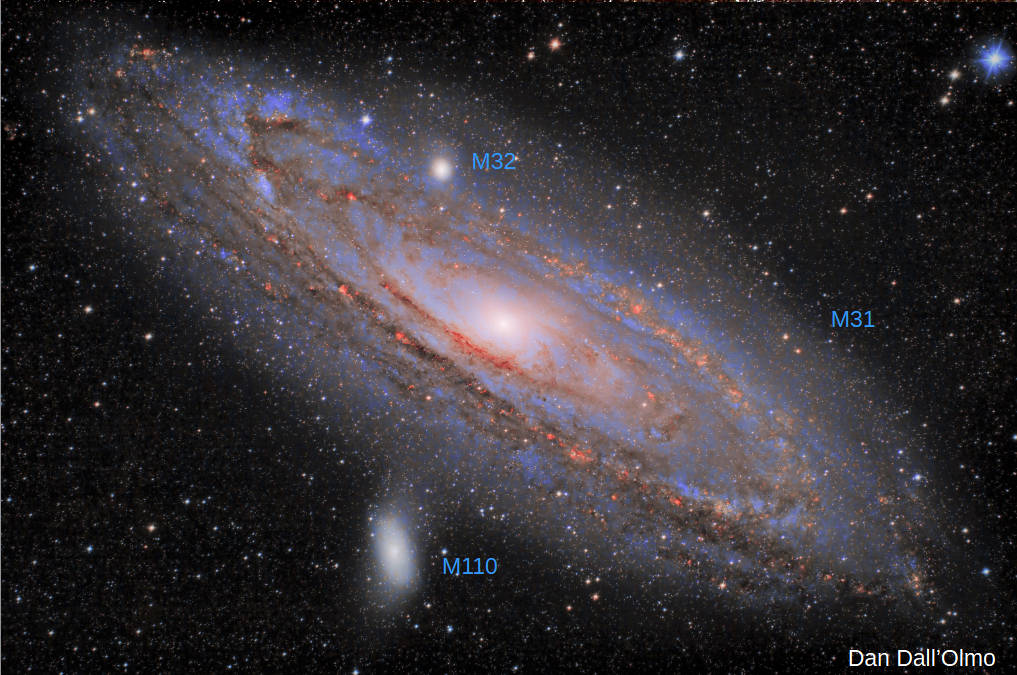
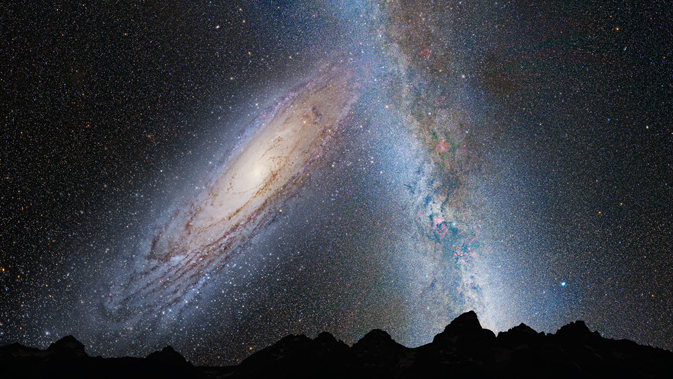
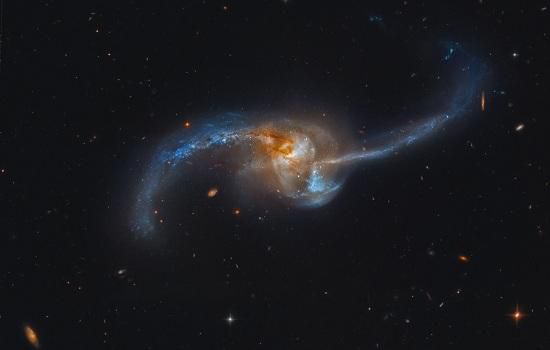
Stars are at extreme distances compared to their sizes, even if one includes their planetary systems. Galaxies in a galaxy cluster are much closer with respect to their size. Astronomers have determined that our Milky Way galaxy will collide with the Great Andromeda Galaxy, some two and a half million light years away, in about four and a half billion years. Don’t worry, it is very unlikely that any stars will collide during the event, though the solar system may be in for a wild ride. As the galaxies approach each other their beautiful spiral structures will begin to distort into tidal tails. Multiple passes of the two will occur before they will coalesce into one large elliptical galaxy. Other galaxies of the Local Group will join in over time.
The astronomical event times given are for the Traverse City/Interlochen area of Michigan (EST, UT –5 hours). They may be different for your location.
Addendum
Ephemeris: 11/08/2023 – Where have the naked-eye planets wandered off to this week?
This is Ephemeris for Wednesday, November 8th. Today the Sun will be up for 9 hours and 52 minutes, setting at 5:22, and it will rise tomorrow at 7:31. The Moon, 3 days past last quarter, will rise at 3:26 tomorrow morning.
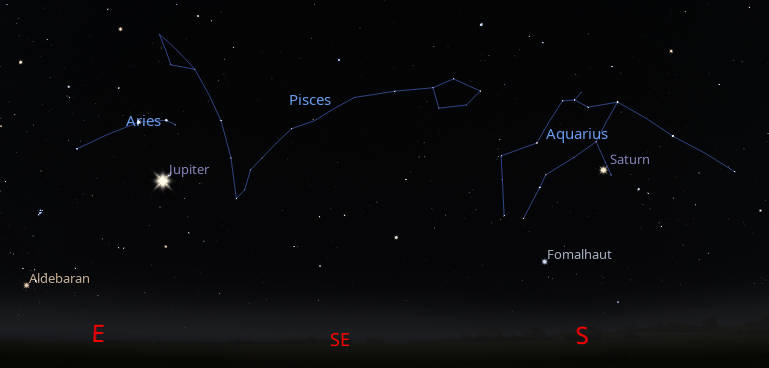
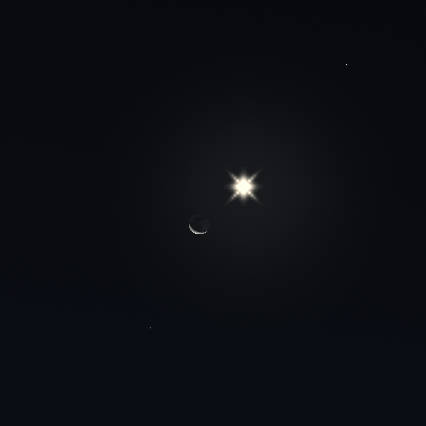
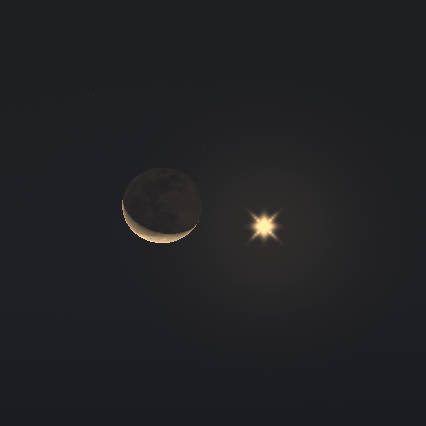
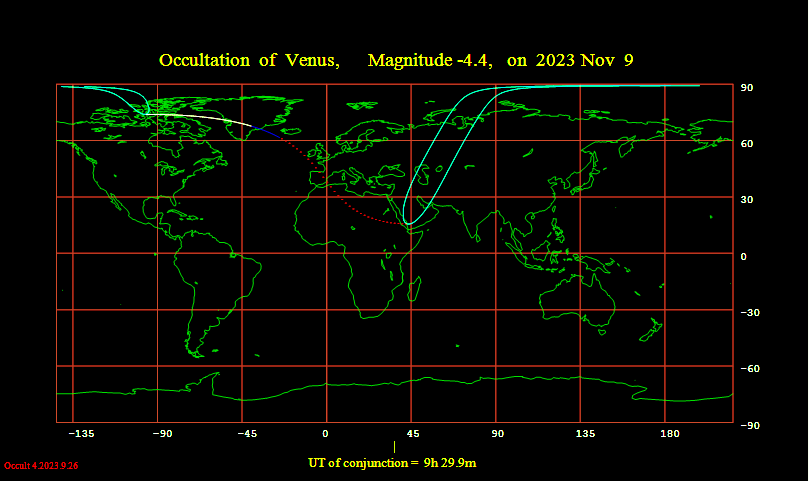
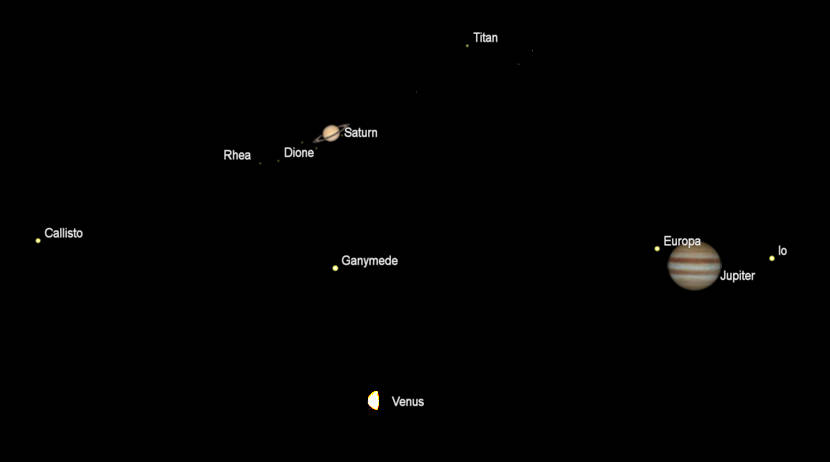
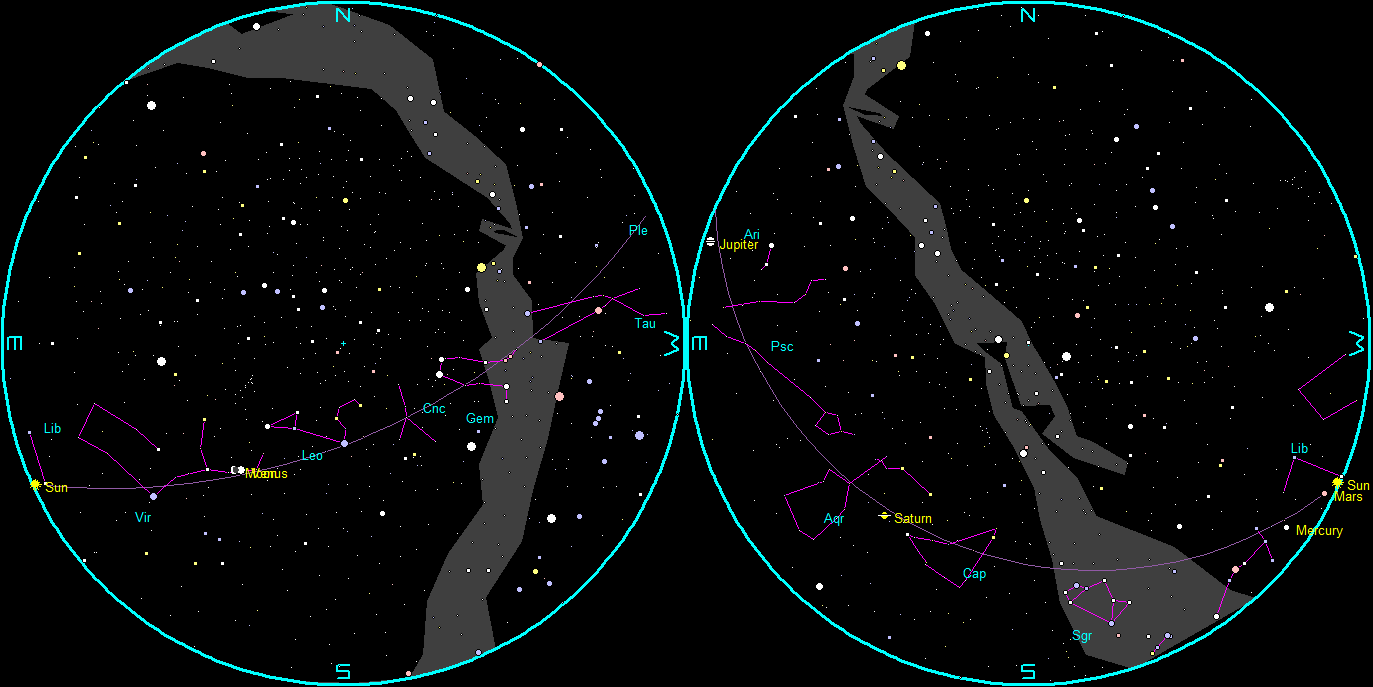
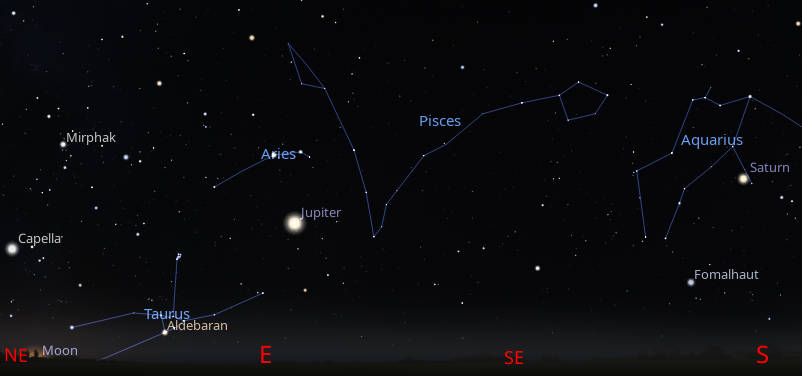
Let’s find out where the naked-eye planets have wandered off to this week. Three of those five planets are now visible but both Mars and Mercury set too close to sunset to be seen. So, Saturn and Jupiter are the only evening planets visible. Saturn, seen against the stars of Aquarius, can be seen in the south in the evening. Saturn will be visible till almost 1 am. Jupiter is seen rising in the eastern sky in the evening, the brightest object in the sky. In Aries this year, Jupiter will be up all night. Venus, the brilliant morning star, will rise in the east-northeast at 3:29 am. It will be seen above the waning crescent Moon. In the southeast at 7 am in the bright morning twilight.
The astronomical event times given are for the Traverse City/Interlochen area of Michigan (EST, UT –5 hours). They may be different for your location.
Addendum
Ephemeris: 11/07/2023 – How to find the Great Andromeda Galaxy
This is Ephemeris for Election Day for some, Tuesday, November 7th. Today the Sun will be up for 9 hours and 55 minutes, setting at 5:23, and it will rise tomorrow at 7:30. The Moon, 2 days past last quarter, will rise at 2:22 tomorrow morning.
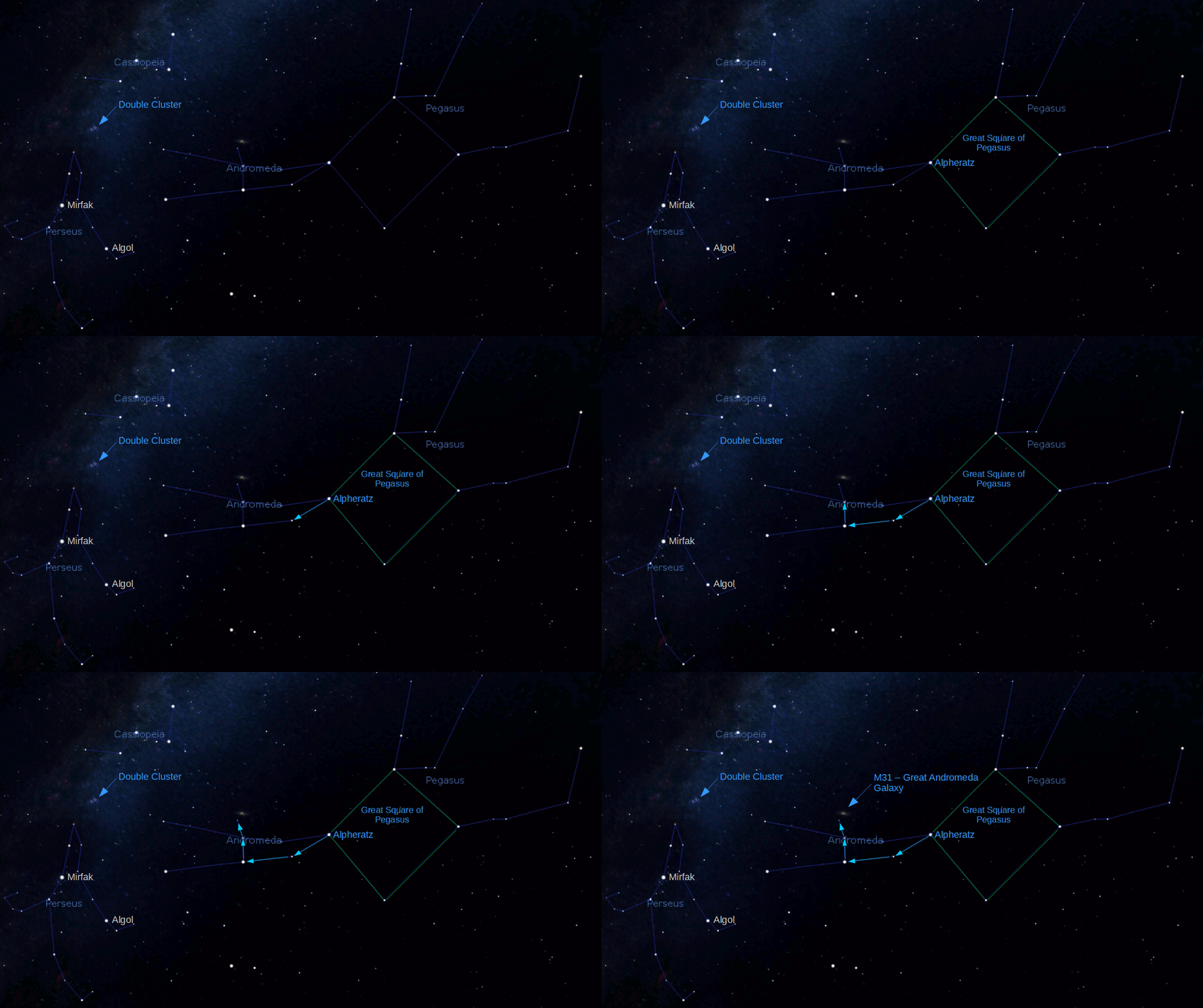
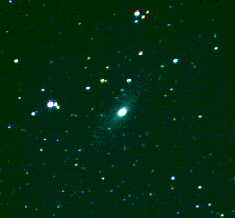
The closest large galaxy to our Milky Way galaxy is the Great Andromeda Galaxy, seen high in the eastern sky when it gets dark. It is barely visible to the naked eye. To locate it, first find a large square of stars high in the east-southeast standing on one corner, the Great Square of Pegasus. The left star of the square is the head of the constellation Andromeda. Follow two stars to the left and a bit downward, then two stars straight up. The galaxy is near that last star as a small smudge of light. Binoculars are the best way to see it as a thin spindle of light. Using a telescope, one can see, besides its nucleus, its two satellite galaxies.
The astronomical event times given are for the Traverse City/Interlochen area of Michigan (EST, UT –5 hours). They may be different for your location.
Addendum
Ephemeris: 11/06/2023 – The Pleiades or Seven Sisters
This is Ephemeris for Monday, November 6th. Today the Sun will be up for 9 hours and 57 minutes, setting at 5:25, and it will rise tomorrow at 7:28. The Moon, 1 day past last quarter, will rise at 1:18 tomorrow morning.
A marvelous member of the autumn skies can be found low in the east after 8 in the evening. It is the famous star cluster called the Pleiades or the Seven Sisters. I might also add the ‘Tiny Dipper’. Many people can spot a tiny dipper shape in its six or seven stars, and mistake it for the Little Dipper. With binoculars, one can see over a hundred stars appear, along with the dipper shape of the brightest. In photographs, the Pleiades actually contain wisps of the dust they are currently passing through. In Greek mythology, the sisters were daughters of the god Atlas and Pleione.
The astronomical event times given are for the Traverse City/Interlochen area of Michigan (EST, UT –5 hours). They may be different for your location.
Addendum
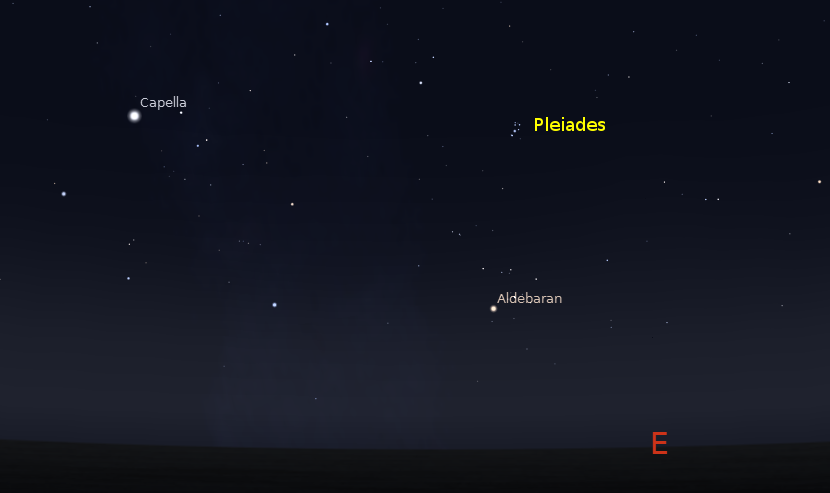
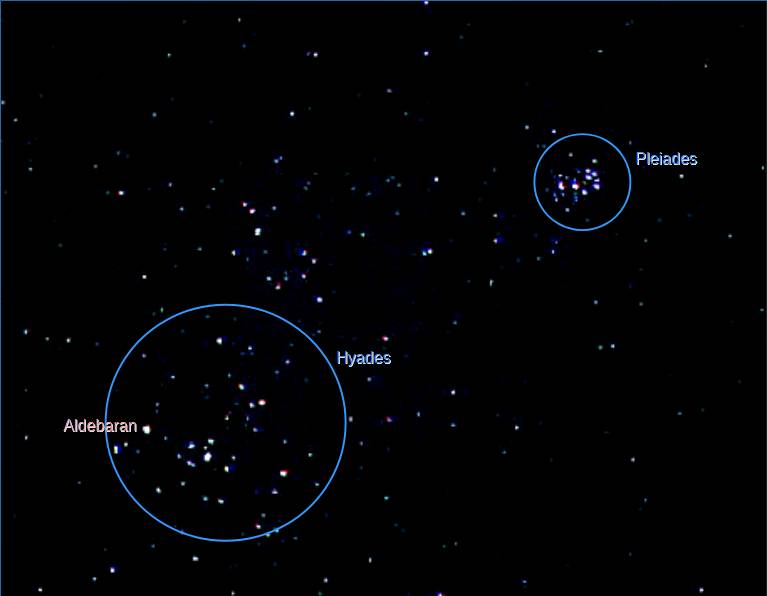
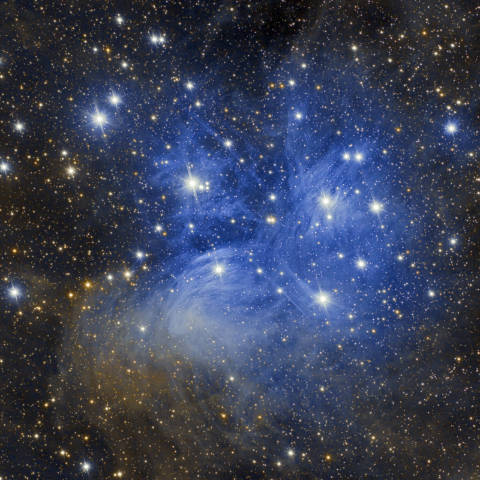
I’ll be coming back to the Pleiades from time to time over the autumn and winter months to cover, especially, the mythology of the Pleiades from different cultures.
Ephemeris: 11/03/2023 – GTAS meeting tonight
This is Bob Moler with Ephemeris for Friday, November 3rd. The Sun will rise at 8:23. It’ll be up for 10 hours and 5 minutes, setting at 6:28. The Moon, 2 days before last quarter, will rise at 11:00 this evening.
A documentary on the astronomical life of Jack Newton will be shown tonight at 8 pm at the meeting of the Grand Traverse Astronomical Society at Northwestern Michigan College’s Rogers Observatory, and on Zoom. Jack Newton is a rather famous Canadian amateur astronomer and a pioneer in astrophotography starting in the days before digital photography. After the meeting, at 9 pm, if it’s clear the society will host a star party to view the dark autumn skies including Saturn. The observatory is located south of Traverse City on Birmley Road between Garfield and Keystone roads. Zoom instructions will be at gtastro.org. On Sunday we get to fall back an hour, and get an extra hour of sleep as we go back an hour to standard time.
The astronomical event times given are for the Traverse City/Interlochen area of Michigan (EDT, UT –4 hours). They may be different for your location.
Ephemeris: 11/02/2023 – Jupiter is at opposition from the Sun tonight
This is Ephemeris for Thursday, November 2nd. The Sun will rise at 8:21. It’ll be up for 10 hours and 8 minutes, setting at 6:30. The Moon, 3 days before last quarter, will rise at 9:57 this evening.
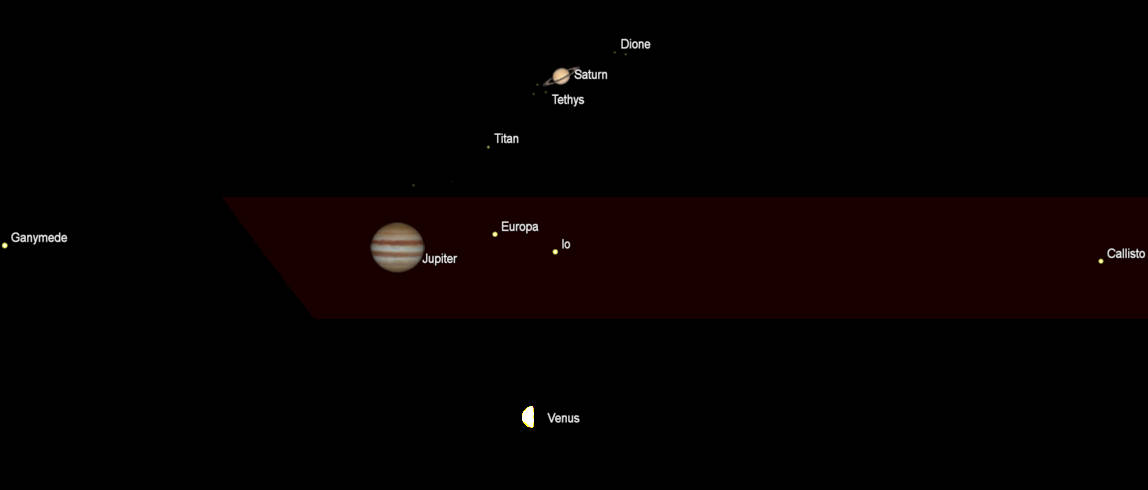
Tonight the planet Jupiter is at opposition from the Sun. It is the time when the Earth is directly between the Sun and Jupiter, so that Jupiter rises at sunset and sets at sunrise. So for the next 6 or so months Jupiter will be in the evening sky and officially an evening planet. To the naked eye Jupiter is the second brightest planet after Venus and without Venus in the sky it may be mistaken for Jupiter. In binoculars Jupiter appears very bright and not quite star-like. It also has several of its moons that are visible in binoculars. These are its Galilean moons discovered by Galileo back in 1609. In telescopes four can be seen although not all of them may be visible at one time because the moons move back and forth from one side to the other of the planet.
The astronomical event times given are for the Traverse City/Interlochen area of Michigan (EDT, UT –4 hours). They may be different for your location.
Addendum
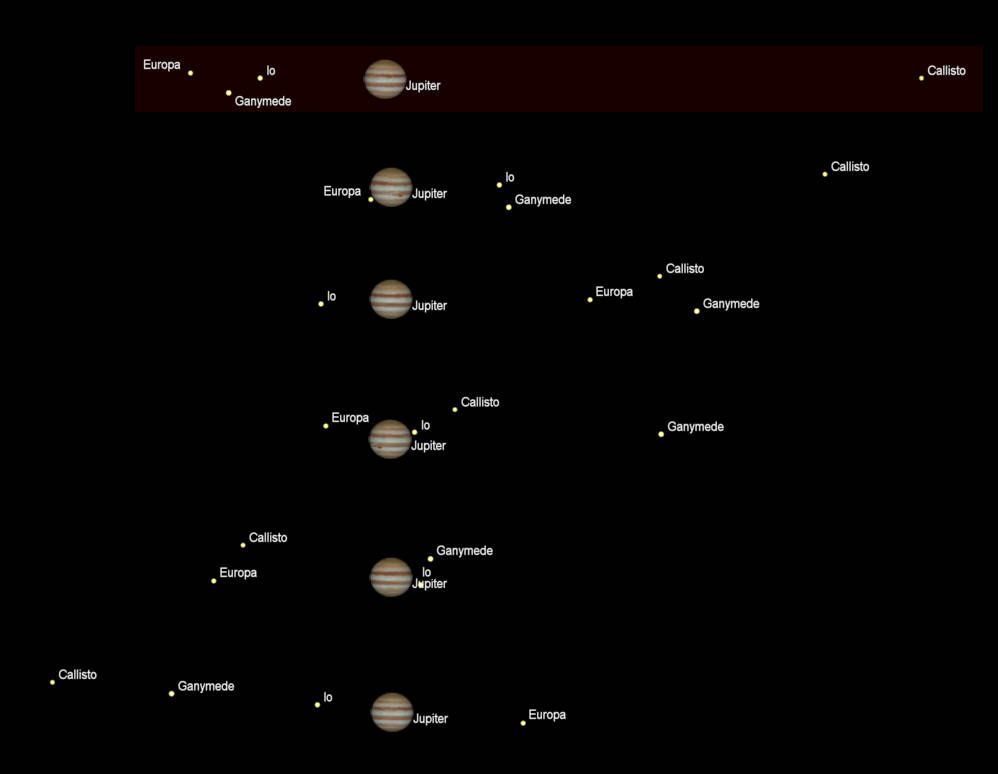
Follow Jupiter’s moons with this tool: Sky & Telescope’s Interactive Tool for Observing Jupiter’s Moons.
Ephemeris: 11/01/2023 – It’s 11/1, do you know where your naked-eye planets are?
This is Ephemeris for Wednesday, November 1st. The Sun will rise at 8:20. It’ll be up for 10 hours and 11 minutes, setting at 6:31. The Moon, halfway from full to last quarter, will rise at 8:58 this evening.
Let’s find out where the naked-eye planets have wandered off to this week. Three of those five planets are now visible, but Mars and Mercury set too close to sunset to be seen. Saturn is the sole official evening planet visible. It can be spotted in the southeast to south in the evening. And it will still be visible in the morning hours until it sets at 2:21 am. Saturn is seen against the stars of Aquarius this year and next. Jupiter and Venus are the visible morning planets. Jupiter, still a morning planet for one more day, will rise at 6:34 pm. It’s in Aries this year. Jupiter has to rise before sunset to be an evening planet. Venus, the brilliant morning star, will rise in the east-northeast at 4:18 am.
The astronomical event times given are for the Traverse City/Interlochen area of Michigan (EDT, UT –4 hours). They may be different for your location.
Addendum
Ephemeris: 10/31/2023 – Previewing November skies
This is Ephemeris for Halloween, Tuesday, October 31st. Today the Sun will be up for 10 hours and 13 minutes, setting at 6:33, and it will rise tomorrow at 8:20. The Moon, 3 days past full, will rise at 8:09 this evening.
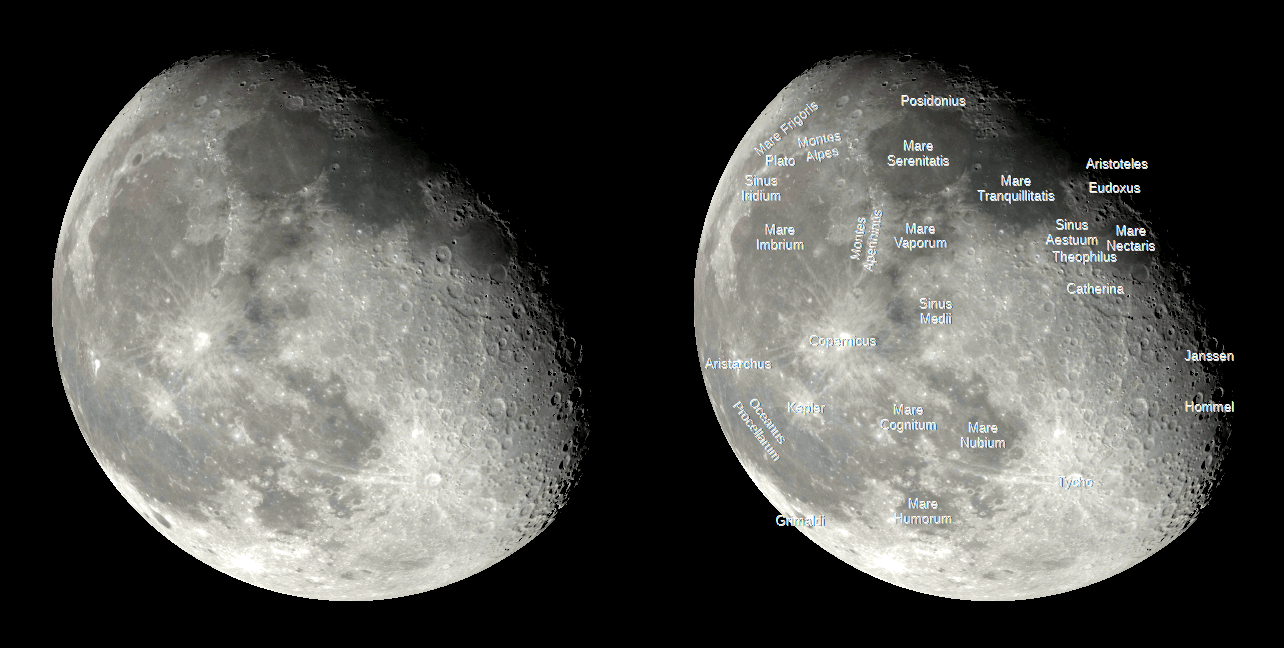
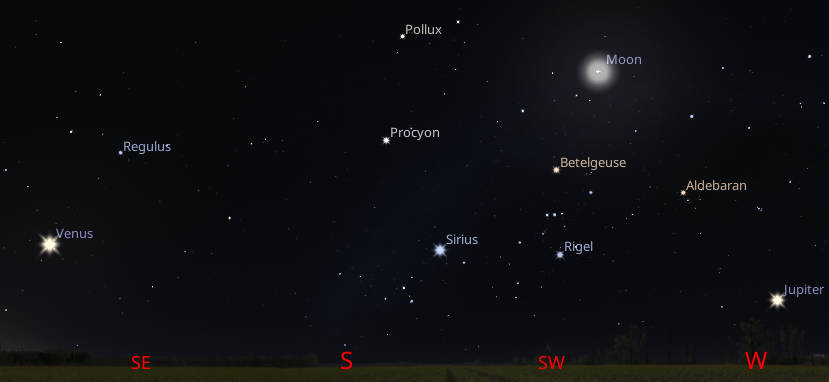
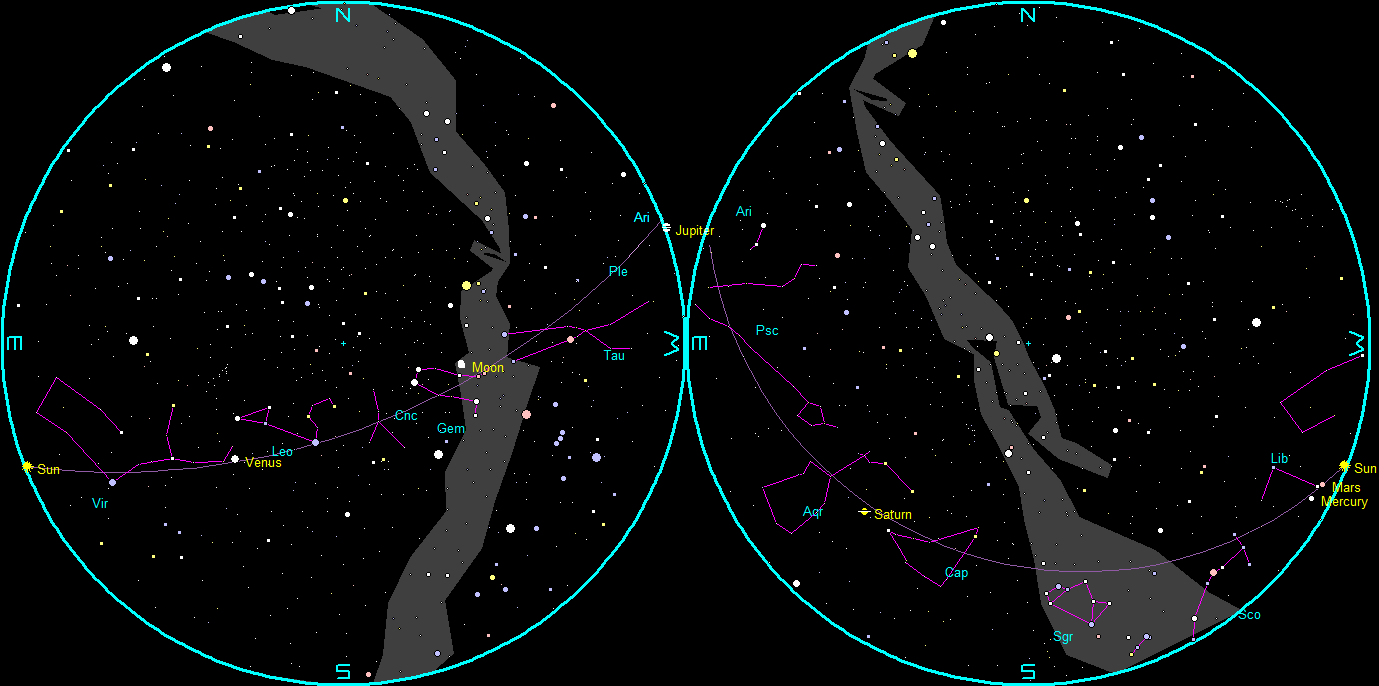
Let’s take a look at November skies. The time change back to standard time will set us back an hour on sunrise and sunset times, so it’ll be brighter in the morning and darker in the evening starting Sunday, the 5th. Out east in New York City, the Sun is already setting before 5 p.m. It will never set that early here. The Sun will be up for 10 hours 11 minutes on the 1st, and that will dwindle down to 9 hours and 5 minutes at month’s end. The Sun reaches 30 ½ degrees above the southern horizon at local apparent solar noon on the 1st, which is around 12:25 p.m. this month. It will drop to 23 ½ degrees on the 30th. As the Earth orbits the Sun now, the North Pole of the Earth is tilting farther and farther away from the Sun providing us with less of its heat. The Leonid meteor shower, peaking on the 18th, is expected to be lackluster this year. We are about 9 or 10 years away from the time that the Leonids become spectacular again as they do every 33 or so years. Jupiter will reach opposition from the Sun on the 2nd, and Mars will be in conjunction with the Sun on the 17th.
The astronomical event times given are for the Traverse City/Interlochen area of Michigan (EDT, UT –4 hours). They may be different for your location.
Addendum
November Evening Star Chart
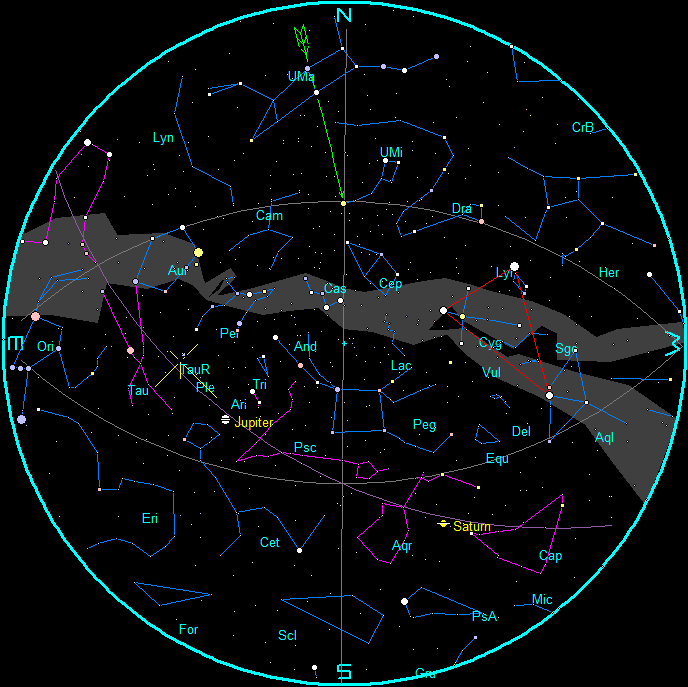
The planets and stars are plotted for the 15th at 9 p.m. EST in the evening and 6 a.m. for the morning chart. These are the chart times. Note that Traverse City is located approximately 45 minutes behind our time meridian, West 75° longitude. (An hour 45 minutes behind our daylight saving time meridian during EDT). To duplicate the star positions on a planisphere you may have to set it to 45 minutes earlier than the current time.
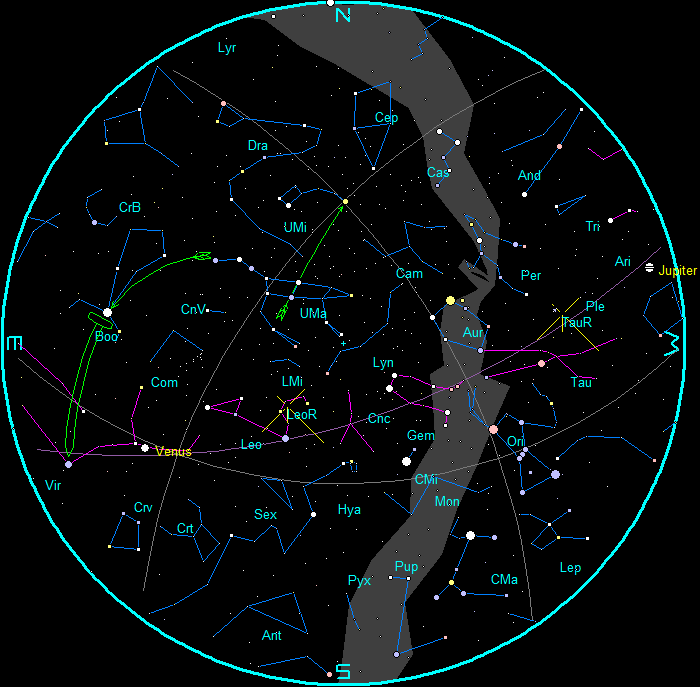
For a list of constellation names to go with the abbreviations, click here.
- Pointer stars at the front of the bowl of the Big Dipper point to Polaris, the North Star.
- Follow the arc of the handle of the Big Dipper to the star Arcturus
- The Summer Triangle is in red.
- TauR on the evening star chart can be used as the radiant for the North and South Taurid meteor showers. For dates see NASA Calendar of Planetary Events below
- LeoR on the morning star chart is the radiant of the Leonid meteor shower, which peaks on the morning of the 18th.
Twilight Limits, Nautical and Astronomical
| EDT/EST | |||||||
| Morning | Twilight | Evening | Twilight | Dark | Night | Moon | |
| Date | Astro. | Nautical | Nautical | Astro. | Start | End | Illum. |
| 2023-11-01 | 6h47m | 7h21m | 19h40m | 20h14m | 20h14m | 20h59m | 0.79 |
| 2023-11-02 | 6h48m | 7h22m | 19h39m | 20h12m | 20h12m | 21h57m | 0.70 |
| 2023-11-03 | 6h49m | 7h23m | 19h37m | 20h11m | 20h11m | 23h01m | 0.61 |
| 2023-11-04 | 6h50m | 7h24m | 19h36m | 20h10m | 20h10m | – | 0.52 |
| 2023-11-05 | 5h52m | 6h26m | 18h35m | 19h09m | 19h09m | – | 0.42 |
| 2023-11-06 | 5h53m | 6h27m | 18h34m | 19h08m | 19h08m | 0h13m | 0.33 |
| 2023-11-07 | 5h54m | 6h28m | 18h33m | 19h07m | 19h07m | 1h19m | 0.24 |
| 2023-11-08 | 5h55m | 6h29m | 18h32m | 19h06m | 19h06m | 2h23m | 0.17 |
| 2023-11-09 | 5h56m | 6h30m | 18h31m | 19h05m | 19h05m | 3h26m | 0.10 |
| 2023-11-10 | 5h57m | 6h32m | 18h30m | 19h04m | 19h04m | 4h31m | 0.05 |
| 2023-11-11 | 5h59m | 6h33m | 18h29m | 19h03m | 19h03m | 5h38m | 0.01 |
| 2023-11-12 | 6h00m | 6h34m | 18h28m | 19h02m | 19h02m | 6h00m | 0.00 |
| 2023-11-13 | 6h01m | 6h35m | 18h27m | 19h01m | 19h01m | 6h01m | 0.01 |
| 2023-11-14 | 6h02m | 6h36m | 18h26m | 19h00m | 19h00m | 6h02m | 0.04 |
| 2023-11-15 | 6h03m | 6h38m | 18h25m | 18h59m | 18h59m | 6h03m | 0.09 |
| 2023-11-16 | 6h04m | 6h39m | 18h24m | 18h59m | 19h35m | 6h04m | 0.16 |
| 2023-11-17 | 6h05m | 6h40m | 18h23m | 18h58m | 20h46m | 6h05m | 0.26 |
| 2023-11-18 | 6h07m | 6h41m | 18h23m | 18h57m | 22h04m | 6h07m | 0.36 |
| 2023-11-19 | 6h08m | 6h42m | 18h22m | 18h56m | 23h24m | 6h08m | 0.47 |
| 2023-11-20 | 6h09m | 6h43m | 18h21m | 18h56m | – | 6h09m | 0.59 |
| 2023-11-21 | 6h10m | 6h45m | 18h20m | 18h55m | 0h43m | 6h10m | 0.70 |
| 2023-11-22 | 6h11m | 6h46m | 18h20m | 18h55m | 2h01m | 6h11m | 0.80 |
| 2023-11-23 | 6h12m | 6h47m | 18h19m | 18h54m | 3h17m | 6h12m | 0.88 |
| 2023-11-24 | 6h13m | 6h48m | 18h19m | 18h54m | 4h34m | 6h13m | 0.94 |
| 2023-11-25 | 6h14m | 6h49m | 18h18m | 18h53m | 5h51m | 6h14m | 0.98 |
| 2023-11-26 | 6h15m | 6h50m | 18h18m | 18h53m | – | – | 1.00 |
| 2023-11-27 | 6h16m | 6h51m | 18h17m | 18h52m | – | – | 0.99 |
| 2023-11-28 | 6h17m | 6h52m | 18h17m | 18h52m | – | – | 0.96 |
| 2023-11-29 | 6h18m | 6h53m | 18h17m | 18h52m | – | – | 0.91 |
| 2023-11-30 | 6h19m | 6h54m | 18h16m | 18h51m | 18h51m | 19h45m | 0.85 |
Twilight calendar was generated using Cartes du Ciel (Sky Charts).
See my blog post: Twilight Zone for the definitions of the different periods of twilight here: https://bobmoler.wordpress.com/2018/09/27/.
NASA Calendar of Planetary Events
Nov  1  We            Venus: 46.2° W
     2  Th  12:12 am  Moon North Dec.: 28.3° N
     2  Th  10:44 pm  Jupiter Opposition
     3  Fr   1:31 pm  Moon-Pollux: 1.6° N
     5  Su   3:37 am  Last Quarter
     5  Su   7:17 pm  South Taurid Shower: ZHR = 10
     6  Mo   4:49 pm  Moon Apogee: 404,600 km
     9  Th   4:28 am  Moon-Venus: 1.1° S
    11  Sa  12:09 am  Moon-Spica: 2.6° S
    11  Sa   3:49 am  Moon Descending Node
    12  Su   6:34 pm  North Taurid Shower: ZHR = 15
    13  Mo   4:27 am  New Moon
    13  Mo  12:32 pm  Uranus Opposition
    16  Th   9:45 am  Moon South Dec.: 28.2° S
    16  Th   4:17 pm  Mercury-Antares: 2.5° N
    17  Fr  11:48 pm  Mars Solar Conjunction
    18  Sa  12:51 am  Leonid Shower: ZHR = 15
    20  Mo   5:50 am  First Quarter
    20  Mo   9:02 am  Moon-Saturn: 2.8° N
    21  Tu   4:03 pm  Moon Perigee: 369,800 km
    24  Fr   6:02 am  Moon Ascending Node
    25  Sa   6:10 am  Moon-Jupiter: 2.8° S
    26  Su   7:02 pm  Moon-Pleiades: 1.2° N
    27  Mo   4:16 am  Full Beaver Moon
    29  We   5:29 am  Venus-Spica: 4.2° N
    29  We   9:08 am  Moon North Dec.: 28.2° N
    30  Th  10:23 pm  Moon-Pollux: 1.7° N
Dec  1  Fr            Venus: 42.9° W
All event times for November 1-4 are given for UTC-4 Eastern Daylight Saving Time. For dates after that, times are given for UTC-5 Eastern Standard Time.
Sky Events Calendar by Fred Espenak and Sumit Dutta (NASA’s GSFC),
http://eclipse.gsfc.nasa.gov/SKYCAL/SKYCAL.html.
If you go to the above site, you can print out a list like the above for the entire year or calendar pages for your time zone.
Sun and Moon Rising and Setting Times
     LU                  Ephemeris of Sky Events for Interlochen/TC
November, 2023    Local time zone: EDT
+-----------------------------------------------------------------------+
| DATE |  SUN     SUN  DAYLIGHT|   TWILIGHT*    |MOON  RISE OR    ILLUM |
|      |  RISE    SET    HOURS |  END    START  |PHASE SET** TIME FRACTN|
+=======================================================================+
|Wed  1| 08:20a  06:31p  10:11 | 07:36p  07:15a |      Rise 08:58p   81%|
|Thu  2| 08:21a  06:30p  10:08 | 07:35p  07:16a |      Rise 09:57p   72%|
|Fri  3| 08:23a  06:28p  10:05 | 07:34p  07:18a |      Rise 11:00p   63%|
|Sat  4| 08:24a  06:27p  10:03 | 07:32p  07:19a |      Rise 12:07a   53%|
+------+-----------------------+----------------+-----------------------+
| EST  |      Time Change      |                |                       |
|Sun  5| 07:25a  05:26p  10:00 | 06:31p  06:20a |L Qtr Rise 12:13a   44%|
|Mon  6| 07:27a  05:25p  09:57 | 06:30p  06:21a |      Rise 01:18a   35%|
|Tue  7| 07:28a  05:23p  09:55 | 06:29p  06:22a |      Rise 02:22a   26%|
|Wed  8| 07:30a  05:22p  09:52 | 06:28p  06:24a |      Rise 03:26a   18%|
|Thu  9| 07:31a  05:21p  09:49 | 06:27p  06:25a |      Rise 04:31a   11%|
|Fri 10| 07:32a  05:20p  09:47 | 06:26p  06:26a |      Rise 05:38a    6%|
|Sat 11| 07:34a  05:19p  09:44 | 06:25p  06:27a |      Rise 06:47a    2%|
+------+-----------------------+----------------+-----------------------+
|Sun 12| 07:35a  05:17p  09:42 | 06:24p  06:28a |      Rise 08:00a    0%|
|Mon 13| 07:36a  05:16p  09:40 | 06:23p  06:30a |New   Set  05:13p    0%|
|Tue 14| 07:38a  05:15p  09:37 | 06:22p  06:31a |      Set  05:48p    3%|
|Wed 15| 07:39a  05:14p  09:35 | 06:21p  06:32a |      Set  06:35p    8%|
|Thu 16| 07:40a  05:13p  09:32 | 06:20p  06:33a |      Set  07:34p   15%|
|Fri 17| 07:42a  05:12p  09:30 | 06:20p  06:34a |      Set  08:45p   24%|
|Sat 18| 07:43a  05:12p  09:28 | 06:19p  06:36a |      Set  10:03p   34%|
+------+-----------------------+----------------+-----------------------+
|Sun 19| 07:44a  05:11p  09:26 | 06:18p  06:37a |      Set  11:23p   45%|
|Mon 20| 07:46a  05:10p  09:24 | 06:18p  06:38a |F Qtr Set  12:42a   56%|
|Tue 21| 07:47a  05:09p  09:22 | 06:17p  06:39a |      Set  02:00a   67%|
|Wed 22| 07:48a  05:08p  09:20 | 06:16p  06:40a |      Set  03:17a   78%|
|Thu 23| 07:50a  05:08p  09:18 | 06:16p  06:41a |      Set  04:33a   86%|
|Fri 24| 07:51a  05:07p  09:16 | 06:15p  06:42a |      Set  05:51a   93%|
|Sat 25| 07:52a  05:06p  09:14 | 06:15p  06:43a |      Set  07:09a   98%|
+------+-----------------------+----------------+-----------------------+
|Sun 26| 07:53a  05:06p  09:12 | 06:14p  06:45a |      Set  08:25a  100%|
|Mon 27| 07:54a  05:05p  09:10 | 06:14p  06:46a |Full  Rise 05:01p   99%|
|Tue 28| 07:56a  05:05p  09:08 | 06:13p  06:47a |      Rise 05:47p   97%|
|Wed 29| 07:57a  05:04p  09:07 | 06:13p  06:48a |      Rise 06:42p   92%|
|Thu 30| 07:58a  05:04p  09:05 | 06:13p  06:49a |      Rise 07:44p   86%|
+-----------------------------------------------------------------------+
* Nautical Twilight
** Moonrise or moonset, whichever occurs between sunrise and sunset
Generated using my LookingUp for DOS program.
 Bob Moler's Ephemeris Blog