Ephemeris: 10/30/2023 – Just in time for Halloween – Algol the Demon Star
This is Ephemeris for Monday, October 30th. Today the Sun will be up for 10 hours and 16 minutes, setting at 6:34, and it will rise tomorrow at 8:19. The Moon, 2 days past full, will rise at 7:29 this evening.
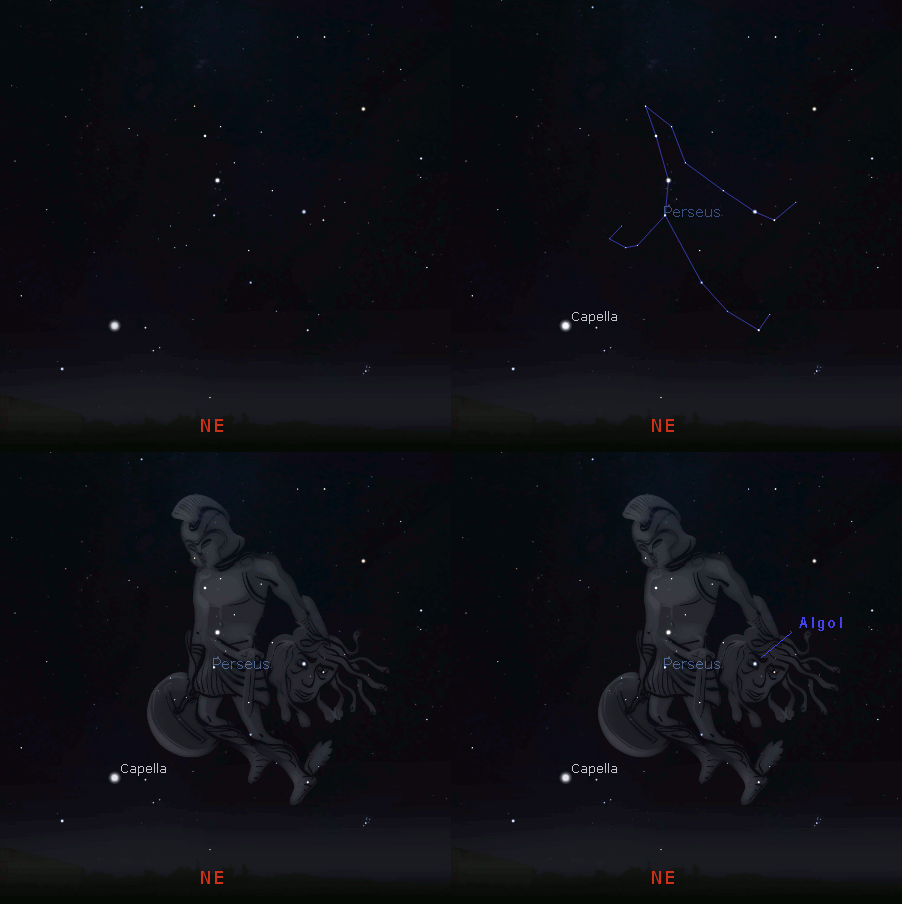
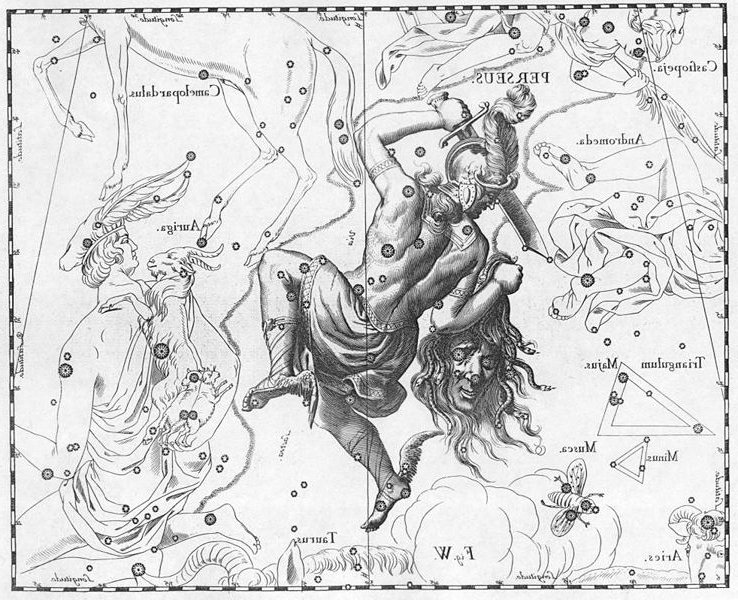
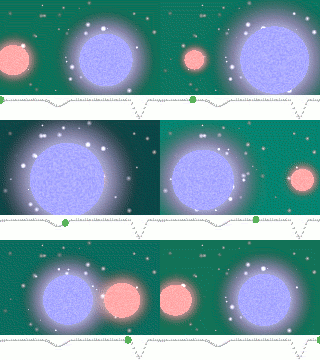
Not all the ghosts and goblins out tomorrow night will be children. One will be out every night because it’s a star. Its name is Algol, from the Arabic for Ghoul Star or Demon Star. It’s normally the second brightest star in the constellation Perseus the hero, visible in the northeast this evening. The star is located where artists have drawn the severed head of Medusa, whom he had slain. Medusa was so ugly that she turned all who gazed upon her to stone. Algol is her still glittering eye. The star got these names before astronomers found out what was wrong with it. They found out that it does a slow wink every two days, 21 hours. That’s because Algol is two stars that eclipse each other. Her next evening wink will be its dimmest at 10:12 p.m. this Wednesday, November 1st.
The astronomical event times given are for the Traverse City/Interlochen area of Michigan (EDT, UT –4 hours). They may be different for your location.
Addendum
For predictions of the minima of Algol for your time zone and for Universal Time (UT) go here: http://www.astropical.space/algol.php
Ephemeris: 10/27/2023 – Report on October 14th’s partial solar eclipse and looking forward
This is Ephemeris for Friday, October 27th. Today the Sun will be up for 10 hours and 25 minutes, setting at 6:38, and it will rise tomorrow at 8:15. The Moon, 1 day before full, will set at 7:55 tomorrow morning.
Two weeks ago tomorrow we had a partial eclipse of the Sun. Unfortunately around here it was pretty cloudy. I went to the Betsie Valley District Library knowing it was cloudy and brought a program to talk about mainly eclipses that I’ve seen and a preview of next April’s eclipse, which would be even better than the one we had two weeks ago. Towards the end of my talk I was looking out towards my audience and windows. I was the only one who could see out those windows, because I was facing that direction and I saw shadows. Sure enough the Sun came out, so we all piled out with our eclipse glasses and saw the maximum of the eclipse for maybe 15 minutes before it clouded up again. So the event was indeed a success.
The astronomical event times given are for the Traverse City/Interlochen area of Michigan (EDT, UT –4 hours). They may be different for your location.
Addendum
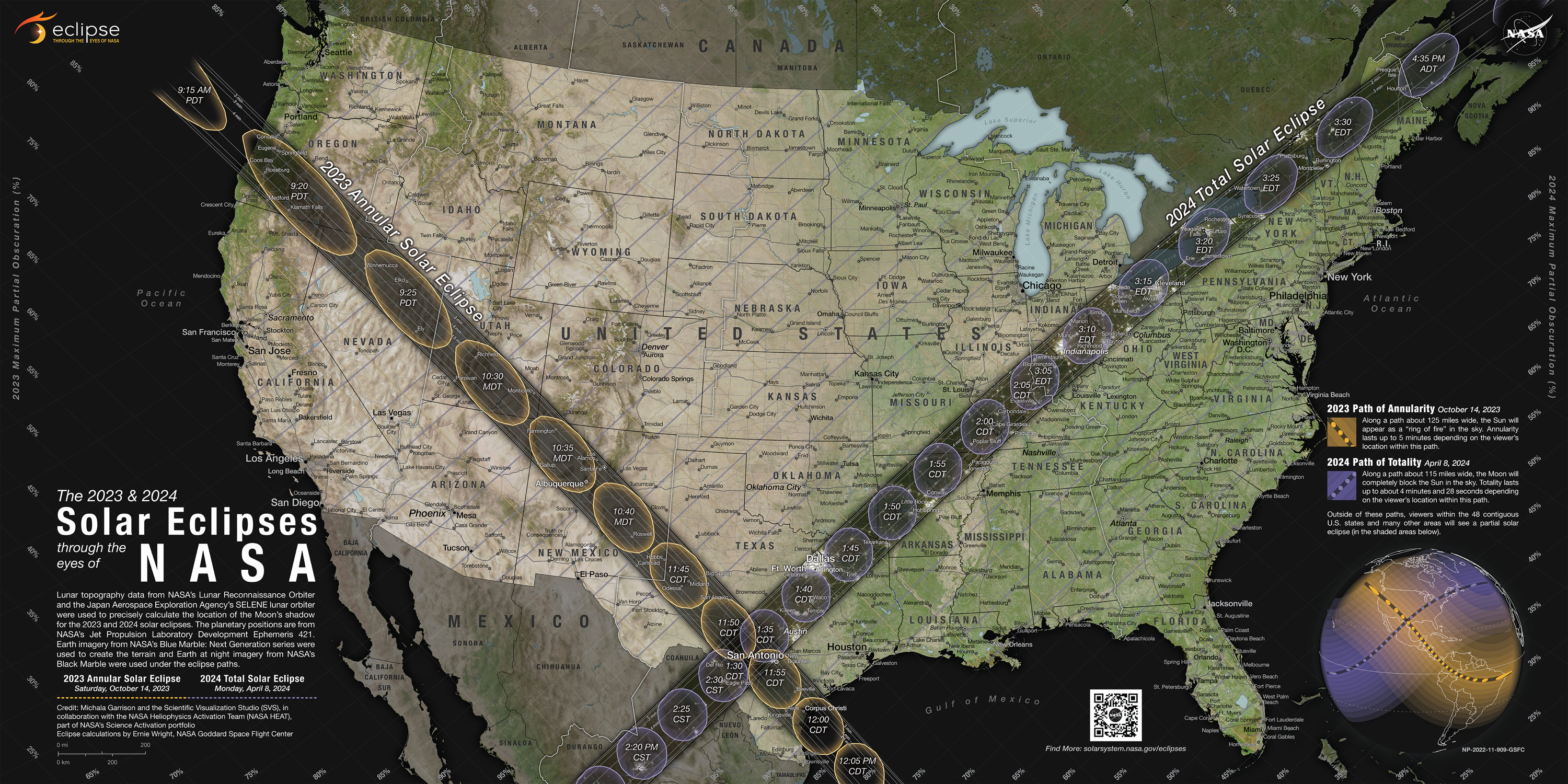
Below is a file to show April 8, 2024 eclipse path on Google Earth. It can be saved or used to bring up Google Earth. The file was created using Stellarium.
Ephemeris: 10/26/2023 – A closer look at Jupiter’s moon Io
This is Ephemeris for Thursday, October 26th. Today the Sun will be up for 10 hours and 28 minutes, setting at 6:40, and it will rise tomorrow at 8:13. The Moon, 2 days before full, will set at 6:36 tomorrow morning.
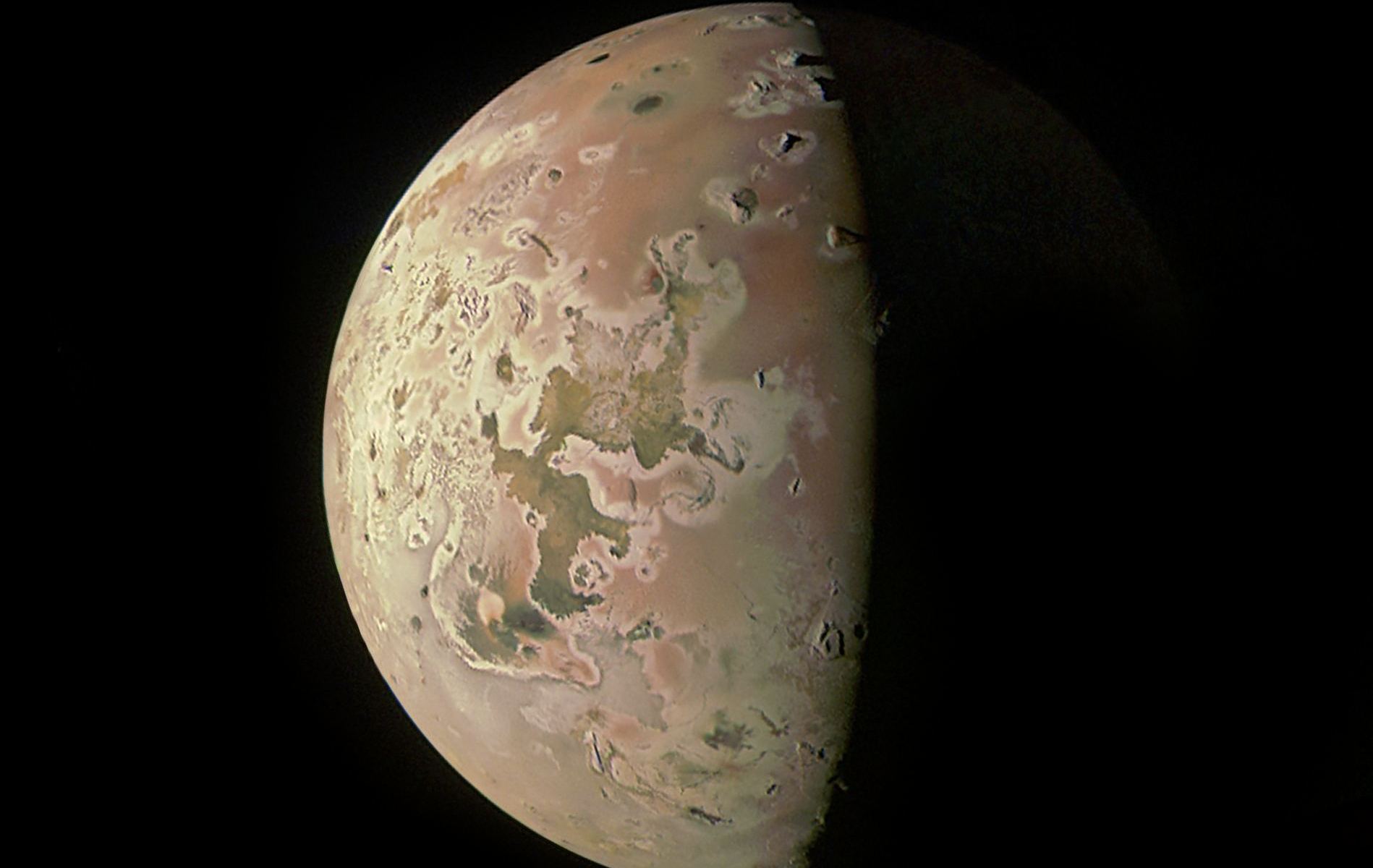
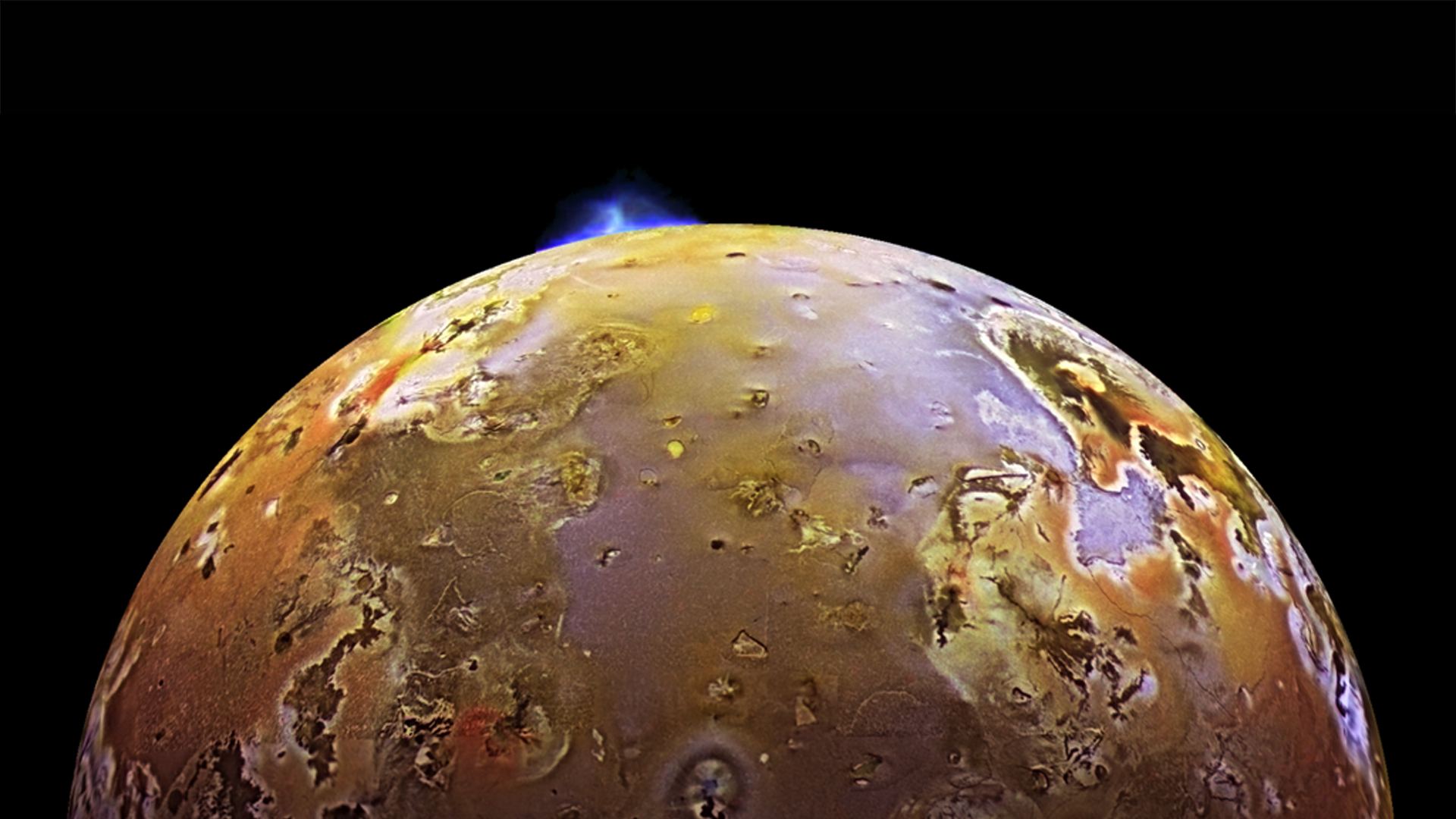
My favorite moon of Jupiter has been Io ever since the Voyager 1 spacecraft discovered volcanoes on it. It turns out that Io is the most volcanic body in the solar system and perhaps the least studied of the Galilean moons of Jupiter. Most of the probes that have swung by or orbited Jupiter never got very close to Io, so we never really got a good close look at it. Well, now we are getting that closer look. The Juno spacecraft, which was sent to Jupiter to work out the interior of Jupiter using gravitational effects on its orbit, has now completed its main mission and its orbit has precessed so that now comes close to Io. The Juno spacecraft has a camera, mainly there for the public, which is showing amazing closeups of this moon.
The astronomical event times given are for the Traverse City/Interlochen area of Michigan (EDT, UT –4 hours). They may be different for your location.
Addendum
Ephemeris: 10/25/2023 – Where have the naked-eye planets wandered off to?
This is Bob Moler with Ephemeris for Wednesday, October 25th. Today the Sun will be up for 10 hours and 30 minutes, setting at 6:42, and it will rise tomorrow at 8:12. The Moon, 3 days before full, will set at 5:16 tomorrow morning.
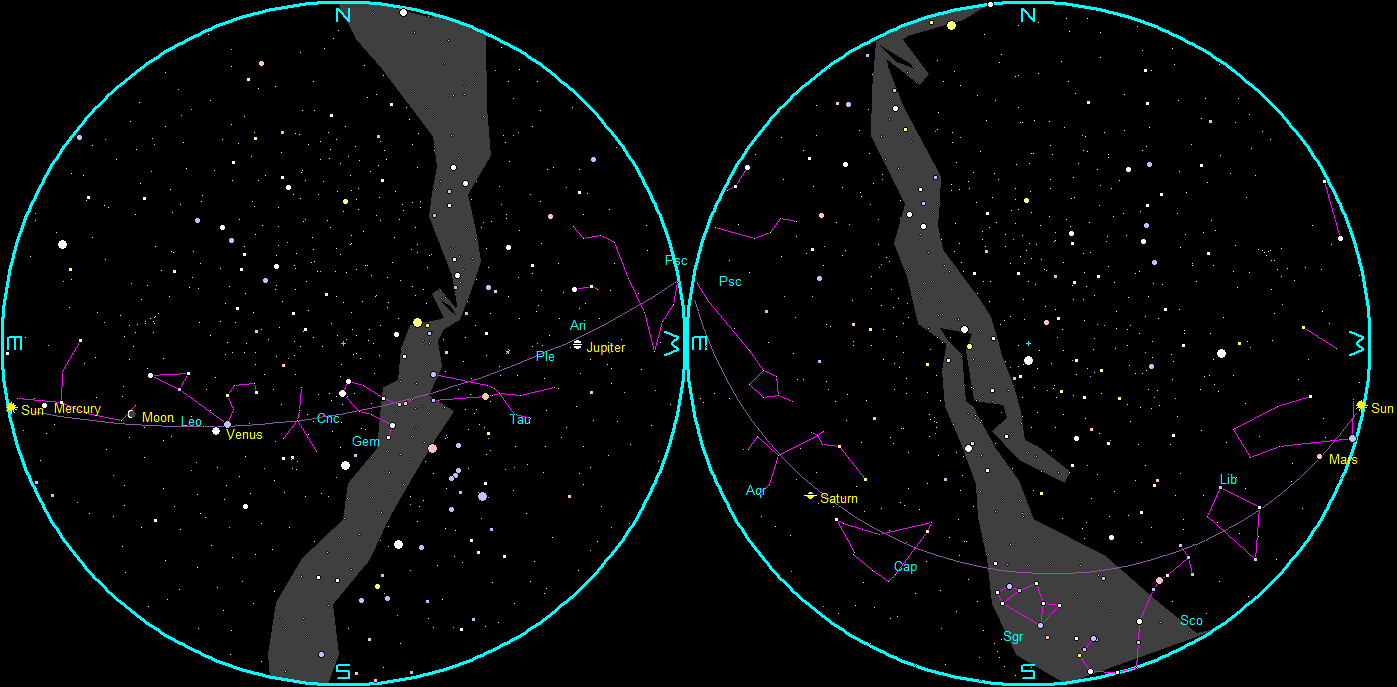
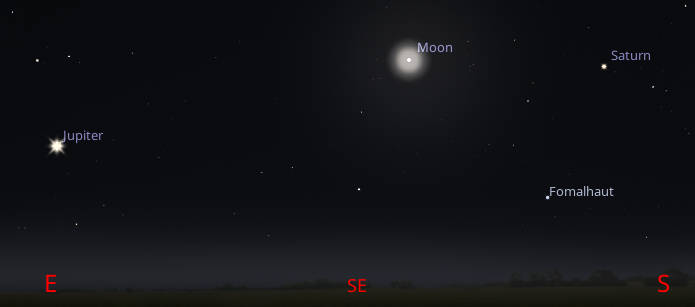
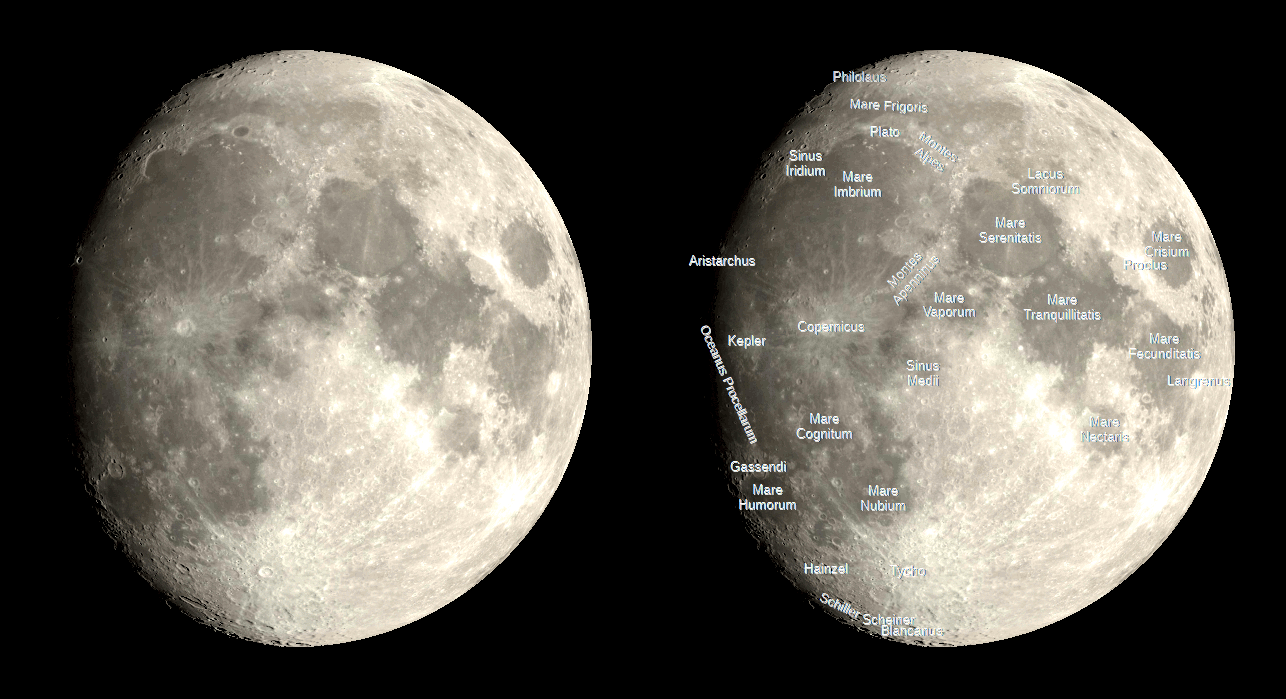
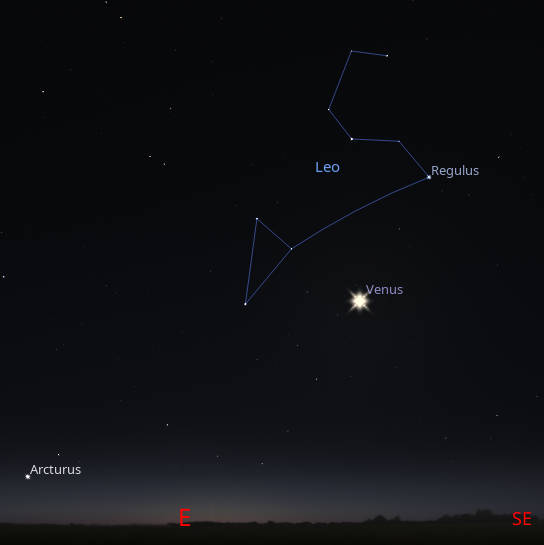
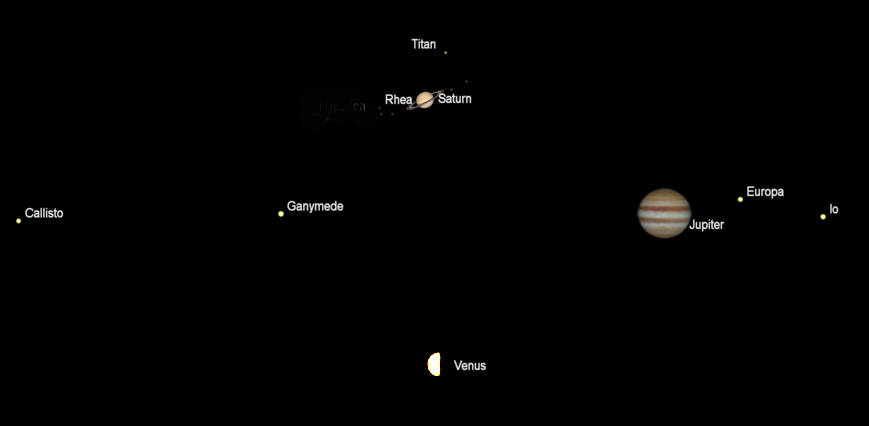
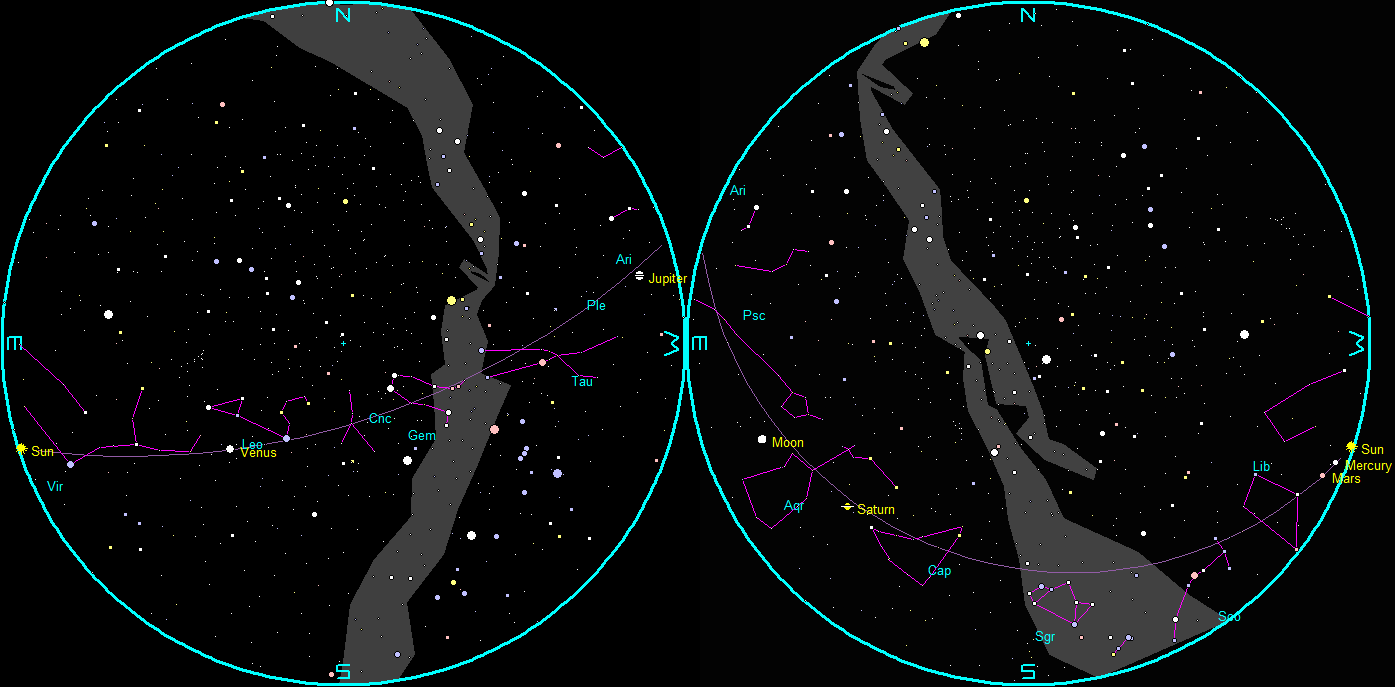
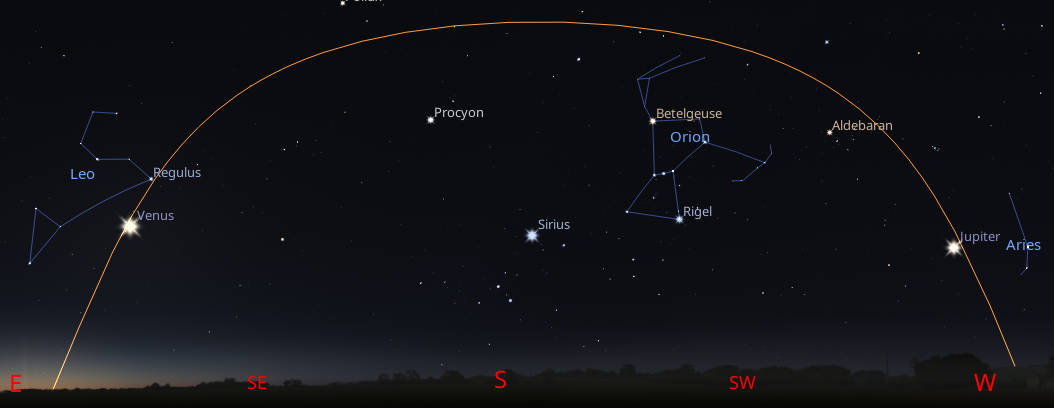
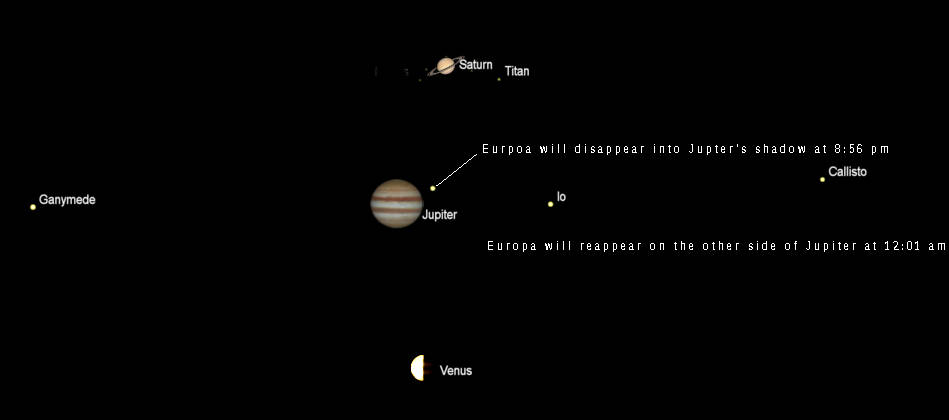
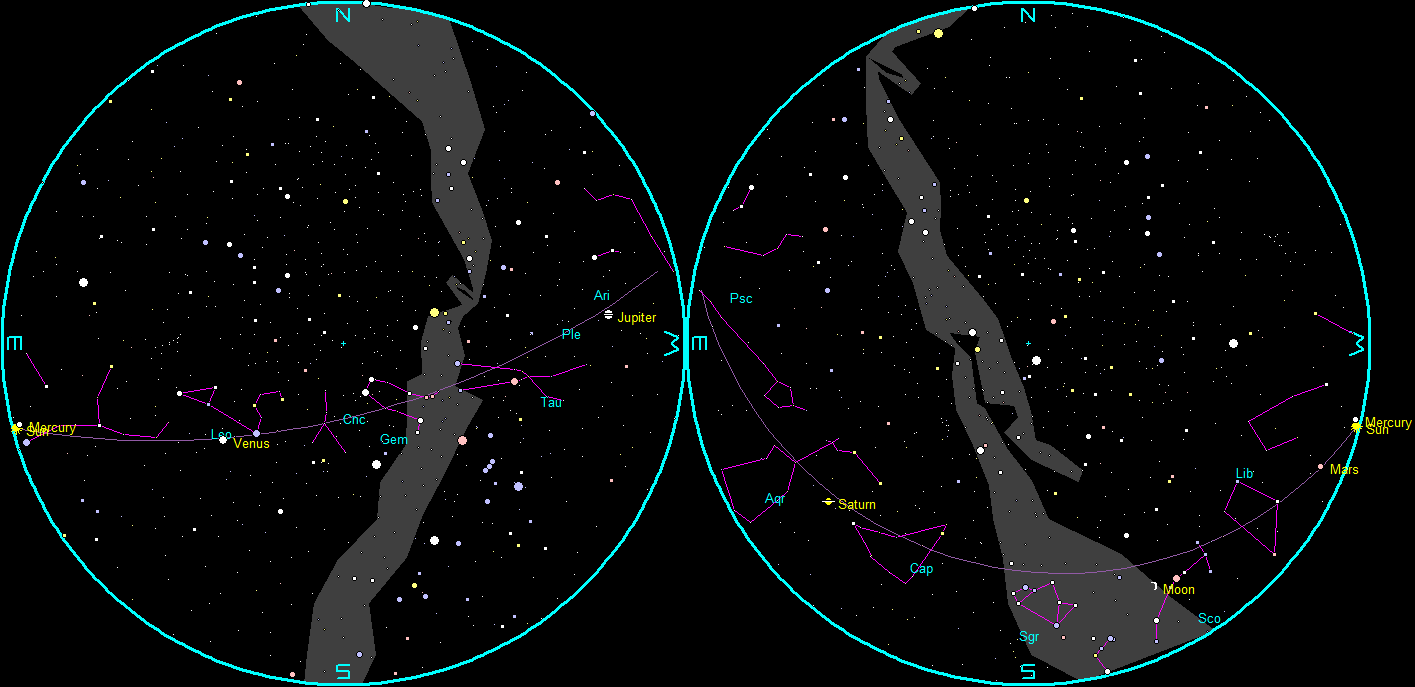
Let’s find out where the naked-eye planets have wandered off to this week. Three of those five planets are now visible, but Mars sets too close to sunset to be seen, and Mercury rises too close to sunrise. Saturn is the sole official evening planet visible. It can be spotted in the southeast to south in the evening. And it will still be visible in the morning hours until it sets at 2:49 am. Saturn is seen against the stars of Aquarius this year and next. Jupiter and Venus are the visible morning planets. Jupiter, still a morning planet for one more week, will rise at 7:04 pm. It’s in Aries this year. Jupiter has to rise before sunset to be an evening planet. Venus, the brilliant morning star, will rise in the east-northeast at 4:09 am.
The astronomical event times given are for the Traverse City/Interlochen area of Michigan (EDT, UT –4 hours). They may be different for your location.
Addendum
Ephemeris: 10/24/2023 – We might see a bright nova soon
This is Ephemeris for Tuesday, October 24th. Today the Sun will be up for 10 hours and 33 minutes, setting at 6:43, and it will rise tomorrow at 8:11. The Moon, 3 days past first quarter, will set at 3:57 tomorrow morning.
There is a star in the northern constellation of Corona Borealis the Northern Crown which we see normally on spring and summer evenings that is a recurring nova. A nova is a star that suddenly brightens from invisibility to visibility and soon fades. It is caused by a white dwarf orbiting with a larger, star siphoning off gases from the larger star until it builds up enough to create a thermonuclear explosion. This may not affect the star and may run through the process repeatedly. These are called reoccurring novae, and this one is designated T Coronae Borealis. It’s usually close to 11th magnitude which is hard to find even in binoculars to become one of the 50 brightest stars in the sky, as early as next year.
The astronomical event times given are for the Traverse City/Interlochen area of Michigan (EDT, UT –4 hours). They may be different for your location.
Addendum
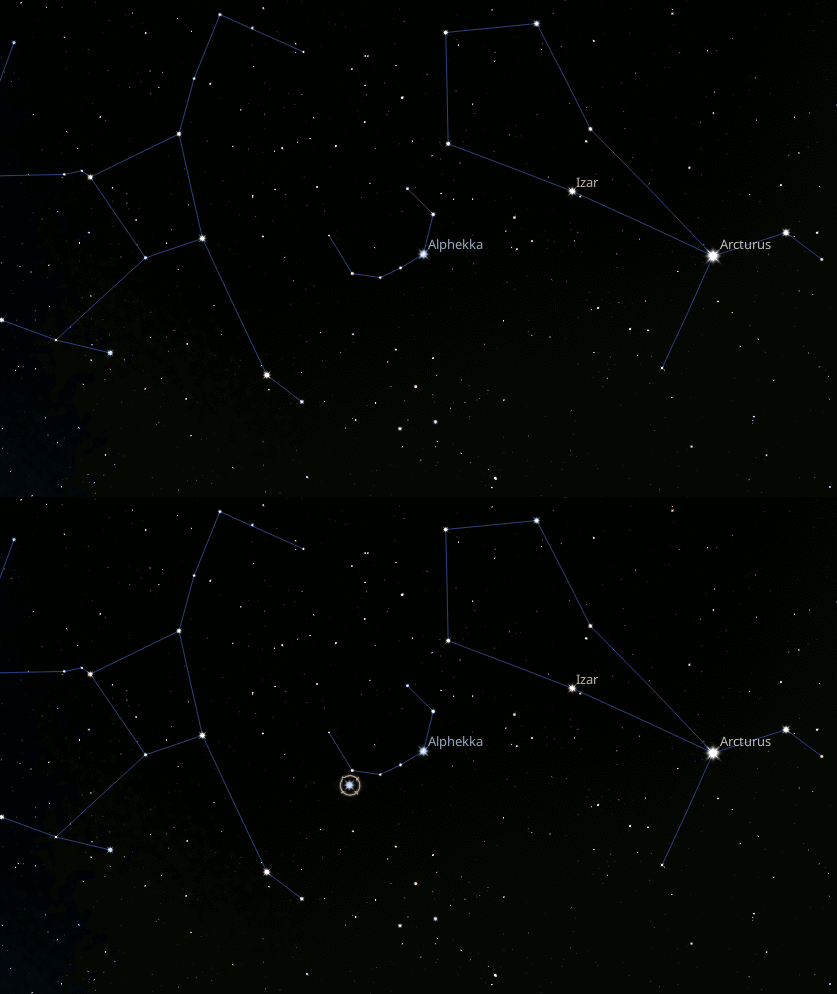
What got me onto this is an article from Universe Today for September 8th by Jon Voisey: A Medieval Manuscript Likely Hides a Record of an Impending Recurrent Nova. Another source for this Nova is to look up T CrB on Wikipedia. See below:
Ephemeris: 10/23/2023 – Venus is at its greatest separation from the Sun in the morning
This is Ephemeris for Monday, October 23rd. Today the Sun will be up for 10 hours and 36 minutes, setting at 6:45, and it will rise tomorrow at 8:09. The Moon, 2 days past first quarter, will set at 2:36 tomorrow morning.
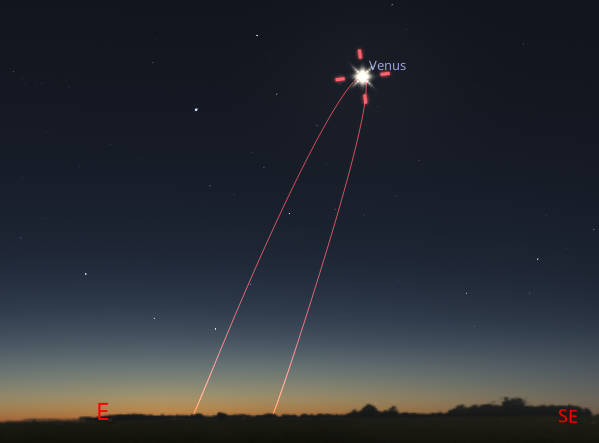
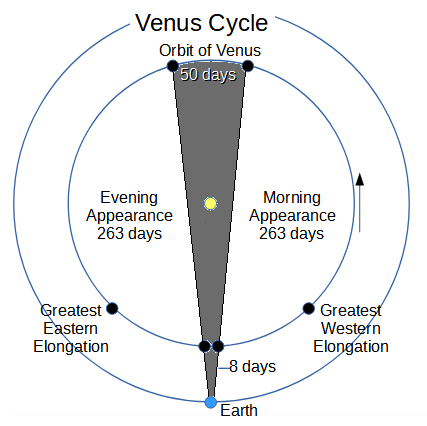
Our brilliant morning planet Venus will reach its greatest apparent angle from the Sun later today. It’s called the greatest western elongation because it’s west of the Sun and rises before the Sun. From now until its superior conjunction next year, on June 4th. It will move closer and closer to the Sun from our vantage point. But it’s just moving around behind the Sun. The Mayans at the peak of their civilization were diligent observers of Venus. They found the Venus cycle, what we would call synodic period of Venus of 584 days, from the heliacal rising of Venus, its first appearance in the morning sky after disappearing in the evening, to the next heliacal rising. Venus would reach its greatest elongation from the Sun about 66 days after its heliacal rising.
The astronomical event times given are for the Traverse City/Interlochen area of Michigan (EDT, UT –4 hours). They may be different for your location.
Addendum
Ephemeris Extra: Star Party Tomorrow night, 10/21/2023, if it’s clear
Update: 10/21/2023 The Star Party has been canceled due to weather (clouds)
This was the last planned star party at the Sleeping Bear Dunes this year. Look for star parties in 2024. Also, there will be a star party after the Grand Traverse Astronomical Society meetings, November 3rd and December 1st, of course weather permitting, at Northwestern Michigan College’s Joseph H. Rogers Observatory. The observatory is located south of Traverse City on Birmley Road. Meetings start at 8 pm, and are not weather dependent, with observing after (approximately 9 pm) if it’s clear. Topic of the meeting programs: November: A documentary video Jack Newton’s Journey to the Stars. Jack Newton (1942-) is a Canadian amateur astronomer and pioneering astrophotographer. December: Ancient Greek astronomy.
Original Post Below
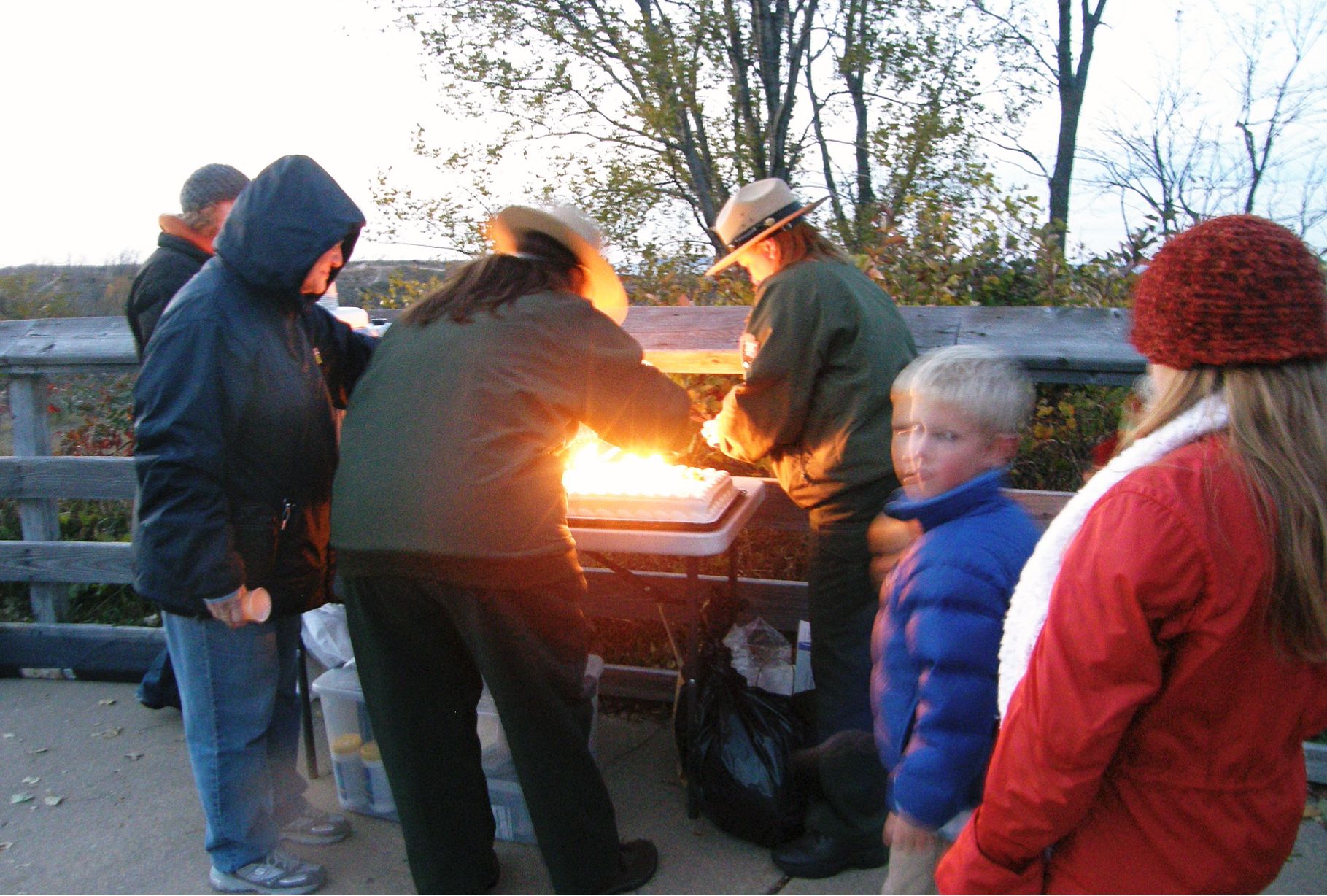
Members of the Grand Traverse Astronomical Society will team up with the park rangers of the Sleeping Bear Dunes National Lakeshore for the last star party of the year celebrating the park’s 53rd anniversary. It will take place at the Dune Climb. Of course, it will only occur if it is clear or partly cloudy. It starts at 4 pm with solar observing using personal and the society’s solar telescopes. Starting at 7 pm it will be dark enough to view the first quarter Moon, followed a bit later with Saturn, and still later with Jupiter. The brighter wonders beyond the solar system will be also be visible later.
Ephemeris: 10/20/2023 – Halley’s Comet is back! Sort of.
This is Ephemeris for Friday, October 20th. Today the Sun will be up for 10 hours and 45 minutes, setting at 6:50, and it will rise tomorrow at 8:05. The Moon, 1 day before first quarter, will set at 10:42 this evening.
Halley’s Comet is back! (Pronounced Hall-ey’s) Well sorta. In the form of the Orionid meteor shower. Bits of Halley’s Comet from previous passes by the Earth’s orbit make their twice-yearly show in our skies as these bits collide with the Earth’s atmosphere. Halley’s orbit passes close to the earth’s orbit at points where the Earth is around May 6th and again near October 21st. Light dust and ionized gas get blown back into the tail of the comet. Heavier particles, still affected by the pressure of sunlight and the gravitational pull of the Sun and planets end up roughly following the comet’s orbit. In the morning after the Moon sets (11:55 pm on the 21st) should be the best time to see them. They will seem to come from a spot above Orion and below Gemini.
The astronomical event times given are for the Traverse City/Interlochen area of Michigan (EDT, UT –4 hours). They may be different for your location.
Addendum
Ephemeris: 10/19/2023 – The southern star of autumn – Fomalhaut
This is Bob Moler with Ephemeris for Thursday, October 19th. Today the Sun will be up for 10 hours and 48 minutes, setting at 6:51, and it will rise tomorrow at 8:04. The Moon, 2 days before first quarter, will set at 9:39 this evening.
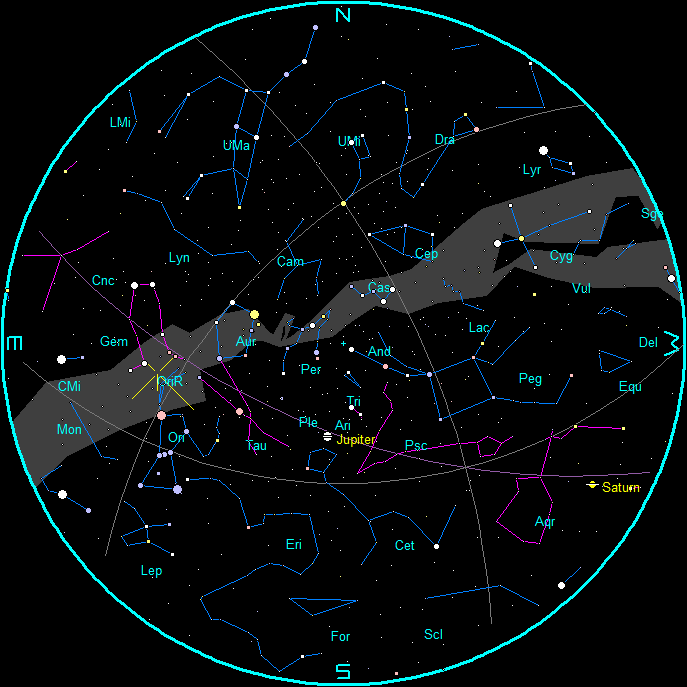
There’s a bright star that appears for only seven and a half hours on autumn evenings. Its appearance, low in the south-southeast at 9 p.m., is a clear indication of the autumn season. It is currently below the much brighter Saturn. The star’s name is Fomalhaut, which means fish’s mouth. That’s fitting because it’s in the constellation of Piscis Austrinus, the southern fish. At our latitude it’s kind of the fish that got away, because usually Fomalhaut appears to be quite alone low in the sky. For the last few years Jupiter and then Saturn have kept it company. In a couple of years Saturn will have moved on leaving Fomalhaut to its lonely vigil in the south.
The astronomical event times given are for the Traverse City/Interlochen area of Michigan (EDT, UT –4 hours). They may be different for your location.
Addendum
Ephemeris: 10/18/2023 – Where have the naked-eye planets wandered off to this week
This is Ephemeris for Wednesday, October 18th. Today the Sun will be up for 10 hours and 51 minutes, setting at 6:53, and it will rise tomorrow at 8:03. The Moon, 3 days before first quarter, will set at 8:50 this evening.
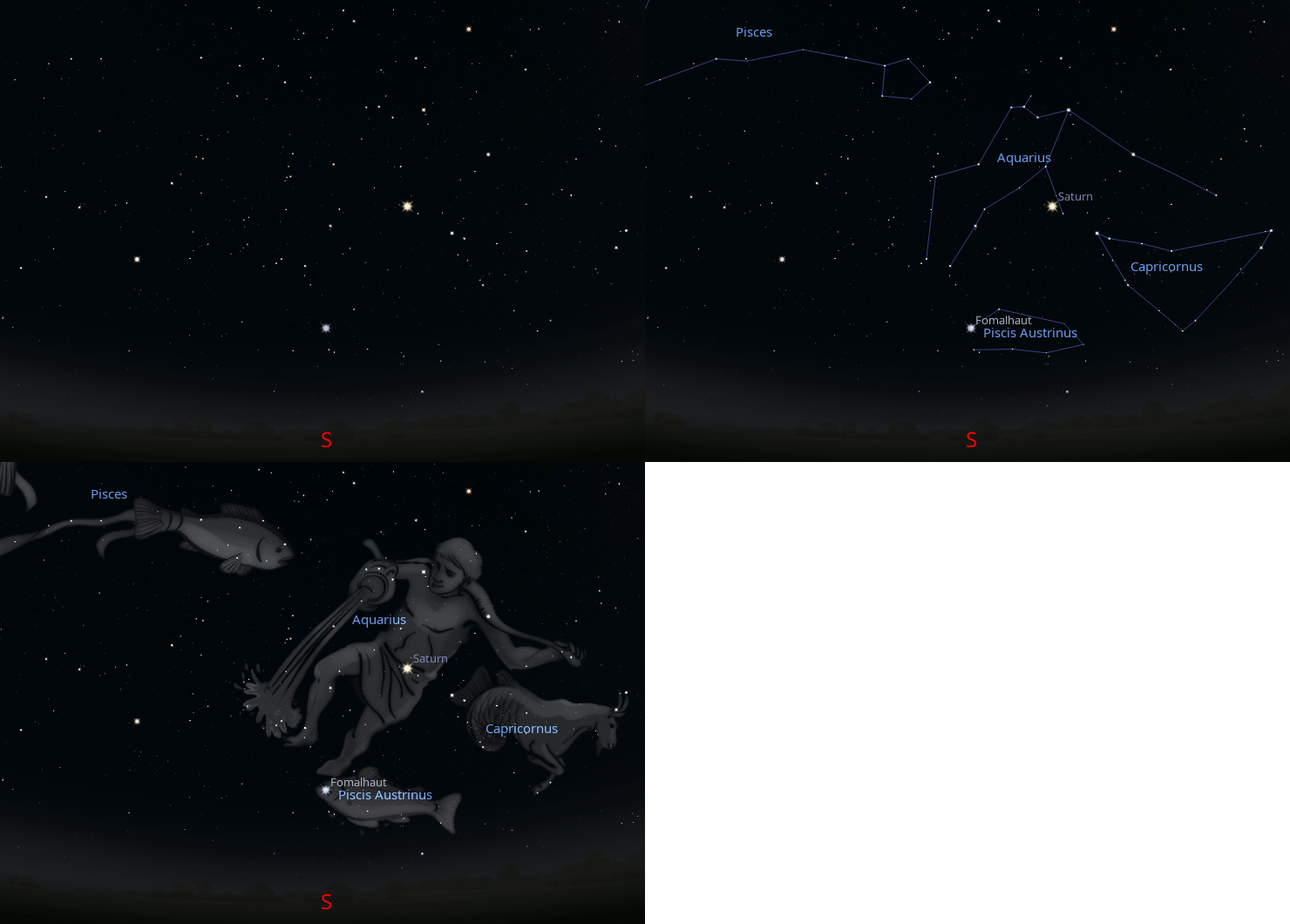
Let’s find out where the naked-eye planets have wandered off to this week. Three of those five planets are now visible, but Mars sets too close to sunset to be seen, and Mercury rises too close to sunrise, and besides it will enter the evening sky after Friday. Saturn is the sole official evening planet visible. It can be spotted in the southeast to south in the evening. And it will still be visible in the morning hours until it sets at 3:17 am. Saturn is seen against the stars of Aquarius this year and next. Jupiter and Venus are the visible morning planets. Jupiter, still a morning planet, will rise at 7:34 pm. It’s in Aries this year. Jupiter has to rise before sunset to be an evening planet. Venus, the brilliant morning star, will rise in the east-northeast at 4:02 am.
The astronomical event times given are for the Traverse City/Interlochen area of Michigan (EDT, UT –4 hours). They may be different for your location.
Addendum
 Bob Moler's Ephemeris Blog