Archive
Ephemeris: 06/04/2024 – Finding the Little Dipper
This is Ephemeris for Tuesday, June 4th. Today the Sun will be up for 15 hours and 25 minutes, setting at 9:24, and it will rise tomorrow at 5:58. The Moon, 2 days before new, will rise at 4:51 tomorrow morning.
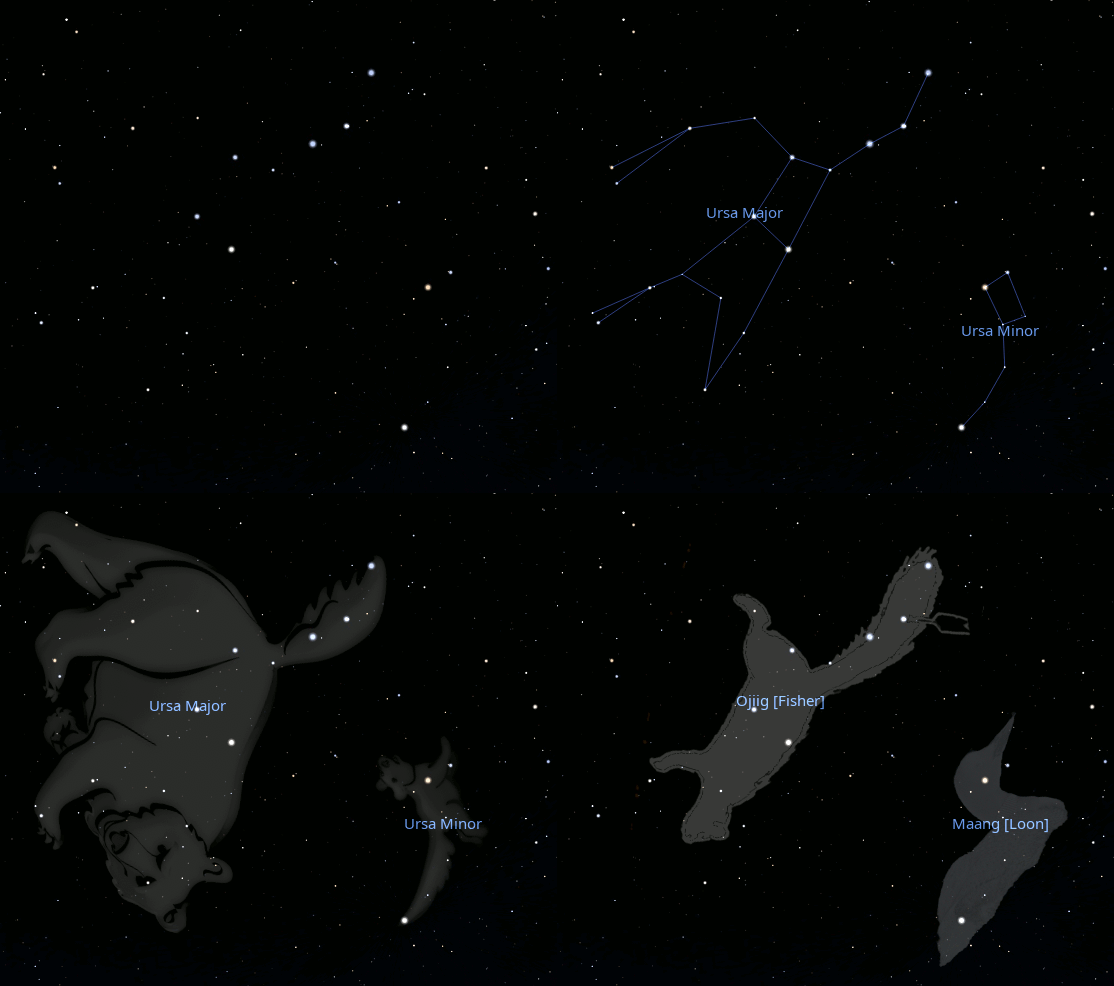
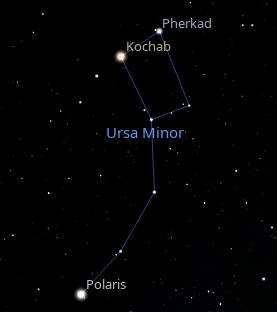
One of the constellations I don’t talk about much, except in passing is Ursa Minor, the Little Bear with an impossibly long tail. It is better known as the Little Dipper. As a dipper goes, its handle is bent the wrong way, like someone stepped on it. Anyway, this time of year in the evening, it’s standing on the tip of it’s handle, which is the North Star, Polaris. Polaris is pointed to by the front two stars of the Big Dipper. As dippers go they pour their contents into each other. The second and third-brightest stars of the Little Dipper are at the front of the bowl, and are Kochab and Pherkad, the Guard Stars, that is, Guardians of the Pole. To the Anishinaabe native peoples of our area the Little Dipper is Maang, the Loon.
The astronomical event times given are for the Traverse City/Interlochen area of Michigan (EDT, UT–4 hours). They may be different for your location.
Addendum
Ephemeris: 05/28/2024 – Finding Spica and Virgo
This is Ephemeris for Tuesday, May 28th. Today the Sun will be up for 15 hours and 15 minutes, setting at 9:18, and it will rise tomorrow at 6:01. The Moon, 2 days before last quarter, will rise at 2:06 tomorrow morning.
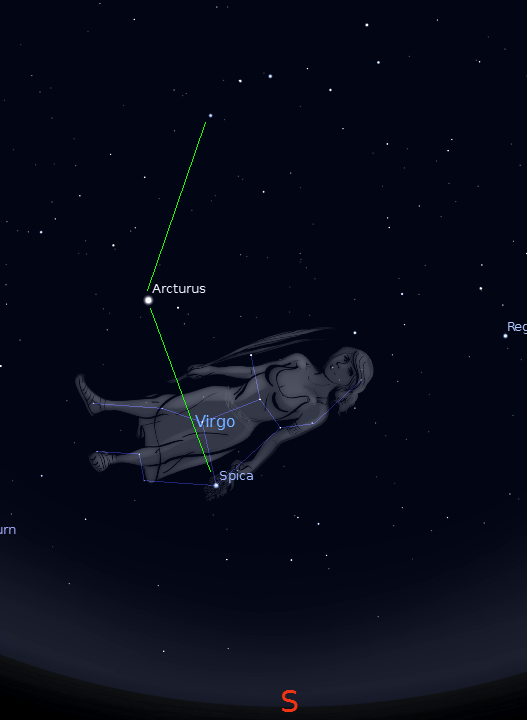
The Big Dipper, near the zenith at 10:30 pm points to several stars and constellations. It’s handle points to two bright stars. First we follow the arc of the handle to the bright orange star Arcturus, the 4th brightest nighttime star. The reason I say nighttime is that the Sun is a star also, but by definition is not out at night. The arc to Arcturus is a way to find Arcturus and a clue to its name. Arcturus, high in the south-southeast, lies at the base point of the kite shaped constellation of Boötes the herdsman. From Arcturus, straighten out the arc to a spike and one soon arrives at Spica a blue-white star in Virgo the virgin, now in the south. Spica is also sometimes pronounced ‘Speeka’.
The astronomical event times given are for the Traverse City/Interlochen area of Michigan (EDT, UT–4 hours). They may be different for your location.
Addendum
Ephemeris: 05/27/2024 The evening sky is transitioning into summer
This is Bob Moler with Ephemeris for Memorial Day, Monday, May 27th. Today the Sun will be up for 15 hours and 14 minutes, setting at 9:17, and it will rise tomorrow at 6:02. The Moon, 3 days before last quarter, will rise at 1:36 tomorrow morning.
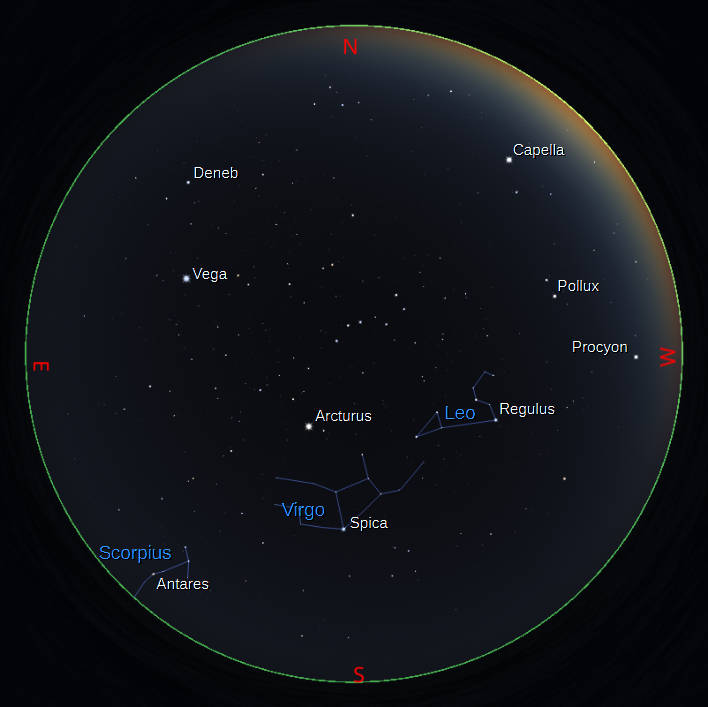
The sky tonight at 10:30 is beginning to show the transition from spring to summer. Antares in Scorpius is very low in the southeast, rising and chasing away Orion who has disappeared in the West. According to Greek mythology, at least in one story, Orion was killed by the sting of a giant scorpion and so neither he nor Scorpius the scorpion can be in the sky at the same time. The bright star Spica in Virgo the virgin is due South at that time, with Leo the lion in the southwest. Very high in the southeast is the star Arcturus. The Big Dipper is overhead. And in the east-northeast high up this is the bright star Vega, one of the stars of the summer triangle. The second star of the triangle Deneb is lower in the northeast. The third star has yet to rise.
The astronomical event times given are for the Traverse City/Interlochen area of Michigan (EDT, UT–4 hours). They may be different for your location.
Addendum
Ephemeris: 05/17/2024 – The famous Big Dipper stars Mizar and Alcor
This is Ephemeris for Friday, May 17th. Today the Sun will be up for 14 hours and 55 minutes, setting at 9:07, and it will rise tomorrow at 6:10. The Moon, 2 days past first quarter, will set at 4:01 tomorrow morning.
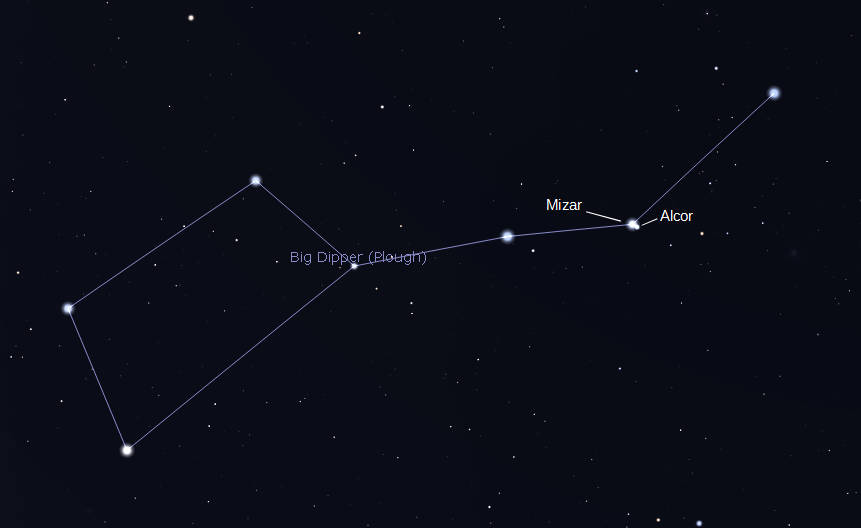
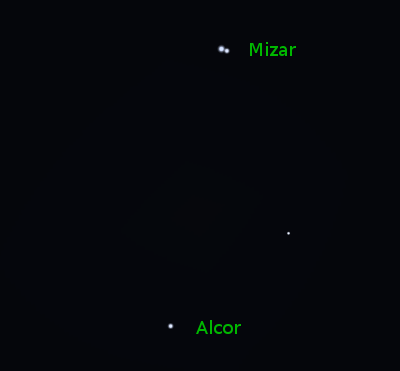
In tonight’s sky, the Big Dipper is nearly overhead. In its handle is a star or two that are interesting. It’s the star at the bend in the handle. It’s called Mizar. Next to it, for those with good eyesight, is a dimmer star, called Alcor. The name Mizar is from the Arabic, meaning apron or cover, while Alcor means the forgotten one. Before optometrists, the ability to actually see both stars was a test for good eyesight, especially for Arabic warriors. The pair is also known as the “Horse and the Rider”. I’ve been told that some Native American tribes saw the handle stars as hunters following the Great Bear, Ursa Major, of which the Big Dipper is a part, rather than its very unnatural tail. Dim Alcor became a hunting dog.
The astronomical event times given are for the Traverse City/Interlochen area of Michigan (EDT, UT–4 hours). They may be different for your location.
Addendum
Ephemeris: 05/09/2024 – How the Great Bear got her long tail
This is Ephemeris for Thursday, May 9th. Today the Sun will be up for 14 hours and 37 minutes, setting at 8:58, and it will rise tomorrow at 6:19. The Moon, 2 days past new, will set at 11:30 this evening.
As we see the Great Bear, Ursa Major in the sky with the Big Dipper as its hind end and tail, it seems apparent that the bear is unusual, because bears don’t have long tails. The peoples of the old world, Greeks and others, had a story of how the bear got his long tail. The God Zeus was responsible for the predicament that caused a young lady to be turned into the bear and placed her in the sky out of harm. Some question how he did this. To throw her into the sky, he probably didn’t want to grab the end with the teeth, so he grabbed the bear’s stubby tail whirled the bear around his head and threw her up into the sky where we see her today. Of course the tail was stretched. Some Native Americans did see a bear here too. But the three stars of the dipper’s handle were 3 hunters following the bear.
The astronomical event times given are for the Traverse City/Interlochen area of Michigan (EDT, UT–4 hours). They may be different for your location.
Addendum
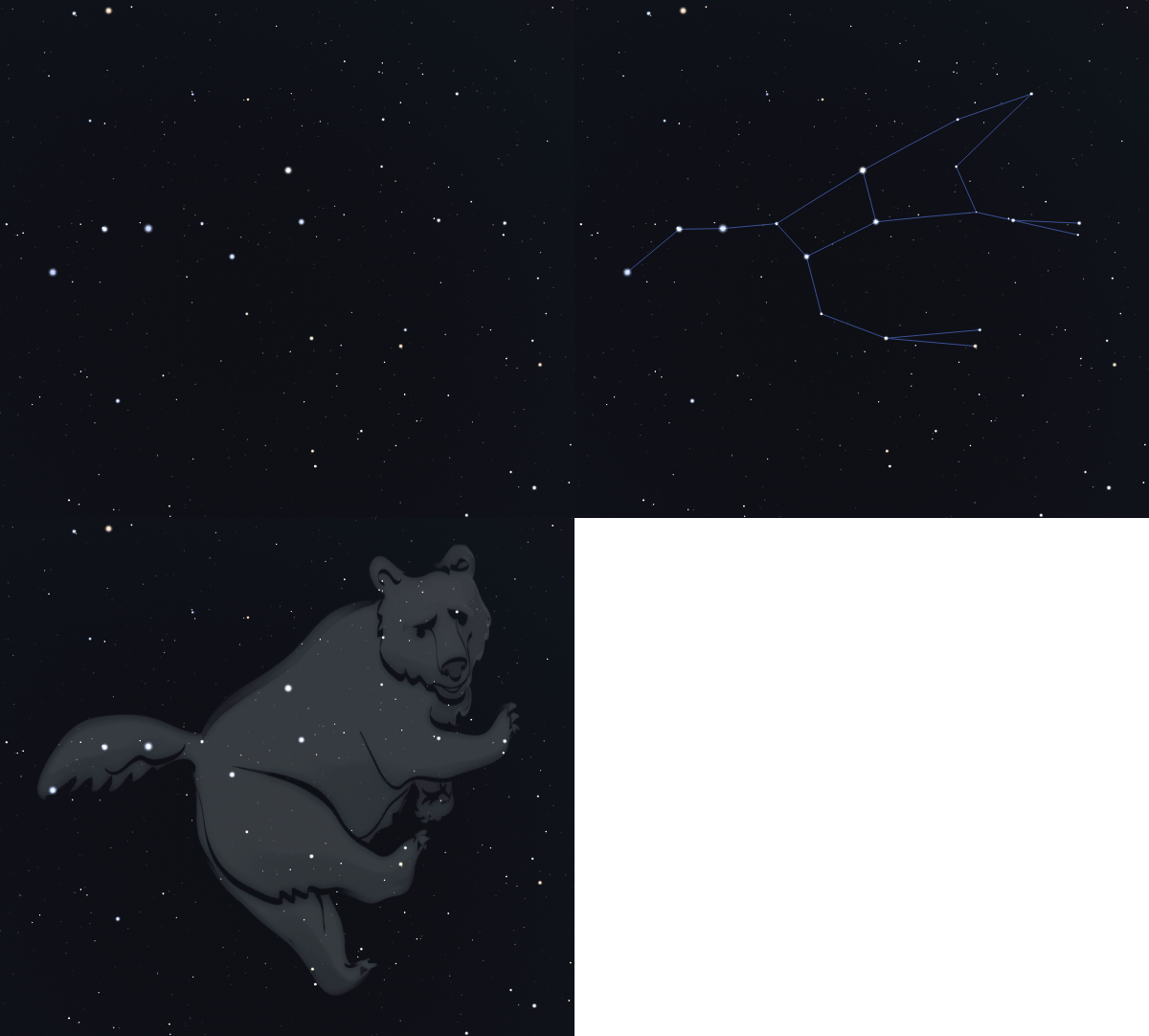
For the story of why the young lady, Callisto, was turned into a bear, check out this post of a week ago: https://bobmoler.wordpress.com/2024/05/02/…
Ephemeris: 10/17/2023 – How the Fisher paints the trees with their fall colors
This is Ephemeris for Tuesday, October 17th. Today the Sun will be up for 10 hours and 54 minutes, setting at 6:55, and it will rise tomorrow at 8:01. The Moon, 3 days past new, will set at 8:12 this evening.
The tree leaves are beginning to turn to reds and yellows as we advance into autumn. The native Anishinaabek peoples, whose homeland we share, have a story about how that came to be. Of how a magical weasel-like creature called the Fisher or, in their native language, Ojiig, brought summer to the Earth from Skyland. For his trouble, he was shot with an arrow in his only vulnerable spot, his tail. As he fell to Earth Gichi Manitou, the Great Spirit, caught him and placed him in the sky where we see the Great Bear and the Big Dipper. Every late autumn night we see his tail, the handle of the dipper, slowly swooping down to the horizon where his bloody tail paints the trees with their autumn colors.
The astronomical event times given are for the Traverse City/Interlochen area of Michigan (EDT, UT – 4 hours). They may be different for your location.
Addendum
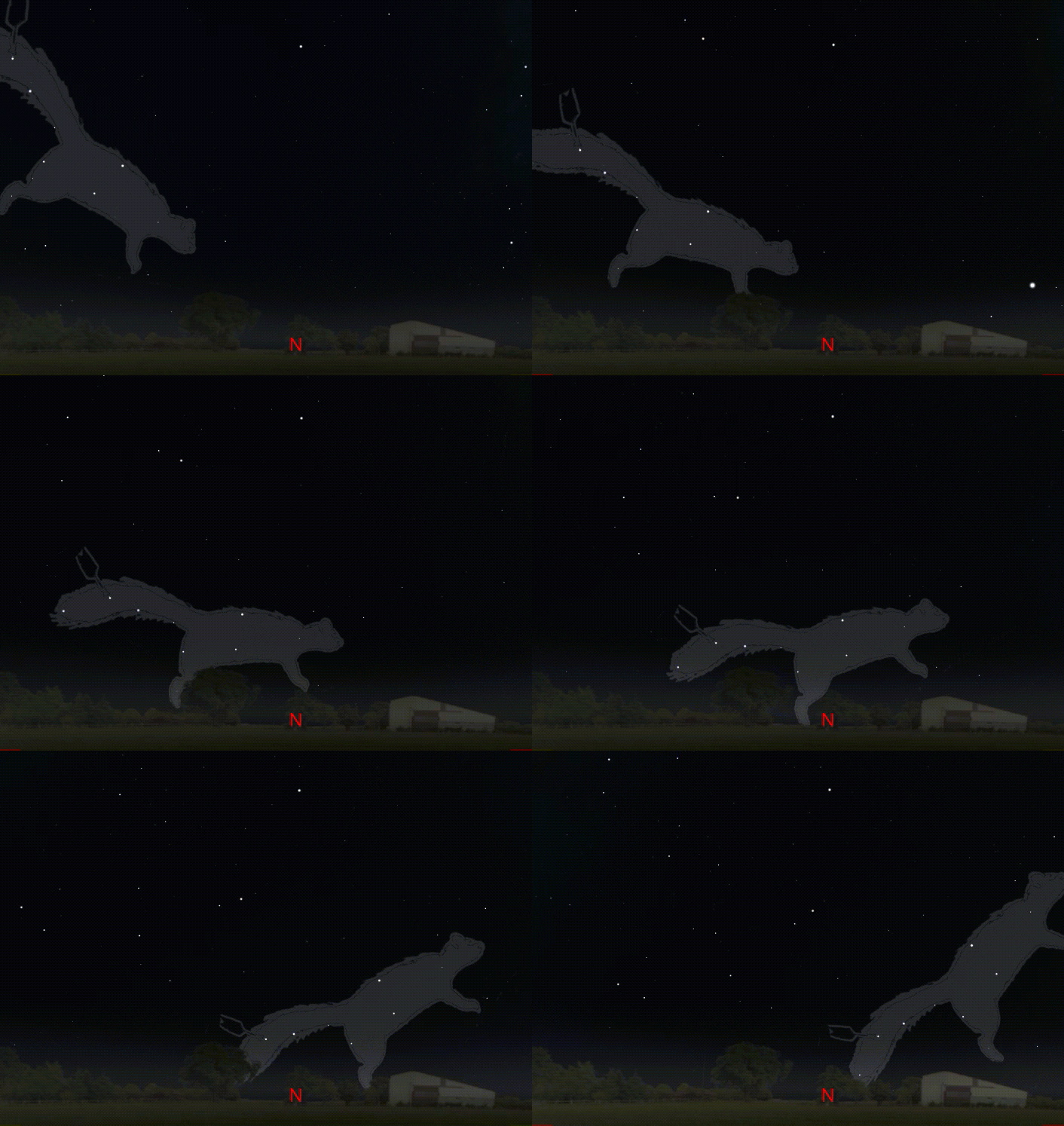
For my take on how the Fisher brought summer to the Earth, click here.
Extra: About last Saturday’s partial solar eclipse
Last Saturday I went to the Betsie Valley District Library in Thompsonville, MI for the partial solar eclipse that was visible from that location. Unfortunately, it was cloudy. It wasn’t solid clouds, so there probably was a chance at seeing something. What I did was to give an alternate program about the total solar eclipses I’ve traveled to since 1963, and a look at next April’s total solar eclipse. I was getting ready to finish up when I noticed that there were shadows outside. That meant that the Sun was out. We stopped there and went outside and got to witness at least the maximum part of the eclipse. We had about 15 minutes before the clouds came in again. So we were able to see at least part of this partial eclipse.
07/14/2023 – Ephemeris – Finding Polaris and why it’s important
This is Bob Moler with Ephemeris for Friday, July 14th. Today the Sun will be up for 15 hours and 16 minutes, setting at 9:26, and it will rise tomorrow at 6:11. The Moon, 3 days before new, will rise at 3:46 tomorrow morning.
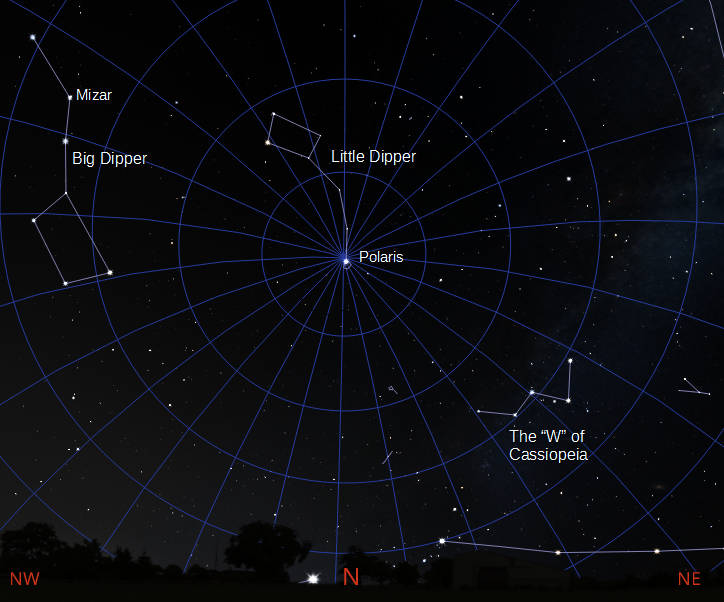
The most important star in the night sky, especially if you are lost, is Polaris, also called the North Star or Pole Star. Face Polaris and North is in front of you, East is to the right, west to the left and south will be behind you. To find Polaris, first find the Big Dipper. In the evening. This time of year, it’s hanging by its handle in the northwest, the direction that the sun set at. The two stars at the front of the bowl point to Polaris, which is to the right of it, now. Throughout the night, as the Earth rotates. Polaris will hold its position as all the other stars go around it in a counterclockwise direction. Polaris is at the end of the handle of the Little Dipper. That handle start’s vertically but curves to the left and is made of faint stars.
The astronomical event times given are for the Traverse City/Interlochen area of Michigan (EDT, UT –4 hours). They may be different for your location.
Addendum
06/19/2023 – Ephemeris – Juneteenth and the flight to freedom
This is Bob Moler with Ephemeris for Juneteenth, Monday, June 19th. Today the Sun will be up for 15 hours and 34 minutes, setting at 9:31, and it will rise tomorrow at 5:56. The Moon, 1 day past new, will set at 11:22 this evening.
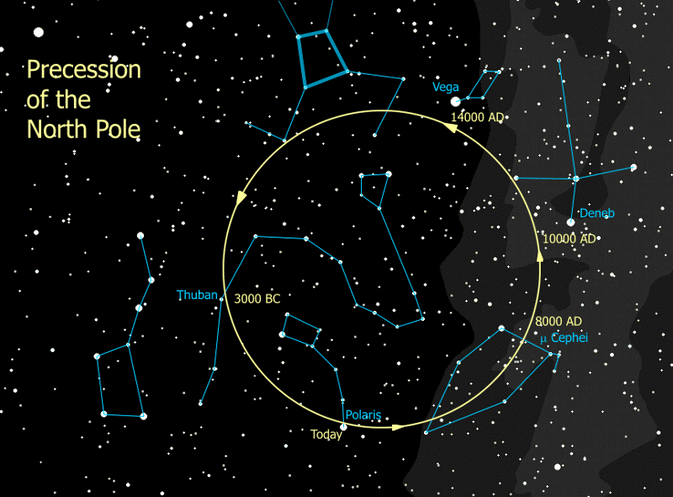
In 1865, it was on June 19th that the Union soldiers, led by Major General Gordon Granger, landed at Galveston, Texas with news that the war had ended and that the slaves were now free. Until then about the only path to freedom for the slaves was “To follow the Drinking Gourd”, or the Big Dipper, northward. The Big Dipper and the Great Bear, Ursa Major, has, for the last few millennia been the constellation of the north, being closer to the North Pole of the sky than it is now. The Earth’s axis has a slow wobble, called precession, caused by the gravitational pull of the Moon and Sun on Earth’s slight equatorial bulge of 30 miles wider than the pole to pole distance. That wobble period is nearly 26 thousand years.
The astronomical event times given are for the Traverse City/Interlochen area of Michigan (EDT, UT –4 hours). They may be different for your location.
Addendum

05/12/2023 – Ephemeris – Finding Virgo the virgin in the evening sky
This is Ephemeris for Friday, May 12th. Today the Sun will be up for 14 hours and 42 minutes, setting at 9:00, and it will rise tomorrow at 6:17. The Moon, at last quarter today, will rise at 3:44 tomorrow morning.
One of the large constellations we see in the south at 11 p.m. can be found using the Big Dipper overhead, follow the arc of the handle to the bright star Arcturus, then straighten the arc to a spike to reach Spica, a bright blue-white star in the south. Spica is the brightest star in the constellation Virgo, the virgin. She represents the goddess of the harvest, Virgo is holding a sheaf of wheat in depictions of her, and Spica is placed at the head of the sheaf. In the space between Spica and Leo the lion to her upper right is, a great cluster of thousands of galaxies just below naked eye visibility. The Virgo Cluster. Inside that cluster is galaxy M87, in whose center lies a black hole with the mass of 6.5 billion suns. The center of the cluster is at about 54 million light years away.
The astronomical event times given are for the Traverse City/Interlochen area of Michigan (EDT, UT –4 hours). They may be different for your location.
Addendum
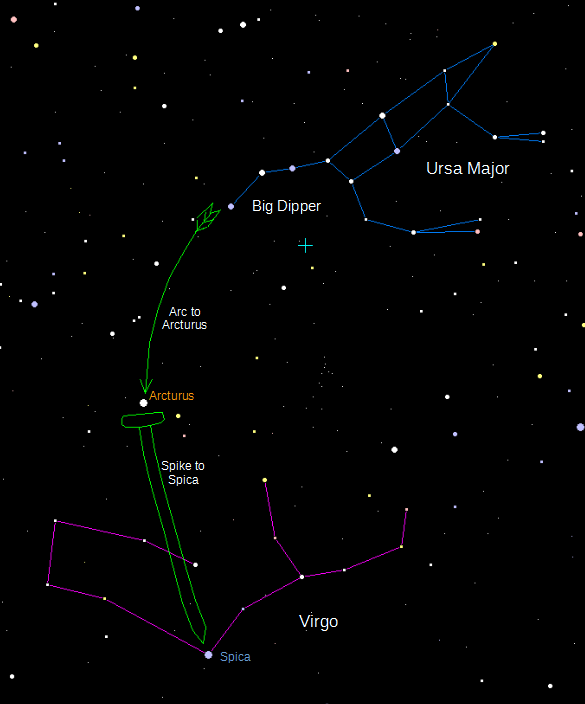
Finding Virgo from the Big Dipper at 11 pm, May 12. There are no planetary interlopers this year. The small + sign marks the zenith, and the image faces south. Created using my LookingUp app, with captions added using LibreOffice Draw.
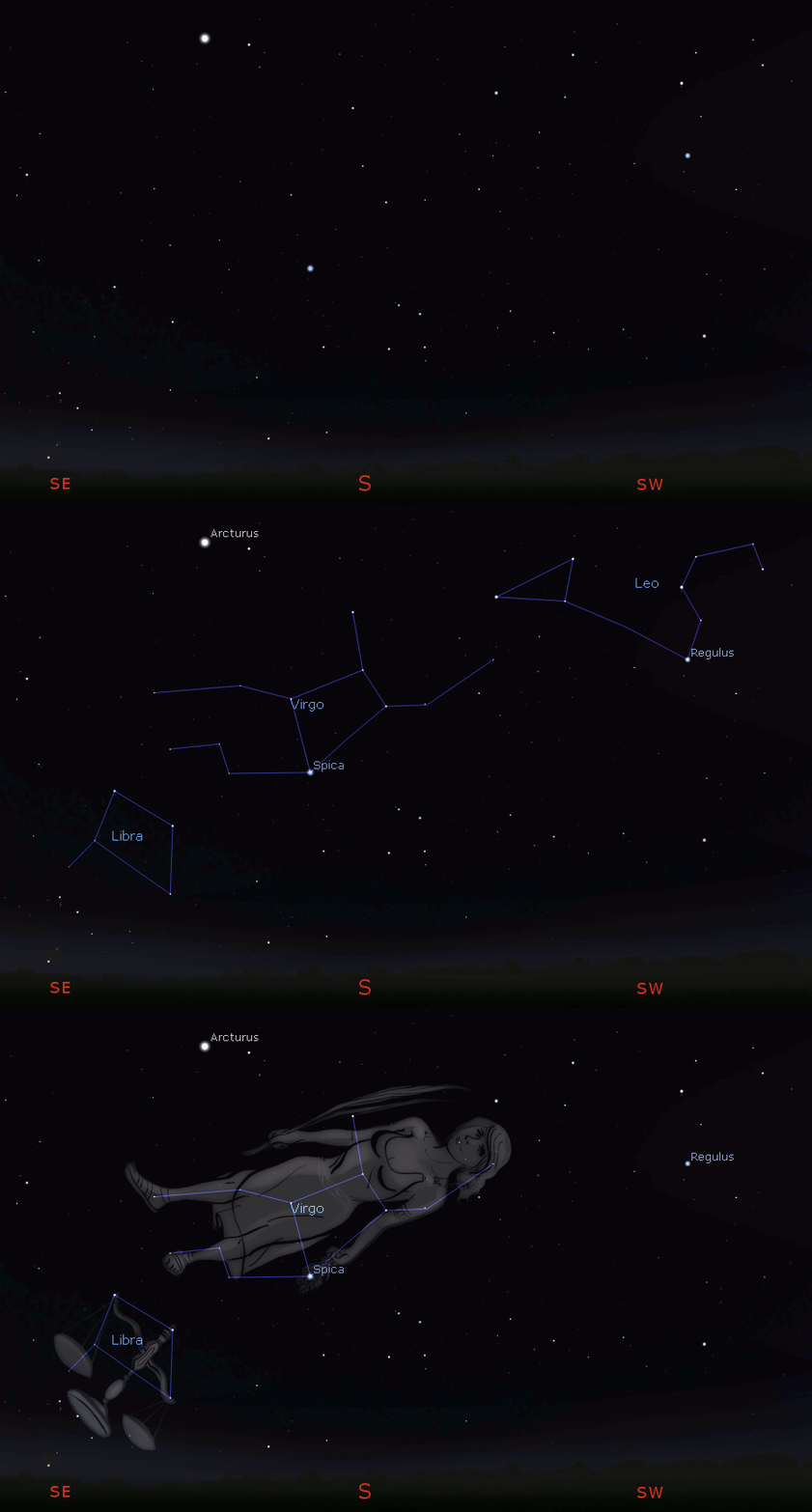
Virgo finder animation with Leo added as an aid for 11 p.m. tonight. Created using Stellarium and GIMP.
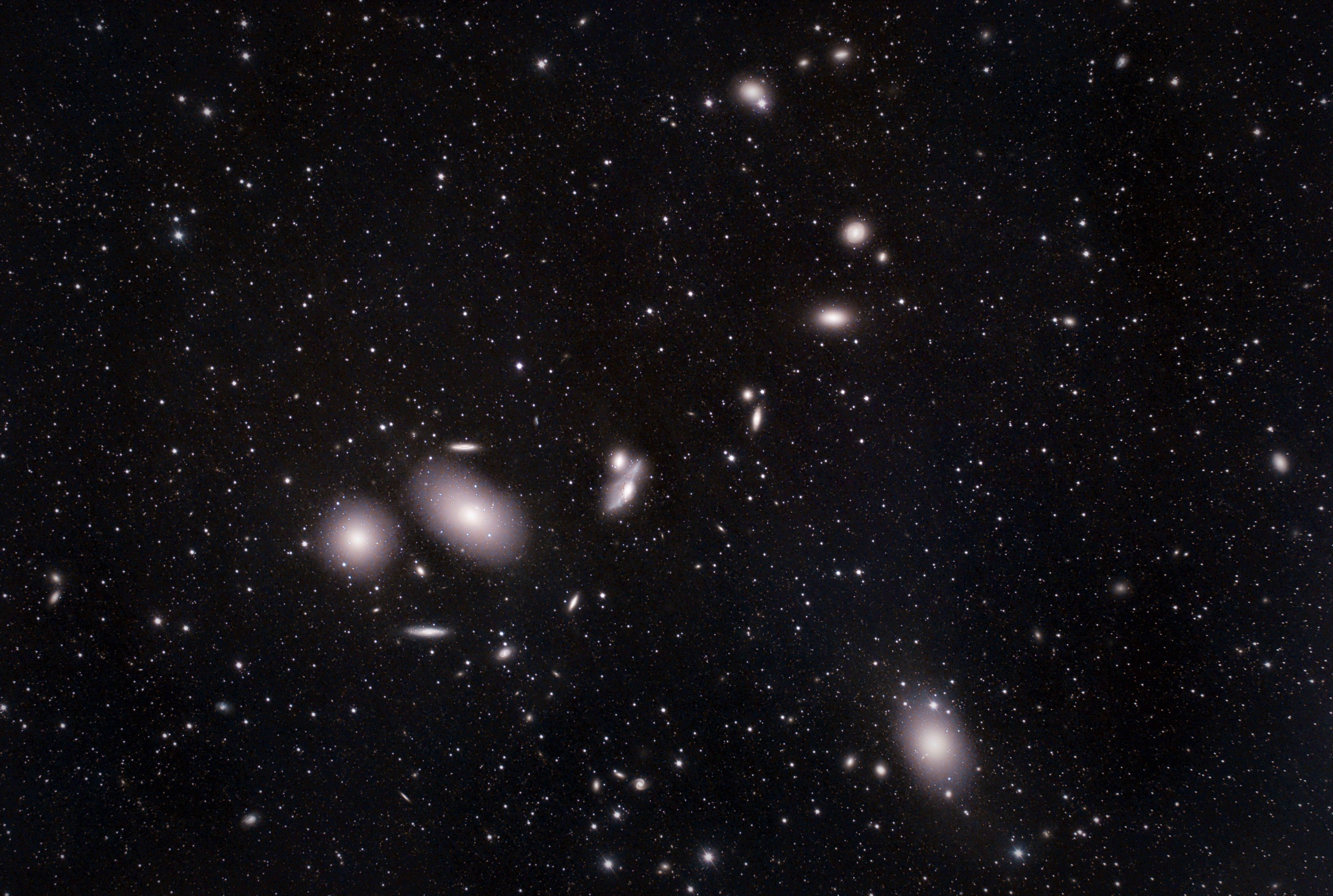
Markarian’s Chain, a small part of the Virgo Cluster of galaxies. Click or tap on the image to enlarge it. Credit: Daniel Dall’Olmo.
05/08/2023 – Ephemeris – How to find Leo the lion in the sky
This is Ephemeris for Monday, May 8th. Today the Sun will be up for 14 hours and 32 minutes, setting at 8:56, and it will rise tomorrow at 6:22. The Moon, 3 days past full, will rise at 12:57 tomorrow morning.
At 10 p.m. the spring constellation of Leo the lion will be high in the south. It can be found by locating the Big Dipper high overhead and imagining that a hole were drilled in the bottom of the bowl to let the water leak out. It would drip on the back of this giant cat. The Lion is standing or lying facing westward. His head and mane are seen in the stars as a backwards question mark. This group of stars is also called the sickle. The bright star Regulus is at the bottom, the dot at the bottom of the question mark. A triangle of stars, to the left of Regulus, is the lion’s haunches. Leo contains some nice galaxies visible in moderate sized telescopes. The stars in Leo’s part of the sky are fewer than those in the winter sky.
The astronomical event times given are for the Traverse City/Interlochen area of Michigan (EDT, UT –4 hours). They may be different for your location.
Addendum

Finding Leo the lion from the Big Dipper with no lines. The orientation is for 10 pm, May 8th. Can you find Leo? The Big Dipper? Created using Cartes du Ciel (Sky Charts).
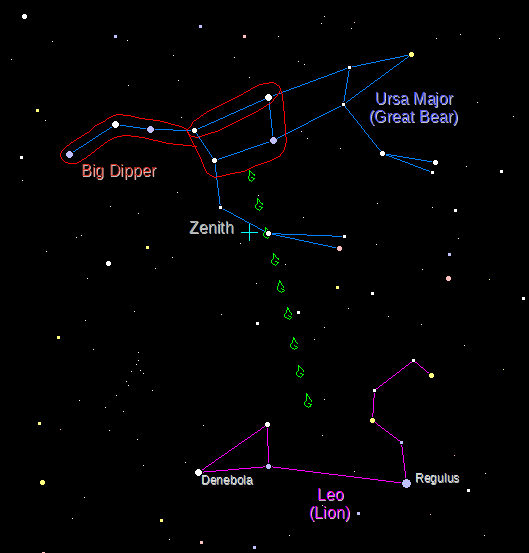
Using the Big Dipper to find Leo. The orientation is for 10 pm on May 8th. For any other time, the orientation would be different, as would the position of the zenith (overhead point). Created using my LookingUp app.
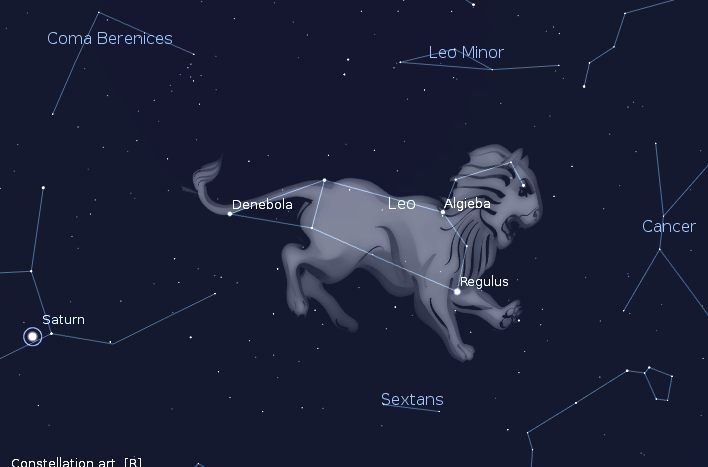
Leo, with drawing of a lion. Created using Stellarium.
Note the star at the left end of Leo is named Denebola. There are several stars that start with “Deneb”. Deneb must mean tail in Arabic because most star names are Arabic in origin. Denebola is the tail of the lion. Deneb Kaitos is the tail of the autumn constellation of Cetus the whale, and Deneb itself is the tail of the summer constellation of Cygnus the swan.
 Bob Moler's Ephemeris Blog