Archive
06/10/2014 – Ephemeris – Our Moon and Saturn’s largest moon Titan
Ephemeris for Tuesday, June 10th. Today the sun will be up for 15 hours and 29 minutes, setting at 9:26. The moon, 3 days before full, will set at 4:51 tomorrow morning. Tomorrow the sun will rise at 5:57.
Tonight the planet Saturn will be near the bright gibbous Moon. One might need a bit of help locating it in the Moon’s glare. Saturn is to the right and slightly above the Moon. Saturn has a few moons of its own. The count’s up to 62, with another apparently forming from one of Saturn’s rings as monitored by the Cassini spacecraft now in orbit of Saturn. Cassini, which has about three years left in its mission, entered orbit of Saturn 10 years ago next month after a 7 year journey to get there. One of the most intensively studied moons is Titan, whose haze foiled the earlier Voyager spacecraft, Cassini and it’s Huygens lander have shown us earthly terrain and methane seas. Titan is easily seen in small telescopes near Saturn.
Addendum
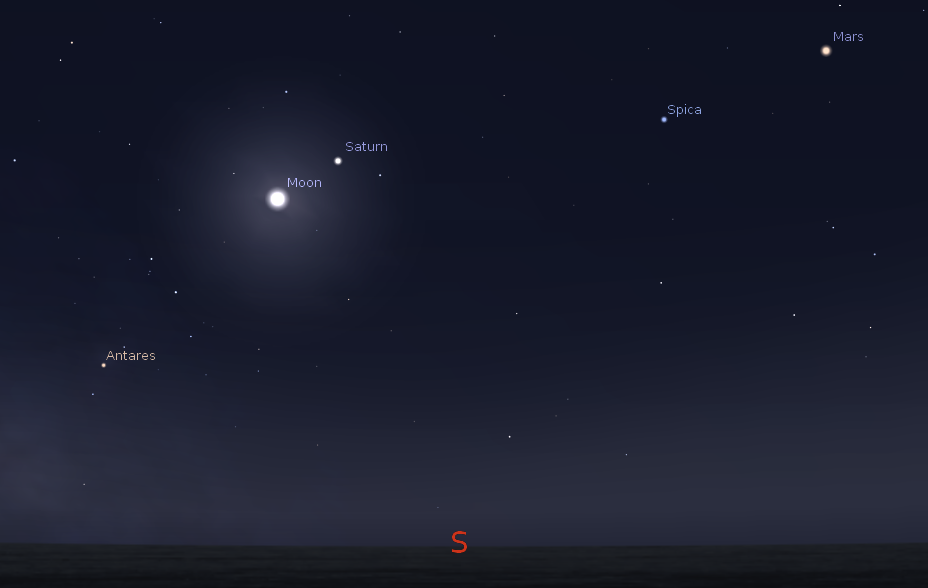
Saturn and the Moon tonight at 11 p.m., June 10, 2014. Created using Stellarium.
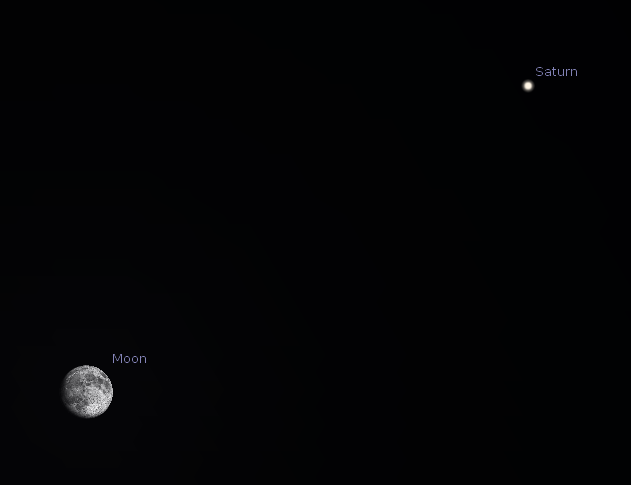
Just Saturn and the Moon showing the moon’s gibbous phase at 11 p.m. June 10, 2014. Created using Stellarium.
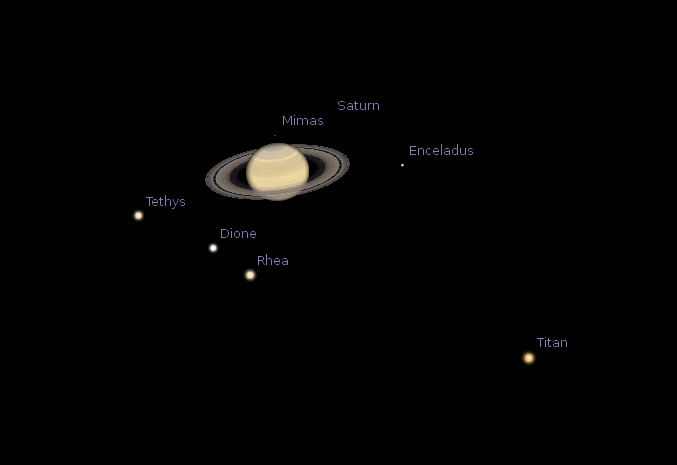
Saturn and its moons including Titan at 11 p.m. June 10, 2014. Created using Stellarium.
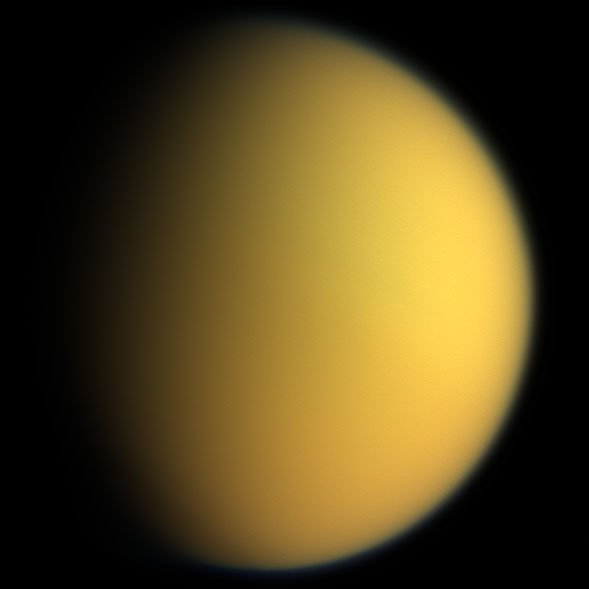
Titan, as Voyager would have seen it, but photographed by Cassini. Credit: NASA/JPL/Space Science Institute.
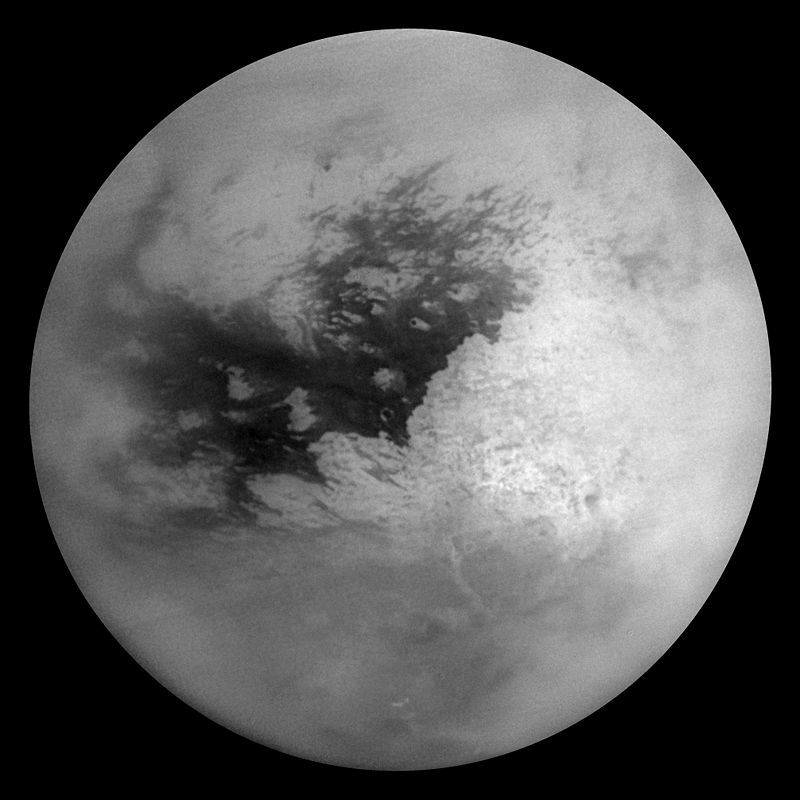
Titan as seen in the infrared by the Cassini spacecraft. Credit: NASA/JPL/Space Science Institute.
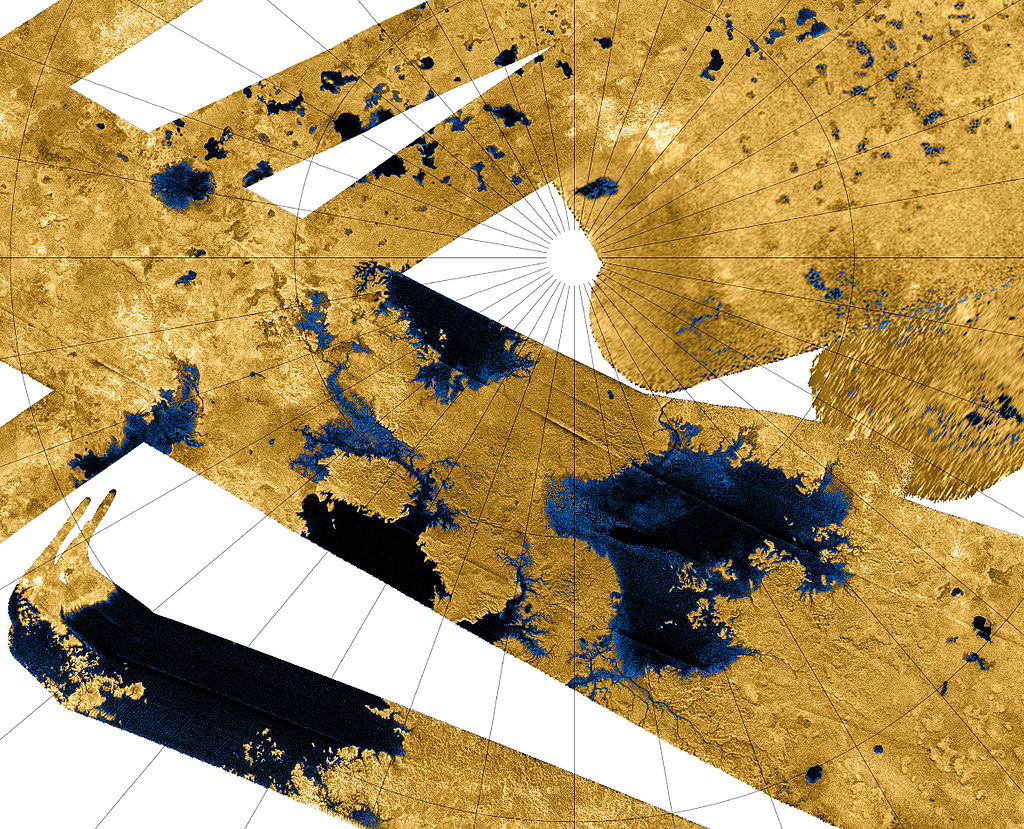
Seas and lakes at Titan’s north pole seen by radar from the Cassini spacecraft. Credit: NASA/JPL-Caltech/GSFC.

Image mosaic of Titan from the descending Huygens Lander. Credit: ESA/NASA/Univ. of Arizona.
06/04/2014 – Ephemeris – Last week for all 5 pre-telescopic planets to be visible for a while
Ephemeris for Wednesday, June 4th. Today the sun will be up for 15 hours and 23 minutes, setting at 9:22. The moon, 1 day before first quarter, will set at 1:39 tomorrow morning. Tomorrow the sun will rise at 5:58.
It’s Wednesday and once again time to locate the bright planets for this week. Mercury is showing up in the west shortly after sunset, It is getting dimmer (magnitude 1.6) as it is becoming a thin crescent. It will set at 10:47. Brilliant Jupiter will be in the western sky in Gemini as darkness falls tonight. It will set at 11:59 p.m. Reddish Mars is in Virgo in the south-southwest as darkness falls. It’s 76 million miles (122 million km) away now, and moving away, and will set at 3:14 a.m. Saturn will be low in the southeast as darkness falls. It’s in the faint constellation of Libra the scales this year. It will pass due south at 11:55 p.m. Brilliant Venus will rise in the east at 4:21 a.m. in morning twilight.
Times are for the Traverse City/Interlochen area of Michigan. They may be different for your location.
Addendum
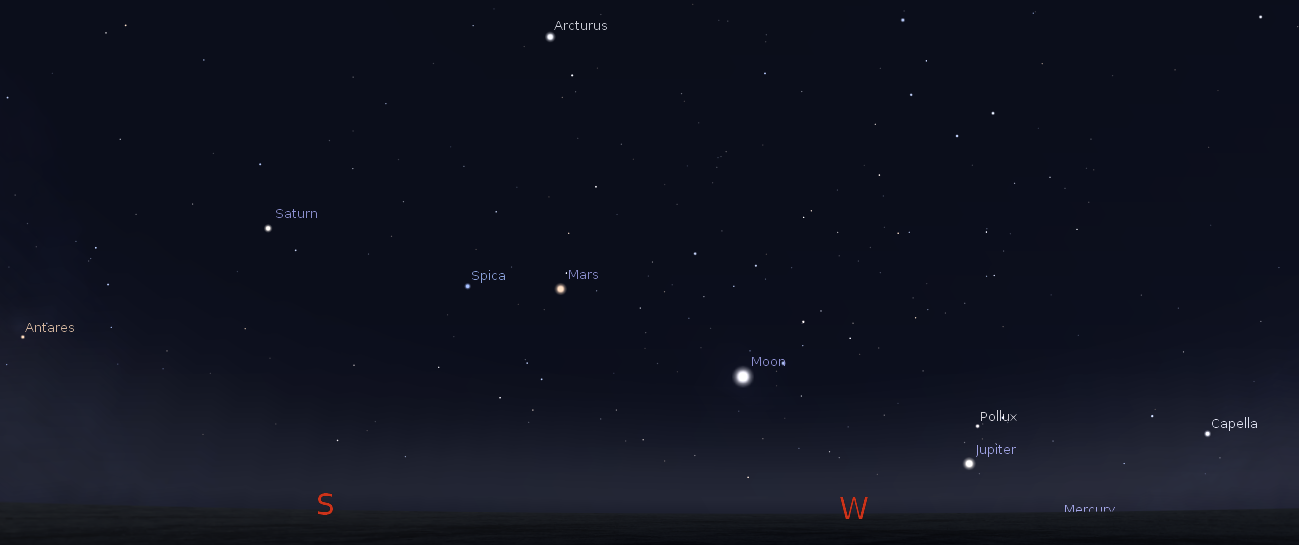
Jupiter, Mars, Saturn and the Moon seen at 11 p.m. June 4, 2014. Created using Stellarium.
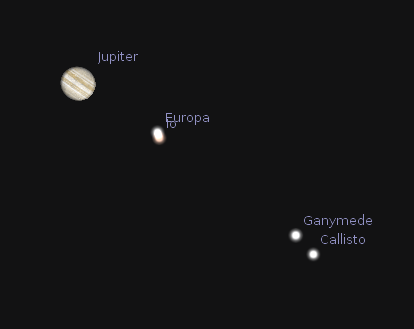
Jupiter and moons in a telescope at 11 p.m. June 4, 2014. Created using Stellarium.
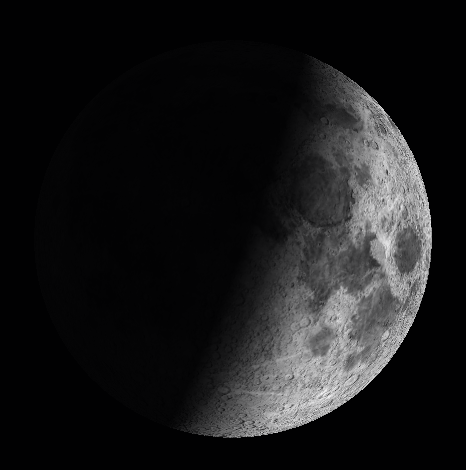
The Moon as it might appear in binoculars at 11 p.m. on June 4, 2014. Created using Stellarium.
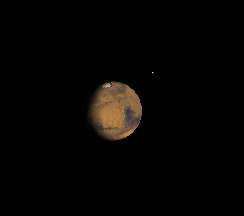
Mars, probably a bit better than it will appear in a small telescope at 11 p.m. June 4, 2014. Created using Stellarium.
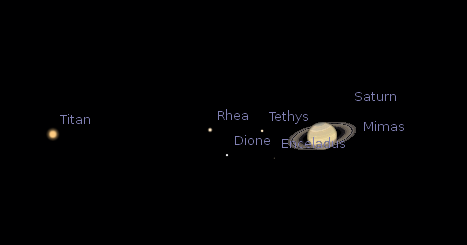
Saturn with some of its moons, not all of them will be visible in a small telescope, at 11 p.m. on June 4, 2014. Created using Stellarium.
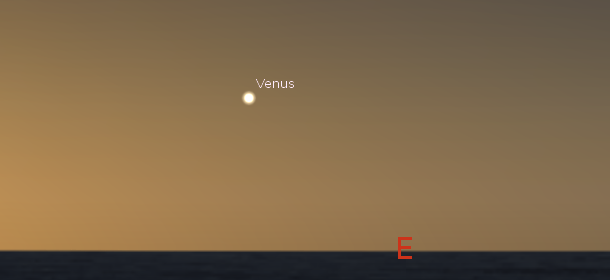
Venus in morning twilight in the east at 5:15, June 5, 2014. Created using Stellarium.
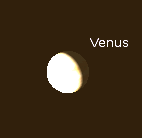
Venus showing its gibbous phase in a telescope at 5:15 a.m. on June 5, 2014. Created using Stellarium.
05/21/2014 – Ephemeris – All the classical naked eye planets are visible this week
Ephemeris for Wednesday, May 21st. Today the sun will be up for 15 hours and 1 minute, setting at 9:10. The moon, at last quarter today, will rise at 2:42 tomorrow morning. Tomorrow the sun will rise at 6:07.
It’s Wednesday and once again time to locate the bright planets for this week. Mercury is showing up in the west shortly after sunset, It will be at its farthest from the Sun on the 25th. It will set at 11:10. Brilliant Jupiter will be in the western sky in Gemini as darkness falls tonight. It will set at 12:44 a.m. Reddish Mars is in Virgo in the southeast as darkness falls. It will pass due south at 10:18 p.m. It’s 68 million miles (109 million km) away now, and moving away, and will set at 4:09 a.m. Saturn will be low in the southeast as darkness falls. It’s in the faint constellation of Libra the scales this year. It will pass due south at 12:54 a.m. Brilliant Venus will rise in the east at 4:37 a.m. in morning twilight.
Times are for the Traverse City/Interlochen area of Michigan. They may be different for your location.
Addendum
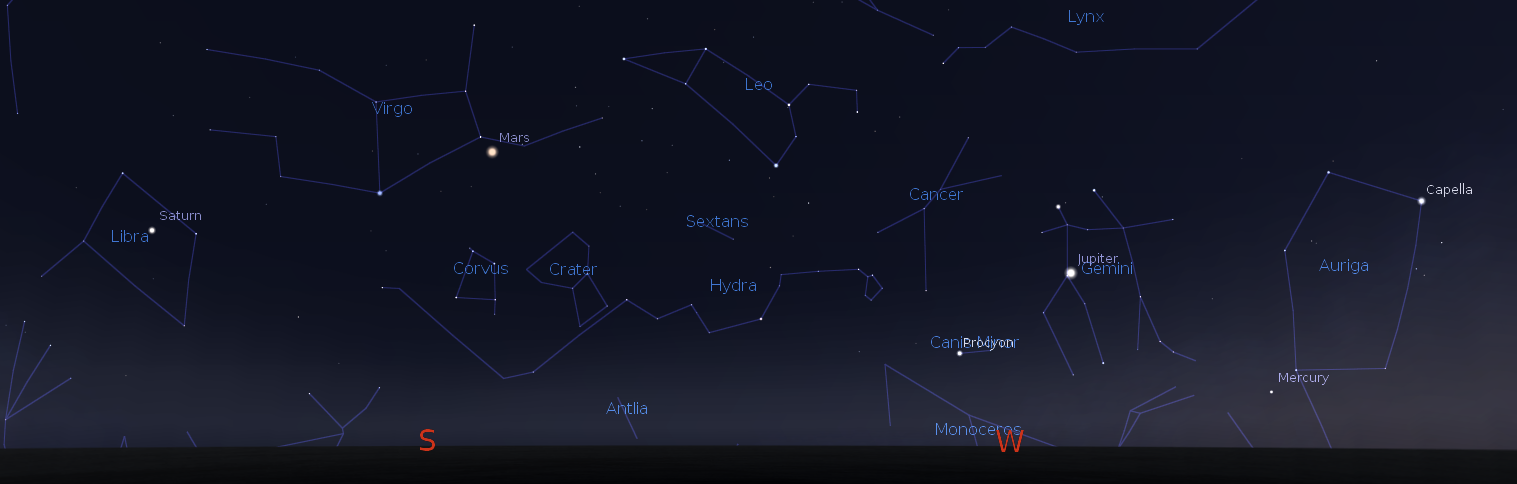
All the evening planets from Mercury to Saturn at 10:30 p.m. May 21, 2014. Created using Stellarium.
Telescopic images of the moon and planets are not to scale.
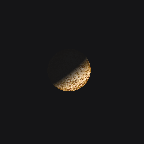
Mercury in a telescope 10:30 p.m. May 21, 2014. Created using Stellarium.
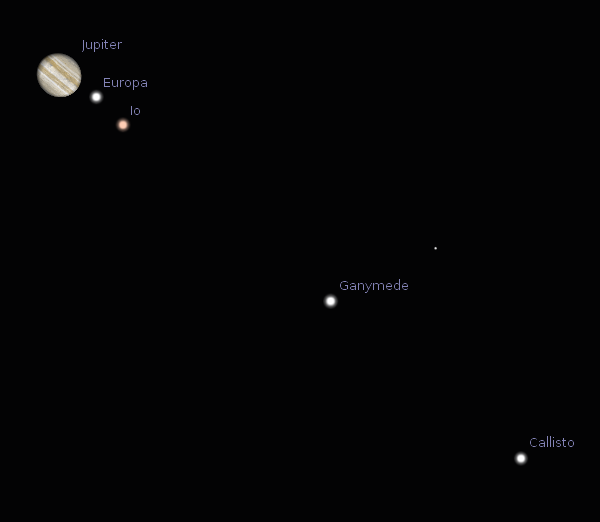
Jupiter and moons in a telescope 10:30 p.m. May 21, 2014. Created using Stellarium.
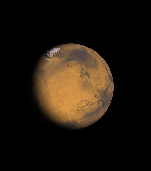
Mars in a telescope 10:30 p.m. May 21, 2014. Created using Stellarium.
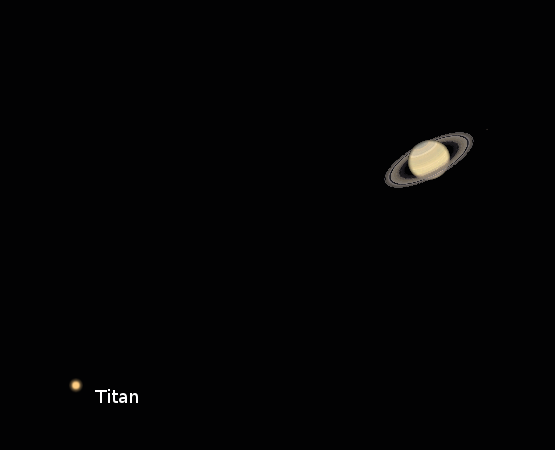
Saturn and its moon Titan in a telescope 10:30 p.m. May 21, 2014. Created using Stellarium.
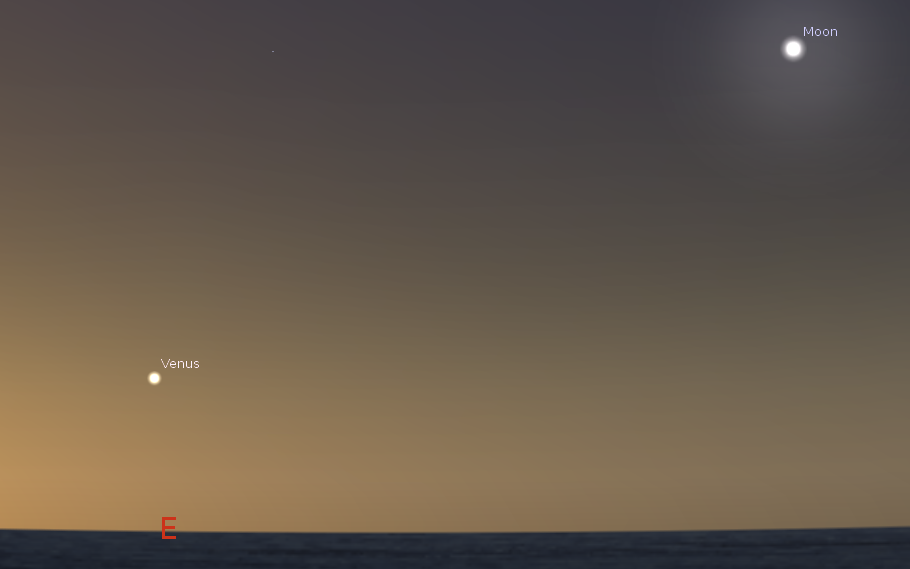
Venus and the Moon looking east at 5:30 a.m. May 22, 2014. Created using Stellarium.
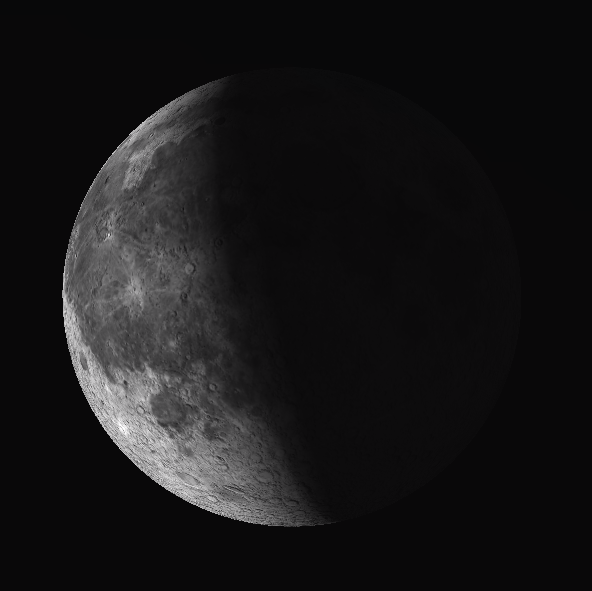
The Moon in a telescope at 5:30 a.m. May 22, 2014. Created using Stellarium.
Venus in a telescope at 5:30 a.m. May 22, 2014. Created using Stellarium.
05/06/2014 – Ephemeris – A square crater on the moon
Ephemeris for Tuesday, May 6th. The sun rises at 6:25. It’ll be up for 14 hours and 27 minutes, setting at 8:53. The moon, at first quarter today, will set at 2:40 tomorrow morning.
Tonight’s moon reveals some great features. Back in my early astronomy days, one of the odd thing I saw on the moon with my telescope at about this phase, was what appeared as a square crater on the moon. Craters are supposed to be round. This one was near the north pole of the moon. It can be seen with a small telescope. It was given the name Barrow. I’ve since confirmed that it is indeed quite square, with a small crater, Barrow A sitting on one corner. The Lunar Reconnaissance Orbiter shows this in great detail. Also on the north end of the moon tonight is the Alpine Valley, which looks like a gash crossing the Lunar Alps. Lunar mountain ranges tend to be named for earthly mountains, but are really crater walls.
Times are for the Traverse City/Interlochen area of Michigan. They may be different for your location.
Addendum
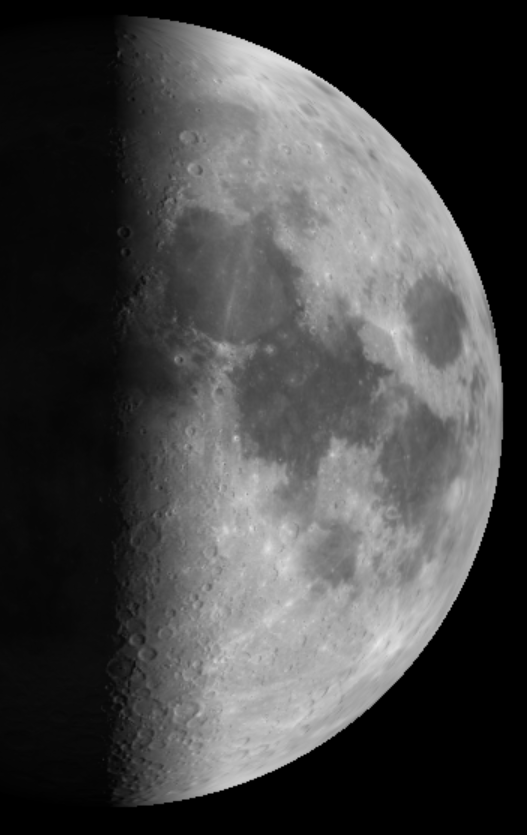
First quarter Moon at 10 p.m. May 6, 2014. Created using Virtual Moon Atlas.
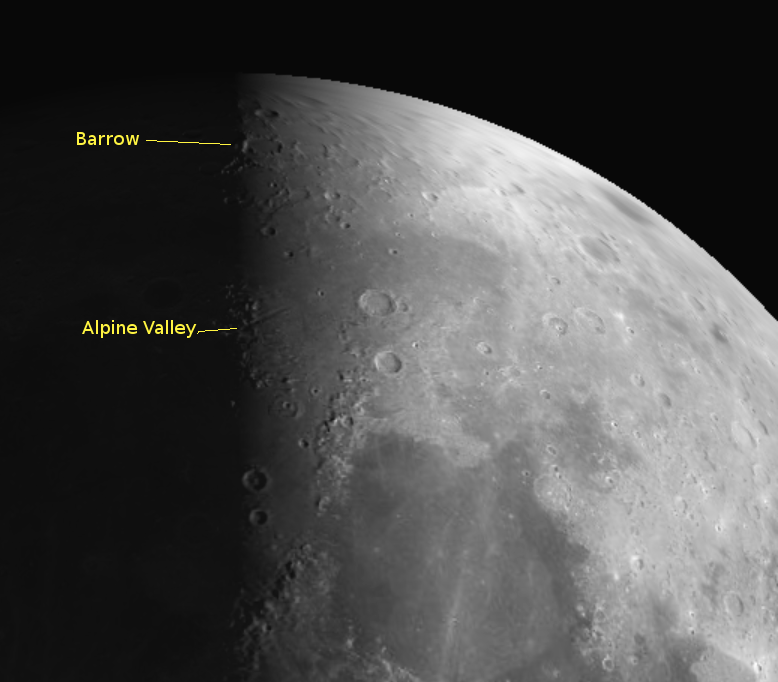
The square crater Barrow and the Alpine Valley as it would be seen in a telescope on May 6, 2014 at 10 p.m. Created using Virtual Moon Atlas.
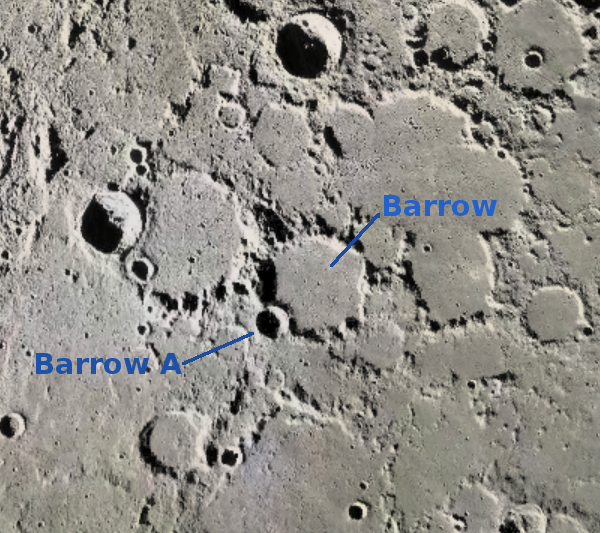
The Barrow crater as imaged by the Lunar Reconnaissance Orbiter. Credit NASA/GSFC/Arizona State University, Virtual Moon Atlas.
Actually Barrow almost looks pentagonal in the above image.
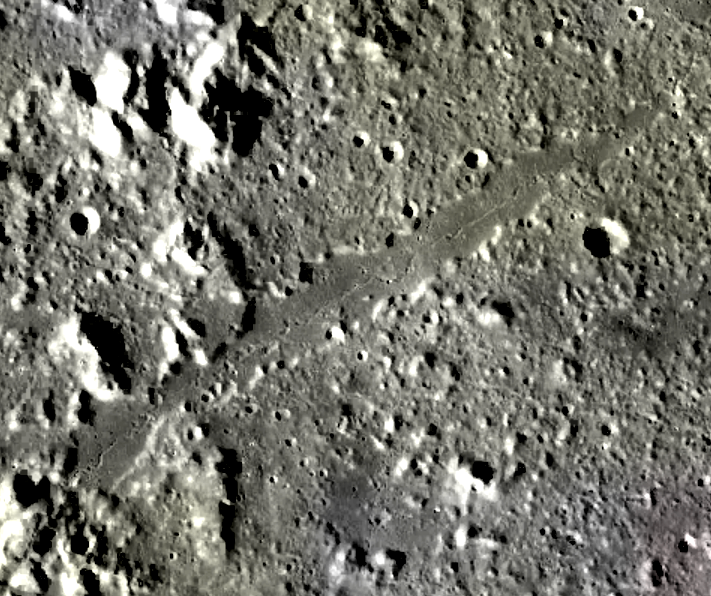
The Alpine Valley as imaged by the Lunar Reconnaissance Orbiter. Credit NASA/GSFC/Arizona State University, Virtual Moon Atlas.
04/24/2014 – Ephemeris – Venus and the Moon in the morning
Ephemeris for Thursday, April 24th. The sun rises at 6:43. It’ll be up for 13 hours and 55 minutes, setting at 8:38. The moon, 2 days past last quarter, will rise at 4:39 tomorrow morning.
The planet Venus will be hanging with the moon for the next two mornings. Tomorrow morning the crescent Moon will appear to the right and above Venus. The planet will rise at 5:13, though it should be high enough to spot by 5:30 or 5:45 a.m. in the east. Saturday morning the crescent moon will be to the left of Venus. The moon will be passing Venus about 5 p.m. tomorrow afternoon. Parts of Asia will get a good look at that. We’ll get before and after shots of it. Viewing the moon and planets near the sun is easy or hard depending on the season. For the best views its generally late winter and spring evenings and late summer and autumn mornings. It’s the wrong time of year for easy Venus viewing.
Times are for the Traverse City/Interlochen area of Michigan. They may be different for your location.
Addendum
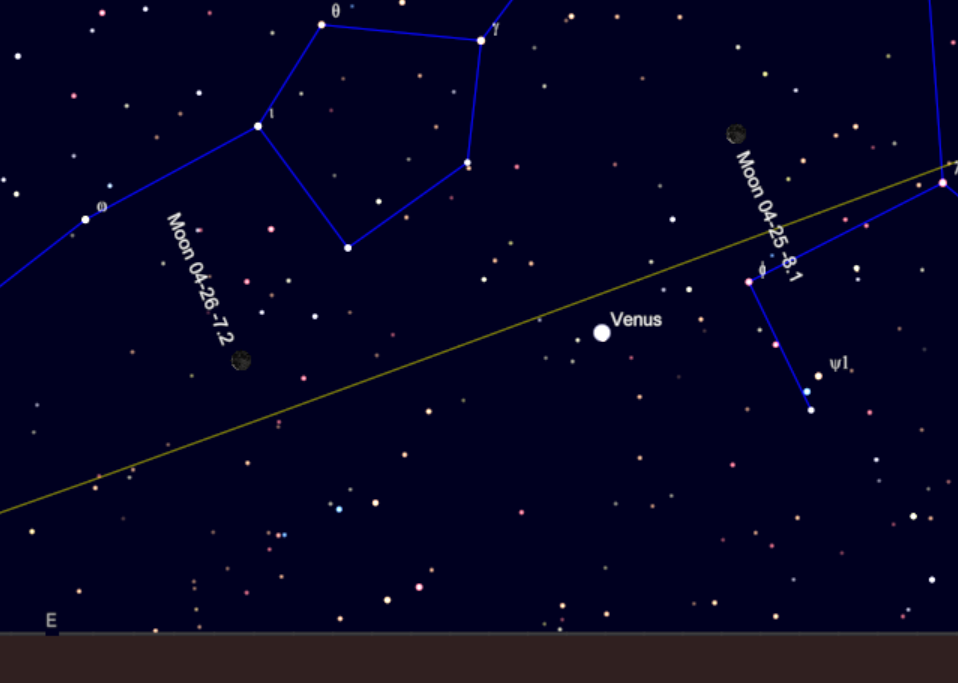
Venus and the Moon on two consecutive mornings 04/25/14 and 04/26/14 at 6 a.m. The yellow line is the ecliptic which is the path of the Sun in the sky. Created using Cartes du Ciel (Sky Charts).
04/07/2014 – Ephemeris – Why does the Moon have all those craters?
Ephemeris for Monday, April 7th. The sun will rise at 7:12. It’ll be up for 13 hours and 4 minutes, setting at 8:17. The Moon, at first quarter today, will set at 3:37 tomorrow morning.
Today the Moon is at first quarter. That moment in time actually occurred a couple of hours ago, so by tonight the Moon’s terminator, the sunrise line on the Moon will be slightly bowed to be a slight gibbous phase. With binoculars or small telescope it’s a fine time to spot craters and mountains near that terminator where the shadows are longest. On the Earth mountains are thrown up by the collision of tectonic plates or volcanoes. There are no tectonic plates as such on the Moon. Mountains that we recognize are the walls of the seas, which are really vast craters caused for the most part by collisions with small asteroids. The reason the Earth doesn’t carry those scars is that the Earth erodes and recycles its surface.
Times are for the Traverse City/Interlochen area of Michigan. They may be different for your location.
Addendum
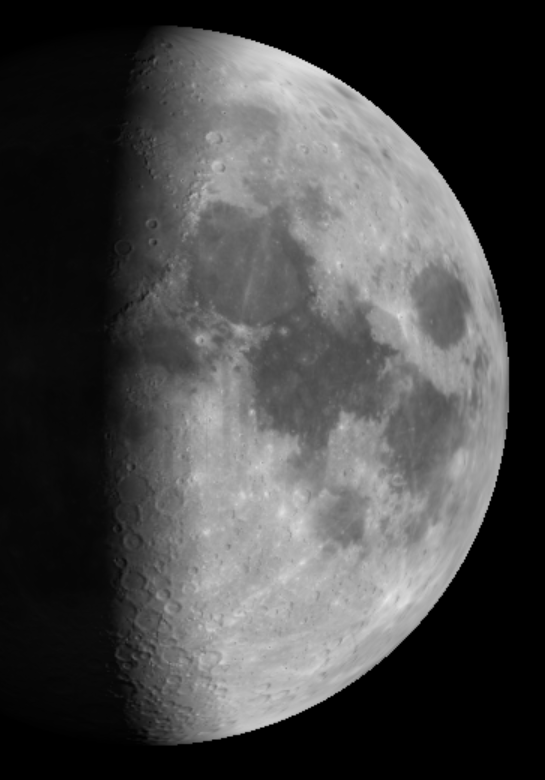
The Moon tonight (10 p.m. April 7, 2014). Created using Virtual Moon Atlas.
Tax Day Eclipse – April 15, 2014
From the April 2014 Stellar Sentinel, the newsletter of the Grand Traverse Astronomical Society
If you stay up April 14th or get up early on April 15th to watch the total lunar eclipse that morning, make sure your taxes are done, because you might not be good for much of anything during the day on the 15th.
That being said, let’s take a look at the what and where of the eclipse. Lunar eclipses only occur at full moon. The Sun, Earth and Moon have to line up so the the Earth casts its shadow on the Moon. This occurs in about one in six full moons. Below is the Moon and the earth’s shadow at the March full moon.
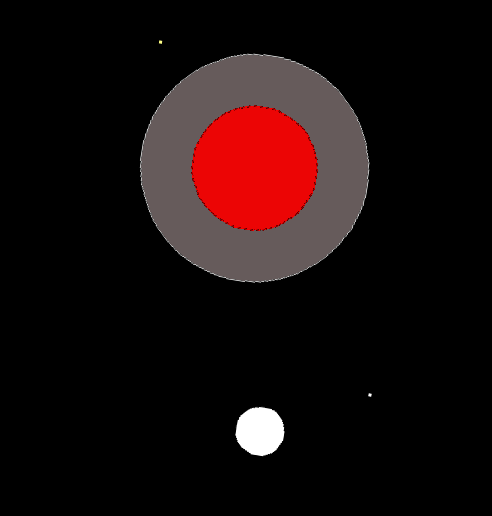
On March 16, 2014 the full Moon missed the Earth’s shadow, so no eclipse was seen. Created using Cartes duCiel.
In the illustration above the “bulls-eye” is the Earth’s shadow as it would appear at the Moon’s distance. The outer gray circle represents the Earth’s penumbra, where the sun’s light is increasingly blocked by the earth. The umbra (in red for emailed PDF versions of this newsletter) is the Earth’s inner shadow where no direct sunlight enters. When the Moon enters the umbra the partial phase of the eclipse begins. When the Moon is entirely within the umbra the Moon will be totally eclipsed. The Moon back on March 16th missed the earth’s shadow by passing several degrees south of it. When the moon is in the umbra it is still dimly lit indirectly to some degree by the combined rays of the sun that are refracted through Earth’s from all the accumulated sunrises and sunsets occurring around the Earth at that time. Back in 1967 the robotic lunar soft lander Surveyor 3 was able to take some images of the earth during a lunar eclipse. For Surveyor this was a solar eclipse and illustrated the light being refracted around the earth.
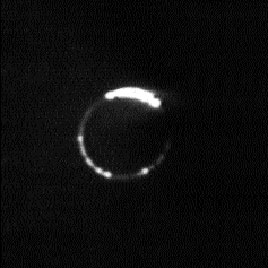
Solar eclipse by the Earth as viewed by Surveyor 3, April 24, 1967. Credit: NASA
The current Chinese Chang’e 3, should it survive one more lunar night, has a chance to take a better quality photograph of the eclipsed Sun this April 15th if its camera can tilt far up enough.
The light that illuminates the Moon in the Earth’s umbra is generally red in color, though the edge of the umbra generally has a gray cast to it. The light level is so low in the umbra, that, to the naked eye, it appears that the Moon is indeed being eaten by something invisible as the ingress partial phase progresses. About three quarters the way in the color of the umbra can be perceived even to the naked eye.
There are exceptions. Two notable lunar eclipse of this person’s memory occurred in 1982. On July 6, 1982 the early morning eclipse when the Moon passed centrally through the umbra the Moon was unevenly lit. The top or northern half was much darker than the southern half. In late March and early April that year the El Chichón volcano erupted in southern Mexico sending 20 million metric tons of ash high into the stratosphere. Apparently it masked the light from the northern hemisphere making it into the earth’s shadow. That year’s December 30th lunar eclipse was exceptionally dark. In fact during totality one had to hunt to find the Moon at all with the naked eye.
The events of the April 15th eclipse
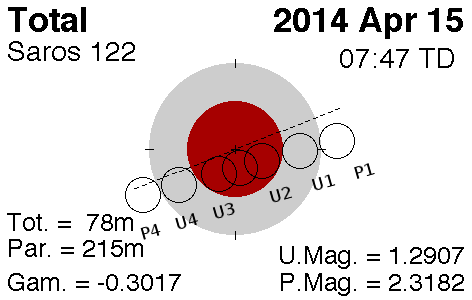
The Moon travels through the Earth’s shadow from right to left. What are seen are points of contact with the shadow and mid-eclipse. From Five Millennium Canon of Lunar Eclipses (Espenak & Meeus) NASA.
Contact times are labeled P1, U1, U2, U3, U4, and P4. P2 and P3 are omitted because they are synonymous with U2 and U3 respectively:
P1 – 12:53:37 a.m. Enter the penumbra (unseen). By about 1:30 the duskiness on the left edge of the Moon will start to be pronounced.
U1 – 1:58:19 a.m. Enter the umbra (partial eclipse begins).
U2 – 3:06:47 a.m. Totality begins.
Mid eclipse 3:49:40 a.m.
U3 – 4:24:35 a.m. Totality ends, egress partial phase begins.
U4 – 5:33:04 a.m. Partial phase ends. The Moon’s upper right edge should appear dusky for the next half hour or so.
P4 – 6:37:37 a.m. Penumbral phase ends (unseen).
Note: The duskiness of the penumbral phase of the eclipse can be enhanced by viewing through sunglasses.
Weather permitting there will be two Grand Traverse Astronomical Society venues to view this eclipse. The first will be the NMC Rogers Observatory. The second will be at the Sleeping Bear Dunes National Lakeshore in the Dune Climb parking lot on M109. Both start at 1:30 a.m. if it’s clear.
Note: All times are Eastern Daylight Time. For locations other than Northwestern Lower Michigan, check with your local astronomy club. However this is a perfect event to be viewed from one’s back yard. No optical aid is required.
Correction: The U2 timing was incorrectly stated in the original post.
04/02/2014 – Ephemeris – When it’s Wednesday it’s Planet Time!
Ephemeris for Wednesday, April 2nd. The sun will rise at 7:21. It’ll be up for 12 hours and 49 minutes, setting at 8:11. The Moon, 3 days past new, will set at 11:41 this evening.
Wednesday is Bright Planets Day here on Ephemeris. Jupiter will be in the south-southwestern sky as darkness falls tonight. It’s cruising against the stars of Gemini now, and moving slowly eastward after spending a couple of months backtracking to the west. It will set at 3:31 a.m. in the west-northwest. Reddish Mars is in Virgo now above and a bit left of the bright star Spica in the late evening, which it now outshines. Mars will rise at 8:39 p.m. It will pass due south at 2:18 a.m. It’s 58.6 million miles away now. Mars is 6 days from opposition and 12 days from closest approach this go round. Saturn will rise at 11:23 p.m. in the east-southeast and pass due south at 4:20 a.m.. It’s seen against the stars of Libra the scales this year. Venus will rise at 5:37 tomorrow morning and be seen in the southeast.
Times are for the Traverse City/Interlochen area of Michigan. They may be different for your location.
Addendum
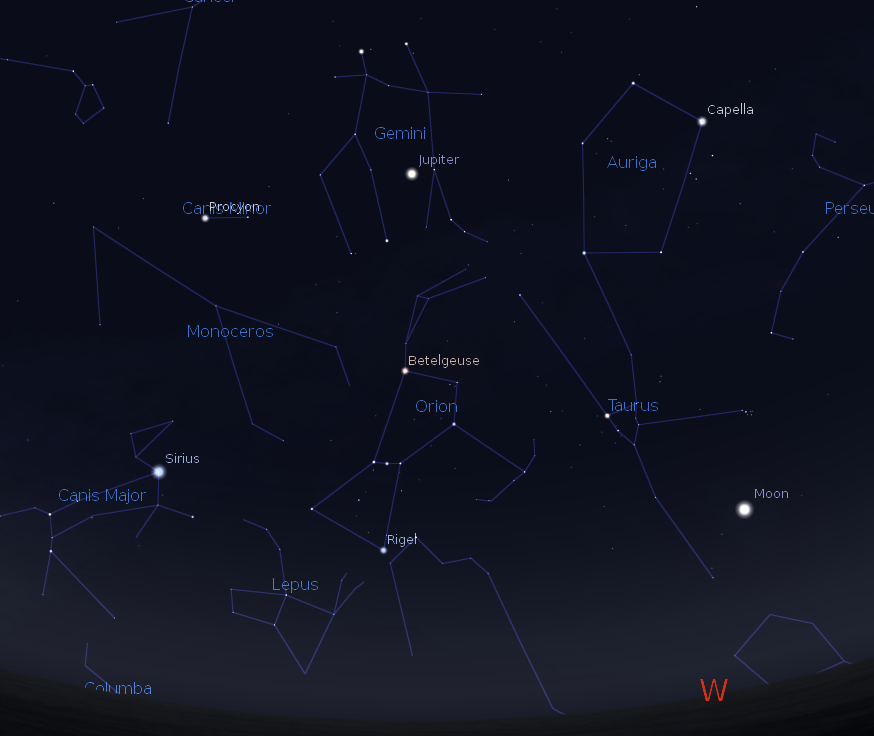
Jupiter, the Moon and the winter constellations at 10 p.m. on April 2, 2014. Created using Stellarium.
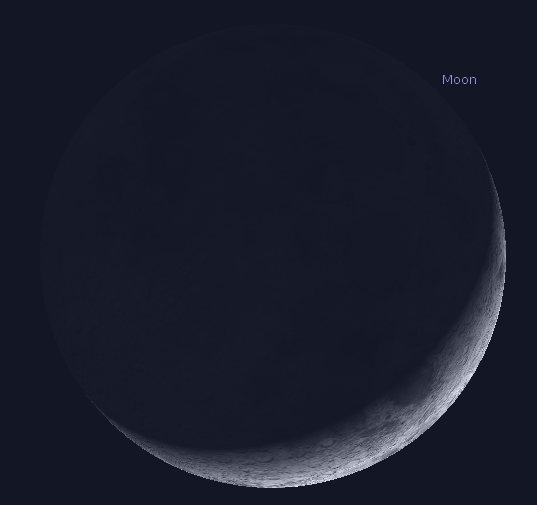
The Moon through a small telescope at 10 p.m. on April 2, 2014. Created using Stellarium.
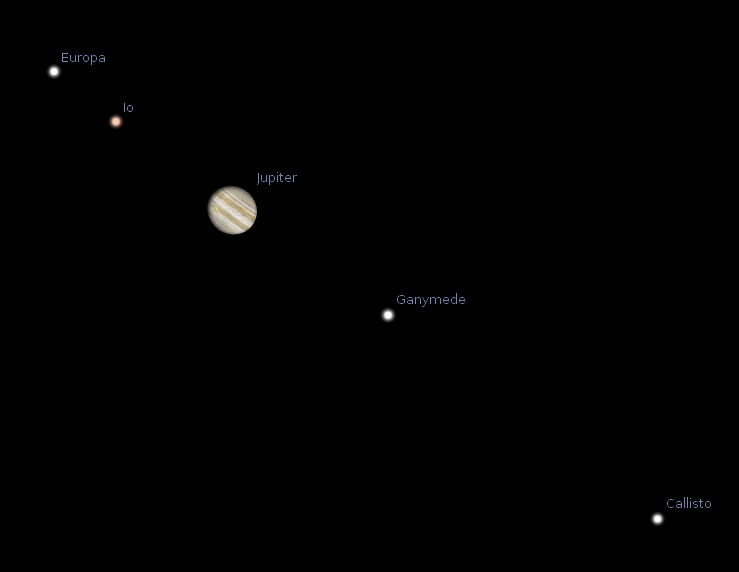
Jupiter and moons through a small telescope at 10 p.m. on April 2, 2014. Created using Stellarium.
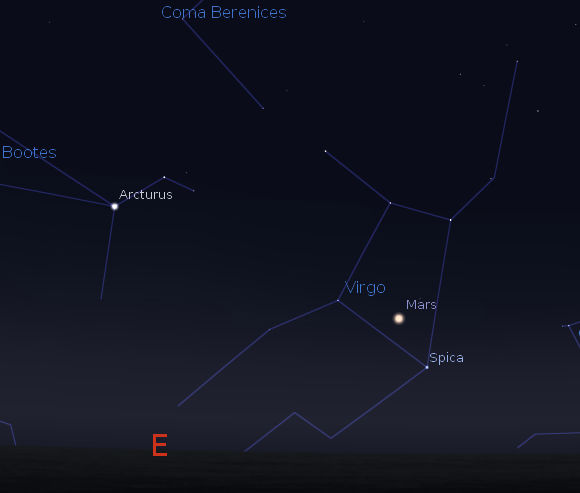
Mars rising at 10 p.m. on April 2, 2014. Created using Stellarium.
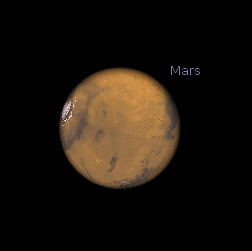
Mars through a telescope at 11 p.m. on April 2, 2014. Created using Stellarium.
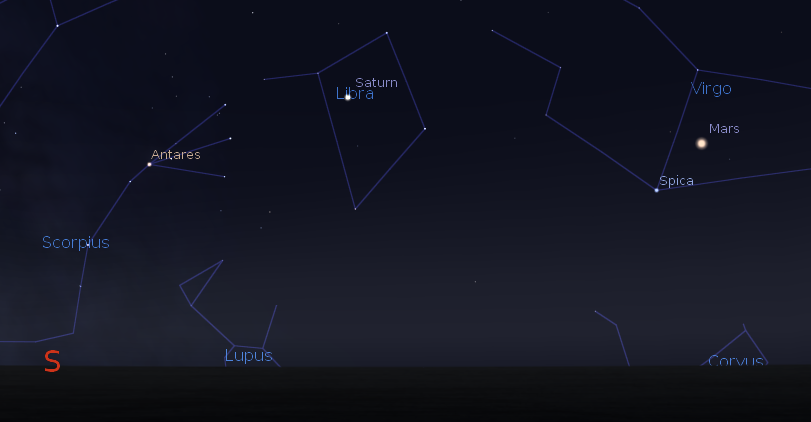
Mars and Saturn with some spring and summer constellations at 6 a.m. on April 3, 2014. Created using Stellarium.
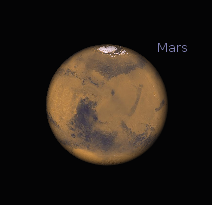
Mars through a telescope at 6 a.m. on April 3, 2014. Created using Stellarium.
In the morning Mars currently turns a more interesting face to us than in the evening. The big dark area on the lower left of Mars is Syrtis Major, which translates to the “Great Swamp”. I prefer the Latin. It is the most recognizable dark features on the planet. Where it appears on the face of Mars depends on the optical arrangement and eyepiece placement in your telescope.
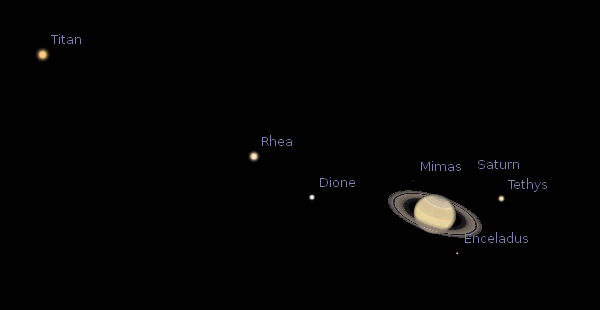
Saturn through a telescope at 6 a.m. on April 3, 2014. Created using Stellarium.
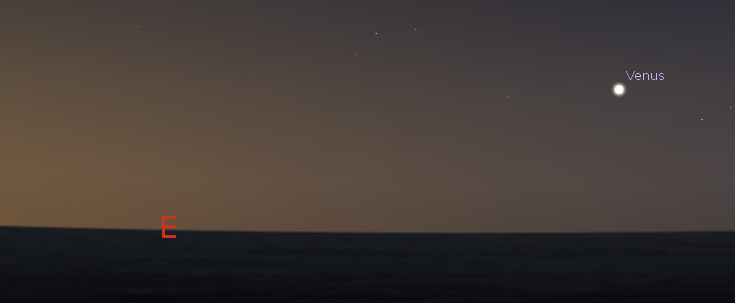
Venus in twilight at 6:30 a.m. on April 3, 2014. Created using Stellarium.
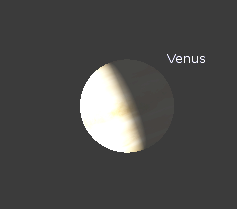
Venus through a telescope at 6:30 a.m. on April 3, 2014. Created using Stellarium.
03/26/2014 – Ephemeris – It’s Wednesday, do you know where the bright planets are?
Ephemeris for Wednesday, March 26th. The sun will rise at 7:34. It’ll be up for 12 hours and 28 minutes, setting at 8:02. The moon, 3 days past last quarter, will rise at 5:31 tomorrow morning.
Wednesday is Bright Planets Day here on Ephemeris. Jupiter will be in the southern sky as darkness falls tonight. It’s cruising against the stars of Gemini now, and moving east after spending a couple of months backtracking to the west. It will set at 3:56 a.m. in the west-northwest. Reddish Mars is in Virgo now and left and a bit above bright star Spica in the late evening, which it now outshines. Mars will rise at 9:19 p.m. It will pass due south at 2:54 a.m. It’s 61 million miles away now. Saturn will rise at 11:53 p.m. in the east-southeast. It’s seen against the stars of Libra the scales this year. Venus will rise at 5:43 tomorrow morning. The crescent moon will appear above left of Venus then.
Times are for the Traverse City/Interlochen area of Michigan. They may be different for your location.
Addendum
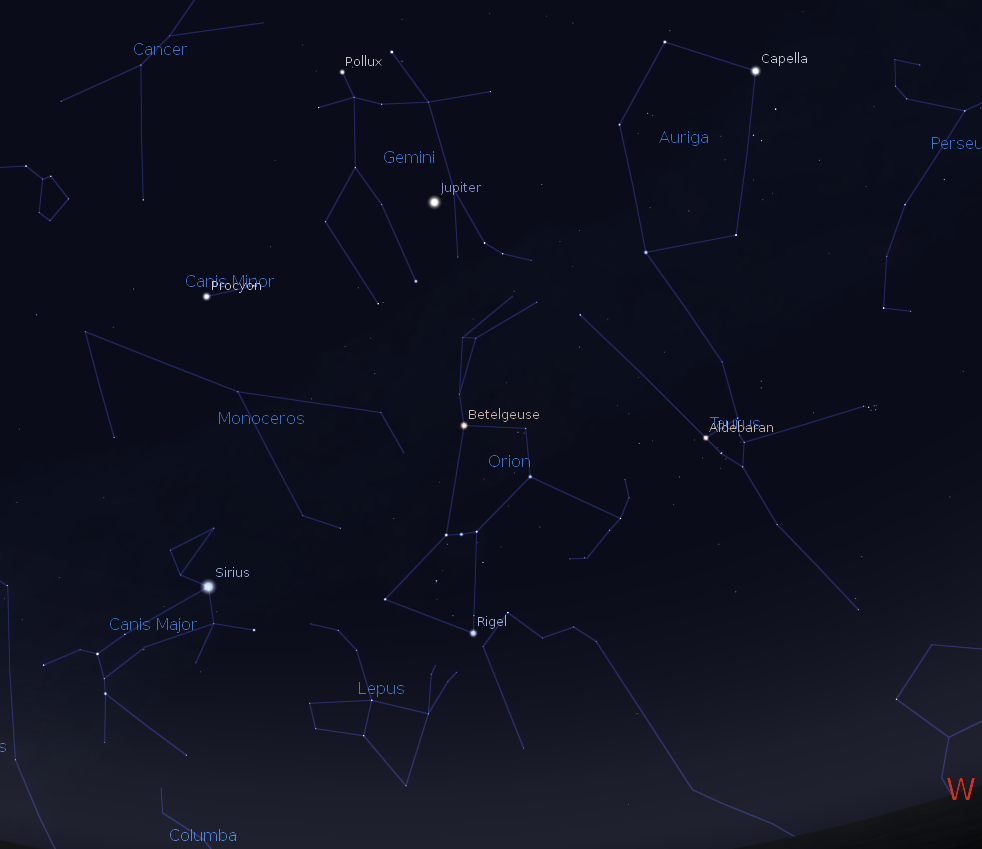
Jupiter and the winter constellations at 10 p.m. on March 26, 2014. Created using Stellarium.
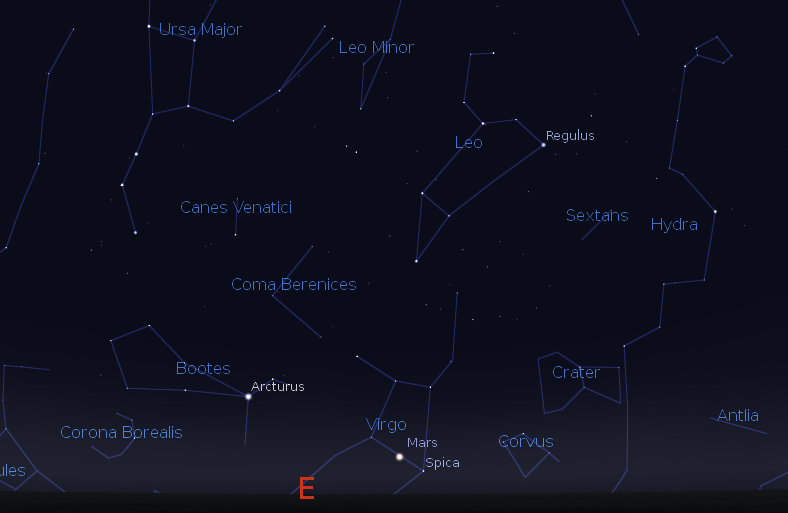
Mars and the spring constellations at 10 p.m. on March 26, 2014. Created using Stellarium.
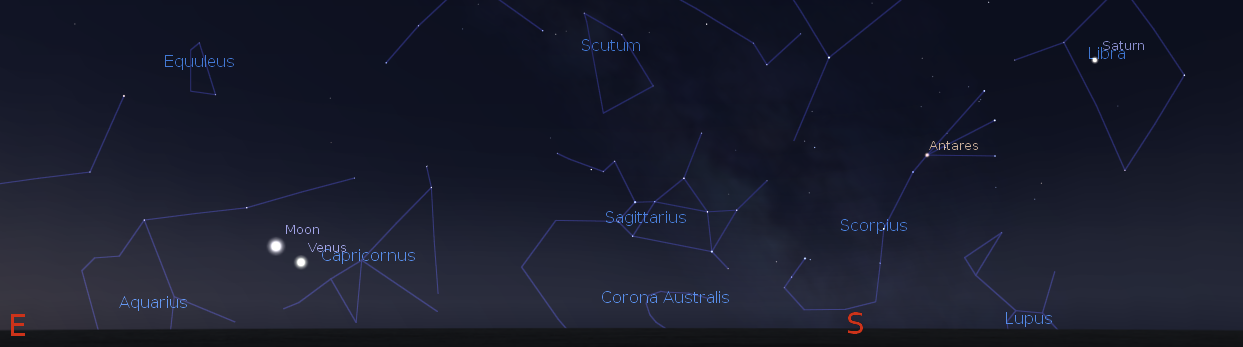
Saturn, Venus and the Moon with the constellations of summer at 6:30 a.m. on March 27, 2014. I’ve added Venus’ orbit and the ecliptic. Created using Stellarium.
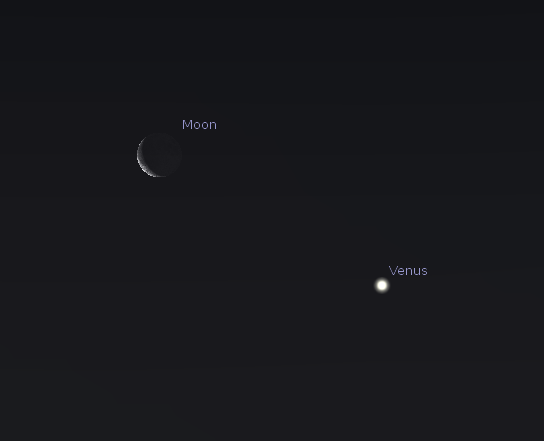
Venus and the crescent Moon at 6:30 a.m. March 27, 2014. Created using Stellarium.
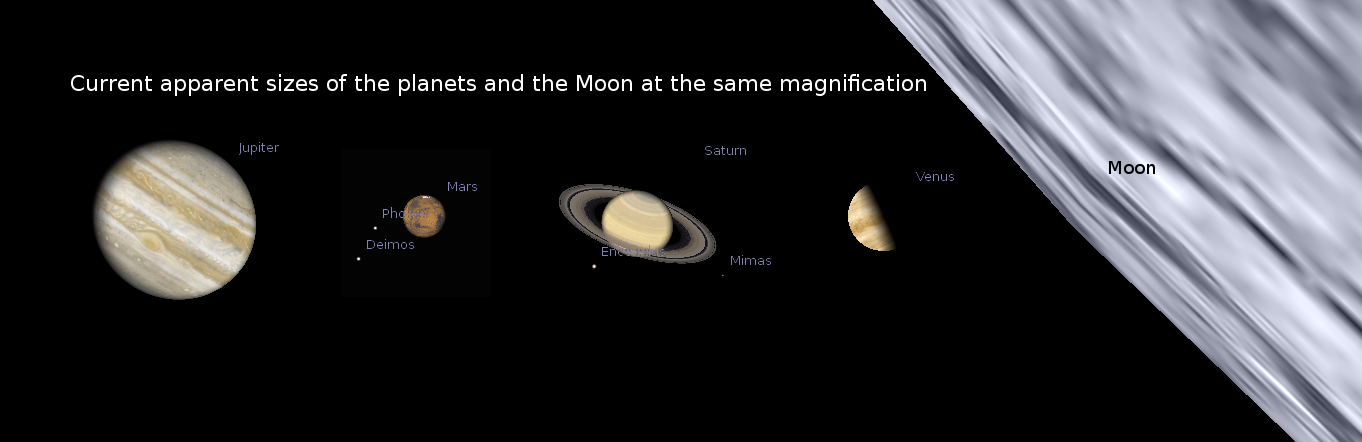
Relative sizes of the planets as seen in a telescope using the same magnification. Created using Stellarium.
03/10/2014 – Ephemeris – Observing the Moon tonight and the crater Copernicus
Ephemeris for Monday, March 10th. The sun will rise at 8:03. It’ll be up for 11 hours and 38 minutes, setting at 7:42. The moon, 3 days past first quarter, will set at 5:04 tomorrow morning.
The moon has certainly changed appearance since I last talked about it last Thursday. It’s gone from a fat crescent to its gibbous phase. Gibbous by the way means hump-backed. Near the sunrise terminator can be seen the great crater Copernicus on the left side of the moon. This crater is 56 miles in diameter and the crater floor is two miles below the top of the crater rim. It has a three central peaks and the interior of the crater walls have slumped causing terracing. All these are easily seen with a small telescope. The crater has been dated to less than a billion years old, and it has a spray of ejecta around it that is roughly circular and can best be seen at full moon when the crater is washed out due to lack of shadows.
Times are for the Traverse City/Interlochen area of Michigan. They may be different for your location.
Addendum
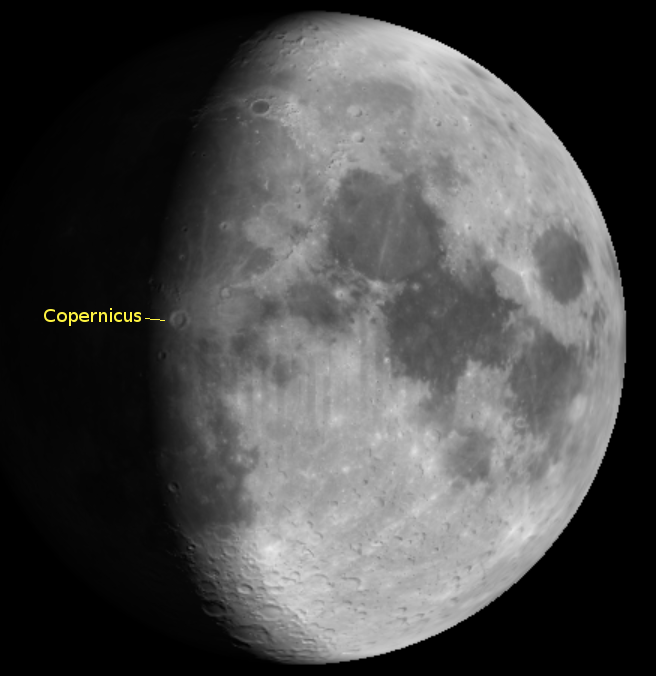
The Moon at 10 p.m. on March 10,2014 pointing out the crater Copernicus. Created using Virtual Moon Atlas.
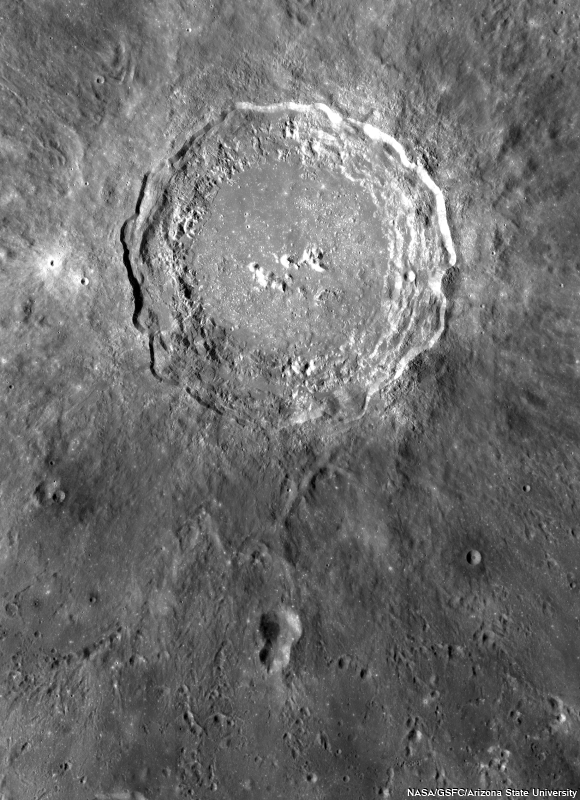
Copernicus from the Lunar Reconnaissance Orbiter. Credit: NASA/GSFC/Arizona State University
 Bob Moler's Ephemeris Blog