Archive
Ephemeris: 11/13/2023 – Betelgeuse is acting weird again
This is Ephemeris for Monday, November 13th. Today the Sun will be up for 9 hours and 40 minutes, setting at 5:16, and it will rise tomorrow at 7:38. The Moon is new today, and won’t be visible.
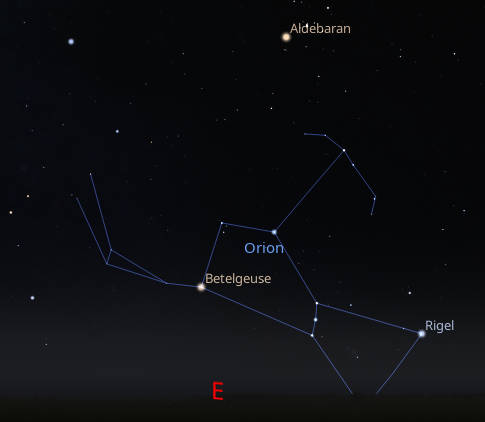
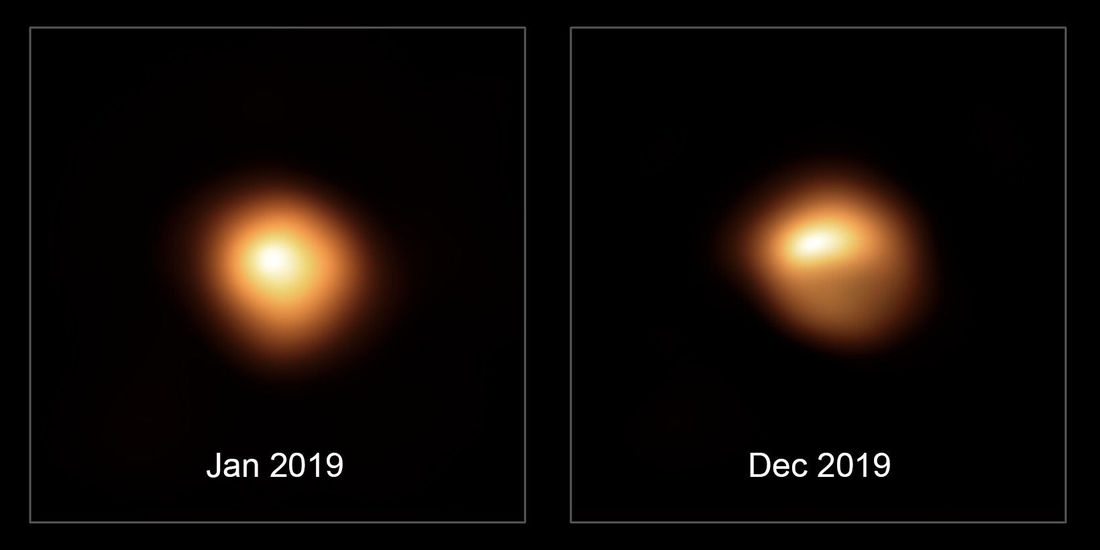
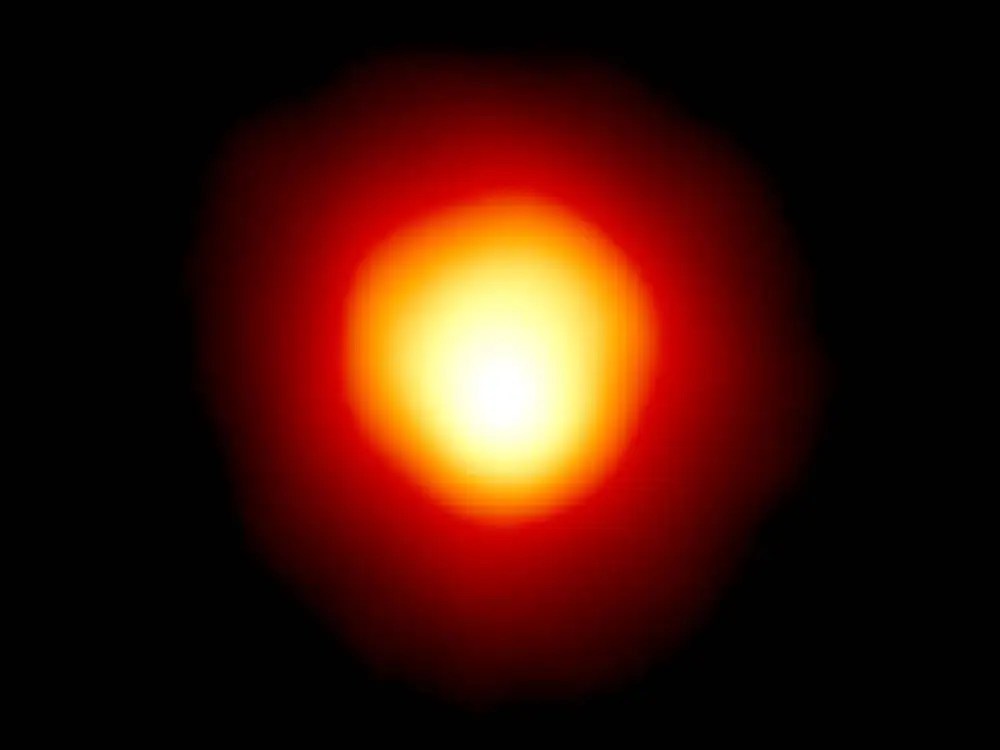
The constellation Orion is rising early in the evening now so what’s up with Betelgeuse. Betelgeuse is the bright reddish upper leftmost star of the torso of Orion the hunter, it’s in his shoulder. Betelgeuse has been acting up lately. In 2019 and 2020 Betelgeuse had dimmed significantly. Astronomers didn’t know why at the time, but found out later that it ejected a large cloud of gas and dust which blocked the light from the star. Now in the last year Betelgeuse has increased its brightness significantly, so it’s much brighter than normal. Again, we don’t exactly know why. Some have speculated that Betelgeuse is about ready to go supernova. We’ve known that for a while, but soon is measured within hundreds of thousands of years. So astronomers are keeping an eye on Betelgeuse to see what happens next.
The astronomical event times given are for the Traverse City/Interlochen area of Michigan (EST, UT –5 hours). They may be different for your location.
Addendum
Ephemeris: 08/09/2023 – Let’s find out where the naked-eye planets have wandered off to this week
This is Ephemeris for Wednesday, August 9th. Today the Sun will be up for 14 hours and 19 minutes, setting at 8:57, and it will rise tomorrow at 6:39. The Moon, 1 day past last quarter, will rise at 1:04 tomorrow morning.
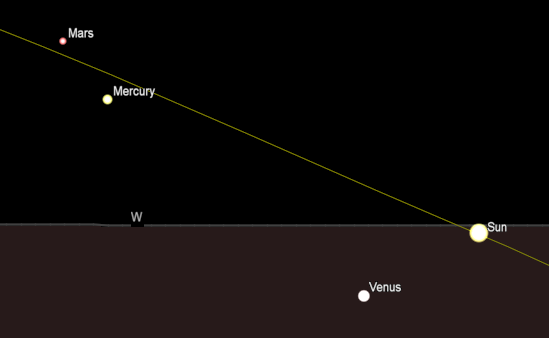
Let’s find out where the naked-eye planets have wandered off to this week. Venus is gone, setting too close to sunset. It will pass between the Earth and the Sun on the 13th, and be visible before sunrise by the end of the month. Mars and Mercury, though technically in the evening sky and like Venus also appear too close to the Sun to be spotted. Mars will pass behind the Sun in November. The other two naked eye planets are in the morning sky. Appearing at 5:45 am, which is roughly 55 minutes before sunrise, tomorrow morning, Jupiter will be high in the southeast, Saturn will be lower in the southwest. And tomorrow morning, the waning crescent Moon will be midway up the sky in the east.
The astronomical event times given are for the Traverse City/Interlochen area of Michigan (EDT, UT –4 hours). They may be different for your location.
Addendum
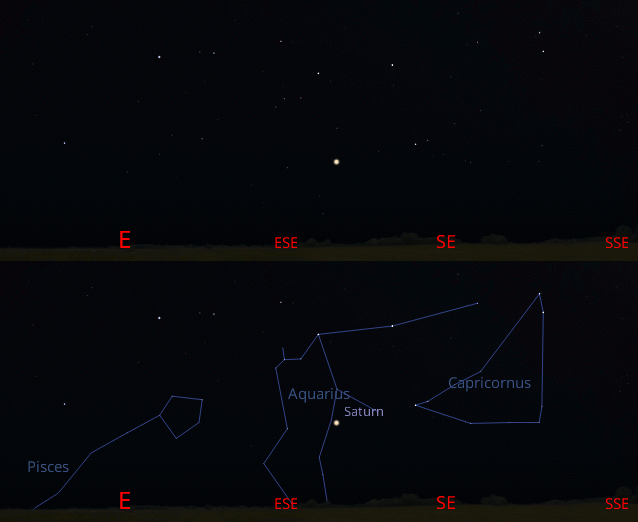
Saturn, low in the east-southeast at 11 pm, or about 2 hours after sunset, along with nearby zodiacal constellations. Click or tap on the image to enlarge it. Created using Stellarium and GIMP.
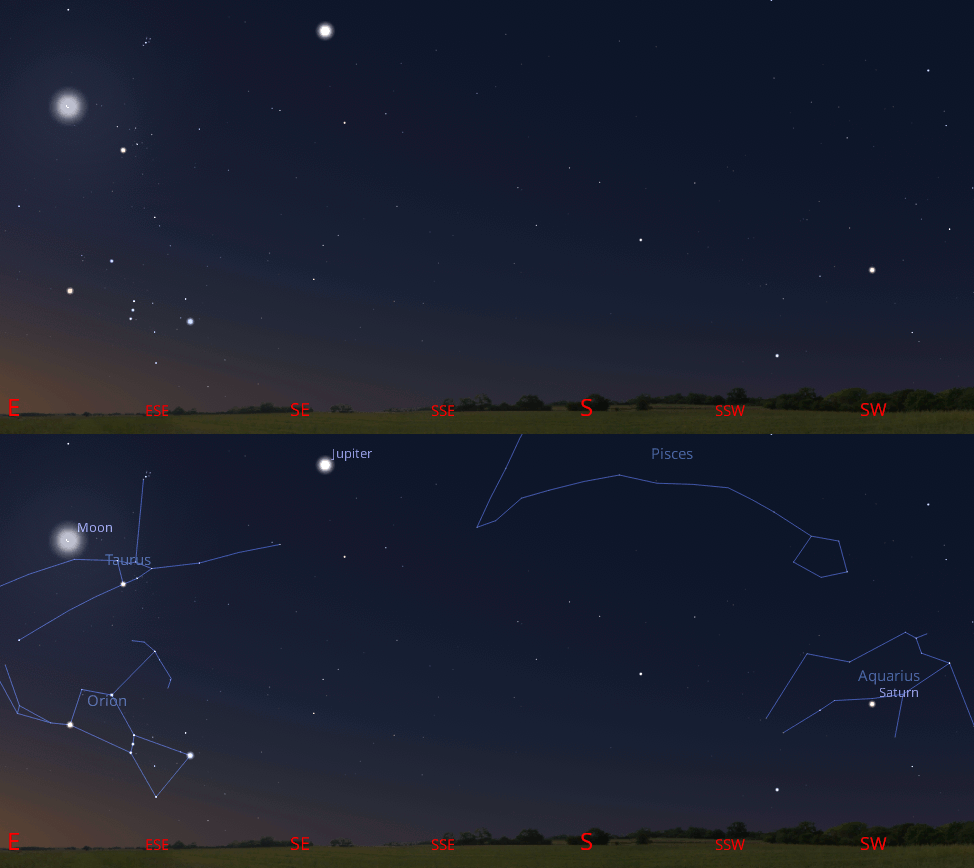
Jupiter Saturn and the Moon are seen at 5:45 tomorrow morning, August 10, 2023, about 55 minutes before sunrise. Also shown are the zodiacal constellations and Orion. The native peoples of our area, the Anishinaabe, called Orion the Winter Maker. So enjoy summer while it lasts, because and relatively few months it’s going to be all over, and Orion will be in the evening sky and winter will be here. Click or tap on the image to enlarge it. Created using Stellarium and GIMP.
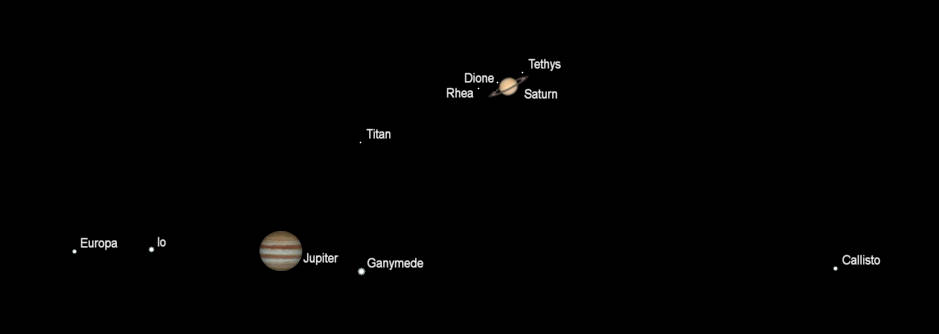
Telescopic Saturn and Jupiter (north up) as they would be seen in a small telescope, with the same magnification, Saturn at 11 pm, the 9th and Jupiter at 5:45 am August 10, 2023. Apparent diameters: Saturn 18.87″, its rings 43.96″; Jupiter 41.02″. Saturn and Jupiter are approaching us, so their apparent diameters are growing. The ” symbol means seconds of arc (1/3600th of a degree). Click or tap on the image to enlarge it. Created using Cartes du Ciel (Sky Charts).
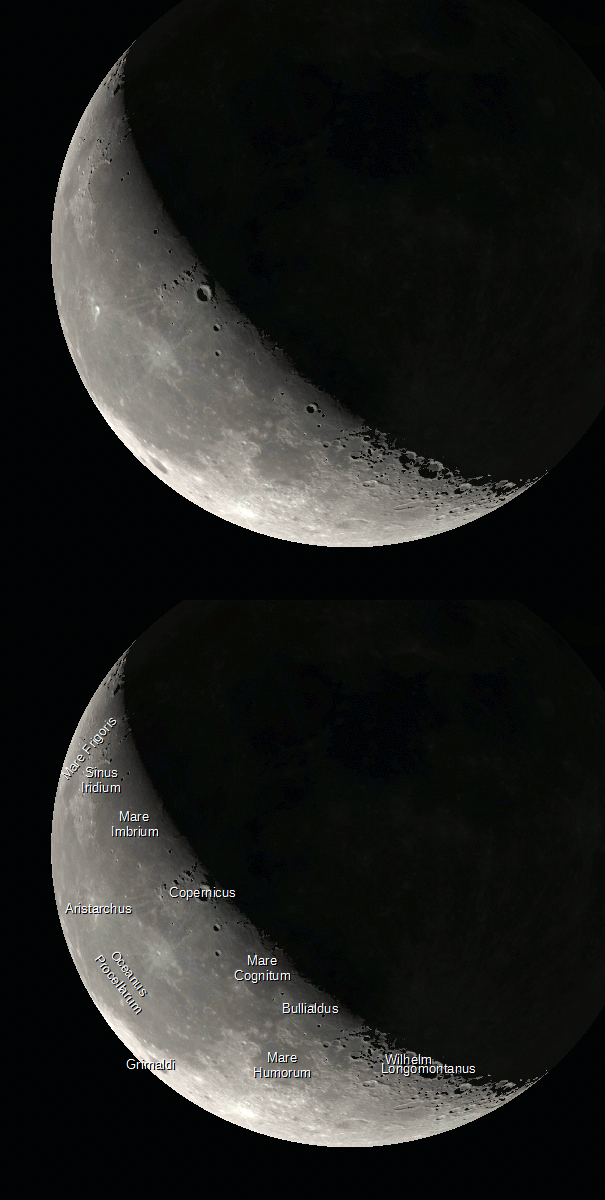
The Moon as it might appear in binoculars or telescope with selected features labeled tomorrow morning, August 10, 2023. Created using Stellarium, LibreOffice Draw for labels, and GIMP for the GIF animation.
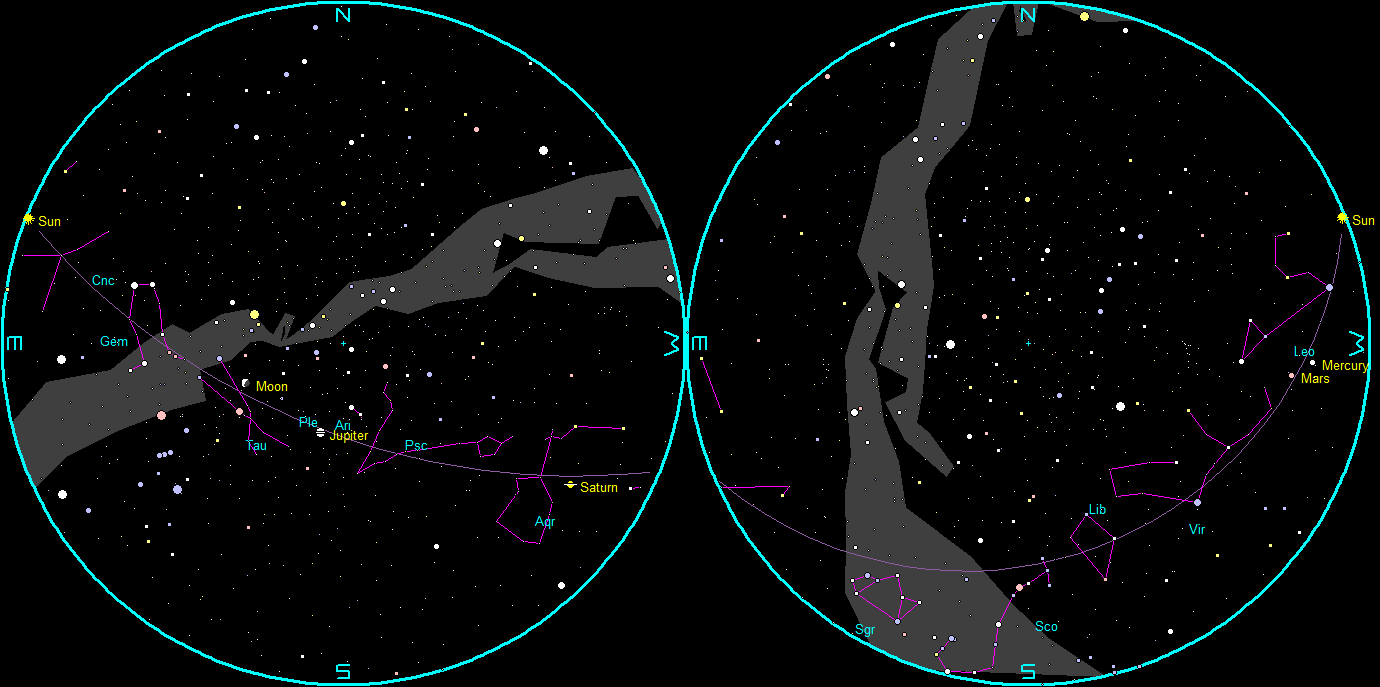
The naked-eye planets and the Moon at sunset and sunrise on a single night, starting with sunset on the right on August 9, 2023. The night ends on the left with sunrise on the 10th. Venus is not in the sky at either sunset or sunrise, being south of the Sun. Large images can be truncated on the right. Click or tap on the image to enlarge and display the complete image. Created using my LookingUp app and GIMP.
02/01/2023 – Ephemeris – Let’s find where the naked-eye planets have wandered off to this week
This is Ephemeris for Wednesday, February 1st. Today the Sun will be up for 9 hours and 49 minutes, setting at 5:51, and it will rise tomorrow at 8:00. The Moon, halfway from first quarter to full, will set at 6:31 tomorrow morning.
Let’s find where the naked-eye planets have wandered off to this week. Very early after sunset. Venus can be spotted low in the southwest by 6:30 pm. Mars, and Jupiter will be visible this evening by 7 pm. Mars will be above Orion in the southeast and is pulling away from the Pleiades. Jupiter will be in the southwest. Saturn is way below Venus now, so it’s gone until it reappears in the morning sky in a few months. It will make the crossing to the morning sky with its solar conjunction on the 16th. Mercury is now in the morning sky. It has a few more days visibility around 7 am in the southeastern sky after reaching greatest western elongation from the Sun last Sunday.
The astronomical event times given are for the Traverse City/Interlochen area of Michigan (EST, UT –5 hours). They may be different for your location.
Addendum
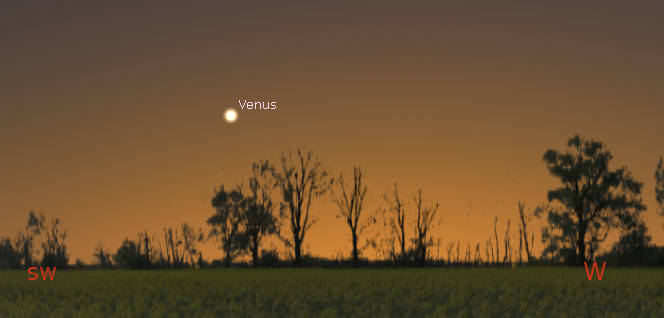
Venus low in the west-southwestern twilight at 6:30 pm tonight, February 1, 2023. Created using Stellarium.
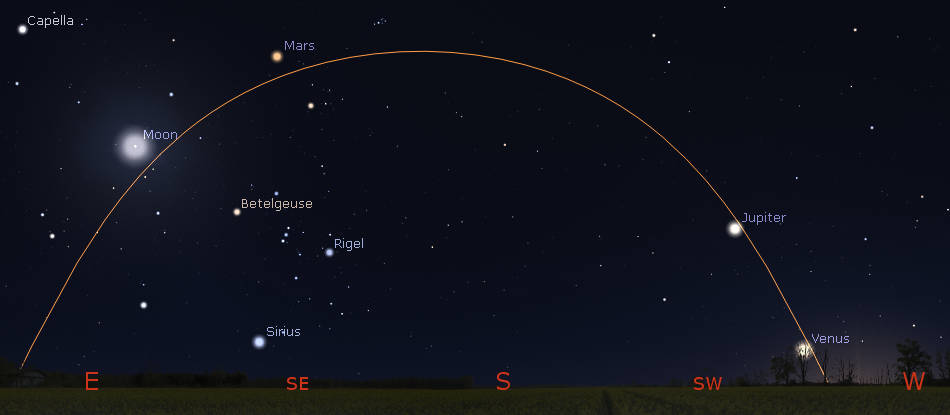
Evening planets at 7 pm tonight, February 1, 2023. The orange line is the ecliptic, which is the plane of the Earth’s orbit. The sun appears on that line throughout the year. Notice that all the other planets are very close to that line. That is an artifact of the accretion disk from which the planets formed some 4 1/2 billion years ago. The planets still maintain the nearly same plane for their existence to this day. Click on the image to enlarge it. Created using Stellarium.
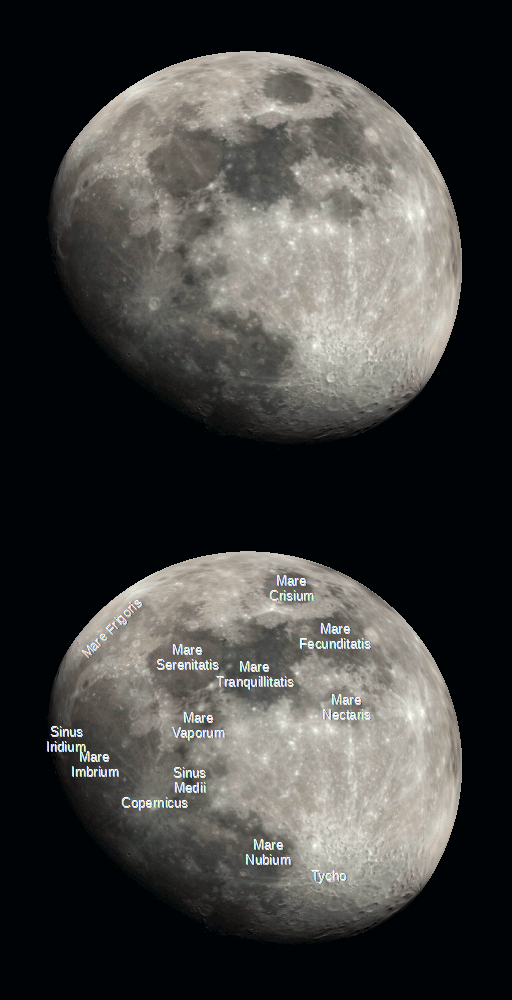
The gibbous Moon tonight at 7:00 pm, labeled. Created using Stellarium, LibreOffice Draw, and GIMP.
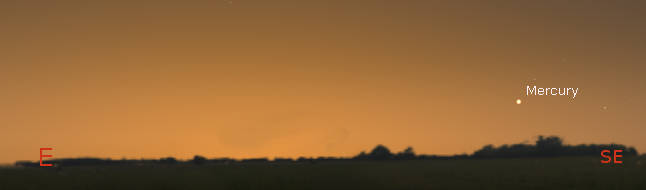
This is what Mercury might look like in the southeast around 7:20 tomorrow morning, February 2nd from Interlochen/Traverse City. At that time, it’ll be 5 degrees above a sea horizon, which is half the width of a fist held at arm’s length. Any trees of course will reduce it. Created using Stellarium.
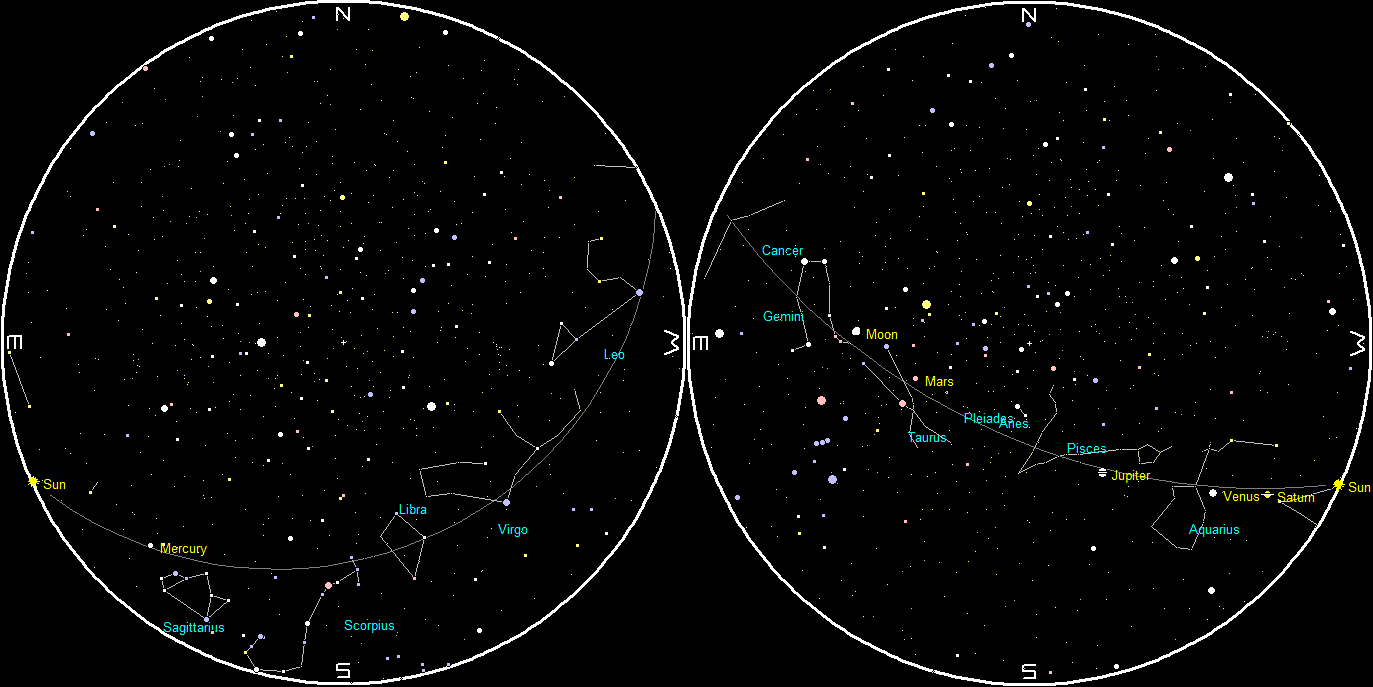
The naked-eye planets and the Moon at sunset and sunrise on a single night, starting with sunset on the right on February 1, 2023. The night ends on the left with sunrise on the 2nd. Click on the image to enlarge it. Created using my LookingUp app and GIMP.
01/10/2023 – Ephemeris – The constellation of Orion the hunter, unlucky in love
This is Bob Moler with Ephemeris for Tuesday, January 10th. Today the Sun will be up for 9 hours and 3 minutes, setting at 5:22, and it will rise tomorrow at 8:18. The Moon, halfway from full to last quarter, will rise at 9:01 this evening.
Before the Moon rises tonight, we will have two hours of darkness. Winter’s central constellation, Orion the hunter, doesn’t need the Moon to be absent to see its principal stars. He’s in the southeast before the Moon rises with red Betelgeuse in one shoulder and dimmer Bellatrix on the other, Saiph at one knee and bright blue-white Rigel at the other. Between his shoulders and knees runs his belt of three stars in a line. Above Betelgeuse, he is holding a club aloft and from Bellatrix he holds a lion skin shield to defend himself from the charge of Taurus the bull, above and right of him. I consider him a hard luck hero, with three different stories on how he died. Unlucky in love, he’s consigned to chase the Seven Sisters of the Pleiades throughout eternity.
The astronomical event times given are for the Traverse City/Interlochen area of Michigan (EST, UT –5 hours). They may be different for your location.
Addendum
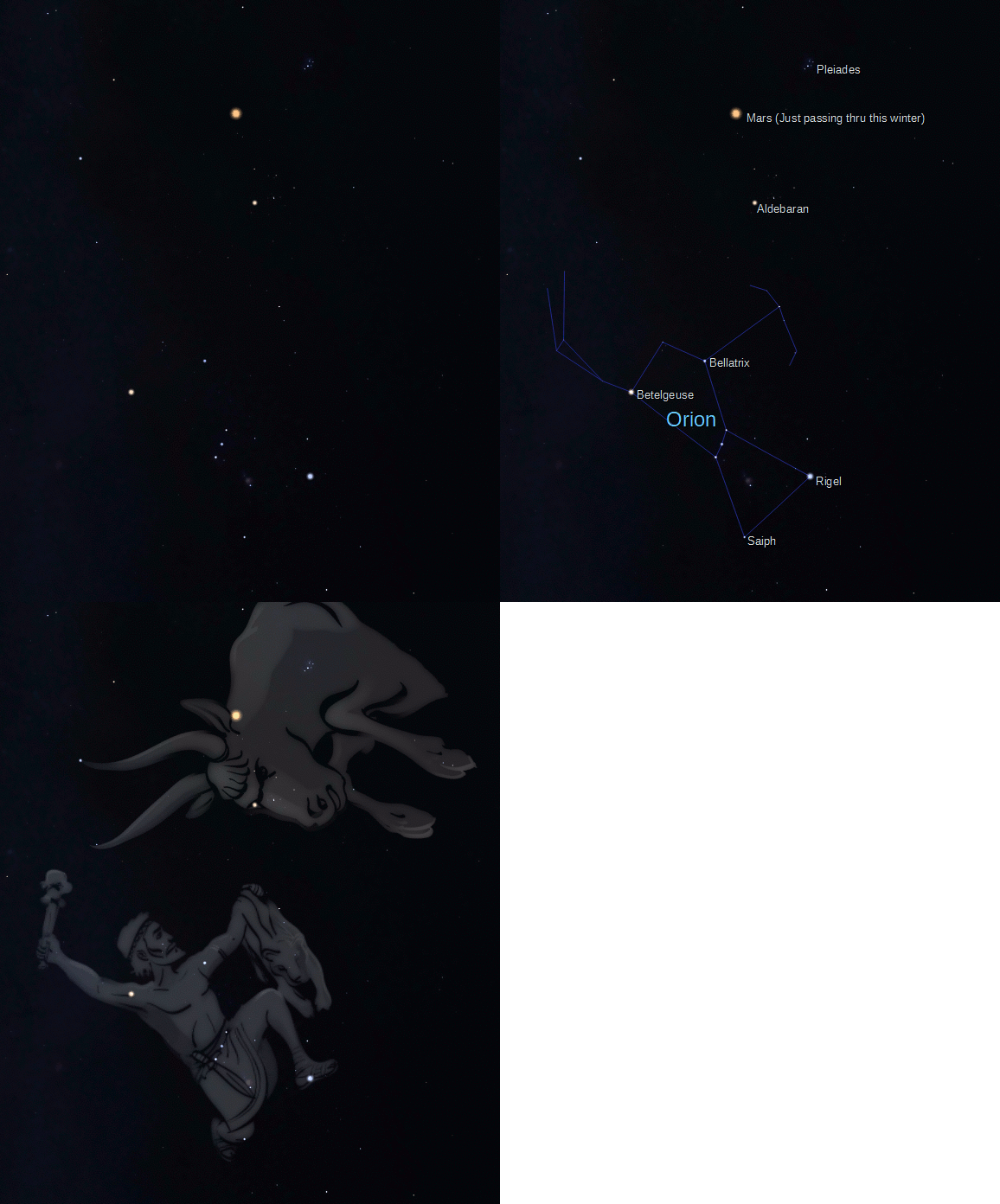
Orion finder animation with Mars. First, showing the unannotated sky looking southeast at Orion. Second, Orion with lines and labels of the stars at the corners of his body, and other bright stars in the view, plus the Pleiades and bright planet Mars, that’s just happening to be passing through this year. Third, the constellation art for Orion and Taurus the bull. Created using Stellarium, LibreOffice Draw and GIMP.
Here are the three stories of how Orion died: One: Orion raped the goddess Artemis, and so she killed him. Two: Orion was betrothed to Artemis, but her twin brother Apollo was jealous and caused her to kill him in a hunting “accident”. Three: Orion was killed by the sting of a scorpion, which is the reason Orion and Scorpius are never in the sky at the same time.
12/12/2022 – Ephemeris – Orion and the scorpion
This is Bob Moler with Ephemeris for Monday, December 12th. Today the Sun will be up for 8 hours and 51 minutes, setting at 5:02, and it will rise tomorrow at 8:11. The Moon, 4 days before last quarter, will rise at 9 this evening.
The wonderful constellation of Orion the hard luck hunter is seen rising in the east as twilight fades. According to one Greek myth he was killed by the sting of a scorpion, thus he can only rise as the summer constellation of Scorpius the scorpion sets in the southwest, and he must set as the scorpion rises on early spring evenings. By 9 pm, he is located in the east-southeast. His three belt stars are nearly vertically arranged in a line and equally spaced. They point down to the horizon, where the brightest nighttime star Sirius will rise at about 9:20 pm. The belt stars lie within a large rectangle of stars tilted to the left. His shoulders and knees. The top left star is the bright red Betelgeuse. The bottom right star is blue-white Rigel. We’ll explore more of Orion all winter.
The astronomical event times given are for the Traverse City/Interlochen area of Michigan (EST, UT –5 hours). They may be different for your location.
Addendum
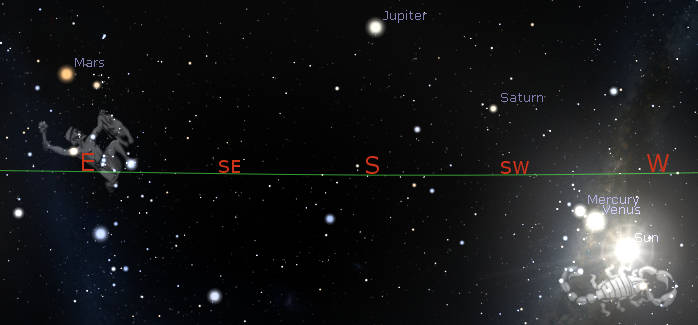
A panorama showing Orion rising while Scorpius the scorpion is below the horizon. Both the atmosphere and the ground were removed in this view. The horizon is the green horizontal line. Orion, apparently, is so afraid of the scorpion, that he won’t enter the sky until the scorpion is long gone, putting the Sun between the two. This business of the two never being in the sky at the same time only works for observers in the Earth’s Northern Hemisphere. Click on the image to enlarge it. Created using Stellarium
02/22/2022 – Ephemeris – The Winter Triangle
This is Ephemeris for Tuesday, February 22nd. Today the Sun will be up for 10 hours and 49 minutes, setting at 6:21, and it will rise tomorrow at 7:30. The Moon, 1 day before last quarter, will rise at 1:26 tomorrow morning.
I’ve talked about the Winter Circle of bright stars already this winter, but some other astronomers talk about the Winter Triangle. The stars involved are Betelgeuse in the hunter Orion, Sirius in Canis Major, Orion’s large hunting dog, and Procyon in Canis Minor, his other small hunting dog. These three stars enclose a rather blank piece of sky with the faint Milky Way running through it and the almost invisible constellation of Monoceros the unicorn. The Summer Triangle has three bright stars with no other close competition. The Winter Triangle has four other bright stars near it. Any three of these would make a nice triangle. One of these constellations, Canis Minor, is tiny with Procyon and one other star. It makes me think of a dachshund, or maybe, if I’m hungry, a hot dog.
The astronomical event times given are for the Traverse City/Interlochen area of Michigan (EST, UT -5 hours). They may be different for your location.
Addendum
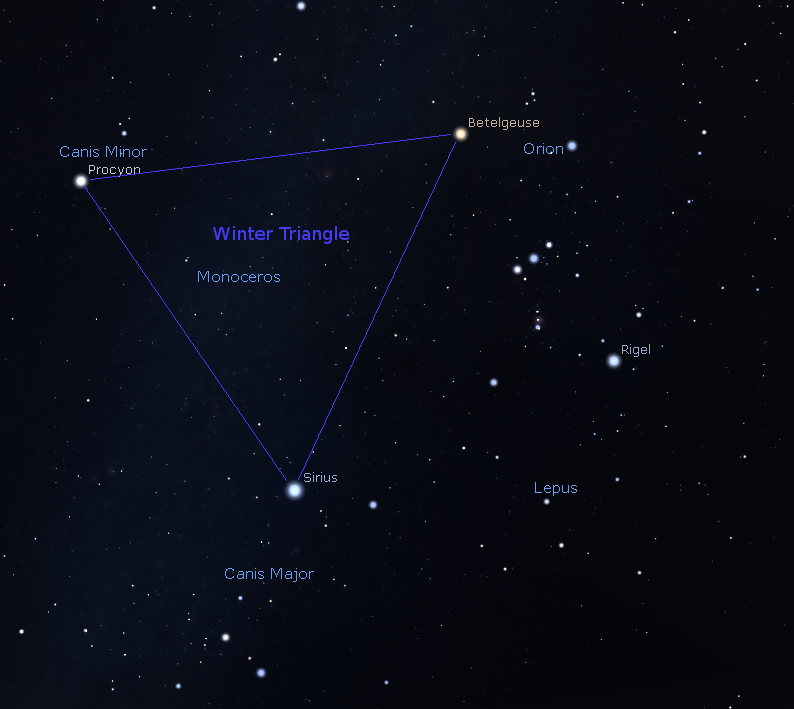
The Winter Triangle. It encloses a pretty blank space where Monoceros the unicorn lies. Created using Stellarium with my annotations for the Winter Triangle.
01/31/2022 – Ephemeris – The winter circle of bright stars
This is Ephemeris for Monday, January 31st. Today the Sun will be up for 9 hours and 47 minutes, setting at 5:50, and it will rise tomorrow at 8:01. The Moon, 1 day before new, will rise at 8:48 tomorrow morning.
The winter skies are blessed with more first magnitude stars than any other season. Six of these stars lie in a large circle centered on the seventh, It’s called the Winter Circle. This circle is up in the evening. Starting high overhead is yellow Capella in Auriga the charioteer. Moving down clockwise is orange Aldebaran in the face of Taurus the Bull. Then down to Orion’s knee, we find blue-white Rigel. Down and left is the brightest star of all the brilliant white Sirius the Dog Star in Canis Major, lowest of these stars in the south-southeast. Moving up and left is white Procyon in Canis Minor, Above Procyon is Pollux in Gemini, the twins. All these are not quite centered on Betelgeuse, the bright red star in Orion’s shoulder.
The astronomical event times given are for the Traverse City/Interlochen area of Michigan (EST, UT – 5 hours). They may be different for your location.
Addendum
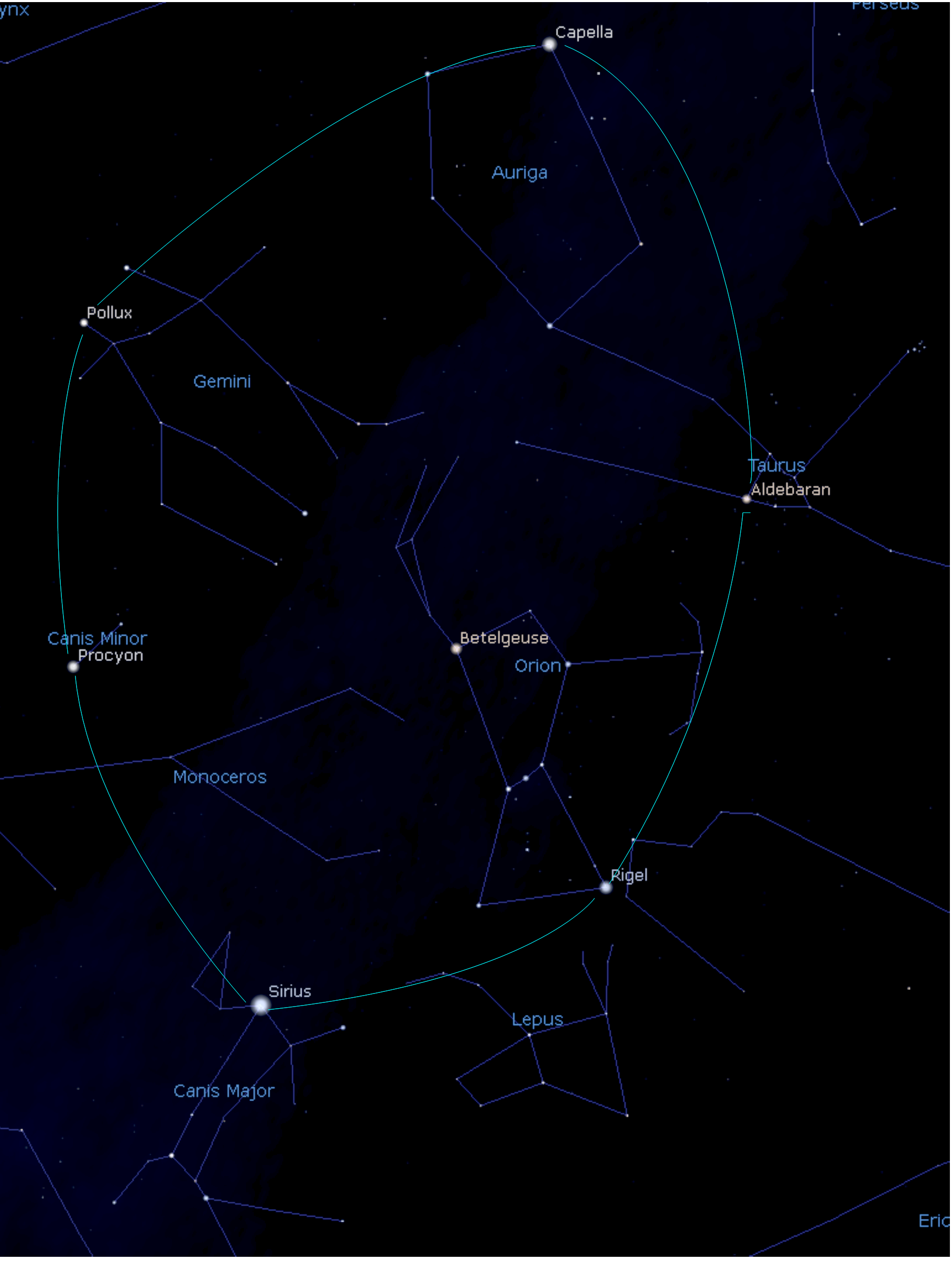
The bright stars of winter arrayed in a not so accurate circle. Some call it the Winter Hexagon. These stars are what make the winter sky so brilliant on the rare clear night in winter. Created using Stellarium.
01/27/2022 – Ephemeris – Looking at the constellation of Gemini the twins
This is Ephemeris for Thursday, January 27th. Today the Sun will be up for 9 hours and 37 minutes, setting at 5:44, and it will rise tomorrow at 8:06. The Moon, 2 days past last quarter, will rise at 4:56 tomorrow morning.
Another famous winter constellation is Gemini. The constellation of Gemini the Twins is visible high in the southeast, above and left of Orion the hunter, at 9 p.m. The namesake stars of the two lads, are the two bright stars at the left end of Gemini, and are high and nearly in the east. Castor is on top, while Pollux is below. From them come two lines of stars that outline the two, extending horizontally toward Orion. In Greek mythology the lads were half brothers, Castor was fathered by a mere mortal, while Pollux was fathered by Zeus, but were born together as twins. When Castor was killed during the quest for the Golden Fleece, Pollux pleaded with Zeus to let him die also, so Zeus placed them together in the sky.
The astronomical event times given are for the Traverse City/Interlochen area of Michigan (EST, UT – 5 hours). They may be different for your location.
Addendum
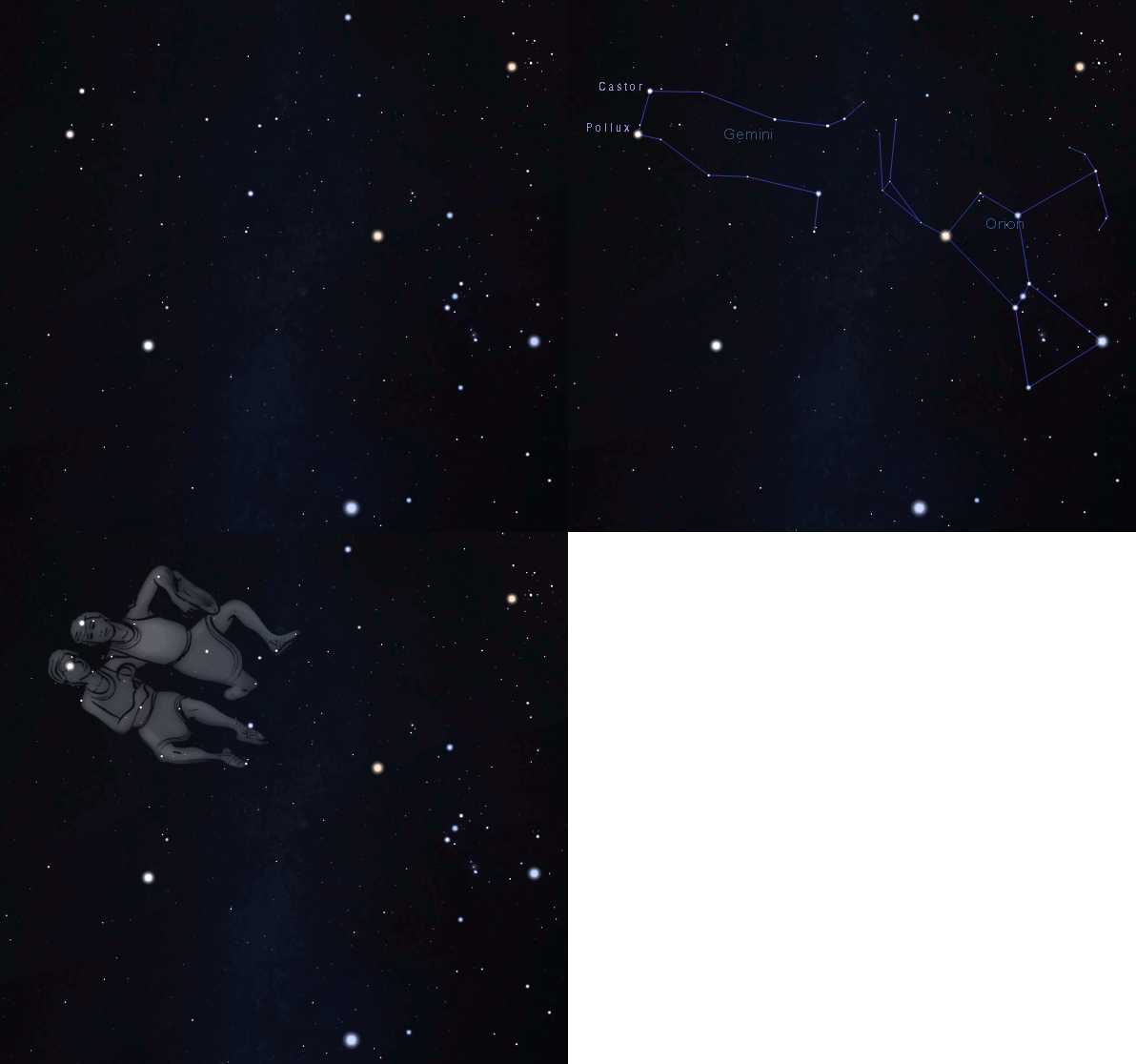
Gemini finder animation for 9 pm January 27th, showing just stars, constellation lines and star names, and figures of the lads. Click on the image to enlarge it. Created using Stellarium and GIMP.
01/24/2022 – Ephemeris – The Great Orion Nebula
This is Ephemeris for Monday, January 24th. Today the Sun will be up for 9 hours and 30 minutes, setting at 5:40, and it will rise tomorrow at 8:09. The Moon, 1 day before last quarter, will rise at 1:03 tomorrow morning.
The closest star nursery to us, places where stars are being born, is the Great Orion Nebula, 1,300 light years away. A light year is about 6 trillion miles, if you want to pace it out. It’s located in the constellation Orion’s sword that hangs below his belt. In as little as a pair of binoculars, it shines by emission and reflection of the light of a tiny clutch of four stars at its heart, which astronomers have called the Trapezium. These extremely hot young massive stars are not destined to live long. Unlike the Sun’s 10 billion year lifetime, these stars lifespans will be measured in millions of years. Yet do not mourn for them, even now stars are forming within their dusty cocoons in the nebula. The Trapezium stars’ deaths will provide heavy elements for new stars and planets.
The astronomical event times given are for the Traverse City/Interlochen area of Michigan (EST, UT – 5 hours). They may be different for your location.
Addendum
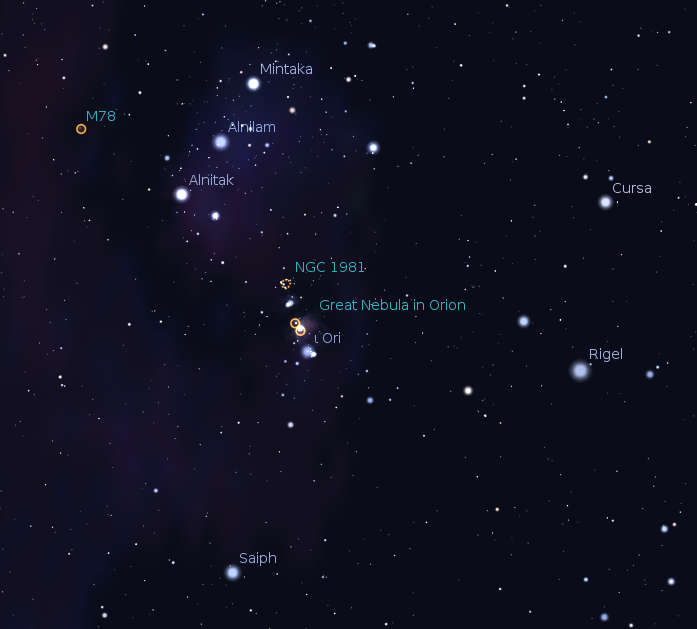
The lower part of Orion, with the Great Orion Nebula. Created using Stellarium.
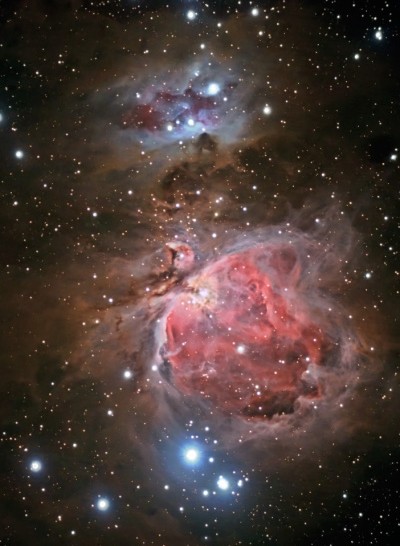
The Great Orion Nebula (M42) long exposure photograph by Scott Anttila. Includes all the sword stars.
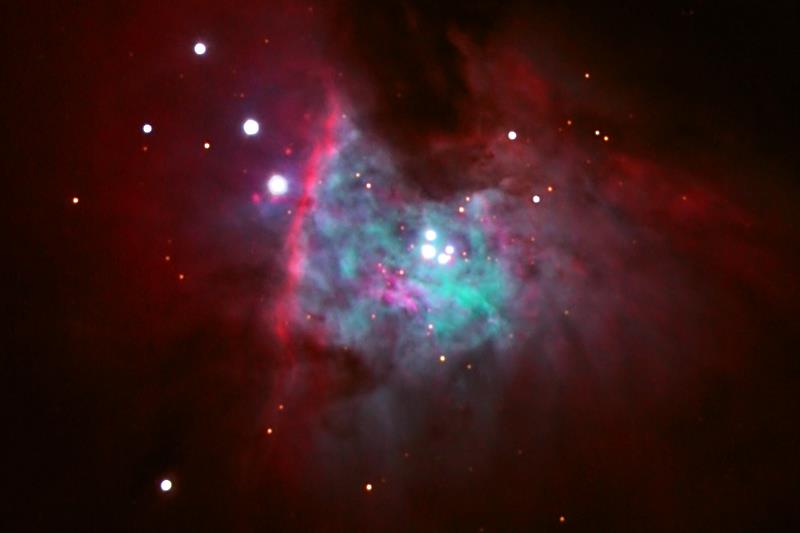
The inner and brightest part of the Great Orion Nebula. Also, visible are the four stars of the Trapezium, whose ultraviolet emissions light up the nebula. This is pretty much one’s perception of the nebula as seen in a small telescope, except it would appear colorless. In larger telescopes, one would perceive a greenish color. The red color of hydrogen is outside our night adapted visual range. The green emission is due to mainly doubly ionized oxygen and the green emission of hydrogen. Image by Scott Anttila.
01/20/2022 – Ephemeris – Taurus and the half sisters of the Pleiades
This is Bob Moler with Ephemeris for Thursday, January 20th. Today the Sun will be up for 9 hours and 21 minutes, setting at 5:34, and it will rise tomorrow at 8:12. The Moon, 3 days past full, will rise at 8:23 this evening.
High in the south-southeastern sky, and above-right of Orion, is the bright star Aldebaran. It’s at one tip of a letter V of fainter stars. The group of stars is the face of the constellation of Taurus the bull. Aldebaran is the angry bloodshot eye of the bull that’s charging Orion, whose defending himself with a lion skin shield and an upraised club. The stars in the V, and many more visible in binoculars, except for Aldebaran, belong to a star cluster called the Hyades. In Greek mythology, these are the half sisters of the Pleiades, visible as a tight group of stars above them. The V of stars is actually an upside down letter A, or Aleph, the first letter of the Hebrew and Mesopotamian alphabets. This was invented when Taurus, not Aries, was host to the Sun at the spring equinox.
The astronomical event times given are for the Traverse City/Interlochen area of Michigan (EST, UT – 5 hours). They may be different for your location.
Addendum
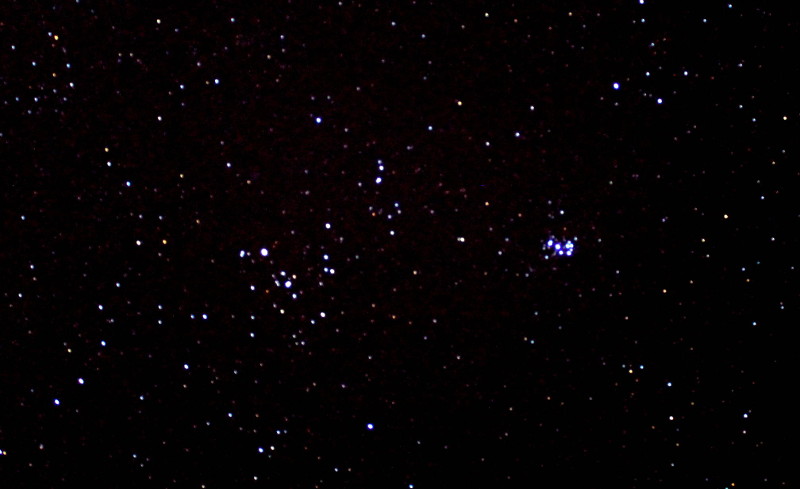
The Hyades (left) and the Pleiades (right) in this photograph I took January 4, 2016. Aldebaran is the bright star at the left tip of the Pleiades (right) of the Hyades.
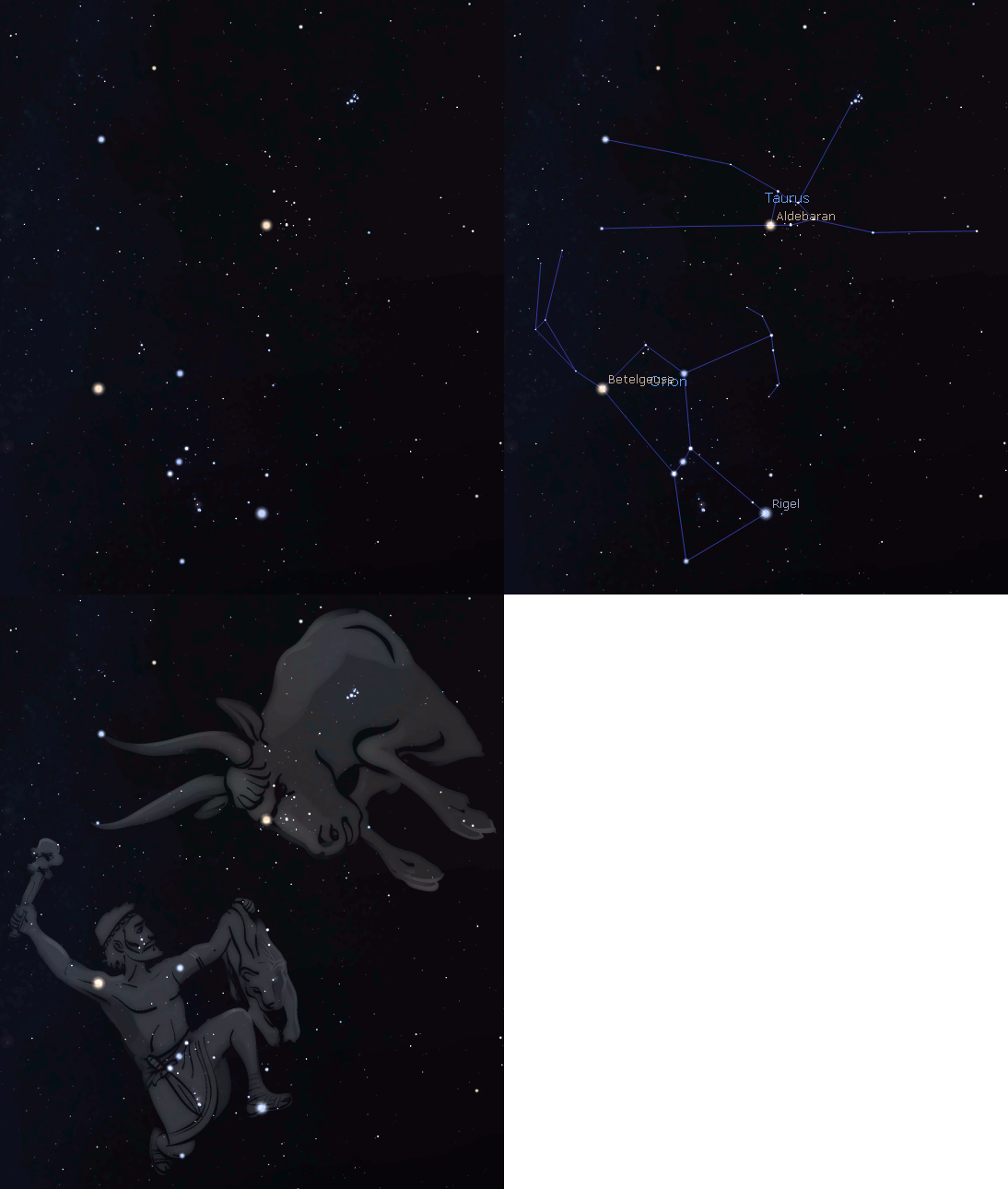
Orion and Taurus finder animation for mid-January. Created using Stellarium
 Bob Moler's Ephemeris Blog