Archive
05/03/2021 – Ephemeris – The constellation of Virgo
This is Ephemeris for Monday, May 3rd. Today the Sun will be up for 14 hours and 21 minutes, setting at 8:50, and it will rise tomorrow at 6:28. The Moon, at last quarter today, will rise at 3:52 tomorrow morning.
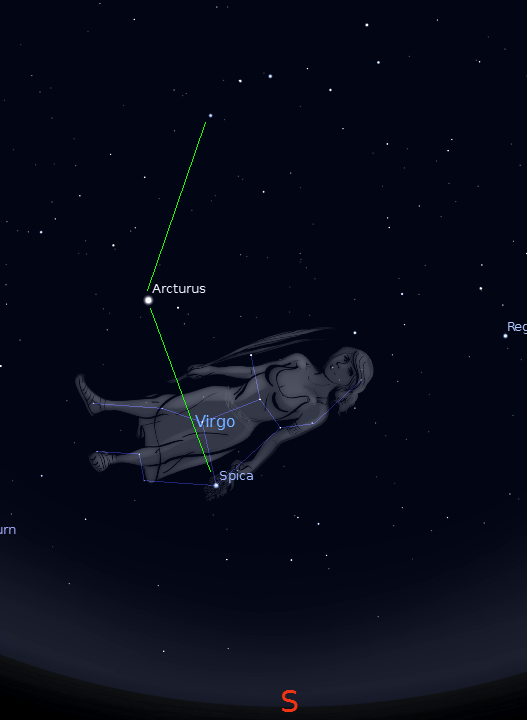
Tonight in the sky: to the southeast is the bright star Spica. Another way to find the star is to find the Big Dipper high overhead and follow the arc of the handle to the bright star Arcturus, and straighten the arc to a spike to meet Spica. It is in the constellation and member of the zodiac: Virgo the virgin. Virgo is a large constellation of a reclining woman holding a stalk of wheat. The bright star in the center of the constellation, Spica, is the head of that spike of wheat; and as such it ruled over the harvest in two of Virgo’s guises as the goddesses Persephone and Ceres. Ceres is now a dwarf planet and the root of the word cereal. Virgo is also identified as Astraea the goddess of justice. The constellation of Libra, the scales of justice, lies at her feet.
The astronomical event times given are for the Traverse City/Interlochen area of Michigan. They may be different for your location.
Addendum
04/29/2021 – Ephemeris – A star cluster that seems out of place
This is Bob Moler with Ephemeris for Thursday, April 29th. Today the Sun will be up for 14 hours and 10 minutes, setting at 8:45, and it will rise tomorrow at 6:33. The Moon, 3 days past full, will rise at 12:25 tomorrow morning.
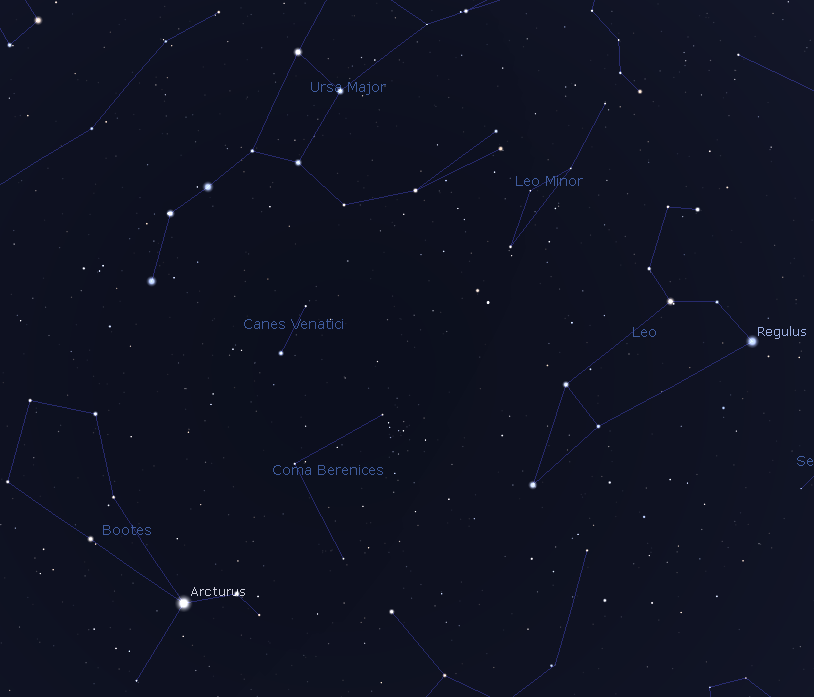
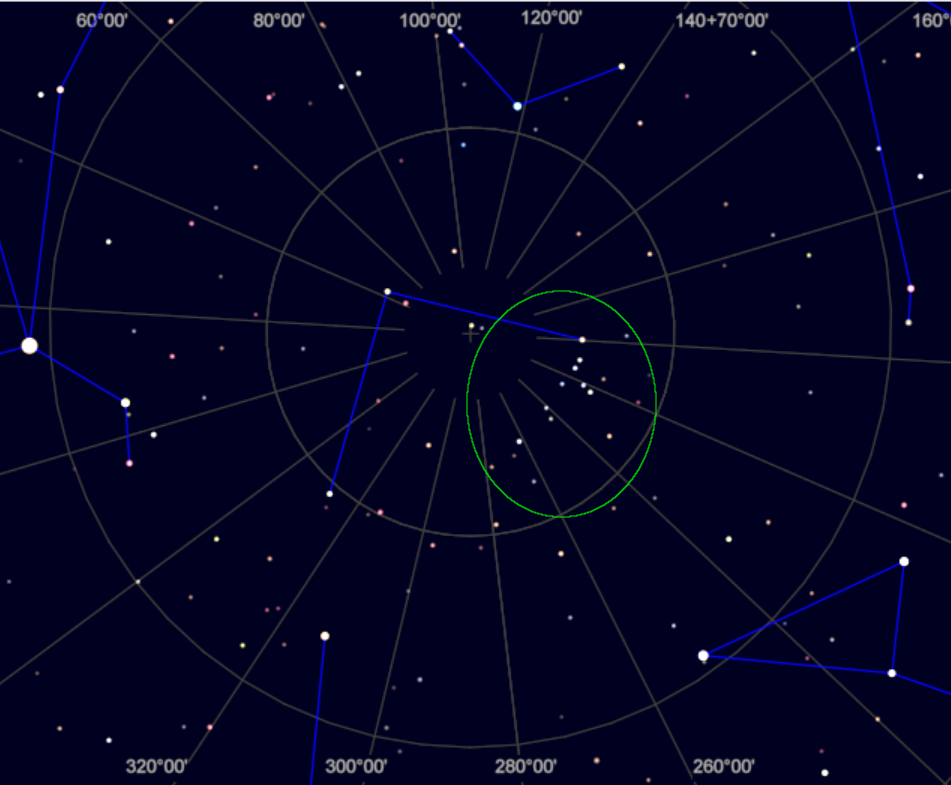
Looking to the southeast these nights one can find the dim constellation of Coma Berenices, or Berenice’s hair. It’s located near the bottom of a triangle between Leo, Boötes the Big Dipper. It’s best seen on a moonless night as a sprinkling of faint stars that look like strands of hair. It is a star cluster some 271 light years away, the second-closest star cluster to the Earth, after the Hyades that marks the face of Taurus the bull, at about 160 light years. Coma Berenices is located at an odd spot for an open or galactic star cluster. It’s as far from the milky band as you can get. Most galactic star clusters are close or in that band. However, due to its closeness Coma Berenices is north of the solar system, as we both orbit the center of the Milky Way.
The astronomical event times given are for the Traverse City/Interlochen area of Michigan. They may be different for your location.
Addendum
04/13/2021 – Ephemeris – Hydra slithers across the southern sky
This is Bob Moler with Ephemeris for Tuesday, April 13th. Today the Sun will be up for 13 hours and 24 minutes, setting at 8:25, and it will rise tomorrow at 6:59. The Moon, 2 days past new, will set at 10:08 this evening.
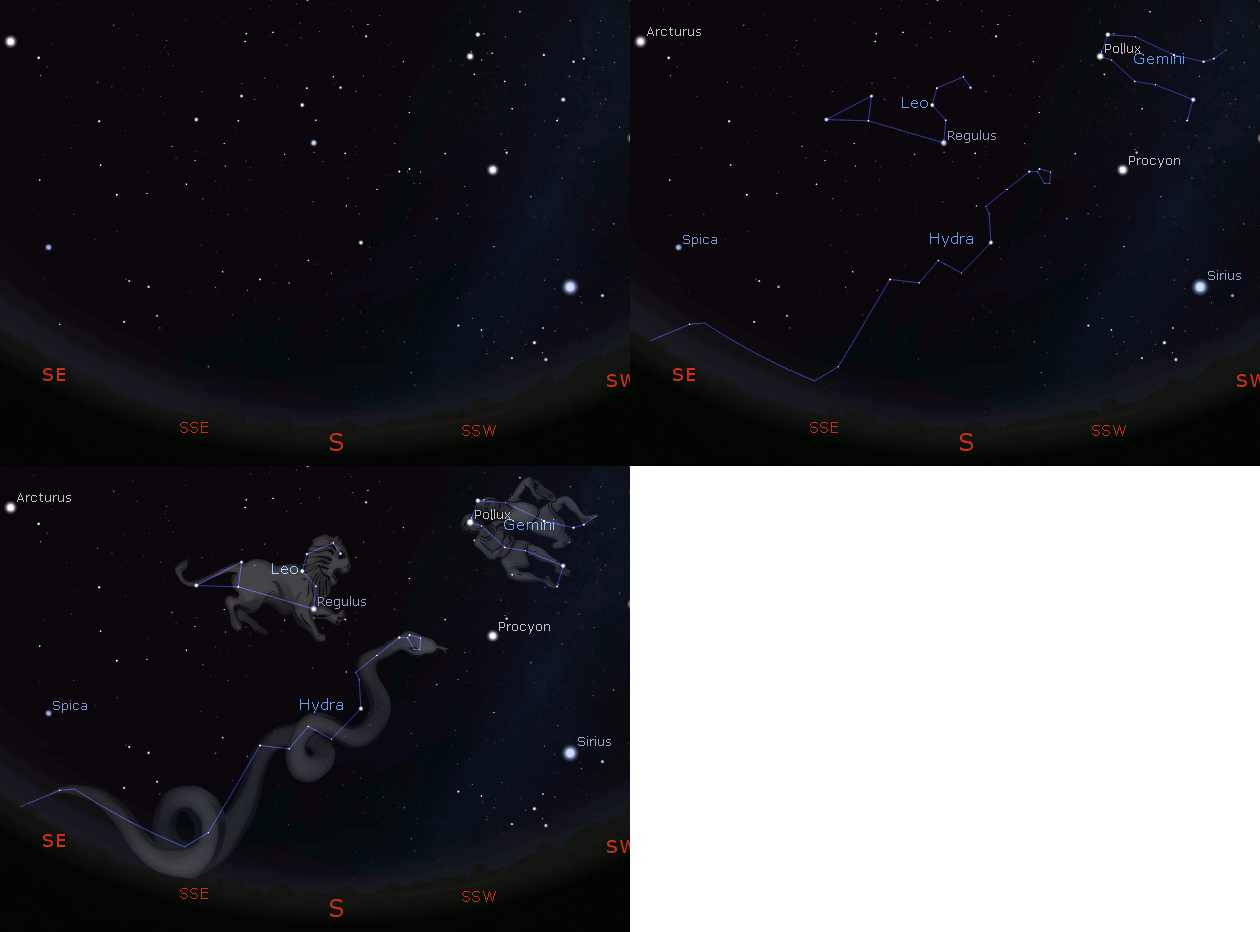
In the southern evening sky can be found the constellation of Hydra the water snake. Unlike the monster of the same name this Hydra has but one head, which is its most distinctive part. At 10 p.m. look midway up the sky in the south-southwest. The head of Hydra is located below a line from the constellation Leo the Lion in the south and Gemini high in the west-southwest. Its head is directly below Cancer the crab in the southwest. Hydra’s head is a small but distinctive group of 6 stars that make a loop and the snake’s slightly drooping head. The rest of Hydra wends its way to the southeastern horizon, and eventually ends near the late spring constellation of Libra the scales. Over the next few hours Hydra will be seen slithering across the southern sky.
The astronomical event times given are for the Traverse City/Interlochen area of Michigan. They may be different for your location.
Addendum
04/08/2021 – Ephemeris – Ursa Major, the Great Bear
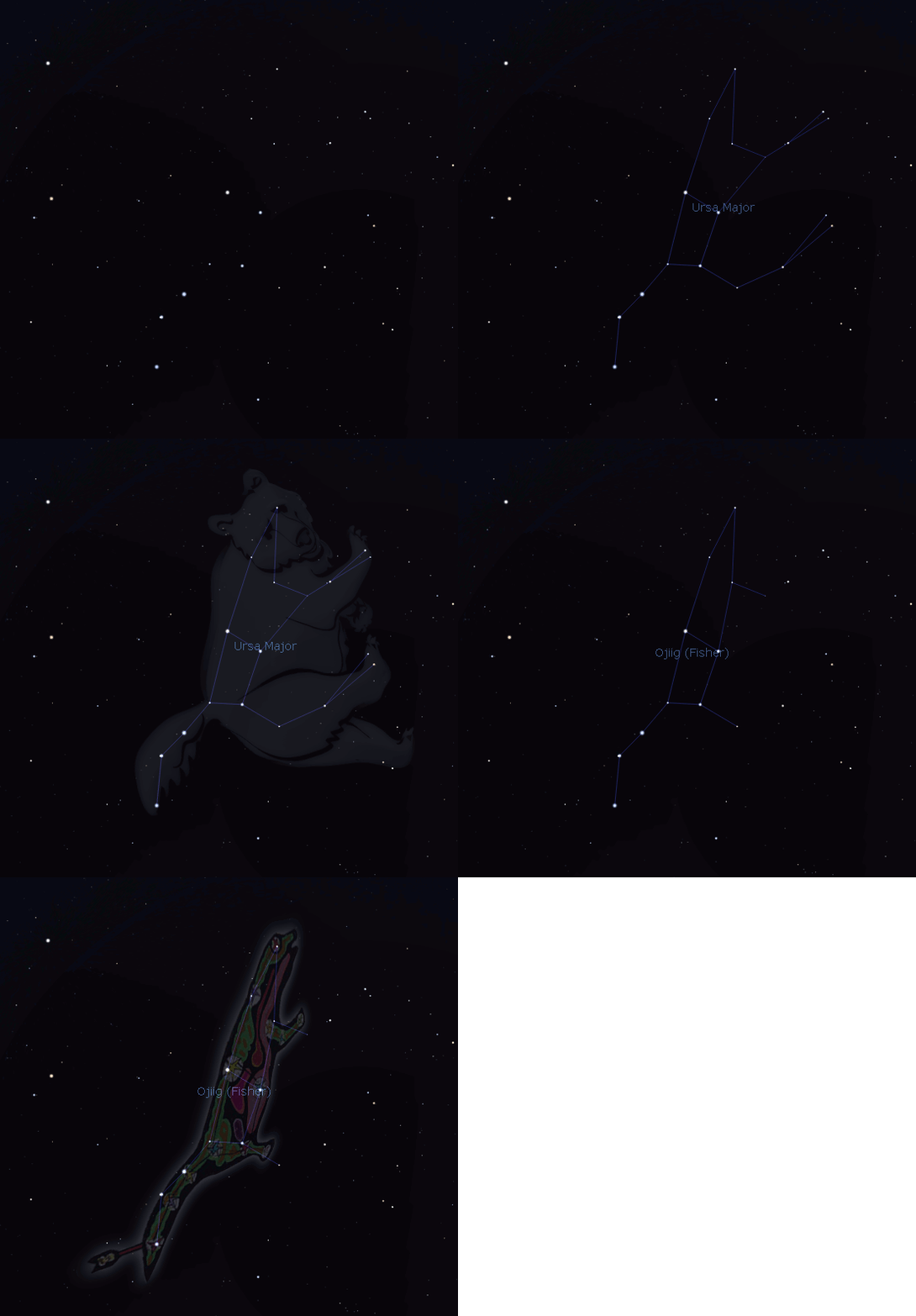
This is Bob Moler with Ephemeris for Thursday, April 8th. Today the Sun will be up for 13 hours and 9 minutes, setting at 8:19, and it will rise tomorrow at 7:08. The Moon, 3 days before new, will rise at 6:37 tomorrow morning. | The constellation of Ursa Major, or great bear was well-known to the ancient Greeks and Native Americans. Today, however, many of us can recognize only part of it as the Big Dipper. The whole bear can be easily seen only in a dark sky. At 10 pm it’s high in the northeast with feet to the south. The stars in front of the bowl are the front part of his body and head. The bowl of the Big Dipper is his rump, and the handle his long tail. The Native Americans, saw those three stars as three hunters following the bear. The Anishinaabe tribes of the Great Lakes region saw it as the Fisher or Ojiig, who brought summer to the Earth. These stars here do make a convincing bear, except for the tail, when seen on a dark night. However, the weasel-like Fisher fits the stars completely.
The astronomical event times given are for the Traverse City/Interlochen area of Michigan. They may be different for your location.
Addendum
04/06/2021 – Ephemeris – The spring constellation of Leo
This is Bob Moler with Ephemeris for Tuesday, April 6th. Today the Sun will be up for 13 hours and 3 minutes, setting at 8:17, and it will rise tomorrow at 7:12. The Moon, 2 days past last quarter, will rise at 5:48 tomorrow morning.
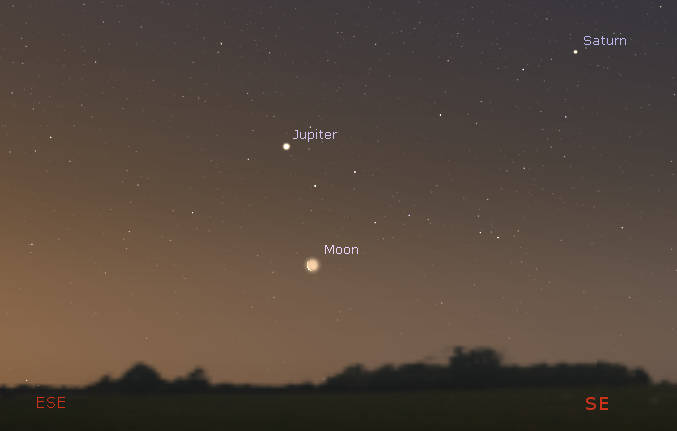
Tomorrow morning early risers will see the Moon near the planets Saturn and Jupiter. Specifically Jupiter, left of Saturn will be right above the waning crescent Moon.
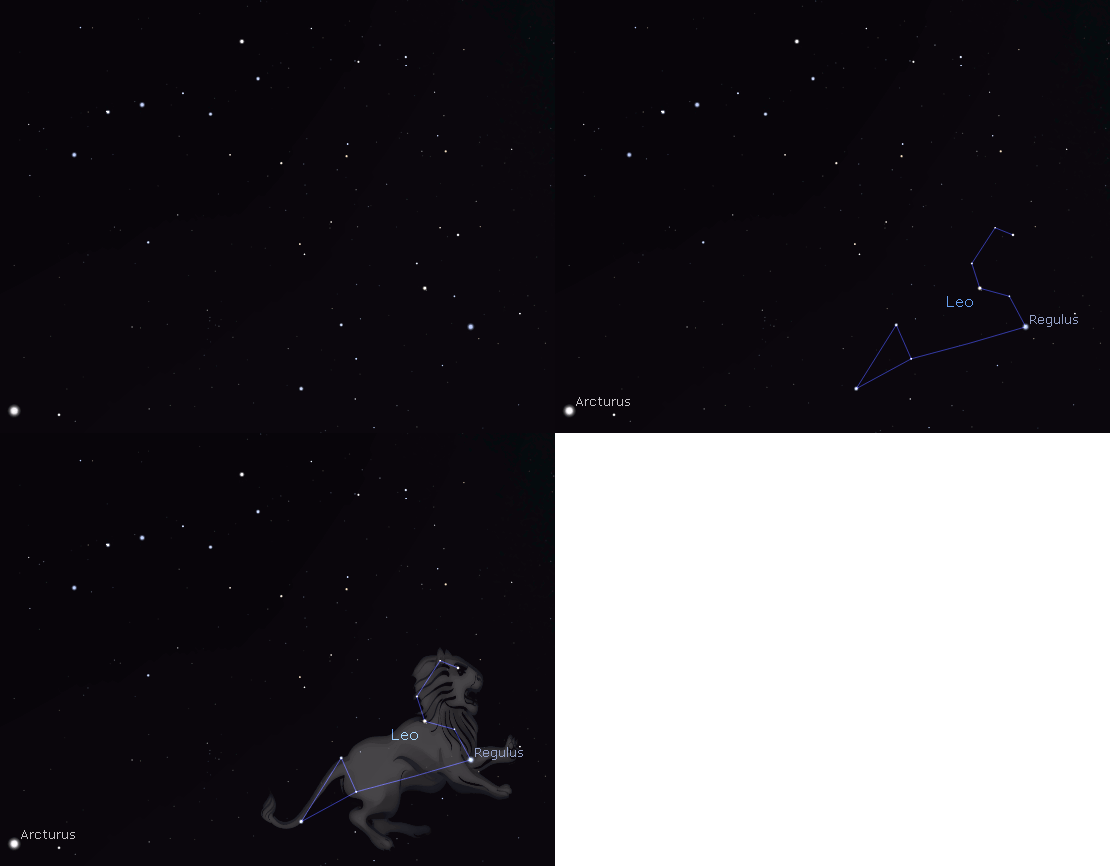
Tonight however, will be a good time to check out Leo the celestial lion high in the southeast. His distinctive pattern of stars is a backward question mark, with the bright star Regulus as the dot on the bottom of it. It delineates the male lion’s head and mane. That pattern is also called the Sickle. While Leo is one of the official 88 constellations, the Sickle is an asterism, or informal constellation. Completing Leo is a triangle of stars below left of Regulus, his rump ending with the star Denebola, at the root of Leo’s tail. Leo is rich in mythology.
The astronomical event times given are for the Traverse City/Interlochen area of Michigan. They may be different for your location.
Addenda
Jupiter and the Moon tomorrow morning
Leo tonight
03/11/2021 – Ephemeris – The Guardian of the Bear is rising
This is Ephemeris for Thursday, March 11th. Today the Sun will be up for 11 hours and 42 minutes, setting at 6:44, and it will rise tomorrow at 7:00. The Moon, 2 days before new, will rise at 7:09 tomorrow morning.
The brightest star of spring is Arcturus which will be visible by 9 pm low in the east-northeast. Arcturus can most famously be found by following the arc of the handle of the Big Dipper, which resides fairly high in the northeastern sky to it. “Follow the arc of the handle to Arcturus.” It’s the fourth or fifth brightest star in the sky, depending on the list. It was regarded as the “Guardian of the Bear”, meaning the Great Bear, Ursa Major, of which the Big Dipper is its hind end. Apparently it’s guarding its rear. Arcturus will stay in our evening sky until the end of summer and has a fascinating story of its own aside from its ancient mythology, which I’ll talk about when it’s higher in the sky. It’s located at the base of a kite shaped constellation called Boötes, which is now horizontal and too close to the horizon to be appreciated.
The astronomical event times given are for the Traverse City/Interlochen area of Michigan. They may be different for your location.
Addendum
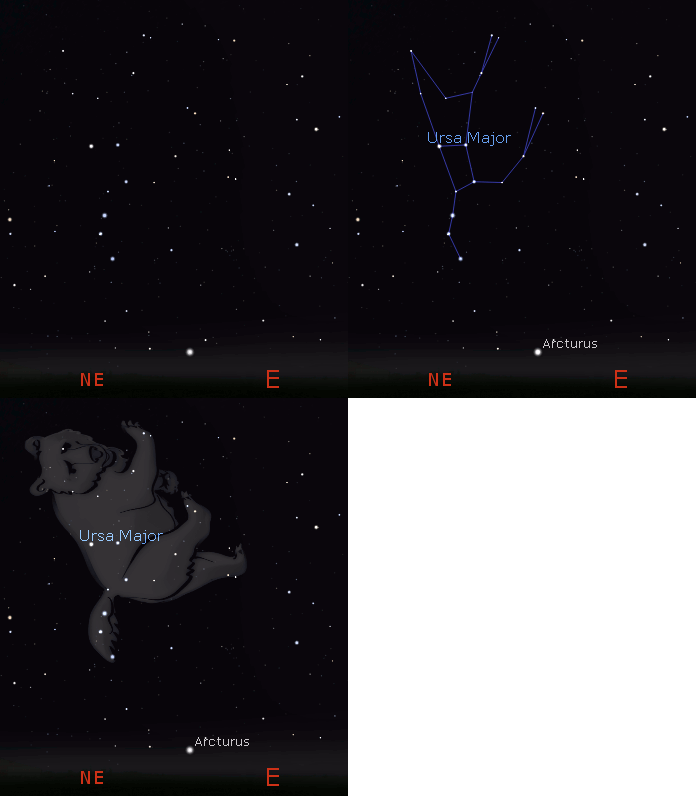
Arcturus rising finder animation for 9 pm tonight, March 11, 2021. Created using Stellarium and GIMP.
03/09/2021 – Ephemeris – A celestial warning to keep off thin ice
This is Ephemeris for Tuesday, March 9th. Today the Sun will be up for 11 hours and 35 minutes, setting at 6:41, and it will rise tomorrow at 7:03. The Moon, halfway from last quarter to new, will rise at 6:12 tomorrow morning.
The native Anishinaabe peoples of the Great Lakes Region, which includes the tribes of our area, have one constellation of winter I know of. It is The Wintermaker which uses many of Orion’s stars and whose arms stretch from Aldebaran in Taurus the bull to Procyon the Little Dog Star, embracing the whole of the winter sky. Now that spring is nearly here he is sinking into the west, losing to the heat of the Sun. The first constellation of spring is Curly Tail, or the Great Underwater Panther. It uses the stars of Leo the lion’s backward question mark as its curly tail and the small knot of stars that are the head of Hydra the water snake below Cancer the crab as its head. His warning: Keep off the thinning ice or break through and be snatched by the great panther that lives below.
The astronomical event times given are for the Traverse City/Interlochen area of Michigan. They may be different for your location.
Addendum
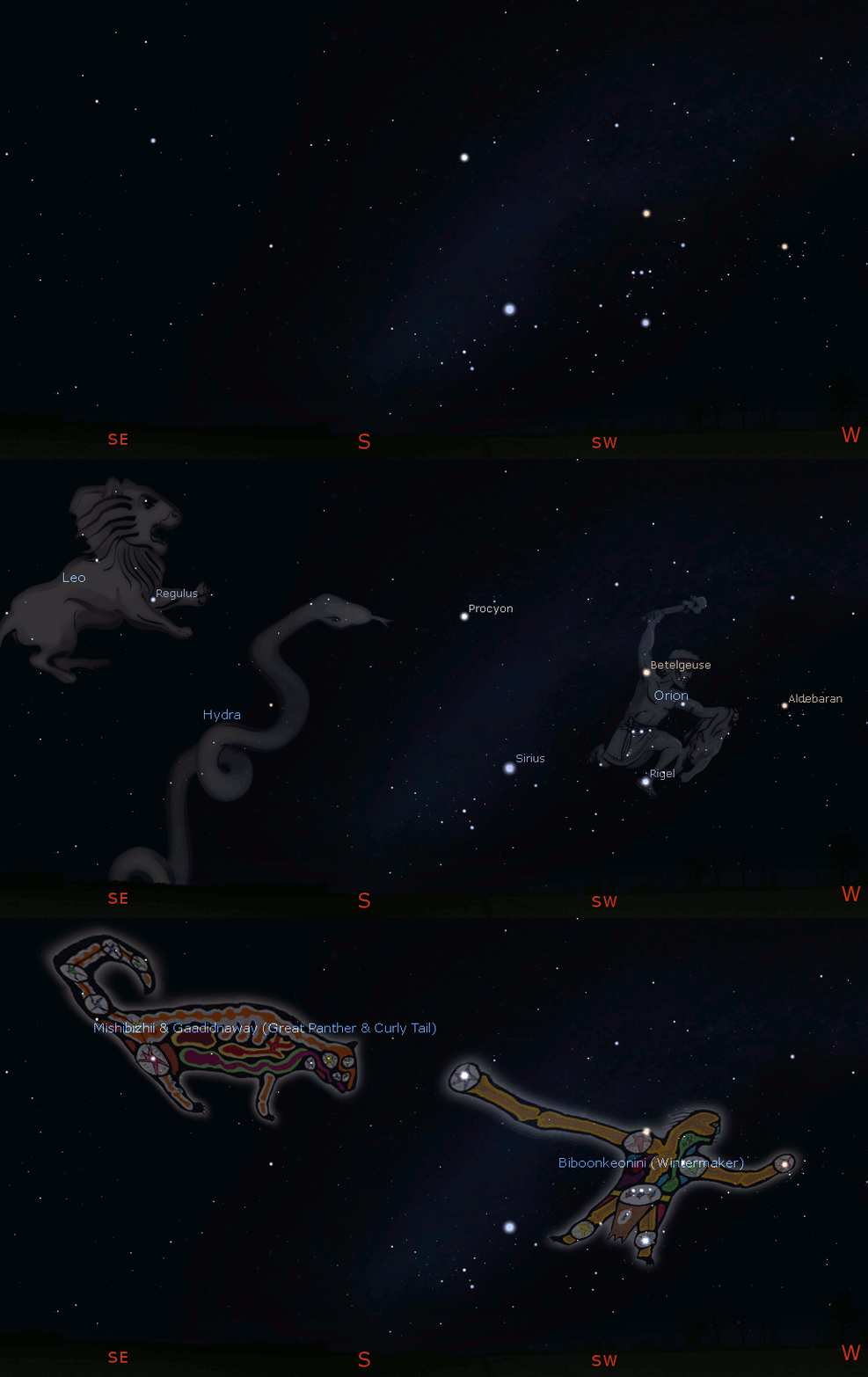
The Great Underwater Panther finder animation. Three frame animation of Unannotated sky, International Astronomical Union constellations, and Anishinaabe (Ojibwe) constellations of Curly Tail and Wintermaker. Click on the image to enlarge. Created using Stellarium and GIMP. Additional credits below.
The time is set for the above image is 10 pm on March 9th.
The constellation art is part of the latest versions of Stellarium. Ojibwe (Anishinaabe) constellation art by Annette S Lee and William Wilson from Ojibwe Sky Star Map Constellation Guide, ISBN 978-0-615-98678-4. There is also an Ojibwe Sky Star Map poster suitable for framing.
03/04/2021 – Ephemeris – A very crabby constellation
Mar 4. This is Ephemeris for Thursday, March 4th. Today the Sun will be up for 11 hours and 20 minutes, setting at 6:34, and it will rise tomorrow at 7:12. The Moon, 1 day before last quarter, will rise at 1:26 tomorrow morning.
Lying between the stars Castor and Pollux in Gemini high in the southeast and the star Regulus in Leo the Lion in the east-southeast is the dimmest constellation of the zodiac, Cancer the crab. To me its 5 brightest stars make an upside down Y. There are the stars in the center of the constellation Asellus Borealis and Asellus Australis, the north and south donkeys. There’s a fuzzy spot between and just west of them called Praesepe, the manger from which they are supposedly eating. In binoculars, it resolves into a cluster of stars called the Beehive star cluster. We amateur astronomers also know it as M 44, the 44th object on 18th century comet hunter Charles Messier’s list of fuzzy objects that might be mistaken for comets.
The astronomical event times given are for the Traverse City/Interlochen area of Michigan. They may be different for your location.
Addendum
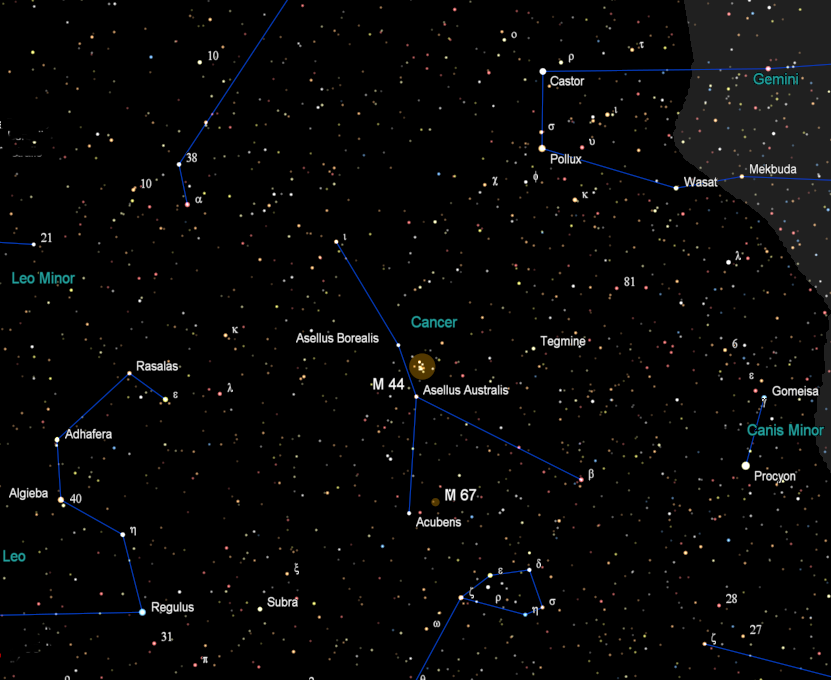
The constellation Cancer finder chart. Created using Cartes du Ciel (Sky Charts).
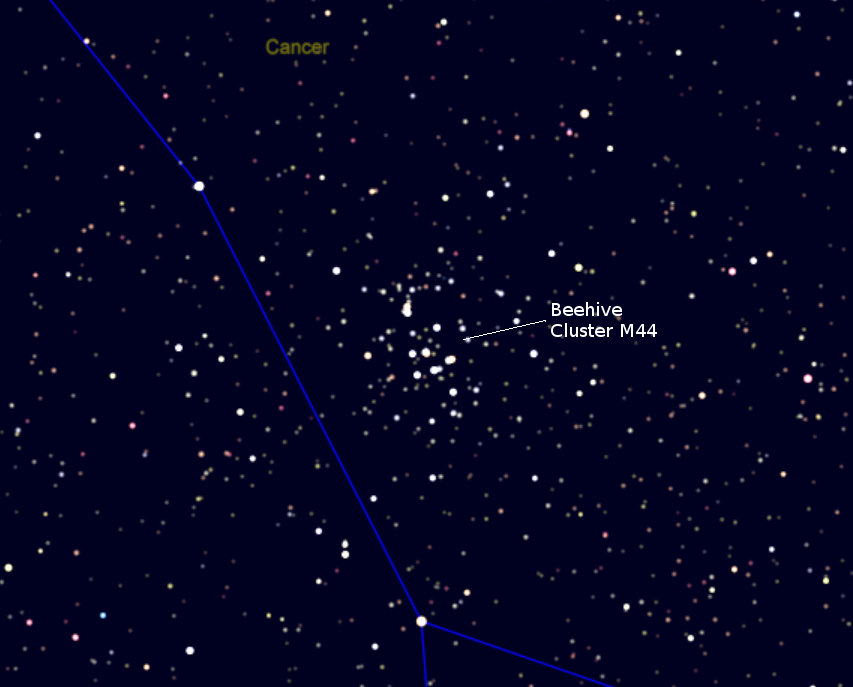
The Beehive star cluster, M44. Its ancient name was the Praesepe or manger when glimpsed by the naked eye. Created using Cartes du Ciel (Sky Charts)
Note in the top image above the star cluster M 67 at the bottom of Cancer, near the star Acubens. M 67 requires a small telescope to spot. They are both open or galactic star clusters which lie in or very near the plane of the Milky Way, denoted by the milky band. Part of the milky band can be seen at the upper right of the chart. M 44 is quite close to us, at only 610 light years away so is physically close to the plane of the Milky Way. M67, however is 2,610 to 2,930 light years away and is quite a bit farther than M 44 from the plane of the Milky Way. It is also much older (4 billion years old) than the stars of the Beehive (600 to 700 years old).
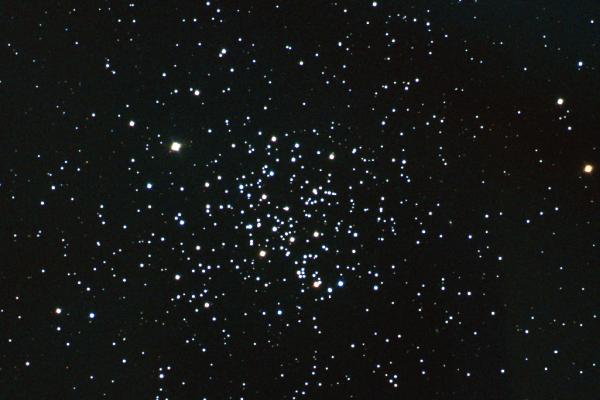
M67 is a beautiful telescopic object. Credit Nigel Sharp, Mark Hanna, AURA/NOAO/NSF.
02/12/2021 – Ephemeris – Monoceros the unicorn
This is Ephemeris for Darwin Day, Friday, February 12th. Today the Sun will be up for 10 hours and 20 minutes, setting at 6:07, and it will rise tomorrow at 7:45. The Moon, 1 day past new, will set at 7:07 this evening.
Among all the constellations in the sky of animals real and mythical, there is also a unicorn. It’s called Monoceros, and inhabits the southeastern sky at 8 p.m. mostly bounded by Orion on the right, Canis Major, the great dog below and Canis Minor, the little dog to the left and above. Unfortunately for observers without a telescope Monoceros, is devoid of any but the faintest stars. Maybe that’s why no one sees unicorns anymore. It has many faint stars because the Milky Way runs through it. To the telescope it is a feast of faint nebulae or clouds of gas and dust, the birthplace of stars, including the red rose of the Rosette Nebula, and Hagrid’s Dragon Cluster (NGC 2301). It also contains a beautiful telescopic triple star system, Beta (β) Monocerotis.
The event times given are for the Traverse City/Interlochen area of Michigan. They may be different for your location.
Addendum
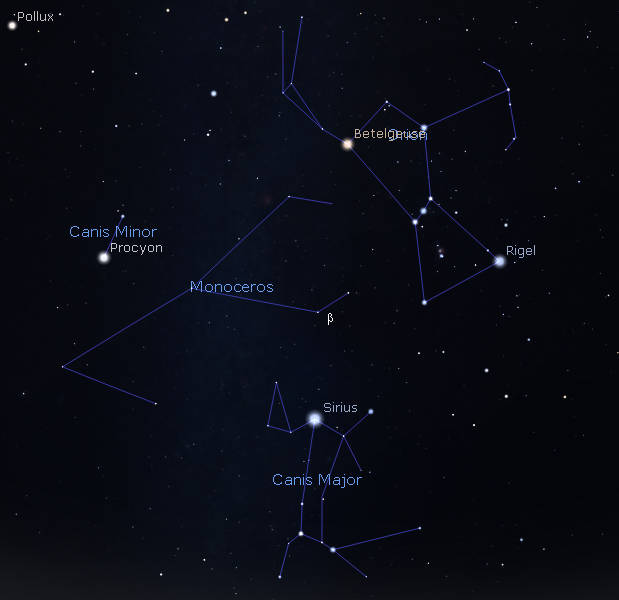
Monoceros finder chart showing neighboring constellations for about 8 pm in mid-February. Created using Stellarium.
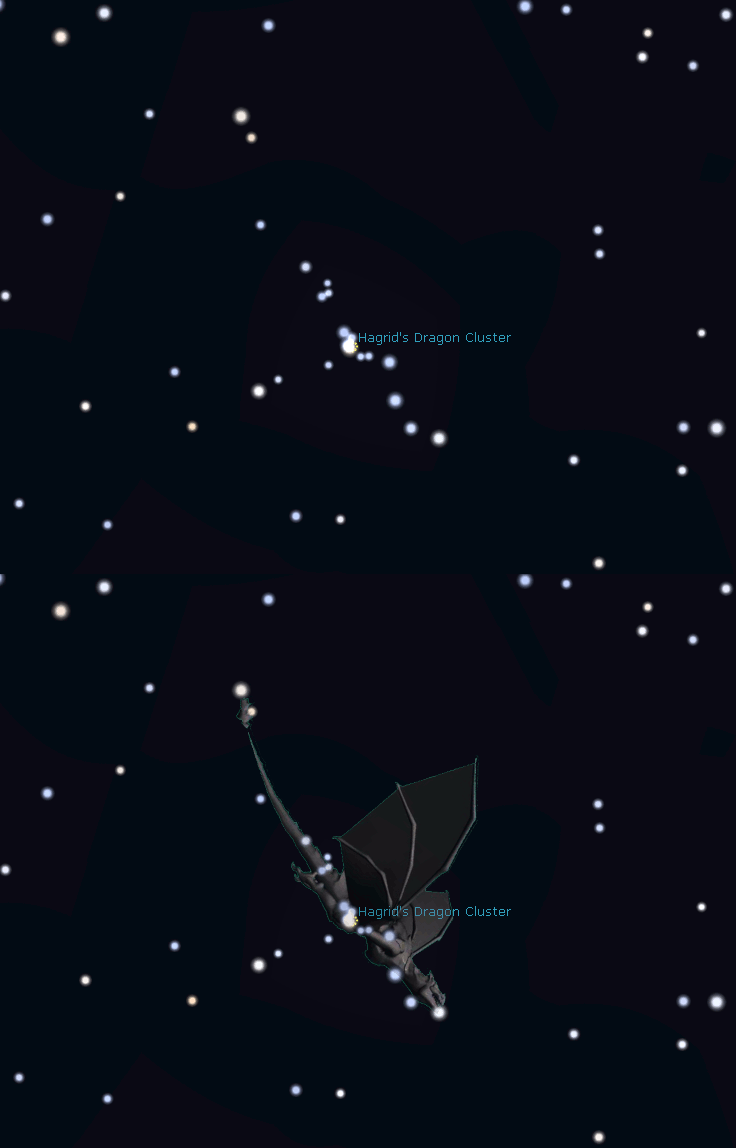
The brighter stars of NGC 2301 (Hagrid’s Dragon Cluster, AKA Great Bird Cluster and Copeland’s Golden Worm). It’s also in two other catalogs: Cr 119 and Mel 54. Created using Stellarium and GIMP. Dragon from “Dragon Flying Cycle” on YouTube by Simon Hussey.
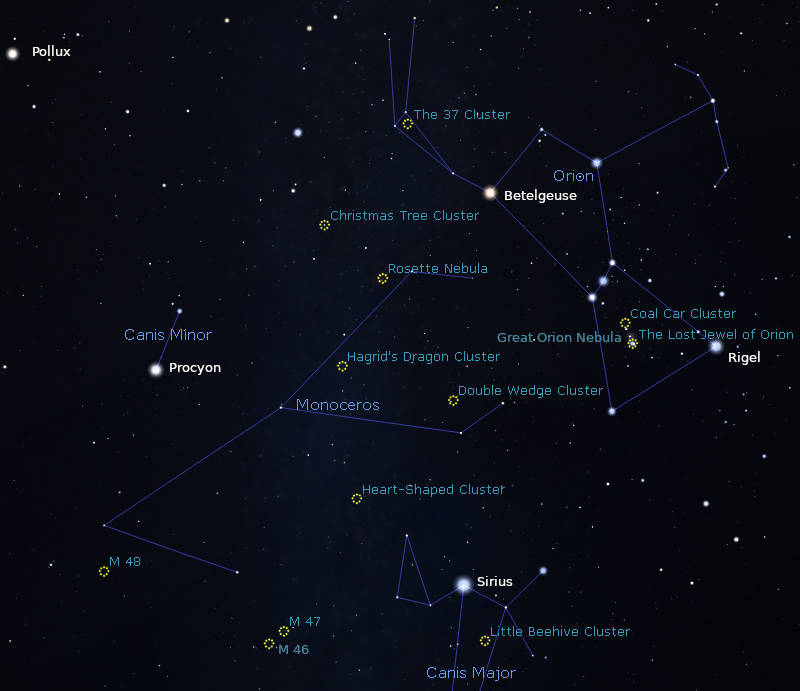
Deep Sky Objects in and around Monoceros. Click on the image to enlarge. Created using Stellarium.
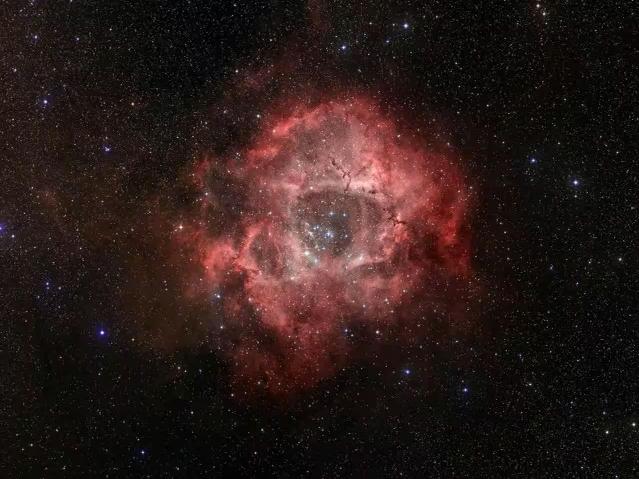
Rosette Nebula in the infrared from the Spitzer Space Telescope. The star cluster in the center is visible in a telescope, but the nebula is strictly photographic. Credit: NASA/JPL/Caltech.
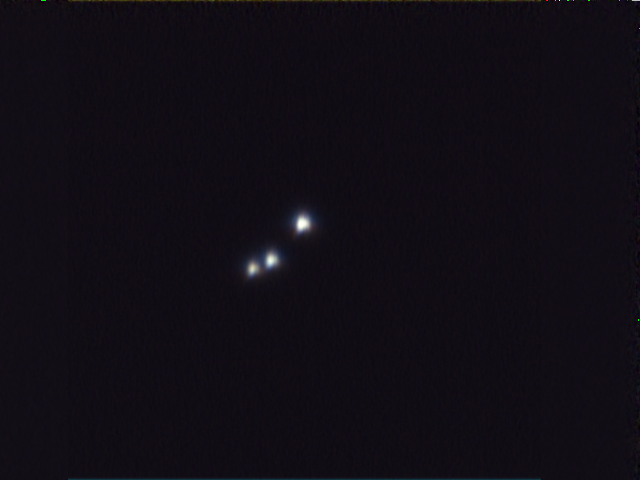
Telescopic Beta Monocerotis. William Hershel, discoverer of Uranus, said that it was “One of the most beautiful sights in the heavens.” Credit: F. Ringwald, Fresno State.
02/11/2021 – Ephemeris – The Winter Triangle
This is Ephemeris for Thursday, February 11th. Today the Sun will be up for 10 hours and 17 minutes, setting at 6:06, and it will rise tomorrow at 7:47. The Moon is new today, and won’t be visible.
I usually talk about the Winter Circle of bright stars, but some other astronomers talk about the Winter Triangle. The stars involved are Betelgeuse in the hunter Orion, Sirius in Canis Major, Orion’s large hunting dog, and Procyon in Canis Minor, his other small hunting dog. These three stars enclose a rather blank piece of sky with the faint Milky Way running through it and the almost invisible constellation of Monoceros the unicorn. The Summer Triangle has three bright stars with no other close competition. The Winter Triangle has four other bright stars near it. Any three of these would make a nice triangle. One of these constellations Canis Minor is tiny, with Procyon and one other star. It makes me think of a dachshund, or maybe, if I’m hungry, a hot dog.
The event times given are for the Traverse City/Interlochen area of Michigan. They may be different for your location.
Addendum
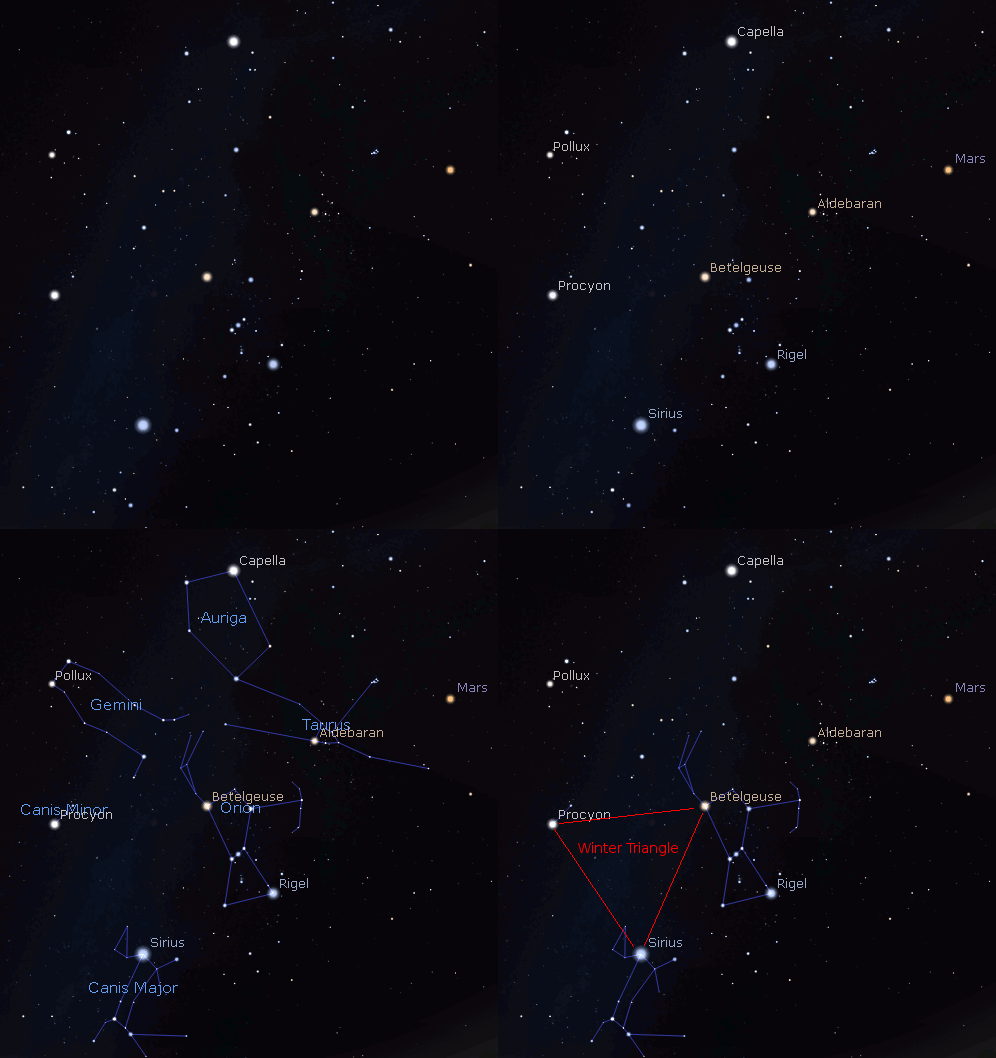
Winter Triangle finder animation. It shows the star field, named first magnitude stars, then their constellations, then the Winter Triangle and constellations of the three stars. Click on the image to enlarge. Created using Stellarium and GIMP.
 Bob Moler's Ephemeris Blog