Archive
05/19/2021 – Ephemeris – Let’s search for the naked-eye planets for this week
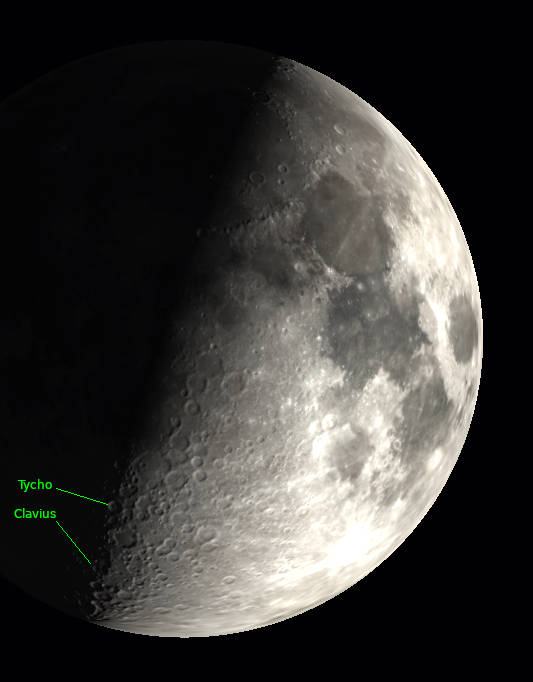
This is Bob Moler with Ephemeris for Wednesday, May 19th. Today the Sun will be up for 14 hours and 59 minutes, setting at 9:09, and it will rise tomorrow at 6:09. The Moon, at first quarter today, will set at 3:26 tomorrow morning.
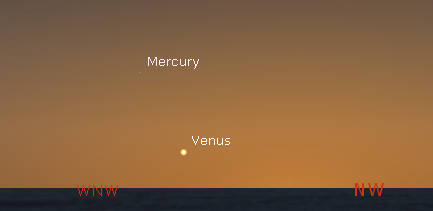
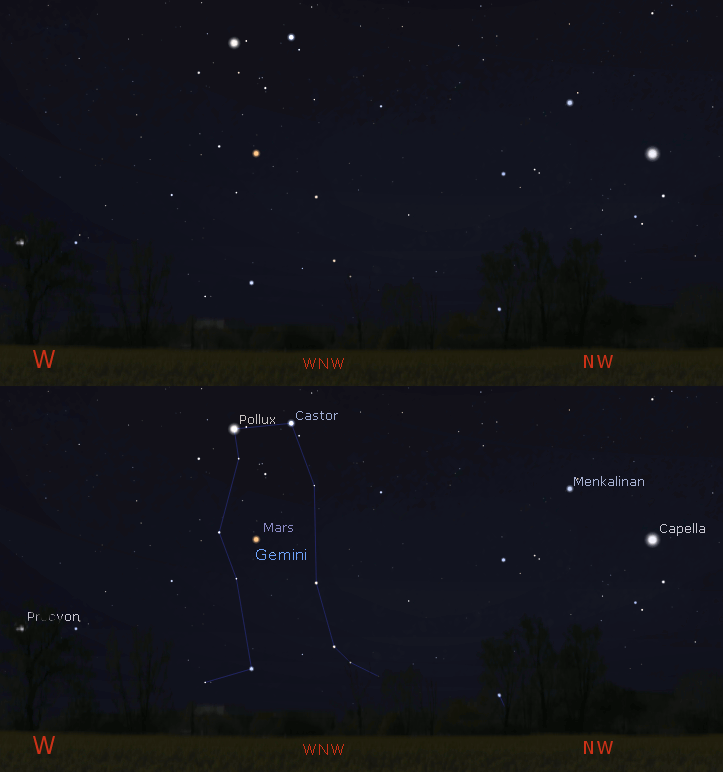
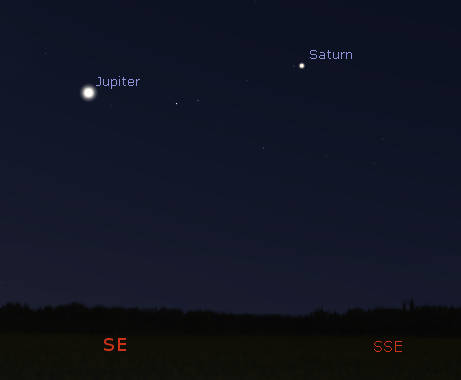
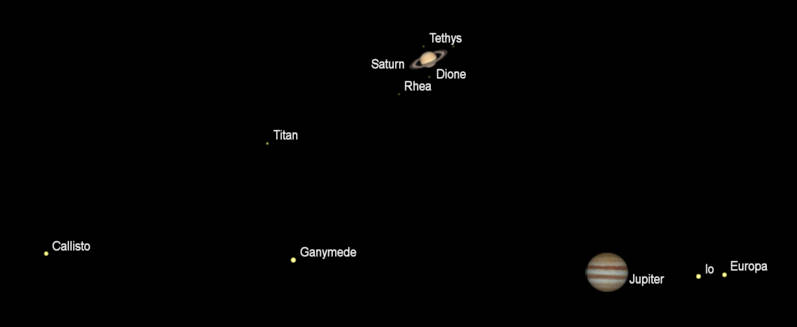
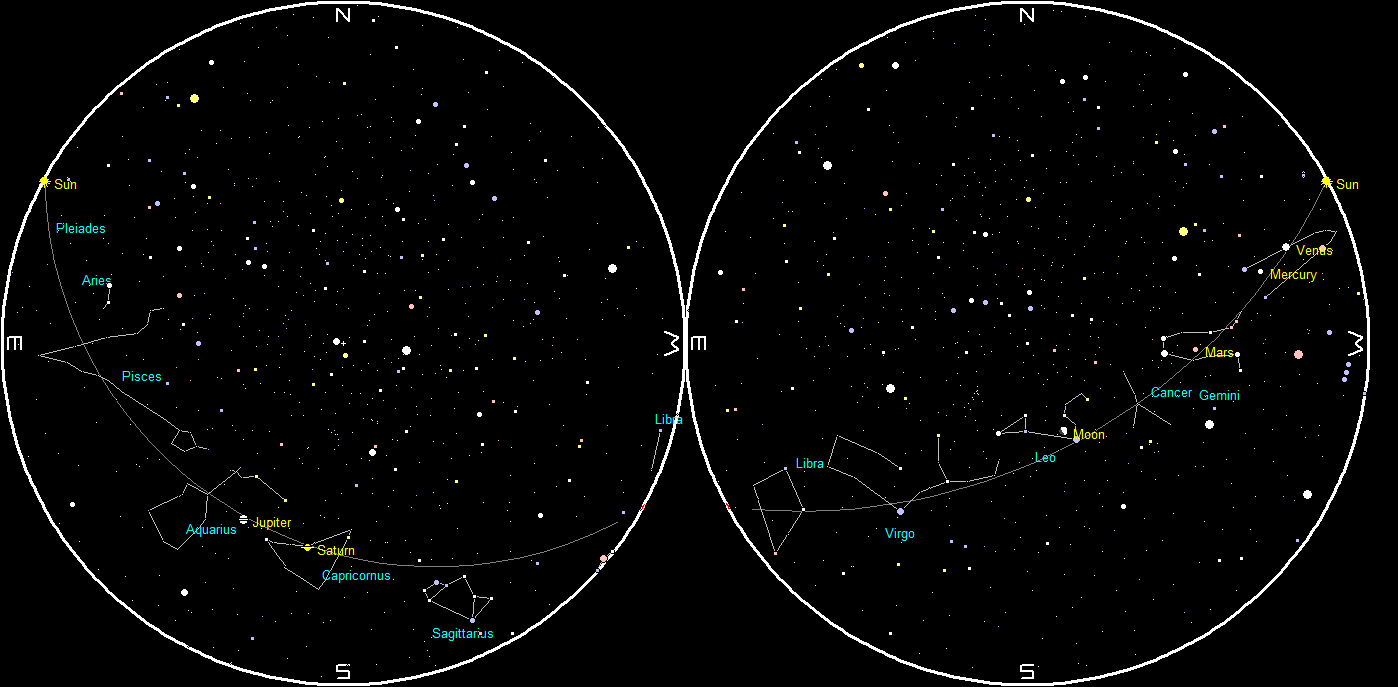
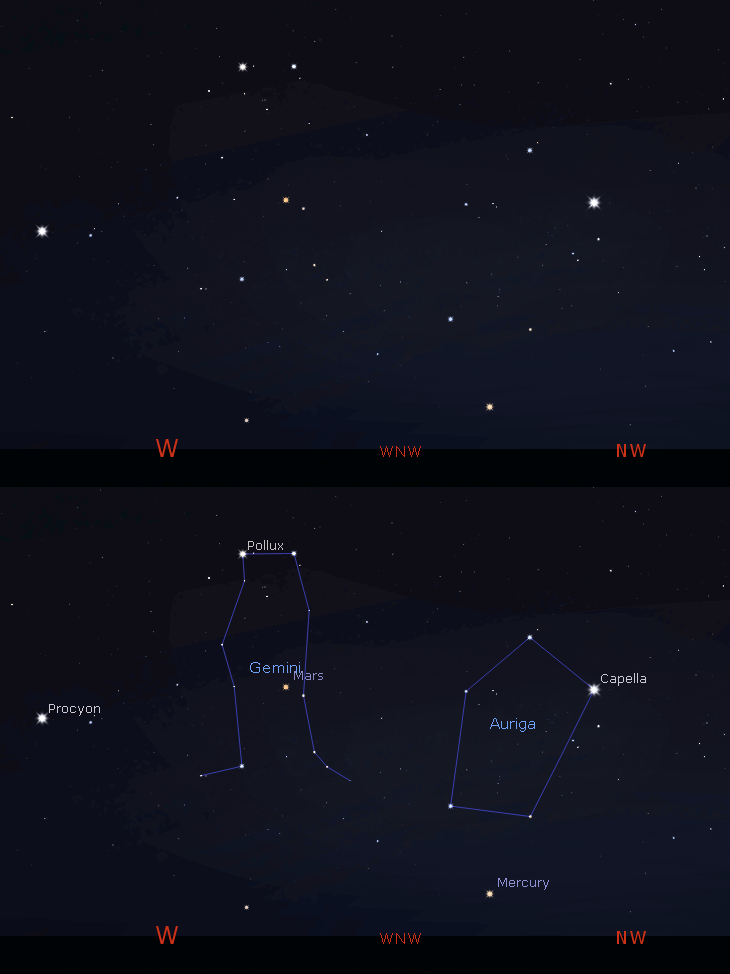
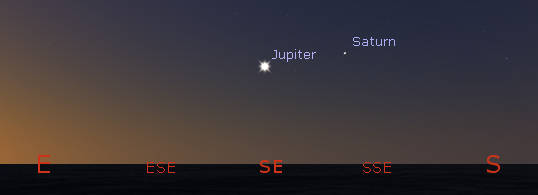
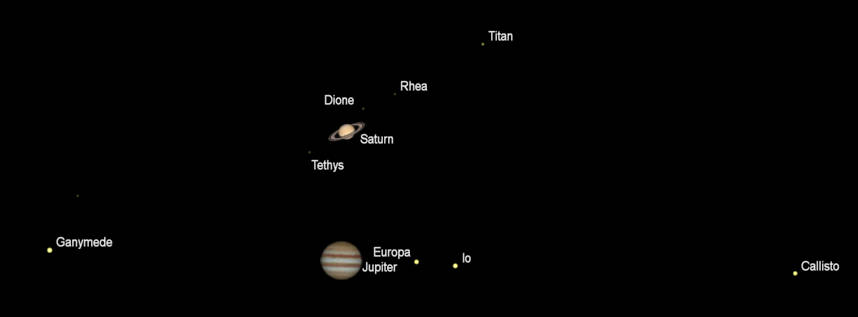
Let’s search for the naked-eye planets for this week. Mars will be joined by two more planets seen in twilight. Both Mercury and Venus are now just above where the Sun set. By 10 pm Mercury should be able to be spotted low in the west-northwest. Venus might be spotted lower and somewhat earlier, it’s a lot brighter than Mercury. Venus will be setting at 10:21 pm with Mercury following at 11:04. Mars can be found in the west at 10:30 tonight, in the constellation of Gemini the twins. Tonight it’s in the middle of the constellation. Mars will set at 12:42 am. Jupiter and Saturn, are in the morning sky. Saturn will rise at 2:03 am, with brighter Jupiter rising at 2:43 am. By 5 am they will be in the southeast in the morning twilight.
The astronomical event times given are for the Traverse City/Interlochen area of Michigan. They may be different for your location.
Addendum
05/18/2021 – Ephemeris – Eclipses visible in Northern Michigan this year
This is Ephemeris for Tuesday, May 18th. Today the Sun will be up for 14 hours and 56 minutes, setting at 9:08, and it will rise tomorrow at 6:10. The Moon, 1 day before first quarter, will set at 2:57 tomorrow morning.
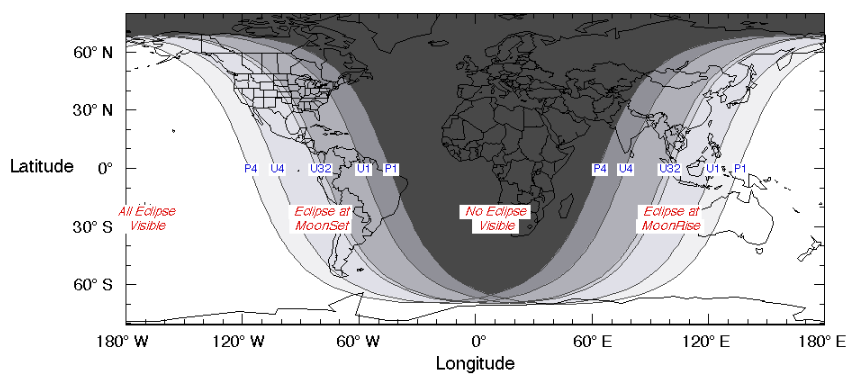
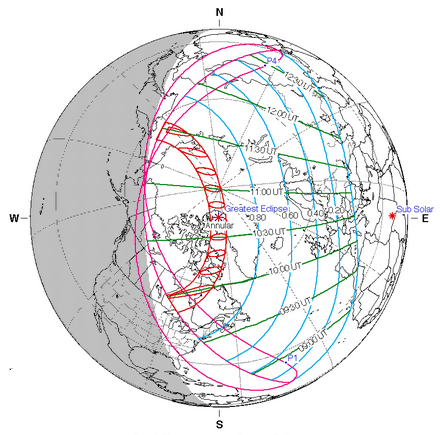
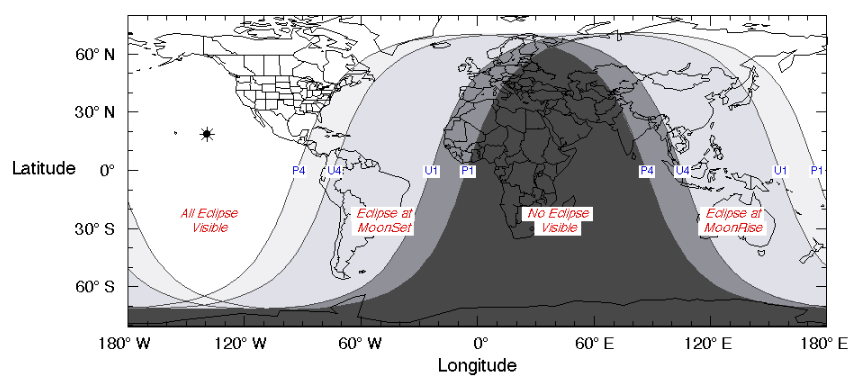
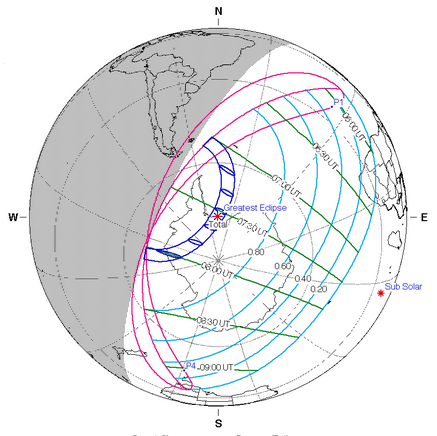
This year we will see in part or in full three eclipses from our Northern Michigan location. The first will be the start of a total lunar eclipse next week Wednesday, May 26th. It will start just before sunrise, which for a full moon is around moonset. Our next eclipse will be a solar eclipse that starts, for us, before sunrise on June 10th. In fact, most of the eclipse will occur before sunrise for us in Northern Michigan. The farther north and east of us the more of the eclipse you’ll see. I’ll have more information on the lunar in the next week of programs. And the solar eclipse as we approach that date. We have a final lunar eclipse this year. That will occur in the wee morning hours of November 19th, a partial, but almost total eclipse.
The astronomical event times given are for the Traverse City/Interlochen area of Michigan. They may be different for your location.
Addendum
The four eclipses that occur in 2021
We in Northern Michigan we’ll see part of the first two and all of the third.
May 26, 2021 Total Lunar Eclipse
June 10, 2021 Annular Solar Eclipse
November 19, 2021 Partial Lunar Eclipse
December 4, 2021 Total Solar Eclipse
05/17/2021 – Ephemeris – The Moon tonight
This is Ephemeris for Monday, May 17th. Today the Sun will be up for 14 hours and 54 minutes, setting at 9:06, and it will rise tomorrow at 6:11. The Moon, 2 days before first quarter, will set at 2:25 tomorrow morning.
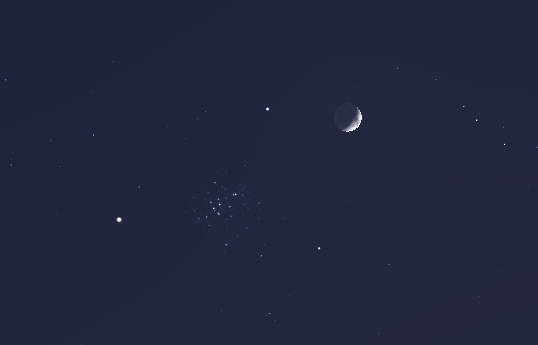
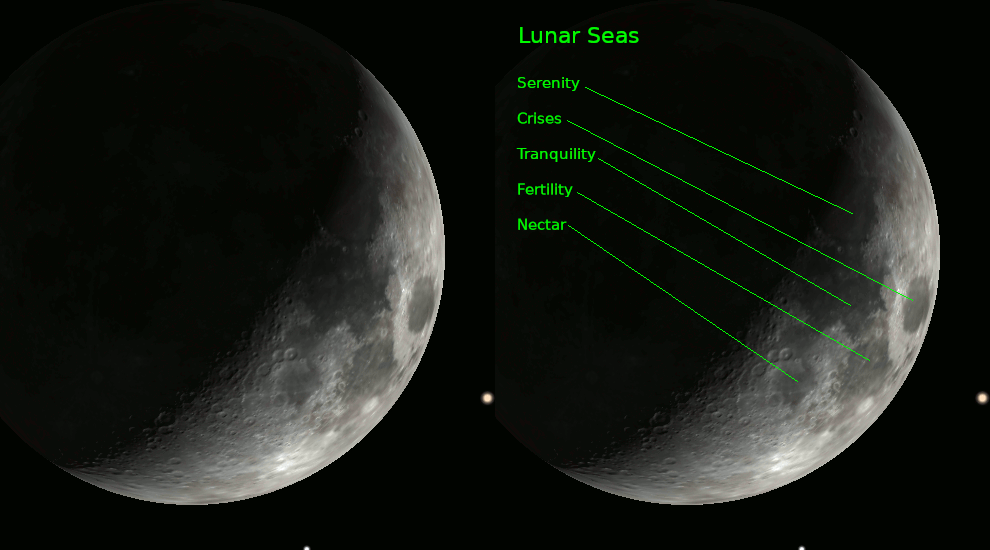
The Moon tonight reveals a bit more territory than it did last night, and will every night until full moon. The Moon’s solar day equals a lunar month of about 29 and a half of our days. As seen in binoculars, below and left of The distinctly oval Sea of Crises, or Mare Crisium, is the Sea of Fertility, or Mare Fecunditatis. To the left of the Sea of Crises, the Sea of Tranquility (Tranquilitatis) where the Apollo 11 crew landed. Above that half of Sea of Serenity has come into daylight. Tonight the Beehive star cluster will be visible below and left of the Moon. It should be easily visible in binoculars and has a vaguely triangular shape. It was known to the ancients as Praesepe, the manger, who saw it as a glowing spot on moonless nights.
The astronomical event times given are for the Traverse City/Interlochen area of Michigan. They may be different for your location.
Addendum
05/14/2021 – Ephemeris – Astronomy Day Star Party this Saturday
This is Bob Moler with Ephemeris for Friday, May 14th. Today the Sun will be up for 14 hours and 48 minutes, setting at 9:03, and it will rise tomorrow at 6:14. The Moon, 3 days past new, will set at 12:07 tomorrow morning.
Tomorrow is International Astronomy Day, to celebrate it the Sleeping Bear Dunes National Lakeshore and Grand Traverse Astronomical Society will hold a special virtual star party via the Zoom Internet app. If it’s clear, Northwestern Michigan College’s professor Jerry Dobek will be transmitting live images of celestial objects that will look pretty much like what one sees through the eyepiece of a telescope. Dr. Dobek will be using the Joseph H. Rogers 0.4 meter main telescope and commenting will be members of the Grand Traverse Astronomical Society. Featured objects will be the 4-day-old crescent Moon, the tiny and elusive planet Mercury, star clusters and galaxies. The event starts at 9 pm though best viewing won’t begin until after about 9:30. Go to www.gtastro.org for instructions and a link.
The astronomical event times given are for the Traverse City/Interlochen area of Michigan. They may be different for your location.
Addendum
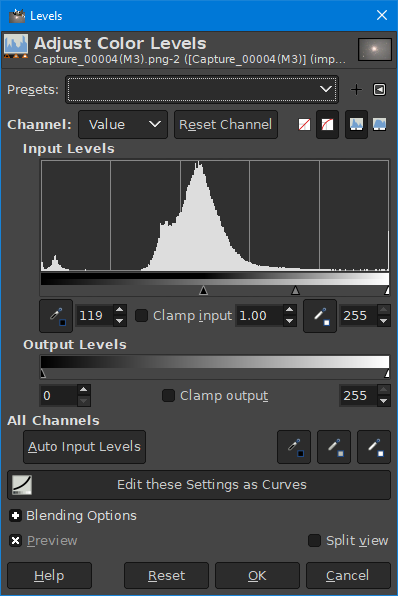
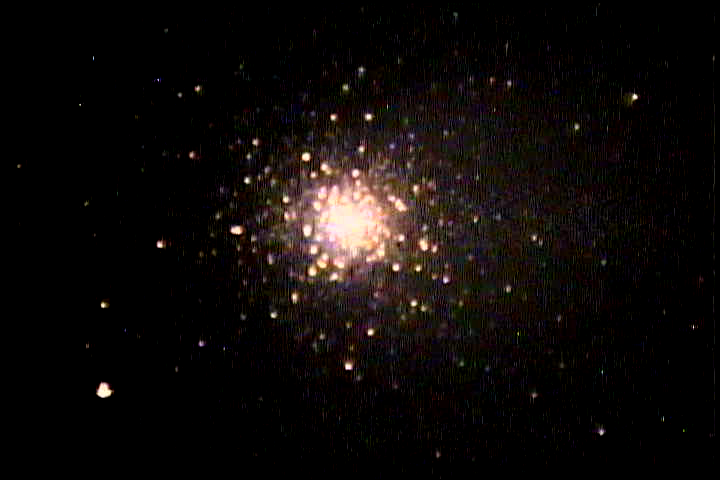
While attending the virtual star party you can capture the screen imaged with Alt/Print Screen keys. Paste the image into a paint or other program. I use GIMP (Gnu Image Manipulation Program), which fits my budget… It’s free. You can save the image of play with it. What I do with it is to darken the background. It should be black.
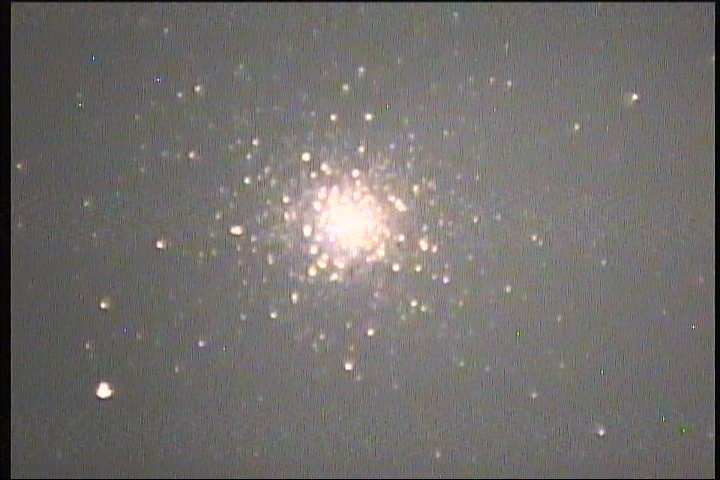
I paste this image into GIMP. I use the Levels control under the Color tab.
05/12/2021 – Ephemeris – Searching for the naked-eye planets for this week
This is Ephemeris for Wednesday, May 12th. Today the Sun will be up for 14 hours and 43 minutes, setting at 9:01, and it will rise tomorrow at 6:16. The Moon, 1 day past new, will set at 10:06 this evening.
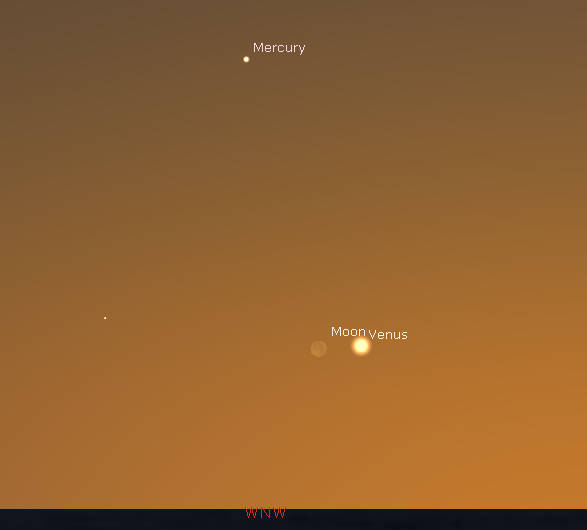
Let’s search for the naked-eye planets for this week. Mars will be joined by two more planets seen in twilight. Both Mercury and Venus are now just above where the Sun set. By 9:30 pm Mercury should be able to be spotted low in the west-northwest. Venus might be spotted lower and somewhat earlier. Venus will be setting at 10:02 pm with Mercury following at 11 pm. Mars can be found in the west at 10 pm tonight, in the constellation of Gemini the twins. Tonight it’s in the middle of the constellation. Mars will set at 1:02 am. Jupiter and Saturn, are in the morning sky. Saturn will rise at 2:30 am, with brighter Jupiter rising at 3:13 am. By 5:30 am they will be low in the southeast in the morning twilight.
The astronomical event times given are for the Traverse City/Interlochen area of Michigan. They may be different for your location.
Addendum
05/11/2021 – Ephemeris – The Big Dipper as seen by many peoples
This is Ephemeris for Tuesday, May 11th. Today the Sun will be up for 14 hours and 41 minutes, setting at 9 pm, and it will rise tomorrow at 6:17 am. The Moon is new today, and won’t be visible.
The Big Dipper is overhead, actually north of overhead this evening when it gets dark for us in Michigan, it’s seven stars shining brightly. The Big Dipper is not an actual constellation, recognized internationally. It’s part, the hind part, of Ursa Major, the great bear. The Big Dipper is an asterism or informal constellation. It is a distinctly North American constellation. For fugitive slaves, fleeing the southern states in the days before the Civil War, the Drinking Gourd, as they called it, showed the direction north to freedom. In England the dipper stars become the Plough (plow), or Charles’ Wain (Charlemagne’s Wagon). In France, known for culinary delights it was the saucepan, or the cleaver. Many cultures saw what was familiar to them in these seven bright stars.
The astronomical event times given are for the Traverse City/Interlochen area of Michigan. They may be different for your location.
Addendum
05/06/2021 – Ephemeris – Corvus, Crater, Hydra and Apollo
This is Ephemeris for Thursday, May 6th. Today the Sun will be up for 14 hours and 28 minutes, setting at 8:54, and it will rise tomorrow at 6:24. The Moon, 3 days past last quarter, will rise at 5:04 tomorrow morning.
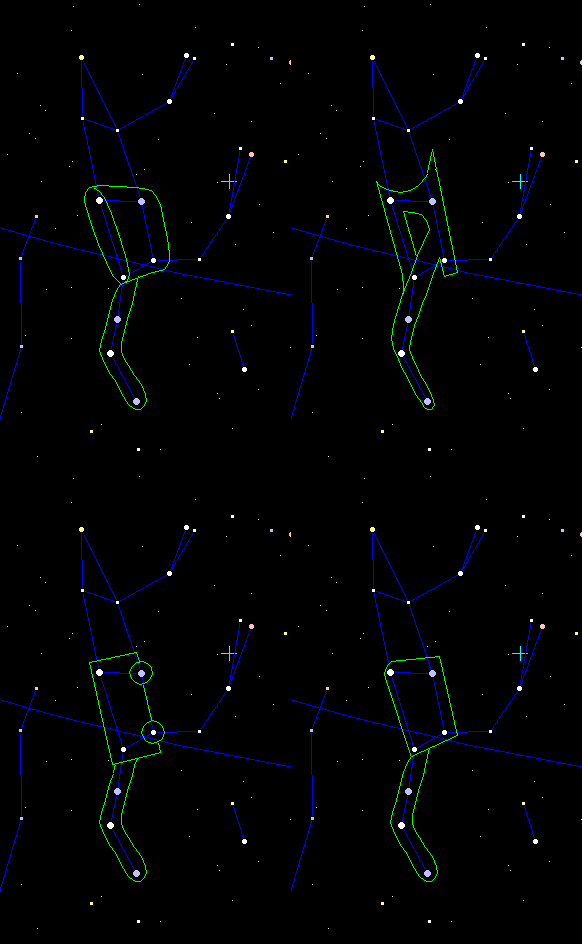
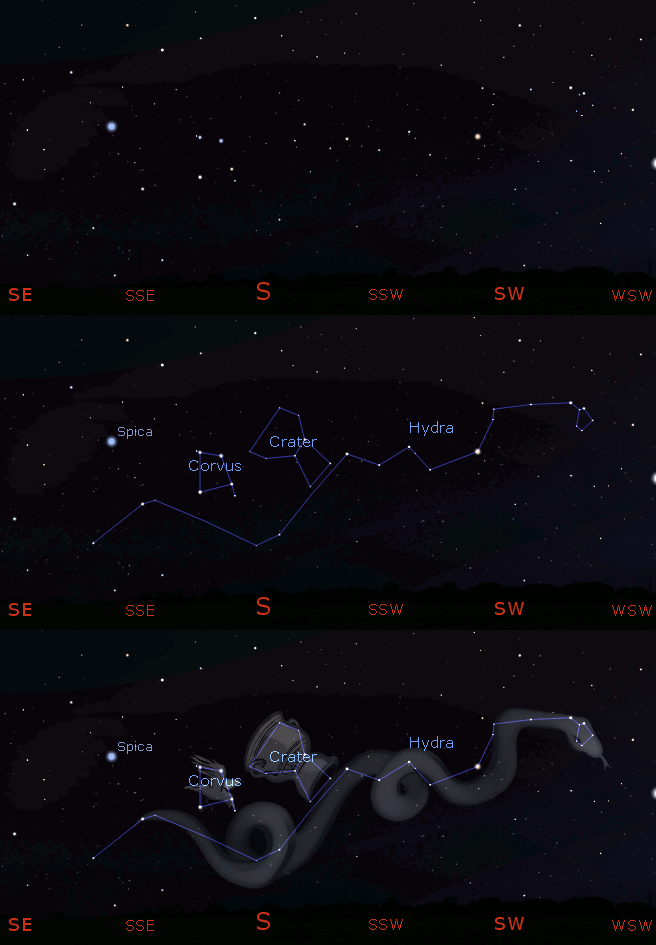
The small constellation of Corvus the crow is located low in the south at 10:30 this evening. It’s made of 5 dim stars, but the pattern is a distinctive but distorted box with two stars at the upper left marking that corner. To the right is a fainter constellation of a thick stemmed goblet called Crater. Both appear above the long constellation of Hydra the water snake who is slithering just above the southern horizon. In Greek mythology Corvus, then white, was the god Apollo’s pet. Apollo once bid Corvus to take a cup and fetch him some water. Corvus however dallied and waited for a green fig to ripen. He grabbed a snake and returned with a story as to how the snake had delayed him. The angry Apollo turned the crow and all crows to this day black.
The astronomical event times given are for the Traverse City/Interlochen area of Michigan. They may be different for your location.
Addendum
05/04/2021 – Ephemeris – We cross Halley’s Comet debris this week
This is Bob Moler with Ephemeris for Tuesday, May 4th. Today the Sun will be up for 14 hours and 23 minutes, setting at 8:51, and it will rise tomorrow at 6:26. The Moon, 1 day past last quarter, will rise at 4:20 tomorrow morning.
The Eta Aquariid meteor shower will reach their peak for us Thursday morning the 6th. The Eta Aquariids are caused by bits of Halley’s Comet, passing the Earth’s orbit heading out from the Sun. The Orionids of late October are debris of Halley’s comet passing the Earth’s orbit heading in toward the Sun. The Eta Aquariids are named for the star nearest the radiant of the meteor shower. The constellation of Aquarius has many shower radiants, which is why the shower is named for a star in Aquarius. The radiant rises shortly before 3:30am and astronomical twilight begins an hour later. There’s perhaps another half hour of visibility after that. The peak will occur Thursday morning where 20 meteors per hour or more might be seen.
The astronomical event times given are for the Traverse City/Interlochen area of Michigan. They may be different for your location.
Addendum
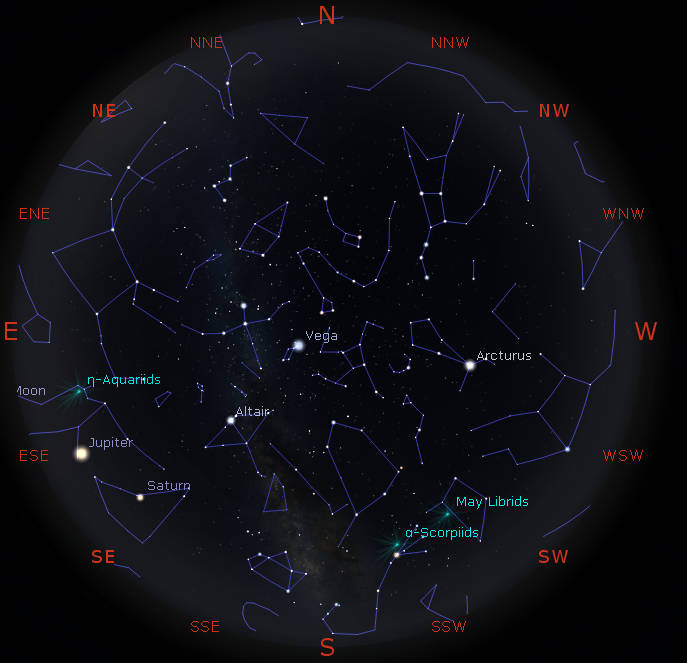
two other minor meteor showers are active then with only a handful of meteors an hour
compared to the Eta Aquariids’ somewhat higher rates. The funny looking “n” character
next to Aquariid is the Greek letter Eta. Chart created using Stellarium.
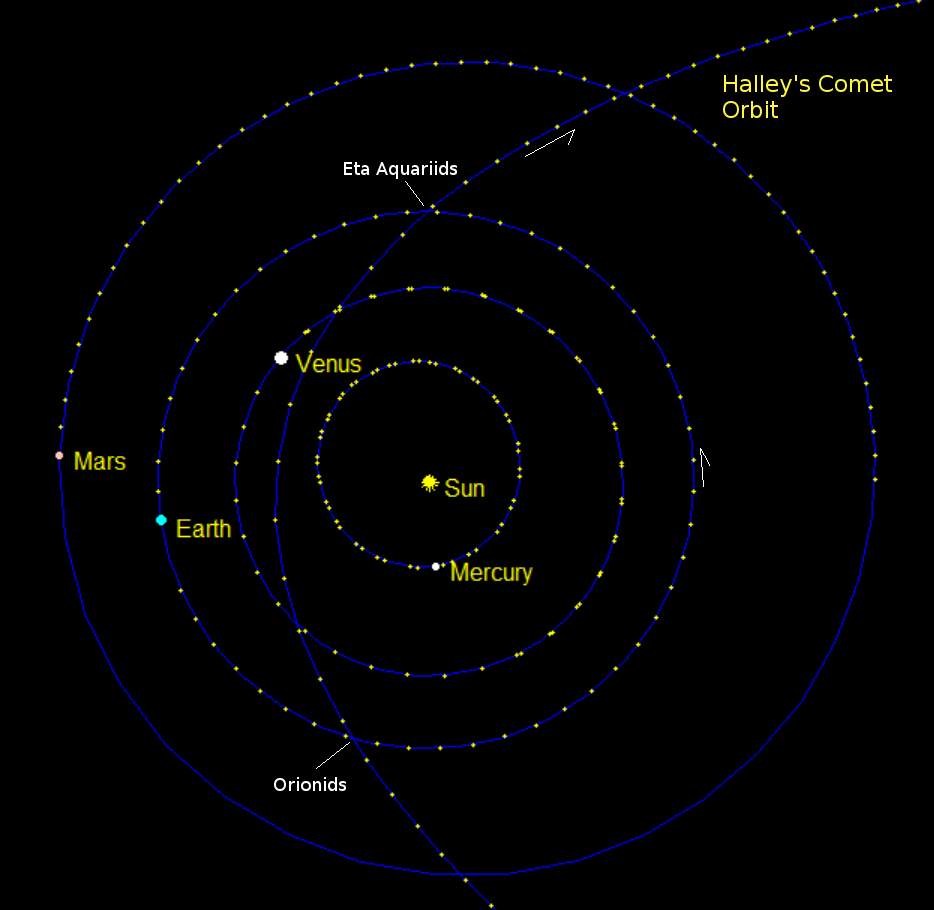
the inner solar system, and the Eta Aquariids when it’s leaving.
Credit my LookingUp program.
05/03/2021 – Ephemeris – The constellation of Virgo
This is Ephemeris for Monday, May 3rd. Today the Sun will be up for 14 hours and 21 minutes, setting at 8:50, and it will rise tomorrow at 6:28. The Moon, at last quarter today, will rise at 3:52 tomorrow morning.
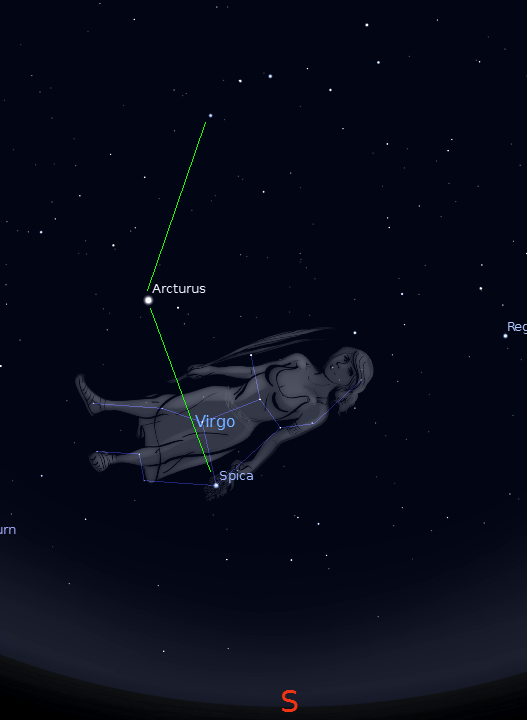
Tonight in the sky: to the southeast is the bright star Spica. Another way to find the star is to find the Big Dipper high overhead and follow the arc of the handle to the bright star Arcturus, and straighten the arc to a spike to meet Spica. It is in the constellation and member of the zodiac: Virgo the virgin. Virgo is a large constellation of a reclining woman holding a stalk of wheat. The bright star in the center of the constellation, Spica, is the head of that spike of wheat; and as such it ruled over the harvest in two of Virgo’s guises as the goddesses Persephone and Ceres. Ceres is now a dwarf planet and the root of the word cereal. Virgo is also identified as Astraea the goddess of justice. The constellation of Libra, the scales of justice, lies at her feet.
The astronomical event times given are for the Traverse City/Interlochen area of Michigan. They may be different for your location.
Addendum
04/30/2021 – Ephemeris – Previewing May skies
This is Bob Moler with Ephemeris for Arbor Day, Friday, April 30th. Today the Sun will be up for 14 hours and 13 minutes, setting at 8:46, and it will rise tomorrow at 6:32. The Moon, 3 days before last quarter, will rise at 1:34 tomorrow morning.
The month of May starts tomorrow, when spring really gets going. Daylight hours in the Interlochen/Traverse City area will increase from 14 hours and 15 minutes tomorrow to 15 hours 19 minutes on the 31st. The altitude, or angle, of the Sun above the southern horizon at local noon will ascend from 61 degrees now to 67 degrees at month’s end. The altitude of the Sun in the Straits area will be a degree lower than that, but your daylight hours will be a few minutes longer. Local apparent noon this month, when the Sun passes due south, will be about 1:38 p.m. This is the month of the Eta Aquariid meteor shower which will reach its peak next week Thursday morning. There will be about a 2-hour viewing period starting at 3:15 am. We will get a chance to see the beginning of a lunar eclipse near sunrise on Wednesday the 26th.
The astronomical event times given are for the Traverse City/Interlochen area of Michigan. They may be different for your location.
Addendum
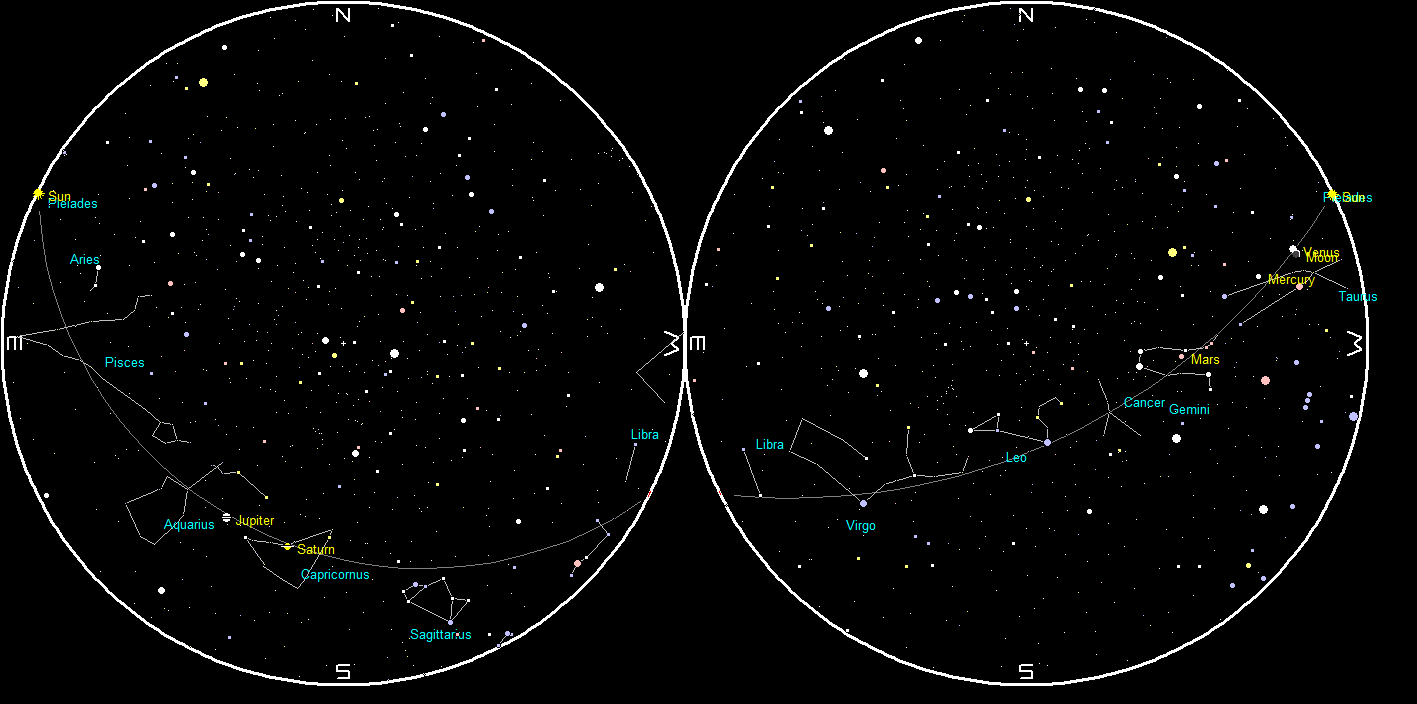
May Evening Star Chart
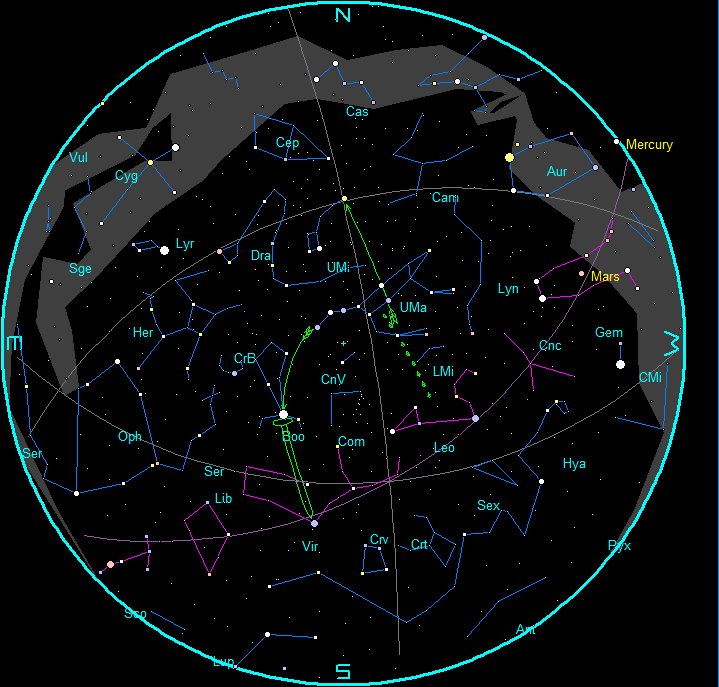
The planets and stars are plotted for the 15th at 11 p.m. EDT in the evening and 5 a.m. for the morning chart. These are the chart times. Note that Traverse City is located approximately 45 minutes behind our time meridian, West 75° longitude. (An hour 45 minutes behind our daylight saving time meridian during EDT). To duplicate the star positions on a planisphere you may have to set it to 1 hour 45 minutes earlier than the current time.
Note the chart times of 11 p.m. and 5 a.m. are for the 15th. For each week before the 15th add ½ hour (28 minutes if you’re picky). For each week after the 15th subtract ½ hour, or 28 minutes. The planet positions are updated each Wednesday on this blog. For planet positions on dates other than the 15th, check the Wednesday planet posts on this blog for weekly positions.
May Morning Star Chart
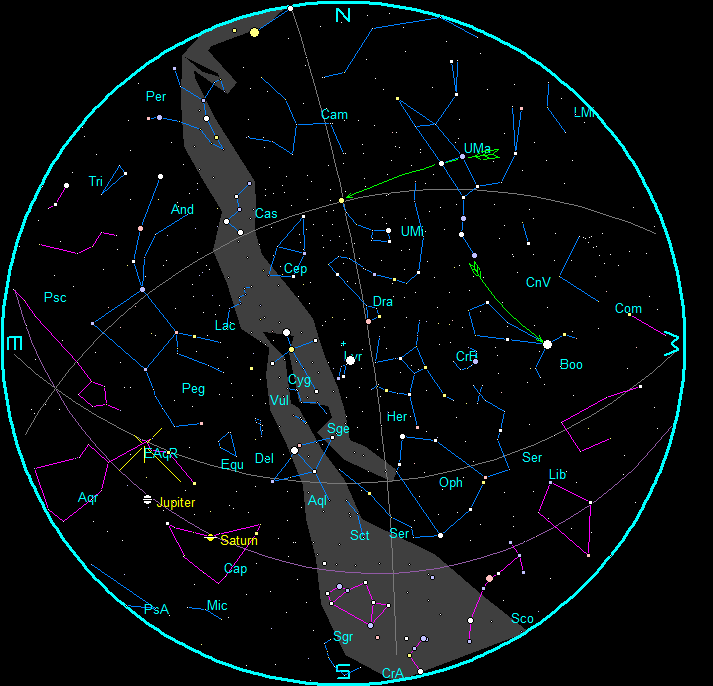
For a list of constellation names to go with the abbreviations click here.
- Pointer stars at the front of the bowl of the Big Dipper point to Polaris the North Star.
- Leaky dipper drips on Leo
- Follow the arc of the handle of the Big Dipper to the star Arcturus, and
- Extend like a spike to Spica,
- EaqR is the radiant of the Aquariid meteor shower that peaks on the 5th. Best viewing is before the peak this year due to the bright Moon.
Twilight Limits, Nautical and Astronomical
| EDT | |||||||
| Morning | Twilight | Evening | Twilight | Dark | Night | Moon | |
| Date | Astro. | Nautical | Nautical | Astro. | Start | End | Illum. |
| 2021-05-01 | 4h40m | 5h24m | 22h02m | 22h47m | 22h47m | 1h35m | 0.67 |
| 2021-05-02 | 4h38m | 5h23m | 22h04m | 22h49m | 22h49m | 2h32m | 0.57 |
| 2021-05-03 | 4h36m | 5h21m | 22h05m | 22h51m | 22h51m | 3h17m | 0.46 |
| 2021-05-04 | 4h33m | 5h19m | 22h07m | 22h53m | 22h53m | 3h52m | 0.36 |
| 2021-05-05 | 4h31m | 5h17m | 22h09m | 22h55m | 22h55m | 4h20m | 0.27 |
| 2021-05-06 | 4h29m | 5h16m | 22h10m | 22h57m | 22h57m | 4h29m | 0.18 |
| 2021-05-07 | 4h27m | 5h14m | 22h12m | 22h59m | 22h59m | 4h27m | 0.11 |
| 2021-05-08 | 4h25m | 5h12m | 22h13m | 23h01m | 23h01m | 4h25m | 0.06 |
| 2021-05-09 | 4h23m | 5h11m | 22h15m | 23h03m | 23h03m | 4h23m | 0.02 |
| 2021-05-10 | 4h21m | 5h09m | 22h16m | 23h05m | 23h05m | 4h21m | 0 |
| 2021-05-11 | 4h19m | 5h07m | 22h18m | 23h07m | 23h07m | 4h19m | 0 |
| 2021-05-12 | 4h17m | 5h06m | 22h19m | 23h09m | 23h09m | 4h17m | 0.02 |
| 2021-05-13 | 4h15m | 5h04m | 22h21m | 23h11m | 23h11m | 4h15m | 0.05 |
| 2021-05-14 | 4h13m | 5h03m | 22h23m | 23h13m | – | 4h13m | 0.1 |
| 2021-05-15 | 4h11m | 5h01m | 22h24m | 23h15m | 0h07m | 4h11m | 0.17 |
| 2021-05-16 | 4h09m | 5h00m | 22h26m | 23h17m | 1h00m | 4h09m | 0.25 |
| 2021-05-17 | 4h07m | 4h58m | 22h27m | 23h19m | 1h46m | 4h07m | 0.34 |
| 2021-05-18 | 4h05m | 4h57m | 22h28m | 23h21m | 2h25m | 4h05m | 0.44 |
| 2021-05-19 | 4h03m | 4h56m | 22h30m | 23h23m | 2h58m | 4h03m | 0.54 |
| 2021-05-20 | 4h01m | 4h54m | 22h31m | 23h24m | 3h26m | 4h01m | 0.65 |
| 2021-05-21 | 4h00m | 4h53m | 22h33m | 23h26m | 3h51m | 4h00m | 0.76 |
| 2021-05-22 | 3h58m | 4h52m | 22h34m | 23h28m | – | – | 0.85 |
| 2021-05-23 | 3h56m | 4h51m | 22h36m | 23h30m | – | – | 0.92 |
| 2021-05-24 | 3h54m | 4h49m | 22h37m | 23h32m | – | – | 0.98 |
| 2021-05-25 | 3h53m | 4h48m | 22h38m | 23h34m | – | – | 1 |
| 2021-05-26 | 3h51m | 4h47m | 22h40m | 23h36m | – | – | 0.99 |
| 2021-05-27 | 3h49m | 4h46m | 22h41m | 23h38m | – | – | 0.95 |
| 2021-05-28 | 3h48m | 4h45m | 22h42m | 23h39m | 23h39m | – | 0.89 |
| 2021-05-29 | 3h46m | 4h44m | 22h43m | 23h41m | 23h41m | 0h19m | 0.81 |
| 2021-05-30 | 3h45m | 4h43m | 22h45m | 23h43m | 23h43m | 1h11m | 0.72 |
| 2021-05-31 | 3h44m | 4h42m | 22h46m | 23h44m | 23h44m | 1h52m | 0.61 |
The twilight calendar was generated using Cartes du Ciel (Sky Charts), with some corrections.
See my blog post: Twilight Zone for the definitions of the different periods of twilight here: https://bobmoler.wordpress.com/2018/09/27/.
NASA Calendar of Planetary Events
May  1  Sa            Venus: 9.4° E
     1  Sa   5:37 am  Moon South Dec.: 25.6° S
     3  Mo   1:02 pm  Moon-Saturn: 4.4° N
     3  Mo   3:50 pm  Last Quarter
     3  Mo  11:01 pm  Mercury-Pleiades: 2.2° S
     4  Tu   5:00 pm  Moon-Jupiter: 4.9° N
     4  Tu   9:30 pm  Eta Aquariid Shower: ZHR = 60
    11  Tu   3:00 pm  New Moon
    11  Tu   5:54 pm  Moon Apogee: 406500 km
    13  Th   6:29 am  Moon Ascending Node
    13  Th   1:59 pm  Moon-Mercury: 2.4° N
    15  Sa   6:25 pm  Moon North Dec.: 25.6° N
    16  Su  12:47 am  Moon-Mars: 1.6° S
    17  Mo   1:59 am  Mercury Elongation: 22° E
    17  Mo   9:08 pm  Moon-Beehive: 3.1° S
    19  We   3:13 pm  First Quarter
    25  Tu   9:52 pm  Moon Perigee: 357300 km
    26  We   7:14 am  Full Moon
    26  We   7:19 am  Total Lunar Eclipse (Start is visible here)
    26  We   3:38 pm  Moon Descending Node
    28  Fr   3:21 pm  Moon South Dec.: 25.6° S
    28  Fr  11:01 pm  Mercury-Venus: 0.4° N
    30  Su   9:22 pm  Moon-Saturn: 4.3° N
    31  Mo   7:39 am  Mars-Pollux: 5.3° S
Jun  1  Tu            Venus: 17.5° E
Sky Events Calendar by Fred Espenak and Sumit Dutta (NASA’s GSFC),
http://eclipse.gsfc.nasa.gov/SKYCAL/SKYCAL.html.
Sun and Moon Rising and Setting Events
LU                  Ephemeris of Sky Events for Interlochen/TC
May, 2021    Local time zone: EDT
+-----------------------------------------------------------------------+
| DATE |  SUN     SUN  DAYLIGHT|   TWILIGHT*    |MOON  RISE OR    ILLUM |
|      |  RISE    SET    HOURS |  END    START  |PHASE SET** TIME FRACTN|
+=======================================================================+
|Sat  1| 06:32a  08:48p  14:15 | 10:00p  05:20a |      Rise 02:32a   70%|
+------+-----------------------+----------------+-----------------------+
|Sun  2| 06:30a  08:49p  14:18 | 10:02p  05:18a |      Rise 03:17a   59%|
|Mon  3| 06:29a  08:50p  14:21 | 10:03p  05:16a |L Qtr Rise 03:52a   48%|
|Tue  4| 06:28a  08:51p  14:23 | 10:05p  05:14a |      Rise 04:20a   38%|
|Wed  5| 06:26a  08:53p  14:26 | 10:06p  05:13a |      Rise 04:44a   28%|
|Thu  6| 06:25a  08:54p  14:28 | 10:08p  05:11a |      Rise 05:04a   20%|
|Fri  7| 06:24a  08:55p  14:31 | 10:09p  05:09a |      Rise 05:24a   13%|
|Sat  8| 06:22a  08:56p  14:33 | 10:11p  05:08a |      Rise 05:43a    7%|
+------+-----------------------+----------------+-----------------------+
|Sun  9| 06:21a  08:57p  14:36 | 10:13p  05:06a |      Rise 06:03a    3%|
|Mon 10| 06:20a  08:58p  14:38 | 10:14p  05:04a |      Rise 06:25a    1%|
|Tue 11| 06:18a  09:00p  14:41 | 10:16p  05:03a |New   Set  09:03p    0%|
|Wed 12| 06:17a  09:01p  14:43 | 10:17p  05:01a |      Set  10:06p    1%|
|Thu 13| 06:16a  09:02p  14:45 | 10:19p  05:00a |      Set  11:08p    4%|
|Fri 14| 06:15a  09:03p  14:48 | 10:20p  04:58a |      Set  12:07a    9%|
|Sat 15| 06:14a  09:04p  14:50 | 10:22p  04:57a |      Set  01:00a   15%|
+------+-----------------------+----------------+-----------------------+
|Sun 16| 06:13a  09:05p  14:52 | 10:23p  04:55a |      Set  01:46a   23%|
|Mon 17| 06:12a  09:06p  14:54 | 10:25p  04:54a |      Set  02:25a   32%|
|Tue 18| 06:11a  09:08p  14:56 | 10:26p  04:52a |      Set  02:57a   42%|
|Wed 19| 06:10a  09:09p  14:59 | 10:28p  04:51a |F Qtr Set  03:26a   52%|
|Thu 20| 06:09a  09:10p  15:01 | 10:29p  04:50a |      Set  03:51a   63%|
|Fri 21| 06:08a  09:11p  15:03 | 10:30p  04:48a |      Set  04:14a   73%|
|Sat 22| 06:07a  09:12p  15:04 | 10:32p  04:47a |      Set  04:38a   83%|
+------+-----------------------+----------------+-----------------------+
|Sun 23| 06:06a  09:13p  15:06 | 10:33p  04:46a |      Set  05:04a   91%|
|Mon 24| 06:05a  09:14p  15:08 | 10:35p  04:45a |      Set  05:33a   97%|
|Tue 25| 06:04a  09:15p  15:10 | 10:36p  04:44a |      Set  06:09a  100%|
|Wed 26| 06:04a  09:16p  15:12 | 10:37p  04:42a |Full  Rise 09:57p  100%|
|Thu 27| 06:03a  09:17p  15:13 | 10:39p  04:41a |      Rise 11:14p   96%|
|Fri 28| 06:02a  09:18p  15:15 | 10:40p  04:40a |      Rise 12:19a   91%|
|Sat 29| 06:01a  09:19p  15:17 | 10:41p  04:39a |      Rise 01:11a   83%|
+------+-----------------------+----------------+-----------------------+
|Sun 30| 06:01a  09:19p  15:18 | 10:42p  04:38a |      Rise 01:52a   74%|
|Mon 31| 06:00a  09:20p  15:19 | 10:43p  04:38a |      Rise 02:23a   64%|
+-----------------------------------------------------------------------+
* Nautical Twilight
** Moonrise or moonset, whichever occurs between sunrise and sunset
Generated using my LookingUp for DOS program.

